Impressionism
The Studio Boat
Claude Monet, 1874
The Studio Boat (Le Bateau-atelier) is an 1874 painting by Claude Monet of the floating studio he used on the Seine at Argenteuil, moored on still water at dusk. It is in the Kröller-Müller Museum, Otterlo.
- Artist
- Claude Monet
- Date
- 1874
- Medium
- Oil on canvas
- Dimensions
- 50.2 × 65.5 cm
- Collection
- Kröller-Müller Museum, Otterlo, Netherlands
- Movement
- Impressionism
- Catalogue
- Wildenstein 323
Painted at Monet at Argenteuil
What you are looking at
A small boat with a boxy green cabin sits alone in the middle of a wide, still river. Its black hull rides low in the water; the cabin has a curved, pale roof, a couple of small windows and an open door, dark inside. A thin pole rises from the deck, and a second pole stands in the water just in front, perhaps a mooring stake. Behind, a far bank of dark, rounded trees and a pale house closes the view. Everything is doubled in the water below, the green cabin turning into a wavering green block, the trees into long brown and violet smears.
The light is low and soft, a late-afternoon or evening haze that turns sky and river the same pale gray-lilac. Nothing moves, and nobody is on board.
Monet's floating studio
In 1873 or 1874 Claude Monet bought a boat and had a wooden cabin built on it so he could paint on the Seine itself. The idea came from Charles-François Daubigny, the Barbizon landscapist, who had worked from his own studio boat, the Botin, since the 1850s. From the water Monet could set up in midstream, follow the light along the river and get the low, water-level viewpoint that gives his Argenteuil pictures their sense of immersion. In the summer of 1874 Édouard Manet painted Monet at work in it, with Camille sitting in the cabin doorway, in a picture now in Munich.
Here Monet turns the tool into the subject. This canvas, Wildenstein W.323, is one of a handful he made of the boat itself, all from the Argenteuil years mapped on our Monet at Argenteuil page.
How it was painted
The reflection is longer than the boat. Monet pulls the dark hull down into the water in a broad band of black and green, then lets the strokes break apart near the bottom edge, so the boat seems to rest on its own shadow. To the left, the reflections of the trees are painted in long horizontal sweeps of brown, ocher and lilac, almost a separate abstract picture.
The cabin is the only strong color, a cool mint green with a darker door. Monet places it slightly right of center and leaves a wide margin of empty water around it, which makes the boat look small and still. Notice the pole in front of the hull: its reflection is a column of short dashes, broken by tiny ripples that we never see on the surface itself.
The sky is barely there, a band of pale buff at the top edge, and the far bank is laid in with soft, blurred masses rather than individual trees. This is one of Monet's most tonal pictures of the 1870s, closer to the misty river views of Daubigny and Corot than to the bright regattas he painted in the same months. The signature at lower left is painted in the same dark brown as the trees.
The studio boat pictures and how this one differs
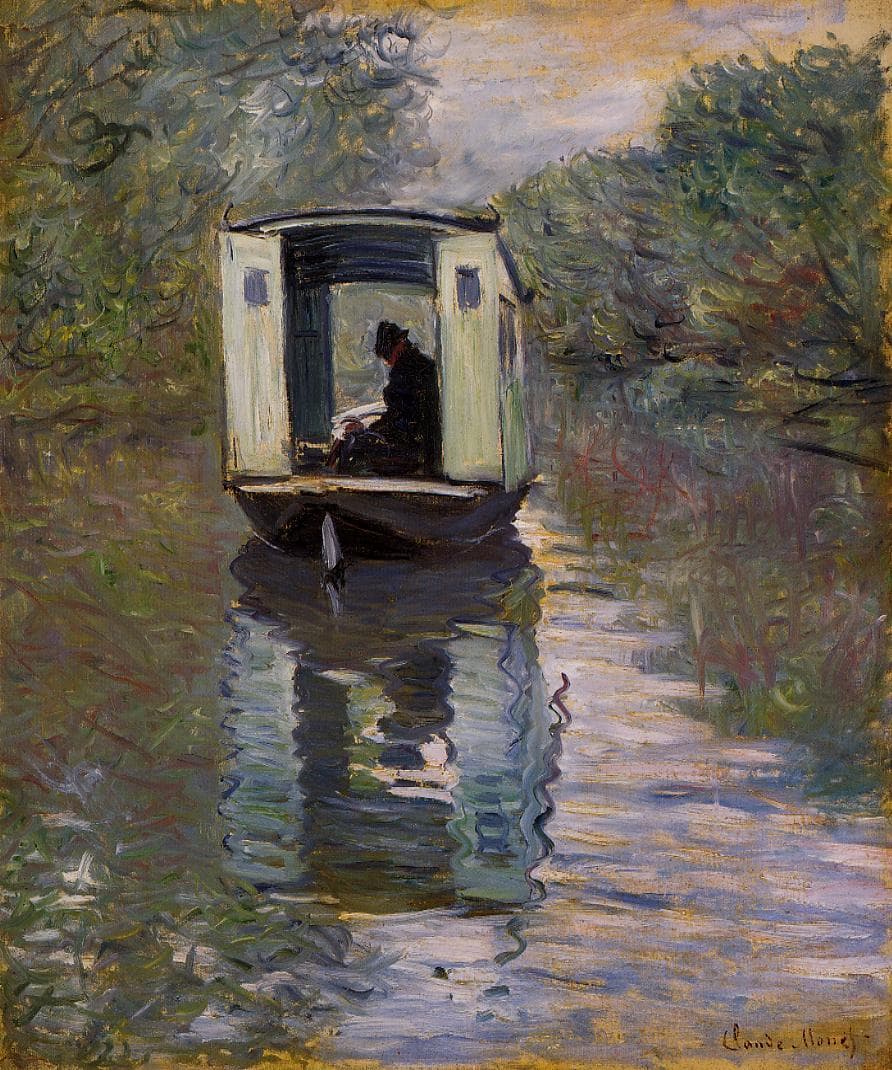
Monet painted the boat several times. A version in the Barnes Foundation, The Studio Boat (Le Bateau-atelier), dated 1876, shows it moored among reeds with a figure aboard in brighter light; another is in the Musée d'Art et d'Histoire in Neuchâtel. The Otterlo canvas is the emptiest and most hushed of the group: no figure, no sunshine, just the floating hut and its reflection.
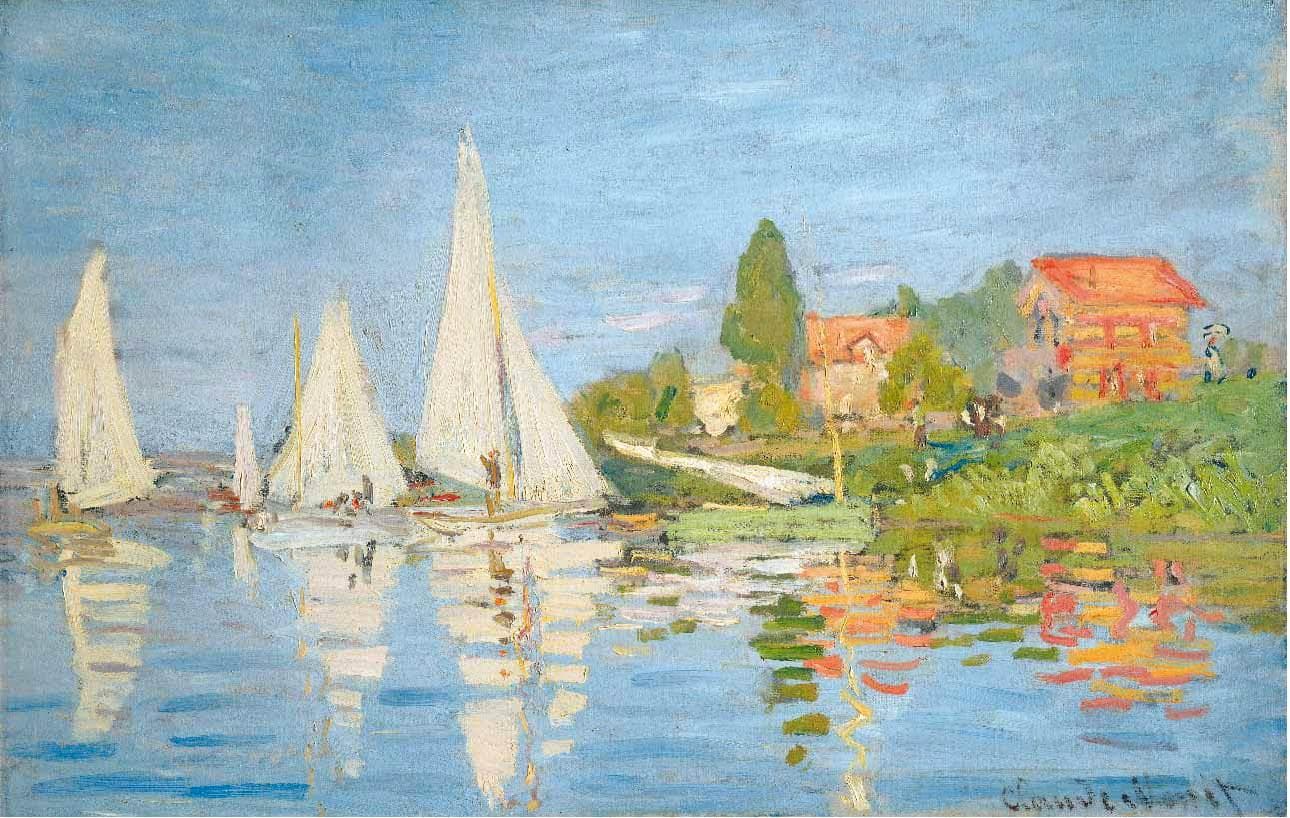
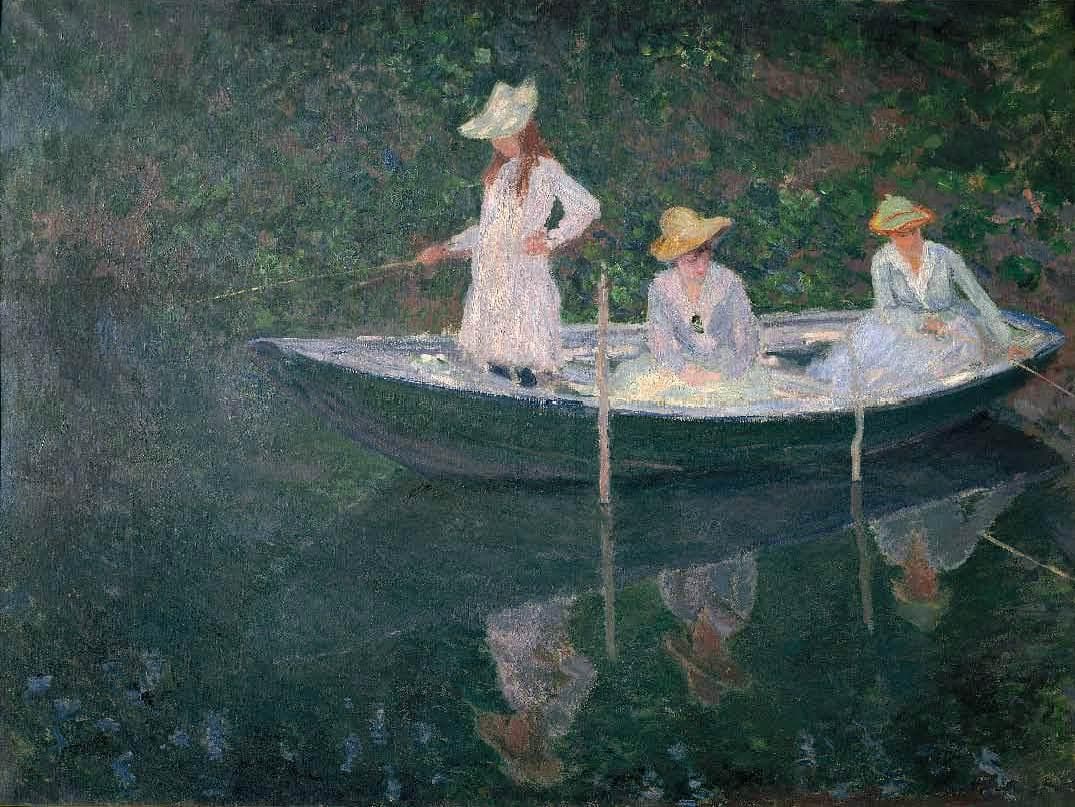
The boat also appears as a detail in other Argenteuil pictures, moored near the bank in views of the road bridge and the basin. Compare its dusky stillness with the snapping flags of Regatta at Argenteuil, or with the later The Boat at Giverny, where Monet again paints a small craft swallowed by its reflections.
Where to see it
The painting is in the Kröller-Müller Museum at Otterlo in the Netherlands (KM 111.222), a museum set in the Hoge Veluwe national park and best known for its Van Gogh holdings. For other collections with Monet's river pictures, see Where to See Monet's Paintings.
Questions & answers
Where is Monet's The Studio Boat?
This 1874 version is in the Kröller-Müller Museum in Otterlo, Netherlands (KM 111.222). Monet painted his floating studio more than once; another version, dated 1876, is in the Barnes Foundation in Philadelphia, and one is in the Musée d'Art et d'Histoire in Neuchâtel, Switzerland.
When and where was The Studio Boat painted?
In 1874 on the Seine at Argenteuil, the town northwest of Paris where Monet lived from 1871 to 1878. He had the boat fitted with a cabin in 1873 or 1874 and used it to paint from the middle of the river. Wildenstein catalogues this canvas as W.323.
Why did Monet have a studio boat?
He wanted to paint the Seine from the water itself. Following the example of Charles-François Daubigny, he fitted a boat with a small wooden cabin so he could moor in midstream, stay out in changing light, and paint reflections from a low viewpoint close to the surface.
Did other artists paint Monet's studio boat?
Yes. Édouard Manet visited Argenteuil in the summer of 1874 and painted Monet working on board with his wife Camille, in a picture now in the Neue Pinakothek, Munich. It is one of the best-known images of Monet painting outdoors.
More by the artist
Claude Monet

Bridge over a Pond of Water Lilies
Claude Monet · 1899

Woman with a Parasol – Madame Monet and Her Son
Claude Monet · 1875

Sunset in Venice
Claude Monet · 1908–12

La Grenouillère
Claude Monet · 1869

Beach in Pourville
Claude Monet · 1882

Springtime
Claude Monet · 1872

Boating on the River Epte
Claude Monet · 1890

The Seine at Asnières (Hermitage)
Claude Monet · 1873
Also painted in 1874
The same year
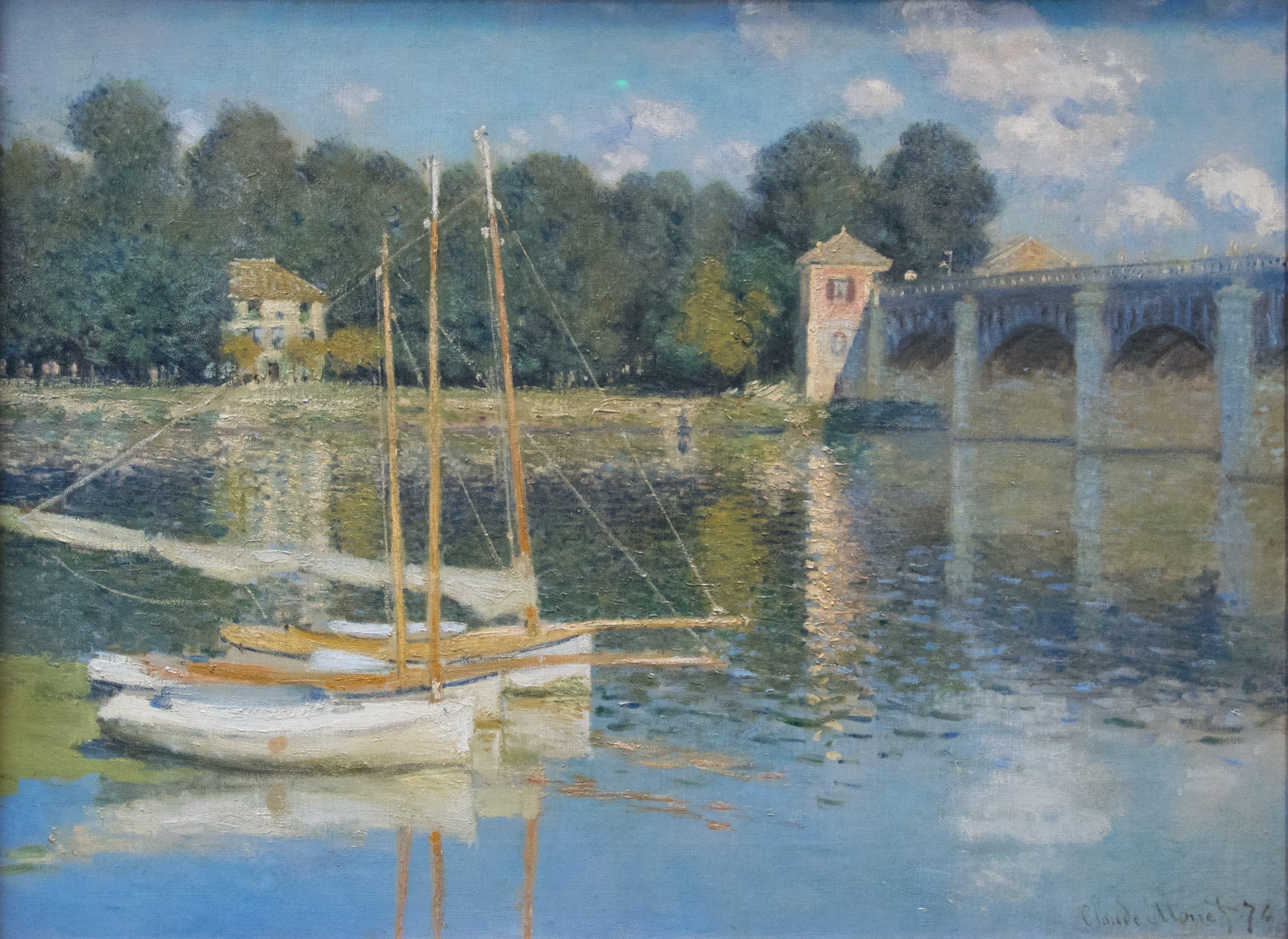
The Argenteuil Bridge
Claude Monet · 1874
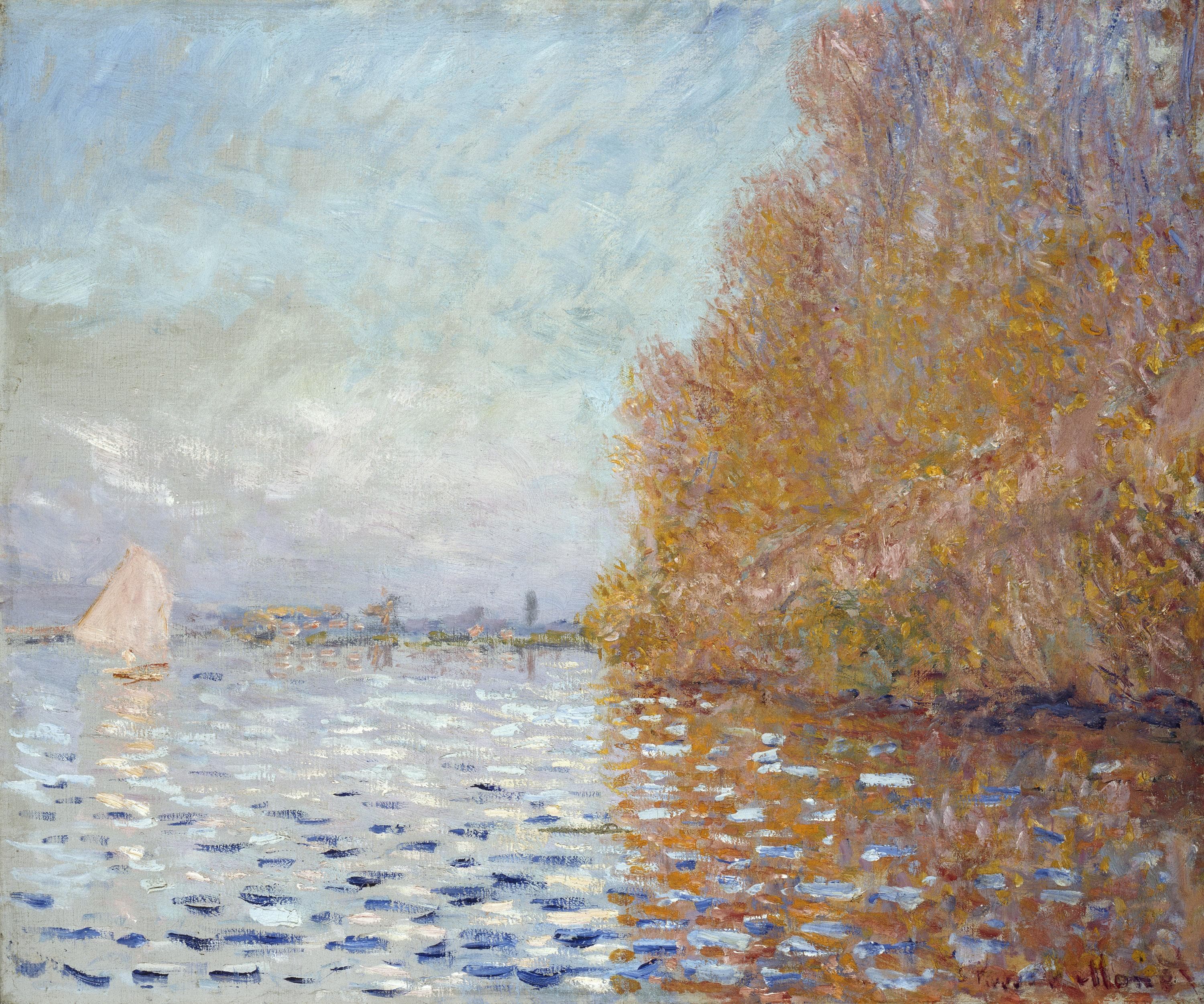
Argenteuil Basin with a Single Sailboat
Claude Monet · 1874
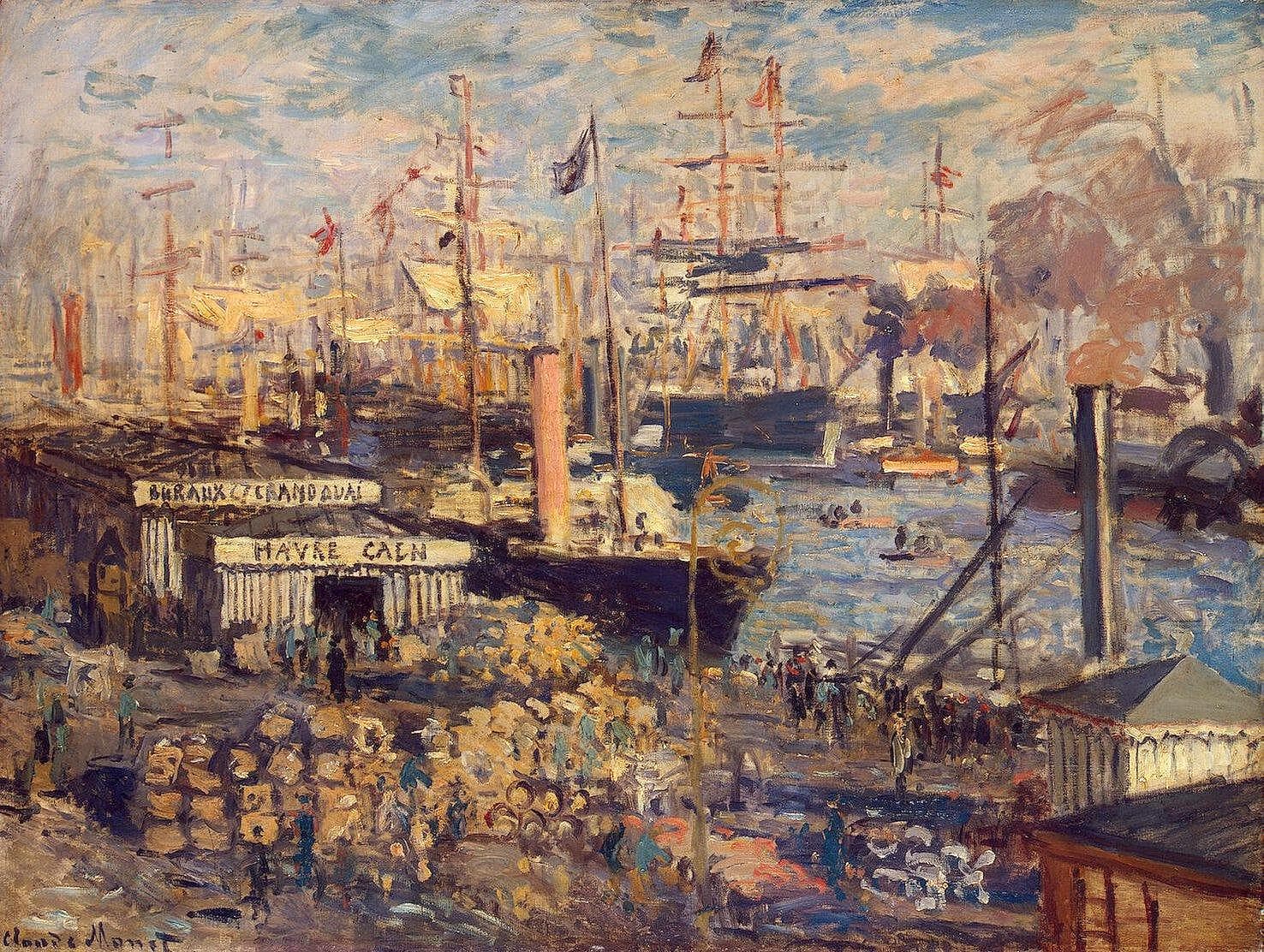
The Grand Quai at Le Havre
Claude Monet · 1874
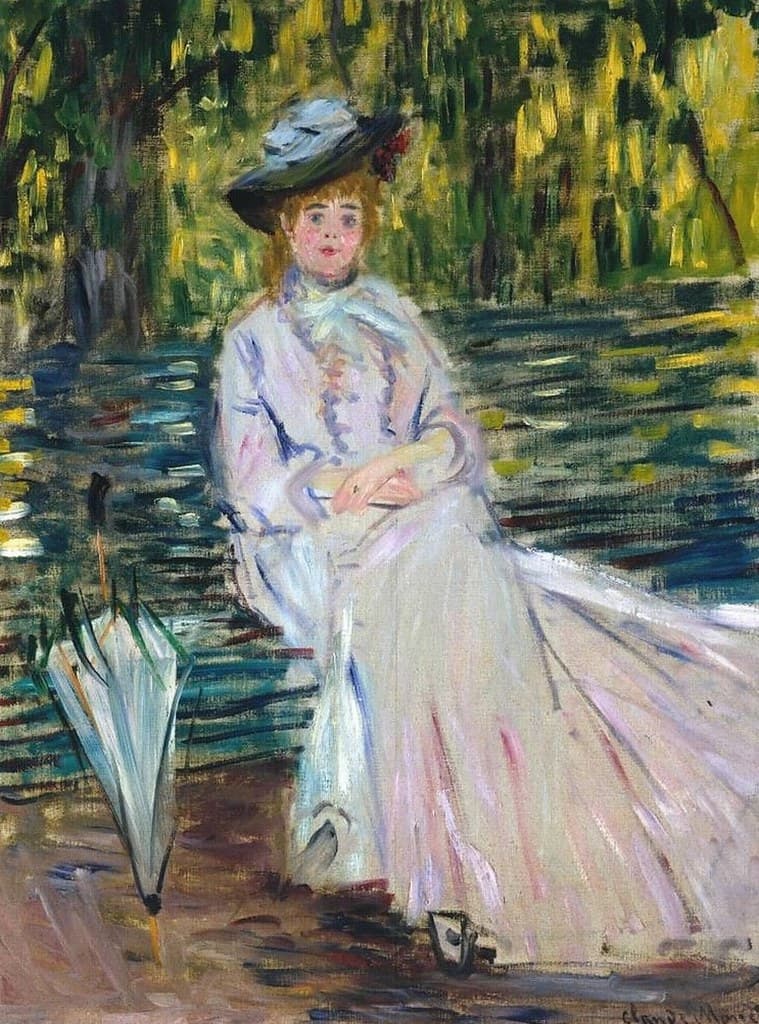
Woman Seated on a Bench
Claude Monet · c. 1874
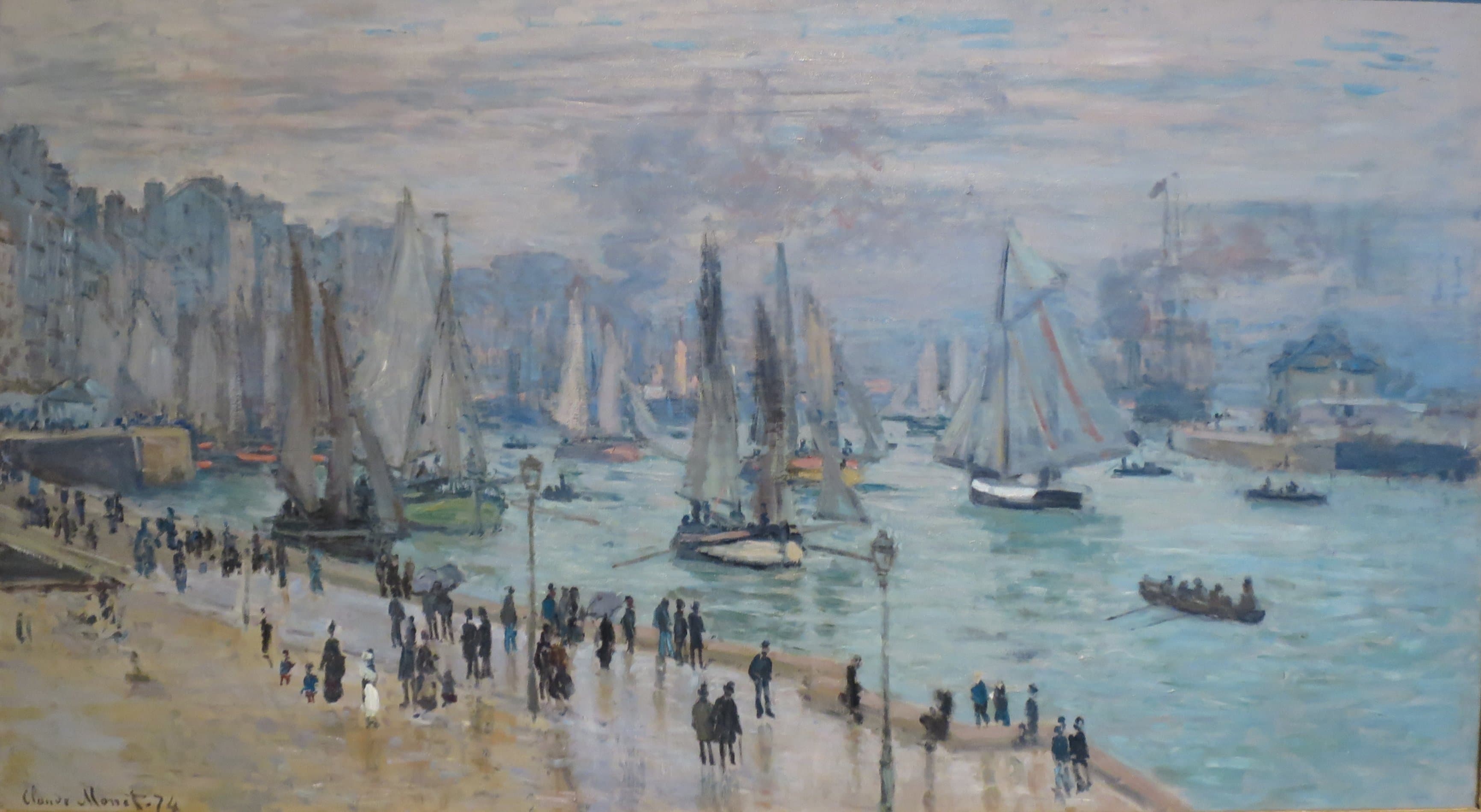
Fishing Boats Leaving the Harbor, Le Havre
Claude Monet · 1874
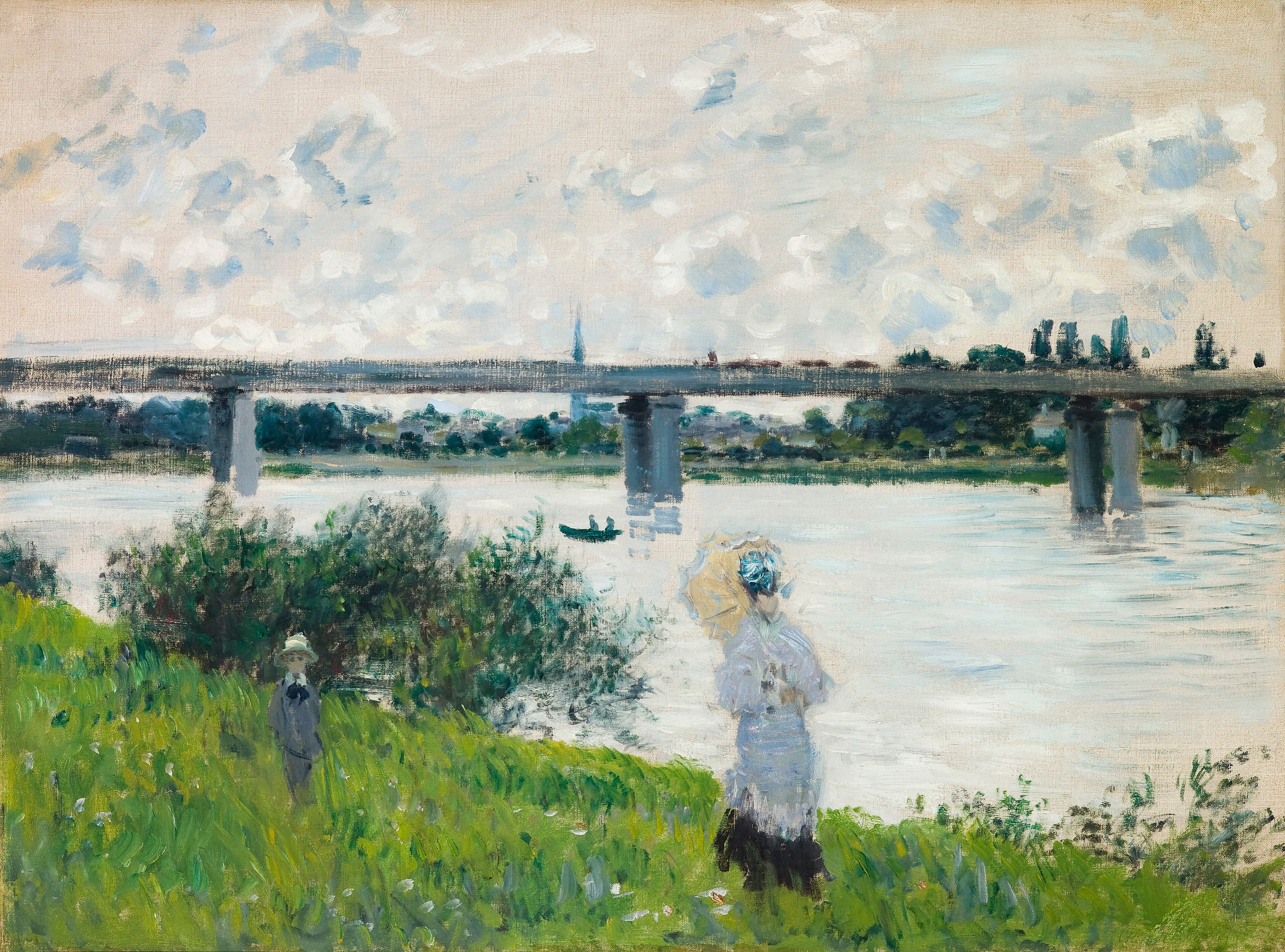
The Promenade with the Railroad Bridge, Argenteuil
Claude Monet · 1874
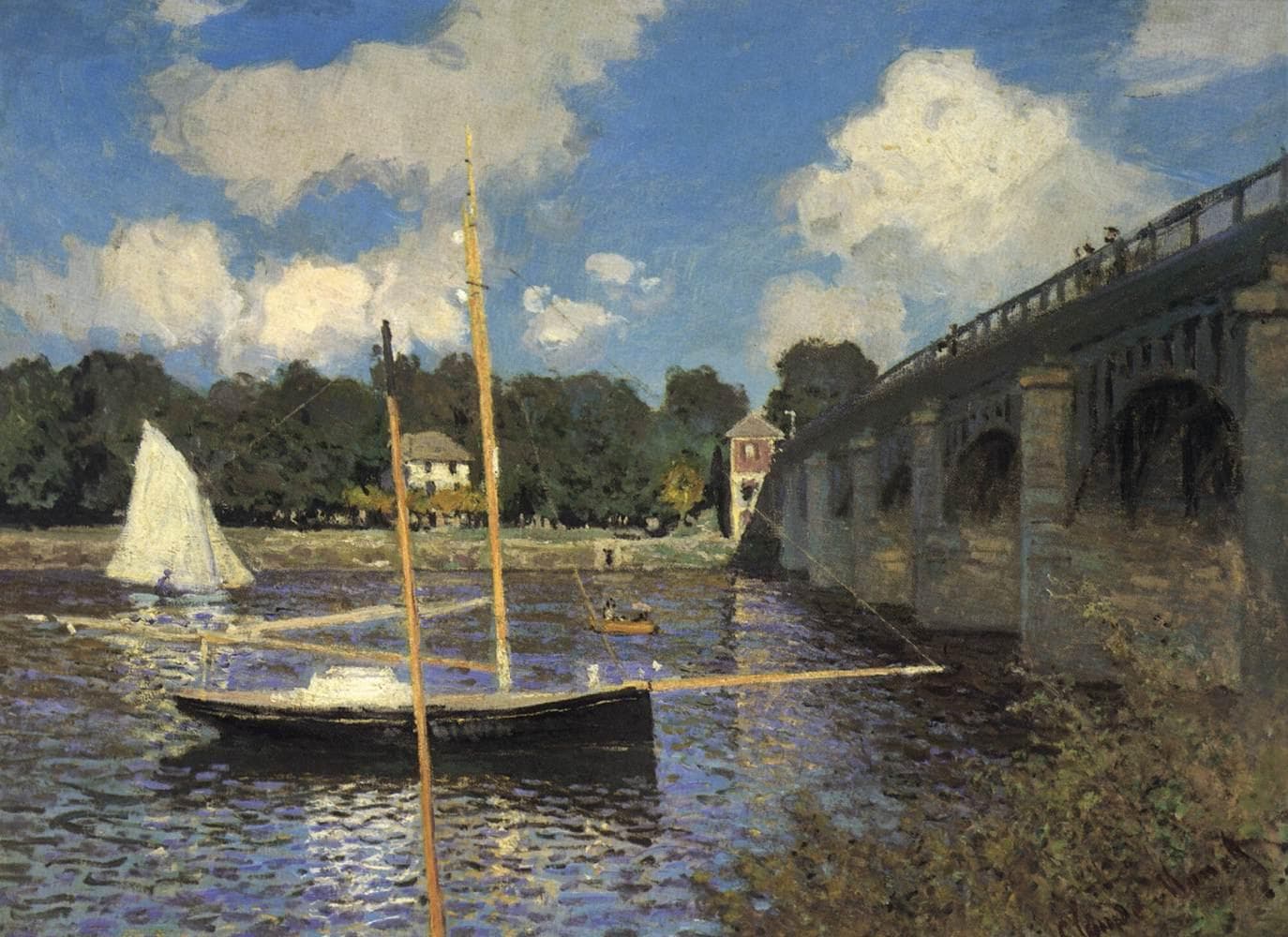
The Bridge at Argenteuil
Claude Monet · 1874
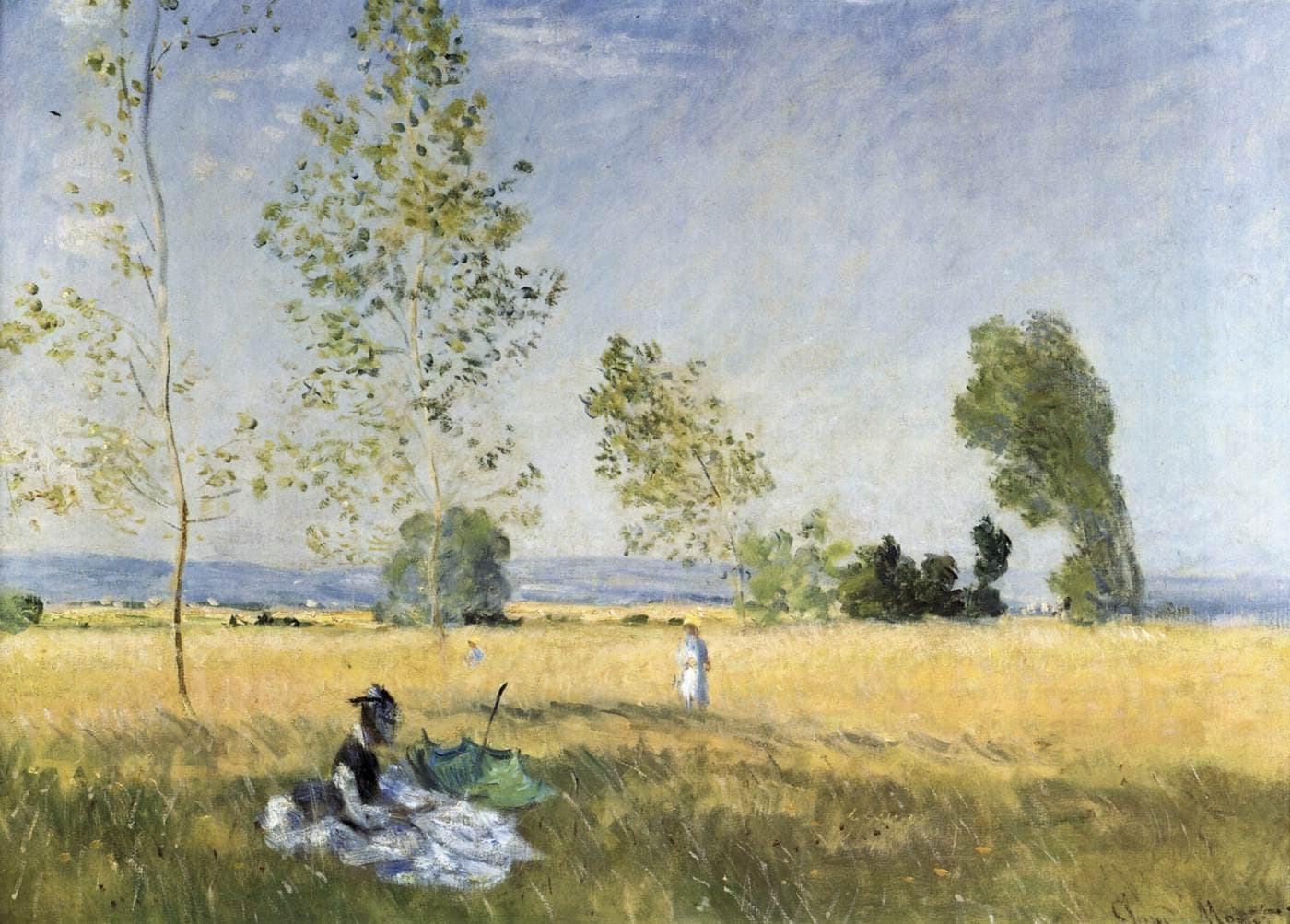
Summer (Meadow at Bezons)
Claude Monet · 1874
Kindred works
You may also study
The Studio Boat (Le Bateau-atelier)
Claude Monet · 1876
The Bridge at Argenteuil
Claude Monet · 1874
Regatta at Argenteuil
Claude Monet · c. 1872
The Boats
Claude Monet · 1869
The Boat at Giverny
Claude Monet · c. 1887

The Scream
Edvard Munch · 1893

Ophelia
John Everett Millais · 1851–52

The Great Wave off Kanagawa
Katsushika Hokusai · c. 1830–32