Impressionism
The Artist's Garden in Argenteuil (A Corner of the Garden with Dahlias)
Claude Monet, 1873
The Artist's Garden in Argenteuil (A Corner of the Garden with Dahlias) is Claude Monet's 1873 painting of a towering bank of dahlias before his rented house at Argenteuil. It is in the National Gallery of Art, Washington, D.C.
- Artist
- Claude Monet
- Date
- 1873
- Medium
- Oil on canvas
- Dimensions
- 61 × 82.5 cm
- Collection
- National Gallery of Art, Washington, D.C., United States
- Movement
- Impressionism
- Catalogue
- Wildenstein W 286
Painted at Monet at Argenteuil
The Artist's Garden in Argenteuil (A Corner of the Garden with Dahlias) is Claude Monet's 1873 painting of a towering bank of dahlias in front of the house he rented at Argenteuil, on the Seine northwest of Paris. The canvas, 61 by 82.5 centimeters and signed and dated at lower left, is in the National Gallery of Art in Washington, D.C., a 1991 gift of Janice H. Levin (1991.27.1). It is number 286 in Wildenstein's catalogue and is often listed online simply as Monet's Garden at Argenteuil.
What does Monet's Garden at Argenteuil show?
A great mound of dahlias fills the left and center of the canvas, rising higher than a person and spreading almost to the edges. Monet paints the flowers as single round dabs and twists of color: scarlet and crimson heads low and in front, orange and lemon yellow higher up, then creamy white and pale pink toward the right where the bush thins and catches more light. The leaves behind them are a dense, dark mass of blue-green and olive, so that every flower reads as a spark against shadow.
Behind the dahlias stands the house, a pale cream block with a dark slate roof, two tall chimney stacks, a dormer window and blue-gray shutters on the upper floor. It is the calmest shape in the picture, a few flat planes of light paint. To the right a tree with feathery yellow-green and russet foliage rises against the sky, and at its foot, beside a dark fence and gate, stand two small figures: a woman in white and a man in a dark coat and hat, barely more than two upright strokes. They are the only people in the scene, and they give it its scale.
Below them, at right, a lower bed of white, pale blue and green plants stretches back toward the fence. The foreground is a band of reddish-brown earth and dark green leaves, painted in loose, scrubby strokes, with a path leading in from the bottom edge. Above everything is a large, busy sky, more than a third of the canvas, filled with ragged white and lavender-gray clouds and small patches of blue, all painted in short, choppy horizontal strokes that make the weather seem to move. The light is soft and late in the season, the sky unsettled, the colors of the tree beginning to turn.
How was it painted?
This is a fully Impressionist picture, painted out of doors with thick, separate touches of nearly unmixed color. There is almost no drawing in the dahlia bush: Monet builds it from hundreds of individual marks and lets the eye blend them at a distance, so that from across a room it reads as a solid, rounded mass and up close it falls apart into dabs. The same broken touch runs through the tree, the lower beds and the sky, so the whole surface has a single, vibrating texture. Only the house is painted differently, in smooth, quiet planes, which anchors the composition and gives the eye somewhere to rest.
The color is organized around contrast. The reds of the dahlias sit against their complementary greens, and the cool blue-gray of the shutters and the sky answers the warm orange and yellow of the flowers. Monet signed and dated the picture at lower left, tucked into the shadows of the foreground.
Where and when was it painted?
Monet moved to Argenteuil with his wife Camille and their son Jean at the end of 1871 and lived there until early 1878. The first house he rented had a generous garden, and he planted it with care; it was the first garden he could call his own, and the beginning of the passion that would lead, a decade later, to Giverny. In 1873, the year of this picture, the garden appears again and again in his work: in The Luncheon, with its abandoned table under the trees; in Camille Monet on a Garden Bench; and in The Artist's House at Argenteuil, where Jean plays with a hoop beside blue-and-white flower tubs. A year earlier Monet had painted Jean there on his toy horse, in Jean Monet on His Hobby Horse.
These were among the most settled and productive years of Monet's life. Sales to the dealer Paul Durand-Ruel had eased the family's money troubles, and Monet was painting the boating, bridges and fields of Argenteuil while preparing, with his friends, the independent exhibition that opened in Paris in 1874 and gave Impressionism its name.
How does it compare with his other garden pictures?
Unlike The Luncheon or The Artist's House, this picture is not about family life; the two figures are tiny, and the subject is the flowers themselves. In that sense it looks forward to Monet's later gardens, where the planting becomes the whole picture. The closest later parallel is The Artist's Garden at Vétheuil of 1881, also in the National Gallery of Art, where sunflowers tower over a path in much the same way.
Where is Monet's Garden at Argenteuil today?
The painting is in the National Gallery of Art in Washington, D.C., which received it in 1991 as the gift of Janice H. Levin. Some websites still describe it as privately owned, which reflects its earlier history. For other museums with Monet's work, see where to see Monet's paintings, and for his life and career, Claude Monet.
Questions & answers
Where is Monet's Garden at Argenteuil with dahlias?
It is in the National Gallery of Art in Washington, D.C., which received it in 1991 as a gift of Janice H. Levin (1991.27.1). Some websites still list it as privately owned. The museum titles it The Artist's Garden in Argenteuil (A Corner of the Garden with Dahlias).
When and where was it painted?
Monet painted it in 1873 in the garden of the house he rented at Argenteuil, on the Seine northwest of Paris, where he lived from late 1871 to early 1878. It was his first real garden, and he planted it himself; 1873 was one of his most productive years there.
What does Monet's Garden at Argenteuil show?
A huge bank of red, orange, yellow and white dahlias fills the left of the canvas before a pale house with a dark roof and two chimney stacks. A couple stands by a fence at right under a turning tree, and a broken, cloudy sky fills the upper third.
Did Monet paint other pictures of his Argenteuil garden?
Yes. The same garden appears in The Luncheon (Musée d'Orsay), Camille Monet on a Garden Bench (Metropolitan Museum), The Artist's House at Argenteuil (Art Institute of Chicago) and Jean Monet on His Hobby Horse (Met). This canvas is unusual in making the flowers, not the family, the subject.
More by the artist
Claude Monet

Bridge over a Pond of Water Lilies
Claude Monet · 1899

Woman with a Parasol – Madame Monet and Her Son
Claude Monet · 1875

Sunset in Venice
Claude Monet · 1908–12

La Grenouillère
Claude Monet · 1869

Beach in Pourville
Claude Monet · 1882

Springtime
Claude Monet · 1872

Boating on the River Epte
Claude Monet · 1890

The Seine at Asnières (Hermitage)
Claude Monet · 1873
Also painted in 1873
The same year
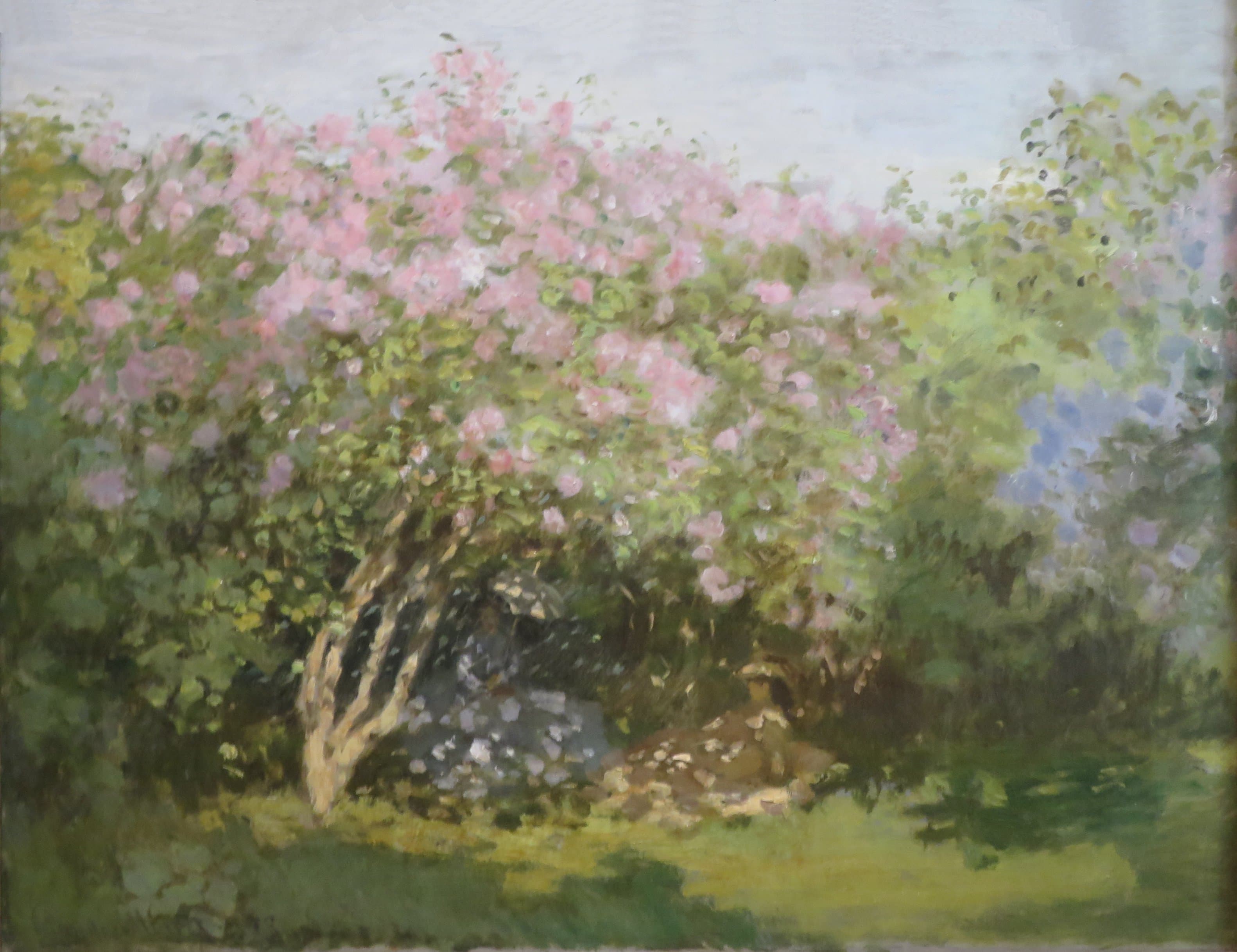
Lilac in the Sun
Claude Monet · 1873
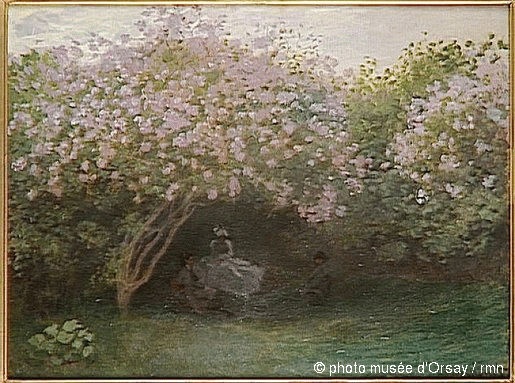
Lilacs, Gray Weather
Claude Monet · 1872–73
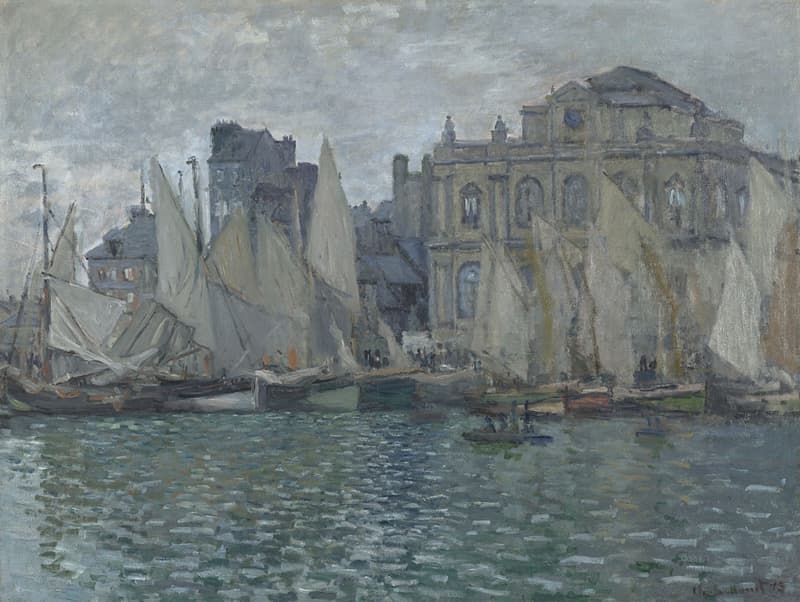
The Museum at Le Havre
Claude Monet · 1873
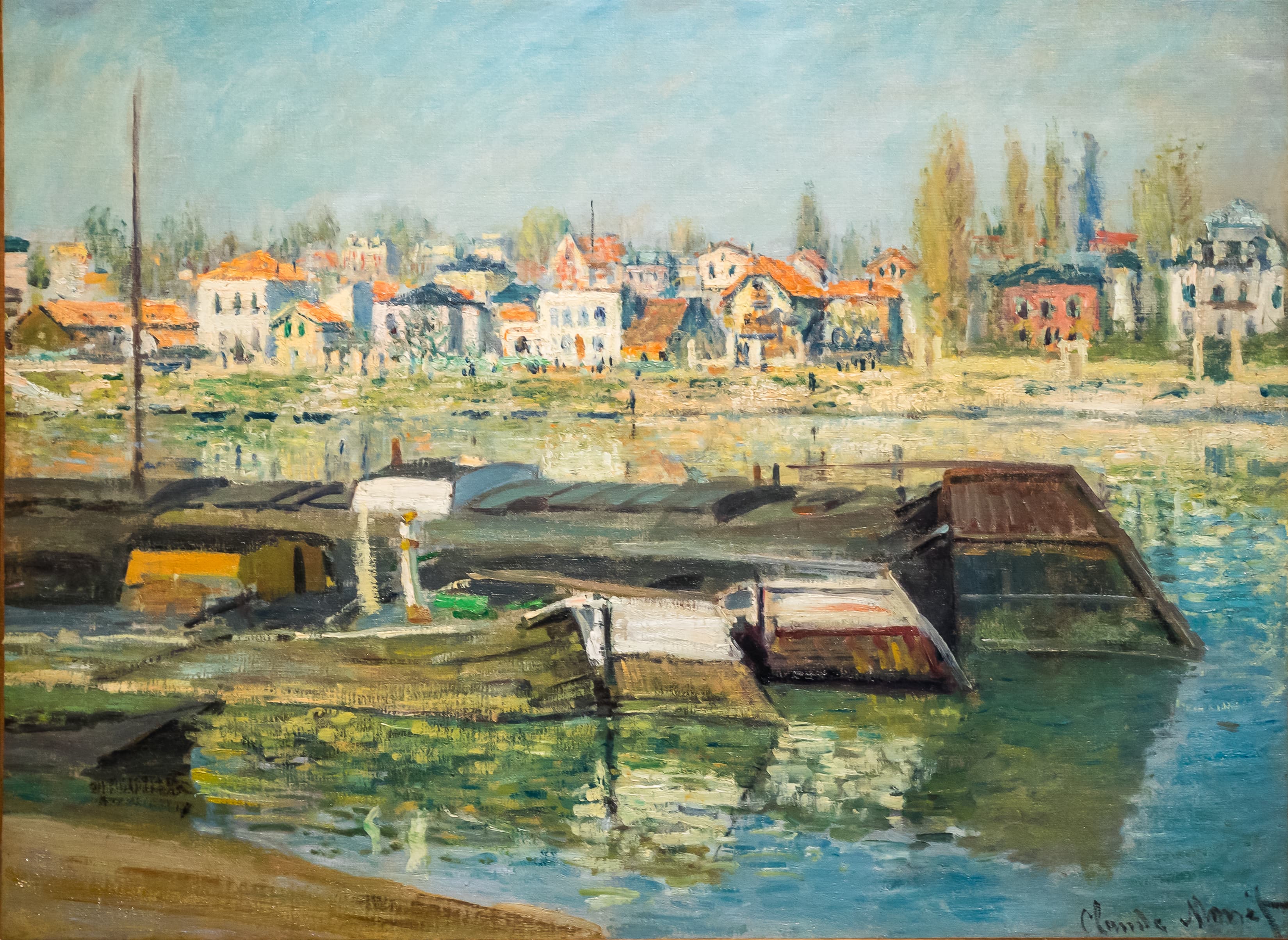
The Seine at Asnières
Claude Monet · 1873
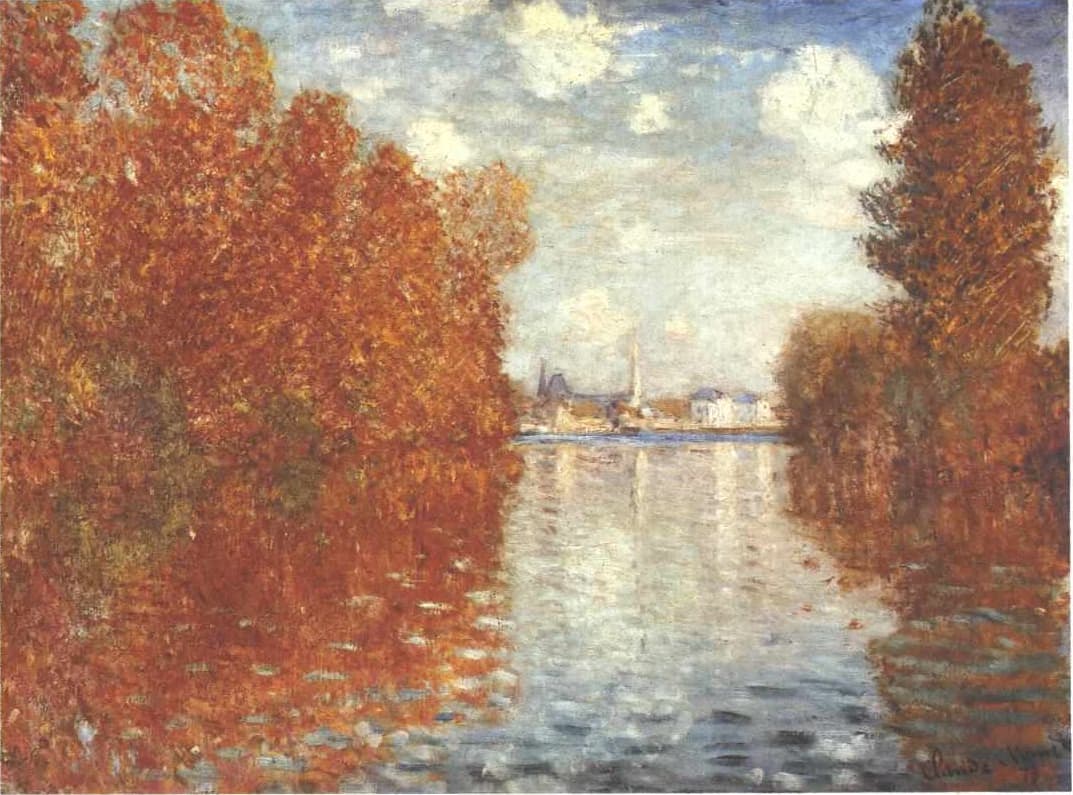
Autumn Effect at Argenteuil
Claude Monet · 1873
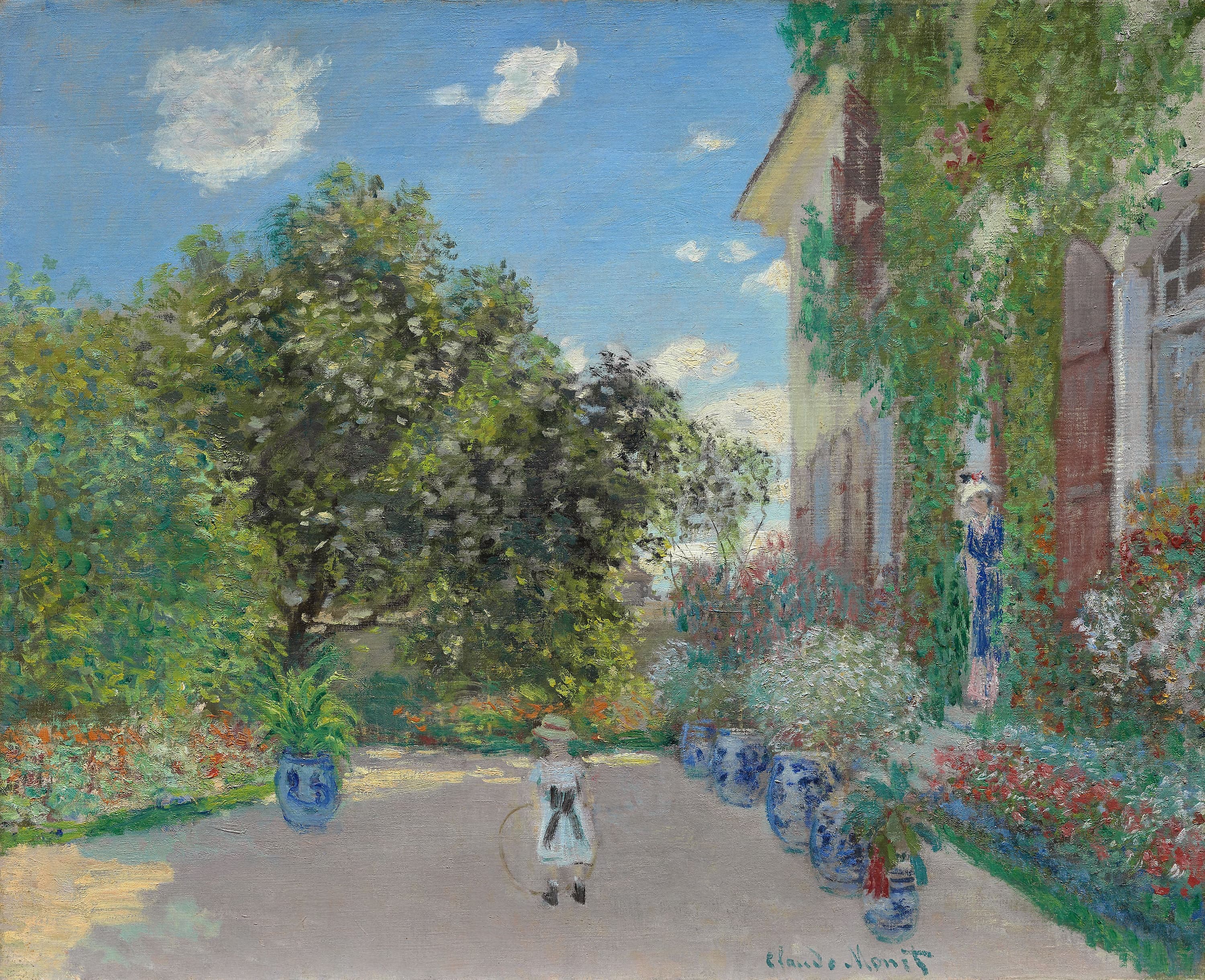
The Artist's House at Argenteuil
Claude Monet · 1873
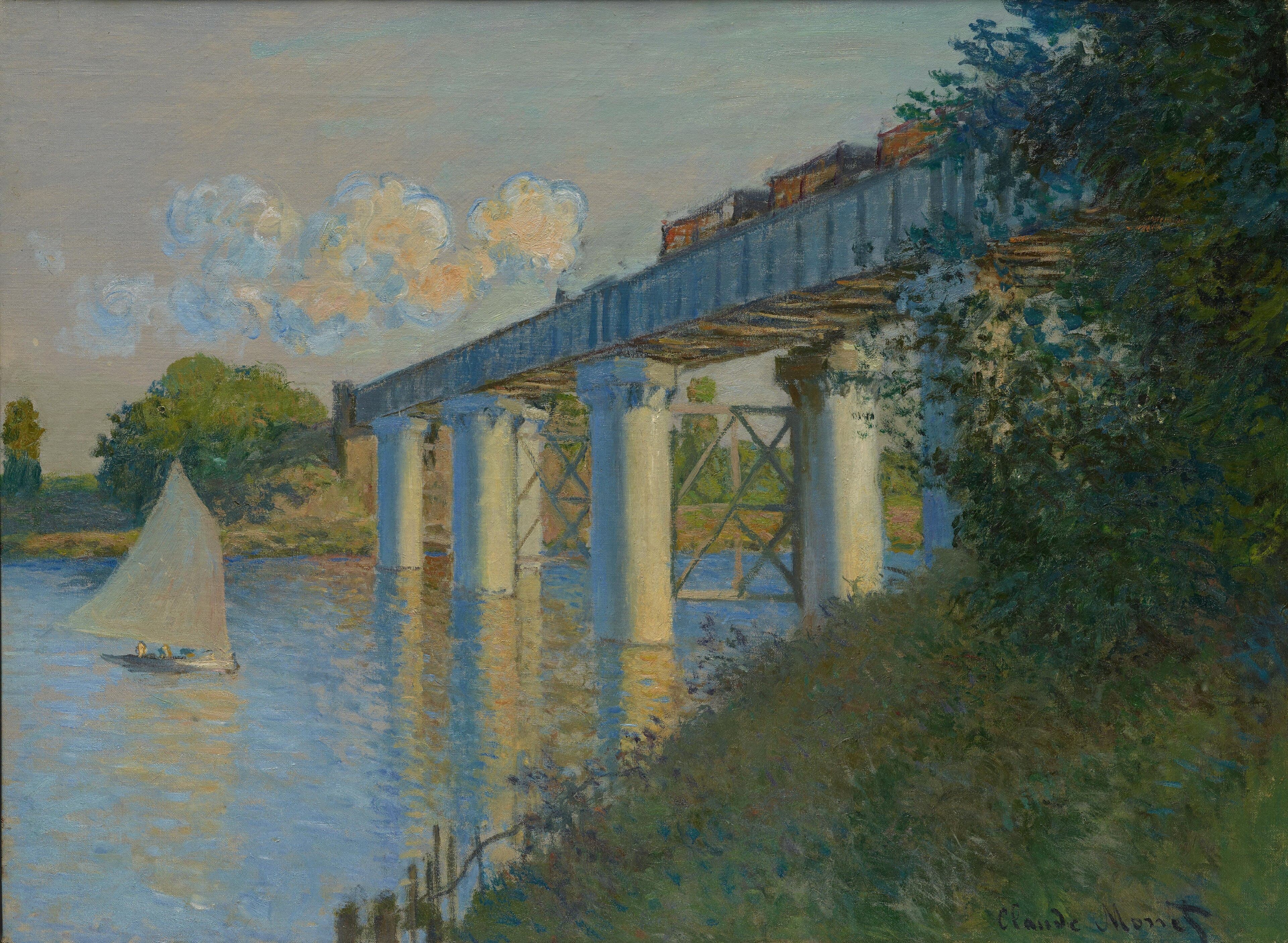
Railroad Bridge, Argenteuil
Claude Monet · 1873
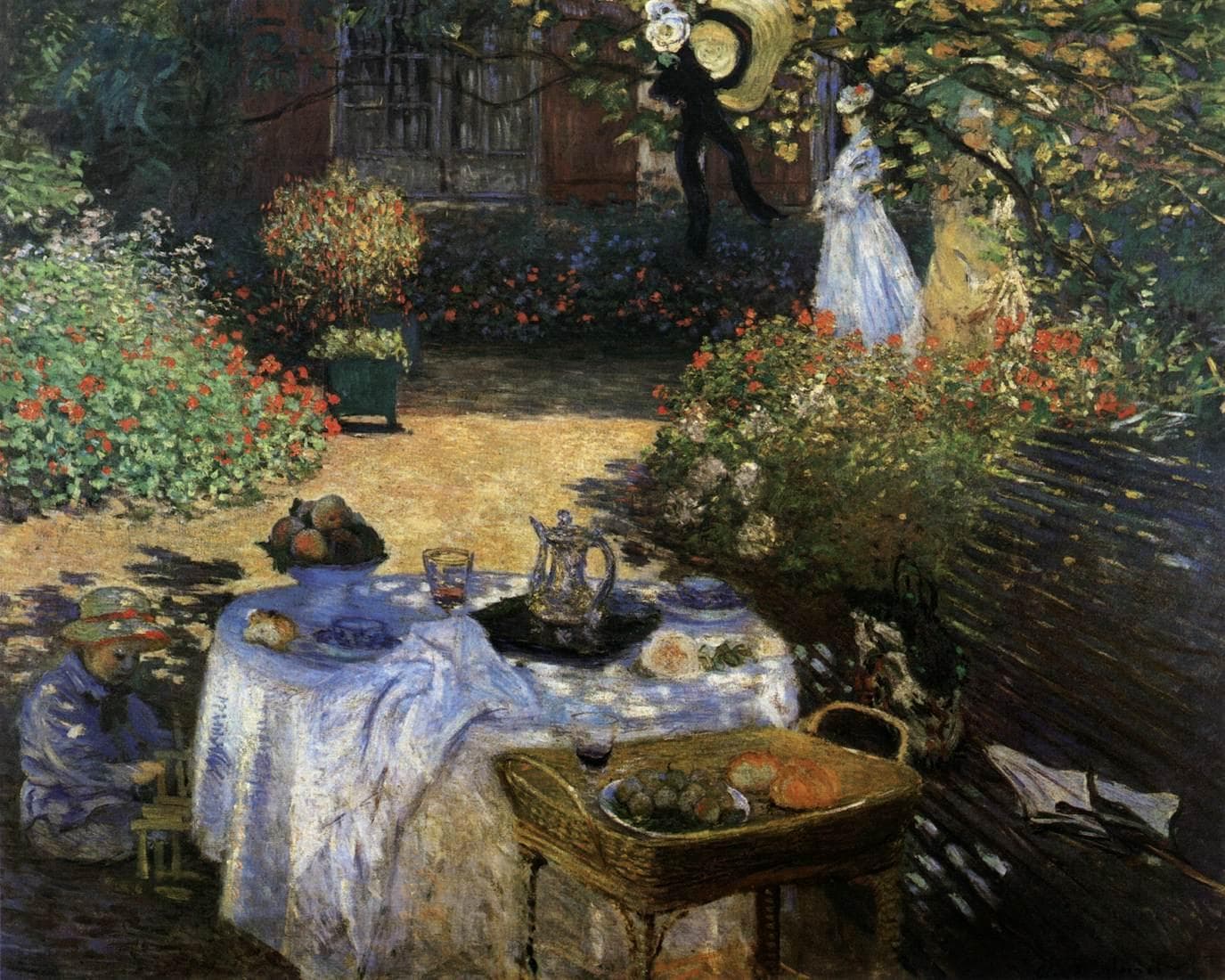
The Luncheon (Monet's Garden at Argenteuil)
Claude Monet · c. 1873
Kindred works
You may also study
The Artist's House at Argenteuil
Claude Monet · 1873
The Luncheon (Monet's Garden at Argenteuil)
Claude Monet · c. 1873
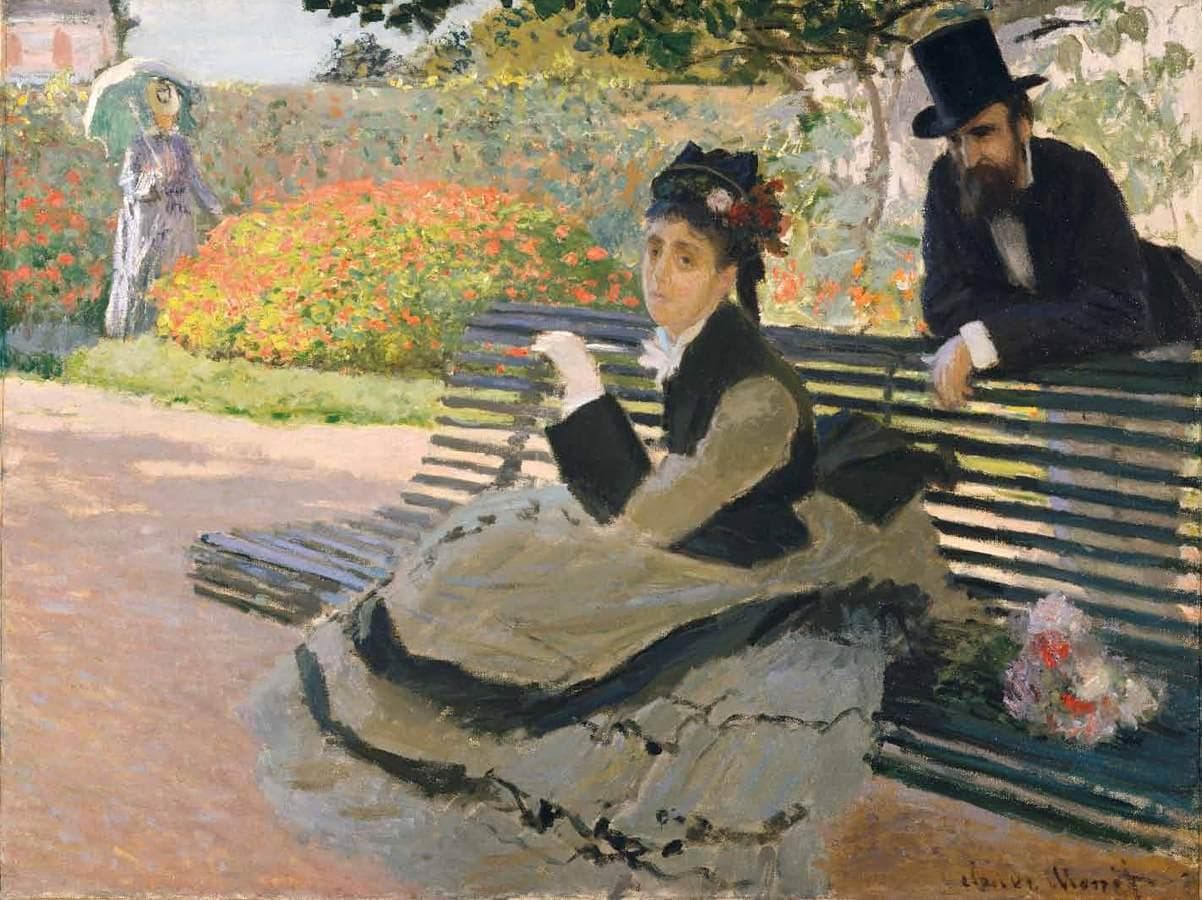
Camille Monet on a Garden Bench
Claude Monet · 1873
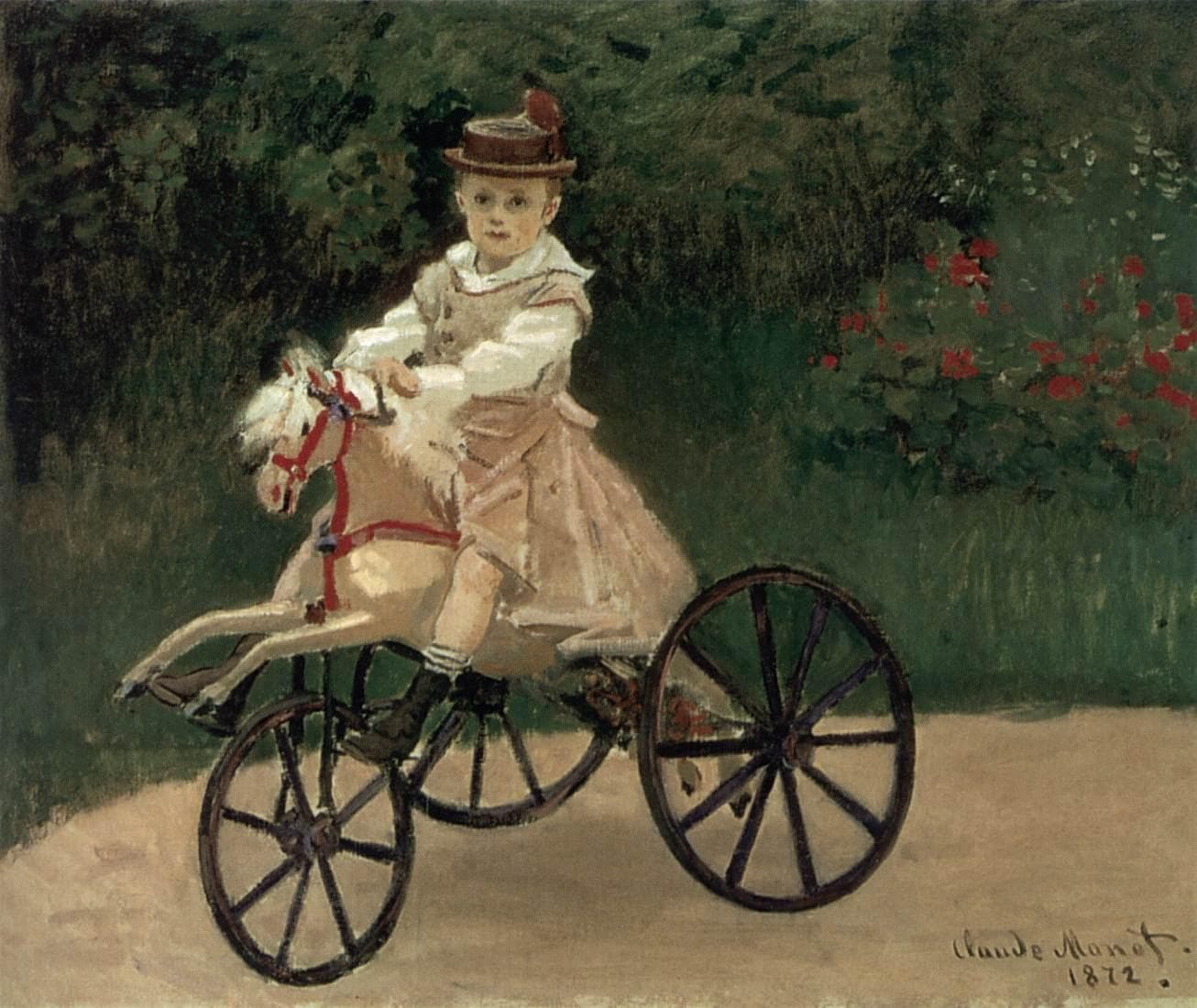
Jean Monet on His Hobby Horse
Claude Monet · 1872
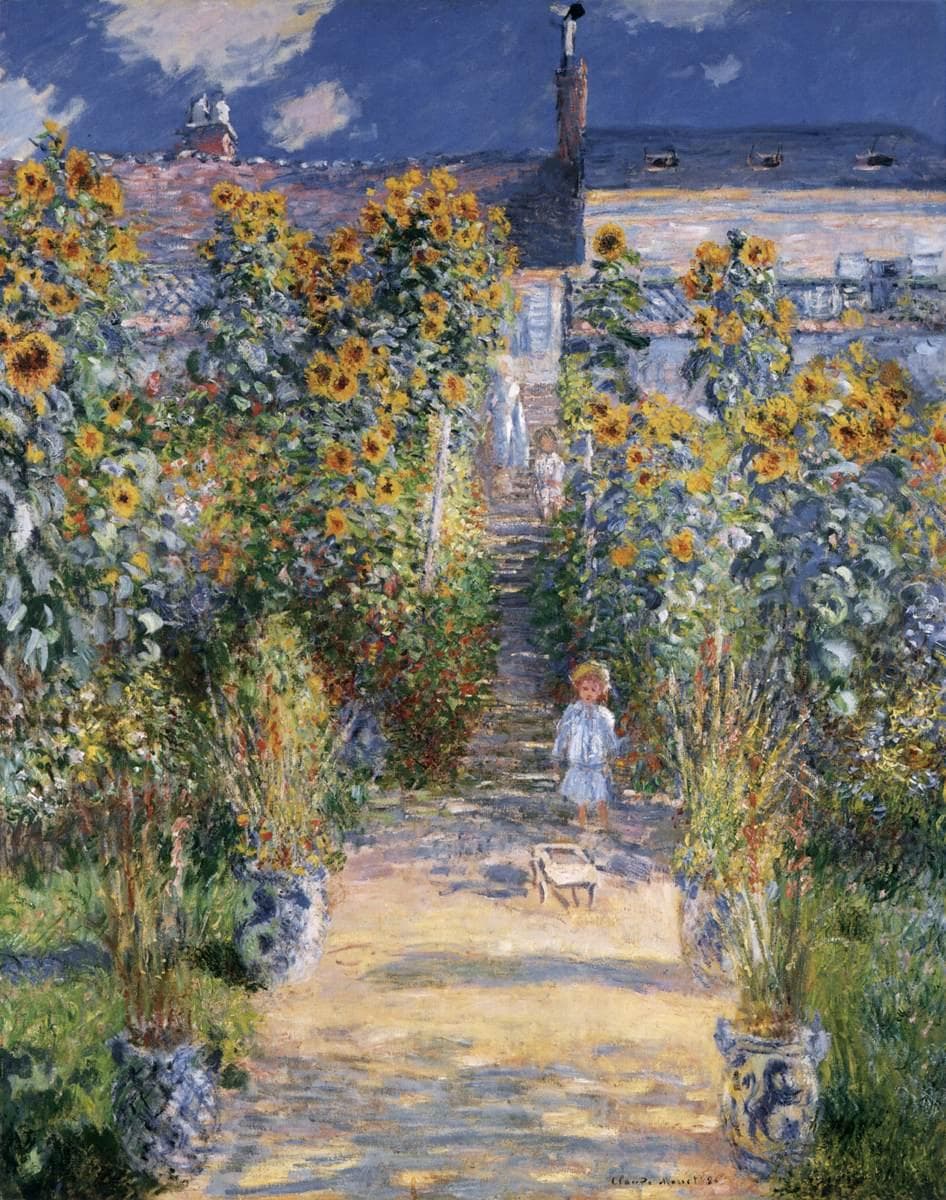
The Artist's Garden at Vétheuil
Claude Monet · 1881
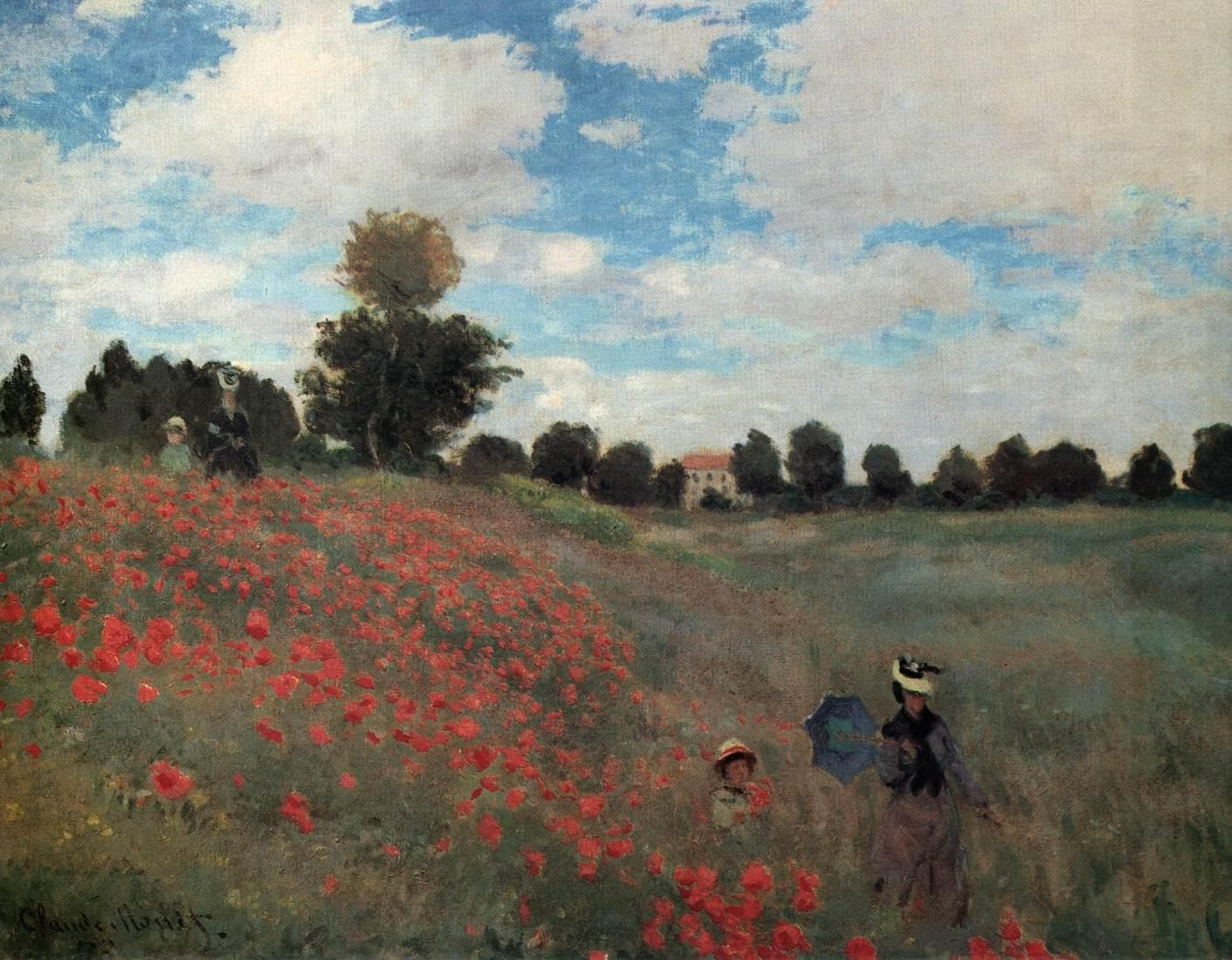
Poppy Field (Poppies at Argenteuil)
Claude Monet · 1873

The Scream
Edvard Munch · 1893

Ophelia
John Everett Millais · 1851–52