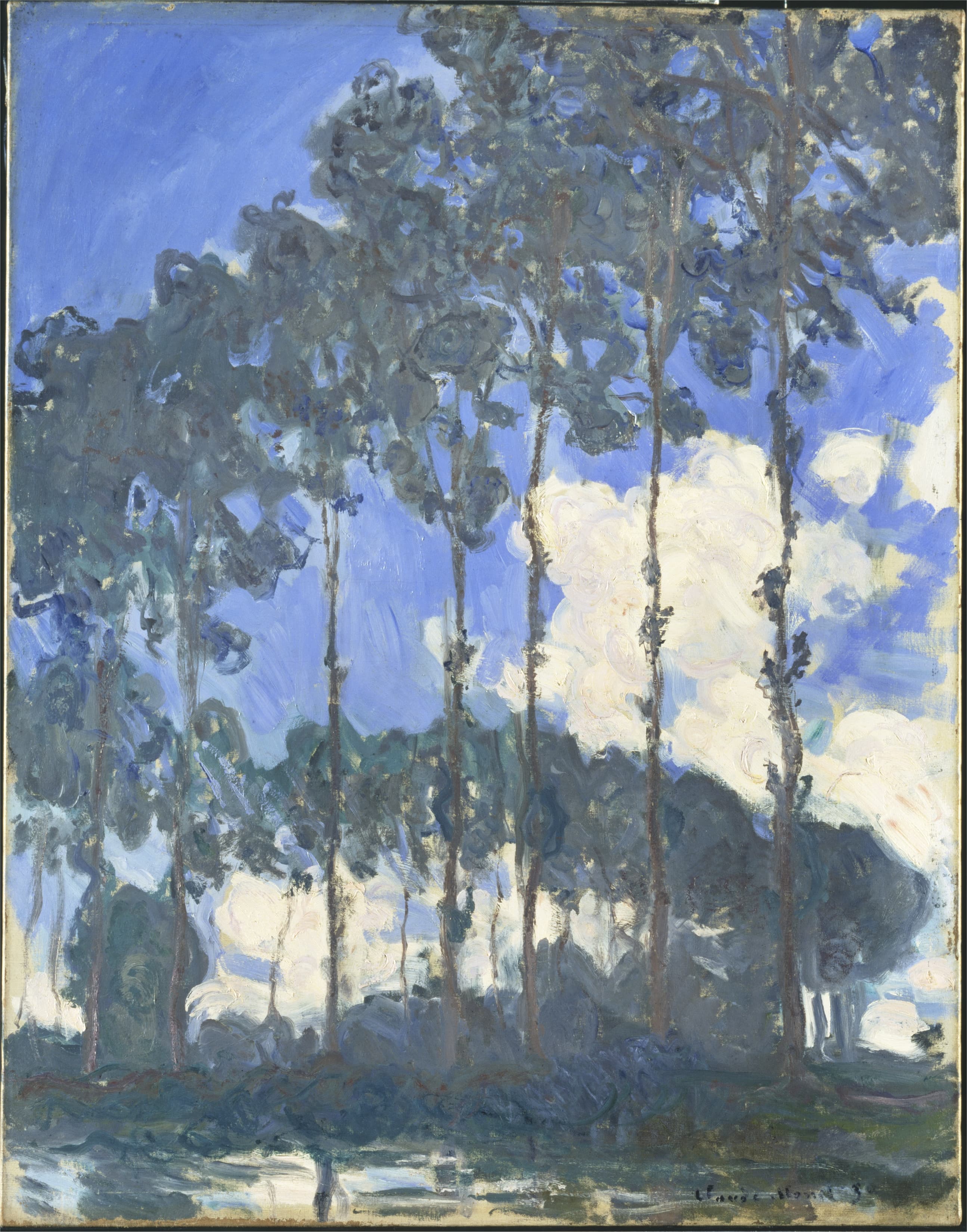
Series
Monet's Poplars: The Series on the River Epte, 1891
A row of tall trees on a riverbank near Giverny, painted from a boat in summer and autumn 1891, and bought by Monet to stop them being felled.
Monet's Poplars are a series of about two dozen paintings of a line of poplar trees on the bank of the river Epte, a short way upstream from his home at Giverny, painted from his boat-studio in the summer and autumn of 1891. They followed straight on from the Haystacks and repeat their method: one motif, many canvases, each assigned to its own light and weather.
Durand-Ruel exhibited fifteen of them in Paris early in 1892, the first exhibition Monet ever devoted to a single motif. The Monet poplars paintings are now divided among museums including the Metropolitan Museum in New York, the Philadelphia Museum of Art, Tate in London, the Scottish National Gallery in Edinburgh, the Fitzwilliam Museum in Cambridge and the National Museum of Western Art in Tokyo, with others in private collections.
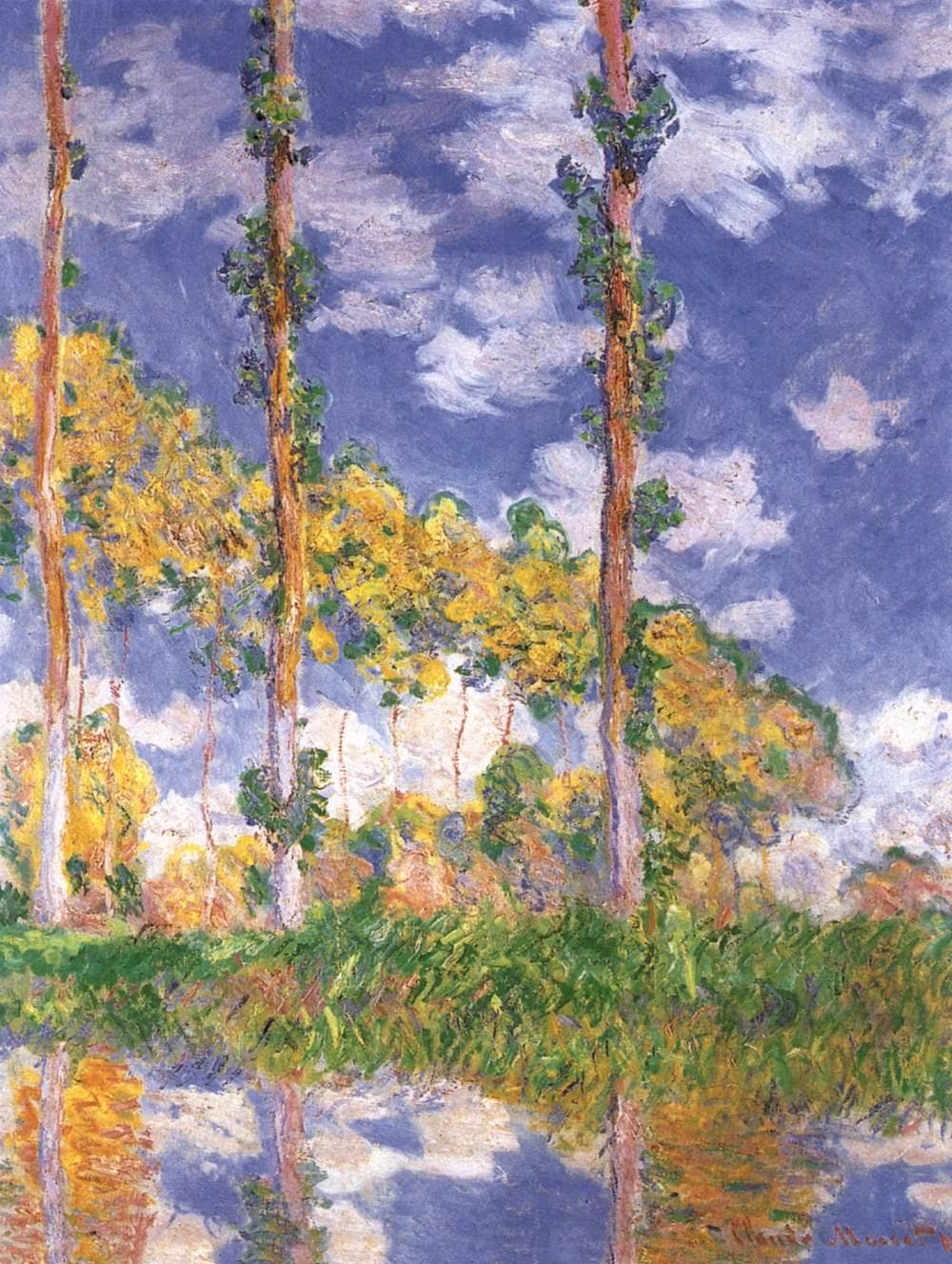
Three Poplars, Summer
Claude Monet · 1891
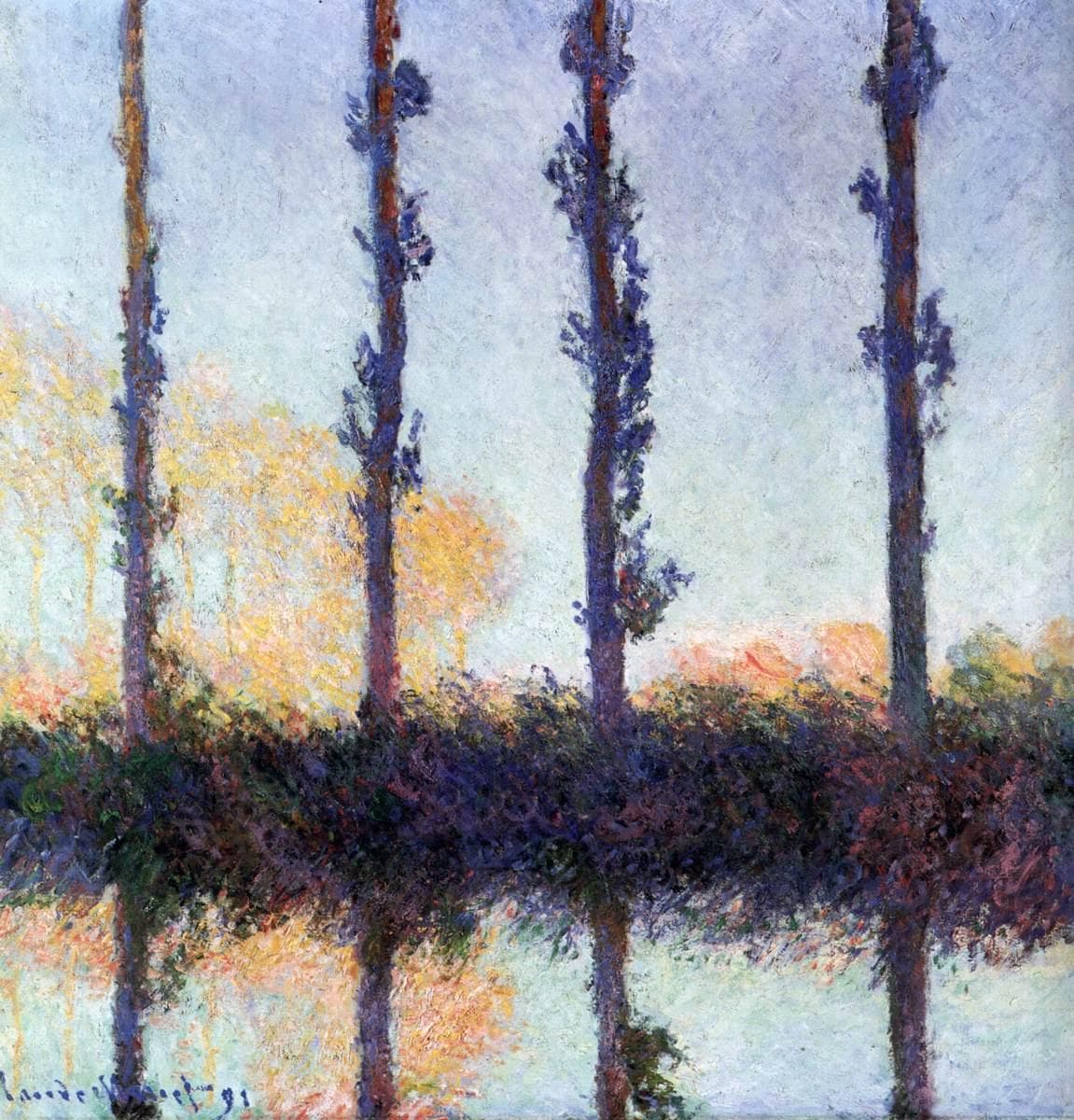
The Four Trees
Claude Monet · 1891
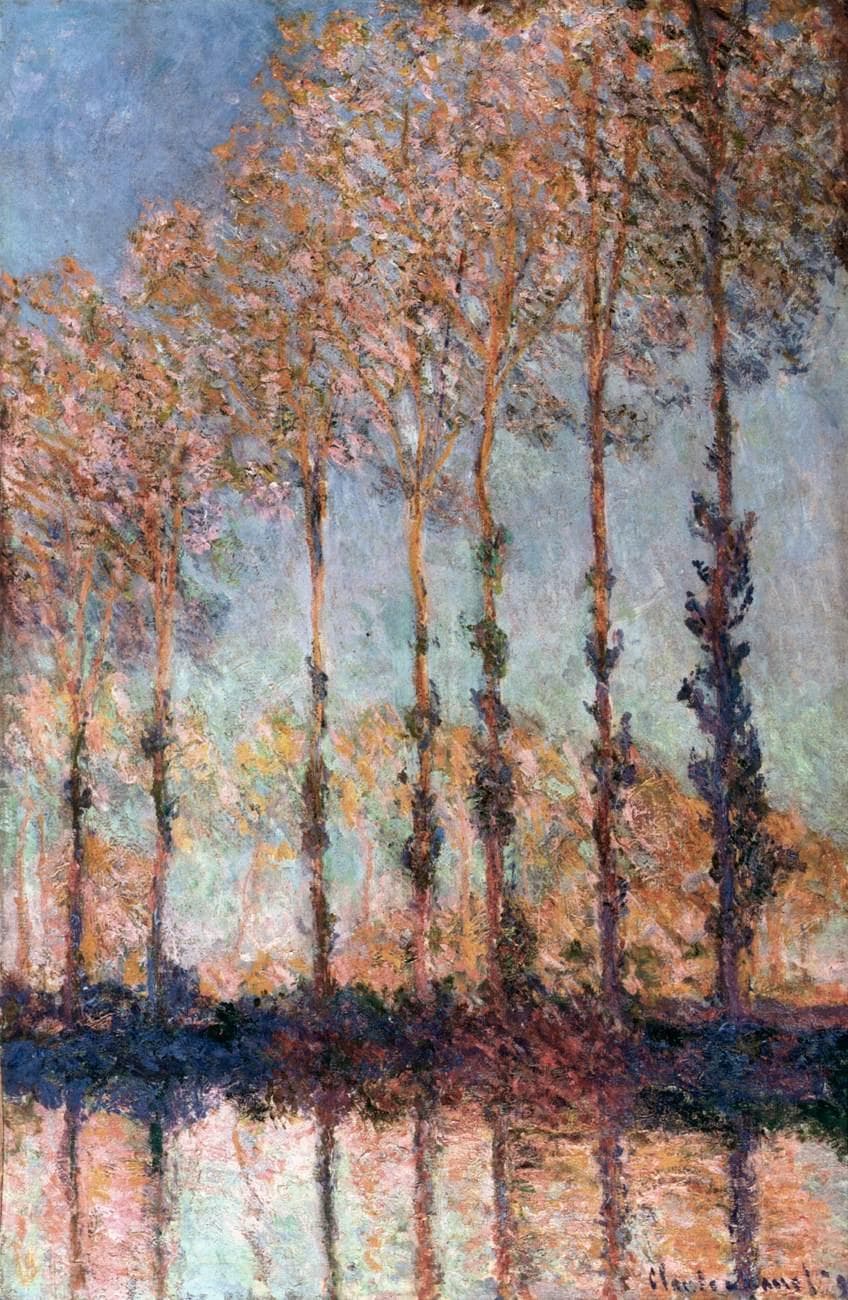
Poplars on the Banks of the River Epte
Claude Monet · 1891
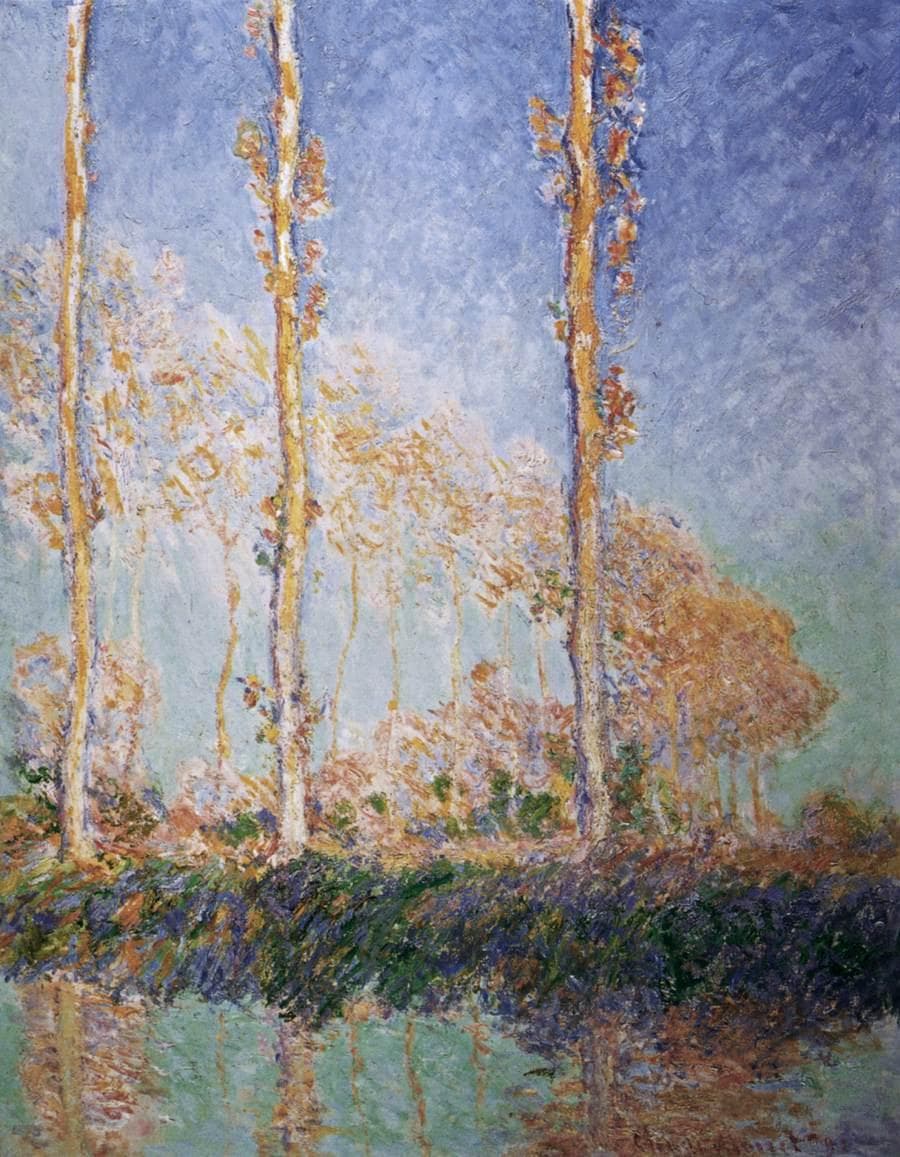
Poplars, Three Pink Trees, Autumn
Claude Monet · 1891
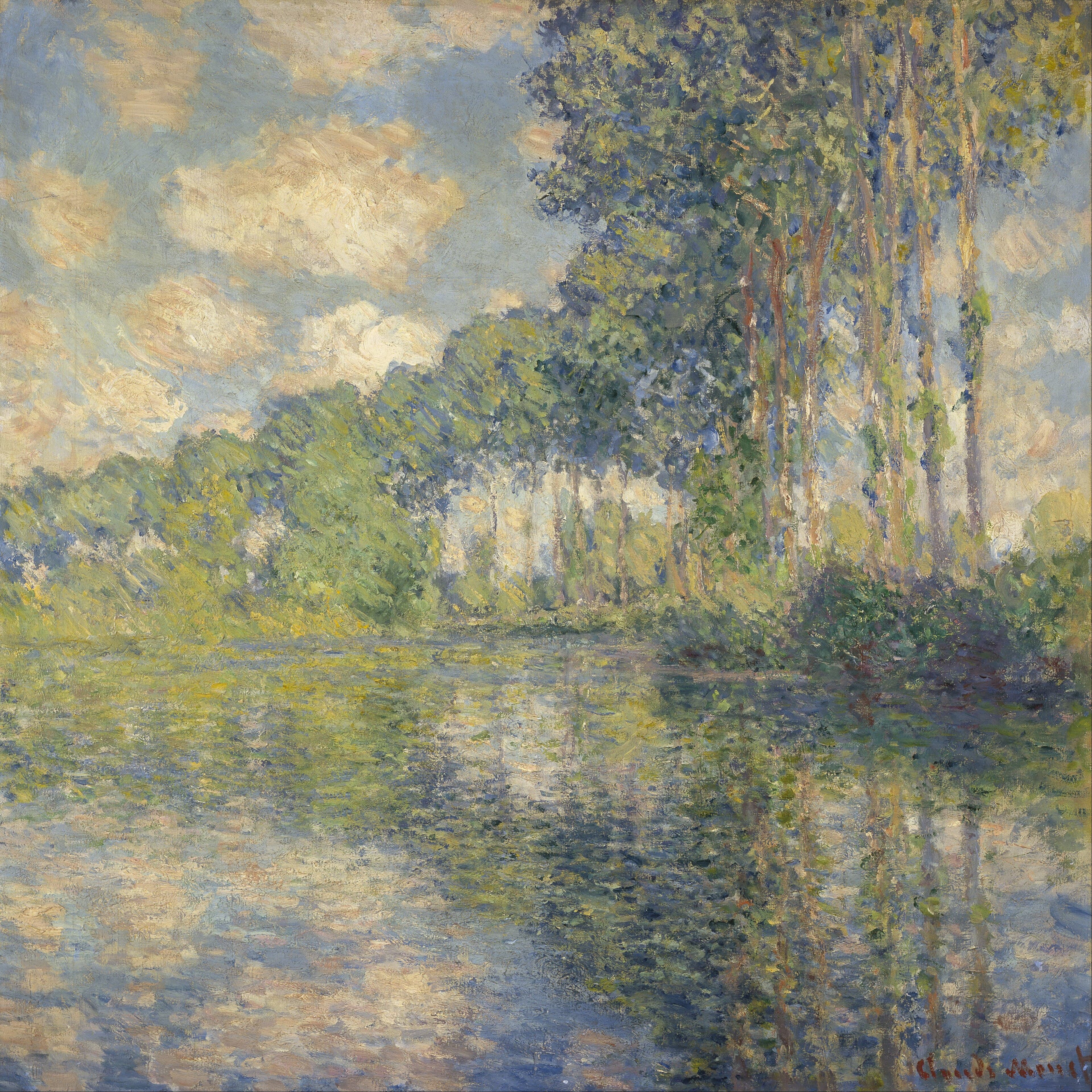
Poplars on the Epte (Edinburgh)
Claude Monet · 1891
Poplars on the Epte (London)
Claude Monet · 1891
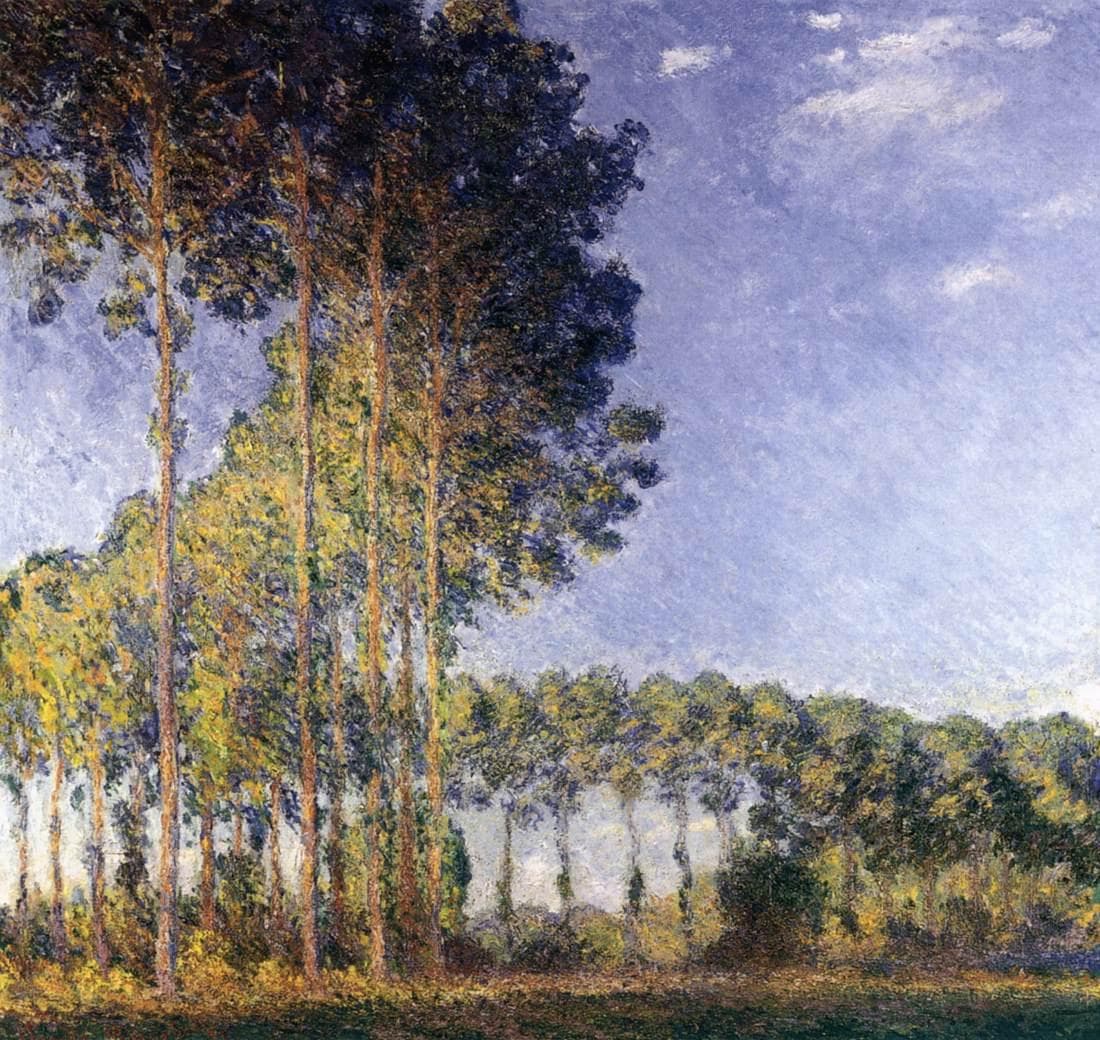
Poplars at the Banks of Epte
Claude Monet · 1891–92
The complete set
All 22 known canvases
From the catalogue raisonné. Works with a full close reading are marked ✦.
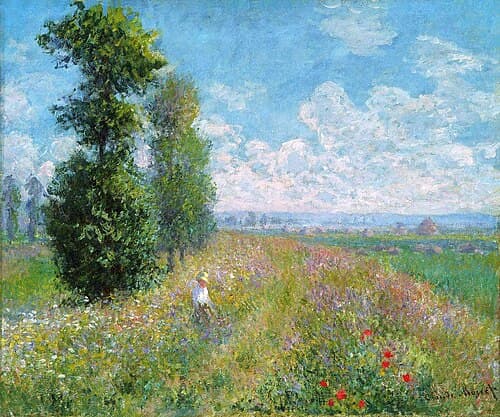
Meadow with Poplars
1875 · Museum of Fine Arts Boston
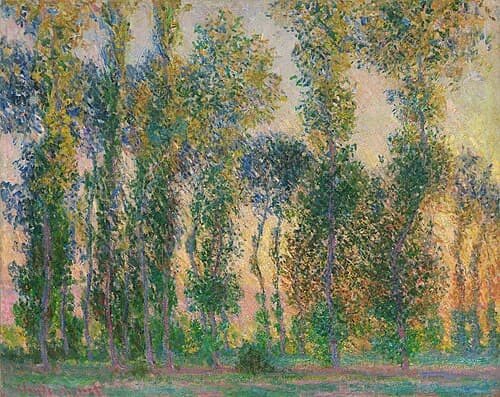
Poplars at Giverny
1887 · Museum Barberini
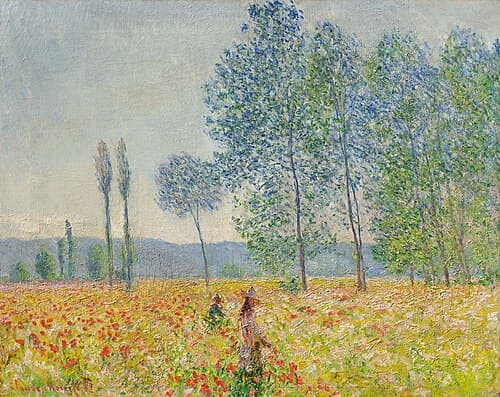
Under the Poplars
1887 · Museum Barberini
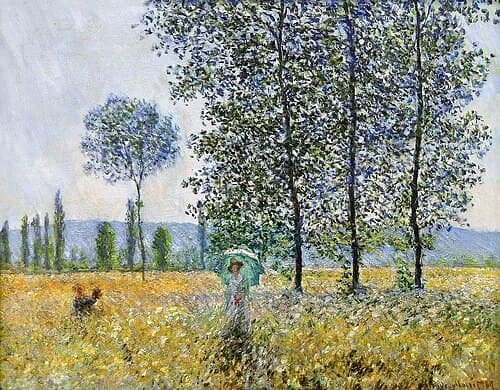
✦Poplars in the Sun
1887 · Staatsgalerie Stuttgart
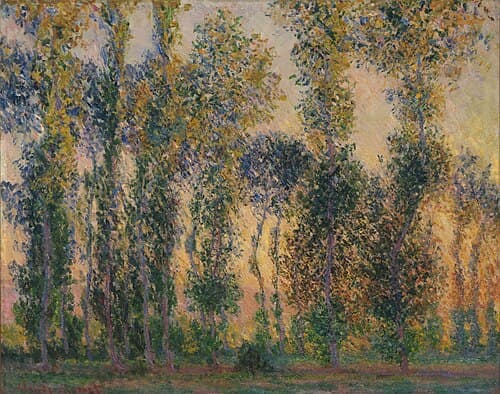
Poplars at Giverny, Sunrise
1888 · Museum of Modern Art
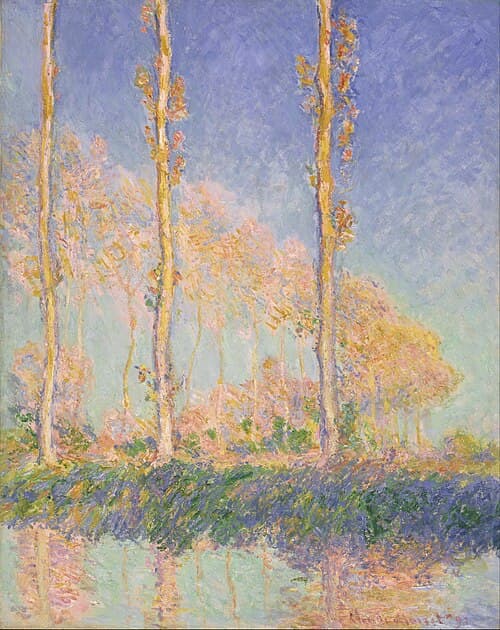
✦Poplars
1891 · Philadelphia Museum of Art
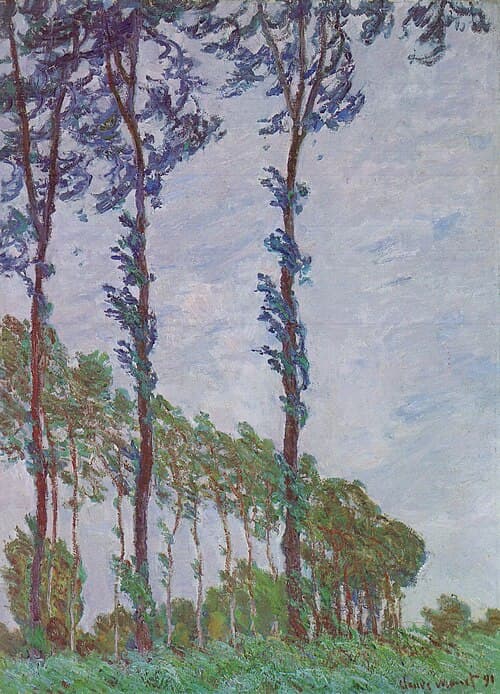
Wind Effect, Row of Poplars
1891 · Musée d'Orsay
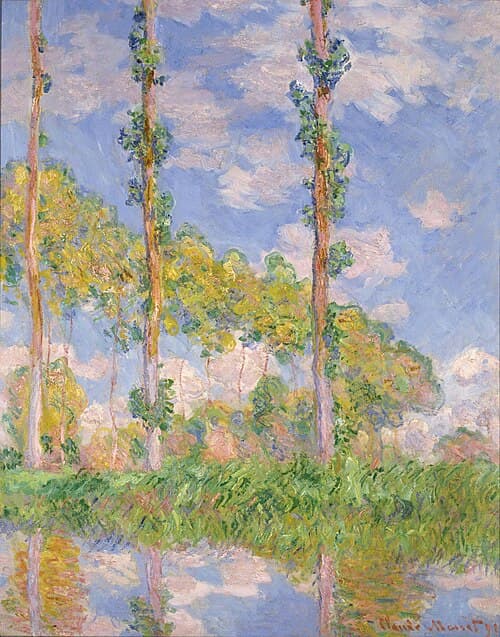
✦Poplars in the Sun
1891 · National Museum of Western Art
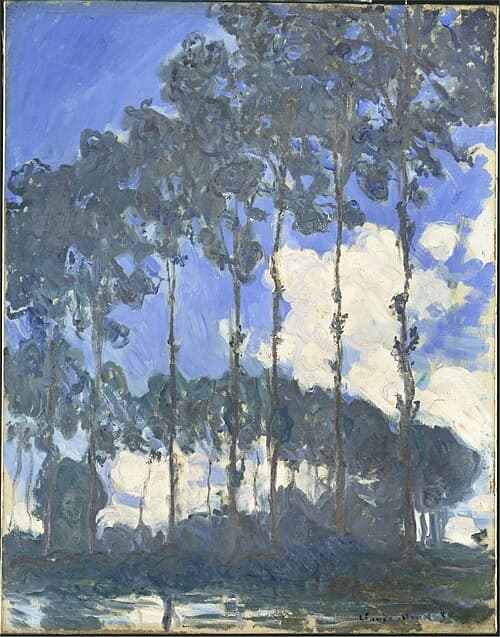
✦Poplars on the Epte
1891 · National Gallery
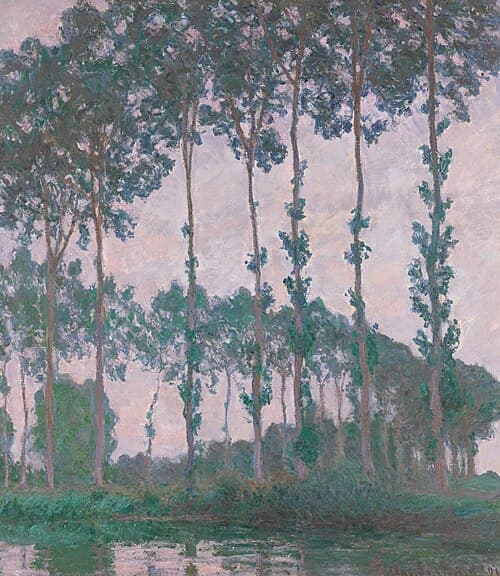
Peupliers au bord de l’Epte, temps couvert
1891
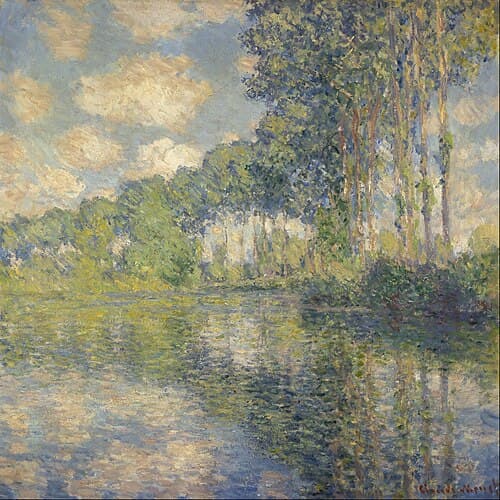
✦Poplars on the Epte
1891 · National Galleries Scotland
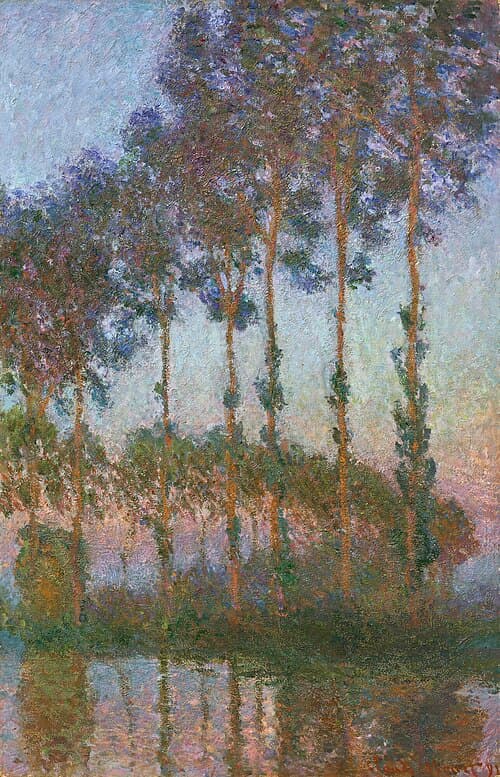
Peupliers au bord de l’Epte, crépuscule
1891
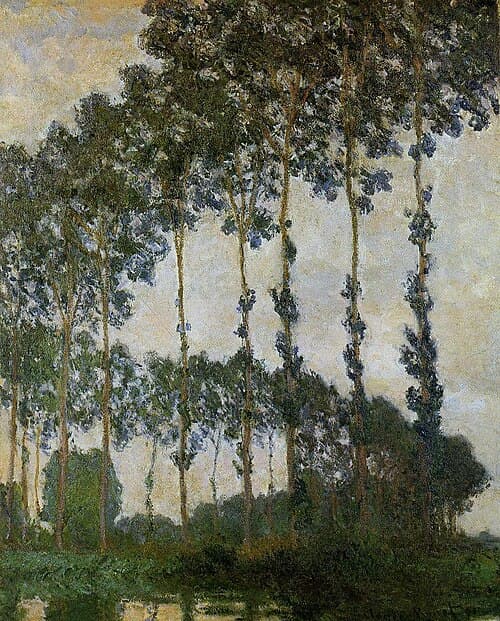
Peupliers près de Giverny, temps couvert
1891 · MOA Museum of Art
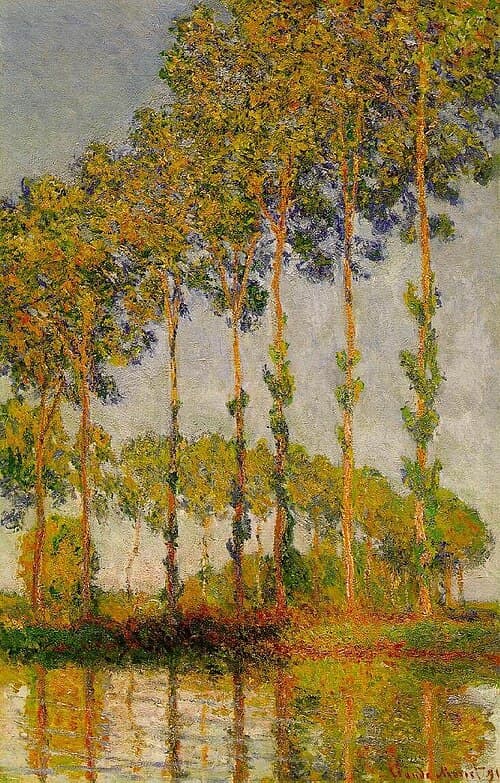
Row of poplars in autumn
1891
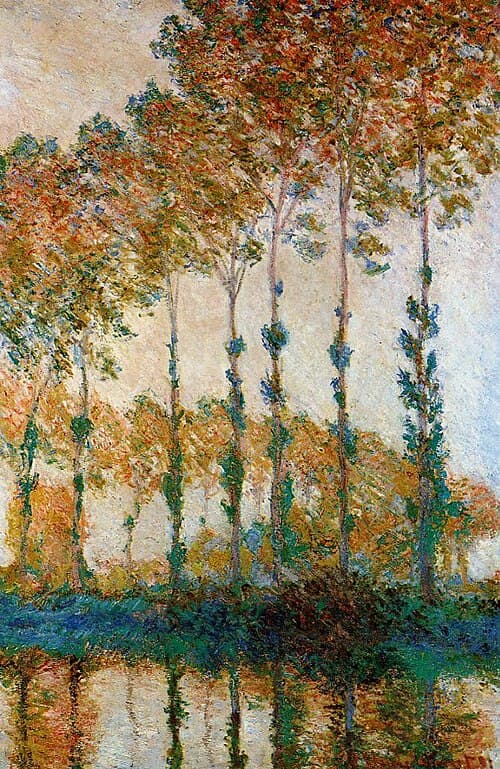
Peupliers au bord de l'Epte, automne
1891
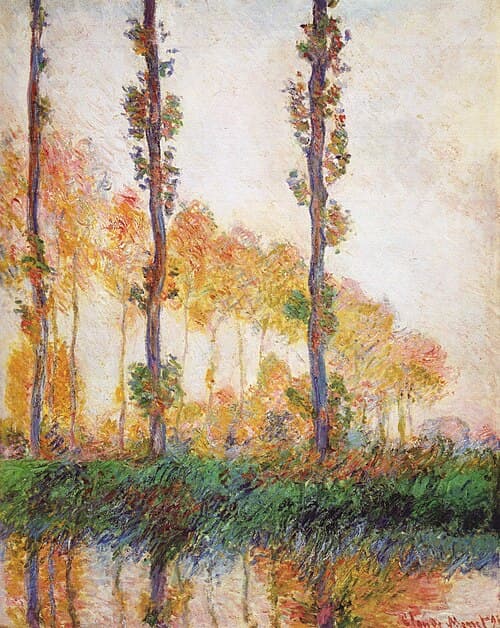
Poplars (Autumn)
1891
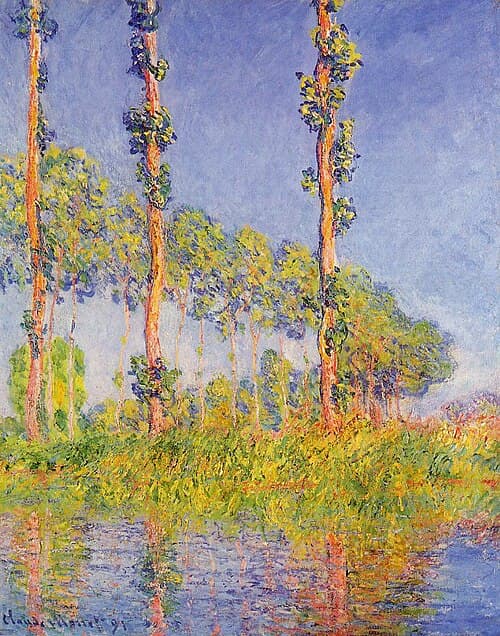
Trois Peupliers, effet d'automne
1891
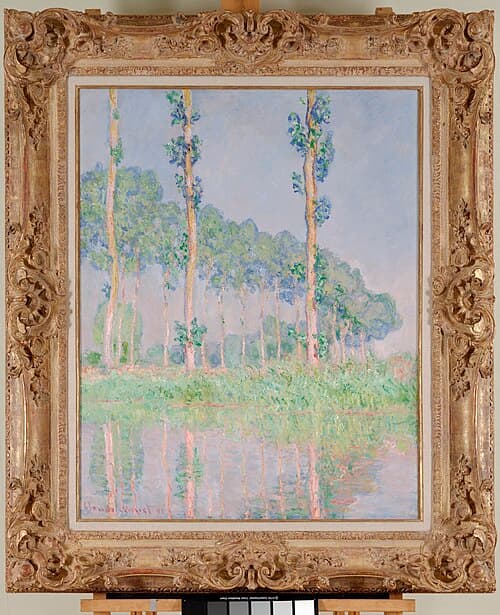
Poplars, Pink Effect
1891 · Dallas Museum of Art
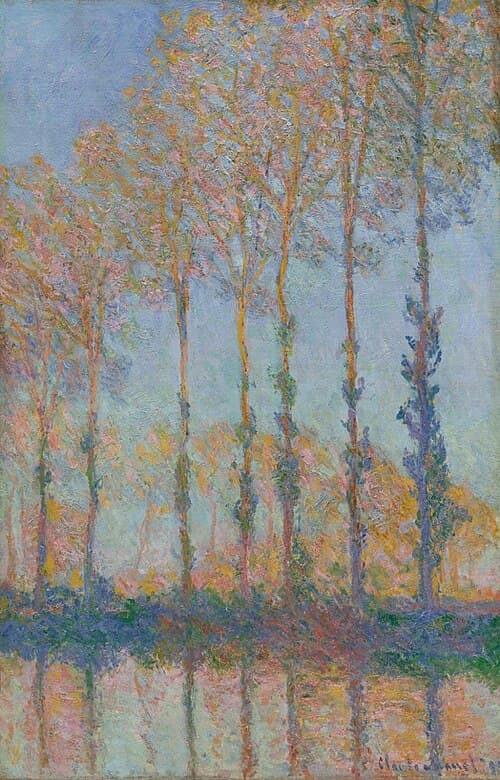
✦Poplars on the Bank of the Epte River
1891 · Philadelphia Museum of Art
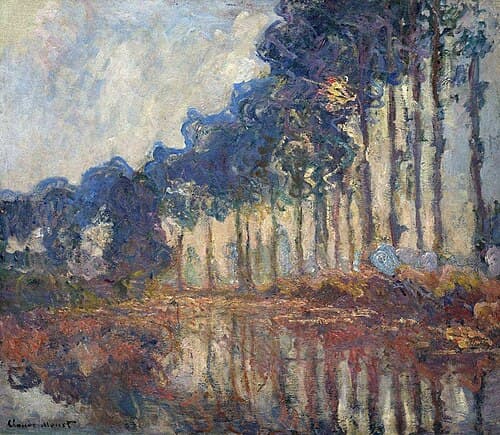
Les peupliers, automne
1891
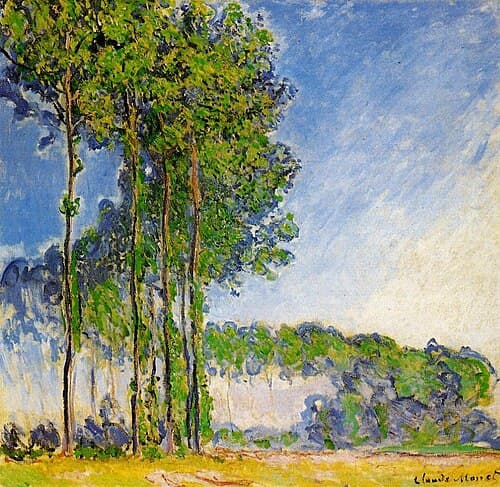
Les Peupliers
1892 · Fitzwilliam Museum
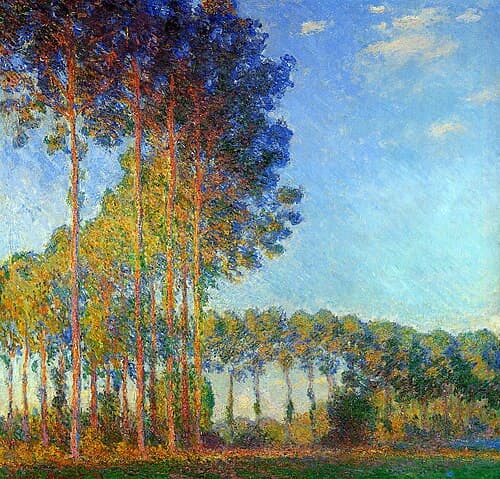
✦Peupliers au bord de l'Epte, vue du marais
1892
What the Poplars show
The trees stood in single file along the edge of a marsh beside the Epte, near the village of Limetz, a few kilometers from Monet's house. The river curved, so the line of trees curved with it in an S, away from the viewer and back again. Monet painted them from water level, sitting in his flat-bottomed boat, which meant he looked up at the trunks and saw them doubled in the river below.
That low viewpoint gives the series its peculiar look. In many canvases the trees are so tall that they run off the top of the picture, so we see trunks but not crowns: thin vertical lines crossing the whole surface, and their reflections continuing them downward. Behind them, the S-curve of the more distant trees makes a zigzag of feathery foliage. The composition is close to a grid, and it is one of the most abstract designs Monet had yet made.
The story of the trees
The poplars belonged to the commune of Limetz, and in the summer of 1891, while Monet was still painting them, the village put them up for auction to be cut for timber. Monet could not afford to outbid the timber merchants on his own. He came to an agreement with the merchant who wanted them, paying toward the purchase on condition that the trees be left standing until he had finished. When the series was done, the trees were felled.
The episode shows how far Monet's method depended on controlling his motif. A few years later, at the lily pond, he would go further and build the motif from scratch.
Three groups and how they differ
The series falls into rough groups:
- Trunks cut by the frame. Three or four tall trees in the foreground, their tops cropped, with the curving row behind. The Four Trees at the Met is the most radical: four trunks and their reflections make a square of verticals and one horizontal, the bank.
- The S-curve. Pictures that show the whole line of trees snaking away, like Poplars at the Banks of Epte and Poplars on the Banks of the River Epte in Philadelphia.
- Three or four trees, seen at a distance, with their crowns visible and a big sky, as in Three Poplars, Summer in Tokyo and Poplars, Three Pink Trees, Autumn in Philadelphia.
Across all of them Monet varied the light and season. Summer canvases are blue and green with white clouds. As autumn advanced the foliage turned gold, then pink and russet, and the pictures warm accordingly. Wind is a frequent subject: the leaves are flicked in with short strokes, and in some canvases the whole row seems to bend. Late-day pictures turn the trunks into dark lines against a glowing sky.
A closer look at The Four Trees
Stand in front of the Met's canvas and the first thing you notice is how little depth there is. The four trunks are thin purple-blue lines; the bank is a narrow band of green and violet; the river below repeats everything, a little darker and softer. The crowns are gone, cut off by the frame, and the only foliage visible is the distant row, a ribbon of orange and gold running across the middle. The picture is nearly symmetrical, and yet nothing in it is still: every leaf is a separate touch, and the reflections waver. It is one of the clearest moments in Monet's work where a landscape turns into a pattern on a flat surface without ceasing to be a riverbank on an autumn afternoon.
How Monet painted them
Monet worked in the boat, moored in the same place, with several canvases ready. He is reported to have said that an effect of light on the poplars lasted only about seven minutes before the sun moved off a particular leaf, so he had to stop and change canvas. The pictures were then finished at Giverny, where he adjusted them as a group. The paint is lighter and more fluid than in the cathedral canvases that followed, with thin washes of sky and quick calligraphic strokes for the foliage.
The tall, narrow canvases, around 100 by 65 centimeters, suit the verticals, while some, like The Four Trees or the version at 88 by 93 centimeters, are nearly square.
The 1892 exhibition
In February and March 1892 Durand-Ruel showed fifteen Poplars in Paris. The Haystacks show of the year before had included other works too; this was the first time Monet hung an exhibition of one motif only, and it made clear that the series as a whole was the work of art. The pictures sold well, and critics praised their decorative unity; some compared the row of canvases to a frieze.
Later historians have read the poplars, like the stacks, as an image of France: a tree planted along French rivers and roads, sometimes called a tree of liberty after the Revolution. Monet himself said nothing of the kind, and the reading belongs to modern scholarship, notably Paul Hayes Tucker's work on the 1890s series.
Legacy
The Poplars come between the Haystacks and Rouen Cathedral, and they show Monet's interest shifting from mass to pattern. The flat bands of trunks and reflections anticipate the surface-only compositions of the Water Lilies. An earlier picture, Poplars in the Sun of 1887, shows how differently he had treated the same kind of tree only four years before.
Where to see Monet's Poplars
- Metropolitan Museum, New York: The Four Trees. See Monet at the Met.
- Philadelphia Museum of Art: two canvases, Poplars on the Banks of the River Epte and Three Pink Trees, Autumn.
- Tate, London: Poplars on the Epte, usually shown at Tate Britain or lent to the National Gallery.
- Scottish National Gallery, Edinburgh: Poplars on the Epte.
- National Museum of Western Art, Tokyo: Three Poplars, Summer, from the Matsukata collection.
- Fitzwilliam Museum, Cambridge, and private collections.
In 2015 the National Gallery in London showed five Poplars side by side, possibly the first time so many had hung together since Monet painted them. For more museums see Where to See Monet's Paintings; for the painter, Claude Monet.
Questions & answers
How many Poplars paintings did Monet make?
Monet painted about two dozen canvases of the poplars on the Epte in the summer and autumn of 1891. He showed fifteen of them at Durand-Ruel's gallery in Paris in February–March 1892, his first exhibition of a single motif.
Where were Monet's poplars?
The trees grew in a line along a marshy bank of the river Epte near Limetz, a few kilometers upstream from Monet's house at Giverny in Normandy. He painted them from his boat-studio moored on the river. The trees were felled after he finished.
Did Monet buy the poplar trees?
In effect, yes. When the commune of Limetz auctioned the trees for timber in 1891, Monet paid a timber merchant to buy them and leave them standing until he had finished painting. Afterward they were cut down.
Where can I see Monet's Poplars?
Examples are in the Metropolitan Museum in New York (The Four Trees), the Philadelphia Museum of Art (two), Tate in London, the Scottish National Gallery in Edinburgh, the Fitzwilliam Museum in Cambridge and the National Museum of Western Art in Tokyo. Others are privately owned.
How are the Poplars different from the Haystacks?
The Haystacks are about solid mass in a field; the Poplars are about lines and pattern. Tall trunks, often cut by the top of the canvas, and their reflections make a near-grid of verticals, and the series is lighter and more fluid in paint. Both record changing light, season and weather.