Impressionism
The Boulevard de Pontoise in Argenteuil under Snow
Claude Monet, 1875
The Boulevard de Pontoise in Argenteuil under Snow (Le Boulevard de Pontoise à Argenteuil, neige) is an 1875 painting by Claude Monet of a snowy avenue in the town where he lived. It is in the Kunstmuseum Basel, Switzerland.
- Artist
- Claude Monet
- Date
- 1875
- Medium
- Oil on canvas
- Dimensions
- 61 × 82 cm
- Collection
- Kunstmuseum Basel, Basel, Switzerland
- Movement
- Impressionism
- Catalogue
- Wildenstein 359
Painted at Monet at Argenteuil
What you are looking at
A broad avenue runs away from us between bare trees, its surface trodden snow in tones of white, cream, mauve and grey, with two worn tracks of brown earth curving down the middle. On the left, behind a wall and a low shed, rise the snow-covered roofs of a large house with a square tower and tall chimneys. On the right, a row of slender trunks marks the edge of the road, their fine branches fanning out against a heavy, pale sky. Far down the boulevard a few dark figures walk through the slush, and the façades at the end of the street fade into the same grey-yellow light as the sky.
The weather is overcast, with no sun and no strong shadow. The snow is old enough to be churned and dirty in the road, still fresh and lumpy along the verges. Monet signed the canvas at lower left.
Claude Monet painted this view of the Boulevard de Pontoise in Argenteuil in the winter of 1875. It measures 61 by 82 centimeters, is number 359 in Wildenstein's catalogue, and belongs to the Kunstmuseum Basel.
Where and when
Argenteuil, on the Seine northwest of Paris, was Monet's home from December 1871 to early 1878. The Boulevard de Pontoise was one of the town's main roads, the route out toward Pontoise, and in the autumn of 1874 Monet moved to a new house on the Boulevard Saint-Denis, in the same part of town near the railway station. This is a picture of his own neighborhood, the street he walked every day, rather than a picturesque view.
The winter of 1874–75 brought repeated snowfalls to the Paris region, and Monet painted the town under snow obsessively: about eighteen canvases survive from that season, more than from any other winter of his career. He painted streets, the railway, the riverbank and his garden, often in the flat, grey light of snow still falling or just fallen. For the whole Argenteuil period, see Monet at Argenteuil.
How it was painted
Snow gave Monet a problem he loved: how to paint white so that it is never just white. Look at the road. The ruts and tracks are laid in with short, horizontal strokes of pinkish cream, lilac and blue-grey, with almost no pure white at all, and the brown earth shows through in two long, curving bands. The banks of snow at the sides are thicker, laid in rounded dabs that sit up on the surface.
The trees on the right are drawn with thin, quick verticals that get shorter and closer together as they recede, which pulls the eye down the avenue. Their branches are a scribble of fine dark lines over the sky, painted wet into wet so they soften at the edges. The house on the left is the most solid thing in the picture, its roofs picked out in white against warmer ochre walls.
Notice how close the range of tones is. Sky, snow and distant buildings are almost the same pale grey-yellow, and the whole picture holds together through small shifts of temperature rather than strong contrasts. That restraint is the point: it is the light of a real day in a suburban winter.
The motif and its siblings
Monet's winter pictures of 1875 belong to a tradition he helped invent, the snow scene as a study in color, which runs from The Magpie of 1868–69 to the haystacks in snow of 1890–91. From the same winter at Argenteuil come Boulevard Saint-Denis, Argenteuil, in Winter in Boston, Snow at Argenteuil in London, Entrance of the Grande Rue at Argenteuil, Winter in Lyon and Train in the Snow at Argenteuil. The Basel canvas is one of the most open and spacious of the group, built on a single, deep perspective.
Where to see it
The painting is in the Kunstmuseum Basel, one of the oldest public art collections in Europe, with a strong group of French nineteenth-century paintings. For other museums, see where to see Monet's paintings, and for his life, Claude Monet.
Questions & answers
Where is Monet's Boulevard de Pontoise in Argenteuil under Snow?
The painting is in the Kunstmuseum Basel, Switzerland. Painted in 1875, it measures 61 by 82 centimeters and is catalogued by Wildenstein as number 359. Its French title is Le Boulevard de Pontoise à Argenteuil, neige.
When and where did Monet paint the Boulevard de Pontoise?
He painted it in the winter of 1874–75 in Argenteuil, the town on the Seine northwest of Paris where he lived from 1871 to 1878. The boulevard was a main road in the same part of town as his house on the Boulevard Saint-Denis.
What does the painting show?
A wide snowy avenue lined with bare trees, a large house with a tower behind a wall on the left, a few distant walkers and a heavy grey sky. The snow is painted in creams, lilacs and blue-greys rather than pure white.
How many snow scenes did Monet paint in Argenteuil?
About eighteen snow pictures survive from the winter of 1874–75 alone, more than from any other winter in his career. They include views in Boston, London, Lyon and Basel, of streets, the railway and the riverbank.
More by the artist
Claude Monet

Bridge over a Pond of Water Lilies
Claude Monet · 1899

Woman with a Parasol – Madame Monet and Her Son
Claude Monet · 1875

Sunset in Venice
Claude Monet · 1908–12

La Grenouillère
Claude Monet · 1869

Beach in Pourville
Claude Monet · 1882

Springtime
Claude Monet · 1872

Boating on the River Epte
Claude Monet · 1890

The Seine at Asnières (Hermitage)
Claude Monet · 1873
Also painted in 1875
The same year
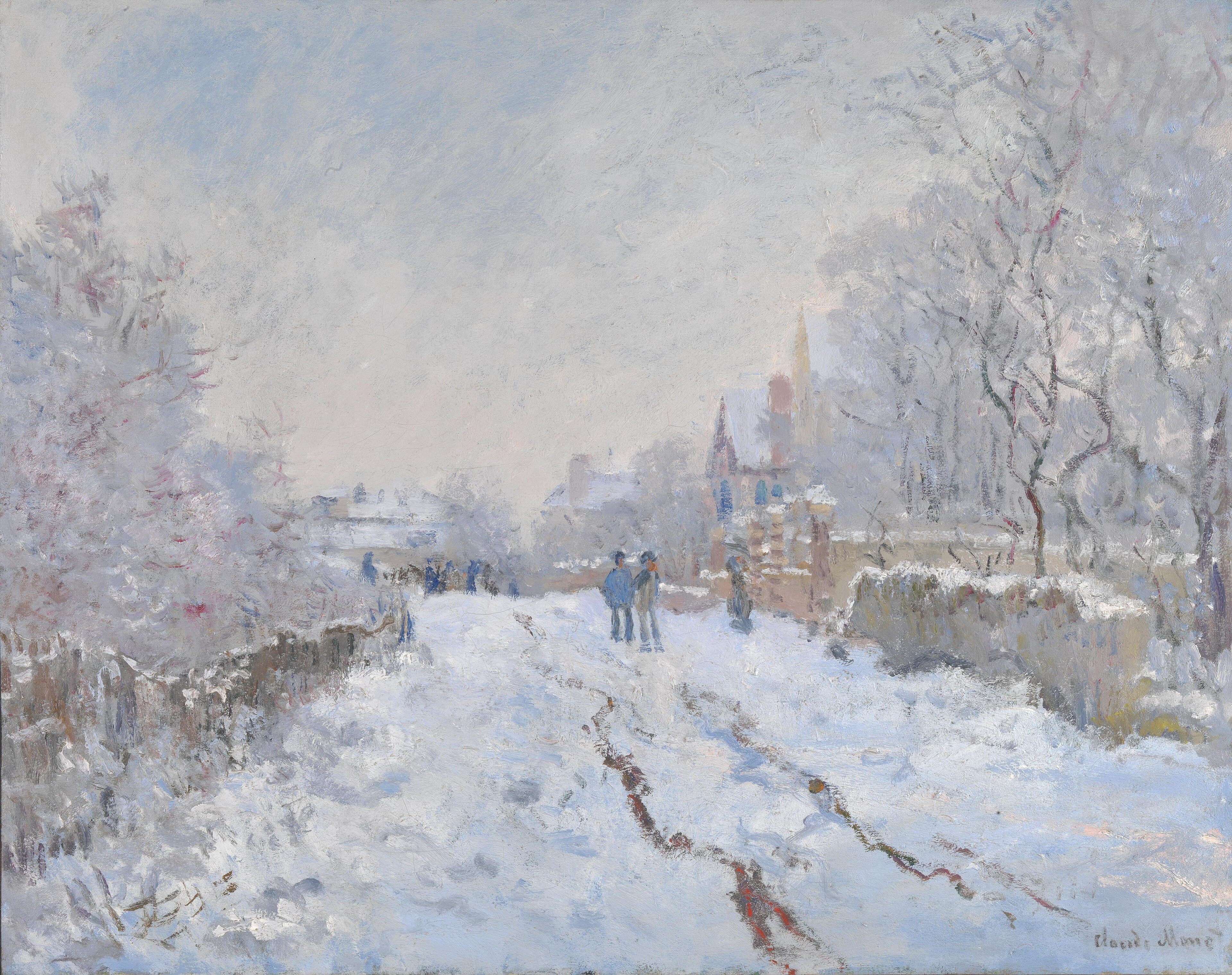
Snow Scene at Argenteuil
Claude Monet · 1875
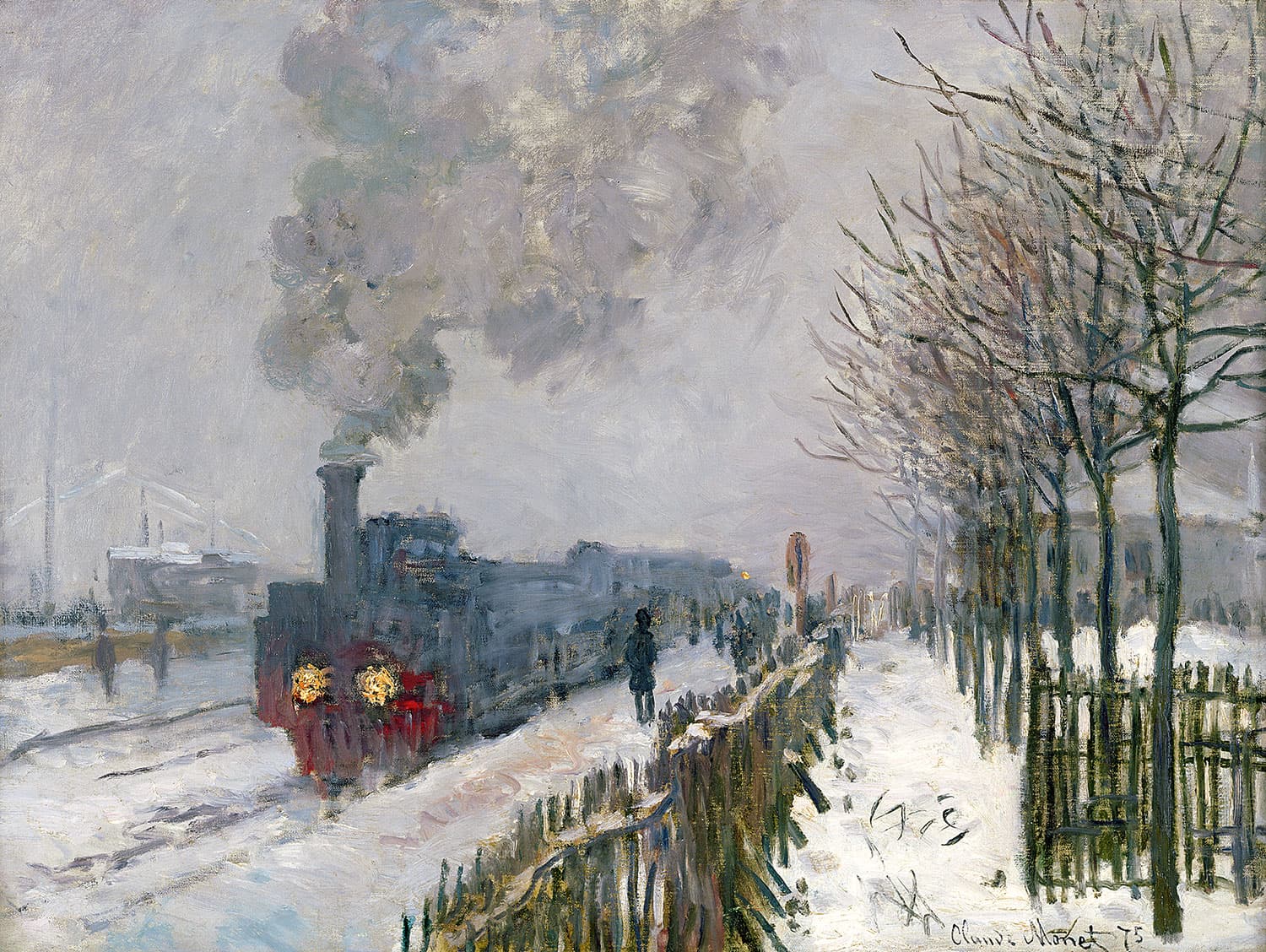
Train in the Snow (The Locomotive)
Claude Monet · 1875
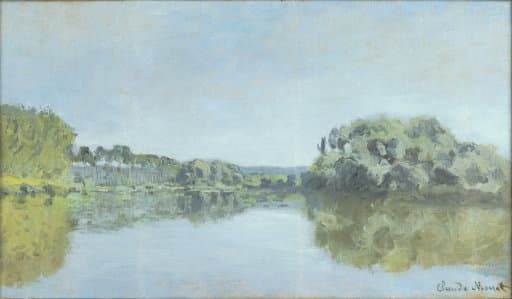
Bords de la Seine à Argenteuil
Claude Monet · 1870s (inscribed 1875 on the frame)
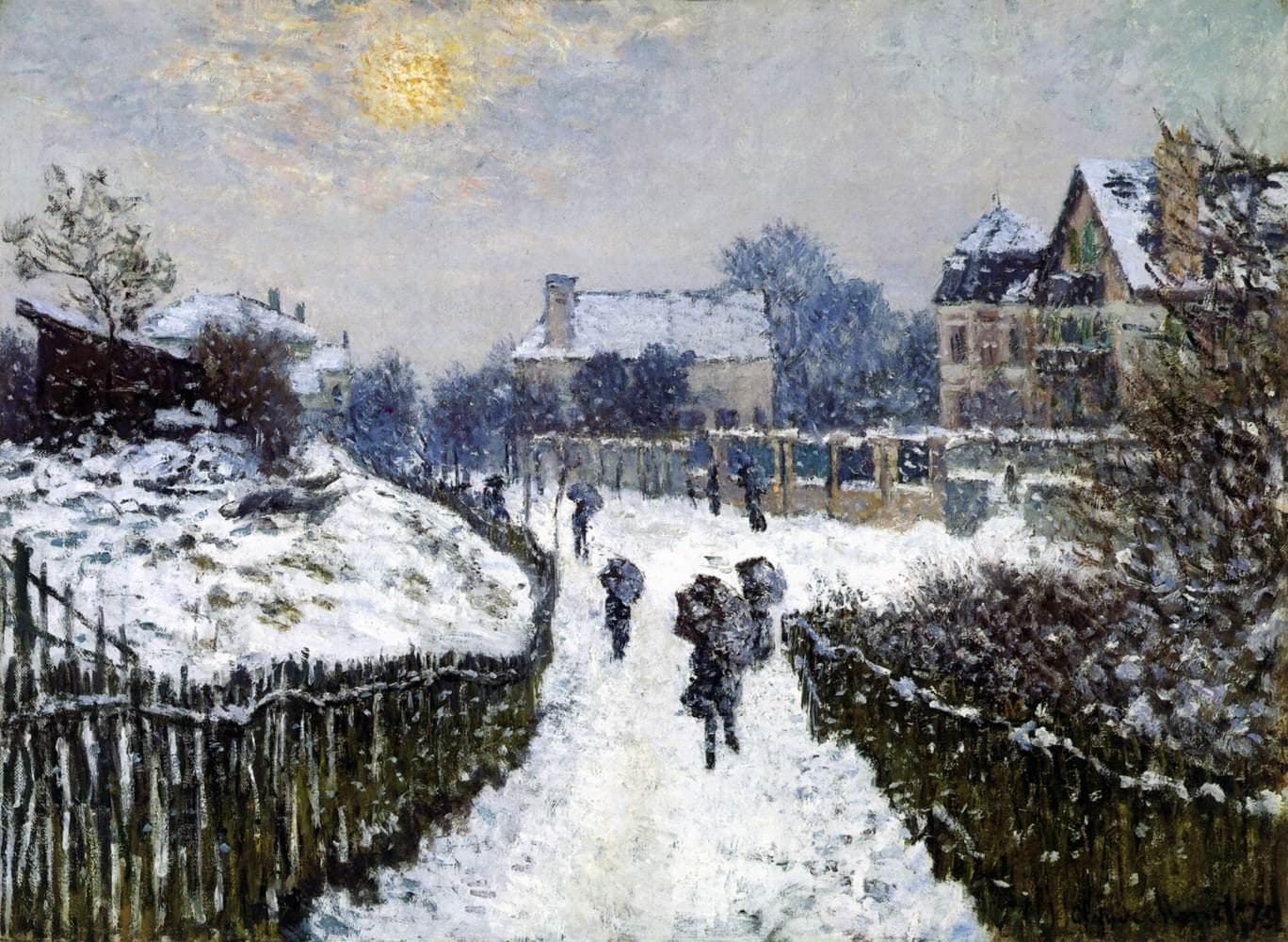
Boulevard Saint-Denis, Argenteuil, in Winter
Claude Monet · 1875
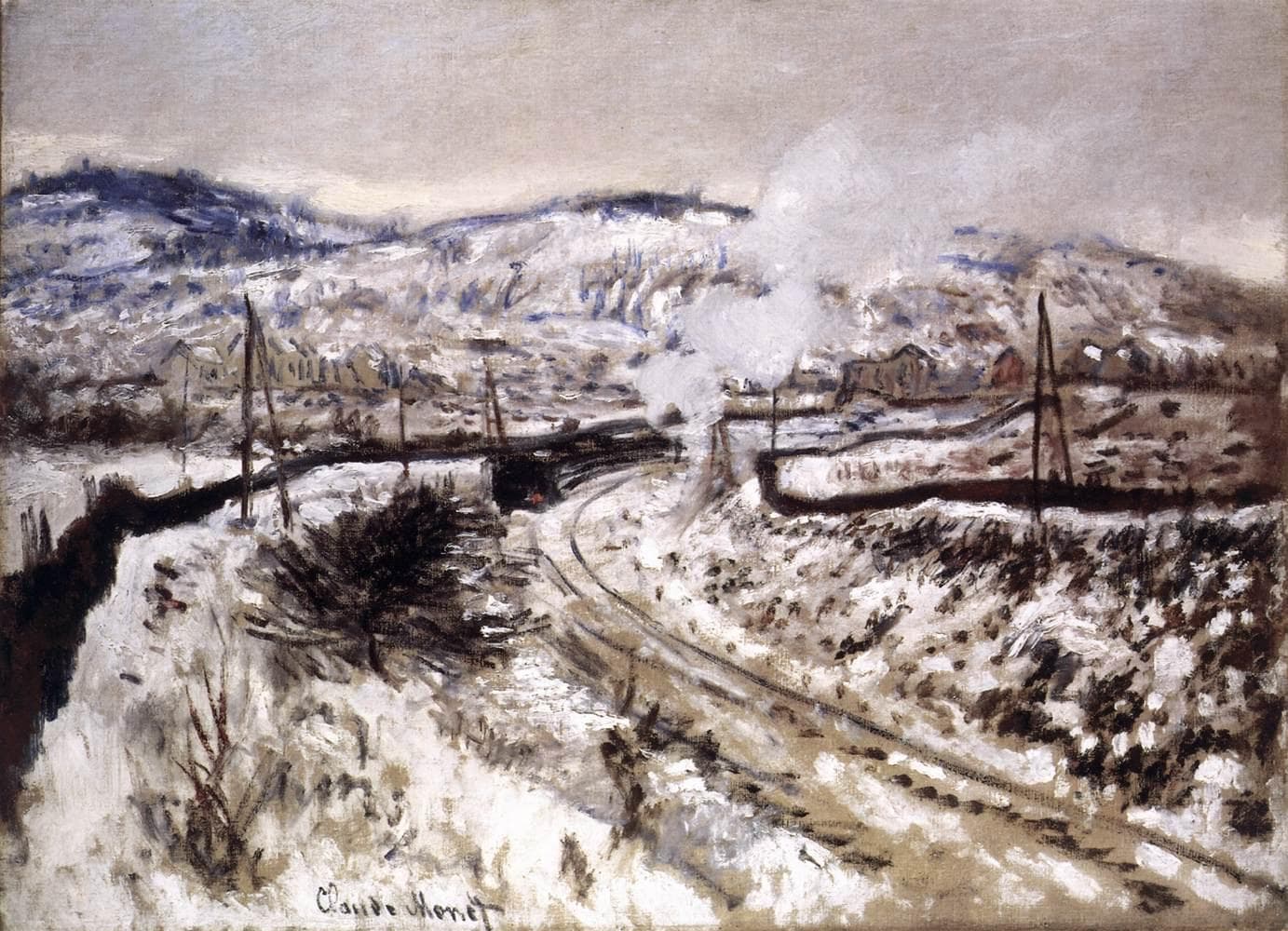
Train in the Snow at Argenteuil
Claude Monet · 1875
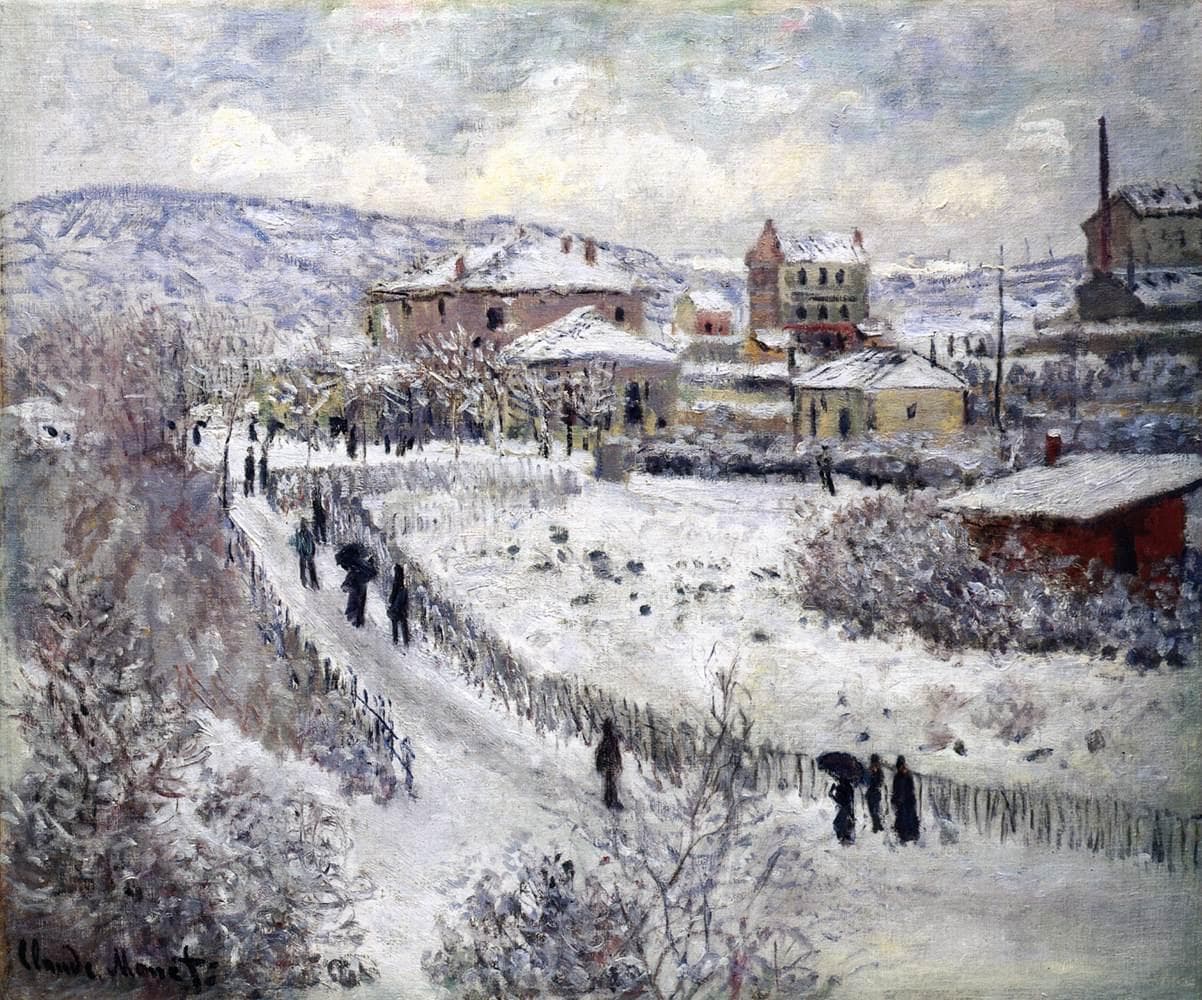
View of Argenteuil in the Snow
Claude Monet · 1874–75
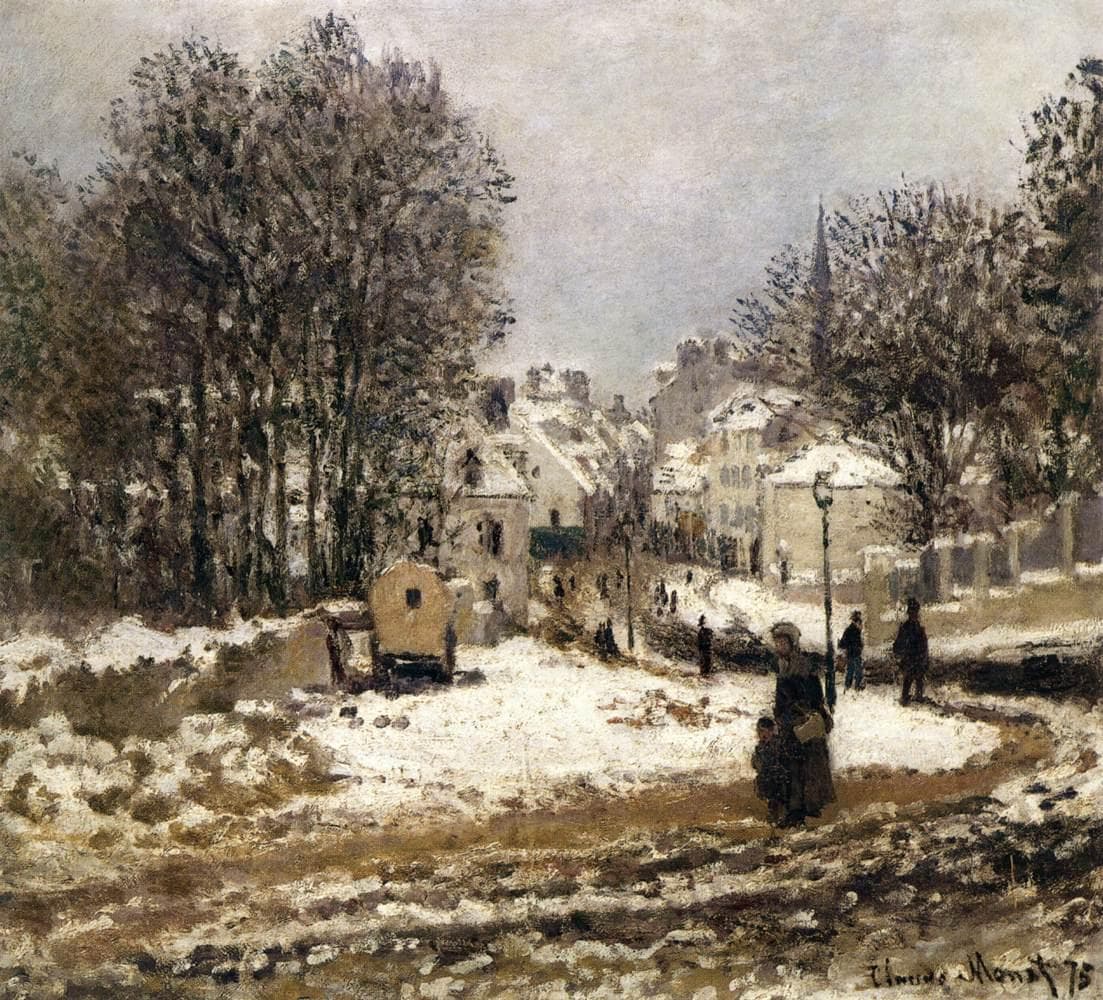
Entrance to the Grande Rue at Argenteuil, Winter
Claude Monet · 1875
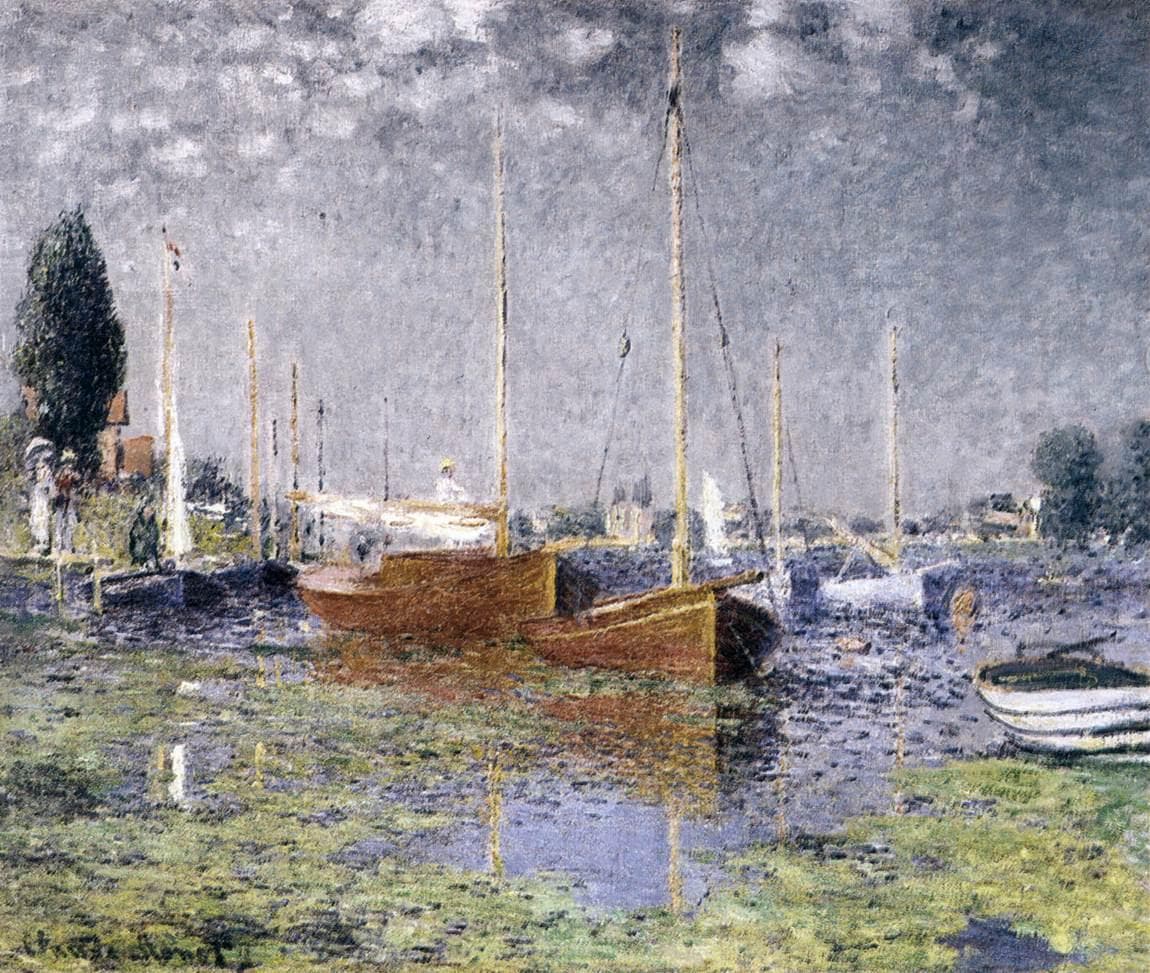
Red Boats at Argenteuil
Claude Monet · 1875
Kindred works
You may also study
Boulevard Saint-Denis, Argenteuil, in Winter
Claude Monet · 1875
Snow Scene at Argenteuil
Claude Monet · 1875
Entrance to the Grande Rue at Argenteuil, Winter
Claude Monet · 1875
Train in the Snow at Argenteuil
Claude Monet · 1875
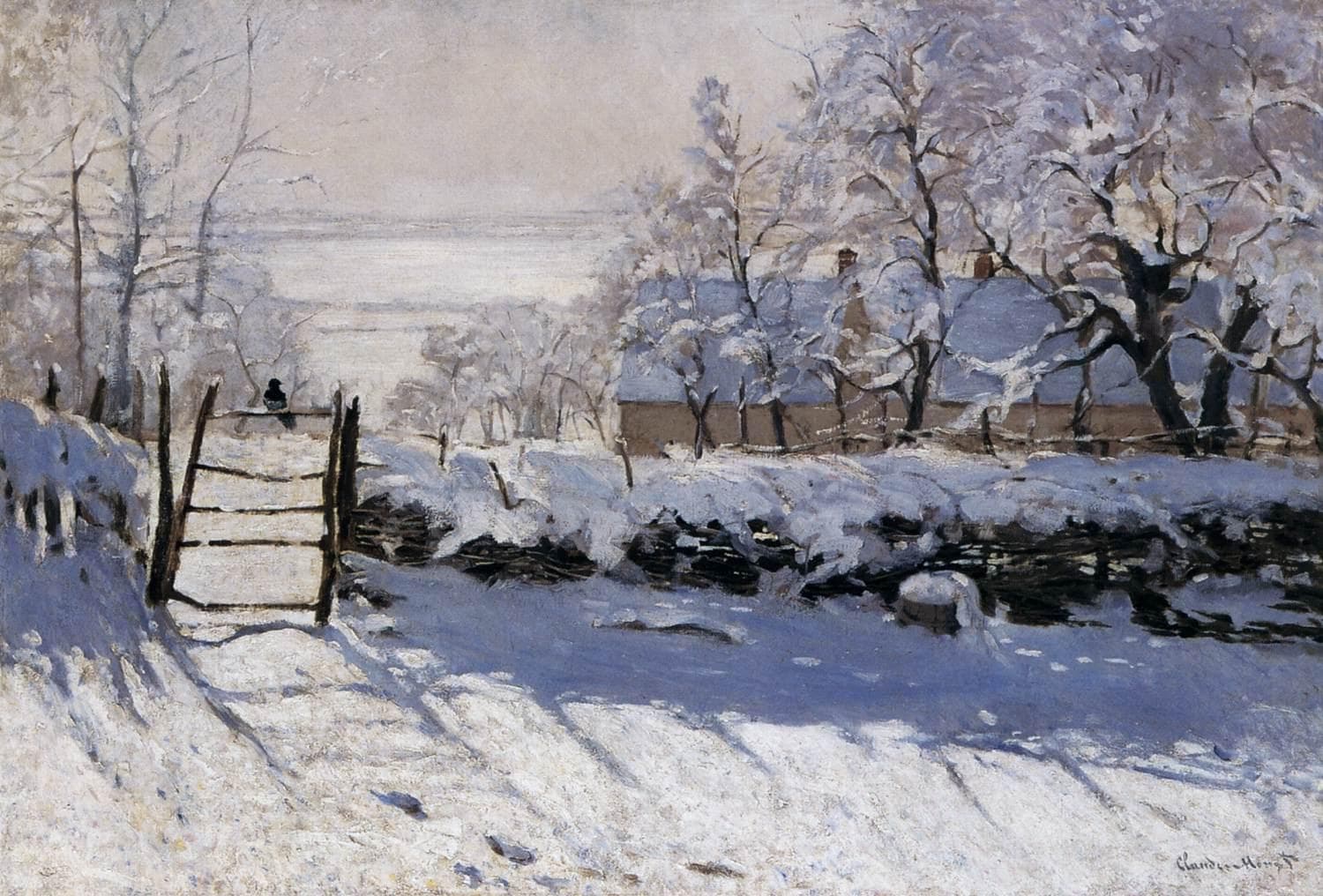
The Magpie
Claude Monet · 1868–69

The Scream
Edvard Munch · 1893

Ophelia
John Everett Millais · 1851–52

The Great Wave off Kanagawa
Katsushika Hokusai · c. 1830–32