Impressionism
Argenteuil
Claude Monet, c. 1872
Argenteuil is a calm river view painted by Claude Monet around 1872, showing sailing boats moored on the Seine at the town where he lived. The small canvas is in the Musée d'Orsay, Paris.
- Artist
- Claude Monet
- Date
- c. 1872
- Medium
- Oil on canvas
- Dimensions
- 50 × 65 cm
- Collection
- Musée d'Orsay, Paris, France
- Movement
- Impressionism
- Catalogue
- Wildenstein 230
Painted at Monet at ArgenteuilMore at Monet at the Musée d'Orsay
Claude Monet's Argenteuil is a quiet view of the Seine painted in 1872, the year he settled in the riverside town a short train ride northwest of Paris. The canvas, about 50 by 65 centimeters and number 230 in Wildenstein's catalogue, is signed and dated "72" at lower left and belongs to the Musée d'Orsay in Paris.
What you are looking at
The picture is almost all water and sky. A broad, glassy stretch of river runs across the lower half, painted in long horizontal strokes of pewter, cream and blue-gray. Near the center a sailing boat rides at anchor with its sails furled, its tall mast drawn as a single dark line that climbs high into the sky and drops again, broken and wavering, as a reflection. A second, smaller mast stands beside it, and a long boom slants across. Just in front, a rowing boat carries a standing figure, a dark vertical against the pale water.
Further back, at the left of center, a white sail catches the light, the brightest shape in the picture, and a small rowing boat slides past it. The far bank is a thin band of trees and low houses, with the spire of the Argenteuil church just visible at left. On the left edge, a leaning tree and a row of moored hulls frame the view, their dark reflections the heaviest notes in the composition. The sky is a pale, overcast white touched with violet, laid on in loose diagonal strokes.
How it was painted
What makes the picture work is restraint. Monet uses a narrow range of grays and blues and gives almost everything the same soft light, so the masts, the reflections and the lone sail become the drawing. The reflections are not mirror images: each mast breaks into a zigzag of short dashes, which is how Monet signals the faint movement of the water. The trick is simple, a few calligraphic strokes of dark paint, but it does the work of a whole description of the river's surface. This way of painting reflections, refined at Argenteuil, became one of the defining habits of Impressionism.
The ground is a pale priming that shows through in the sky, which helps keep the picture luminous despite its muted colors. The paint is thin almost everywhere except in the white sail, where it is thicker and catches the light. Even the figure in the rowing boat is just two or three strokes, yet he is placed exactly where the eye needs a vertical to measure the stillness of the water.
Argenteuil in Monet's career
Monet lived at Argenteuil from December 1871 until 1878, and these were among his most productive years. The town was a weekend sailing center for Parisians and also a growing industrial suburb, and he painted both sides: regattas and pleasure boats in pictures such as Regatta at Argenteuil and The Basin at Argenteuil, both from the same year, and the iron railway bridge in The Railway Bridge at Argenteuil. Édouard Manet and Pierre-Auguste Renoir came to paint beside him in the summer of 1874, and Monet later fitted out a floating studio boat to work on the water.
This canvas belongs to the gentler end of that range: no crowds, no steam trains, only boats waiting for wind on a gray day. Compare it with the later, brighter Red Boats at Argenteuil, where the same kind of moored boats are seen in hot sunlight and the reflections turn into bars of scarlet. The difference between the two is the difference between an overcast morning and a summer afternoon, and Monet was already treating such differences as subjects in their own right, twenty years before the series. Our hub on Monet at Argenteuil follows the whole period.
Where to see it
Argenteuil is in the collection of the Musée d'Orsay in Paris, which holds the largest group of Monet's Argenteuil paintings anywhere; whether this small canvas is on view varies. More river views from these years appear in The Seine at Argenteuil. More on Claude Monet.
Questions & answers
Where is Monet's painting Argenteuil?
This calm view of sailing boats on the Seine, dated 1872, is in the Musée d'Orsay in Paris. The Orsay owns many of Monet's Argenteuil pictures, so it is the best single place to see how he painted the town and its river in the 1870s.
When was Argenteuil painted?
Monet signed and dated it '72', the year he settled in Argenteuil after returning from London and Holland. It belongs to the first months of his seven-year stay in the town, when he painted the river and its boats again and again.
What does Monet's Argenteuil show?
A calm, overcast stretch of the Seine with a sailing boat at anchor and its furled sails, a rowing boat with a standing figure, a white sail in the distance and the church spire of Argenteuil on the far bank. The masts break into zigzag reflections in the still water.
Why did Monet paint Argenteuil so often?
Monet rented a house in Argenteuil from late 1871 until 1878. The town offered sailing, gardens and a railway link to Paris, and he painted it in every season, from regattas and bridges to snow scenes, producing about 170 pictures there.
More by the artist
Claude Monet

Bridge over a Pond of Water Lilies
Claude Monet · 1899

Woman with a Parasol – Madame Monet and Her Son
Claude Monet · 1875

Sunset in Venice
Claude Monet · 1908–12

La Grenouillère
Claude Monet · 1869

Beach in Pourville
Claude Monet · 1882

Springtime
Claude Monet · 1872

Boating on the River Epte
Claude Monet · 1890

The Seine at Asnières (Hermitage)
Claude Monet · 1873
Also painted in 1872
The same year
The Seine at Rouen
Claude Monet · 1872
The Tea Service
Claude Monet · 1872
Carrières-Saint-Denis
Claude Monet · 1872
The Petit Bras of the Seine at Argenteuil
Claude Monet · 1872
The Port of Le Havre, Night Effect
Claude Monet · 1872
Riverside Path at Argenteuil
Claude Monet · c. 1872
The Basin at Argenteuil
Claude Monet · 1872
The Plain of Sannois at Argenteuil
Claude Monet · 1872
Kindred works
You may also study
The Basin at Argenteuil
Claude Monet · 1872
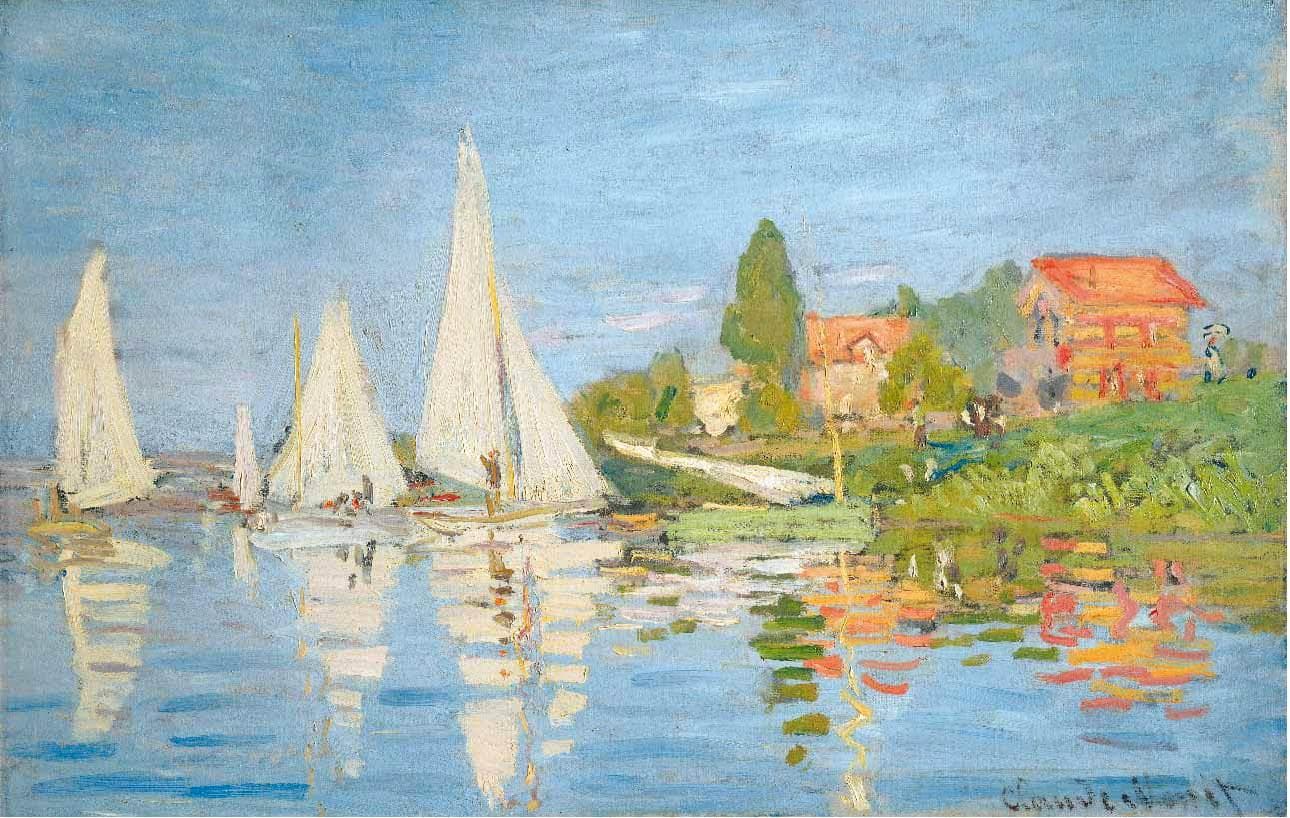
Regatta at Argenteuil
Claude Monet · c. 1872
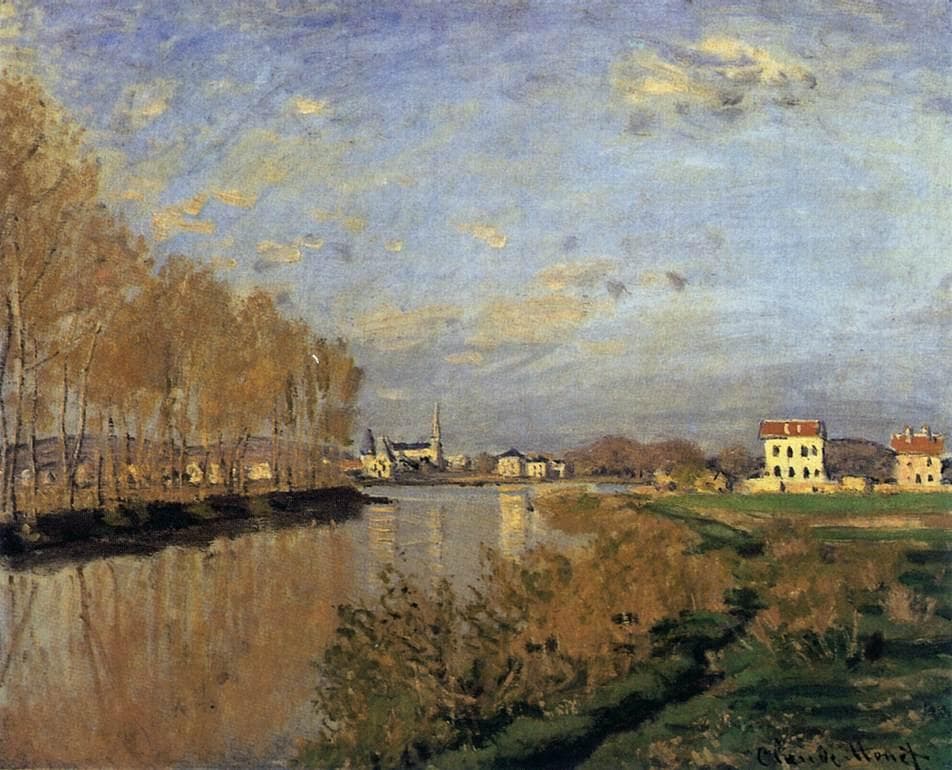
The Seine at Argenteuil
Claude Monet · 1873
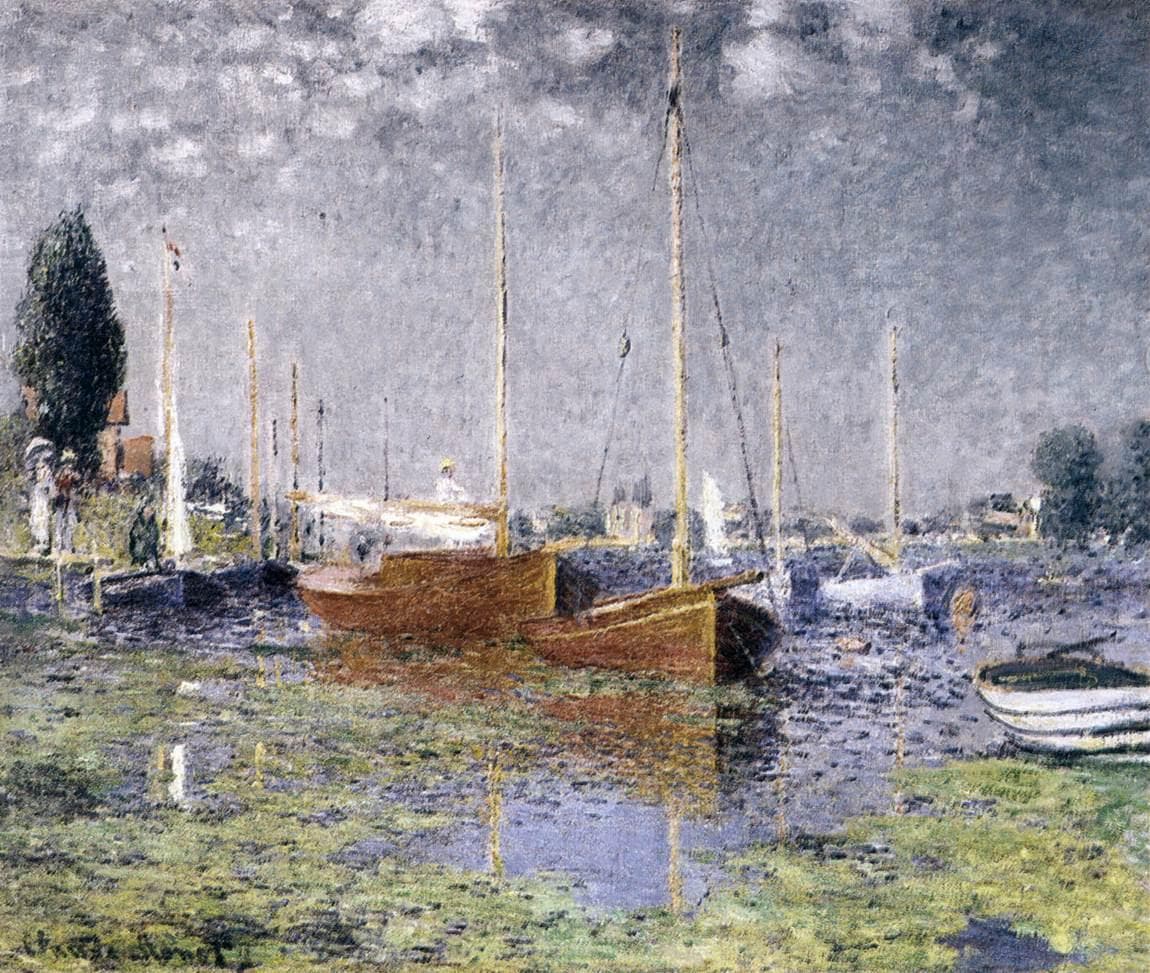
Red Boats at Argenteuil
Claude Monet · 1875
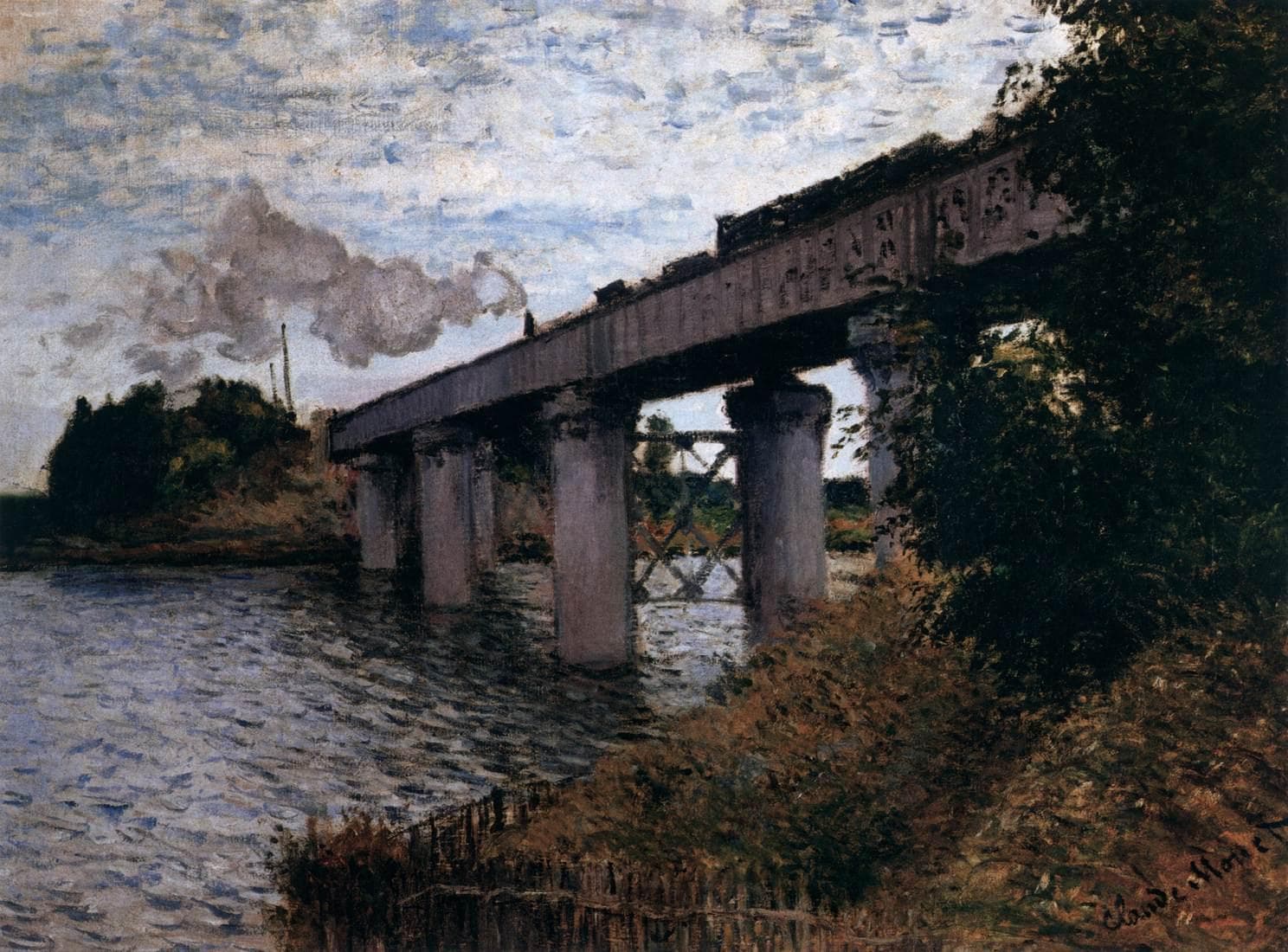
The Railway Bridge at Argenteuil
Claude Monet · c. 1873–74
The Studio Boat
Claude Monet · 1874

The Scream
Edvard Munch · 1893

Ophelia
John Everett Millais · 1851–52