Impressionism
The Railway Bridge at Argenteuil (detail)
Claude Monet, 1873
This image is a detail of Claude Monet's The Railway Bridge at Argenteuil (1873), showing two men on the bank watching a sailboat beneath the iron bridge. The full canvas is in a private collection; it sold in 2008 for a then-record price for Monet.
- Artist
- Claude Monet
- Date
- 1873
- Medium
- Oil on canvas
- Dimensions
- 60 × 99 cm (entire painting)
- Collection
- Private collection
- Movement
- Impressionism
- Catalogue
- Wildenstein 279
Painted at Monet at Argenteuil
What you are looking at
This image is a close-up of the left part of one of Claude Monet's views of the railway bridge at Argenteuil. Two men stand on the riverbank at lower left, seen from behind: one in a dark jacket and trousers with a yellow straw hat, the other in a lighter grey-blue suit and a cap. They look out at the river, where a small sailboat with a pale grey-lilac sail and a warm yellow hull glides on blue water.
Above them the bridge runs straight across the picture: a flat girder deck painted in white and pale grey, its side divided by thin vertical lines, resting on massive cylindrical piers. On top of the deck, the dark shapes of a train's carriages and the funnel of its engine are just visible. Through and beneath the bridge we see the green far bank with a row of poplars, a glimpse of lattice girders at right, and above everything a blue sky heaped with white and lilac cumulus.
The whole painting, dated 1873 and catalogued by Wildenstein as number 279, is a wide canvas of about 60 by 99 centimeters. It shows the bridge running almost parallel to the picture plane across the full width, with the train and its steam above the river. It is in a private collection, which is why it is far less familiar than the version in the Musée d'Orsay.
Where and when
Monet lived at Argenteuil, on the Seine about 11 kilometers northwest of Paris, from December 1871 to early 1878. The railway line from the Gare Saint-Lazare crossed the river there on an iron bridge, rebuilt after its destruction in the Franco-Prussian War of 1870–71. It brought Sunday crowds of Parisians to sail, row and walk on the banks, and Monet painted it repeatedly in 1873 and 1874. See Monet at Argenteuil.
1873 was a good year for him. Durand-Ruel was buying his work, the family was comfortable for once, and he was planning, with Pissarro, Degas, Renoir and others, the independent exhibition that opened in April 1874.
How it was painted
The detail lets you see how economical Monet's figures are. Each man is a handful of strokes: a dark body, a patch of light for a face turned away, a flick of yellow for the straw hat. The sailboat is a triangle of grey-white with a single dark line for its edge and a warm yellow stroke for the hull. Yet together they tell a story: people of leisure watching the river, the modern world passing over their heads.
Notice the bridge's color. Monet paints its side in bright white and pale grey, catching the sun, so the iron looks almost weightless against the sky. The piers are cool lilac-grey, modeled with a lighter stripe on their sunlit side, and their reflections fall straight down into the water in long, pale strokes. The clouds are thick, creamy and rounded, a contrast with the ruled straightness of the deck.
The motif and its siblings
Monet painted the Argenteuil railway bridge several times, and the versions are easily confused. In the Musée d'Orsay painting, the bridge cuts diagonally across the canvas from a bushy bank at the right, and there are no figures. In this 1873 version the bridge is seen side-on, the foreground is an open bank with a path, and the two spectators make the scene a modern Sunday outing. Other versions are Railroad Bridge, Argenteuil in Philadelphia and The Promenade with the Railroad Bridge in Saint Louis. For the town's road bridge, see The Bridge at Argenteuil; for the sailing that drew the crowds, Regatta at Argenteuil.
Where to see it
The painting is privately owned and rarely exhibited. It sold at Christie's in New York on 6 May 2008 for about 41.5 million dollars, at the time a record price for a work by Monet; the record was broken a few weeks later. For Monet paintings on public view, see where to see Monet's paintings, and for the artist, Claude Monet.
Questions & answers
Which Monet painting is this Railway Bridge detail from?
It is a detail of Le Pont du chemin de fer à Argenteuil of 1873, Wildenstein 279, a wide canvas of about 60 by 99 centimeters showing the bridge side-on with a train crossing, two men on the bank and a sailboat on the Seine.
Where is Monet's 1873 Railway Bridge at Argenteuil?
It is in a private collection. It sold at Christie's New York in May 2008 for about 41.5 million dollars, then a record for Monet. The better-known diagonal view of the bridge is in the Musée d'Orsay, Paris.
When and where was it painted?
In 1873 at Argenteuil, the town on the Seine northwest of Paris where Monet lived from 1871 to 1878. The railway bridge, rebuilt after the war of 1870–71, carried the line from Paris across the river.
Who are the two men in Monet's Railway Bridge at Argenteuil?
They are not identified. They are anonymous spectators, painted from behind in a few strokes, watching a sailboat beneath the bridge. Their presence turns the scene into a picture of Sunday leisure beside modern engineering.
More by the artist
Claude Monet

Bridge over a Pond of Water Lilies
Claude Monet · 1899

Woman with a Parasol – Madame Monet and Her Son
Claude Monet · 1875

Sunset in Venice
Claude Monet · 1908–12

La Grenouillère
Claude Monet · 1869

Beach in Pourville
Claude Monet · 1882

Springtime
Claude Monet · 1872

Boating on the River Epte
Claude Monet · 1890

The Seine at Asnières (Hermitage)
Claude Monet · 1873
Also painted in 1873
The same year
Lilac in the Sun
Claude Monet · 1873
Lilacs, Gray Weather
Claude Monet · 1872–73
The Museum at Le Havre
Claude Monet · 1873
The Seine at Asnières
Claude Monet · 1873
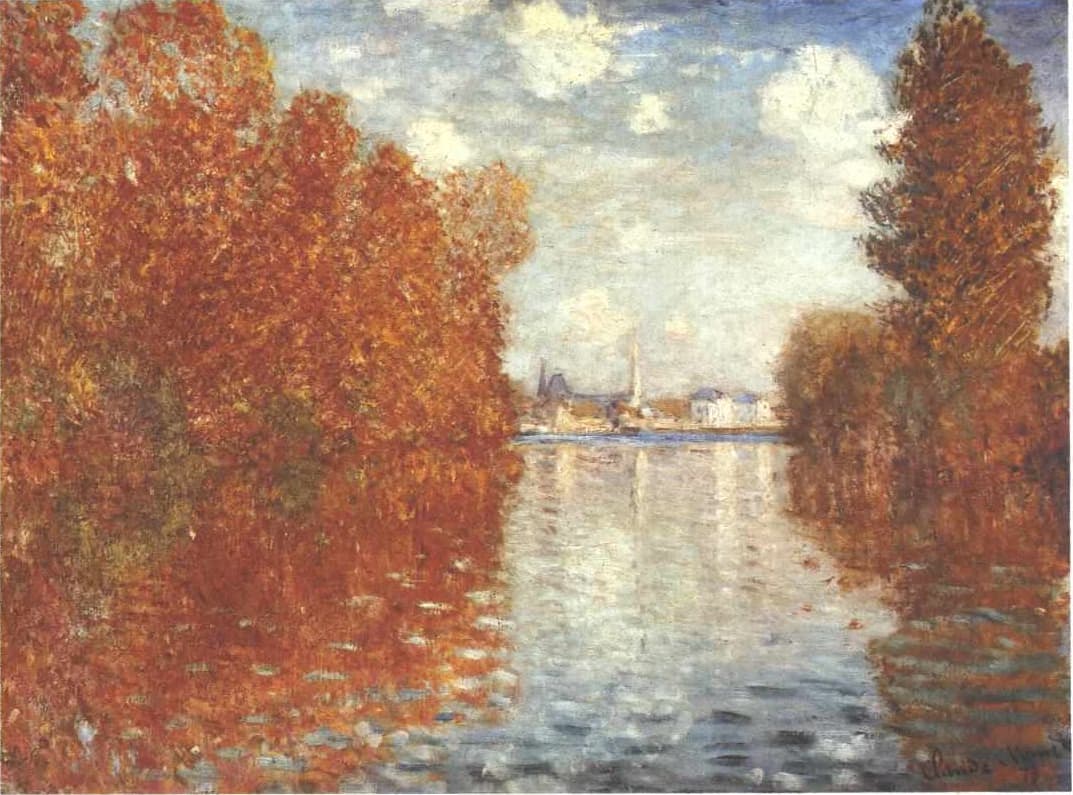
Autumn Effect at Argenteuil
Claude Monet · 1873
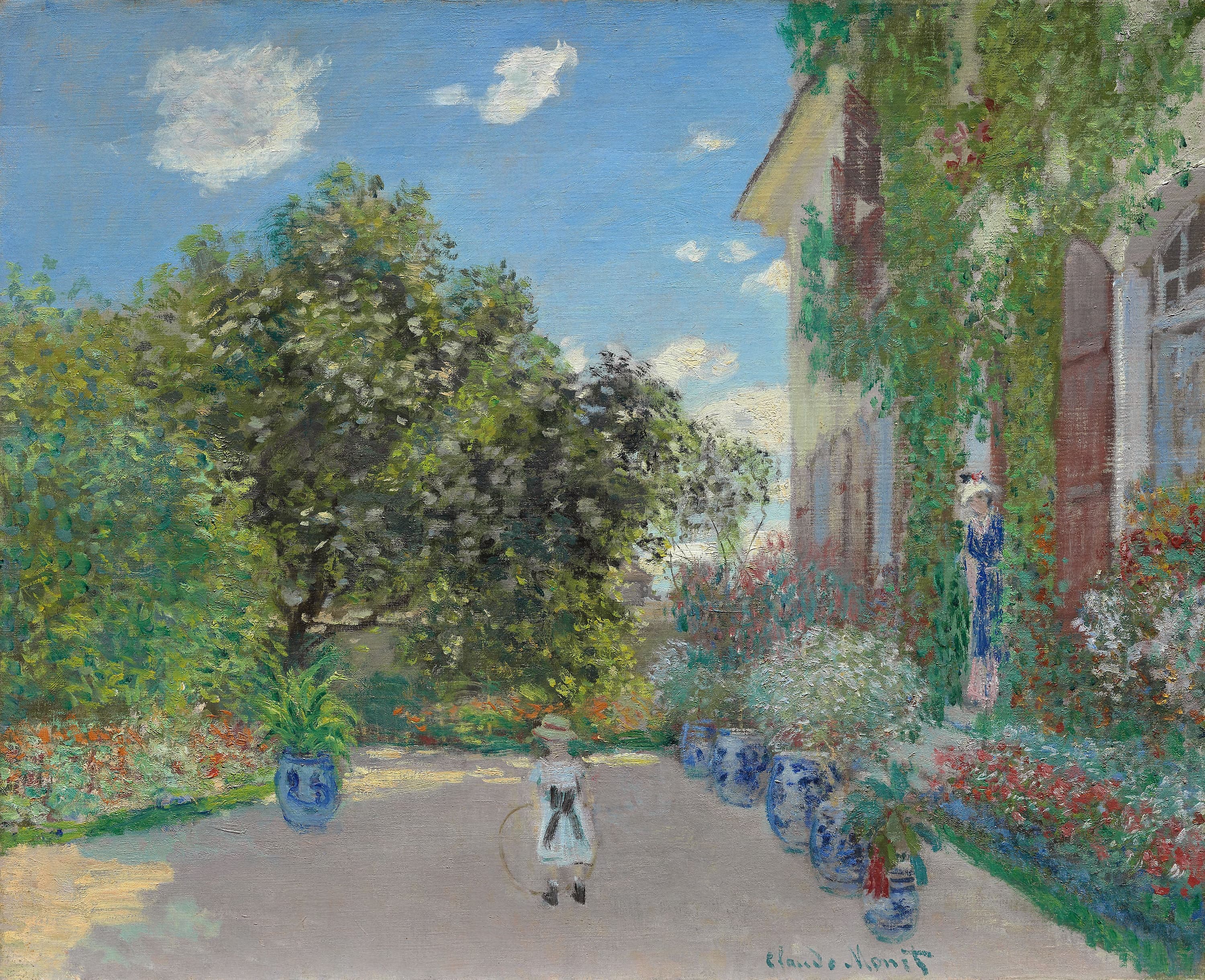
The Artist's House at Argenteuil
Claude Monet · 1873
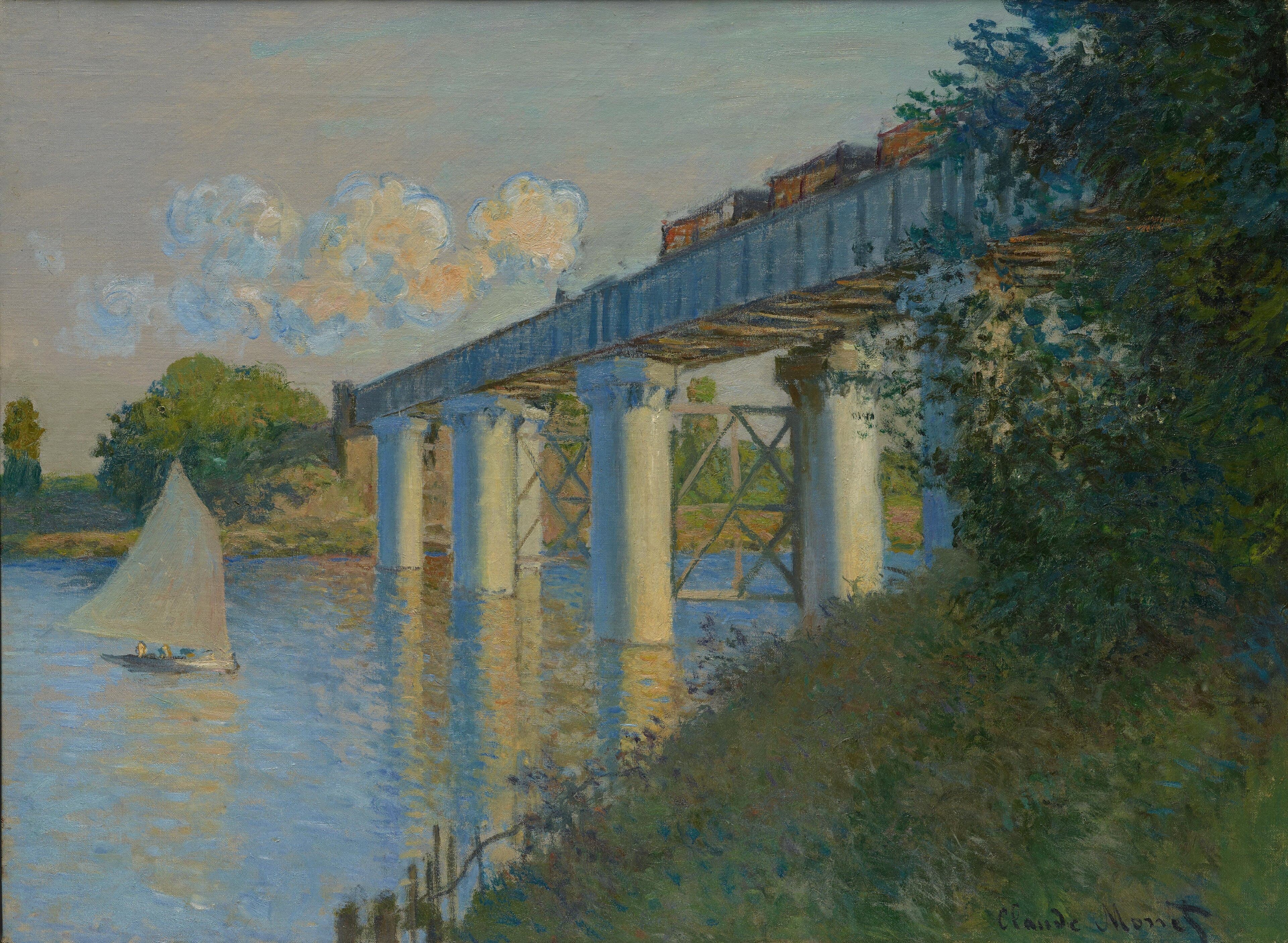
Railroad Bridge, Argenteuil
Claude Monet · 1873
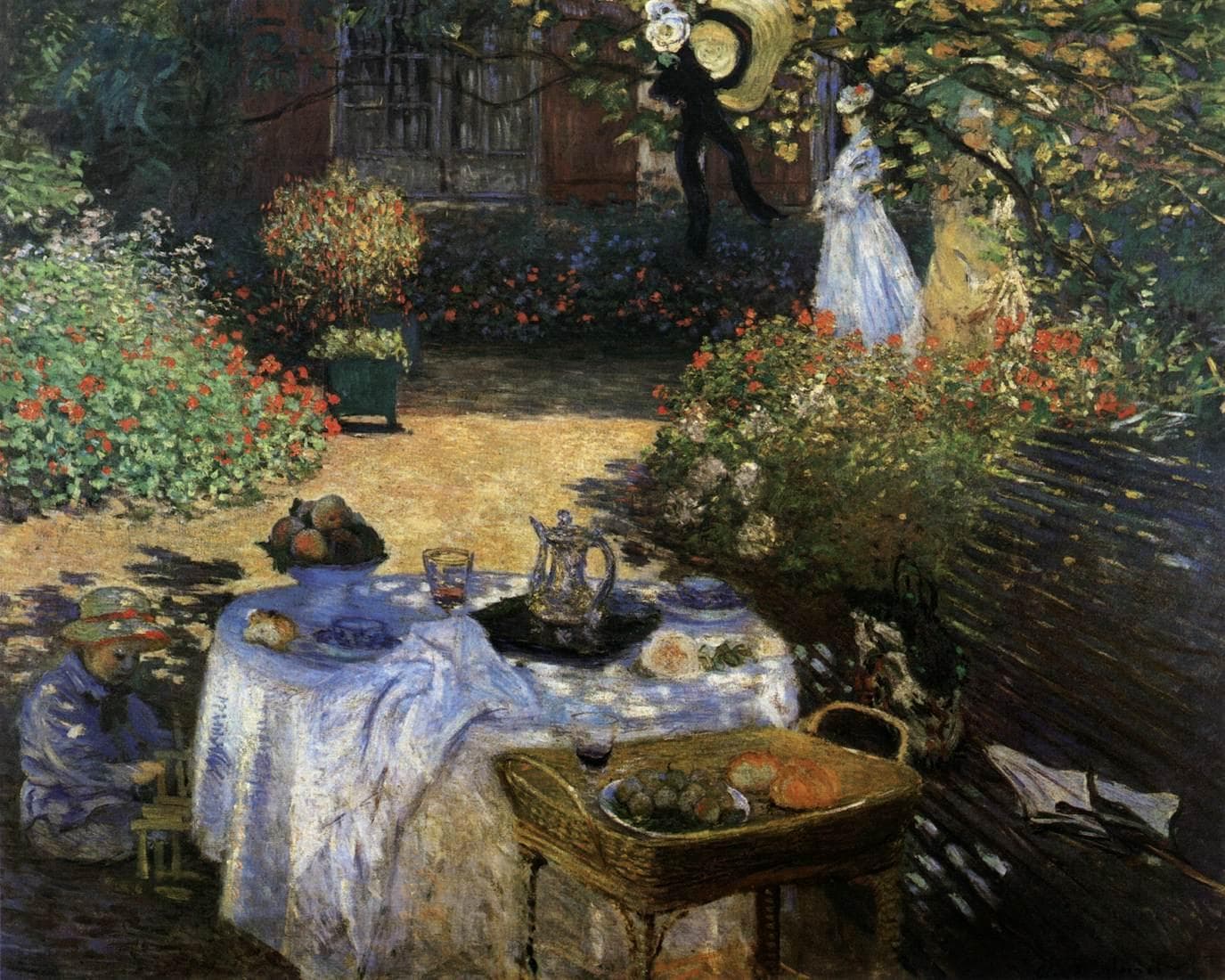
The Luncheon (Monet's Garden at Argenteuil)
Claude Monet · c. 1873
Kindred works
You may also study
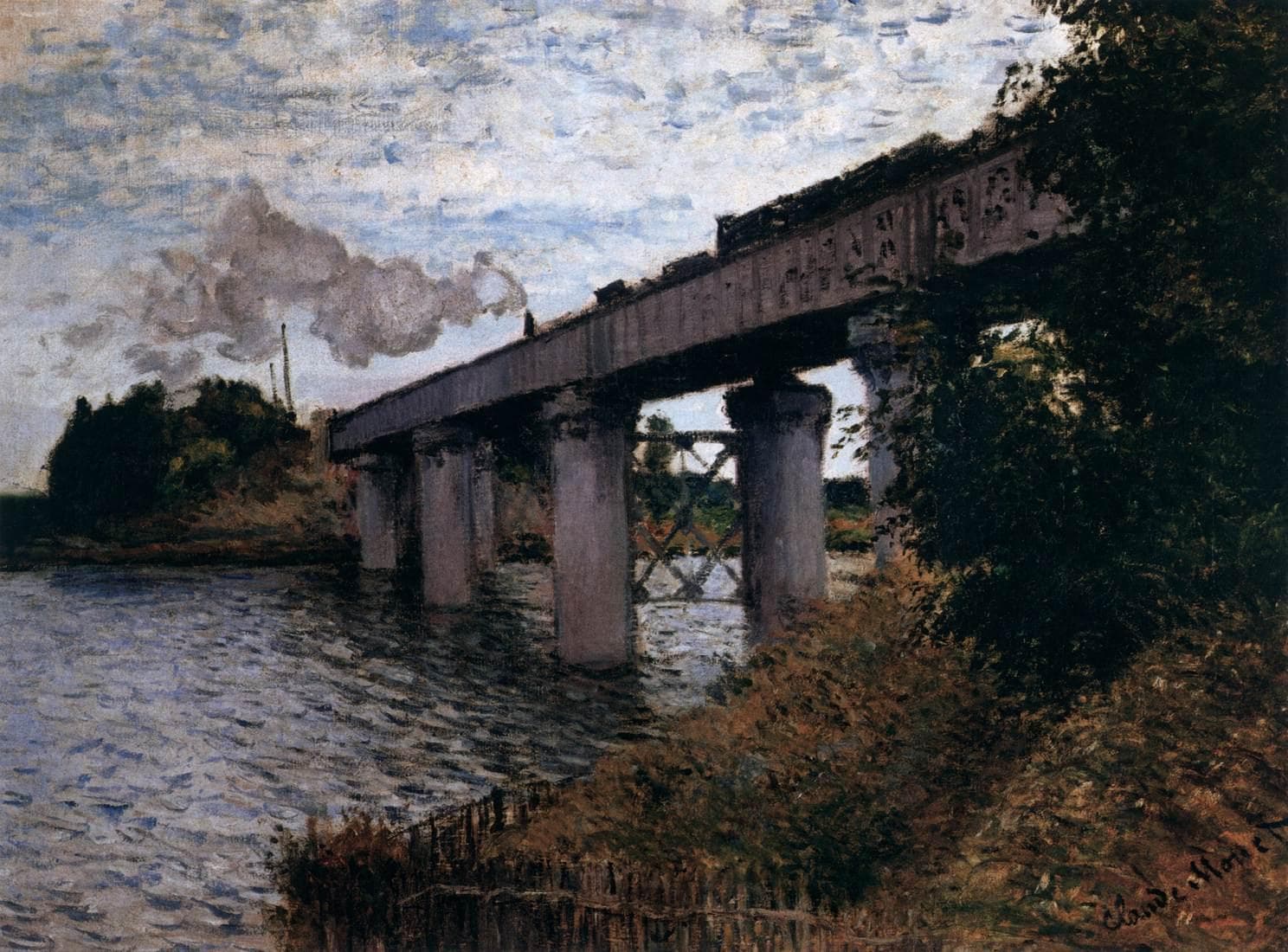
The Railway Bridge at Argenteuil
Claude Monet · c. 1873–74
Railroad Bridge, Argenteuil
Claude Monet · 1873
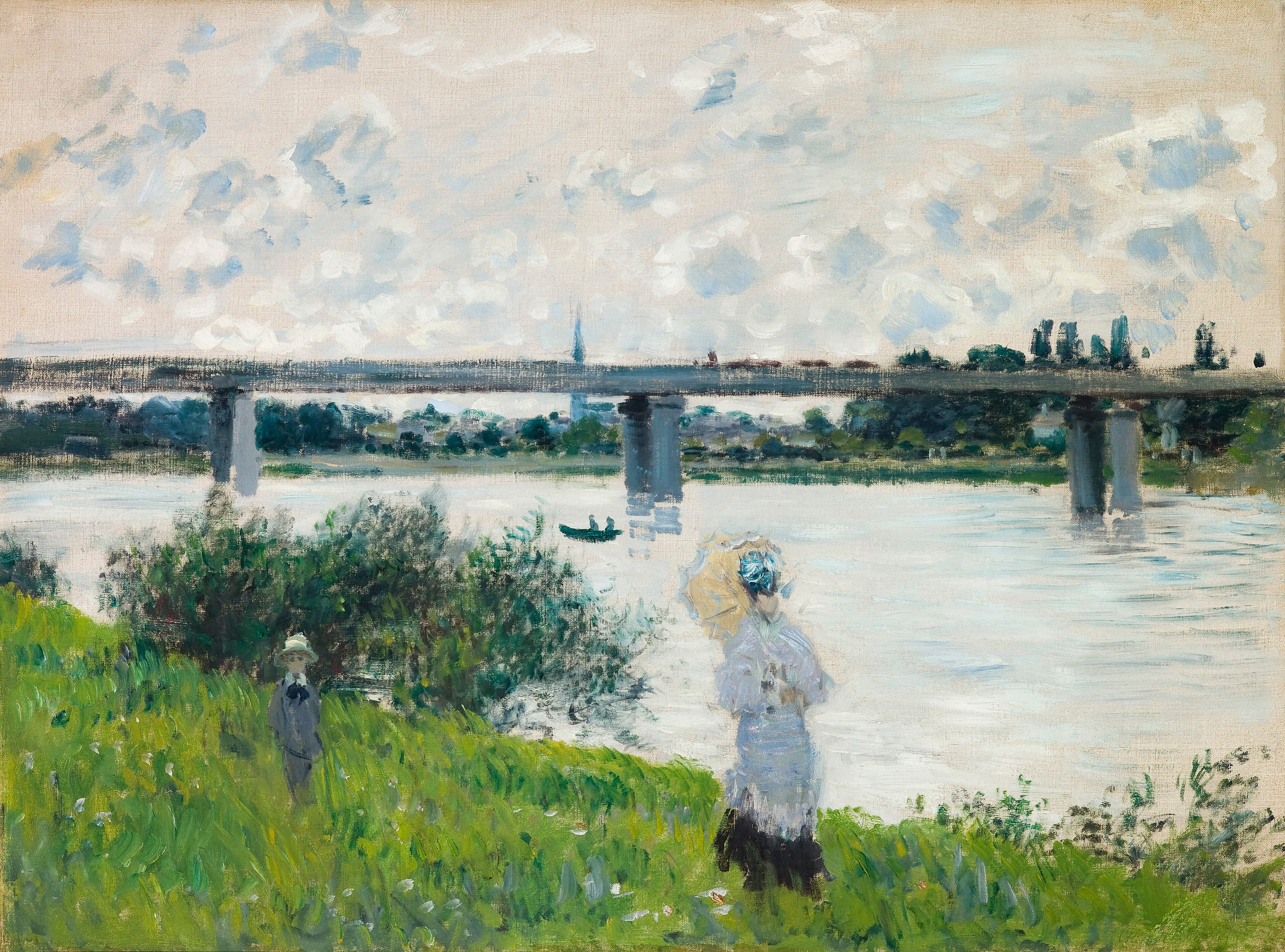
The Promenade with the Railroad Bridge, Argenteuil
Claude Monet · 1874
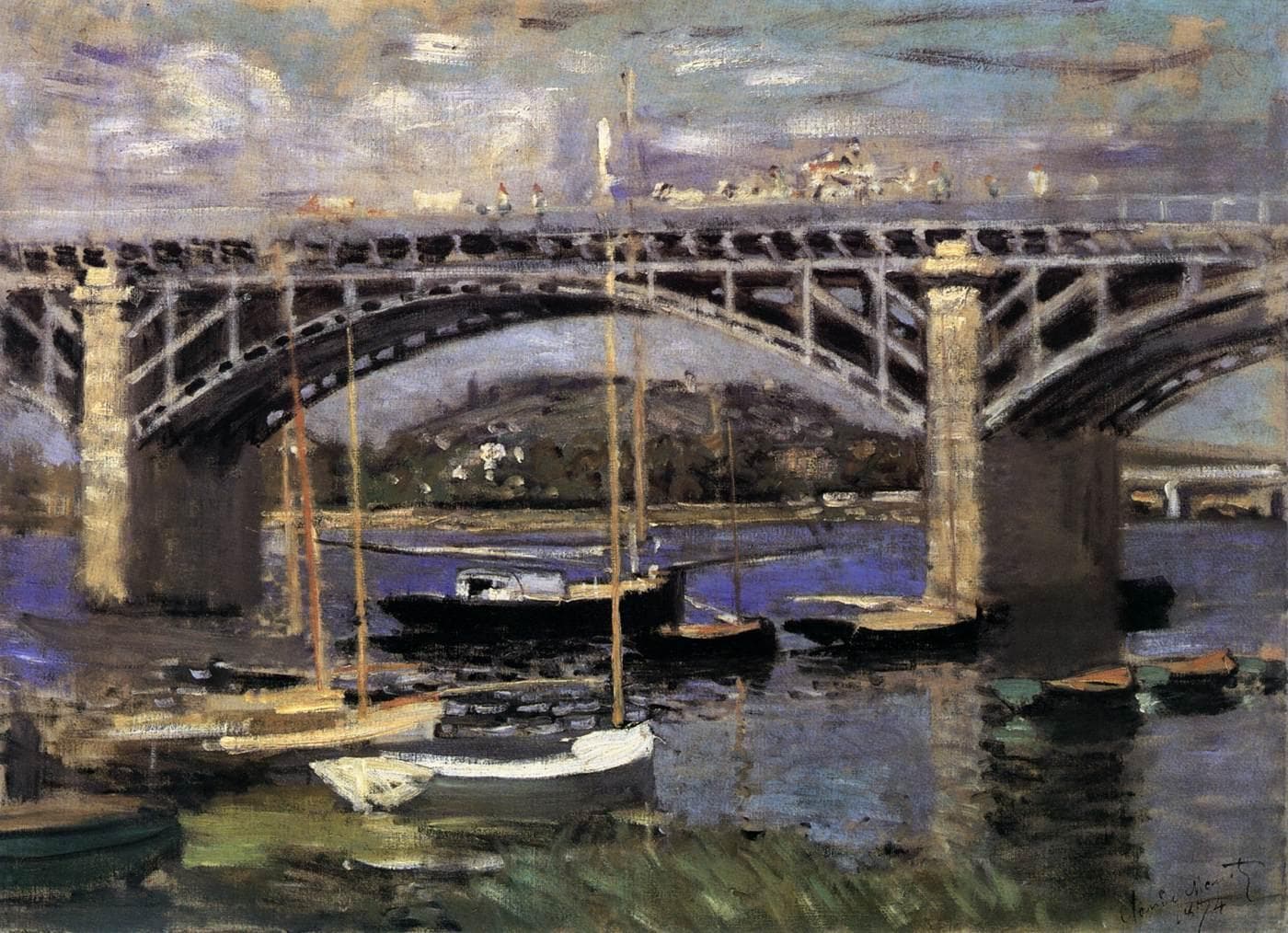
The Bridge at Argenteuil
Claude Monet · 1874
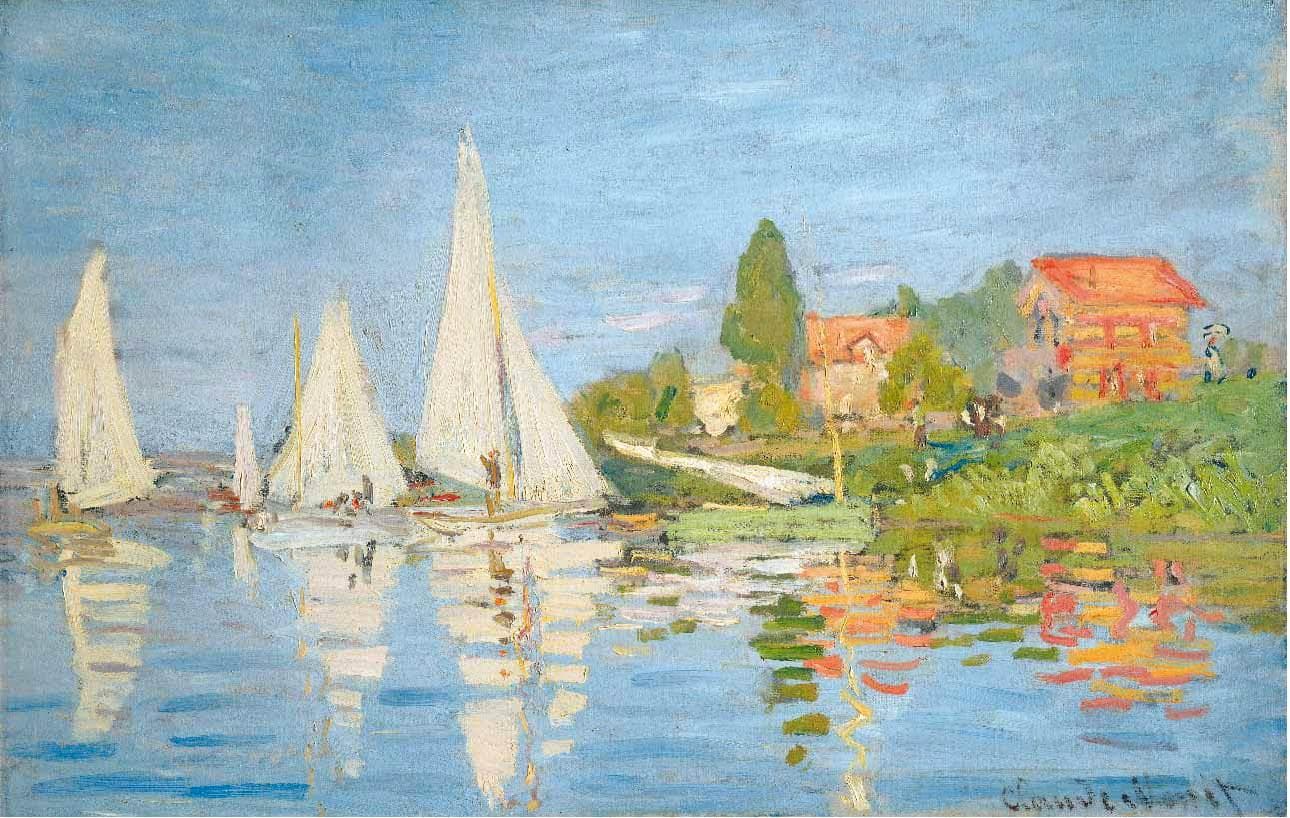
Regatta at Argenteuil
Claude Monet · c. 1872

Ophelia
John Everett Millais · 1851–52

The Great Wave off Kanagawa
Katsushika Hokusai · c. 1830–32
The Birth of Venus
Sandro Botticelli · c. 1484–1486