Image: Uffizi Gallery, via Google Cultural Institute (levels adjusted) · Public domain · via Wikimedia Commons
Baroque
Judith Slaying Holofernes
Artemisia Gentileschi, c. 1620
Judith Beheading Holofernes (Judith Slaying Holofernes) is Artemisia Gentileschi's painting of about 1620, showing the biblical widow and her maid holding down the Assyrian general as Judith saws through his neck. This version is in the Uffizi, Florence; an earlier one is in Naples.
- Artist
- Artemisia Gentileschi
- Date
- c. 1620
- Medium
- Oil on canvas
- Dimensions
- 146.5 × 108 cm
- Collection
- Uffizi Gallery, Florence, Italy
- Movement
- Baroque
What you are looking at
Three bodies are locked together on a bed, lit by a hard light from the left against total darkness. A bearded man lies on his back with his head toward us, upside down, his eyes open and rolling. He is Holofernes, and he is awake. Two women are killing him.
The younger woman, the maid Abra, leans her full weight down on his chest, pinning his arms; one of his fists pushes uselessly against her. The other woman, Judith, in a gold silk dress with her sleeves pushed up, holds his head down by the hair with her left hand. With her right she drives a long sword through his neck. Her face is set and concentrated, her body angled back to get leverage, like someone doing heavy physical work.
Blood runs from the wound in thick streams down the white sheets and drips off the edge of the mattress, and it also spurts upward in fine arcs that fly across Judith's dress. The red velvet coverlet at the left and the gold of Judith's dress are the only warm colors in the picture.
Two details are worth finding. The hilt of the sword, crossed against the dark, is shaped like a cross. And on Judith's left arm is a gold bracelet set with small oval cameos; scholars have read the tiny figures as images of Artemis, the huntress goddess whose name the painter shared.
The story of Judith
The Book of Judith tells how the Assyrian general Holofernes besieged the Israelite town of Bethulia. Judith, a widow, dressed in her finest clothes and went with her maid into the enemy camp, pretending to defect. Holofernes, attracted to her, invited her to a banquet and drank himself into a stupor. Alone with him in his tent, Judith took his own sword and cut off his head in two blows. The women carried the head back to Bethulia in a sack, and the leaderless Assyrian army fled.
For centuries painters showed Judith before or after the act: modest, elegant, holding the head. Artemisia Gentileschi paints the act itself.
How Artemisia made it
Artemisia Gentileschi (1593–c. 1656) was born in Rome, the daughter of the painter Orazio Gentileschi, and trained in his workshop. She painted her first Judith Slaying Holofernes around 1612–13; that canvas is now in the Museo di Capodimonte in Naples. Around 1620, working in Florence, she painted this second, larger and more refined version, commissioned by Grand Duke Cosimo II de' Medici. Compared with the Naples picture, the Uffizi version is more richly colored, the figures more fully modeled, the blood more spectacular, and Judith's gold dress and bracelet more luxurious.
The composition is in dialogue with Caravaggio's Judith Beheading Holofernes of about 1598–99, in Rome, which Artemisia certainly knew. Caravaggio's Judith holds the sword at arm's length, frowning, with an old servant waiting beside her. Artemisia's women are both young and both fully engaged, using real force. That shift is the heart of the picture's power. Her tight cropping, darkness and raking light are equally Caravaggesque; see more of his influence in our Caravaggio paintings collection.
What does Judith Beheading Holofernes mean?
In its own time, Judith was a heroine of faith and civic courage: a weak person who, with God's help, defeats a tyrant. In Counter-Reformation Italy she was also read as a symbol of virtue triumphing over vice and of the Church triumphing over heresy. The cross-shaped sword hilt fits that reading.
Since the 1970s, many viewers have read the painting through Artemisia's own life. In 1611 she was raped by the painter Agostino Tassi, a colleague of her father's; in the 1612 trial that followed she was tortured with thumbscrews to test her testimony. It is tempting to see the picture as a revenge fantasy, and many have. Art historians such as Mary Garrard have argued for a broader reading: Artemisia shows women as physically capable agents, cooperating to overcome a powerful man, something almost no male painter had imagined. Both readings can stand together, but the painting is more than autobiography.
Reception and legacy
The painting was too violent for some later tastes, and for a time in the 18th century it was hung in an out-of-the-way corner of the Uffizi. Artemisia's reputation faded for two centuries before scholars and feminist art historians revived it from the 1970s on. Today she is one of the most celebrated painters of the Baroque, and this picture is her signature work.
The subject was popular with many artists. Compare Fede Galizia's composed Judith with the Head of Holofernes and Eglon van der Neer's Judith, both of which show the calm after the deed, and Caravaggio's Medusa, another severed head with open eyes.
Where is Judith Slaying Holofernes today?
This version hangs in the Uffizi Gallery in Florence, in the rooms devoted to Caravaggio and his followers. The earlier version is in the Museo di Capodimonte in Naples. Both are in the public domain.
Questions & answers
Where is Artemisia Gentileschi's Judith Beheading Holofernes?
Artemisia painted two versions. The later one, about 1620, is in the Uffizi Gallery in Florence and was commissioned by Grand Duke Cosimo II de' Medici. The earlier version, about 1612–13, is in the Museo di Capodimonte in Naples.
What is the meaning of Judith Beheading Holofernes?
It shows the biblical heroine Judith killing the Assyrian general Holofernes to save her town. In its time it symbolized virtue and faith defeating tyranny. Many modern viewers also connect it to Artemisia's rape by Agostino Tassi and the 1612 trial, though scholars warn against reading it only as autobiography.
How is Artemisia's Judith different from Caravaggio's?
Caravaggio's Judith (c. 1598–99) holds the sword at arm's length with a squeamish frown while an old servant watches. Artemisia shows two young women using real physical force together to hold Holofernes down, making the killing an act of strength and cooperation.
Who is the other woman in Judith Slaying Holofernes?
She is Abra, Judith's maidservant. In most earlier paintings she is an old woman holding a sack, but Artemisia makes her young and has her pin Holofernes to the bed, an active partner in the killing.
Kindred works
You may also study
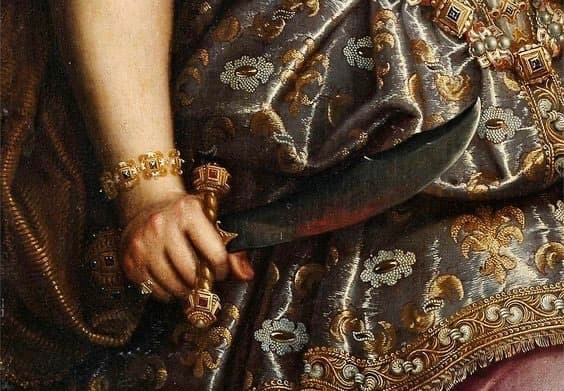
Judith with the Head of Holofernes
Fede Galizia · 1596
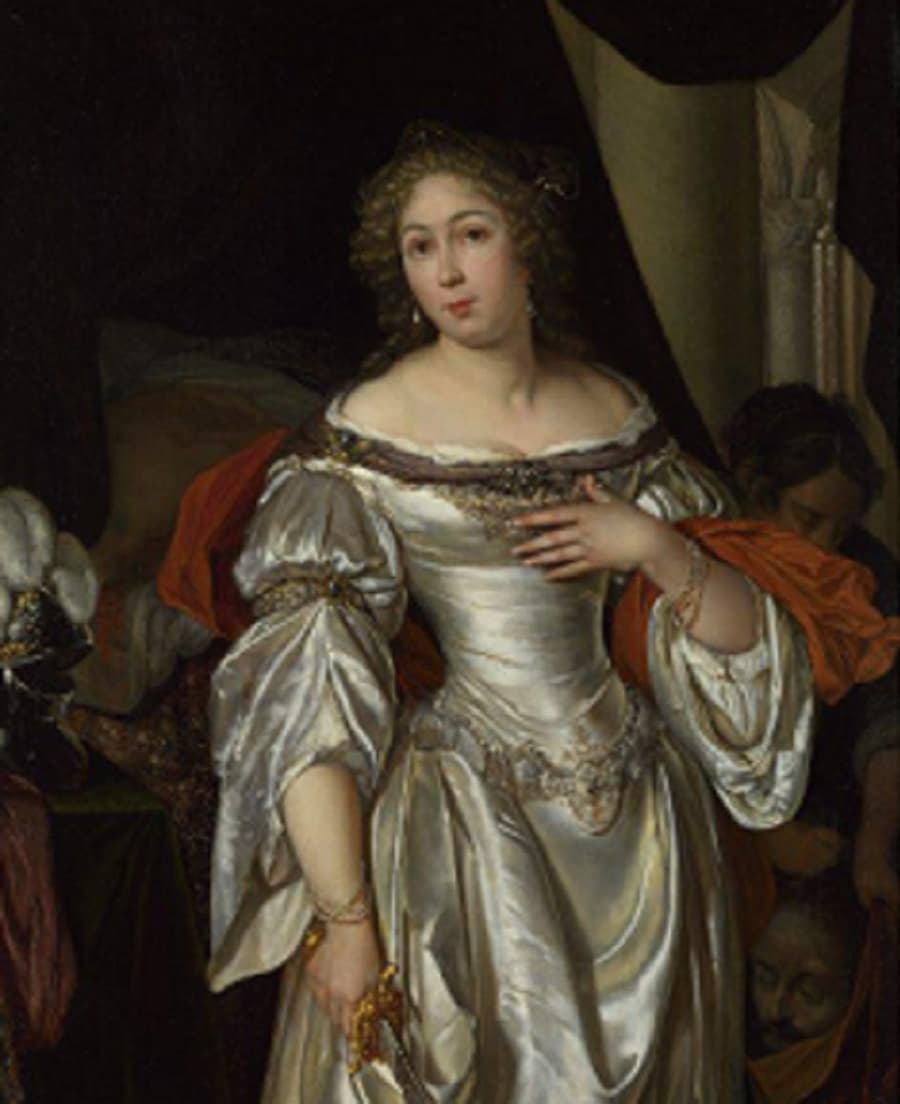
Judith
Eglon van der Neer · c. 1678
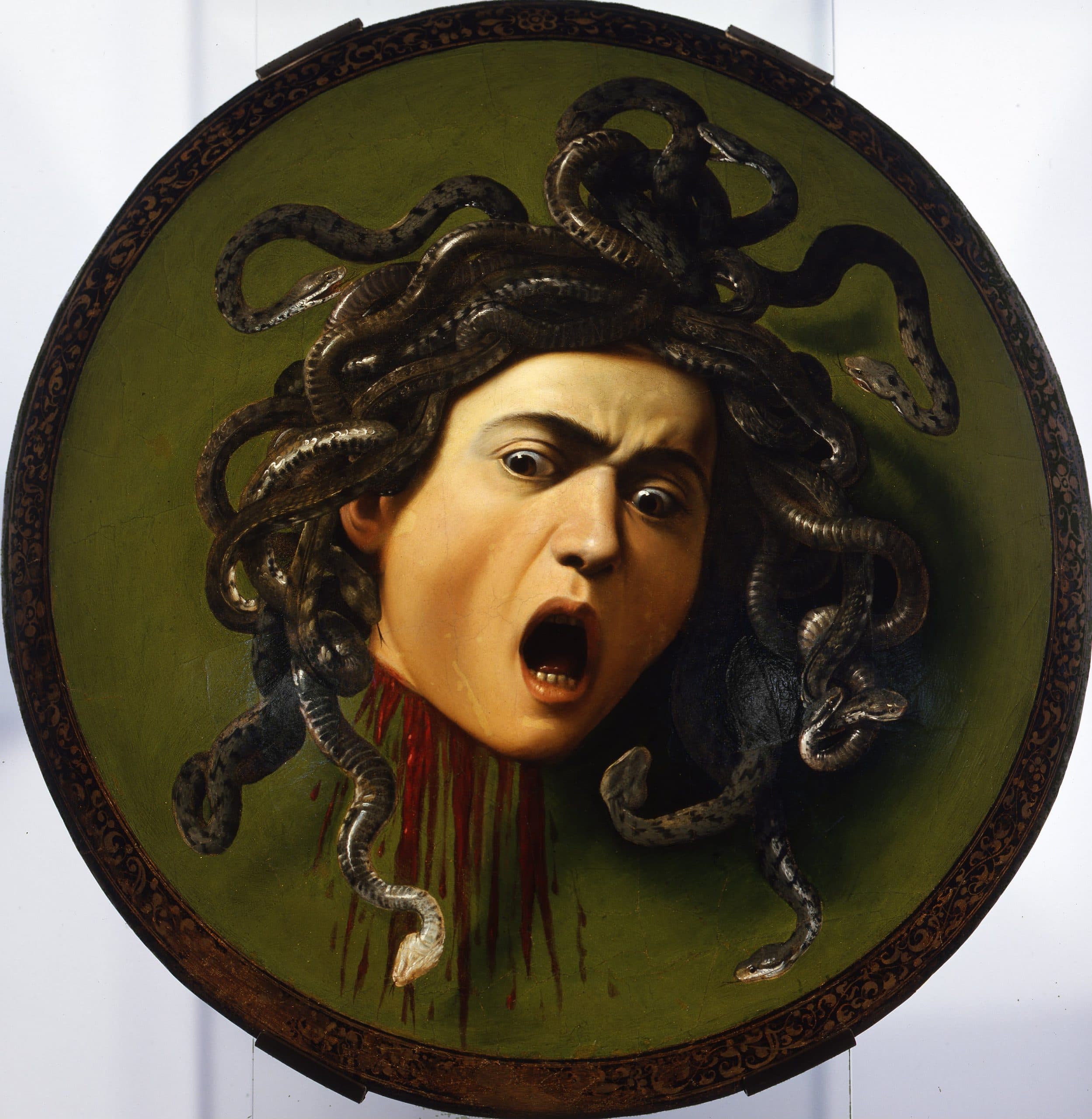
Medusa
Caravaggio · c. 1597–98
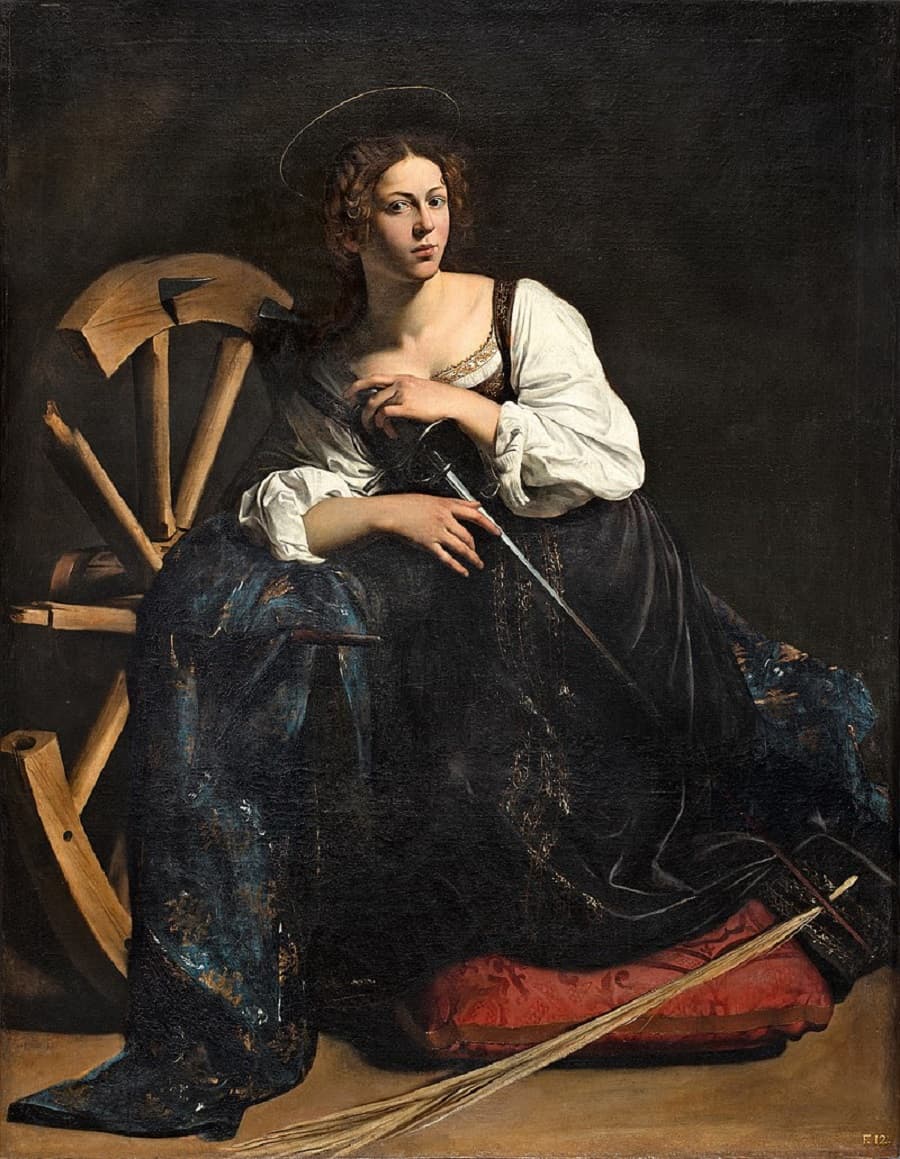
Saint Catherine of Alexandria
Caravaggio · c. 1598
Lucretia
Rembrandt · 1664

Venus de Milo
Alexandros of Antioch · c. 150–125 BC

The Scream
Edvard Munch · 1893
The Thinker
Auguste Rodin · Modeled 1880–82; enlarged 1902–03; this cast 1904