Romanticism
The Kiss
Francesco Hayez, 1859
The Kiss (Il bacio) is an 1859 oil painting by the Italian Romantic Francesco Hayez, showing a young couple in medieval dress locked in an embrace at the foot of a stone staircase. It hangs in the Pinacoteca di Brera in Milan.
- Artist
- Francesco Hayez
- Date
- 1859
- Medium
- Oil on canvas
- Dimensions
- 112 × 88 cm
- Collection
- Pinacoteca di Brera, Milan, Italy
- Movement
- Romanticism
What you are looking at
In the corner of a stone courtyard, a young man and woman kiss. He wears a brown hooded cloak over red hose and a soft brown hat with a long feather, pulled low so that his face is hidden; he cradles her face in both hands. She leans back into him, standing on tiptoe, one arm around his neck, in a long gown of shimmering pale-blue satin with white puffed sleeves. Her dark hair falls loose down her back. They stand almost in the center of the canvas, against a wall of pale ashlar blocks, beside a flight of steps that rises out of the picture on the right.
Look at his feet. One leg is braced, the other set on the lowest step, as if he is already about to leave. That detail, noted by almost every writer on the picture, turns a love scene into a farewell. And look into the dark doorway on the left. In the shadow under the arch, barely visible, a figure seems to lurk, a hint of someone watching. Is it a spy, a rival, a guard? Hayez does not say, but the shadow gives the embrace a sense of danger and secrecy.
The painting is a display of technical brilliance in the academic manner. The satin of the dress, with its silvery highlights and deep blue folds, is one of the most admired passages of fabric painting in nineteenth-century Italian art. The stone wall, by contrast, is painted with quiet care, block by block, its plain surface setting off the warm colors of the couple.
Notice, too, the light. It falls from the left, catching the woman's shoulder, the side of her face and the bright edge of her skirt, and throwing the couple's shadow against the steps behind them. The floor is a warm, worn terracotta. Everything in the setting is plain and still, so that all the movement and color of the picture are concentrated in the two figures.
Who painted it and when
Francesco Hayez (1791–1882) was born in Venice and became the leading painter of Italian Romanticism, based for most of his career in Milan, where he taught at the Brera Academy. He painted history scenes from the Middle Ages and the Bible, and portraits of the leading figures of Milanese society, including the novelist Alessandro Manzoni and the statesman Camillo Cavour.
The Kiss was commissioned by Count Alfonso Maria Visconti di Saliceto and shown at the Brera exhibition in September 1859. Its subtitle at the time described it as an "episode of youth" in medieval costume. The count's heirs later gave the painting to the Pinacoteca di Brera, where it has hung since 1886.
What does The Kiss mean?
The date is the key. In the spring and summer of 1859 the Second Italian War of Independence was fought. The Kingdom of Piedmont-Sardinia, allied with Napoleon III's France, drove the Austrians out of Lombardy, and in June 1859 the French and Piedmontese armies entered Milan. Hayez's painting was shown a few months later. Italian viewers read it as a patriotic allegory: the young man as a volunteer leaving to fight for Italy, the woman as the nation he leaves behind, the kiss as the alliance between Italy and France.
Some writers have also pointed to the colors. The blue of the dress, the white of the sleeves and the red of the hose can be read as the French tricolor, and in later versions Hayez seems to have adjusted the palette to bring in the green, white and red of Italy. Hayez left no written key, so these readings rest on context and on the way the painting was received, but they were current in his lifetime.
Beyond politics, The Kiss became famous simply as an image of romantic love. Its medieval costumes place it in the world of Shakespeare's Romeo and Juliet, and many viewers have seen it that way.
Versions
Hayez painted several versions. Besides the 1859 original in the Brera, there is a version of 1861 and another of 1867, painted for the Exposition Universelle in Paris, in which the woman wears a white dress and a white cloth lies on the step. The Brera picture remains the most famous and is the one reproduced on posters, chocolates and stamps across Italy.
Legacy
The Kiss is now the best-known Italian painting of the nineteenth century and a symbol of the Risorgimento, the movement that unified Italy. Its pose of a passionate, hidden embrace reappears in later art, from Klimt's gold-leaf Kiss of 1907–08 to contemporary works such as Yves Pires's resin sculpture Le Baiser Nacre (The Mother-of-Pearl Kiss). For other famous embraces, see Romeo and Juliet by Frank Dicksee and Psyche Revived by Cupid's Kiss.
Where to see it
The Kiss hangs in the Pinacoteca di Brera in Milan, Italy, in the galleries of nineteenth-century Italian painting. It is one of the museum's most visited works. See also Romanticism.
Questions & answers
Where is The Kiss by Francesco Hayez?
The original 1859 painting hangs in the Pinacoteca di Brera in Milan, Italy, where it has been since 1886. Hayez painted later versions in 1861 and 1867 that are in other collections.
What is the meaning of Hayez's The Kiss?
Shown in 1859, just after French and Piedmontese troops freed Milan from Austria, it was read as a patriotic allegory: a young man leaving to fight for Italy, kissing the woman who stands for the nation, with the colors hinting at the French-Italian alliance.
Is The Kiss by Yves Pires the same as Hayez's The Kiss?
No. Hayez's The Kiss is an 1859 oil painting in Milan. Yves Pires is a contemporary French artist whose kiss sculpture, Le Baiser Nacre (The Mother-of-Pearl Kiss), is a small pearl-resin piece; it has its own page in our catalogue.
Who is the figure in the shadows of The Kiss?
In the dark doorway at the left a shadowy figure seems to watch the couple. Hayez never identified it, but it adds secrecy and danger, suggesting the lovers must part quickly, perhaps because the young man is a conspirator or soldier.
Why is the man's foot on the step?
His foot on the lowest stair shows he is about to leave. The detail turns the kiss into a farewell, which supports the reading of the young man as a volunteer departing for the war of independence.
Kindred works
You may also study
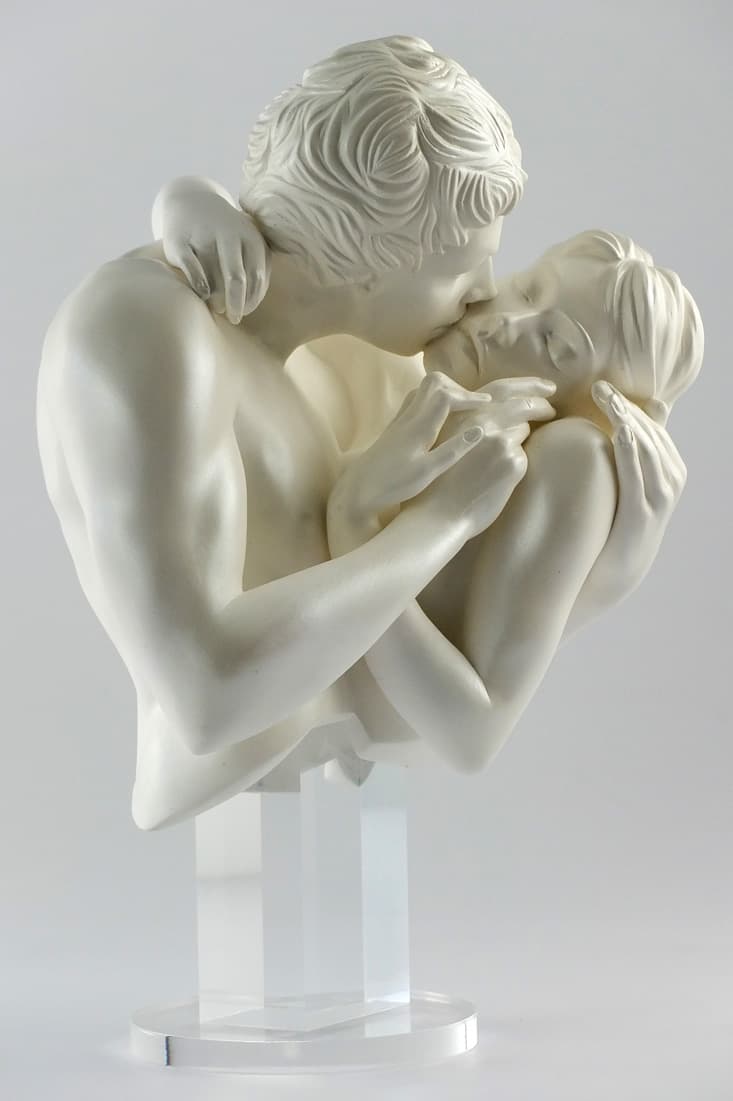
Le Baiser Nacré (The Mother-of-Pearl Kiss)
Yves Pirès
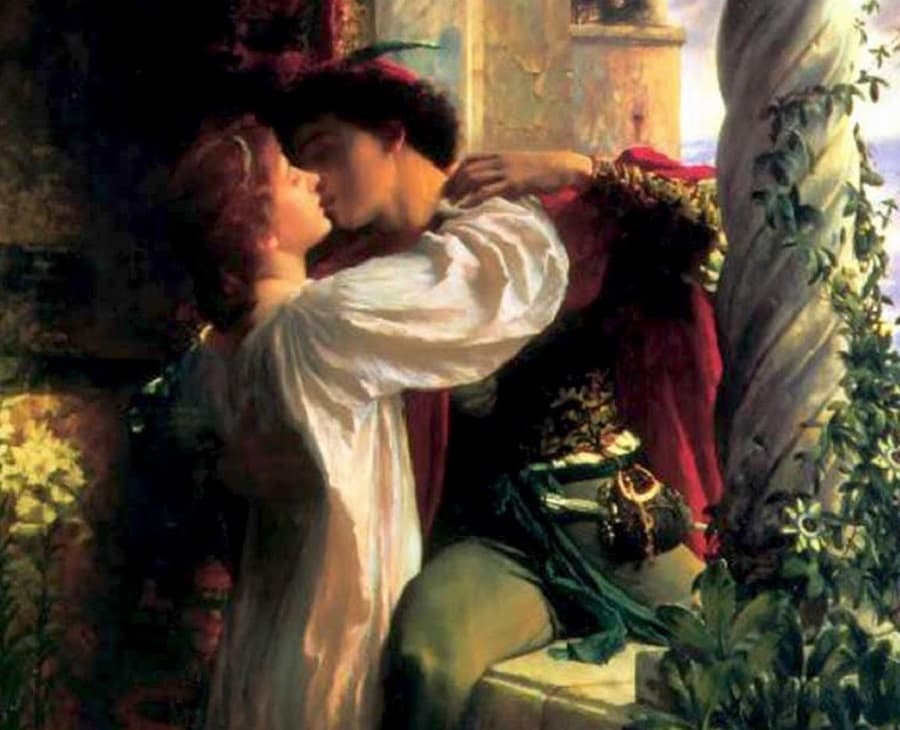
Romeo and Juliet
Sir Frank Dicksee · 1884
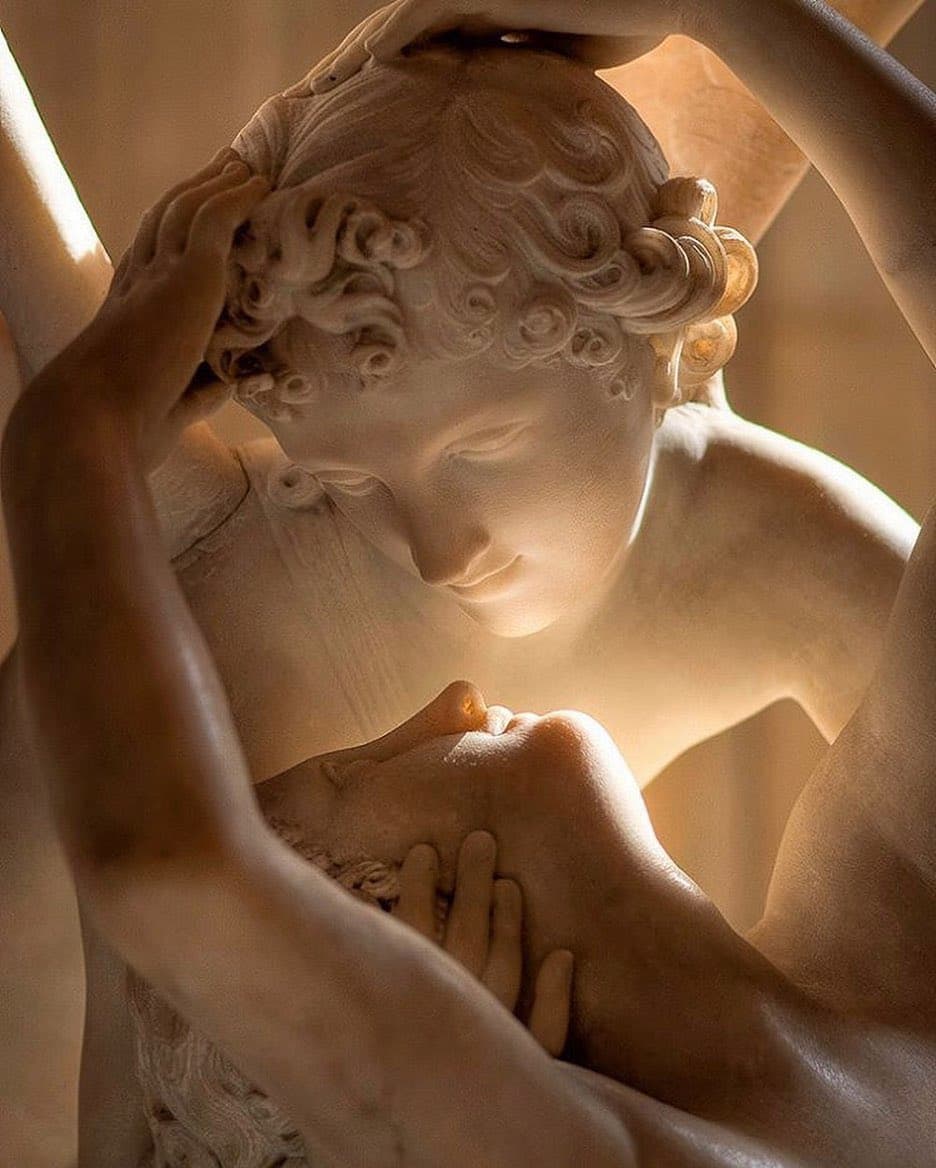
Psyche Revived by Cupid's Kiss
Antonio Canova · 1787–1793
The Embrace II
Fabián Pérez
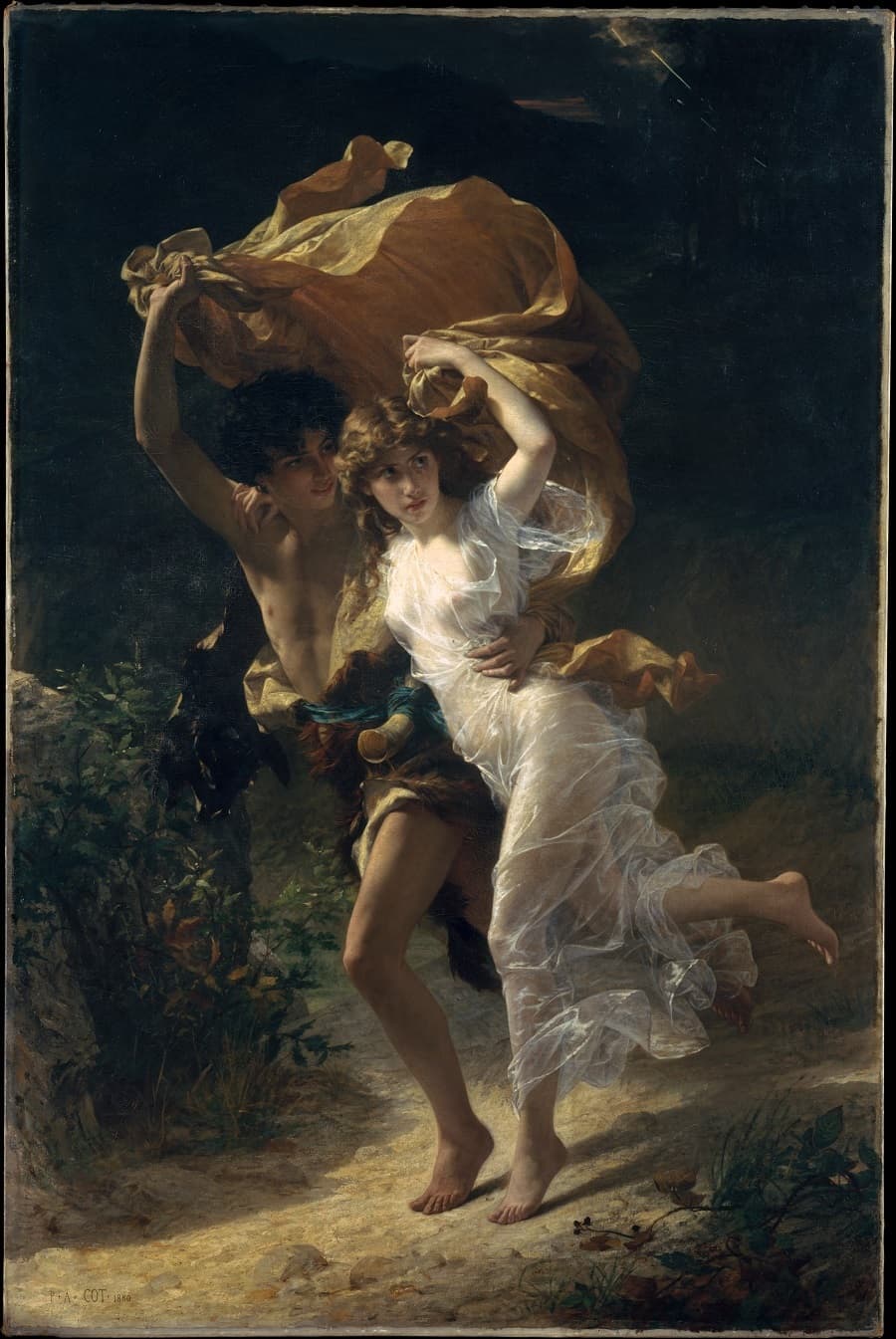
The Storm
Pierre Auguste Cot · 1880

Venus de Milo
Alexandros of Antioch · c. 150–125 BC
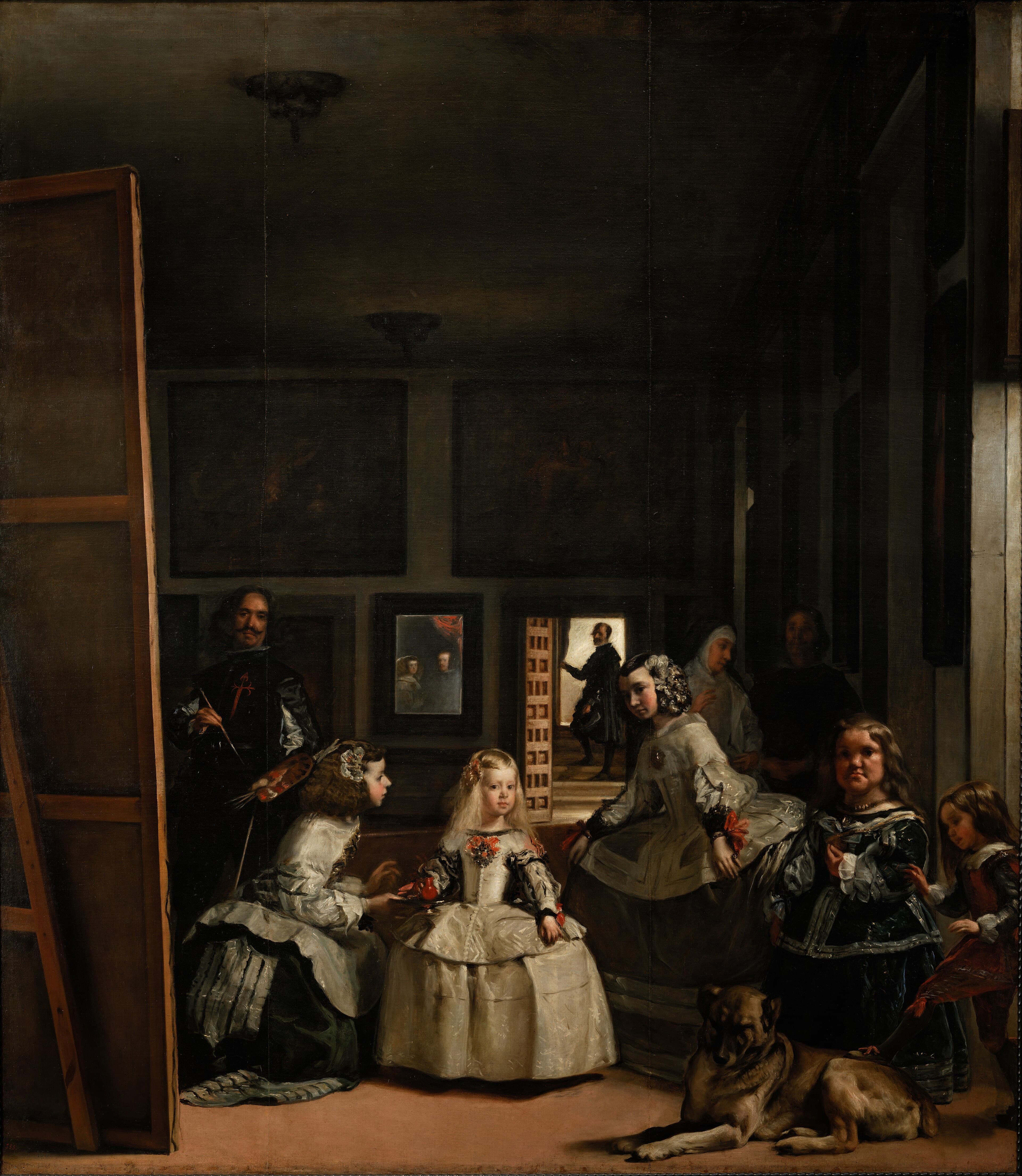
Las Meninas
Diego Velázquez · 1656
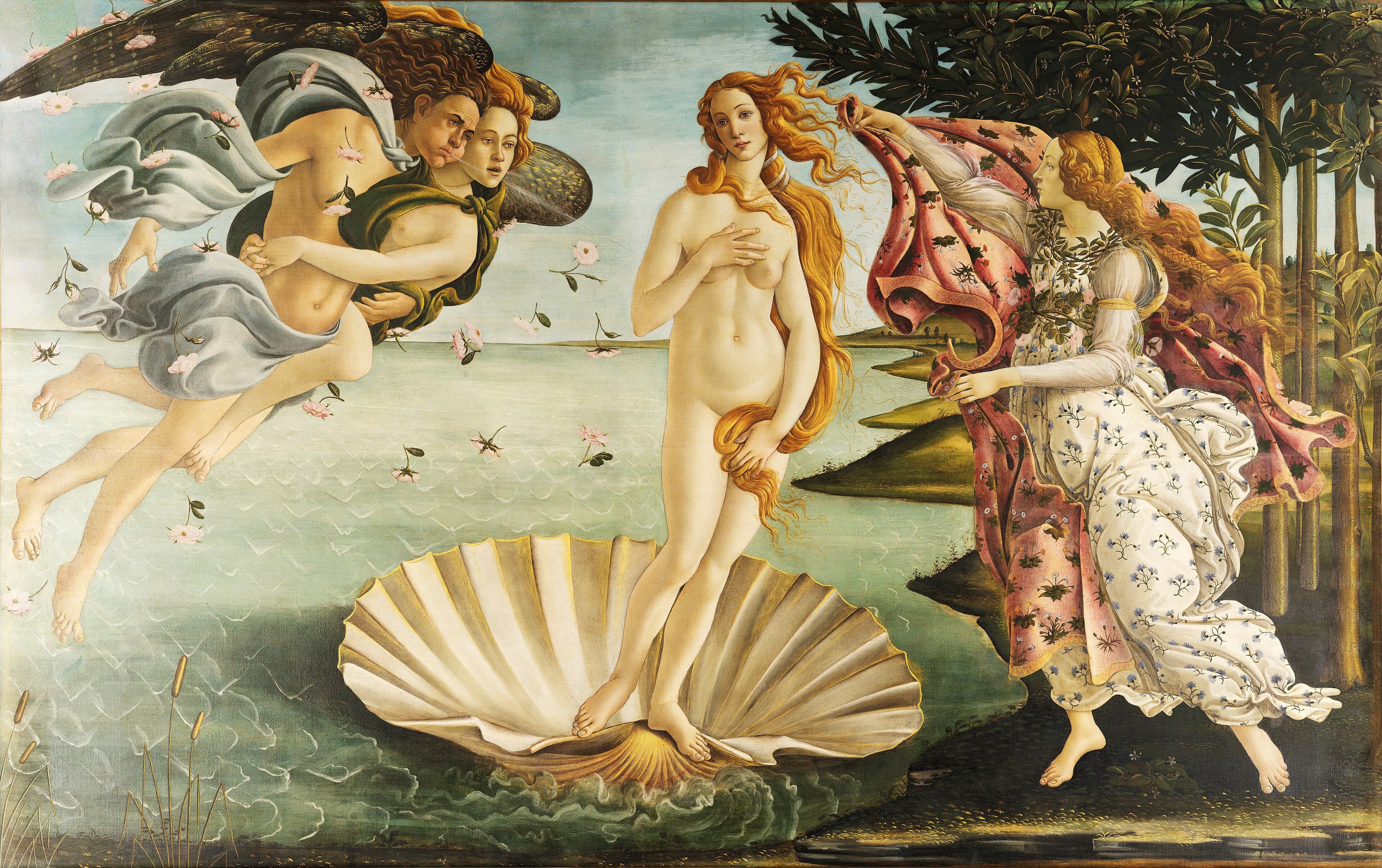
The Birth of Venus
Sandro Botticelli · c. 1484–1486