Image: The Metropolitan Museum of Art (Open Access) · CC0 · via Wikimedia Commons
Neoclassicism
The Death of Socrates
Jacques-Louis David, 1787
The Death of Socrates is Jacques-Louis David's 1787 painting of the Athenian philosopher calmly reaching for the cup of hemlock while still teaching his grieving followers. It is the great Neoclassical image of dying for one's principles and hangs in the Metropolitan Museum of Art, New York.
- Artist
- Jacques-Louis David
- Date
- 1787
- Medium
- Oil on canvas
- Dimensions
- 129.5 × 196.2 cm
- Collection
- Metropolitan Museum of Art, New York, United States
- Movement
- Neoclassicism
What you are looking at
The scene is a bare stone prison cell. In the middle of it, on a low bed, sits Socrates, seventy years old, stripped to the waist, his body still muscular. With his right hand he reaches, without looking, for a shallow cup of hemlock held out to him by a young man in red.
With his left hand he points upward. He is in the middle of a sentence. The man handing him the poison cannot bear to watch and turns his head away, covering his eyes.
Around the bed, grief takes many forms. A man in orange sits at Socrates' knee, gripping his thigh and gazing up at his face: this is Crito, his oldest friend. Behind them, a group of disciples weep, cover their faces, or press their hands against the wall.
At the foot of the bed, apart from everyone, an old man sits with his head bowed and his back to the action: this is Plato. Through an archway at the left, in the background, a small group climbs a staircase, a woman turning to wave. This is Socrates' wife, Xanthippe, being led away.
The light comes from the upper left and falls like a spotlight on Socrates' chest, raised arm and the cup. The composition is built like a frieze, the figures arranged parallel to the picture plane against the flat wall, the way figures stand on an ancient relief.
The details people miss are on the floor. The shackles that held Socrates have been removed and lie open in front of the bed. Beside Plato's bench lie a few scrolls and a pen. A lamp on a tall stand burns behind the bed, and an iron ring is set into the wall. Everything is spare and functional; nothing distracts from the gesture.
The story
In 399 BC an Athenian jury condemned Socrates to death for impiety and for corrupting the young. Under Athenian law he was to drink hemlock. His friends arranged for him to escape, and he refused. Plato describes his last hours in the dialogue Phaedo: Socrates spent the day discussing the immortality of the soul, sent away his weeping wife, took the cup calmly and drank.
David follows the Phaedo closely but makes two changes. He shows Plato present, although Plato says he was ill that day, and makes him an old man, though he was in his late twenties. Both changes serve the painting. Plato, who recorded the scene, sits at the foot of the bed like the author of the story, remembering it.
How David made it
Jacques-Louis David (1748–1825) painted The Death of Socrates in 1787 for the Trudaine brothers, liberal aristocrats in his circle, and showed it at the Paris Salon that year. It came three years after his Oath of the Horatii, which had made him the leader of the new Neoclassical school. Both pictures share the same severe language: hard-edged drawing, smooth surfaces, sculptural bodies, sober color and a shallow stage.
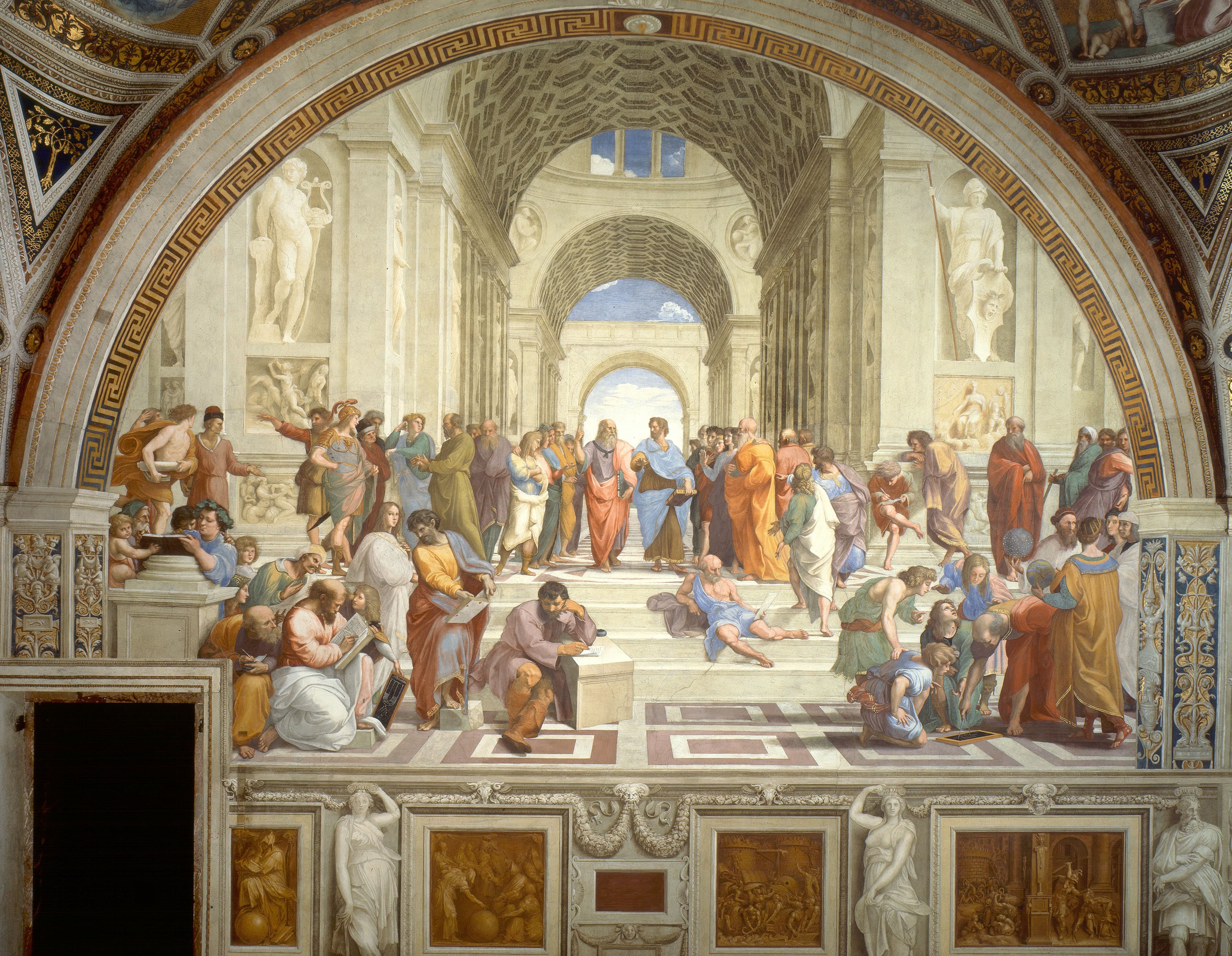
The pointing gesture of Socrates' left hand echoes the upward gesture of Plato in Raphael's The School of Athens, a picture David had studied in Rome. The body owes much to classical sculpture; David idealizes the philosopher, who was famous for being ugly, into a heroic figure.
What does The Death of Socrates mean?
The painting is about virtue under pressure. Socrates chooses death rather than abandon his principles or break the law, and he goes on teaching to the end. Around him, emotion overwhelms everyone else; he alone is in control. That contrast between reason and feeling is the whole drama.
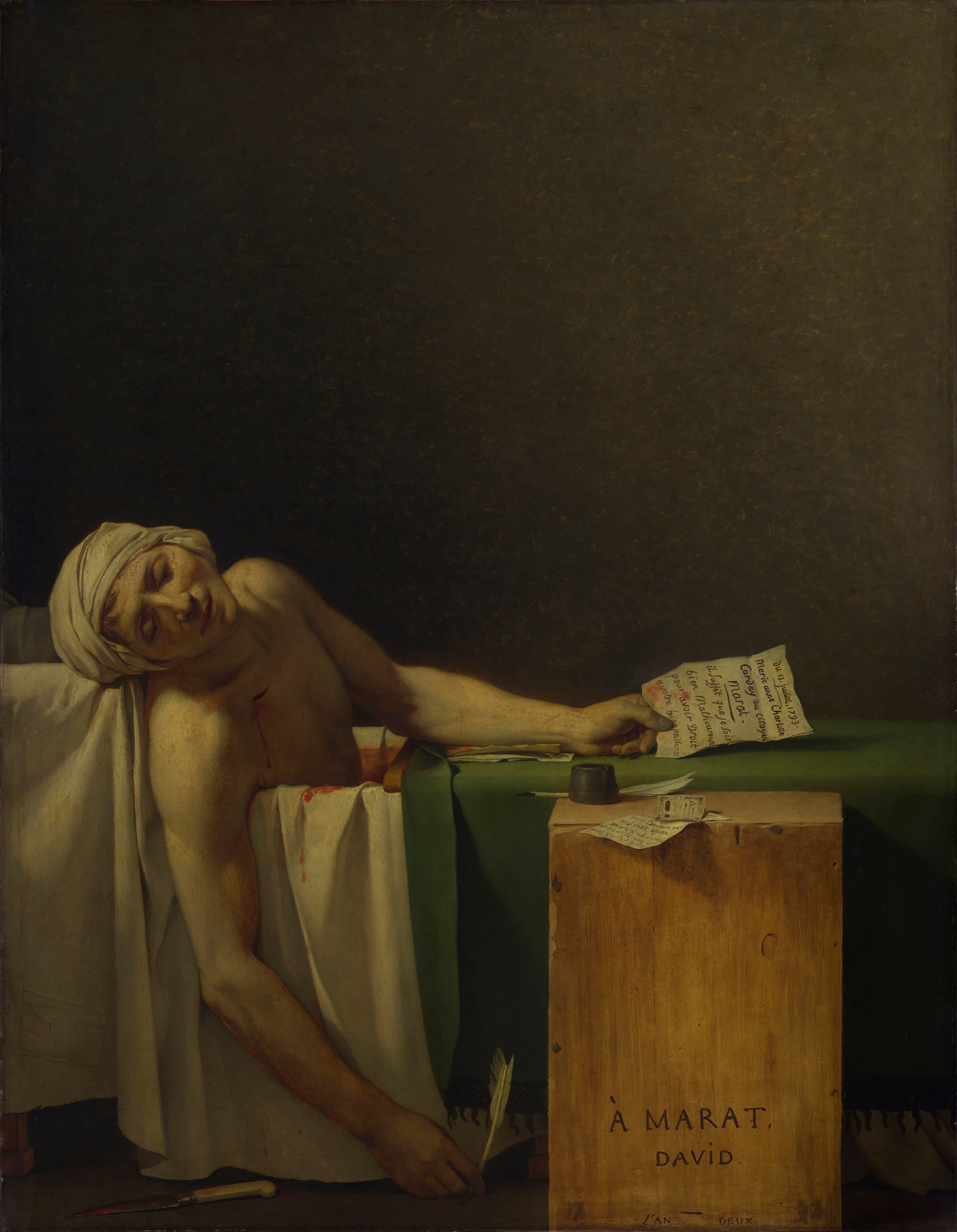
In 1787, two years before the French Revolution, that message had a political edge. Paintings of Roman and Greek stoic heroes spoke to an educated public that admired republican virtue and resented royal and church authority. David would later become a revolutionary himself and paint The Death of Marat in 1793, another image of a martyr to a cause. Socrates reads, in hindsight, as a rehearsal.
Reception and legacy
The painting was a triumph at the Salon of 1787. The English painter Sir Joshua Reynolds is reported to have ranked it with the Sistine Chapel and Raphael's Vatican rooms as among the greatest achievements of art, and Thomas Jefferson, then in Paris, saw it. It became the classic image of the philosopher's death and is reproduced in textbooks on philosophy as often as in books on art. It is a natural centerpiece for dark academia, with its candlelit learning, classical bodies and devotion to ideas.
Where is The Death of Socrates today?
The painting is in the Metropolitan Museum of Art in New York, which acquired it in 1931 (Catharine Lorillard Wolfe Collection, Wolfe Fund; accession 31.45). It hangs in the museum's European paintings galleries. The Met has released its photograph as open access, the image shown here.
Questions & answers
Where is The Death of Socrates painting?
Jacques-Louis David's The Death of Socrates (1787) is in the Metropolitan Museum of Art in New York, which acquired it in 1931. It hangs in the Met's European paintings galleries, and the museum offers a free open-access image of it.
What is the meaning of The Death of Socrates?
It shows Socrates choosing to die rather than abandon his principles. Calm and still teaching, he reaches for the hemlock while his followers collapse in grief. Painted two years before the French Revolution, it celebrated stoic virtue and resistance to unjust authority.
Who is the old man at the foot of the bed in The Death of Socrates?
It is Plato, who described Socrates' death in his dialogue Phaedo. David takes liberties: Plato says he was not present, and he was in his late twenties, but David shows him as an old man seated apart, as if remembering the scene he would later write.
Why is Socrates pointing up in the painting?
Socrates is still teaching. In the Phaedo he spends his final hours arguing for the immortality of the soul, and his raised hand points to the higher world of ideas, while his other hand reaches for the poison without hesitation.
More by the artist
Jacques-Louis David
Kindred works
You may also study
The School of Athens
Raphael · 1509–1511
The Raft of the Medusa
Théodore Géricault · 1818–1819
Liberty Leading the People
Eugène Delacroix · 1830
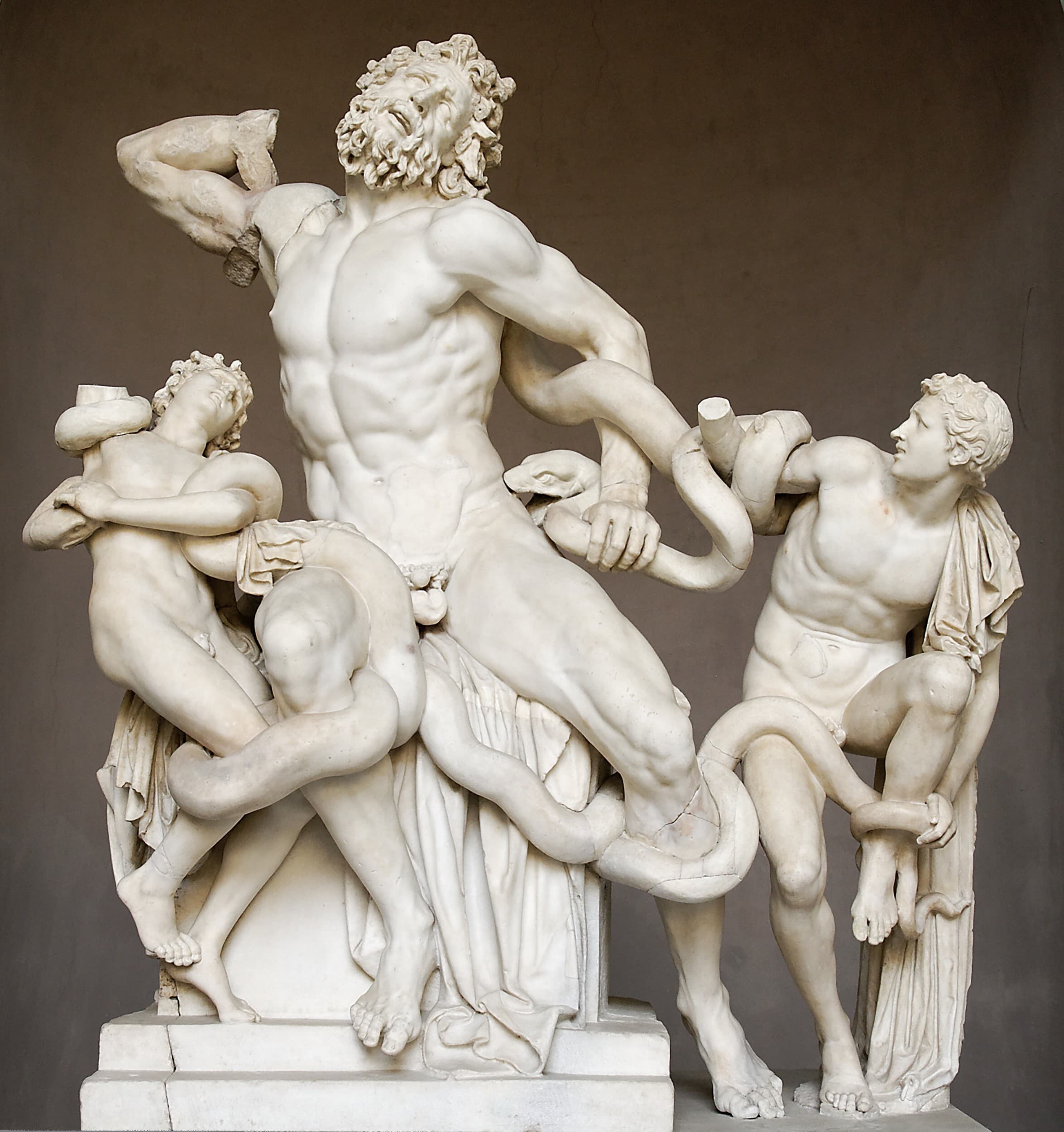
Laocoön and His Sons
Agesander of Rhodes & Athenodoros of Rhodes & Polydorus of Rhodes · c. 200 BC – AD 70 (date debated); excavated 1506

The Scream
Edvard Munch · 1893
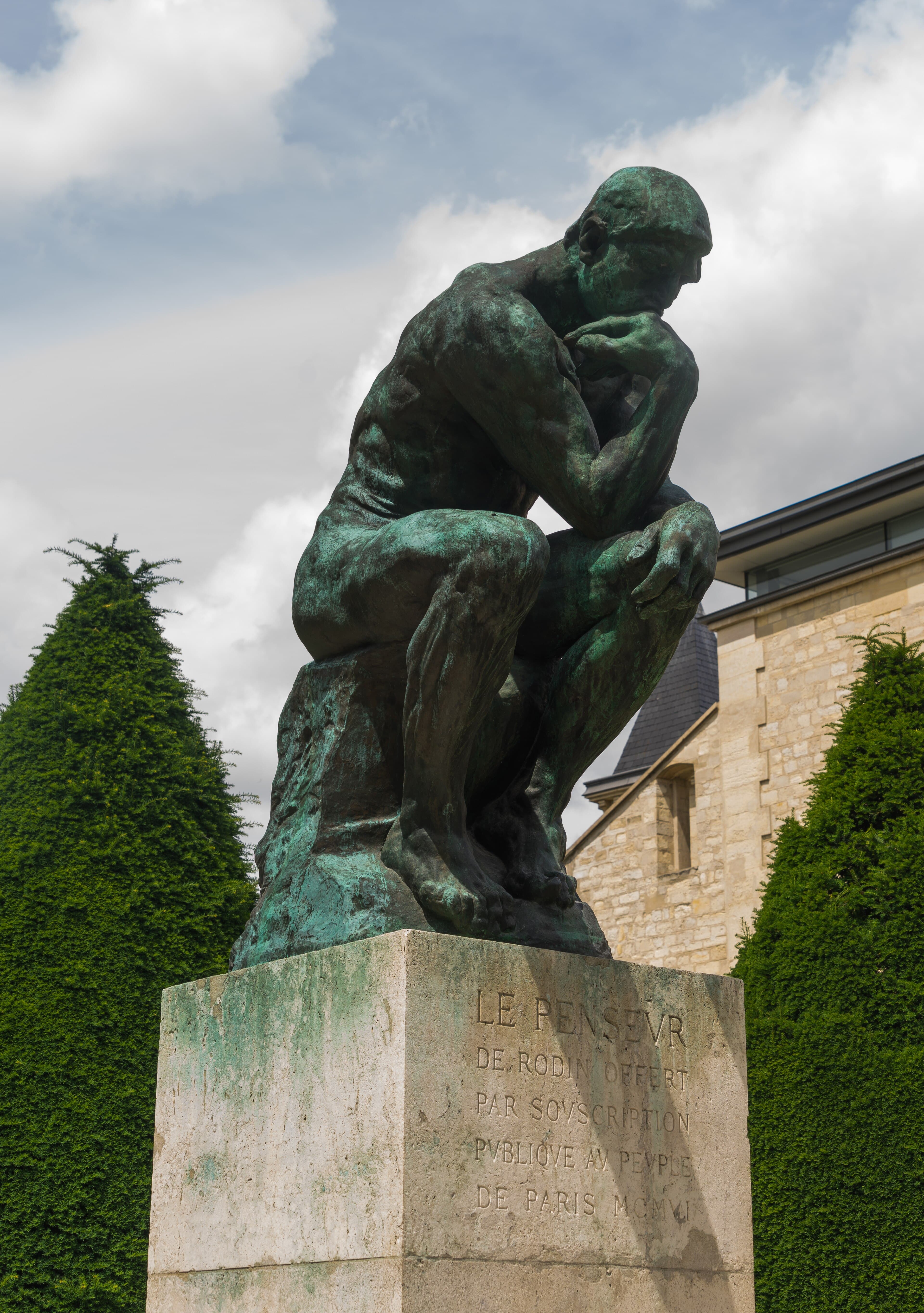
The Thinker
Auguste Rodin · Modeled 1880–82; enlarged 1902–03; this cast 1904

Saturn Devouring His Son
Francisco Goya · c. 1819–1823

Ophelia
John Everett Millais · 1851–52