Image: National Gallery, London, via Google Arts & Culture · Public domain · via Wikimedia Commons
Northern Renaissance
The Ambassadors
Hans Holbein the Younger, 1533
The Ambassadors painting is Hans Holbein the Younger's 1533 double portrait of two French envoys in London, surrounded by scientific instruments and crossed by a famous distorted skull. It hangs in the National Gallery, London.
- Artist
- Hans Holbein the Younger
- Date
- 1533
- Medium
- Oil on oak
- Dimensions
- 207 × 209.5 cm
- Collection
- National Gallery, London, United Kingdom
- Movement
- Northern Renaissance
What you are looking at
Two young men stand full length on either side of a two-tier wooden stand, life-size, in front of a green damask curtain. On the left, Jean de Dinteville, French ambassador to the court of Henry VIII, wears a pink satin doublet under a black fur-lined gown and the medallion of the Order of Saint Michael; the sheath of his dagger is inscribed with his age, 29. On the right, his friend Georges de Selve, Bishop of Lavaur, wears a long, sober brown robe; the book under his elbow gives his age as 25.
Between them, the stand is loaded with objects, painted with Holbein's astonishing precision.
- Top shelf: the heavens. A celestial globe, a cylindrical sundial, a quadrant, a polyhedral sundial and other instruments for measuring time and the positions of the stars, resting on an oriental carpet.
- Bottom shelf: the earth. A terrestrial globe, a merchant's arithmetic book held open by a square, a pair of dividers, a lute and a case of flutes, and an open hymnbook.
And across the floor, on a mosaic pavement copied from the sanctuary of Westminster Abbey, floats a strange, smeared diagonal shape. Viewed head-on it is unreadable. Stand close to the picture at the lower right and look along its surface, and it resolves into a human skull.
The details most people miss are the small ones. One string of the lute is broken. The hymnbook is open at Martin Luther's translation of "Veni Creator Spiritus" and at his version of the Ten Commandments. And in the very top left corner, half hidden by the curtain, hangs a small silver crucifix.
How Holbein made it
Hans Holbein the Younger (1497/98–1543) was born in Augsburg, worked in Basel and settled in England, where he became court painter to Henry VIII. The Ambassadors is one of his largest works, painted in oil on oak panels joined together, more than two meters square. The textures are the showpiece: fur, satin, velvet, brass, paper, wood, wool pile, each rendered so that you can almost feel it.
The skull is an anamorphosis, an image drawn in a stretched perspective so that it can only be read from a particular angle. The technique had been described by artists and mathematicians in the early 16th century, but no one before Holbein had used it so boldly in a major painting. It is often suggested that the picture was intended to hang beside a staircase or doorway so that a viewer passing at an angle would suddenly see the skull appear.
The context
The year 1533 was a crisis year in Europe. Henry VIII was breaking with Rome to marry Anne Boleyn, who was crowned that spring. Dinteville was in London on a diplomatic mission for Francis I of France; de Selve visited him there. Meanwhile, Lutheran reform was dividing Christendom, and de Selve, a bishop, was involved in efforts to reconcile Catholics and Protestants.
Some scholars have argued that the instruments on the top shelf are set to indicate a specific date and time: Good Friday, 11 April 1533, in the afternoon. The reading is ingenious and widely cited, though not universally accepted. The terrestrial globe is marked with Polisy, Dinteville's family estate in France, a private detail for the man who commissioned the picture.
What does The Ambassadors mean?
At one level, The Ambassadors is a celebration of two learned, powerful young men and of the knowledge of their age: astronomy, geography, mathematics, music. At another, it is a memento mori, a reminder that all of this ends in death. The skull cuts diagonally across the whole display of worldly learning. Dinteville's personal motto is often given as Memento mori, and he wears a small skull badge in his cap.
The other symbols point toward discord and hope. The broken lute string is traditionally read as a sign of disharmony, perhaps the religious divisions of Europe. The Lutheran hymnbook, open at texts that Catholics and Lutherans shared, may express de Selve's hope for reconciliation. And the hidden crucifix, at the edge of the picture, offers a final answer to the skull: death, then the promise of resurrection.
Reception and legacy
The painting stayed in Dinteville's family château at Polisy, then passed through French collections before being bought by the National Gallery in 1890. Over time even the identity of the sitters was forgotten; it was the historian Mary Hervey who established them in 1900. Today it is one of the most popular paintings in the gallery, partly because of the game of finding the skull. It belongs with the great Renaissance portraits, alongside Leonardo's Mona Lisa, and with the long tradition of death in art.
Where is The Ambassadors painting today?
The Ambassadors hangs in the National Gallery in London, where it is usually displayed so that visitors can step to the right of the painting and see the skull snap into focus. The painting is in the public domain.
Questions & answers
Where is The Ambassadors painting?
Holbein's The Ambassadors (1533) is in the National Gallery in London, which bought it in 1890. It is normally on display, and visitors can stand to the right of the panel, close to the wall, to see the distorted skull at the bottom resolve into focus.
Why is there a skull in The Ambassadors?
The stretched shape on the floor is an anamorphic skull, a memento mori reminding viewers that death overtakes all wealth, power and learning. It can only be read from a sharp angle, which may mean the painting was designed to surprise people passing beside it.
Who are the two men in The Ambassadors?
On the left is Jean de Dinteville, the French ambassador to Henry VIII's court, aged 29. On the right is his friend Georges de Selve, Bishop of Lavaur, aged 25. Their ages are inscribed on Dinteville's dagger sheath and on de Selve's book.
What do the objects in The Ambassadors mean?
The upper shelf holds instruments for studying the heavens, the lower shelf objects of earthly knowledge and music. Together they display the learning of the age. A broken lute string suggests discord, a Lutheran hymnbook hints at religious division, and a hidden crucifix offers hope beyond death.
When was The Ambassadors painted?
Holbein painted it in London in 1533, the year Henry VIII married Anne Boleyn and broke with Rome. Some scholars believe the sundials indicate the date of Good Friday, 11 April 1533.
Kindred works
You may also study
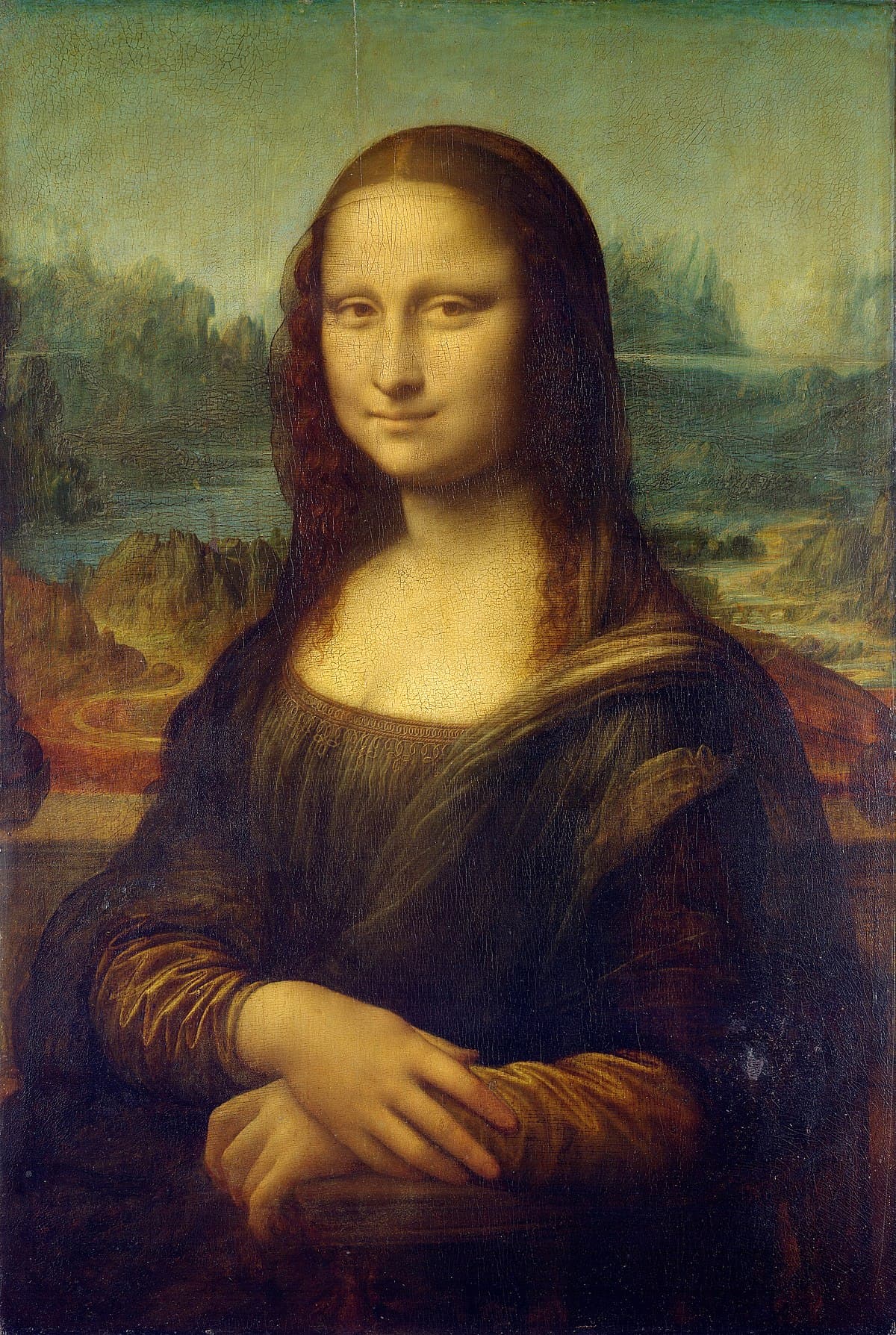
Mona Lisa
Leonardo da Vinci · c. 1503–1519
The School of Athens
Raphael · 1509–1511
The Night Watch
Rembrandt · 1642
The Triumph of Death
Pieter Bruegel the Elder · c. 1562
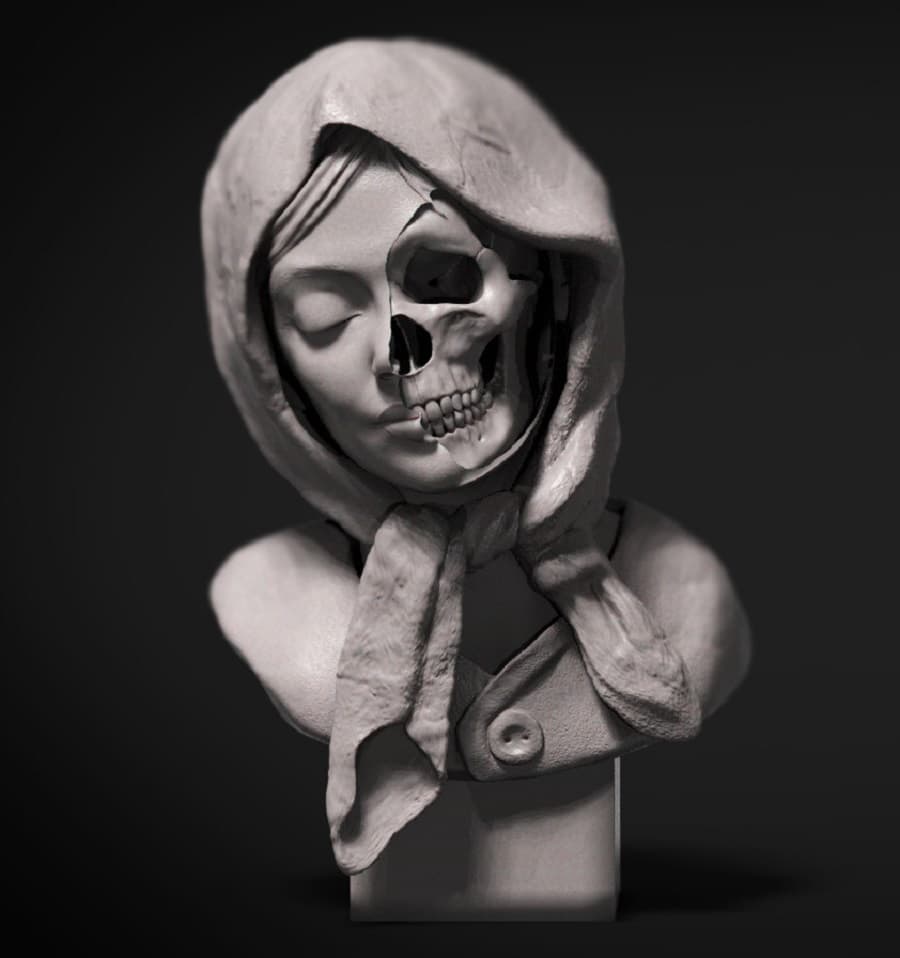
Vanitas Sculpture (Hooded Bust with Skull)
Various Artists or Collaborations

Nymphs Dancing to Pan's Flute
Joseph Tomanek

The Scream
Edvard Munch · 1893

The Thinker
Auguste Rodin · Modeled 1880–82; enlarged 1902–03; this cast 1904