Image: Kröller-Müller Museum, Otterlo · Public domain · via Wikimedia Commons
Post-Impressionism
Café Terrace at Night
Vincent van Gogh, September 1888
Café Terrace at Night is Vincent van Gogh's September 1888 painting of a gaslit café on the Place du Forum in Arles under a starry sky, his first canvas with stars. It is in the Kröller-Müller Museum in Otterlo, the Netherlands.
- Artist
- Vincent van Gogh
- Date
- September 1888
- Medium
- Oil on canvas
- Dimensions
- 80.7 × 65.3 cm
- Collection
- Kröller-Müller Museum, Otterlo, Netherlands
- Movement
- Post-Impressionism
What you are looking at
A café terrace glows on a cobbled square at night. A great yellow awning, lit from below by a gas lamp, projects from the building on the left; under it, round tables and chairs spill out onto the street, where a waiter in a white apron stands among the customers. The light from the café turns the wall and the paving stones orange and yellow. To the right, the street runs off into darkness between shuttered houses, a few figures walk past, and a horse and carriage clatters up the street.
Above, between the rooftops, is a deep blue sky scattered with stars, each painted as a small flower of white and yellow. The perspective lines of the awning, the doorways and the cobbles all draw the eye toward that strip of sky. The cobblestones themselves are a field of small, separate dabs of color, pink, violet, blue and gold, catching the light.
A night painting without black
Van Gogh painted the scene in Arles, in Provence, in mid-September 1888, standing in the square at night. He wrote to his sister Willemien that he had painted a night picture without black, using nothing but beautiful blue and violet and green, with the lit square in pale sulfur and lemon green. He added that he enjoyed painting on the spot at night, though it meant he could mistake one color for another in the dark.
That was a radical choice. Painters traditionally made night scenes in the studio, from memory and sketches, using dark browns and black. Van Gogh wanted to show that night was full of color, and the complementary contrast of blue and yellow, the warm café and the cold sky, carries the whole painting.
The first of Van Gogh's starry skies
Café Terrace at Night is the first painting in which Van Gogh painted stars. Within weeks he painted Starry Night over the Rhône (now in the Musée d'Orsay), and in June 1889, from the asylum at Saint-Rémy, The Starry Night. The café terrace is calmer and more literal than those later skies, but it begins his long fascination with the night. He wrote to Theo about the same time that the sight of the stars always made him dream.
Where is the café in Café Terrace at Night?
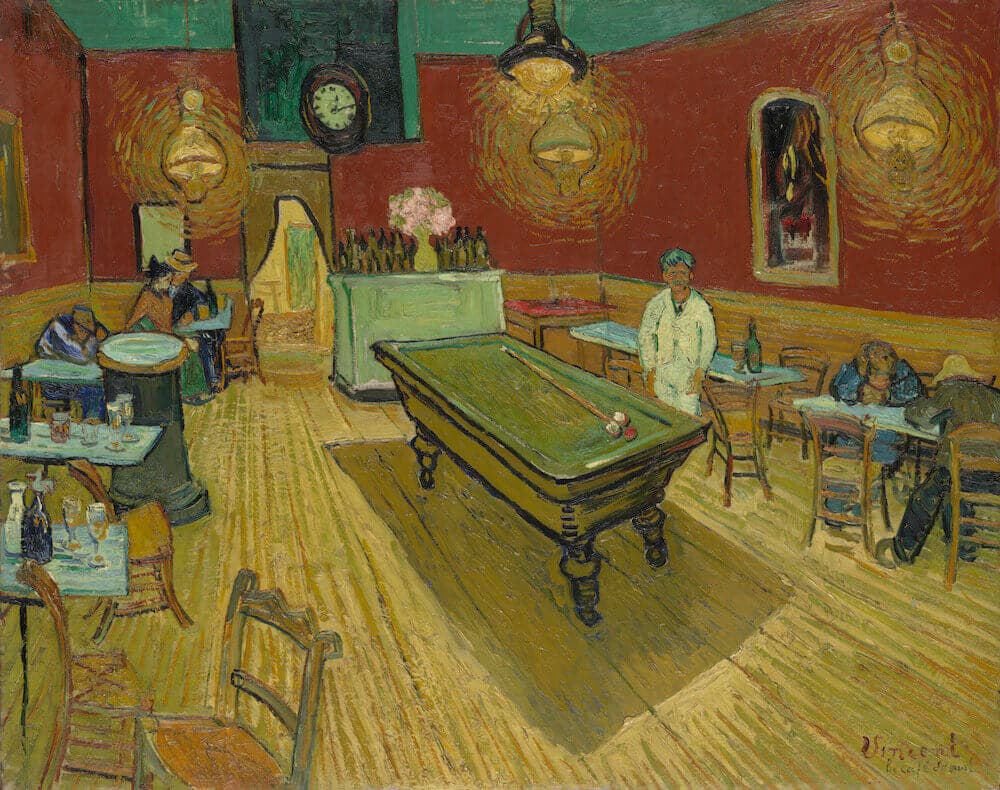
The café stood on the Place du Forum in the center of Arles. It still exists, painted yellow to match the picture and renamed the Café Van Gogh; a visitor standing at the corner of the square can find almost the exact viewpoint. Van Gogh's other famous café, the all-night bar of The Night Café, painted the same month, was a different establishment near the station, and its mood, with blood-red walls and harsh green light, is the opposite of this one.
What does Café Terrace at Night mean?
At its simplest, it is a celebration of the warmth of city life at night and of color itself, made in the hopeful months when Van Gogh was waiting for Paul Gauguin to join him in the Yellow House and found an artists' community in the south.
Some writers have proposed a hidden religious meaning, reading the café scene as a version of the Last Supper, with a central white-robed figure among about a dozen diners and a cross-like shape in the window frame behind him. Van Gogh had once trained for the ministry, and he wrote of a terrible need for religion that sent him out at night to paint the stars. But nothing in his letters about this painting supports the Last Supper reading, and it is best treated as speculation.
Reception and legacy
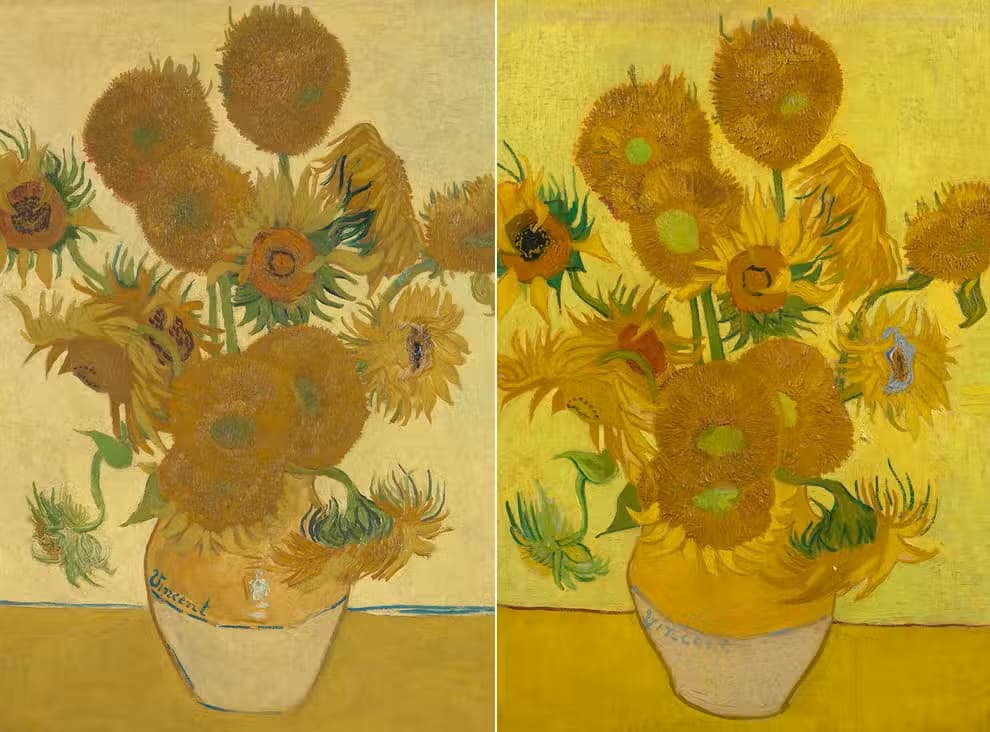
Van Gogh did not sign this canvas, though he described it in letters, so its authorship has never been in doubt. It was bought in the early twentieth century by Helene Kröller-Müller, the Dutch collector who assembled one of the largest Van Gogh collections in the world. Today it is among his most reproduced works, a fixture of posters, mugs and the cozy, golden-lit side of light academia. For more of his work see famous Van Gogh paintings, including Sunflowers, painted for the same Yellow House.
Details most viewers miss
- The perspective. The awning, the doorways and the cobbles converge toward the narrow street at the right, which opens onto the blue sky.
- The stars. Each star is painted as a cluster of strokes, not a dot, a first step toward the swirling skies of 1889.
- The carriage. A small horse-drawn carriage moves up the street on the right, almost lost in the shadows.
- The colors on the ground. The cobblestones near the café are pinks and oranges; farther away they turn violet and blue, as the gaslight fades.
Where to see Café Terrace at Night
The painting is in the Kröller-Müller Museum in Otterlo, in the middle of De Hoge Veluwe National Park in the Netherlands, which holds the second-largest collection of Van Gogh's paintings after the Van Gogh Museum. It is sometimes lent to exhibitions abroad, so check before you travel.
Questions & answers
Where is Café Terrace at Night?
It is in the Kröller-Müller Museum in Otterlo, inside De Hoge Veluwe National Park in the Netherlands. The museum's founder, Helene Kröller-Müller, acquired it in the early twentieth century.
Is the café in Café Terrace at Night real?
Yes. It stands on the Place du Forum in Arles, in southern France. Now called the Café Van Gogh and painted yellow to match the picture, it lets visitors stand close to the spot where Van Gogh painted it in September 1888.
Why is there no black in Café Terrace at Night?
Van Gogh deliberately painted a night scene without black, using blues, violets and greens for the darkness. He told his sister Willemien that this was his aim, and he painted the scene on the spot at night.
Is Café Terrace at Night the Last Supper?
Some writers have suggested the café hides a Last Supper, with a central white-clad figure and about twelve diners. Van Gogh's letters about the painting do not mention it, so the idea remains speculation.
Was Café Terrace at Night painted before The Starry Night?
Yes. Painted in September 1888, it was Van Gogh's first painting with a starry sky, followed weeks later by Starry Night over the Rhône and, in June 1889, by The Starry Night.
More by the artist
Vincent van Gogh
Head of a Skeleton with a Burning Cigarette
Vincent van Gogh · 1886
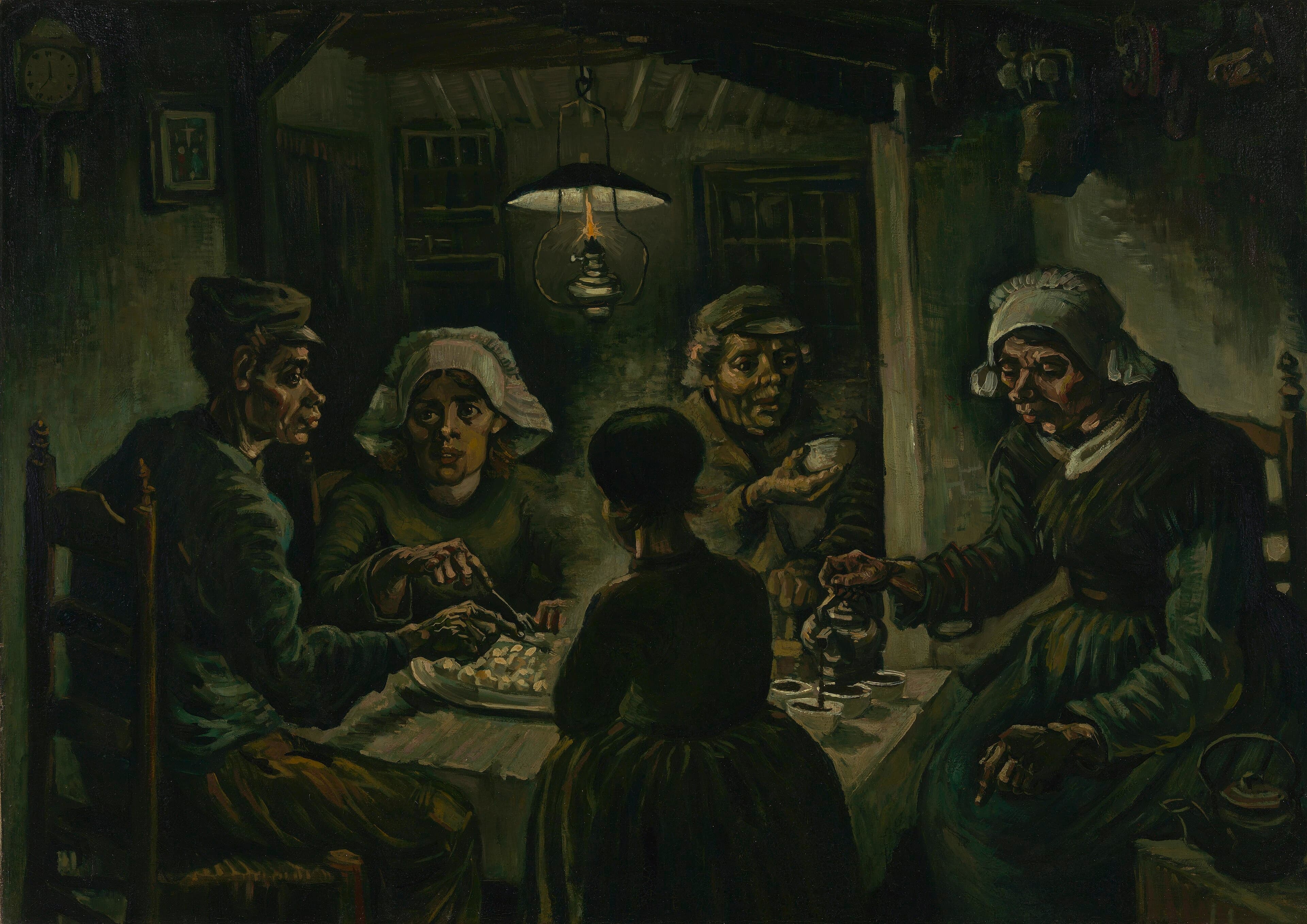
The Potato Eaters
Vincent van Gogh · April–May 1885
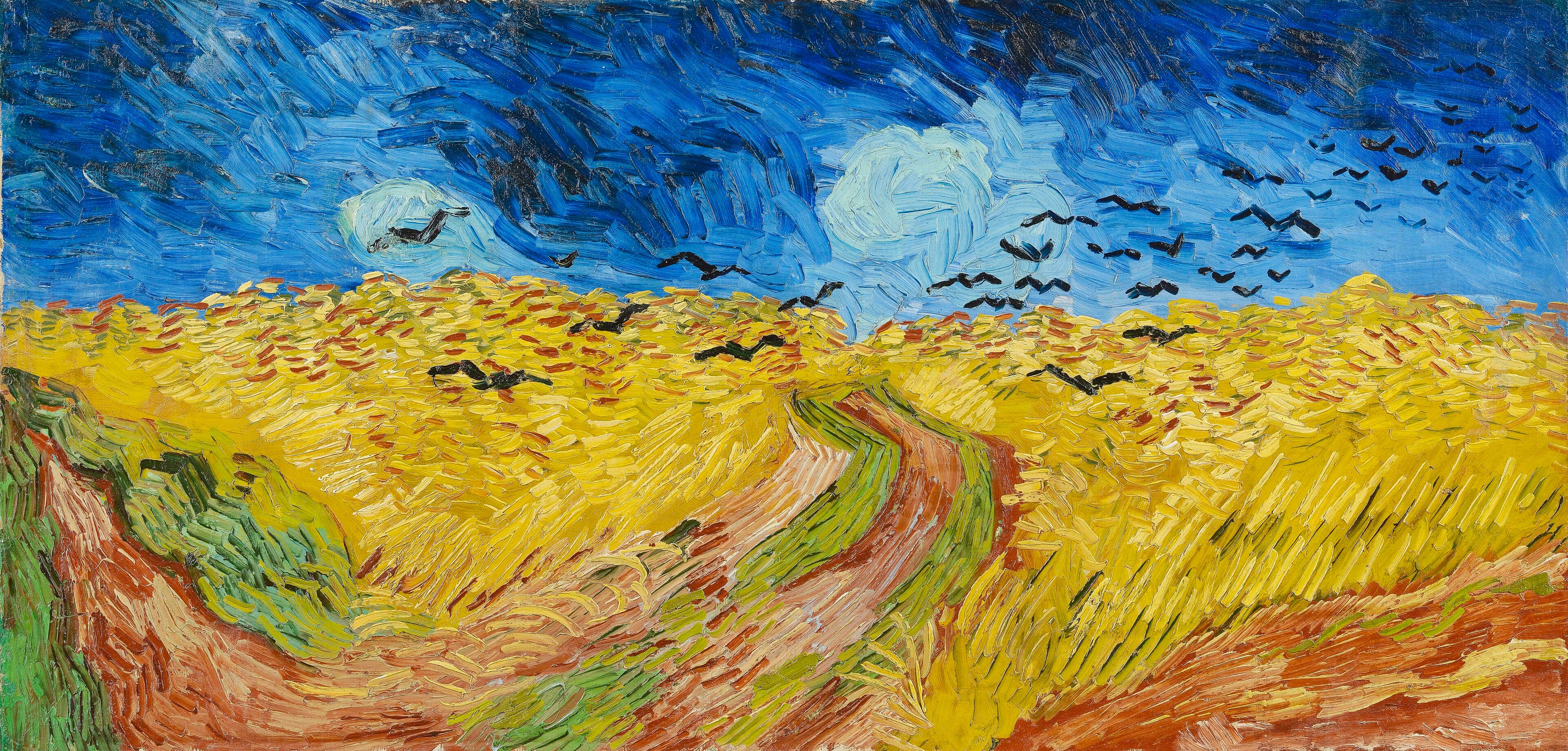
Wheatfield with Crows
Vincent van Gogh · July 1890
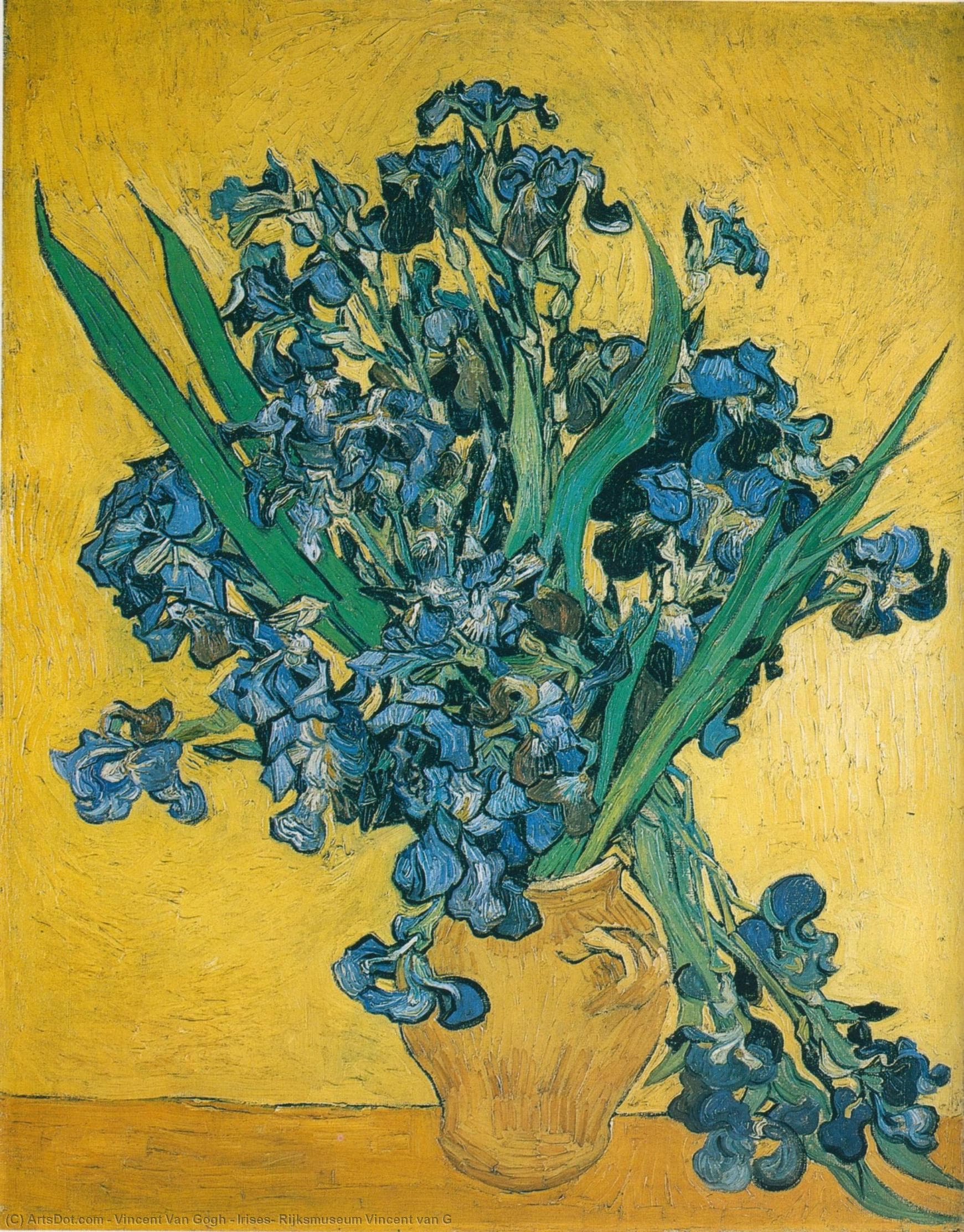
Irises (Vase with Irises Against a Yellow Background)
Vincent van Gogh · 1890
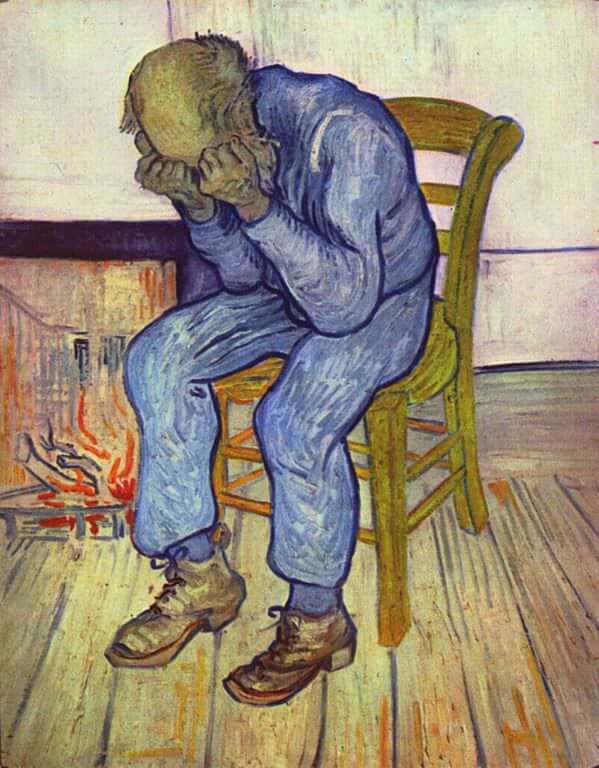
At Eternity's Gate
Vincent van Gogh · 1890
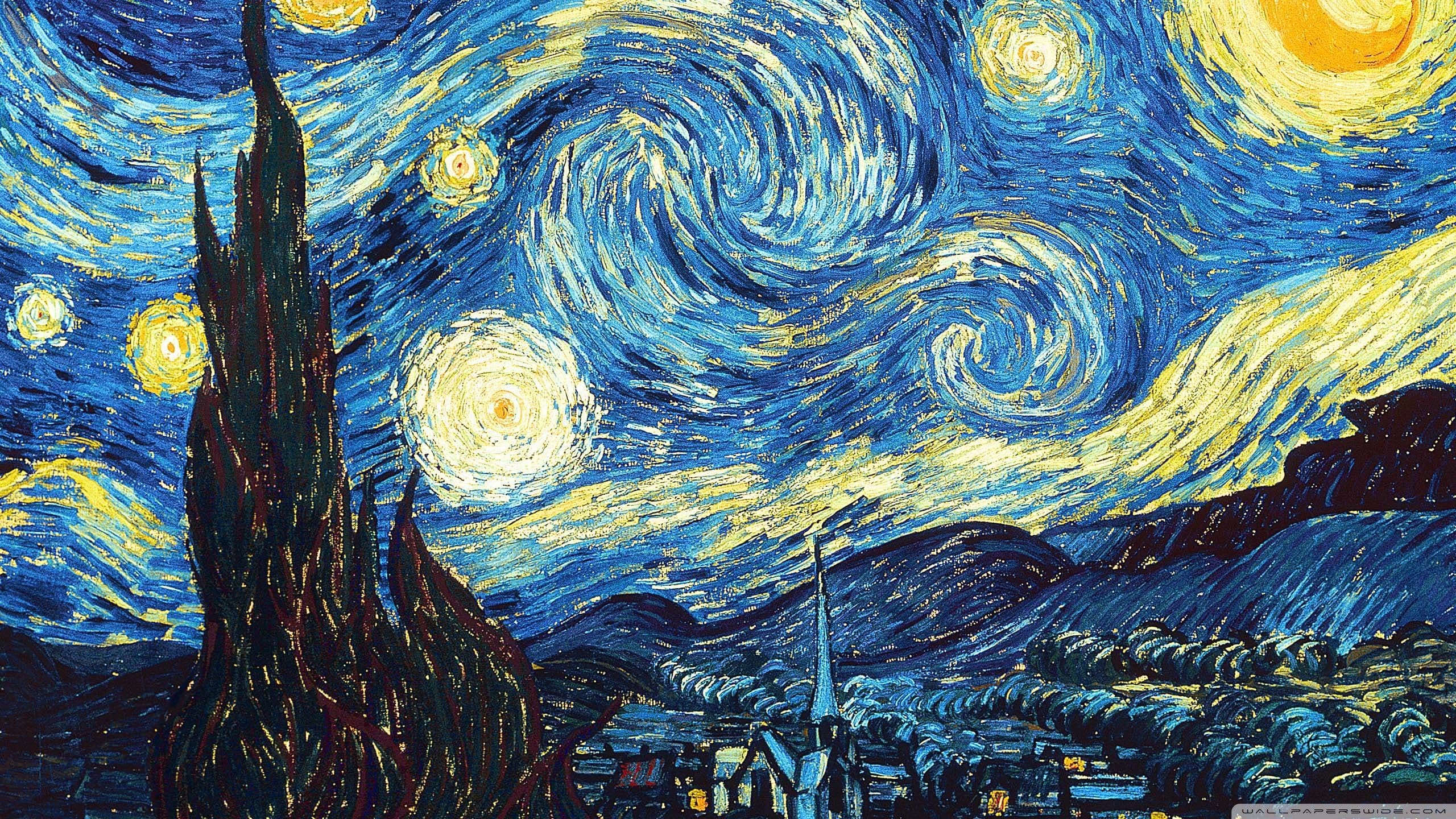
The Starry Night (van Gogh)
Vincent van Gogh · 1889
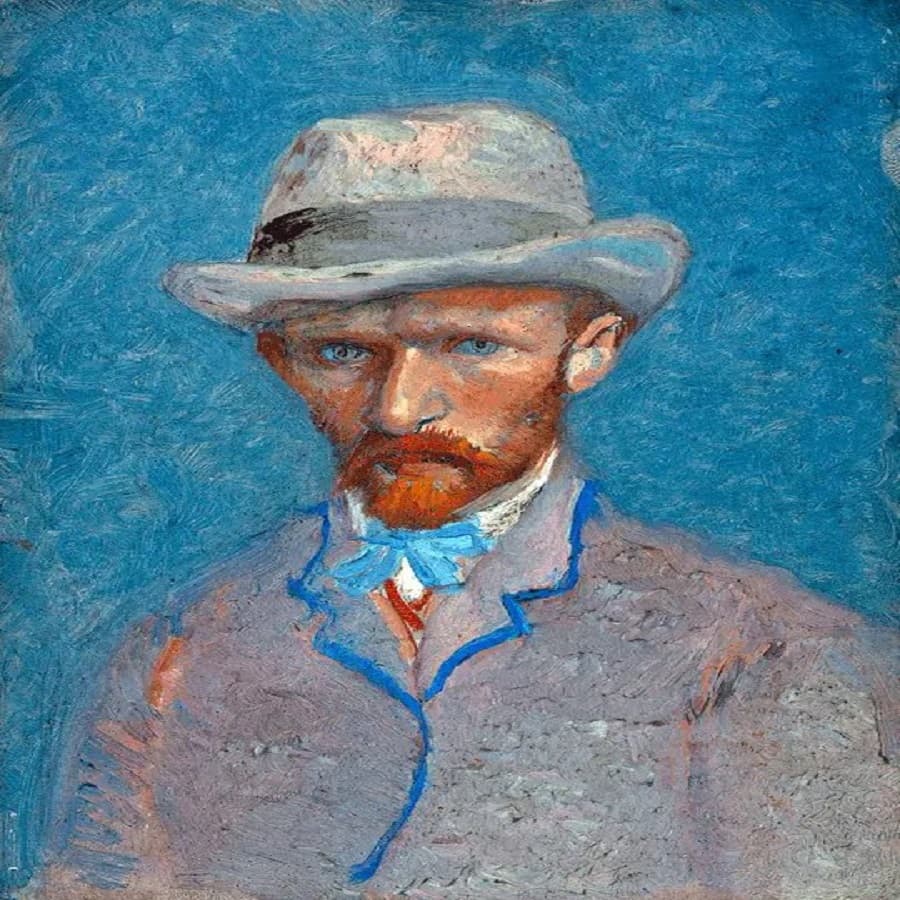
Portrait of Theo van Gogh (Self-Portrait with Grey Felt Hat)
Vincent van Gogh · 1887
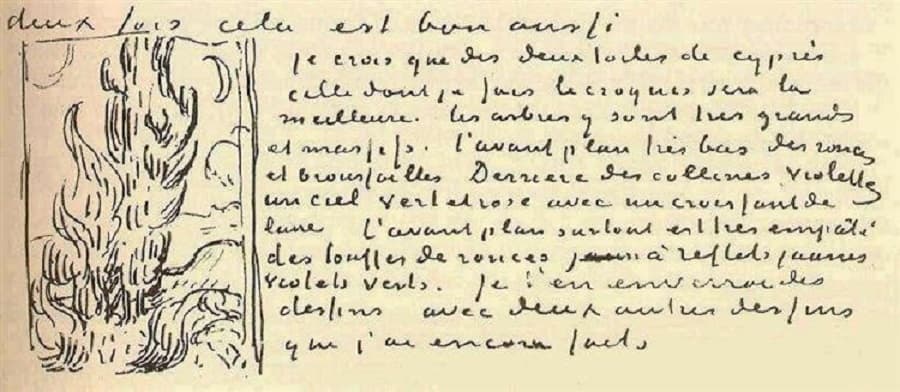
The Letters of Vincent van Gogh
Vincent van Gogh · 1872–1890
Also painted in 1888
The same year
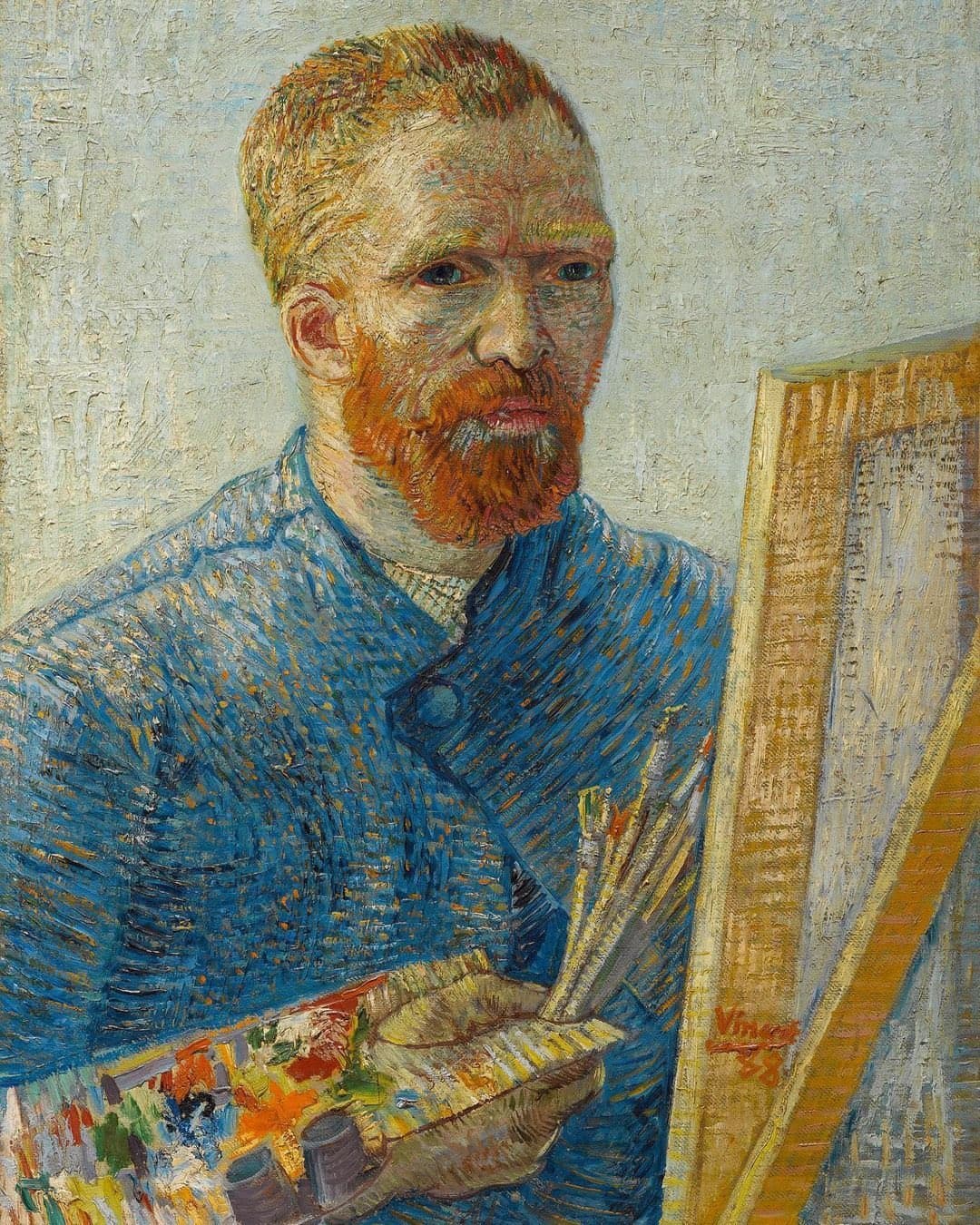
Kindred works
You may also study
The Night Café
Vincent van Gogh · 1888
Sunflowers
Vincent van Gogh · 1888–89

Bridge over a Pond of Water Lilies
Claude Monet · 1899

Venus de Milo
Alexandros of Antioch · c. 150–125 BC

Nymphs Dancing to Pan's Flute
Joseph Tomanek

The Scream
Edvard Munch · 1893
The Thinker
Auguste Rodin · Modeled 1880–82; enlarged 1902–03; this cast 1904
The Creation of Adam
Michelangelo · c. 1511–12