Image: Musée du Louvre; photo by Shonagon after the 2024 restoration · Public domain · via Wikimedia Commons
Romanticism
Liberty Leading the People
Eugène Delacroix, 1830
Liberty Leading the People is Eugène Delacroix's 1830 painting of the July Revolution in Paris, with Liberty as a bare-breasted woman raising the tricolor over a barricade. It hangs in the Louvre in Paris.
- Artist
- Eugène Delacroix
- Date
- 1830
- Medium
- Oil on canvas
- Dimensions
- 260 × 325 cm
- Collection
- Musée du Louvre, Paris, France
- Movement
- Romanticism
What you are looking at
A woman strides over a barricade of broken timber and paving stones toward us. In her right hand she raises the blue, white and red flag of the French Republic; in her left she holds a musket with a fixed bayonet. She wears a red Phrygian cap, the symbol of freedom since the Revolution of 1789, and her yellow dress has slipped from her shoulders, baring her breasts. She turns her head back to the crowd as if to call them on.
Around her the people of Paris surge forward: a man in a top hat and black coat clutching a hunting gun, a worker with a saber and a beret, a boy with a pistol in each hand and a schoolbag across his chest. At her feet lie the dead. A half-naked corpse sprawls at the lower left, missing his trousers and wearing only one sock; beside him lie government soldiers. Through the smoke on the right, the towers of Notre-Dame fly the tricolor.
The July Revolution of 1830
The painting records the "Three Glorious Days" (Les Trois Glorieuses) of 27–29 July 1830, when Parisians rose against King Charles X after he suspended the freedom of the press and dissolved the newly elected Chamber. In three days of street fighting the king was forced out, and Louis-Philippe, the "citizen king", came to power. Delacroix's original title points to the second day: Le 28 juillet. La Liberté guidant le peuple.
Delacroix (1798–1863), already the leading painter of French Romanticism, did not fight on the barricades. He wrote to his brother that autumn: "I have undertaken a modern subject, a barricade, and if I haven't fought for my country, at least I'll have painted for her." He worked on the canvas from October to December 1830 and showed it at the Salon of 1831.
How the composition works
The picture is built as a pyramid. Its base is the line of corpses across the foreground; its apex is the flag. The eye climbs from the dead to Liberty's raised arm, and the reds and blues are repeated in the clothes of the living and the dead so that the tricolor seems to rise out of the crowd. Delacroix learned this kind of heaped, diagonal composition from Théodore Géricault's The Raft of the Medusa, for which he had posed as a young man.
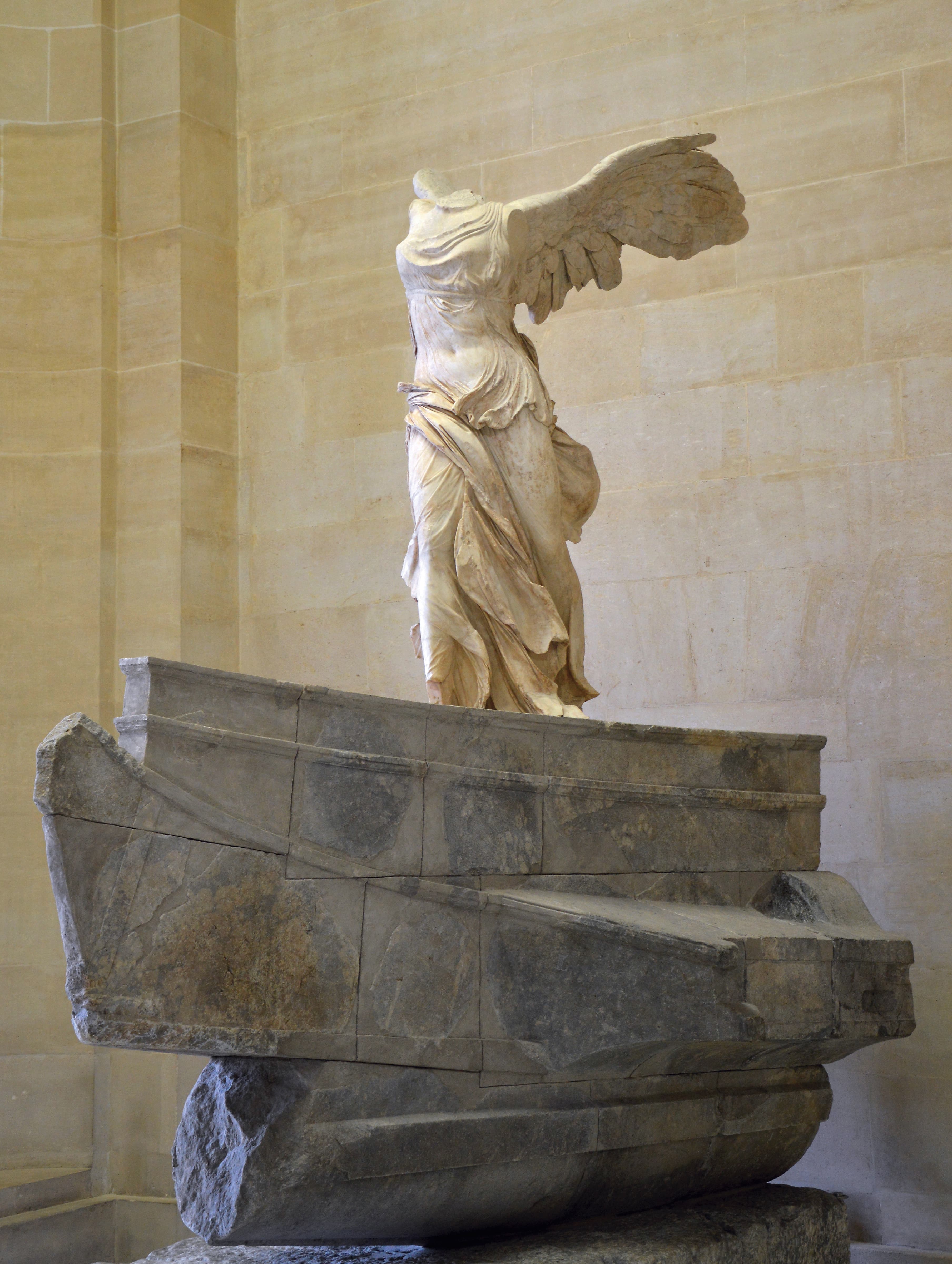
Liberty herself mixes two worlds. Her profile and drapery recall classical sculpture, such as the Winged Victory or the Venus de Milo, while her body, with its hairy armpit noted by shocked critics, belongs to a real woman of the streets. That collision of allegory and reportage is the painting's daring.
Who are the people in Liberty Leading the People?
None of the figures is a documented portrait. The man in the top hat has often been identified as Delacroix himself or as a friend, but the claim is unproven. The boy with pistols has become linked in popular memory with Gavroche, the Paris street child in Victor Hugo's Les Misérables (1862); Hugo wrote the novel decades later, so the influence runs, if at all, the other way. Delacroix's point is social: bourgeois, worker and street child united behind a single idea.
What does it mean?
It is an allegory of liberty as a living force, born in the streets rather than handed down by kings. It is also an ambiguous picture. Delacroix painted the dead as frankly as the heroes, and the corpse at the front is stripped and anonymous. Critics in 1831 were divided: some found Liberty too vulgar for an allegory, others thought the painting too dangerous. The new government bought it for 3,000 francs, then kept it out of public view for years as too inflammatory, and returned it to the artist.
Reception and legacy
The painting entered the Louvre in 1874, after the fall of the Second Empire, and has since become the defining image of the French Republic. It appeared on the French 100-franc banknote from 1979 to 1995 and is quoted endlessly in posters, album covers and protest imagery around the world. Compare it with The Death of Marat, another painting that turned revolution into icon, and with Goya's darker vision of popular resistance, The Third of May 1808.
Details most viewers miss
- The schoolbag. The boy with pistols wears a student's cartridge pouch slung like a satchel, a sign that even children joined the fight.
- The sock. The dead man in the foreground wears one sock and no trousers, stripped by looters, a brutal detail rarely seen in heroic painting.
- The towers. The cathedral of Notre-Dame, flying the tricolor, places the scene unmistakably in Paris and shows that the revolution has reached the city's heart.
Where to see Liberty Leading the People
The painting is in the Musée du Louvre in Paris (inventory RF 129), in the large galleries of French nineteenth-century painting on the first floor of the Denon wing, near The Raft of the Medusa. A restoration completed in 2024 removed layers of yellowed varnish, and the blues and reds of the flag are now much brighter than in older reproductions.
Questions & answers
Where is Liberty Leading the People?
It is in the Musée du Louvre in Paris, in the Denon wing's galleries of large French nineteenth-century paintings, close to Géricault's Raft of the Medusa. It has been in the Louvre since 1874 and was cleaned in a restoration completed in 2024.
What event does Liberty Leading the People show?
The July Revolution of 1830, specifically 28 July, the second of the 'Three Glorious Days' when Parisians fought King Charles X in the streets. The revolt forced the king out and brought Louis-Philippe to the throne.
Who is the woman in Liberty Leading the People?
She is not a real person but an allegory of Liberty, identified by her Phrygian cap and the tricolor. Delacroix gave her a classical profile and a real, earthy body, which shocked critics when the picture was shown in 1831.
Is Delacroix the man in the top hat?
It is often said that the man with the top hat and gun is a self-portrait, but there is no proof. Delacroix did not fight in the revolution; he wrote that if he had not fought for his country, he would paint for her.
What does Liberty Leading the People symbolize?
Liberty as a force rising from the people themselves, uniting workers, the middle class and children across a barricade of the dead. It became a symbol of the French Republic and of popular revolt everywhere.
Kindred works
You may also study
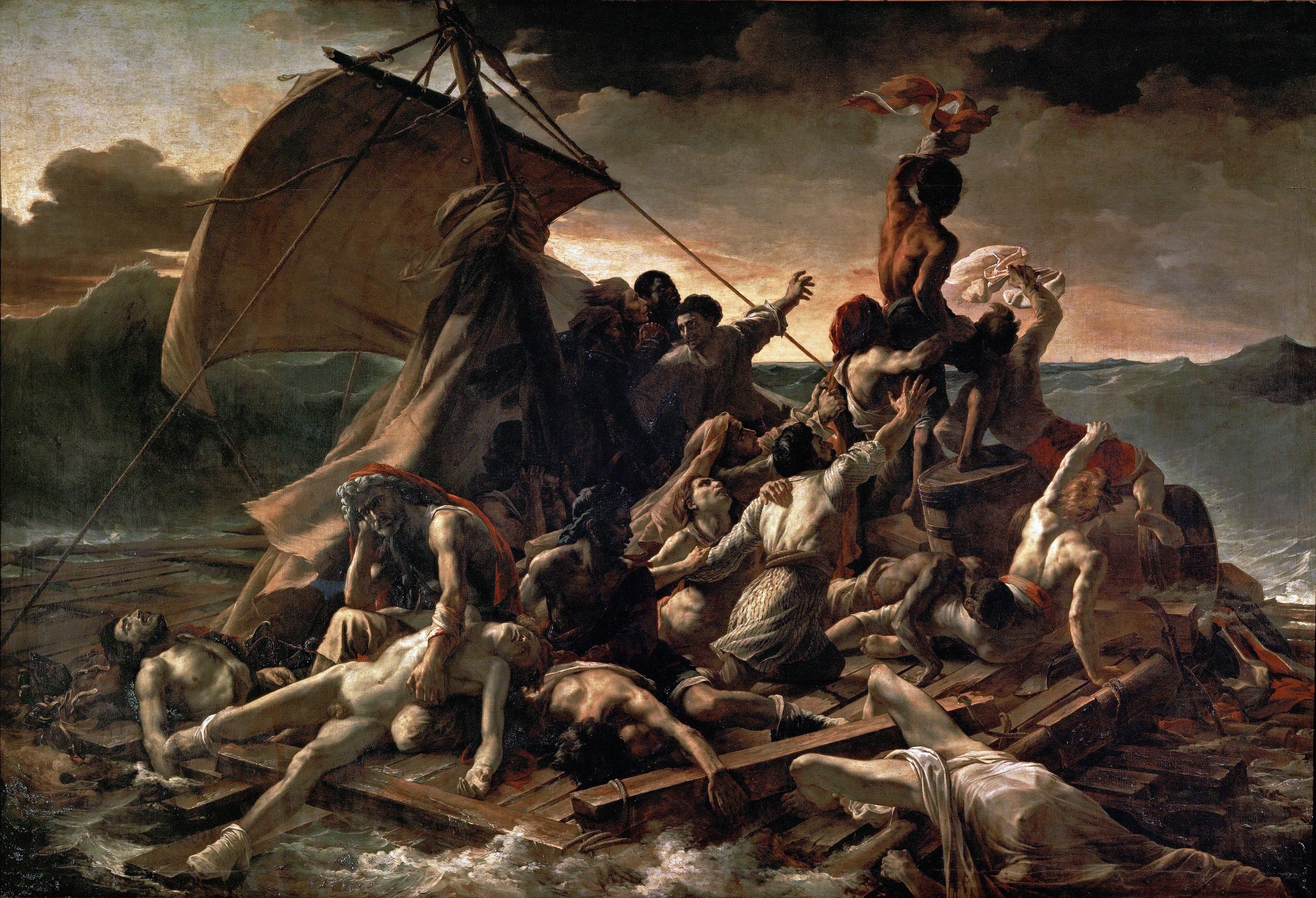
The Raft of the Medusa
Théodore Géricault · 1818–1819
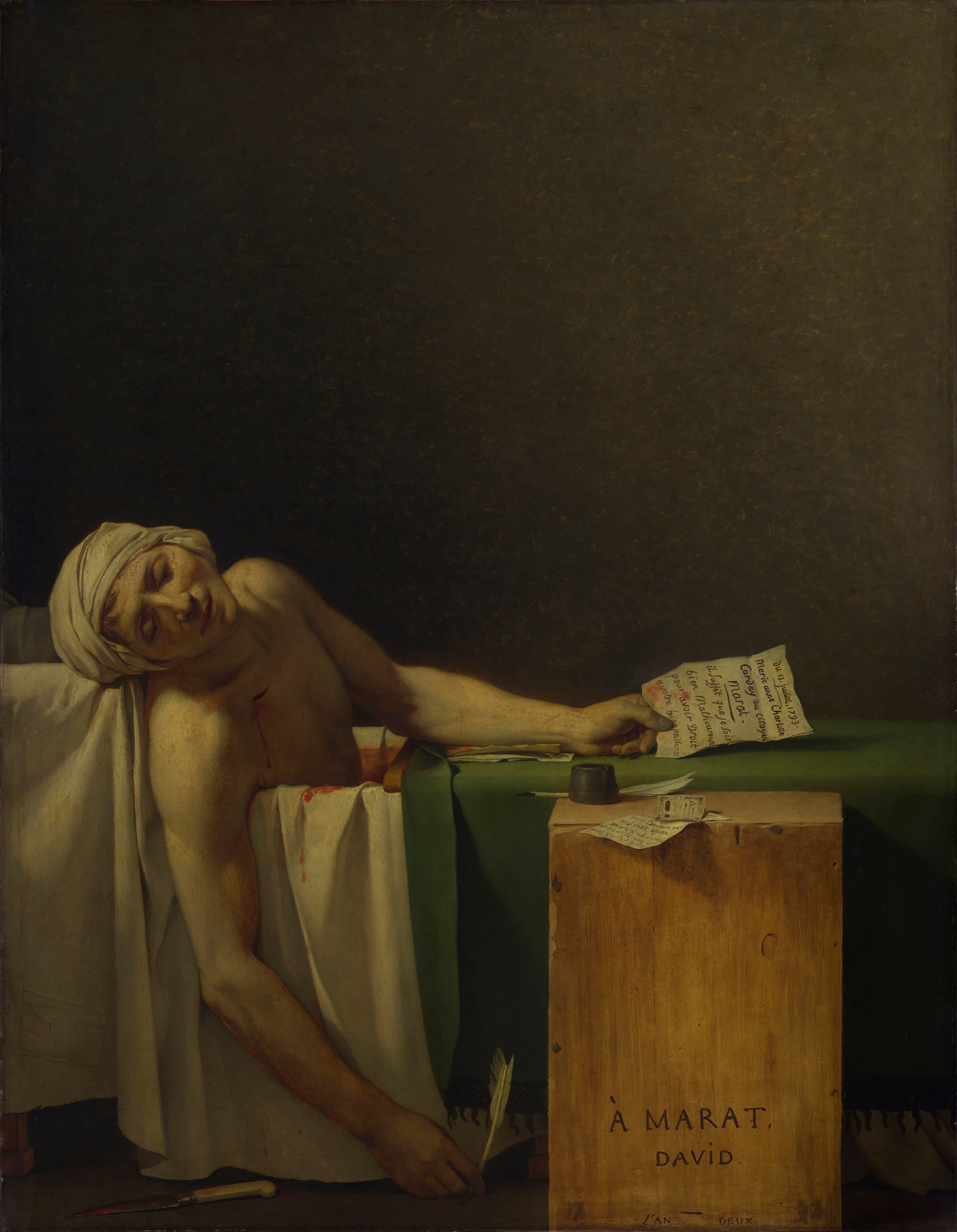
The Death of Marat
Jacques-Louis David · 1793
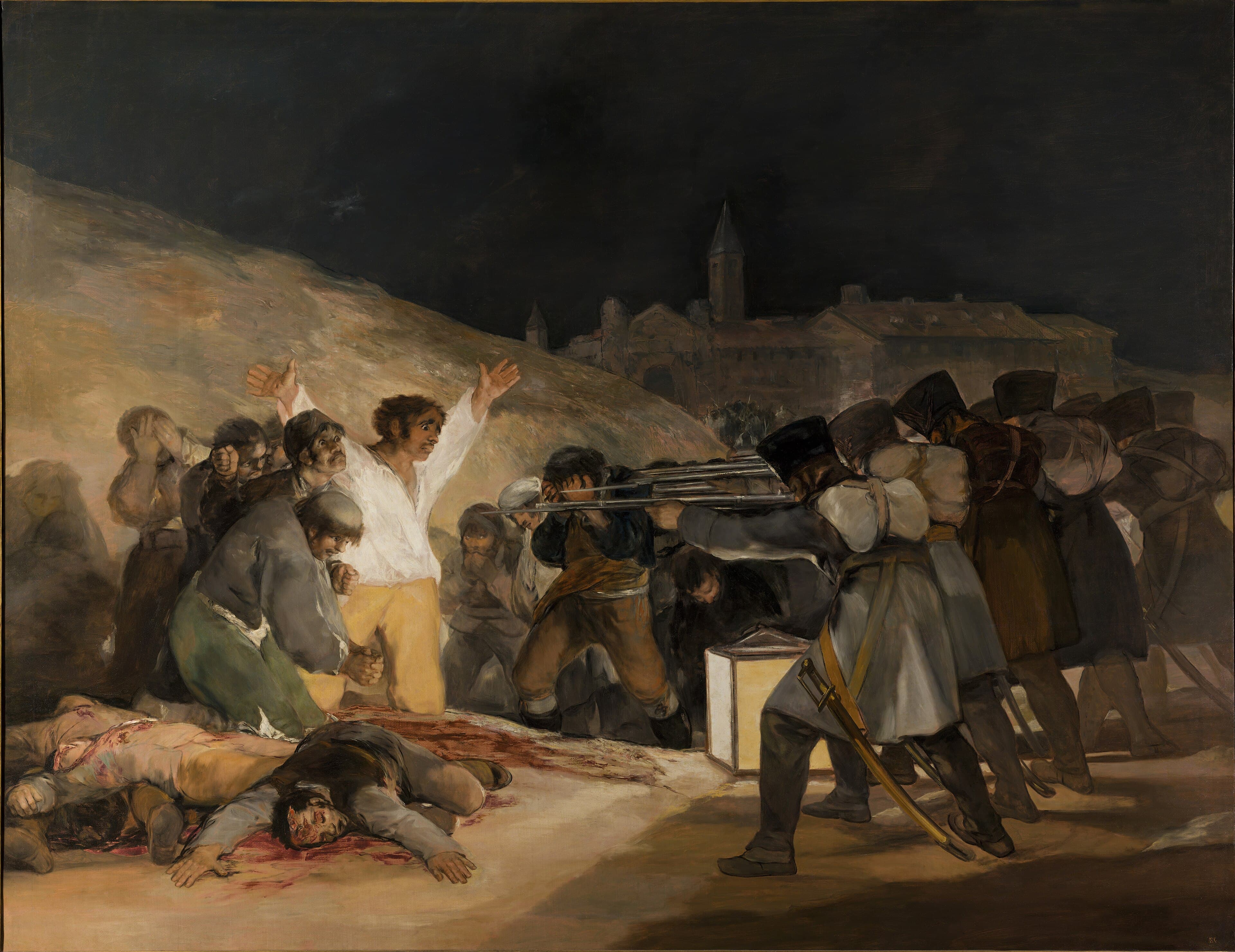
The Third of May 1808
Francisco Goya · 1814
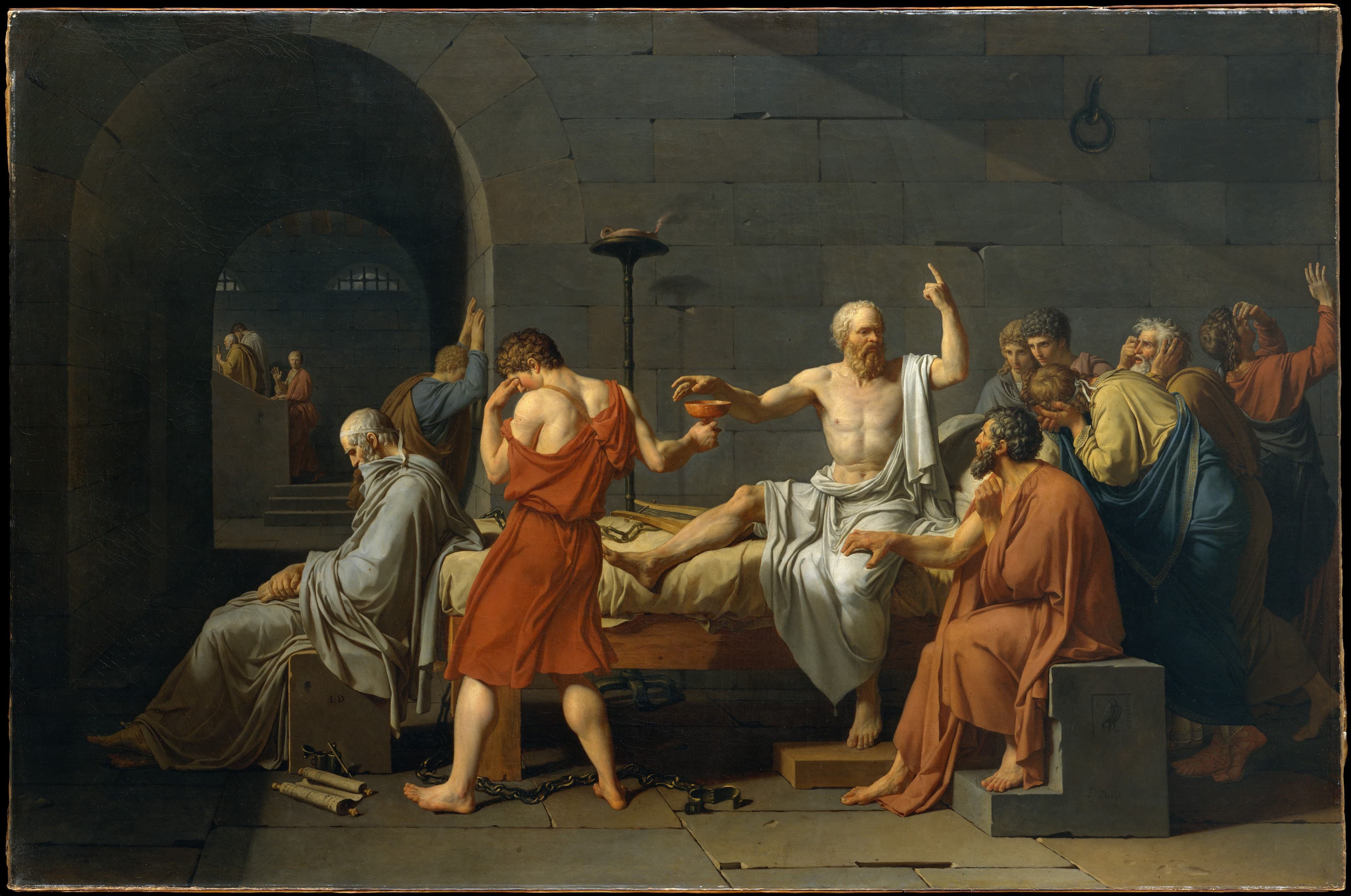
The Death of Socrates
Jacques-Louis David · 1787
Winged Victory of Samothrace
Artist Unknown · c. 200–190 BC

Venus de Milo
Alexandros of Antioch · c. 150–125 BC

Saturn Devouring His Son
Francisco Goya · c. 1819–1823

Ophelia
John Everett Millais · 1851–52