Image: Hamburger Kunsthalle · Public domain · via Wikimedia Commons
Romanticism
Wanderer above the Sea of Fog
Caspar David Friedrich, c. 1817
Wanderer above the Sea of Fog is a painting by Caspar David Friedrich, made around 1817, of a man seen from behind on a rocky summit gazing over a landscape of fog. It is in the Hamburger Kunsthalle in Hamburg.
- Artist
- Caspar David Friedrich
- Date
- c. 1817
- Medium
- Oil on canvas
- Dimensions
- 94.8 × 74.8 cm
- Collection
- Hamburger Kunsthalle, Hamburg, Germany
- Movement
- Romanticism
What you are looking at
A man in a dark green frock coat stands on a jagged outcrop of black rock with his back to us. His right leg is planted higher than his left, he leans on a walking stick, and the wind lifts his reddish hair. Below and in front of him, a sea of fog fills the valleys. Rocky ridges break through it like islands; farther away, tree-covered slopes and a distant mountain fade into the pale sky.
The composition is almost symmetrical. The figure stands exactly in the center, and the lines of the landscape (the slopes on either side, the ridges in the fog) converge on his chest. We stand where he stands, slightly behind him, sharing his view but unable to see his face.
The figure seen from behind
The man is a Rückenfigur, a figure seen from the back, a device Friedrich used throughout his career. Because we cannot read his expression, we supply our own. The wanderer becomes a stand-in for the viewer, and the painting is less about what he sees than about the act of looking: a person facing something larger than himself.
Who he is remains open. His green coat resembles the uniform of the volunteer riflemen who fought Napoleon in the German Wars of Liberation (1813–15), and some historians have proposed that the picture commemorates a specific fallen officer. Others see the artist himself, though Friedrich did not sign it as a self-portrait. No document settles the question.
A real landscape, assembled
Although it feels like a vision, the landscape is built from real places. Friedrich lived in Dresden and walked often in the Elbe Sandstone Mountains, the region known as Saxon Switzerland. Scholars have identified features from his sketches: the rocks of the Kaiserkrone, the Rosenberg in Bohemia on the horizon, and the Zirkelstein. He combined studies made in different places into one imagined view, a method he followed all his life. The precise drawing of the rocks contrasts with the softly blended fog, which he built up in thin, translucent layers.
Who was Caspar David Friedrich?
Caspar David Friedrich (1774–1840) was born in Greifswald on the Baltic coast and became the central landscape painter of German Romanticism. His paintings of ruined abbeys, moonlit shores, frozen seas and solitary figures express a deeply religious view of nature, shaped by his Lutheran upbringing and by personal losses, including the drowning of his brother when they were boys. He was celebrated in his forties, then fell out of fashion, and died in Dresden largely forgotten. His reputation was revived after a Berlin exhibition in 1906.
What does Wanderer above the Sea of Fog mean?
The most common reading links it to the Romantic idea of the sublime: the awe, mixed with fear, felt before nature's vastness. The philosopher Edmund Burke and later Immanuel Kant had described it, and Friedrich gives it a human scale: one person at the edge of the unknown.
Other readings layer onto this:
- Self-reflection. The wanderer surveys the world from above, an image of the individual mind in command of, or lost in, its own thoughts.
- Faith. For Friedrich nature was a revelation of God. The fog hides the path below; the view opens only upward and outward.
- Patriotism and mourning. If the figure is a soldier of the Wars of Liberation, the painting becomes a memorial, set in a German landscape at a time of national awakening.
Friedrich left no statement about this canvas, so the readings stay readings.
Reception and legacy
The painting was little known for more than a century. It was bought by the Hamburger Kunsthalle in 1970 and has since become the emblem of Romanticism itself, reproduced on book covers for Nietzsche, Kierkegaard and the poets, used to sum up the lone thinker or the explorer, and adopted widely by dark academia. Compare its mood with John Constable's grounded English countryside in The Hay Wain, with Thomas Cole's apocalyptic The Course of Empire: Destruction, or with the brooding island of Arnold Böcklin's Isle of the Dead.
Details most viewers miss
- The cane. The walking stick suggests a real hike, not a vision; Friedrich was an enthusiastic walker who sketched constantly in the mountains.
- The fog's edge. Look at the right side, where the mist thins to reveal a slope of trees. Friedrich paints the fog as layers of transparent white over darker ground.
- The horizon. The distant mountain on the left sits lower than the man's head, so he literally rises above the world he surveys.
- No sun. There is light but no sun anywhere in the picture, which keeps the time of day and the mood suspended.
Where to see Wanderer above the Sea of Fog
The painting is in the Hamburger Kunsthalle in Hamburg, Germany, which holds one of the largest collections of Friedrich's work. It is often lent to major exhibitions: in 2024, the 250th anniversary of Friedrich's birth, it was a centerpiece of shows in Hamburg and beyond. Check the museum's website for its current location before you travel.
Questions & answers
Where is Wanderer above the Sea of Fog?
It is in the Hamburger Kunsthalle in Hamburg, Germany, which acquired it in 1970 and has a major collection of Caspar David Friedrich's paintings. It is occasionally lent to exhibitions, so check the museum's website before visiting.
What is the meaning of Wanderer above the Sea of Fog?
It is usually read as an image of the Romantic sublime: a lone person facing the vastness of nature with awe. Because the man is seen from behind, viewers project their own feelings onto him. Religious and patriotic readings have also been proposed.
Who is the man in Wanderer above the Sea of Fog?
He is unidentified. His green coat resembles the uniform of volunteers in the wars against Napoleon, leading some to see a memorial to a fallen officer; others suggest Friedrich himself. No document confirms either.
Is Wanderer above the Sea of Fog a real place?
It combines real places Friedrich sketched in the Elbe Sandstone Mountains near Dresden, including the Kaiserkrone and the Zirkelstein, into an imagined view. The exact panorama does not exist, but its parts do.
When was Wanderer above the Sea of Fog painted?
It is undated, but it is generally placed around 1817, during the years after the Napoleonic Wars when Friedrich was at the height of his reputation in Dresden.
Kindred works
You may also study
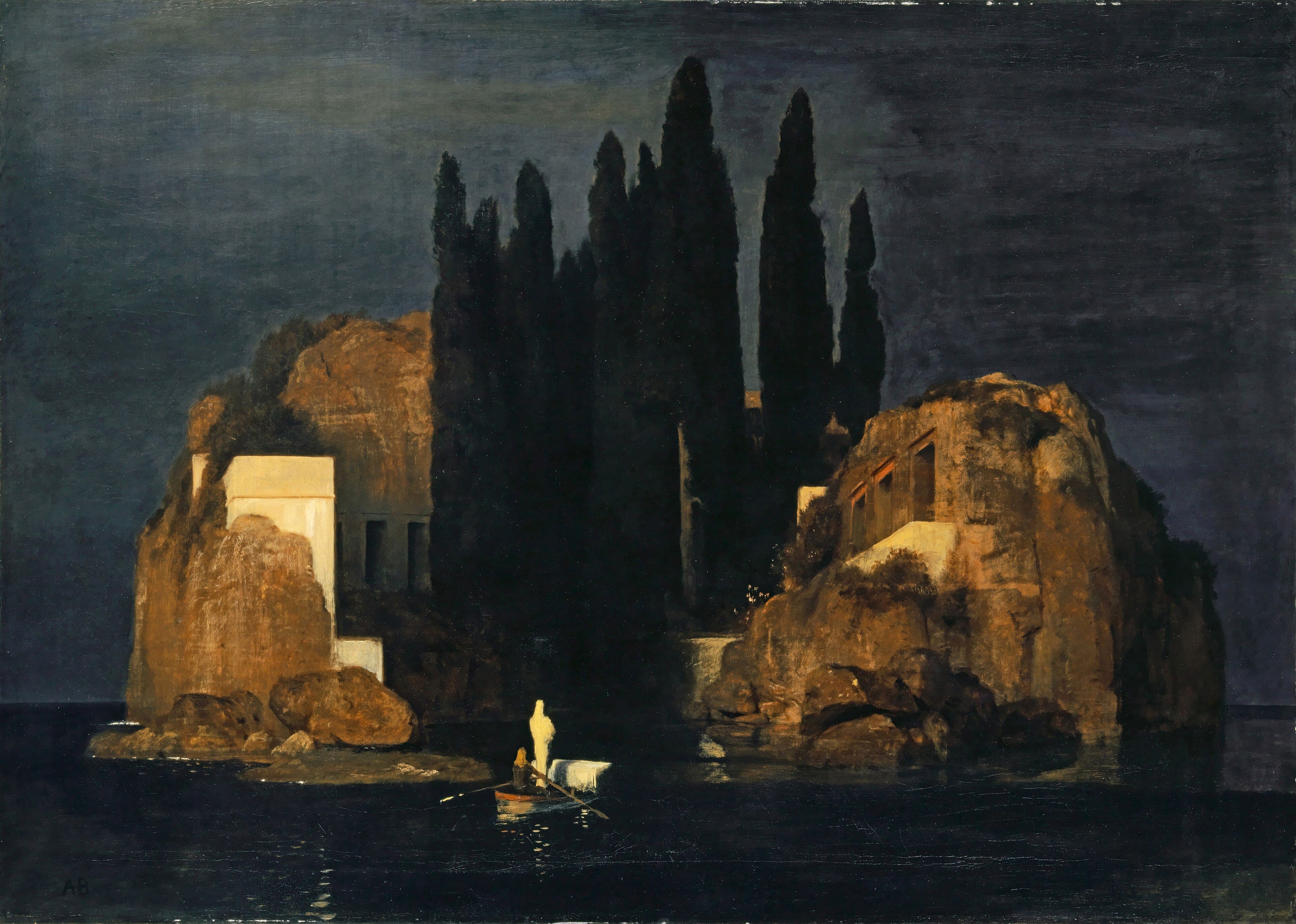
Isle of the Dead
Arnold Böcklin · 1880 (first version); five versions 1880–86
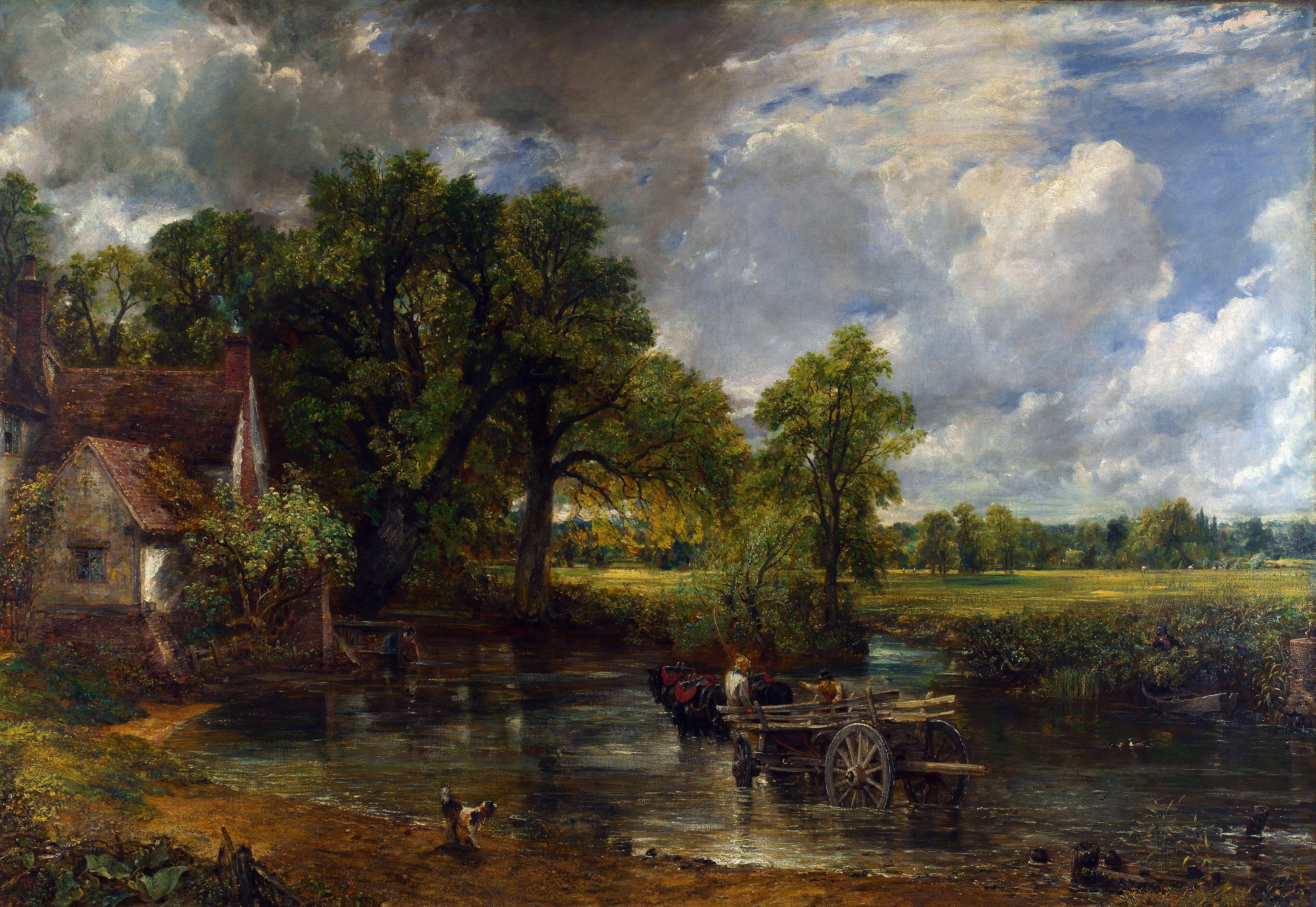
The Hay Wain
John Constable · 1821
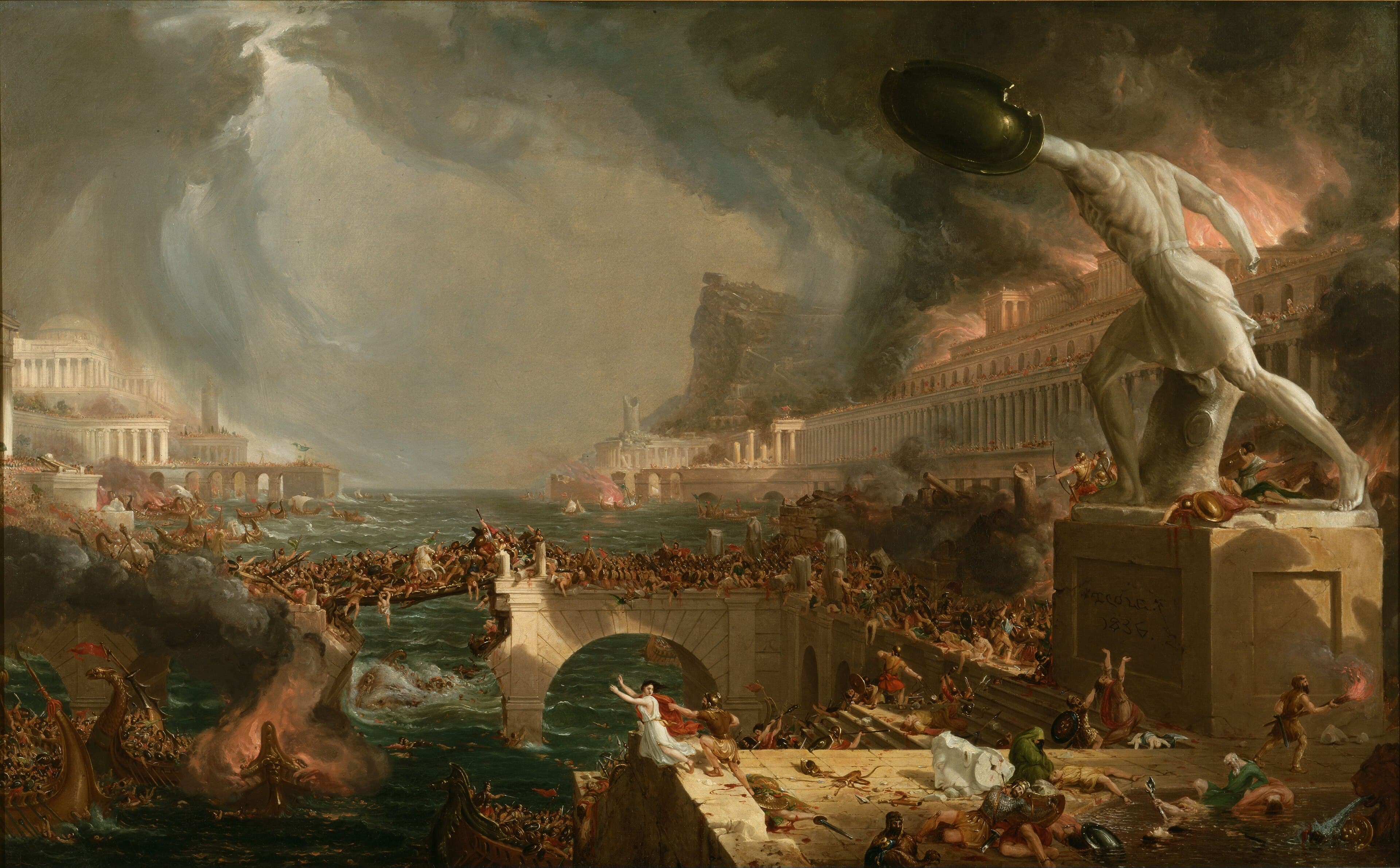
The Course of Empire: Destruction
Thomas Cole · 1836
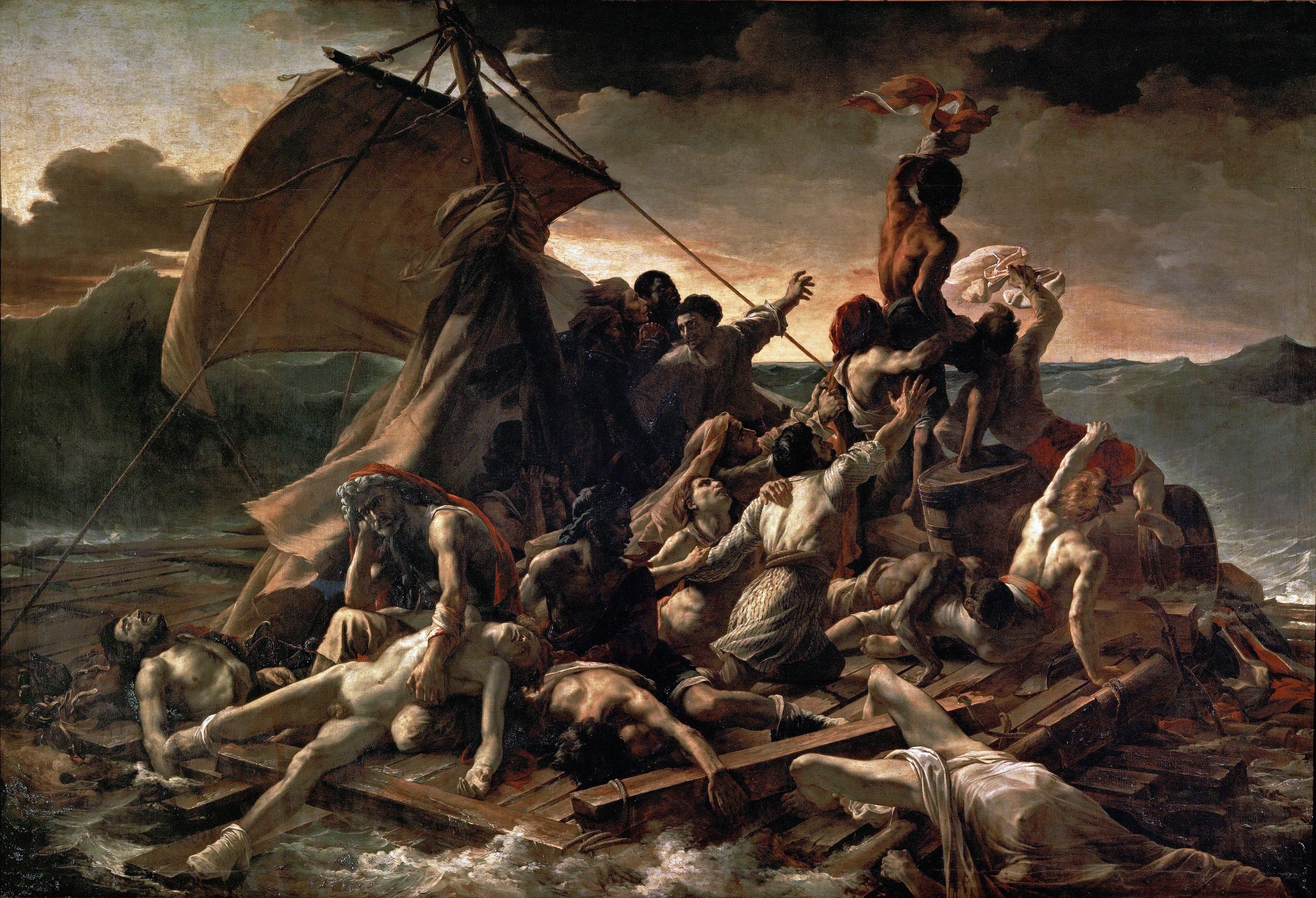
The Raft of the Medusa
Théodore Géricault · 1818–1819

Liberty Leading the People
Eugène Delacroix · 1830

Bridge over a Pond of Water Lilies
Claude Monet · 1899

The Scream
Edvard Munch · 1893

The Thinker
Auguste Rodin · Modeled 1880–82; enlarged 1902–03; this cast 1904