Image: Museo de Arte de Ponce, via Google Arts & Culture · Public domain · via Wikimedia Commons
Aestheticism / Academic art
Flaming June
Frederic Leighton, 1895
Flaming June is Frederic Leighton's 1895 painting of a woman asleep in a sheer orange dress on a marble terrace above a glittering sea. It belongs to the Museo de Arte de Ponce in Puerto Rico and is the most famous image of Victorian Aestheticism.
- Artist
- Frederic Leighton
- Date
- 1895
- Medium
- Oil on canvas
- Dimensions
- 120.6 × 120.6 cm
- Collection
- Museo de Arte de Ponce, Ponce, Puerto Rico
- Movement
- Aestheticism / Academic art
What you are looking at
A young woman sleeps curled on a marble bench, her body folded into an almost perfect circle. Her right arm is bent under her head as a pillow; her knees are drawn up and her bare foot rests on the stone floor. She wears a dress of fine, translucent orange fabric that clings to her and pools around her in hundreds of folds, so that you can see the shape of her legs through it. Her auburn hair spreads across a pale fur or cushion.
Behind her a low marble balustrade, a band of sea lit to a sheet of gold by the sun, and a distant gray headland. At the top right a branch of oleander, with pink and red flowers and narrow leaves, hangs into the picture over the parapet. A strip of ornamental border runs along the top edge like the frieze of a classical building.
The square format matters. Leighton fills it with a single curving figure, so that the whole picture becomes a kind of spiral, beginning at her head and ending at her foot. The color does the rest: one intense, saturated orange set against cool marble and gray-blue sea. It is hard to think of another Victorian painting that relies so completely on one color.
How Leighton made it
Frederic Leighton (1830–1896) was the most powerful painter in Victorian Britain, President of the Royal Academy from 1878 and the first painter to be made a peer, which happened just before his death in January 1896. Flaming June was one of his last major works, shown at the Royal Academy in 1895.
Leighton built his pictures slowly and academically, from nude studies to draped studies to the final canvas, and several preparatory drawings for this figure survive. The pose is widely compared to Michelangelo's marble Night on the Medici tomb in Florence and to sleeping figures in Michelangelo's Sistine Chapel ceiling, which Leighton knew well. The fabric is the real tour de force: he paints it as both opaque and transparent at once, letting skin show through in the folds that are stretched thin while the bunched folds turn deep, burnt orange.
The model is often said to be Dorothy Dene, Leighton's favorite sitter in his later years, though this has not been firmly established.
What does Flaming June mean?
Leighton belonged to the Aesthetic Movement, whose motto was "art for art's sake". Flaming June has no story, no literary source and no moral. It is about form, color and the mood of a hot summer afternoon, when the light is heavy and sleep comes on without warning. The title itself reads like a color note rather than a narrative.
That said, the oleander is worth a second look. It is a highly poisonous plant, and many writers have read its presence as a quiet hint at the old link between sleep and death, Hypnos and Thanatos, so that the sleeping girl carries a faint shadow. Leighton never said so, and the picture works perfectly well without it, but it is the kind of detail that rewards close looking.
Lost, rediscovered and sold for almost nothing
The painting's later history is part of its fame. It was bought first by the magazine The Graphic, which issued it as a color print with its 1895 Christmas number. After that it dropped from view for decades as Victorian painting went out of fashion. It is said to have resurfaced in the early 1960s in a London house, boxed in over a chimney. The composer Andrew Lloyd Webber later recalled seeing it in a shop on the King's Road and being refused a loan of the asking price of about fifty pounds by his grandmother.
In 1963 the Puerto Rican industrialist and politician Luis A. Ferré bought it, for well under a thousand dollars, for the Museo de Arte de Ponce, which he had founded. It has been the museum's signature work ever since.
Reception and legacy
As taste for Victorian painting revived, Flaming June went from junk-shop find to icon. It has traveled to the Prado, the Frick Collection in New York, Leighton House in London (where it was shown in 2016 in the studio where it was painted) and the Royal Academy. It is one of the defining images of academic art and of the dreamy, golden mood that people now call light academia, and it has many cousins in the catalogue, from Bouguereau's La Naissance de Vénus to Waterhouse's The Soul of the Rose.
Where is Flaming June today?
Flaming June belongs to the Museo de Arte de Ponce in Ponce, Puerto Rico. While the Ponce museum has been undergoing structural repairs, the painting has been shown on loan elsewhere, most recently at the Crocker Art Museum in Sacramento, California, so check before you travel. The image is in the public domain.
Questions & answers
Where is Flaming June now?
Flaming June belongs to the Museo de Arte de Ponce in Ponce, Puerto Rico, which bought it in 1963. While that museum undergoes structural repairs, the painting has been lent to other institutions, recently the Crocker Art Museum in Sacramento, California, so check current display before visiting.
What does Flaming June mean?
Leighton was an Aesthetic painter, and Flaming June has no story or moral: it celebrates color, form and the drowsy heat of a summer afternoon. The poisonous oleander in the corner is often read as a hint at the ancient link between sleep and death.
Who was the model for Flaming June?
The model is often said to be Dorothy Dene, Leighton's favorite model in his last years, but this is not firmly documented. Leighton's preparatory studies show he built the figure from nude and draped drawings in the studio.
How much was Flaming June sold for?
Very little. After decades out of fashion it was offered in London in the early 1960s for around fifty pounds, and in 1963 Luis A. Ferré bought it for the Museo de Arte de Ponce for well under a thousand dollars. Today it is considered priceless.
Kindred works
You may also study
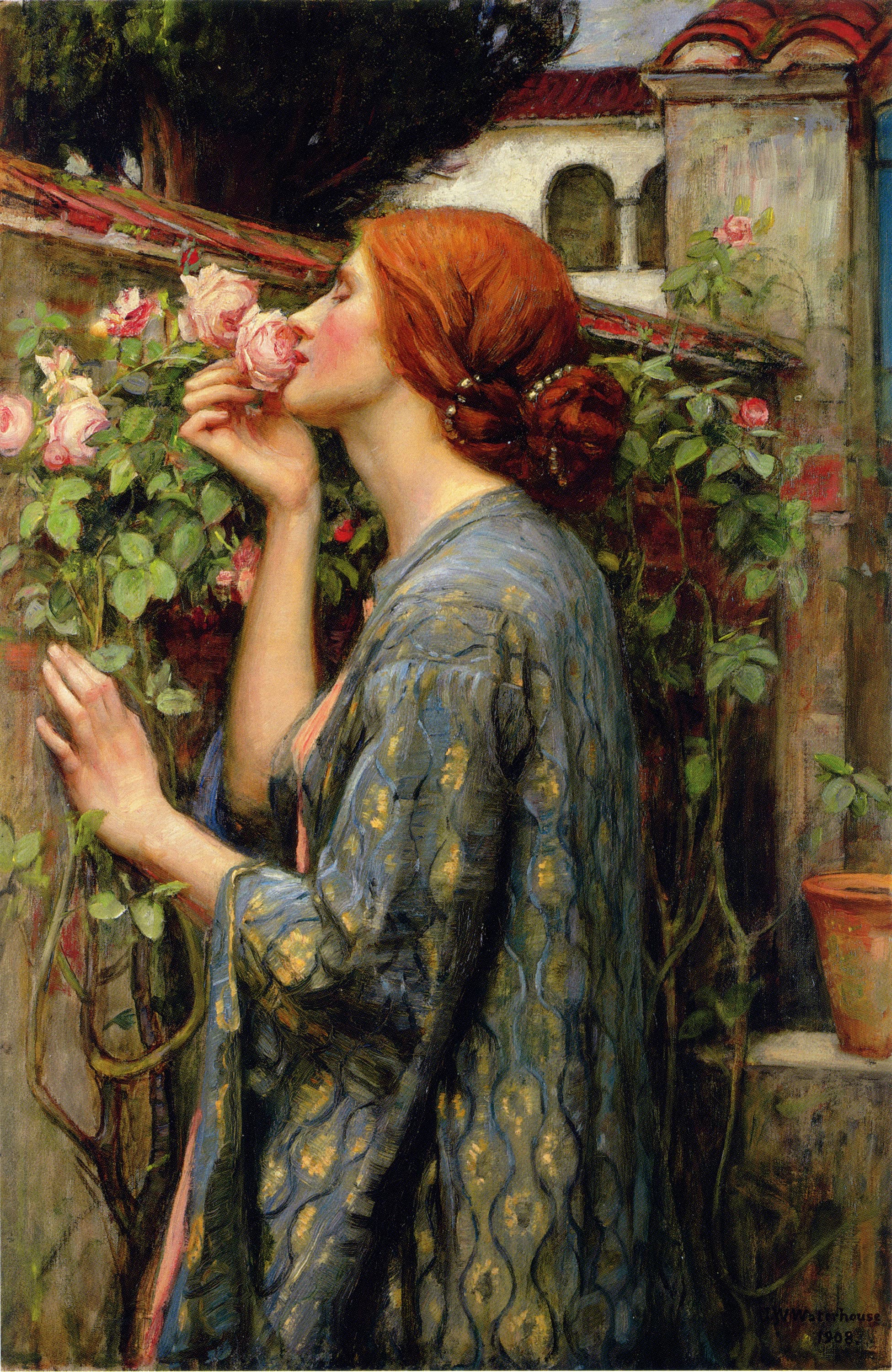
The Soul of the Rose
John William Waterhouse · 1908
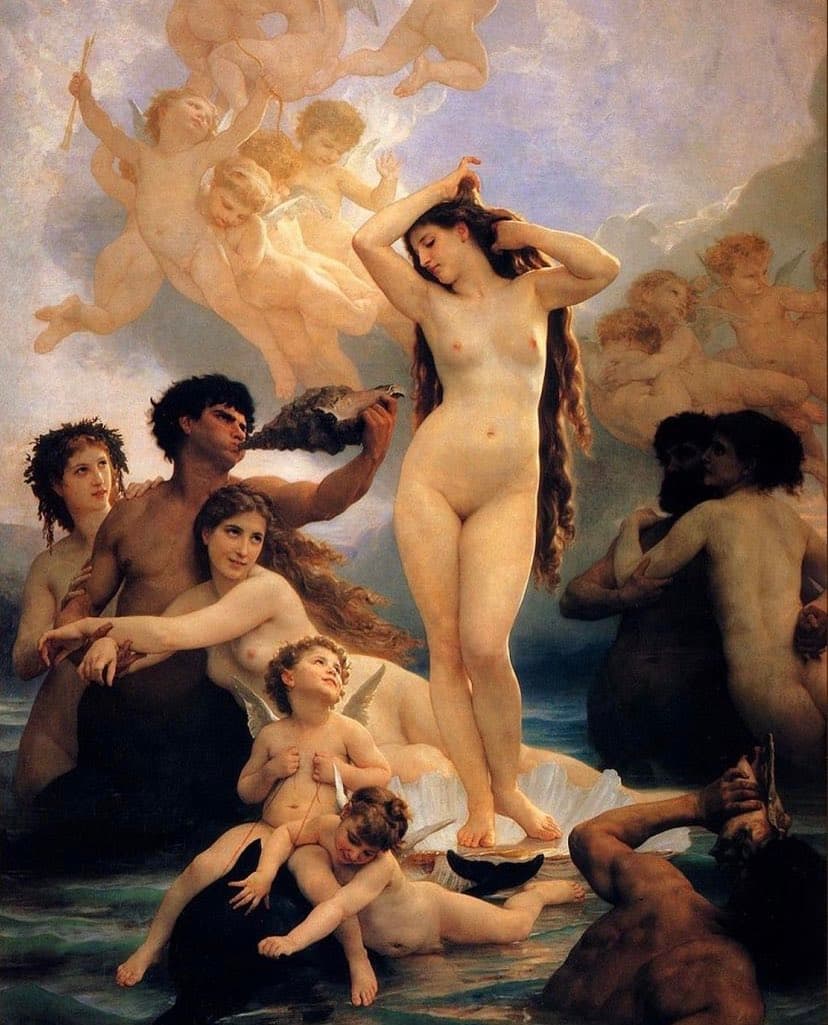
The Birth of Venus
William-Adolphe Bouguereau · 1879
The Lady of Shalott
John William Waterhouse · 1888
The Pearls of Aphrodite
Herbert James Draper · 1907
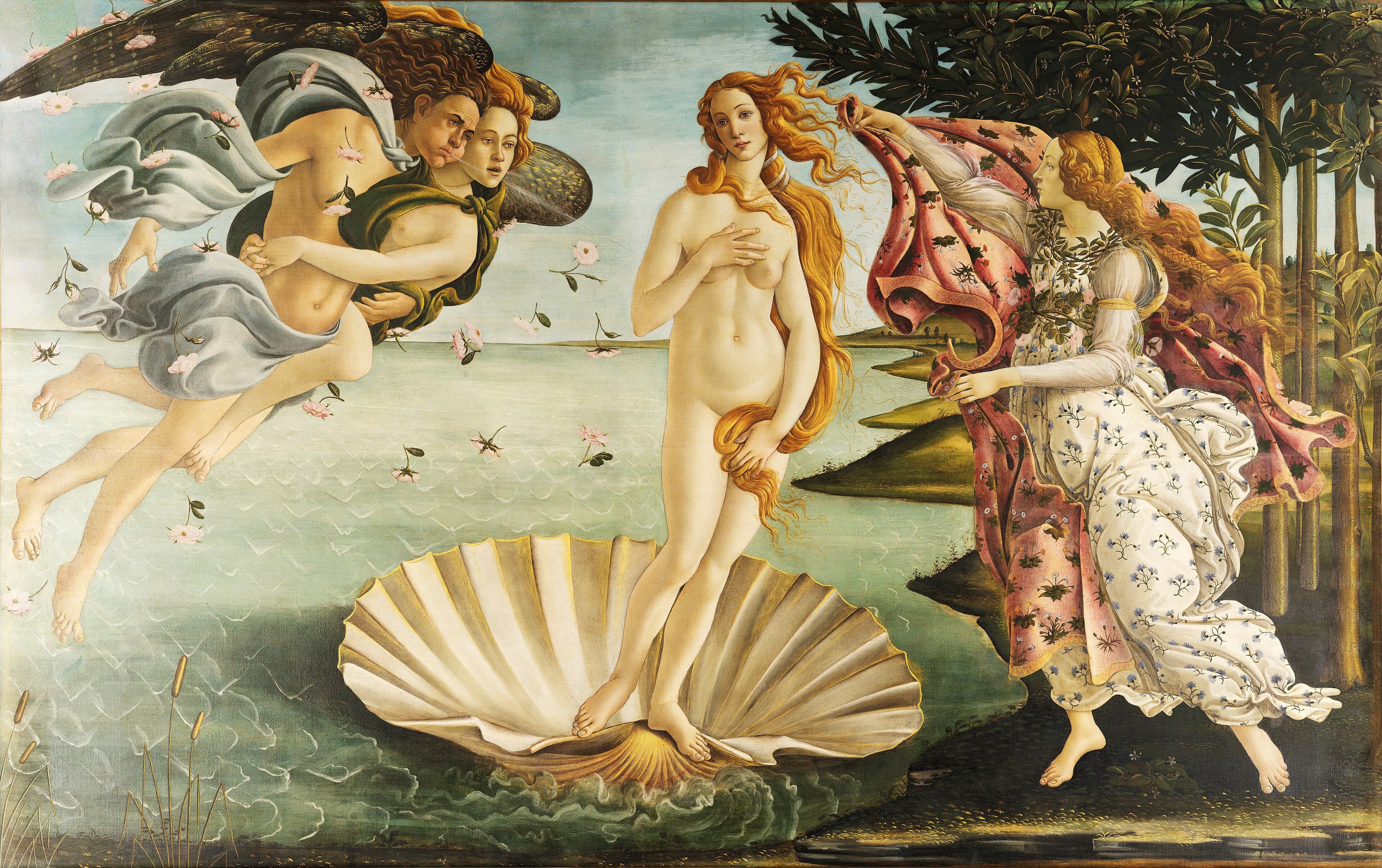
The Birth of Venus
Sandro Botticelli · c. 1484–1486

Bridge over a Pond of Water Lilies
Claude Monet · 1899

Venus de Milo
Alexandros of Antioch · c. 150–125 BC

Nymphs Dancing to Pan's Flute
Joseph Tomanek