High Renaissance
Mona Lisa
Leonardo da Vinci, c. 1503–1519
The Mona Lisa is Leonardo da Vinci's portrait of the Florentine Lisa Gherardini, begun around 1503 and worked on for years afterward. Painted in oil on a poplar panel, it hangs in the Louvre, Paris, the most famous painting in the world.
- Artist
- Leonardo da Vinci
- Date
- c. 1503–1519
- Medium
- Oil on poplar panel
- Dimensions
- 77 × 53 cm
- Collection
- Musée du Louvre, Paris, France
- Movement
- High Renaissance
The Mona Lisa is Leonardo da Vinci's portrait of Lisa Gherardini, the wife of the Florentine silk merchant Francesco del Giocondo. Leonardo began it in Florence around 1503 and kept it with him for the rest of his life, still adjusting it in France, where he died in 1519. Painted in oil on a poplar panel about 77 by 53 centimeters, it hangs in the Louvre in Paris. In Italian it is known as La Gioconda, in French La Joconde.
What you are looking at
A young woman sits half-length in a loggia, turned three-quarters toward us, her left arm resting on the arm of a chair and her right hand laid over her left wrist. She wears a dark, plain dress with a gathered neckline embroidered with a fine interlace pattern, and a nearly transparent veil over her hair, which falls in loose curls to her shoulders. She has no eyebrows or visible lashes, and no jewelry.
Her face turns to meet our eyes, and the corners of her mouth lift in the famous half-smile. Look closely and you will see that the smile is made almost entirely of shadow, in the corners of the mouth and the soft modeling of the cheeks, rather than of drawn lines.
Behind her stretches an imaginary landscape of winding roads, a bridge, lakes and jagged blue-green mountains fading into haze. The horizon on the left is noticeably lower than on the right, a mismatch that adds to the sense of movement around her. At the edges of the panel, the bases of two columns are just visible.
How it was made
Leonardo used sfumato, from the Italian for "smoke": dozens of extremely thin, translucent layers of glaze that blur outlines and let light and shadow merge without edges. Scientific study has shown how thin these layers are, some only a few micrometers. The technique explains why the expression seems to change as you look.
History and fame
A note written in 1503 by the Florentine official Agostino Vespucci records that Leonardo was painting a portrait of Lisa del Giocondo, which confirms her identity. The painting was never delivered and passed after Leonardo's death into the French royal collection. Its worldwide fame grew dramatically after 1911, when it was stolen from the Louvre by Vincenzo Peruggia, an Italian worker; it was recovered in Florence in 1913.
Where to see it
The Mona Lisa hangs behind protective glass in the Salle des États at the Louvre. See also Leonardo's Portrait of a Man in Red Chalk, Benois Madonna and The Last Supper, and our Renaissance and famous paintings collections.
Questions & answers
Where is the Mona Lisa?
The Mona Lisa hangs in the Louvre in Paris, in the Salle des États, behind protective glass. It has belonged to the French state since it entered the royal collection after Leonardo's death in 1519, apart from its theft in 1911 and recovery in 1913.
Who is the Mona Lisa?
She is Lisa Gherardini (1479–1542), wife of the Florentine merchant Francesco del Giocondo, which is why the painting is called La Gioconda. A 1503 note by Agostino Vespucci, discovered in 2005, confirms that Leonardo was painting her portrait at that time.
Why is the Mona Lisa so famous?
Its fame rests on Leonardo's reputation, its innovative sfumato technique and the elusive expression, praised since Vasari in the sixteenth century. Its celebrity exploded after its 1911 theft from the Louvre, which made headlines worldwide, and later reproductions made it the most recognized painting on earth.
More by the artist
Leonardo da Vinci
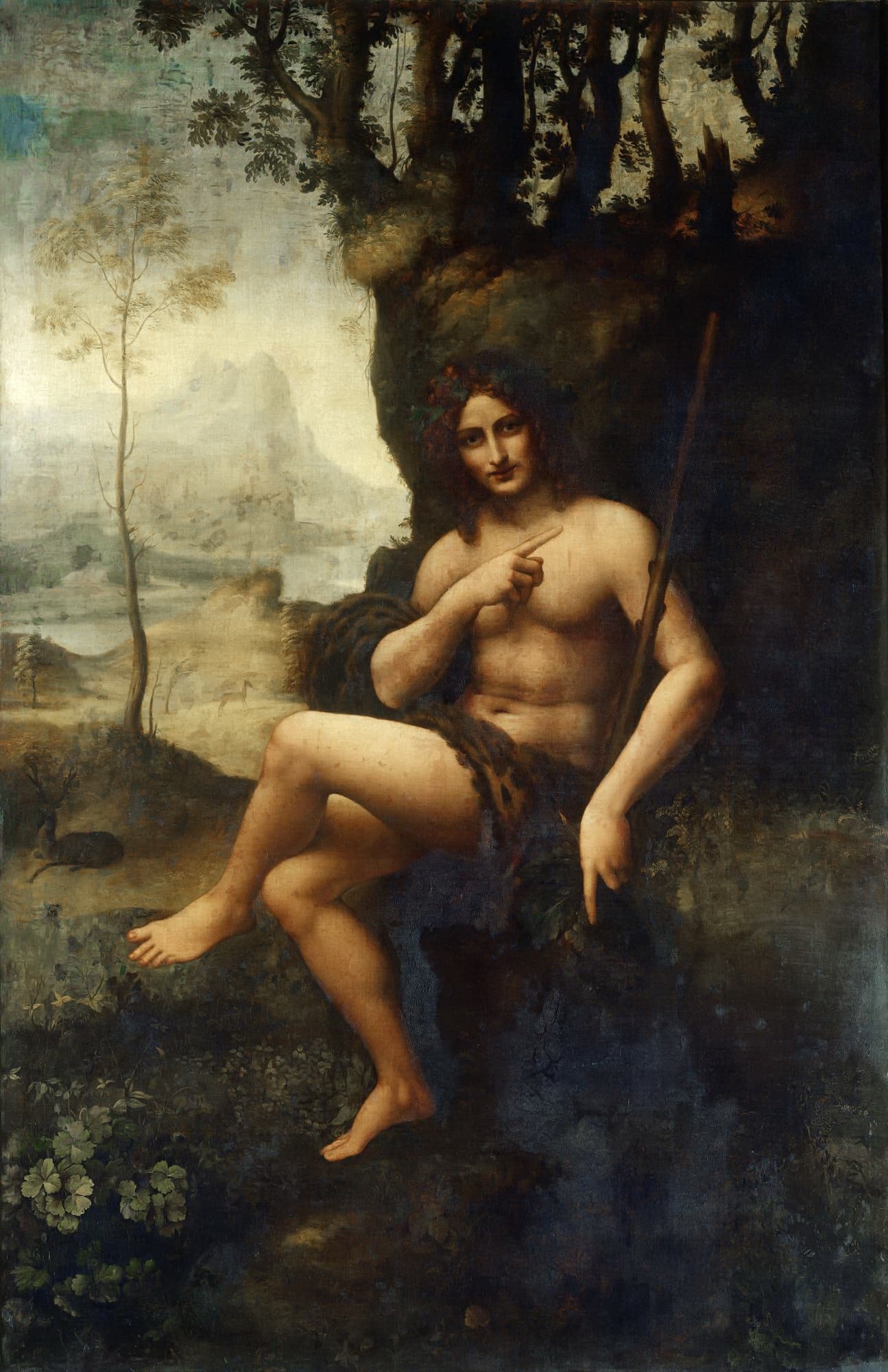
Bacchus (Saint John the Baptist)
Leonardo da Vinci · c. 1510–15; altered 1683–93
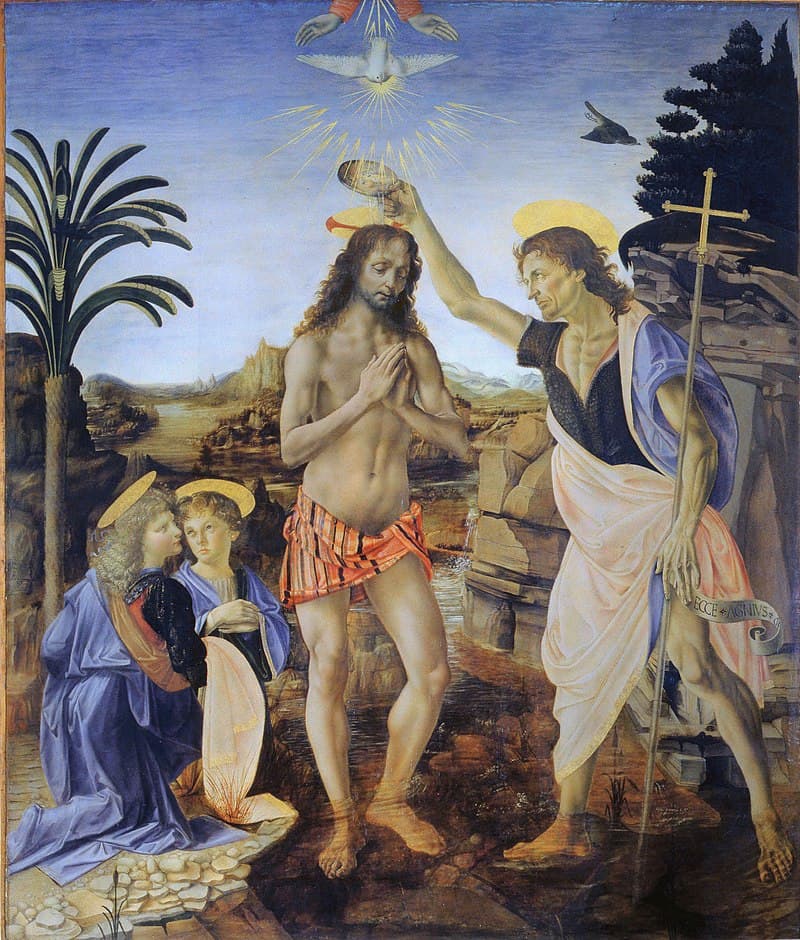
The Baptism of Christ
Andrea del Verrocchio & Leonardo da Vinci · c. 1470–75
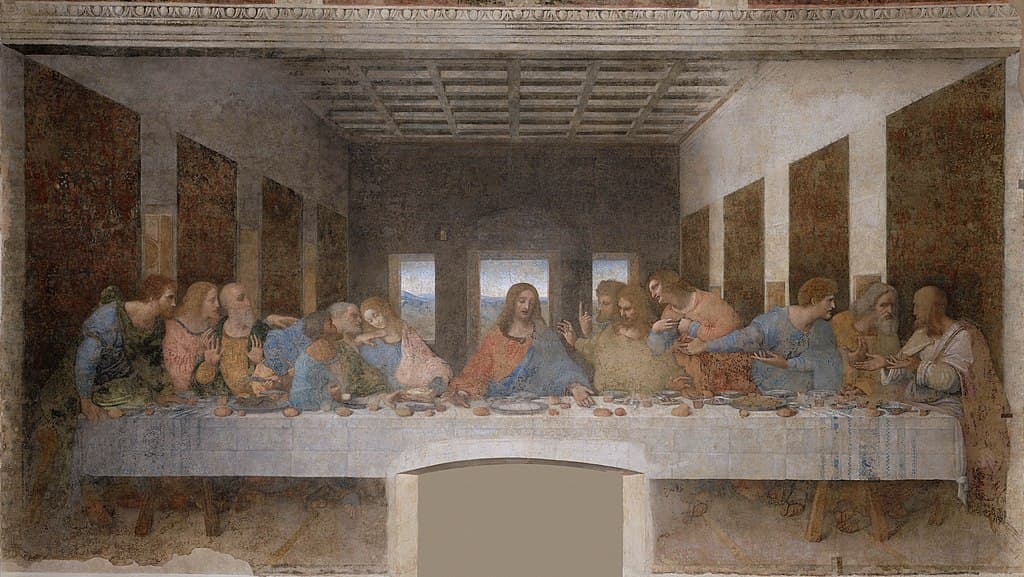
The Last Supper
Leonardo da Vinci · c. 1495–98
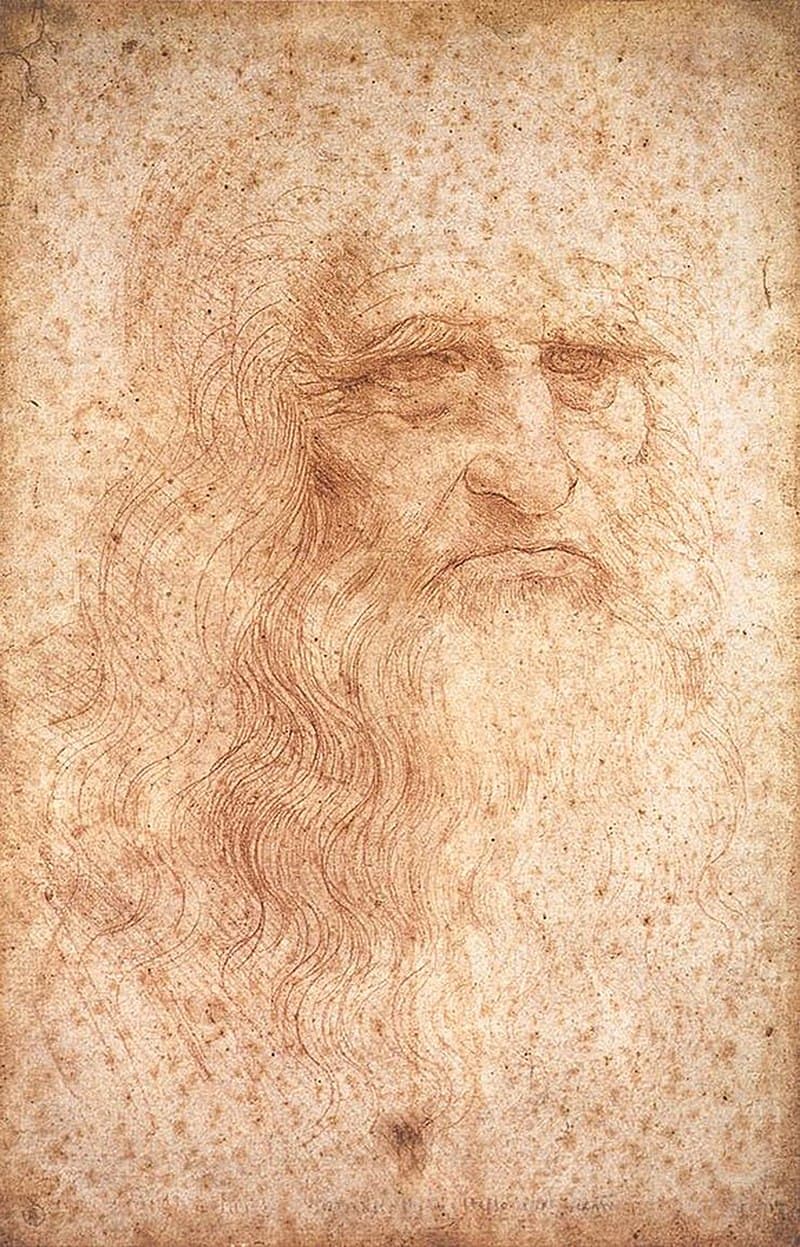
Portrait of a Man in Red Chalk
Leonardo da Vinci · c. 1512
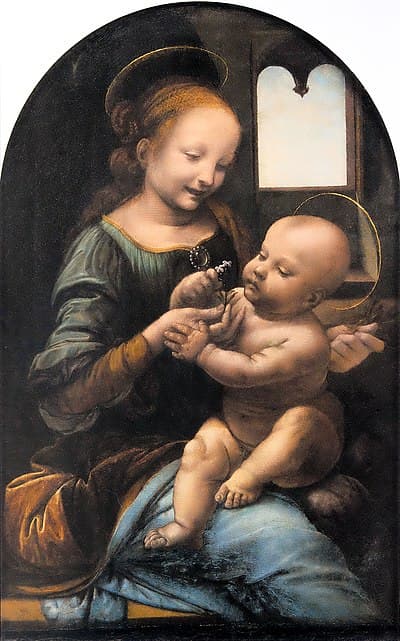
Benois Madonna
Leonardo da Vinci · c. 1478–80
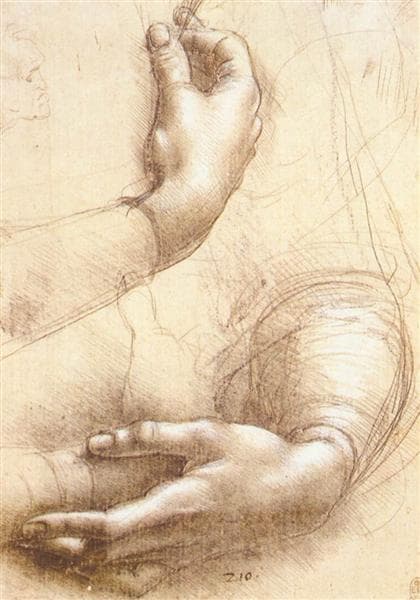
Study of Hands
Leonardo da Vinci · c. 1474–76
Kindred works
You may also study

Venus de Milo
Alexandros of Antioch · c. 150–125 BC

Ophelia
John Everett Millais · 1851–52

Woman with a Parasol – Madame Monet and Her Son
Claude Monet · 1875
Las Meninas
Diego Velázquez · 1656
The Birth of Venus
Sandro Botticelli · c. 1484–1486
The School of Athens
Raphael · 1509–1511
Liberty Leading the People
Eugène Delacroix · 1830
Girl with a Pearl Earring
Johannes Vermeer · c. 1665