Realism (Peredvizhniki)
Ivan the Terrible and His Son Ivan
Ilya Repin, 1883–85
Ivan the Terrible and His Son Ivan is an 1883–85 painting by Ilya Repin in the Tretyakov Gallery, Moscow. It shows Tsar Ivan IV clutching his dying son and heir moments after striking him with his staff in November 1581.
- Artist
- Ilya Repin
- Date
- 1883–85
- Medium
- Oil on canvas
- Dimensions
- 199.5 × 254 cm
- Collection
- State Tretyakov Gallery, Moscow, Russia
- Movement
- Realism (Peredvizhniki)
Ivan the Terrible and His Son Ivan on 16 November 1581 is the full title of Ilya Repin's most harrowing painting, completed in 1885 and bought the same year by Pavel Tretyakov for his gallery in Moscow, where it still hangs. It shows Tsar Ivan IV kneeling on the floor of a palace chamber, clutching the bleeding head of his eldest son, Tsarevich Ivan Ivanovich, whom he has just struck in a fit of rage. The canvas is large, 199.5 × 254 cm, and the figures are almost life-size.
What you're looking at
Repin does not show the blow. He shows the moment after. The old tsar, in a black robe, has dropped to the floor and hauled his son into his lap. One arm wraps around the young man's waist; the other hand presses against his temple, trying to hold back blood that runs between the fingers and down the son's face. Ivan's eyes are wide and staring, the eyes of a man who has just understood what he has done.
The tsarevich lies slumped against him in a long pink silk kaftan, his legs in green, gold-embroidered boots sprawled across the carpet. His face is pale, wet with tears, and strangely calm. One hand rests limply on the floor, and his expression is often read as forgiveness. Repin said he used the writer Vsevolod Garshin as a model for the son because Garshin had "the face of a man irreparably condemned to perish."
The room is half-dark. Behind them rise a tiled stove, a high-backed throne, a mirror and a back wall patterned with red-and-black diamonds, all sinking into shadow. In the foreground lie the clues: a heavy iron-tipped staff, the weapon, abandoned across the carpet; a crumpled rug pushed aside in the struggle; at left, a chest and a red cushion near the throne that was knocked over in the quarrel.
The color is dominated by reds: the carpets, the cushion, the patterned wall and, above all, the blood. Repin wanted the blood to look real, and it does, which is part of why the picture still shocks.
The history behind it
Ivan IV, the first ruler to be crowned Tsar of All Russia, struck his son with his pointed staff in November 1581 at his residence in Aleksandrovskaya Sloboda. The tsarevich died a few days later. Contemporary Russian chronicles mention his death without explaining it, but several accounts, including that of the papal envoy Antonio Possevino, describe a quarrel in which the tsar struck his son on the head. The cause and even the exact date are disputed; some historians doubt that the blow was fatal.
The consequences were not in doubt. Ivan's surviving heir, Feodor, was unfit to rule, and after his death in 1598 Russia slid into the civil war and invasions known as the Time of Troubles.
How Repin came to paint it
Repin connected the picture to the violence of his own time. In March 1881 Tsar Alexander II was assassinated in St. Petersburg by members of the revolutionary group Narodnaya Volya, and the conspirators were publicly hanged the following month. Repin was in the city that spring and later recalled the "trace of blood" those events left on him. He also cited two other sparks: Nikolai Rimsky-Korsakov's symphonic suite Antar, whose movement on vengeance he heard in Moscow, and bullfights he watched in Spain in 1883.
He worked on the canvas for two years, painting from models who included the painter Grigoriy Myasoyedov and the composer Pavel Blaramberg (for the tsar) and Garshin and the landscape painter Vladimir Menk (for the son). He described the process as agonizing: "I painted in tears, I was tortured."
Reception and censorship
When the painting was shown in 1885 at the exhibition of the Peredvizhniki (the Wanderers), Ivan Kramskoi, the group's leading critic, was overwhelmed by its power. Konstantin Pobedonostsev, the conservative procurator of the Holy Synod, was appalled and complained to Alexander III. On 1 April 1885 the painting was banned from public display, the first painting censored in the Russian Empire. The ban was lifted that July after the painter Alexei Bogolyubov intervened.
Attacks on the painting
The picture has been physically attacked twice. On 16 January 1913 a young Old Believer, Abram Balashov, slashed it three times with a knife; Repin helped restore it. In May 2018 a visitor smashed its protective glass with a metal stanchion and tore the canvas in three places in the area of the tsarevich's figure. The faces and hands were spared, and after a long restoration the painting returned to display in December 2024. Some Russian nationalists continue to object to it as a slander on Ivan IV.
Meaning
For Repin the subject was not cruelty for its own sake but the horror of violence turning back on the one who commits it: the autocrat destroying his own future. The pose of the father cradling his son deliberately recalls Rembrandt's Return of the Prodigal Son in the Hermitage, a painting Repin admired, but turns its embrace of forgiveness into one of guilt. In 1909 Repin painted a second, smaller version titled Filicide, now in Voronezh.
Compare other scenes of power and catastrophe in The Last Day of Pompeii by Karl Bryullov, Saturn Devouring His Son by Goya and The Death of Marat by David. See also Death in Art and Dark Academia.
Where to see it
State Tretyakov Gallery, Lavrushinsky Lane, Moscow, in the main building's galleries of nineteenth-century Russian art. The painting is in the public domain.
Questions & answers
Where is Ivan the Terrible and His Son Ivan?
The painting is in the State Tretyakov Gallery in Moscow. Pavel Tretyakov bought it from Repin in 1885. It was damaged by a vandal in May 2018 and, after extensive restoration, returned to public display in December 2024. It normally hangs in the gallery's main building on Lavrushinsky Lane.
What happened between Ivan the Terrible and his son?
In November 1581, during a quarrel at Aleksandrovskaya Sloboda, Tsar Ivan IV struck his eldest son and heir, Ivan Ivanovich, on the head with his pointed staff. The tsarevich died a few days later. Some details and the exact cause are disputed, but his death left Russia without a capable heir.
What is the meaning of Repin's Ivan the Terrible painting?
Repin shows not the blow but its aftermath: a ruler realizing he has destroyed his own son and dynasty. Painted after the 1881 assassination of Alexander II, it reflects Repin's horror at political violence, and the father's embrace echoes Rembrandt's Return of the Prodigal Son, reversed into guilt.
Why was Ivan the Terrible and His Son Ivan banned?
Konstantin Pobedonostsev, procurator of the Holy Synod, objected to it and alerted Alexander III. On 1 April 1885 it was banned from public view, the first painting censored in the Russian Empire. The ban was lifted in July 1885 after the painter Alexei Bogolyubov intervened.
Who were the models for Ivan the Terrible and His Son Ivan?
The painter Grigoriy Myasoyedov posed for Ivan the Terrible, together with the composer Pavel Blaramberg. The writer Vsevolod Garshin and the landscape painter Vladimir Menk posed for the dying tsarevich. Repin chose Garshin because his face seemed to him marked by fate.
Kindred works
You may also study
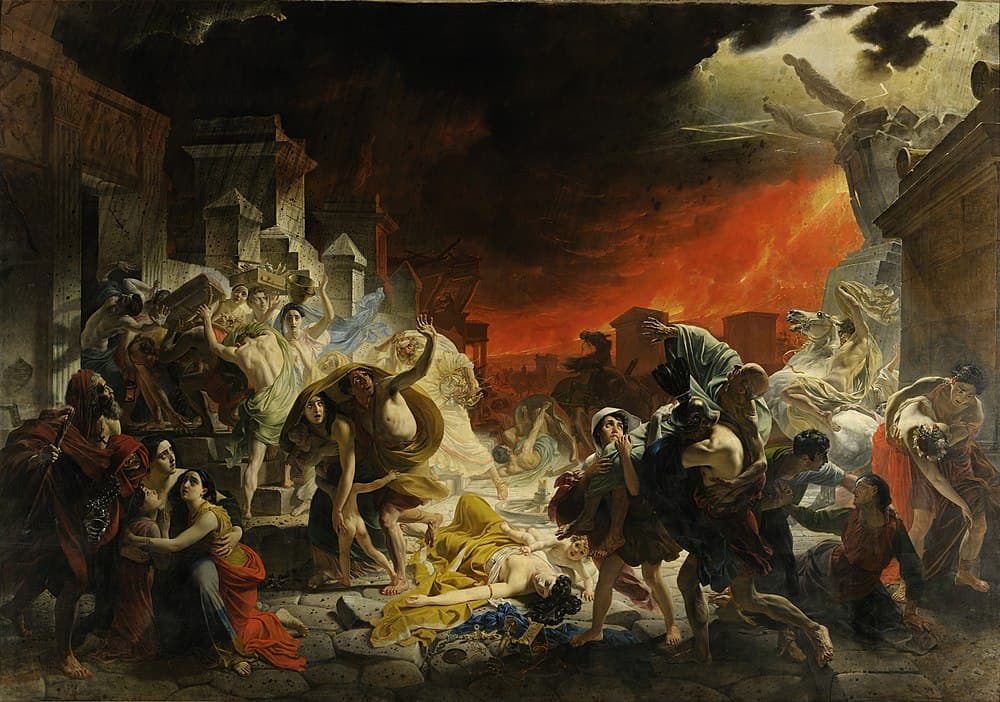
The Last Day of Pompeii
Karl Bryullov · 1830–33

Saturn Devouring His Son
Francisco Goya · c. 1819–1823
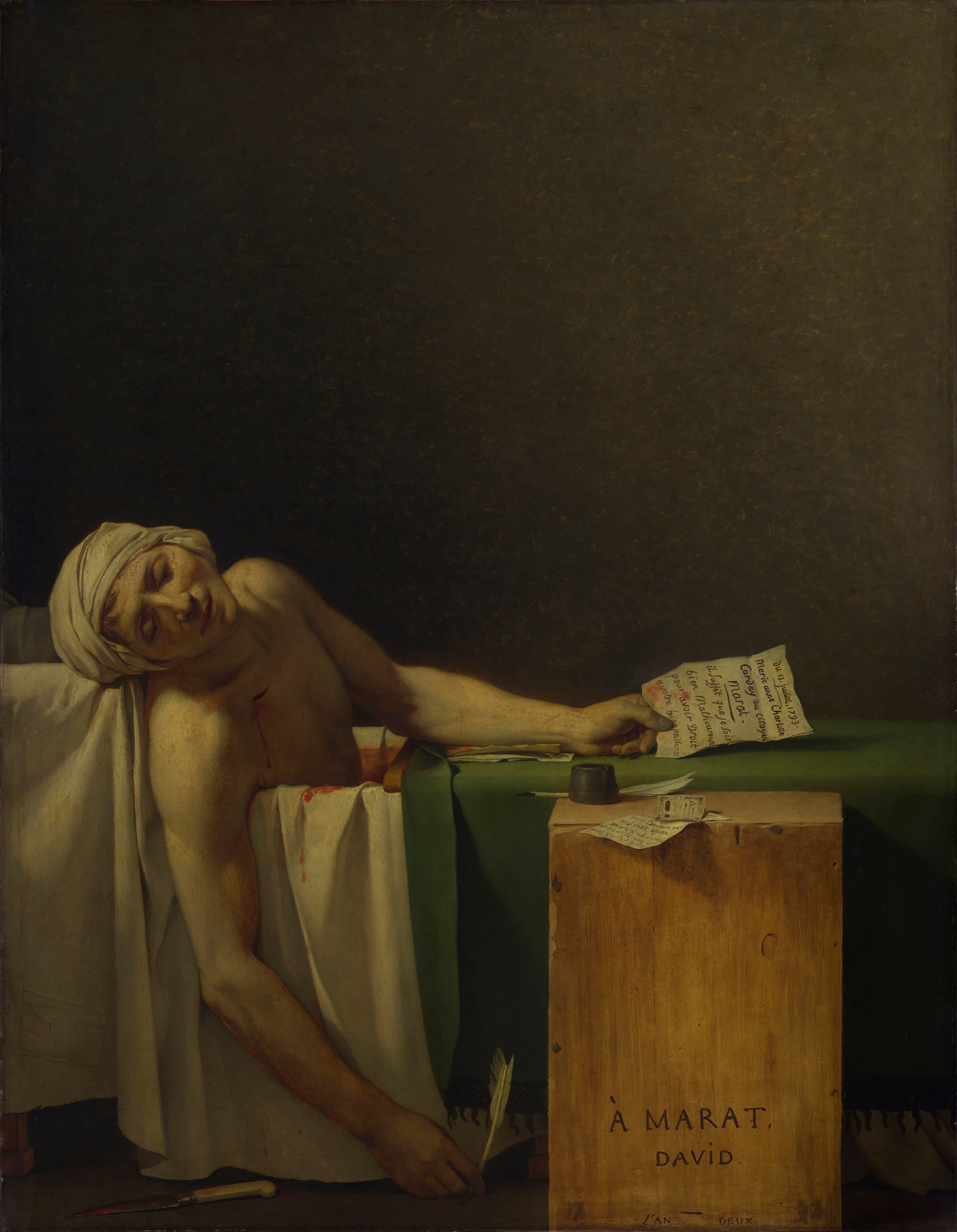
The Death of Marat
Jacques-Louis David · 1793
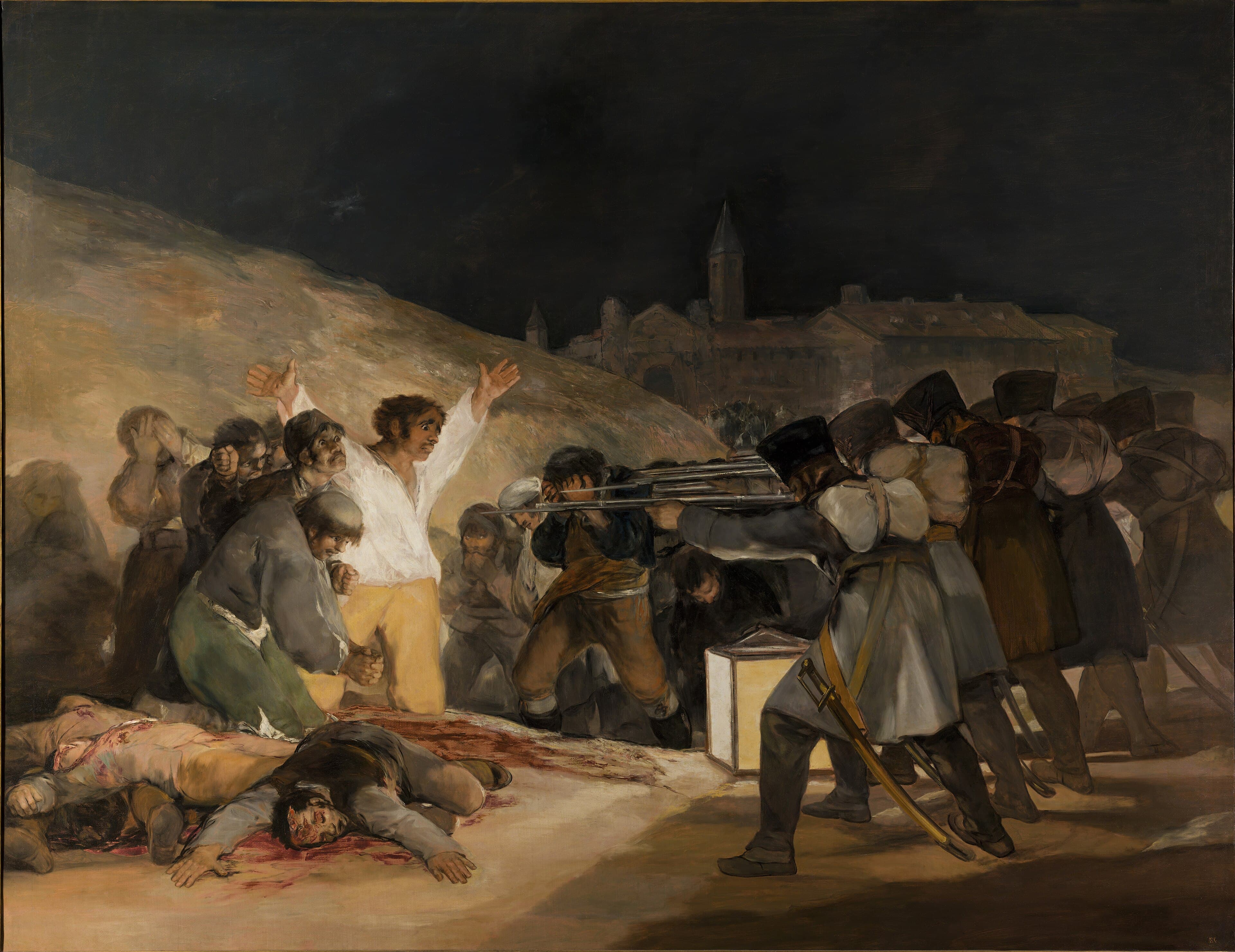
The Third of May 1808
Francisco Goya · 1814
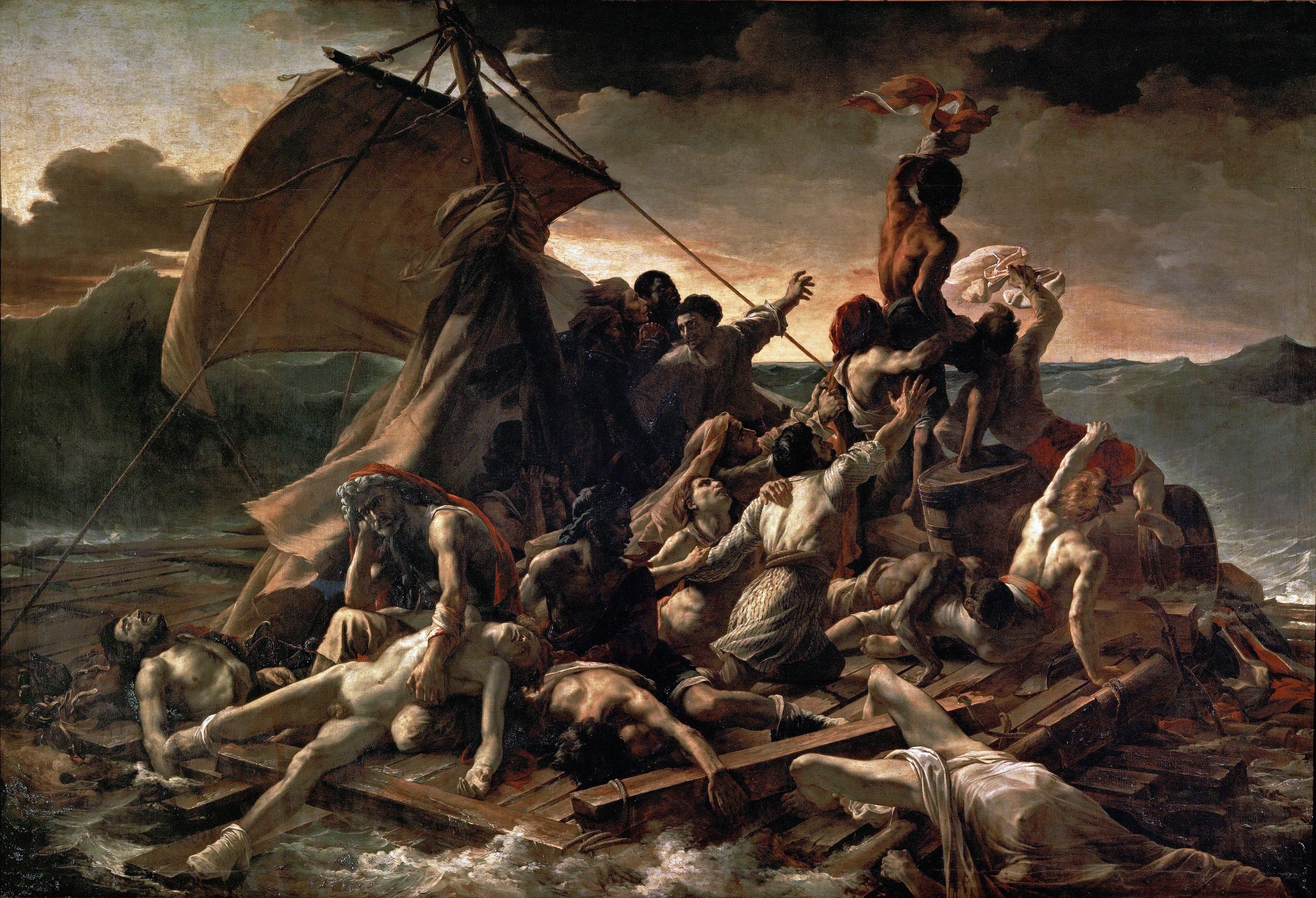
The Raft of the Medusa
Théodore Géricault · 1818–1819

The Scream
Edvard Munch · 1893

Ophelia
John Everett Millais · 1851–52
Las Meninas
Diego Velázquez · 1656