Image: Vatican Museums (stitched from vatican.va) · Public domain · via Wikimedia Commons
High Renaissance
The School of Athens
Raphael, 1509–1511
The School of Athens is a fresco painted by Raphael in 1509–1511 for the Stanza della Segnatura in the Vatican, showing Plato, Aristotle and the great thinkers of antiquity in a vast classical hall. It is still in place in the Vatican Museums.
- Artist
- Raphael
- Date
- 1509–1511
- Medium
- Fresco
- Dimensions
- c. 500 × 770 cm
- Collection
- Stanza della Segnatura, Apostolic Palace (Vatican Museums), Vatican City, Vatican City
- Movement
- High Renaissance
What you are looking at
Under a sequence of coffered barrel vaults, open to the sky, more than fifty figures gather on a flight of marble steps. At the exact center, framed by the farthest arch, two men walk toward us in conversation. The older, white-bearded one in red and lilac points upward and holds a book labeled Timeo (Timaeus). The younger, in blue and brown, holds a book labeled Etica (Ethics) and stretches his hand out flat, palm down, toward the ground. They are Plato and Aristotle, and their gestures sum up their philosophies: Plato's world of ideal forms above, Aristotle's study of the world we can observe.
Everything in the fresco radiates from them. The lines of the floor and the vaults converge on a vanishing point between the two heads, so the whole architecture seems to bring us toward them. Statues of Apollo, god of light and the arts, and Minerva, goddess of wisdom, stand in niches to left and right.
Who is in The School of Athens?
Raphael left no key, so most identifications come from attributes, tradition and later scholarship. The most widely accepted are:
- Socrates, in olive green on the left, counting off arguments on his fingers to a group of listeners.
- Pythagoras, lower left, writing in a book while a boy holds up a tablet with a diagram of harmonic ratios.
- Heraclitus, the brooding figure leaning on a block of marble in the foreground, pen in hand. He wears boots like a stonemason's and is widely believed to have the features of Michelangelo, who was painting the Sistine Chapel ceiling a few rooms away. He does not appear in Raphael's preparatory cartoon and was added late.
- Diogenes the Cynic, sprawled half-dressed across the steps.
- Euclid (or Archimedes), lower right, bending to draw with a compass on a slate, surrounded by students. He has the features of the architect Donato Bramante, and Raphael's initials appear on the neckline of his tunic.
- Ptolemy, holding a terrestrial globe, and Zoroaster, holding a celestial one, at the right.
- Raphael himself, at the far right edge, a young man in a dark cap looking straight out at us.
Plato is often said to have Leonardo da Vinci's face. It is a long-standing and plausible tradition, though not proven. The popular claim that a figure in white on the left is the mathematician Hypatia has no early source.
How Raphael made it
Raphael (1483–1520) was only about twenty-six when Pope Julius II brought him from Florence to Rome to decorate the papal apartments. Fresco means painting into wet lime plaster, which fixes the pigments as it dries; each day's work (giornata) had to be finished before the plaster set. Raphael transferred his designs from full-size drawings. The great cartoon for The School of Athens, drawn in charcoal and chalk, survives in the Pinacoteca Ambrosiana in Milan.
The architecture probably reflects the ideas of Bramante, who was then designing the new St. Peter's Basilica. The coffered vaults and great arches look forward to that building and back to the baths of ancient Rome.
What does The School of Athens mean?
The fresco is one of four on the walls of the room now called the Stanza della Segnatura, which was probably Julius II's private library. Each wall represents a branch of knowledge: Theology (the Disputa), Poetry (Parnassus), Justice, and Philosophy. The School of Athens is Philosophy, the pursuit of truth through reason, facing Theology, the truth revealed by faith, on the opposite wall.
The program expresses a central ideal of the High Renaissance: that classical learning and Christian faith are not enemies but partners, both leading toward truth. It also sets ancient thinkers in modern faces, making Raphael's Rome the heir of Athens. The title itself is later; it was given to the fresco in the seventeenth century.
Reception and legacy
The fresco made Raphael's reputation and became a model for academic painting for four centuries: a lucid, balanced composition in which every figure has its place. It is the classic image of intellectual life and has been adopted as an emblem of universities, libraries and the dark academia and light academia aesthetics alike. Set it beside Leonardo's The Last Supper, whose central figure and converging perspective Raphael had studied, and Jacques-Louis David's later The Death of Socrates.
Where to see The School of Athens
The fresco is still on the wall it was painted on, in the Stanza della Segnatura, one of the Raphael Rooms of the Apostolic Palace in Vatican City. It is visited as part of the Vatican Museums route, usually just before the Sistine Chapel. The rooms are small for the crowds they receive; an early entry or a late opening gives you time to look at the figures in the corners.
Questions & answers
Where is The School of Athens?
It is in the Vatican, painted on a wall of the Stanza della Segnatura, one of the Raphael Rooms in the Apostolic Palace. Visitors see it on the Vatican Museums route, usually shortly before reaching the Sistine Chapel.
Who are the people in The School of Athens?
Plato and Aristotle stand at the center. Commonly identified figures include Socrates, Pythagoras, Heraclitus, Diogenes, Euclid, Ptolemy and Zoroaster. Raphael gave some of them contemporary faces, such as Bramante as Euclid and probably Michelangelo as Heraclitus, and included himself at the far right.
What does The School of Athens represent?
It represents Philosophy, one of four branches of knowledge painted in the room, with Theology on the opposite wall. It expresses the Renaissance belief that ancient reason and Christian faith together lead to truth.
Is Raphael in The School of Athens?
Yes. Raphael painted himself at the far right edge, a young man in a dark cap looking directly out at the viewer, beside the group around Ptolemy and Zoroaster.
Why are Plato and Aristotle pointing?
Plato points up, toward the realm of ideal forms he believed was truly real. Aristotle holds his hand flat over the ground, reflecting his focus on observing the physical world. Their books, the Timaeus and the Ethics, reinforce the contrast.
Kindred works
You may also study
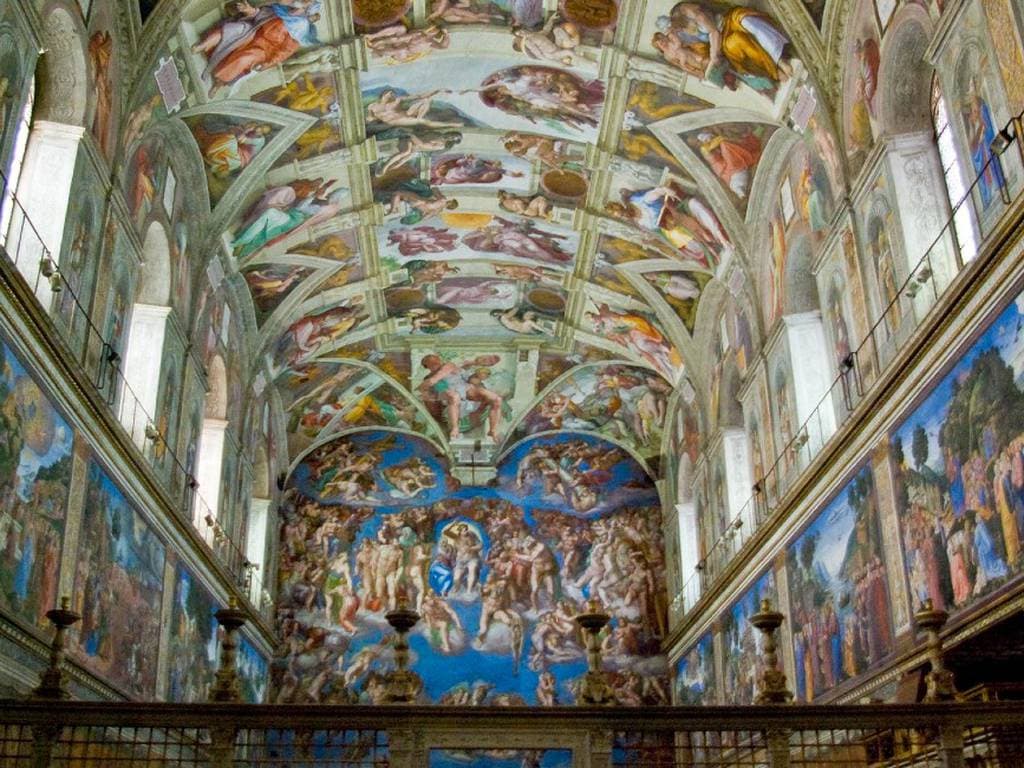
Sistine Chapel ceiling
Michelangelo · 1508–12
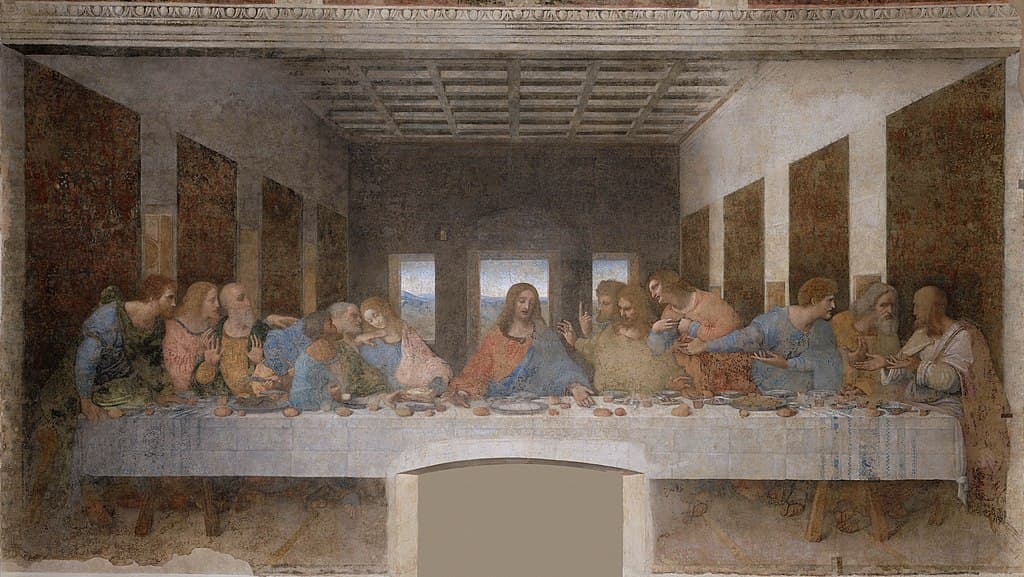
The Last Supper
Leonardo da Vinci · c. 1495–98
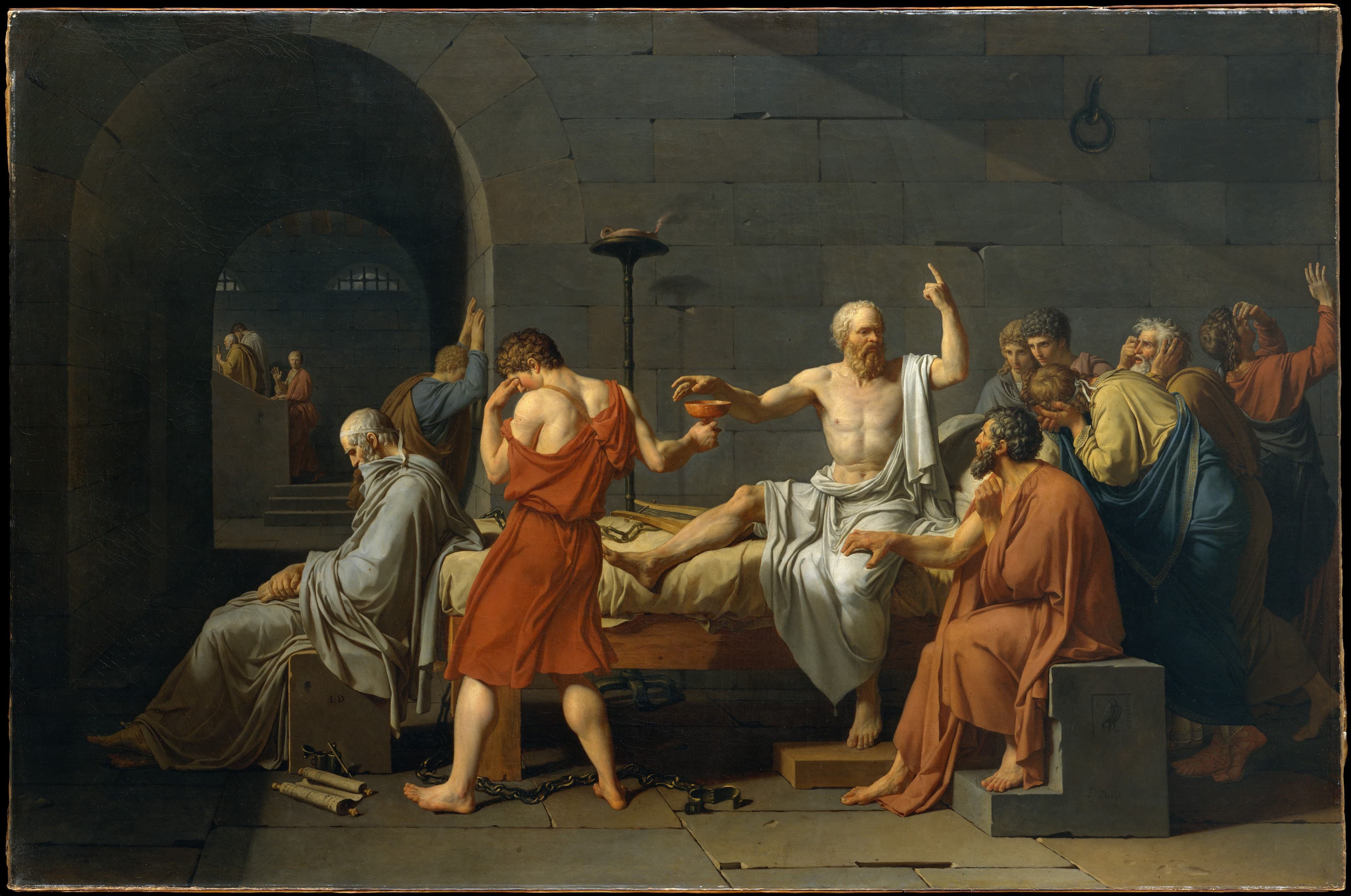
The Death of Socrates
Jacques-Louis David · 1787
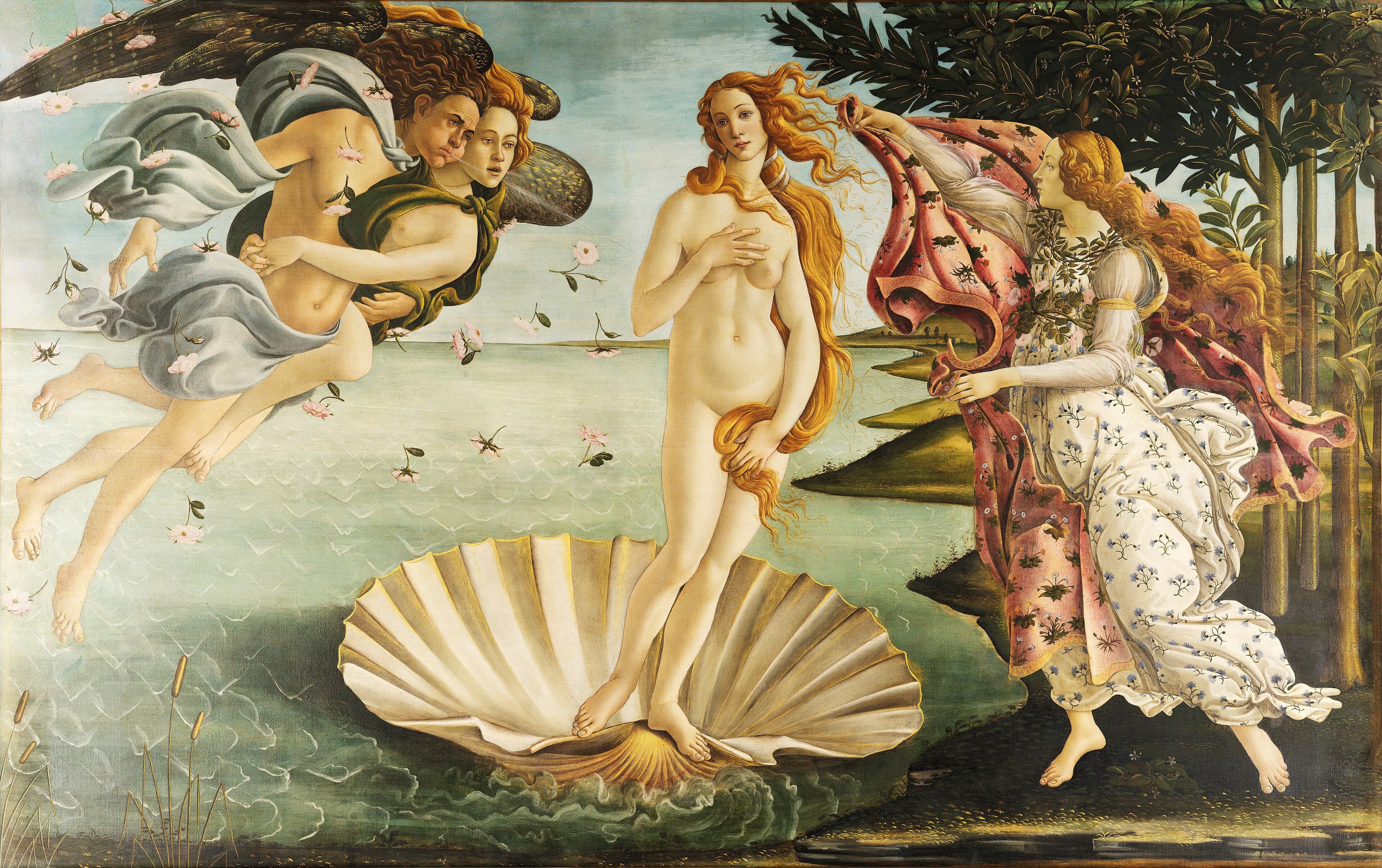
The Birth of Venus
Sandro Botticelli · c. 1484–1486
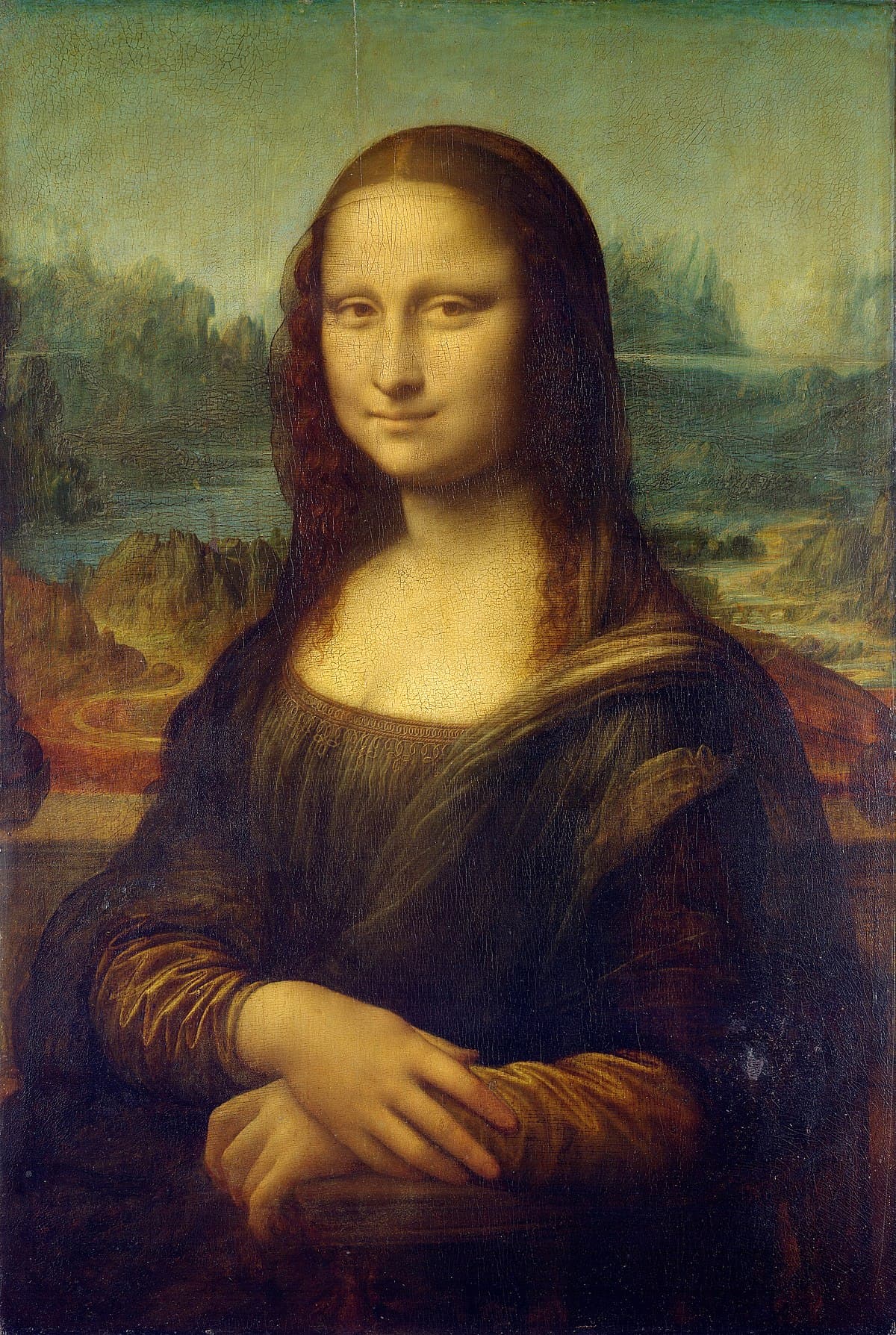
Mona Lisa
Leonardo da Vinci · c. 1503–1519

Bridge over a Pond of Water Lilies
Claude Monet · 1899

Venus de Milo
Alexandros of Antioch · c. 150–125 BC

The Scream
Edvard Munch · 1893