Image: Van Gogh Museum, Amsterdam (Vincent van Gogh Foundation) · Public domain · via Wikimedia Commons
Post-Impressionism
Wheatfield with Crows
Vincent van Gogh, July 1890
Wheatfield with Crows is a painting by Vincent van Gogh made in July 1890 at Auvers-sur-Oise, weeks before his death, showing a stormy sky and black crows over a golden wheat field. It is in the Van Gogh Museum in Amsterdam.
- Artist
- Vincent van Gogh
- Date
- July 1890
- Medium
- Oil on canvas
- Dimensions
- 50.5 × 103 cm
- Collection
- Van Gogh Museum, Amsterdam, Netherlands
- Movement
- Post-Impressionism
What you are looking at
A field of ripe wheat fills the lower half of a long, narrow canvas, its stalks thrashing in thick strokes of yellow and ocher. Above it the sky churns, dark blue at the top and lighter near the horizon, with two small white clouds. A flock of black crows, each just a quick V or zigzag of the brush, flaps across the field. Three paths cut through the wheat: one runs out of the picture at the left, one at the right, and the central green-edged track rises into the field and stops dead.
The format is unusual: about twice as wide as it is tall. Van Gogh used this double-square canvas for a group of panoramic landscapes in his last weeks, and it stretches the field and sky beyond the edges of our vision, so that we stand in the middle of it. The paint is laid on at full strength and in short, directional strokes, the colors at maximum contrast: complementary yellow and blue, red-brown paths against green verges.
When and where Van Gogh painted it
In May 1890 Van Gogh left the asylum at Saint-Rémy in Provence and moved to Auvers-sur-Oise, a village north of Paris, where the doctor and art lover Paul Gachet could watch over him. He was extraordinarily productive there, painting more than seventy works in about seventy days. Wheatfield with Crows was painted in early July 1890, among the vast wheat fields on the plateau above the village.
On 27 July Van Gogh shot himself, probably in those same fields, and he died two days later, on 29 July 1890, at the age of thirty-seven.
Is Wheatfield with Crows Van Gogh's last painting?
It is often called his last painting, especially since Vincente Minnelli's 1956 film Lust for Life presented it that way. But the letters suggest otherwise. Van Gogh mentions a group of large wheatfield paintings, almost certainly including this one, in a letter written around 10 July, more than two weeks before his death. Most scholars think his final work was Tree Roots, also in the Van Gogh Museum, an unfinished canvas of tangled roots and trunks. The legend of Wheatfield with Crows as a suicide note says more about our need for a dramatic ending than about the chronology.
What does Wheatfield with Crows mean?
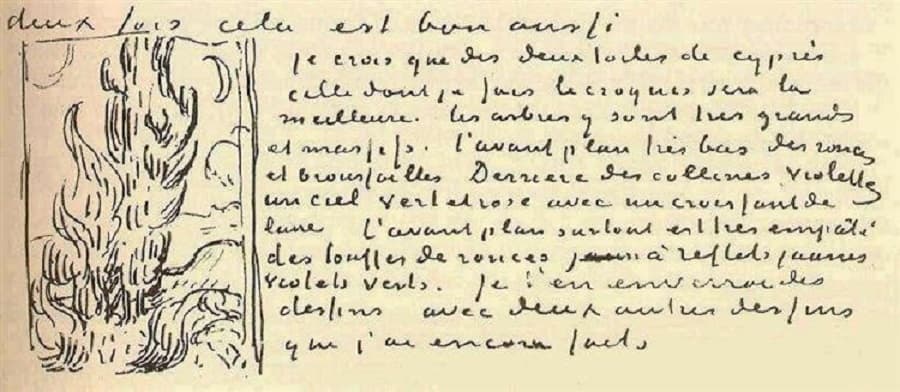
Van Gogh described his recent paintings of wheat fields to his brother Theo and sister-in-law Jo. He wrote that they were vast stretches of wheat under troubled skies, and that he had not needed to go out of his way to express sadness and extreme loneliness in them. In the same letter he added that he hoped they would also show what he found healthy and fortifying about the countryside.
That double meaning is the key. The painting can be read as an expression of anguish:
- The crows, traditionally birds of ill omen and death.
- The storm, pressing down on the field.
- The dead-end path, leading the eye nowhere.
But wheat, for Van Gogh, was also an image of the cycle of life. He had written from the asylum about the reaper as an image of death, "in the great book of nature", yet painted in full sunlight and without sadness. The ripe field at harvest time is abundance as well as ending. Reading the picture only as despair flattens it.
Reception and legacy
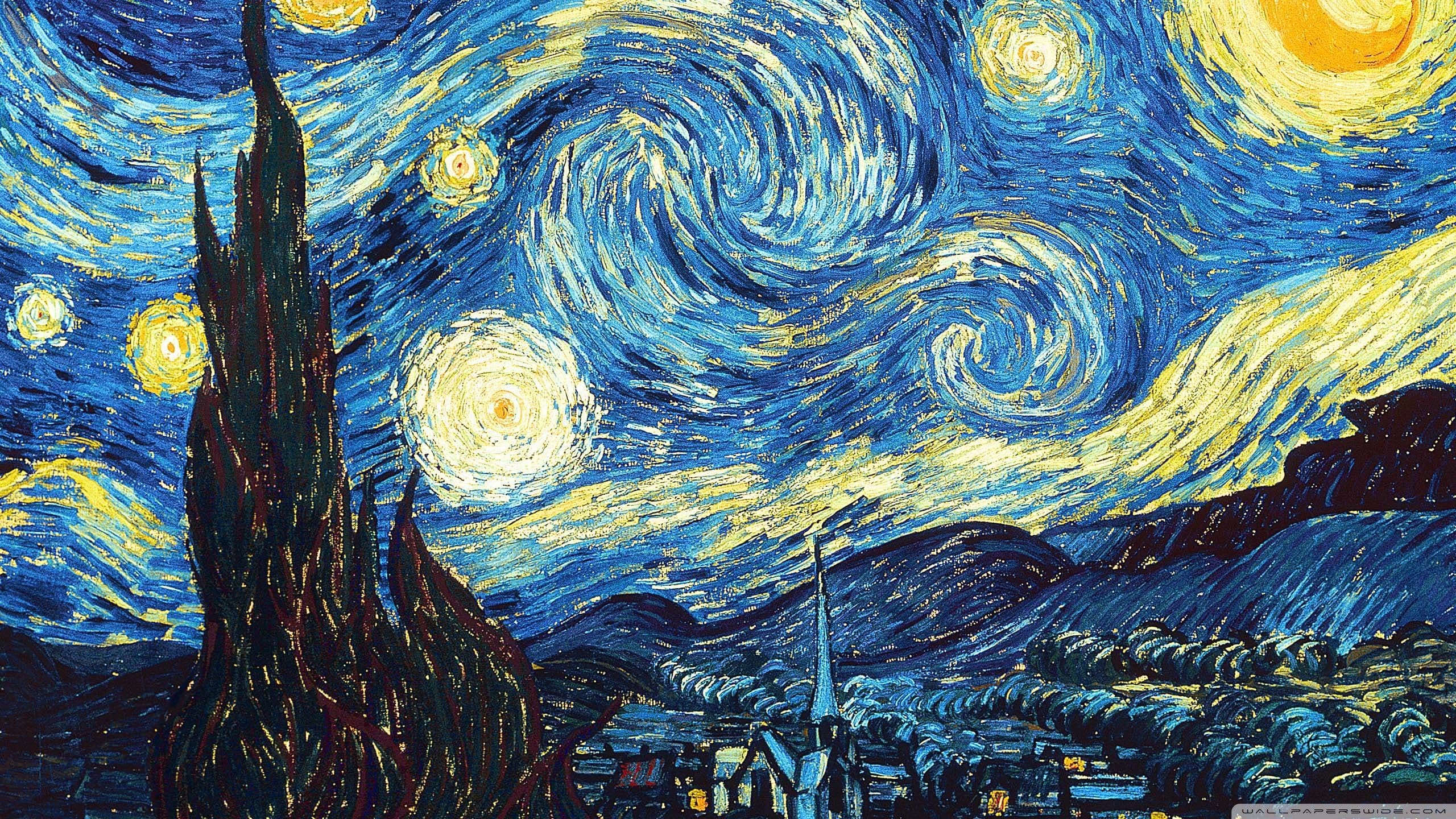
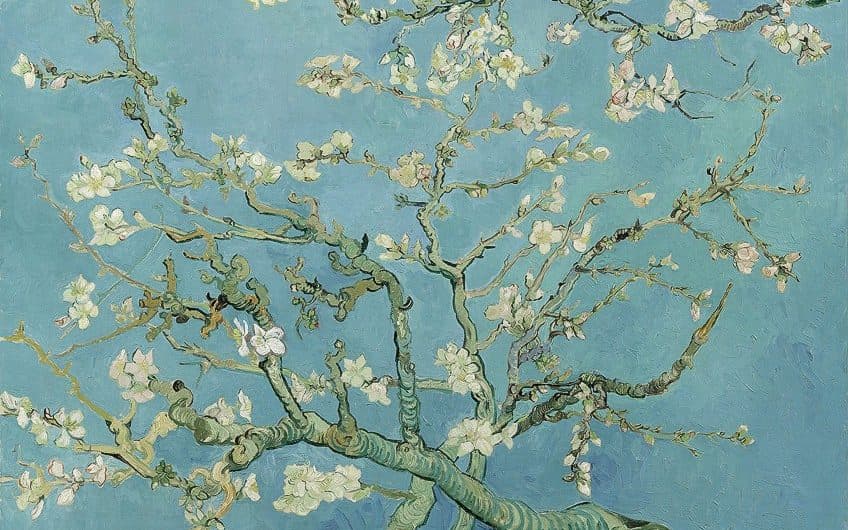
Because of its timing and its drama, Wheatfield with Crows has become one of the most famous images in Van Gogh's work and one of the most quoted. Akira Kurosawa's film Dreams (1990) sends a young painter walking into it; the crows rising from the field are among the most recognizable motifs in modern art. Compare it with Van Gogh's earlier, calmer landscapes such as Almond Blossoms, and with the late, intense works of the same summer collected in famous Van Gogh paintings. For the night sky that preceded it by a year, see The Starry Night; for his grief made human, At Eternity's Gate.
Details most viewers miss
- The blue sky's two tones. The upper sky is a dark, almost black ultramarine, while near the horizon it lightens, suggesting a storm approaching or passing.
- The green verges. The grassy edges of the paths are painted in bright green, a complementary note against the red-brown earth.
- The crows' direction. The birds seem to fly both toward and away from us; their movement is deliberately ambiguous.
- The format. The 1:2 double-square canvas appears in a whole group of Auvers landscapes, which shows that this was a series, not a single final statement.
Where to see Wheatfield with Crows
The painting is in the Van Gogh Museum in Amsterdam, part of the collection of the Vincent van Gogh Foundation, which descends from the artist's brother Theo and his family. It is usually on display in the galleries devoted to the last years of Van Gogh's life, close to Tree Roots.
Questions & answers
Where is Wheatfield with Crows?
It is in the Van Gogh Museum in Amsterdam, owned by the Vincent van Gogh Foundation. It usually hangs in the galleries covering Van Gogh's final months in Auvers-sur-Oise, near his last painting, Tree Roots.
Is Wheatfield with Crows Van Gogh's last painting?
Probably not, despite the popular legend. Van Gogh mentions his large wheatfield canvases in a letter of about 10 July 1890, more than two weeks before his death. Most scholars consider the unfinished Tree Roots to be his final work.
What does Wheatfield with Crows mean?
Van Gogh wrote that his wheatfield paintings of that July expressed sadness and extreme loneliness, but also the healthy, fortifying power of the countryside. The crows and storm suggest foreboding, while the ripe wheat suggests life and harvest.
When was Wheatfield with Crows painted?
It was painted in July 1890 in the fields above Auvers-sur-Oise, north of Paris. Van Gogh died there on 29 July 1890, two days after shooting himself.
More by the artist
Vincent van Gogh
Head of a Skeleton with a Burning Cigarette
Vincent van Gogh · 1886
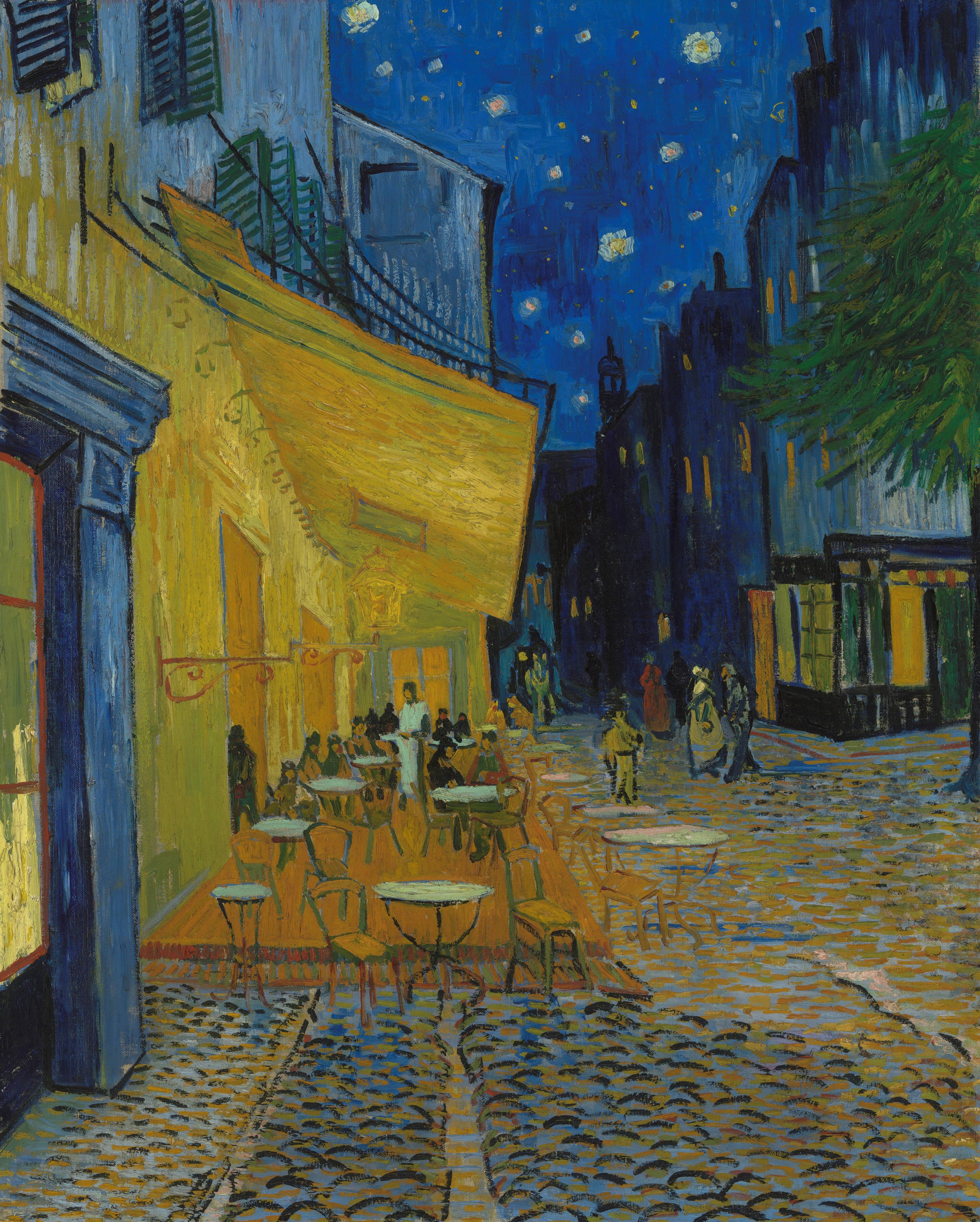
Café Terrace at Night
Vincent van Gogh · September 1888
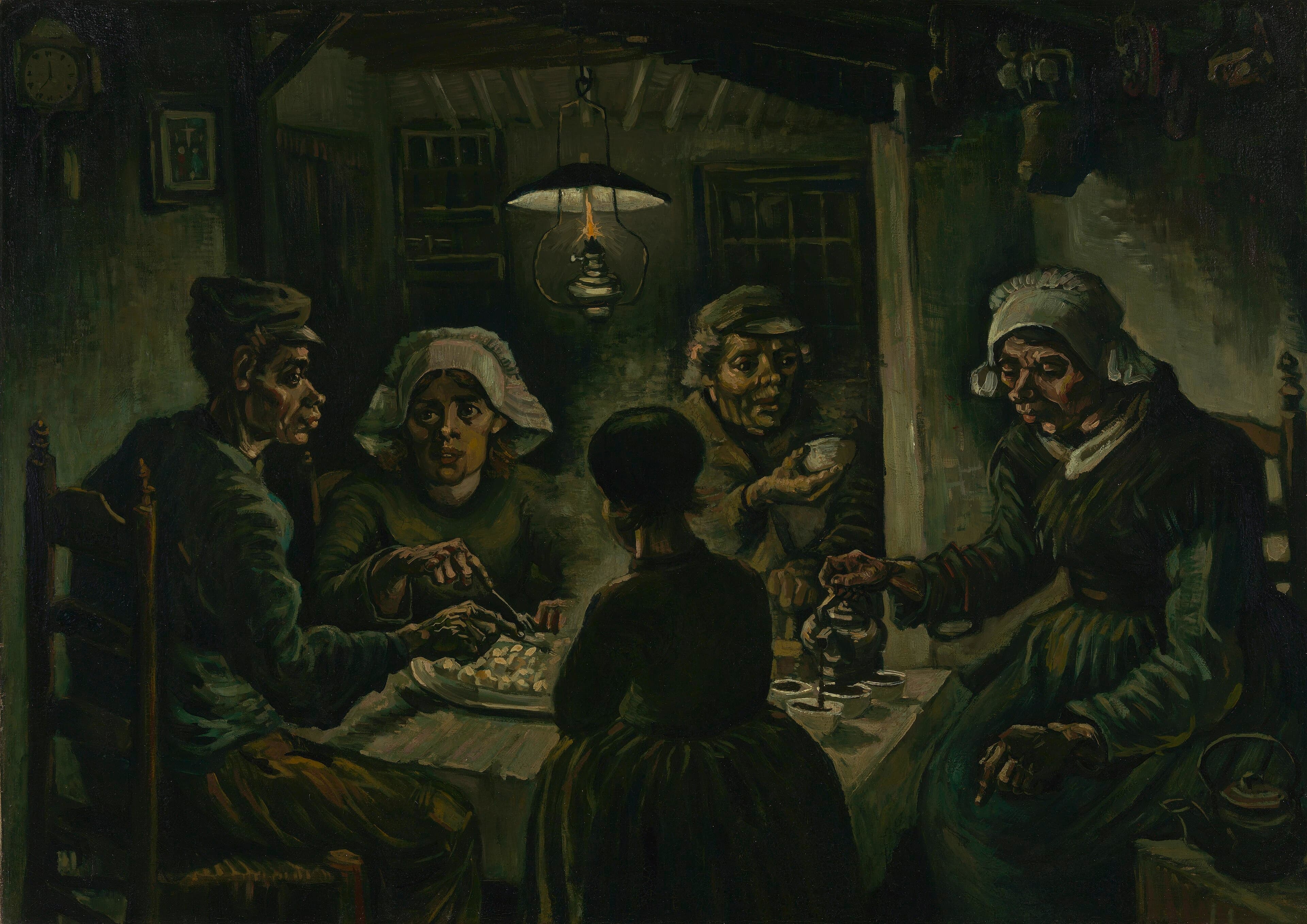
The Potato Eaters
Vincent van Gogh · April–May 1885
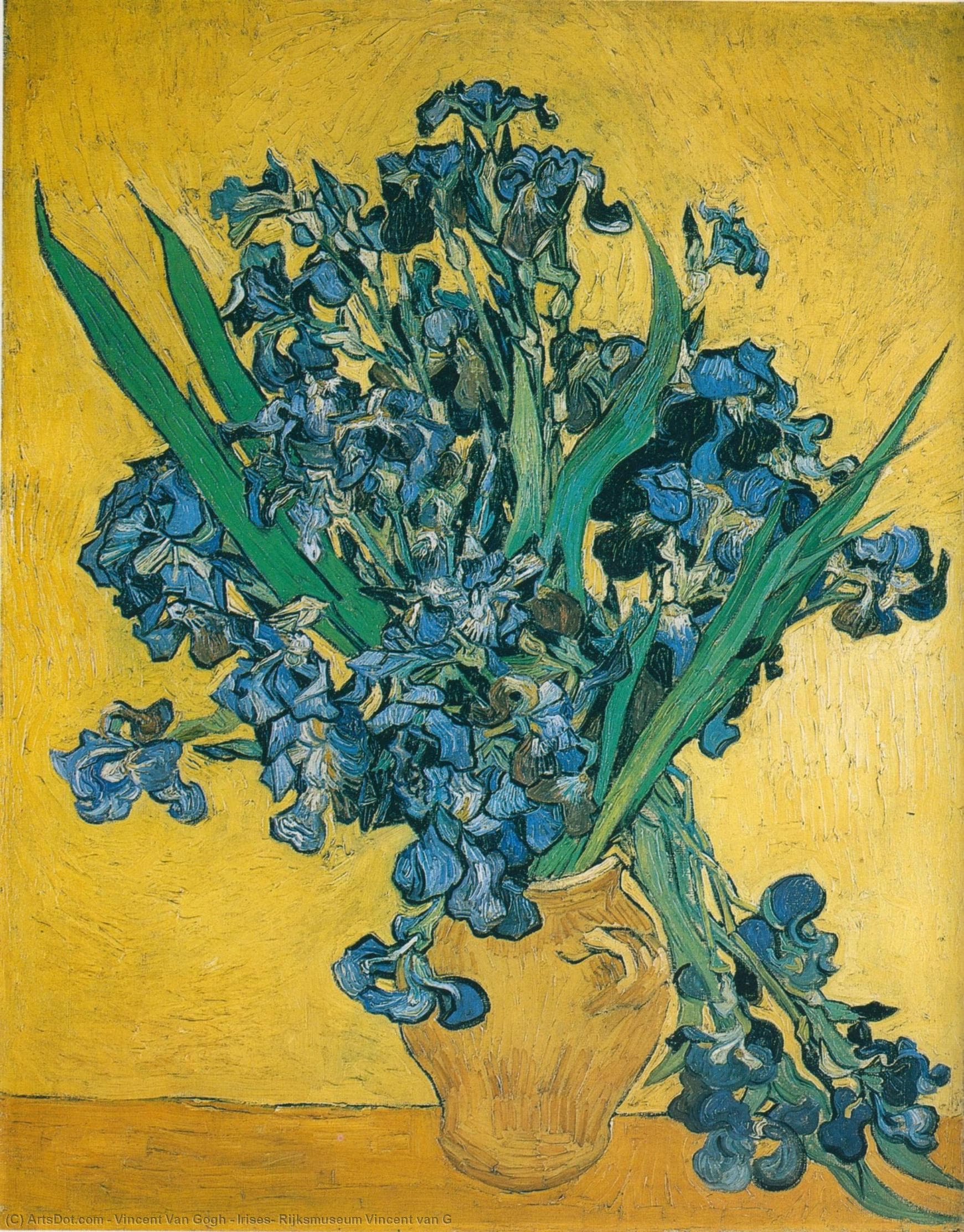
Irises (Vase with Irises Against a Yellow Background)
Vincent van Gogh · 1890
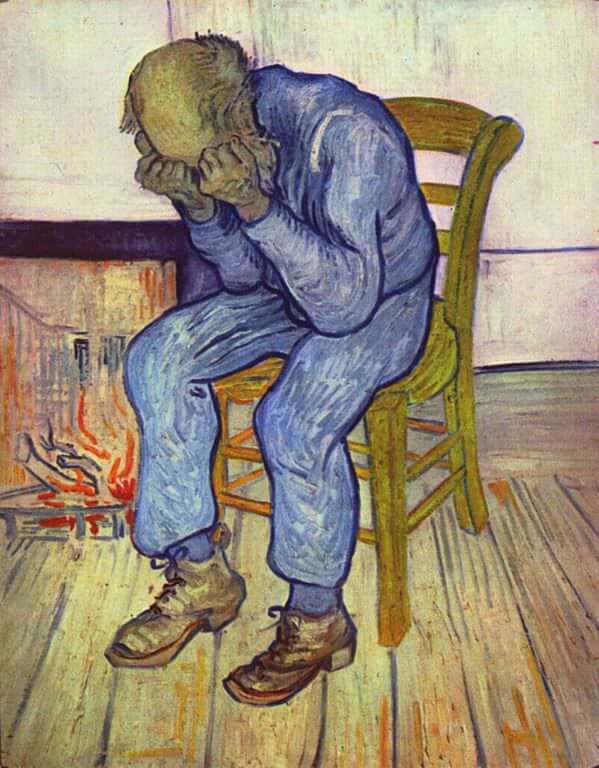
At Eternity's Gate
Vincent van Gogh · 1890
The Starry Night (van Gogh)
Vincent van Gogh · 1889
Portrait of Theo van Gogh (Self-Portrait with Grey Felt Hat)
Vincent van Gogh · 1887
The Letters of Vincent van Gogh
Vincent van Gogh · 1872–1890
Also painted in 1890
The same year
Kindred works
You may also study
Almond Blossom
Vincent van Gogh · 1890

Bridge over a Pond of Water Lilies
Claude Monet · 1899

The Scream
Edvard Munch · 1893

The Thinker
Auguste Rodin · Modeled 1880–82; enlarged 1902–03; this cast 1904

Saturn Devouring His Son
Francisco Goya · c. 1819–1823

Ophelia
John Everett Millais · 1851–52

Woman with a Parasol – Madame Monet and Her Son
Claude Monet · 1875

The Great Wave off Kanagawa
Katsushika Hokusai · c. 1830–32