Image: Museo del Prado · Public domain · via Wikimedia Commons
Northern Renaissance
The Triumph of Death
Pieter Bruegel the Elder, c. 1562
The Triumph of Death is Pieter Bruegel the Elder's panel painting of about 1562, in which an army of skeletons sweeps across a burning landscape and spares no one, king or peasant. It hangs in the Museo del Prado in Madrid.
- Artist
- Pieter Bruegel the Elder
- Date
- c. 1562
- Medium
- Oil on panel
- Dimensions
- 117 × 162 cm
- Collection
- Museo del Prado, Madrid, Spain
- Movement
- Northern Renaissance
What you are looking at
The whole earth has become a battlefield, and the dead are winning. Across a brown, scorched landscape that runs back to a smoking sea, thousands of skeletons herd, hunt and slaughter the living. Ships burn and sink offshore. On the hills, gallows and execution wheels stand on poles like strange trees, each with its victim. Church bells ring from a dead tree at the top left, rung by a skeleton.
The foreground is where Bruegel puts the detail, and it repays slow looking, scene by scene:
- Bottom left, a king in ermine and armor slumps to the ground. A skeleton holds up an hourglass to him, while another rummages through his barrels of gold coins. Wealth buys nothing here.
- Center left, a skeleton on a starving reddish horse swings a scythe and drives a crowd toward the right. Behind him a cart piled with skulls rolls forward, pulled by another emaciated horse.
- Center right, the living are funneled into a huge box-like trap whose front is decorated with crosses. Skeleton soldiers with coffin lids for shields block any escape.
- Bottom right, the most famous passage: a dinner party has been broken up. A fool tries to crawl under the table, a young man draws his sword too late, and at the very corner a pair of lovers continue to sing and play the lute, unaware that a skeleton behind them is playing along.
- Bottom center, a dog noses at the face of a dead baby, and a woman has fallen holding a spindle and distaff, the thread of life cut.
The palette is almost monochrome, reddish browns and ochres under a sky dark with smoke, broken only by the pale bones and a few flashes of red cloth. It looks like a world seen through ash.
How Bruegel made it
Pieter Bruegel the Elder (c. 1525/30–1569) painted The Triumph of Death around 1562, early in his career as a painter, when he had already made his name designing prints. It is painted in oil on an oak panel, and its crowded, high-horizon panorama owes a clear debt to Hieronymus Bosch, whose work, including The Garden of Earthly Delights, Bruegel knew well. Unlike Bosch, though, Bruegel does not invent hybrid monsters. Everything here is real: real armor, real executions, real card tables. The only fantasy is the skeletons, and they behave like an efficient army.
Story and context
Bruegel drew on several medieval traditions at once. The Triumph of Death was a subject in Italian art, showing Death in a procession or a chariot, sweeping over the living. The Danse Macabre (Dance of Death), painted on church and cemetery walls across Europe, showed skeletons leading people of every rank in a dance to the grave. And the memento mori ("remember that you will die") ran through Northern devotional art. You can explore those traditions in our Danse Macabre and Memento Mori collections.
The Netherlands of the 1560s gave the theme a sharp edge. Plague, war, famine and religious persecution were familiar, and public executions of the kind seen on the hills were real events. Whether Bruegel meant a specific comment on his own time is not known; the painting works as a universal image.
What does The Triumph of Death mean?
The central message is old and simple: death comes for everyone, and nothing protects you from it. Bruegel makes the point through social range. The king, the cardinal (in the lower left, held up by a skeleton wearing a cardinal's hat), the soldier, the pilgrim, the peasant and the lovers all meet the same end. The giant box with its crosses may parody the promise of salvation: people flee toward it as if it were a refuge, and it is a trap.
What makes the picture modern is that it offers no consolation. In medieval versions of the theme, there is often a reminder of judgment and heaven. Here there is no Christ, no angel and no last judgment, only an endless, mechanical slaughter. That bleakness is why the painting is so often compared to images of modern war.
Reception and legacy
The painting was in Spain by the 18th century and entered the Prado from the Spanish royal collection. It was copied several times in the workshop of Bruegel's son Pieter Brueghel the Younger, and it has become one of the defining images of death in art, quoted in films, album covers and heavy-metal artwork. It sits naturally beside later visions of doom such as Thomas Cole's The Course of Empire: Destruction and Goya's The Third of May 1808.
Where is The Triumph of Death today?
The original is in the Museo del Prado in Madrid, where it hangs with the museum's Flemish paintings. A restoration completed in 2018 cleaned the panel and brought back much of the detail and color that had been dimmed by old varnish. The image is in the public domain.
Questions & answers
Where is The Triumph of Death painting?
Pieter Bruegel the Elder's The Triumph of Death is in the Museo del Prado in Madrid, Spain, where it hangs with the museum's Flemish paintings. It came to the Prado from the Spanish royal collection and was restored by the museum in 2018.
What is the meaning of The Triumph of Death?
It is a vision of death conquering everyone without exception. Bruegel shows an army of skeletons destroying kings, cardinals, soldiers, peasants and lovers alike, drawing on the medieval Dance of Death and memento mori traditions. Unusually, he offers no image of salvation or judgment.
Who painted The Triumph of Death?
The Prado's Triumph of Death was painted by the Flemish artist Pieter Bruegel the Elder around 1562. Several copies were later made in the workshop of his son, Pieter Brueghel the Younger, which is why versions turn up in other collections.
What is happening in the bottom right of The Triumph of Death?
A banquet has been interrupted by skeletons. A fool hides under the table and a young man draws his sword, while in the very corner two lovers keep making music, unaware that a skeleton behind them is playing along. It is the painting's most famous detail.
Kindred works
You may also study
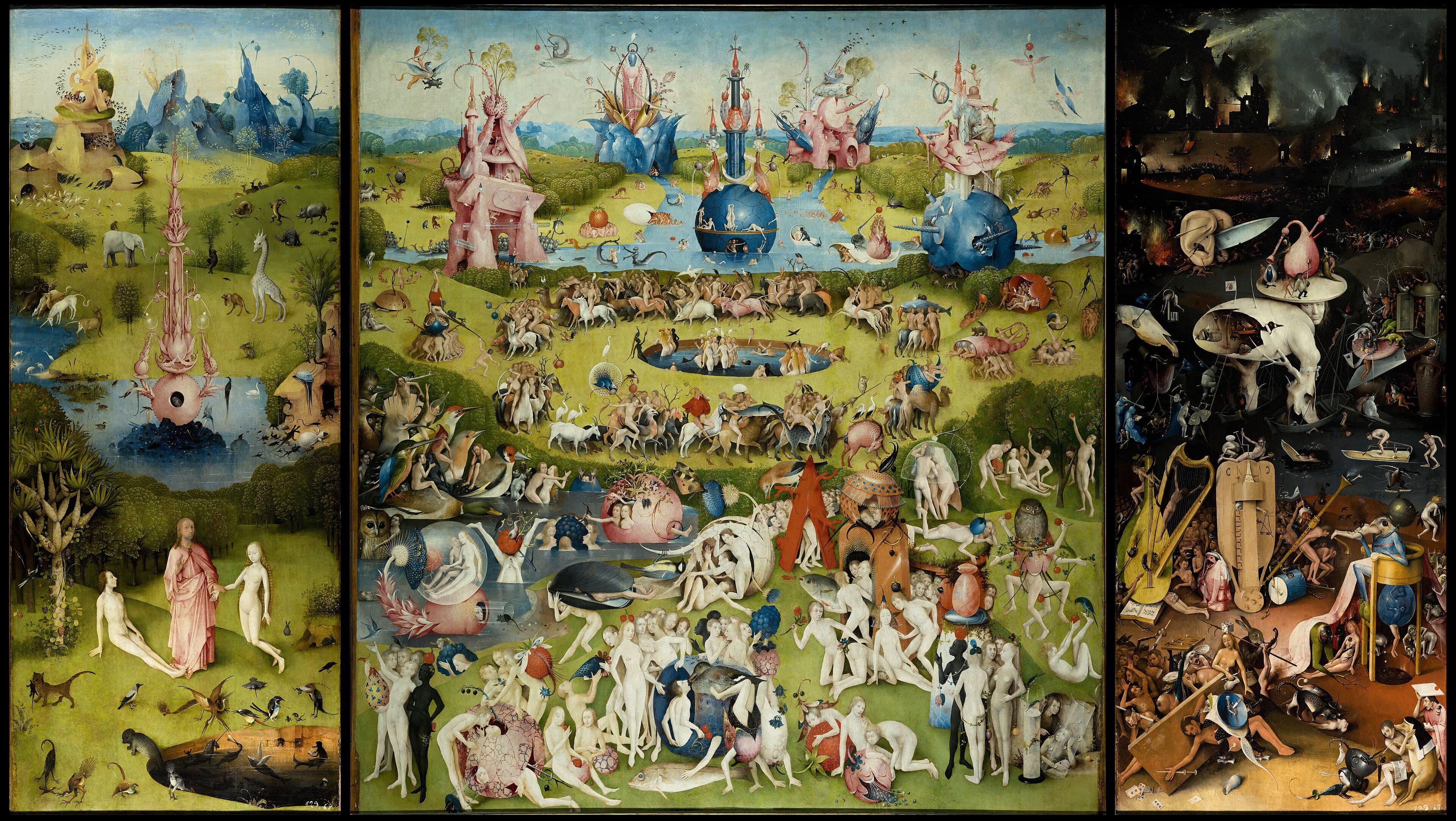
The Garden of Earthly Delights
Hieronymus Bosch · c. 1490–1510
The Danse Macabre Series
Paul Rumsey
The Garden of Death
Hugo Simberg · 1896
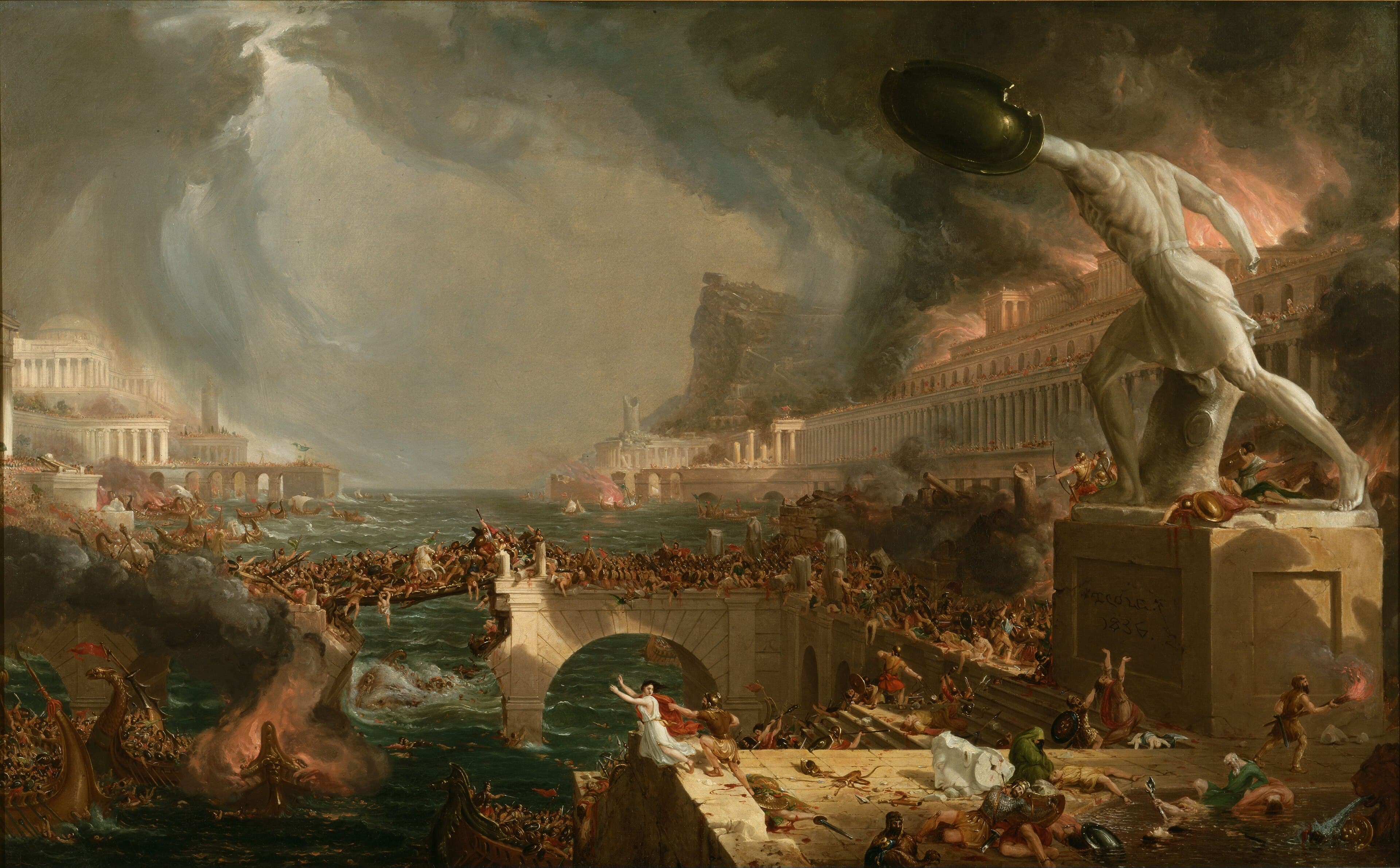
The Course of Empire: Destruction
Thomas Cole · 1836
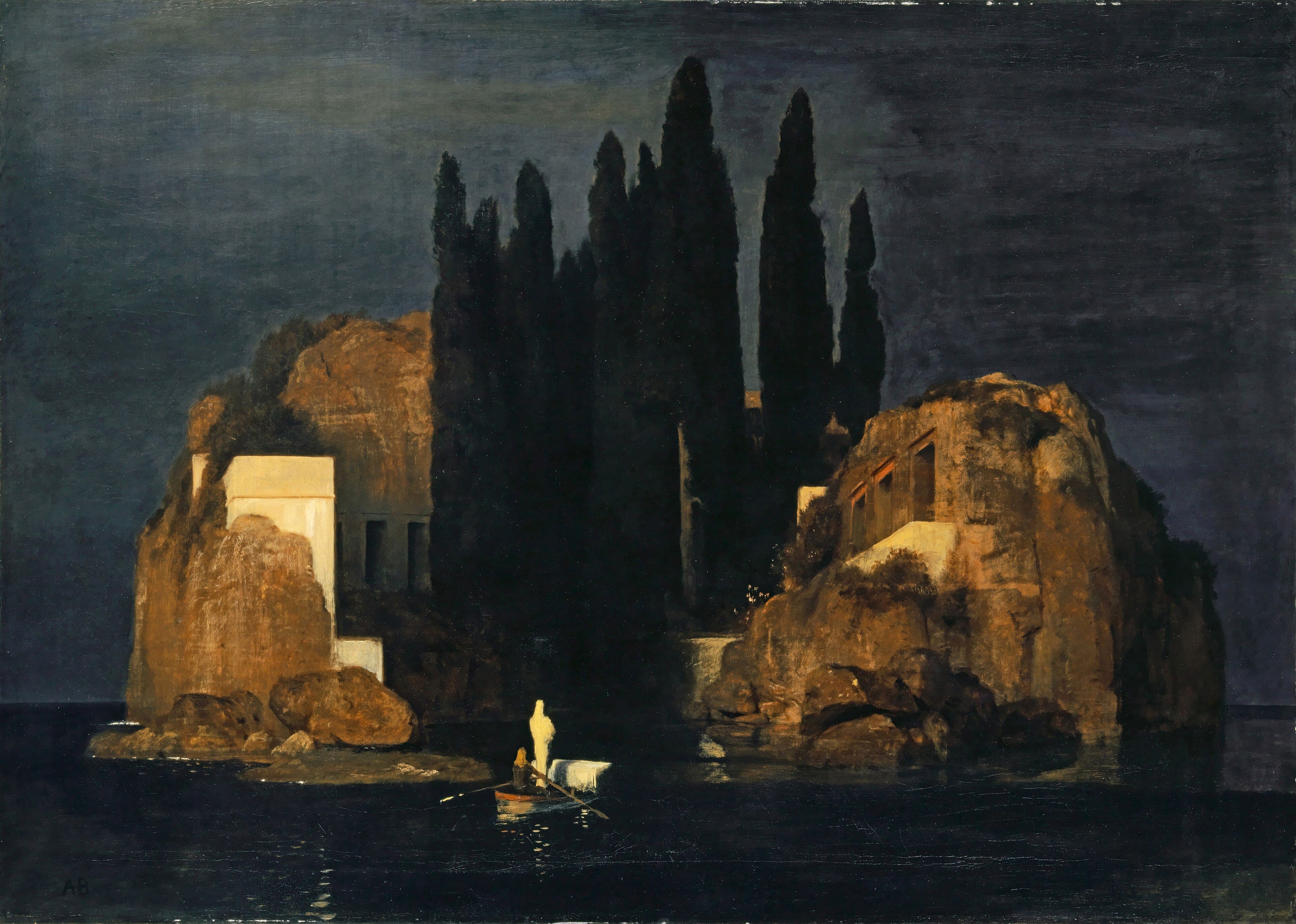
Isle of the Dead
Arnold Böcklin · 1880 (first version); five versions 1880–86
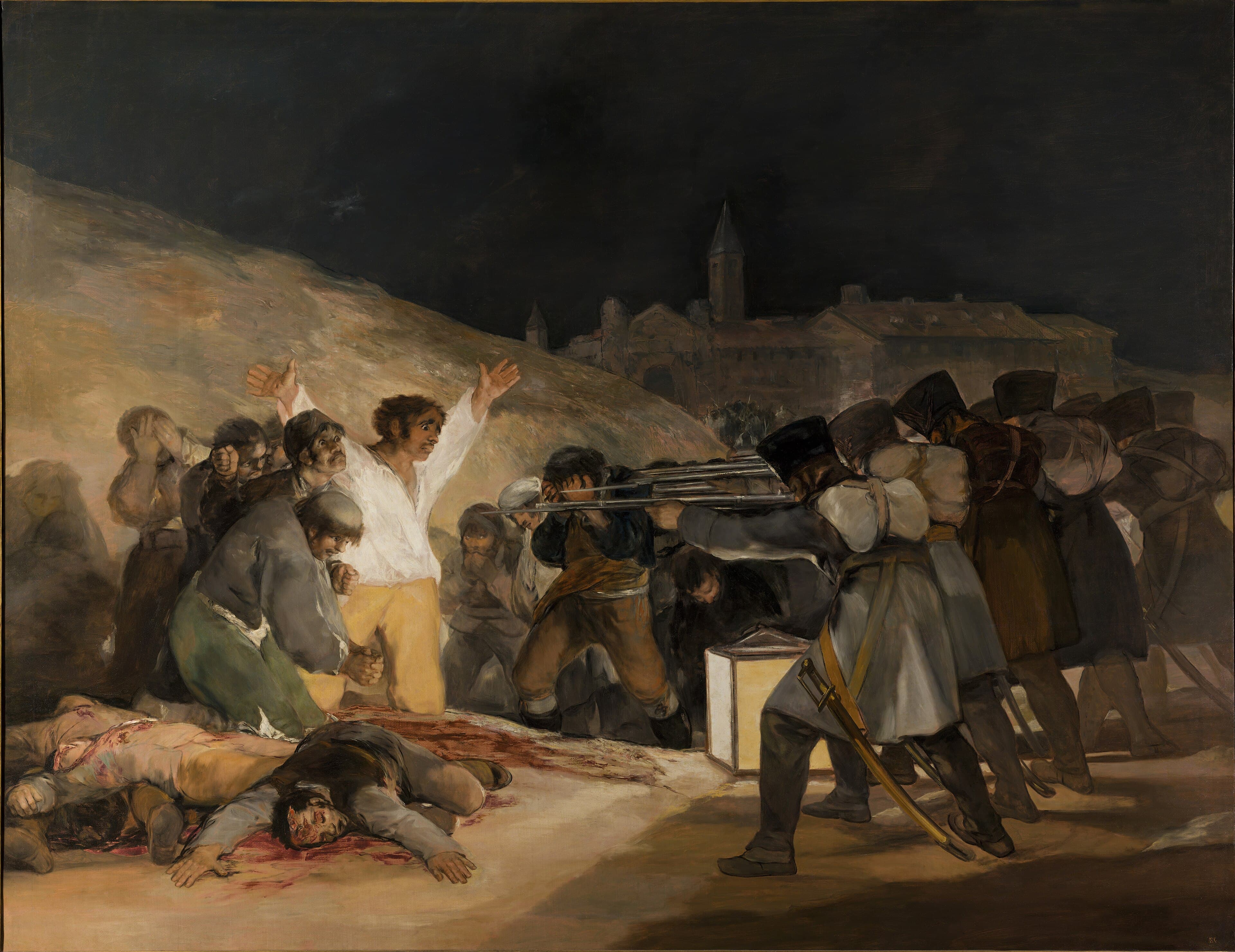
The Third of May 1808
Francisco Goya · 1814

The Scream
Edvard Munch · 1893
The Thinker
Auguste Rodin · Modeled 1880–82; enlarged 1902–03; this cast 1904