Impressionism
The Garden Path at Giverny
Claude Monet, 1902
The Garden Path at Giverny (Path in Monet's Garden in Giverny) is a 1902 painting by Claude Monet of the Grande Allée of his flower garden, striped with sun and shade under rose arches. It belongs to the Belvedere in Vienna.
- Artist
- Claude Monet
- Date
- 1902
- Medium
- Oil on canvas
- Dimensions
- 89.5 × 92.3 cm
- Collection
- Belvedere (Österreichische Galerie Belvedere), Vienna, Austria
- Movement
- Impressionism
- Catalogue
- Wildenstein W 1650
Painted at Giverny: Monet's House and Garden
Claude Monet painted this view of the main path through his own flower garden at Giverny in 1902, signing and dating it Claude Monet 02 at lower right. The nearly square canvas, 89.5 by 92.3 centimeters, belongs to the Belvedere in Vienna (inventory 3889), which calls it Path in Monet's Garden in Giverny; in French it is Une Allée du jardin de Monet, Giverny, and it is catalogued by Daniel Wildenstein as W 1650. It shows the Grande Allée, the spine of the garden Monet planted himself from 1883 onward.
What you are looking at
The path runs straight up the middle of the picture from the bottom edge toward the house, which appears at the far end only as a few blocks of pink and red around a short flight of steps. On either side, deep borders of flowers press in: great banks of violet and purple in the foreground, probably asters, then red, orange and white blooms behind them. Overhead, the iron arches that carried Monet's climbing roses have vanished under foliage, and the top third of the canvas is a canopy of rust, olive, green and red that closes over the path like a tunnel.
The real subject is the light on the gravel. Sun falls through the canopy in bars, so the path is striped with alternating bands of warm apricot and cool blue-violet shadow. The stripes do the work of perspective. Near us they are broad and widely spaced; toward the house they narrow and crowd together, until the path becomes a single bright strip at the steps.
Look at the color pairs. The violet of the asters sits directly against the orange of the sunlit path, and the red flowers against green leaves: complementary colors placed side by side, so each makes the other brighter. At the left edge, a few slim pinkish trunks rise into the canopy, the only vertical lines in a picture otherwise made of dabs.
How it was painted
By 1902 Monet's touch had become dense and woven. The borders are built up in short, overlapping strokes with little bare canvas left between them. Color is laid side by side rather than mixed on the palette, and there is almost no linear drawing anywhere: even the house is reduced to a few strokes of pink, red and blue-green. The canopy is painted in long, downward-hanging strokes that suggest trailing stems, very different from the round dabs of the flower beds.
The square format and the symmetrical, centered path are unusual for Monet. They give the picture a frontal, almost decorative quality, and look forward to the square and near-square water-lily canvases he would paint in the following years.
The Grande Allée and the Clos Normand
When Monet rented the house at Giverny in 1883, a central alley lined with spruces and cypresses ran from the front door to the road. He cut the trees down, kept two yews near the house and turned the alley into a flower walk, later adding the iron arches for roses. This flower garden, the Clos Normand, was his first project at Giverny; the water garden across the road, with its pond and Japanese bridge, came after 1893.
By 1902 the gardens were mature, and Monet was painting both. The flower garden appears in other canvases of these years, such as Irises in Monet's Garden at Giverny of 1900, while the water garden produced The Japanese Footbridge and Bridge over a Pond of Water Lilies. In late summer, nasturtiums were allowed to creep across the Grande Allée from both sides, and the path here is already narrowed by borders spilling onto the gravel.
Monet had painted gardens wherever he lived: the family garden at Sainte-Adresse in 1867 and his rented gardens at Argenteuil, as in The Artist's Garden in Argenteuil. At Giverny, for the first time, Monet designed the garden and painted it, making the motif before he made the picture. More on the house and both gardens is on our Giverny hub.
Where to see it
The painting hangs in the Upper Belvedere in Vienna, one of the few major Monets in Austria. The garden itself was restored in the 1970s and 1980s and is open to visitors at Giverny for much of the year. For Monets in other museums, see where to see Monet's paintings.
Questions & answers
Where is Monet's painting of the garden path at Giverny?
This 1902 version, showing the Grande Allée under its rose arches, is in the Belvedere in Vienna, inventory number 3889, where it is titled Path in Monet's Garden in Giverny. It hangs in the Upper Belvedere's collection galleries. Monet painted the path more than once, so other versions of the motif exist elsewhere.
When did Monet paint the garden path at Giverny?
He signed and dated this canvas 1902, nearly twenty years after he moved to Giverny in 1883 and began turning the old central alley into a flower walk. By then both of his gardens were mature, and he was painting the flower garden and the water-lily pond in the same years.
What does the painting show?
It shows the Grande Allée, the central path of Monet's flower garden, running toward his pink house between banks of violet asters and red and orange flowers. Sun falling through the rose arches stripes the gravel with bands of warm light and violet shadow, which narrow with distance to give the picture its depth.
Did Monet paint his Giverny garden many times?
Yes. He painted the flower garden, the Clos Normand, repeatedly from the 1880s to the 1920s, including several views of the Grande Allée and of the iris beds, and he painted the water garden across the road hundreds of times in the Japanese bridge and water-lily pictures. This square 1902 canvas is among the best-known views of the path.
More by the artist
Claude Monet

Bridge over a Pond of Water Lilies
Claude Monet · 1899

Woman with a Parasol – Madame Monet and Her Son
Claude Monet · 1875

Sunset in Venice
Claude Monet · 1908–12

La Grenouillère
Claude Monet · 1869

Beach in Pourville
Claude Monet · 1882

Springtime
Claude Monet · 1872

Boating on the River Epte
Claude Monet · 1890

The Seine at Asnières (Hermitage)
Claude Monet · 1873
Kindred works
You may also study
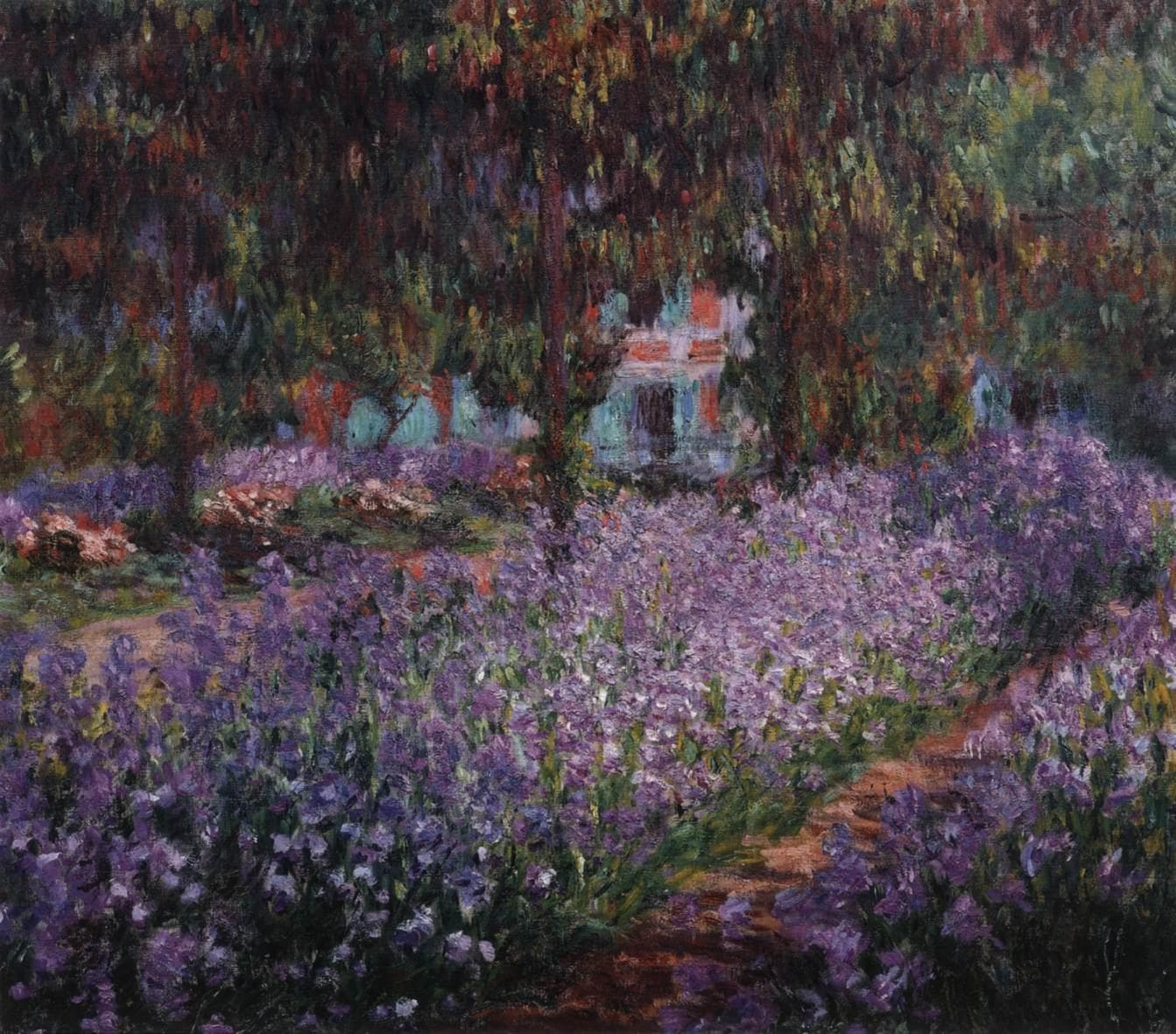
Irises in Monet's Garden at Giverny
Claude Monet · 1900
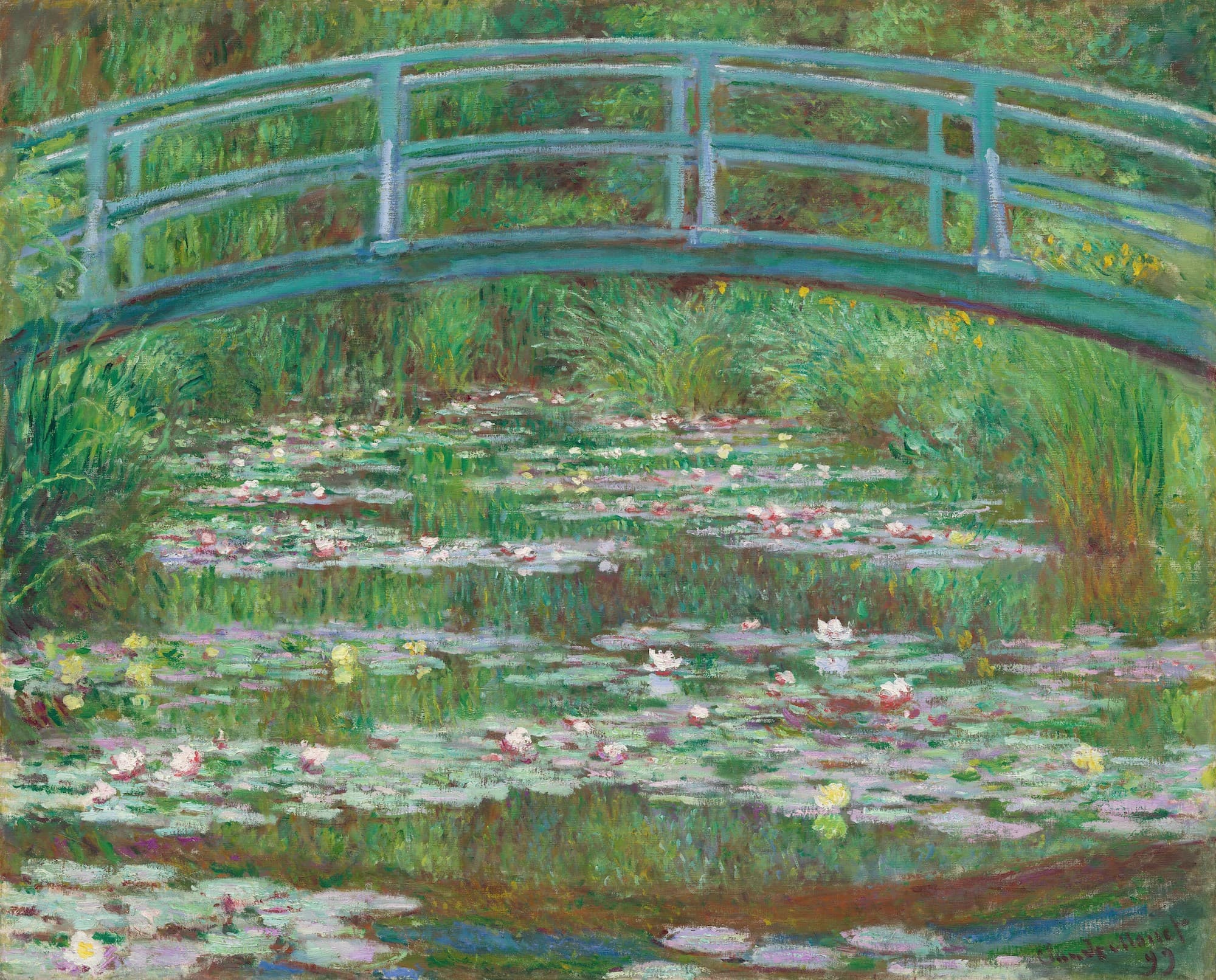
The Japanese Footbridge
Claude Monet · 1899
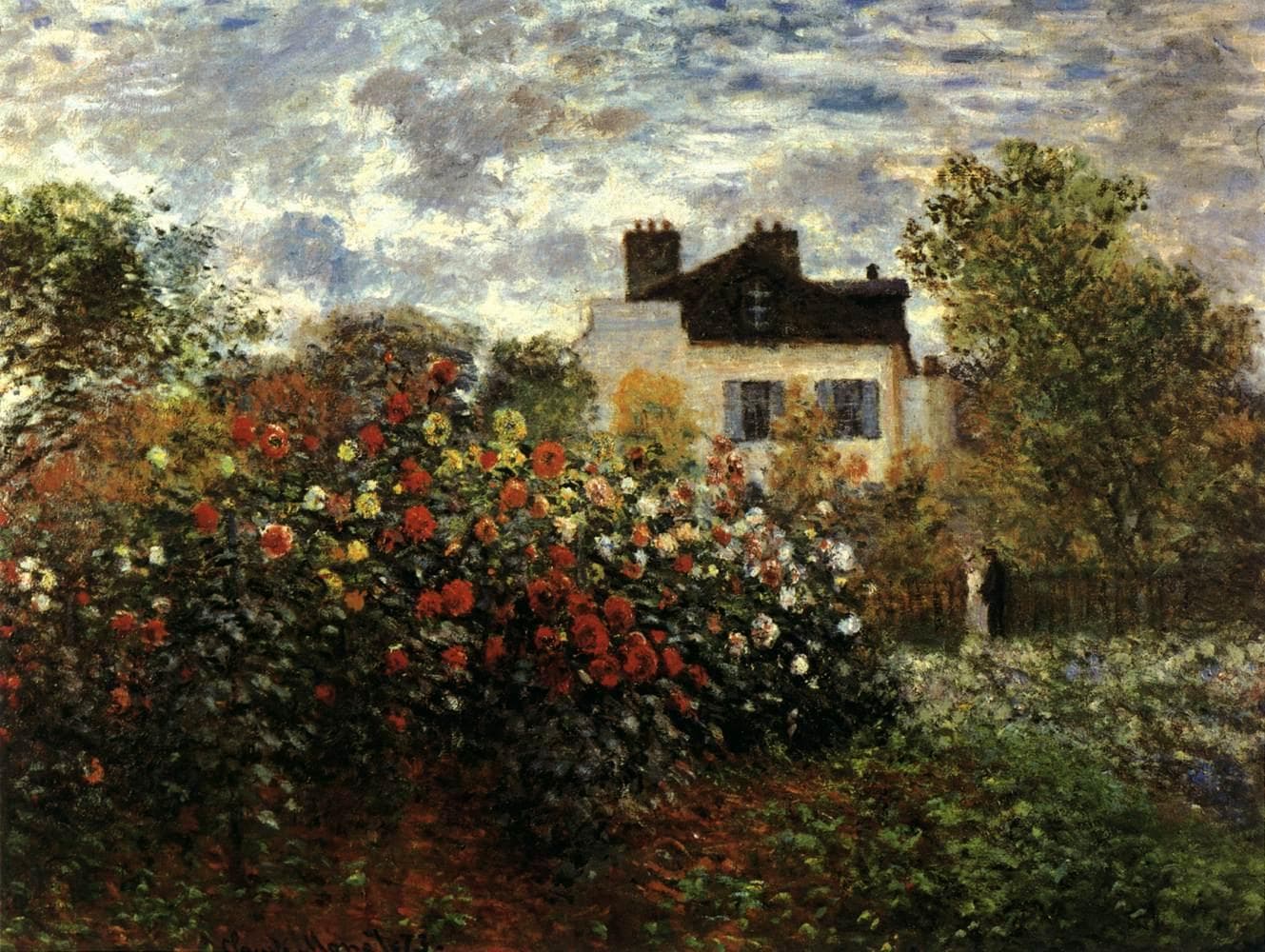
The Artist's Garden in Argenteuil (A Corner of the Garden with Dahlias)
Claude Monet · 1873
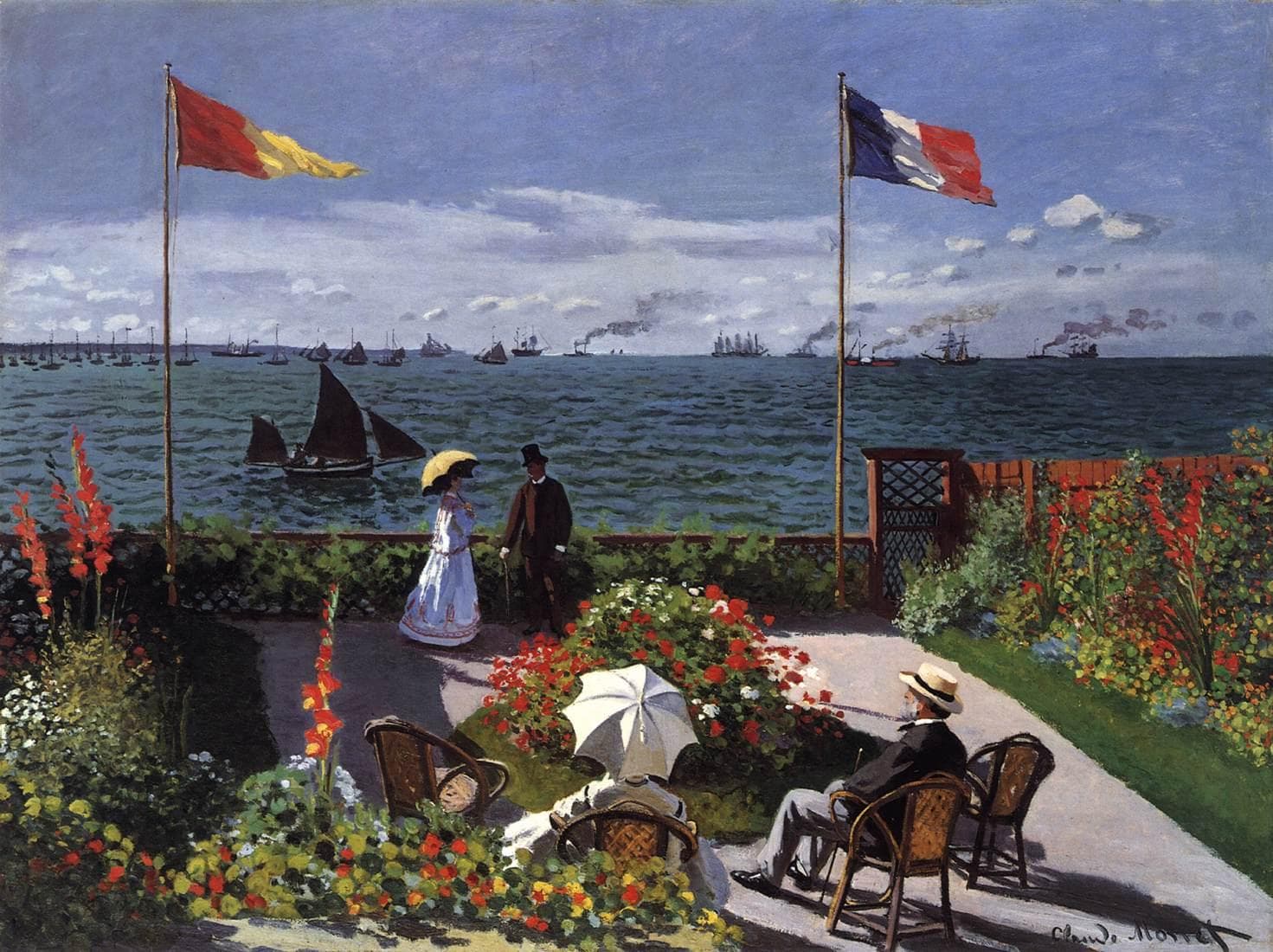
Garden at Sainte-Adresse
Claude Monet · 1867
The Artist's Garden at Vétheuil
Claude Monet · 1881

The Scream
Edvard Munch · 1893

Ophelia
John Everett Millais · 1851–52

The Great Wave off Kanagawa
Katsushika Hokusai · c. 1830–32