Impressionism
Meadow at Giverny
Claude Monet, 1888
Meadow at Giverny is an 1888 oil painting by Claude Monet: a wide summer meadow under a hazy, pale sky, with a line of trees and poplars in the mist. Once owned by Sergei Shchukin, it is in the State Hermitage Museum, Saint Petersburg.
- Artist
- Claude Monet
- Date
- 1888
- Medium
- Oil on canvas
- Dimensions
- 93.1 × 81.8 cm
- Collection
- State Hermitage Museum, Saint Petersburg, Russia
- Movement
- Impressionism
- Catalogue
- Wildenstein 1202
Painted at Giverny: Monet's House and Garden
What you are looking at
More than half of this canvas is grass. A meadow fills the lower part of the picture, flat and almost featureless, painted as a dense weave of short strokes in yellow-green, ochre, lilac and rose. Across the middle runs a band of trees: two rounded, leafy trees just right of center, a thin poplar rising sharply at the right, and on the far left a dark cypress-like column with a low bush beside it, all softened by haze. Behind them a long hill fades into mist. The sky is not blue at all but a pale, creamy yellow and pink, brushed in long diagonal strokes, as if the air itself were full of light.
The format is unusual for a landscape. The canvas is nearly square and slightly taller than wide, about 93 × 82 cm, which lets the empty meadow occupy the foreground and pushes the trees high up the picture.
Giverny, 1888
Monet moved to Giverny, a village on the Seine in Normandy, in 1883, and stayed there until his death in 1926. Before he dug his famous water-lily pond in the 1890s, his subject was the countryside around the house: the meadows along the little river Epte, the rows of poplars, the haystacks in the fields. In 1888 and 1889 he painted these meadows again and again, often in summer heat or morning haze.
This is the moment just before the great series. Within two years Monet would paint the Grainstacks and then the Poplars, repeating one motif under changing light. Meadow at Giverny already shows that way of thinking: there is no story and no figure, only a field, some trees and a particular quality of air.
Close looking
Stand back and the meadow reads as flat green. Look closer and it is made of thousands of separate touches of color, many of them not green at all: violet in the shadows, pink and orange where the sun catches seed heads, pale yellow where the grass is dry. Monet puts complementary colors side by side so that they shimmer when the eye mixes them, the technique that critics called optical mixture.
The sky does something similar in reverse. Its yellow and pink are crossed by violet strokes that also run into the hills, so the distance seems to dissolve. The trees are barely solid: the two central trees are built of loose green and lilac dabs, and the poplar at the right is a few vertical strokes of purple. Tiny reddish marks scattered on the far edge of the meadow may be cattle or flowers; Monet leaves them deliberately undecided.
The meadow as a motif
Monet's meadows at Giverny lay between his house and the river Epte, flat, damp pastureland bordered by willows and poplars. He could carry his canvases there in minutes, and he returned in different seasons and at different hours, sometimes with several canvases on the go and switching between them as the light changed. That habit of working on many canvases of one motif at once, ready for different moments of the day, is the method that produced the series of the 1890s.
Most of his meadow paintings include something to anchor the eye: a figure, a haystack, a row of poplars along the water. In this canvas the anchor is reduced to a handful of trees in the middle distance, and even they dissolve in the haze, which is why the picture feels so advanced for 1888. It is closer in spirit to the late water-lily canvases than to the crisp seaside views of his youth.
Why it matters
To many of Monet's contemporaries a picture like this, with no subject and no focal point, looked unfinished. That is exactly why it matters. Monet was shifting the subject of painting from things to the light and atmosphere between things, a move that leads directly to his late, near-abstract Water Lilies.
Provenance
The painting belonged to the Moscow textile merchant Sergei Shchukin, one of the boldest collectors of modern French art. After the Russian Revolution his collection was nationalized in 1918 and became part of the State Museum of New Western Art in Moscow. When that museum was dissolved in 1948, its holdings were divided between the Pushkin Museum in Moscow and the Hermitage in Leningrad, where this painting now hangs.
A different Monet with a similar title, Meadow at Giverny of 1886, belongs to the Museum of Fine Arts, Boston; the two should not be confused.
Related works
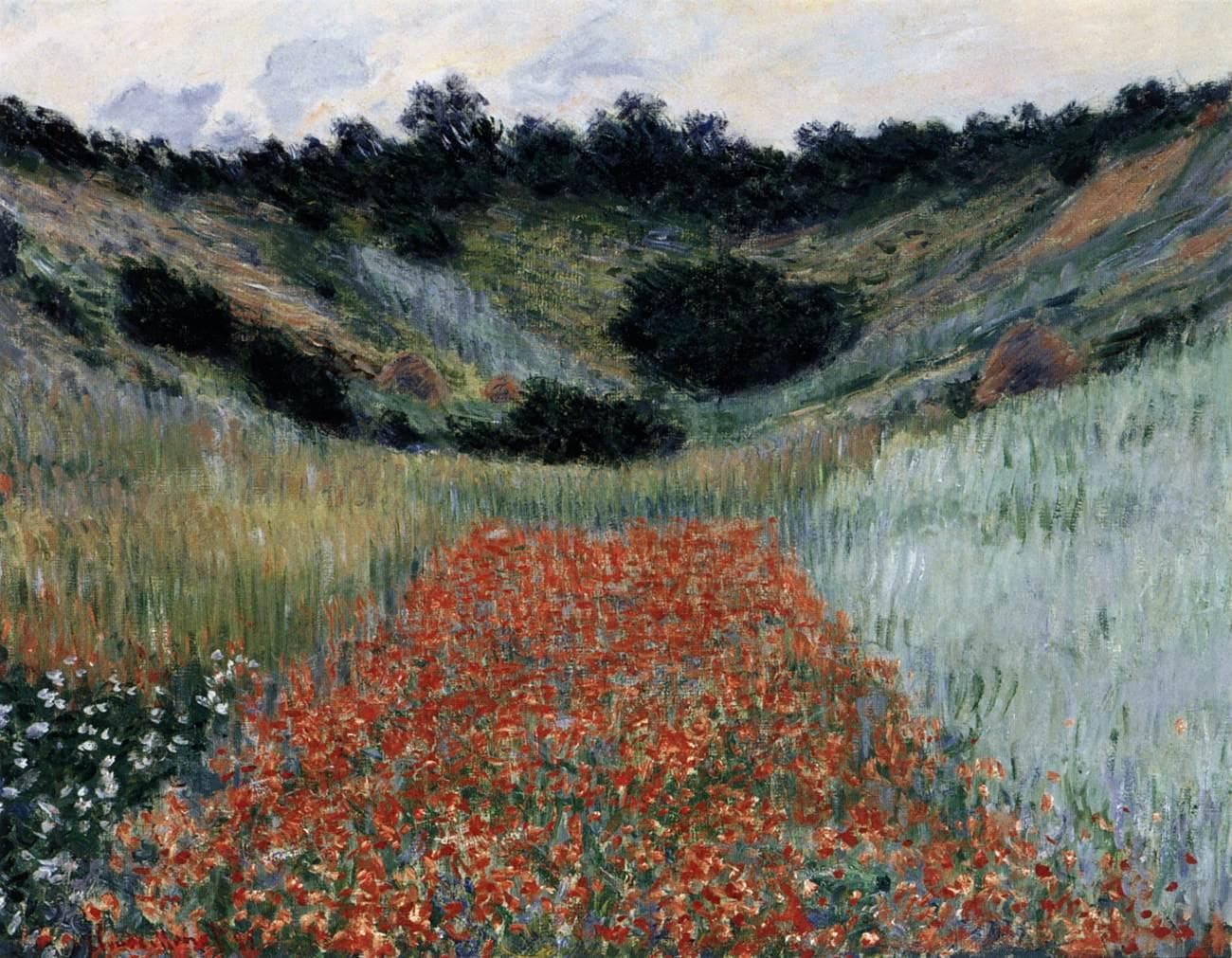
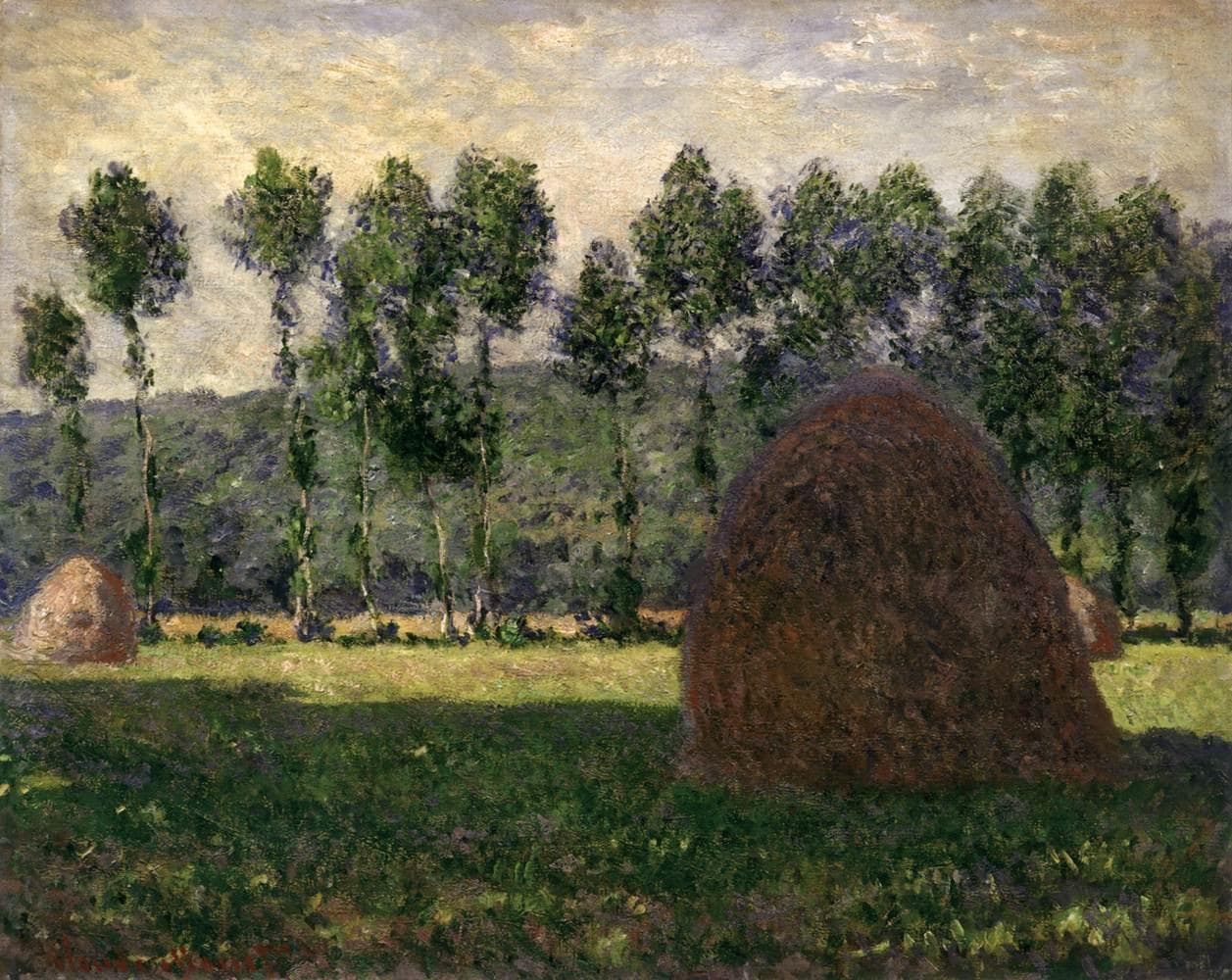
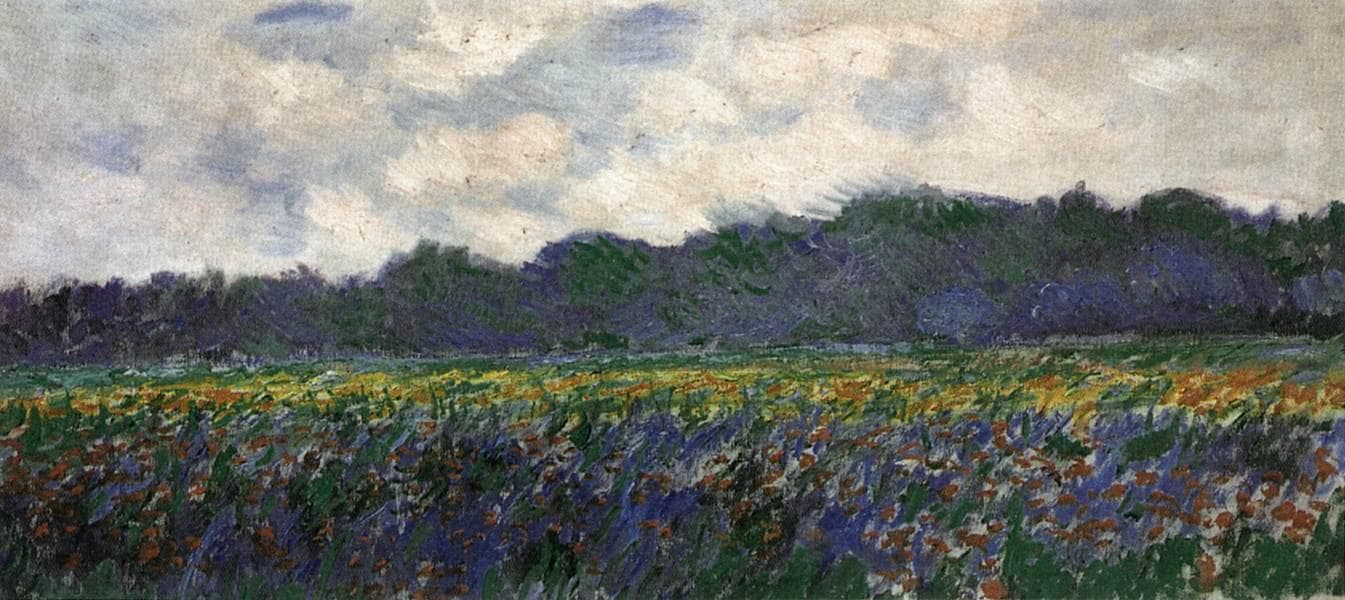
Compare Poppy Field in a Hollow near Giverny, Haystacks at Giverny, Field of Yellow Irises at Giverny and Willows in Giverny. The wider story is in Famous Monet Paintings.
Where to see it
The painting belongs to the State Hermitage Museum in Saint Petersburg, whose Impressionist galleries are in the General Staff Building.
Questions & answers
Where is Monet's Meadow at Giverny?
The 1888 Meadow at Giverny is in the State Hermitage Museum in Saint Petersburg, Russia. It came from the collection of Sergei Shchukin, which was nationalized in 1918 and later divided between the Pushkin Museum and the Hermitage in 1948.
When did Monet paint Meadow at Giverny?
Monet painted it in 1888, five years after moving to Giverny and just before he began his famous series of Grainstacks and Poplars. It is an oil on canvas measuring about 93 × 82 cm.
Is there more than one Meadow at Giverny by Monet?
Yes. Monet painted the meadows around Giverny many times. A different canvas titled Meadow at Giverny, dated 1886, is in the Museum of Fine Arts, Boston. The 1888 painting described here is the one in the Hermitage.
What is special about Meadow at Giverny?
It has almost no subject: a hazy meadow, a few trees and a pale yellow sky. Monet builds it from small strokes of contrasting color, including violets and pinks in the grass, to capture summer light and atmosphere rather than describe objects.
More by the artist
Claude Monet

Bridge over a Pond of Water Lilies
Claude Monet · 1899

Woman with a Parasol – Madame Monet and Her Son
Claude Monet · 1875

Sunset in Venice
Claude Monet · 1908–12

La Grenouillère
Claude Monet · 1869

Beach in Pourville
Claude Monet · 1882

Springtime
Claude Monet · 1872

Boating on the River Epte
Claude Monet · 1890

The Seine at Asnières (Hermitage)
Claude Monet · 1873
Also painted in 1888
The same year
Kindred works
You may also study
Poppy Field in a Hollow near Giverny
Claude Monet · 1885
Haystack near Giverny
Claude Monet · 1884–89
Field of Yellow Irises at Giverny
Claude Monet · 1887
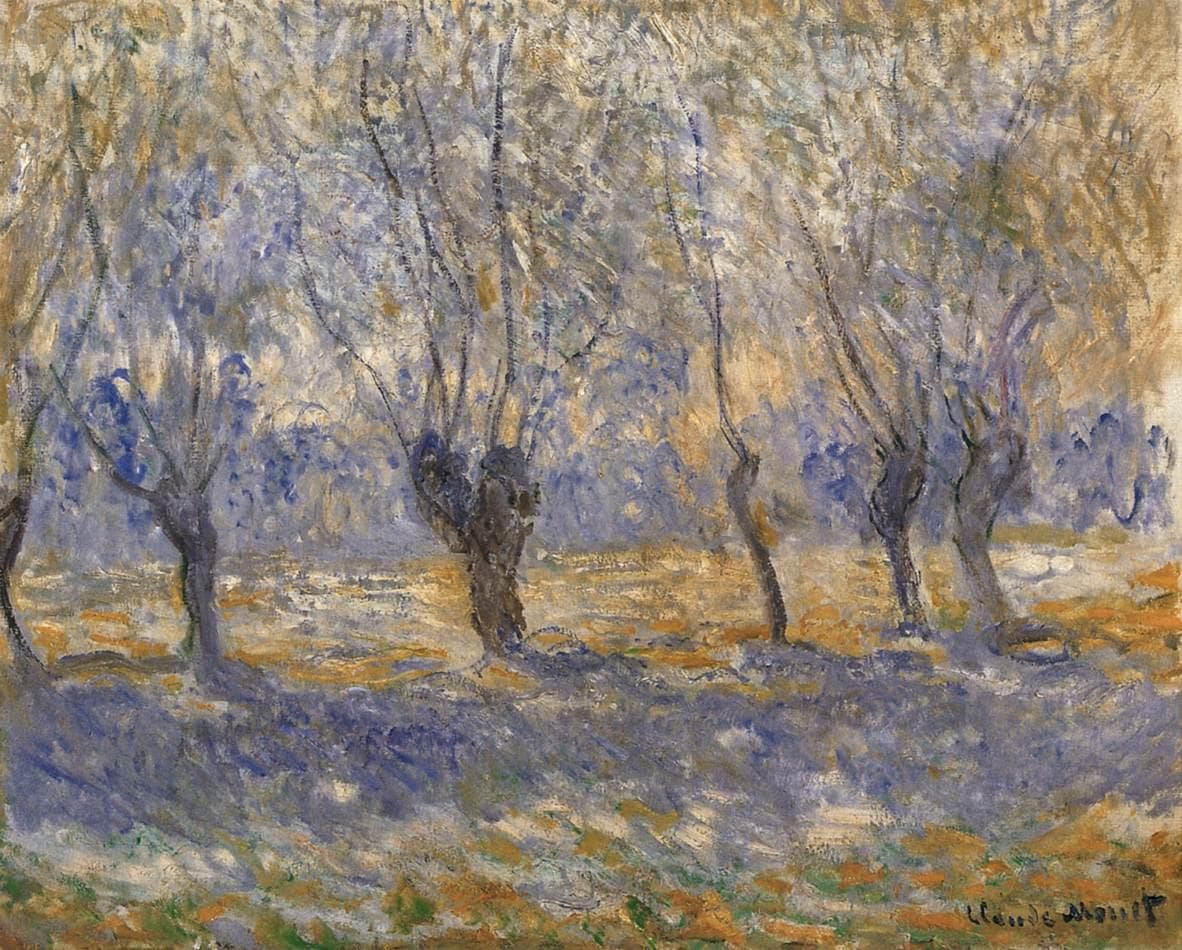
Willows at Giverny
Claude Monet · 1886
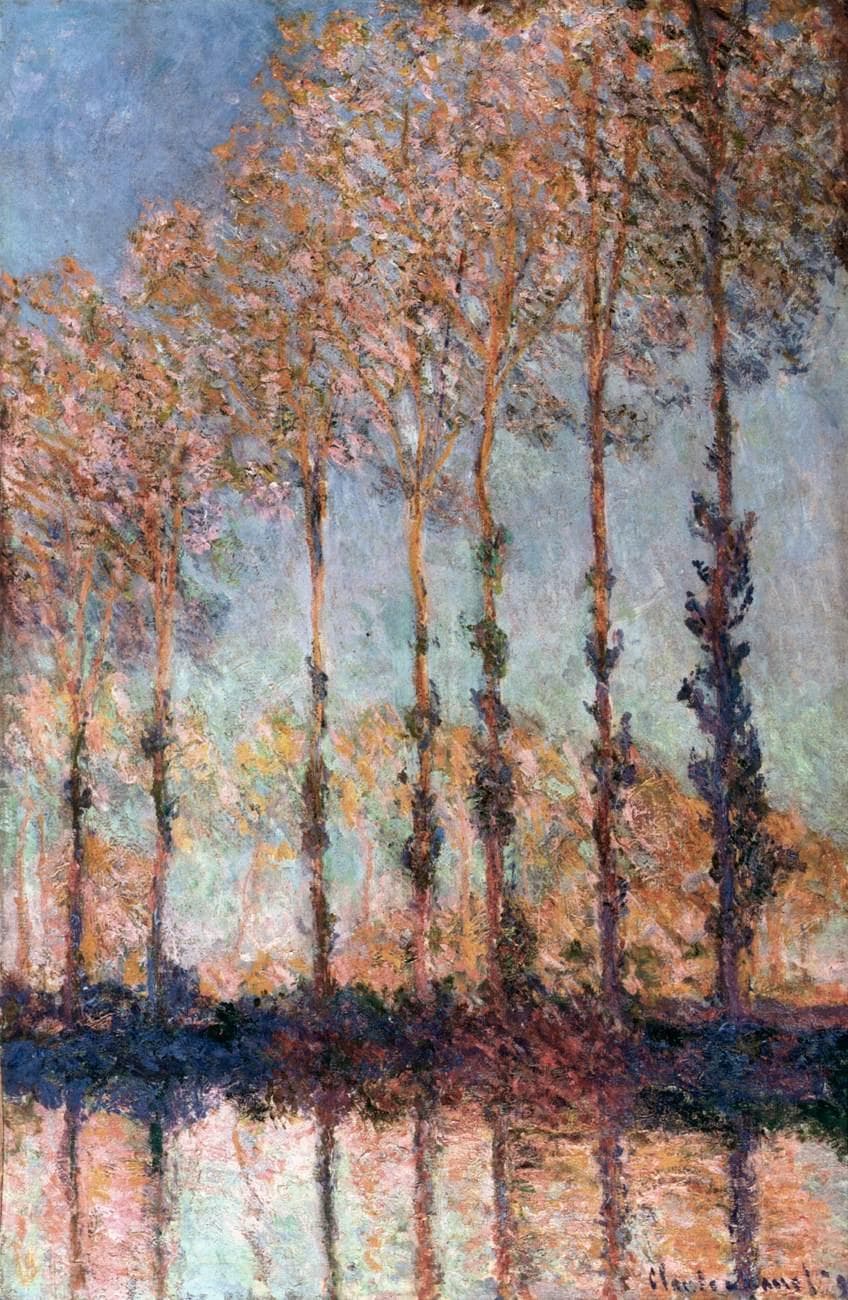
Poplars on the Banks of the River Epte
Claude Monet · 1891

The Scream
Edvard Munch · 1893

Ophelia
John Everett Millais · 1851–52

The Great Wave off Kanagawa
Katsushika Hokusai · c. 1830–32