Image: Museu de Arte de São Paulo (MASP) · Public domain · via Wikimedia Commons
Impressionism
Boating on the River Epte
Claude Monet, 1890
Boating on the River Epte is an 1890 painting by Claude Monet of two of his stepdaughters, Blanche and Suzanne Hoschedé, in a pink canoe on the dark water of the Epte at Giverny. It is in the São Paulo Museum of Art (MASP), Brazil.
- Artist
- Claude Monet
- Date
- 1890
- Medium
- Oil on canvas
- Dimensions
- 133 × 145 cm
- Collection
- São Paulo Museum of Art (MASP), São Paulo, Brazil
- Movement
- Impressionism
- Catalogue
- Wildenstein 1250
Painted at Giverny: Monet's House and Garden
Boating on the River Epte, also called The Canoe on the Epte, is a large canvas Claude Monet painted at Giverny in 1890. Two young women in white summer dresses and straw boaters sit in a long pink canoe that slides across the frame, and almost everything else is deep green-black water. The models were his stepdaughters Suzanne and Blanche Hoschedé. The painting is one of the most admired works in the São Paulo Museum of Art (MASP).
What you're looking at
The composition is unusual and bold. The canoe enters from the left edge and runs across the upper middle of the picture, cut off by the right edge, so we see only its pointed bow and the two passengers. The woman nearer the center sits facing forward, her face turned slightly away and hidden by the brim of her hat. The one at right, holding an oar, looks back over her shoulder, straight out of the picture. Her oar angles down across the water in a single long orange stroke, the brightest line in the painting.
There is no sky and no far bank. The top of the canvas is a band of overhanging foliage, blue and green leaves dotted against darkness. Below, the river fills more than half the picture. Monet paints it in long, wavy strands of dark green, violet and dull red. These are not reflections of the scene above but the weeds streaming under the surface in the current. Patches of mauve and blue at right catch a little light. The pink of the boat and the dresses, hot against all that shadow, is the light source of the picture.
Giverny and the Hoschedé daughters
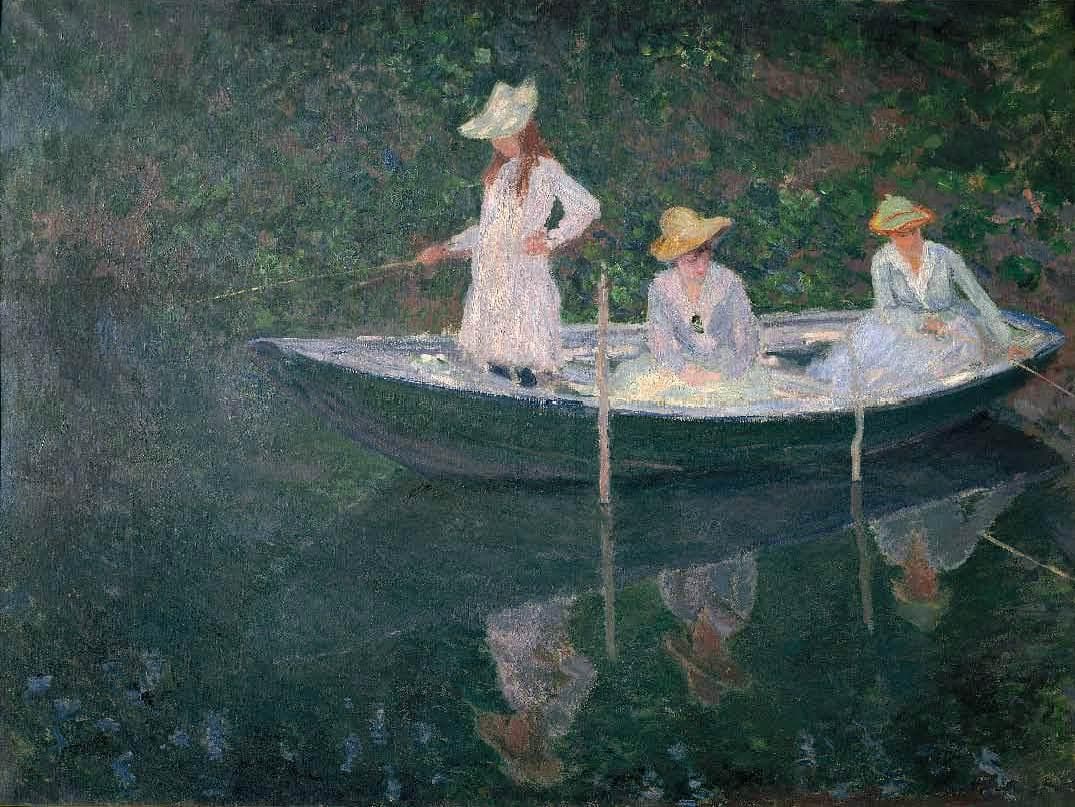
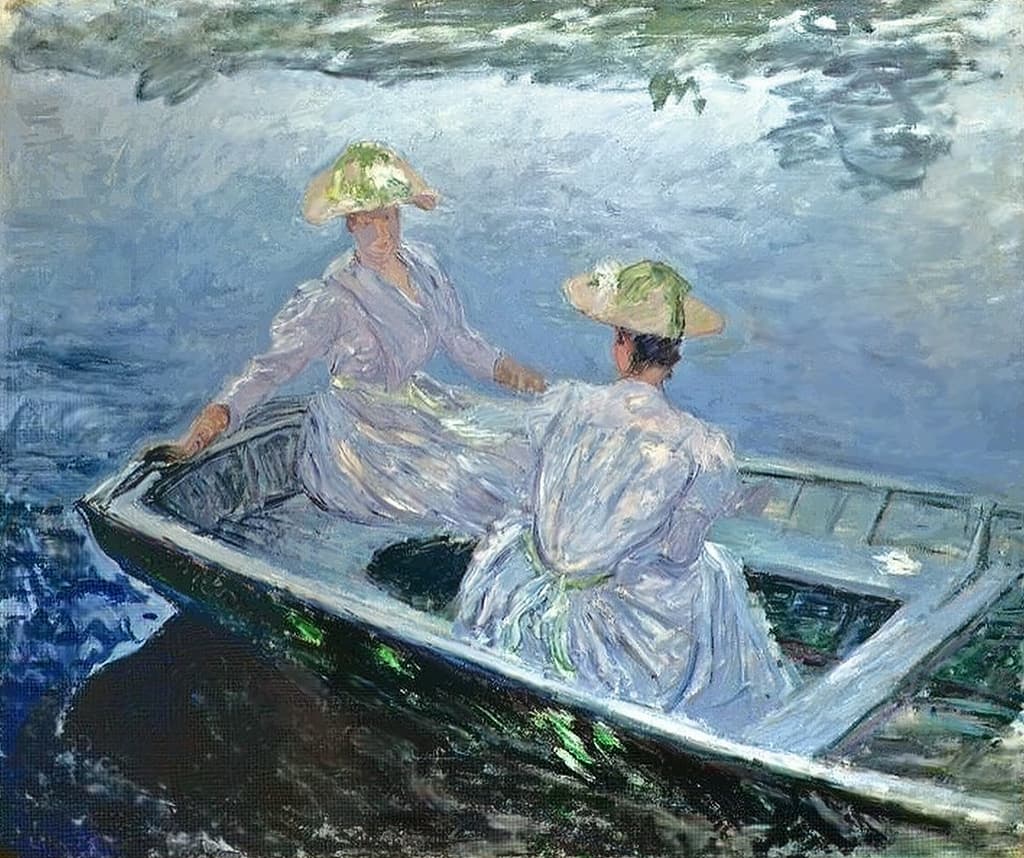
Monet had settled at Giverny in 1883 with Alice Hoschedé and her six children alongside his own two sons. The Epte, a small river that joins the Seine nearby, ran just beyond his property, and from about 1887 to 1890 he painted a run of boating pictures there, with the Hoschedé girls as models. The group includes The Boat at Giverny in the Musée d'Orsay and The Blue Boat, as well as the two figures with parasols of 1886, Woman with a Parasol, Facing Left and its pair. Monet's life and garden there are covered on Giverny: Monet's House and Garden.
How it was painted
The canvas is big, about 133 by 145 centimeters, close to square, which suits the downward, cropped view. In a letter to the critic Gustave Geffroy of 22 June 1890, Monet complained that he had once again taken on something impossible: water with grasses undulating on the bottom. That is exactly what fills this canvas. The strokes in the water are long, overlapping threads of thick paint, dragged in the direction of the current. The figures are softer and slightly blurred, as if moving. Writers on the picture have linked that framing to Monet's friendship with the photographer Nadar and to Japanese prints, notably Suzuki Harunobu's image of a woman picking lotus flowers from a boat. Those are suggestions rather than documented sources.
The idea of painting water from above, with no horizon and things seen under the surface, looks ahead to the water-garden pictures Monet began later in the decade; see the Water Lilies series.
Seen in person, the canvas is darker than most reproductions suggest, and the pink of the boat glows out of the gloom. The scale also matters: the figures are close to life size, which makes the cropped composition feel immediate.
A Monet in Brazil
The painting entered the São Paulo Museum of Art in the early 1950s, during the period when its founders, Assis Chateaubriand and Pietro Maria Bardi, were assembling a collection of European art in postwar Europe. It remains one of the museum's best-known pictures. At MASP the collection is often displayed on Lina Bo Bardi's glass easels, so the canvas stands free in the gallery. It is one of very few major Monet paintings in South America; see where to see Monet's paintings for others.
Questions & answers
Where is Monet's Boating on the River Epte?
It is in the São Paulo Museum of Art (MASP) in Brazil, which acquired it in the early 1950s. It is one of the best-known European paintings in the museum's collection.
Who are the women in Boating on the River Epte?
They are Suzanne and Blanche Hoschedé, daughters of Alice Hoschedé, who lived with Monet at Giverny and later became his wife. The sisters posed for several of his boating pictures between 1887 and 1890.
When and where was Boating on the River Epte painted?
Monet painted it in 1890 on the Epte, the small river that runs beside his property at Giverny in Normandy. In June 1890 he wrote to Gustave Geffroy about the difficulty of painting weeds waving under the water.
Is Boating on the River Epte part of a series?
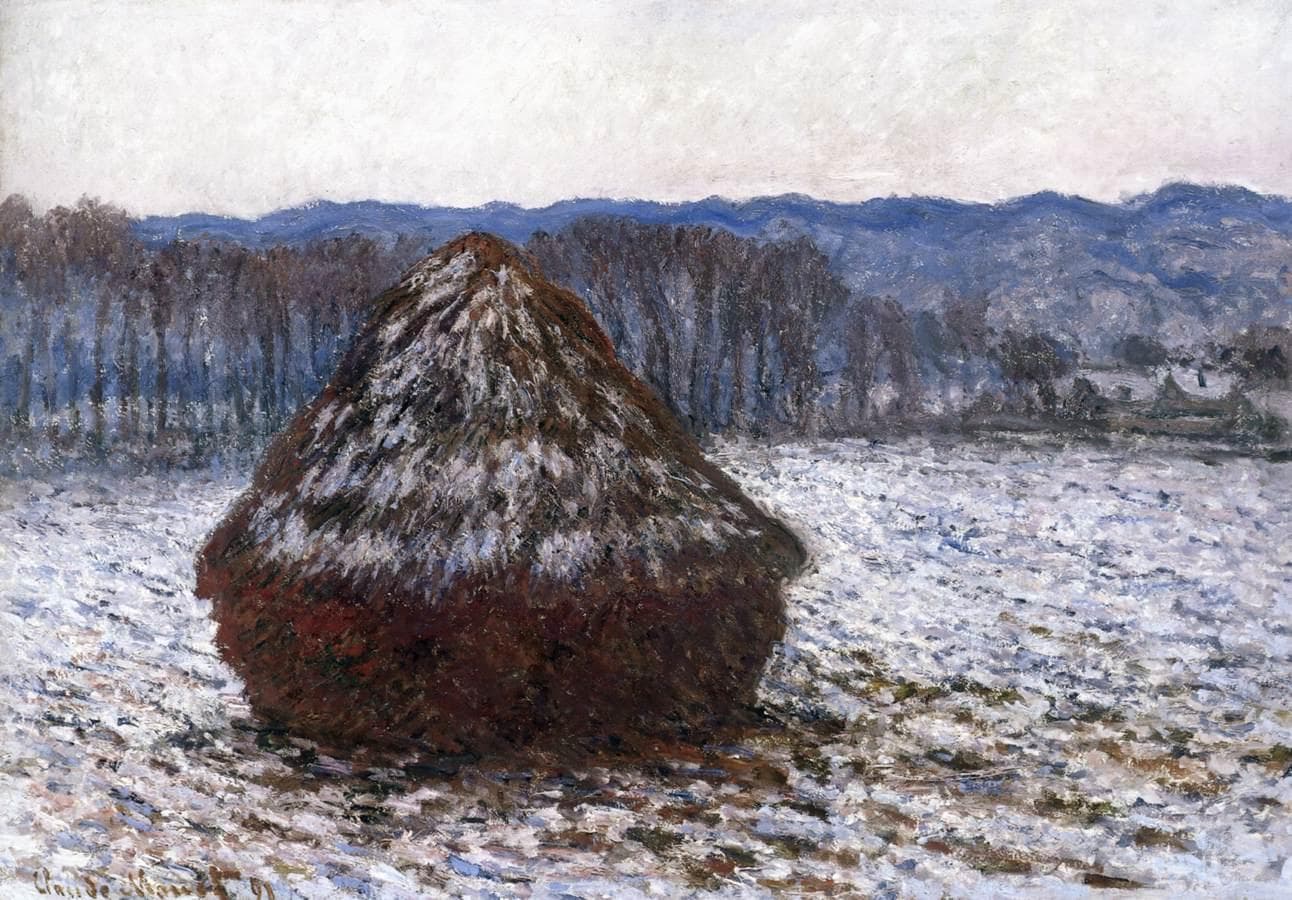
It belongs to a group of boating pictures Monet painted on the Epte from about 1887 to 1890, including The Boat at Giverny in the Musée d'Orsay and The Blue Boat. They are not a formal series like the Haystacks.
More by the artist
Claude Monet

Bridge over a Pond of Water Lilies
Claude Monet · 1899

Woman with a Parasol – Madame Monet and Her Son
Claude Monet · 1875

Sunset in Venice
Claude Monet · 1908–12

La Grenouillère
Claude Monet · 1869

Beach in Pourville
Claude Monet · 1882

Springtime
Claude Monet · 1872

The Seine at Asnières (Hermitage)
Claude Monet · 1873
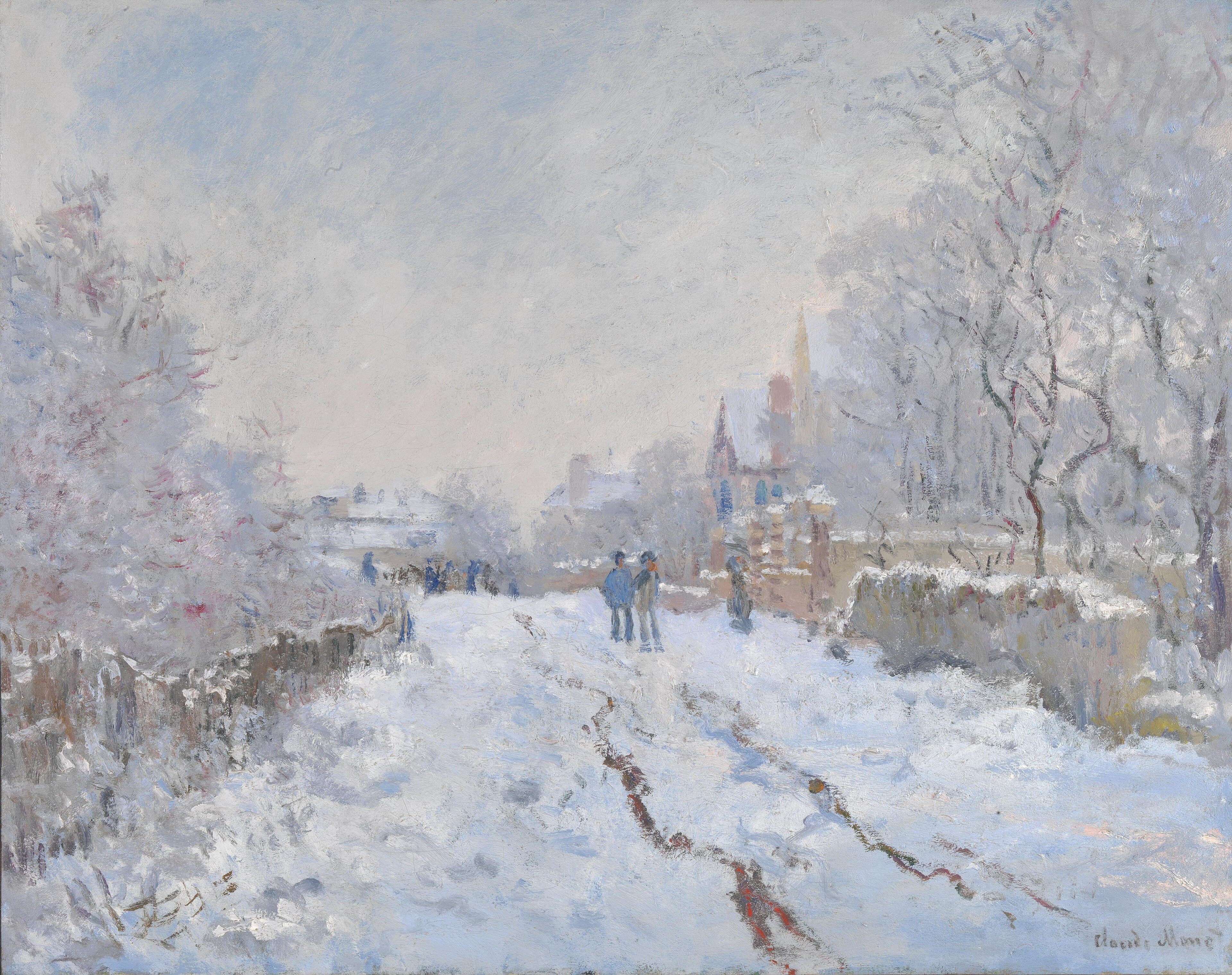
Snow Scene at Argenteuil
Claude Monet · 1875
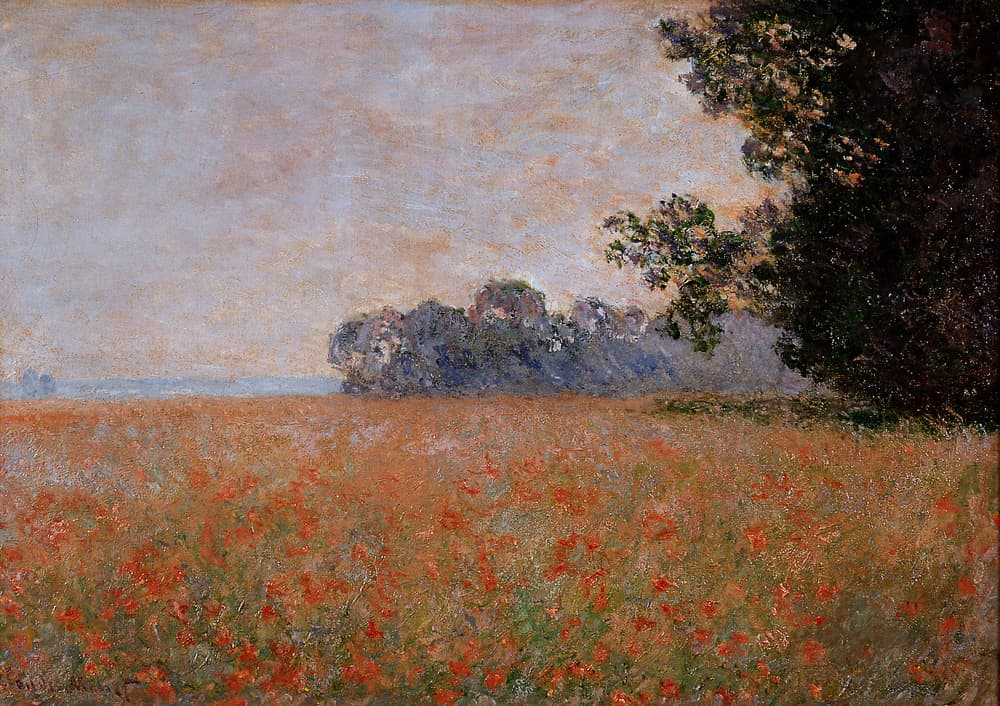
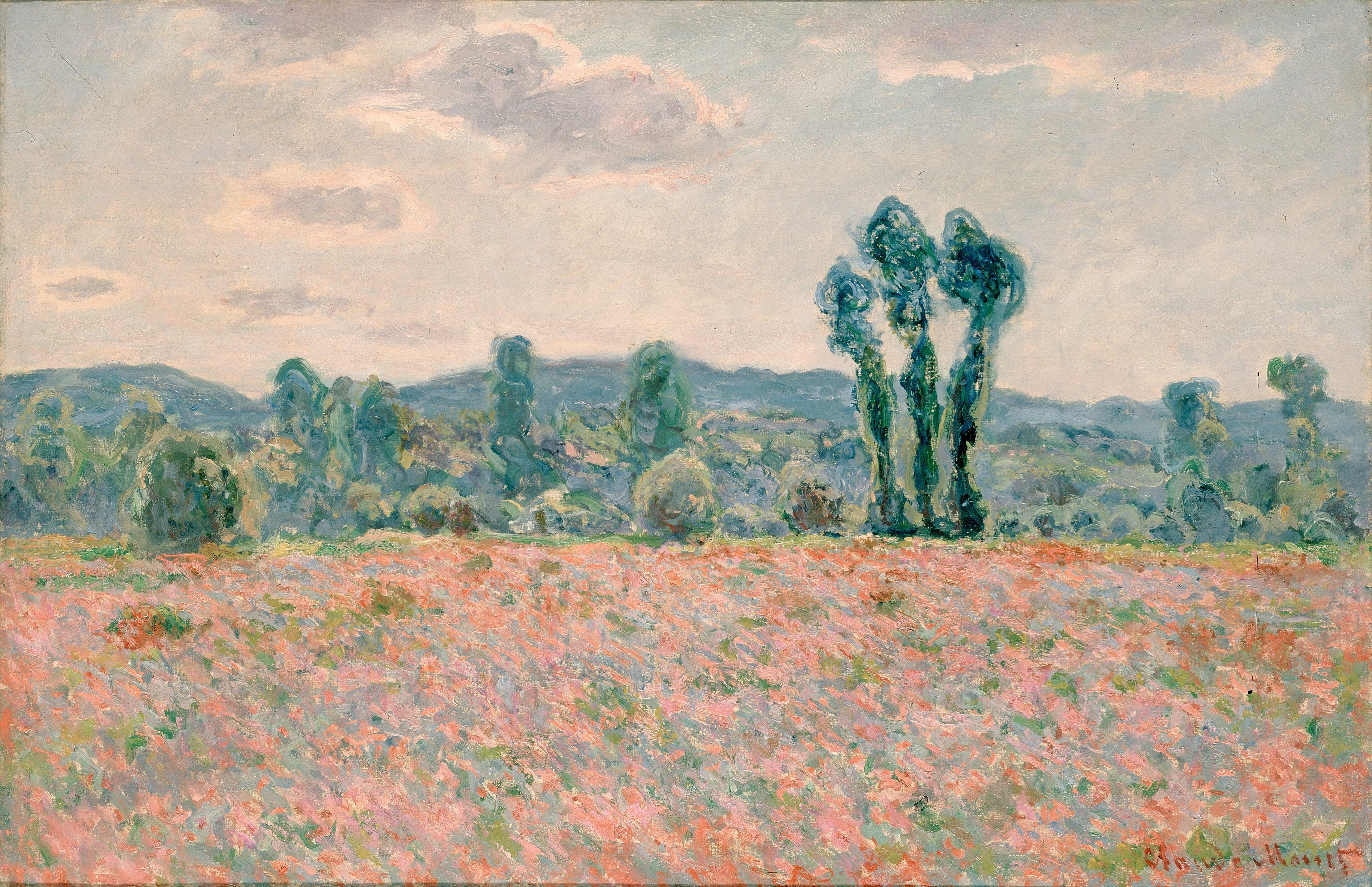
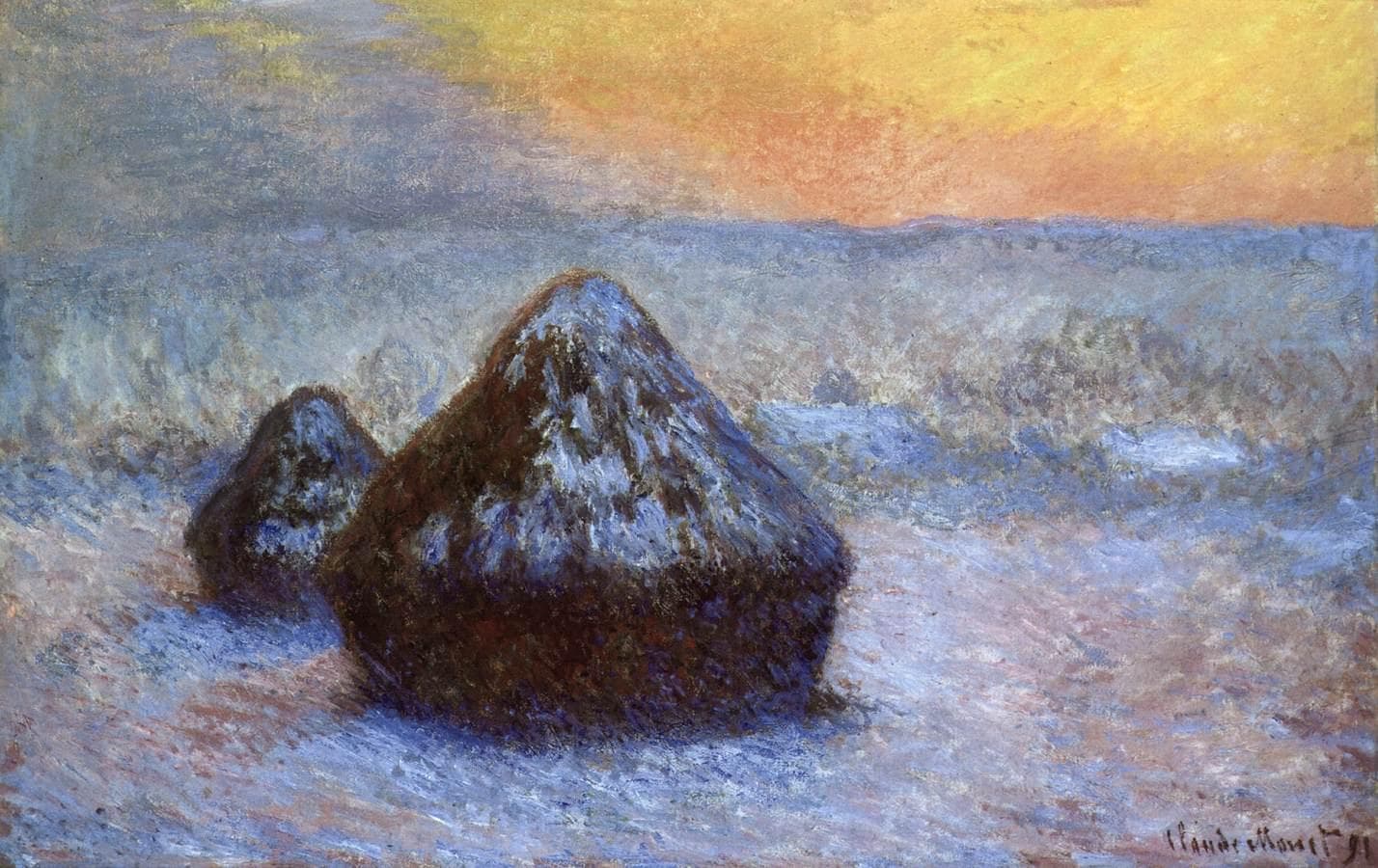
Also painted in 1890
The same year
Kindred works
You may also study
The Boat at Giverny
Claude Monet · c. 1887
The Blue Boat
Claude Monet · 1887
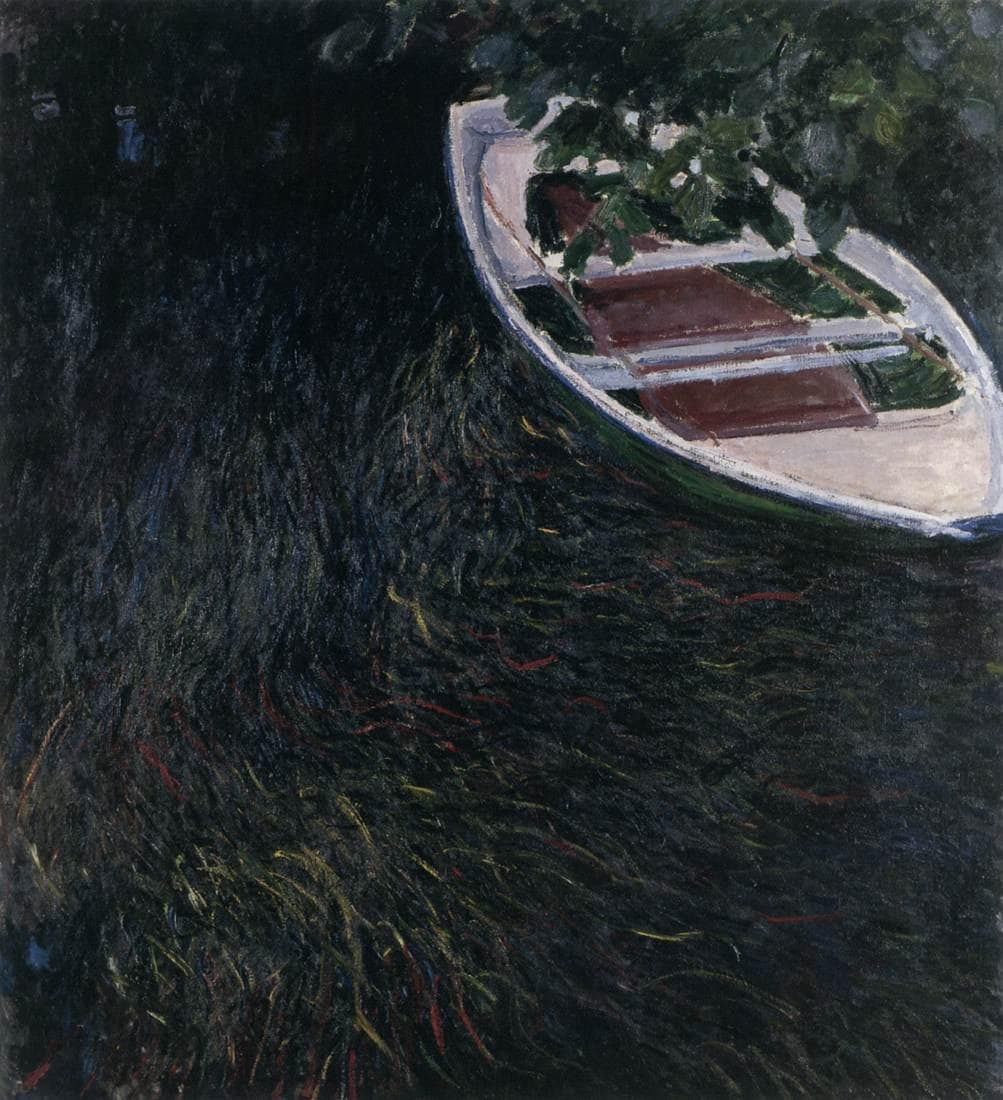
The Barque
Claude Monet · 1887
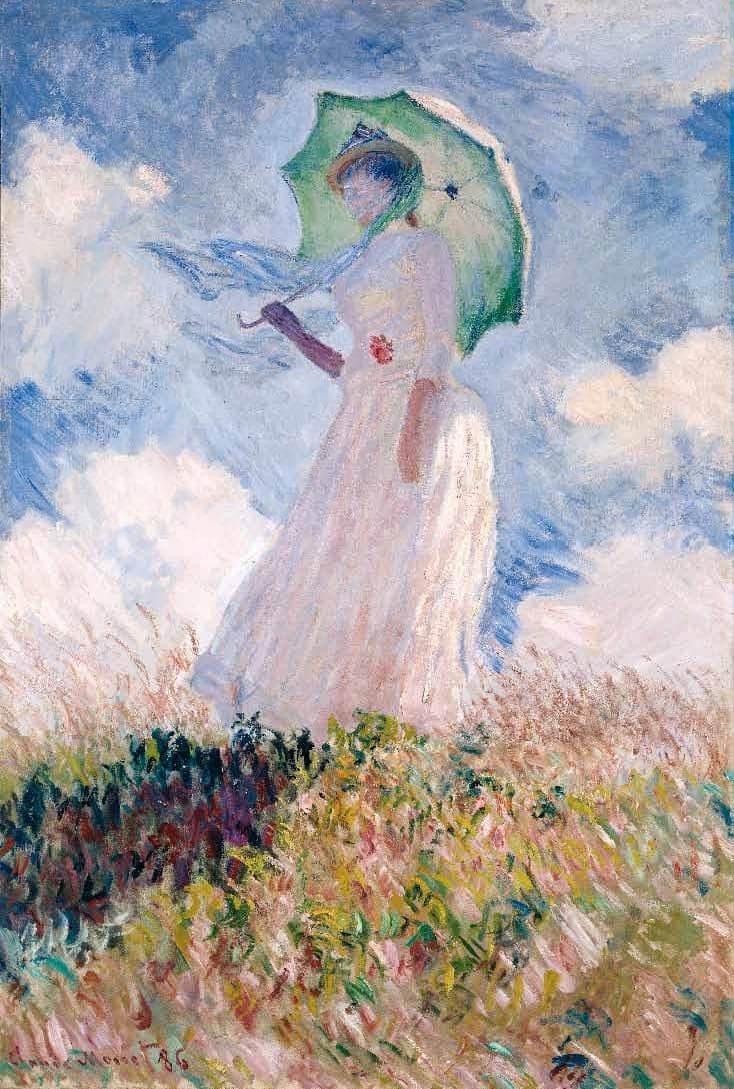
Woman with a Parasol, Facing Left
Claude Monet · 1886
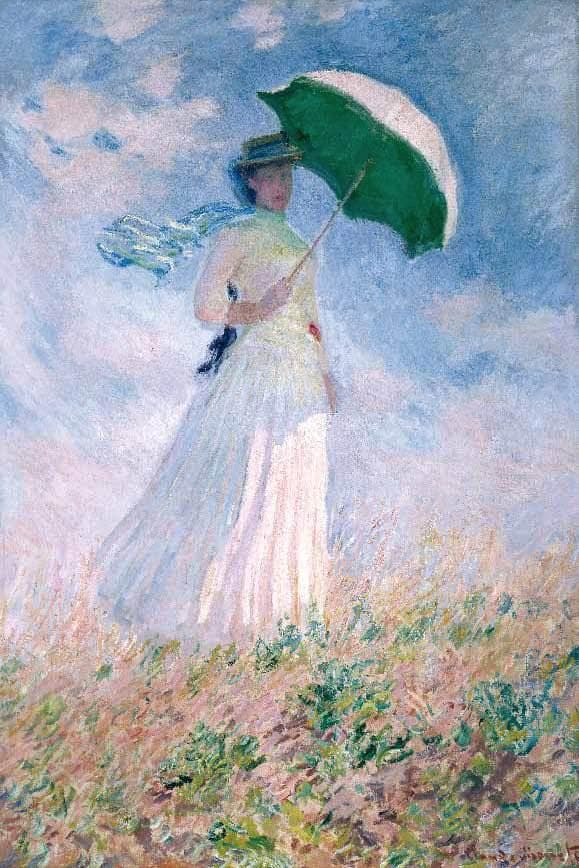
Woman with a Parasol, Facing Right
Claude Monet · 1886

Venus de Milo
Alexandros of Antioch · c. 150–125 BC

The Scream
Edvard Munch · 1893

Ophelia
John Everett Millais · 1851–52