Impressionism
Haystack near Giverny
Claude Monet, 1884–89
Haystack near Giverny is a painting by Claude Monet of wheat stacks in a meadow below a row of poplars, under a passing cloud, dated by its museum to 1884–89, before his famous series. It is in the Pushkin Museum in Moscow.
- Artist
- Claude Monet
- Date
- 1884–89
- Medium
- Oil on canvas
- Dimensions
- 64.5 × 87 cm
- Collection
- Pushkin State Museum of Fine Arts, Moscow, Russia
- Movement
- Impressionism
- Catalogue
- Wildenstein W 900
Painted at Giverny: Monet's House and Garden
Haystack near Giverny is a painting by Claude Monet of stacks of wheat in a riverside meadow below a line of poplars, made in his first years at Giverny, years before the celebrated series of 1890–91. The Pushkin State Museum of Fine Arts in Moscow, which owns it (inventory Ж-3398), dates it broadly to 1884–1889 and gives its size as 64.5 by 87 centimeters. It is number 900 in Daniel Wildenstein's catalogue, and our archive has also listed it as Haystacks at Giverny.
What does Haystack near Giverny show?
A large rounded stack stands right of center, a dome of russet, brown and violet that rises almost to the tops of the tree trunks. A smaller stack sits at the far left edge in full sun, a warm pinkish cone, and the shoulder of a third peeks out behind the big one at right.
The whole foreground lies in shadow. That is the key to the picture: a cloud is passing over the meadow, darkening the grass to deep green, violet and blue while a strip of bright yellow-green sunlight still lies across the middle ground in front of the trees. The large stack stands right at the edge between shade and sun, and its base is painted cooler and darker than its top.
Behind it, a row of tall, thin poplars marches across the canvas. Their trunks are pale lines, their crowns loose clusters of green, blue and violet dabs. Beyond them a wooded hillside, typical of the slopes that close the Seine valley around Giverny, fills the middle band in muted greens and grays. Above, a creamy sky streaked with lilac and pale blue takes up the top third.
Colors that change with the light
The museum's own description points out what the painting is about: the hot summer sun and the shadow of a cloud alter the expected colors, so that the stacks look violet and the leaves blue. Look at the big stack and you will find almost no plain brown. It is built from vertical and curving strokes of red, orange, plum and lavender, which give it bulk without any outline.
The meadow is equally mixed. In the shaded foreground, short strokes of green are flecked with yellow and violet, and at the lower left a reddish signature sits among them. The handling is that of Monet in the mid-1880s: separate, fairly thick strokes laid side by side with little blending, and foliage flicked on in small touches.
When did Monet paint it?
Monet moved to Giverny, a village on the Seine about 75 kilometers northwest of Paris, in April 1883 and rented the house he later bought. Stacks of wheat stood in the surrounding fields after every harvest, and he painted them several times in the 1880s, as in the Hermitage's Haystack at Giverny of 1886. The exact year of this canvas is uncertain: the museum gives a span of 1884–1889, and some reproductions label it 1889, while its Wildenstein number places it among his early Giverny pictures.
A forerunner of the Haystacks series
This is not part of the 1890–91 series, but it shows the motif taking shape. Here the stacks are one element in a full landscape, with trees, hills and sky, and the drama is a single passing cloud. In the series, Monet would move in close, let one or two stacks fill the canvas and record the same motif through a whole season, as in Grainstack in Sunlight and Haystacks, Snow Effect. Our Haystacks series hub follows that development.
The row of poplars points ahead too. In 1891 Monet painted the poplars along the Epte as a series of their own, in works like Poplars on the Banks of the River Epte. For the fields and meadows of these years, see also Meadow at Giverny and our page on Monet's Giverny.
Where to see Haystack near Giverny
The painting is in the Pushkin State Museum of Fine Arts in Moscow. It belonged before 1919 to the Moscow collector Ivan Morozov; after nationalization it passed to the State Museum of New Western Art, and it entered the Pushkin Museum when that museum was dissolved in 1948. The Pushkin also holds The Pyramides at Port-Coton and other Monets. For collections worldwide, see where to see Monet's paintings, and for his life, Claude Monet.
Questions & answers
Where is Monet's Haystack near Giverny?
It is in the Pushkin State Museum of Fine Arts in Moscow, inventory Ж-3398. It belonged to the collector Ivan Morozov before 1919, then to the State Museum of New Western Art, and came to the Pushkin in 1948. The canvas measures 64.5 by 87 centimeters.
When was Haystack near Giverny painted?
The Pushkin Museum dates it broadly to 1884–1889, during Monet's first years at Giverny, where he settled in 1883. Some reproductions give 1889, and its Wildenstein number, 900, places it among his early Giverny landscapes. Either way it predates the famous Haystacks series of 1890–91.
What does Haystack near Giverny show?
It shows a large wheat stack and two smaller ones in a meadow below a row of poplars, with a wooded hillside and pale sky beyond. A passing cloud throws the foreground into shadow, so the stacks look violet and the leaves blue, while a strip of sunlight lies across the middle ground.
Is this painting part of Monet's Haystacks series?
No. The series proper was painted in 1890–91 and isolates one or two stacks under changing light. This earlier canvas treats the stacks as part of a full landscape with trees and hills. It shows Monet's interest in the motif years before he turned it into his first great series.
More by the artist
Claude Monet

Bridge over a Pond of Water Lilies
Claude Monet · 1899

Woman with a Parasol – Madame Monet and Her Son
Claude Monet · 1875

Sunset in Venice
Claude Monet · 1908–12

La Grenouillère
Claude Monet · 1869

Beach in Pourville
Claude Monet · 1882

Springtime
Claude Monet · 1872

Boating on the River Epte
Claude Monet · 1890

The Seine at Asnières (Hermitage)
Claude Monet · 1873
Also painted in 1886
The same year
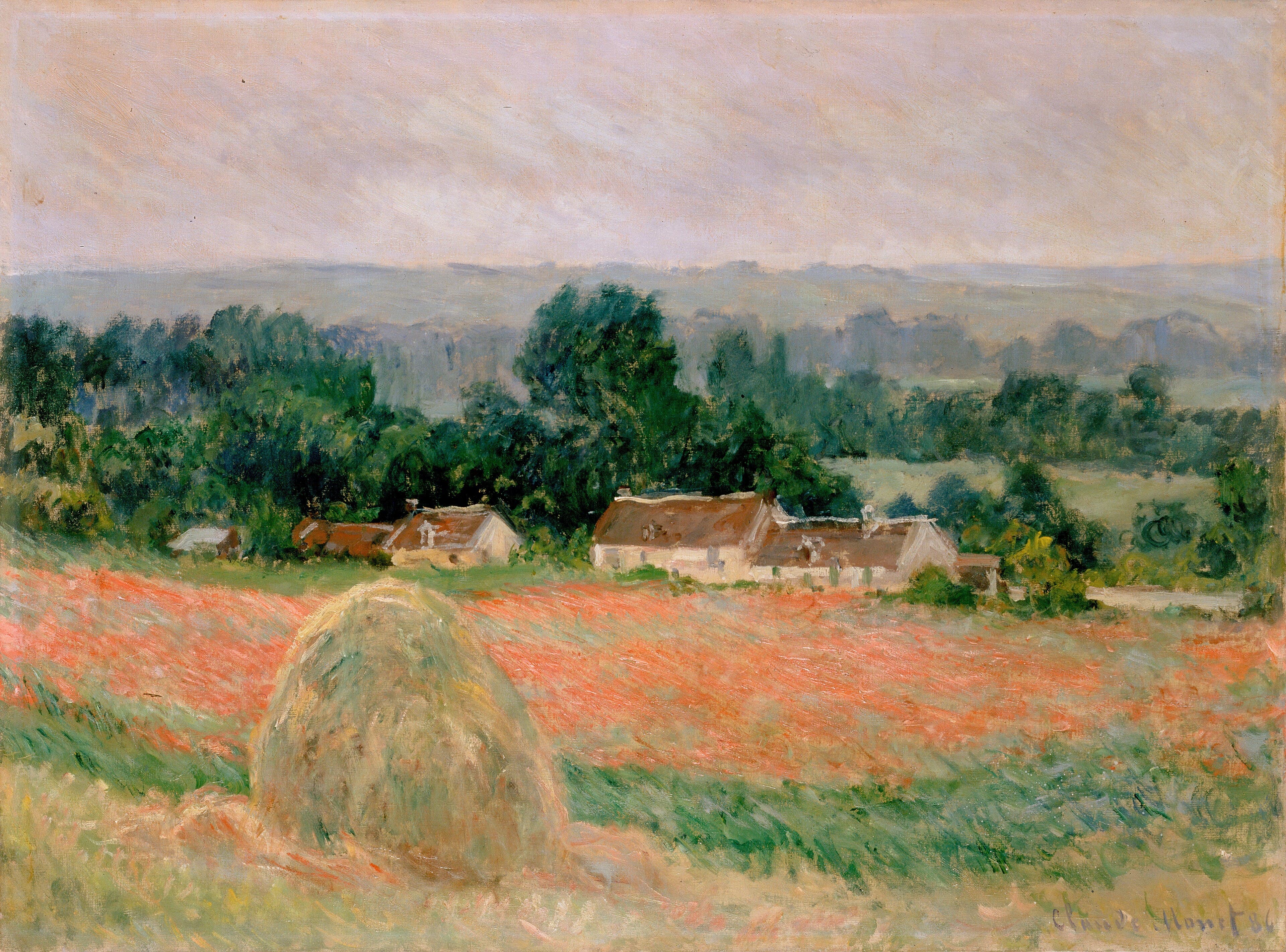
Haystack at Giverny
Claude Monet · 1886
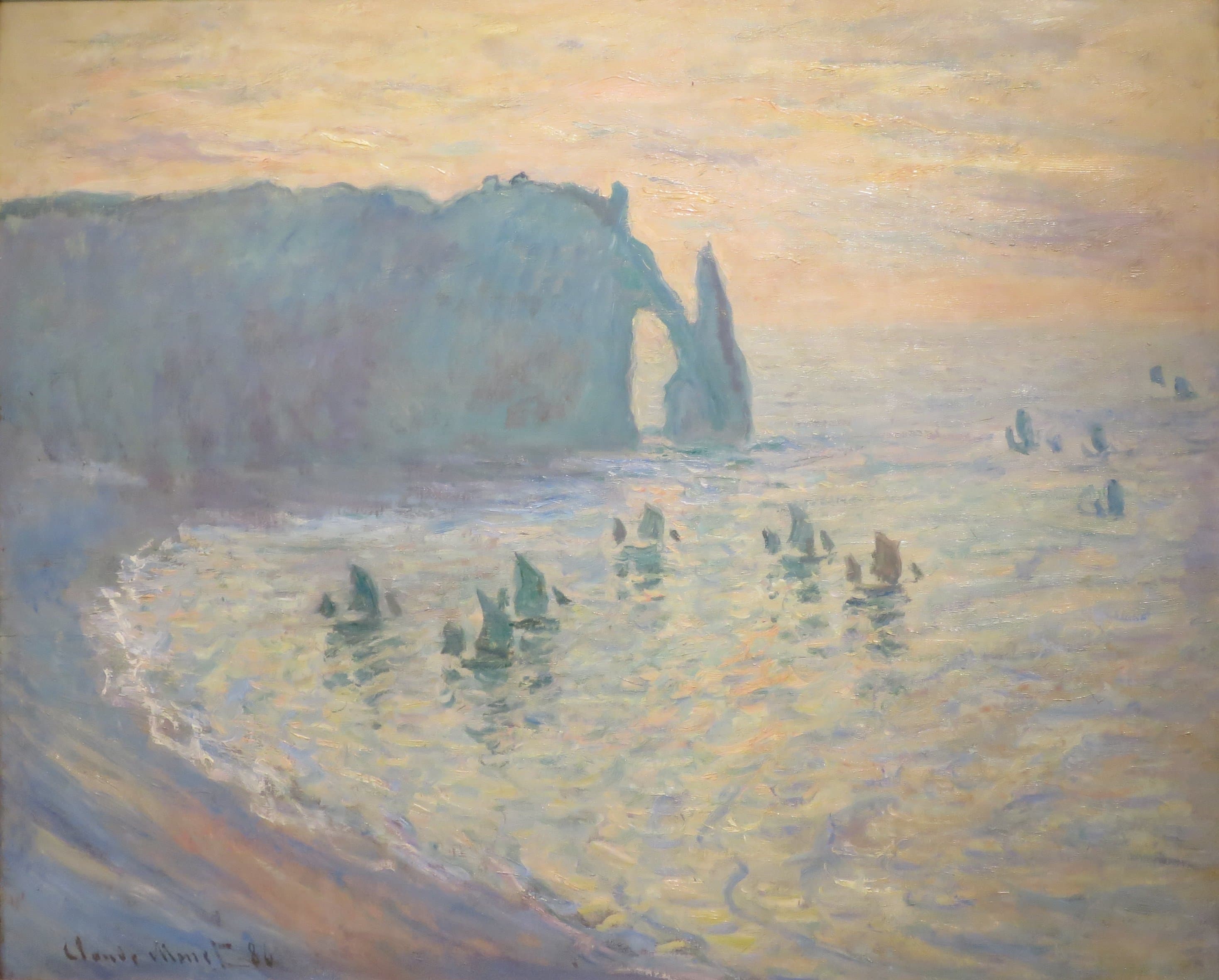
The Cliffs at Étretat
Claude Monet · 1886
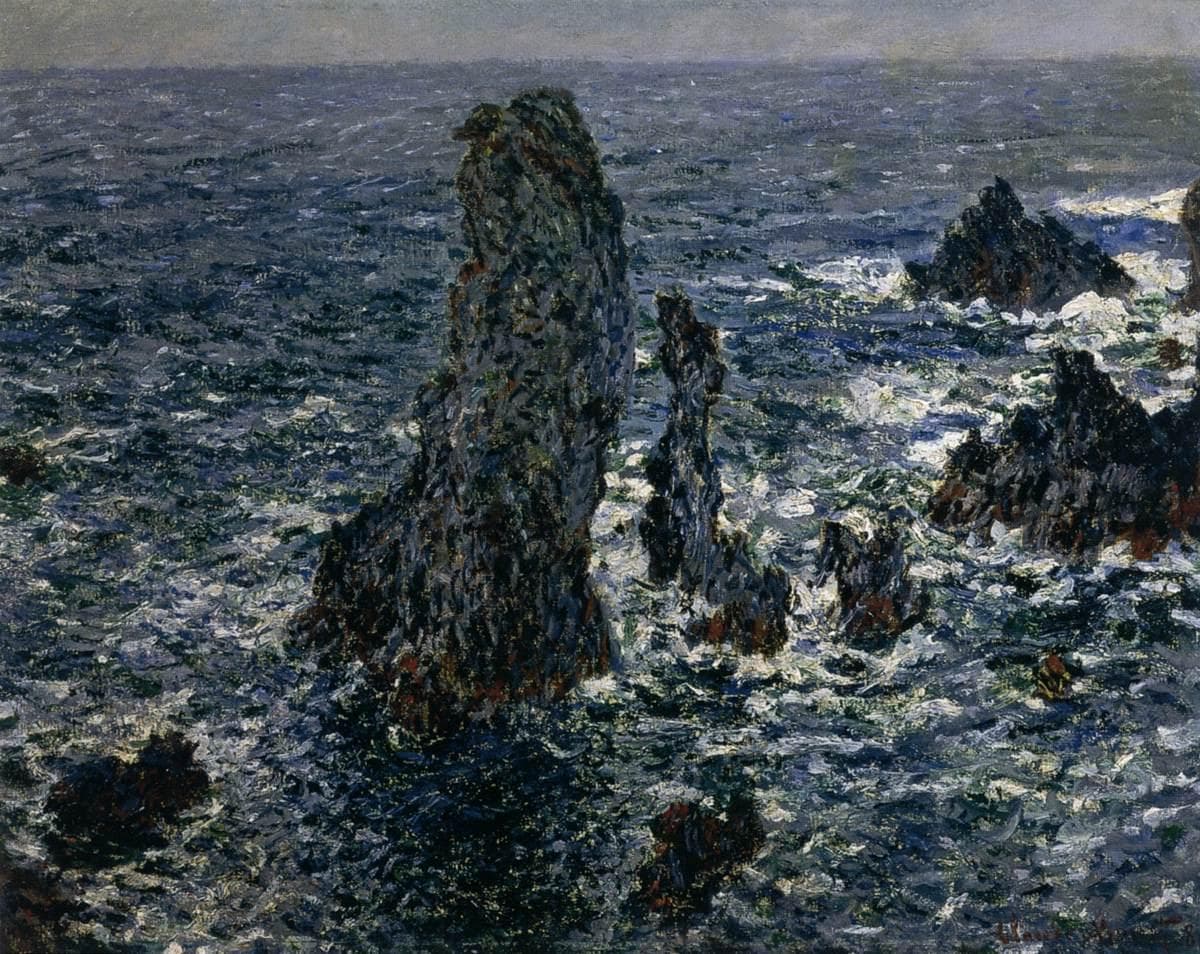
The Pyramides at Port-Coton, Rough Sea
Claude Monet · 1886
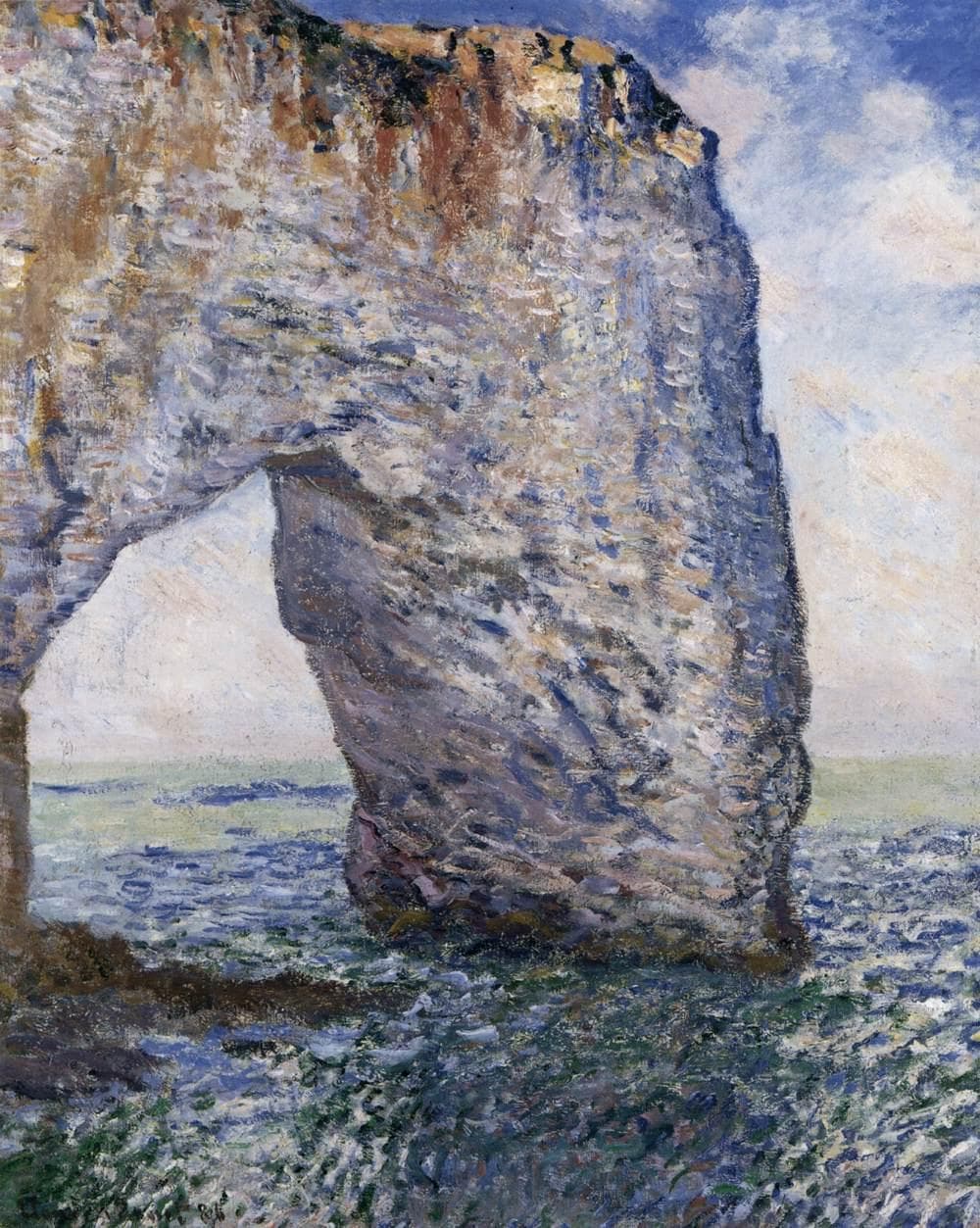
The Manneporte near Étretat
Claude Monet · 1886
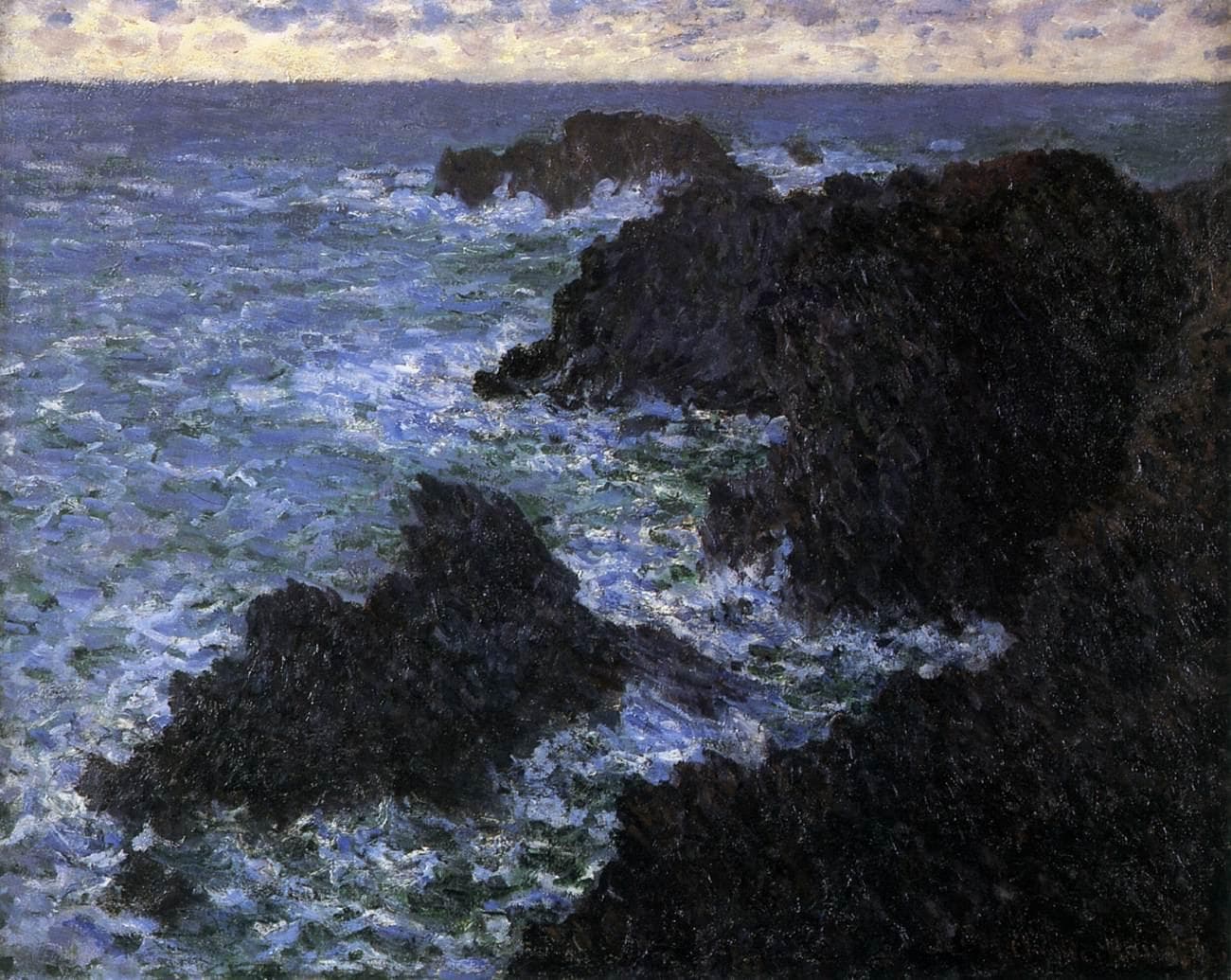
The Rocks of Belle-Île, the Wild Coast
Claude Monet · 1886
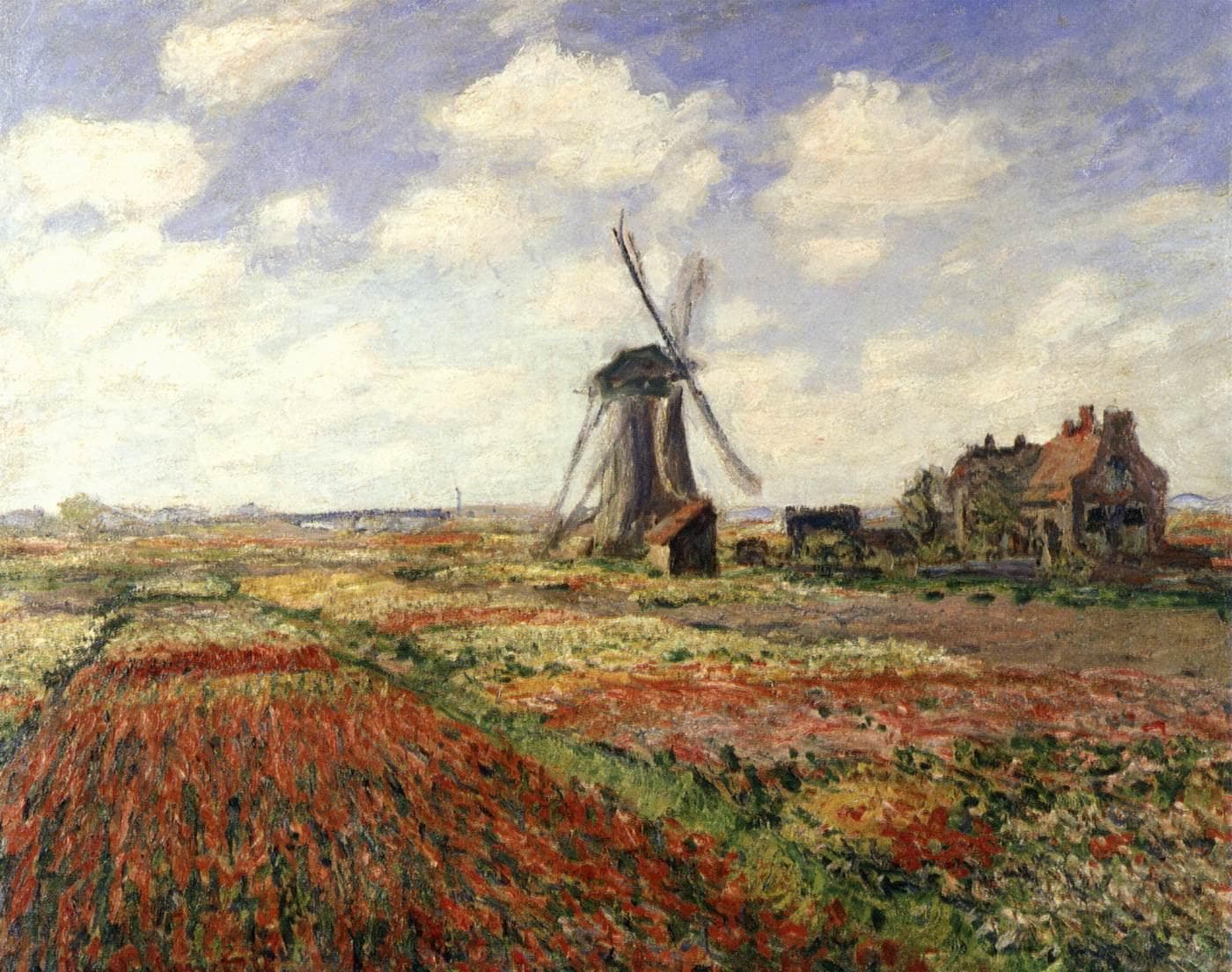
Tulip Fields in Holland
Claude Monet · 1886
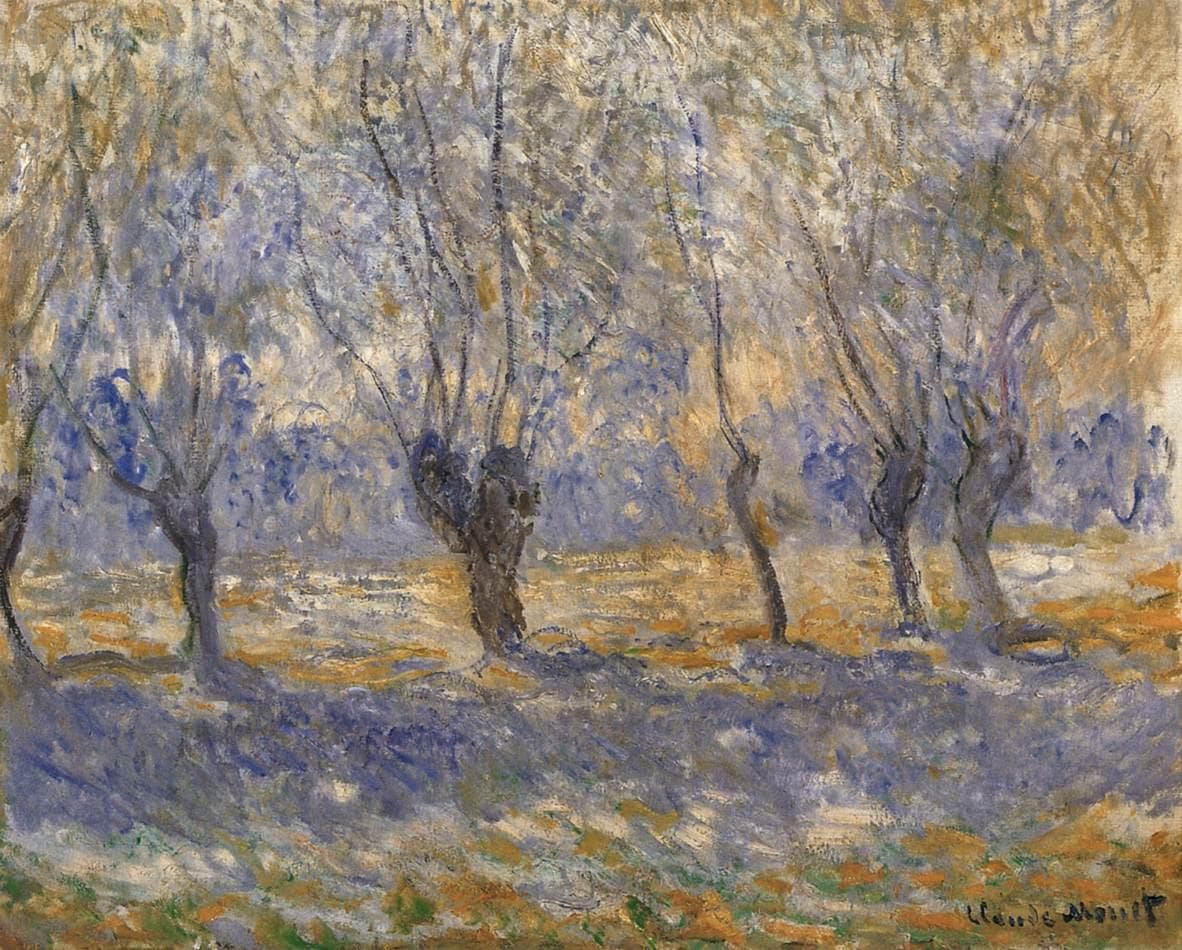
Willows at Giverny
Claude Monet · 1886
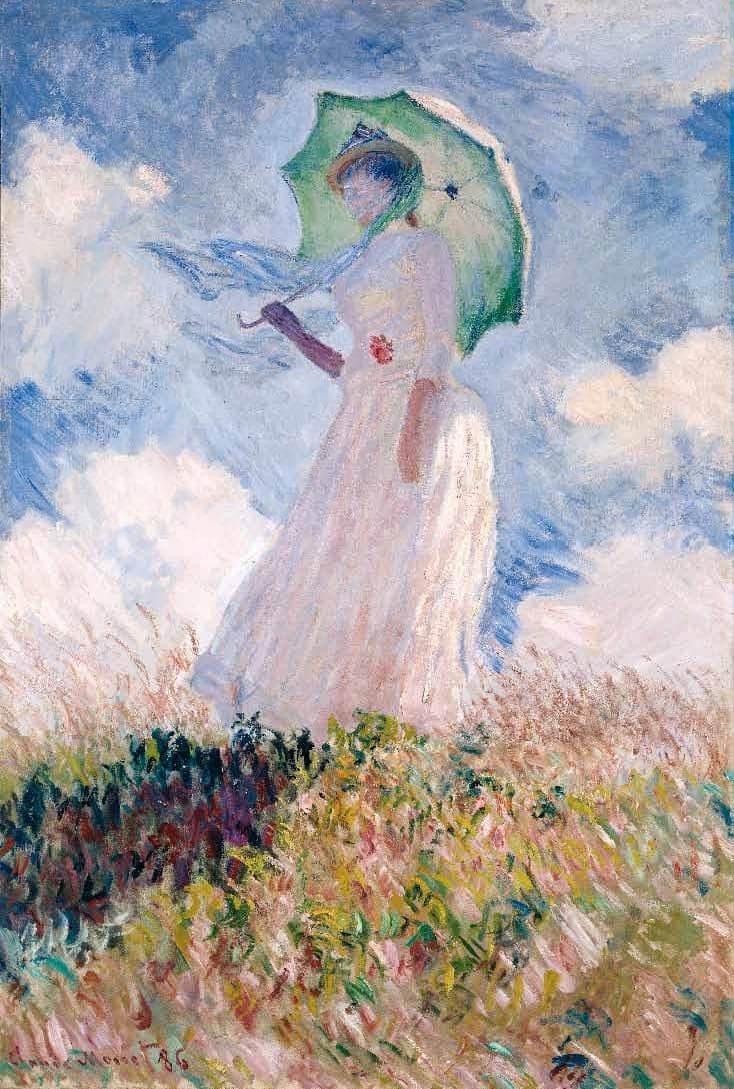
Woman with a Parasol, Facing Left
Claude Monet · 1886
Kindred works
You may also study
Haystack at Giverny
Claude Monet · 1886
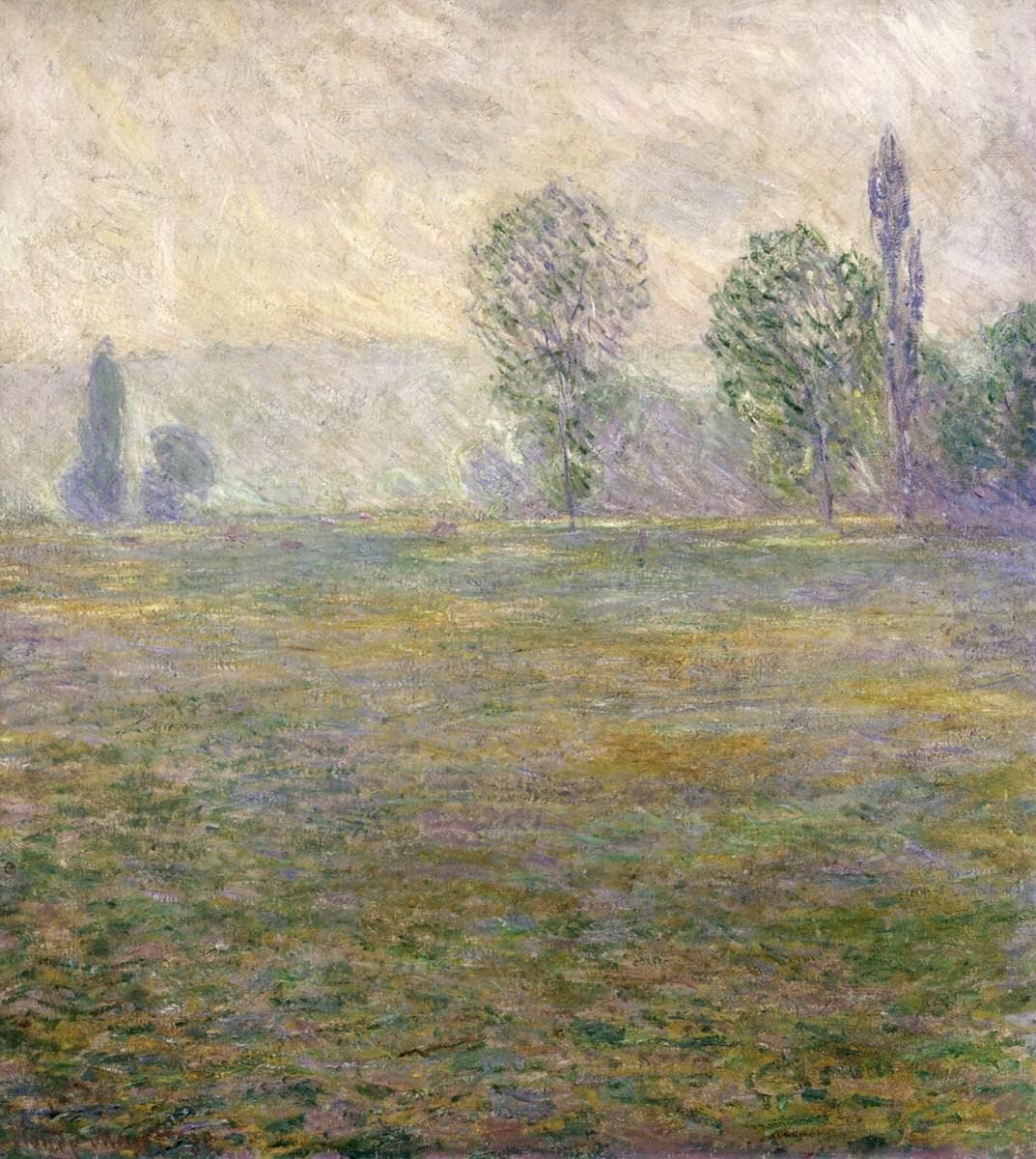
Meadow at Giverny
Claude Monet · 1888
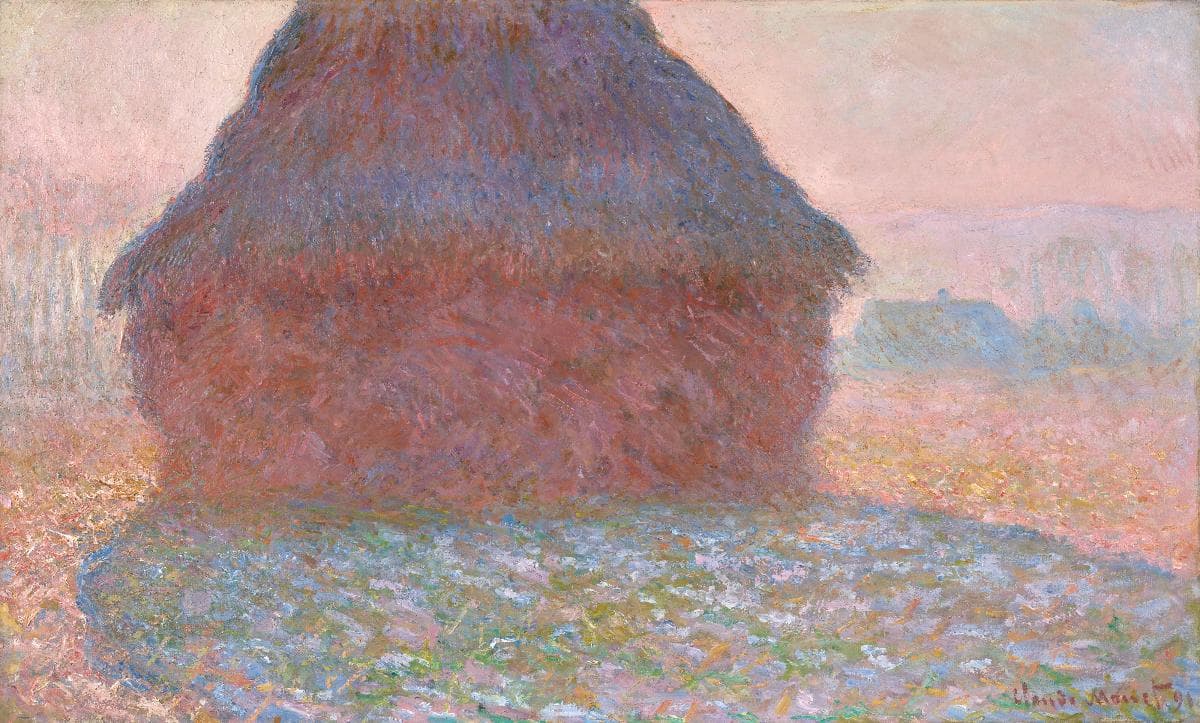
Grainstack in Sunlight
Claude Monet · 1891
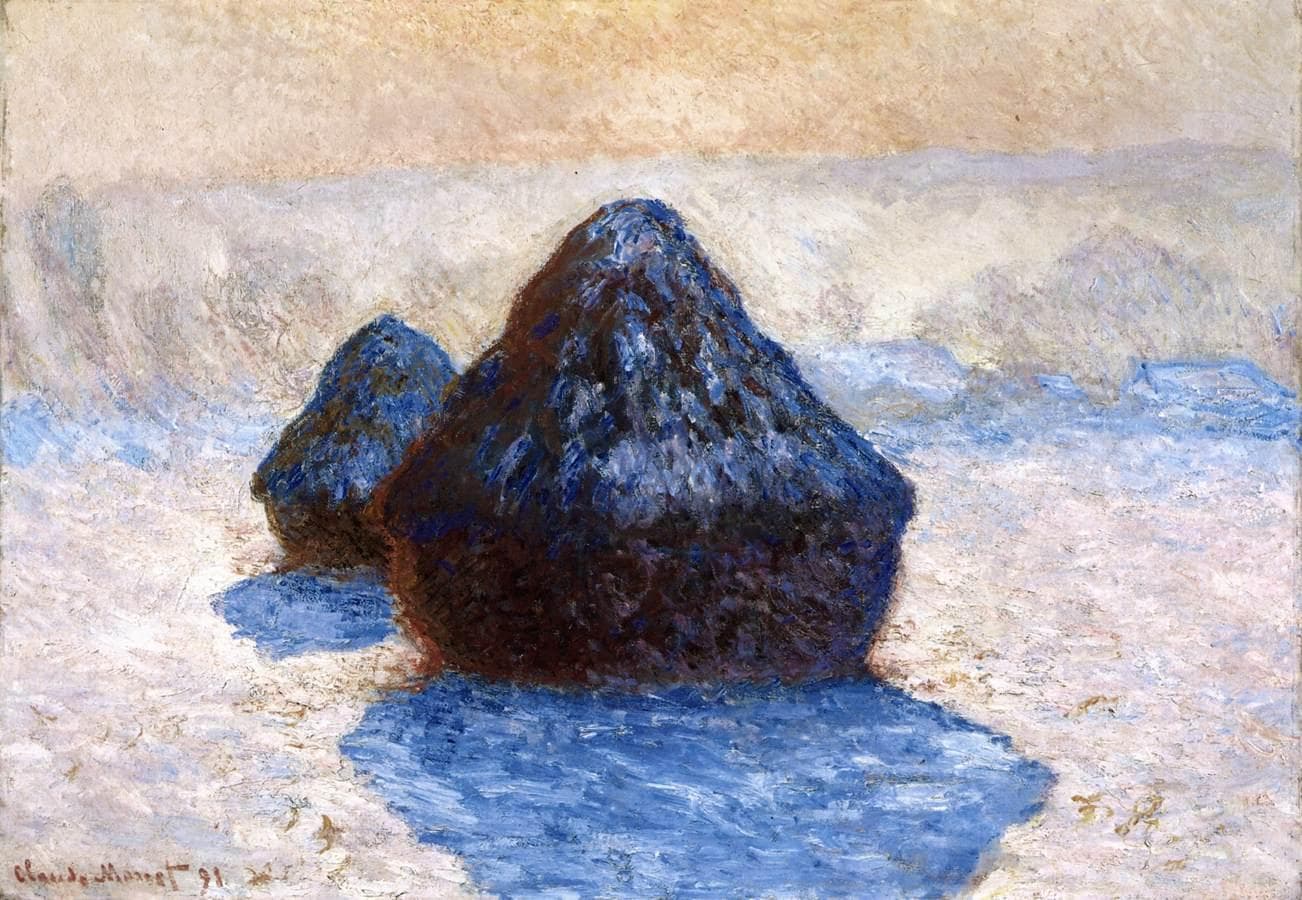
Haystacks, Snow Effect
Claude Monet · 1891
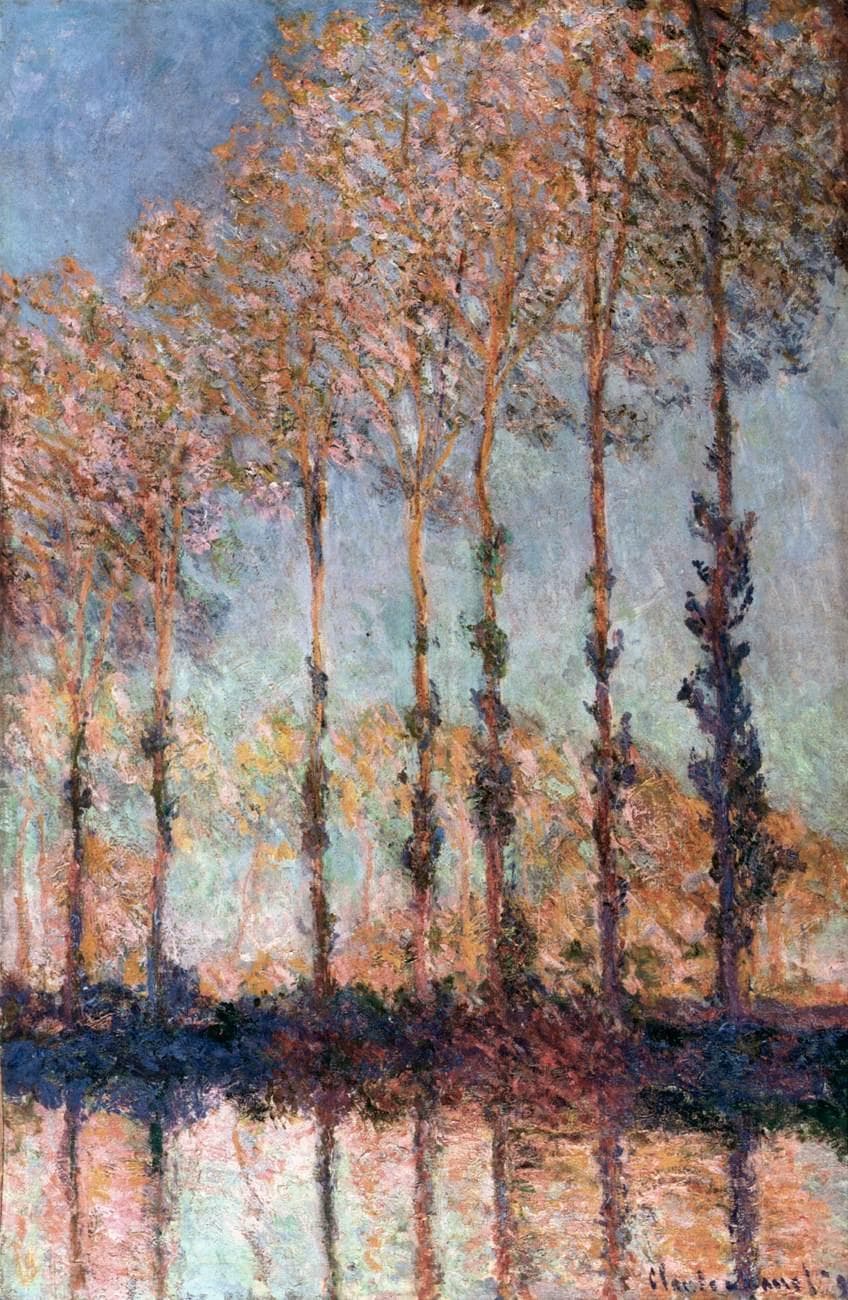
Poplars on the Banks of the River Epte
Claude Monet · 1891
Poppy Field in a Hollow near Giverny
Claude Monet · 1885

The Scream
Edvard Munch · 1893

Ophelia
John Everett Millais · 1851–52