Image: Musée d'Art moderne et contemporain de Strasbourg · Public domain · via Wikimedia Commons
Impressionism
Oat Field with Poppies
Claude Monet, c. 1890
Oat Field with Poppies (Champ d'avoine aux coquelicots) is a painting by Claude Monet of about 1890, showing a field of ripening oats scattered with red poppies near Giverny under a hazy summer sky. It is in Strasbourg's Museum of Modern and Contemporary Art.
- Artist
- Claude Monet
- Date
- c. 1890
- Medium
- Oil on canvas
- Dimensions
- 65 × 92 cm
- Collection
- Musée d'Art moderne et contemporain de Strasbourg, Strasbourg, France
- Movement
- Impressionism
- Catalogue
- Wildenstein 1258
Painted at Giverny: Monet's House and Garden
Champ d'avoine aux coquelicots, or Oat Field with Poppies, is a summer landscape Claude Monet painted around 1890 in the fields near his home at Giverny. A broad field of oats, gone gold and rose with ripeness and flecked with red poppies, runs across the lower half of the canvas. A dark tree and a clump of blue-gray woods stand at the back under a pale, heat-hazed sky. The painting has belonged to the city of Strasbourg since 1948 and hangs in its Musée d'Art moderne et contemporain (MAMCS).
What you're looking at
The picture is simple: a field, a group of trees, a sky. The field takes up the bottom half and is painted in a dense weave of short strokes in ocher, salmon, pink and dull green, the colors of oats in full sun. Poppies are scattered through it as hundreds of small dabs of vermilion. They are thickest in the foreground and thin out and shrink toward the back, which gives the field its depth. There are no figures or paths, and nothing to measure scale by except the size of the red touches.
On the right, a large tree in dark green, almost black in places, rises past the top edge, with a few lighter, sunlit branches reaching out to the left. In the middle distance a low mass of trees is painted in cool blues, lilacs and pinks, softened by haze. To its left, a thin line of blue marks the far horizon. The sky above is an even, milky surface of cream, pale pink and gray-blue, brushed over a textured ground. It feels like a hot, still afternoon in July.
Look at the lower left corner and the signature is almost swallowed by the poppies, a sign of how fully Monet wanted the field to fill the canvas.
Giverny fields, summer 1890
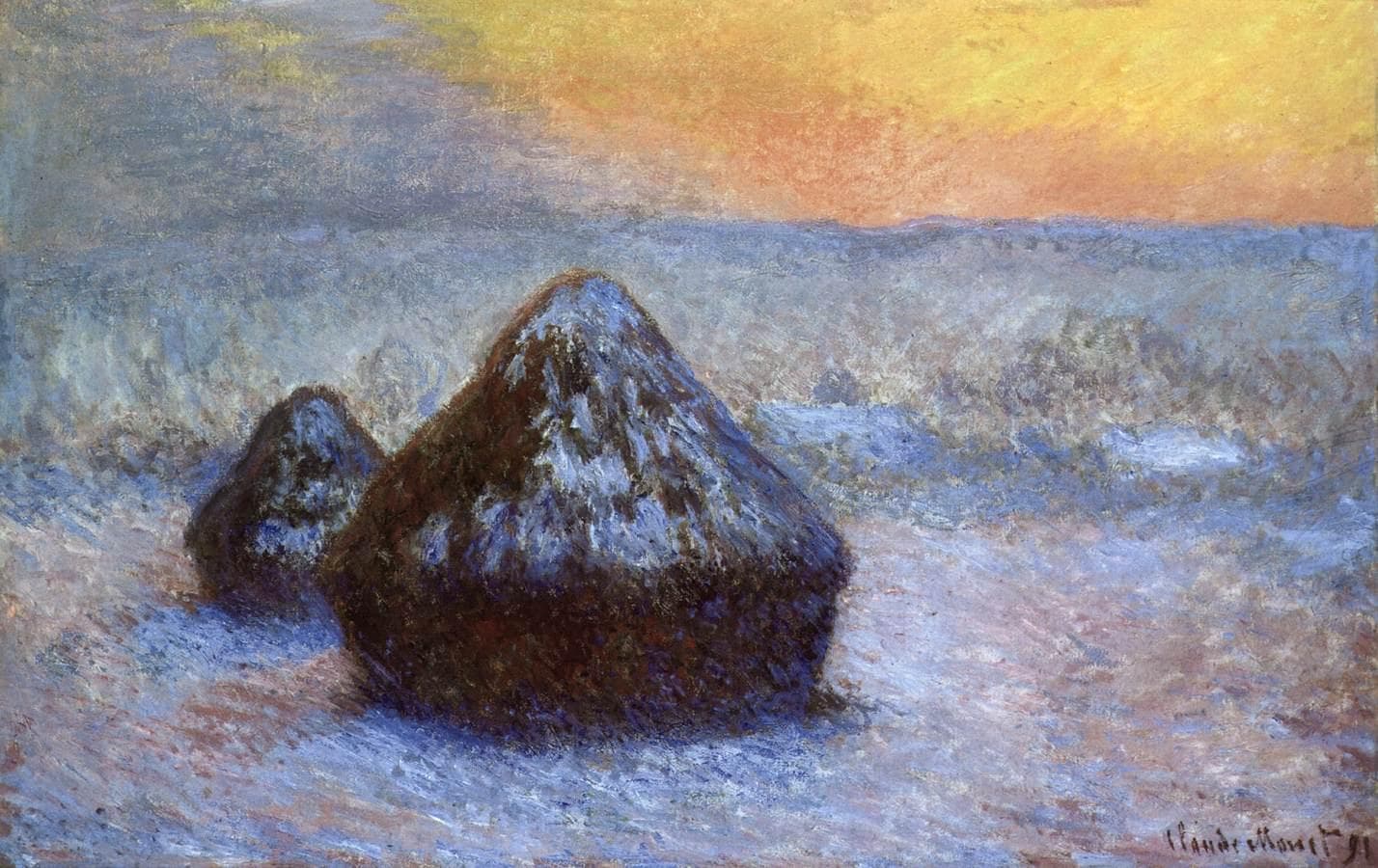
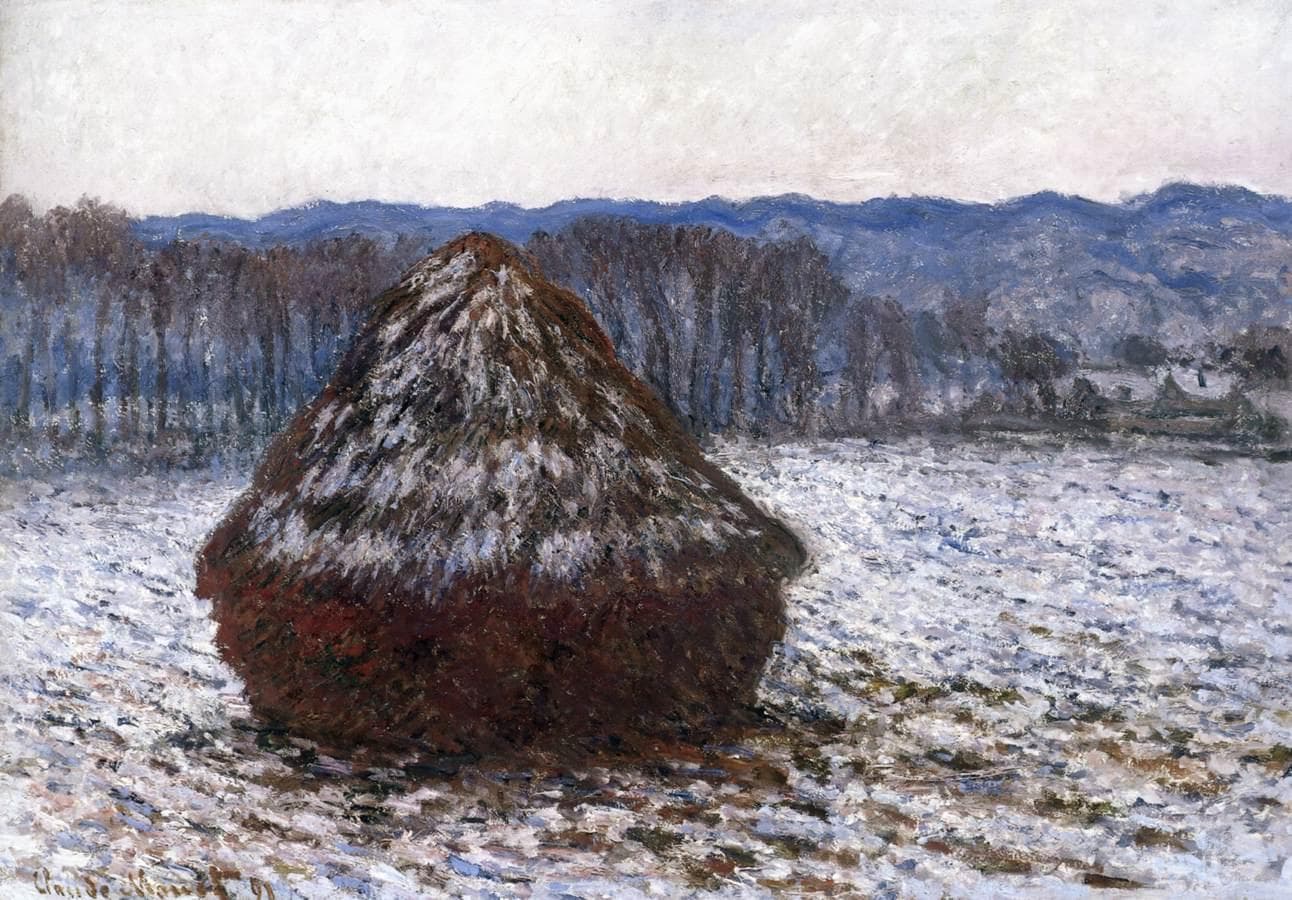
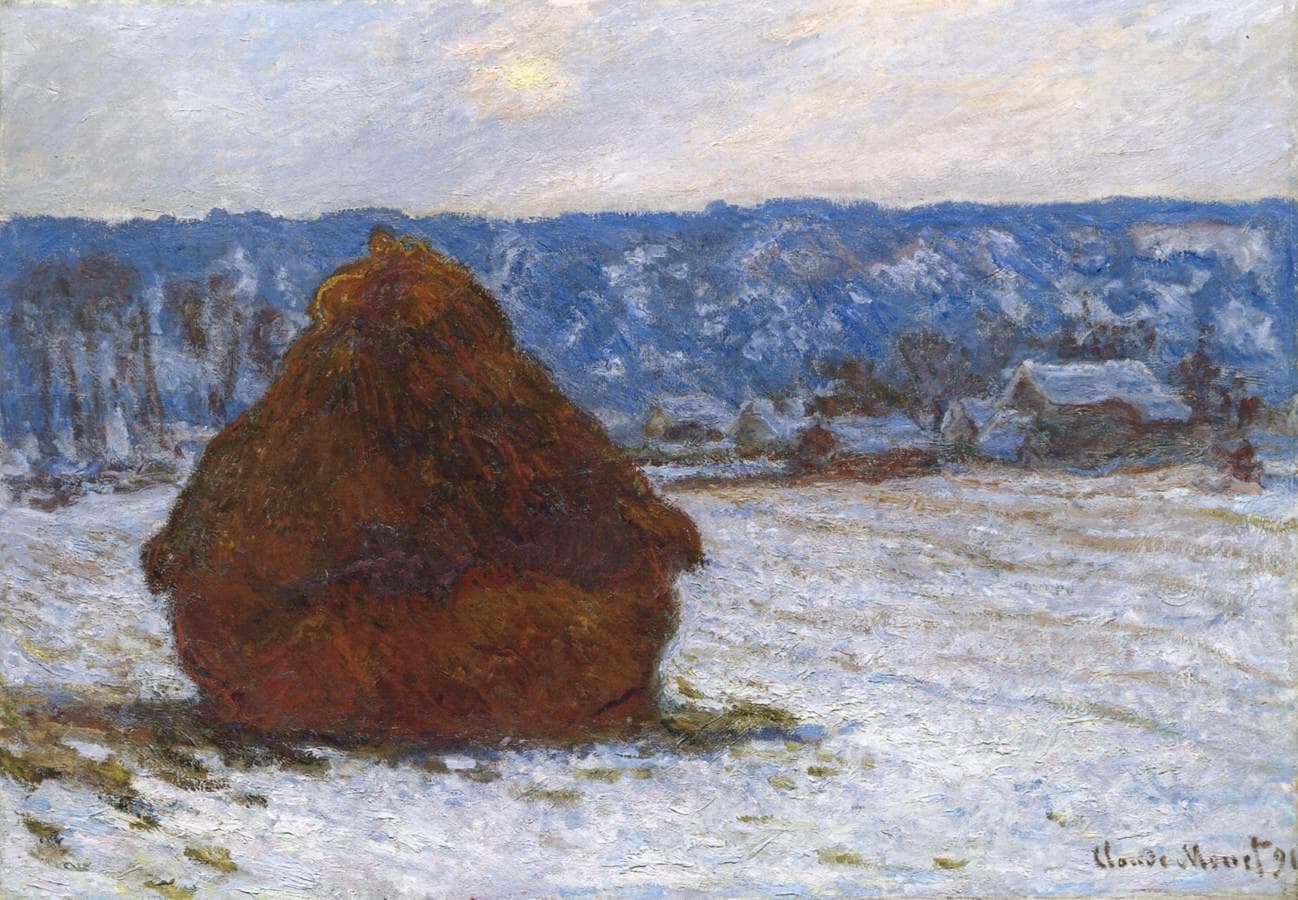
By 1890 Monet had lived at Giverny for seven years, and that autumn he bought the house he had been renting. The countryside around the village, with its meadows, poplar-lined river and cultivated fields, had become his main subject. In the summer of 1890 he painted a small group of oat and poppy fields, before turning in late summer and autumn to the grainstacks that became his first full series; see the Haystacks series. The fields and the stacks are part of the same farmland near his house.
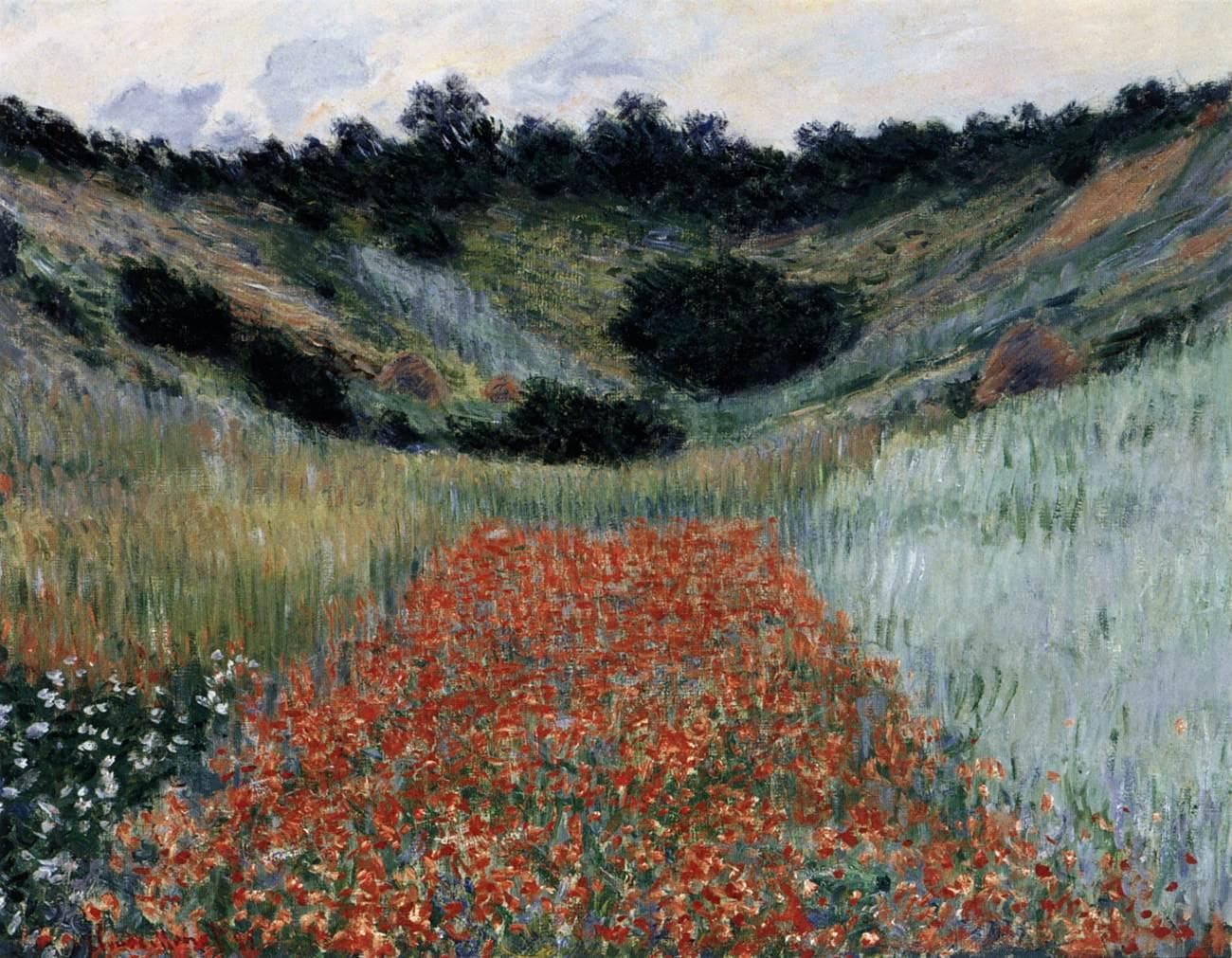
Compare this canvas with earlier poppy pictures such as Poppy Field in a Hollow near Giverny (1885) and with the Poppy Field in the Hermitage, and with the much earlier Poppies at Argenteuil of 1873. There, poppies are a colorful setting for a mother and child; here they are the whole subject. Giverny and its surroundings are covered on Giverny: Monet's House and Garden.
How it was painted
By 1890 Monet's touch had grown denser and more even across the canvas, and this picture shows it. Instead of the broad, separate strokes of the 1870s, the field is covered in a fine, layered mesh of small marks, which gives the surface a woven texture and the color a vibrating quality. The sky is laid over a thick ground so that the earlier layers catch the light. Monet uses complementary pairs throughout: red poppies against green stalks, orange field against blue woods.
The composition is pared down. A single dark mass on the right balances a wide open area on the left, and the horizon sits exactly at mid-height. That simplicity, a few large shapes under changing light, is the method he would push to its limit in the grainstacks a few months later.
Where to see it
The painting was acquired by the Strasbourg museums in 1948 and is now in the Musée d'Art moderne et contemporain on the Ill river. It is one of the few Monet canvases in eastern France. For other collections, see where to see Monet's paintings.
Questions & answers
Where is Monet's Oat Field with Poppies?
It is in the Musée d'Art moderne et contemporain de Strasbourg (MAMCS) in Strasbourg, France, which acquired it in 1948.
When and where was Champ d'avoine aux coquelicots painted?
Monet painted it around 1890 in the fields near his home at Giverny, in Normandy, during the summer before he began his Grainstacks series.
What does Oat Field with Poppies show?
It shows a ripe oat field scattered with red poppies, a large dark tree on the right, a hazy blue clump of woods in the distance and a pale summer sky. There are no figures.
Did Monet paint other poppy fields?
Yes, many, from Poppies at Argenteuil (1873) in the Musée d'Orsay to several Giverny poppy fields of the 1880s and a small group of oat and poppy fields in summer 1890, of which this is one.
More by the artist
Claude Monet

Bridge over a Pond of Water Lilies
Claude Monet · 1899

Woman with a Parasol – Madame Monet and Her Son
Claude Monet · 1875

Sunset in Venice
Claude Monet · 1908–12

La Grenouillère
Claude Monet · 1869

Beach in Pourville
Claude Monet · 1882

Springtime
Claude Monet · 1872

Boating on the River Epte
Claude Monet · 1890

The Seine at Asnières (Hermitage)
Claude Monet · 1873
Also painted in 1890
The same year
Kindred works
You may also study
Poppy Field in a Hollow near Giverny
Claude Monet · 1885
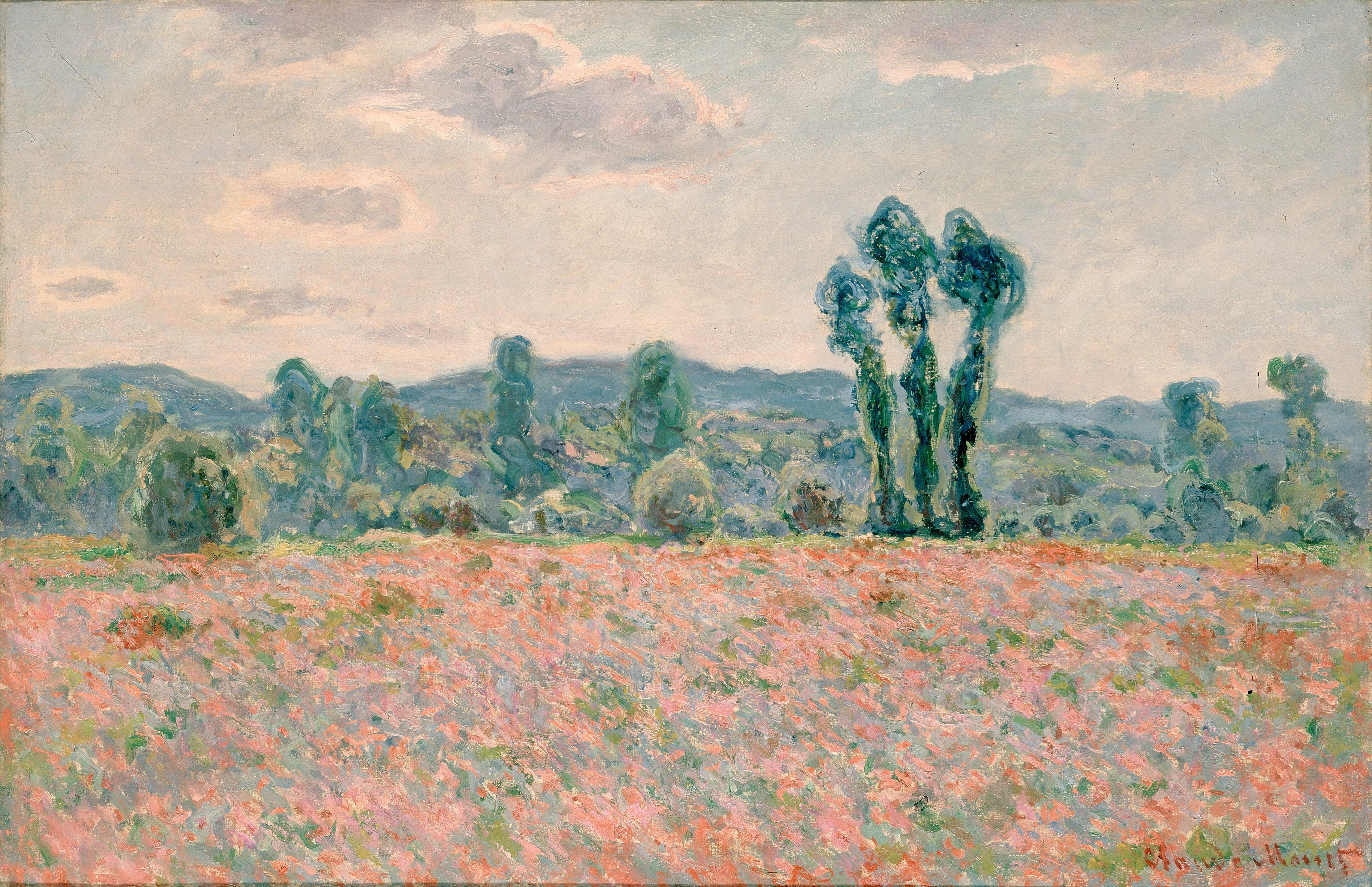
Poppy Field
Claude Monet · c. 1890
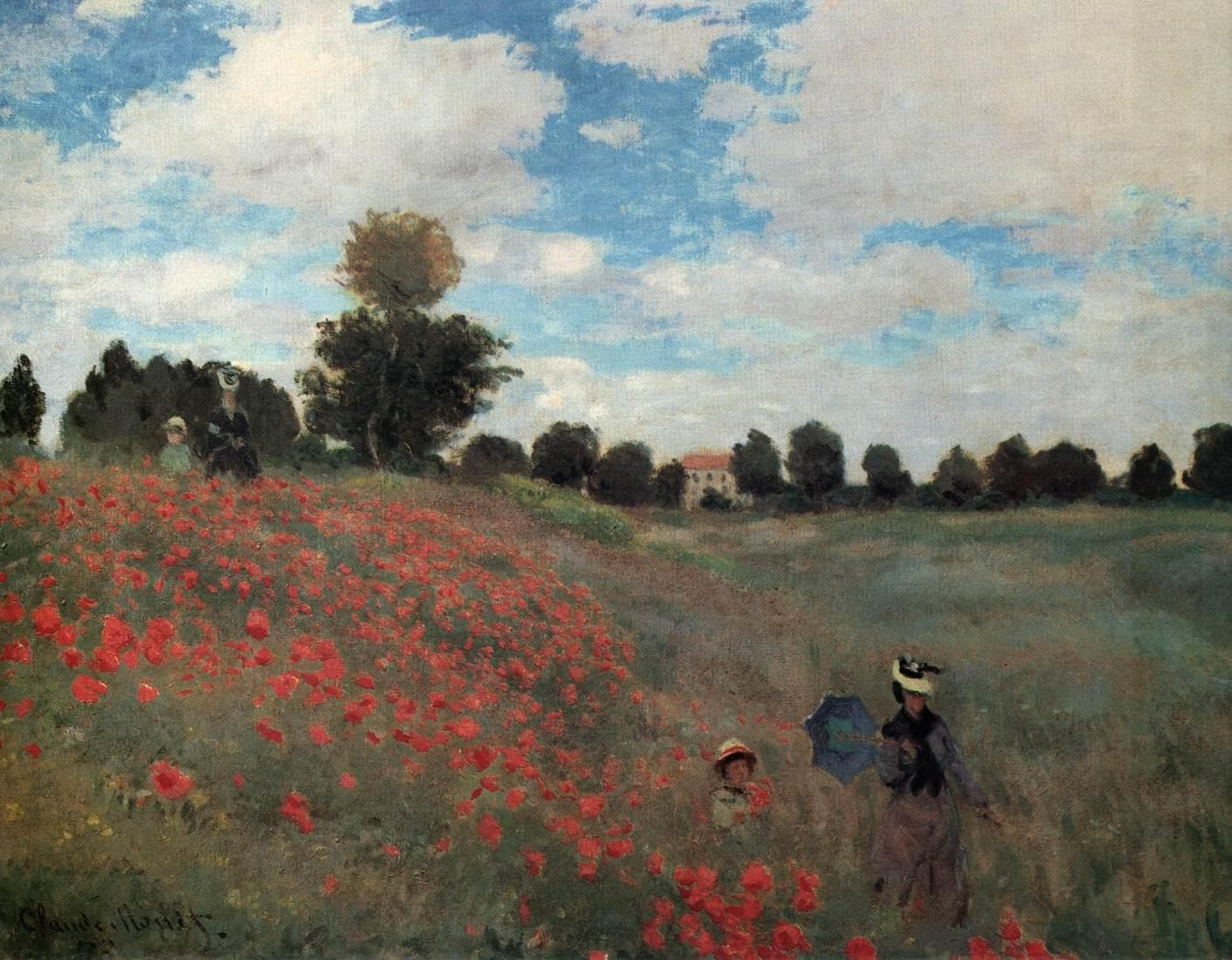
Poppy Field (Poppies at Argenteuil)
Claude Monet · 1873
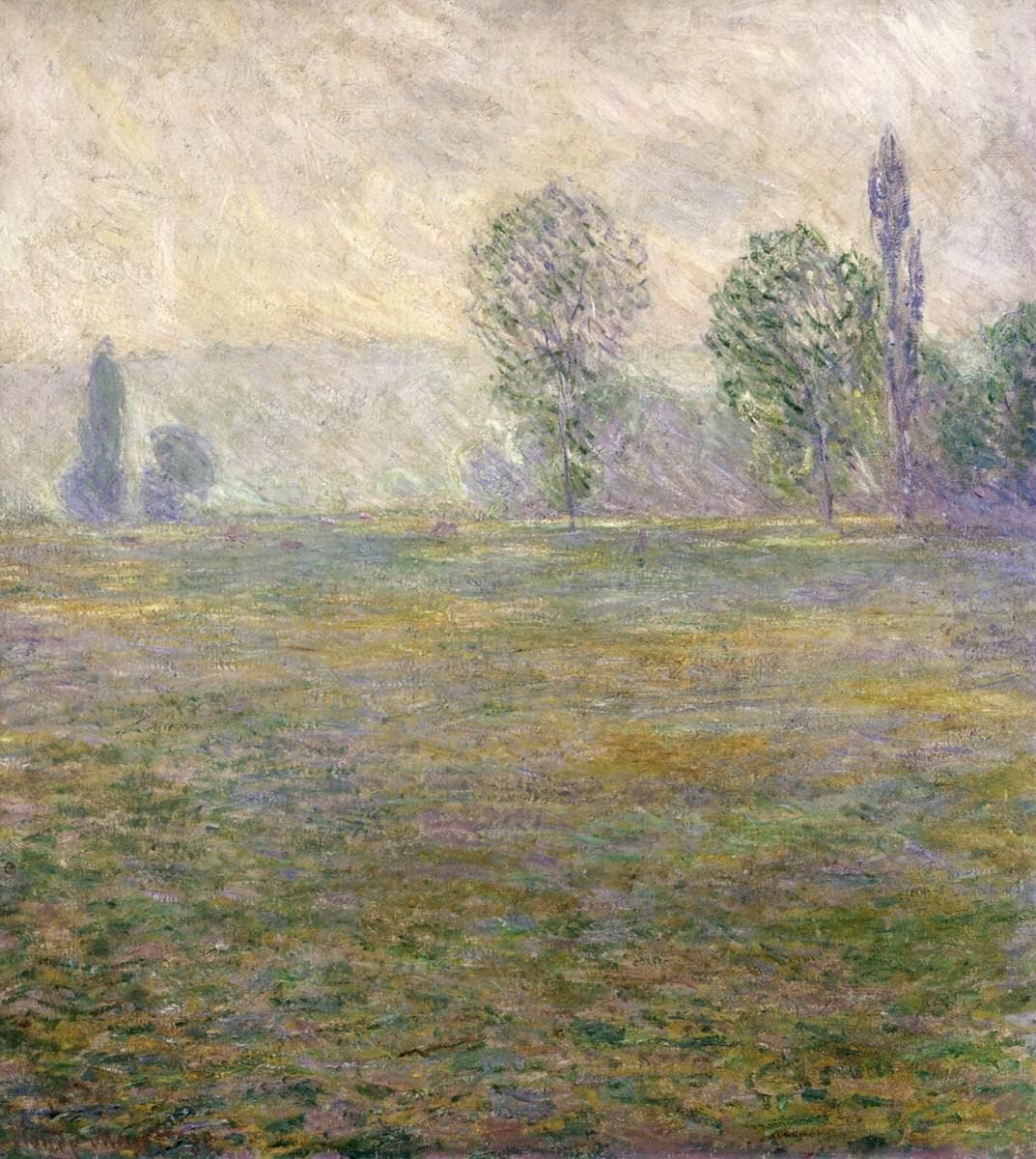
Meadow at Giverny
Claude Monet · 1888
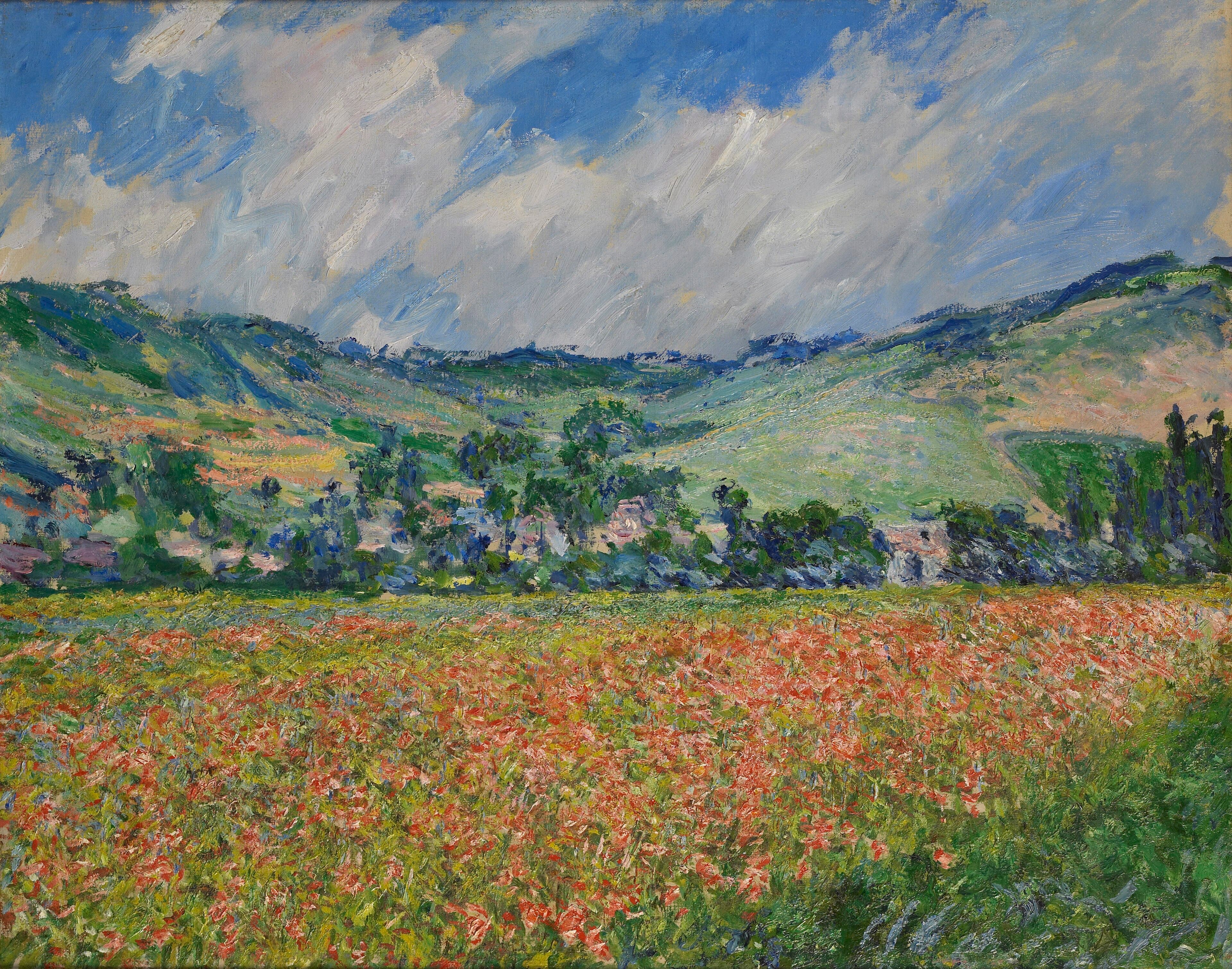
Poppy Field, Around Giverny
Claude Monet · 1885

The Scream
Edvard Munch · 1893

Ophelia
John Everett Millais · 1851–52

The Great Wave off Kanagawa
Katsushika Hokusai · c. 1830–32