
Series
Monet's Japanese Bridge: The Footbridge Paintings at Giverny
An arched green bridge over a pond of water lilies, painted in cool harmonies in 1899–1900 and in blazing reds two decades later.
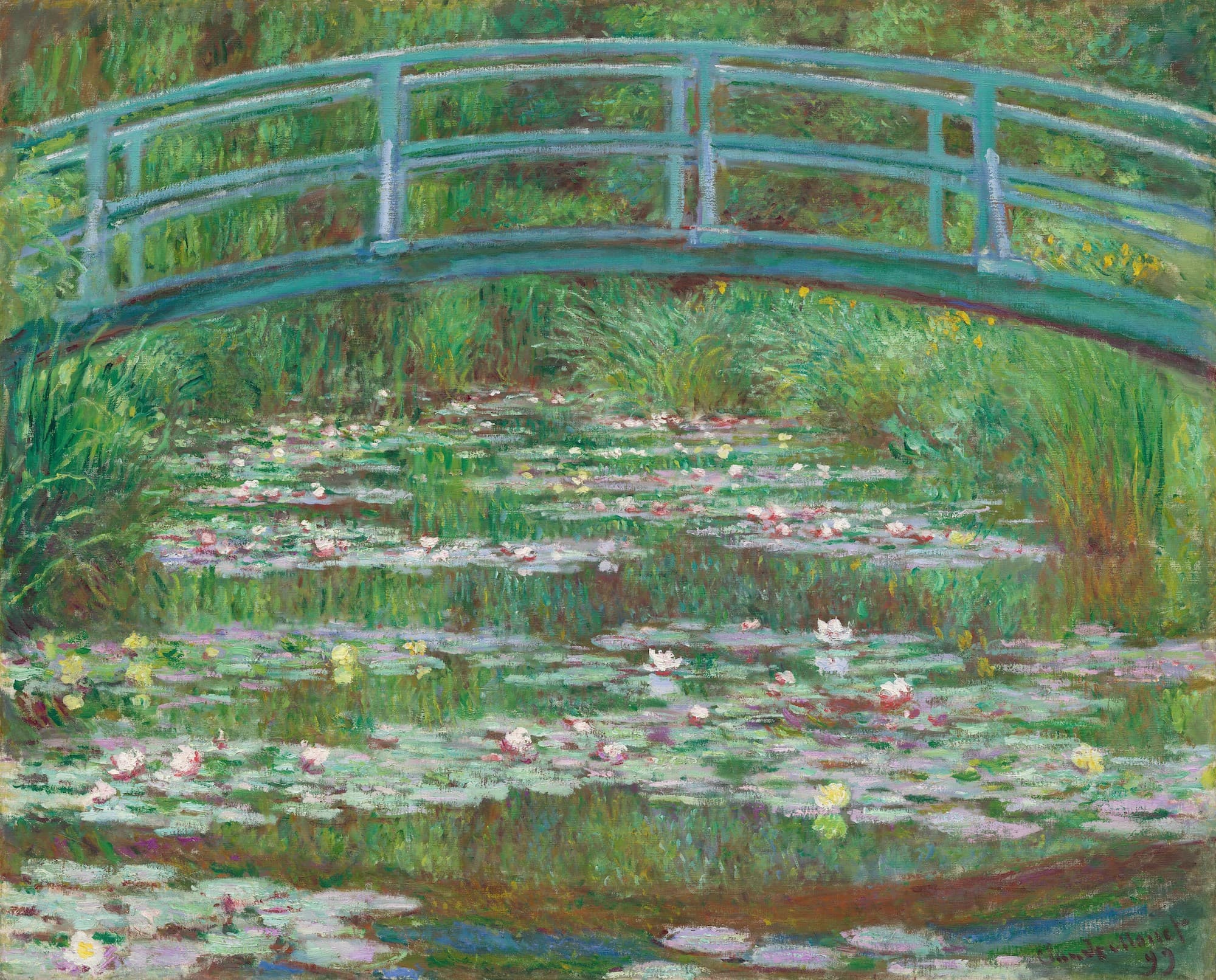
Monet's Japanese bridge is the arched wooden footbridge he built over the water lily pond in his garden at Giverny, and the subject of two distinct groups of paintings. In the summer of 1899 he painted it about a dozen times from the same spot, in pictures such as Bridge over a Pond of Water Lilies at the Metropolitan Museum, and added more versions in 1900. Then, between about 1918 and 1924, with his sight failing, he returned to it in a late group of fierce, near-abstract canvases.
The 1899–1900 pictures are now in the Musée d'Orsay, the Met, the National Gallery of Art in Washington, the National Gallery in London, the Museum of Fine Arts, Boston, the Art Institute of Chicago and other museums. The late bridges are at the Musée Marmottan Monet, MoMA, the Minneapolis Institute of Art and elsewhere. Below are the versions in this archive in date order, with an account of how and why the motif changed.
Bridge over a Pond of Water Lilies
Claude Monet · 1899
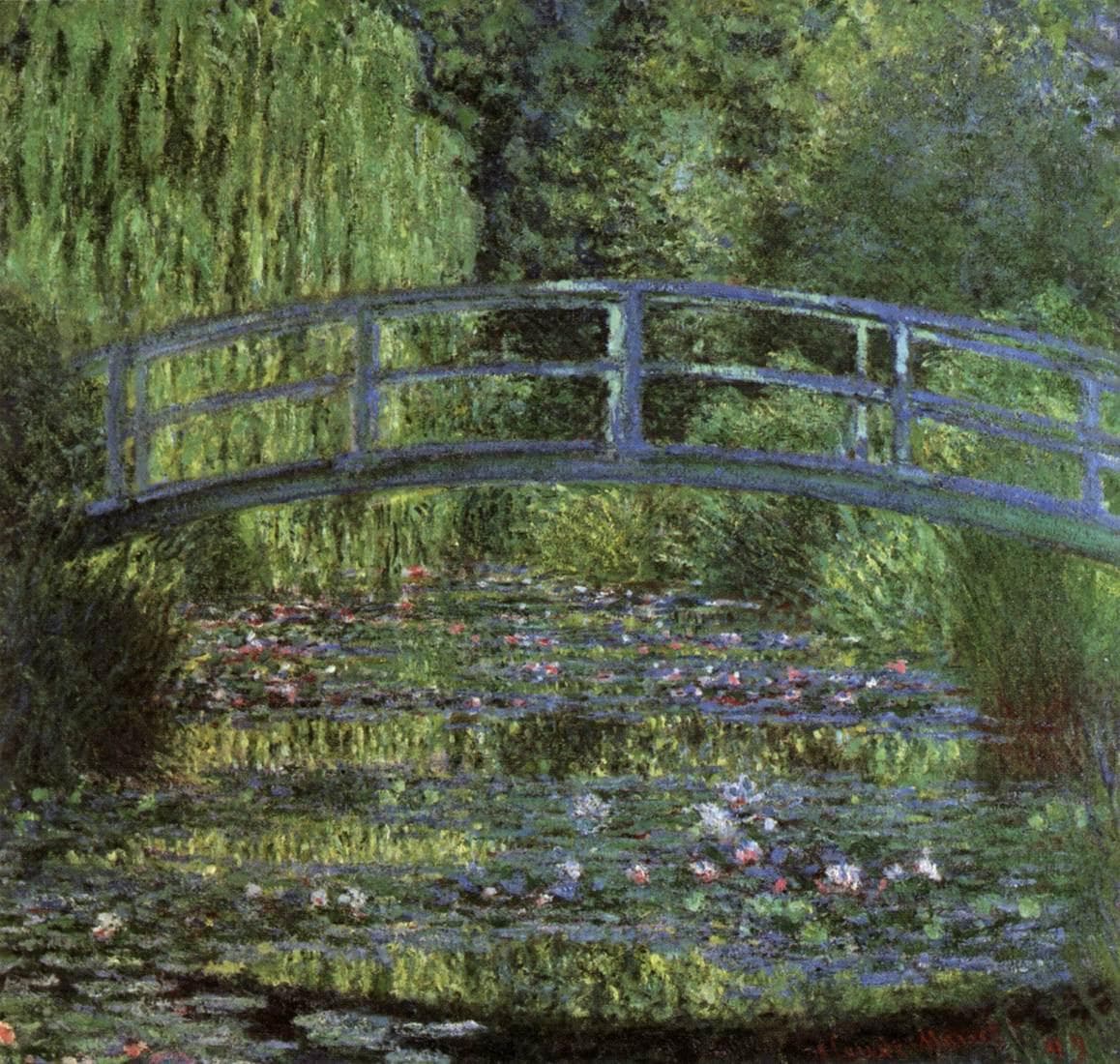
The Japanese Footbridge
Claude Monet · 1899
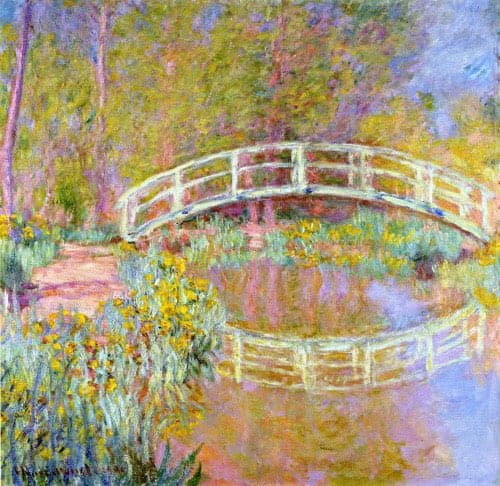
Water Lily Pond, Green Harmony
Claude Monet · 1899
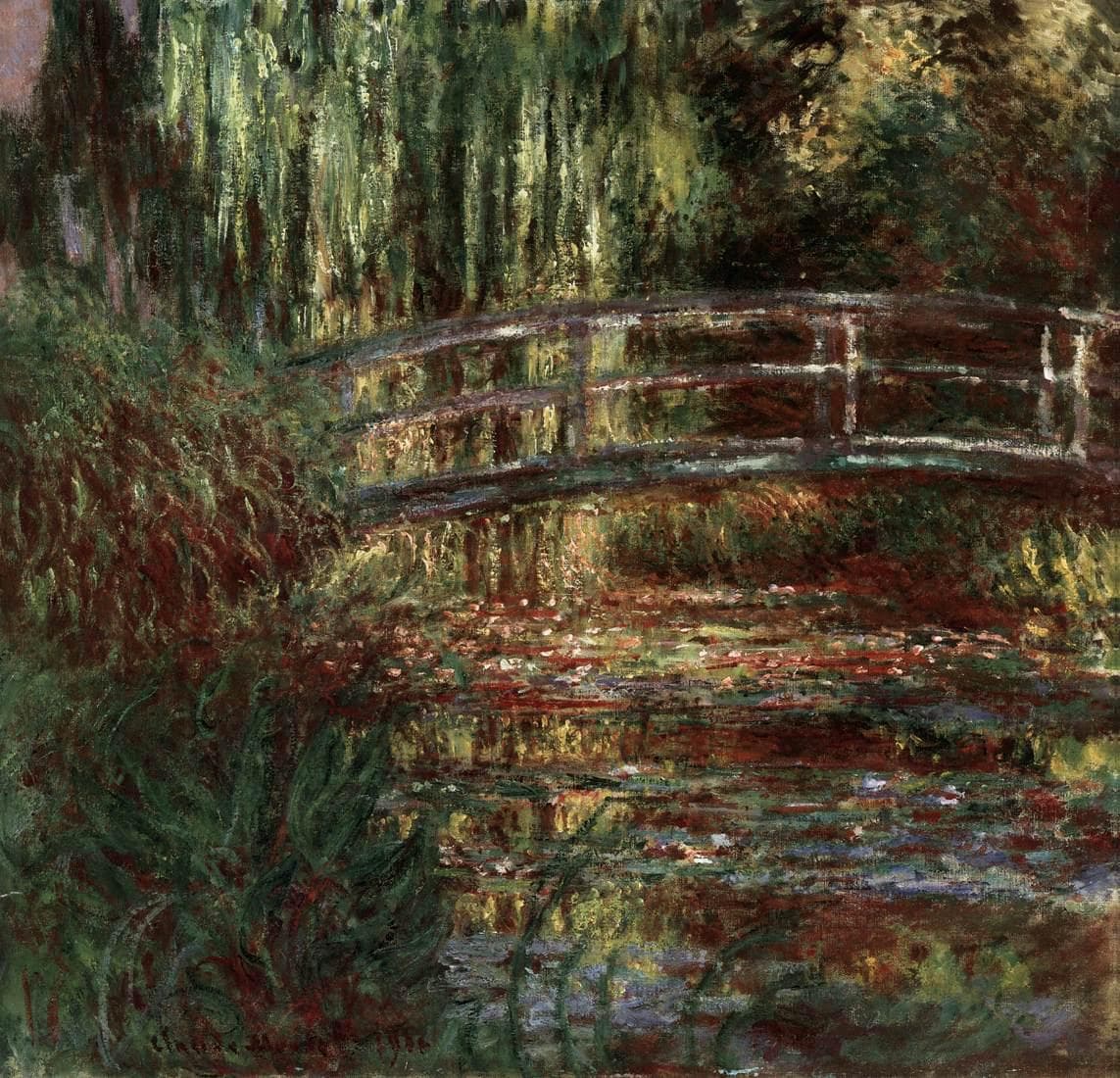
The Bridge in Monet's Garden
Claude Monet · c. 1895–96
The Water Lily Pond
Claude Monet · 1900
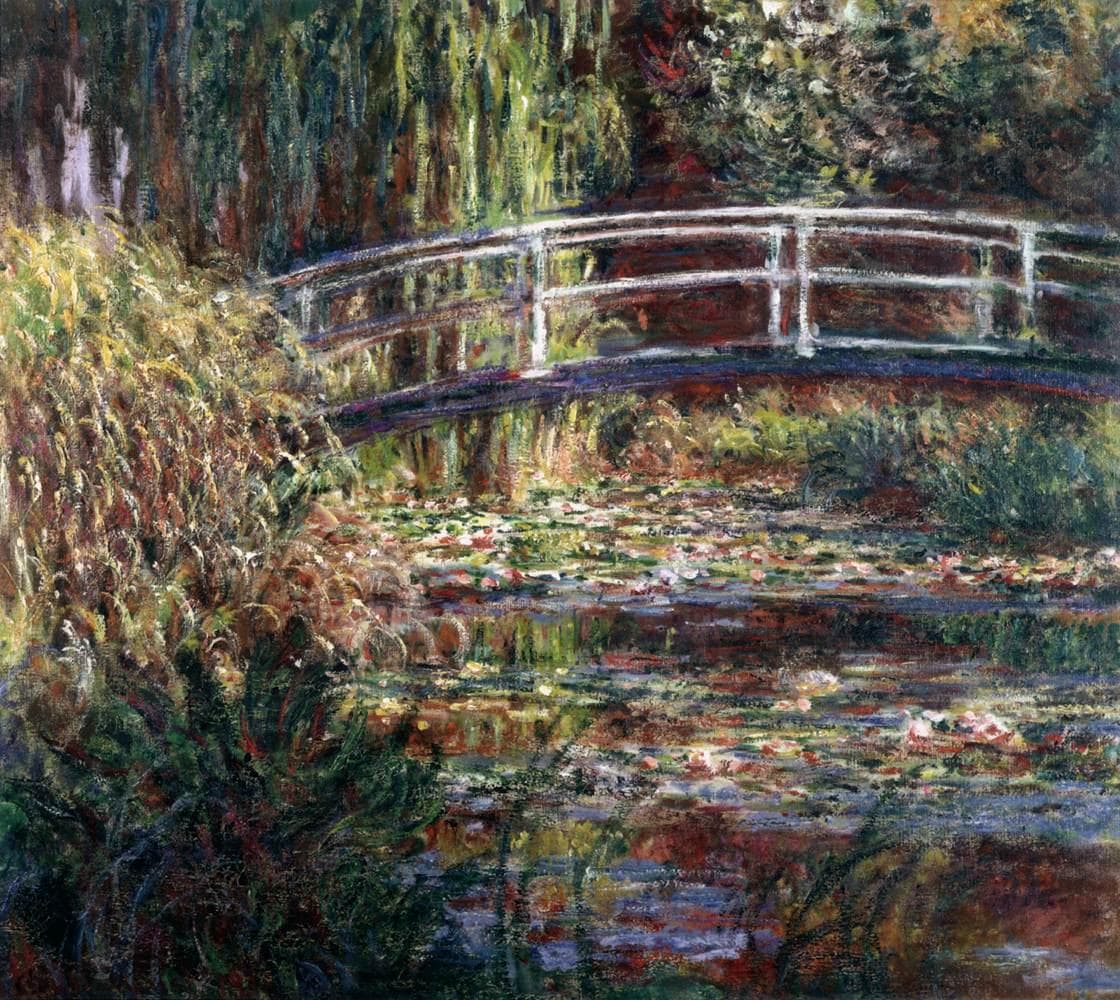
The Water Lily Pond, Harmony in Rose
Claude Monet · 1900
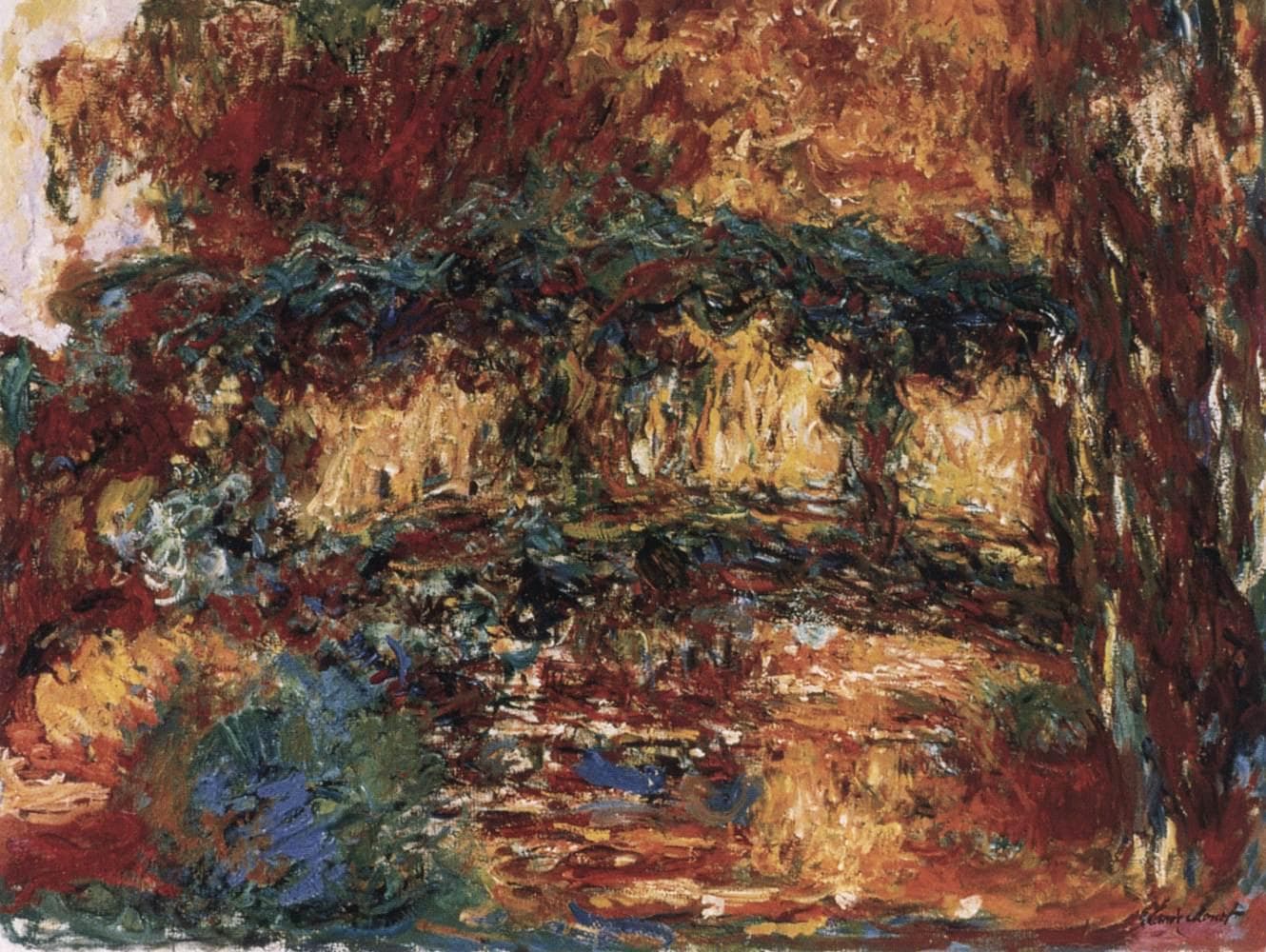
The Japanese Bridge
Claude Monet · c. 1923–25
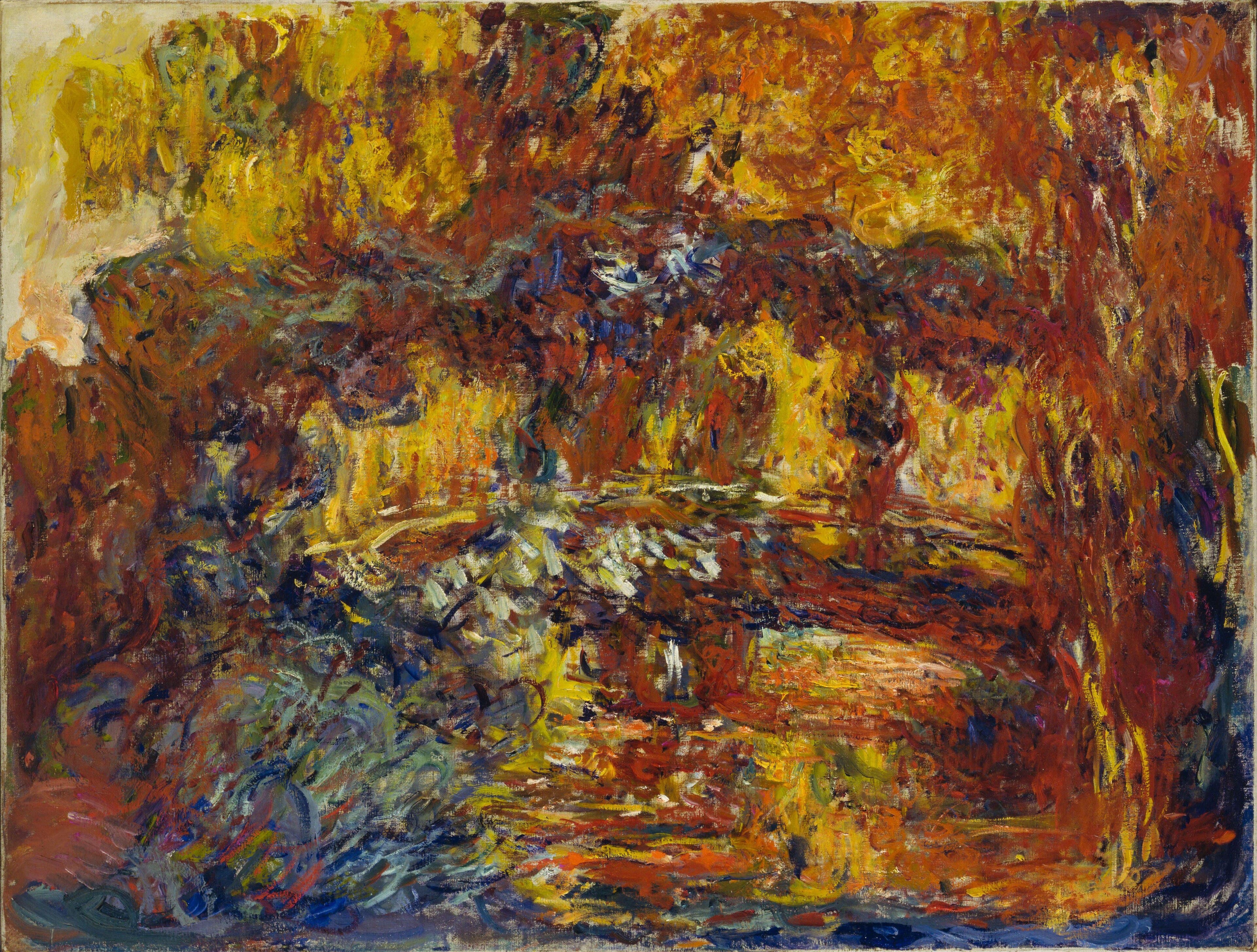
The Japanese Footbridge (MoMA)
Claude Monet · c. 1920–22
The complete set
All 24 known canvases
From the catalogue raisonné. Works with a full close reading are marked ✦.
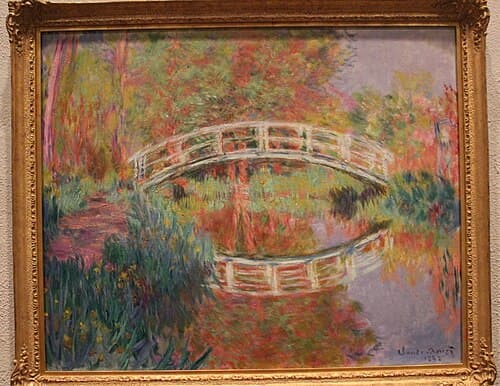
Japanese Footbridge, Giverny
1895 · Philadelphia Museum of Art
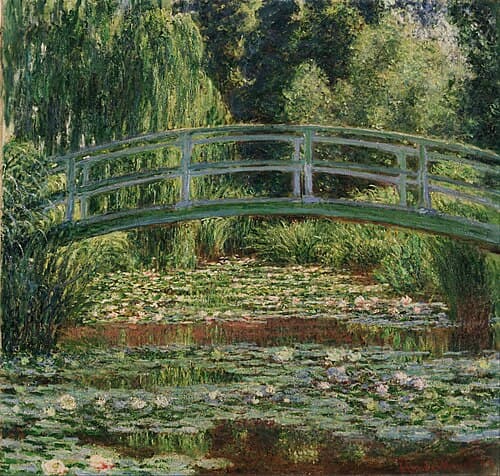
The Japanese Footbridge and the Water Lily Pool, Giverny
1899 · Philadelphia Museum of Art
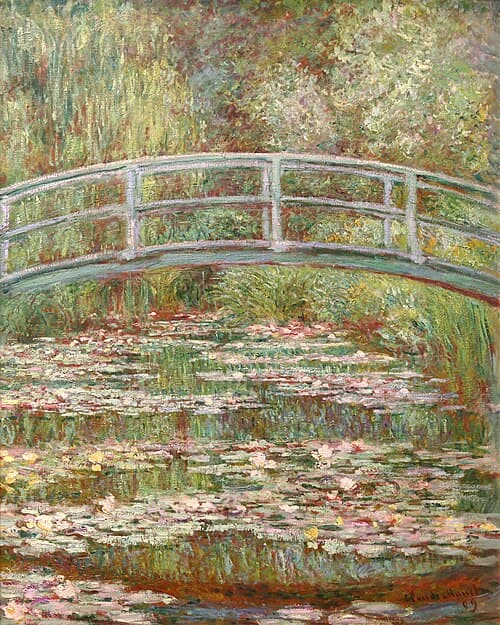
✦Bridge over a Pond of Water Lilies
1899 · Metropolitan Museum of Art
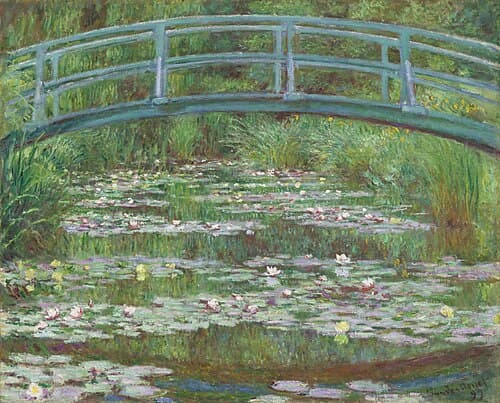
✦Japanese Footbridge
1899 · National Gallery of Art
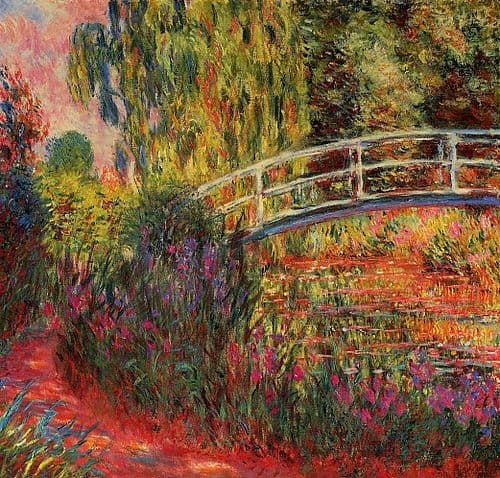
The Japanese Bridge or The Lily Pond
1900
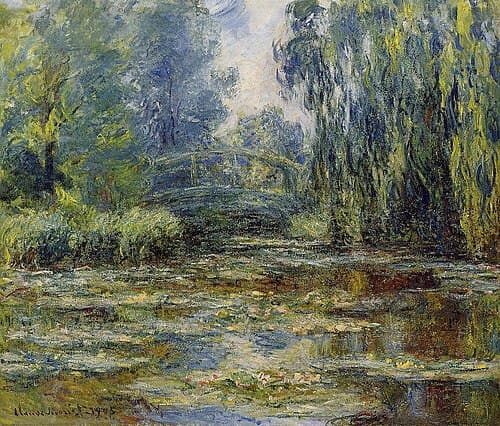
The Water-Lily Pond and Bridge
1905
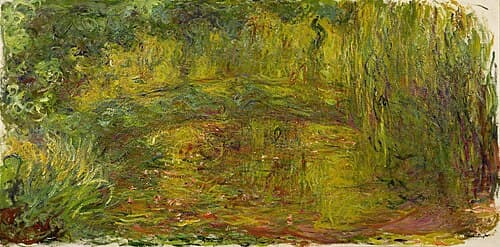
Le Pont japonais
1918 · Musée Marmottan Monet
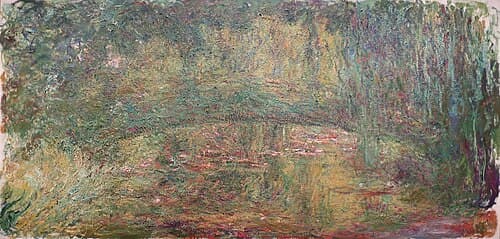
The Japanese Bridge
1918 · Musée Marmottan Monet
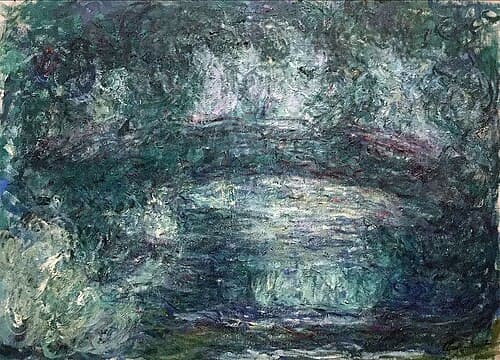
Japanese Bridge
1919 · Musée Marmottan Monet
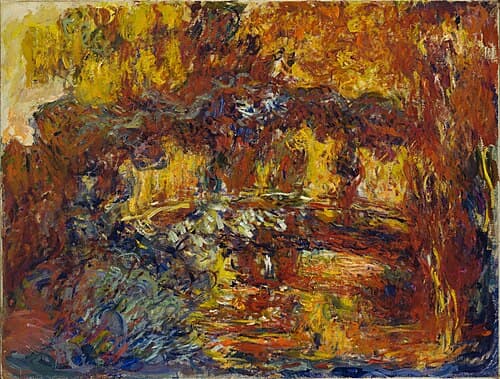
✦The Japanese Footbridge
1920 · Museum of Modern Art
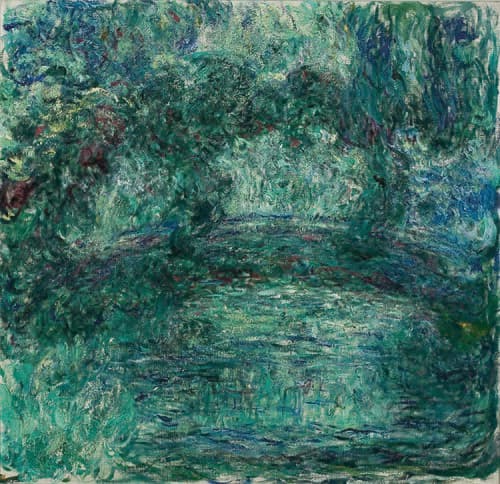
The Japanese Bridge
1920 · São Paulo Museum of Art
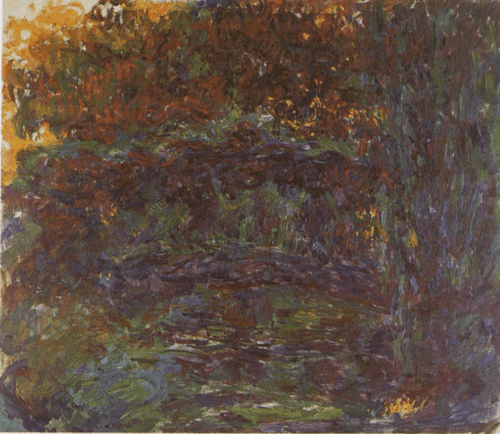
The Japanese Bridge
1921 · Musée Marmottan Monet
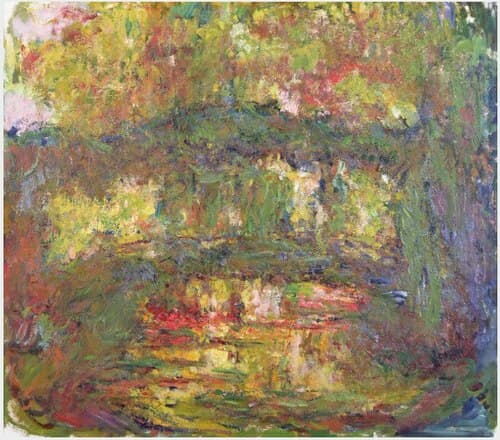
Le pont japonais
1921 · Musée Marmottan Monet
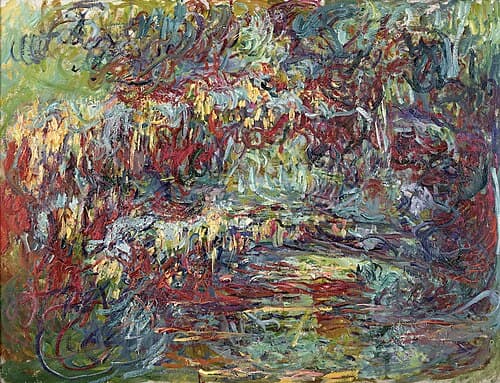
Le Pont japonais
1921 · Musée Marmottan Monet
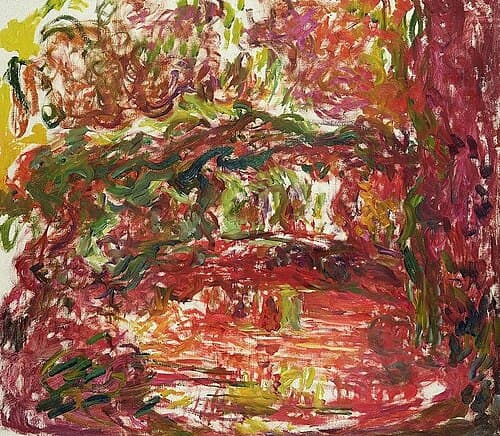
The Japanese Bridge
1921 · Musée Marmottan Monet
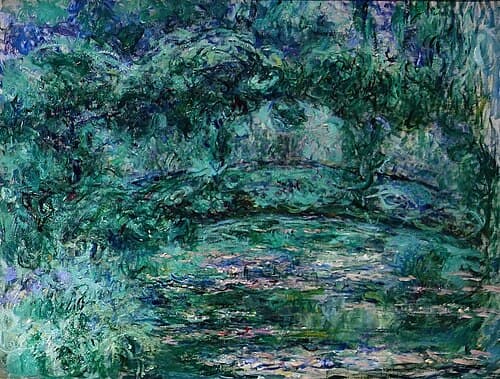
The Japanese Bridge
1921 · National Gallery
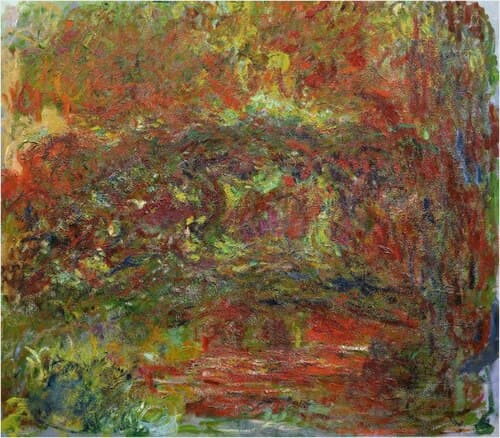
Le pont japonais
1921 · Musée Marmottan Monet
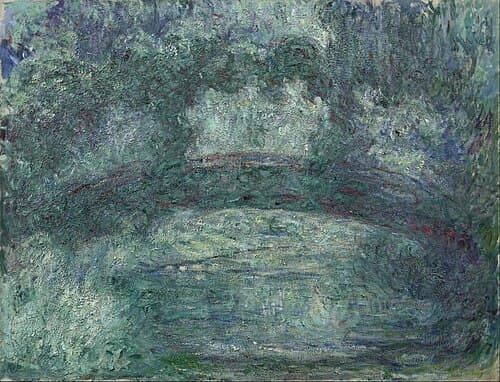
The Japanese bridge
1921 · Van Gogh Museum
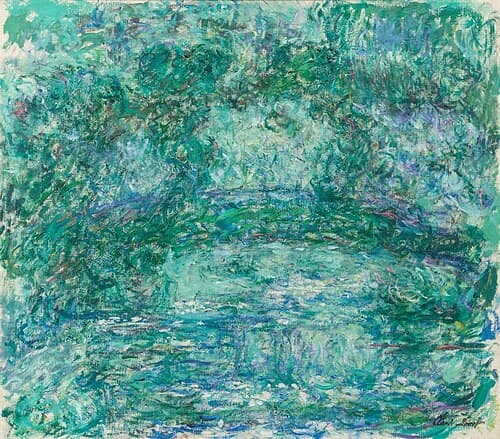
Le pont japonais (Japanese Bridge)
1921 · Auckland Art Gallery
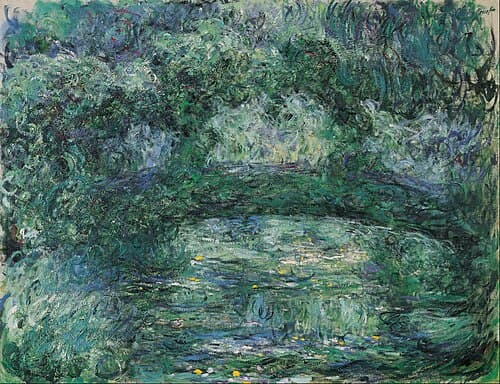
The Japanese Bridge
1921 · Beyeler Foundation
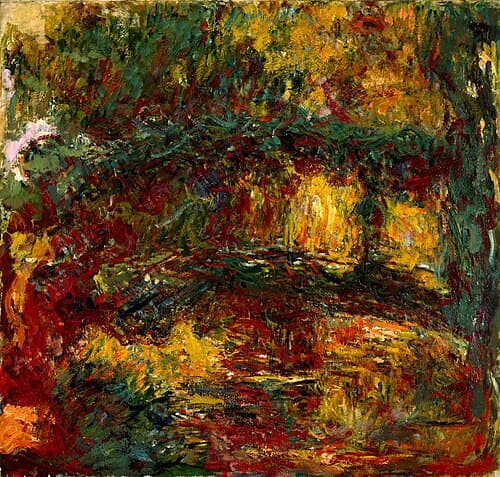
The Japanese Footbridge, Giverny
1922 · Museum of Fine Arts, Houston
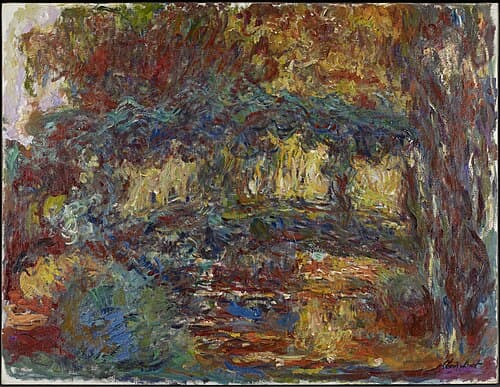
✦The Japanese Bridge
1923 · Minneapolis Institute of Art
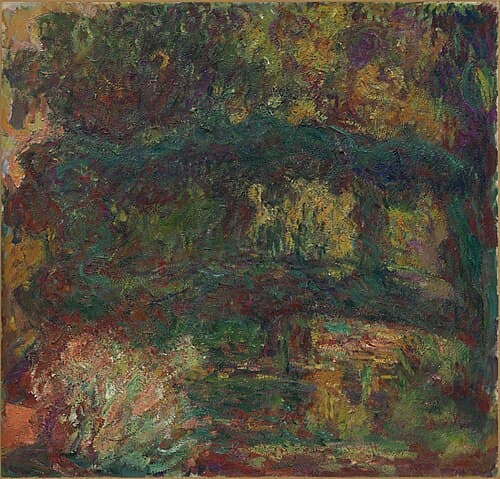
Nymphéas, Japanese Bridge
Philadelphia Museum of Art
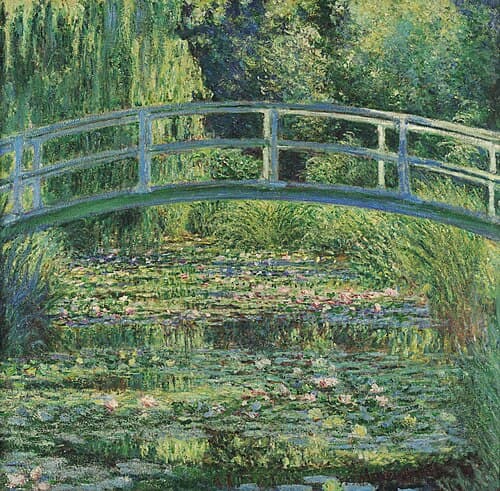
Water Lilies and Japanese Bridge
Princeton Art Museum
The bridge Monet built
In 1893, ten years after settling at Giverny, Monet bought a plot of marshy land on the other side of the road and railway line from his house. He diverted a branch of the river Epte to form a pond, stocked it with water lilies and, by 1895, across its narrow western end, built a low wooden footbridge with a shallow arch. He had it painted green, unlike the red lacquer of the bridges in Japanese prints.
Visitors called it "the Japanese bridge" almost at once. Monet collected Japanese woodblock prints by Hiroshige, Hokusai and others, and they still hang in the house at Giverny; Hiroshige's views of the wisteria and arched bridge at the Kameido Tenjin shrine are usually cited as the model. Around 1900 Monet added a trellis over the bridge and trained wisteria along it, which appears in the later pictures as a heavy mass above the arch.
The 1899 series: one view, a dozen times
The 1899 canvases share a single viewpoint, from the bank at the end of the pond, and a single composition. The bridge spans the canvas from edge to edge as a flat arc, its ends cut off by the frame. Below it the pond fills the lower half with floating rafts of lily pads and pale flowers; above and behind it a wall of willows, bamboo and reeds closes off any sky. The square or near-square format, around 90 by 90 centimeters, makes the arch read as a pattern across a surface rather than as a structure in space.
Within that fixed scheme Monet changed the light. The Japanese Footbridge in Washington and Water Lily Pond, Green Harmony at the Orsay are cool, all blue-green and yellow-green, the bridge itself a slightly bluer green set against the foliage. The Met's Bridge over a Pond of Water Lilies is lighter and more open, with strong white flowers in the foreground. A very similar picture is in the National Gallery, London.
1900: warmer harmonies and wider views
In 1900 Monet painted the bridge again, often from slightly further back, so that more of the banks and the iris beds come into view. The palette warms. In Water Lily Pond, Harmony in Rose at the Orsay, late light turns the greenery to rose, orange and lilac. In The Water Lily Pond at the Museum of Fine Arts, Boston, the foliage is dense with reds and violets and the pond is darker. The picture known here as The Bridge in Monet's Garden, with yellow irises in the foreground, is dated only roughly, to about 1895–1900, and probably belongs to this moment of the series.
Durand-Ruel exhibited the bridge pictures in Paris in late 1900. They were among the first views of the water garden Monet showed in public, and critics noticed that he was now painting a landscape he had designed himself.
Who bought the bridge pictures
The 1899–1900 bridges sold quickly to the collectors who had already backed Monet's series. The Paris banker Isaac de Camondo bought Green Harmony in November 1900 and left it to the French state in 1911, which is how it came to the Louvre and then the Orsay. In New York, Louisine and Henry Havemeyer bought the Met's picture; it came to the museum with Louisine's bequest in 1929. Other versions went to Boston and Chicago collectors in the following decades, so that American museums now hold a large share of the series. The pictures were popular partly because they were legible: unlike the later lily canvases, they have a clear structure, a center and a subject anyone could name.
The late bridges, about 1918–1924
For almost two decades the bridge largely disappeared from Monet's work as he turned to the surface of the pond in the Water Lilies. He came back to it at the end of the First World War, in his late seventies, when cataracts had clouded his vision.
These late canvases look nothing like the 1899 pictures. The arch is still there, now heavy with wisteria, but it is built from slashing, looping strokes of red, orange, brown and acid green, laid on thickly over a dark ground. Water, bridge and foliage merge. In The Japanese Bridge in Minneapolis and The Japanese Footbridge at MoMA, the bridge is found more by its rhythm than its outline. Many of the late versions were left in the studio and passed to the Musée Marmottan with the bequest of Monet's son Michel in 1966.
The reds and browns are often linked to the yellowing effect of cataracts on color vision. That is plausible, but Monet was also choosing a rougher, more expressive handling, and he continued it after his 1923 eye surgery. Painters of the 1950s, including the American Abstract Expressionists, saw in these canvases an ancestor of their own work.
How the versions differ
- Date and group: 1899 (cool greens, one viewpoint), 1900 (warmer, wider), and about 1918–24 (late, expressive).
- Light: midday greens and blues; late afternoon rose and gold; in the late group, a red and orange heat that is less about the hour than about the painter's eye.
- Viewpoint: the 1899 pictures crop the bridge tightly; the 1900 pictures step back to include banks and iris beds; the late ones close in again until the bridge almost fills the canvas.
- Wisteria: absent in 1899, prominent in the late pictures.
Where to see Monet's Japanese bridge paintings
The 1899–1900 pictures are spread among major museums: two at the Musée d'Orsay in Paris, the Metropolitan Museum in New York, the National Gallery of Art in Washington, the National Gallery in London, the Philadelphia Museum of Art, the Museum of Fine Arts, Boston and the Art Institute of Chicago. For the late bridges, the Musée Marmottan Monet holds the largest group; MoMA and Minneapolis have important examples.
The real bridge can also be seen. The house and gardens at Giverny are open from spring to autumn, and the footbridge, rebuilt more than once since Monet's day, still crosses the pond with wisteria trained over it. For more on the place and the painter, see Giverny, Where to See Monet and Claude Monet.
Questions & answers
How many Japanese bridge paintings did Monet make?
Monet painted about a dozen views of his Japanese footbridge in the summer of 1899 and several more in 1900. Around 1918–24 he painted a second, late group of bridge pictures in a much freer style. Counts vary, but the motif appears in some two dozen or more canvases across both periods.
Where is Monet's Bridge over a Pond of Water Lilies?
Bridge over a Pond of Water Lilies (1899) is in the Metropolitan Museum of Art in New York, part of the H. O. Havemeyer Collection bequeathed by Louisine Havemeyer in 1929. Other 1899 versions are in the Musée d'Orsay, the National Gallery of Art in Washington and the National Gallery in London.
Why is it called the Japanese bridge?
Monet's footbridge, built in 1893–95, has a low arch like the bridges in the Japanese woodblock prints he collected, especially Hiroshige's. Visitors named it the Japanese bridge, though Monet painted it green rather than the red of the bridges in the prints.
Is Monet's Japanese bridge still there?
Yes. The garden at Giverny, restored in the 1970s and 1980s, is open to visitors from spring to autumn. The green footbridge, rebuilt over the years, still crosses the water lily pond, with wisteria trained over it as in Monet's later paintings.
Why are Monet's late Japanese bridge paintings so red?
From around 1912 Monet had cataracts, which yellow and darken color vision, and the late bridges of about 1918–24 are dominated by reds, oranges and browns. Many scholars link the two. Monet was also deliberately working in a broader, more expressive manner, which he kept after his eye surgery in 1923.