Impressionism
Spring
Claude Monet, 1886
Spring (Le Printemps) is an 1886 painting by Claude Monet of two young women resting under fruit trees in blossom in an orchard at Giverny. It measures 64.8 × 80.6 cm (Wildenstein 1066) and is in the Fitzwilliam Museum, Cambridge.
- Artist
- Claude Monet
- Date
- 1886
- Medium
- Oil on canvas
- Dimensions
- 64.8 × 80.6 cm
- Collection
- Fitzwilliam Museum, Cambridge, United Kingdom
- Movement
- Impressionism
- Catalogue
- Wildenstein 1066
Painted at Giverny: Monet's House and Garden
What you are looking at
A canopy of blossoming fruit trees fills the upper two-thirds of the canvas, their dark, twisting trunks and branches threaded through a haze of white, cream and pale yellow flowers. Through the gaps the sky shows in patches of soft lilac-blue. Below, the orchard grass is a vivid spring green, crossed by long violet-blue shadows cast by the trunks. Behind it runs a pale fence or screen of reeds, and beyond that more trees in bloom and a glimpse of green fields.
In the lower center, small in the scene, two young women sit in the grass. One, at left, wears a white dress patterned with blue shadow and a straw sunhat with a pink ribbon; she sits with her back to us. The other, at right, wears a dark dress and a straw hat and bends forward over something in her lap, perhaps a book or sewing. Neither face is shown.
The trees are the real subject. Monet paints the blossom in thick, short dabs that sit on top of the branches, and lets the trunks wander in curving, almost calligraphic dark lines. The main trunk at left of center forks and twists like a figure in motion. Sunlight flickers across the women's dresses in the same broken touches as the flowers, so they seem to belong to the orchard rather than sit in front of it.
Giverny, 1886
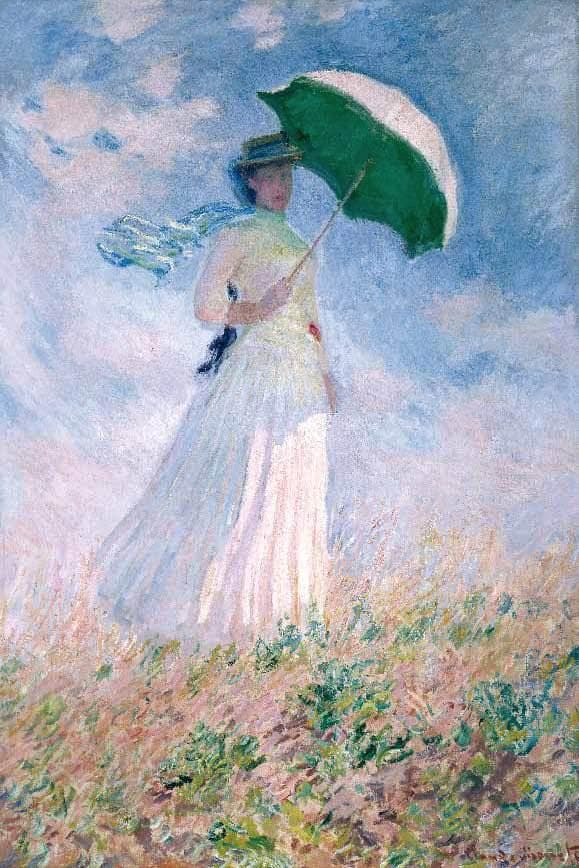
Monet had moved to Giverny in 1883 with Alice Hoschedé and their eight children, his two sons and her six. By 1886 the household's daughters were grown or nearly grown, and they often modeled for him in the garden and fields; the two figures here are probably members of the family, though they are not securely identified. That summer he painted Suzanne Hoschedé with a parasol, outdoors near Giverny, in Woman with a Parasol, Turned to the Left and its pair.
Earlier that spring he had traveled to Holland and painted Tulip Fields in Holland. Back home, he painted the Giverny orchards in flower in several canvases. This one is distinguished by its figures, which turn a study of blossom into a quiet scene of leisure.
How it was painted
The canvas is a standard size, about 65 by 81 centimeters. Monet works the blossom over a blue ground of sky, building up the white and cream in raised, separate touches so that the canopy has a physical density. The grass is laid in with long, horizontal strokes of saturated green, and the shadows are added on top in violet and blue. The figures are among the most freely painted passages, their dresses a few strokes of white and dark. It is a picture made in the open air, on a sunny day, and it looks it. Look at the light itself: the sun is high and behind the trees, so the blossom is lit from above and glows, while the shadows on the grass stretch toward us. The women sit just where shade meets sun, the white dress catching it and the dark dress absorbing it.
Spring in Monet's work
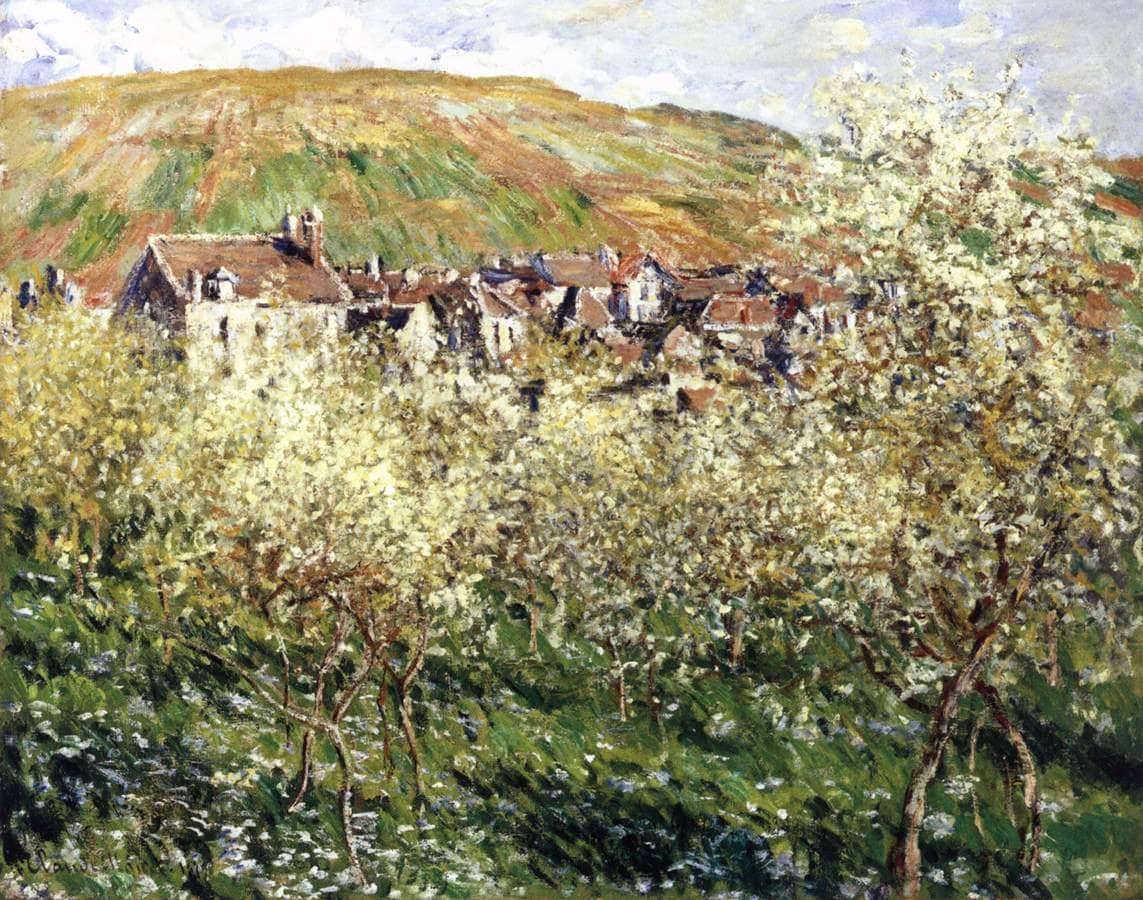
Blossom was a favorite motif because of the delicate color contrasts and changing light it offered. Compare the earlier Springtime of 1872 in Baltimore, where Camille reads in dappled shade, and the Vétheuil Plum Trees in Bloom of 1879. The 1886 picture is looser than either, its figures smaller, and the orchard itself more the protagonist.
Meaning
The picture belongs to a long tradition of springtime scenes, from medieval calendars to the fêtes galantes of the 18th century, in which young people enjoy the season of renewal. Claude Monet strips that tradition of allegory. There is no courtship and no story, just two people resting in the shade on a fine spring day, and the shadows on the grass marking the hour.
Where to see it
The painting is in the Fitzwilliam Museum in Cambridge, England, which entered it in 1953 and also owns a canvas from Monet's Poplars series. For other museums, see where to see Monet's paintings.
Questions & answers
Where is Monet's Spring of 1886?
The painting is in the Fitzwilliam Museum in Cambridge, England. It shows two young women sitting under blossoming fruit trees in an orchard at Giverny, measures 64.8 by 80.6 centimeters and is catalogued as Wildenstein 1066. The museum also has a canvas from Monet's Poplars series.
When and where was Spring painted?
In the spring of 1886, in an orchard at Giverny in Normandy, where Monet had lived since 1883. Earlier that year he had painted tulip fields in Holland, and that summer he painted the two Woman with a Parasol canvases nearby.
Who are the women in Monet's Spring?
They are not securely identified. In 1886 Monet often painted members of his blended household at Giverny, especially Alice Hoschedé's daughters, so the two women are probably family members, but no surviving document names the sitters for this particular canvas.
Did Monet paint other spring orchards?
Yes, many. He painted orchards and gardens in blossom at Argenteuil in the 1870s, at Vétheuil in 1879, and repeatedly around Giverny in the 1880s. Spring blossom was a favorite motif because of the delicate color contrasts and changing light it offered.
More by the artist
Claude Monet

Bridge over a Pond of Water Lilies
Claude Monet · 1899

Woman with a Parasol – Madame Monet and Her Son
Claude Monet · 1875

Sunset in Venice
Claude Monet · 1908–12

La Grenouillère
Claude Monet · 1869

Beach in Pourville
Claude Monet · 1882

Springtime
Claude Monet · 1872

Boating on the River Epte
Claude Monet · 1890

The Seine at Asnières (Hermitage)
Claude Monet · 1873
Also painted in 1886
The same year
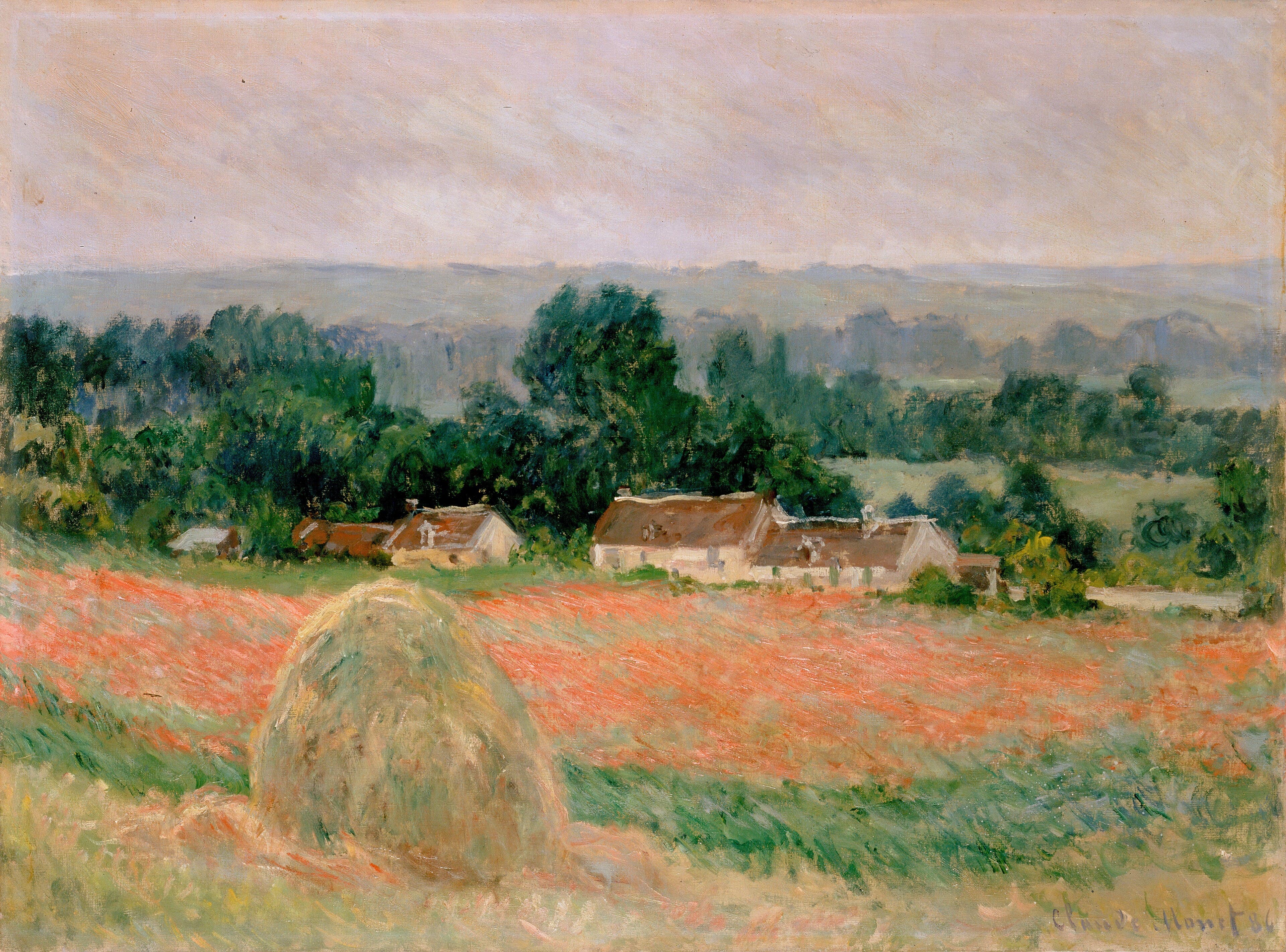
Haystack at Giverny
Claude Monet · 1886
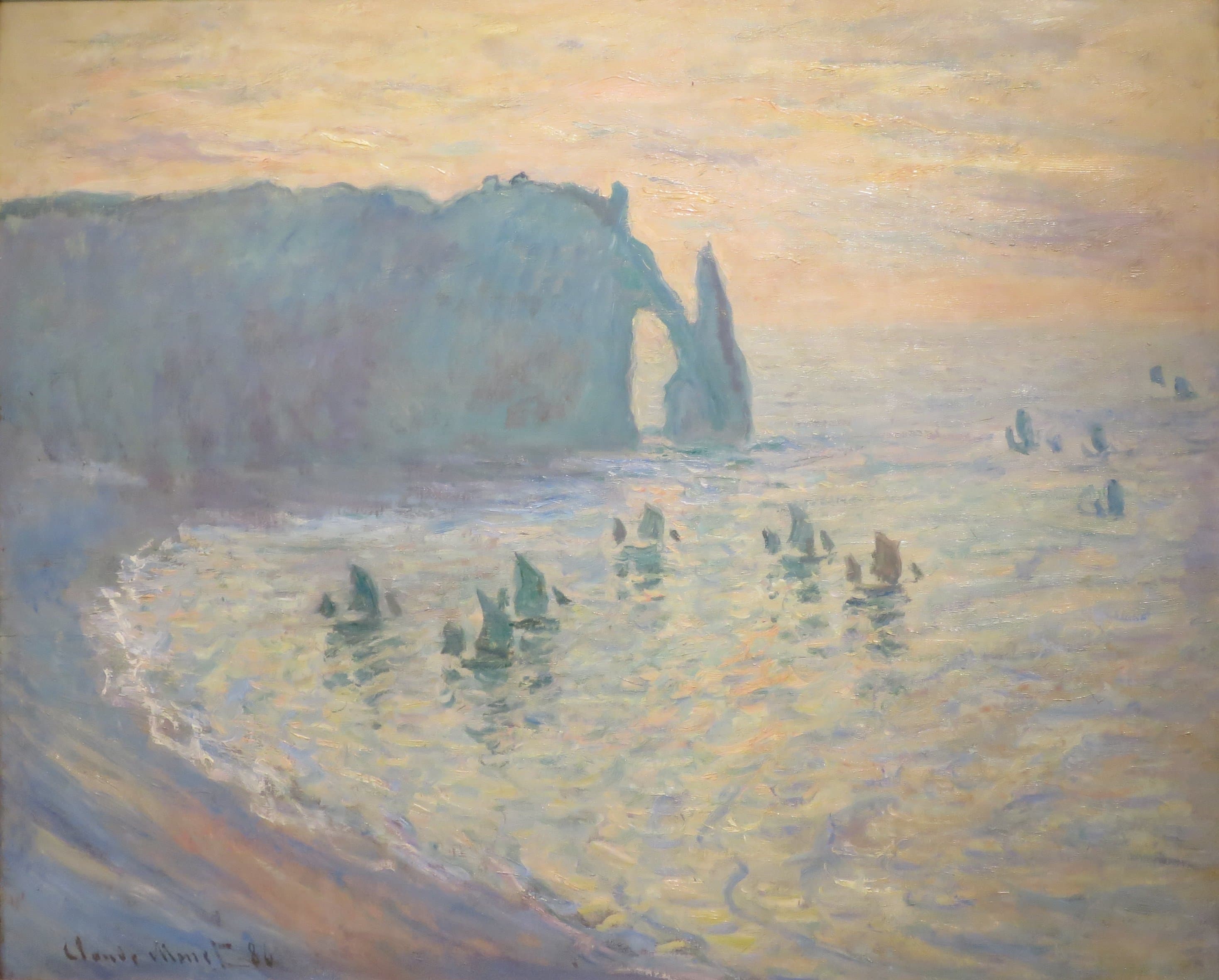
The Cliffs at Étretat
Claude Monet · 1886
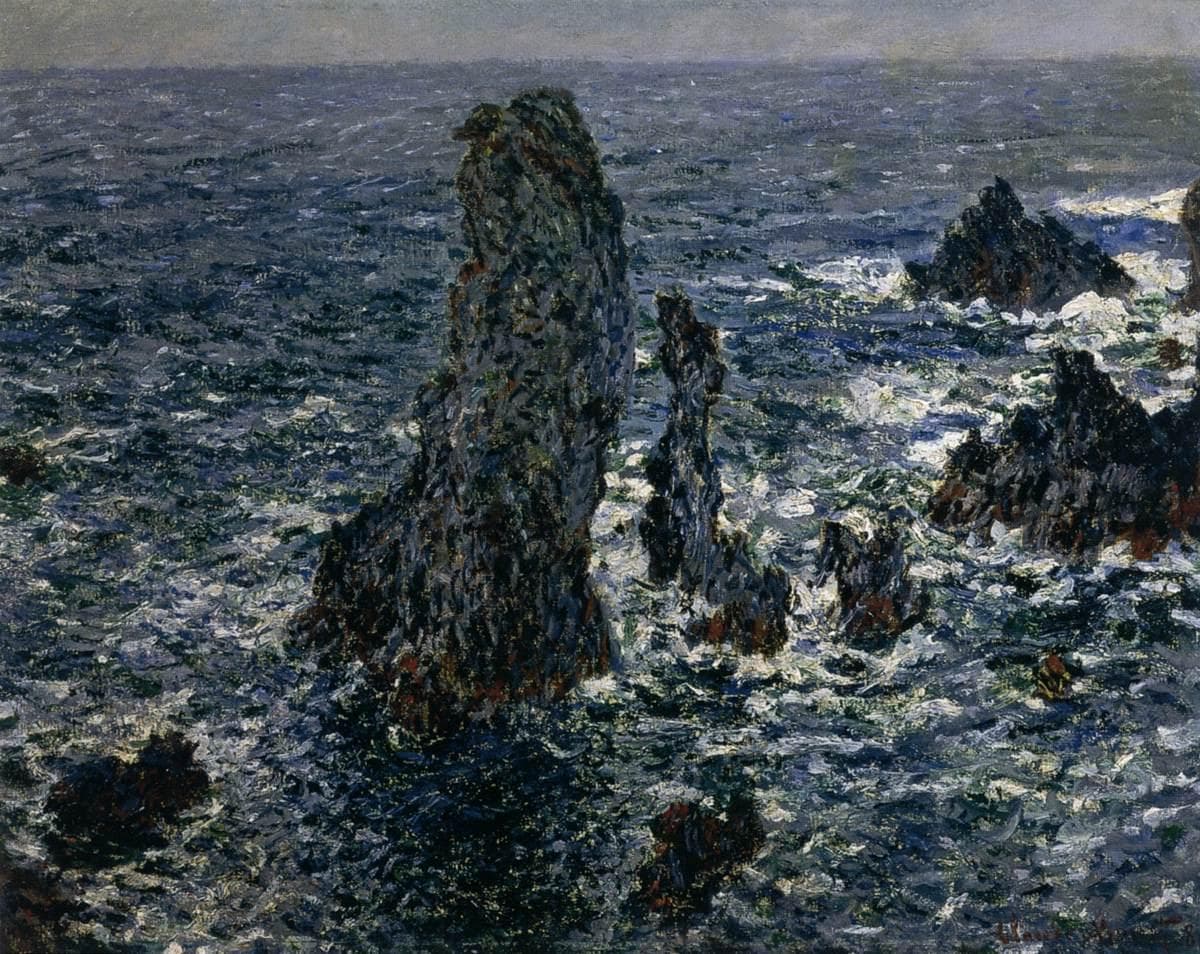
The Pyramides at Port-Coton, Rough Sea
Claude Monet · 1886
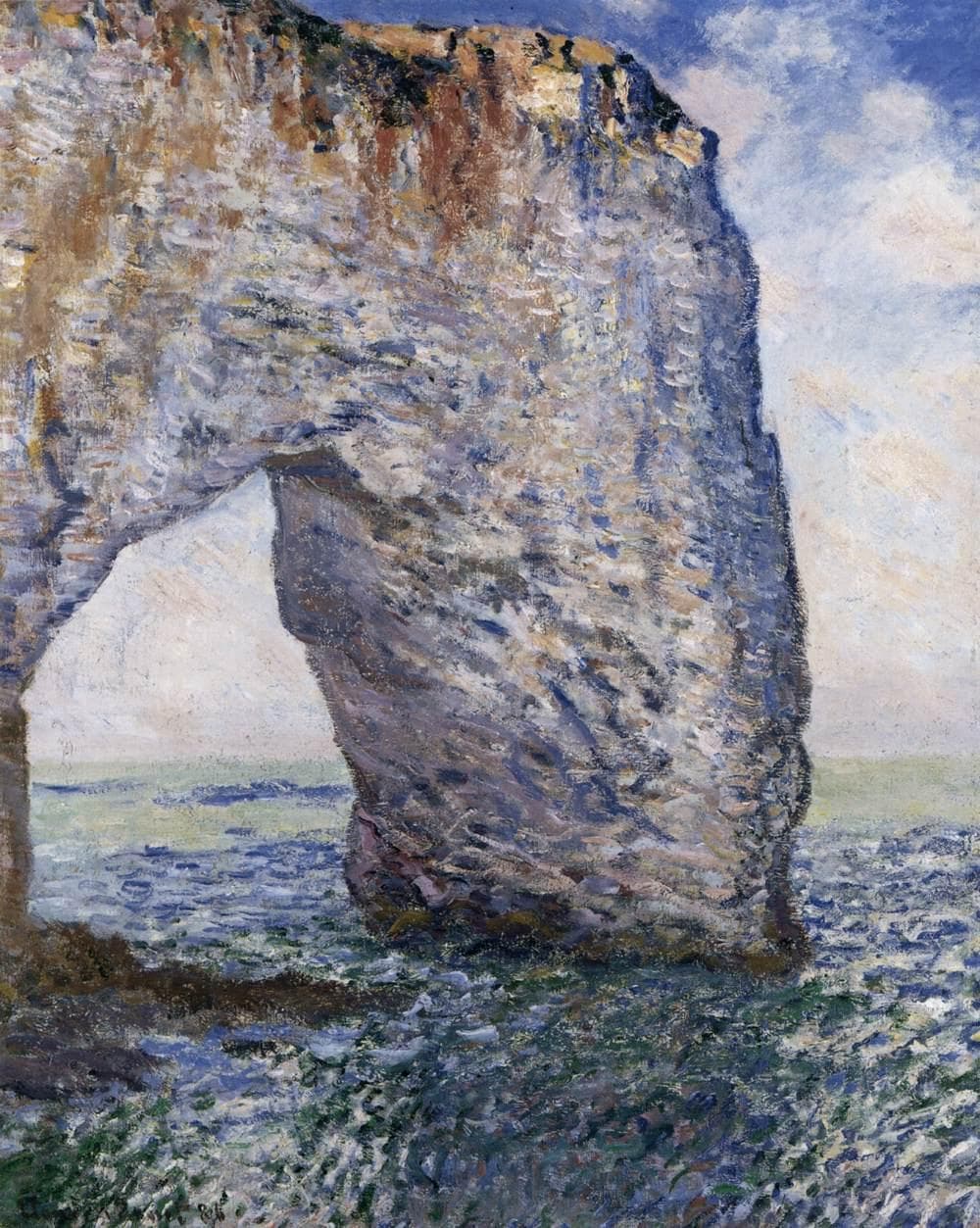
The Manneporte near Étretat
Claude Monet · 1886
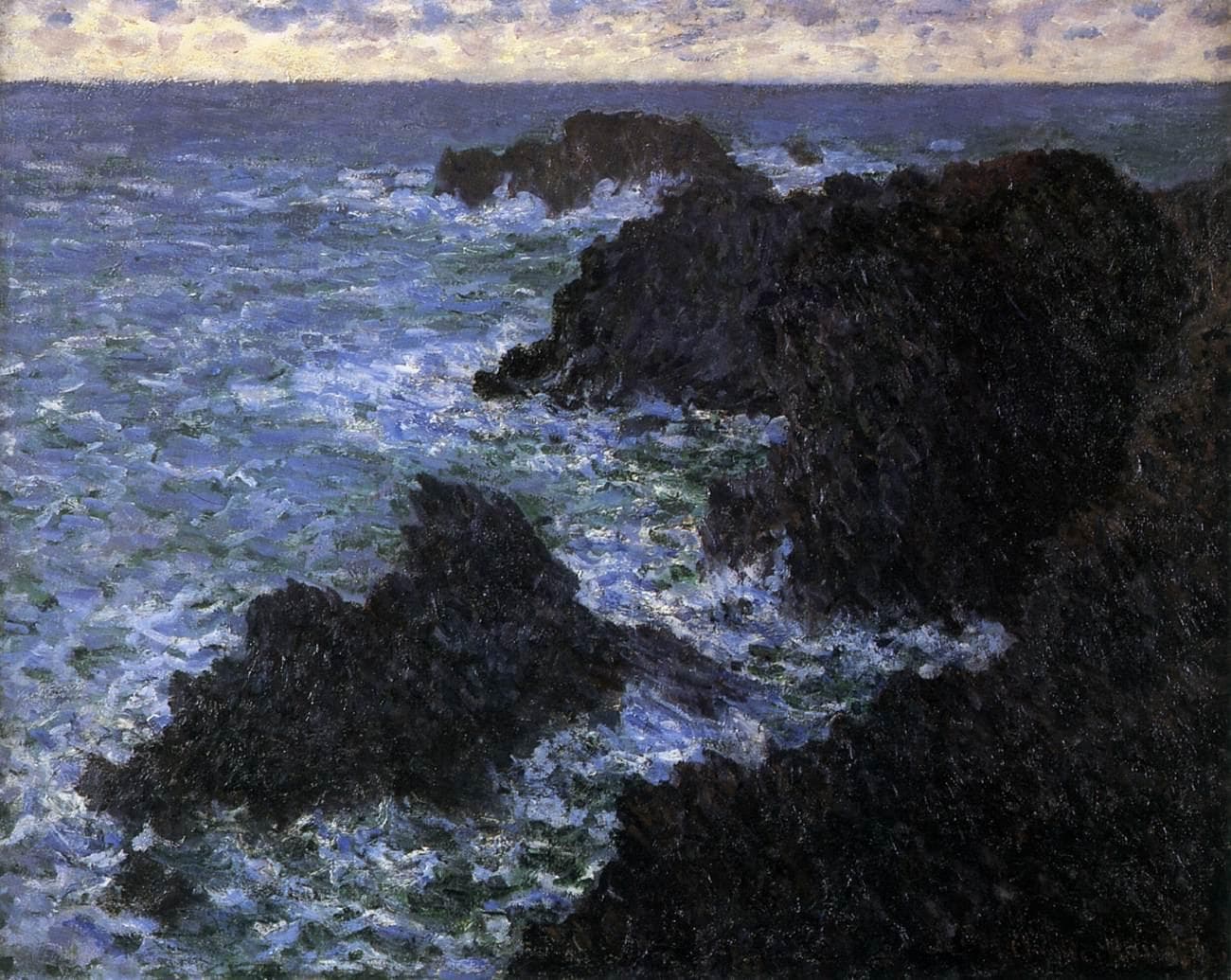
The Rocks of Belle-Île, the Wild Coast
Claude Monet · 1886
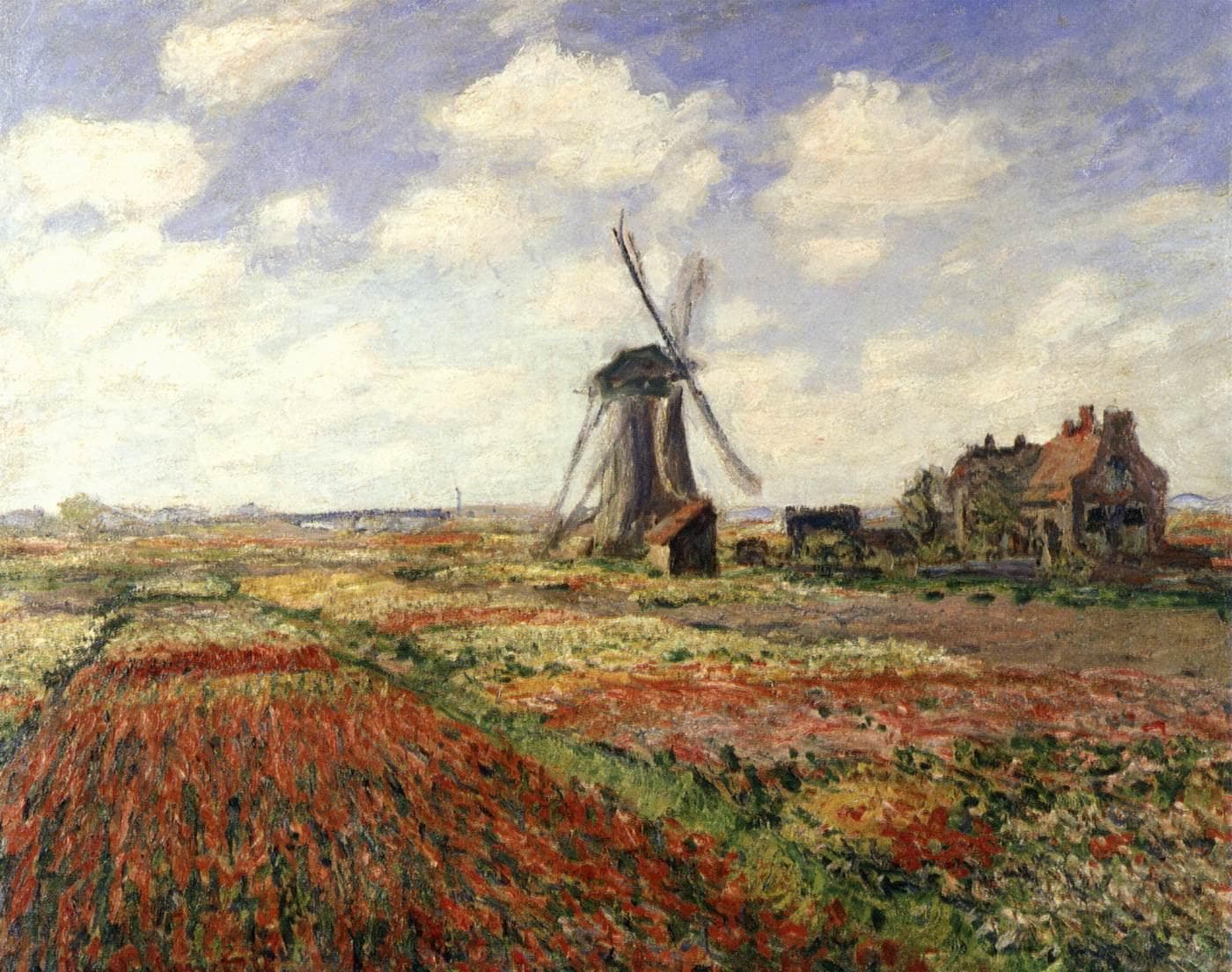
Tulip Fields in Holland
Claude Monet · 1886
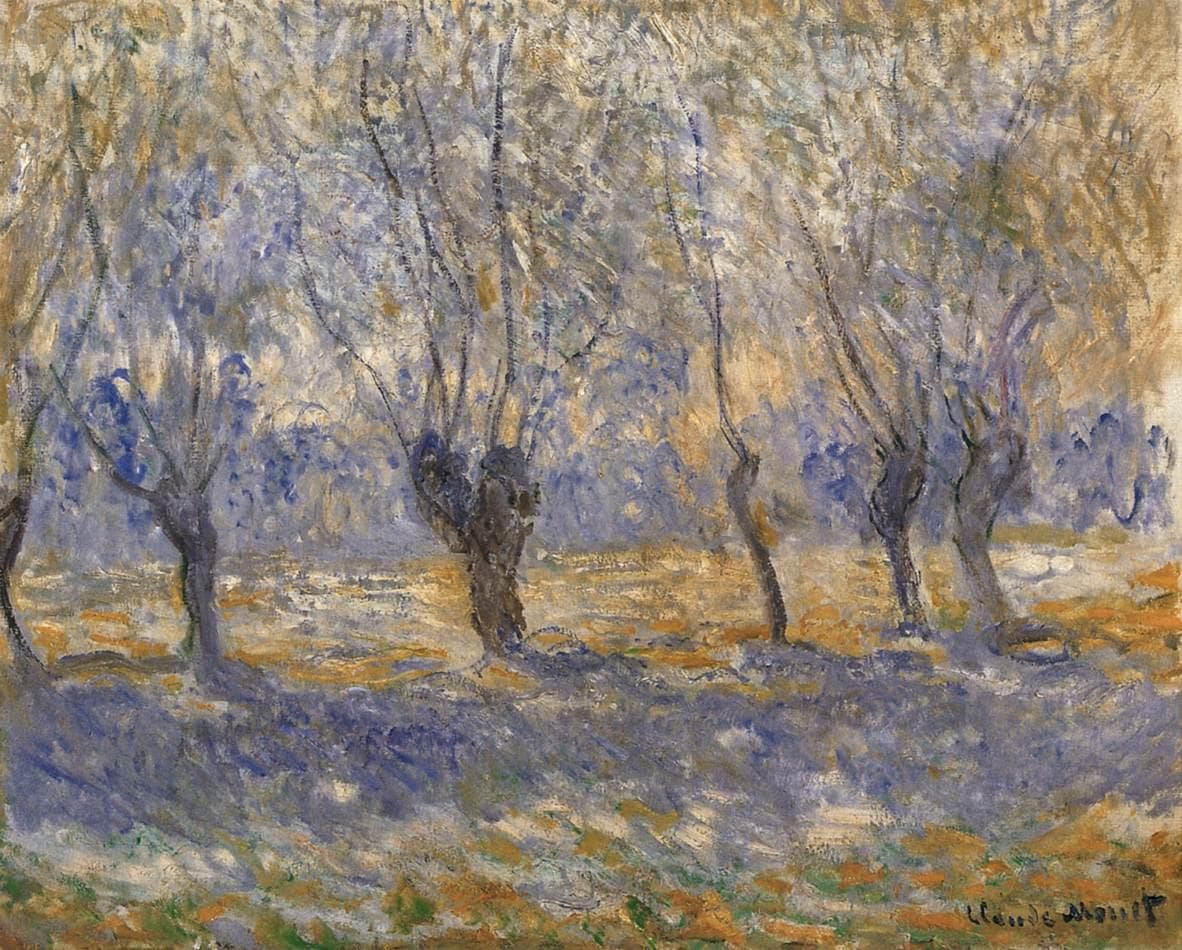
Willows at Giverny
Claude Monet · 1886
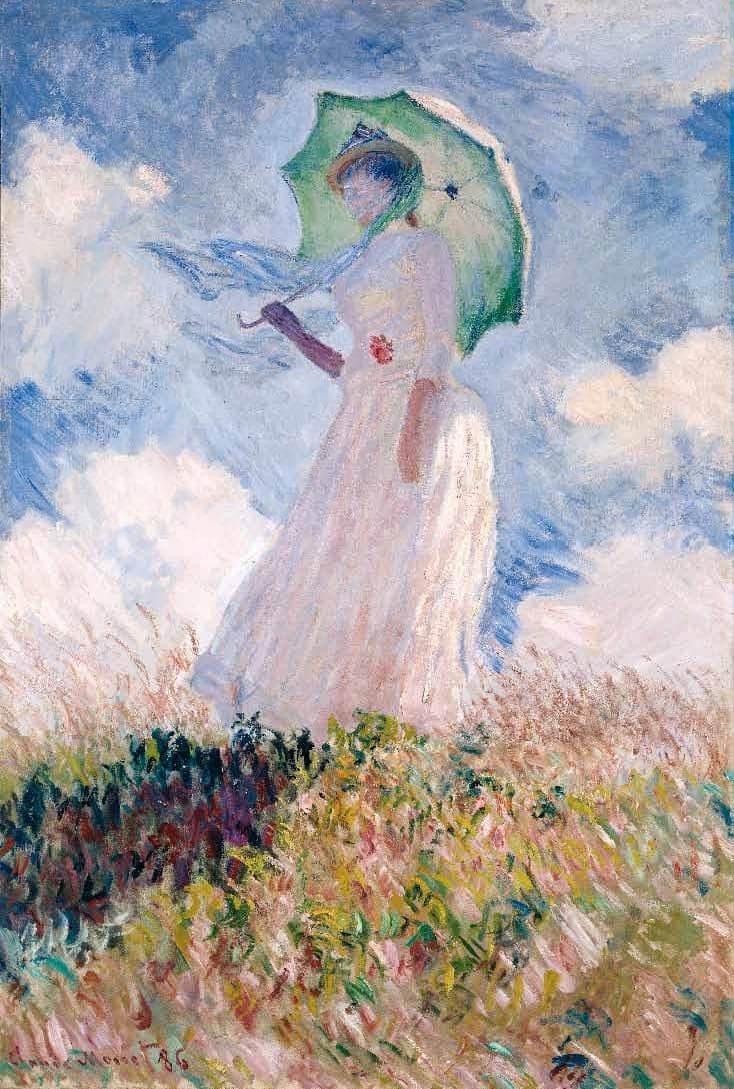
Woman with a Parasol, Facing Left
Claude Monet · 1886
Kindred works
You may also study
Woman with a Parasol, Facing Left
Claude Monet · 1886
Woman with a Parasol, Facing Right
Claude Monet · 1886
Tulip Fields in Holland
Claude Monet · 1886
Plum Trees in Bloom
Claude Monet · 1879

Venus de Milo
Alexandros of Antioch · c. 150–125 BC

The Scream
Edvard Munch · 1893

Ophelia
John Everett Millais · 1851–52

The Great Wave off Kanagawa
Katsushika Hokusai · c. 1830–32