Series
Monet's Haystacks: The Grainstacks Series of 1890–91
Twenty-five canvases of stacks of wheat in a field at Giverny, painted from late summer to the following spring, hour by hour.
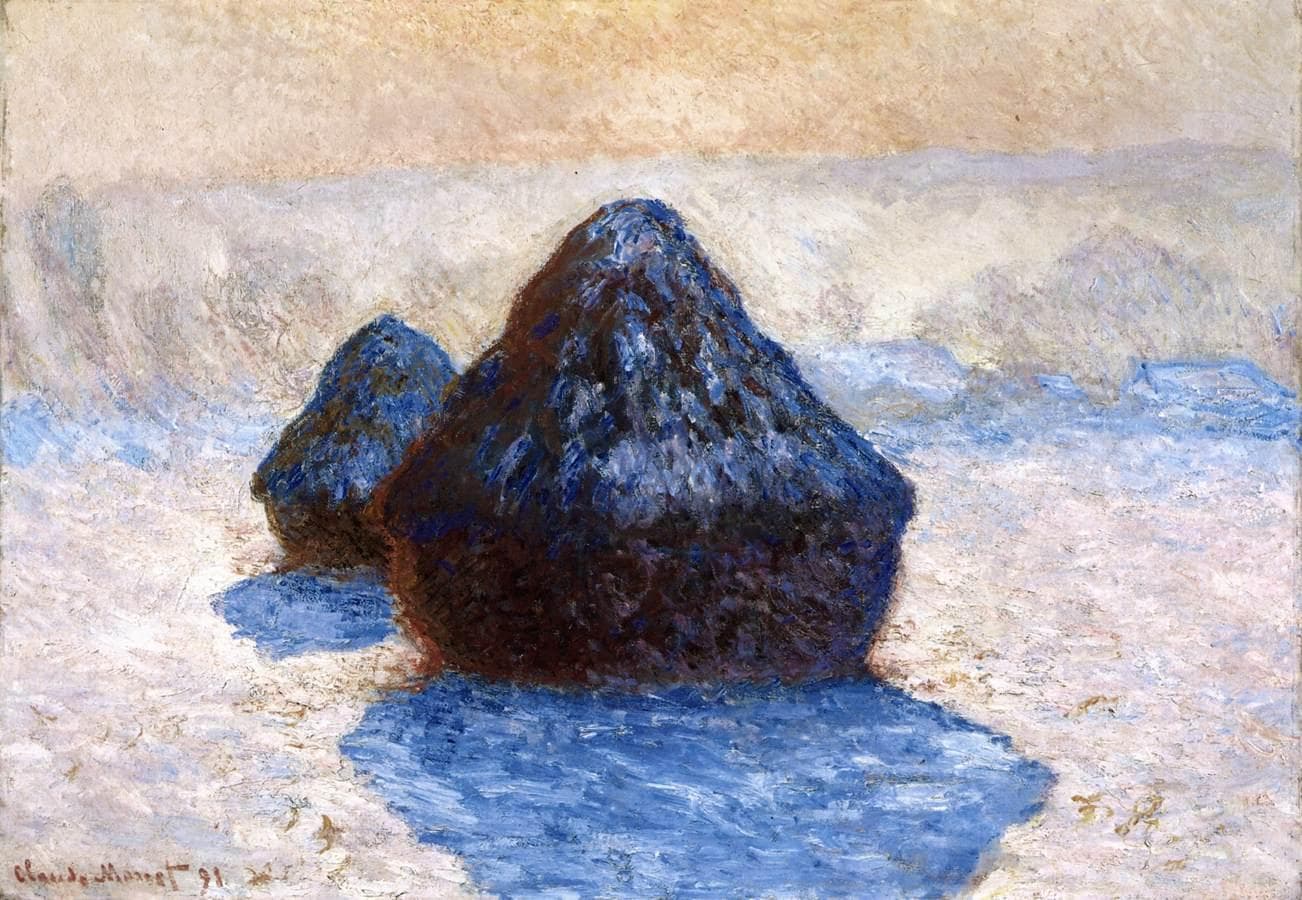
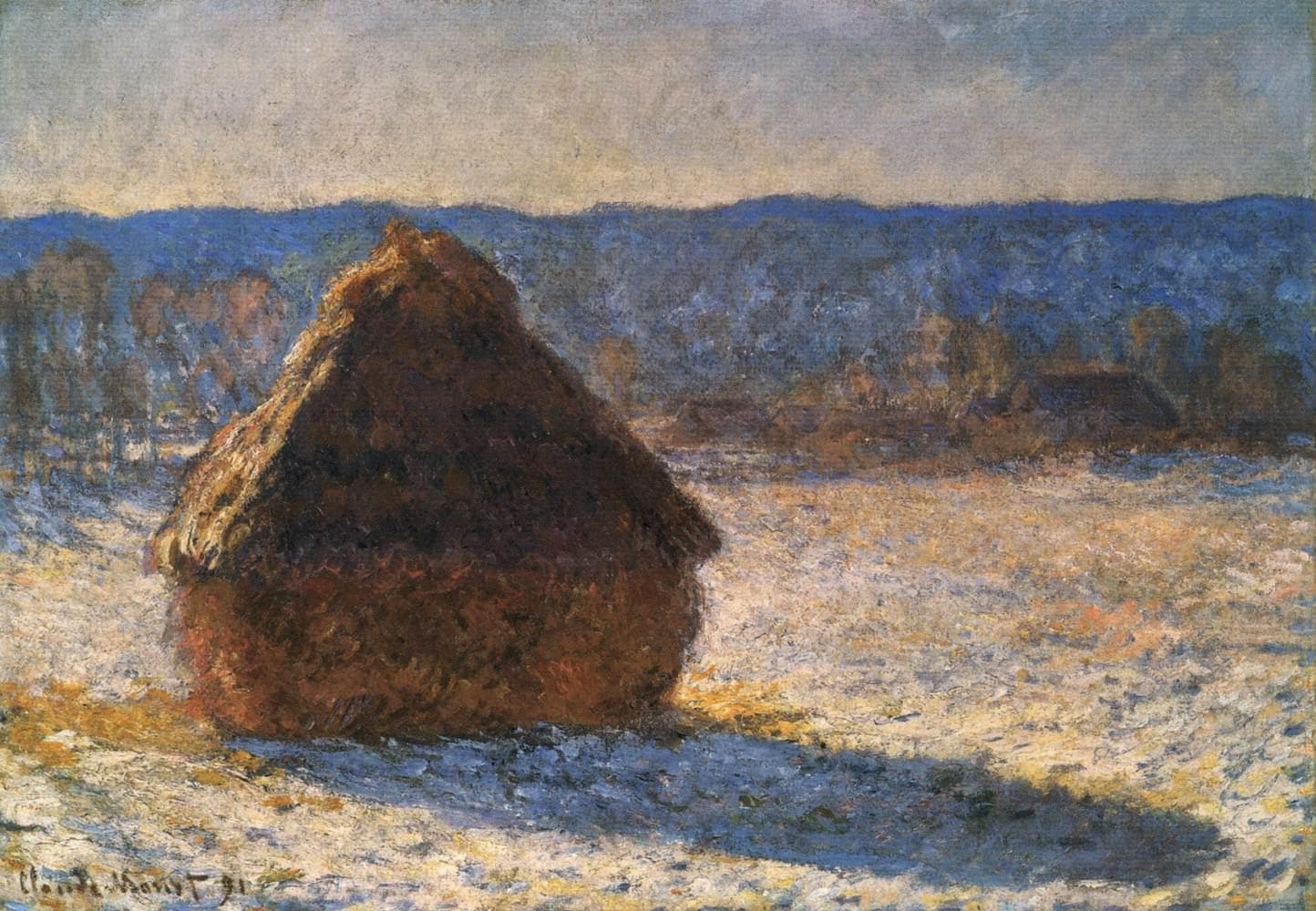
Monet's Haystacks (Meules, also translated Grainstacks or Stacks of Wheat) are a series of 25 paintings of stacks of harvested wheat in a field next to his house at Giverny, begun in late summer or early autumn 1890 and worked on into the spring of 1891. Counting a handful of earlier stack pictures from 1888–89, about 30 canvases show the motif.
The Art Institute of Chicago owns six of the 25, the largest group anywhere; the Musée d'Orsay, the Museum of Fine Arts, Boston, the Metropolitan Museum, the Getty, the Scottish National Gallery, the Kunsthaus Zürich, the National Museum of Western Art in Tokyo and others hold the rest, and several are in private hands. The Haystacks were Monet's first true series: one motif, painted again and again, to record light, weather and season rather than the thing itself.
The complete set
All 37 known canvases
From the catalogue raisonné. Works with a full close reading are marked ✦.
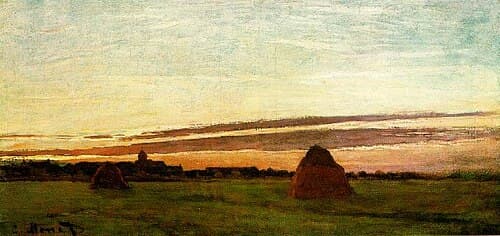
✦Haystacks at Chailly at Sunrise
1865 · San Diego Museum of Art
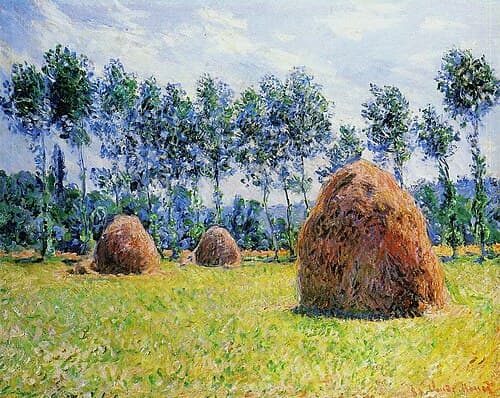
Haystacks at Giverny
1884 · Pola Museum of Art
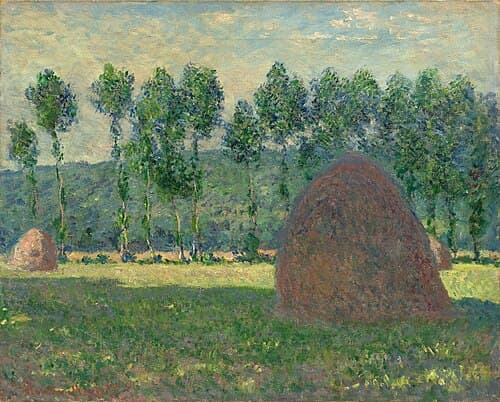
✦Haystack near Giverny
1884 · Pushkin Museum of Fine Arts
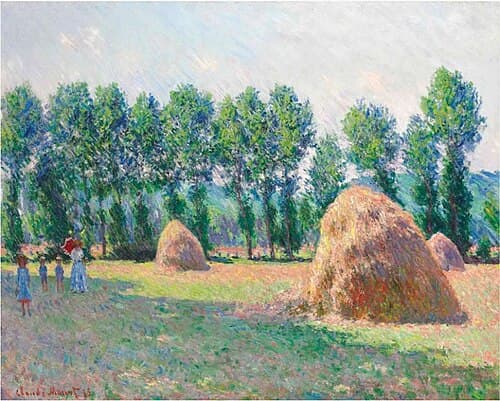
Haystacks at Giverny
1885
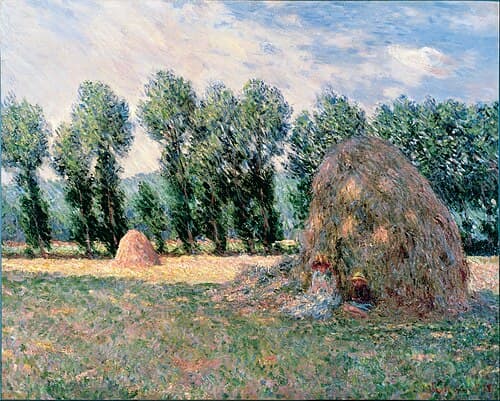
Haystacks
1885 · Ohara Museum of Art
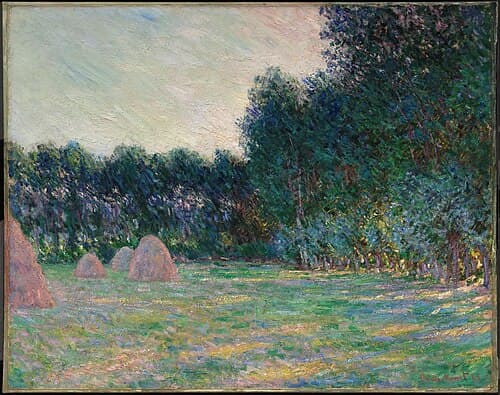
Meadow with Haystacks near Giverny
1885 · Museum of Fine Arts Boston
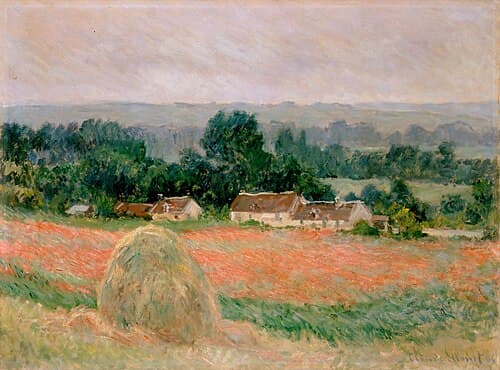
✦Haystack at Giverny
1886 · Hermitage Museum
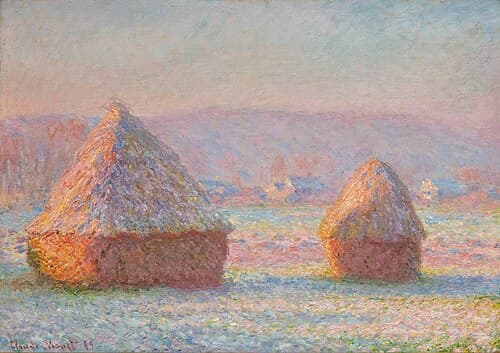
Grainstacks, White Frost Effect
1888 · Hill-Stead Museum
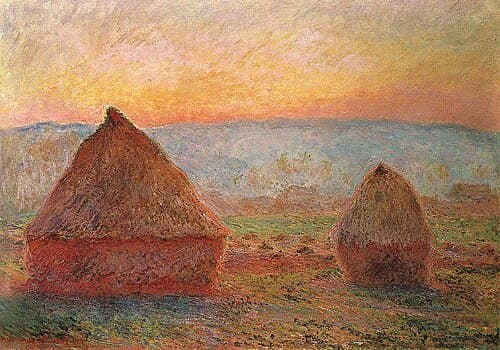
Grainstacks at Giverny the Evening Sun
1888 · Museum of Modern Art, Saitama
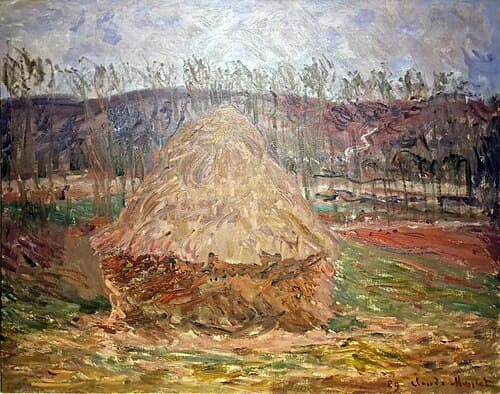
Grainstack at Giverny
1889 · Tel Aviv Museum of Art
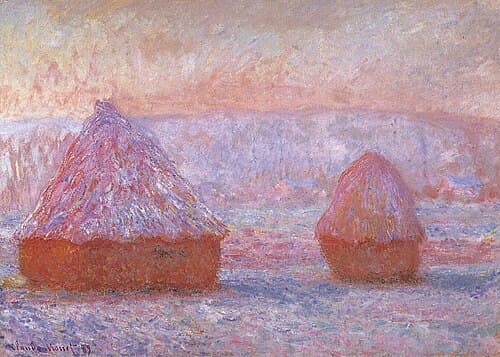
Les Meules, Giverny, effet du matin
1889
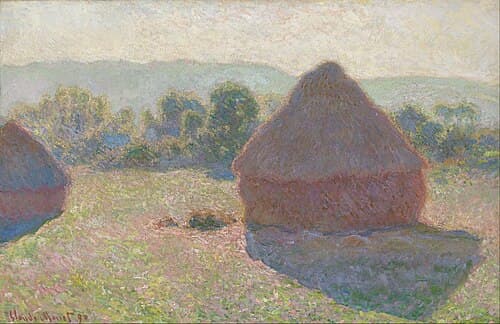
Haystacks, midday
1890 · National Gallery of Australia
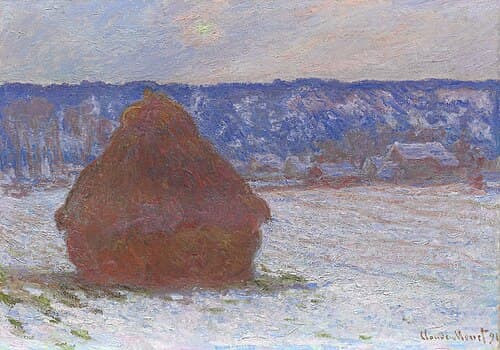
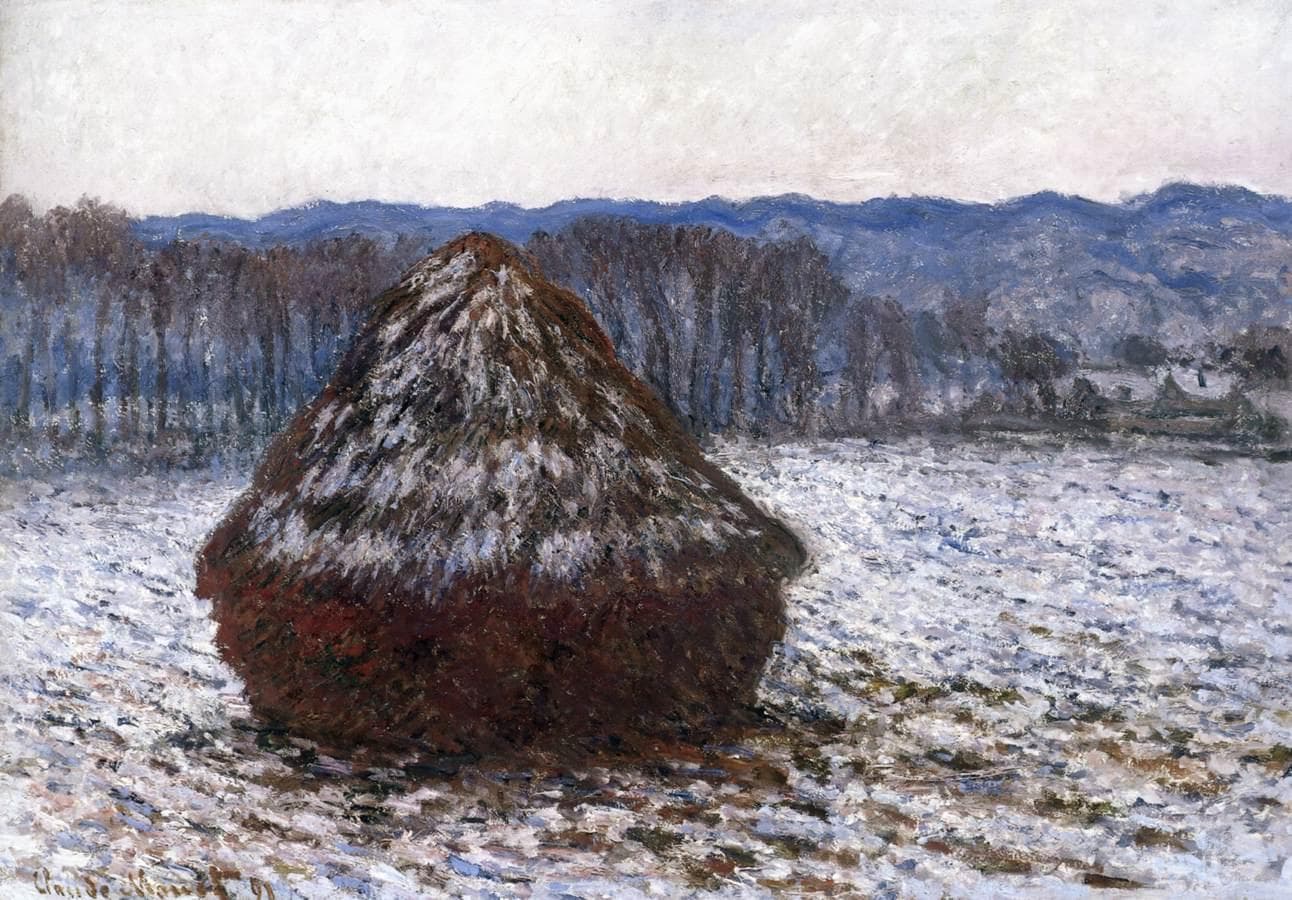
✦Stack of Wheat (Snow Effect, Overcast Day)
1890 · Art Institute of Chicago
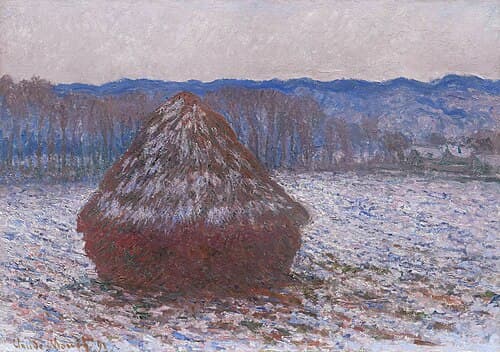
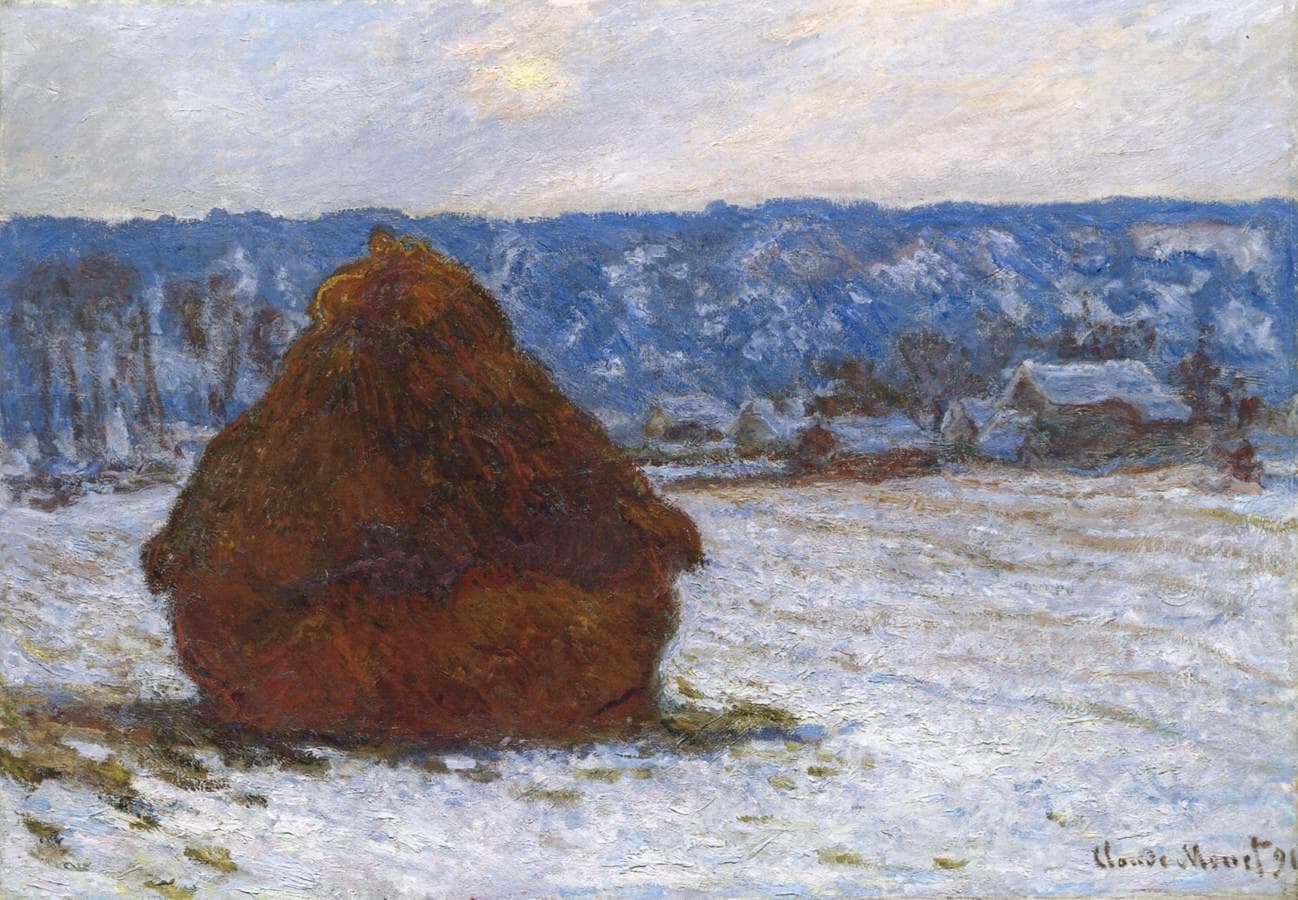
✦Stack of Wheat
1890 · Art Institute of Chicago
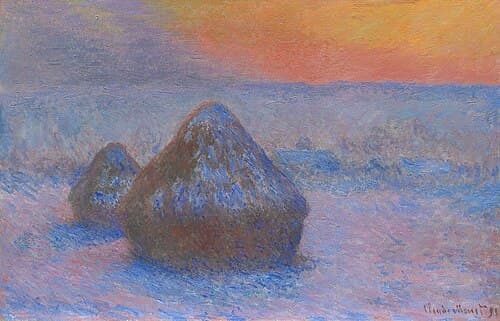
✦Stacks of Wheat (Sunset, Snow Effect)
1890 · Art Institute of Chicago
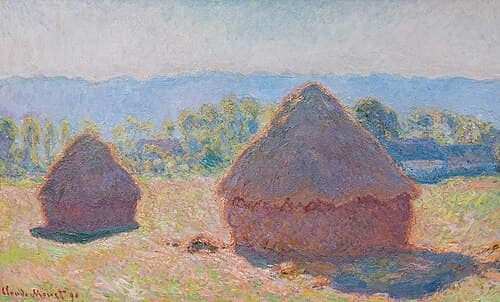
Grainstacks, in Bright Sunlight
1890 · Hill-Stead Museum
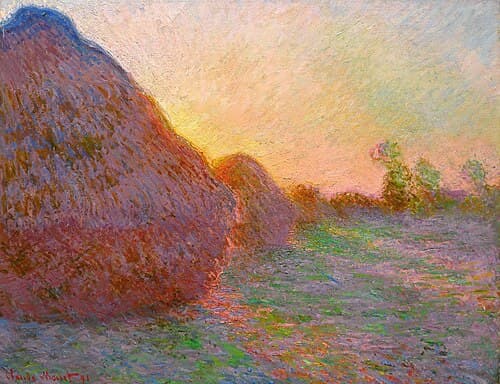
Graynsta
1890 · Impressionism: The Hasso Plattner Collection
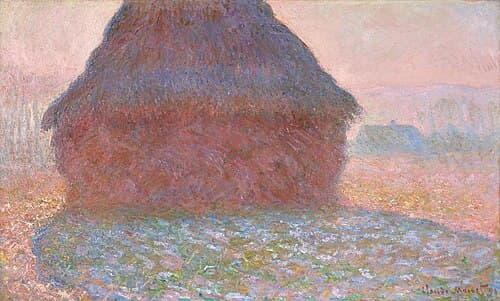
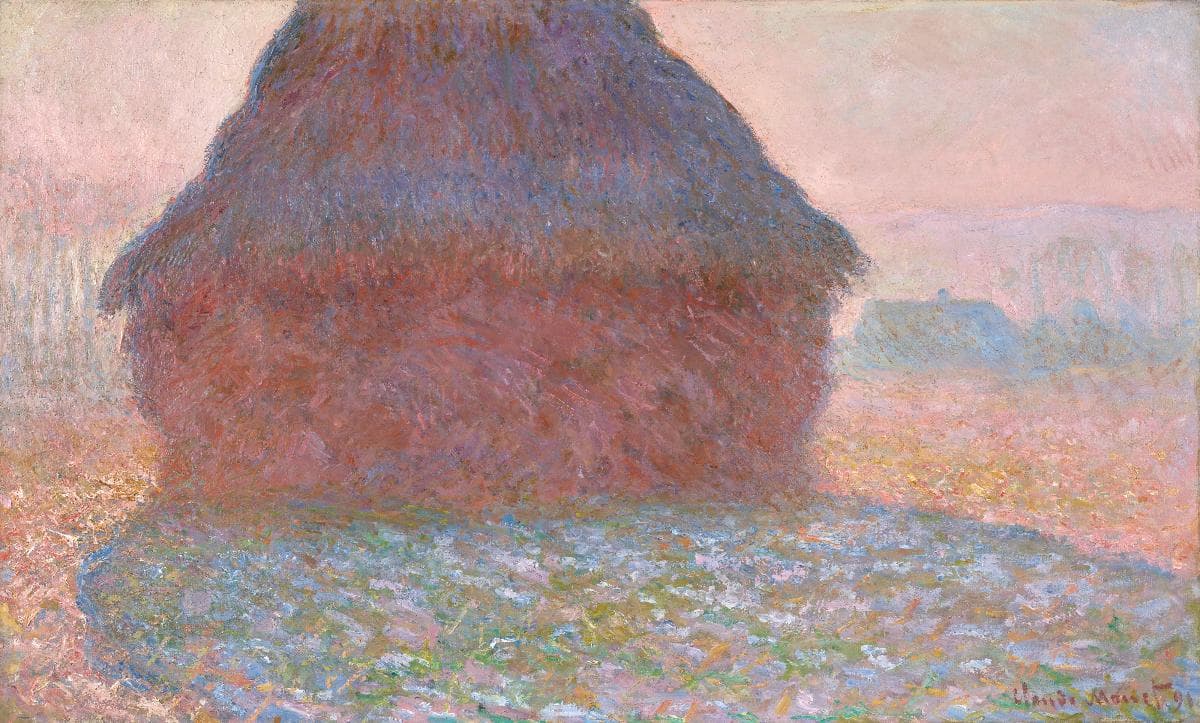
✦Grainstack in Sunlight
1890 · Kunsthaus Zürich
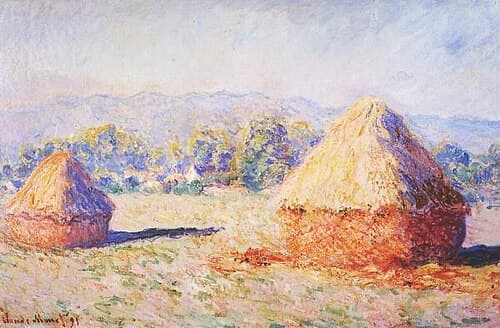
Grainstacks in the Sunlight, Morning Effect
1890
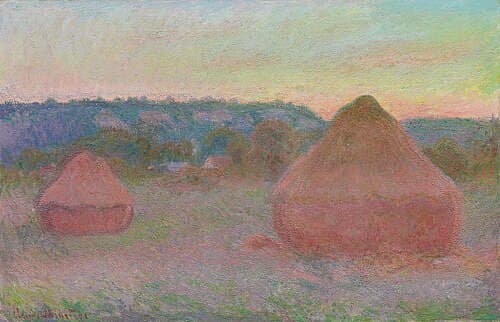
Stacks of Wheat (End of Day, Autumn)
1890 · Art Institute of Chicago
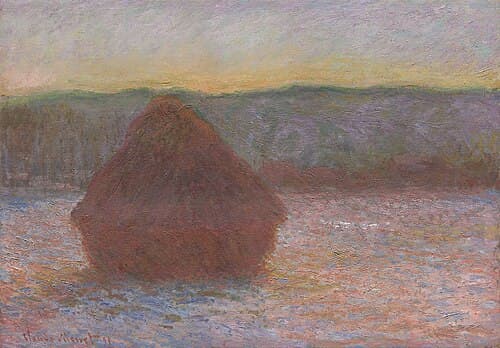
Stack of Wheat (Thaw, Sunset)
1890 · Art Institute of Chicago
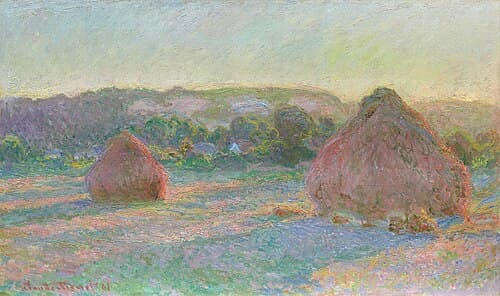
Stacks of Wheat (End of Summer)
1891 · Art Institute of Chicago
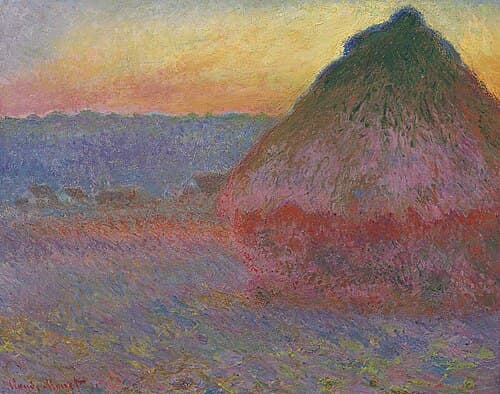
Grainstack in the Sunlight
1891
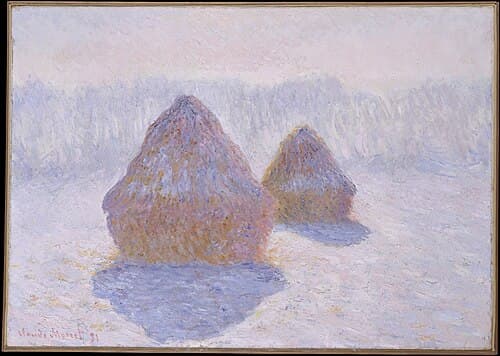
Haystacks (Effect of Snow and Sun)
1891 · Metropolitan Museum of Art
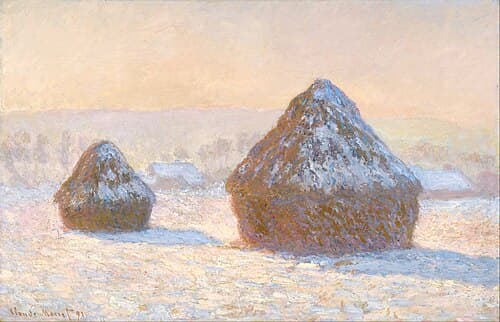
Wheatstacks, Snow Effect, Morning (Meules, Effet de Neige, Le Matin)
1891 · J. Paul Getty Museum
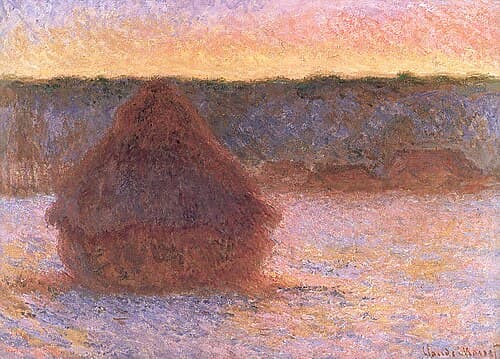
Haystacks at sunset, frosty weather
1891
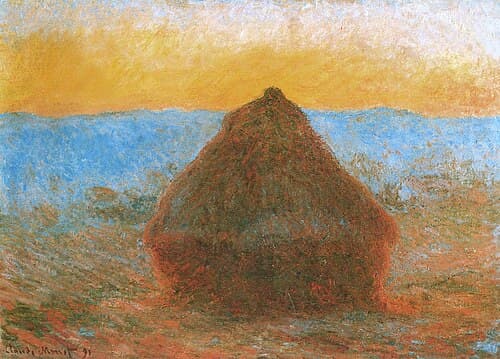
La Meule
1891
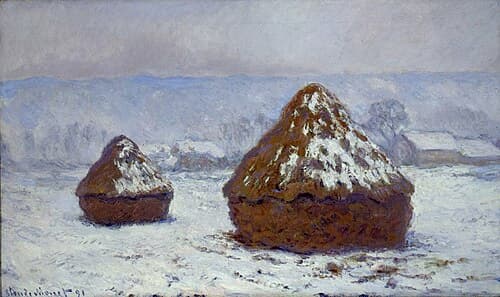
Grainstacks, Snow Effect
1891 · Shelburne Museum
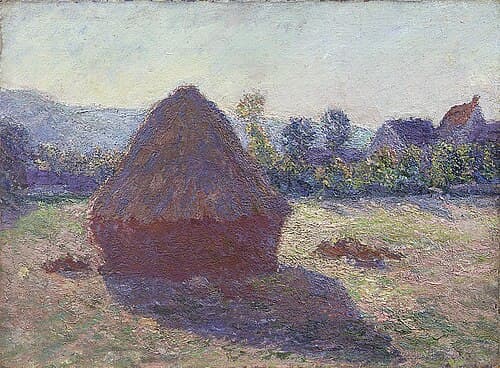
Haystack in the Evening Sun
1891 · Gösta Serlachius Fine Arts Foundation
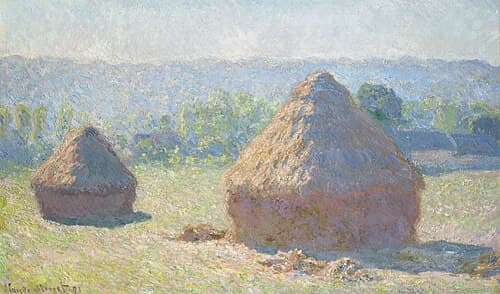
Haystacks, end of Summer
1891 · Musée d'Orsay
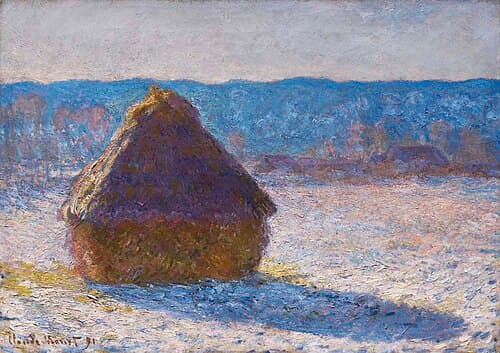
✦Grainstack (Snow Effect)
1891 · Museum of Fine Arts Boston
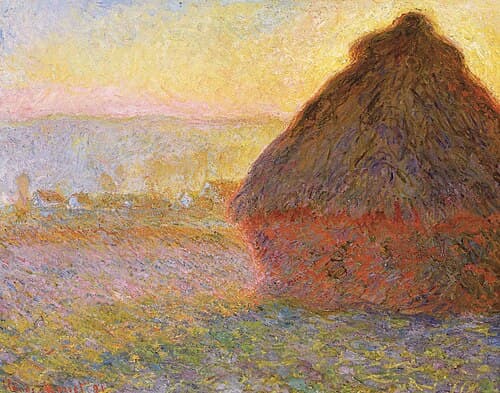
Grainstack (Sunset)
1891 · Museum of Fine Arts Boston
Meule, soleil couchant, gelée blanche
1891 · Wallraf–Richartz Museum
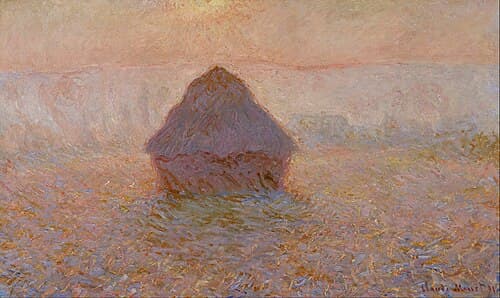
Grainstack, Sun in the Mist
1891 · Minneapolis Institute of Art
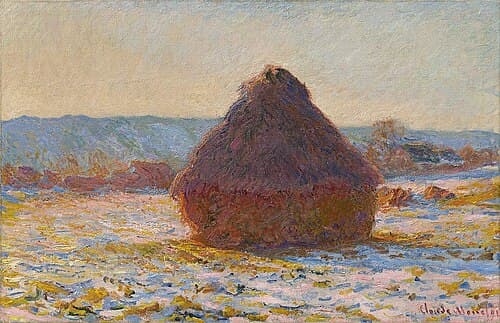
Grainstack in the Sunlight, Snow Effect
1891 · Impressionism: The Hasso Plattner Collection
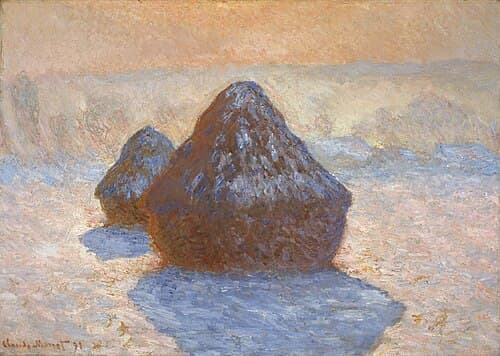
✦Haystacks: Snow Effect
1891 · National Galleries Scotland
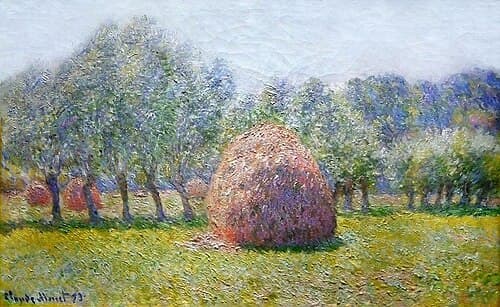
Haystack
1893 · Michele & Donald D'Amour Museum of Fine Arts
What are Monet's Haystacks?
The paintings show one or two conical stacks of grain standing in a field. They are not loose hay but meules: tall stacks of wheat sheaves, built after the harvest and thatched on top to keep the grain dry until threshing. In Normandy they could stand in the fields for months. The field belonged to Monet's neighbor, a farmer named Quéruel, and lay just west of the house at Giverny, with the hills across the Seine and a line of poplars and village roofs behind.
Monet had painted stacks before, in a few summer pictures of 1888–89 and in earlier views such as Haystacks at Giverny and Haystack at Giverny of the mid-1880s, where they are part of a broader landscape. In 1890 he made the stacks themselves the subject, and kept them in front of him for seven months.
How Monet painted the series
The story Monet told later is that he went out one day to paint the stacks and found the light had changed; he sent his stepdaughter Blanche Hoschedé back to the house for a second canvas, then a third, and so on. Whatever its exact truth, it describes his method. He worked on many canvases at once, each assigned to a particular effect: early morning frost, midday sun, a gray day, sunset, snow. When the light shifted, he switched canvases. On good days he might work on ten or twelve.
He did not finish them outdoors. Back in the studio he reworked the series as a group, building up thick, crusted paint and adjusting colors so that the pictures would hold together when shown side by side. This was a deliberate change from the quick, single-session pictures of his Impressionist years. He wrote to the critic Gustave Geffroy that he was working hard to render what he called "instantaneity," and that the more he worked, the more he saw how much work it took.
How the versions differ
The composition barely changes. What changes is everything that falls on the stacks and around them.
- Season. The earliest canvases show late summer and autumn, with stubble fields in gold and green. Most of the series was painted in the hard winter of 1890–91, when snow lay on the fields for weeks.
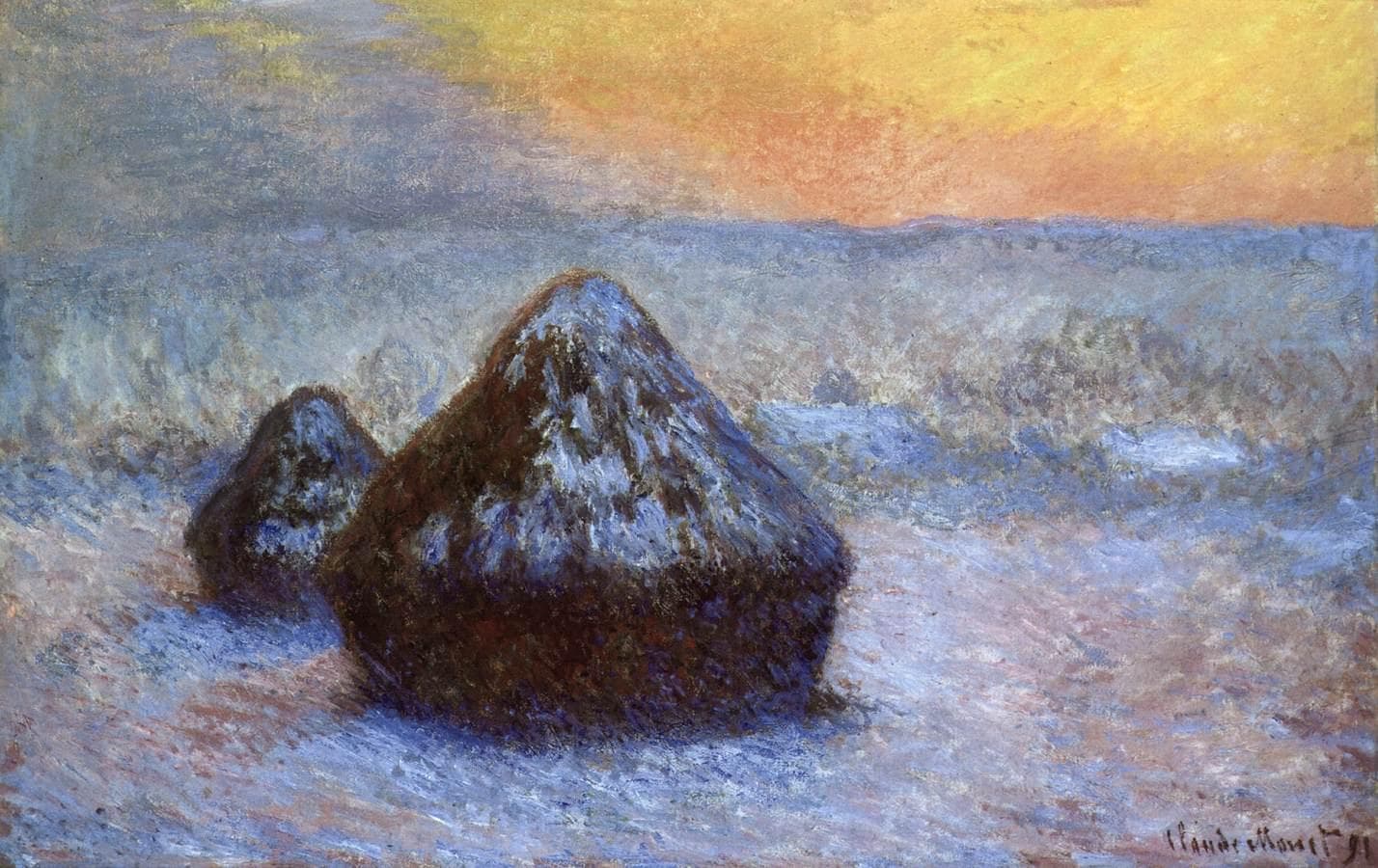
- Time of day. Morning pictures are cool and pale; at sunset the stacks turn to dark silhouettes rimmed with orange, and their shadows stretch blue across the snow, as in Stacks of Wheat, Sunset, Snow Effect.
- Weather. Overcast days flatten the light into grays and mauves, as in Stack of Wheat, Snow Effect, Overcast Day. Frost and thaw produce pinks and violets.
- Number and placement. Some canvases show a single stack, others two, set close together or apart, near the edge of the frame or in the center.
Look closely at any of them and you see that nothing is painted in one color. The shadow side of a stack is woven from blues, violets, reds and greens; the snow is pink, yellow and lilac as much as white. That is what Monet meant by painting the enveloppe, the light and air between him and the object.
The 1891 exhibition and its success
In May 1891 Monet showed 15 of the paintings at Durand-Ruel's gallery in Paris. It was an immediate commercial and critical success, and most of the paintings sold within a month. Critics such as Geffroy and Octave Mirbeau wrote that the stacks were like no landscape painting before them. Camille Pissarro, who could be sharp about Monet's commercial sense, admitted the pictures were luminous.
American collectors were the series' great buyers. The Chicago collector Bertha Palmer bought nine canvases of the stacks, and several of hers came to the Art Institute of Chicago, which is why it holds six of the 25 today. The series' success made Monet financially secure for the first time; in 1890 he had already bought the Giverny house he had rented since 1883.
What do the Haystacks mean?
Monet said little about meaning; he spoke of light and effects. Later historians have added a reading from the subject. The art historian Paul Hayes Tucker pointed out that a wheat stack was a sign of harvest and stored wealth, and that in the years after the Franco-Prussian War a field of stacks in the Norman countryside could stand for the fertility and stability of rural France. On this view the series is not only about light but about a landscape of plenty, painted at a moment of national self-scrutiny. The two readings are not in conflict: the stacks were chosen because they were near, simple and stood still, and they also happened to be a familiar emblem of the French land.
Why the Haystacks matter
The series changed the way Monet worked for the rest of his life. It was followed directly by the Poplars of 1891, then by Rouen Cathedral, the Mornings on the Seine, the London views and finally the Water Lilies. Each took one motif and repeated it.
It also mattered for others. In 1896 the young Wassily Kandinsky saw one of the stacks at an exhibition of French art in Moscow and later wrote that he had not recognized the subject at first, and that the experience showed him painting could exist without an object. The haystacks are one of the starting points of abstract art.
Where are Monet's Haystacks now?
The 25 canvases of the main series are widely dispersed:
- Art Institute of Chicago: six paintings, including Stack of Wheat, Snow Effect, Overcast Day and Sunset, Snow Effect. See Monet at the Art Institute of Chicago.
- Museum of Fine Arts, Boston: Grainstack (Snow Effect) and another stack. See Monet at the MFA Boston.
- Scottish National Gallery, Edinburgh: Haystacks, Snow Effect.
- Kunsthaus Zürich: Grainstack in Sunlight.
- Musée d'Orsay and Musée Marmottan Monet, Paris; the Metropolitan Museum and MoMA, New York; the Getty, Los Angeles; the National Museum of Western Art, Tokyo; the Hill-Stead Museum, Connecticut; the Minneapolis Institute of Art; and the Museum Barberini, Potsdam, which shows the version bought for $110.7 million at Sotheby's in May 2019, then a record for Monet.
For other museums, see Where to See Monet's Paintings. For the painter's life, see Claude Monet.
Questions & answers
How many haystack paintings did Monet make?
Monet's main Haystacks series has 25 canvases, painted at Giverny from late summer 1890 to spring 1891. With a few earlier stack pictures of 1888–89, about 30 paintings show the motif. He exhibited 15 of them at Durand-Ruel's gallery in Paris in May 1891.
Where are Monet's Haystacks?
The Art Institute of Chicago has six, the largest group. Others are in the Musée d'Orsay and Musée Marmottan in Paris, the Museum of Fine Arts, Boston, the Met and MoMA in New York, the Getty, the Scottish National Gallery, the Kunsthaus Zürich, the National Museum of Western Art in Tokyo, the Museum Barberini and private collections.
Why did Monet paint haystacks?
The stacks stood in a field beside his house, so he could return to them at every hour and in every weather. Their simple shape let him concentrate on light, color and atmosphere, which were his real subject. The series also proved commercially successful and became the model for all his later series.
Are they haystacks or wheatstacks?
Strictly, they are stacks of wheat (meules de blé), built after the harvest to store the sheaves until threshing, not stacks of hay. English titles vary between Haystacks, Grainstacks and Stacks of Wheat; the Art Institute of Chicago uses Stacks of Wheat.
How much did a Monet haystack sell for?
In May 2019 a 1890 Meules (Grainstacks) sold at Sotheby's New York for $110.7 million, at the time a record for Monet and the first Impressionist work to pass $100 million. It was bought by Hasso Plattner and is shown at the Museum Barberini in Potsdam.