Impressionism
Woman with a Parasol, Facing Left
Claude Monet, 1886
Woman with a Parasol, Facing Left is an 1886 painting by Claude Monet of Suzanne Hoschedé on a grassy rise, her white dress and green parasol caught by the wind. It is in the Musée d'Orsay, Paris, with its companion facing right.
- Artist
- Claude Monet
- Date
- 1886
- Medium
- Oil on canvas
- Dimensions
- 131 × 88 cm
- Collection
- Musée d'Orsay, Paris, France
- Movement
- Impressionism
- Catalogue
- Wildenstein 1077
Painted at Giverny: Monet's House and GardenMore at Monet at the Musée d'Orsay
What you are looking at
A young woman stands on a slope of meadow, seen from below so that she rises against a wind-blown sky of blue and white clouds. She holds a green parasol over her head, tilted back over her right shoulder; a pale scarf streams from her hat to the left, and her long white dress billows around her legs. She faces to the left, her body slightly turned, and her face is shadowed and blurred, with no features drawn.
A spray of red flowers at her waist is the only bright accent. In the foreground, grasses and wildflowers in yellow, pink, green and violet are blown in the same direction as the scarf. The signature and date "86" appear at lower left.
The canvas is tall, 131 centimeters high, so the figure is close to life size. The sun is behind and above her, which is why her face and the front of her dress lie in shadow.
Two studies, one sitter
In the summer of 1886 Claude Monet painted two large canvases of the same figure on the Île aux Orties, a small island in the Seine near Giverny: this one, facing left, and its pendant, Woman with a Parasol, Facing Right. Monet titled them Essai de figure en plein air, "study of a figure outdoors." The model was Suzanne Hoschedé, Alice Hoschedé's daughter, then about eighteen, who would later marry the American painter Theodore Butler. The village and its river islands are covered on Giverny.
The pictures deliberately recall Monet's 1875 Woman with a Parasol, Madame Monet and Her Son, in which Camille stands on a similar rise at Argenteuil. Camille had died in 1879. Many writers have seen the later pictures, with their faceless figure, as haunted by the earlier one, though Monet himself spoke only of the problem of painting figures in outdoor light.
How it was painted
Monet has dissolved the figure into the weather. Look at the dress: it is painted with the same blues, lilacs and whites as the clouds behind it, and in places the brushstrokes of sky and fabric run together. The shadow side of the dress is blue; the lit side is warm cream and pink. The parasol is green with a paler rim, and its color reflects down onto her face and shoulders.
The strokes everywhere follow the wind. The scarf, the skirt, the grasses and the clouds all lean the same way, so the whole canvas seems to move. The sky is painted in broad, curving swathes of blue and white, among the boldest brushwork Monet had used in a figure painting.
Compare her face with the 1875 Camille: there, features are suggested; here, there are none. A smudge of shadow under the hat brim is all we get. The veil or scarf that blows across the face adds to the effect, so that even the outline of the head is uncertain where it meets the sky. The person, in effect, matters less than the light around her.
The parasol pictures and how this one differs
In 1886 Monet was rethinking the figure. He had largely given up painting people in the 1880s, and these two canvases were a deliberate test of whether a figure could be painted with the same freedom as a landscape. The left-facing version is the more dramatic of the pair: bluer, more windswept, with deeper shadows and a stronger sense of movement. The right-facing canvas is paler and calmer.
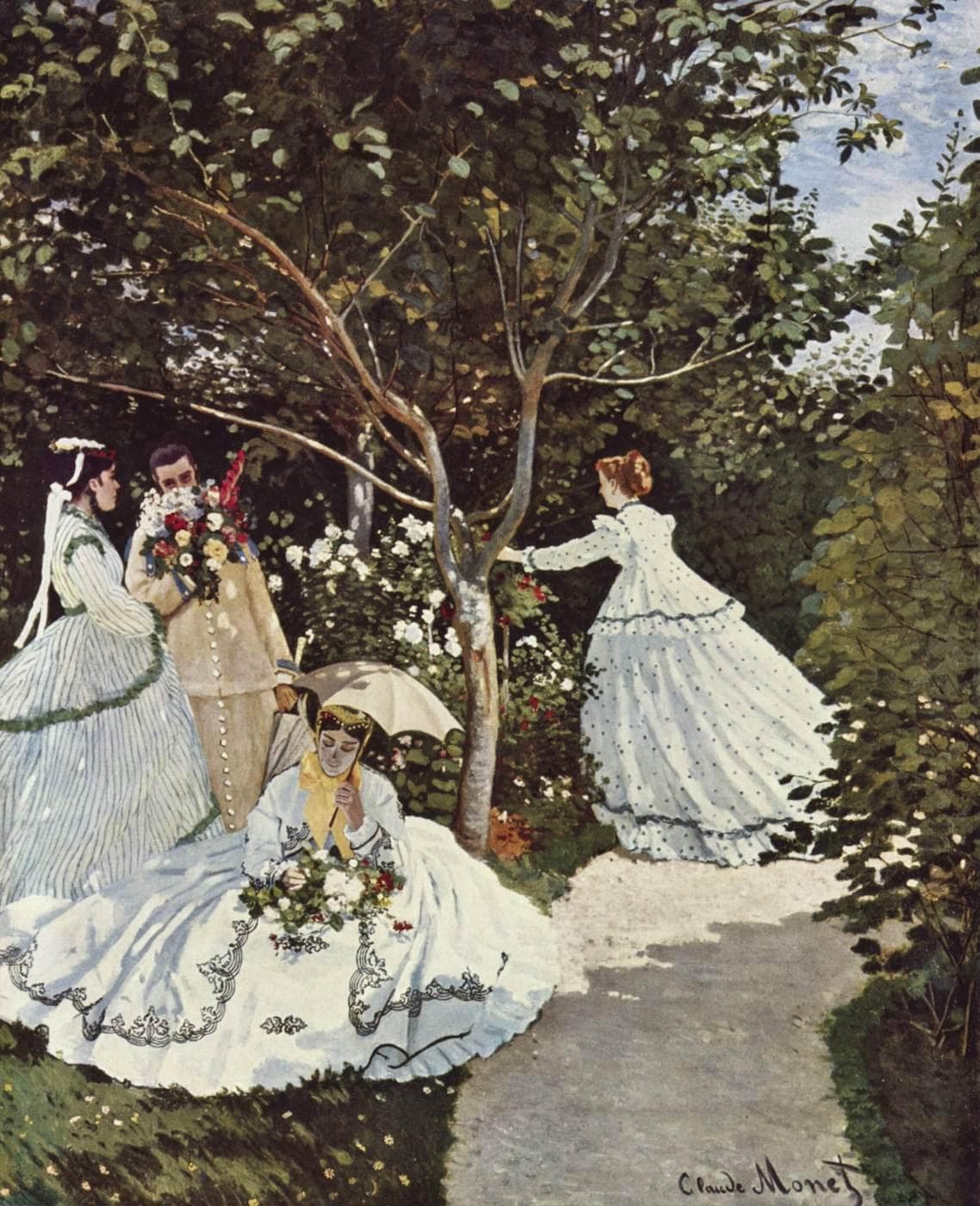
Together they are among the last large figure paintings Monet made. After them he turned to the series of the 1890s, the Haystacks and Poplars, in which landscape alone carries the drama. Compare also Women in the Garden of 1866, his first attempt at life-size figures in sunlight.
Where to see it
Both 1886 paintings were given to the French state by Monet's son Michel in 1927 and hang in the Musée d'Orsay, Paris (this one RF 2621). They are among the works described on Monet at the Musée d'Orsay; see also Famous Paintings of Women.
Questions & answers
Where is Woman with a Parasol, Facing Left?
It is in the Musée d'Orsay in Paris (RF 2621), together with its companion, Woman with a Parasol, Facing Right. Both large canvases, 131 by 88 centimeters, were given to the French state in 1927 by Monet's son Michel and moved to the Orsay when it opened in 1986.
When and where was it painted?
In the summer of 1886 on the Île aux Orties, a small island in the Seine near Monet's home at Giverny. Monet called the two canvases studies of a figure outdoors. Wildenstein catalogues this one as W.1077.
Who is the woman with the parasol in the 1886 paintings?
The model was Suzanne Hoschedé, the daughter of Alice Hoschedé, who later became Monet's second wife. Suzanne often posed for him at Giverny and later married the American painter Theodore Butler. The 1875 Woman with a Parasol, in Washington, shows Camille Monet instead.
Why does the woman have no face?
Monet called these paintings studies of a figure outdoors. He was interested in how sunlight, wind and shadow transform a figure, not in a portrait likeness. Some writers also connect the blurred face to his memories of Camille, who posed for the 1875 version and died in 1879.
More by the artist
Claude Monet

Bridge over a Pond of Water Lilies
Claude Monet · 1899

Woman with a Parasol – Madame Monet and Her Son
Claude Monet · 1875

Sunset in Venice
Claude Monet · 1908–12

La Grenouillère
Claude Monet · 1869

Beach in Pourville
Claude Monet · 1882

Springtime
Claude Monet · 1872

Boating on the River Epte
Claude Monet · 1890

The Seine at Asnières (Hermitage)
Claude Monet · 1873
Also painted in 1886
The same year
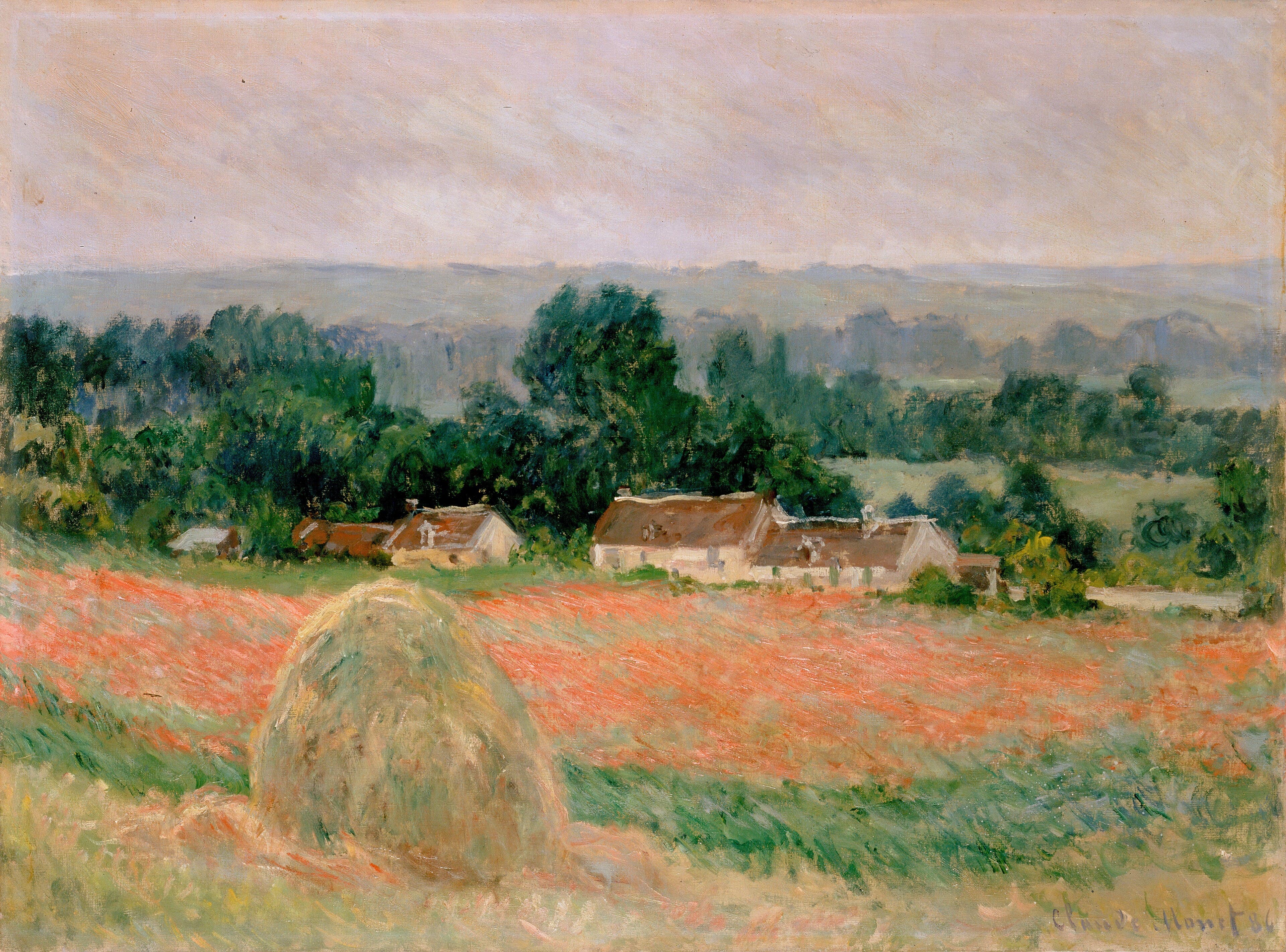
Haystack at Giverny
Claude Monet · 1886
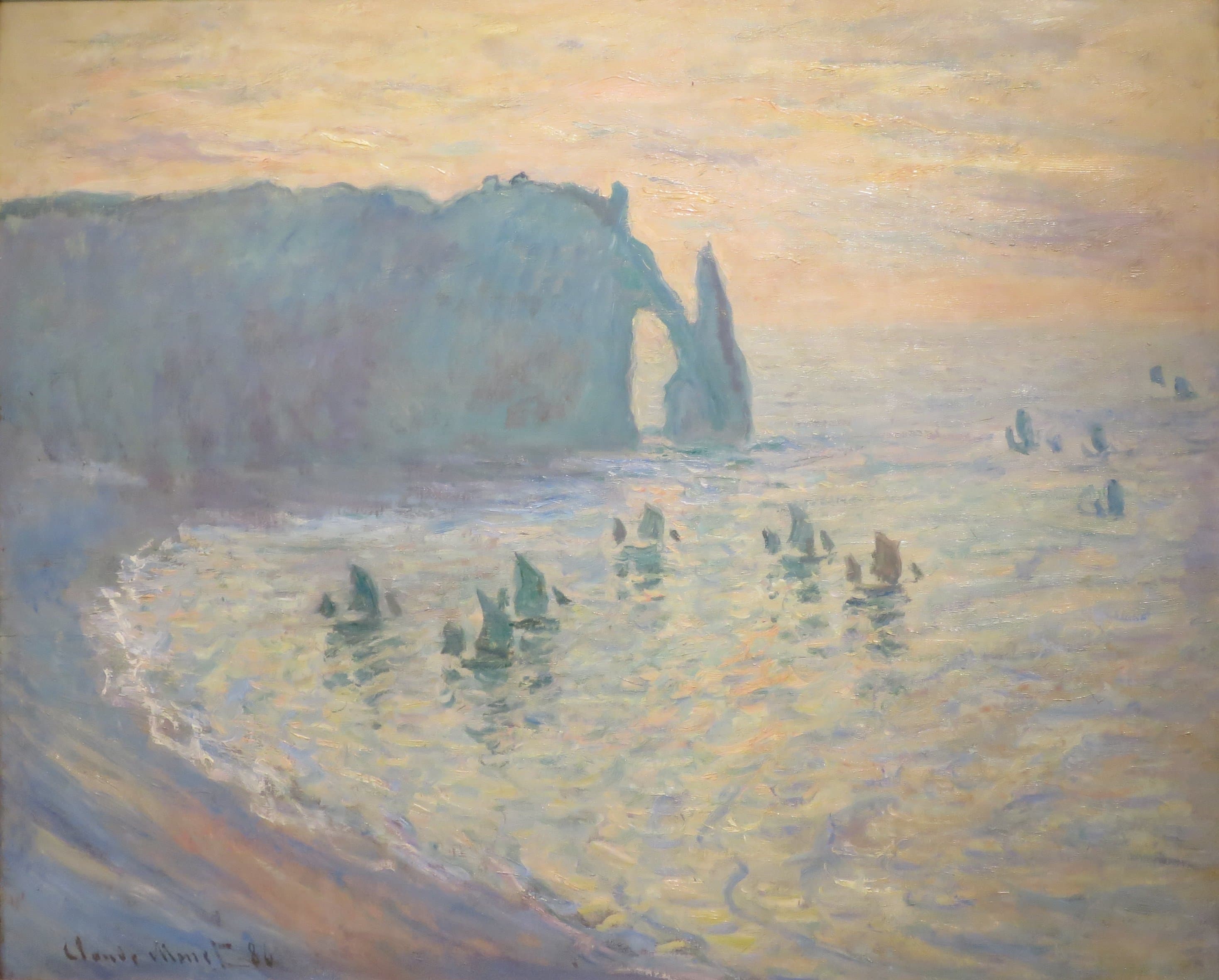
The Cliffs at Étretat
Claude Monet · 1886
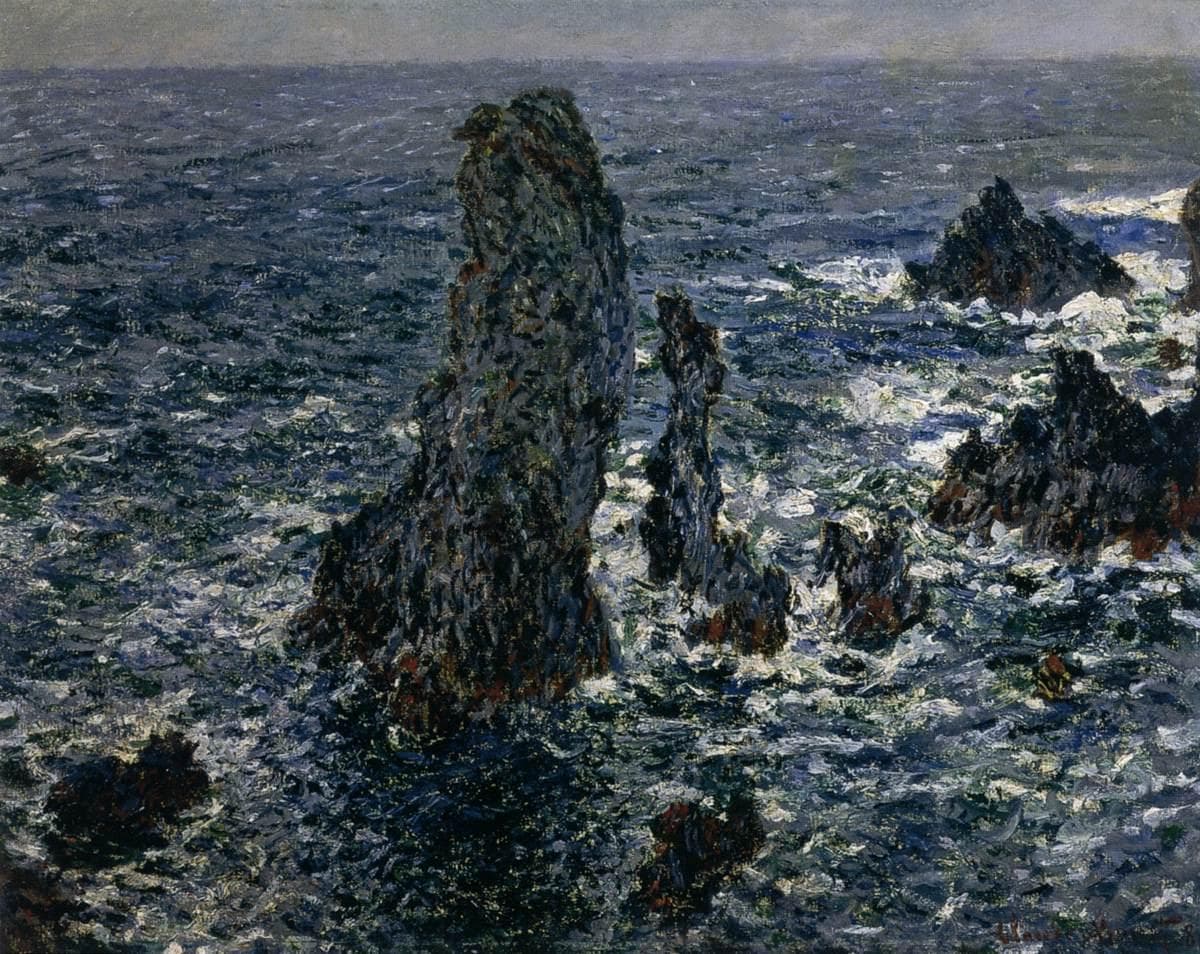
The Pyramides at Port-Coton, Rough Sea
Claude Monet · 1886
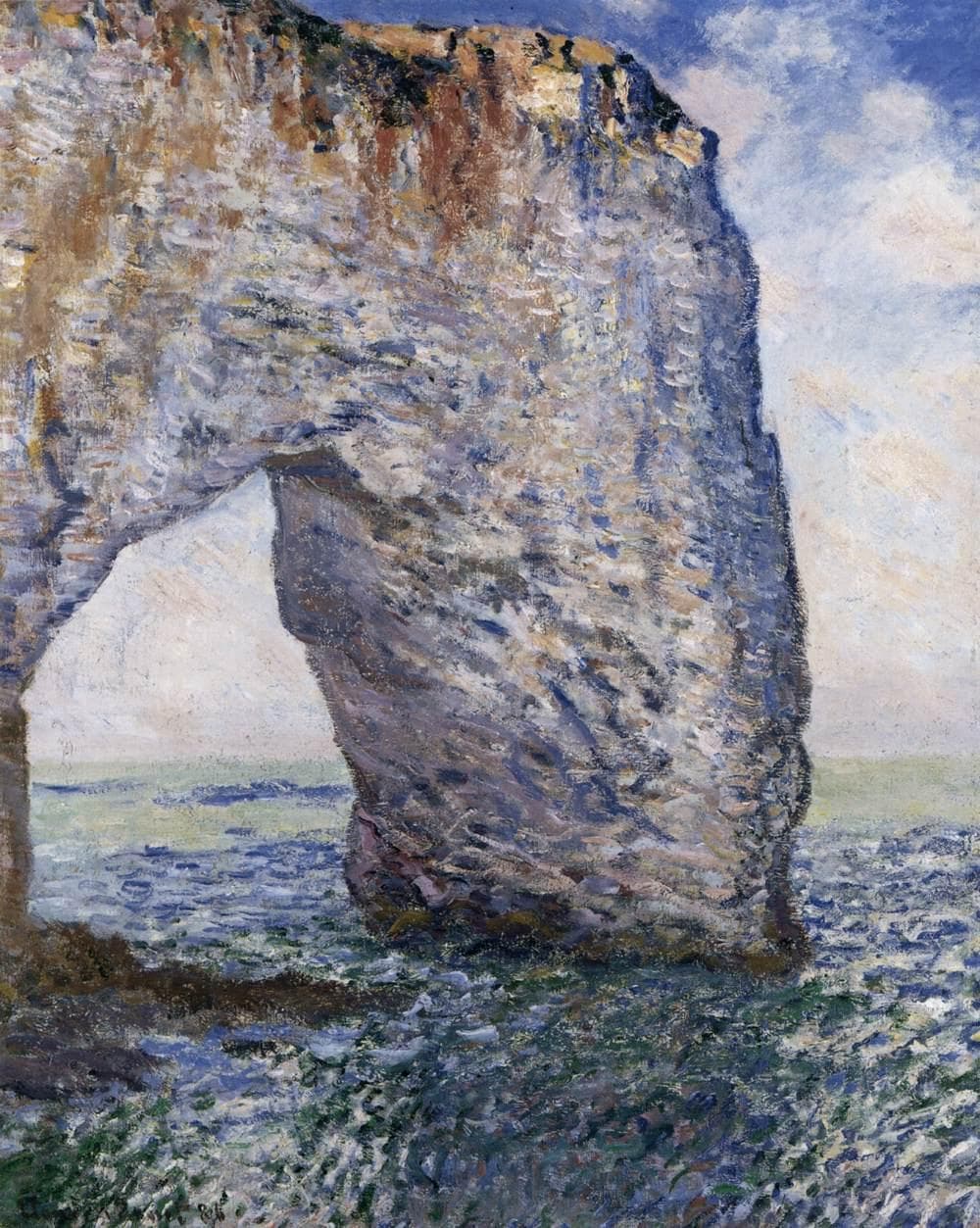
The Manneporte near Étretat
Claude Monet · 1886
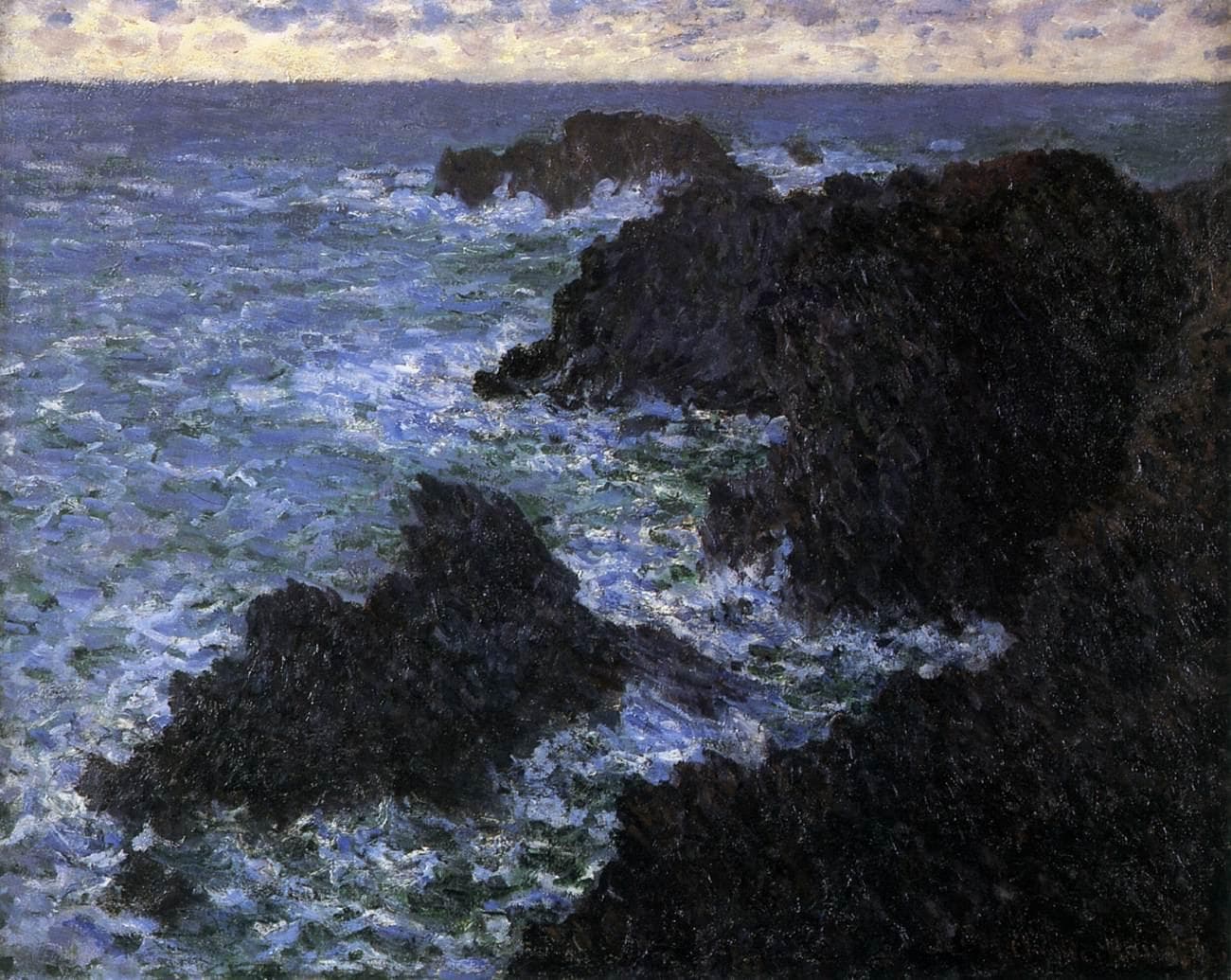
The Rocks of Belle-Île, the Wild Coast
Claude Monet · 1886
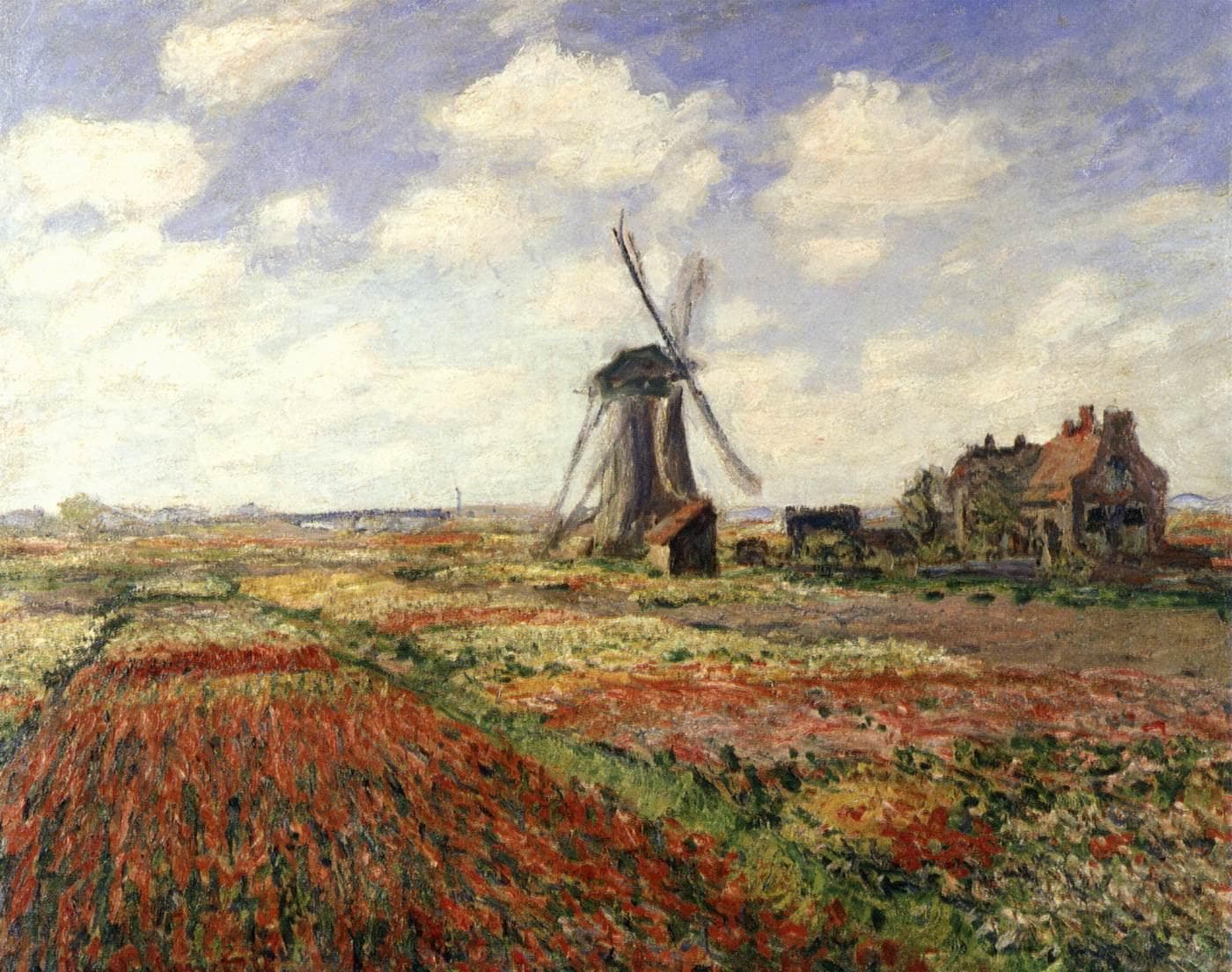
Tulip Fields in Holland
Claude Monet · 1886
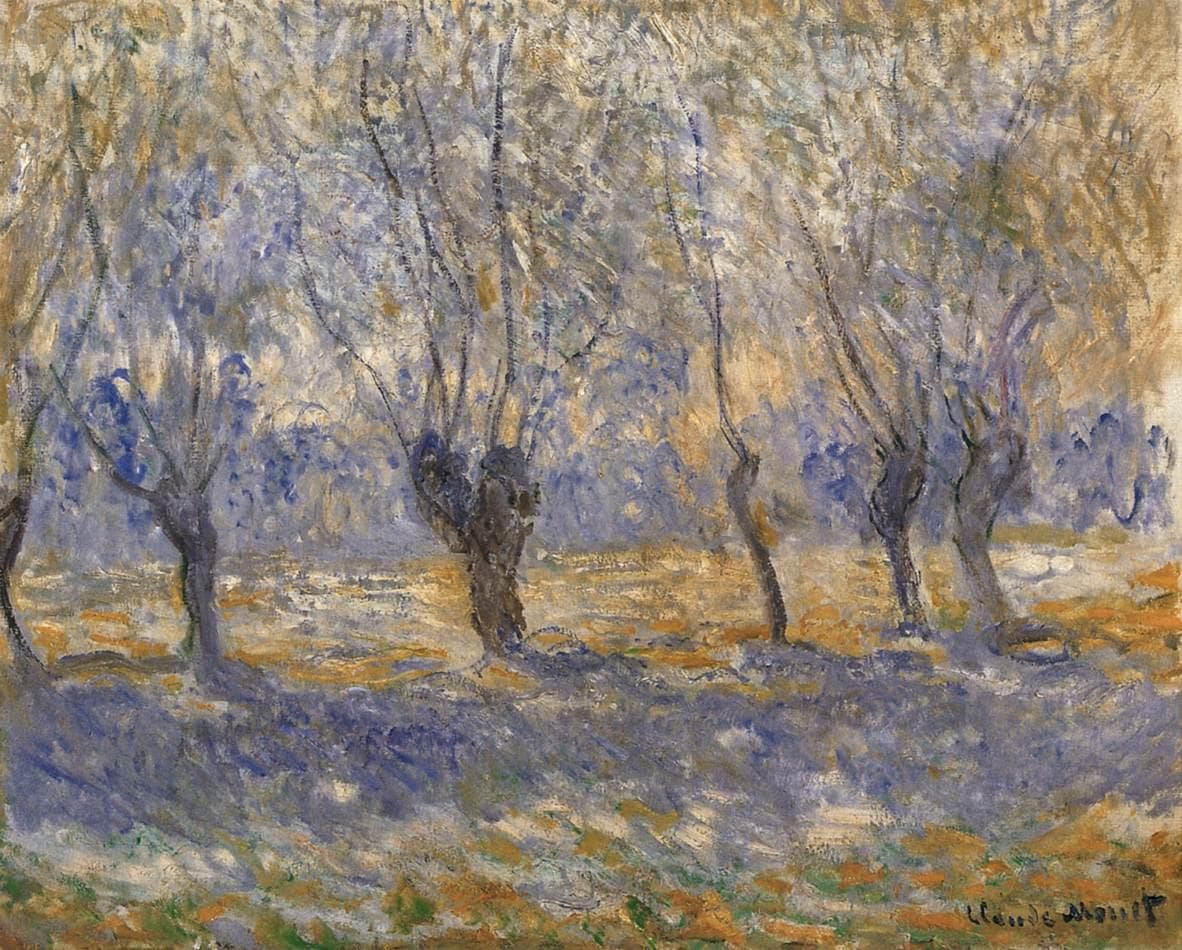
Willows at Giverny
Claude Monet · 1886
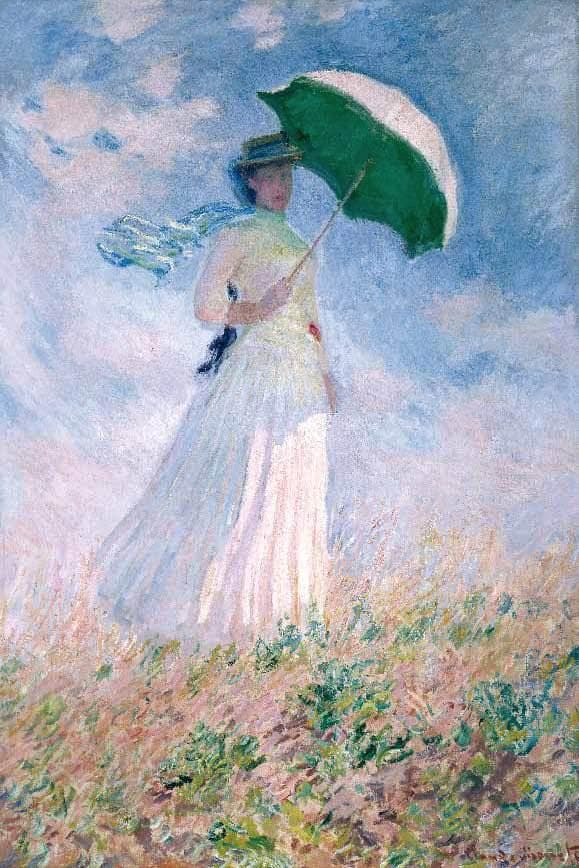
Woman with a Parasol, Facing Right
Claude Monet · 1886
Kindred works
You may also study
Woman with a Parasol, Facing Right
Claude Monet · 1886
Women in the Garden
Claude Monet · 1866–67
Camille (The Woman in the Green Dress)
Claude Monet · 1866
Meadow at Giverny
Claude Monet · 1888

Venus de Milo
Alexandros of Antioch · c. 150–125 BC

The Scream
Edvard Munch · 1893

Ophelia
John Everett Millais · 1851–52

The Great Wave off Kanagawa
Katsushika Hokusai · c. 1830–32