Impressionism
Woman with a Parasol, Facing Right
Claude Monet, 1886
Woman with a Parasol, Facing Right is an 1886 painting by Claude Monet of Suzanne Hoschedé standing in a windy meadow under a green parasol. It is in the Musée d'Orsay, Paris, alongside its companion facing left.
- Artist
- Claude Monet
- Date
- 1886
- Medium
- Oil on canvas
- Dimensions
- 131 × 88 cm
- Collection
- Musée d'Orsay, Paris, France
- Movement
- Impressionism
- Catalogue
- Wildenstein 1076
Painted at Giverny: Monet's House and GardenMore at Monet at the Musée d'Orsay
What you are looking at
A young woman in white stands in a meadow, seen slightly from below against a pale, breezy sky. She tilts a green parasol, lined in white, toward the right, holding its long handle across her body. She wears a straw hat; a light blue-and-white scarf flies out behind her to the left, and a dark ribbon or sash hangs at her side.
A small red flower is pinned at her waist. Her face is more defined than in the companion picture: we can make out the line of the nose and a pale profile, though still without detail. The meadow at her feet is a band of pink, ocher and green grasses, with clumps of foliage, all swept by the same wind.
Compared with its pendant, the sky here is softer and whiter, with only patches of blue, and the whole picture is paler and more luminous. The signature is at lower right.
Two studies, one sitter
In the summer of 1886 Claude Monet painted this canvas and its pair, Woman with a Parasol, Facing Left, on the Île aux Orties, a small island in the Seine near Giverny. He called both Essai de figure en plein air, "study of a figure outdoors." The model was Suzanne Hoschedé, the daughter of Alice Hoschedé, Monet's companion and later his second wife. Suzanne was a favorite model and later married the American painter Theodore Butler. Monet's world at Giverny is described on Giverny.
The pose echoes Monet's famous 1875 Woman with a Parasol, Madame Monet and Her Son, painted at Argenteuil with Camille, who died in 1879. The two 1886 canvases return to that image eleven years later, now as an exercise in pure light and air.
How it was painted
The key is reflected light. Look at the underside of the parasol and the shadowed side of the dress: they are tinted green and blue, picking up color from the parasol and the sky. The dress is not white but an accumulation of cream, pale pink, lilac and blue strokes. Monet treats the figure as a surface that receives light, like the clouds behind her.
Follow the wind. The scarf streams one way, the grasses bend the same way, and the strokes in the sky are drawn out horizontally. Yet the figure herself stands calm and upright, a vertical anchor in a moving picture. The tall, narrow canvas, with the figure close to life size, reinforces that verticality.
Look at the meadow. It is painted in short, choppy strokes of pink, orange and green, with darker clumps of leaves in the lower right. The ground rises steeply toward her, and the low viewpoint makes her tower over it, so that she seems to stand against the sky rather than on the earth. The parasol's long, thin handle is a single dark line from her hand to the canopy, one of the few crisp marks on the canvas.
How this version differs from its pair
Compared with the left-facing version, this one has less contrast and a lighter key, and it is often said to feel more serene. The parasol is tipped forward rather than back, the profile is slightly more legible, and the sky has more white cloud than blue. The two canvases were painted as a pair, and they read best together: one turned into the wind, one turned away from it, one cool and stormy, the other hazy and still.
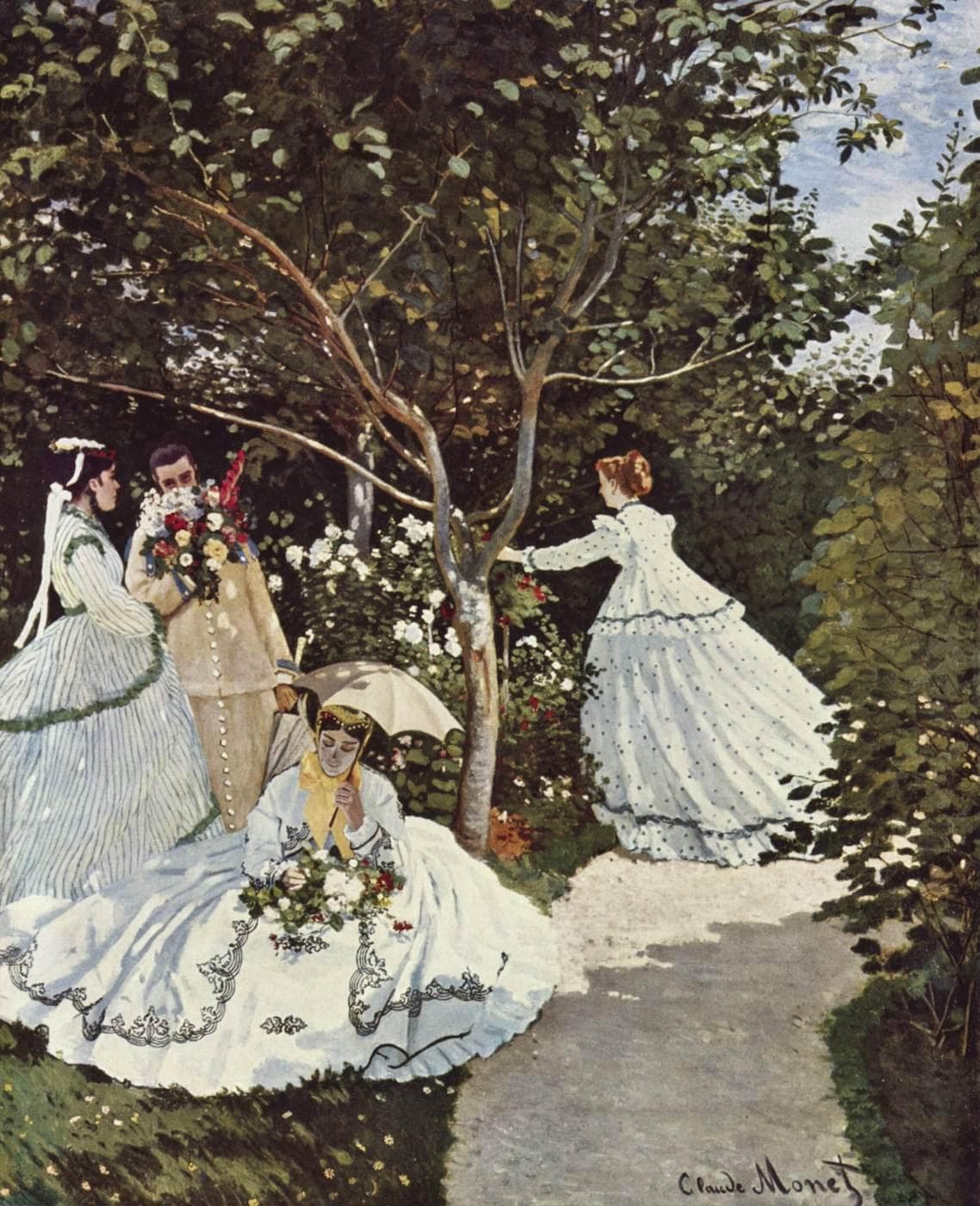
These were among Monet's last large figure paintings. In the following years he gave himself to landscape series such as the Haystacks, and figures disappear from his work almost entirely. For his earlier life-size figures in sunlight, see Women in the Garden.
Where to see it
Both paintings were given to the French state by Monet's son Michel in 1927 and are in the Musée d'Orsay, Paris (this one RF 2620). They are among the works described on Monet at the Musée d'Orsay; see also Famous Paintings of Women.
Questions & answers
Where is Woman with a Parasol, Facing Right?
It is in the Musée d'Orsay in Paris (RF 2620), hung with its companion, Woman with a Parasol, Facing Left. Monet's son Michel gave both 1886 canvases to the French state in 1927. Each measures 131 by 88 centimeters, so the figure is close to life size.
When and where was it painted?
In the summer of 1886 on the Île aux Orties, a small island in the Seine near Monet's home at Giverny. The model was Suzanne Hoschedé, Alice Hoschedé's daughter. Wildenstein catalogues this canvas as W.1076.
What is the difference between the two 1886 Woman with a Parasol paintings?
They show the same model in the same spot, turned in opposite directions. The right-facing version is paler, with a whiter sky and softer contrasts, and her profile is slightly more legible. The left-facing one is bluer and more windswept.
Is this the same as the famous 1875 Woman with a Parasol?
No. The 1875 painting, in the National Gallery of Art in Washington, shows Camille Monet and their son Jean at Argenteuil. The 1886 pair revisits the same idea eleven years later with Suzanne Hoschedé, on an island in the Seine near Giverny.
More by the artist
Claude Monet

Bridge over a Pond of Water Lilies
Claude Monet · 1899

Woman with a Parasol – Madame Monet and Her Son
Claude Monet · 1875

Sunset in Venice
Claude Monet · 1908–12

La Grenouillère
Claude Monet · 1869

Beach in Pourville
Claude Monet · 1882

Springtime
Claude Monet · 1872

Boating on the River Epte
Claude Monet · 1890

The Seine at Asnières (Hermitage)
Claude Monet · 1873
Also painted in 1886
The same year
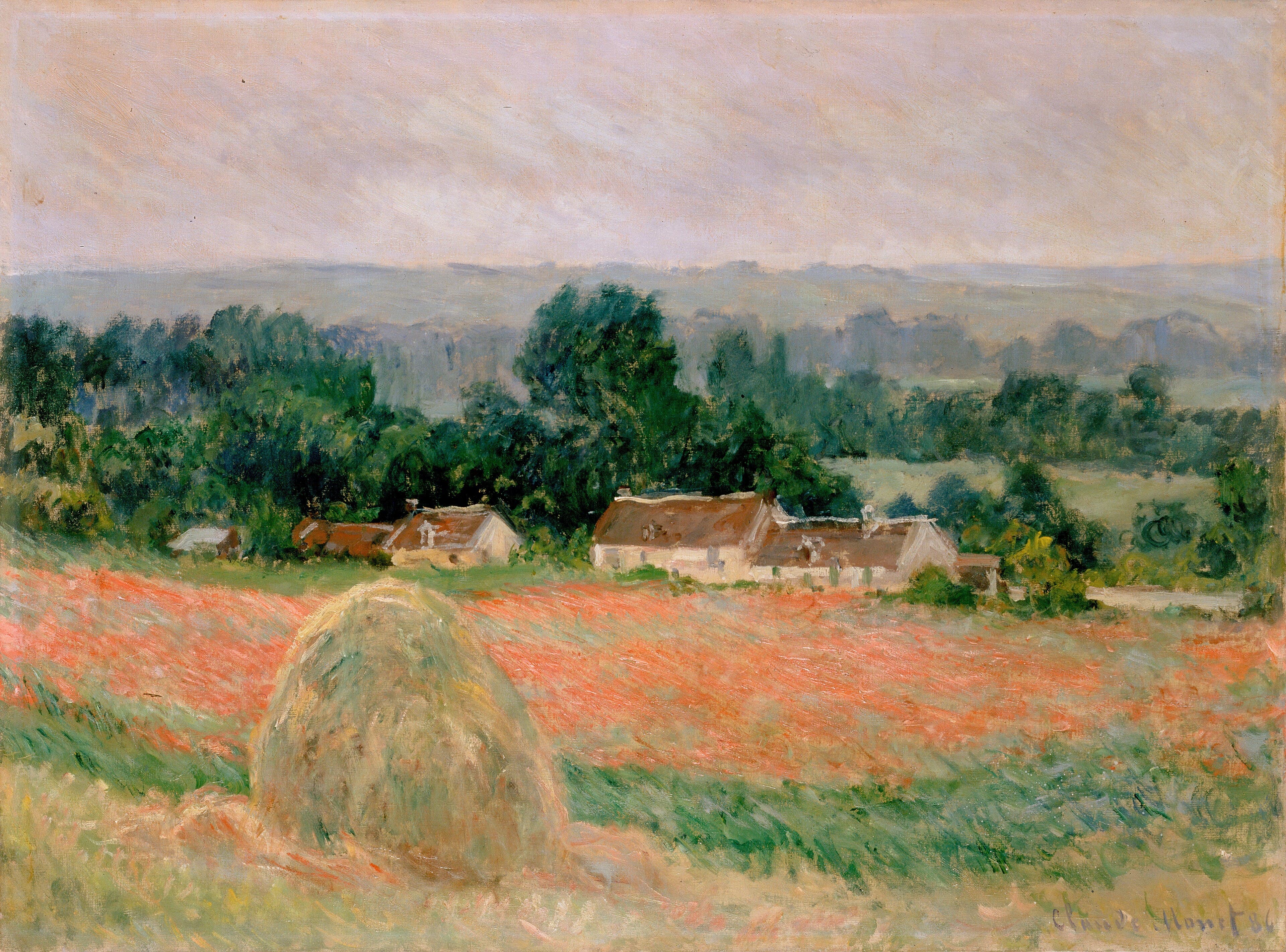
Haystack at Giverny
Claude Monet · 1886
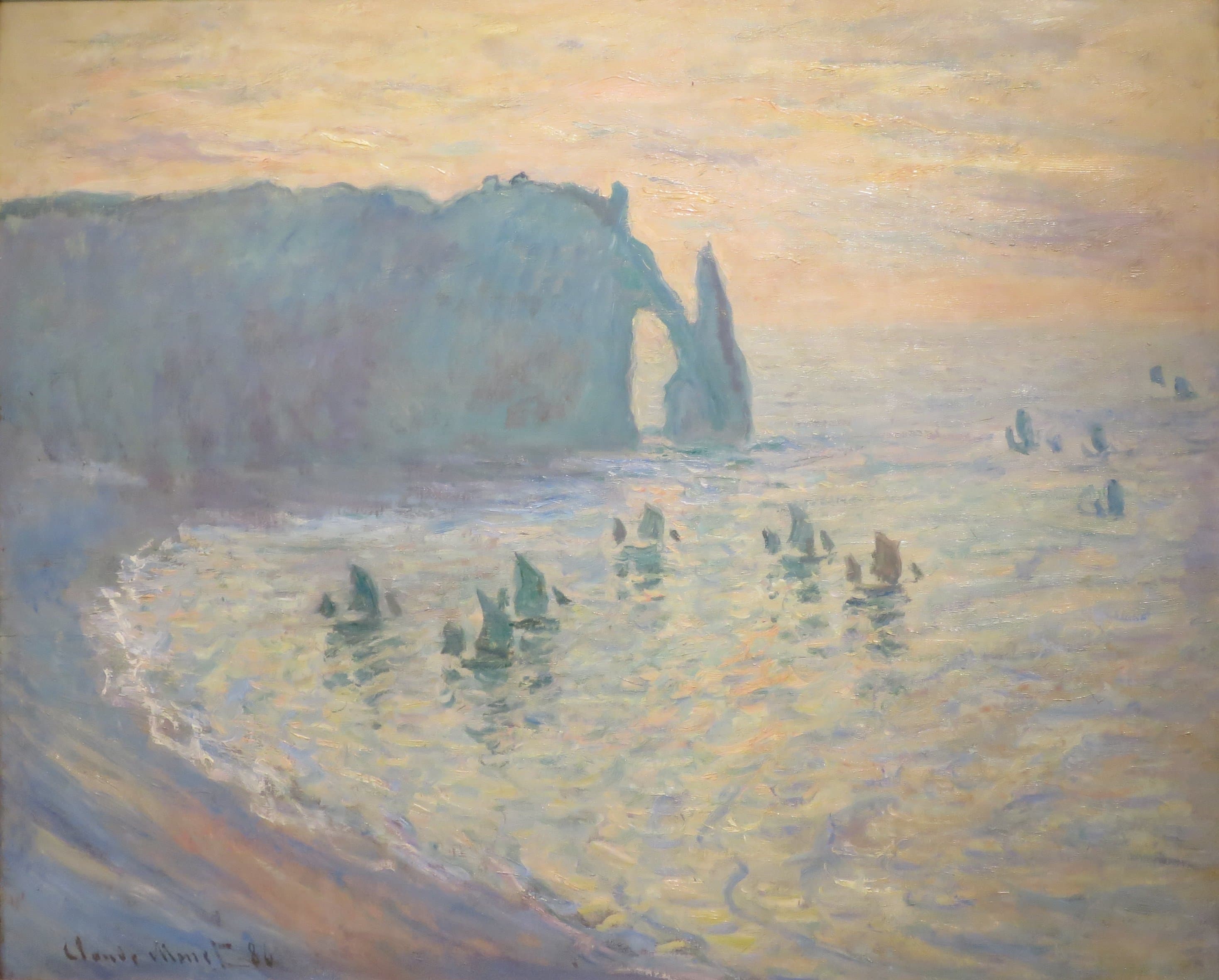
The Cliffs at Étretat
Claude Monet · 1886
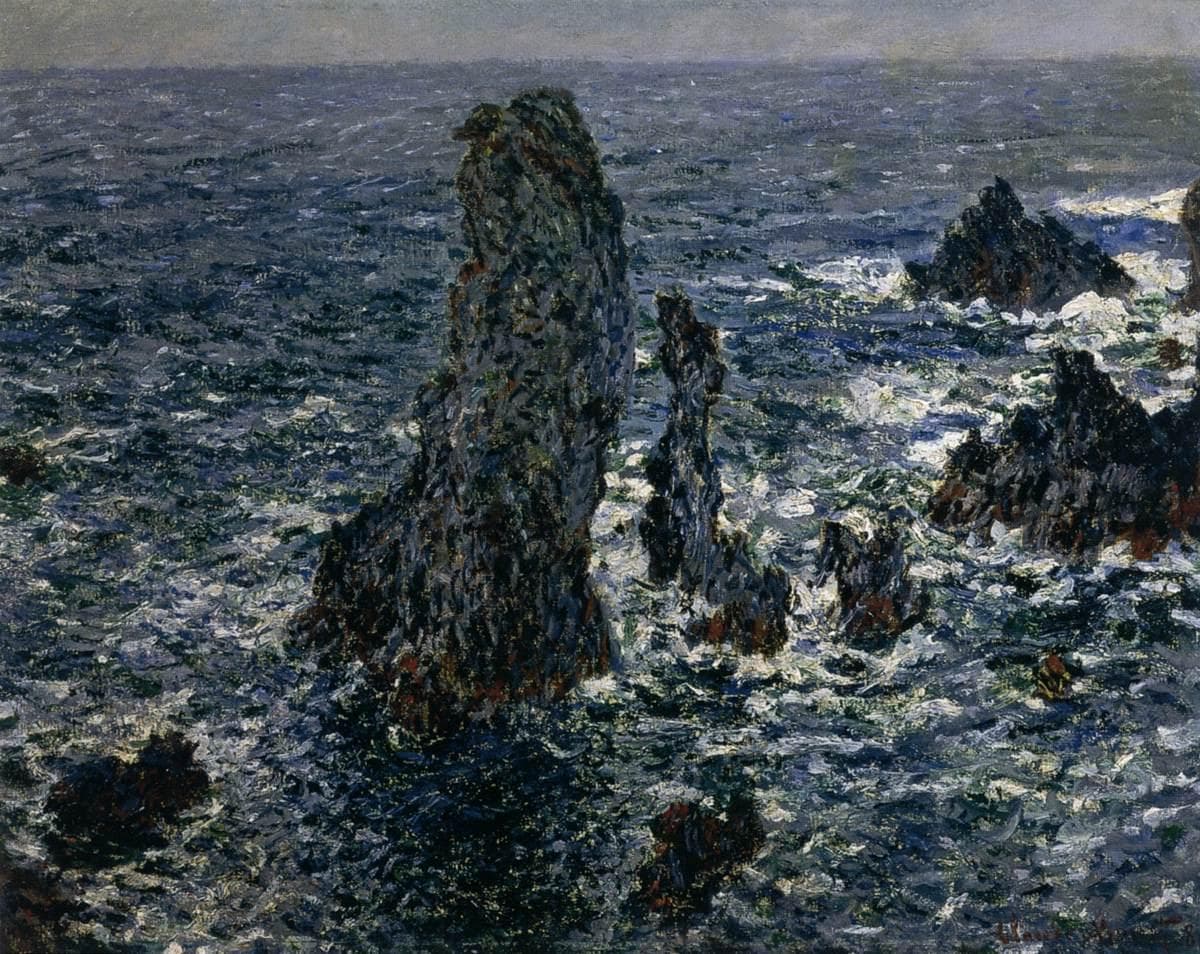
The Pyramides at Port-Coton, Rough Sea
Claude Monet · 1886
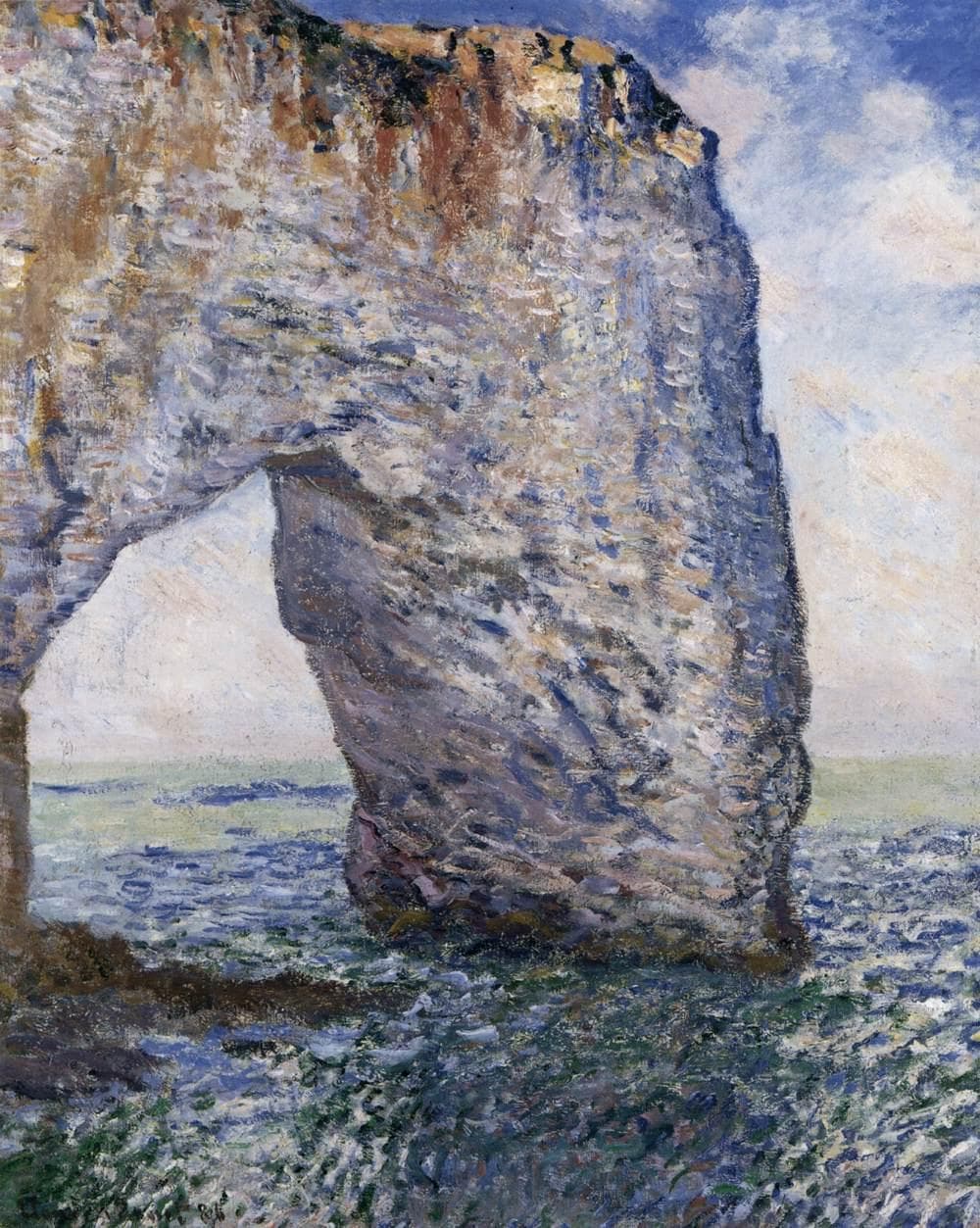
The Manneporte near Étretat
Claude Monet · 1886
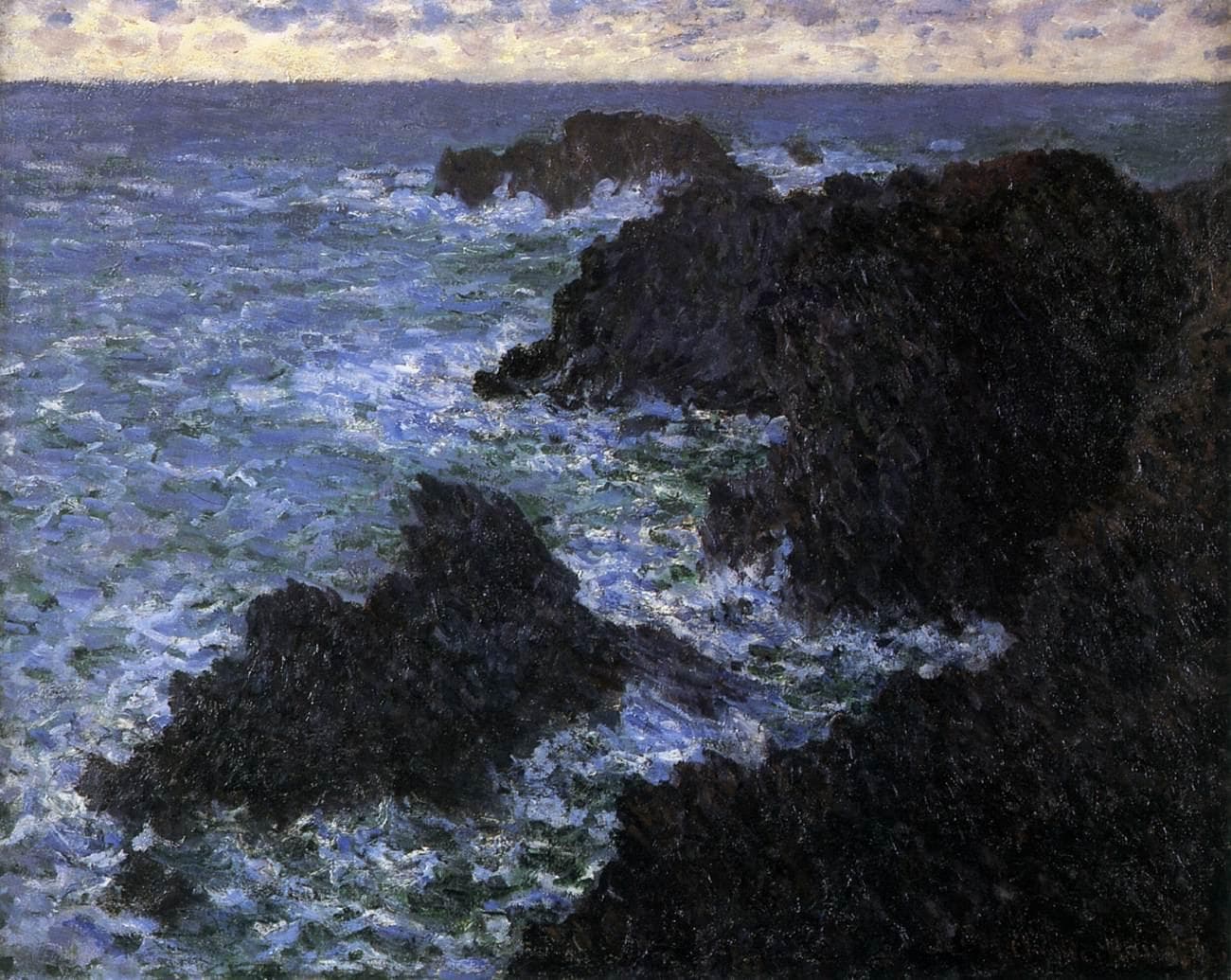
The Rocks of Belle-Île, the Wild Coast
Claude Monet · 1886
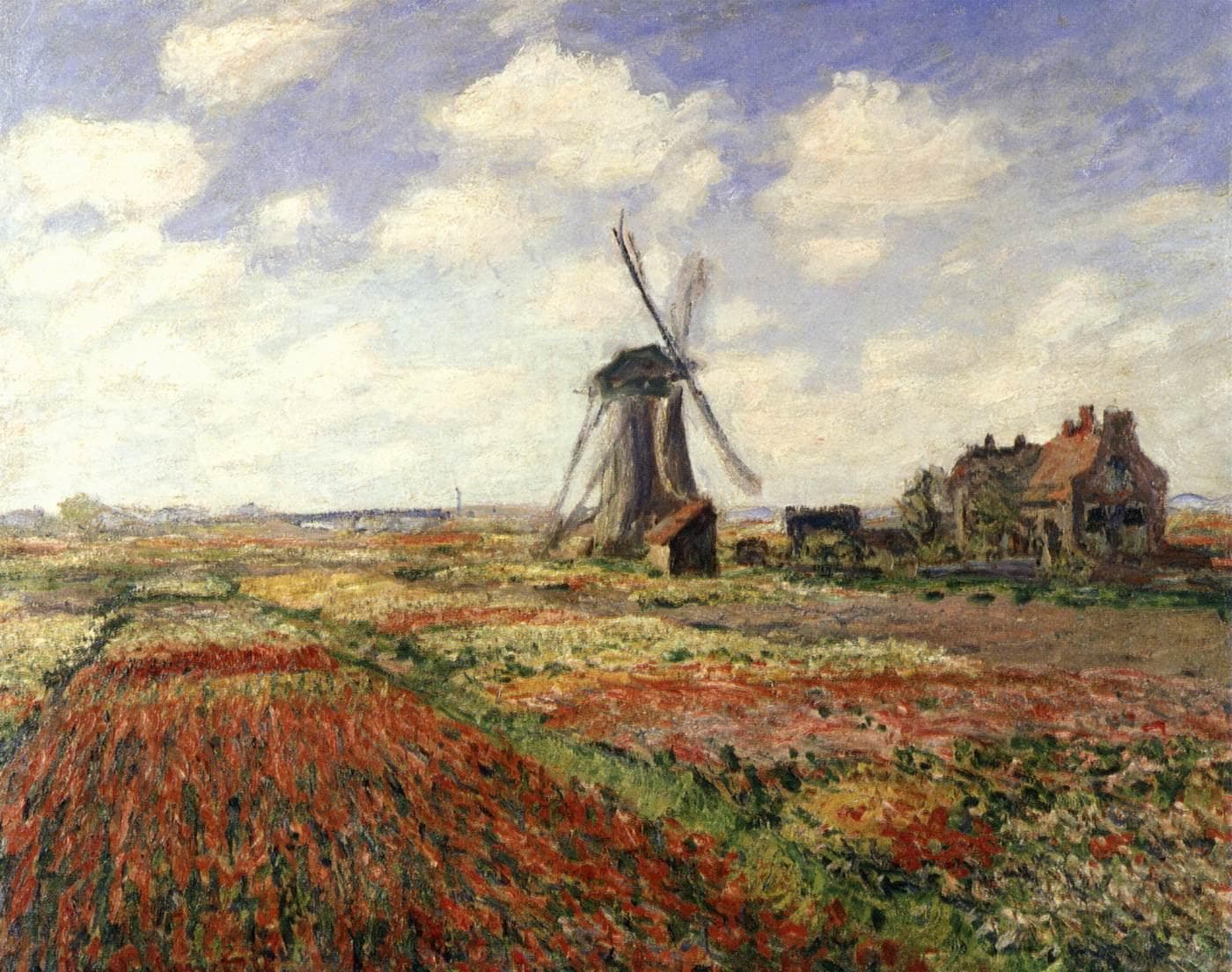
Tulip Fields in Holland
Claude Monet · 1886
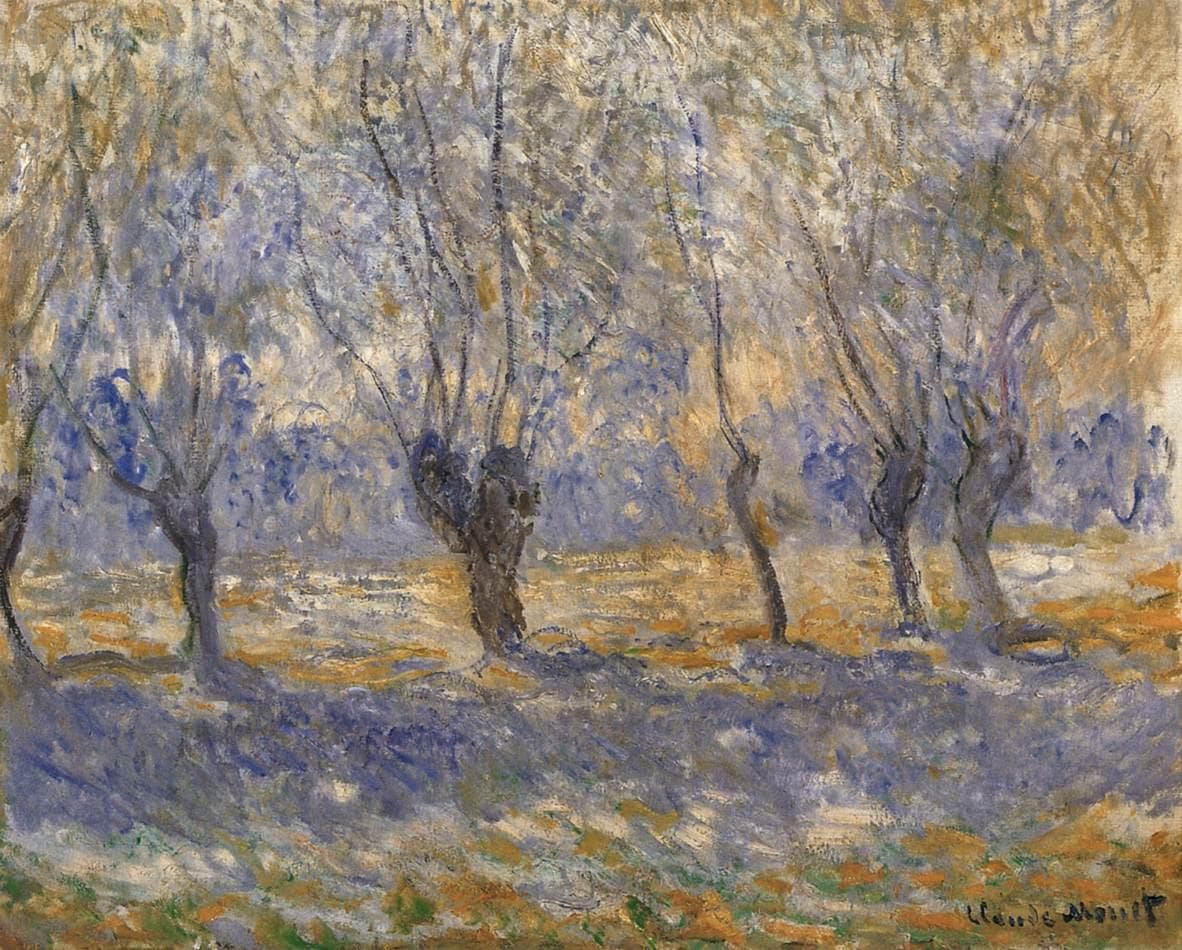
Willows at Giverny
Claude Monet · 1886
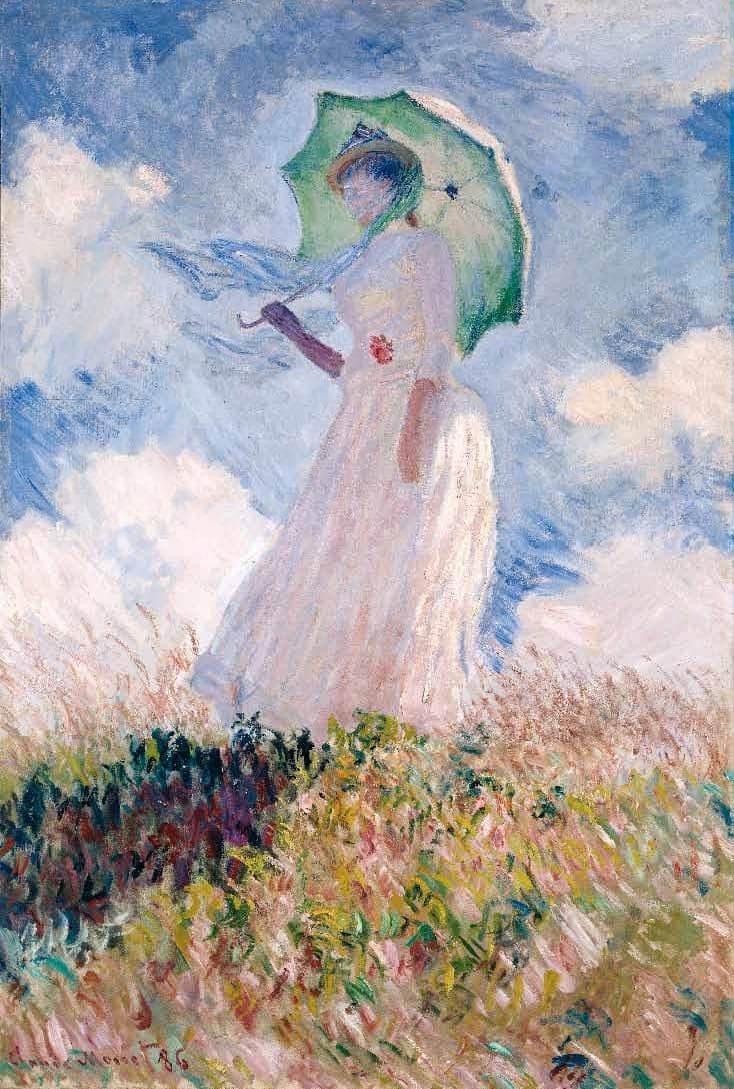
Woman with a Parasol, Facing Left
Claude Monet · 1886
Kindred works
You may also study
Woman with a Parasol, Facing Left
Claude Monet · 1886
Women in the Garden
Claude Monet · 1866–67
Camille (The Woman in the Green Dress)
Claude Monet · 1866
Meadow at Giverny
Claude Monet · 1888

Venus de Milo
Alexandros of Antioch · c. 150–125 BC

The Scream
Edvard Munch · 1893

Ophelia
John Everett Millais · 1851–52

The Great Wave off Kanagawa
Katsushika Hokusai · c. 1830–32