Impressionism
Morning Haze
Claude Monet, 1894
Morning Haze is a Monet painting of ice floes drifting on the Seine in winter mist, with trees fading into the fog and a snowy bank in the corner. The Philadelphia Museum of Art lists an oil on canvas of this title, dated 1894 and about 66 × 100 cm.
- Artist
- Claude Monet
- Date
- 1894
- Medium
- Oil on canvas
- Dimensions
- 65.7 × 100.3 cm
- Collection
- Philadelphia Museum of Art, Philadelphia, United States
- Movement
- Impressionism
- Catalogue
- Wildenstein 1338
Painted at Giverny: Monet's House and Garden
Morning Haze (Brume matinale) is a winter river view by Claude Monet, signed and dated 1894, in which ice floes drift down the Seine through a dense morning mist. The canvas, 65.7 by 100.3 centimeters, is in the Philadelphia Museum of Art (accession 1961-48-2) and is number 1338 in Daniel Wildenstein's catalogue raisonné, where it sits among the ice pictures Monet made near Giverny in the winter of 1893.
What you are looking at
A river fills the lower half of the canvas, and on it floats a scatter of flat, broken ice floes, each one a short horizontal stroke of white or pale lilac. Across the middle of the picture a clump of tall trees rises from an island or the far bank, but they hardly have edges: they are gray-violet shapes breathing out of the fog, and their reflections slide down into the water below. To left and right further groups of trees fade almost to nothing, and the horizon is not a line but a zone where water and air become the same color.
In the lower right corner a bank of snow curves into the picture, the brightest and most solid thing in it, edged with a thin blue shadow where it meets the water. Monet's signature and the date, "94", sit on the snow at the corner.
Close looking
Almost everything here is gray, but it is not a dull gray. Look and you find pink and mauve in the sky, cool blue-green in the water, cream in the ice and the faintest yellow where morning light is trying to break through. The contrast between light and dark has been reduced to a whisper, so the picture holds together through color temperature, cool and warm grays set side by side.
The floes are painted with loaded, flat strokes of the brush, laid edge to edge so they read as slabs of ice lying on the surface; between them the water is thinner, scrubbed paint. The trees are built from soft vertical touches that never resolve into trunks or branches. This is one of the most extreme examples in Monet's work of painting not things but the air between him and the things.
Monet and the frozen Seine
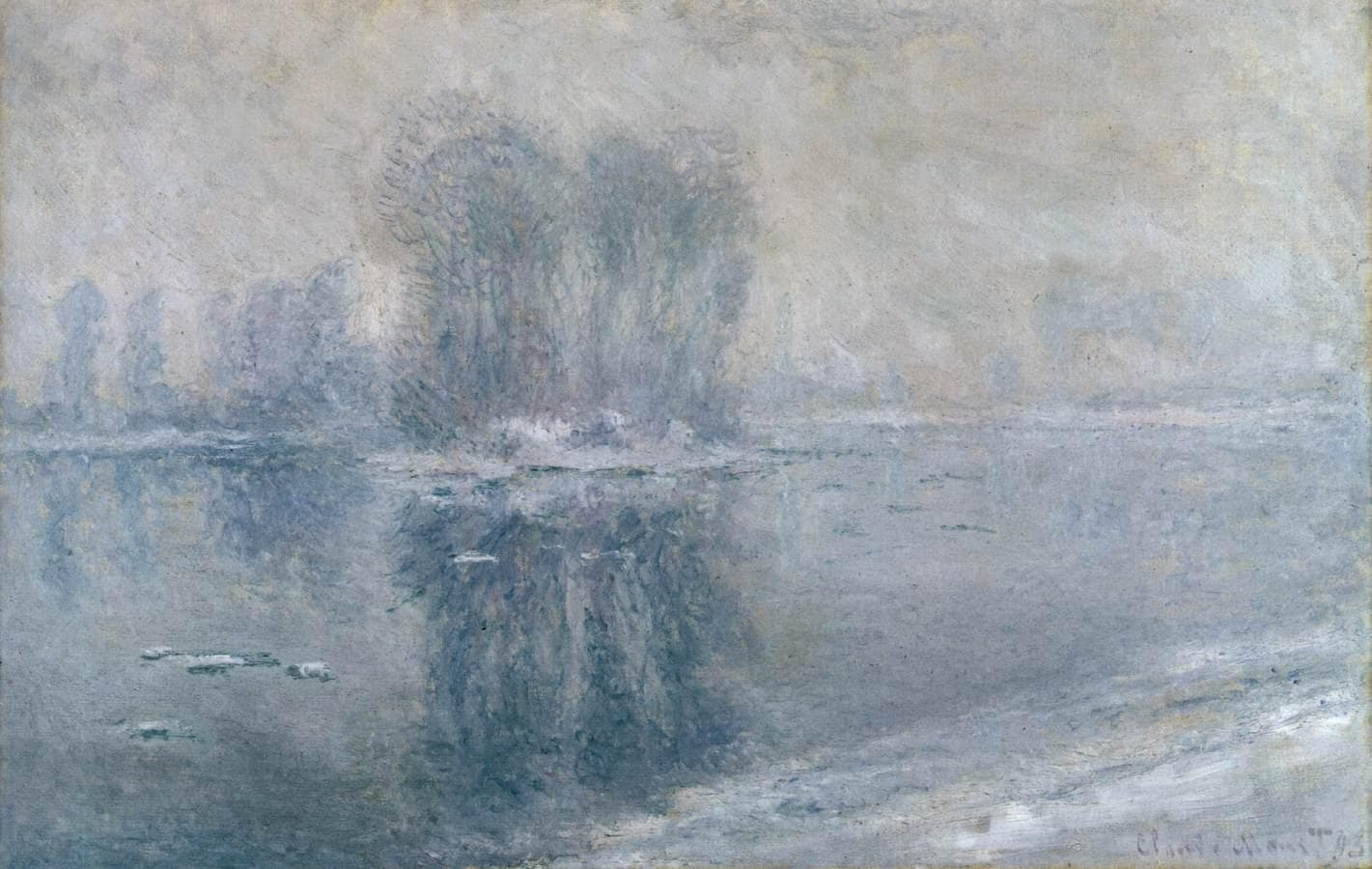
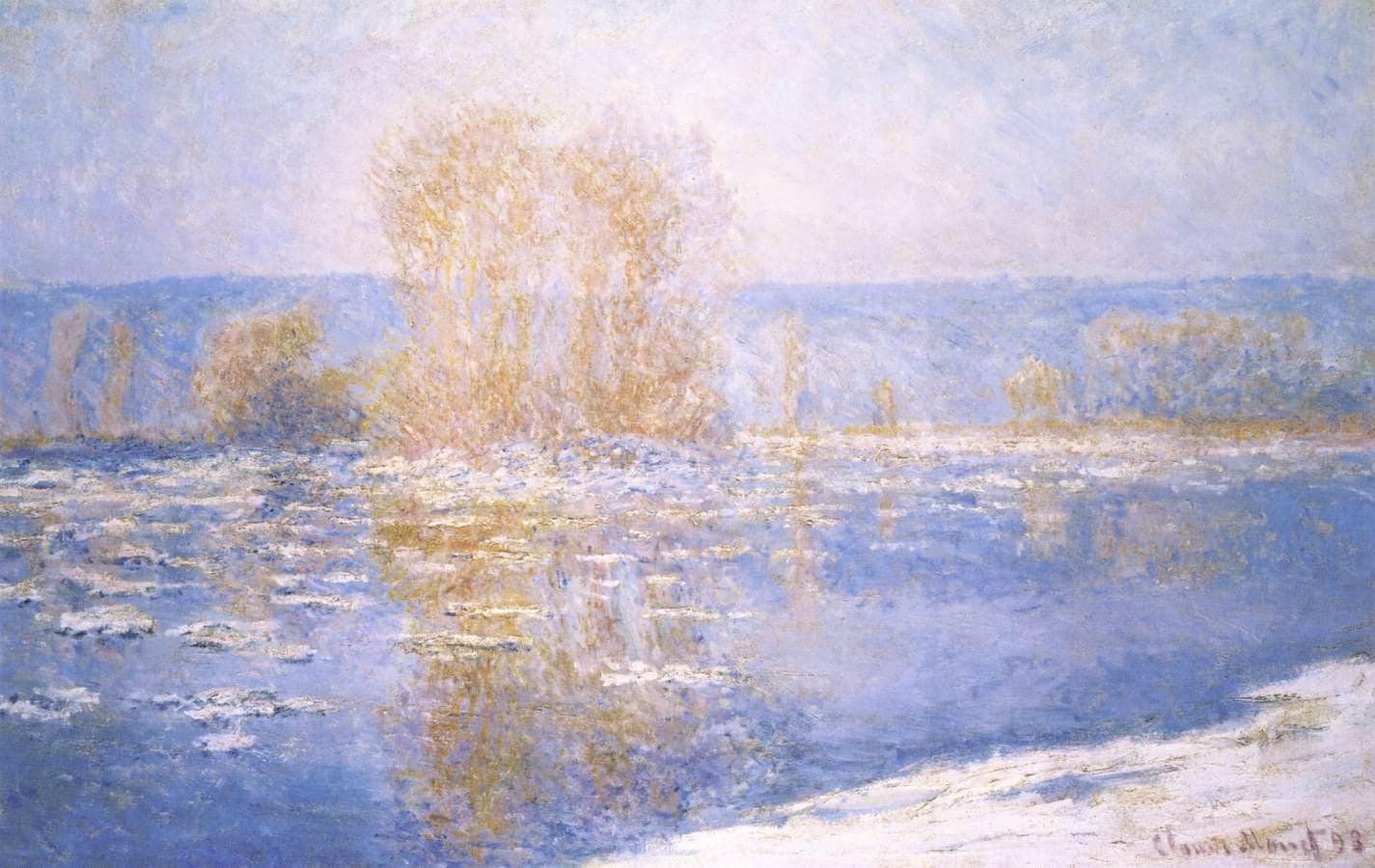
Monet painted ice on the Seine in two campaigns. The first was the famous winter of 1879–80 at Vétheuil, when the river froze and then broke up, producing pictures such as The Breakup of the Ice at Lavacourt. The second came in the cold winter of 1893, when the Seine near Giverny again carried ice. In January and February 1893 he painted more than a dozen canvases of floes near Bennecourt and Port-Villez, just upstream from his house, in different conditions of light and mist; examples include Ice Floes at The Metropolitan Museum of Art, Floating Ice at Bennecourt and Ice Floes on the Seine near Bennecourt. The Philadelphia picture belongs with this group in subject, handling and catalogue number. Its date of 1894 probably reflects when Monet finished or signed it rather than when he set up his easel on the frozen bank. Our hub on Giverny covers the landscapes painted around his home.
Context: the series years
By the early 1890s Monet was famous and secure at Giverny and was working almost entirely in series: the Haystacks of 1890–91, the Poplars of 1891 and the Rouen Cathedral façades of 1892–94. In each he painted a simple, fixed motif under shifting conditions. Mist, which dissolves every motif equally, was the logical extreme of that project. It led on to the Mornings on the Seine of 1896–97 and to the fog-bound London views such as Waterloo Bridge, Effect of Fog.
Monet told visitors in these years that he was trying to paint the "envelope," the light and atmosphere wrapped around a subject, rather than the subject itself. Morning Haze is a direct expression of that aim: the true subject is the weather.
Where to see it
The painting came to the Philadelphia Museum of Art in 1961 with the bequest of Mrs. Frank Graham Thomson. Whether it is on view varies, so check the museum's online collection before visiting. It should not be confused with a different Morning Haze of 1888, a foggy row of trees, at the National Gallery of Art in Washington. Philadelphia also owns a view of the Japanese footbridge at Giverny; for other collections see where to see Monet's paintings. More on Claude Monet.
Questions & answers
Where is Monet's Morning Haze?
The 1894 Morning Haze with ice floes is in the Philadelphia Museum of Art, which received it in 1961 with the bequest of Mrs. Frank Graham Thomson. A different painting with the same English title, a foggy landscape of trees dated 1888, belongs to the National Gallery of Art in Washington, D.C.
When and where was Morning Haze painted?
It is signed and dated 1894, but it belongs with the group of ice-floe pictures Monet painted on the Seine near Bennecourt and Port-Villez, close to his home at Giverny, during the cold winter of January and February 1893. He probably finished or signed it the following year.
What does Monet's Morning Haze show?
Ice floes drift on the Seine in winter, with trees on the far bank fading into a pale morning mist and a bank of snow in the lower right corner. Almost everything is gray, built from pinks, lilacs and blue-greens, and the real subject is the fog and the soft, colored light.
How many ice floe paintings did Monet make?
He painted ice on the Seine in two campaigns: about twenty canvases at Vétheuil and Lavacourt after the river broke up in January 1880, and more than a dozen near Bennecourt in early 1893. Examples of the later group are in Philadelphia, New York and private collections.
More by the artist
Claude Monet

Bridge over a Pond of Water Lilies
Claude Monet · 1899

Woman with a Parasol – Madame Monet and Her Son
Claude Monet · 1875

Sunset in Venice
Claude Monet · 1908–12

La Grenouillère
Claude Monet · 1869

Beach in Pourville
Claude Monet · 1882

Springtime
Claude Monet · 1872

Boating on the River Epte
Claude Monet · 1890

The Seine at Asnières (Hermitage)
Claude Monet · 1873
Also painted in 1894
The same year
Kindred works
You may also study
Ice Floes
Claude Monet · 1893
Floating Ice at Bennecourt
Claude Monet · 1893
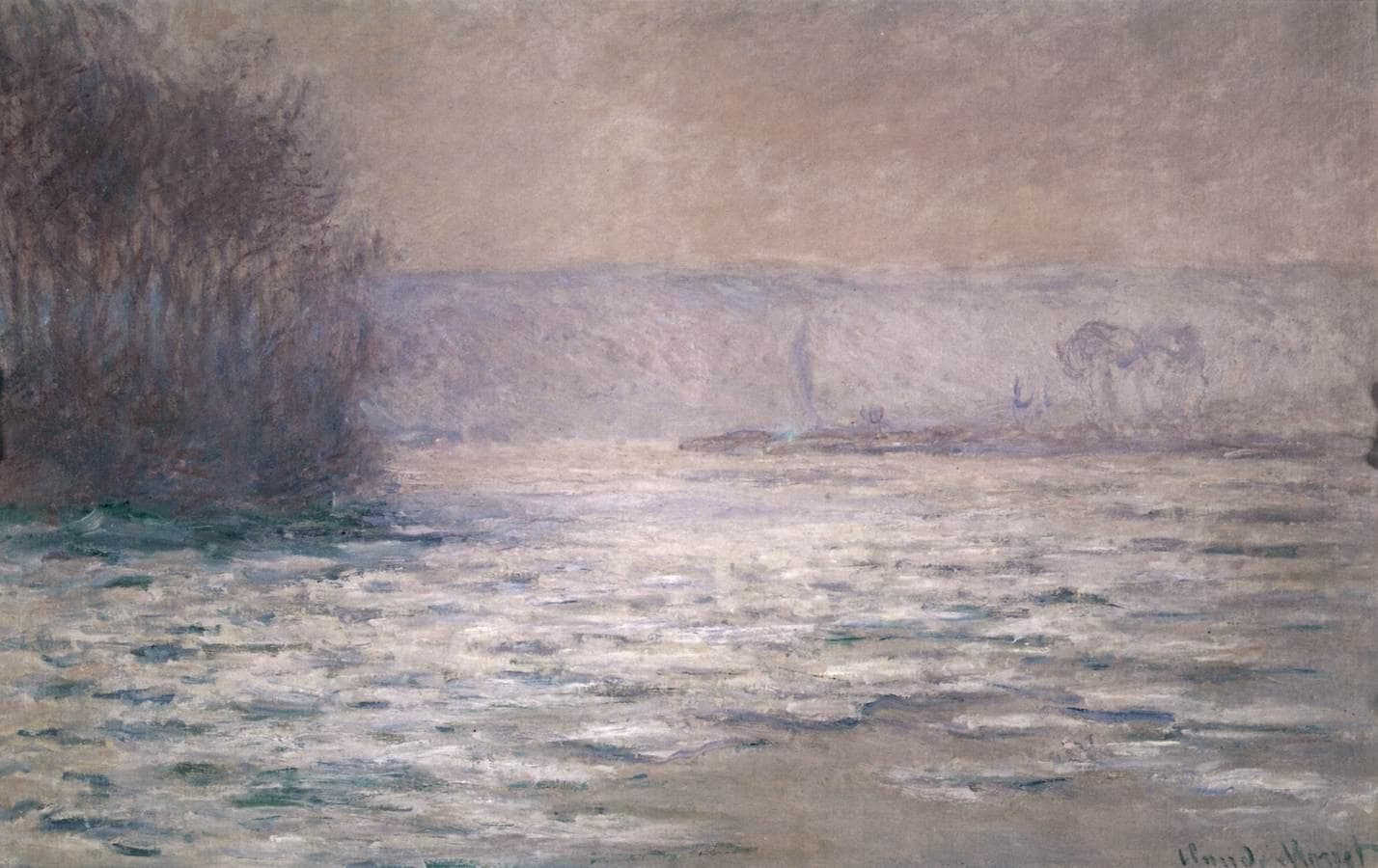
Ice Floes on the Seine near Bennecourt
Claude Monet · 1893
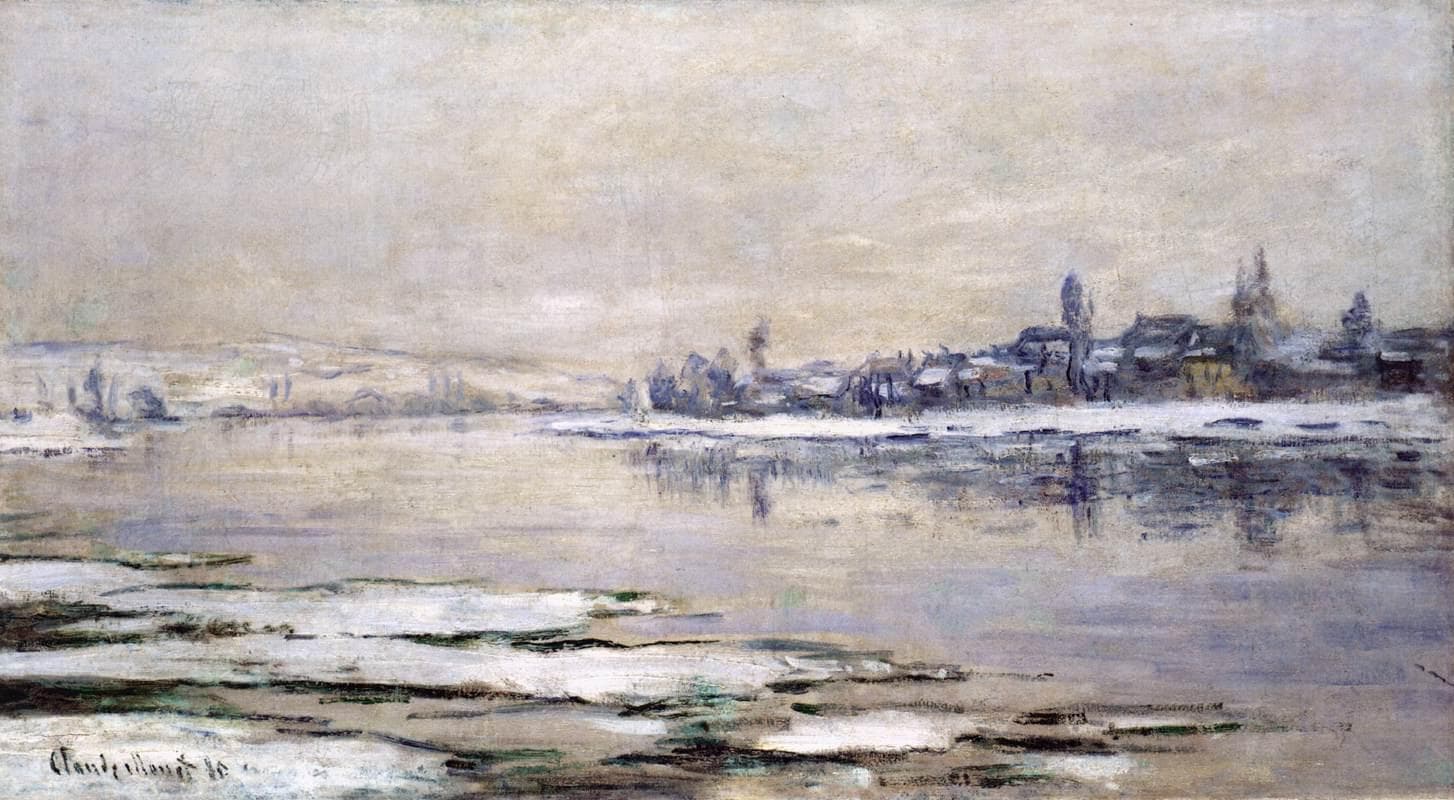
The Breakup of the Ice at Lavacourt
Claude Monet · 1880
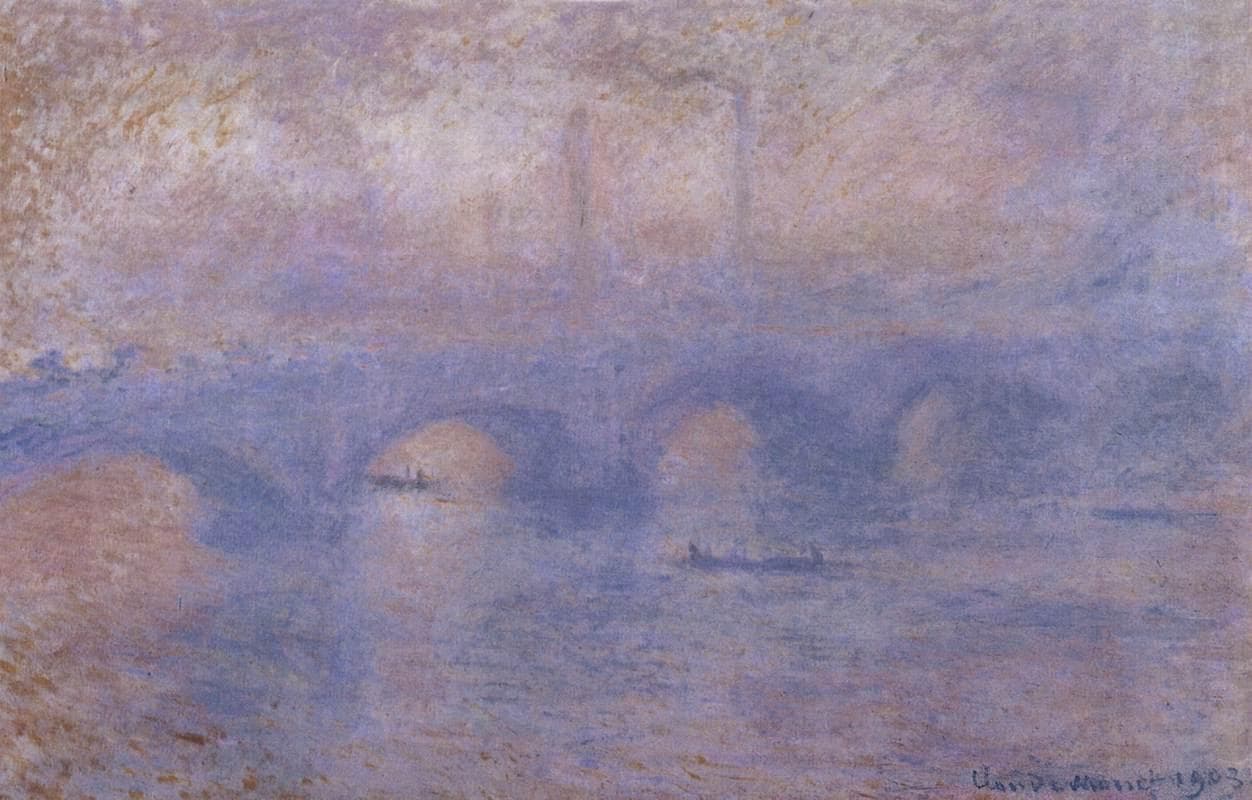
Waterloo Bridge, Effect of Fog
Claude Monet · 1903
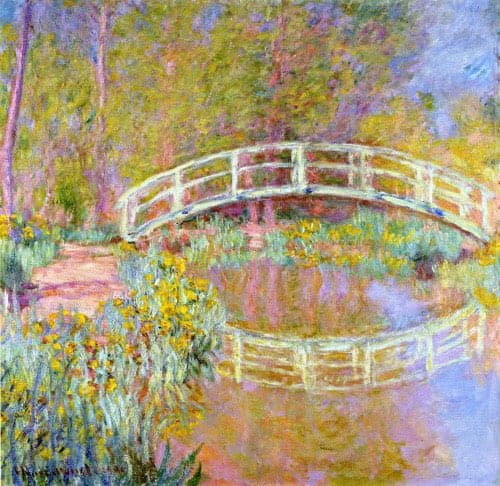
The Bridge in Monet's Garden
Claude Monet · c. 1895–96

The Scream
Edvard Munch · 1893

Ophelia
John Everett Millais · 1851–52