Image: Musée d'Orsay (MNR 639), on deposit at the Musée des Beaux-Arts de Rouen; image from the POP database, French Ministry of Culture · CC BY-SA 4.0 · via Wikimedia Commons
Impressionism
Poppy Field, Around Giverny
Claude Monet, 1885
Poppy Field, Around Giverny (Champ de coquelicots, environs de Giverny) is an 1885 painting by Claude Monet of a field red with poppies below the hills of the Seine valley. Recovered after Nazi looting, it is on deposit at the Musée des Beaux-Arts de Rouen.
- Artist
- Claude Monet
- Date
- 1885
- Medium
- Oil on canvas
- Dimensions
- 66 × 81.5 cm
- Collection
- Musée des Beaux-Arts de Rouen (on deposit from the Musée d'Orsay, MNR 639), Rouen, France
- Movement
- Impressionism
- Catalogue
- Wildenstein 999
Painted at Giverny: Monet's House and Garden
What you are looking at
The picture is three bands stacked one above the other. At the bottom, filling more than a third of the canvas, is a field so thick with poppies that it is more red than green, a carpet of small vermilion and pink dabs over yellow-green stalks. In the middle, a line of trees, hedges and the pale walls and roofs of a few houses runs across the picture. Above them rise the rounded hills of the valley, striped with fields and chalky slopes in green, yellow and blue. The top third is sky: a strong blue torn by big white clouds blowing from the left.
There are no figures. Unlike the famous Argenteuil poppy picture of 1873, with Camille and Jean strolling through the flowers, this is a pure landscape, and its subject is the summer wind as much as the flowers. You can feel it in the sky, where the clouds are dragged across in long diagonal strokes, and in the field, where the dabs of red lean the same way.
The detail people miss is how little red there actually is. Look closely and most of the field is green, ochre and violet; the poppies are scattered touches placed on top. Monet relies on the eye to mix them into a single blaze at a distance.
Where and when it was painted
Monet moved to Giverny, a village on the Seine in Normandy about 75 kilometers from Paris, in April 1883, with his two sons and Alice Hoschedé and her six children. For the first years there he painted the countryside around the village much more than his garden: the meadows by the river Epte, the hillsides, the fields of poppies and oats. This canvas of 1885 belongs to that campaign. Its companion, Poppy Field in a Hollow near Giverny in Boston, was painted the same summer; there the field dips into a hollow and the hills close in. For Giverny before the water garden, see Giverny: Monet's house and garden.
How it was painted
The canvas, 66 by 81.5 centimeters, is close to the standard size Monet used outdoors. The paint in the field is thick and broken, the strokes short and crowded, while the hills are brushed in broader, smoother bands and the sky in long sweeps. That change of handling from bottom to top is what creates depth, since the composition itself is almost flat.
Monet came back to poppies again and again. Compare the earlier Poppy Field (Poppies at Argenteuil) of 1873 and Poppy Field near Vétheuil of 1879, and the later Champ d'avoine aux coquelicots of 1890, where the poppies are woven into a field of oats. Over these years the flowers become less of a subject and more of a color field.
The red-green pairing is the oldest trick in Monet's book, and the most effective. Red and green are complementary colors: set side by side in small touches, each makes the other look more intense. A field of poppies gave him a natural excuse to use the contrast at full strength, and a reason to keep coming back to it for almost twenty years.
A looted painting
The picture has an unusual history. It was seized in France by Nazi Germany during the Second World War. In 1949 it was found in the hands of a private individual in Bavaria, passed through the Allied Munich Central Collecting Point that May and June, and was returned to France. Because its pre-war owner has not been identified, it belongs to the special category of Musées Nationaux Récupération (MNR): works recovered after the war and held by the French national museums in trust until their rightful owners or heirs claim them. It is registered as MNR 639 under the custody of the Musée d'Orsay.
Where to see it
Since 1954 the painting has been on deposit at the Musée des Beaux-Arts de Rouen, which has one of the best Impressionist collections in France outside Paris. See where to see Monet's paintings, Monet at the Musée d'Orsay for the national collection it belongs to, and the Claude Monet page.
Questions & answers
Where is Monet's Poppy Field, Around Giverny?
It is on deposit at the Musée des Beaux-Arts de Rouen, where it has hung since 1954. It is held by the Musée d'Orsay as MNR 639, a work recovered after the Second World War whose pre-war owner has not been identified.
When did Monet paint Poppy Field, Around Giverny?
He painted it in 1885, two years after moving to Giverny in April 1883, when he was painting the fields and hillsides around the village rather than his garden. A companion view, Poppy Field in a Hollow near Giverny, is in Boston.
What does Poppy Field, Around Giverny show?
A field thick with red poppies in the foreground, a band of trees and houses in the middle, the hills of the Seine valley beyond and a windy blue sky with white clouds. There are no figures.
Why is it called an MNR painting?
MNR stands for Musées Nationaux Récupération. The painting was looted during the Nazi occupation, found in Bavaria in 1949 and returned to France. Works like it are held by French national museums in trust until the original owners or their heirs can be identified.
More by the artist
Claude Monet

Bridge over a Pond of Water Lilies
Claude Monet · 1899

Woman with a Parasol – Madame Monet and Her Son
Claude Monet · 1875

Sunset in Venice
Claude Monet · 1908–12

La Grenouillère
Claude Monet · 1869

Beach in Pourville
Claude Monet · 1882

Springtime
Claude Monet · 1872

Boating on the River Epte
Claude Monet · 1890

The Seine at Asnières (Hermitage)
Claude Monet · 1873
Also painted in 1885
The same year
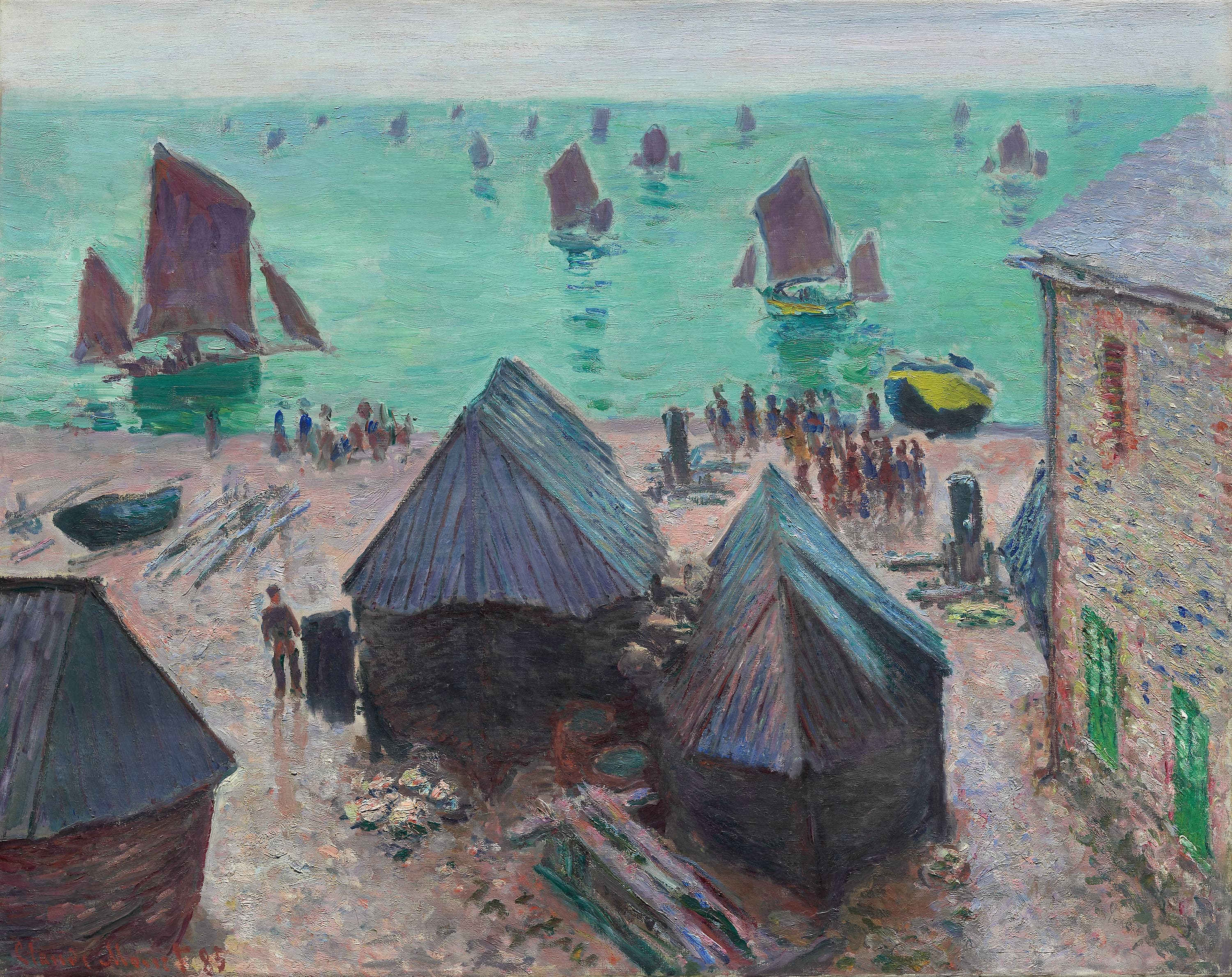
The Departure of the Boats, Étretat
Claude Monet · 1885
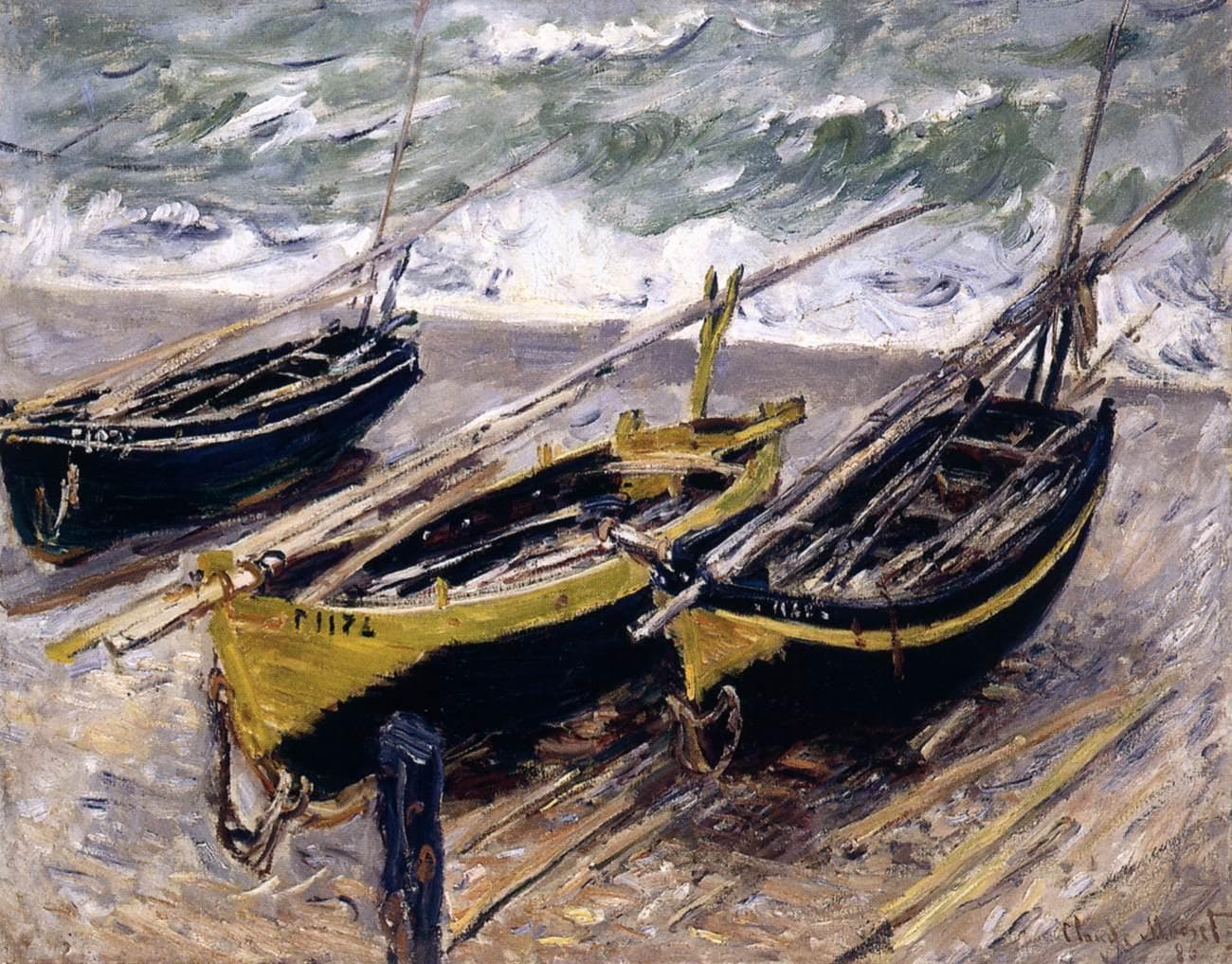
Three Fishing Boats
Claude Monet · 1885
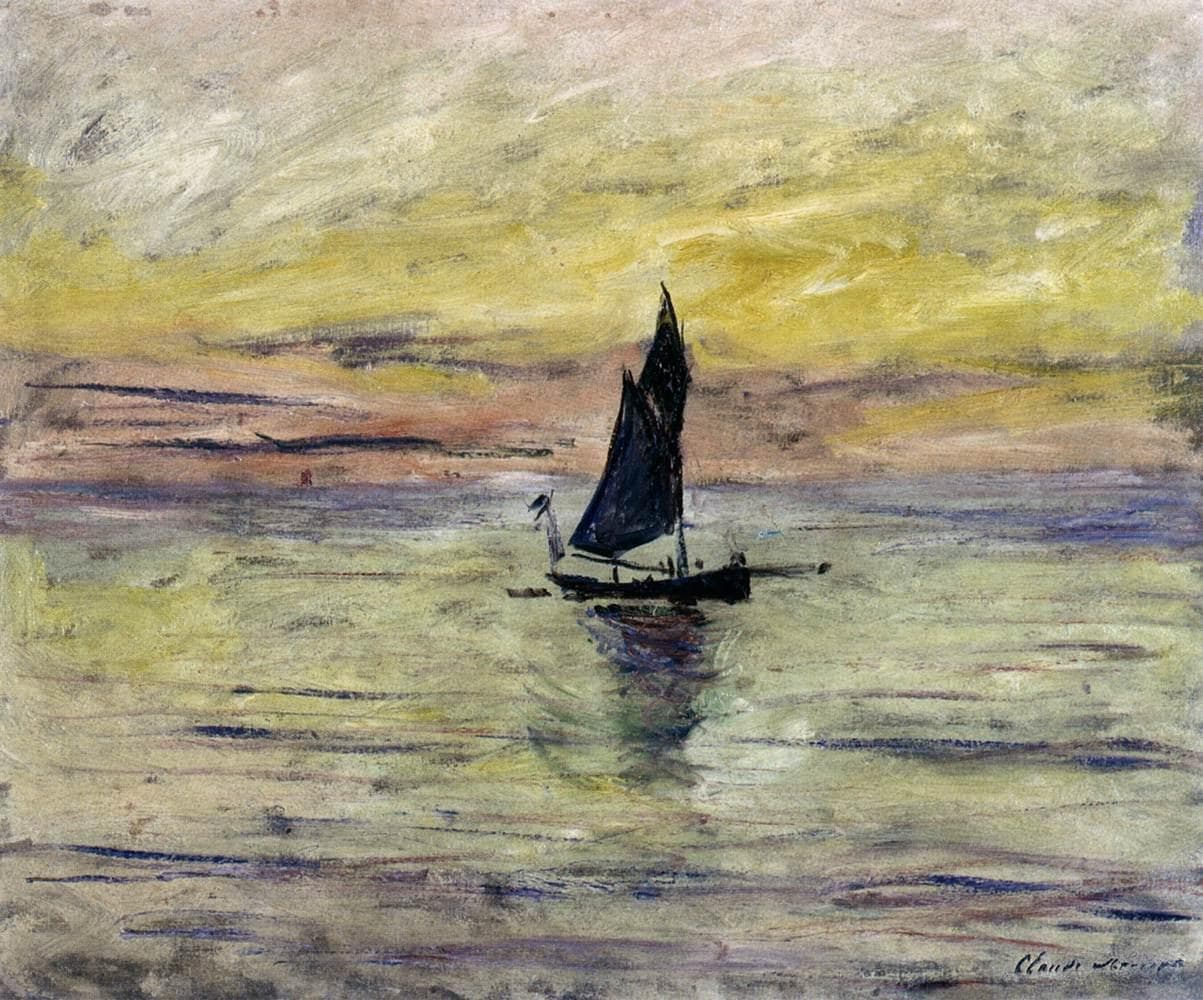
Sailboat, Evening Effect
Claude Monet · 1885
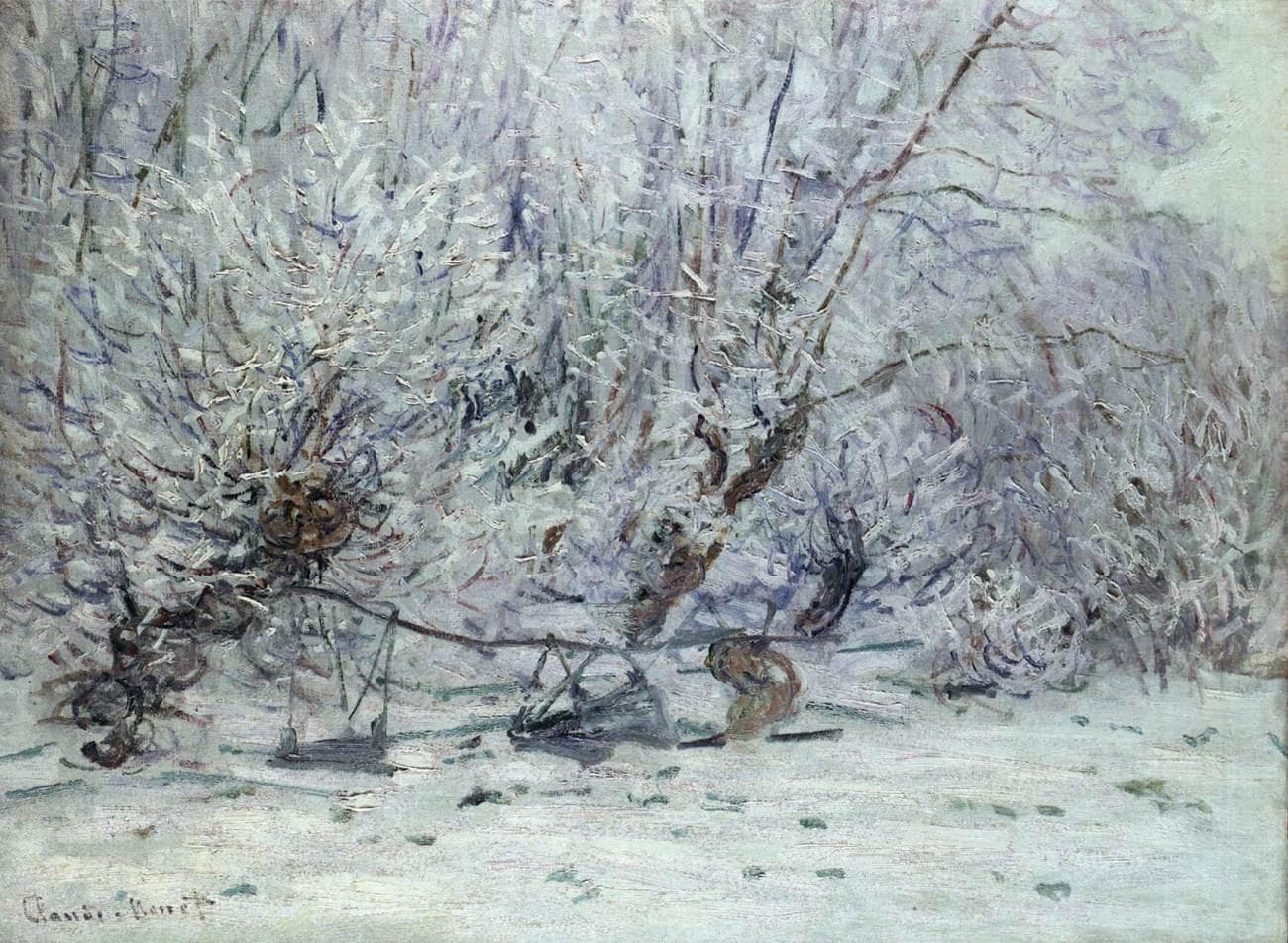
Frost
Claude Monet · 1885
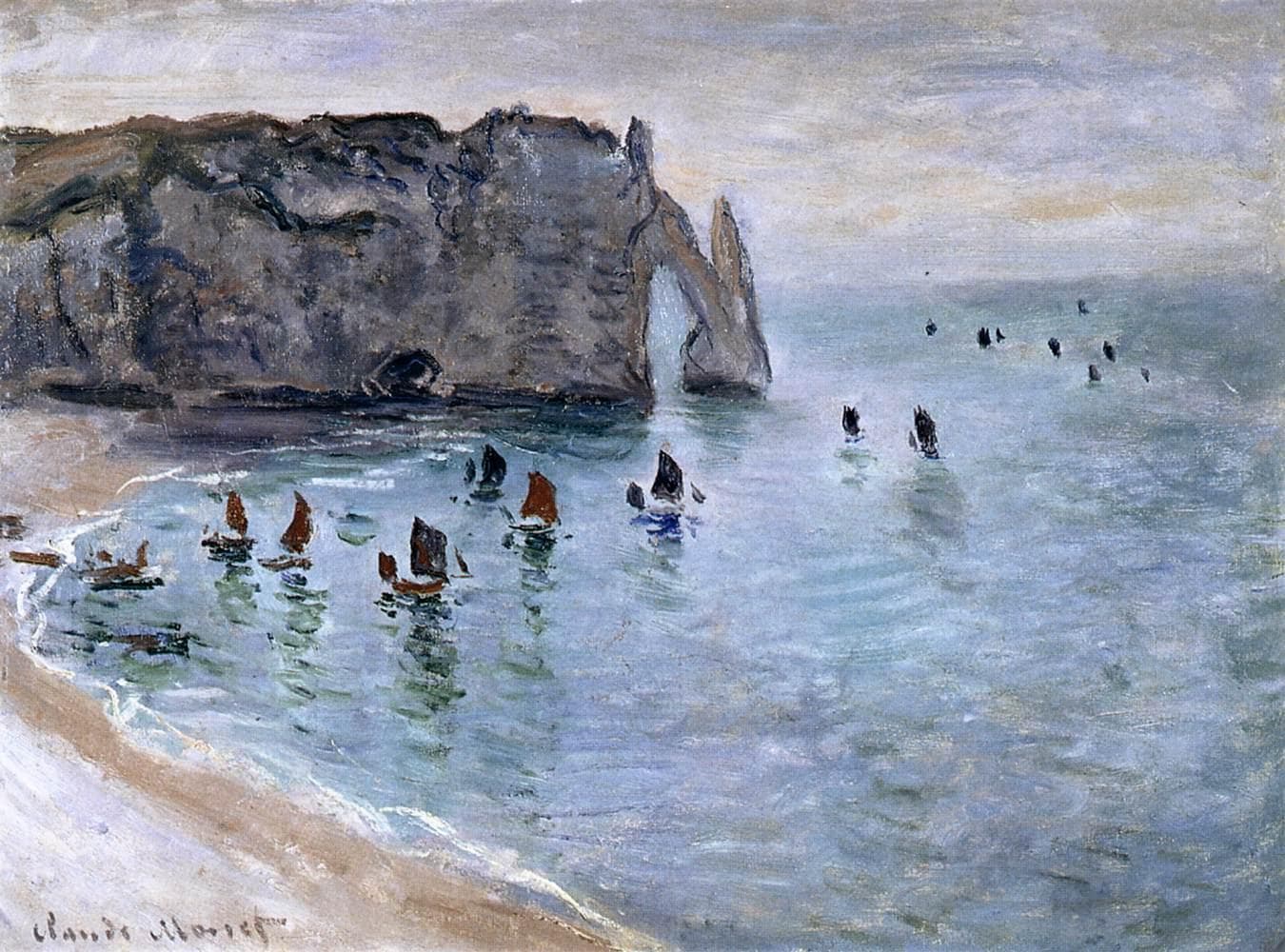
Étretat, the Porte d'Aval: Fishing Boats Leaving the Harbor
Claude Monet · 1885
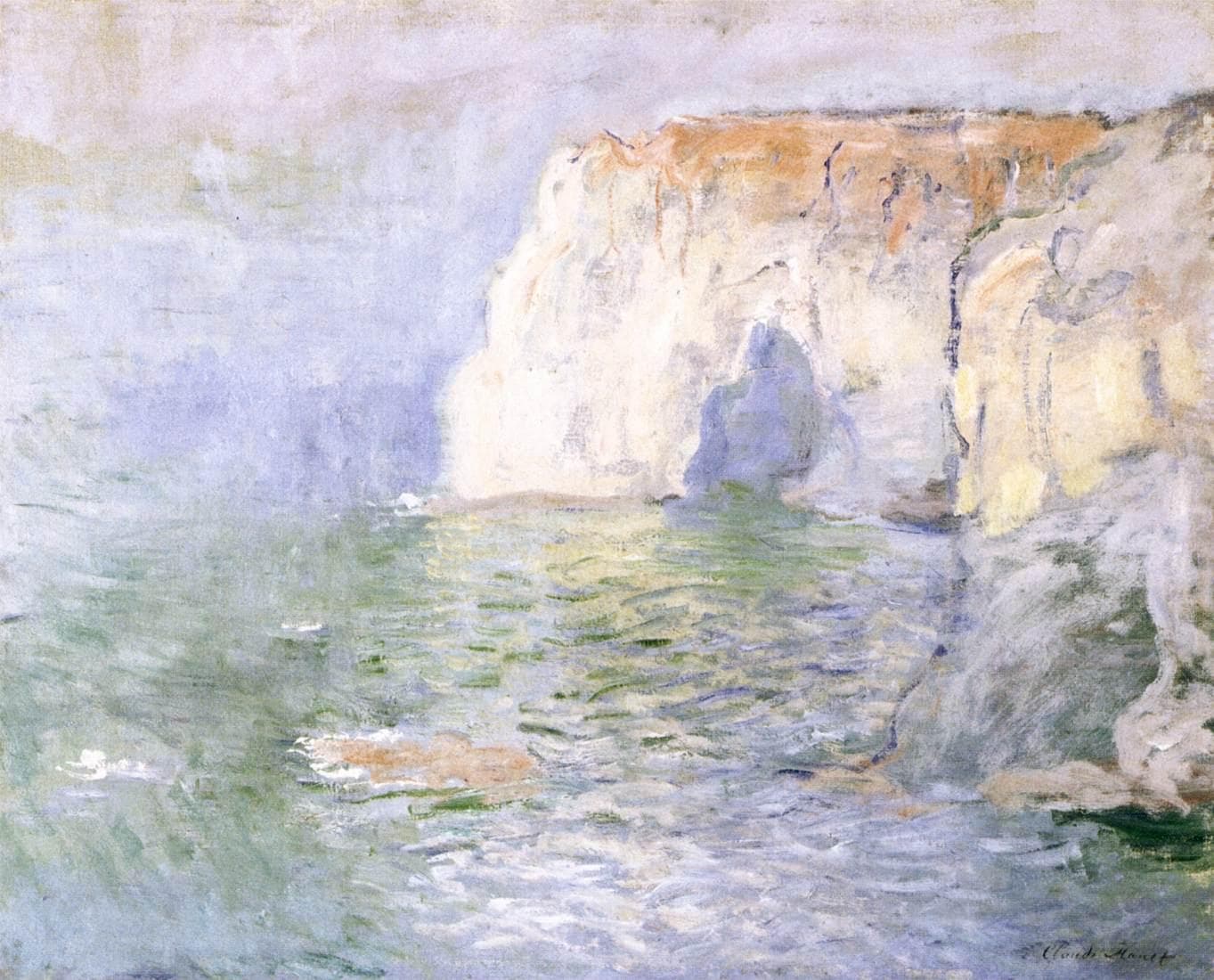
Étretat, the Manneporte, Reflections on the Water
Claude Monet · c. 1885
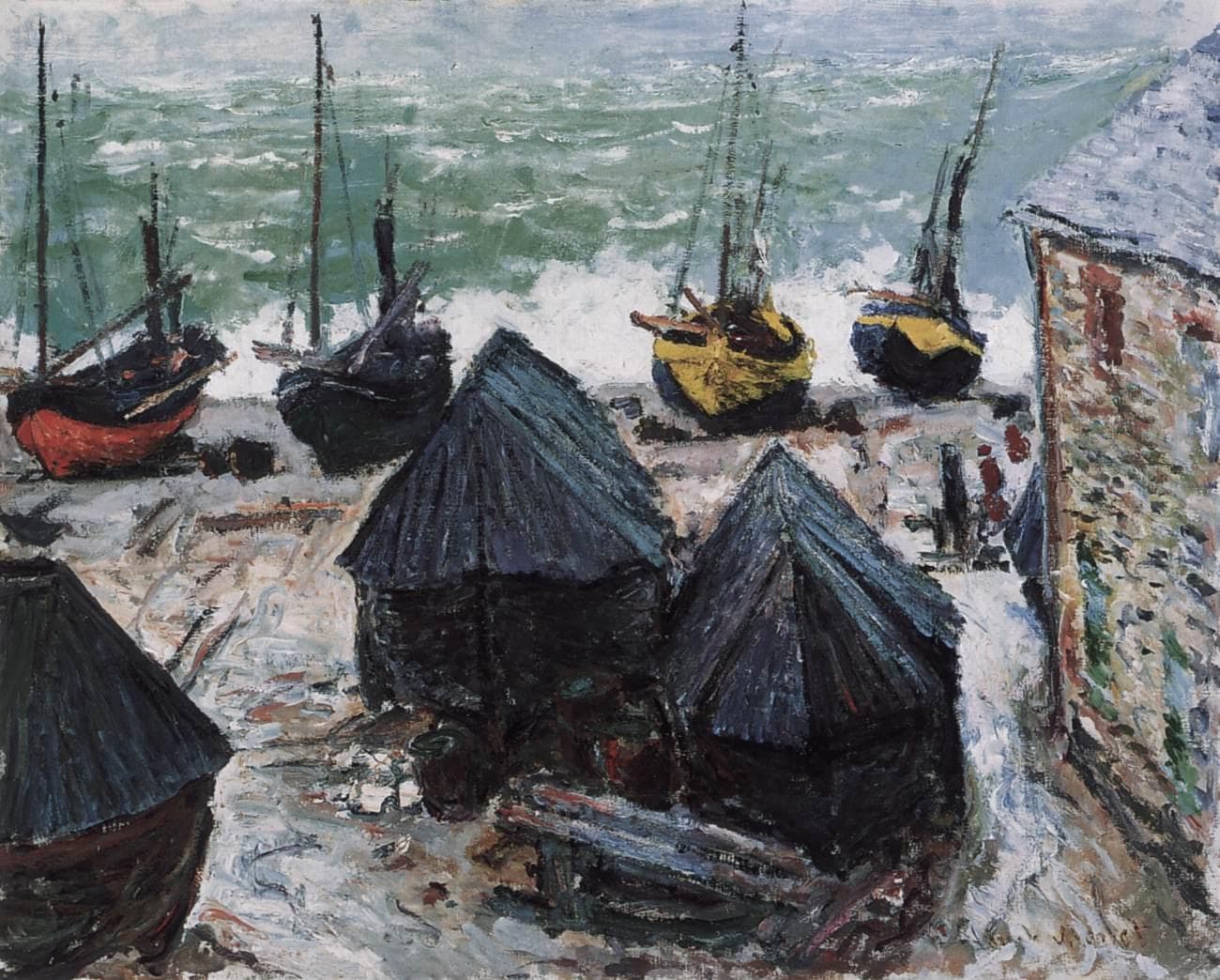
Boats on the Beach at Étretat
Claude Monet · 1885
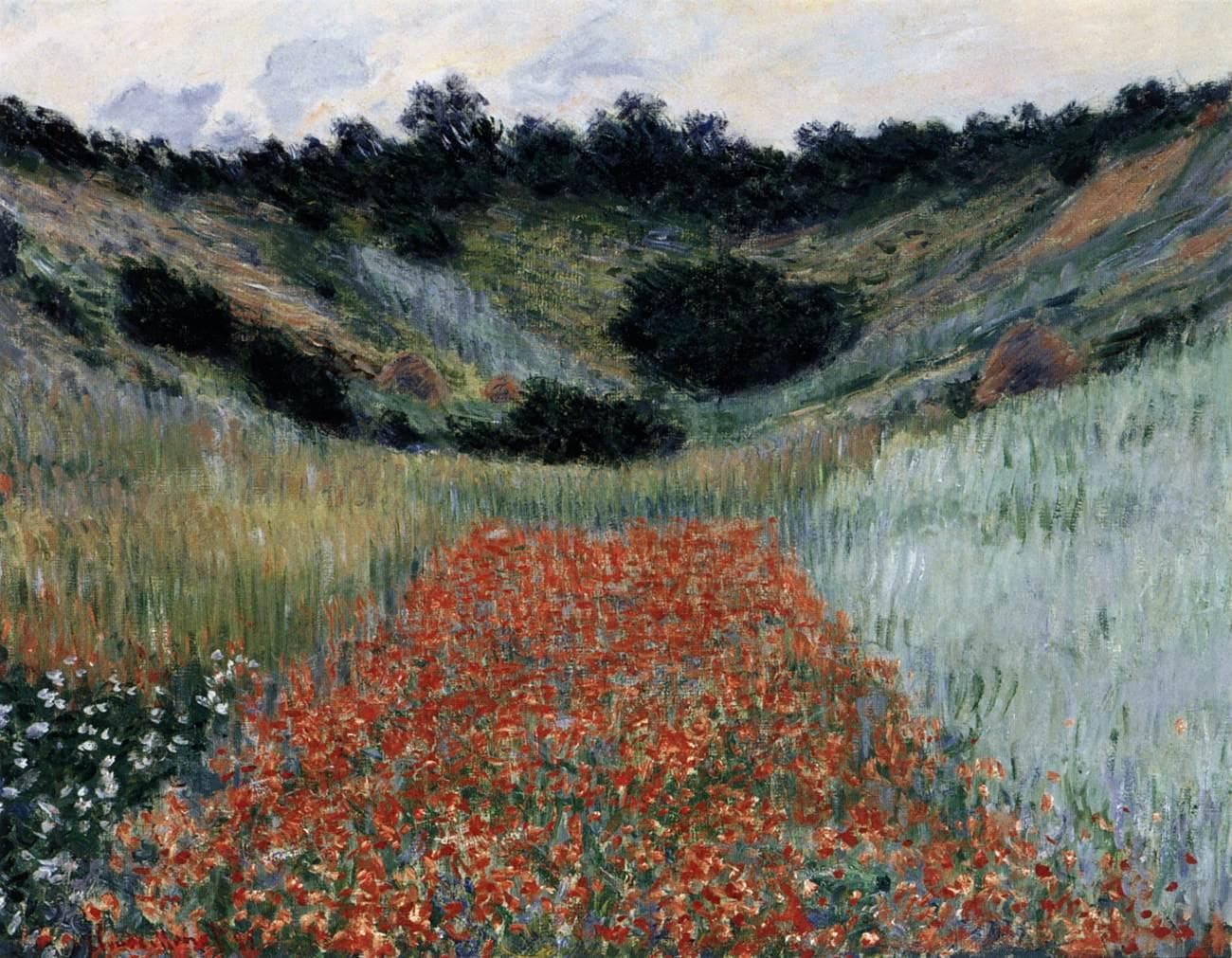
Poppy Field in a Hollow near Giverny
Claude Monet · 1885
Kindred works
You may also study
Poppy Field in a Hollow near Giverny
Claude Monet · 1885
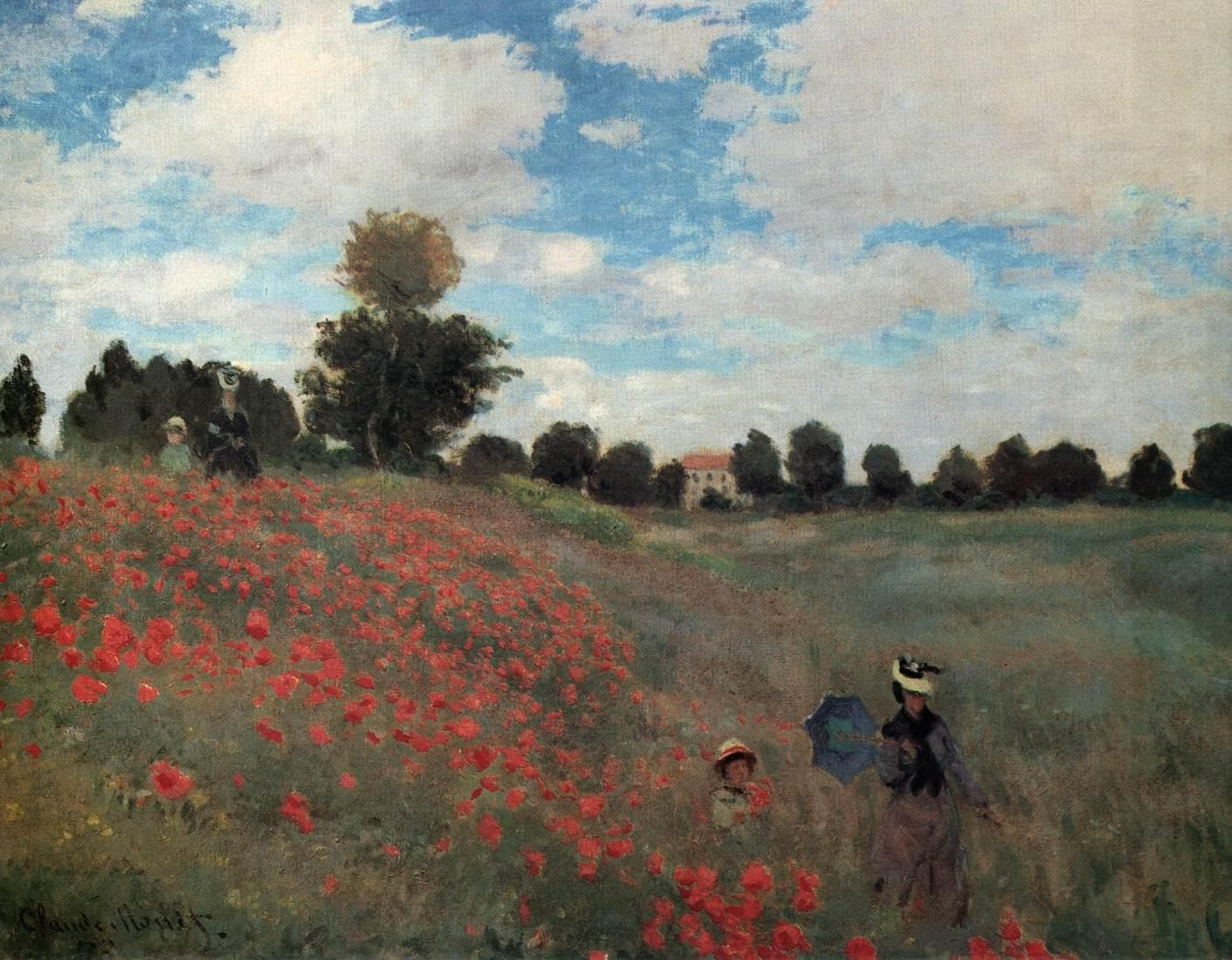
Poppy Field (Poppies at Argenteuil)
Claude Monet · 1873
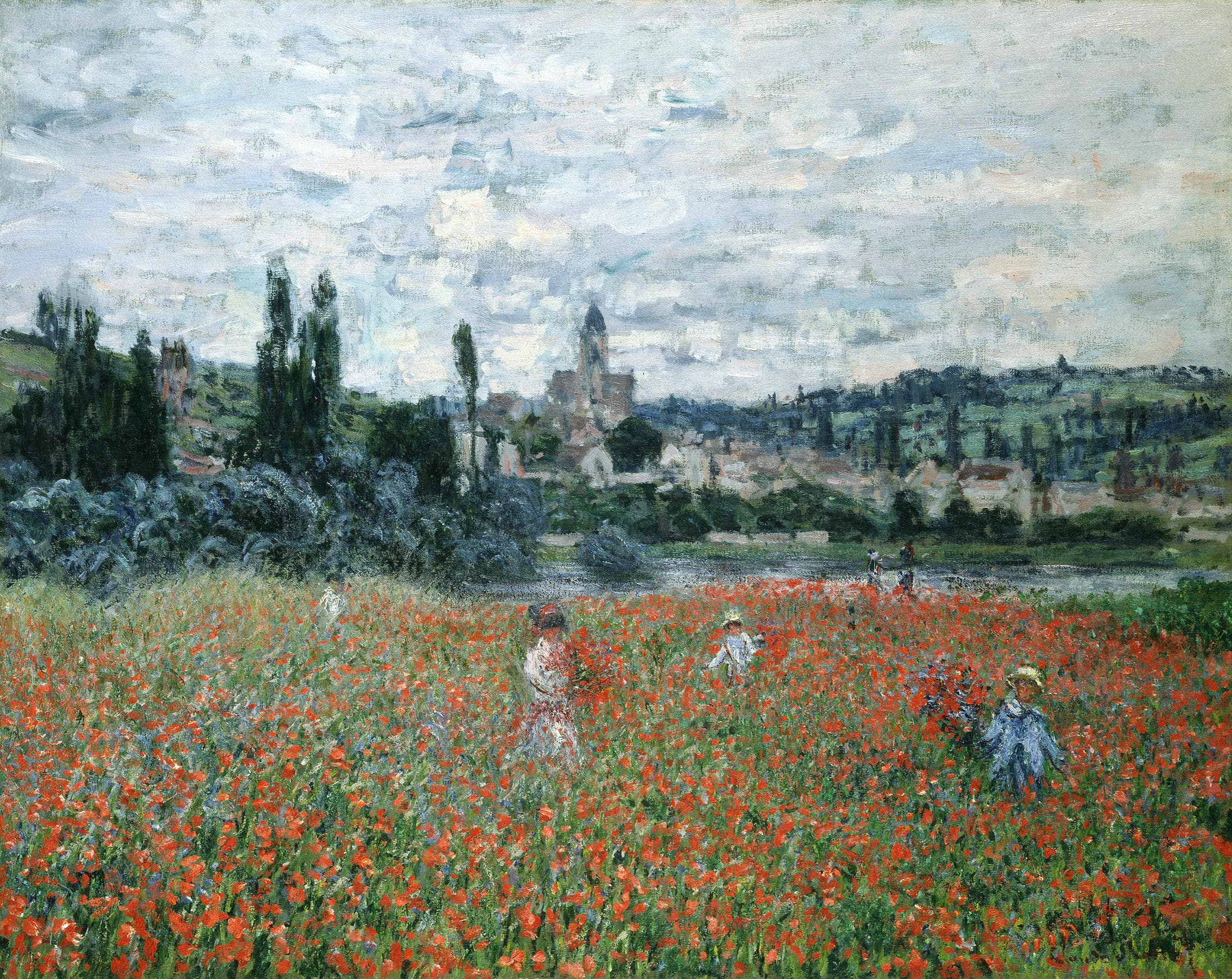
Poppy Field near Vétheuil
Claude Monet · c. 1879
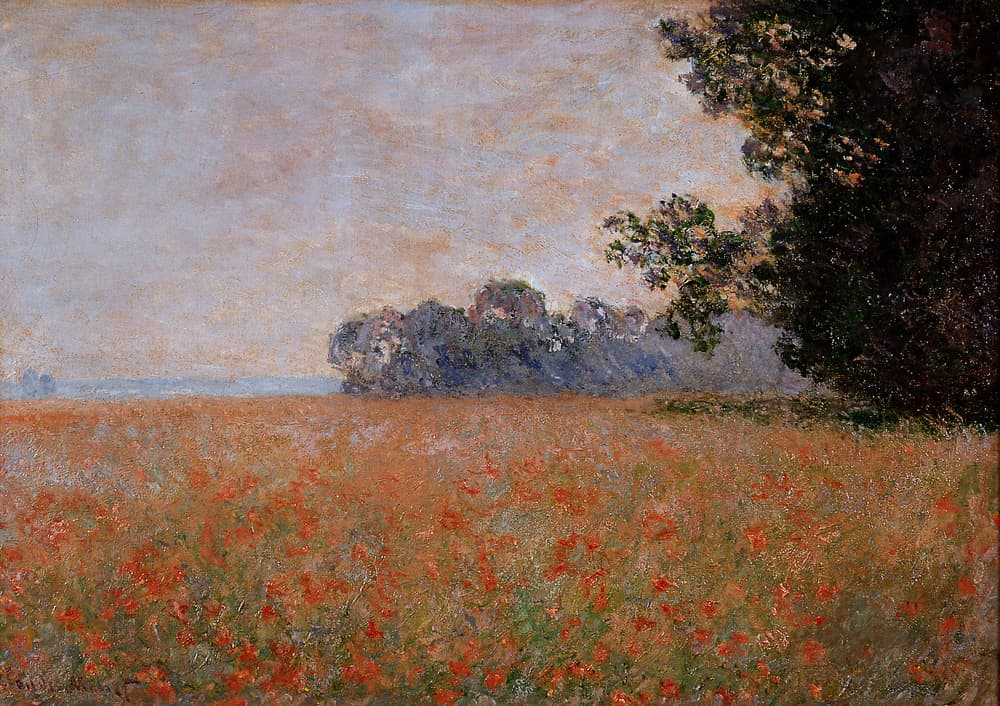
Oat Field with Poppies
Claude Monet · c. 1890
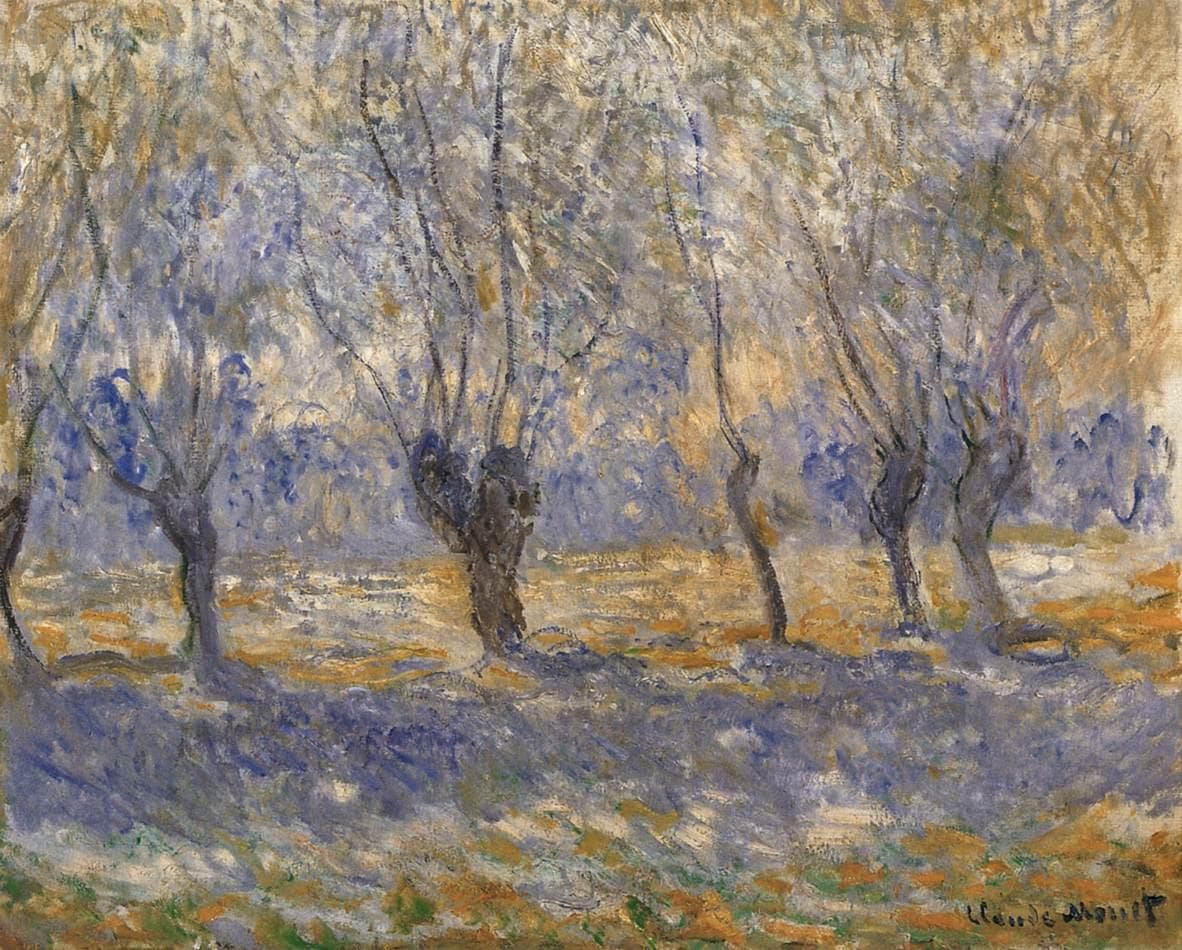
Willows at Giverny
Claude Monet · 1886

The Scream
Edvard Munch · 1893

Ophelia
John Everett Millais · 1851–52

The Great Wave off Kanagawa
Katsushika Hokusai · c. 1830–32