Image: Columbus Museum of Art, Ohio · Public domain · via Wikimedia Commons
Impressionism
Weeping Willow (Columbus)
Claude Monet, 1918
Weeping Willow is a 1918 painting by Claude Monet of the willow beside his water-lily pond at Giverny, its trailing branches a cascade of yellow and green brushstrokes. Painted in the last year of the First World War, it is in the Columbus Museum of Art, Ohio.
- Artist
- Claude Monet
- Date
- 1918
- Medium
- Oil on canvas
- Dimensions
- 131 × 110.3 cm
- Collection
- Columbus Museum of Art, Columbus, Ohio, United States
- Movement
- Impressionism
- Catalogue
- Wildenstein 1869
Painted at Giverny: Monet's House and Garden
Weeping Willow is one of a group of about ten large canvases Claude Monet painted of a single weeping willow at the edge of his water-lily pond at Giverny in 1918 and 1919. The trunk rises at the left and arches over, and its long branches pour down across the picture in loops and strands of yellow, lime and deep green, with a glimpse of pond and lily pads at the bottom. Signed and dated 1918 at lower left, it is in the Columbus Museum of Art in Ohio.
What you're looking at
The canvas is taller than it is wide, about 131 by 110 centimeters, and the tree fills it entirely. On the left the trunk is a dark column streaked with orange, red and pink where the light catches the bark. Near the top it bends sharply to the right and becomes a heavy, dark branch running across the canvas. From it the foliage hangs down in a curtain: hundreds of strokes, some straight and vertical, some curling into hooks and spirals, in acid yellow, yellow-green, emerald and blue-green.
Behind and between the branches the background is a deep blue-violet, almost night-colored, which makes the yellows burn. At the bottom right, through a gap in the leaves, the surface of the pond appears: a band of dark water with a streak of magenta reflection and a scatter of small yellow and white lily pads. The lower left corner is the darkest part of the picture, a mass of navy and violet at the foot of the trunk. Monet's signature and the date are written in red.
The branches are not all painted the same way. Near the trunk they are short and dense; toward the right they lengthen into loops and spirals that seem to move, as if a breeze were passing through.
Giverny in 1918
Monet was 77 in 1918. His wife Alice had died in 1911 and his elder son Jean in 1914. The front was close enough that he could sometimes hear the guns, and his younger son Michel was serving in the army. In this period he was working on the huge water-lily panels later installed at the Musée de l'Orangerie, but he also painted single motifs from the garden: the Japanese bridge, the rose arches, and this willow.
Willows had grown at the edge of the pond since he created it in the 1890s, and they appear around the edges of many water-lily pictures. Here a willow becomes the subject. Many writers have read the series as a response to the war, the weeping willow being a traditional emblem of mourning; Monet did not explain it himself, so that reading is an interpretation. On 12 November 1918, the day after the Armistice, he wrote to Clemenceau offering two decorative panels to the state as a monument to the victory, the beginning of the gift that became the Orangerie installation.
How it was painted
By 1918 Monet's sight was badly affected by cataracts, and his colors had shifted toward yellows, reds and deep blues. This canvas shows the late style at full strength. The brush moves fast and freely, in long gestural strokes that describe the swing of the branches more than their shape. The paint is thick and layered, applied wet over wet, and the pond is reduced to a few marks. It is painted with the same freedom as the late Japanese Bridge pictures.
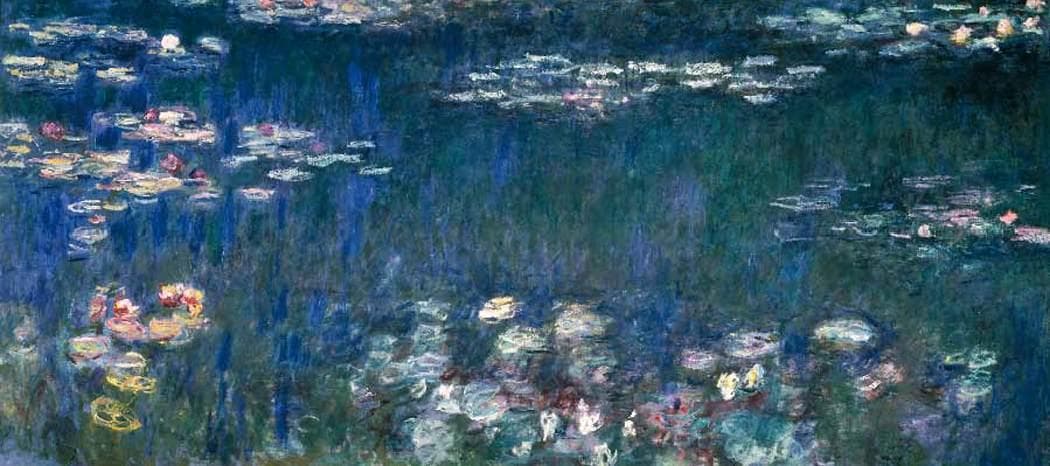
Compare the later willow at the Orsay, Weeping Willow (1920–22), and the willow trunks that frame the Orangerie's Water Lilies: Green Reflections. The pond itself is covered on the Water Lilies series and the garden on Giverny: Monet's House and Garden.
Where to see it
The painting was given to the Columbus Museum of Art by Howard and Babette Sirak, whose collection of European modernist works came to the museum in 1991. It is one of the museum's best-known pictures and a rare late Monet in the American Midwest. For other places to see his work, see where to see Monet's paintings.
Questions & answers
Where is Monet's Weeping Willow of 1918?
This version is in the Columbus Museum of Art in Columbus, Ohio, a gift of Howard and Babette Sirak. Other weeping willow paintings from the same group are in other museums and private collections.
When and where was this Weeping Willow painted?
Monet painted it in 1918 in his water garden at Giverny, Normandy, where a weeping willow grew at the edge of the lily pond. It is signed and dated 1918.
What does Monet's Weeping Willow mean?
Monet left no explanation, but many writers link the willow series of 1918–19 to the First World War, since the weeping willow is a traditional emblem of mourning. The day after the Armistice he offered paintings to France as a monument to the victory.
How many weeping willow paintings did Monet make?
He painted about ten canvases of the weeping willow at the pond in 1918–19, and returned to the motif again in 1920–22, as in the Musée d'Orsay's Weeping Willow.
More by the artist
Claude Monet

Bridge over a Pond of Water Lilies
Claude Monet · 1899

Woman with a Parasol – Madame Monet and Her Son
Claude Monet · 1875

Sunset in Venice
Claude Monet · 1908–12

La Grenouillère
Claude Monet · 1869

Beach in Pourville
Claude Monet · 1882

Springtime
Claude Monet · 1872

Boating on the River Epte
Claude Monet · 1890

The Seine at Asnières (Hermitage)
Claude Monet · 1873
Also painted in 1918
The same year
Kindred works
You may also study
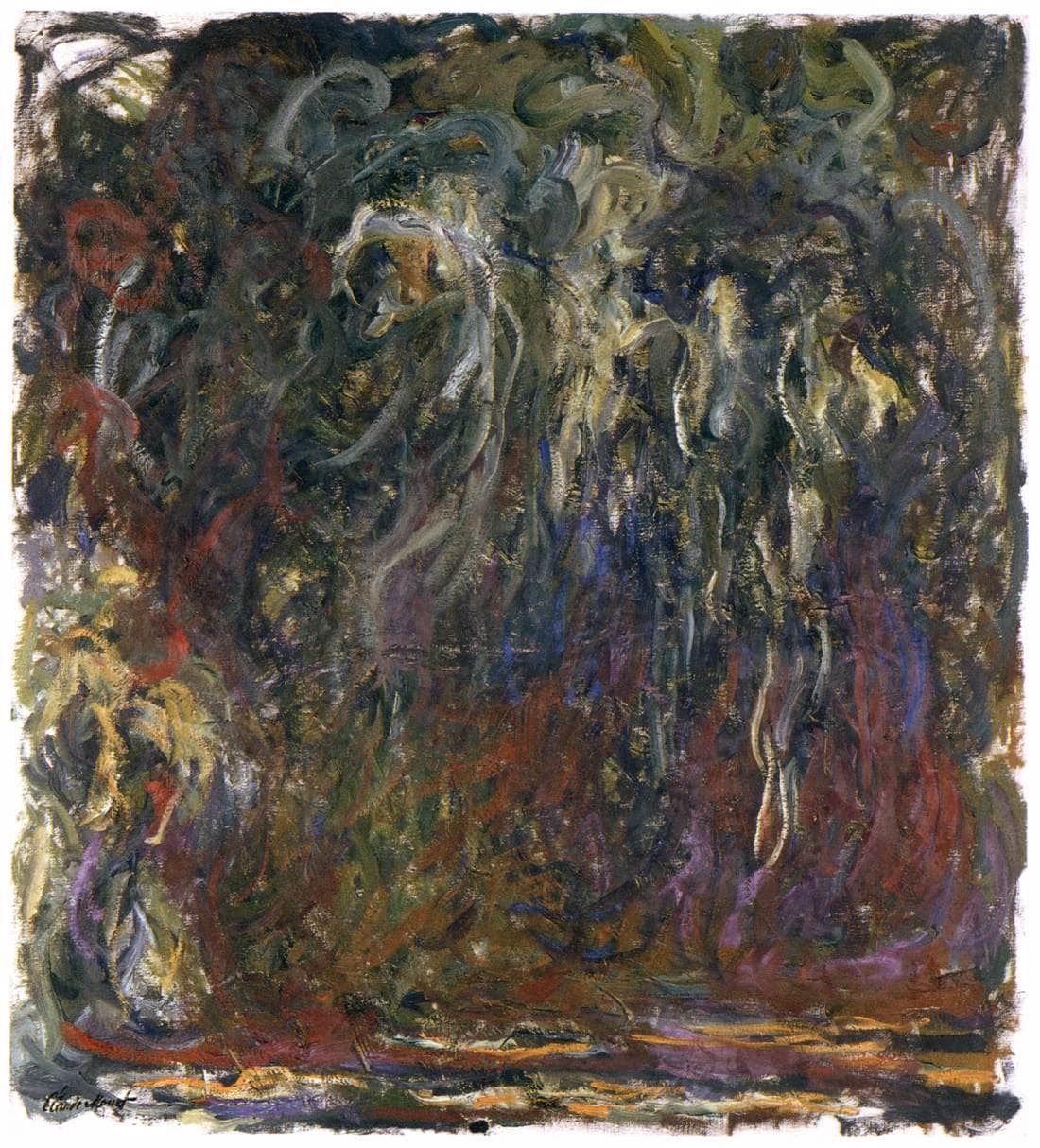
Weeping Willow
Claude Monet · 1920–22
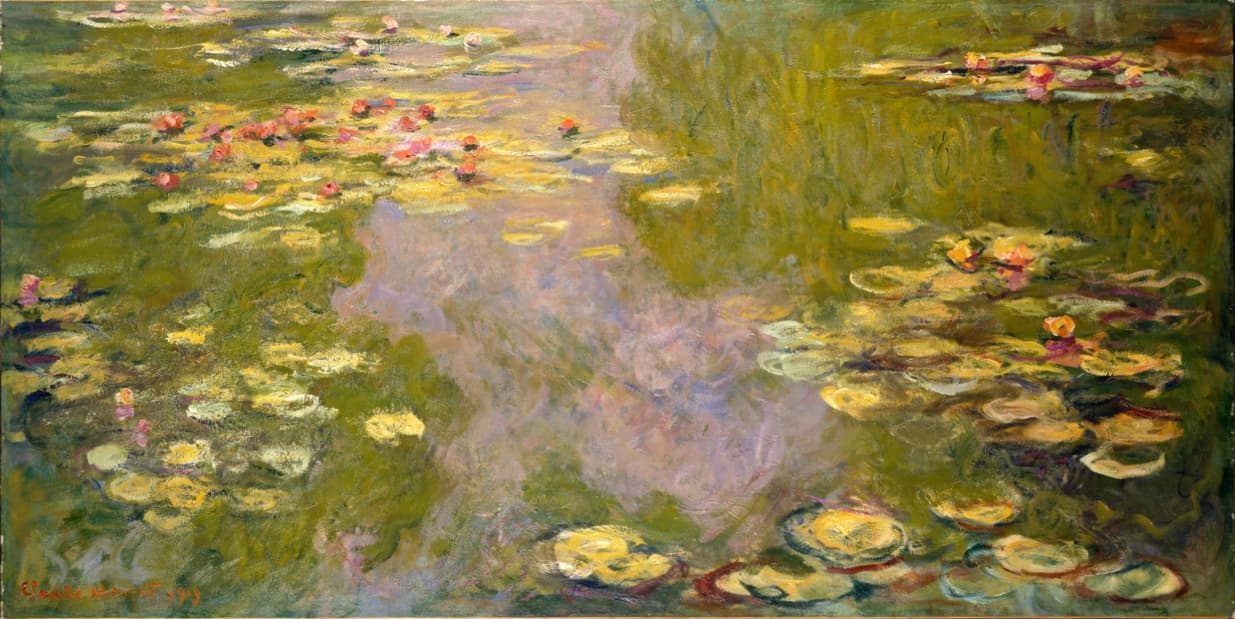
Water Lilies (1919, Metropolitan Museum)
Claude Monet · 1919
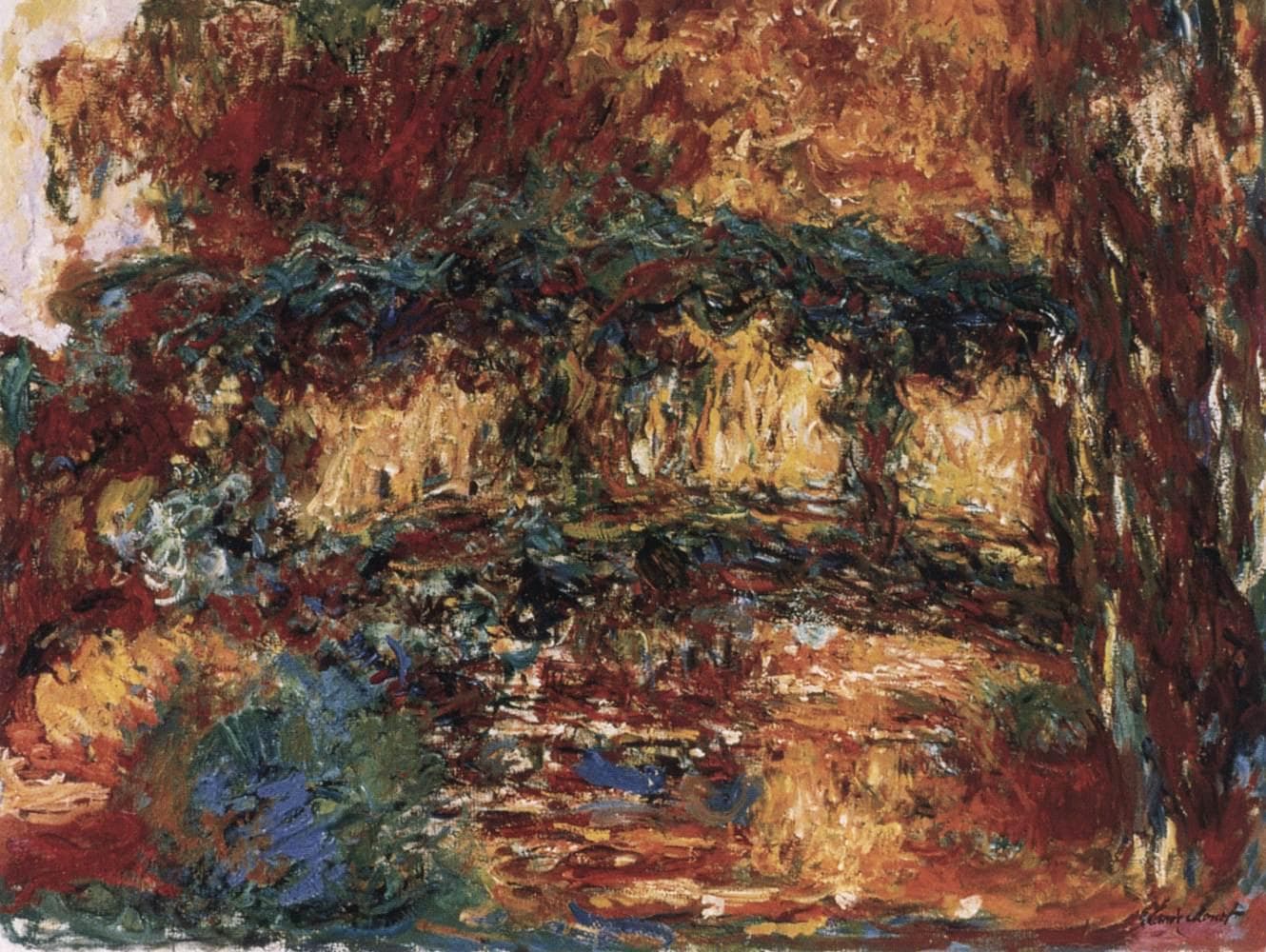
The Japanese Bridge
Claude Monet · c. 1923–25
Water Lilies: Green Reflections
Claude Monet · 1914–26
Willows at Giverny
Claude Monet · 1886

The Scream
Edvard Munch · 1893

Saturn Devouring His Son
Francisco Goya · c. 1819–1823

Ophelia
John Everett Millais · 1851–52