Impressionism
Floating Ice at Bennecourt
Claude Monet, 1893
Floating Ice at Bennecourt is an 1893 painting by Claude Monet of ice floes drifting on the Seine below Giverny, frosted island trees glowing gold and pink in winter sun. It is recorded in a private collection.
- Artist
- Claude Monet
- Date
- 1893
- Medium
- Oil on canvas
- Collection
- Private collection
- Movement
- Impressionism
Painted at Giverny: Monet's House and Garden
Floating Ice at Bennecourt is one of the paintings Claude Monet made in January and February 1893, when a hard frost froze the Seine near his home at Giverny and then broke it into drifting ice. Signed and dated Claude Monet 93 at lower right, it shows the river at Bennecourt, the village on the opposite bank, under a low winter sun. The canvas is recorded as being in a private collection, and its exact entry in the Monet catalogue raisonné has not yet been confirmed.
What you are looking at
The picture is split almost exactly in half by the far bank. Above it, a milky sky of white, pale blue and faint pink; below it, the river, a broad sheet of cool blue and lavender. In the center, standing on a low island, is a clump of tall bare trees whose upper branches are lit gold and apricot, as if the sun has found them through the haze. Smaller trees repeat the motif to the left and right, each one fainter than the last, until the distant bank becomes a band of lilac.
The floes are the next thing you notice. They lie on the water in loose horizontal rows, mostly on the left half of the river, each one a short, flat bar of white or cream with a blue edge on its shadowed side. Toward the island they crowd together into an almost solid shelf of ice; nearer to us they thin out, and open water shows between them.
Look below the island trees and you find them again. Their reflections drop straight down into the water as long, broken strokes of yellow and pink, crossing the rows of ice. This is the warmest part of the picture, and it sits in the coldest place: on the surface of a frozen river. At lower right, a bank of snow slides diagonally into the frame, the purest white on the canvas, with Monet's signature written in red-violet along its edge.
How it was painted
The whole canvas is pitched high. There are almost no darks; even the shadows on the ice are a clear mid-blue. Monet builds the winter light out of warm and cool tints played against each other, gold against lavender, pink against blue, rather than out of white and gray. That is why the picture feels sunlit even though nothing in it is warm.
The handling changes with the substance. The sky is scrubbed in with soft, crossing strokes. The water is smoother and more horizontal. The floes are separate touches of thicker paint that sit on top of the water layer, and the reflections are dragged vertically through it, so the two directions of brushwork, across and down, mirror the two things that are happening on the river.
The 1893 ice paintings at Bennecourt
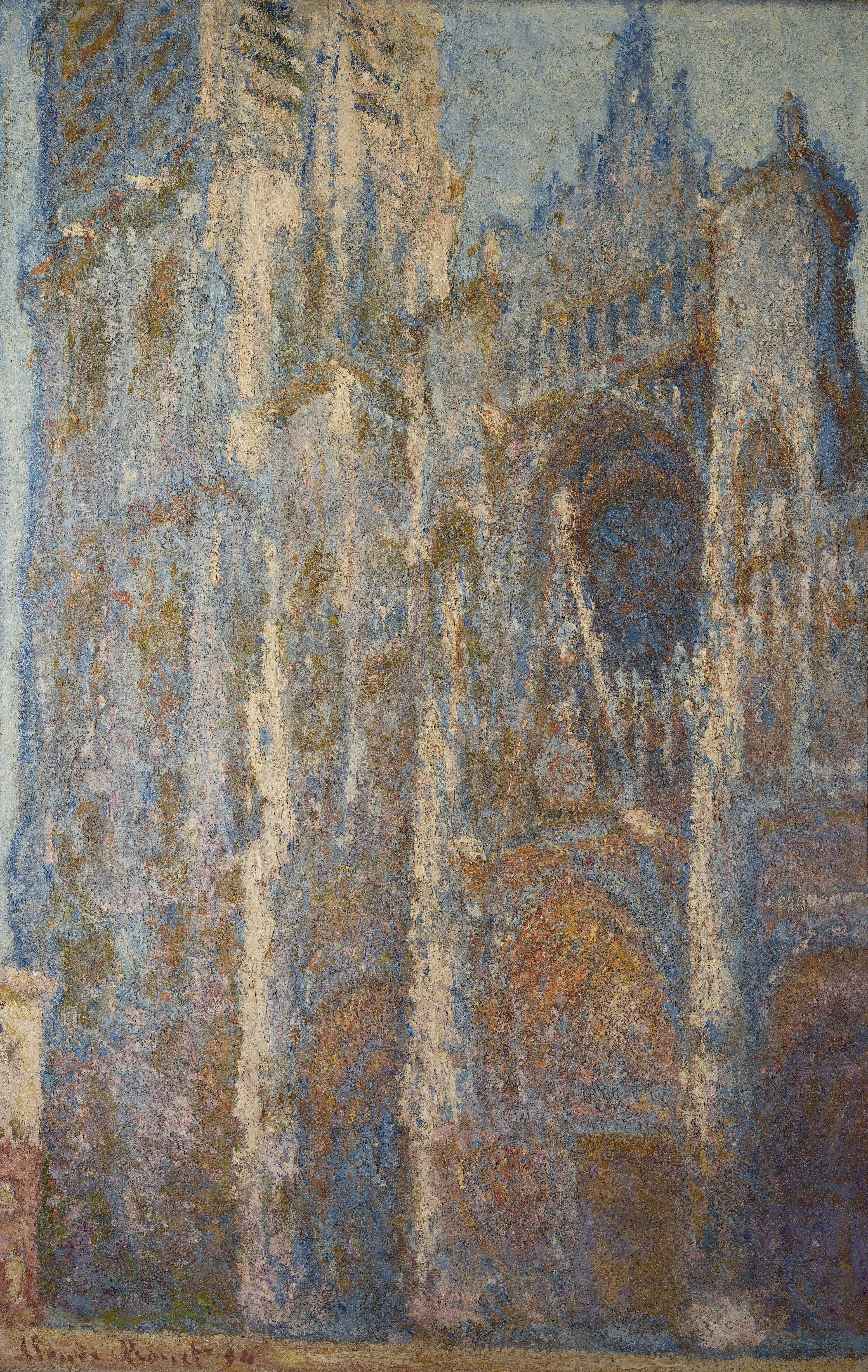
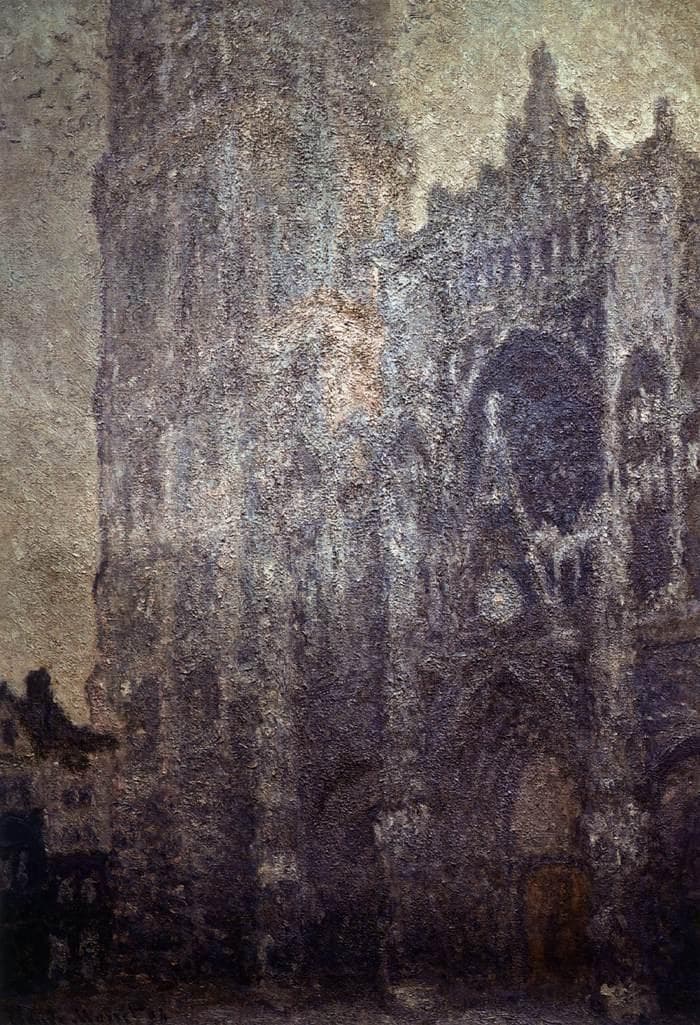
The winter of 1892–93 was severe in northern France. According to the Museum Barberini, which owns one of the group, Monet made thirteen paintings of the ice on the Seine near Giverny in early 1893, ten of them focused on Bennecourt. They come at a busy moment: he had begun the Rouen Cathedral paintings the previous winter and was about to return to Rouen to continue them, and in February 1893 he bought the plot of land across the road from his house that would become the water-lily garden.
He had painted the same subject once before, at Vétheuil in the winter of 1879–80, when the Seine froze and broke up in a far more violent thaw; see The Breakup of the Ice at Lavacourt. The 1893 canvases are calmer and more systematic, closer in spirit to the series method of the Haystacks and Rouen Cathedral.
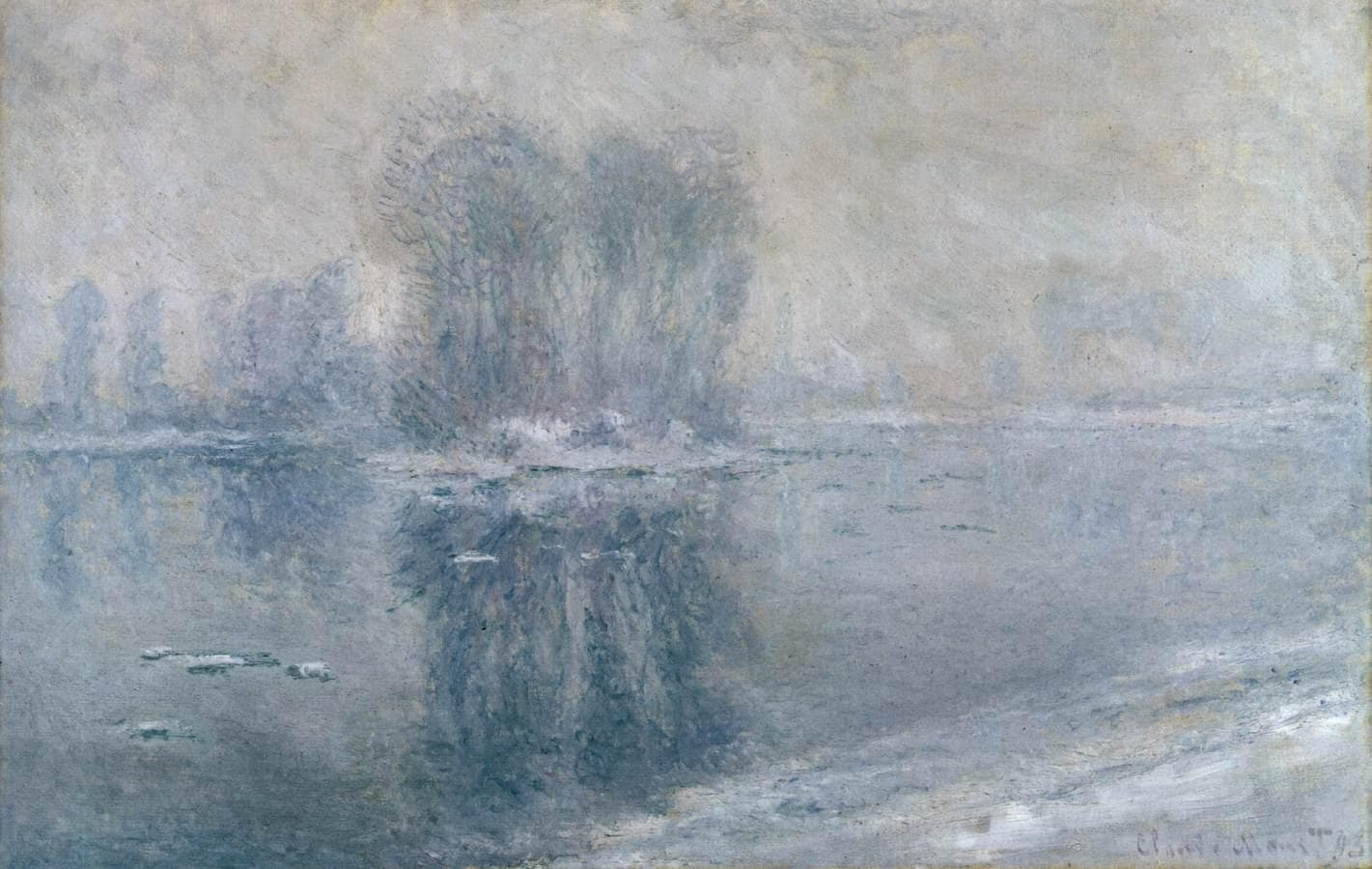
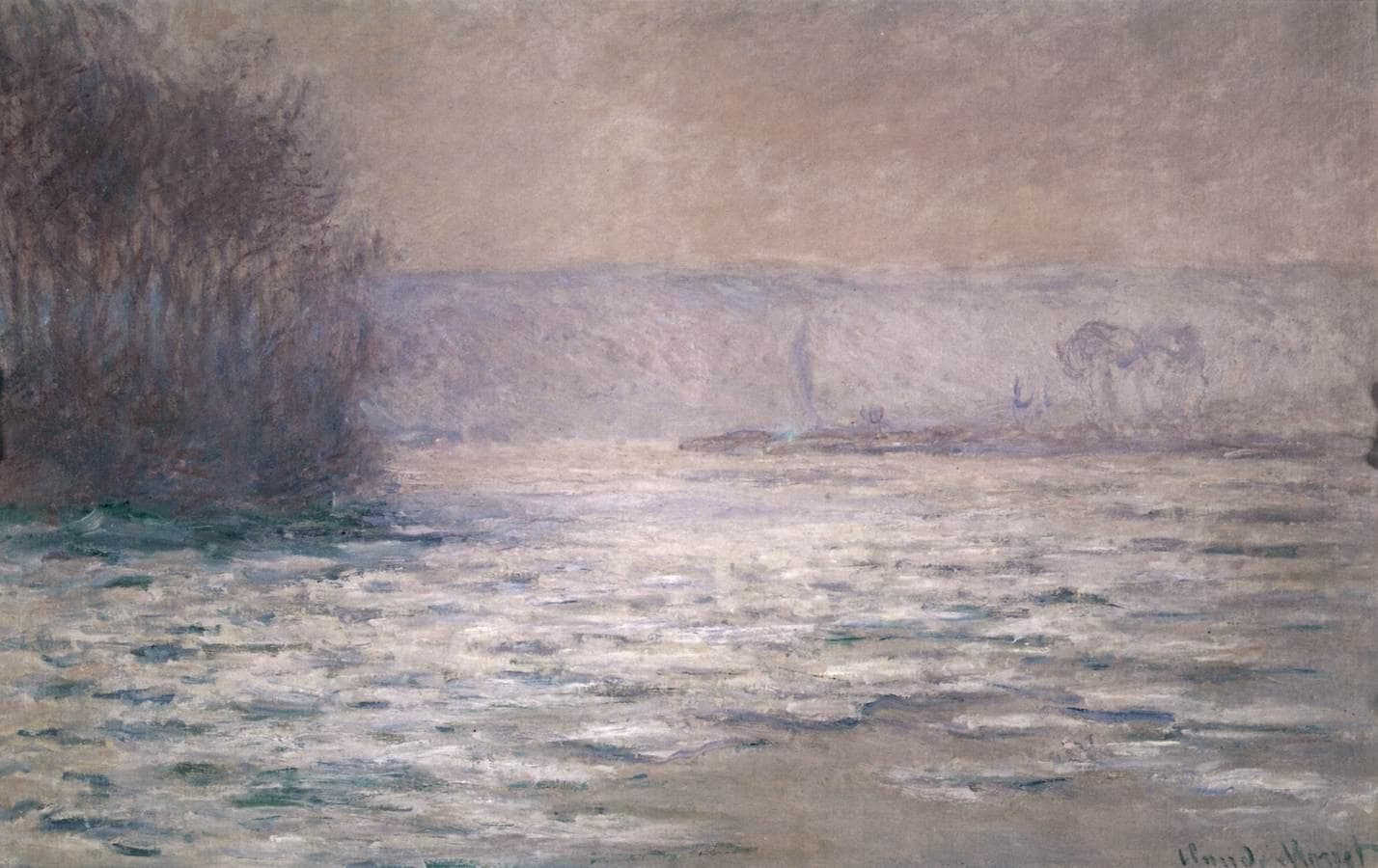
The Barberini canvas, Floes at Bennecourt (60 × 100 cm, Wildenstein 1334), uses almost the same arrangement as this one, with the island trees in the center and the snowy bank at lower right, but it is painted in a gray, foggy light. This version is the same view with the sun breaking through. Comparing the two shows the point of the whole group: the motif stays put while the weather changes everything. The Metropolitan Museum's Ice Floes is a quieter, more misty variant, and Ice Floes on the Seine near Bennecourt sets a dark thicket against silver ice.
Bennecourt and Giverny
Bennecourt faces Giverny across the Seine, and the wooded islands between them appear again and again in Monet's work of the 1890s. It is part of the landscape described on our Giverny hub, the stretch of river and meadow that Monet painted for more than forty years.
Where to see it
This canvas is privately owned and appears only occasionally on loan. To see the 1893 ice paintings in person, the Museum Barberini in Potsdam and the Metropolitan Museum of Art in New York each show one. For other public collections, see where to see Monet's paintings.
Questions & answers
Where is Monet's Floating Ice at Bennecourt?
This sunlit version is recorded as being in a private collection and is rarely exhibited. Other paintings from Monet's 1893 ice group can be seen in public museums: Floes at Bennecourt, a gray, foggy variant of the same view, is in the Museum Barberini in Potsdam, and Ice Floes is in the Metropolitan Museum of Art in New York.
When and where did Monet paint the ice at Bennecourt?
He painted it in January and February 1893, during a hard winter when the Seine froze and then broke into drifting floes. Bennecourt is the village across the river from Giverny, where Monet lived from 1883, so the motif was only a short walk from his house. He made about thirteen ice paintings that winter.
What does Floating Ice at Bennecourt show?
It shows flat plates of ice drifting on the Seine in rows, a clump of tall bare trees on an island in the middle, and a snowy bank at lower right. Low winter sun turns the frosted branches gold and pink, and their reflections fall in warm vertical streaks across the cold blue water and ice.
How many ice floe paintings did Monet make in 1893?
According to the Museum Barberini, Monet painted thirteen views of ice on the Seine near Giverny in early 1893, ten of them focused on Bennecourt. Several share the same composition in different light, such as the foggy Barberini canvas and this sunlit one. He had painted the river breaking up at Vétheuil once before, in 1880.
More by the artist
Claude Monet

Bridge over a Pond of Water Lilies
Claude Monet · 1899

Woman with a Parasol – Madame Monet and Her Son
Claude Monet · 1875

Sunset in Venice
Claude Monet · 1908–12

La Grenouillère
Claude Monet · 1869

Beach in Pourville
Claude Monet · 1882

Springtime
Claude Monet · 1872

Boating on the River Epte
Claude Monet · 1890

The Seine at Asnières (Hermitage)
Claude Monet · 1873
Also painted in 1893
The same year
Kindred works
You may also study
Ice Floes
Claude Monet · 1893
Ice Floes on the Seine near Bennecourt
Claude Monet · 1893
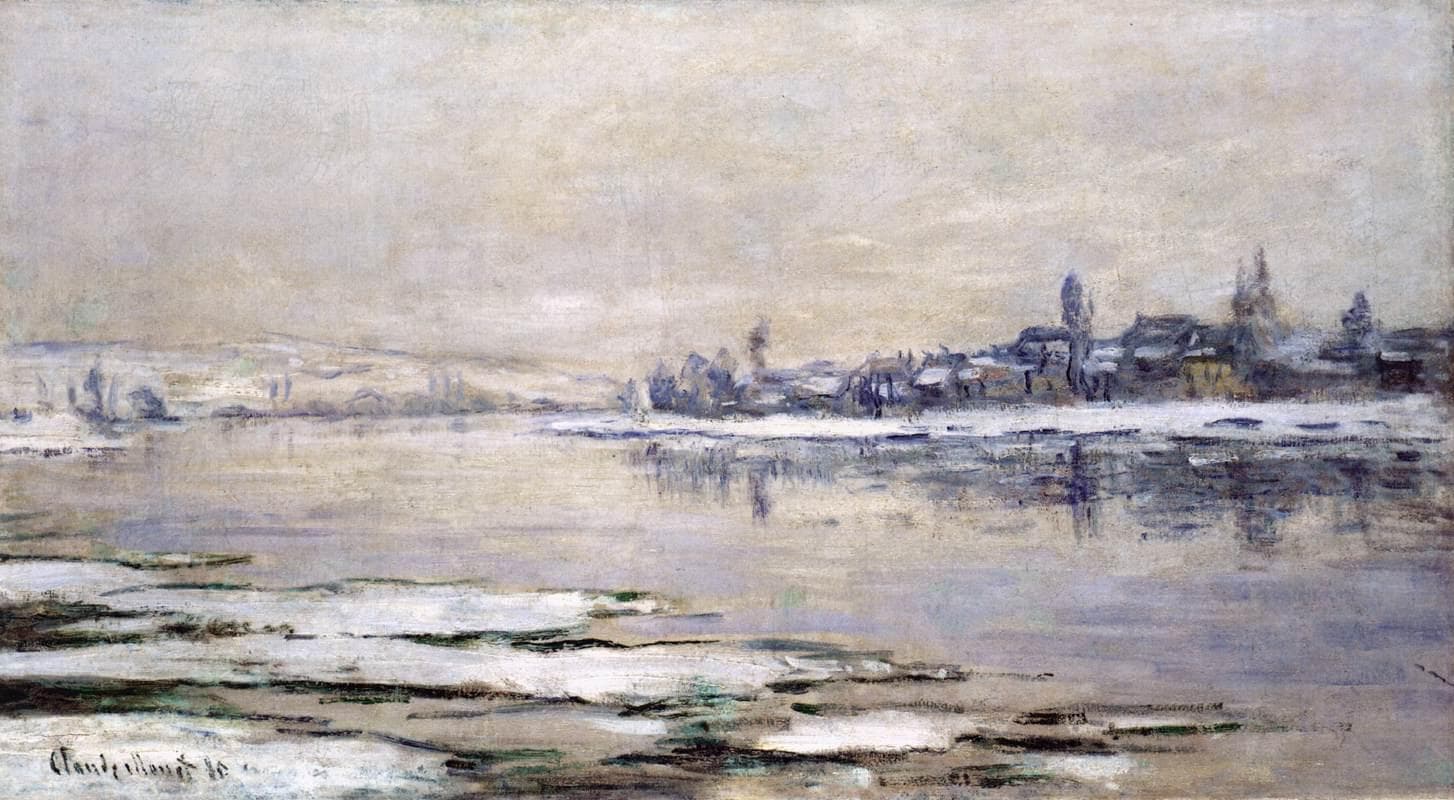
The Breakup of the Ice at Lavacourt
Claude Monet · 1880
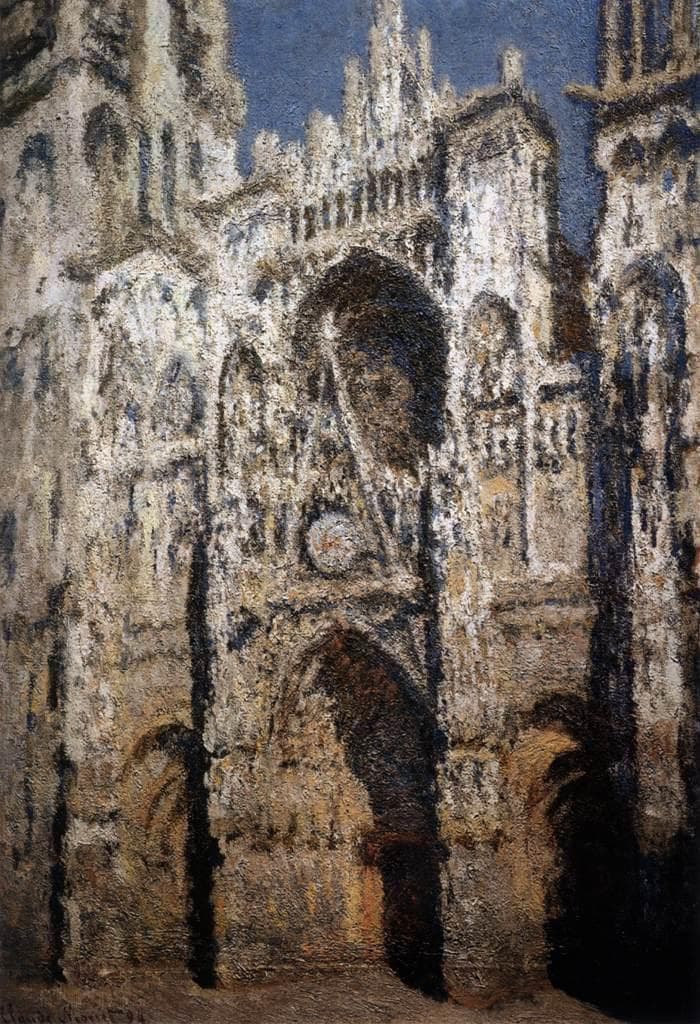
Rouen Cathedral in Full Sunlight
Claude Monet · 1893
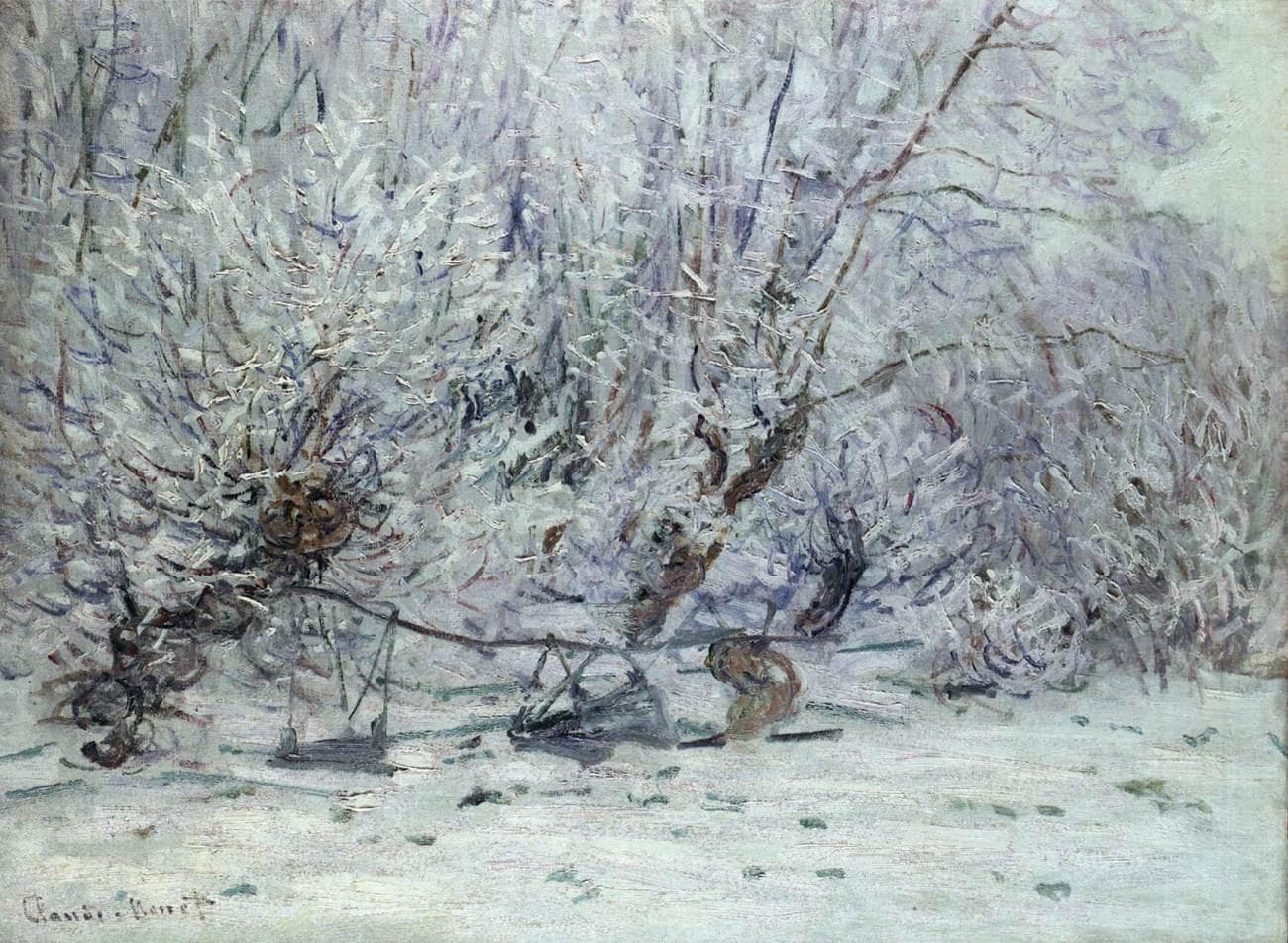
Frost
Claude Monet · 1885

The Scream
Edvard Munch · 1893

Ophelia
John Everett Millais · 1851–52

The Great Wave off Kanagawa
Katsushika Hokusai · c. 1830–32