Image: Musée d'Orsay, Paris; photograph by Ji-Elle · Public domain · via Wikimedia Commons
Impressionism
Self-Portrait (1917)
Claude Monet, 1917
Self-Portrait (Autoportrait) is a 1917 oil sketch by Claude Monet of his own head, white-bearded and ruddy, at 76. He gave it to Georges Clemenceau, who presented it to the French state in 1927; it belongs to the Musée d'Orsay.
- Artist
- Claude Monet
- Date
- 1917
- Medium
- Oil on canvas
- Dimensions
- 70.5 × 55 cm
- Collection
- Musée d'Orsay (on deposit at MUba Eugène-Leroy, Tourcoing, 2017–2026), Paris, France
- Movement
- Impressionism
- Catalogue
- Wildenstein 1843
Painted at Giverny: Monet's House and GardenMore at Monet at the Musée d'Orsay
Claude Monet's Self-Portrait of 1917 is a rapid, unfinished oil sketch of the artist's own head at the age of 76, painted at Giverny. It is one of only a handful of self-portraits he made in a career of some 2,000 paintings. Monet gave it to his friend Georges Clemenceau, who donated it to the French state in 1927. It belongs to the Musée d'Orsay in Paris, which has placed it on long-term deposit at the MUba Eugène-Leroy in Tourcoing for 2017–2026.
What you are looking at
The head floats in the middle of a bare, pale canvas. There is no shoulder line, no clothing and no background beyond a rough halo of dark blue-green strokes swept around the hair and beard. The face is built of hot color: orange and rose on the forehead and cheeks, violet in the shadows of the eye sockets and under the nose, a streak of yellow-green along the bald crown. The eyes are narrowed, half-hidden in shadow, and look slightly down and away rather than at the viewer.
The great white beard, which everyone who visited Giverny remembered, is not painted white at all. Monet lays it in with yellow-green, lime and cream, flicked downward in short, loaded strokes, with blue-gray touches where it falls into shadow. Seen from a few steps back it reads as white in daylight; close up it is a tangle of color. The bare primed canvas around the head shows that he stopped as soon as the likeness was there.
Where and when it was painted
In 1917 Monet was living at Giverny, working on his great water-lily decorations through the First World War, and struggling with cataracts that were dimming and yellowing his sight. His elder brother Léon died that year, and the Musée d'Orsay suggests the loss may have prompted this rare look at himself. He had painted himself in a beret in 1886 (Self-Portrait in Beret) and rarely after; according to his friends, he destroyed other attempts at self-portraiture around this time. For the setting, see our Giverny hub.
How it was painted
This is a sketch in the true sense: painted wet into wet, probably in a single sitting before a mirror. Monet used the same vocabulary of broken, directional strokes he used for the water and foliage of his garden, and the same late palette of acid greens, violets and hot oranges you see in Weeping Willow and the late Japanese Footbridge. The face is modeled almost entirely by color temperature, warm where the light strikes and cool where it turns away, rather than by light and dark.
What Monet leaves out is as telling as what he puts in. There is no palette, no brush, no studio, none of the props by which painters traditionally announce their profession in a self-portrait. There is not even a body. The picture is a record of looking, made with the same attention he gave to a haystack or a cliff, and it treats his own face as one more surface on which light falls and changes. Those who knew him said the likeness was strong; the directness of the sketch is what makes it moving.
Monet and Clemenceau
Georges Clemenceau, the statesman who led France through the last year of the war, was Monet's closest friend in old age. He persuaded Monet to complete the water-lily cycle and to give it to the nation, and it was through Clemenceau that Monet offered two decorative panels to the state in November 1918. This self-portrait, given privately to Clemenceau, became public when he presented it to the state in 1927, a few months after Monet's death and the opening of the Orangerie rooms. It went first to the Louvre and was assigned to the Musée d'Orsay in 1986.
Where to see it
The painting is part of the Orsay's collection, gathered on our Monet at the Musée d'Orsay page, but it has been on deposit at the fine arts museum in Tourcoing, near Lille, under an arrangement running from 2017 to 2026. Check with either museum before traveling to see it. The Orsay itself shows many other late Monets, and the Orangerie, a short walk away, holds the water lilies Clemenceau helped bring into being.
Questions & answers
Where is Monet's 1917 self-portrait?
It belongs to the Musée d'Orsay in Paris (inventory RF 2623), but the museum deposited it at the MUba Eugène-Leroy, the fine arts museum of Tourcoing in northern France, for 2017–2026. Check both museums' websites for its current location before visiting.
When and where did Monet paint his self-portrait?
He painted it at Giverny in 1917, at the age of 76, while working on his water-lily decorations during the First World War. It is a quick oil sketch on a lightly primed canvas, probably made in one sitting in front of a mirror.
How many self-portraits did Monet paint?
Very few: a handful across his whole career, compared with some 2,000 landscapes and other works. The best known are the Self-Portrait in Beret of 1886 and this 1917 sketch. Friends recalled that he destroyed other late attempts he was not satisfied with.
Why did Clemenceau own Monet's self-portrait?
Georges Clemenceau was Monet's close friend and supporter in his last years and encouraged him to finish and donate the water-lily decorations. Monet gave him this self-portrait, and Clemenceau presented it to the French state in 1927, after the painter's death.
More by the artist
Claude Monet

Bridge over a Pond of Water Lilies
Claude Monet · 1899

Woman with a Parasol – Madame Monet and Her Son
Claude Monet · 1875

Sunset in Venice
Claude Monet · 1908–12

La Grenouillère
Claude Monet · 1869

Beach in Pourville
Claude Monet · 1882

Springtime
Claude Monet · 1872

Boating on the River Epte
Claude Monet · 1890

The Seine at Asnières (Hermitage)
Claude Monet · 1873
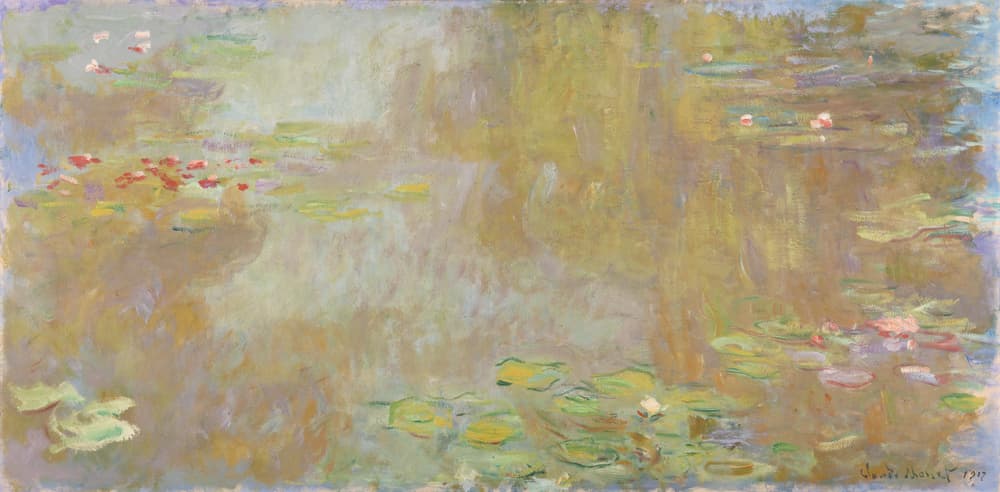
Also painted in 1917
The same year
Kindred works
You may also study
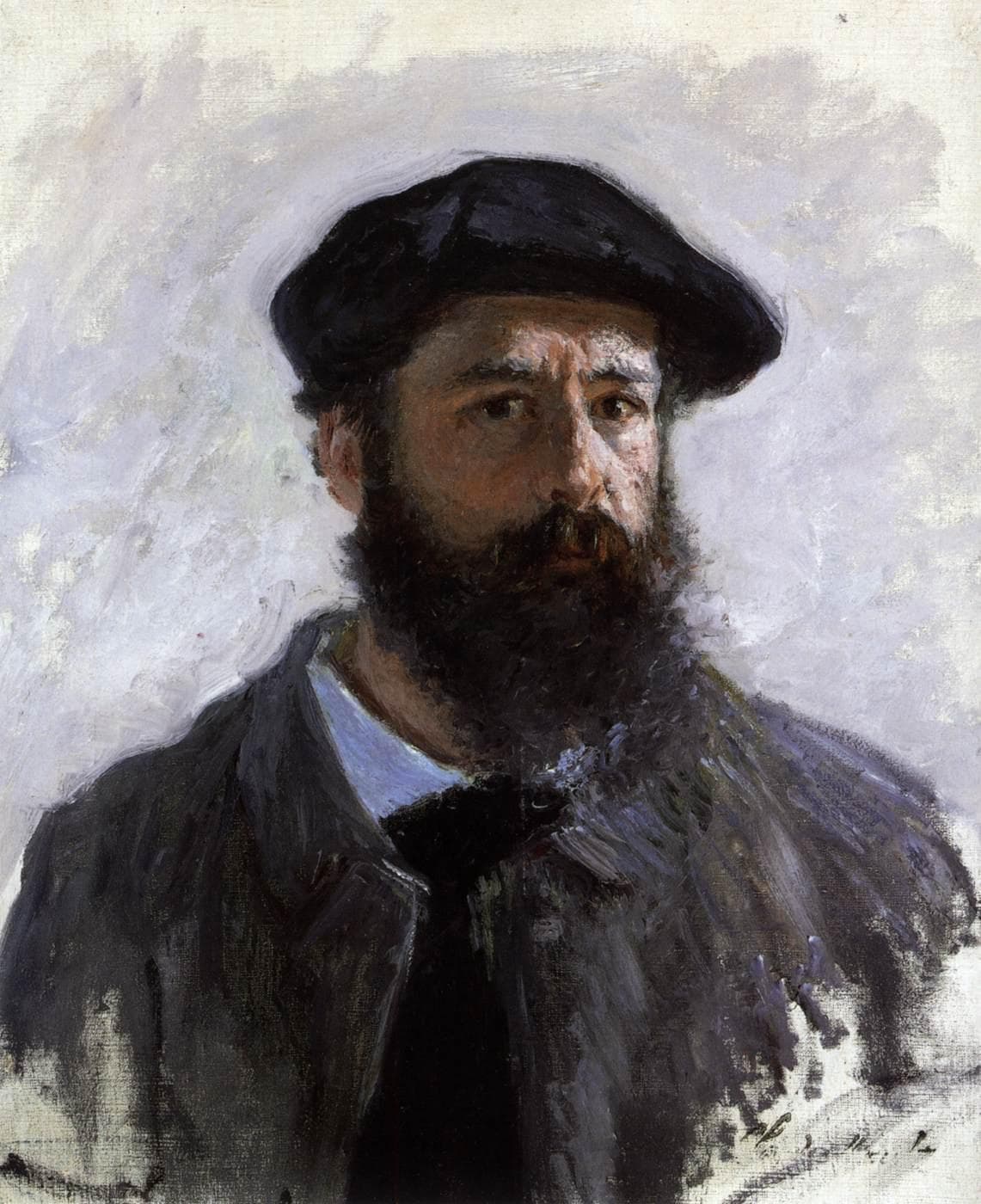
Self-Portrait in Beret
Claude Monet · 1886
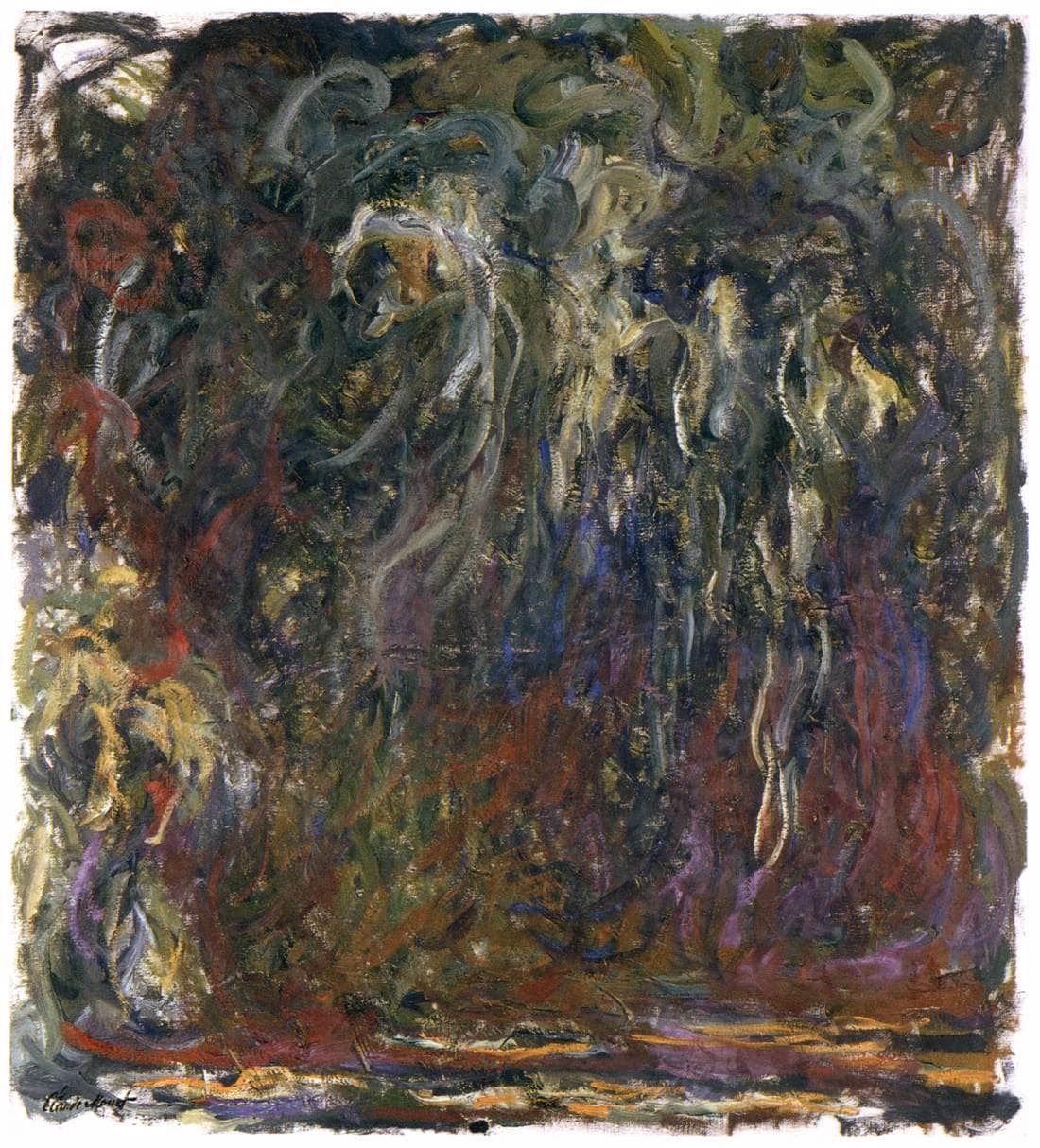
Weeping Willow
Claude Monet · 1920–22
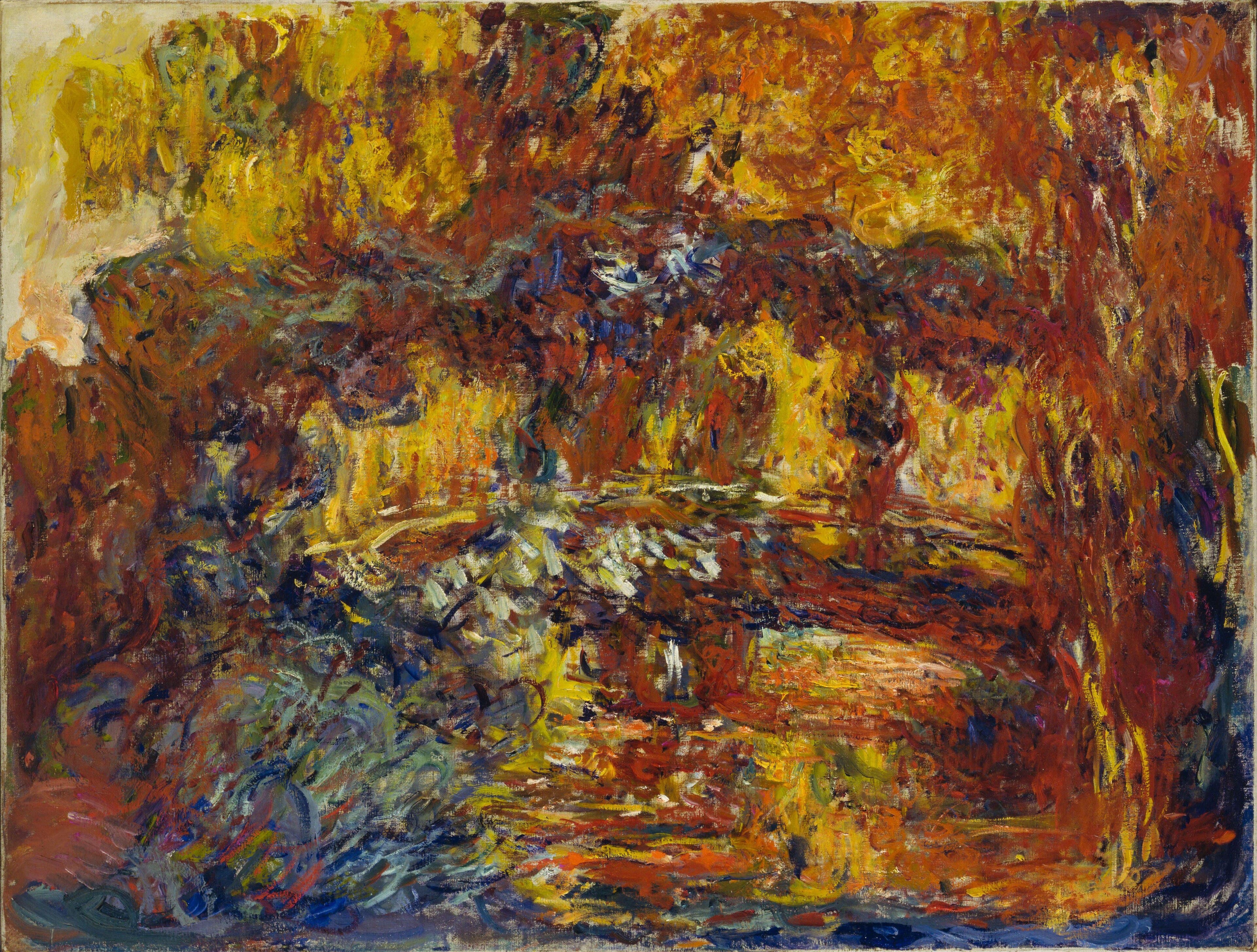
The Japanese Footbridge (MoMA)
Claude Monet · c. 1920–22
Water Lilies (1916, Tokyo)
Claude Monet · 1916
Portrait of Père Paul
Claude Monet · 1882
Las Meninas
Diego Velázquez · 1656
The School of Athens
Raphael · 1509–1511
Girl with a Pearl Earring
Johannes Vermeer · c. 1665