Impressionism
Field of Yellow Irises at Giverny
Claude Monet, 1887
Field of Yellow Irises at Giverny is an 1887 painting by Claude Monet of a wide meadow of yellow and violet irises beneath a line of dark trees and a cloudy sky. It is in the Musée Marmottan Monet, Paris.
- Artist
- Claude Monet
- Date
- 1887
- Medium
- Oil on canvas
- Dimensions
- 45 × 100 cm
- Collection
- Musée Marmottan Monet, Paris, France
- Movement
- Impressionism
- Catalogue
- Wildenstein 1137
Painted at Giverny: Monet's House and GardenMore at Musée Marmottan Monet
Field of Yellow Irises at Giverny (Champ d'iris jaunes à Giverny) was painted by Claude Monet in 1887, four years after he moved to the village of Giverny in Normandy. The long, low canvas, 45 by 100 centimeters and number 1137 in Wildenstein's catalogue, is in the Musée Marmottan Monet in Paris (inventory 5172), which received it with the bequest of the painter's son Michel Monet in 1966.
What you are looking at
The format is wide and shallow, more than twice as long as it is tall, and Monet uses it to stretch a meadow across the whole picture. The lower half is a dense field of flowers. Along the back of the field runs a band of yellow, the flag irises in bloom, painted as quick upright flicks of lemon and ochre. In front of it, filling the foreground, is a deeper tangle of violet, blue and rust strokes: the sword-shaped leaves and darker blooms of irises seen close up, with touches of orange-red scattered among them.
Beyond, a belt of trees stretches across the horizon as a dark blue-violet and green mass, its top edge broken into soft humps. Above it a broad gray and white sky, heavy with rolling cloud, takes up nearly half the canvas. There is no path, no figure and no building; we are dropped straight into the field.
How it was painted
The irises are built from hundreds of separate vertical strokes laid side by side, with yellow and violet, complementary colors, placed next to each other so that each makes the other look brighter. Monet does not describe individual flowers. He catches the sensation of a field shimmering in wind under shifting cloud, and the paint itself, thick, quick and unblended, carries that movement.
The sky is painted with broad, curving sweeps of gray, cream and blue that leave the canvas grain visible in places. Its loose, rapid handling suggests the picture was done in one or two sessions out of doors. The cool, heavy sky and the hot band of flowers below it are the two halves of the subject, and the dark line of trees holds them apart.
Giverny before the water garden
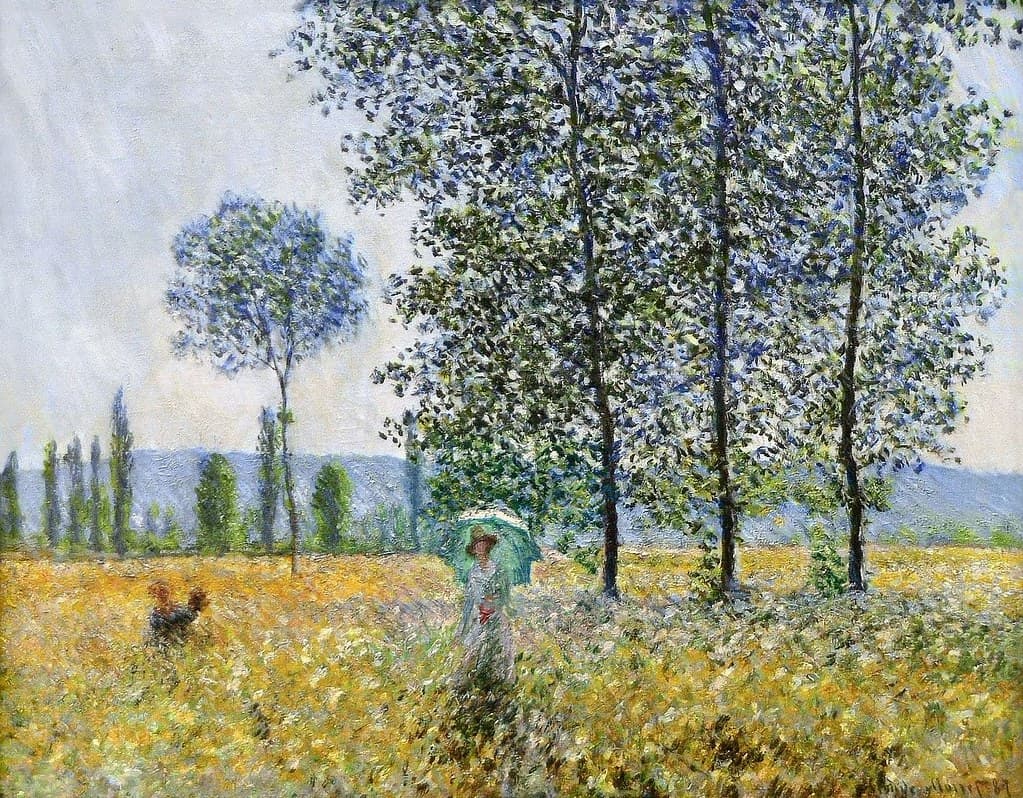
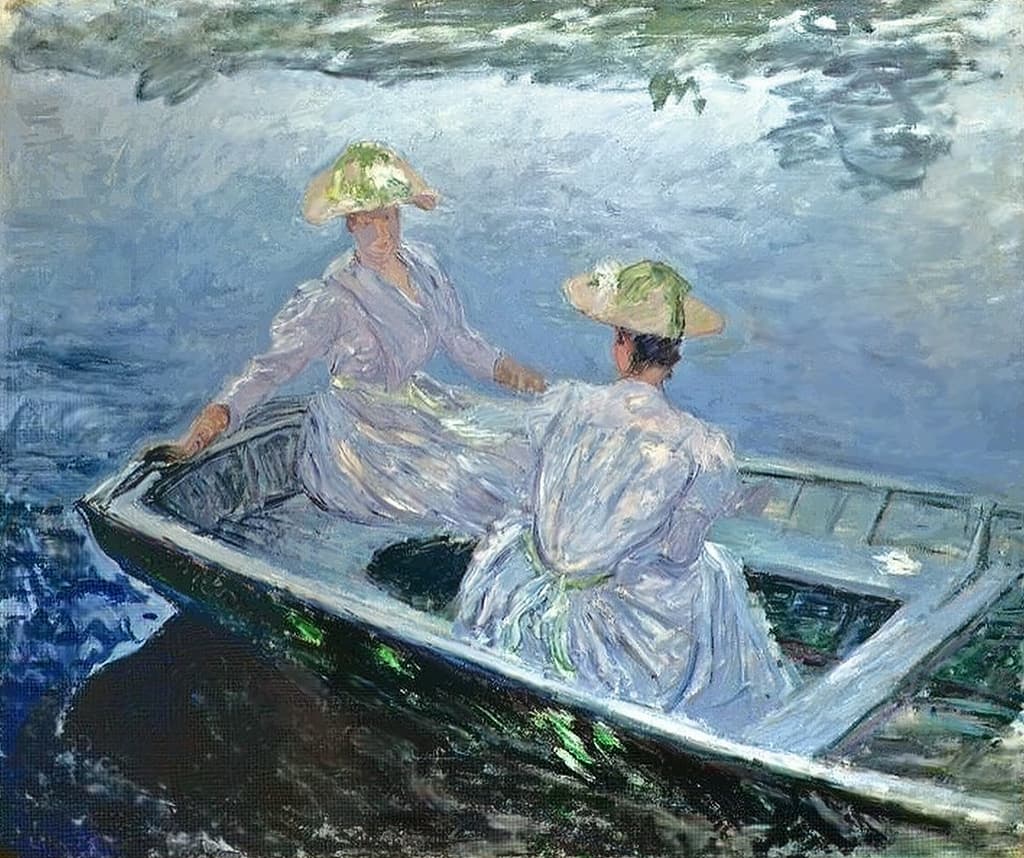
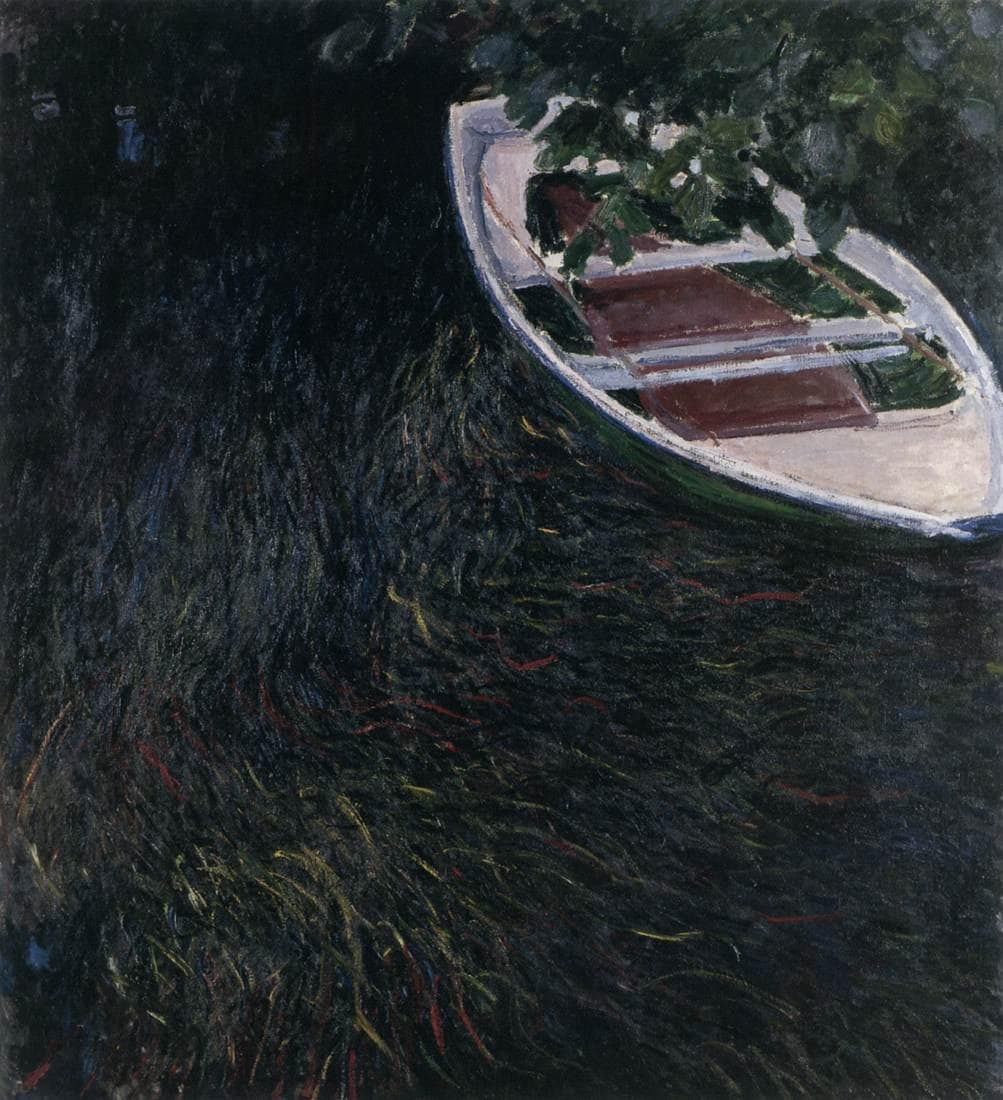
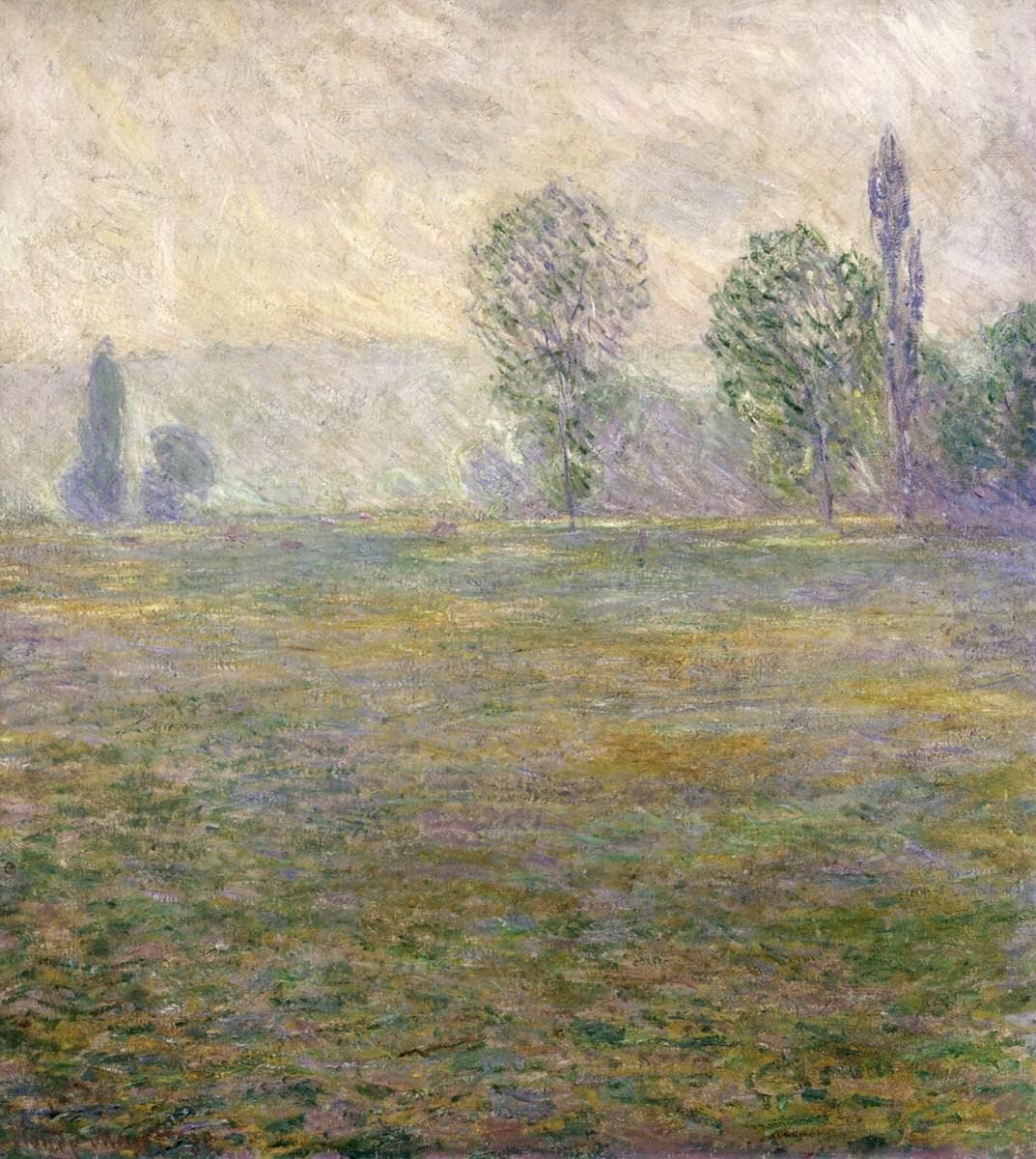
Monet rented his house at Giverny in 1883 and bought it in 1890. In the 1880s, before he created the famous lily pond, he painted the meadows, poplars, haystacks and river around the village, where yellow flag irises grow wild in the damp ground near the Epte and the Seine. Related works include Meadow at Giverny in the Hermitage, Poppy Field in a Hollow near Giverny in Boston and Giverny Landscape. In the same summer of 1887 he painted the Hoschedé daughters boating on the Epte in The Boat at Giverny.
Irises later became one of the main flowers of his own garden. He planted them in long beds along the central path of the flower garden and around the pond, as in Irises in Monet's Garden at Giverny of 1900 and the late Irises. Our hub on Giverny follows the house, the garden and the landscape around them.
Why the format matters
The panoramic shape anticipates the long decorative canvases Monet would use for the water lilies decades later. Here it already does something those later pictures do: it removes a center. No single point in the picture is more important than another, and the eye travels sideways along the bands of flowers, trees and sky. That uncentered, all-over quality is one reason the late Monet appealed so strongly to American abstract painters after the Second World War, and early canvases like this show where it began.
Where to see it
The painting is in the Musée Marmottan Monet in Paris, which has the largest Monet collection in the world. Compare Vincent van Gogh's Irises, painted two years later in Saint-Rémy, where each iris is drawn as a separate individual. More on Claude Monet.
Questions & answers
Where is Monet's Field of Yellow Irises at Giverny?
The 1887 painting is in the Musée Marmottan Monet in Paris. It came to the museum in 1966 with the bequest of Michel Monet, the artist's younger son, whose gift of works from his father's studio made the Marmottan the largest Monet collection anywhere.
When and where was it painted?
Monet painted it in 1887 in the wet meadows around Giverny in Normandy, where yellow flag irises grow wild near the rivers Epte and Seine. He had moved to Giverny in 1883 and had not yet made his famous water garden.
What does Field of Yellow Irises at Giverny show?
A wide meadow of irises fills the lower half: a band of yellow blooms at the back and a tangle of violet, blue and rust leaves and flowers in front. Behind it runs a dark belt of trees, and above that a broad gray sky full of rolling clouds.
Did Monet grow irises at Giverny?
Yes. Yellow flag irises grew wild in the meadows near Giverny, which is what this 1887 painting shows, and Monet later planted many varieties of iris in his flower garden and around the water lily pond. They appear in his work from the 1880s to the 1920s.
More by the artist
Claude Monet

Bridge over a Pond of Water Lilies
Claude Monet · 1899

Woman with a Parasol – Madame Monet and Her Son
Claude Monet · 1875

Sunset in Venice
Claude Monet · 1908–12

La Grenouillère
Claude Monet · 1869

Beach in Pourville
Claude Monet · 1882

Springtime
Claude Monet · 1872

Boating on the River Epte
Claude Monet · 1890

The Seine at Asnières (Hermitage)
Claude Monet · 1873
Also painted in 1887
The same year
Kindred works
You may also study
Meadow at Giverny
Claude Monet · 1888
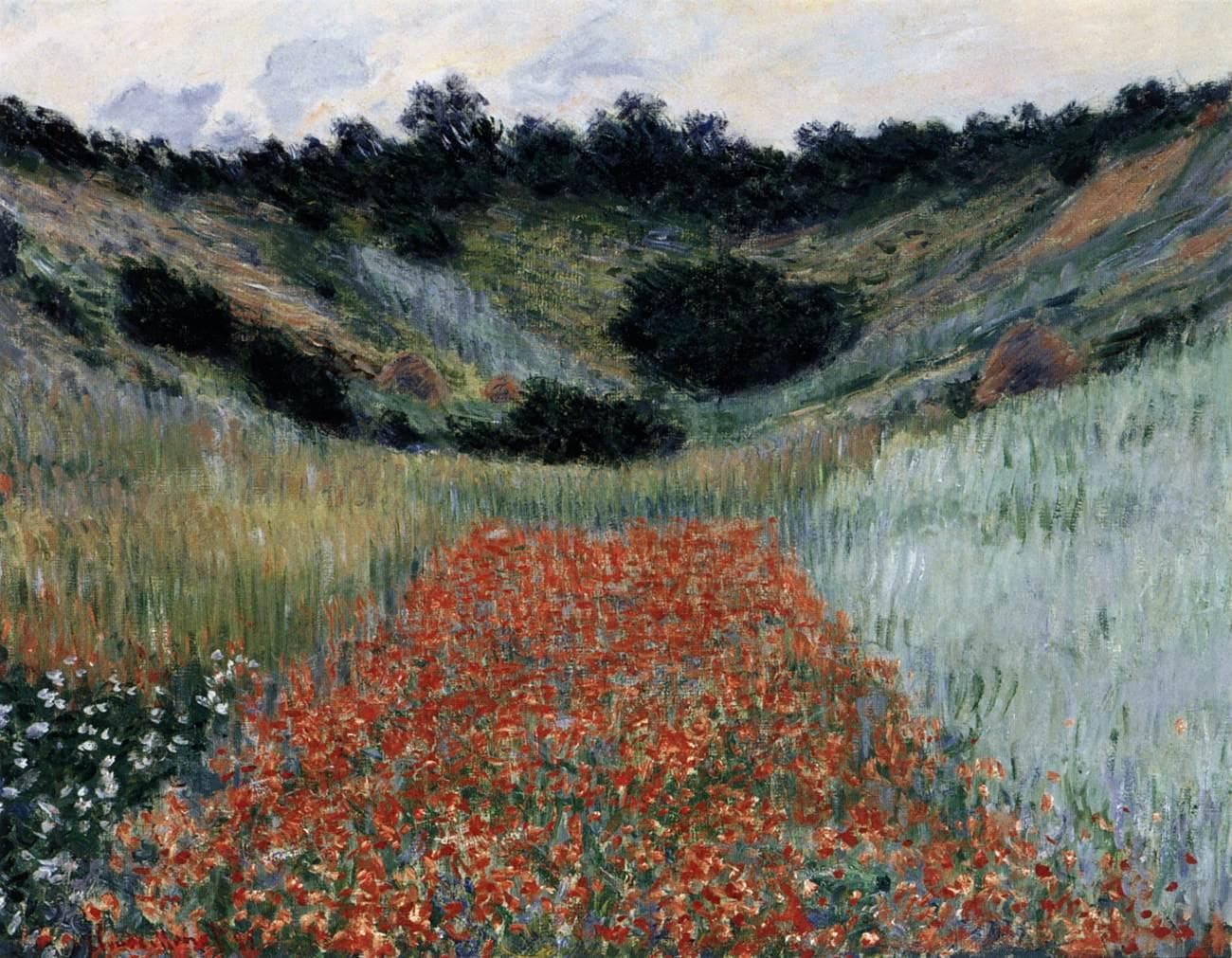
Poppy Field in a Hollow near Giverny
Claude Monet · 1885
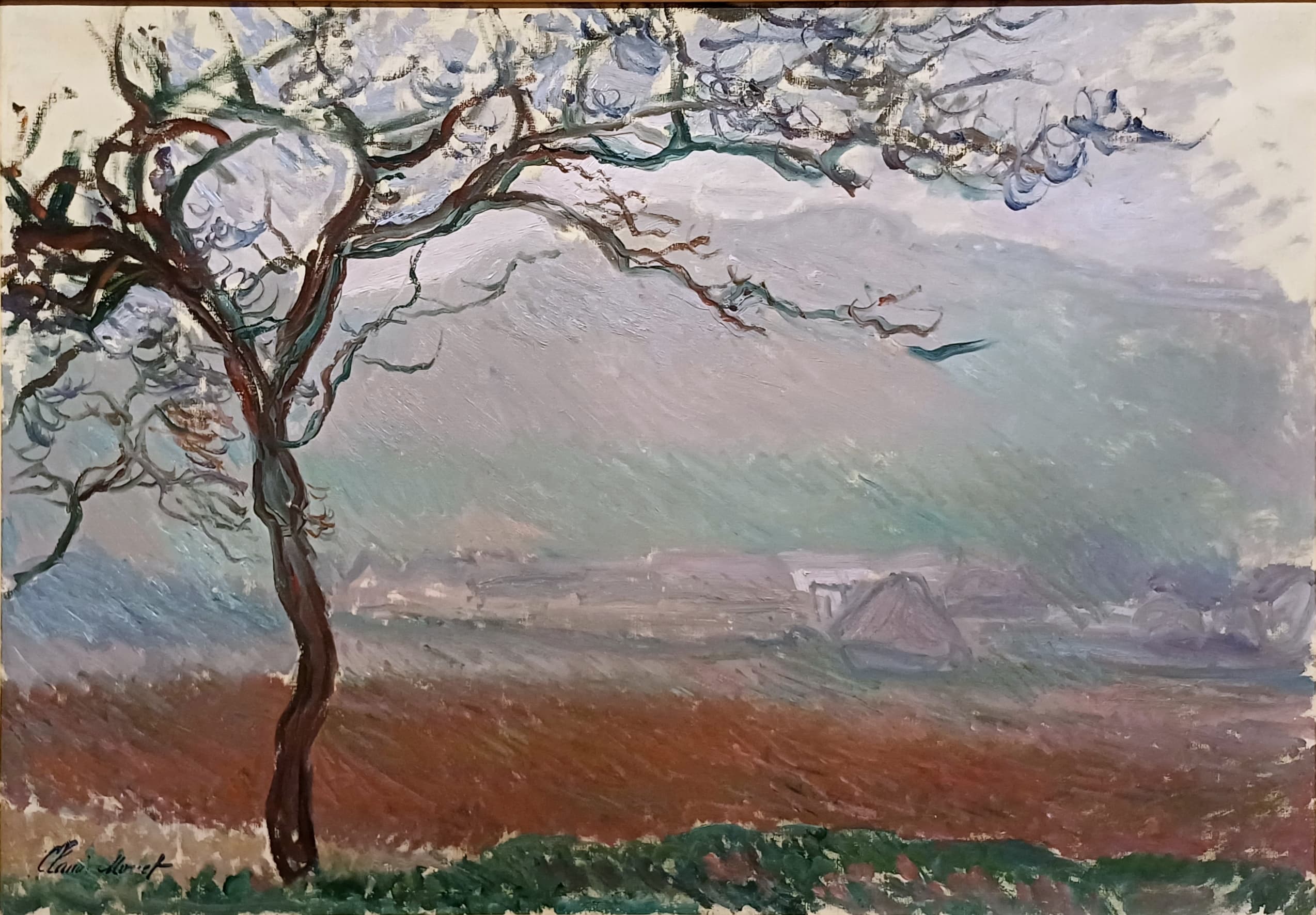
Giverny Landscape
Claude Monet · 1887
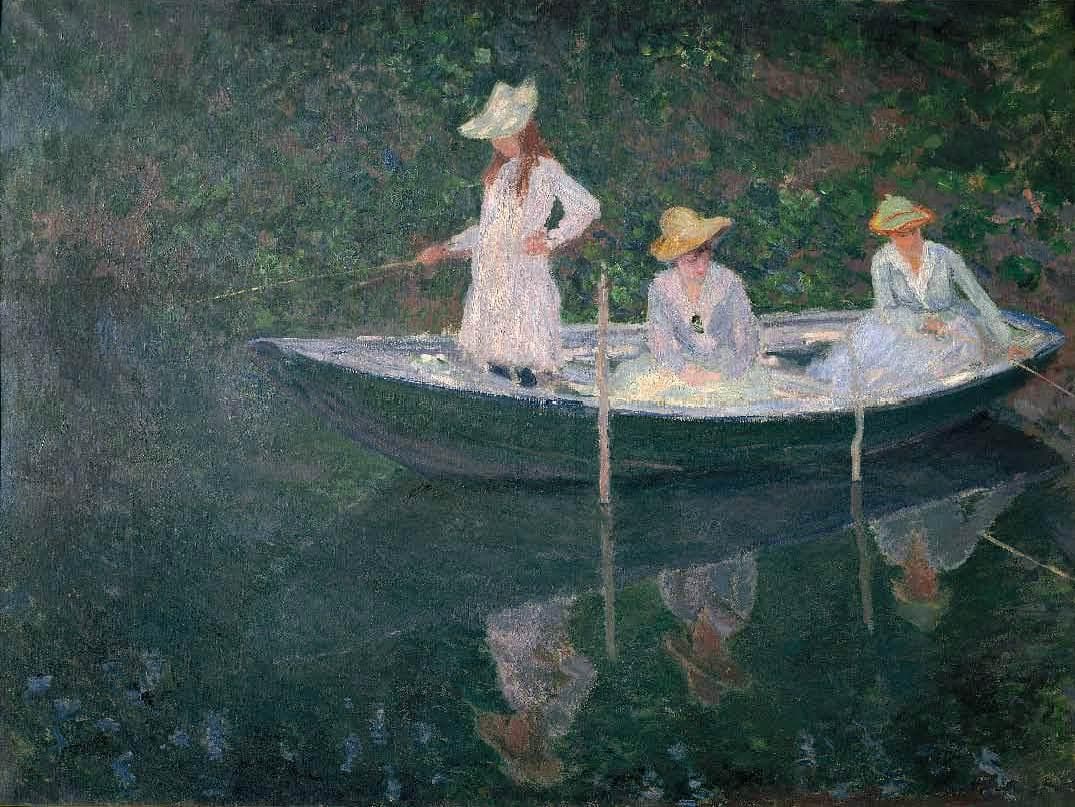
The Boat at Giverny
Claude Monet · c. 1887
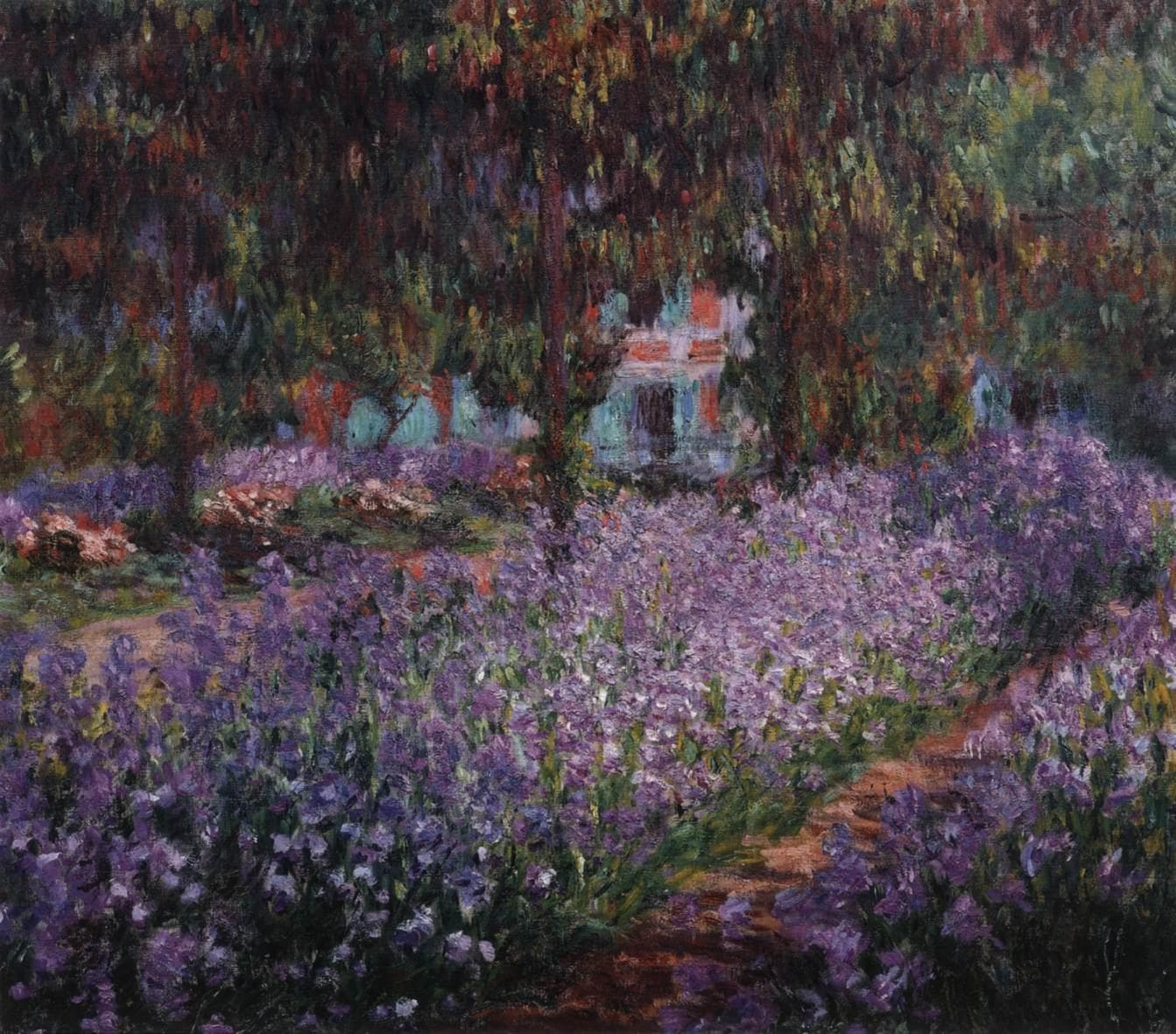
Irises in Monet's Garden at Giverny
Claude Monet · 1900
Irises by the Pond
Claude Monet · c. 1914–17

The Scream
Edvard Munch · 1893

Ophelia
John Everett Millais · 1851–52