Impressionism
Frost
Claude Monet, 1885
Frost (Le Givre) is a winter painting by Claude Monet dated 1885, showing a thicket of shrubs and saplings furred with white hoarfrost above a snowy field, probably near Giverny. It is recorded in a private collection.
- Artist
- Claude Monet
- Date
- 1885
- Medium
- Oil on canvas
- Collection
- Private collection
- Movement
- Impressionism
Painted at Giverny: Monet's House and Garden
Frost (Le Givre) is a small winter landscape by Claude Monet, dated 1885, that shows a tangle of bushes and young trees thick with hoarfrost above a snow-covered field. It was probably painted near his new home at Giverny, where he had moved two years earlier. The canvas is recorded as being in a private collection; Monet painted several frost subjects over his career, and the exact catalogue entry for this one has still to be confirmed.
What you are looking at
At first the picture reads as almost entirely white. Then the color comes through. The upper two-thirds are filled by a thicket of shrubs and slender saplings, every twig coated in ice crystals. Monet paints the frost as a dense mesh of short, straight strokes, mostly white and pale gray-blue, crossed by lines of violet, lilac and rust where the branches show through. Toward the right the mesh loosens and the strokes become longer and lighter, and the thicket melts into a misty, greenish-white sky.
Lower down, the structure of the scene appears. Several brown, knotted shapes sit at the base of the bushes, at left, center and right, like the swollen heads of pollarded trees or old stumps cut back to the root. Between them, low in the middle of the picture, stands something man-made: a small wooden frame with splayed legs, half buried in the white, perhaps a trestle, a sled or a piece of farm equipment left out over winter. A dark, curving branch connects it to the stump on the left. These few dark notes are all that anchors the composition.
The foreground is a flat field of snow, painted in cool blue-grays. Small greenish dabs are scattered across it in rows, the tips of grass poking through, and they lead the eye gently back toward the thicket. The light is soft and even; there are no cast shadows, which suggests an overcast morning, when hoarfrost lasts longest. Monet's signature is at lower left.
How it was painted
A frost scene is a test of how to paint white on white without making it chalky or dead, and Monet solves it with color and direction. The frost on the branches is laid on in raised, separate strokes that catch real light on the canvas surface. Each stroke follows the line of a twig, so the brushwork itself becomes the drawing. Beneath and between them, thin violet and blue strokes set the white forward.
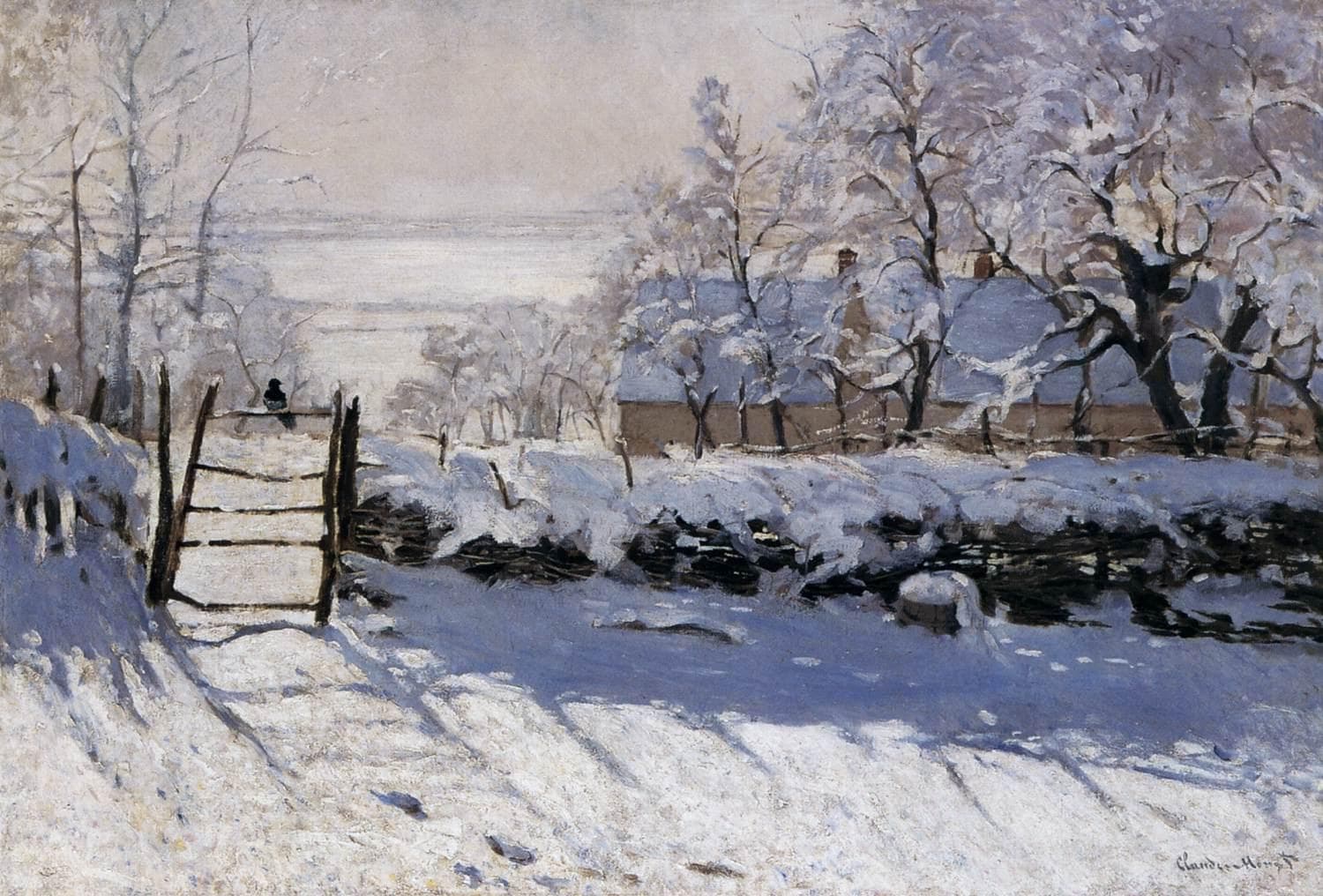
The snowy field is handled quite differently: broad, flat and horizontal, with little texture. That contrast between busy, vertical thicket and quiet, horizontal ground is the basic structure of the picture. Compare it with the dark, solid forms of The Magpie, painted in Normandy in 1868–69, where the snow is lit by sun and shadows are strong; here, nearly fifteen years later, Monet has given up the strong contrast and lets the frost and the air become one substance.
Monet's winters
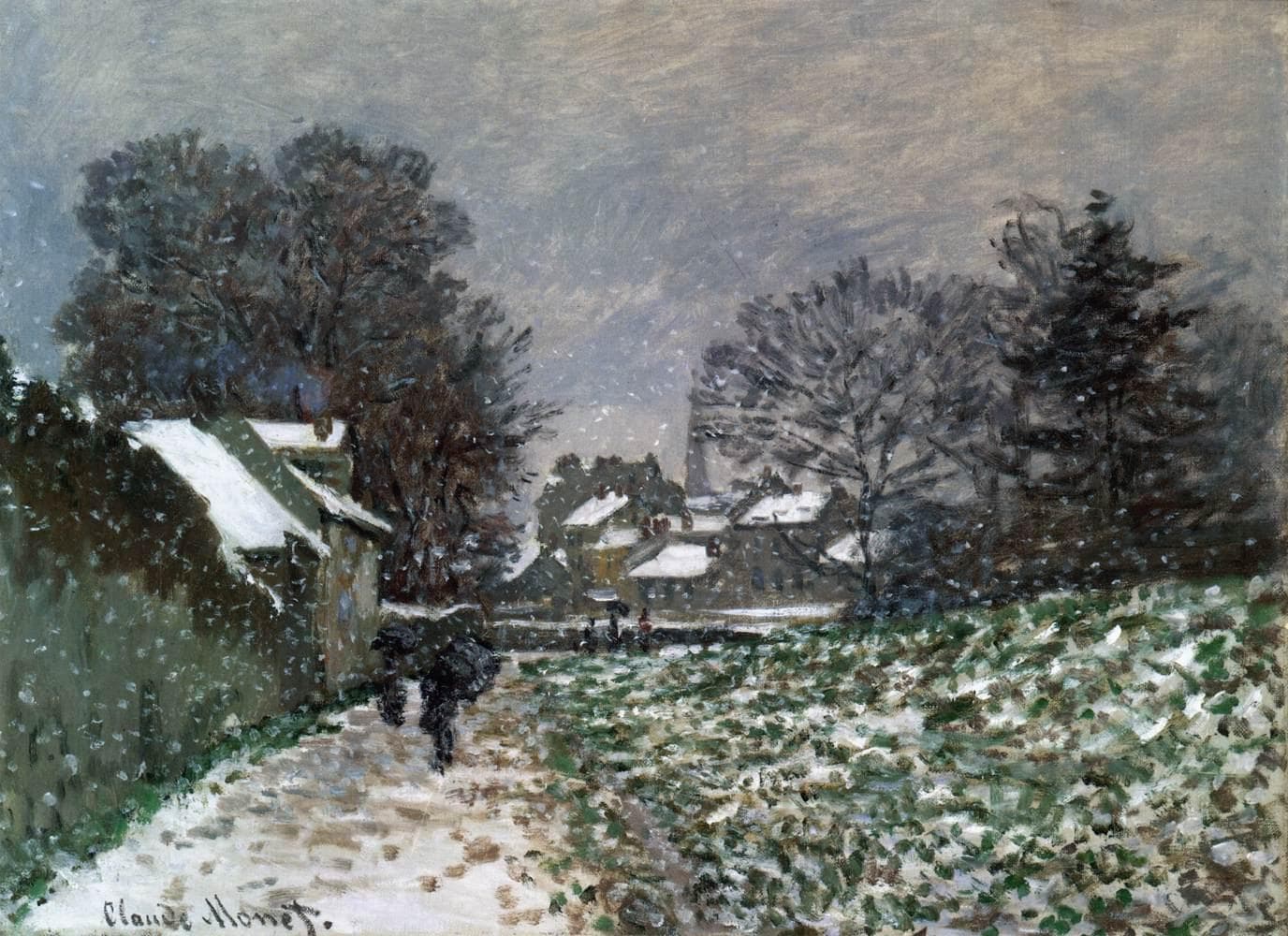
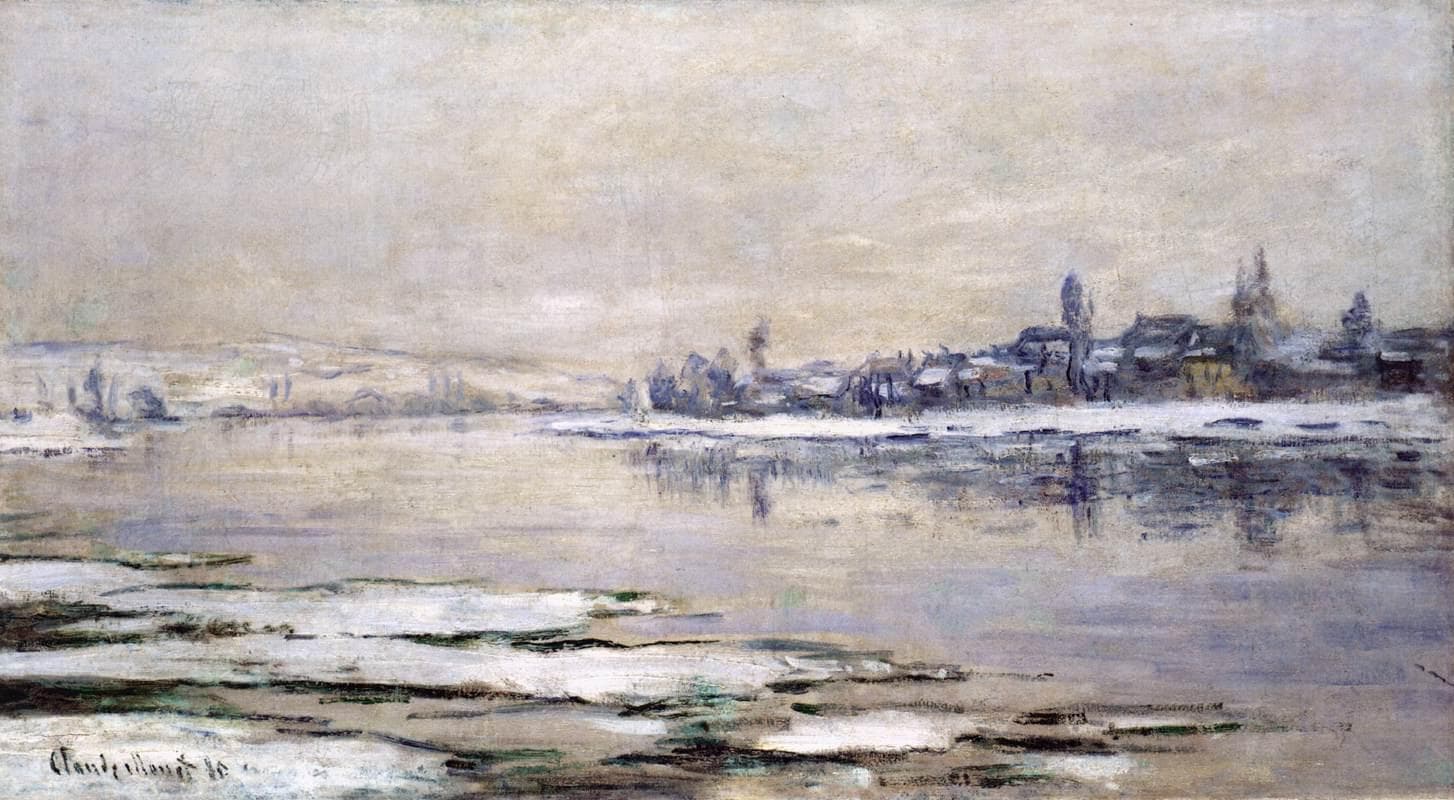
Monet painted well over a hundred snow and frost scenes, more than most of his Impressionist colleagues. In the 1870s he painted the snowfalls at Argenteuil, among them Snow at Argenteuil. In the hard winter of 1879–80 at Vétheuil he painted the frozen Seine and its thaw, as in The Breakup of the Ice at Lavacourt, as well as Le Givre of 1880, a frost scene now in the Musée d'Orsay.
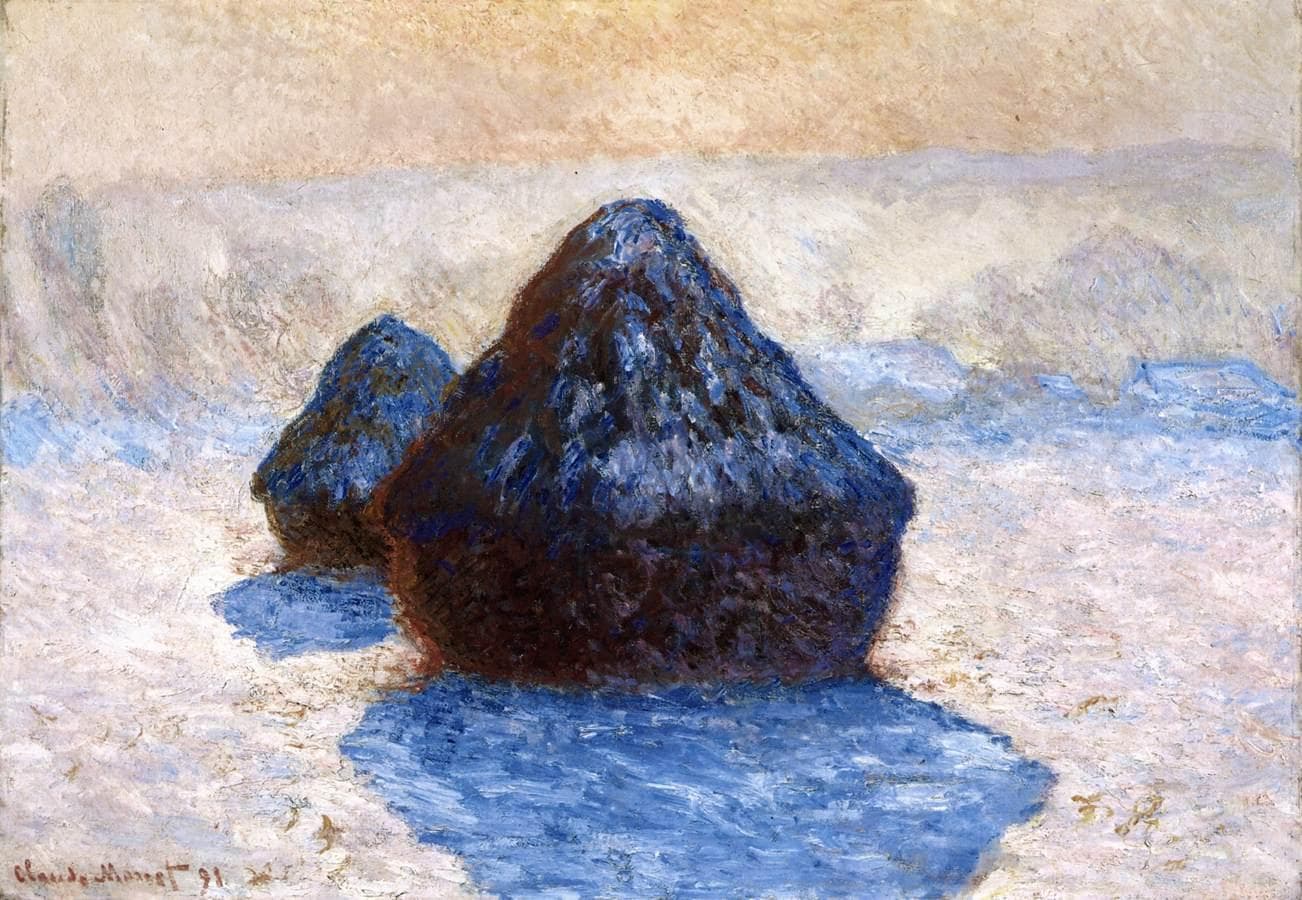
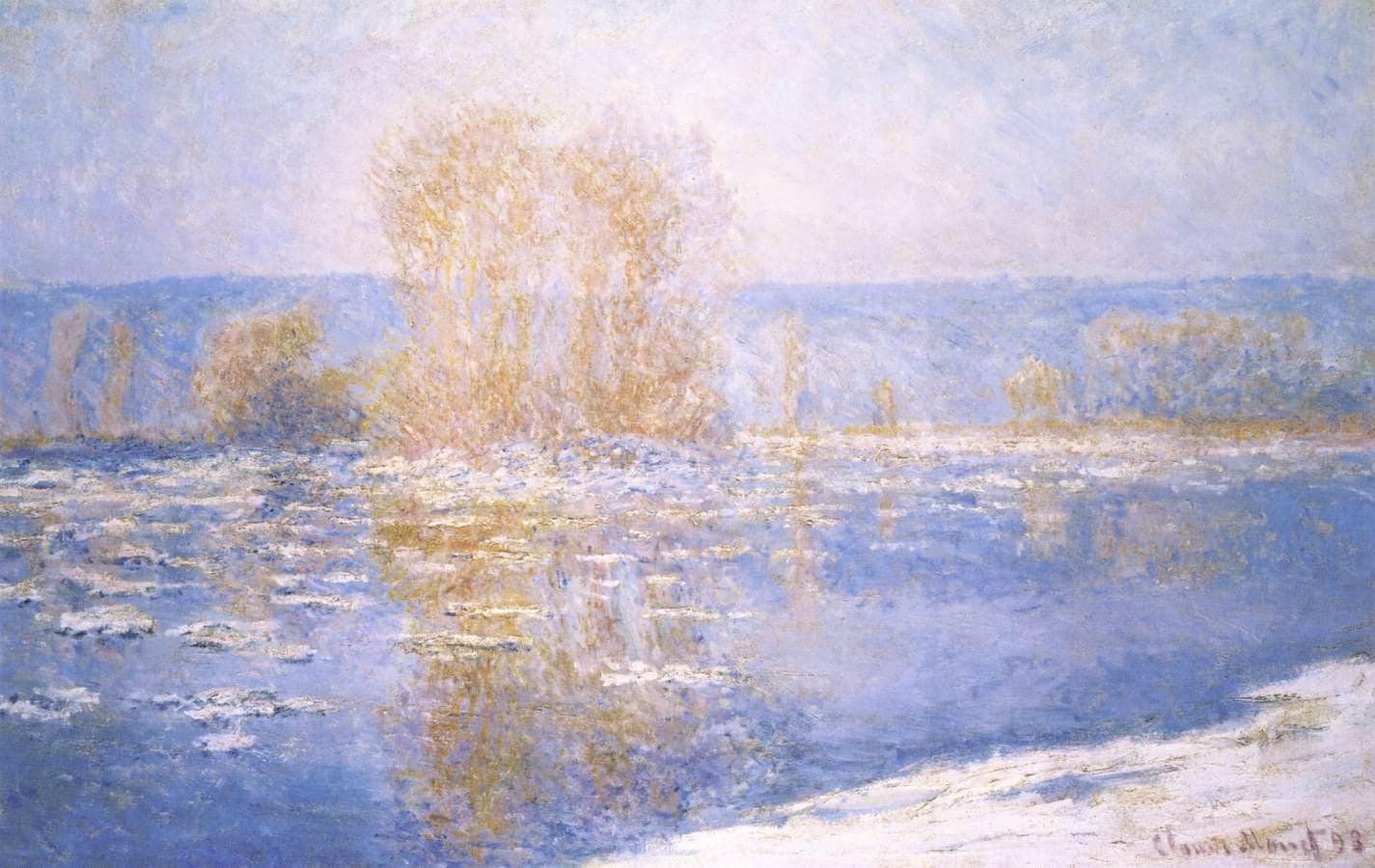
By 1885 he was settled at Giverny, and the meadows, willows and lanes around the village gave him new winter motifs. A few years later winter became the subject of a whole series in the grainstacks of 1890–91, such as Haystacks, Snow Effect, gathered on our Haystacks hub. In 1893 he painted the frozen Seine again in Floating Ice at Bennecourt. Frost sits between those projects: a single, private study of how Monet could find a whole range of color in what looks, at a glance, like plain white.
Where was it painted?
The landscape has no buildings or river to identify it, so the location rests on the date. If the 1885 dating is correct, it was painted in the countryside around Giverny, described on our Giverny hub.
Where to see it
The painting is privately owned. For Monet winter scenes in public collections, see where to see Monet's paintings; the Musée d'Orsay's 1880 Le Givre and The Magpie are both on view in Paris.
Questions & answers
Where is Monet's Frost (1885)?
This 1885 frost scene is recorded as being in a private collection and is rarely shown in public. Monet's other well-known frost painting, Le Givre of 1880, painted at Vétheuil, is in the Musée d'Orsay in Paris, where his snow scene The Magpie also hangs.
When and where did Monet paint Frost?
The painting is dated 1885, when Monet had been living at Giverny in Normandy for two years. The scene shows no buildings or river to pin down the spot, so the location rests on the date: most likely the meadows and hedges around the village, painted on a still winter morning.
What does Monet's Frost show?
It shows a thicket of bushes and young trees coated in hoarfrost, a few knotted brown stumps and a small wooden frame half buried at their base, and a snowy field in front. Monet paints the white frost with lilac, blue and rust strokes so that a nearly colorless scene stays full of color.
Did Monet paint other frost and snow scenes?
Yes, more than a hundred. They include The Magpie (1868–69), the Argenteuil snow scenes of the 1870s, the frozen Seine at Vétheuil in 1880, the grainstacks in snow of 1890–91 and the ice floes at Bennecourt of 1893. Frost is a smaller, more intimate example from his early Giverny years.
More by the artist
Claude Monet

Bridge over a Pond of Water Lilies
Claude Monet · 1899

Woman with a Parasol – Madame Monet and Her Son
Claude Monet · 1875

Sunset in Venice
Claude Monet · 1908–12

La Grenouillère
Claude Monet · 1869

Beach in Pourville
Claude Monet · 1882

Springtime
Claude Monet · 1872

Boating on the River Epte
Claude Monet · 1890

The Seine at Asnières (Hermitage)
Claude Monet · 1873
Also painted in 1885
The same year
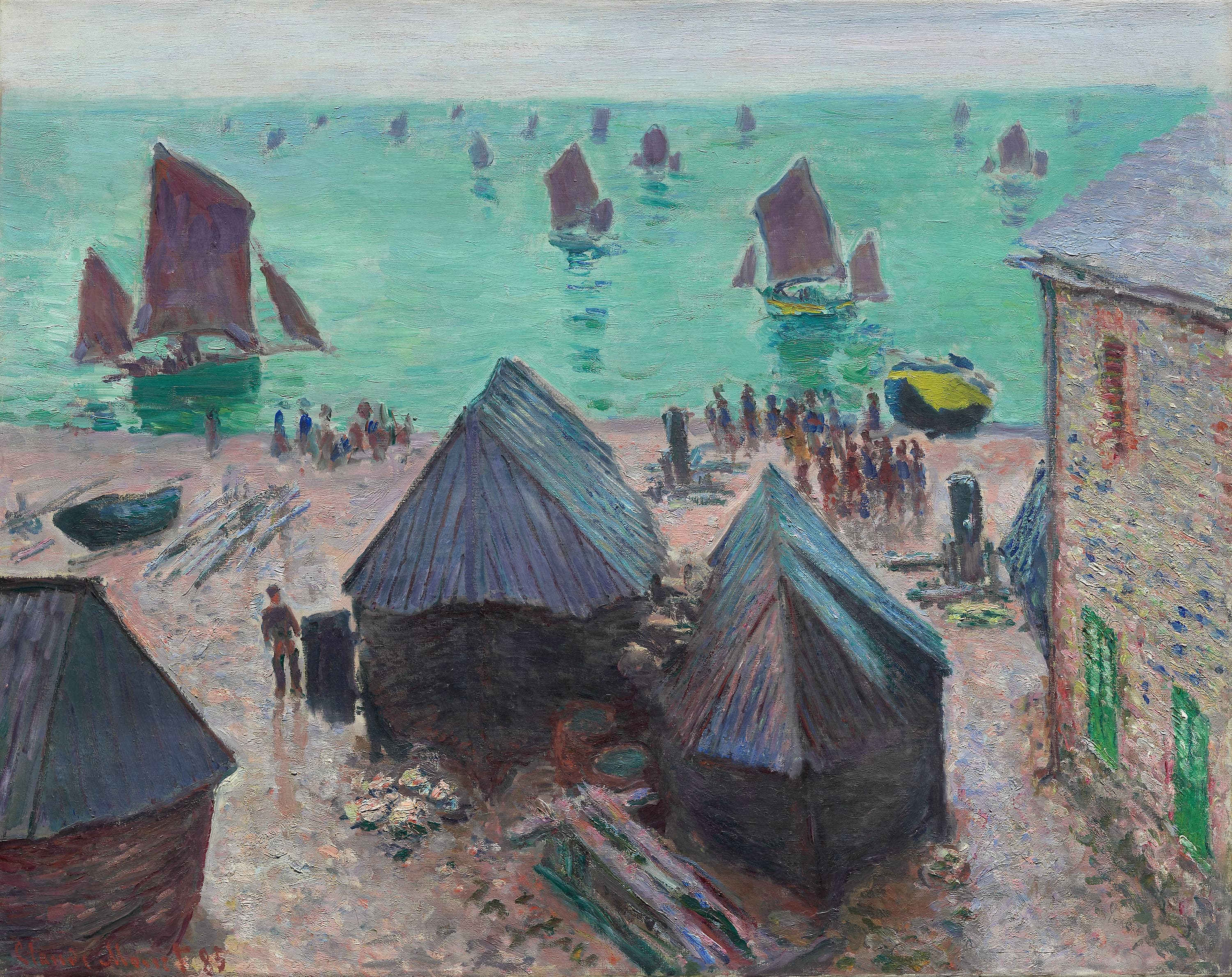
The Departure of the Boats, Étretat
Claude Monet · 1885
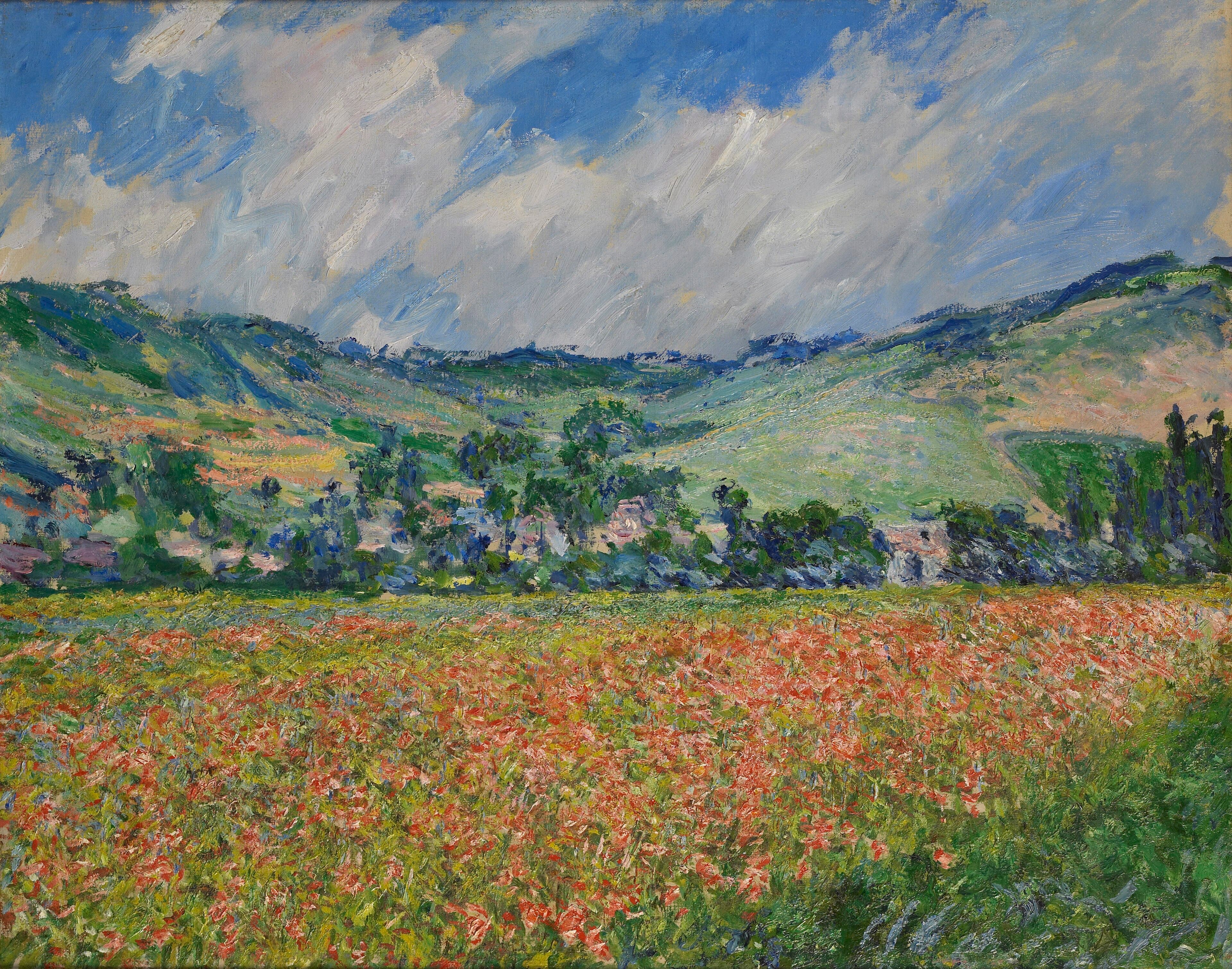
Poppy Field, Around Giverny
Claude Monet · 1885
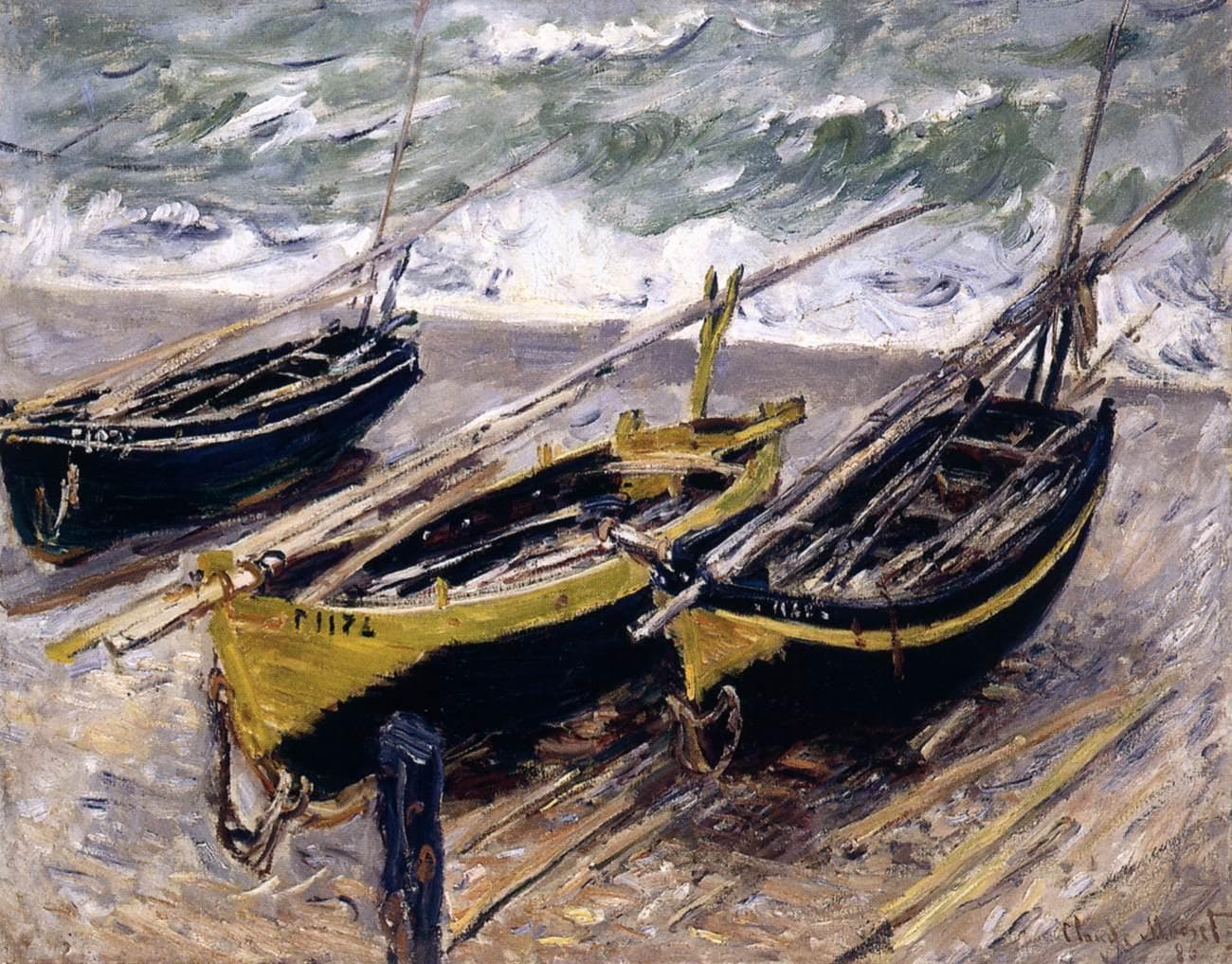
Three Fishing Boats
Claude Monet · 1885
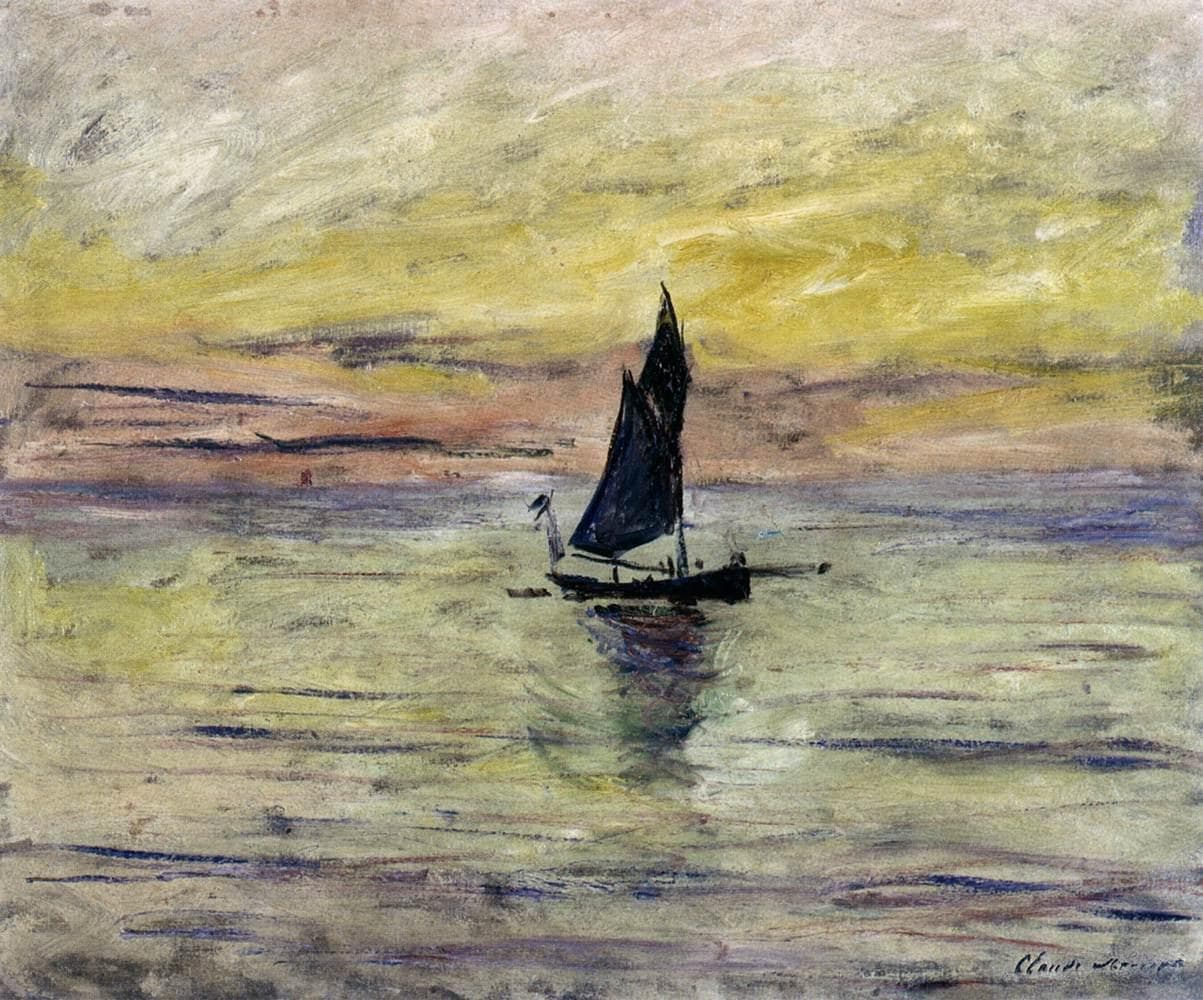
Sailboat, Evening Effect
Claude Monet · 1885
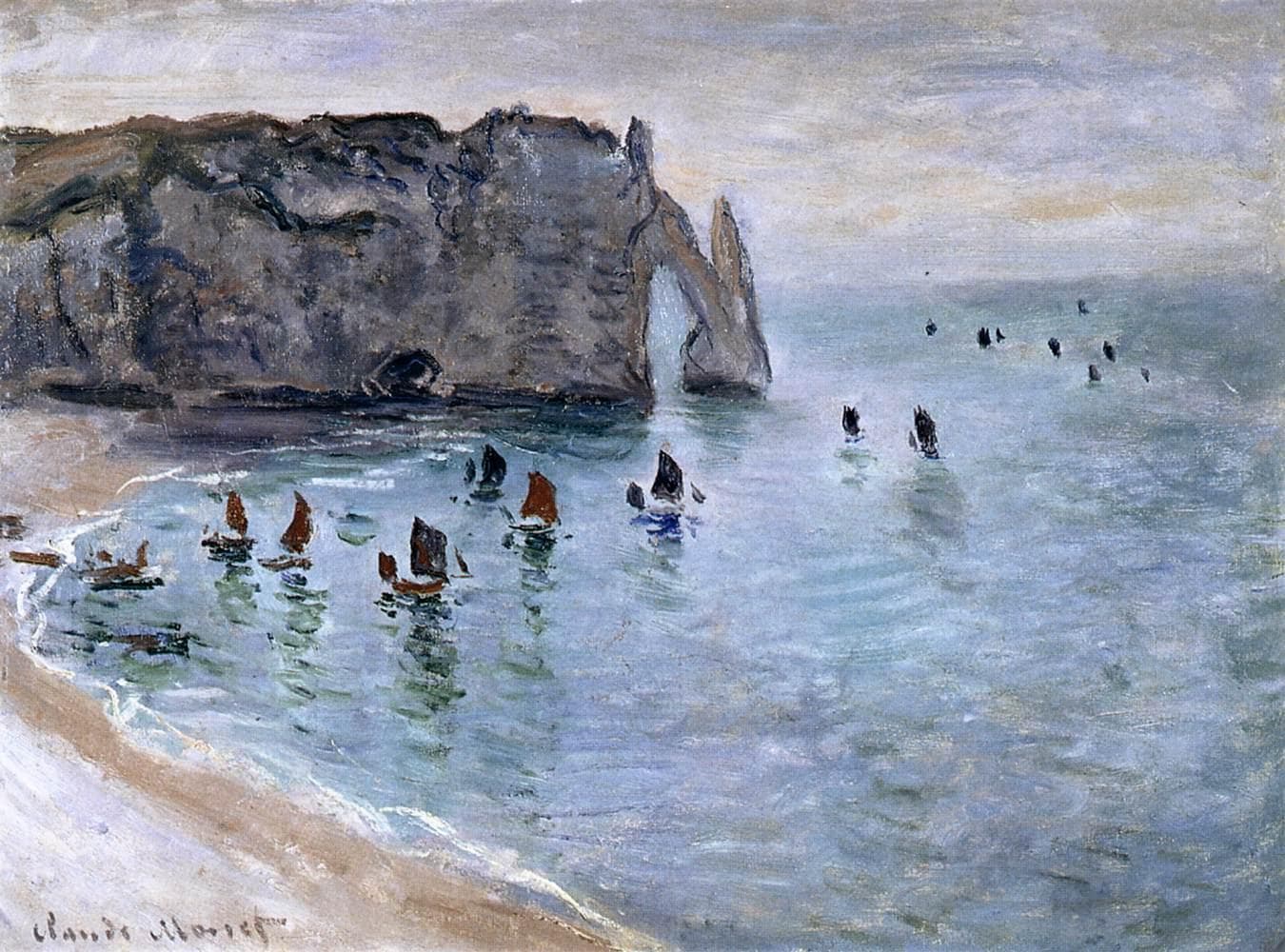
Étretat, the Porte d'Aval: Fishing Boats Leaving the Harbor
Claude Monet · 1885
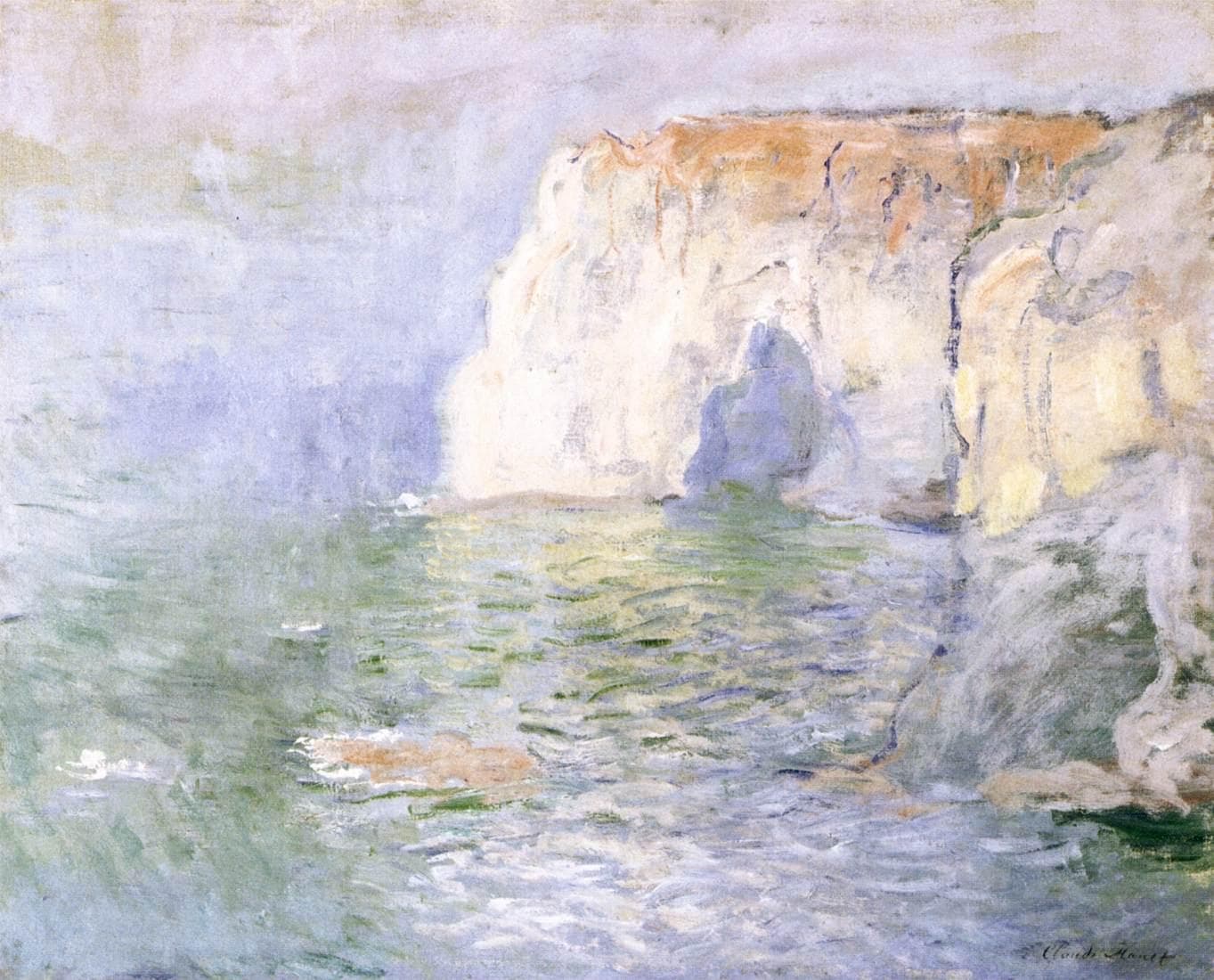
Étretat, the Manneporte, Reflections on the Water
Claude Monet · c. 1885
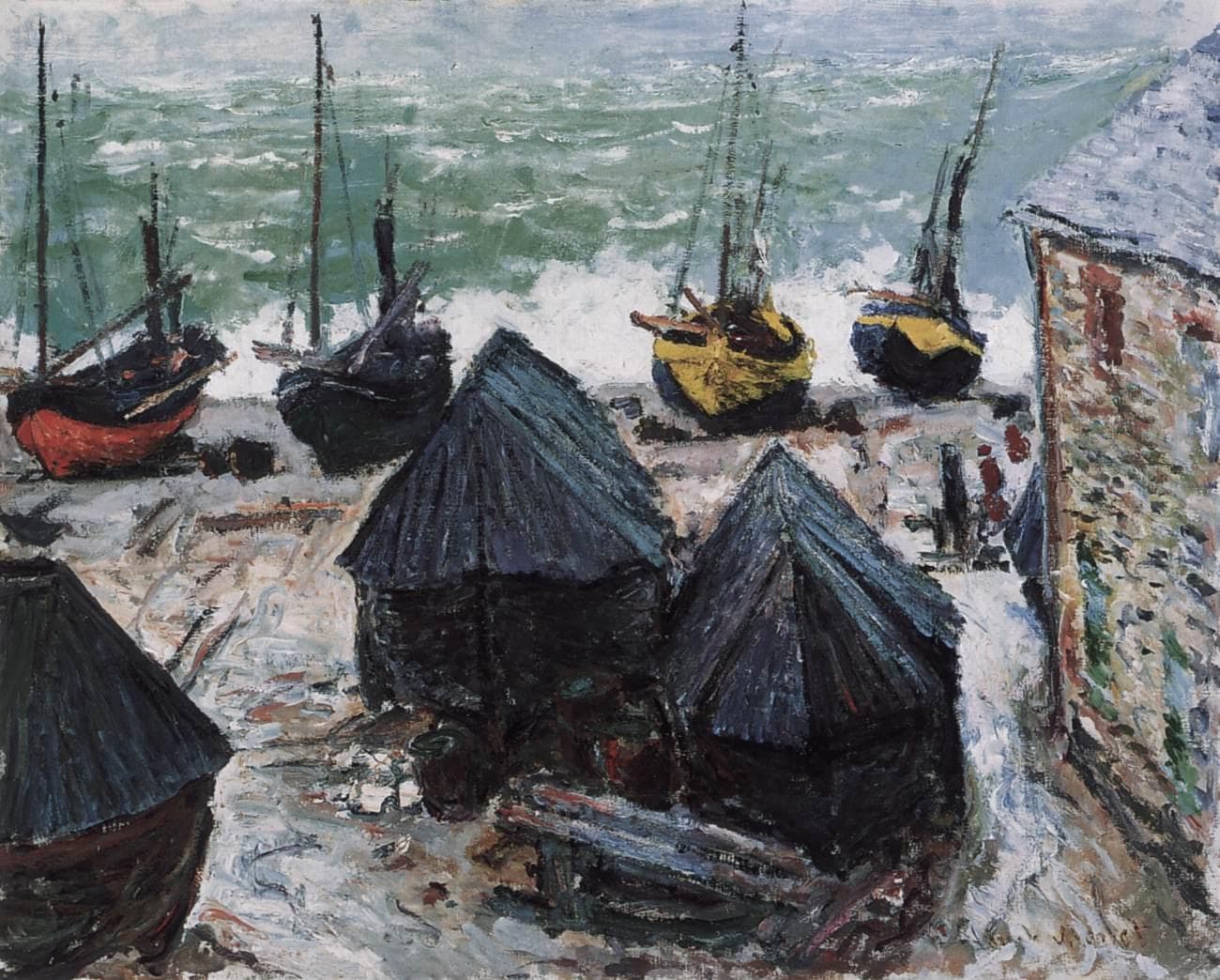
Boats on the Beach at Étretat
Claude Monet · 1885
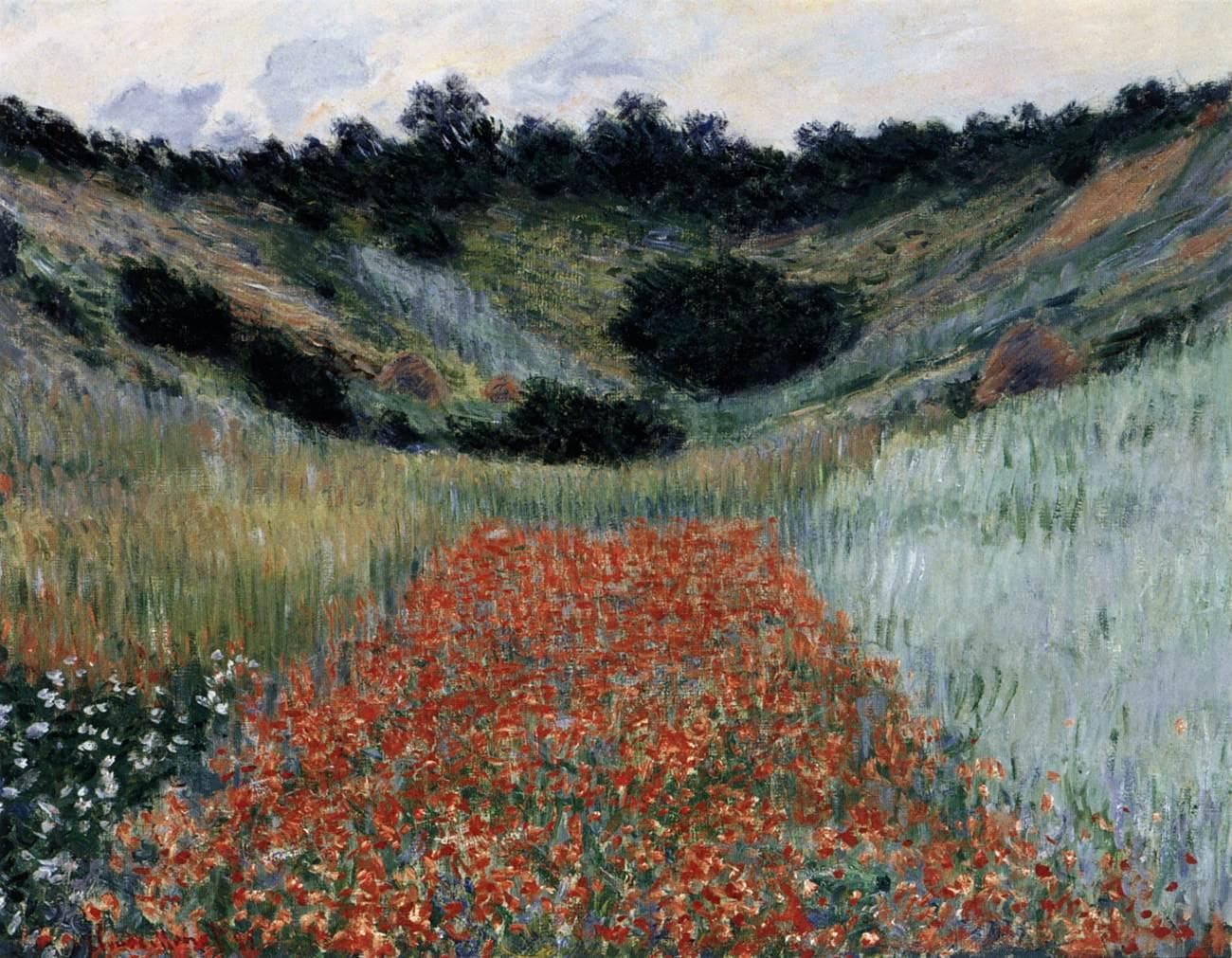
Poppy Field in a Hollow near Giverny
Claude Monet · 1885
Kindred works
You may also study
The Magpie
Claude Monet · 1868–69
Snow at Argenteuil
Claude Monet · c. 1874
The Breakup of the Ice at Lavacourt
Claude Monet · 1880
Haystacks, Snow Effect
Claude Monet · 1891
Floating Ice at Bennecourt
Claude Monet · 1893

The Scream
Edvard Munch · 1893

Ophelia
John Everett Millais · 1851–52

The Great Wave off Kanagawa
Katsushika Hokusai · c. 1830–32