Impressionism
Weeping Willow
Claude Monet, 1920–22
Weeping Willow (Saule pleureur) is a late painting by Claude Monet, made between 1920 and 1922 in his water garden at Giverny. Its dark, swirling strokes of violet, red and green belong to his willow series. It is in the Musée d'Orsay, Paris.
- Artist
- Claude Monet
- Date
- 1920–22
- Medium
- Oil on canvas
- Dimensions
- 110 × 100 cm
- Collection
- Musée d'Orsay, Paris, France
- Movement
- Impressionism
- Catalogue
- Wildenstein 1942
Painted at Giverny: Monet's House and GardenMore at Monet at the Musée d'Orsay
What you are looking at
At first glance the canvas seems almost abstract: a dense curtain of looping, dragging strokes in dark violet, wine red, olive and blue-black, with pale streaks of yellow-green and grey falling through it from top to bottom. Give it a moment and a tree appears. The pale streaks are the long trailing fronds of a weeping willow; the dark mass behind them is the trunk and the shade beneath the canopy; a thin band of orange, blue and white across the bottom edge is the surface of the pond. At lower left, a smaller clump of yellowish foliage glows against the dark.
Claude Monet painted this Saule pleureur between 1920 and 1922, in the water garden he had created at Giverny. It measures 110 by 100 centimeters, almost square, and is signed at lower left. It is in the Musée d'Orsay, Paris, which received it as a gift from Philippe Meyer in 2000.
Looking closely
Nothing here is outlined. Monet builds the willow out of gesture. The fronds are long, downward strokes, some thick and dragged so the paint breaks over the weave of the canvas, others thin and fluid. At the top of the canvas the strokes curl and loop, describing the crown of the tree as a turbulence of movement rather than a shape.
The color is the most surprising thing for anyone who knows Monet from the pastel water lilies. There is very little sky-blue or spring green here. Instead, the palette is dominated by reds, purples and dark earth tones, with yellow used sparingly as light. Notice too how the edges of the canvas are left unfinished in places, with bare priming showing through, as though the painting had been stopped mid-thought.
Look at the bottom band. The pond surface is a strip of horizontal strokes, orange and white and blue, the only horizontal element in the picture. It anchors the falling verticals of the fronds, and it reminds us that this tree stands at the water's edge, its reflection somewhere just out of frame.
The willow series
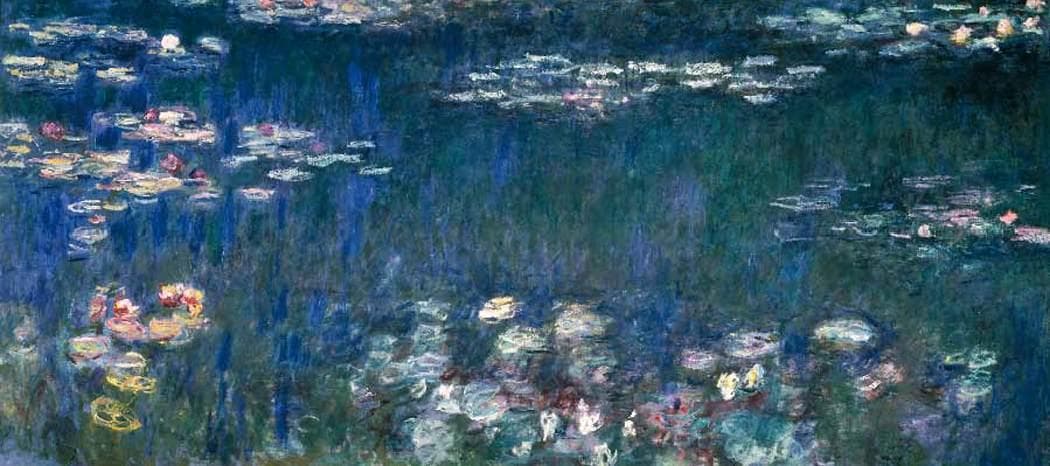
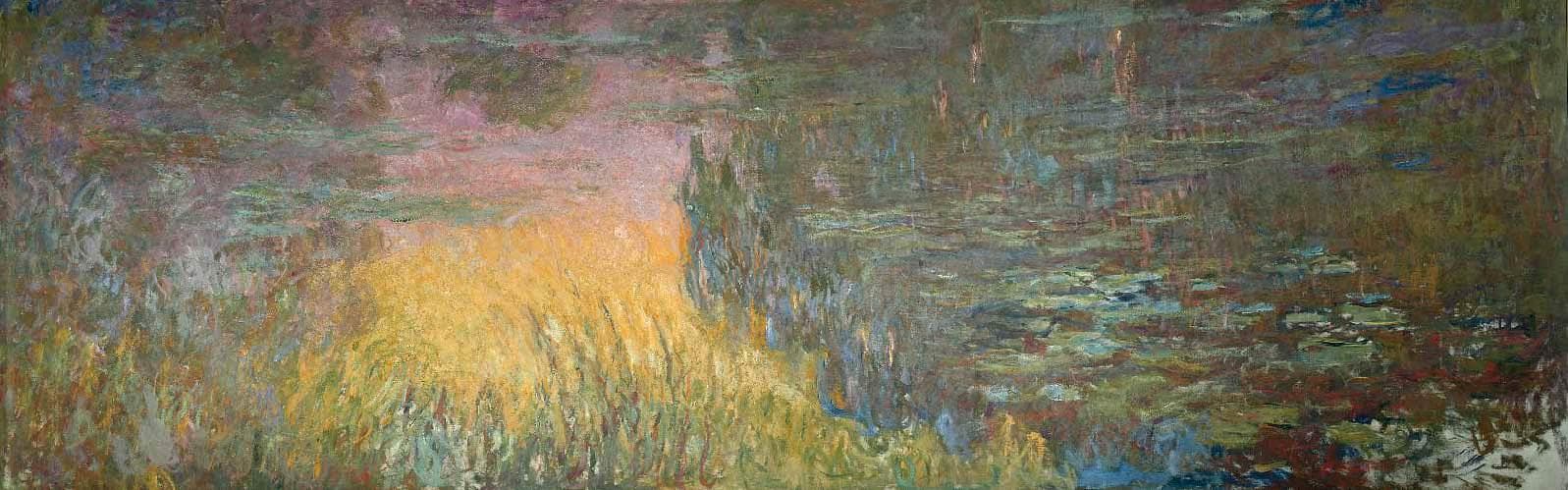
Monet planted weeping willows around his water lily pond at Giverny, and from about 1918 he made them the subject of a group of canvases. Their trailing fronds also appear in the vast water lily decorations he was then preparing for the state, now in the Musée de l'Orangerie, where willow trunks frame some of the panels.
The years of the willow series were the hardest of Monet's late life. His second wife, Alice, had died in 1911, and his elder son, Jean, in 1914. The First World War was fought within earshot of Giverny; Monet's stepson and his son Michel served at the front. On 12 November 1918, the day after the Armistice, Monet wrote to his friend Georges Clemenceau, the prime minister, offering two decorative panels to the nation as a monument to peace, the gift that grew into the Orangerie installation.
Monet's eyesight was also failing. Cataracts, diagnosed in 1912, gradually altered his perception of color, muting blues and pushing everything toward yellow, red and brown. He underwent surgery in 1923. The heavy, warm palette of works like this has often been connected to his condition, though Monet's choices remain deliberate and the works are carefully composed.
What does it mean?
The weeping willow has a long association with mourning in European art and gardens; it was a familiar motif on nineteenth-century tombs and memorial prints. Several writers have read Monet's willow paintings, made during and after the war and amid personal loss, as meditations on grief. Monet left no statement confirming this, and he painted the tree because it grew at his pond. But the darkness of the palette and the falling movement of the strokes make the reading hard to dismiss.
These late canvases also had an afterlife Monet could not have foreseen. Ignored or dismissed for decades after his death in 1926, they were rediscovered in the 1950s by American critics and painters, who saw in their all-over gesture and scale a forerunner of Abstract Expressionism. This canvas has been exhibited alongside paintings by Mark Rothko, and the comparison with the dense fields of Jackson Pollock's Lavender Mist is often made.
Related works
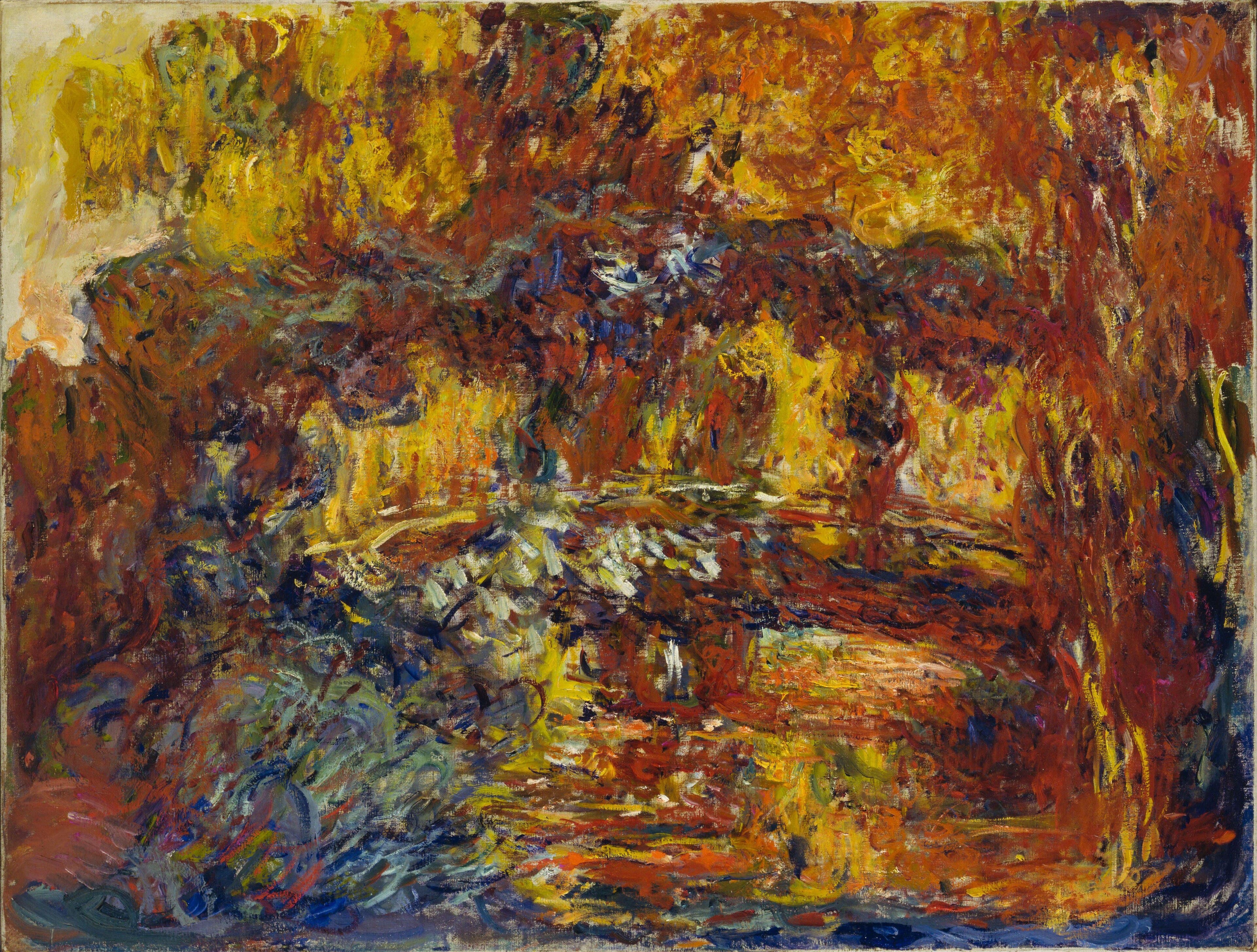
For the earlier, brighter Giverny garden, see Willows in Giverny, The Japanese Footbridge and the Water Lilies. Our guide to famous Monet paintings traces his path from Impressionism to these late works.
Where to see it
The painting is in the Musée d'Orsay in Paris. It entered the collection in 2000 through a donation made subject to a life interest, and like many late Monets it travels to exhibitions, so check its display status before a visit. Paris holds two other essential destinations for late Monet: the Musée de l'Orangerie, with the Water Lilies decorations, and the Musée Marmottan Monet, with many late canvases from Giverny.
Questions & answers
Where is Monet's Weeping Willow?
This Weeping Willow (Saule pleureur), painted between 1920 and 1922, is in the Musée d'Orsay in Paris, the gift of Philippe Meyer in 2000. Monet painted several weeping willow canvases, and others are in museums including the Kimbell Art Museum and the Musée Marmottan Monet.
Why are Monet's late paintings so dark and red?
Monet developed cataracts, diagnosed in 1912, that shifted his color perception toward yellow, red and brown until his surgery in 1923. His late palette also reflects deliberate choices and a looser, more gestural way of painting in his final decade.
What does the weeping willow mean in Monet's work?
Monet painted the willows growing at his Giverny pond, but the tree was a traditional symbol of mourning. Many writers read the series, made during and after the First World War and after family deaths, as an expression of grief.
How does Weeping Willow relate to the Water Lilies?
Both come from Monet's water garden at Giverny and were painted while he worked on the great Water Lilies decorations now in the Musée de l'Orangerie. Willow trunks and fronds frame several of those panels.
More by the artist
Claude Monet

Bridge over a Pond of Water Lilies
Claude Monet · 1899

Woman with a Parasol – Madame Monet and Her Son
Claude Monet · 1875

Sunset in Venice
Claude Monet · 1908–12

La Grenouillère
Claude Monet · 1869

Beach in Pourville
Claude Monet · 1882

Springtime
Claude Monet · 1872

Boating on the River Epte
Claude Monet · 1890

The Seine at Asnières (Hermitage)
Claude Monet · 1873
Also painted in 1920
The same year
Kindred works
You may also study
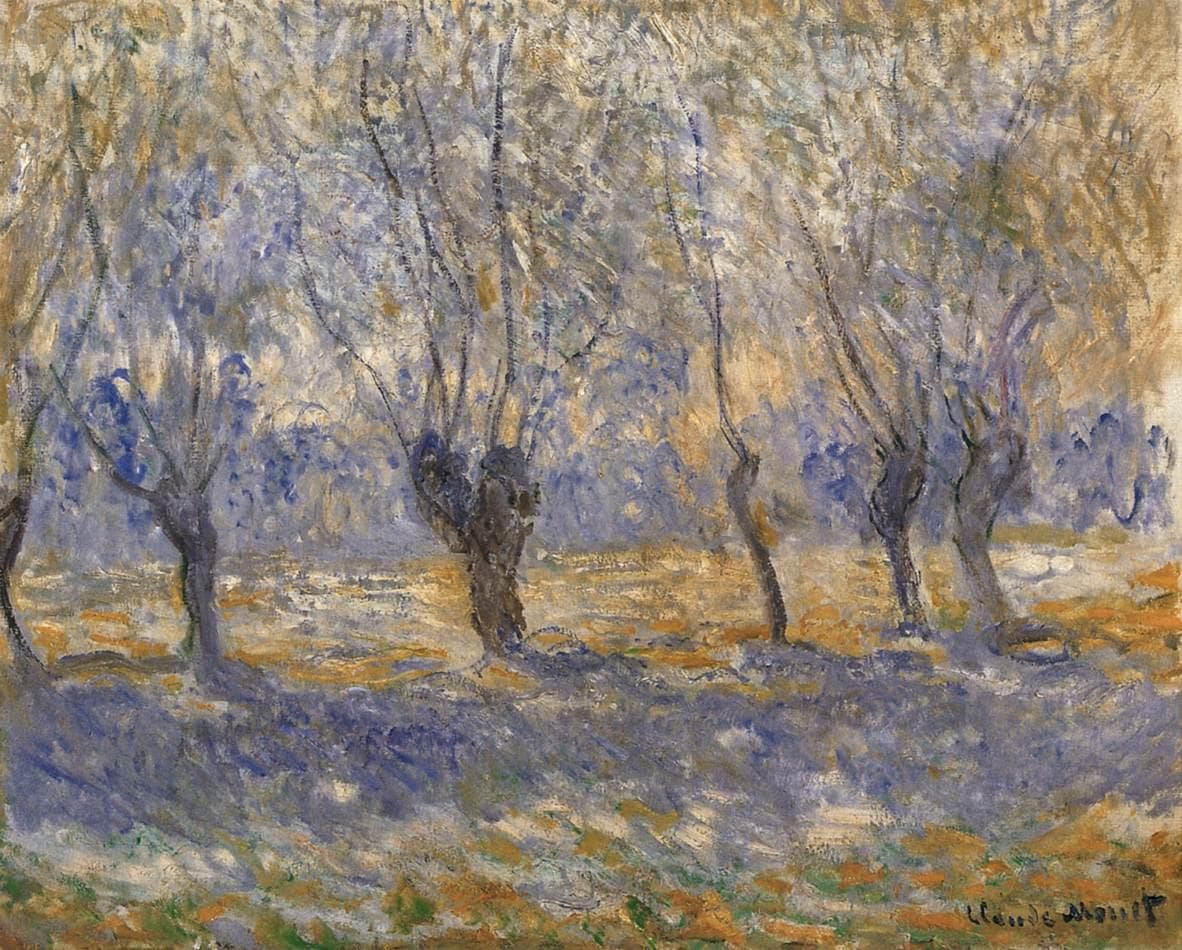
Willows at Giverny
Claude Monet · 1886
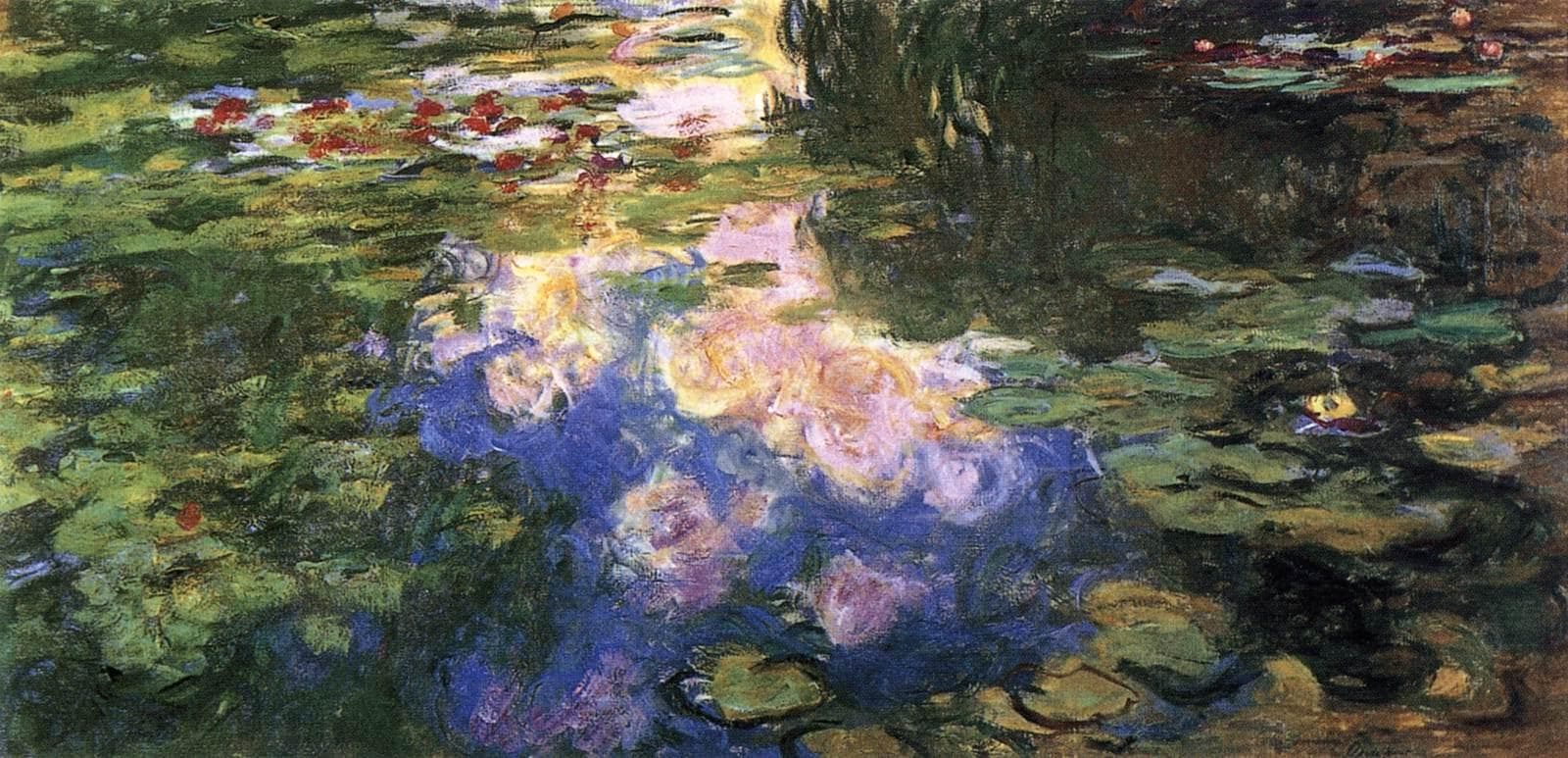
Water-Lily Pond (Le Bassin aux nymphéas), 1917–19
Claude Monet · 1917–19
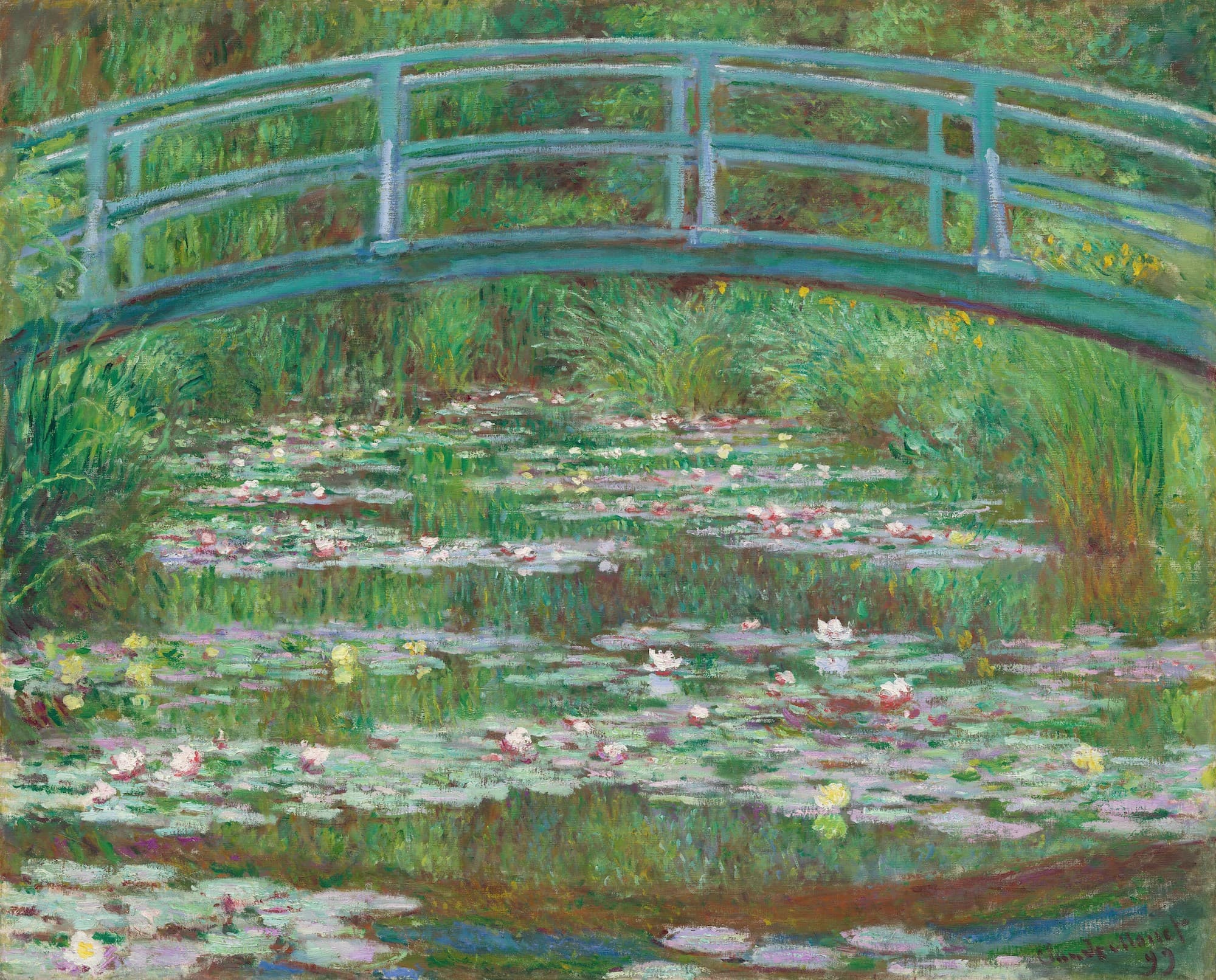
The Japanese Footbridge
Claude Monet · 1899
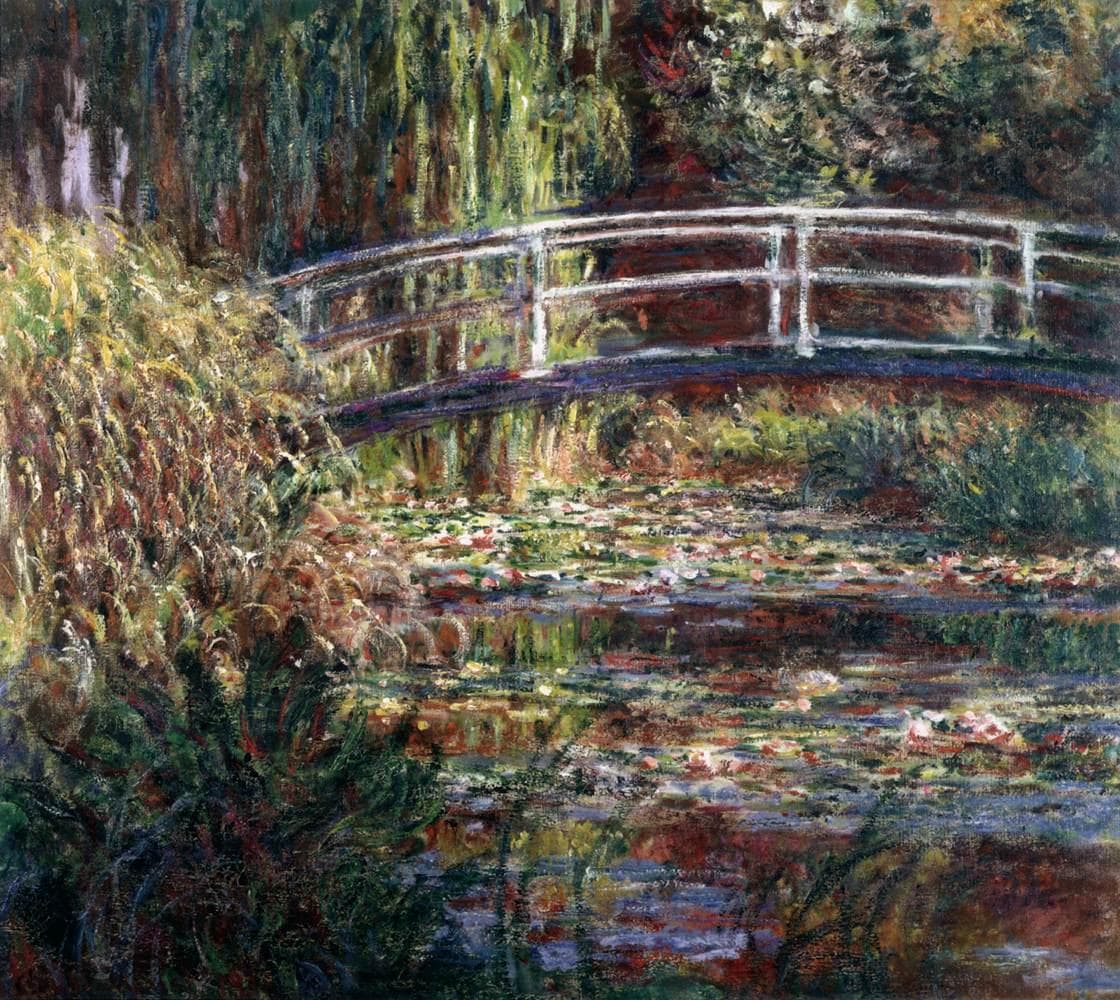
The Water Lily Pond, Harmony in Rose
Claude Monet · 1900
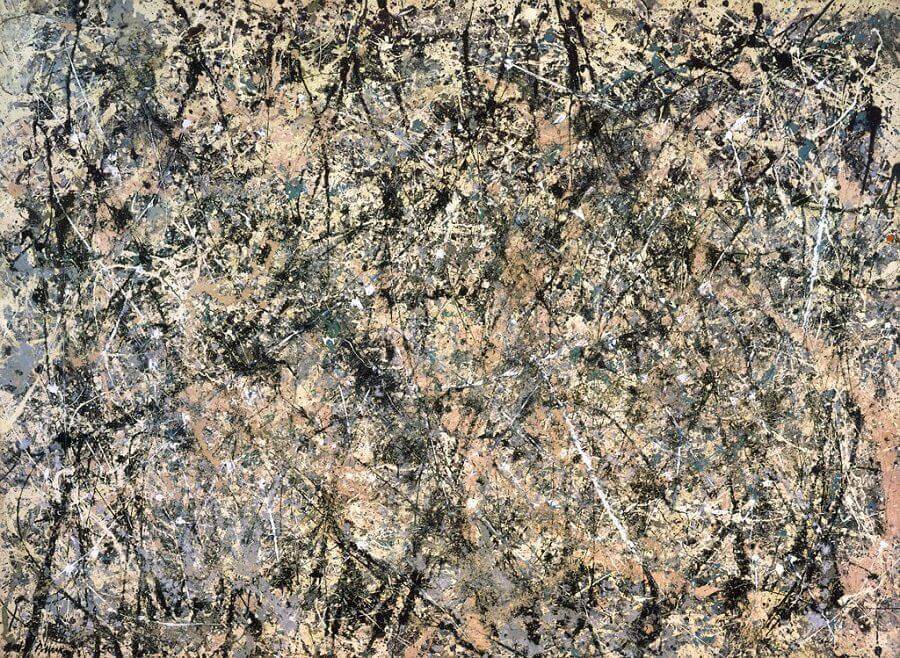
Number 1, 1950 (Lavender Mist)
Jackson Pollock · 1950

The Scream
Edvard Munch · 1893

Saturn Devouring His Son
Francisco Goya · c. 1819–1823

Ophelia
John Everett Millais · 1851–52