The Furies at the Gates of Dis
Gustave Doré, 1861
The Furies at the Gates of Dis is Gustave Doré's 1861 wood engraving for Dante's Inferno, Canto IX. Three winged, snake-haired Furies swoop above Dante and Virgil outside the city of Dis as Virgil points: “Behold the fierce Erinnys.”
- Artist
- Gustave Doré
- Date
- 1861
- Medium
- Wood engraving
- Movement
- Romanticism
- Themes
- Literature & Poetry, Mythology, Angels & Demons, The Macabre, Women in Art, Dark Academia
What you're looking at
Three naked women with huge, bat-like wings hang in the air in the upper half of the plate, so close together that their bodies and wings overlap. Look at their hair and waists and you will see snakes: small serpents tangled in their curls and coiled around their hips. The one at the left clutches her head with both arms, as if tearing at her hair. The one at the right throws her arms up behind her head, her body stretched taut. The third, lower down, is curled into a ball with her face buried, her wings spread wide behind her.
Their feet trail downward, almost touching the heads of the men beneath.
Those men are Dante and Virgil, seen from behind at the lower right. Virgil, laurel-crowned, stands tall and lifts one arm toward the Furies. Dante, in his hood, presses close against him, half hiding behind his guide's shoulder.
The setting is almost abstract. A blunt, dark stump of masonry or rock rises at the left; a broken slope of stones runs off at the right; and the whole background is a wall of gray haze, engraved in short diagonal strokes that seem to rush upward with the Furies. There is no city to be seen, only the tower and the storm of air.
The engraver has given the Furies' bodies a pale, polished finish, modeled with fine curved lines, against wings built of crisp, ribbed strokes like stretched skin. The poets' robes, by contrast, fall in long, heavy vertical folds.
The passage it illustrates
The plate illustrates Inferno IX, lines 36–51. The fallen angels have slammed the gates of Dis, the walled city of lower Hell, in Virgil's face, and the poets wait outside. Dante's eyes are drawn up “tow'rds the high tower with the red-flaming summit,” where three figures appear. In Longfellow's translation:
The three infernal Furies stained with blood, Who had the limbs of women and their mien,
And with the greenest hydras were begirt; Small serpents and cerastes were their tresses,
Virgil, who knows them well, names them (lines 45–48):
Said unto me: “Behold the fierce Erinnys. This is Megaera, on the left-hand side; She who is weeping on the right, Alecto; Tisiphone is between;” and then was silent.
The Furies tear at their breasts with their nails and shriek for Medusa to come and turn Dante to stone, and “I for dread pressed close unto the Poet.” Virgil turns Dante round and covers his eyes with his own hands.
How Doré staged it
Doré follows the text closely in some places and freely in others. The serpents, the women's bodies, the wild tearing gestures and Dante pressing close to Virgil are all Dante's. The wings are Doré's addition, borrowed from the bat-winged devils that fill his Inferno, and they turn the Furies from figures on a tower into creatures in flight, swooping down at the poets.
The tower, by contrast, has lost its fire. Dante's tower has a “red-flaming summit”; Doré's is a dark, featureless block, and the city of Dis is nowhere in sight. That leaves the Furies as the only source of light in the picture. Doré does not try to match each Fury to Virgil's names: the crouching one with her face hidden may be meant for the weeping Alecto, but she is not on the right.
The plate is also an unusually vertical composition for Doré, built on a single diagonal from the Furies' wingtips down to Virgil's raised arm. The gesture both points and shields.
How it was made and published
Doré drew the design on a boxwood block and the engraver Antoine-Alphée Piaud cut it; the block is signed “G. Doré” at lower left and “Piaud sc.” at lower right. It was published in 1861 in L'Enfer de Dante Alighieri (Hachette, Paris), the large folio that Doré paid for himself, as the twenty-seventh plate in the sequence. English editions of Cary's translation caption it with his line “Mark thou each dire Erynnis.” The scan shown here is from a Berlin edition of 1870.
Meaning
The Erinyes, called Furies by the Romans, were goddesses of vengeance in Greek myth who pursued those guilty of crimes against kin. Dante places them on the walls of Dis as servants of “the Queen / Of everlasting lamentation,” Proserpina. Their threat to summon Medusa, whose gaze turns men to stone, is the most dangerous moment yet for the living Dante. Many commentators have read the scene allegorically, with the Furies as remorse or despair and Medusa as the hardening of the heart, and Dante himself pauses afterward to tell readers to look for “the doctrine that conceals itself.”
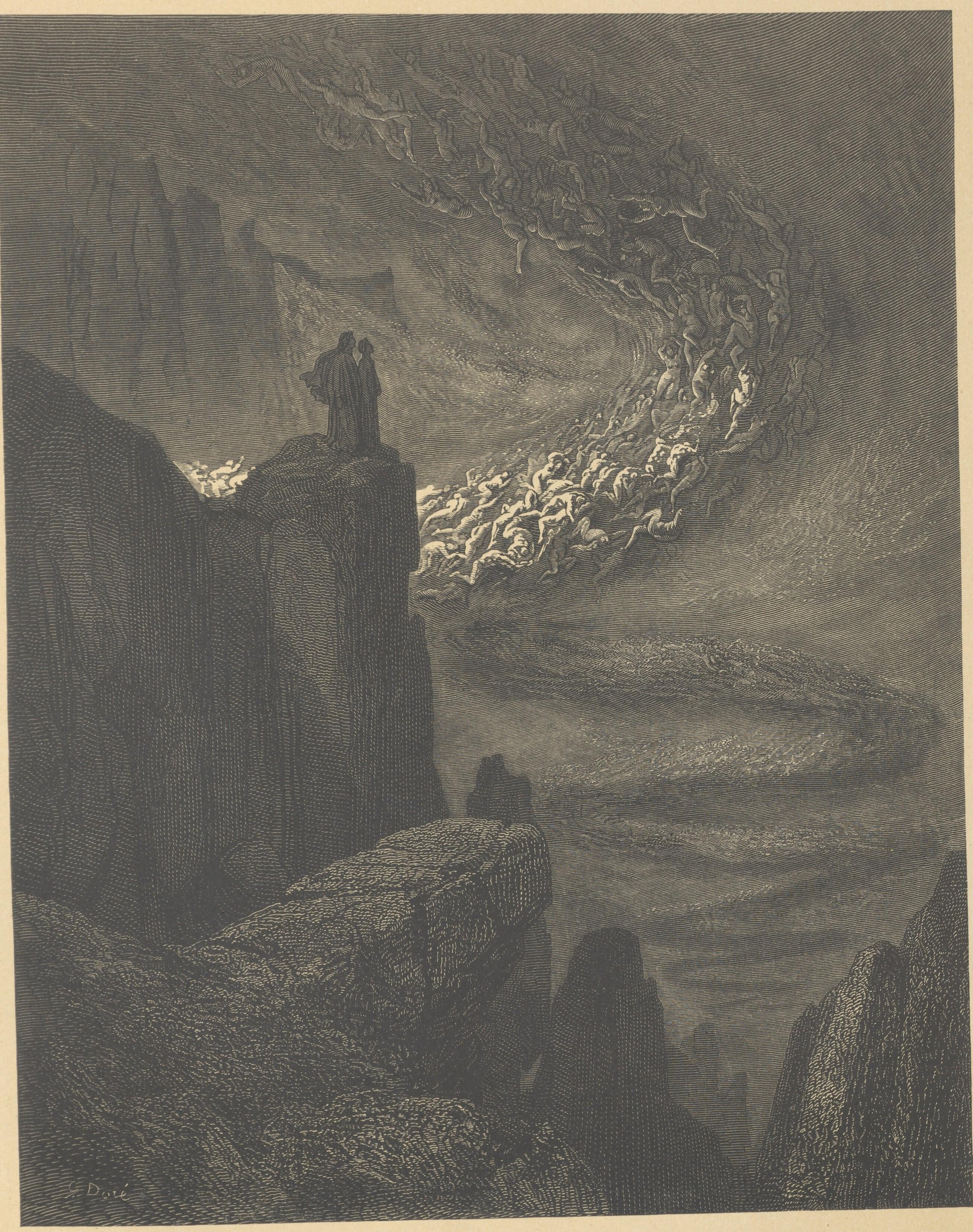
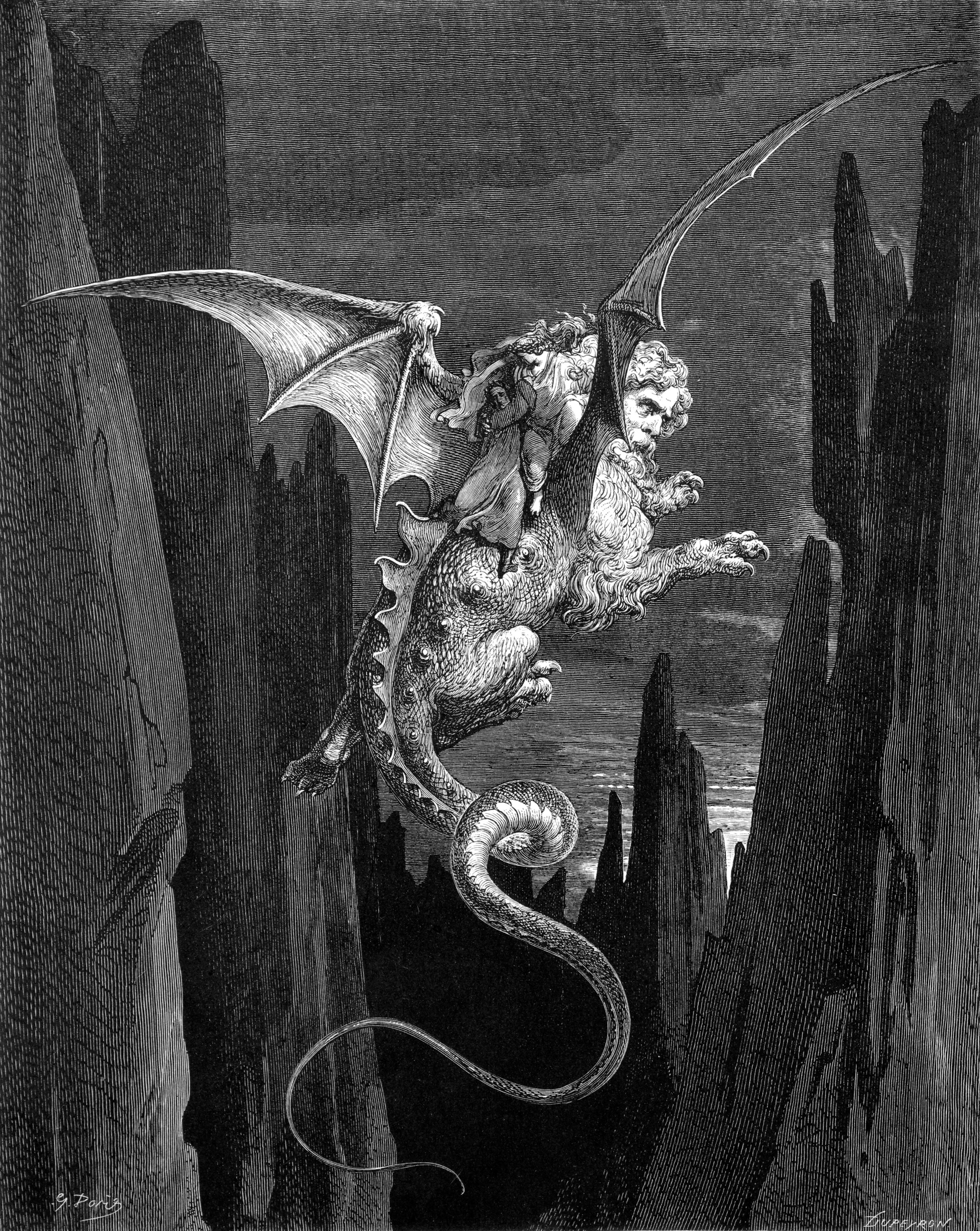
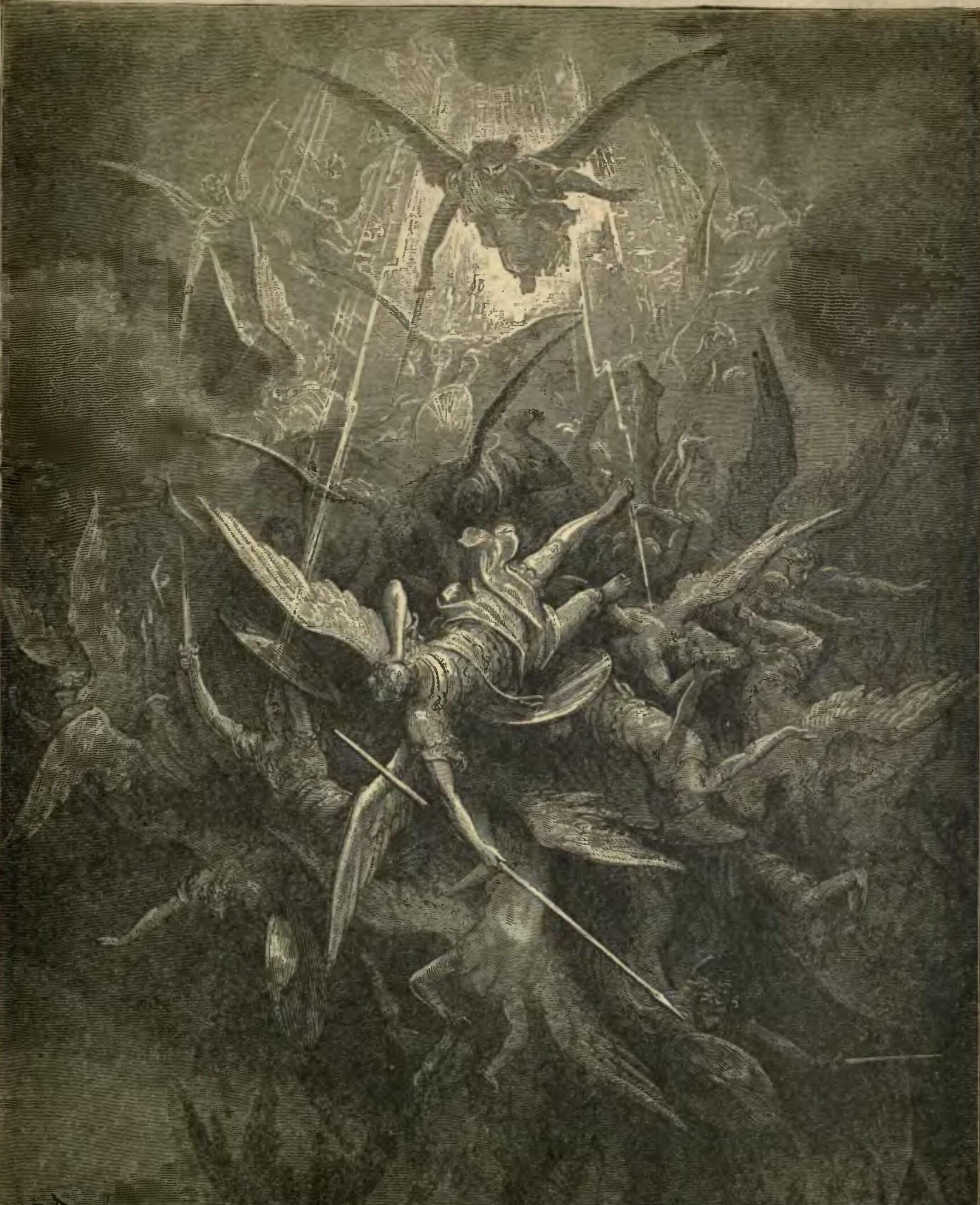
Only a messenger from heaven, in the next plates, can open the gate. Doré's image catches the moment just before, when reason, in Virgil, can do no more than shield Dante's eyes. For the Gorgon the Furies call for, see Caravaggio's Medusa. Within the Inferno series, the Furies continue a line of aerial terrors that runs from the whirlwind of the lustful to Geryon, and they rhyme with the winged rebels of Satan Cast Out of Heaven from Doré's Paradise Lost. See also Angels & Demons in Art.
Questions & answers
What does Doré's Furies engraving show?
It shows the three Furies, winged and snake-haired, swooping above Dante and Virgil outside the city of Dis while Virgil raises his arm toward them. It illustrates Inferno IX, 45: “Behold the fierce Erinnys” (Longfellow); Cary's version reads “Mark thou each dire Erynnis.”
Who are the Furies in Dante's Inferno?
They are the Erinyes of Greek myth, Megaera, Alecto and Tisiphone, goddesses of vengeance. Dante shows them on a tower of Dis, stained with blood, with serpents for hair, threatening to call Medusa to turn him to stone.
When was Doré's Furies published, and who engraved it?
It was published in 1861 in L'Enfer de Dante Alighieri, the folio Inferno issued by Hachette in Paris and financed by Doré himself. Doré drew it on the woodblock and Antoine-Alphée Piaud cut it; both signatures appear at the bottom.
What do the Furies and Medusa mean in Inferno Canto IX?
Many commentators read the Furies as remorse or despair and Medusa as the despair that turns the heart to stone. Dante invites an allegorical reading, telling readers to look for “the doctrine that conceals itself” under the strange verses.
What is the city of Dis?
Dis is the walled city that encloses lower Hell, from the sixth circle down. Its gates are guarded by fallen angels who refuse Dante and Virgil entry until a messenger from heaven arrives and opens them with a wand.
More by Gustave Doré
All works →
Farinata degli Uberti
Gustave Doré · 1861
Bertran de Born Holding His Head
Gustave Doré · 1861
Lucifer, King of Hell
Gustave Doré · 1861
Caiaphas Crucified
Gustave Doré · 1861
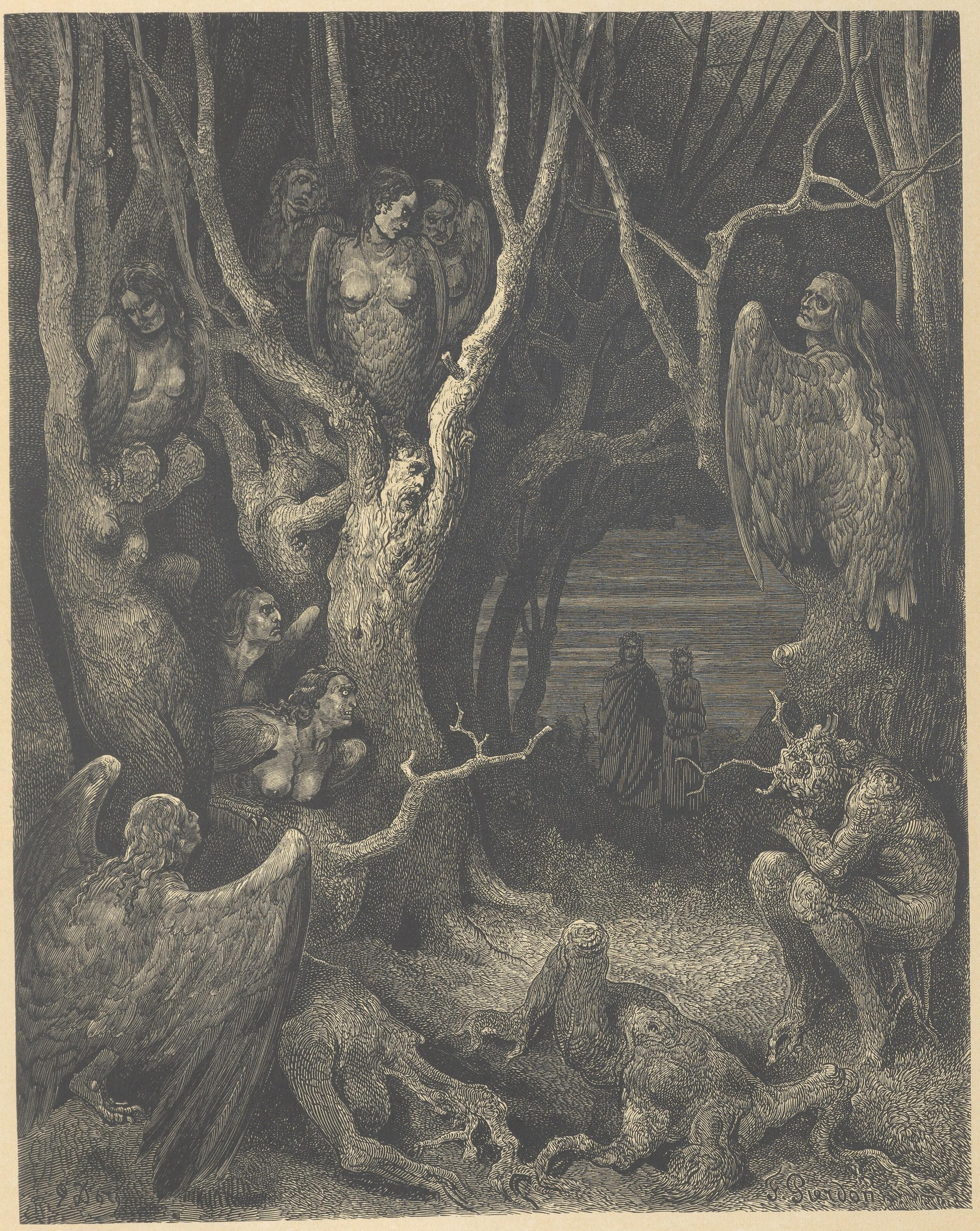
The Wood of the Suicides
Gustave Doré · 1861
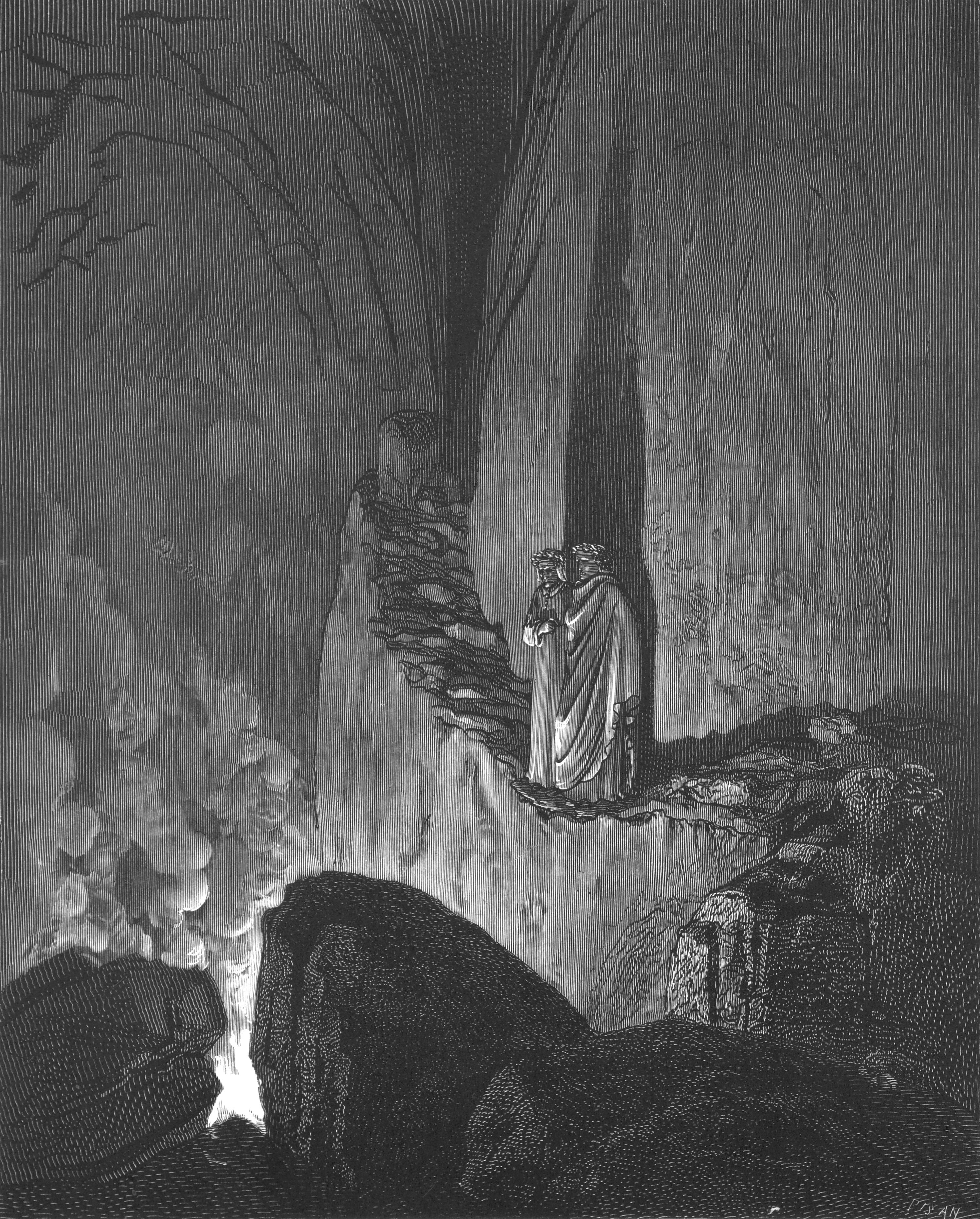
Ulysses and Diomedes
Gustave Doré · 1861
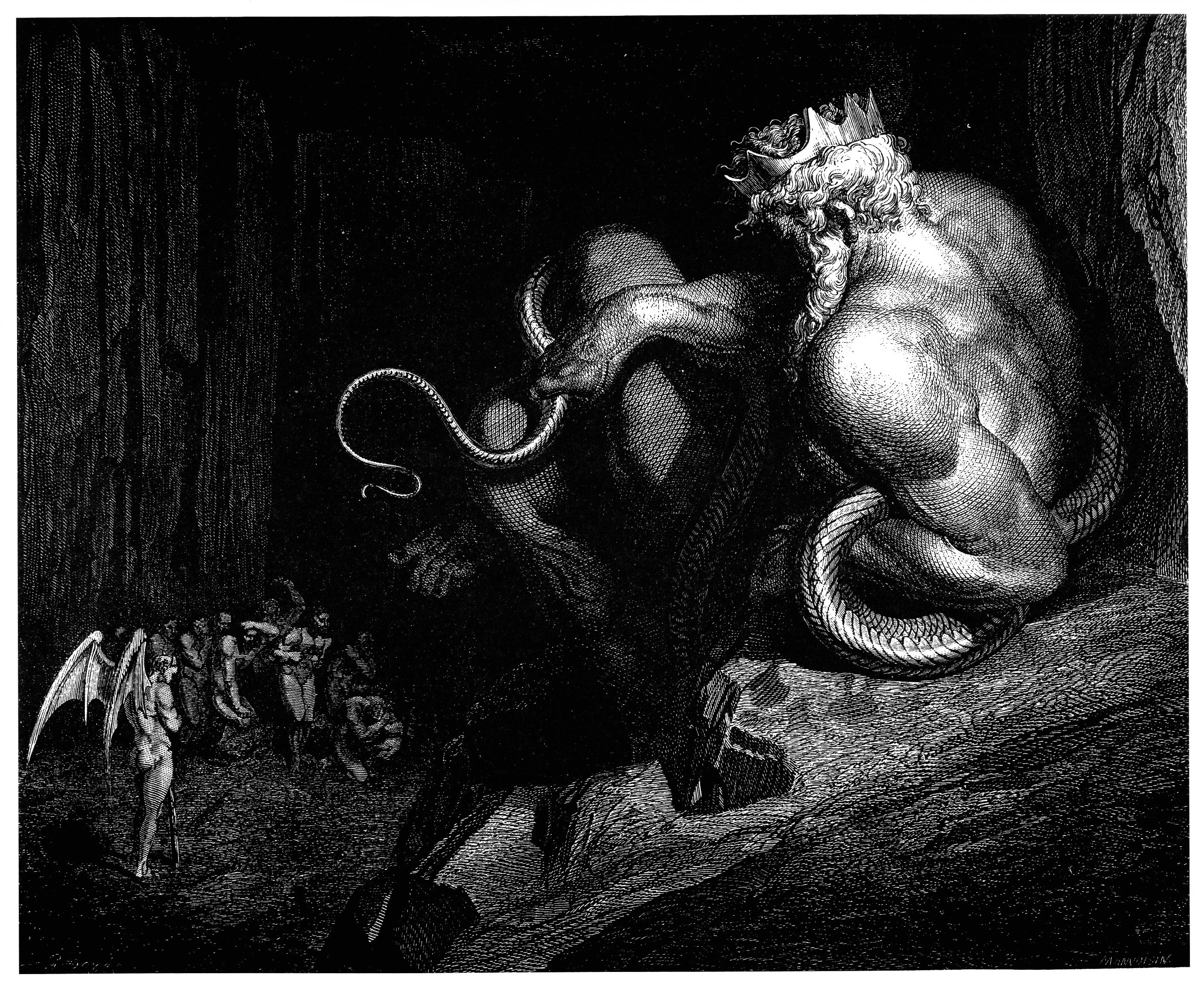
Minos, Judge of the Damned
Gustave Doré · 1861
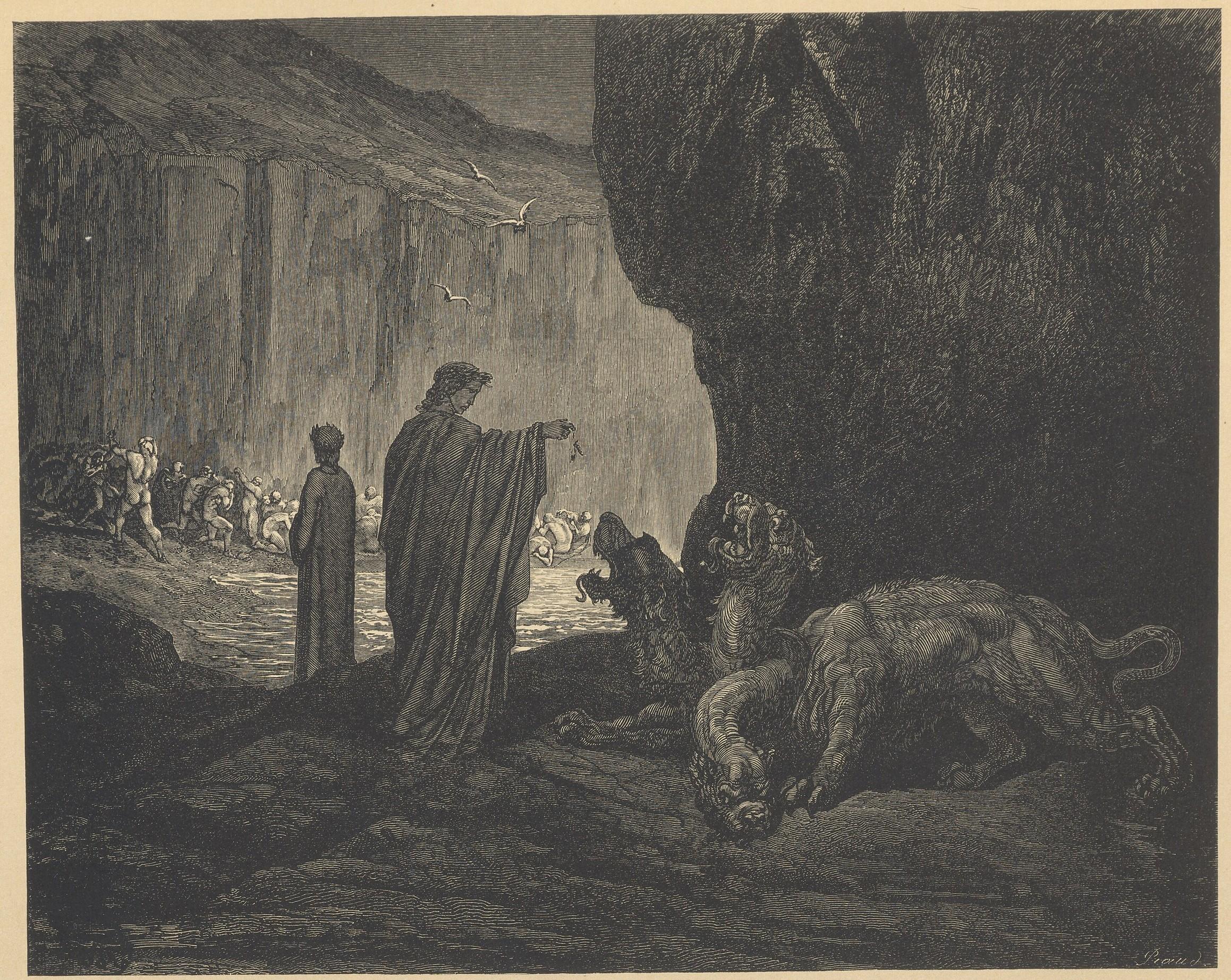
Cerberus
Gustave Doré · 1861
Also from 1861
Dante and Virgil in the Ninth Circle of Hell
Gustave Doré · 1861
Crossing the Styx (Filippo Argenti)
Gustave Doré · 1861
The Thieves and the Serpents
Gustave Doré · 1861
Paolo and Francesca
Gustave Doré · 1861
The Whirlwind of the Lustful
Gustave Doré · 1861
Charon, Ferryman of the Dead
Gustave Doré · 1861
The Gate of Hell (Abandon All Hope)
Gustave Doré · 1861
Dante Lost in the Dark Wood
Gustave Doré · 1861
Related works
Crossing the Styx (Filippo Argenti)
Gustave Doré · 1861
Geryon
Gustave Doré · 1861
Satan Cast Out of Heaven
Gustave Doré · 1866
Satan’s Flight Through Chaos
Gustave Doré · 1866
Perched Upon a Bust of Pallas
Gustave Doré · 1884
The Nightmare
Henry Fuseli · 1781
Witches' Sabbath (The Great He-Goat)
Francisco Goya · c. 1819–1823
The Malebranche Demons
Gustave Doré · 1861