The Thieves and the Serpents
Gustave Doré, 1861
The Thieves and the Serpents is Gustave Doré's 1861 wood engraving for Inferno, Canto XXV: a thief writhes in a serpent's coils as two naked companions watch, at the moment the thief Agnello begins to merge with a reptile.
- Artist
- Gustave Doré
- Date
- 1861
- Medium
- Wood engraving
- Movement
- Romanticism
- Themes
- The Macabre, Literature & Poetry, The Nude, Dark Academia
The Thieves and the Serpents is Gustave Doré's wood engraving of the seventh ditch of Malebolge, where thieves are bound and transformed by serpents, from Canto XXV of Dante's Inferno, published in Paris in 1861. In the foreground a man writhes on the ground in the coils of a great snake while two naked companions lean against a rock and watch, at the moment Dante's thieves cry out, "O me, Agnello, how thou changest!" It is one of the most sculptural of Doré's Inferno illustrations.
What you are looking at
The scene is a deep gorge. A shaft of light falls from the top of the picture into a pale clearing, and everything outside it sinks into gloom. In the light, sprawled on his back with one arm flung out, a man is wrapped in the thick coils of a serpent that winds around his chest, his waist and one leg; its head is pressed against his face. His free hand claws at the ground.
Behind him, against a mound of rock, two nude men lean together. One lays a hand on his companion's shoulder and raises the other to his own head; the second slumps with his arms hanging and his eyes lowered, as if stunned. To the left a third figure lies face down over the rock, a snake looped around his body. More snakes rear and slide over the ground at the right.
The background is the most extraordinary part. Up the dark walls of the gorge, Doré piles a second, almost invisible scene: a tide of bodies and serpents climbing, tumbling and knotted together, fading into the shadow. The block is signed "G. Doré" at lower left and "A. Lavieille" at lower right.
The passage: Canto XXV
The seventh bolgia holds the thieves. Their hands are bound with snakes, and the serpents bite, burn and change them. Canto XXV opens with Vanni Fucci making an obscene gesture at God, before Dante watches five Florentine thieves exchange shapes. A six-footed serpent, identified by early commentators as Cianfa Donati, leaps on one of them, Agnello, and wraps itself around him:
Ivy was never fastened by its barbs Unto a tree so, as this horrible reptile Upon the other's limbs entwined its own. (XXV.58–60, Longfellow's translation)
The two bodies melt together "as if of heated wax" (XXV.61), and the onlookers cry: "O me, Agnello, how thou changest! / Behold, thou now art neither two nor one" (XXV.68–69). Dante then boasts that he has outdone the classical poets of metamorphosis: "Henceforth be silent Lucan ... Be silent Ovid" (XXV.94–97), because they never showed two natures trading their matter face to face.
How Doré staged it
Dante's creature is a six-legged reptile with feet that grip arms and thighs. Doré simplifies it into a heavy, legless snake, closer to a python than to the composite monster of the poem. He also chooses the moment just before the impossible happens: the man is still a man and the serpent still a serpent. Rather than draw the "perverted image" that is "Two and yet none" (XXV.77), he lets the watching pair carry the horror.
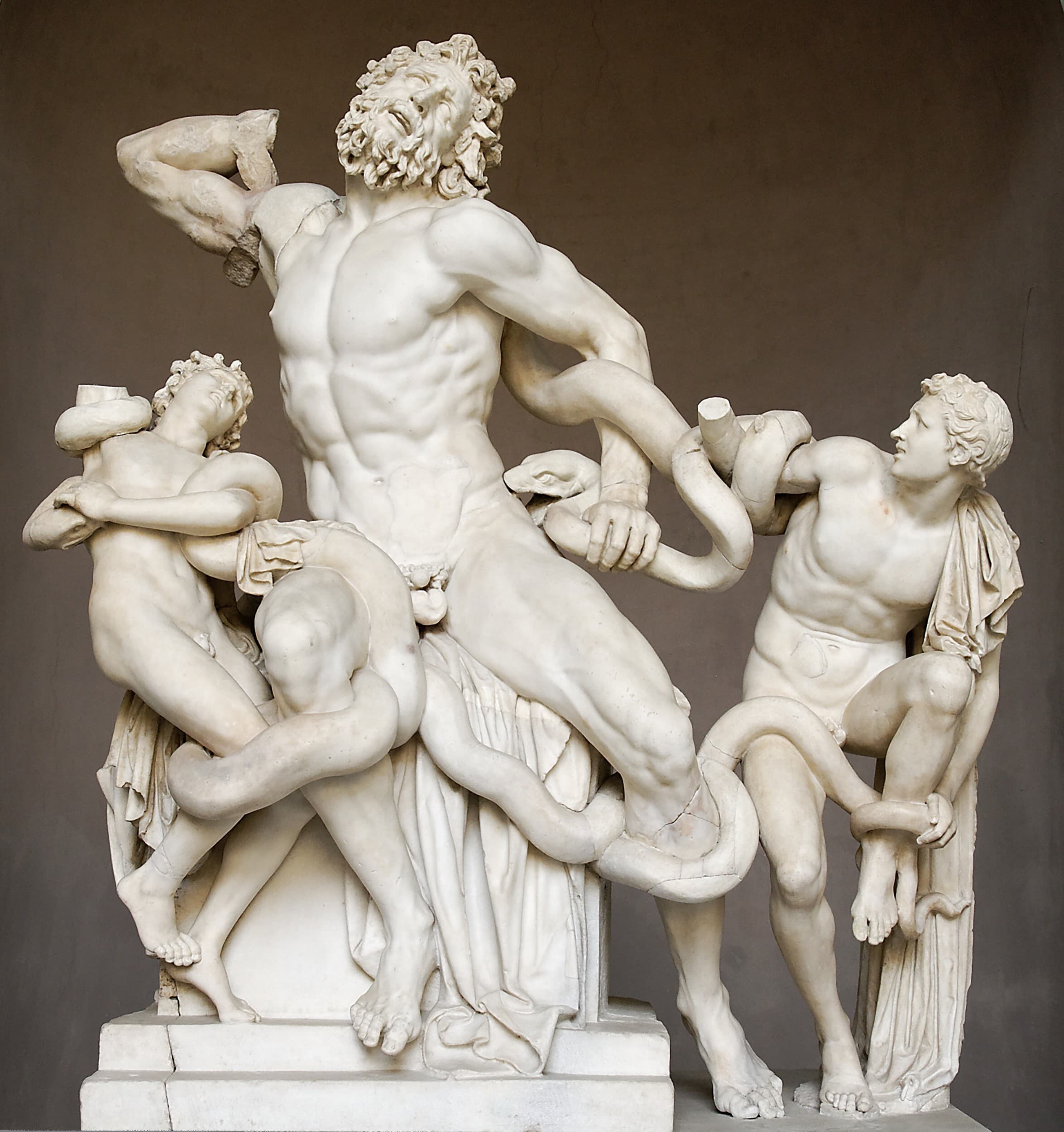
The composition owes something to sculpture. The coiling snake and straining body invite comparison with the ancient Laocoön, and the two leaning youths have the smooth, idealized anatomy of academic figure studies. Doré's darkness does the rest: the crowd climbing the walls suggests that what we see in the light is only one case among thousands.
How it was made and published
Doré drew the scene on a boxwood block for the engraver whose signature, "A. Lavieille", appears at lower right; Jacques-Adrien Lavieille (1818–1862) was one of the many professional engravers who cut Doré's designs. The scales of the snakes are rendered in tiny cross-hatched diamonds, the lit ground in short broken strokes, and the background tide of bodies in dense, softened lines. The plate was first published in Hachette's 1861 folio L'Enfer de Dante Alighieri, financed by Doré himself; the impression shown is from the Berlin edition of 1870, digitized by the National Library of Poland. Later English editions captioned it with Henry Francis Cary's translation of the same lines.
What it means
Theft confuses what is mine with what is yours, so in Dante's Hell the thieves cannot even keep their own bodies. Each loses his form to another and must steal it back. The canto is Dante's open challenge to Ovid's Metamorphoses, a poem of transformations, and its hardest test of what words can show.
Doré answers by pointing at the edge of the impossible rather than past it. Compare his other moral emblems in this stretch of Hell: Caiaphas Crucified one ditch above and Ulysses and Diomedes in the flames below. For more by Gustave Doré and his circle, see Gothic art.
Questions & answers
What does Doré's Thieves and the Serpents plate show?
It shows the seventh ditch of Malebolge in Inferno Canto XXV, where a thief, Agnello, is seized by a serpent while two others watch. It illustrates the moment the onlookers cry: "O me, Agnello, how thou changest! / Behold, thou now art neither two nor one" (XXV.68–69, Longfellow's translation).
Why are the thieves punished with serpents in Dante's Inferno?
Thieves took what belonged to others, so in Hell they cannot keep even their own shape. Serpents bind their hands, bite them and fuse with them, and the souls trade bodies back and forth. Dante presents this as a challenge to Ovid's Metamorphoses, claiming to outdo the classical poets.
When was this engraving made?
Doré designed it in the late 1850s for his illustrated Inferno, published in Paris by Hachette in 1861 as L'Enfer de Dante Alighieri, an edition Doré financed himself. The scan shown is from the 1870 Berlin edition, which reprinted the same engravings.
Who engraved the plate of the thieves and serpents?
It is signed "A. Lavieille" at lower right, for the wood engraver Jacques-Adrien Lavieille. Doré drew the design directly on the woodblock and Lavieille cut it, rendering the snakes' scales in tiny cross-hatched diamonds and the climbing crowd in the background in soft, dense lines.
More by Gustave Doré
All works →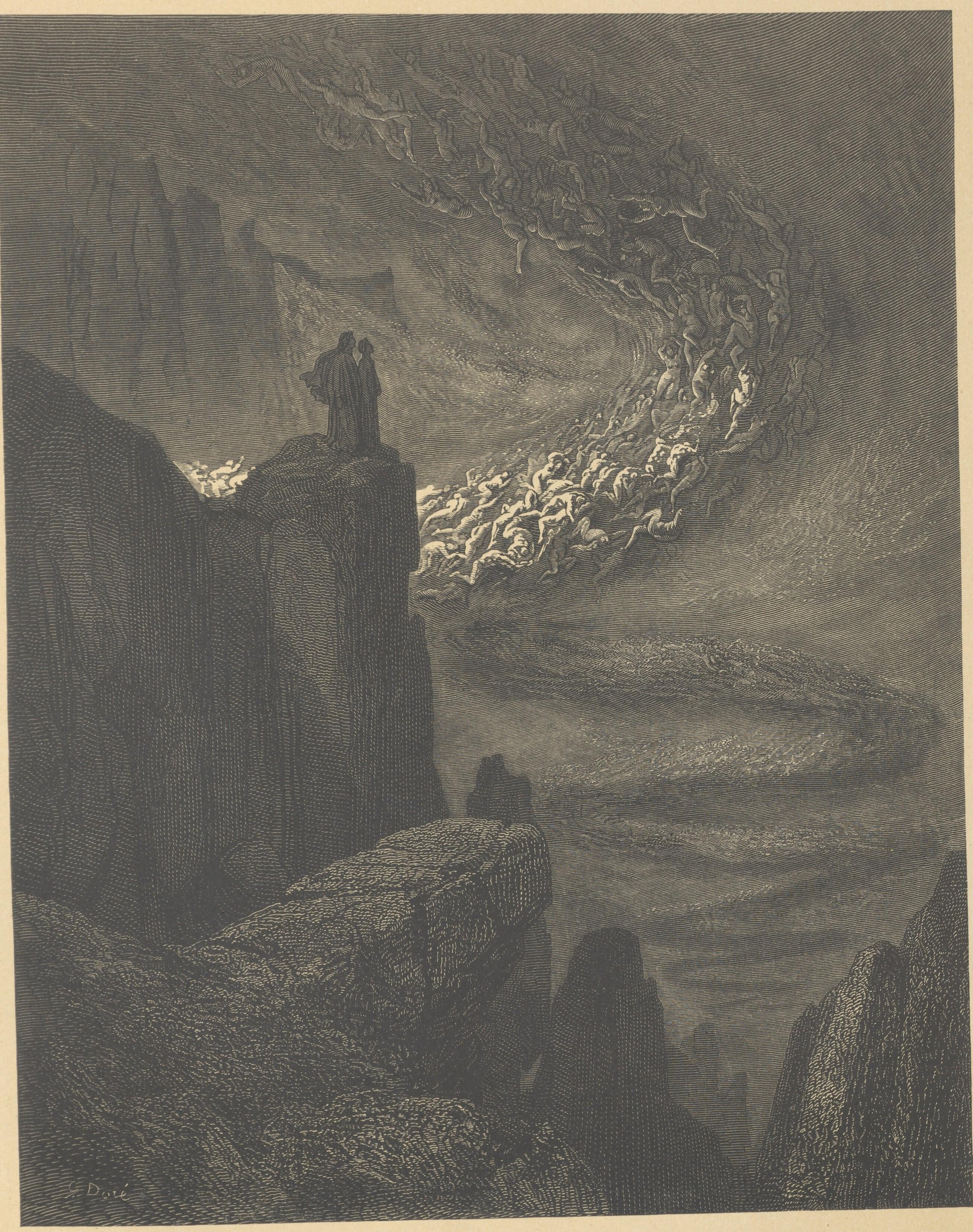
The Whirlwind of the Lustful
Gustave Doré · 1861
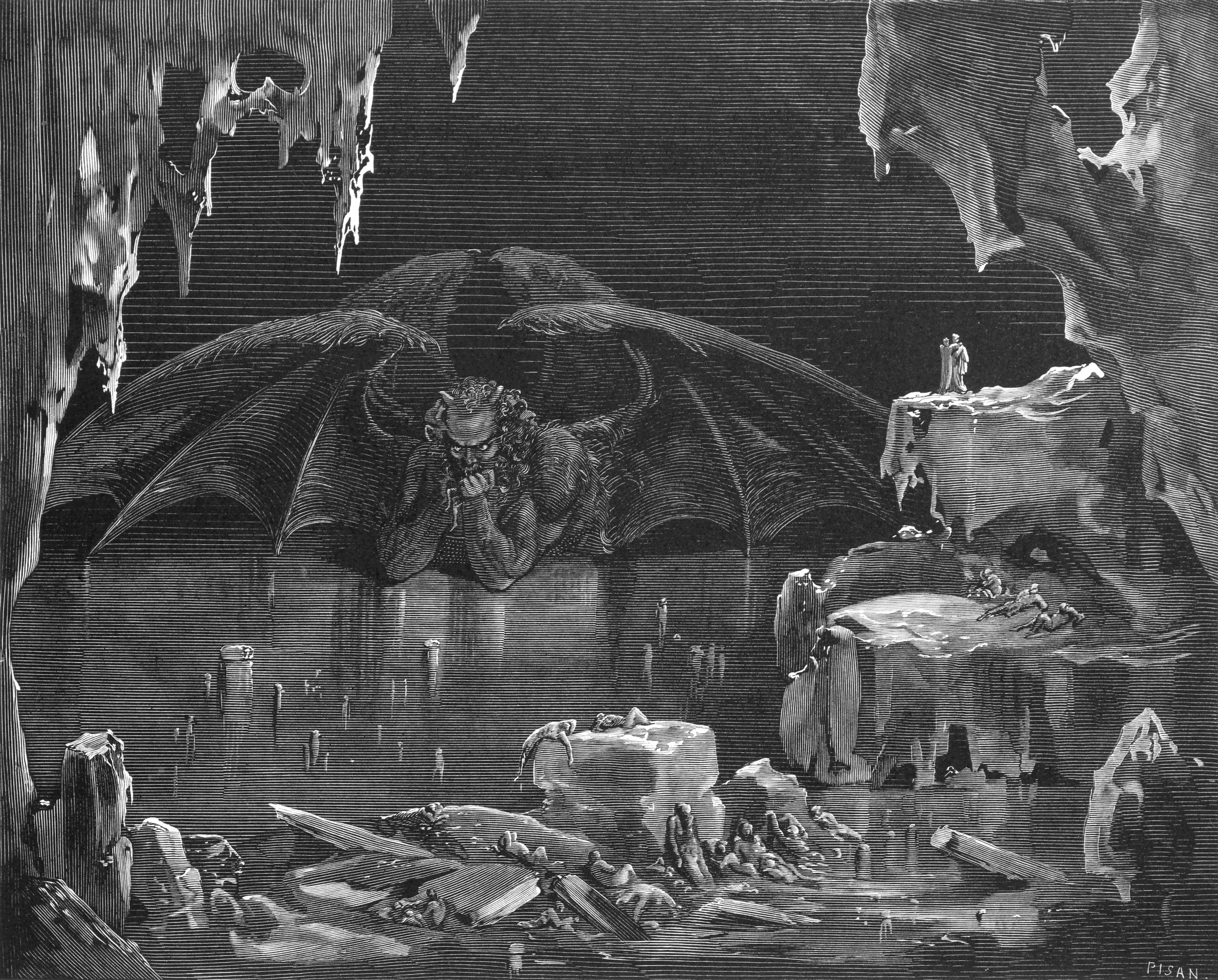
Lucifer, King of Hell
Gustave Doré · 1861
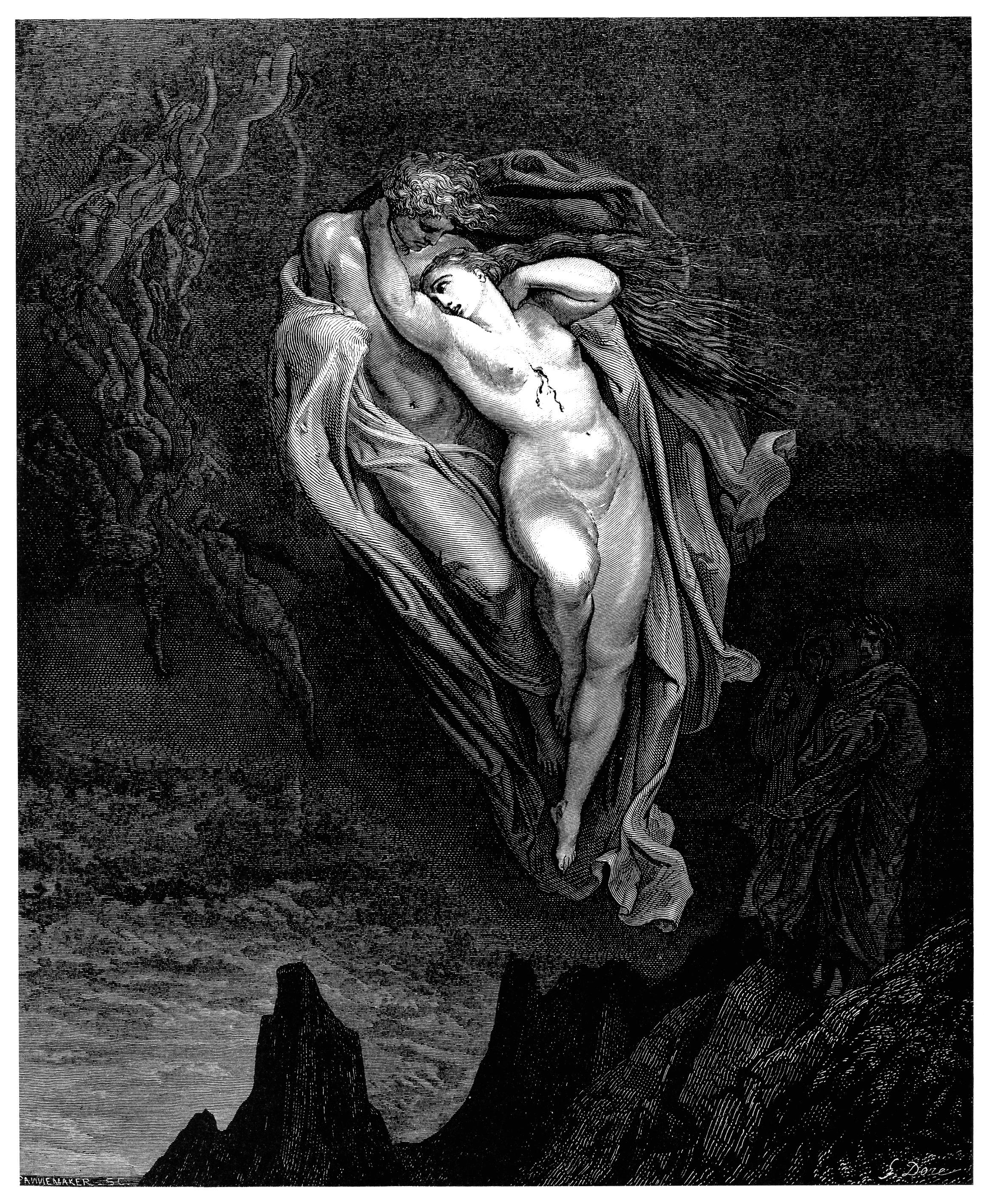
Paolo and Francesca
Gustave Doré · 1861
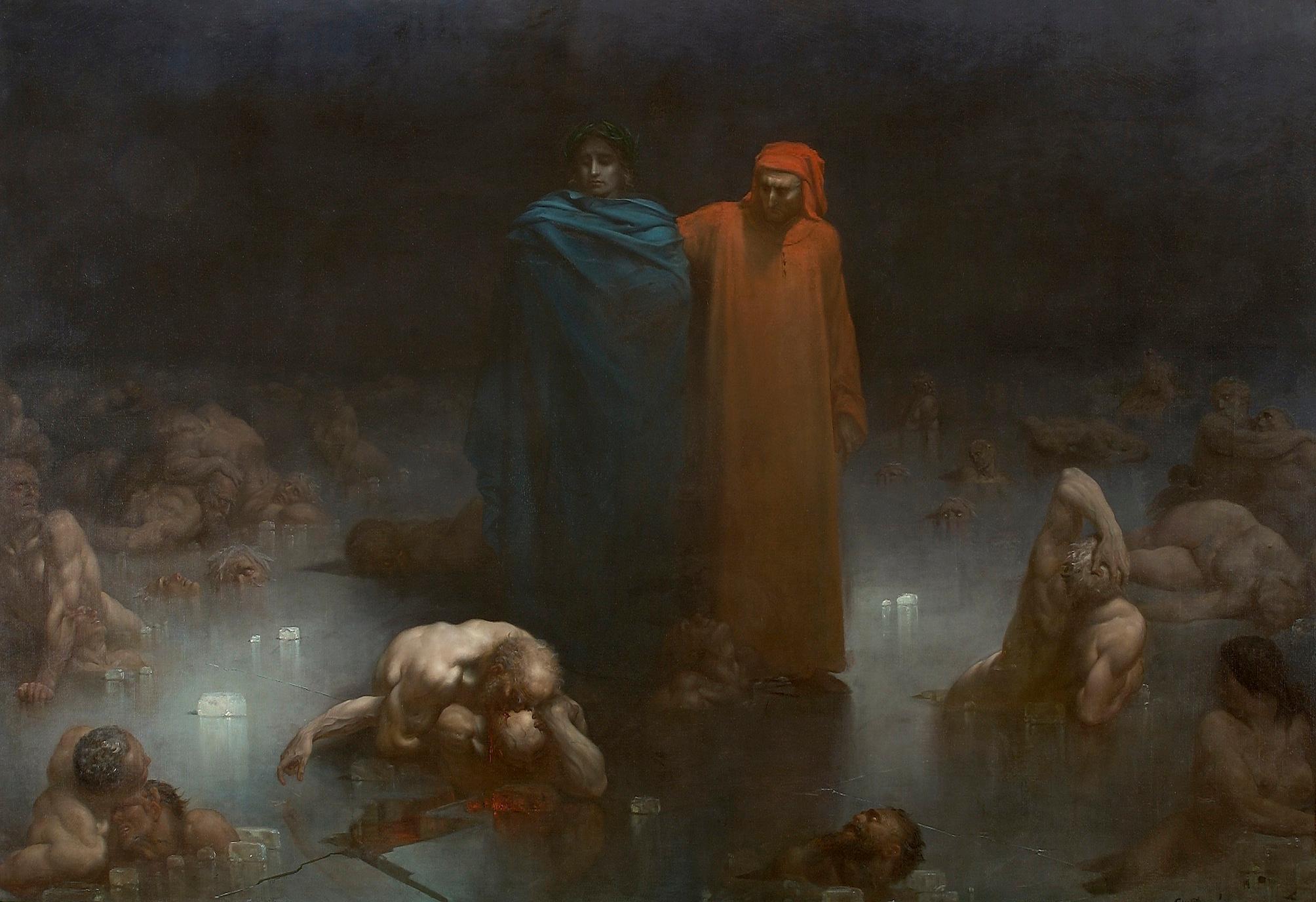
Dante and Virgil in the Ninth Circle of Hell
Gustave Doré · 1861
Cerberus
Gustave Doré · 1861
Ulysses and Diomedes
Gustave Doré · 1861
Bertran de Born Holding His Head
Gustave Doré · 1861
The Gate of Hell (Abandon All Hope)
Gustave Doré · 1861
Also from 1861
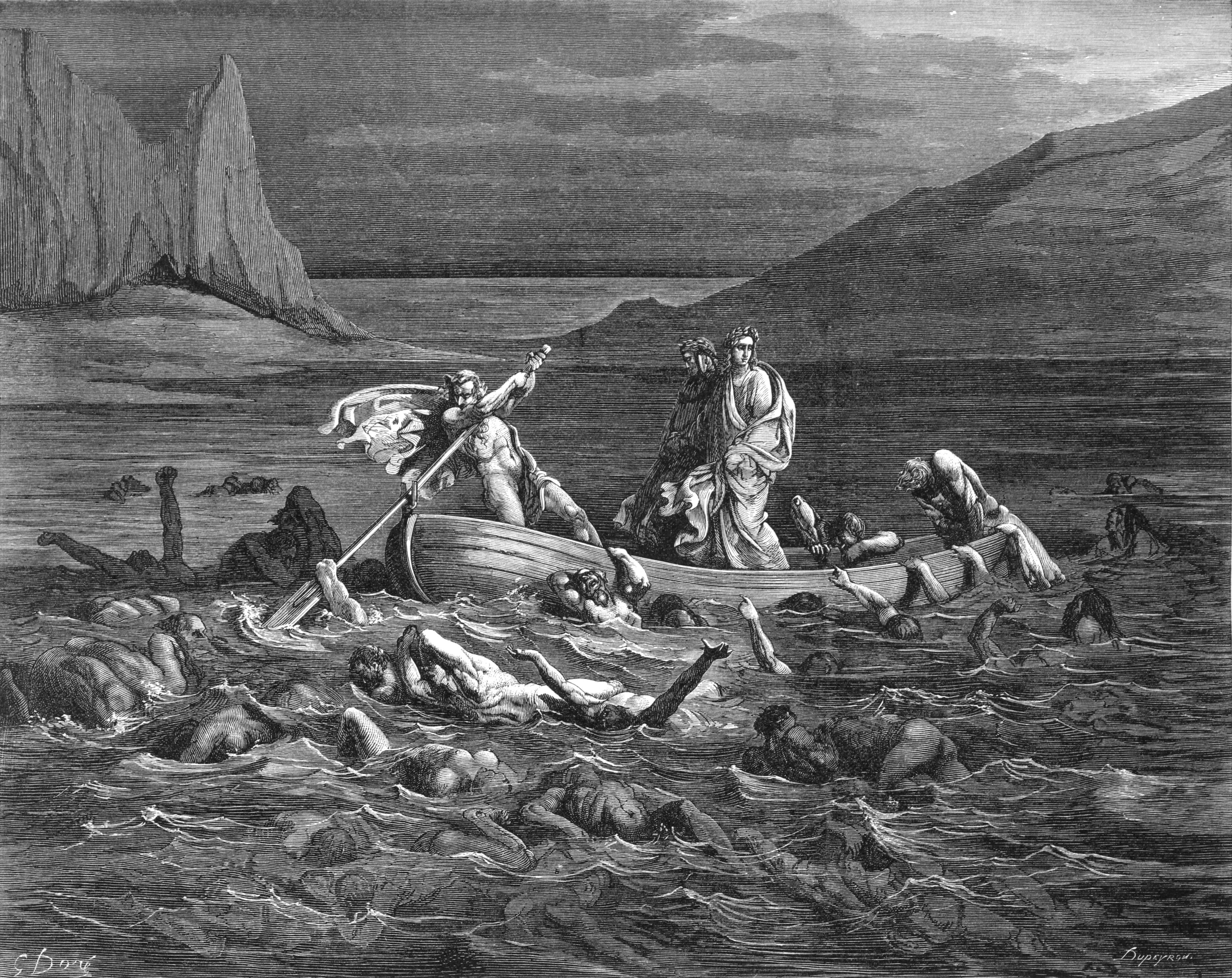
Crossing the Styx (Filippo Argenti)
Gustave Doré · 1861
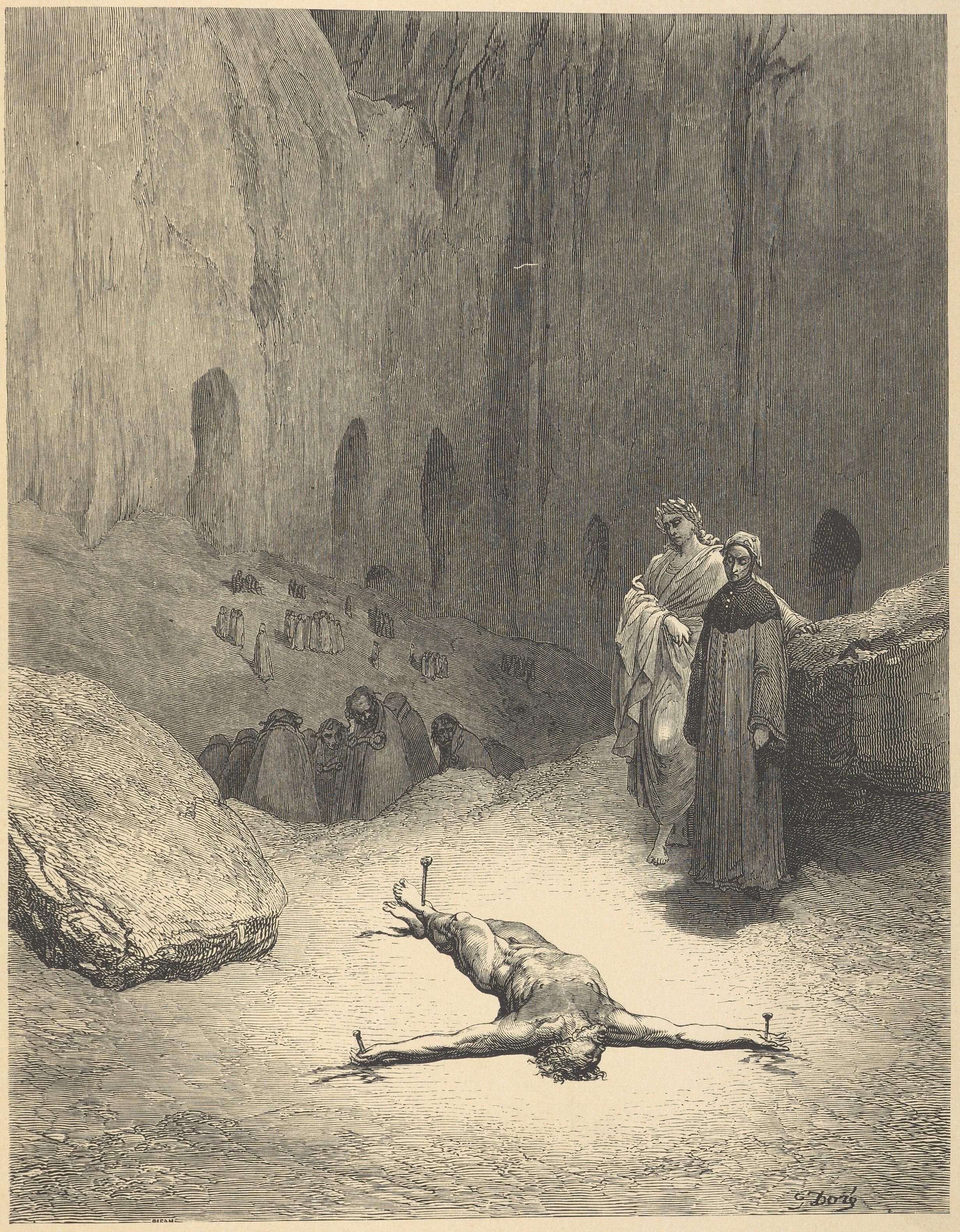
Caiaphas Crucified
Gustave Doré · 1861
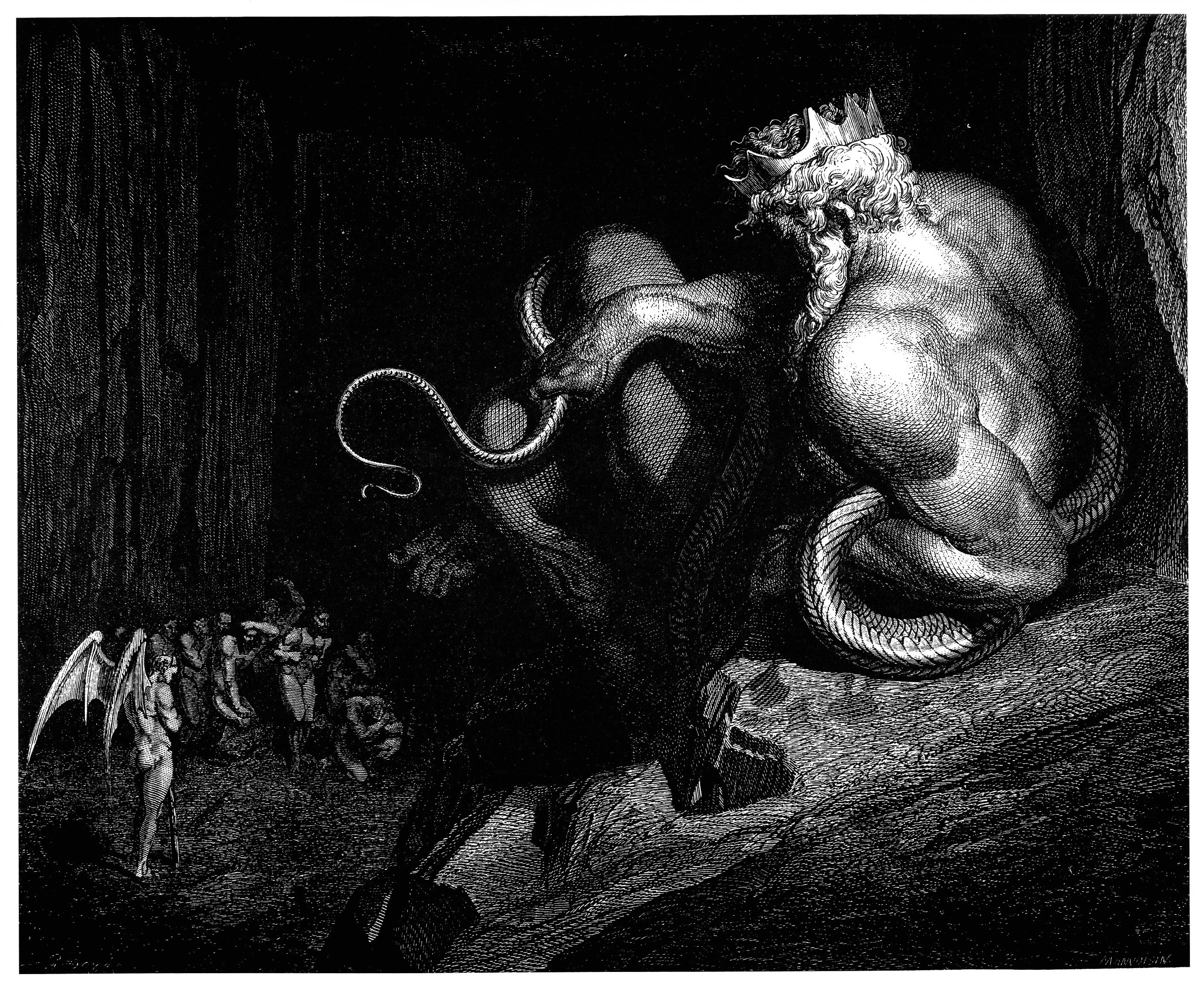
Minos, Judge of the Damned
Gustave Doré · 1861
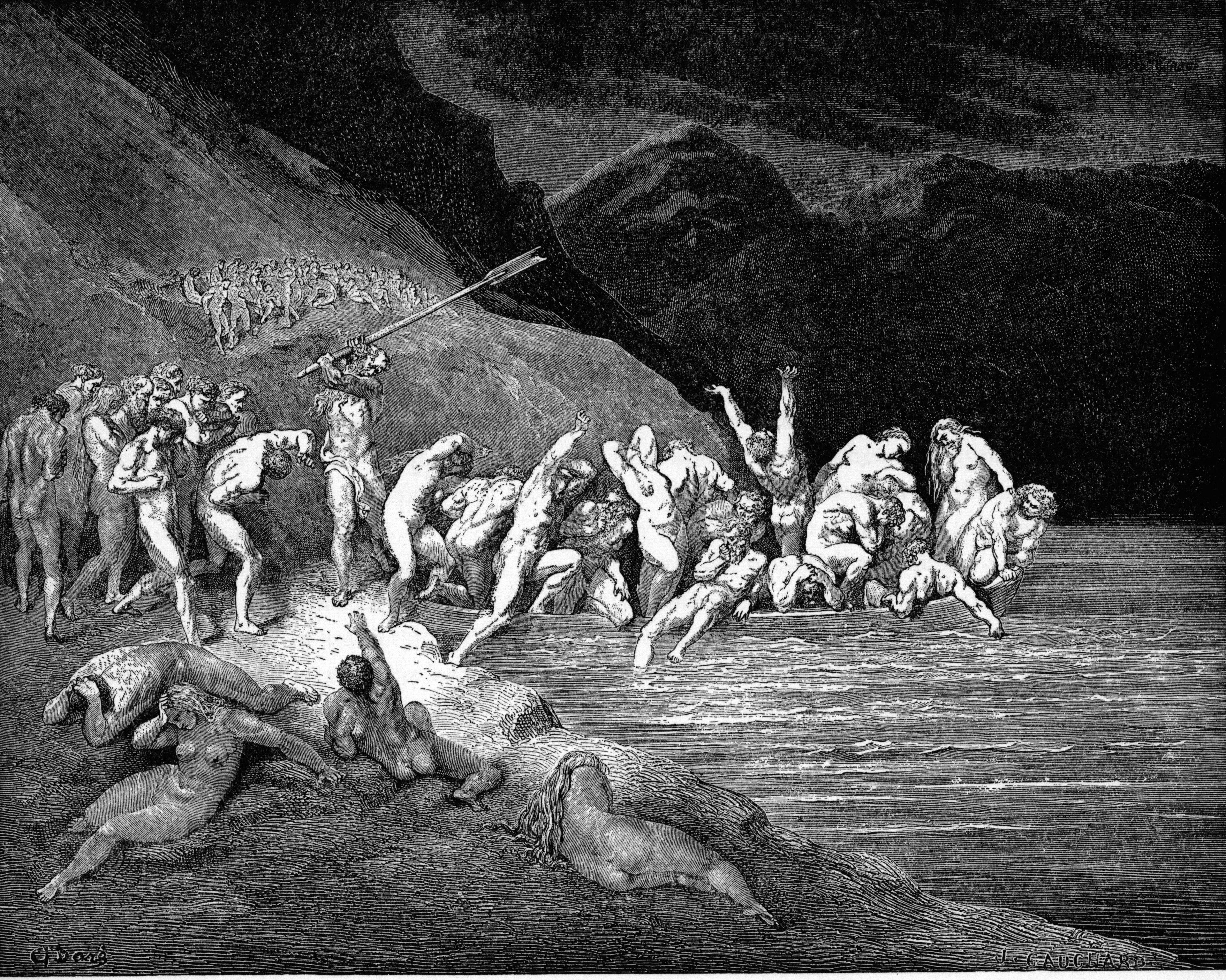
Charon, Ferryman of the Dead
Gustave Doré · 1861
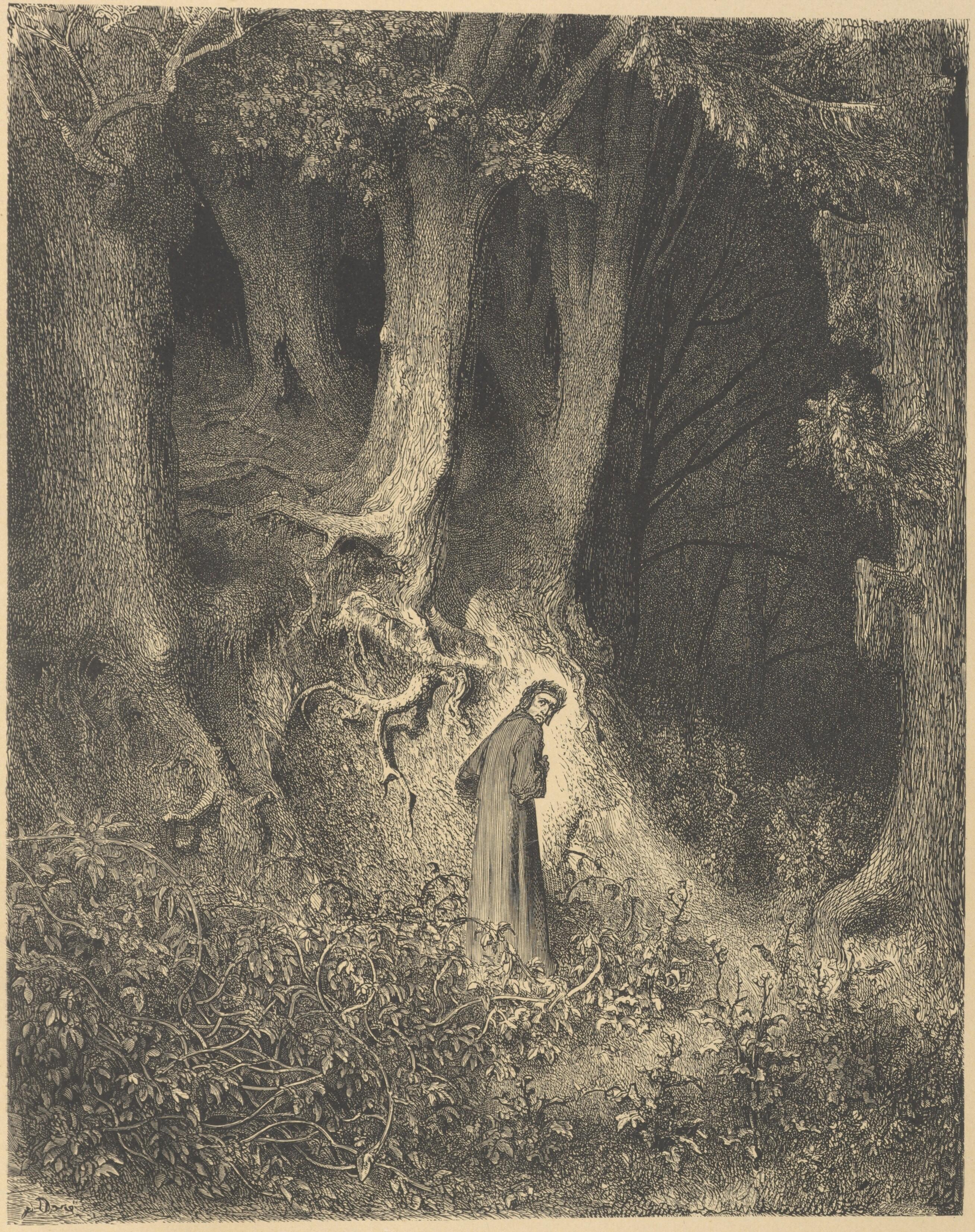
Dante Lost in the Dark Wood
Gustave Doré · 1861
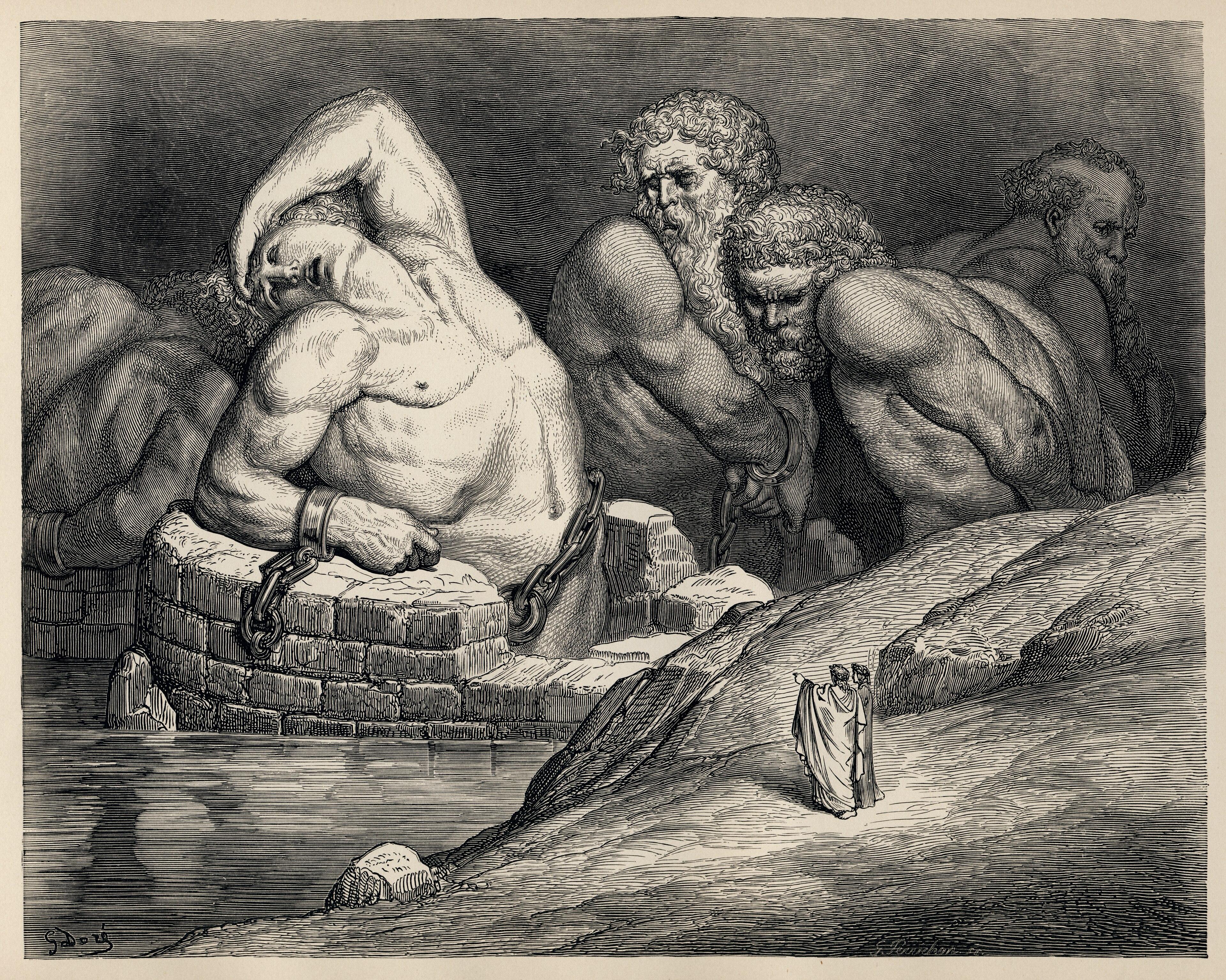
The Giants
Gustave Doré · 1861
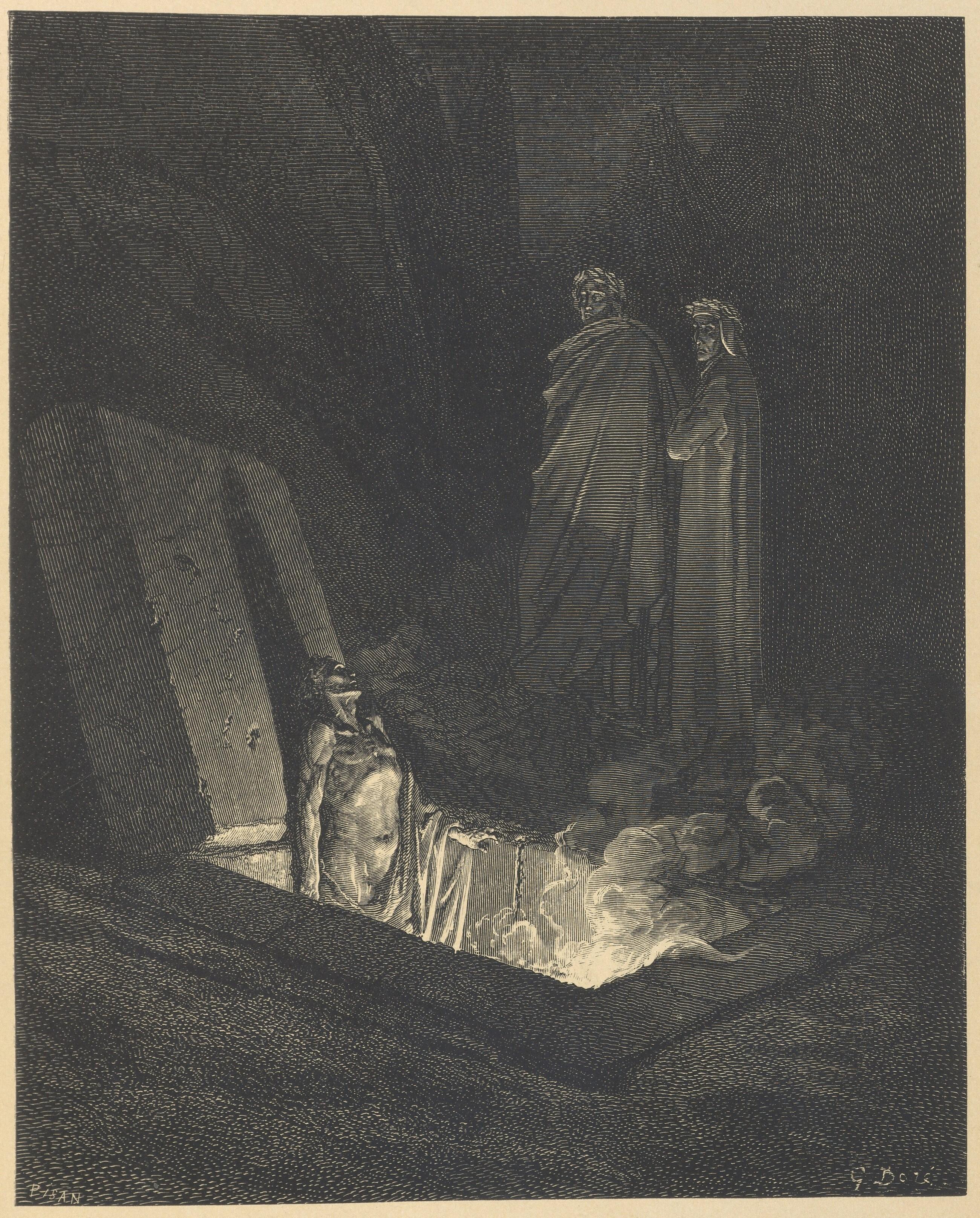
Farinata degli Uberti
Gustave Doré · 1861
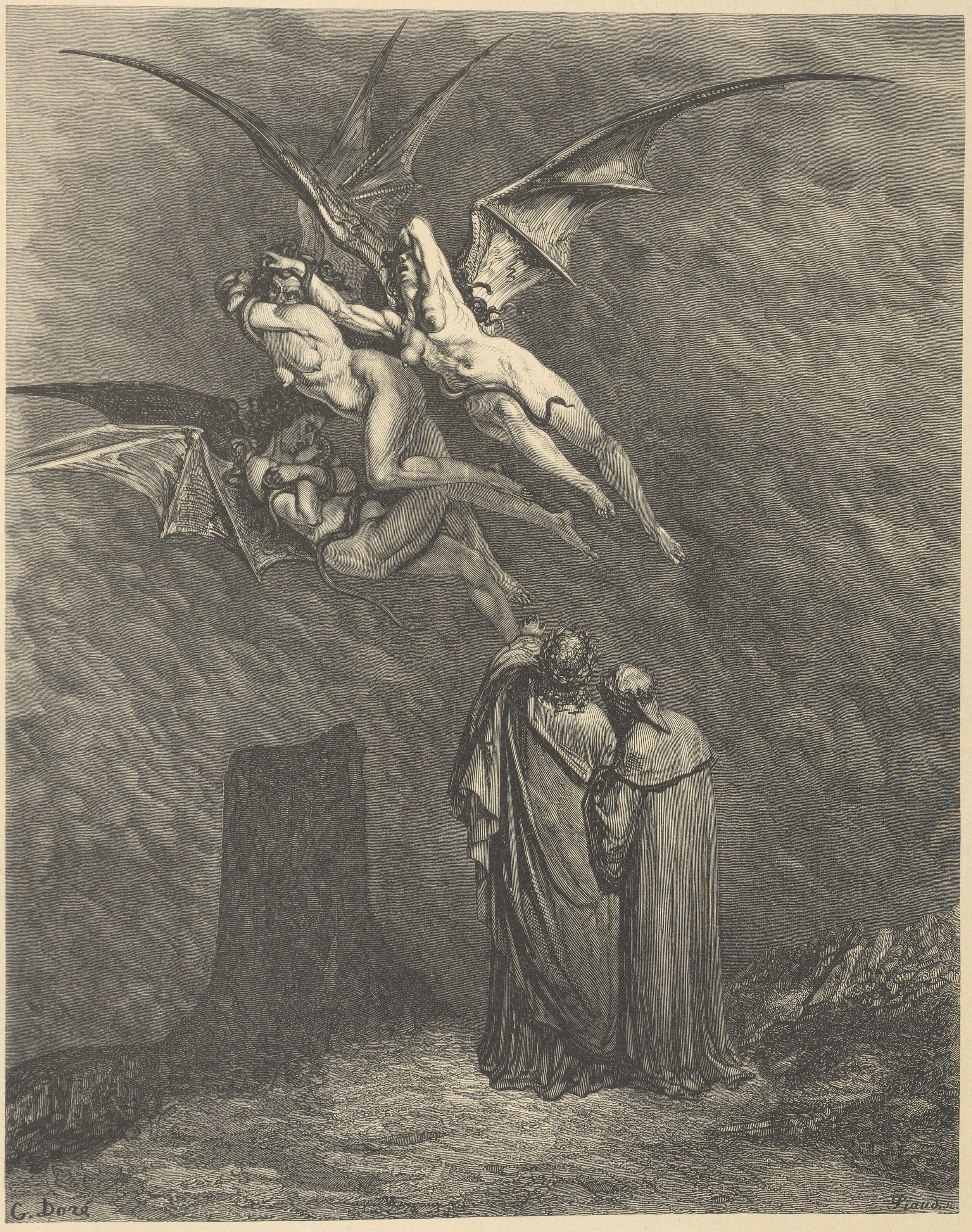
The Furies at the Gates of Dis
Gustave Doré · 1861
Related works
Caiaphas Crucified
Gustave Doré · 1861
The Malebranche Demons
Gustave Doré · 1861
Geryon
Gustave Doré · 1861
Laocoön and His Sons
Agesander of Rhodes & Athenodoros of Rhodes & Polydorus of Rhodes · c. 200 BC – AD 70 (date debated); excavated 1506
Fallen Angel
Alexandre Cabanel · 1847
Satan’s Flight Through Chaos
Gustave Doré · 1866
Death and Life-in-Death
Gustave Doré · 1876
Men Reading
Francisco Goya · c. 1819–1823