The Whirlwind of the Lustful
Gustave Doré, 1861
The Whirlwind of the Lustful is Gustave Doré's 1861 wood engraving of the second circle of Hell in Dante's Inferno, Canto V. From a crag, Dante and Virgil watch a spiral of naked souls swept through the air by “the infernal hurricane that never rests.”
- Artist
- Gustave Doré
- Date
- 1861
- Medium
- Wood engraving
- Movement
- Romanticism
- Themes
- Literature & Poetry, Love & Desire, The Nude, Night & Dreams, Dark Academia
What you're looking at
The plate is tall and almost empty of ground. At the left, a sheer column of rock rises out of a broken landscape of crags, and on its flat top stand two small figures in silhouette, their cloaks blowing. Everything else is air.
Through that air runs a river of bodies. It enters at the top of the plate as a faint, smoky stream of tiny nude figures, swings down and around in a great curve toward the right, and then sweeps back left past the crag at the poets' feet. On that near stretch the bodies are lit as if by a flash: a dense, bright knot of limbs, heads and backs, tumbling over one another. Look just behind the crag, low on the left, and the same bright stream reappears. The spiral passes behind the rock on which the poets stand, wrapping around them.
Below, the stream dissolves into long, flat bands of vapor, engraved as wavy horizontal lines that curl into a second, larger loop over an abyss. Further down still are more pinnacles of rock, black against the mist. There is no visible floor to this circle; the whirlwind seems to go on below the bottom edge.
The engraving gets its motion from the direction of its lines. The cuts in the air follow the curve of the wind, so even the empty sky seems to be turning. The rock, by contrast, is cut in short vertical and stippled strokes, so the crag reads as the only still thing in the picture.
The passage it illustrates
The plate illustrates Inferno V, lines 31–33 and the similes that follow, when Dante and Virgil reach the second circle, where the lustful are punished. In Longfellow's translation:
The infernal hurricane that never rests Hurtles the spirits onward in its rapine; Whirling them round, and smiting, it molests them.
The sinners here are “the carnal malefactors ... / Who reason subjugate to appetite.” Dante compares them first to starlings blown “hither, thither, downward, upward” in a winter flock, then to cranes “making in air a long line of themselves.” Doré draws both at once: the dense, chaotic flock near the poets and the long, thin line trailing away at the top.
How Doré staged it
The composition is pure Doré. He takes one of the most famous similes in the poem and turns it into landscape. The souls are not individuals but texture, a weather system made of people, and the poets are placed where a Romantic painter would put a lone traveler: on a high rock, seen from behind, looking out into an overwhelming view. The arrangement recalls Caspar David Friedrich's Wanderer above the Sea of Fog, though here the sea of mist is made of the damned.
Doré's choice to show the lustful naked follows the medieval and Renaissance convention for souls in Hell, and his figures are idealized, academic nudes rather than grotesques. Their beauty is part of the point. This is the circle of desire, and the wind punishes it by never letting the bodies come to rest.
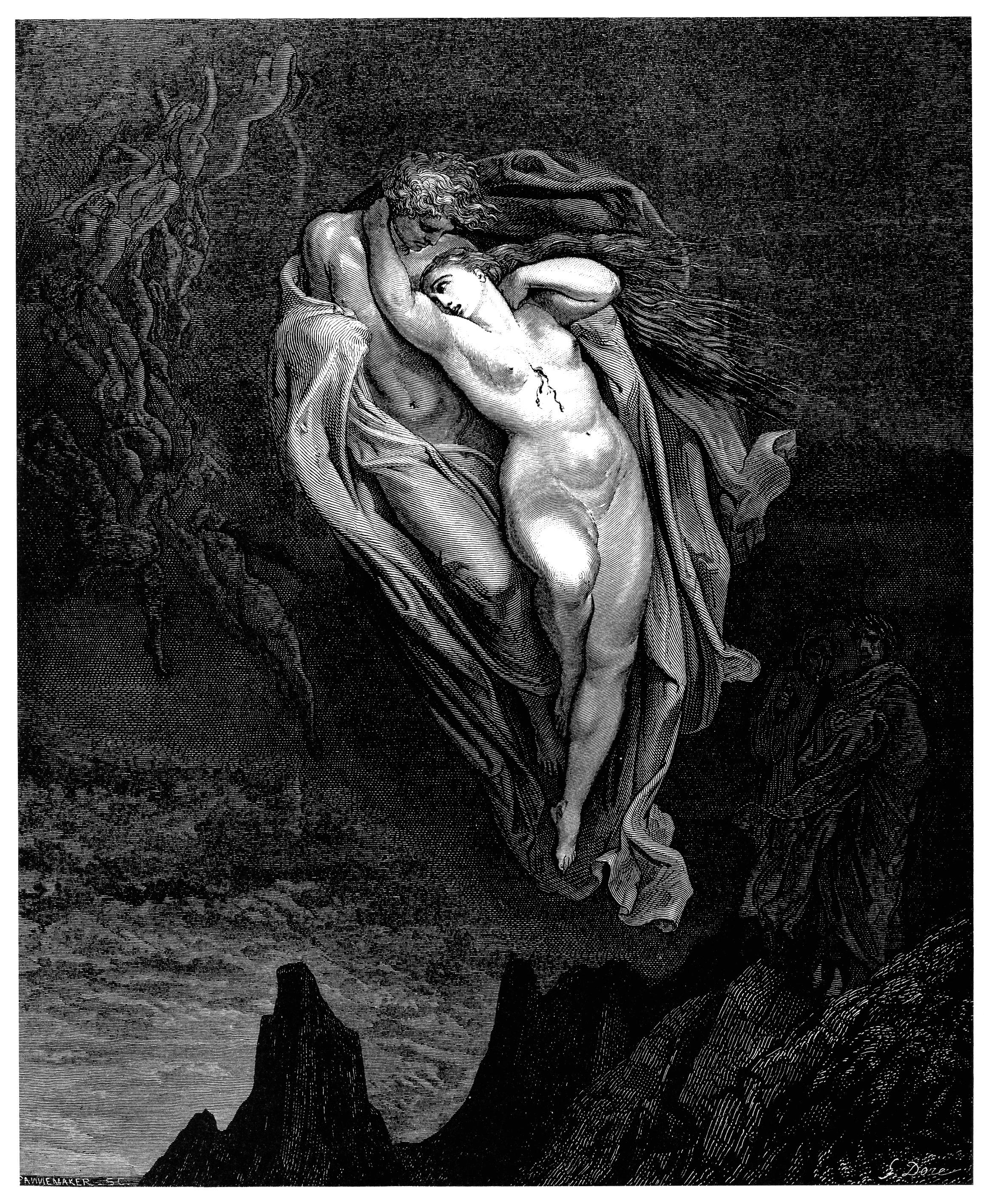
The plate also sets up the next one. Somewhere in that bright knot of bodies are the two souls Dante will call down from the wind, Paolo and Francesca, whom Doré gives a plate of their own.
How it was made and published
Doré drew the design directly on a boxwood block, which a professional engraver cut; only Doré's signature, “G. Doré,” appears at the lower left of this block. The plate was published in 1861 in L'Enfer de Dante Alighieri (Hachette, Paris), the folio edition Doré paid for himself. It is the fourteenth plate in the sequence, between Minos and the lovers. It was reused in later editions, and at least one later English printing captions it “The Tempest of Hell.” The scan shown here is from a Berlin edition of 1870.
Meaning and legacy
In the logic of Dante's Hell, the punishment mirrors the sin. Those who let passion blow them about in life are blown about forever by a literal storm. Doré makes that logic visible without a single readable face: the sin is the motion itself.
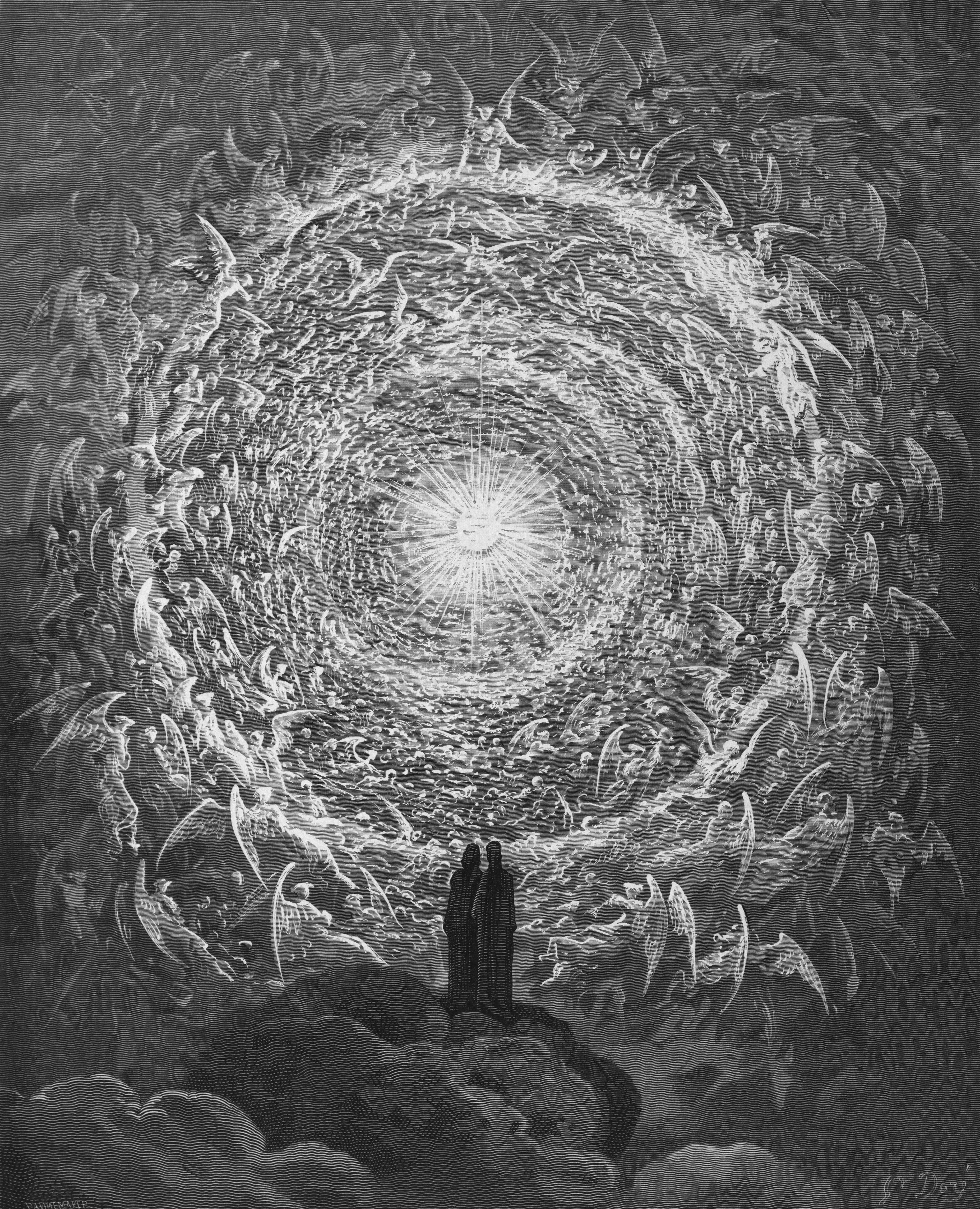
The spiral of souls is one of the best-known images in the Inferno series, and the clearest example of how Doré used landscape scale to express moral ideas. It also links naturally to the series' later aerial spectacles, the flight of the Furies and the wheeling angels of the Empyrean at the far end of the poem, where Doré turns the same circling motion into an image of heaven. For the wider tradition of the dark sublime, see Romanticism.
Questions & answers
What does Doré's Whirlwind of the Lustful show?
It shows Dante and Virgil standing on a high crag in the second circle of Hell, watching a vast spiral of naked souls swept through the air by a storm. It illustrates Inferno V, 31–33: “The infernal hurricane that never rests / Hurtles the spirits onward in its rapine” (Longfellow).
Who is punished in the second circle of Hell?
The lustful, whom Dante calls “the carnal malefactors ... / Who reason subjugate to appetite.” They are blown forever by a storm, as passion drove them in life. Among them Dante names Semiramis, Cleopatra, Helen, Paris and Tristan, and meets Paolo and Francesca.
When was Doré's Whirlwind of the Lustful published?
It was published in 1861 in L'Enfer de Dante Alighieri, the folio Inferno that Hachette issued in Paris and Doré paid for himself. It is the fourteenth plate in the sequence, and at least one later English printing captions it “The Tempest of Hell.”
How was the whirlwind engraving made?
Doré drew the design on a boxwood block and a professional wood engraver cut it, leaving the lines that print black. Only “G. Doré” appears on this block. The curving direction of the cuts makes the empty air itself seem to spin.
What does the whirlwind mean?
It is a fitting punishment: those who let desire drive them in life are driven forever by a wind with no rest and no hope of relief. Dante compares them to starlings and cranes, and Doré draws both the dense flock and the long trailing line.
More by Gustave Doré
All works →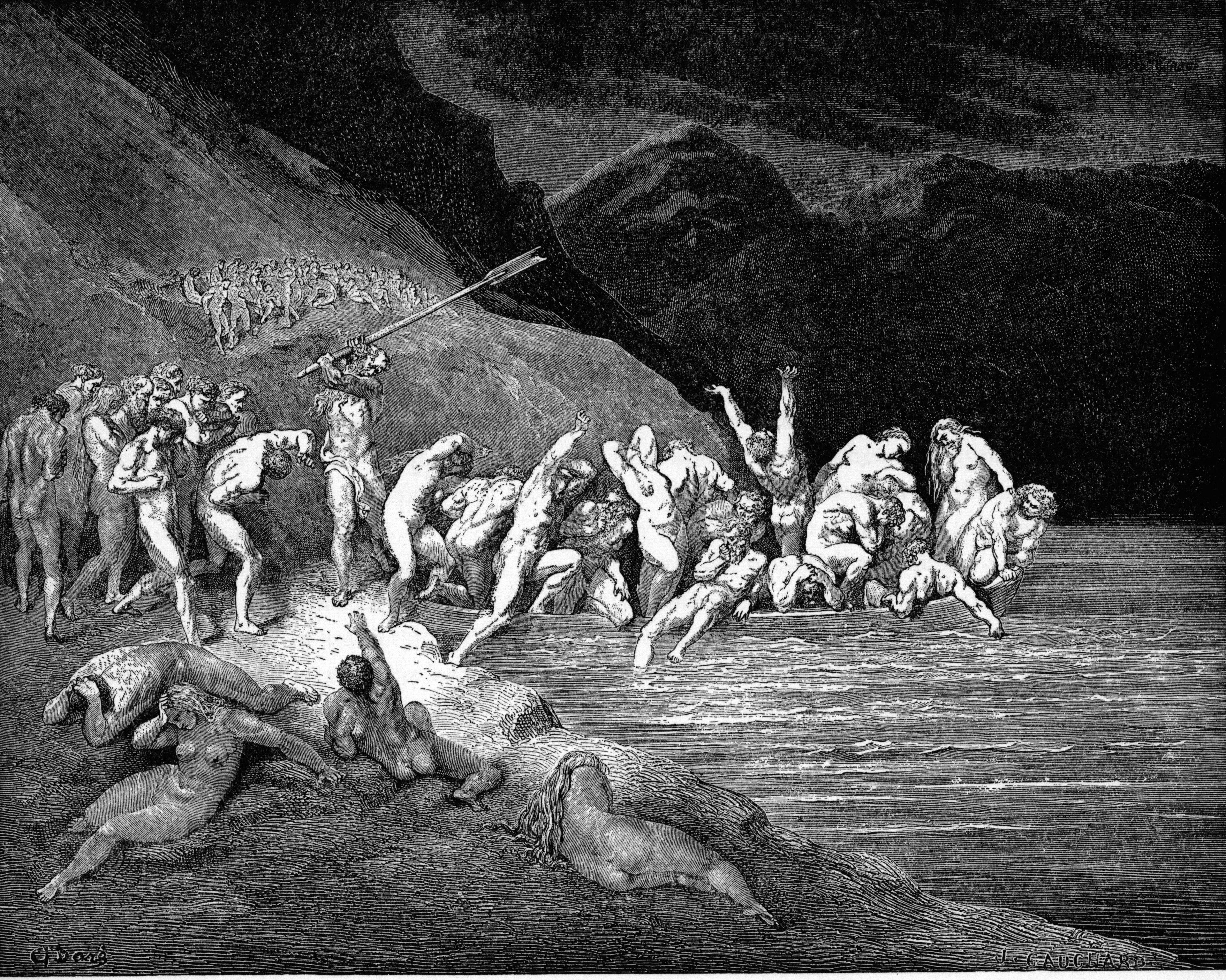
Charon, Ferryman of the Dead
Gustave Doré · 1861
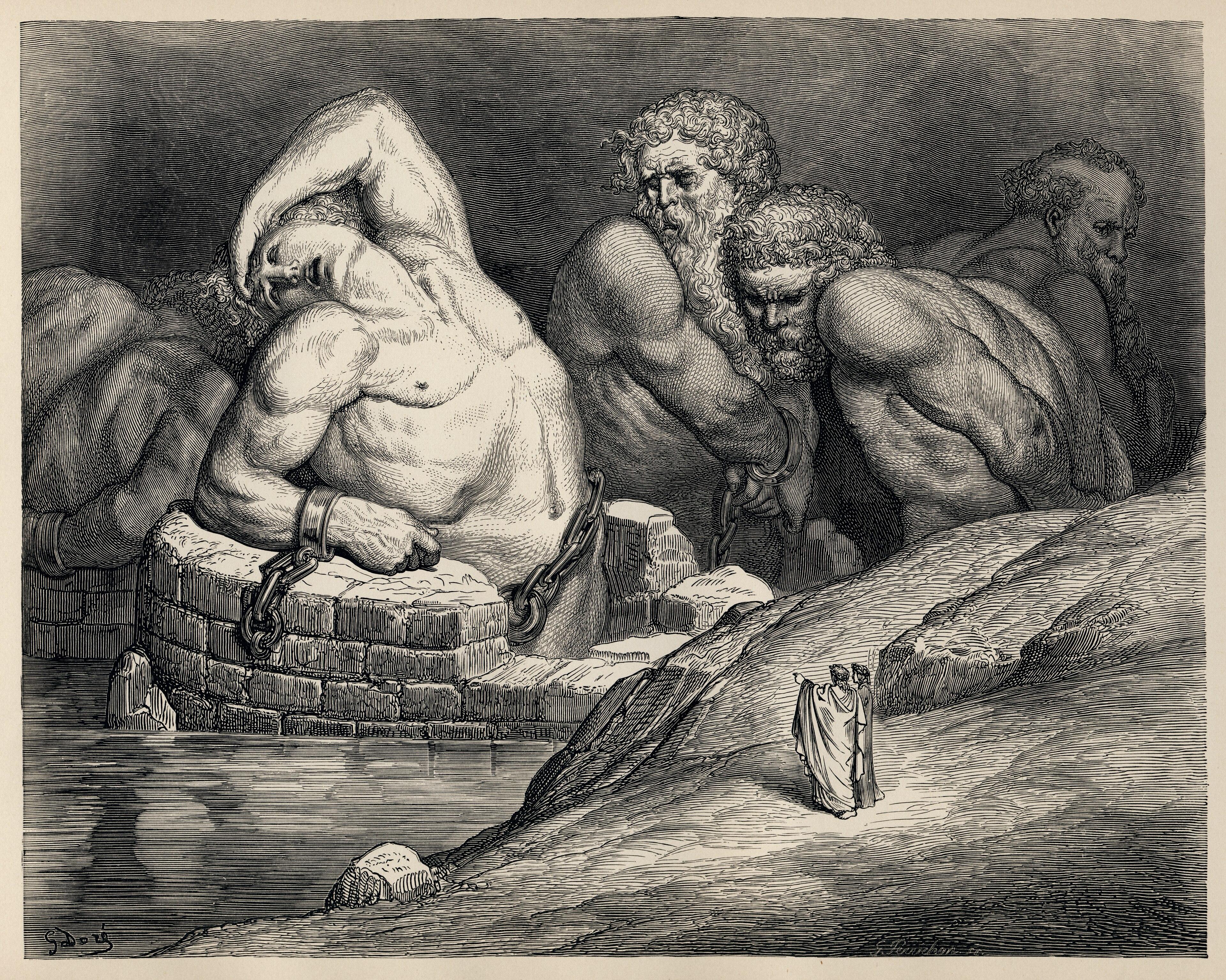
The Giants
Gustave Doré · 1861
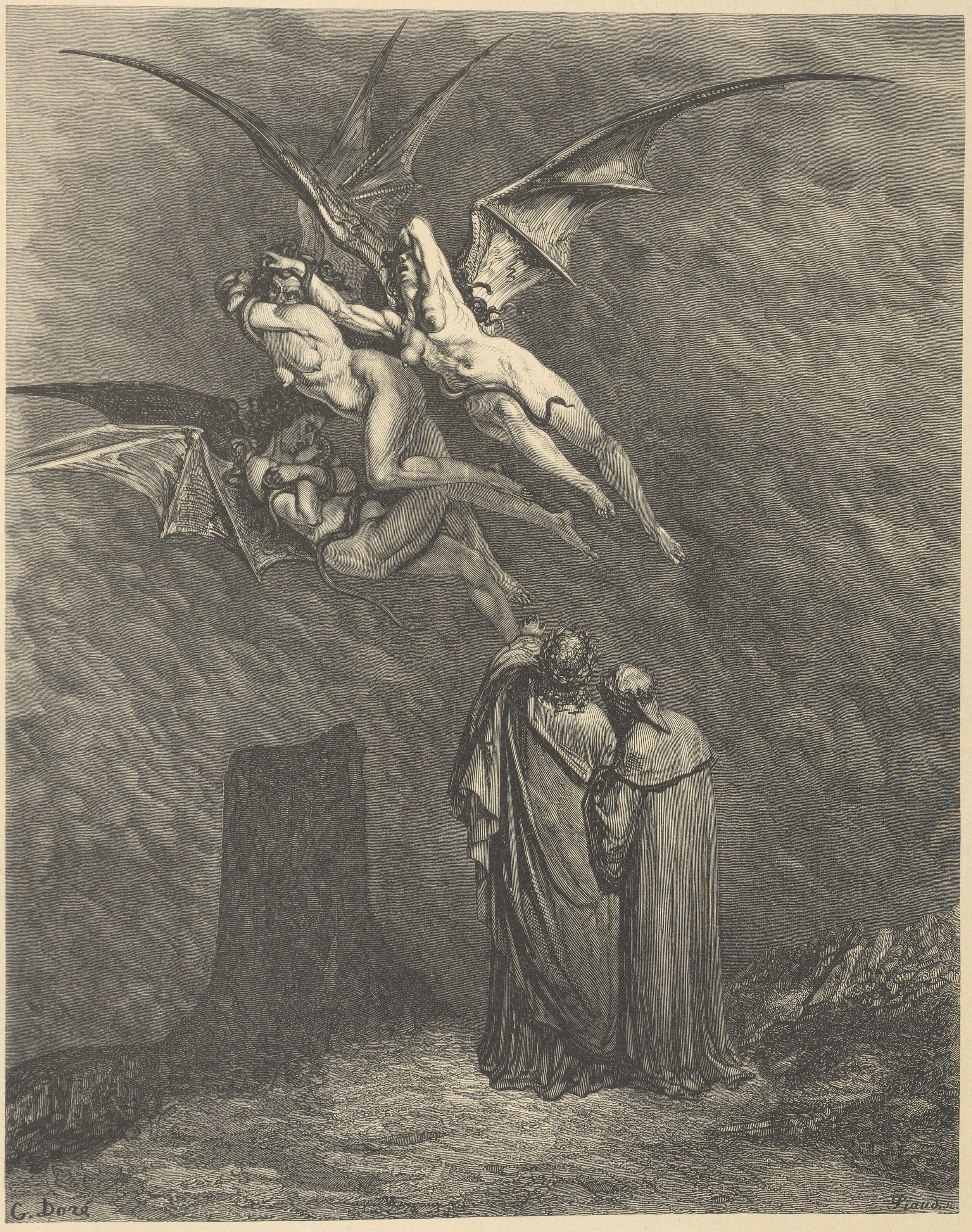
The Furies at the Gates of Dis
Gustave Doré · 1861
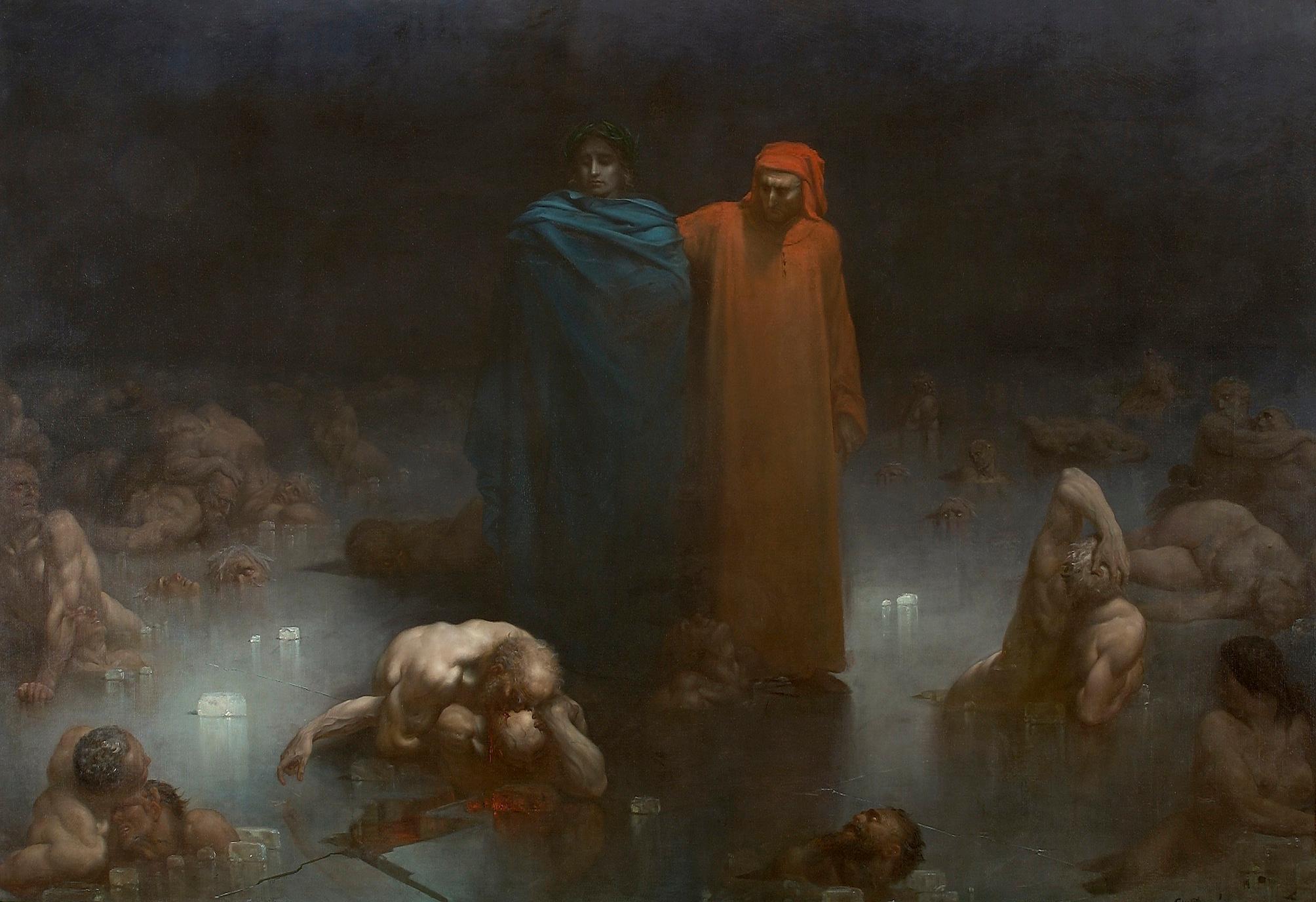
Dante and Virgil in the Ninth Circle of Hell
Gustave Doré · 1861
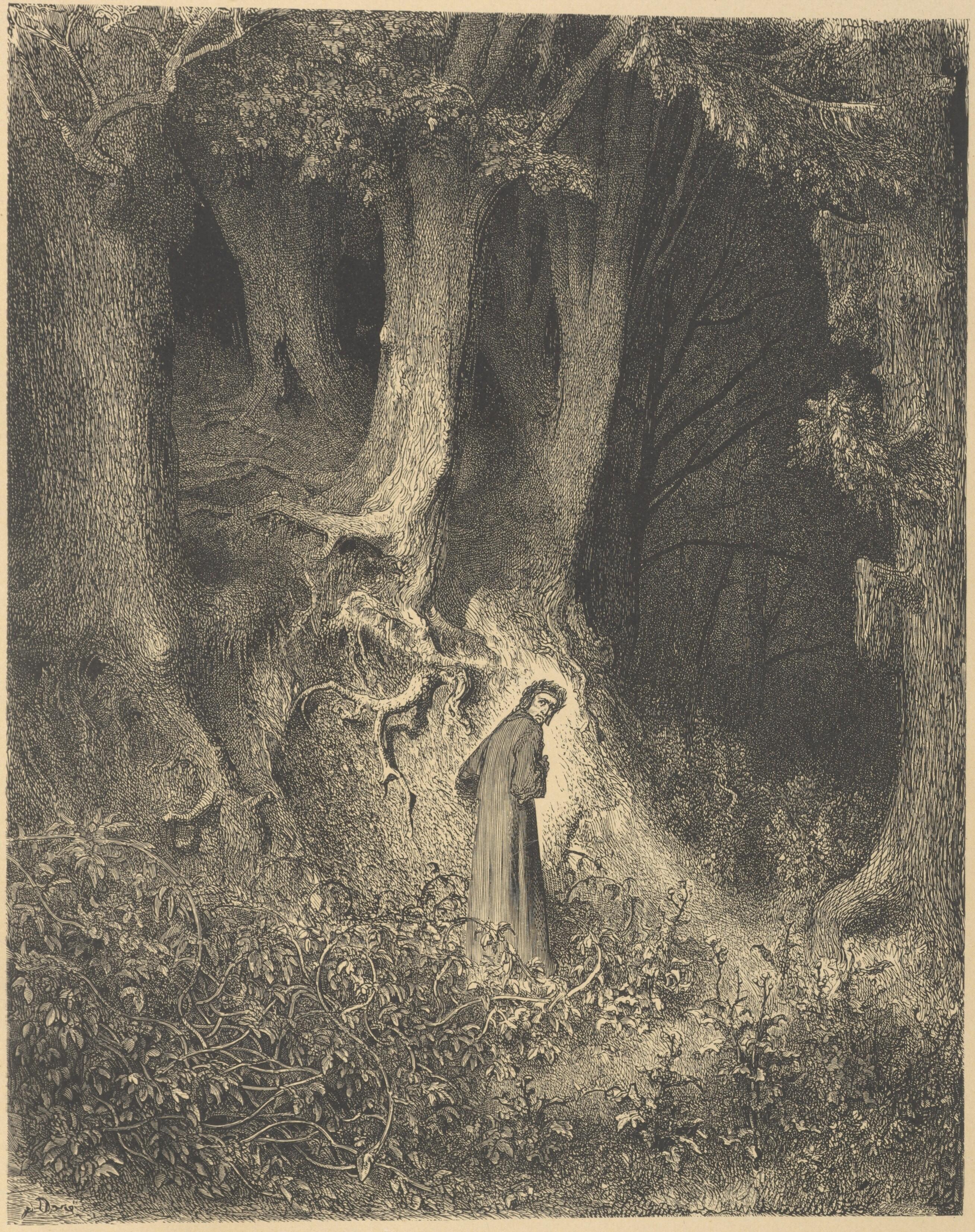
Dante Lost in the Dark Wood
Gustave Doré · 1861
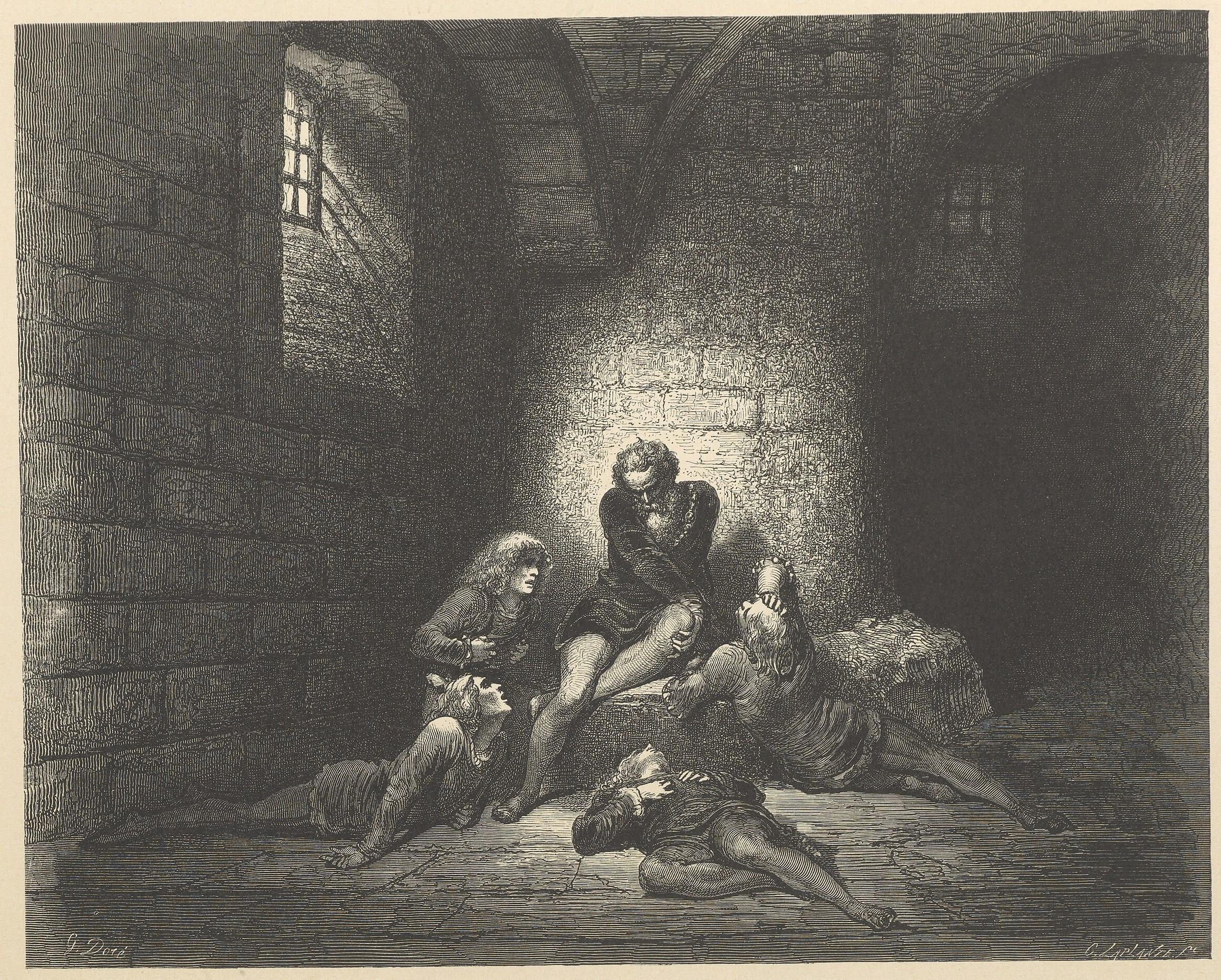
Count Ugolino and His Sons
Gustave Doré · 1861
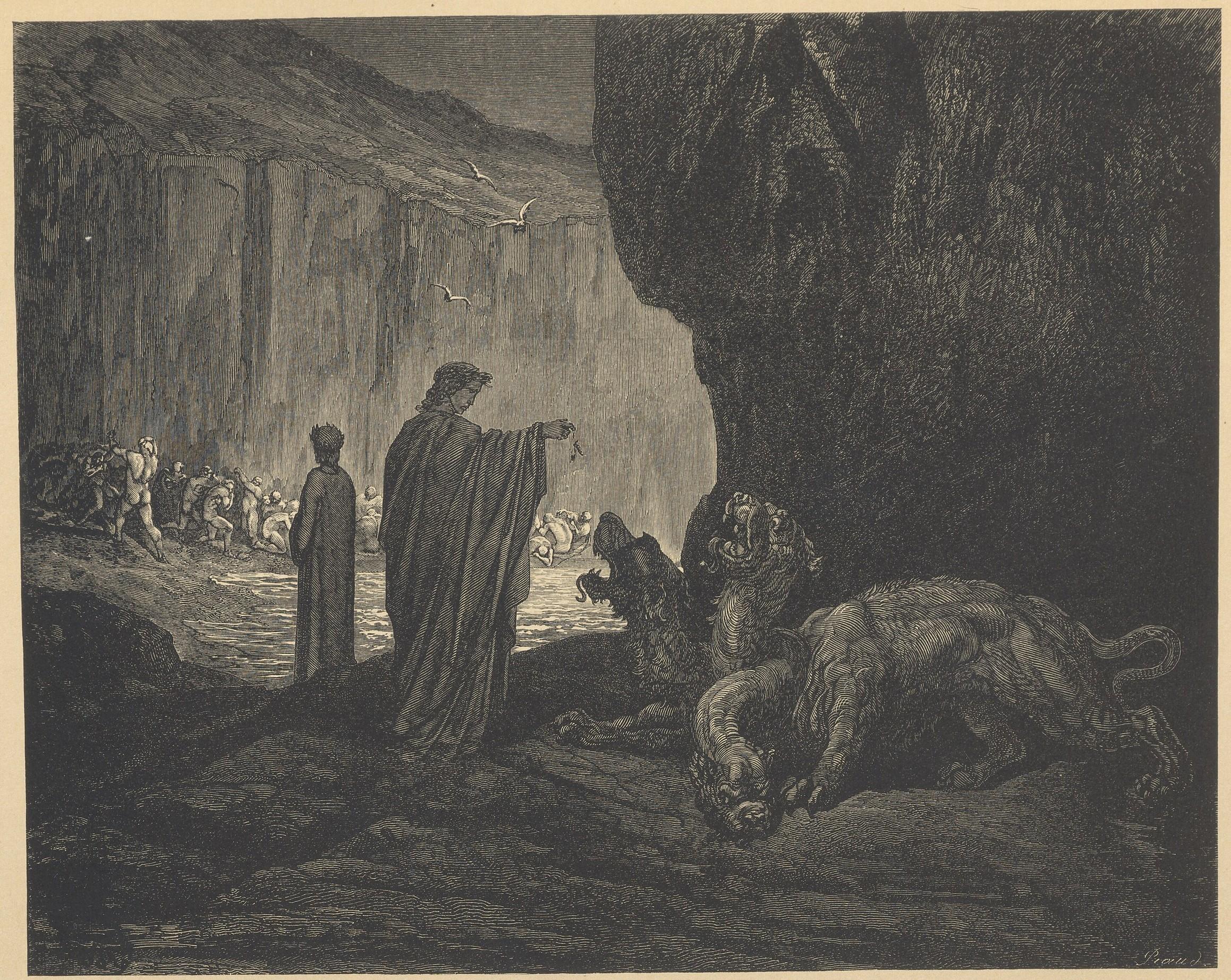
Cerberus
Gustave Doré · 1861
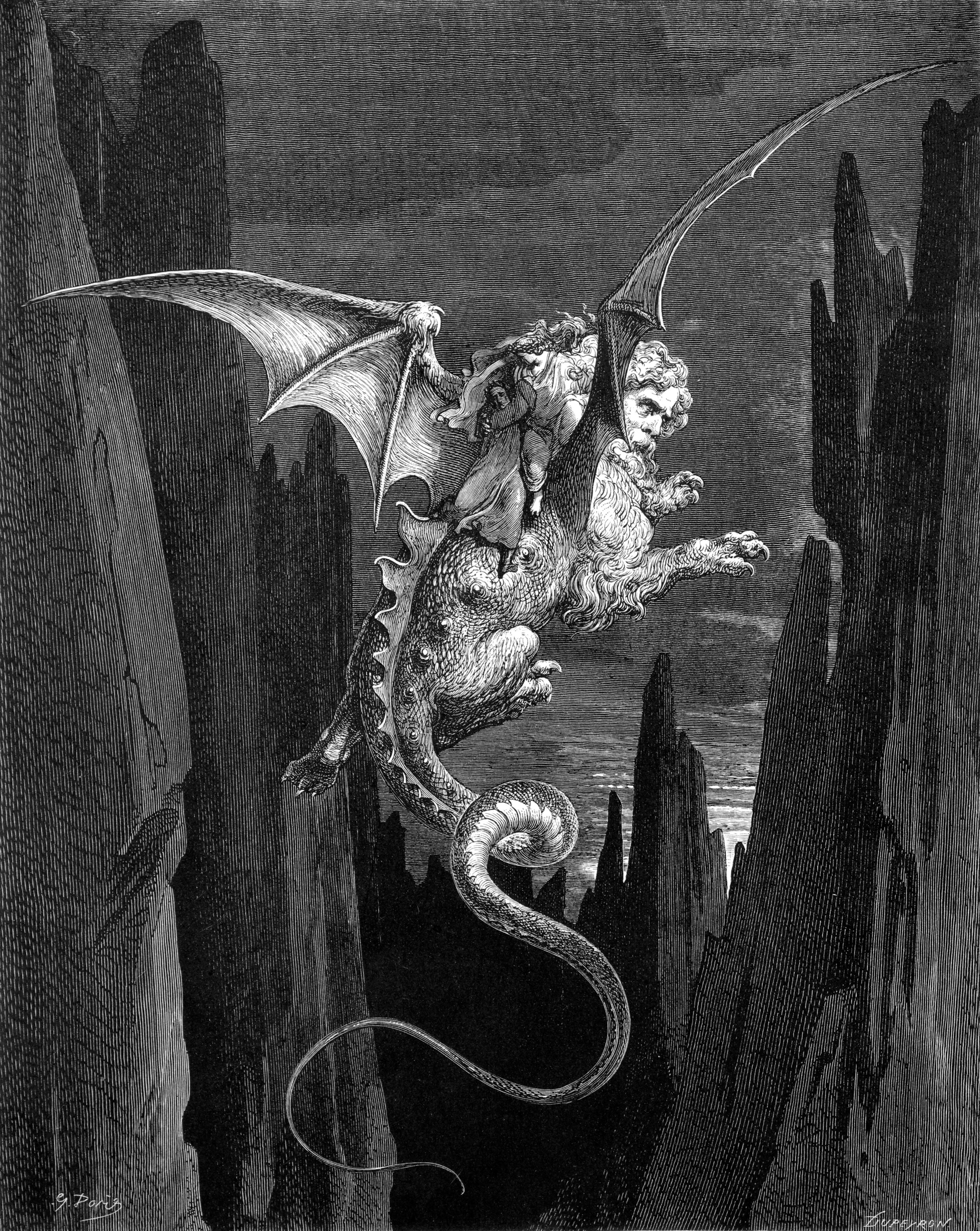
Geryon
Gustave Doré · 1861
Also from 1861
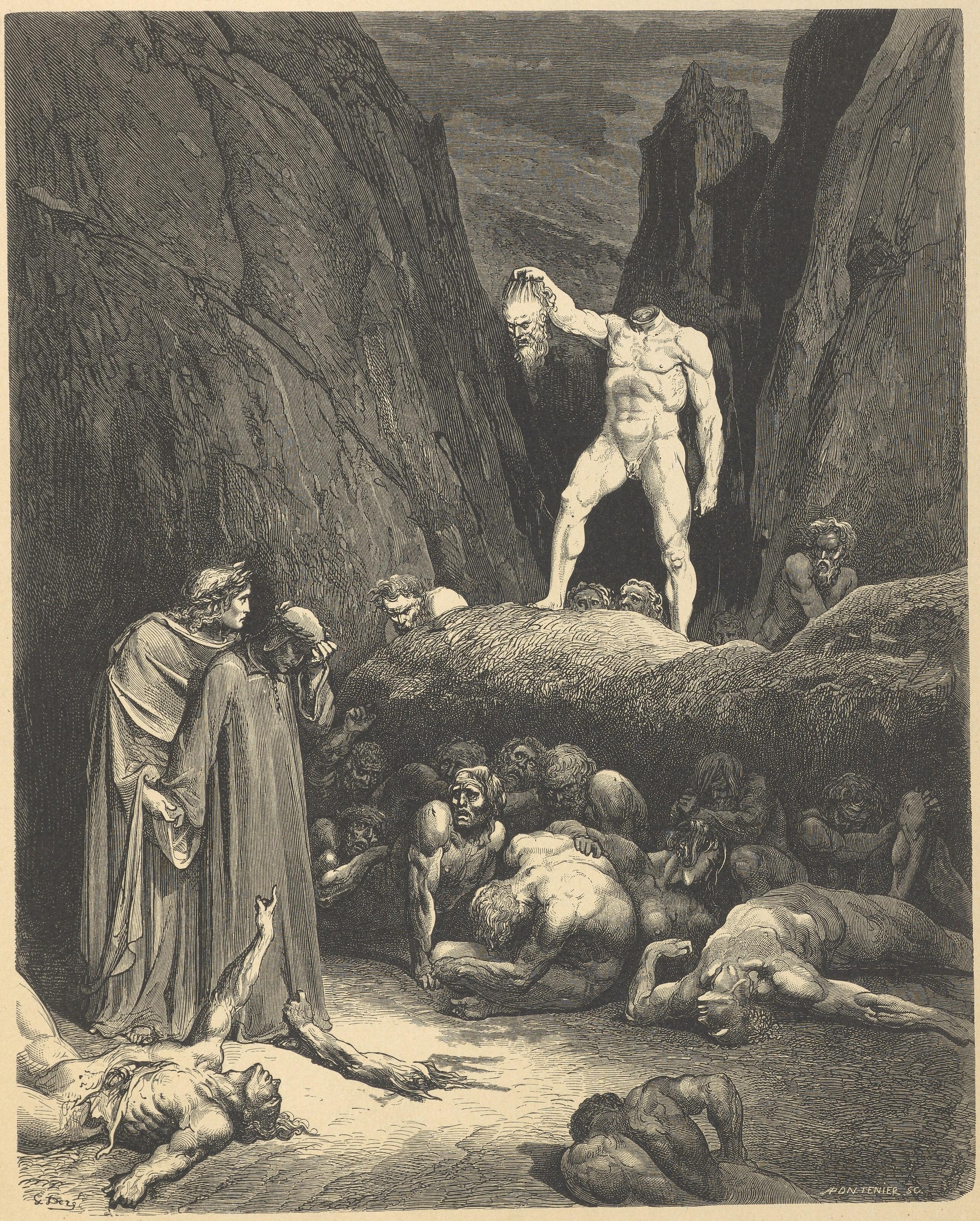
Bertran de Born Holding His Head
Gustave Doré · 1861
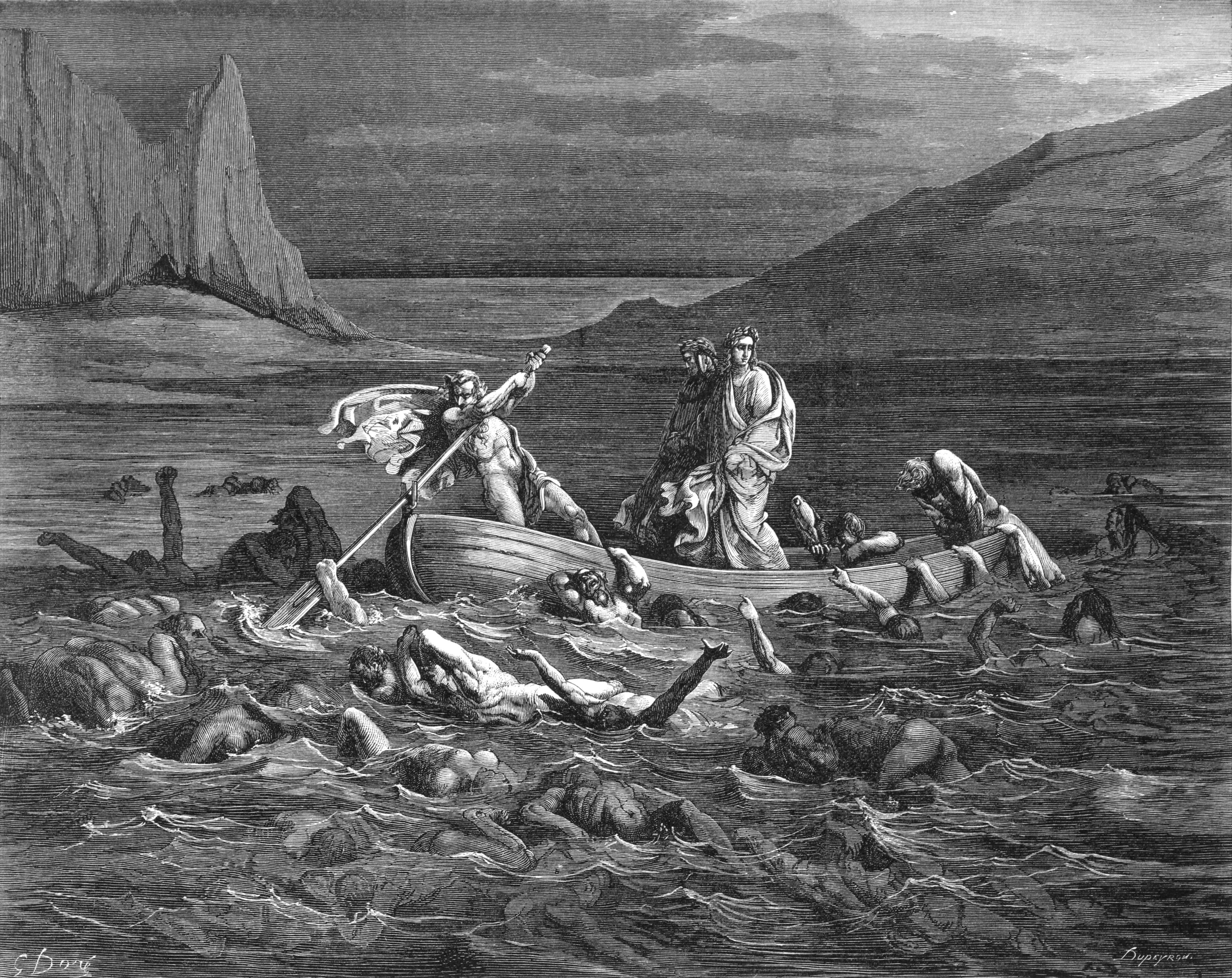
Crossing the Styx (Filippo Argenti)
Gustave Doré · 1861
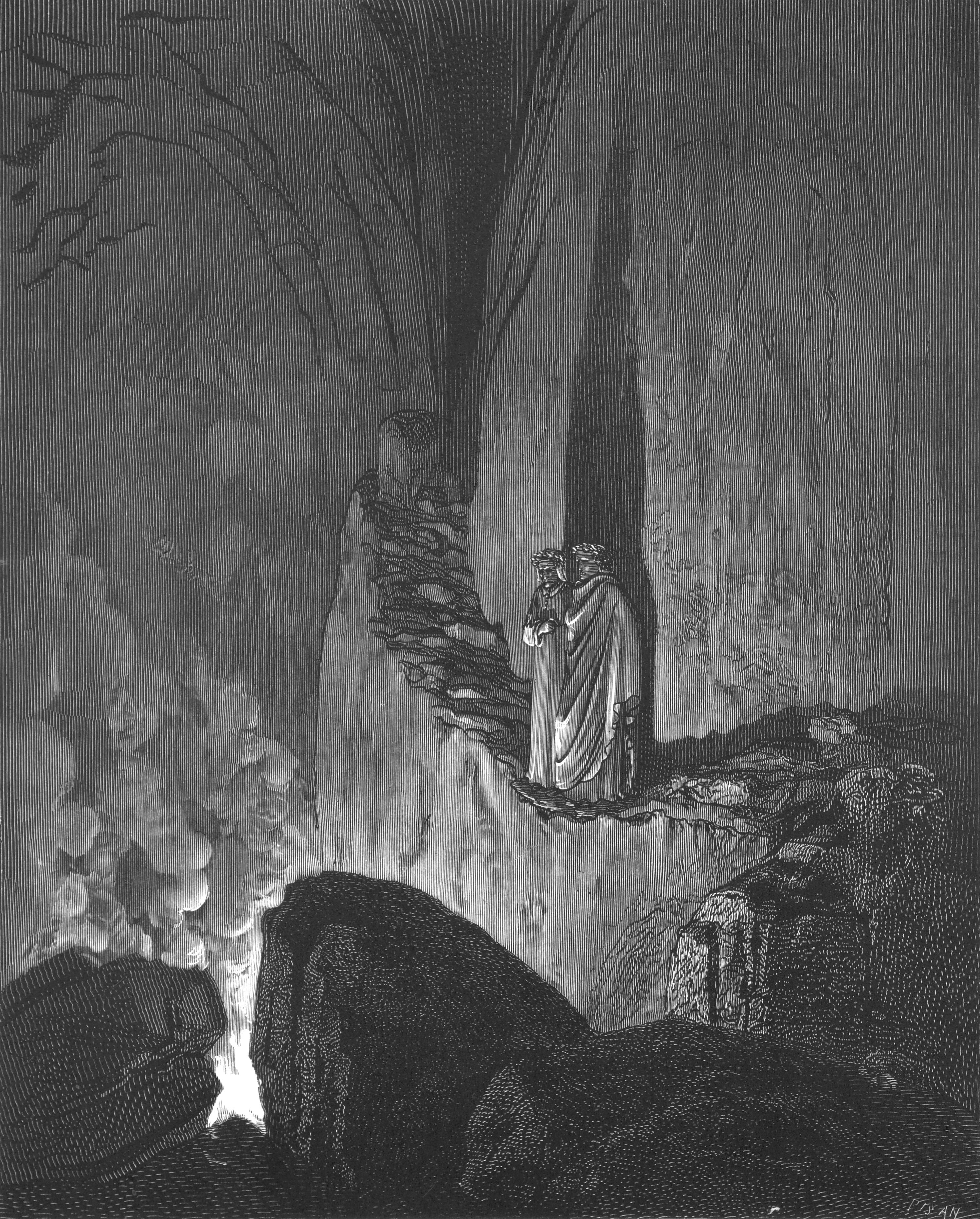
Ulysses and Diomedes
Gustave Doré · 1861
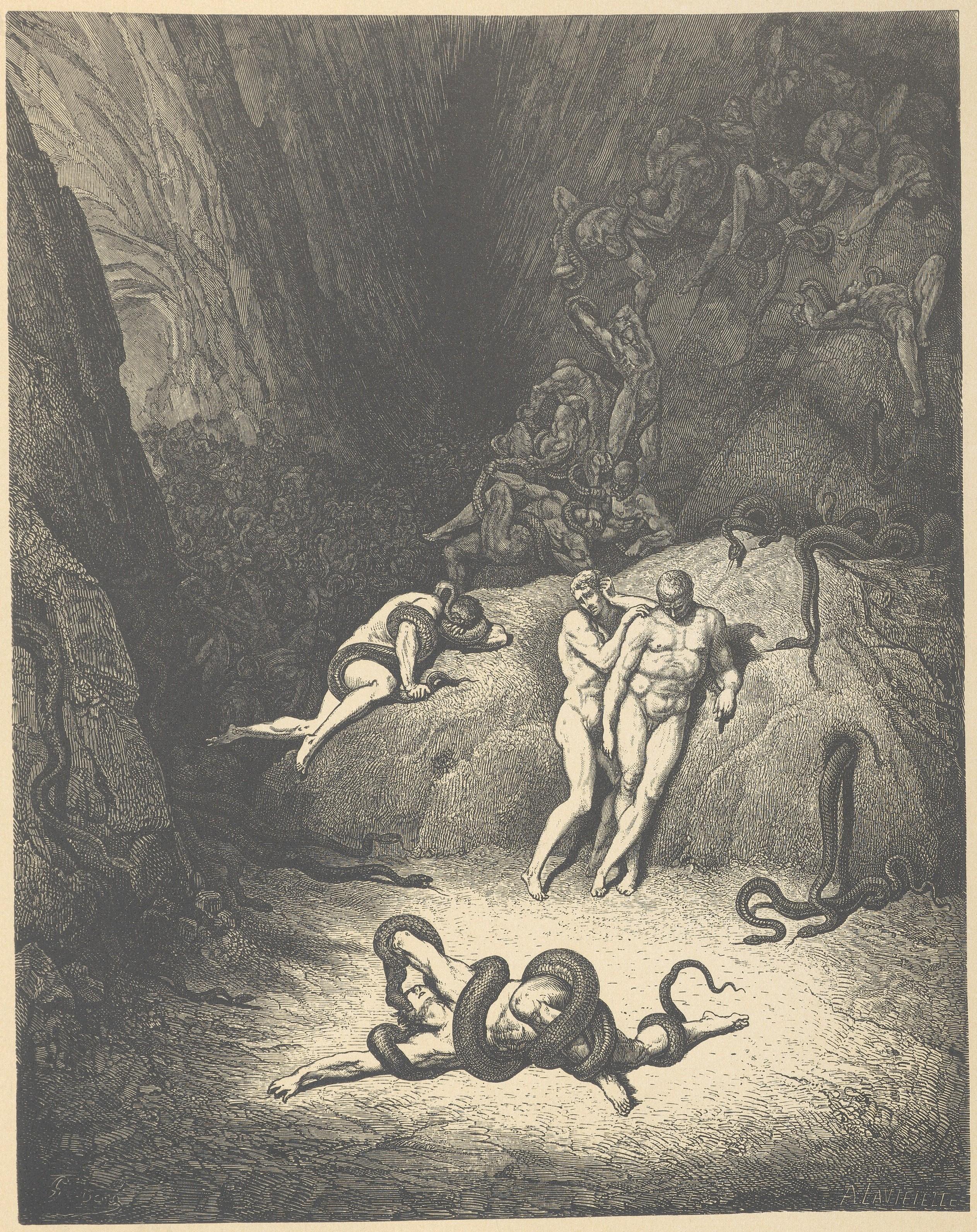
The Thieves and the Serpents
Gustave Doré · 1861
Caiaphas Crucified
Gustave Doré · 1861
Paolo and Francesca
Gustave Doré · 1861
Minos, Judge of the Damned
Gustave Doré · 1861
The Gate of Hell (Abandon All Hope)
Gustave Doré · 1861
Related works
Paolo and Francesca
Gustave Doré · 1861
Minos, Judge of the Damned
Gustave Doré · 1861
The Empyrean (Rosa Celeste)
Gustave Doré · 1868
Once Upon a Midnight Dreary
Gustave Doré · 1884
The Albatross
Gustave Doré · 1876
Satan Approaching the Confines of the Earth
Gustave Doré · 1866
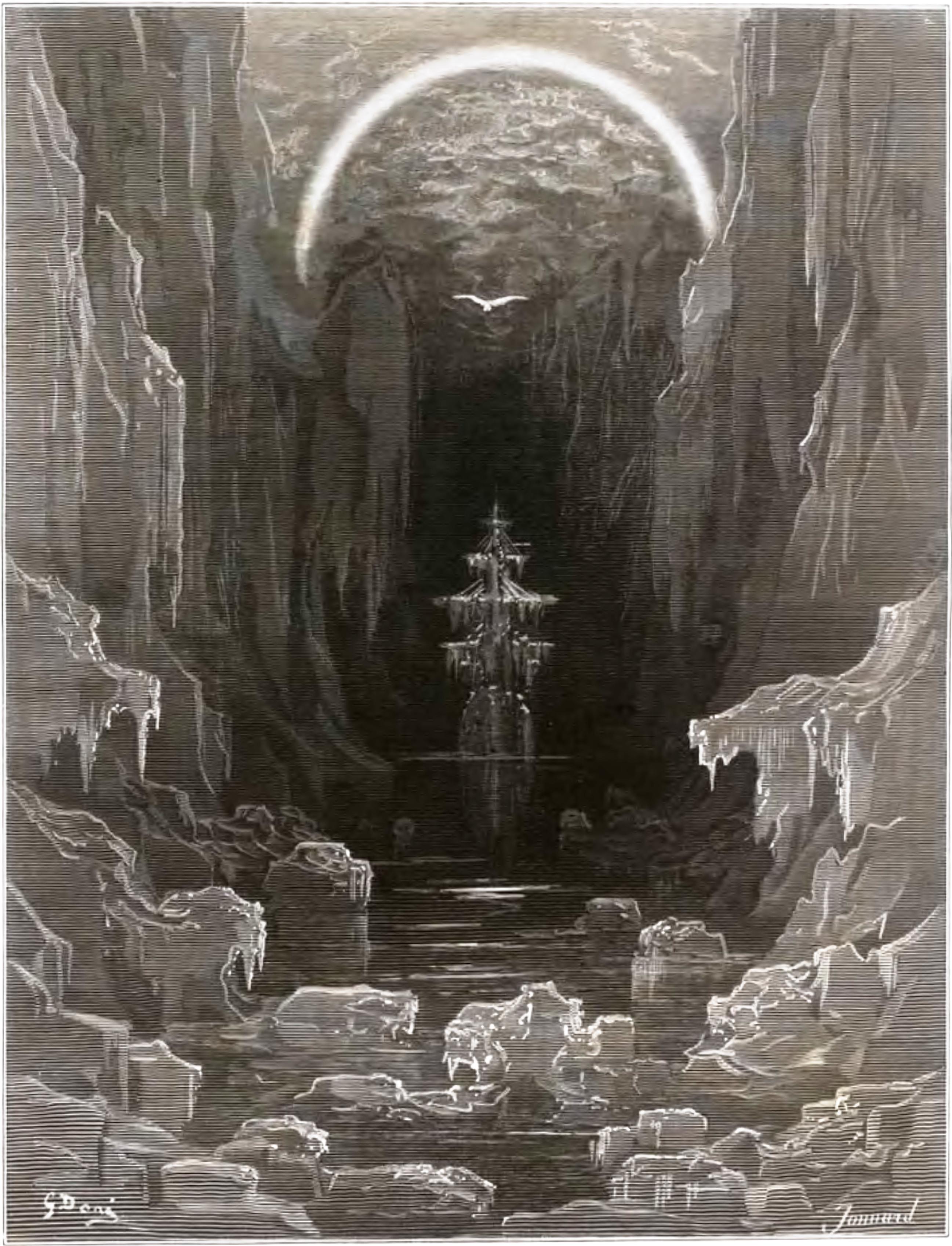
The Ship in the Ice
Gustave Doré · 1876
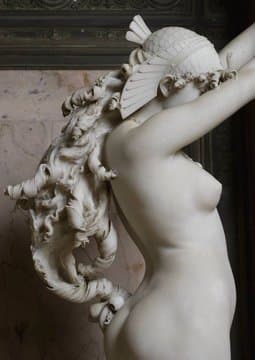
Berenice's Tresses (La Chioma di Berenice)
Ambrogio Borghi · 1878