Ulysses and Diomedes
Gustave Doré, 1861
Ulysses and Diomedes is Gustave Doré's 1861 wood engraving for Inferno, Canto XXVI: Dante and Virgil look down from a high ledge into the eighth ditch of Hell, where the false counselors, Ulysses and Diomedes among them, burn hidden in flames.
- Artist
- Gustave Doré
- Date
- 1861
- Medium
- Wood engraving
- Movement
- Romanticism
- Themes
- Literature & Poetry, Mythology, The Macabre, Dark Academia
Ulysses and Diomedes is the name usually given to Gustave Doré's wood engraving for Canto XXVI of Dante's Inferno, published in Paris in 1861, in which Dante and Virgil look down from a ledge into the eighth ditch of Malebolge, where the false counselors move about wrapped in flames. Among those flames, Dante learns, are the Greek heroes Ulysses and Diomedes. Doré's plate is notable for what it refuses to show: there is no hero in it, only darkness, rock and fire. It is one of the most atmospheric of Doré's Inferno illustrations.
What you are looking at
The plate is tall and almost entirely made of vertical lines. Sheer walls of rock rise to the top edge, so high that the cavern seems to have no roof; a thick black column of stone stands at the center like a pillar. Halfway up, on a narrow ledge that winds around it, stand the two poets, small, pale and close together. Dante, nearer the drop, holds one hand to his chest and peers down; Virgil, wrapped in his mantle, looks down beside him.
Below them, at the left, clouds of smoke and flame boil up out of the depths, and in the foreground a single tongue of white fire flares between two black boulders. The fire is the only pure white in the picture. There are no figures inside it, no faces, no Ulysses. The engraver's name, "PISAN", is cut into the lower right corner.
Look at the cutting. Nearly every surface, rock, smoke and sky alike, is built from close parallel lines running top to bottom, and the tones change only with the thickness of the line. The effect is like a curtain of falling dark, against which the flames glow.
The passage: Canto XXVI
In the eighth bolgia the poets see the ditch glittering with flames "As many as the hind ... Seeth the glow-worms down along the valley" (XXVI.25–29, Longfellow's translation). Each flame hides a sinner: "every flame a sinner steals away" (XXVI.42). Dante leans out so far that, he says, he would have fallen if he had not seized a rock. Virgil explains:
"Within the fires the spirits are; Each swathes himself with that wherewith he burns." (XXVI.47–48)
Dante asks about one flame "which comes so cleft / At top" (XXVI.52–53), and Virgil names its two occupants: "Ulysses and Diomed, and thus together / They unto vengeance run as unto wrath" (XXVI.56–57). They suffer for the trick of the wooden horse, the deception of Achilles and the theft of the Palladium. Then the larger horn of the flame speaks, and Ulysses tells of his last voyage beyond the Pillars of Hercules, urging his crew: "Ye were not made to live like unto brutes, / But for pursuit of virtue and of knowledge" (XXVI.119–120). Within sight of a great mountain their ship is struck by a whirlwind "Until the sea above us closed again" (XXVI.142).
How Doré staged it
Other illustrators went for the twin flame itself, as William Blake did in the 1820s, or for the shipwreck. Doré draws the moment before Ulysses speaks, when Dante is still trying to see. Later English editions captioned the plate with Virgil's words about the spirits "Swathed in confining fire", in Henry Francis Cary's translation, and that is what Doré's image is about: concealment. The sinners who used words to deceive are now hidden inside their own tongues of flame.
The scale does the rest. The poets are tiny against the walls, the fire is far below, and the pillar of rock between them blocks half the view. Doré places us where Dante stands, leaning over an edge into a darkness we cannot read.
How it was made and published
Doré drew the design on the woodblock and Héliodore Pisan, one of his main engravers, cut it. The almost uniform field of vertical lines is a feat of patience and control: a slip of the burin in such an even tint would show at once. The plate appeared in 1861 in Hachette's folio L'Enfer de Dante Alighieri, which Doré financed himself. The impression shown here is from the Berlin edition of 1870, digitized by the National Library of Poland.
What it means
Canto XXVI is one of the most debated in the poem. Ulysses is damned as a fraudulent counselor, yet his speech about knowledge is so moving that readers have often taken him as a hero. Alfred Tennyson's poem "Ulysses" (1842) grew from it, and in If This Is a Man Primo Levi described trying to recite this canto to a fellow prisoner at Auschwitz.
Doré keeps his distance from the hero and stays with the punishment. Set it beside the fires of Farinata earlier in the descent, the mutilated sowers of discord in Bertran de Born, and the shackled titans of The Giants further down. For the Greek stories behind the canto and more by Gustave Doré, see Greek mythology in art.
Questions & answers
What does Doré's Ulysses and Diomedes plate show?
It shows Dante and Virgil on a ledge above the eighth bolgia in Inferno Canto XXVI, looking down at the flames that hide the false counselors. Virgil explains: "Within the fires the spirits are; / Each swathes himself with that wherewith he burns" (XXVI.47–48, Longfellow). Ulysses and Diomedes share one cleft flame.
Why can't you see Ulysses in Doré's engraving?
Dante says each flame hides its sinner completely: "every flame a sinner steals away" (XXVI.42). Doré takes him at his word and shows only fire and smoke below the poets, with no faces in the flames. The plate is about concealment, the fit punishment for those who deceived with words.
When was this Doré engraving made?
It was designed for Doré's illustrated Inferno, published in Paris by Hachette in 1861 as L'Enfer de Dante Alighieri, an edition he financed himself. The same plates were reissued in French, German and English editions; the scan here is from the Berlin edition of 1870.
Who engraved the Ulysses plate?
The block is signed "PISAN" at lower right, for Héliodore Pisan, one of Doré's principal wood engravers. Doré drew on the block and Pisan cut it, building almost the whole image out of fine vertical lines whose thickness controls the tone.
Why are Ulysses and Diomedes in Hell?
Dante places them among the fraudulent counselors for the stratagem of the Trojan horse, the trick that drew Achilles to war, and the theft of the Palladium from Troy. Ulysses also tells of his final voyage beyond the Pillars of Hercules, which ended when his ship sank.
More by Gustave Doré
All works →
The Wood of the Suicides
Gustave Doré · 1861
The Gate of Hell (Abandon All Hope)
Gustave Doré · 1861
Dante Lost in the Dark Wood
Gustave Doré · 1861
The Malebranche Demons
Gustave Doré · 1861
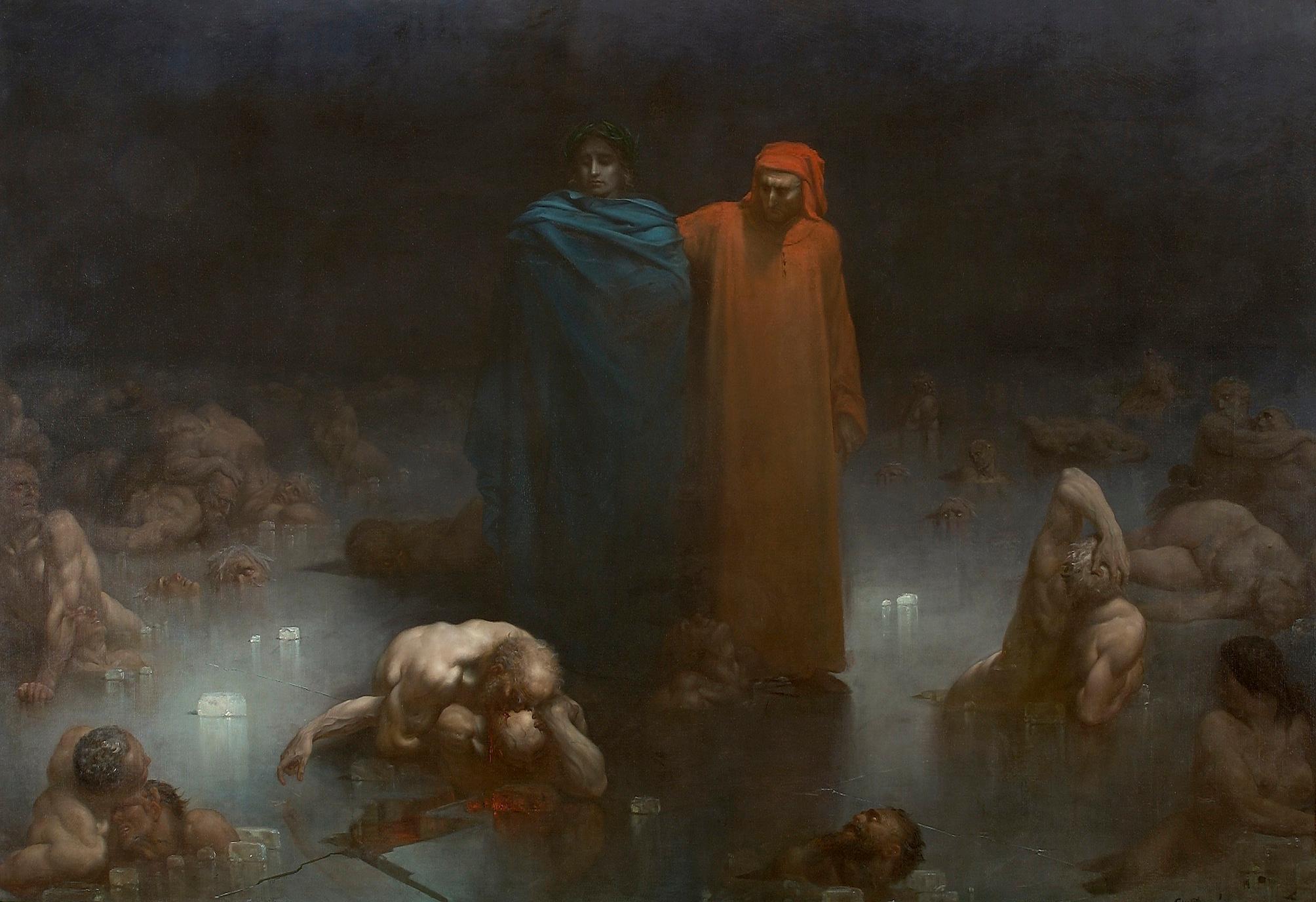
Dante and Virgil in the Ninth Circle of Hell
Gustave Doré · 1861
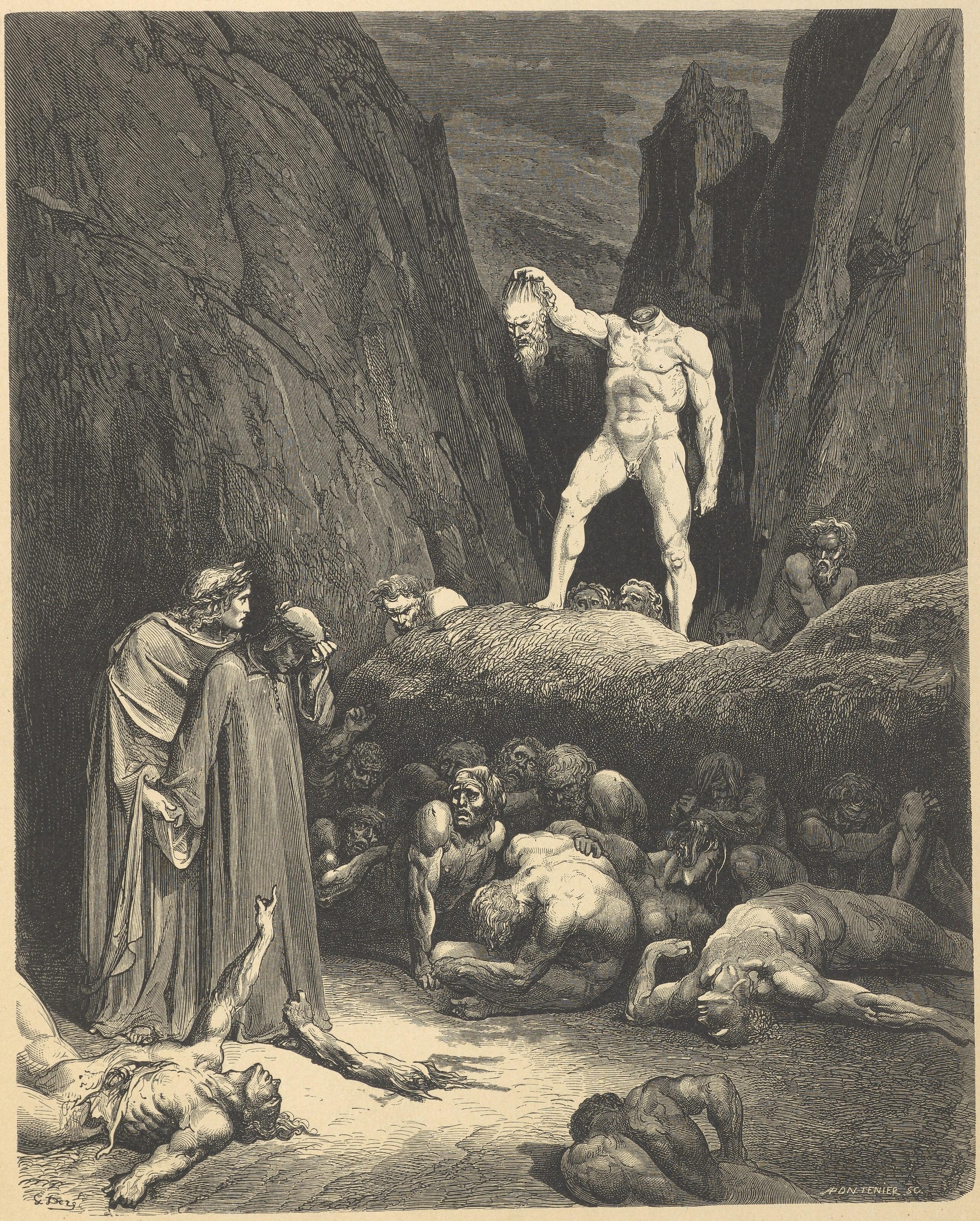
Bertran de Born Holding His Head
Gustave Doré · 1861
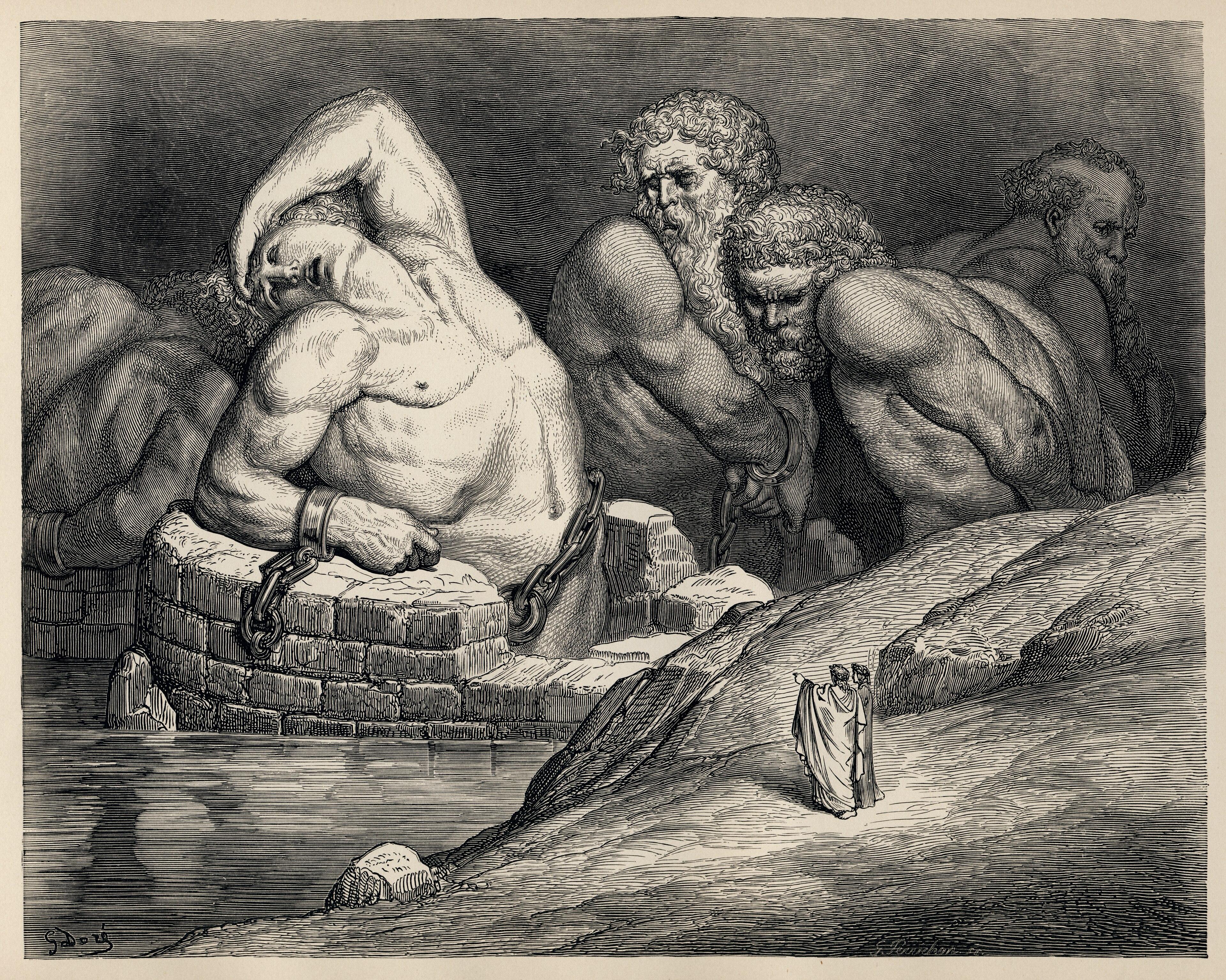
The Giants
Gustave Doré · 1861
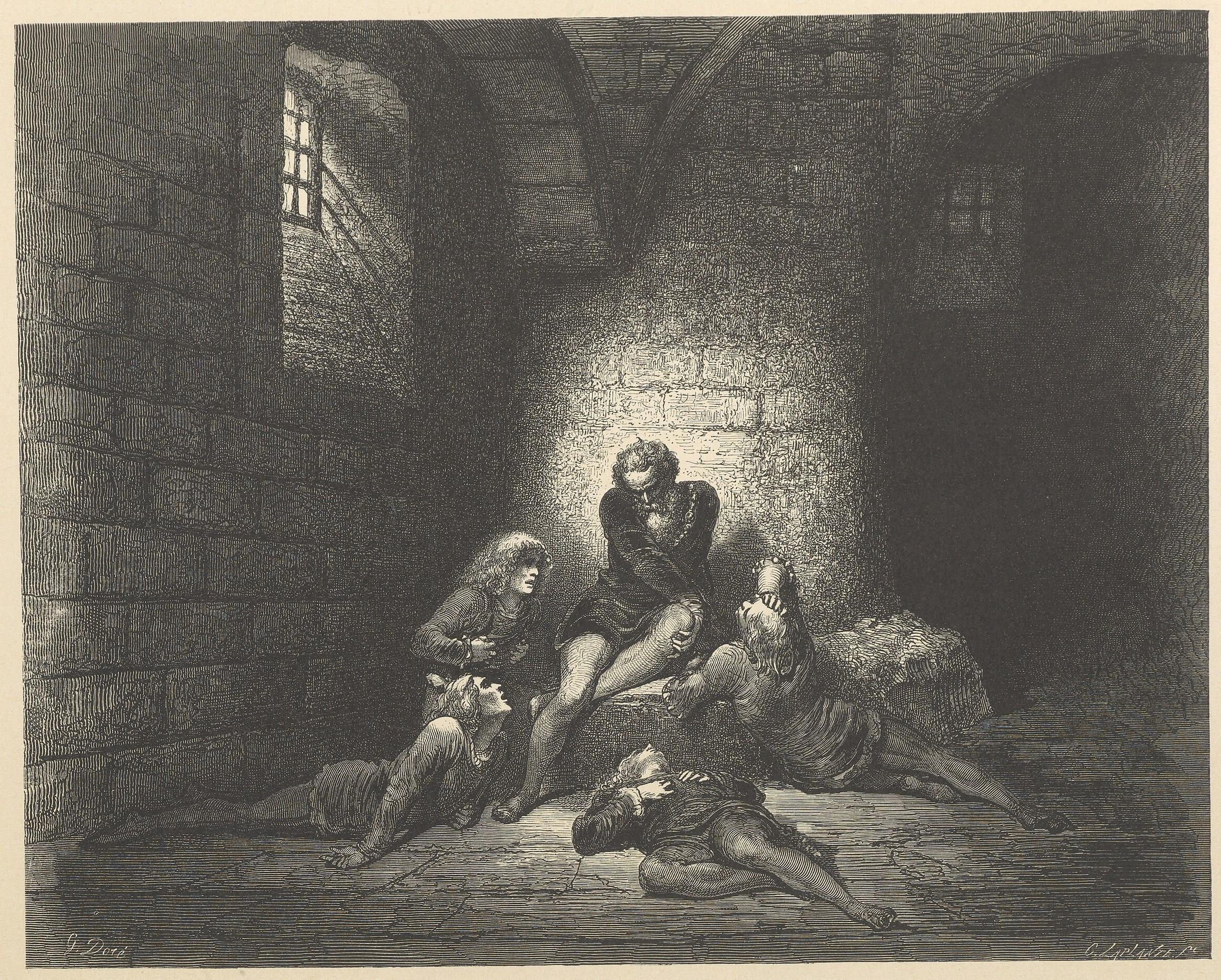
Count Ugolino and His Sons
Gustave Doré · 1861
Also from 1861
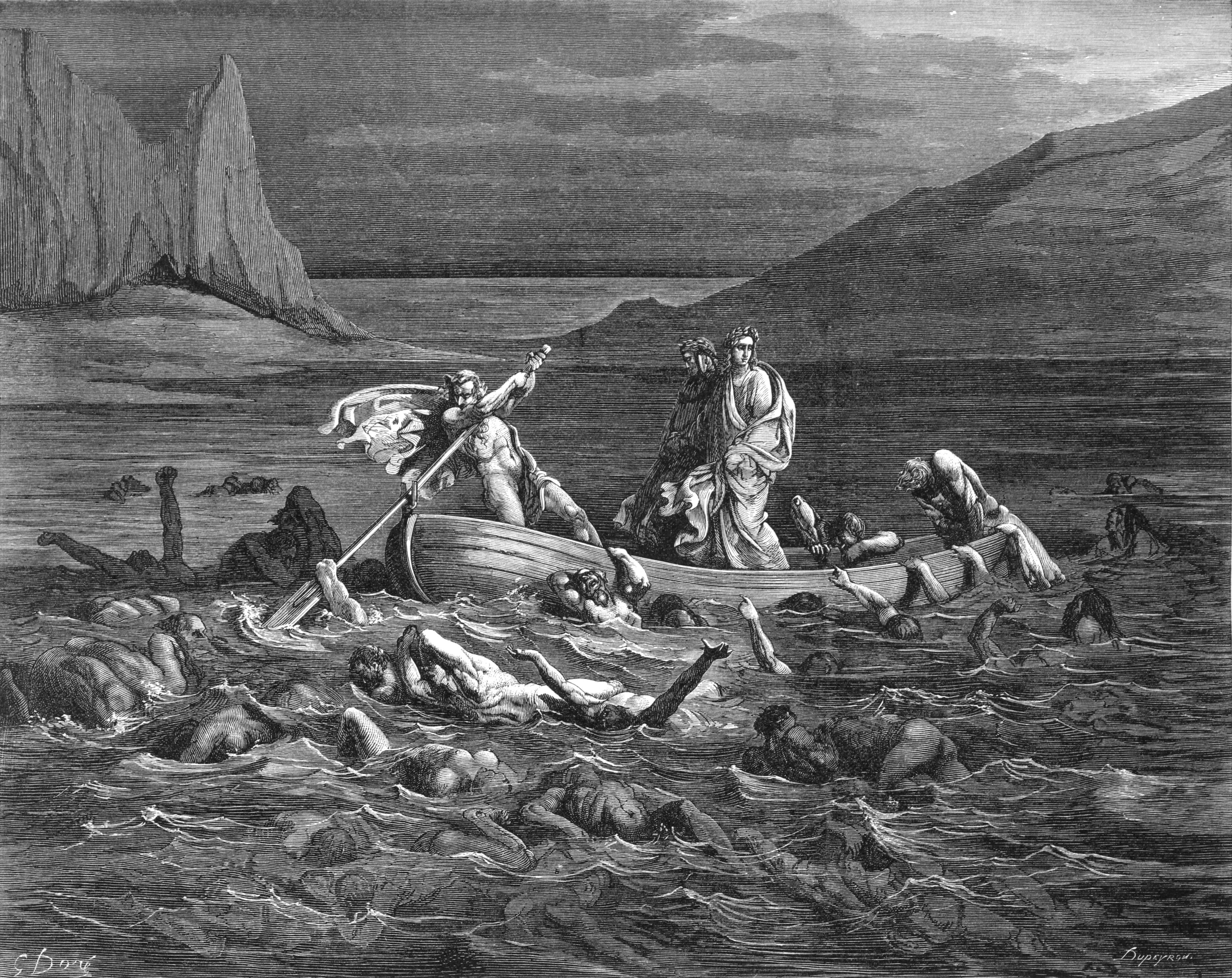
Crossing the Styx (Filippo Argenti)
Gustave Doré · 1861
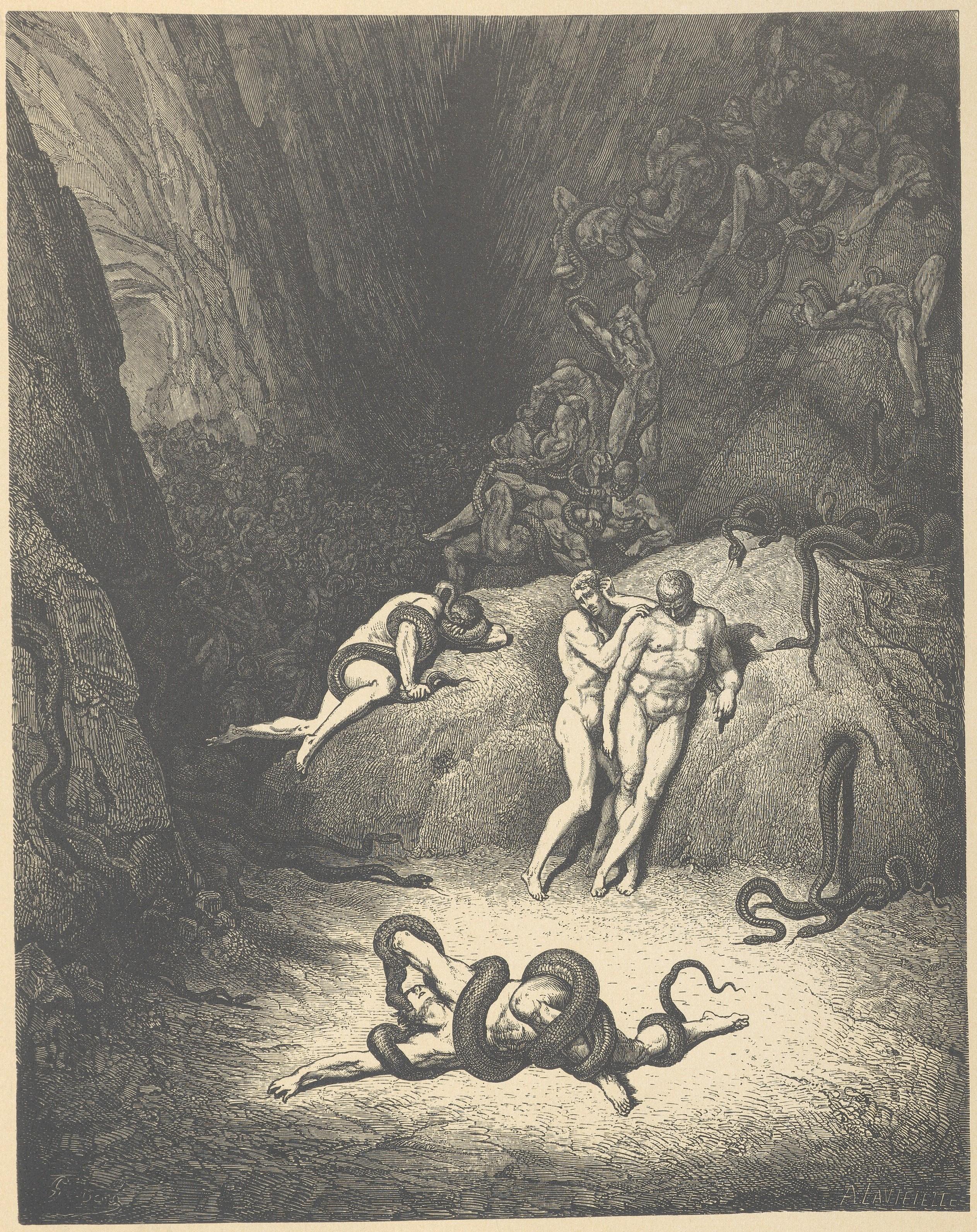
The Thieves and the Serpents
Gustave Doré · 1861
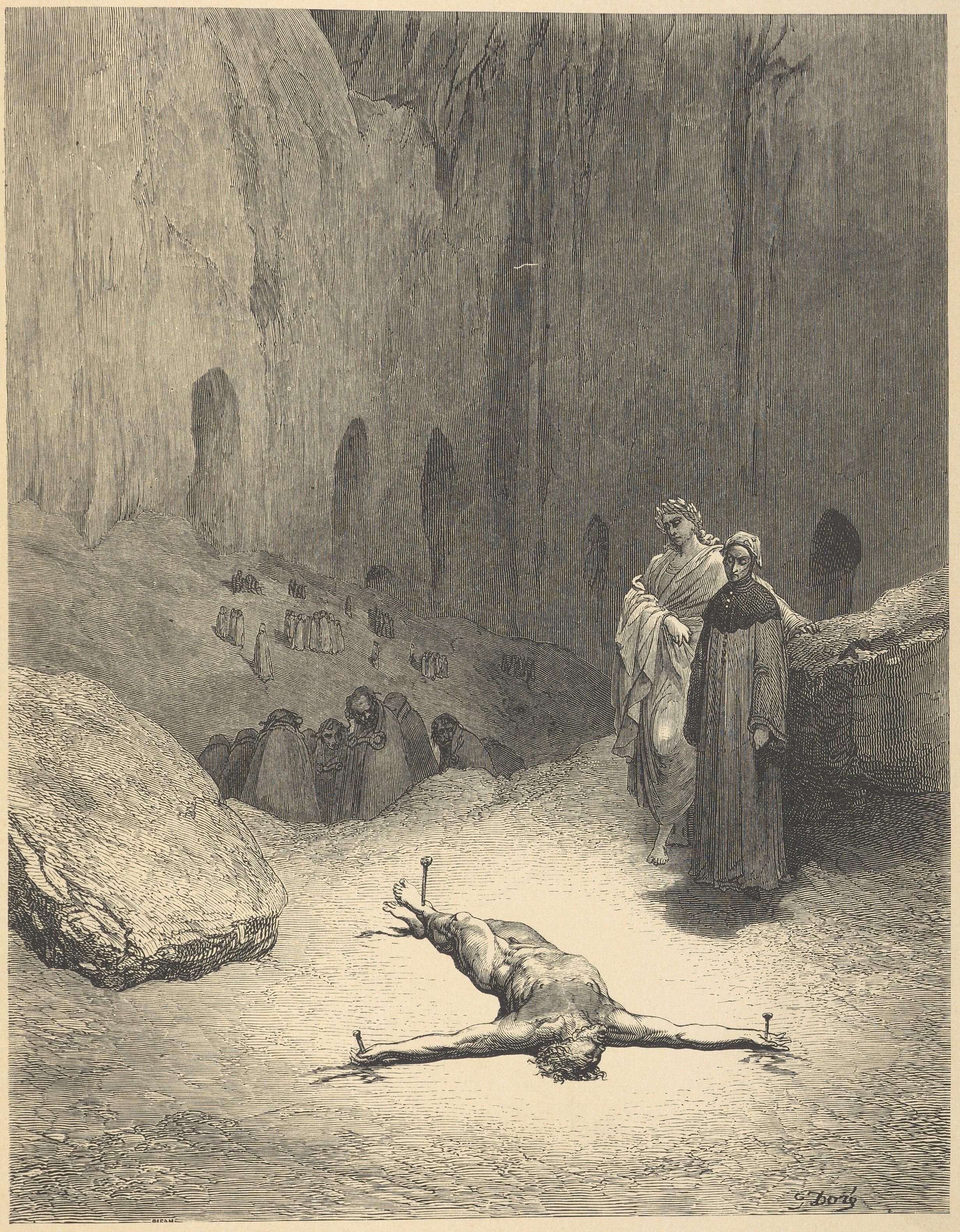
Caiaphas Crucified
Gustave Doré · 1861
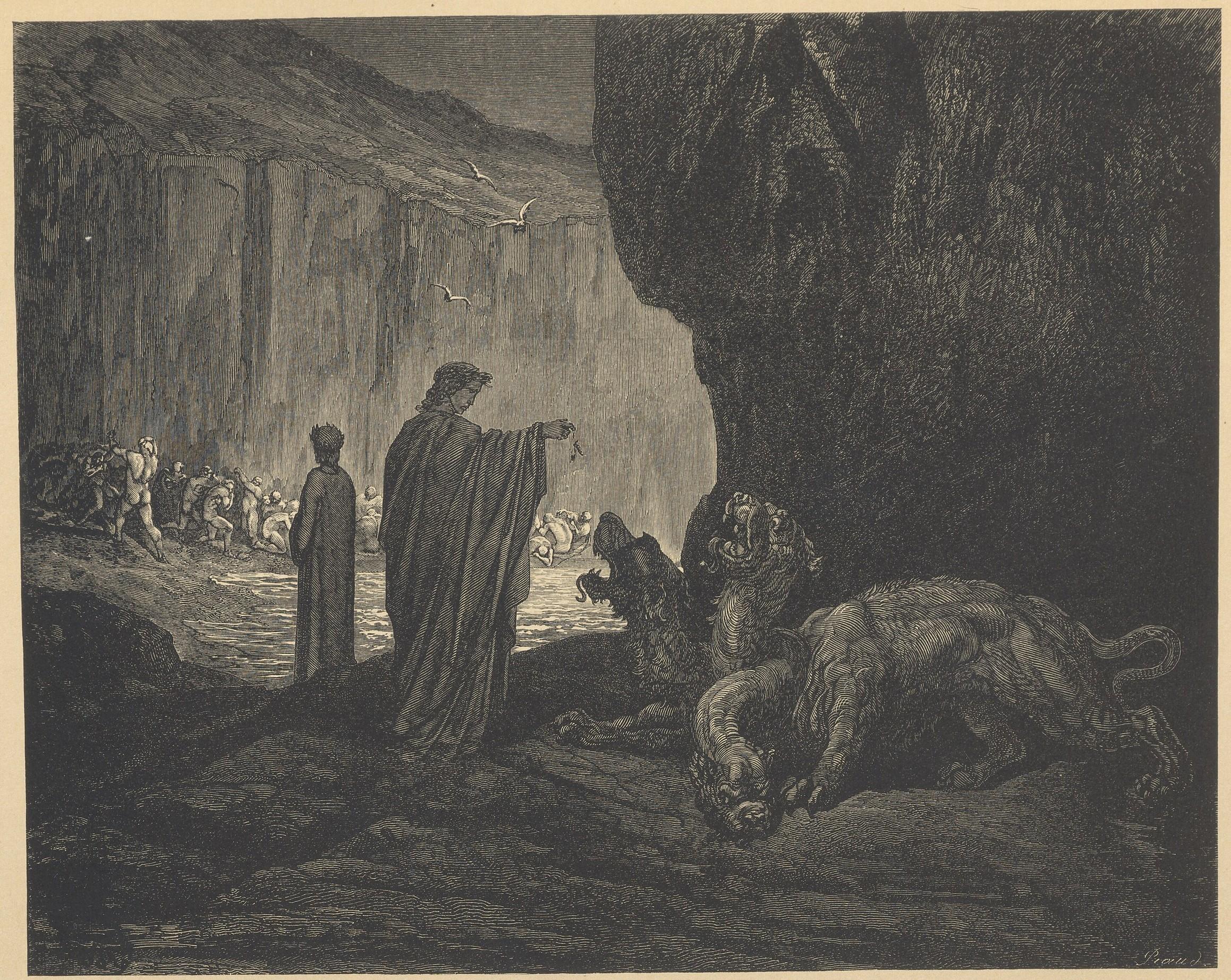
Cerberus
Gustave Doré · 1861
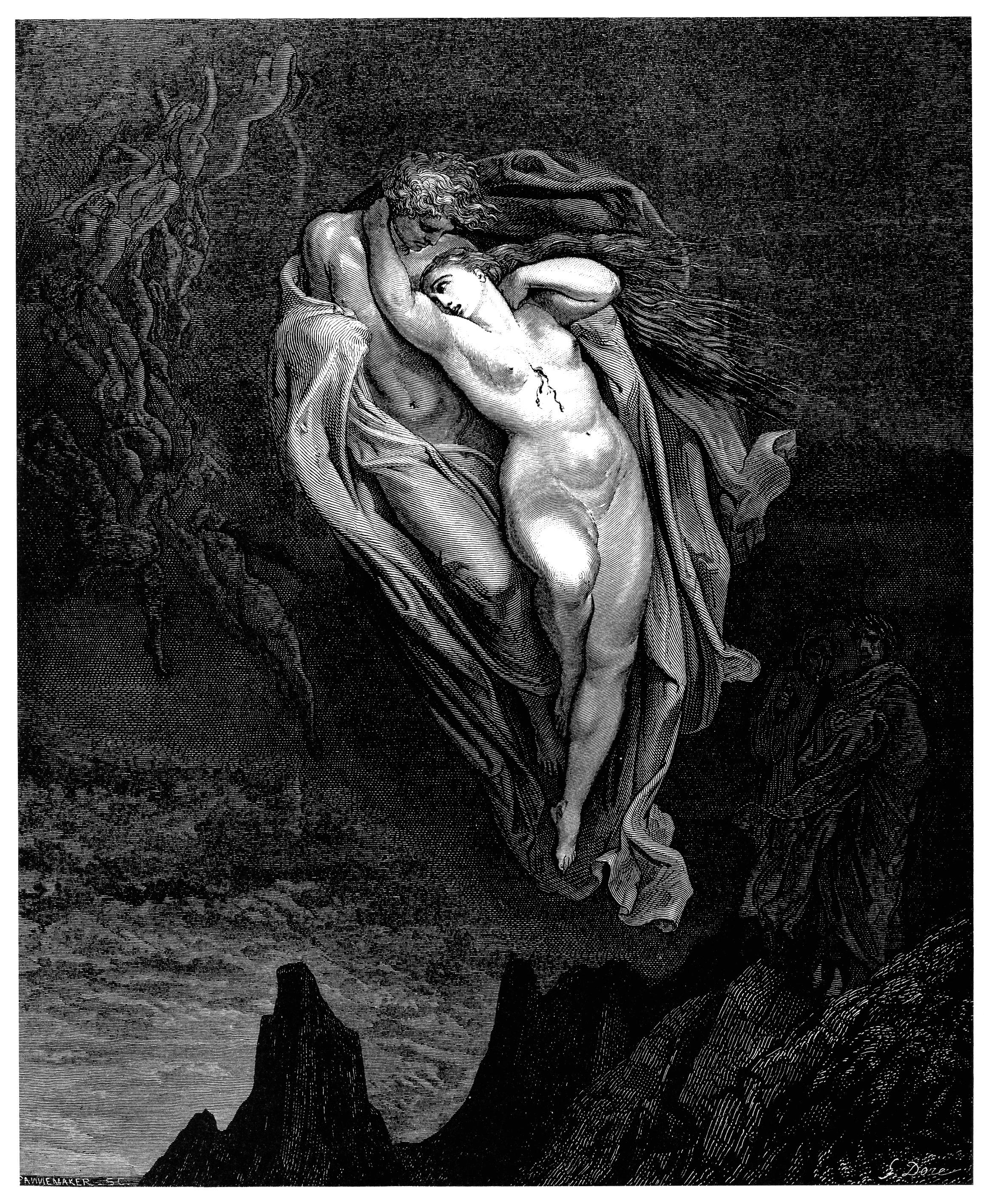
Paolo and Francesca
Gustave Doré · 1861
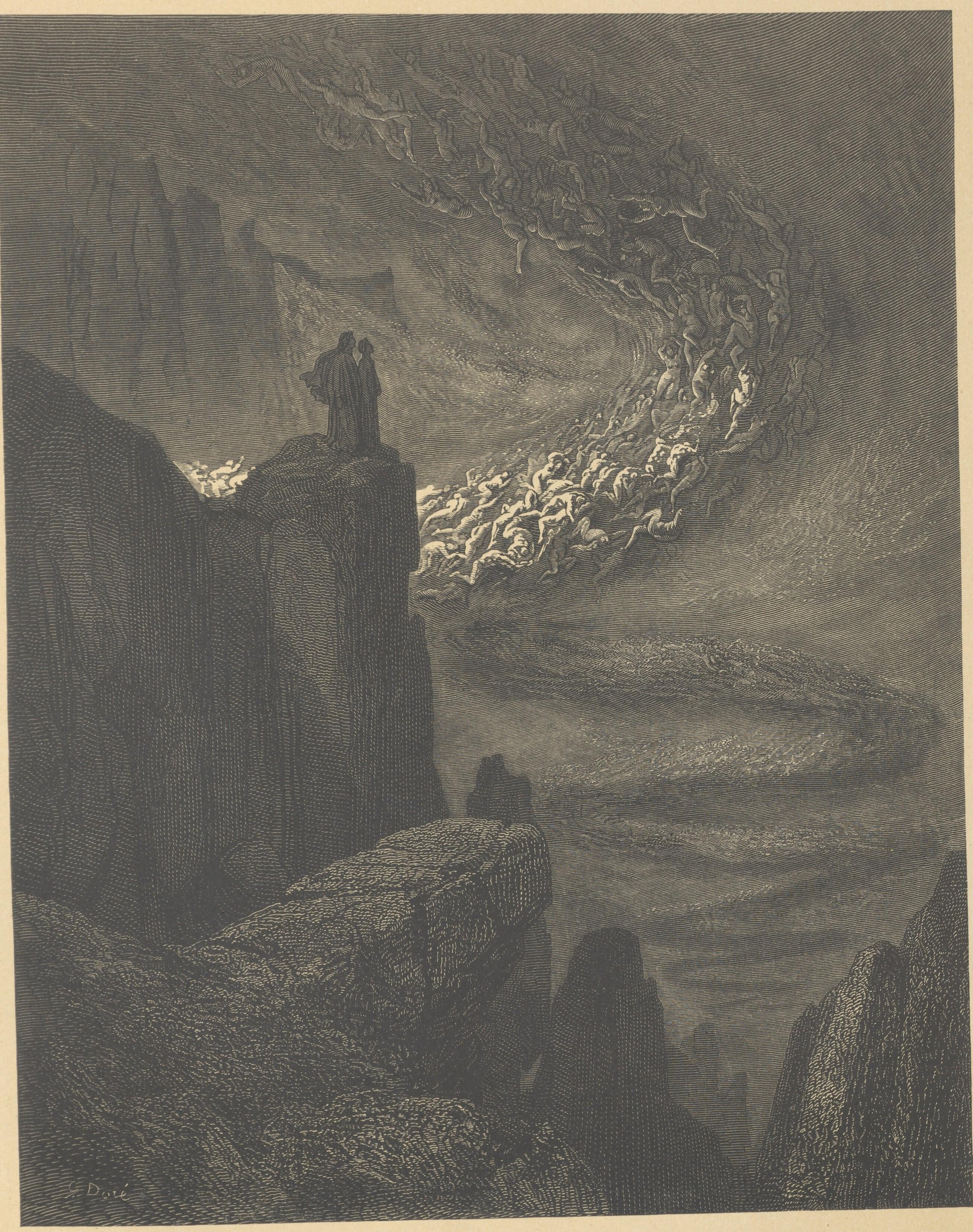
The Whirlwind of the Lustful
Gustave Doré · 1861
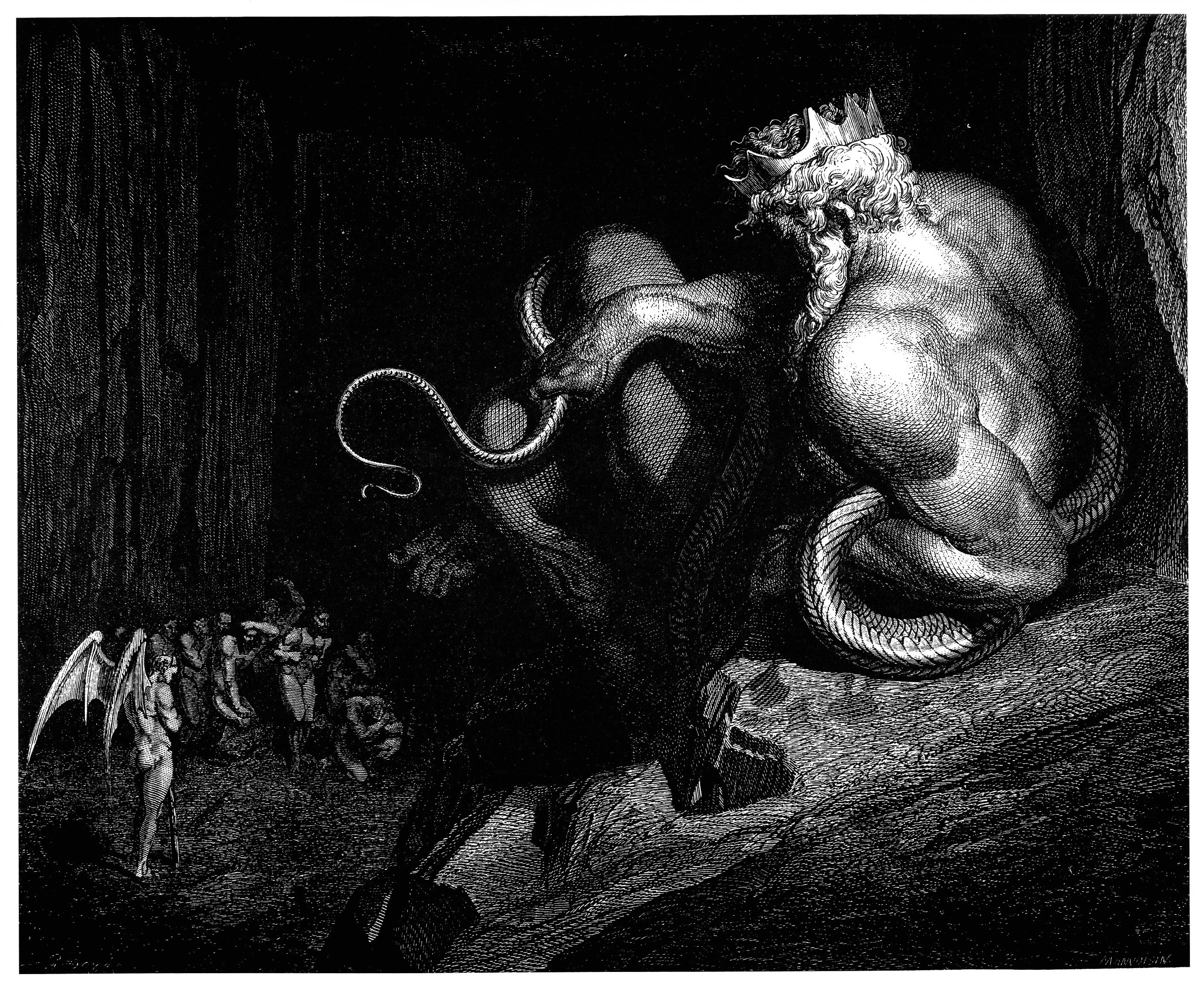
Minos, Judge of the Damned
Gustave Doré · 1861
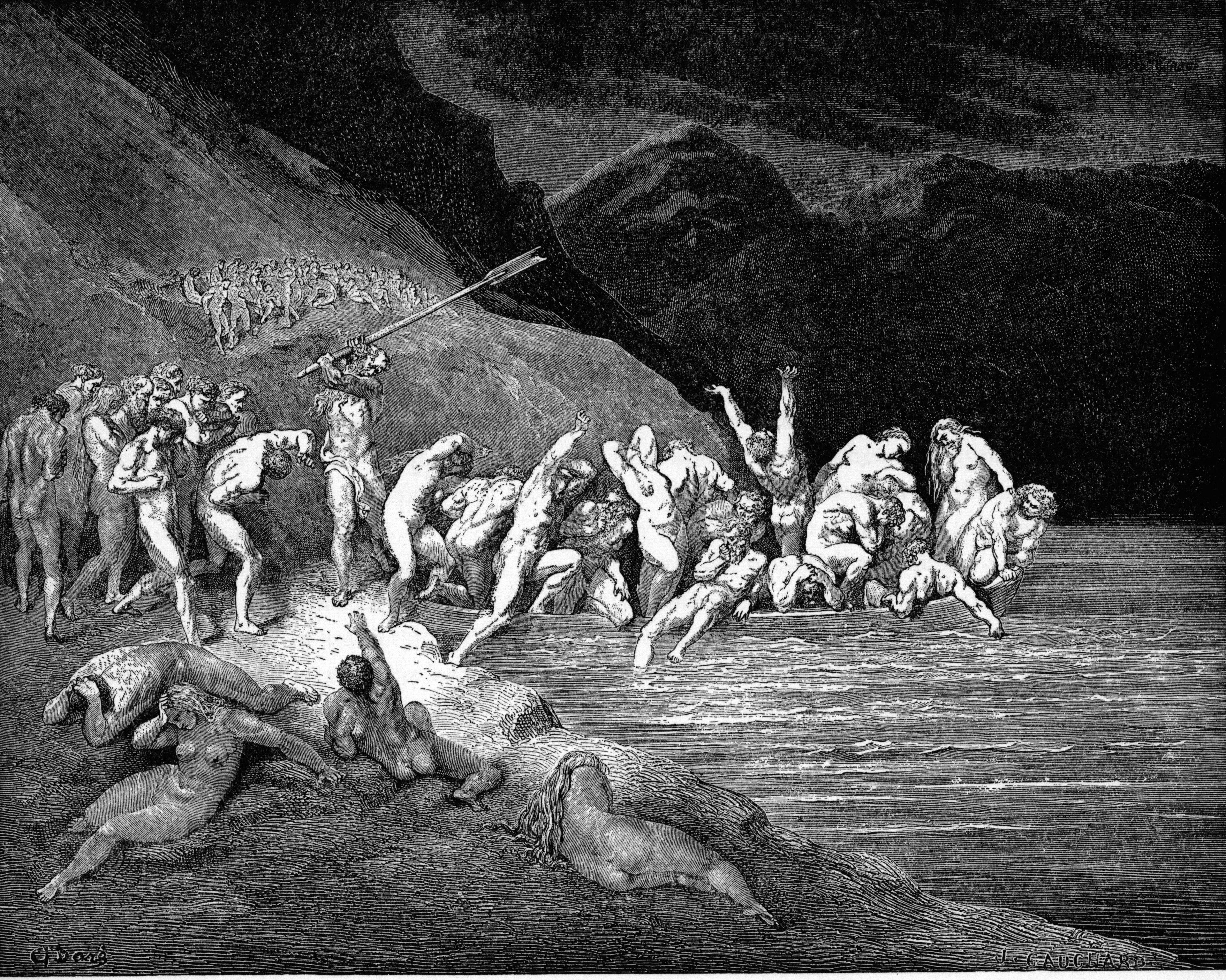
Charon, Ferryman of the Dead
Gustave Doré · 1861
Related works
The Thieves and the Serpents
Gustave Doré · 1861
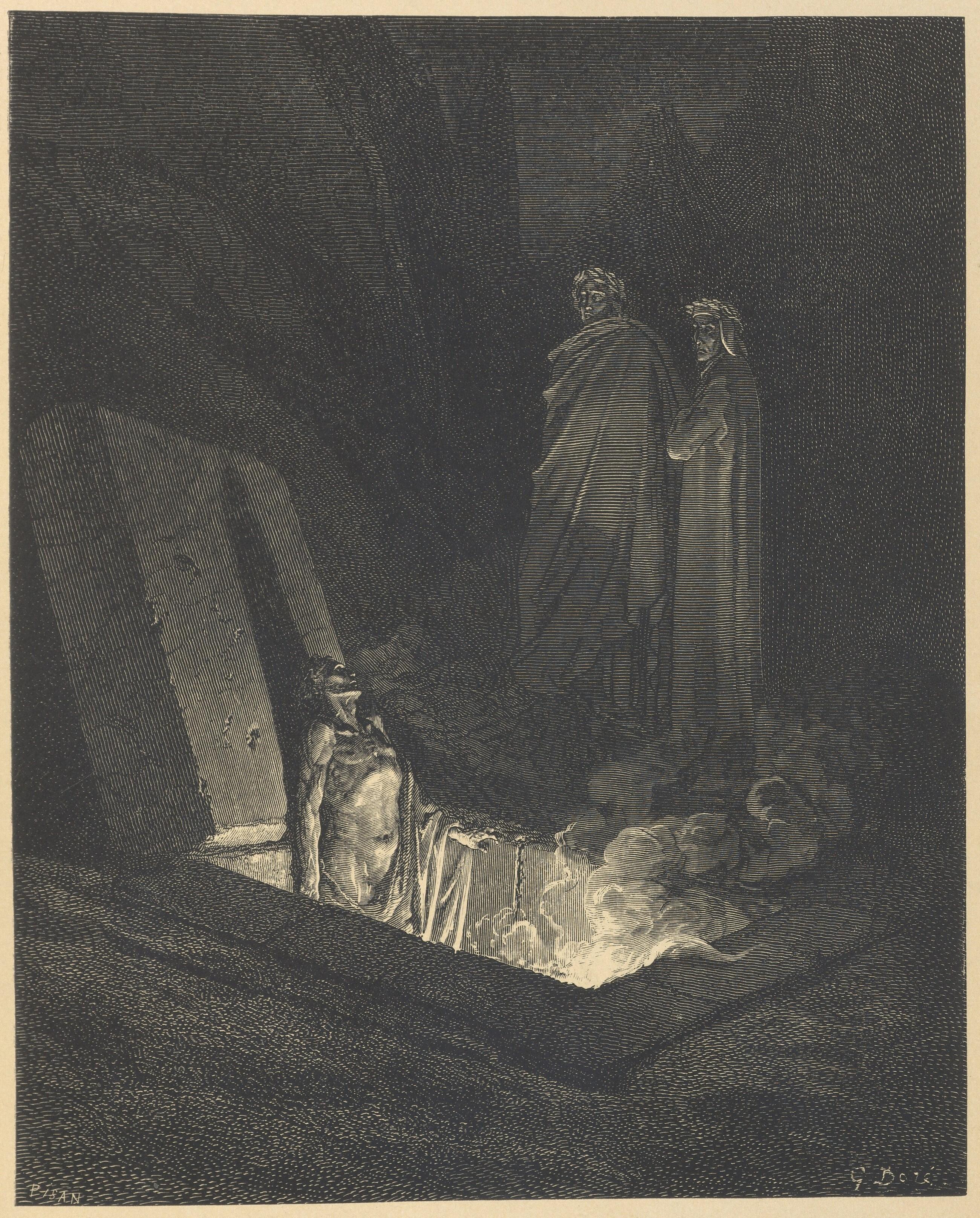
Farinata degli Uberti
Gustave Doré · 1861
Caiaphas Crucified
Gustave Doré · 1861
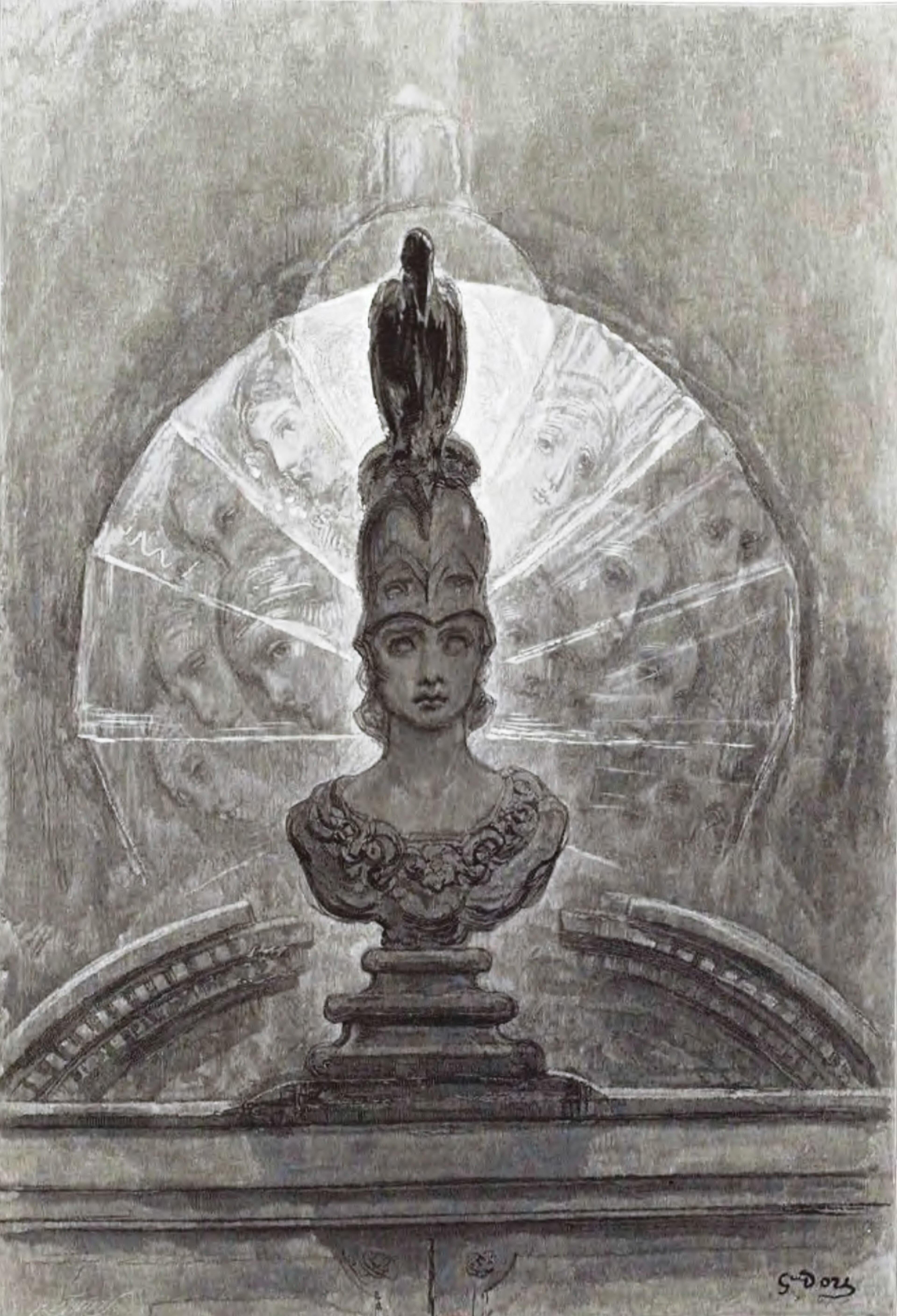
Perched Upon a Bust of Pallas
Gustave Doré · 1884
Cerberus
Gustave Doré · 1861
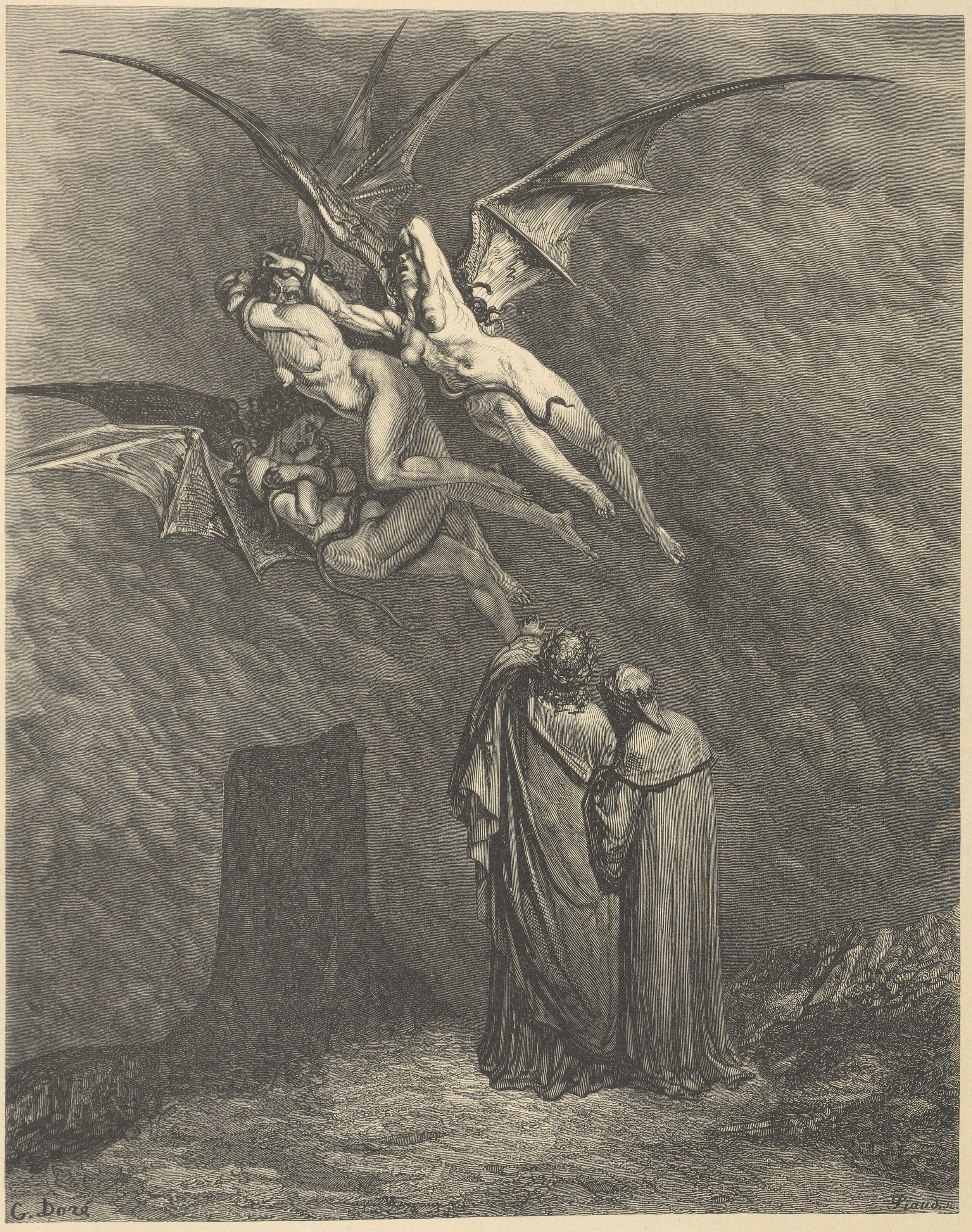
The Furies at the Gates of Dis
Gustave Doré · 1861
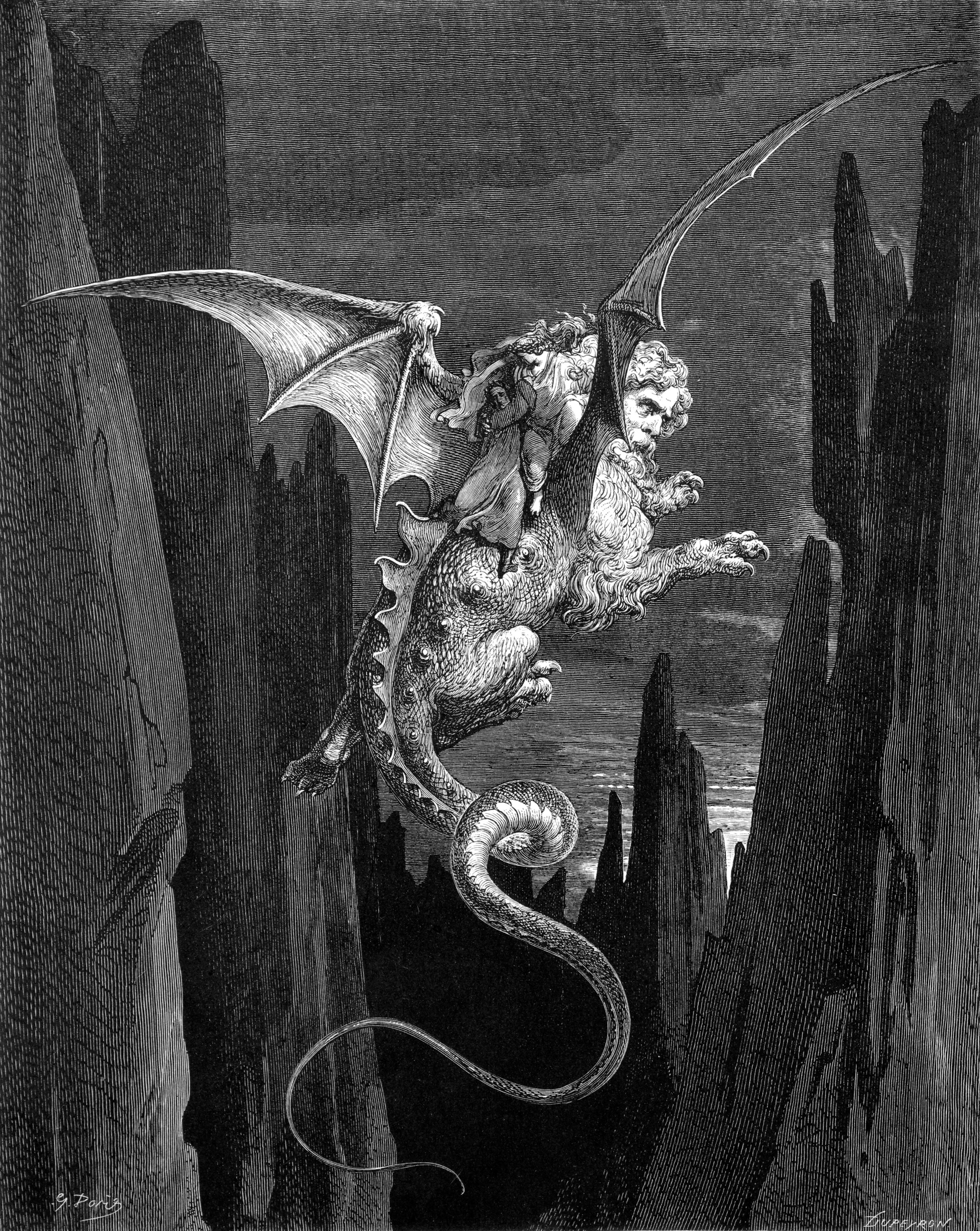
Geryon
Gustave Doré · 1861
Atropos (The Fates)
Francisco Goya · c. 1819–1823