Series
Gustave Doré's Inferno: The Illustrations for Dante's Divine Comedy
Seventy-five wood engravings of Hell, published in 1861 at the artist's own expense, with the Purgatorio and Paradiso plates of 1868.
Gustave Doré's Inferno is the set of 75 full-page wood engravings he designed for Dante's Inferno, the first part of the Divine Comedy, published by Hachette in Paris in 1861 as L'Enfer de Dante Alighieri, a large folio with the Italian text and Pier-Angelo Fiorentino's French translation. With the frontispiece portrait of Dante the book has 76 illustrations. Doré was 29, and no publisher would carry the cost of so lavish a book, so he paid for the production himself.
The gamble made him famous. In 1868 Hachette issued the sequel, Le Purgatoire et le Paradis, with 60 more plates: 42 for the Purgatorio and 18 for the Paradiso. Together the 135 engravings became the most reproduced images of Dante's journey, and for many readers they still are the Divine Comedy. This page walks through the cycle in the order of the poem, from the dark wood to the frozen Lucifer and the white rose of the Empyrean, and links each plate in the archive.
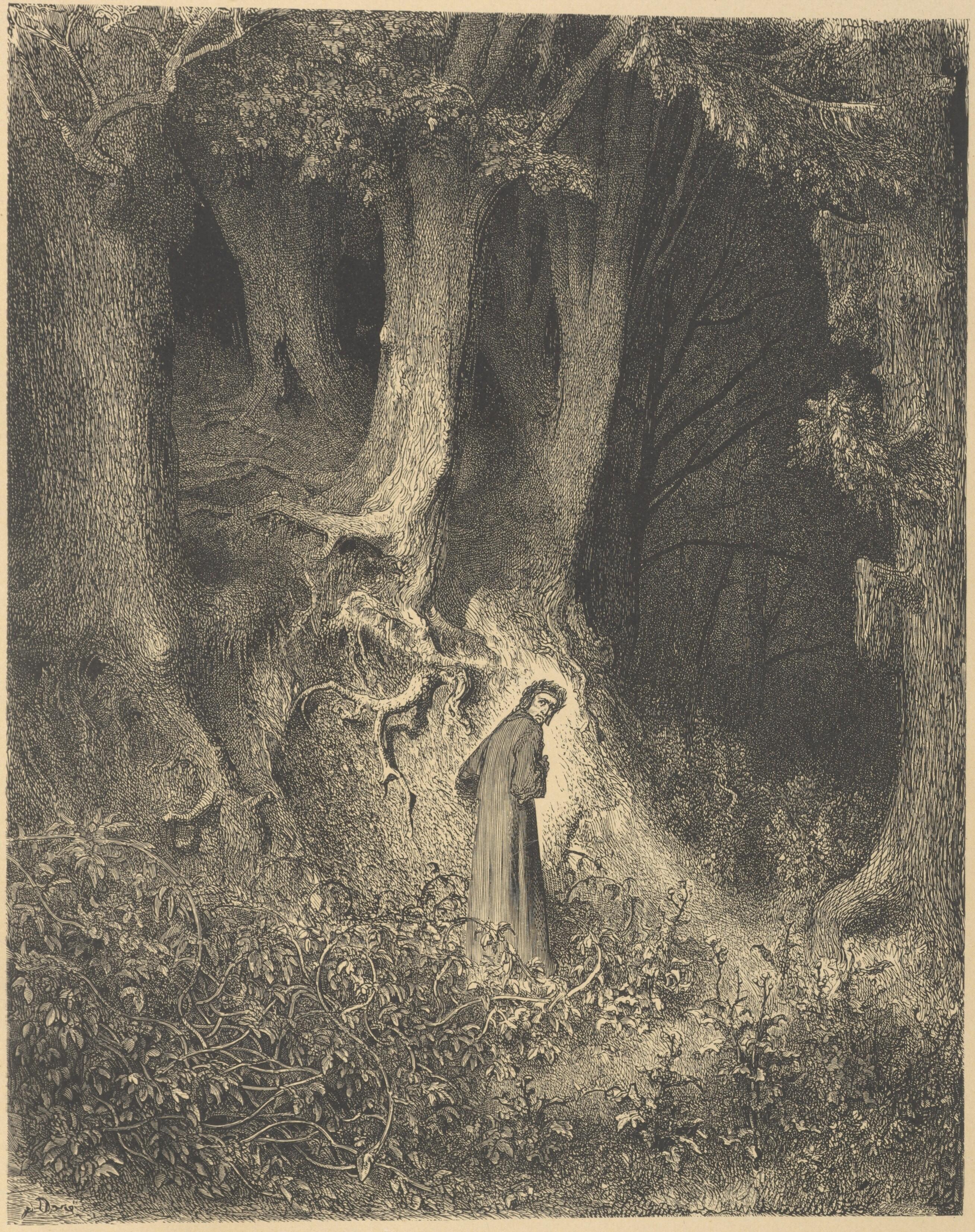
Dante Lost in the Dark Wood
Gustave Doré · 1861
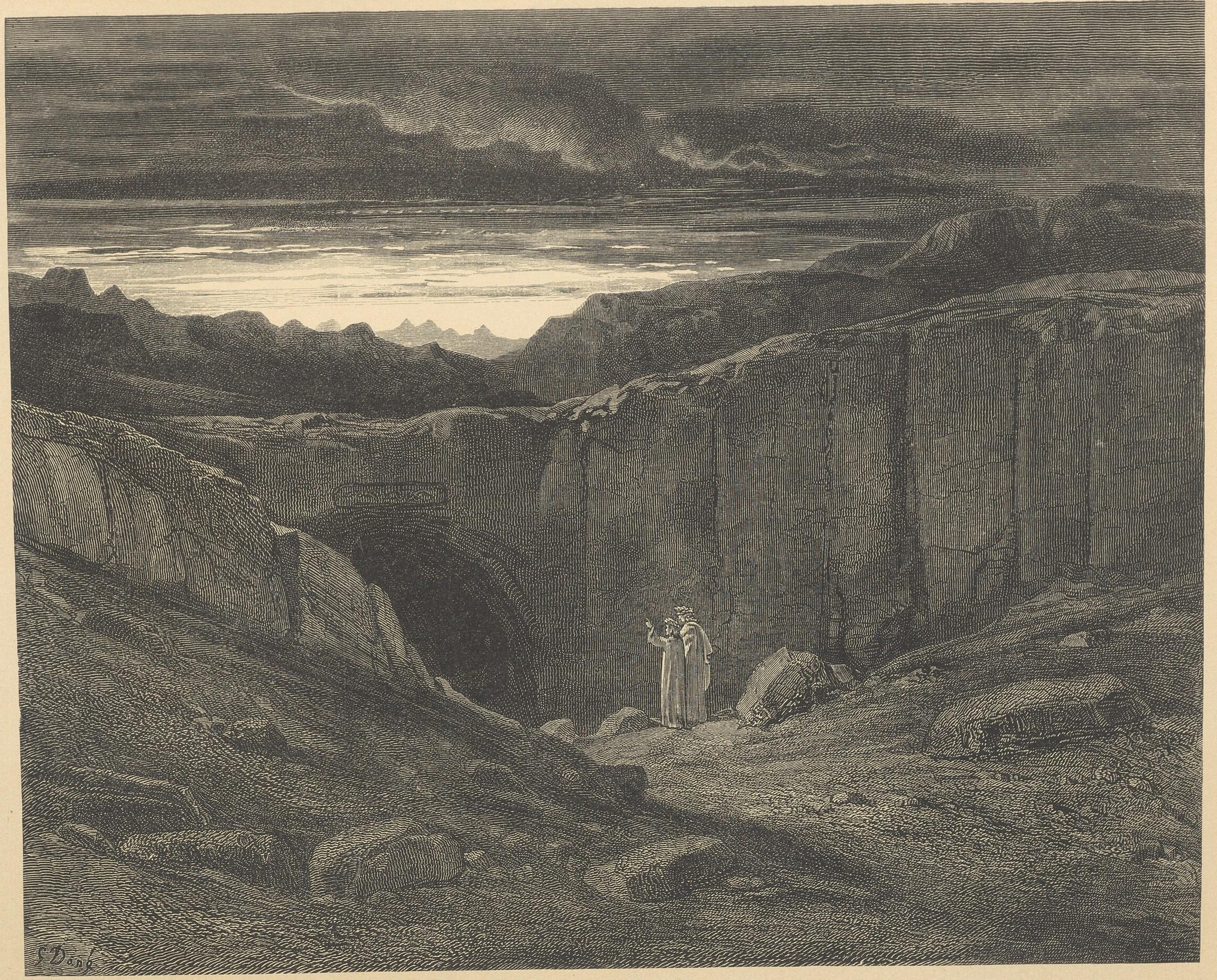
The Gate of Hell (Abandon All Hope)
Gustave Doré · 1861
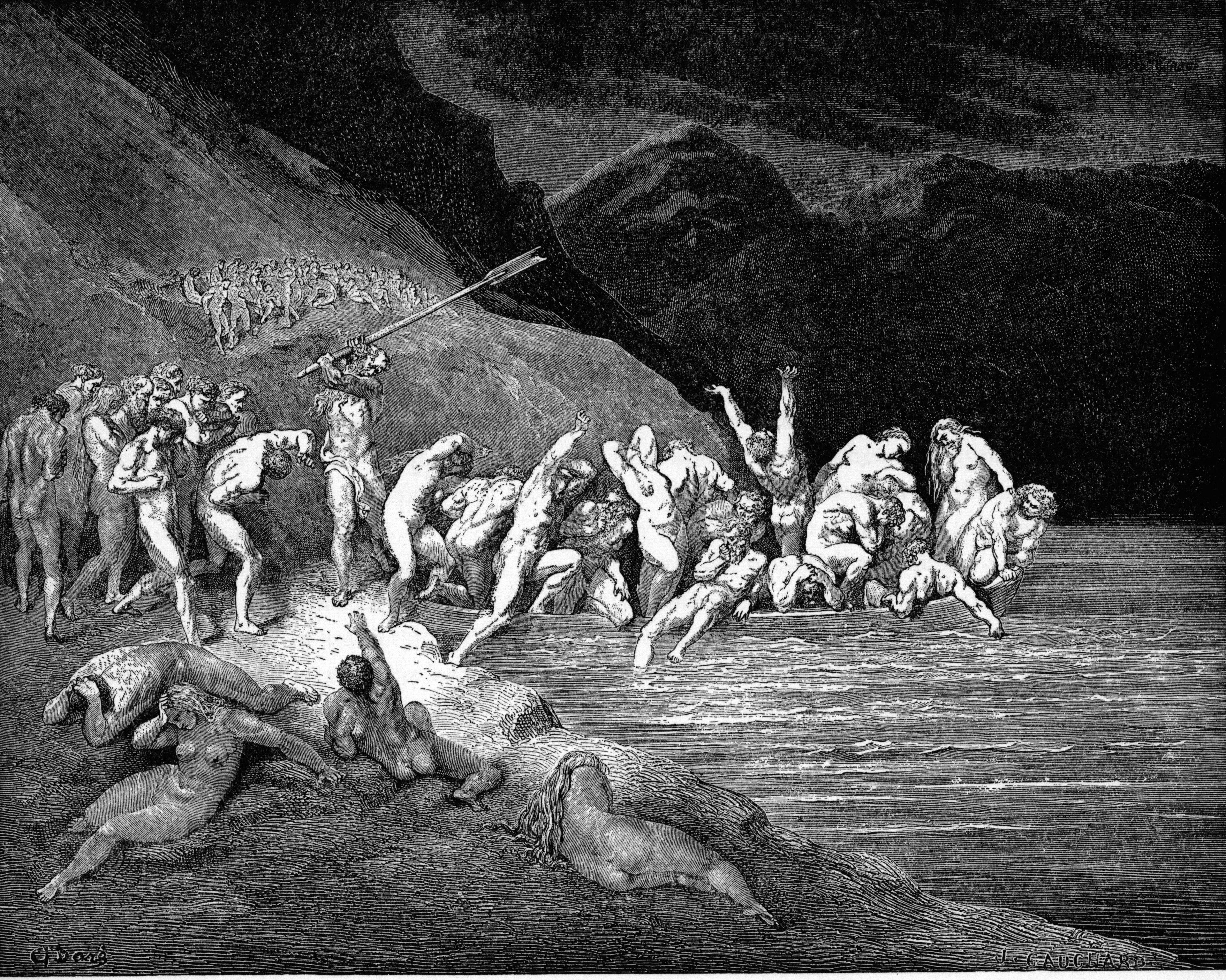
Charon, Ferryman of the Dead
Gustave Doré · 1861
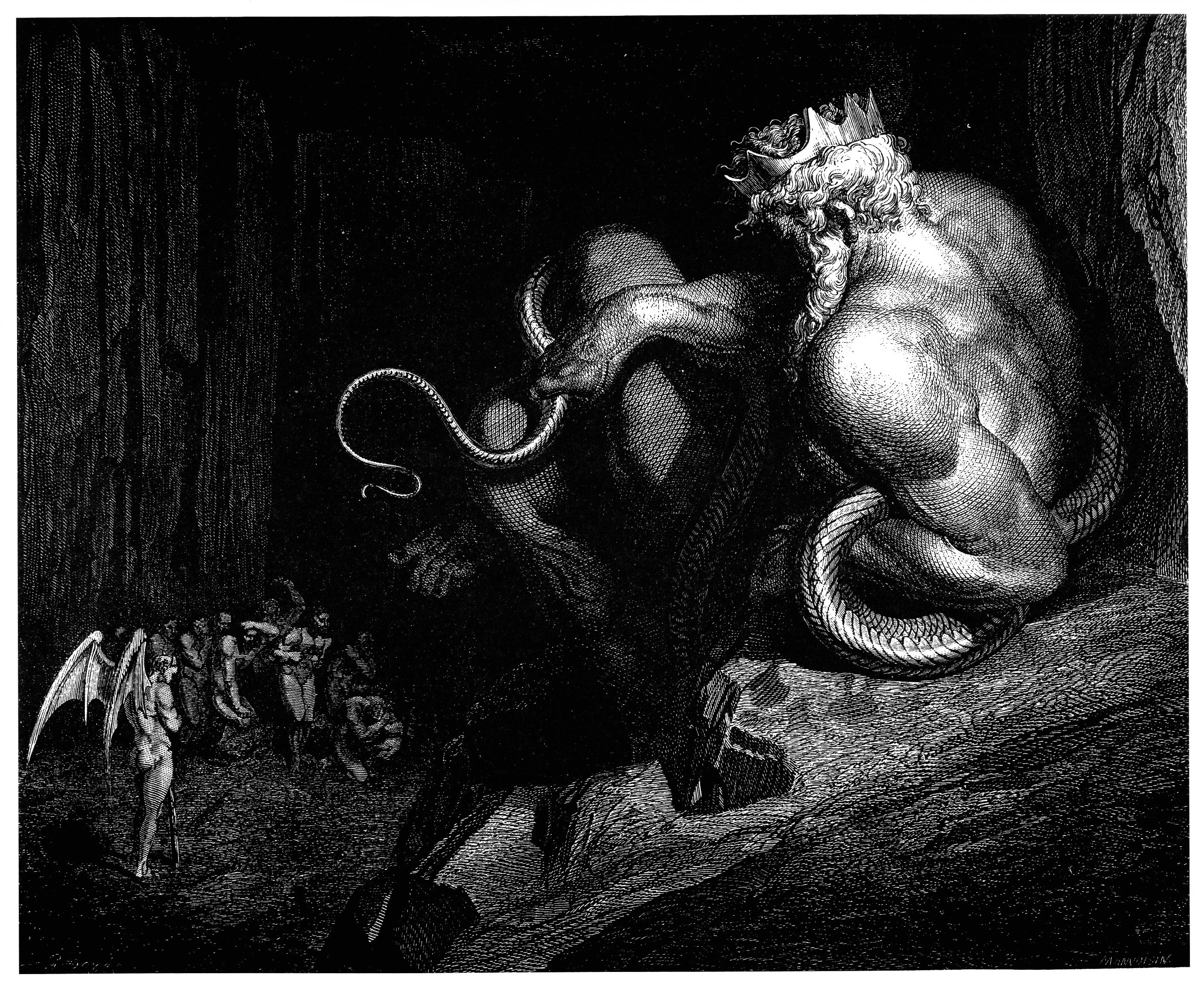
Minos, Judge of the Damned
Gustave Doré · 1861
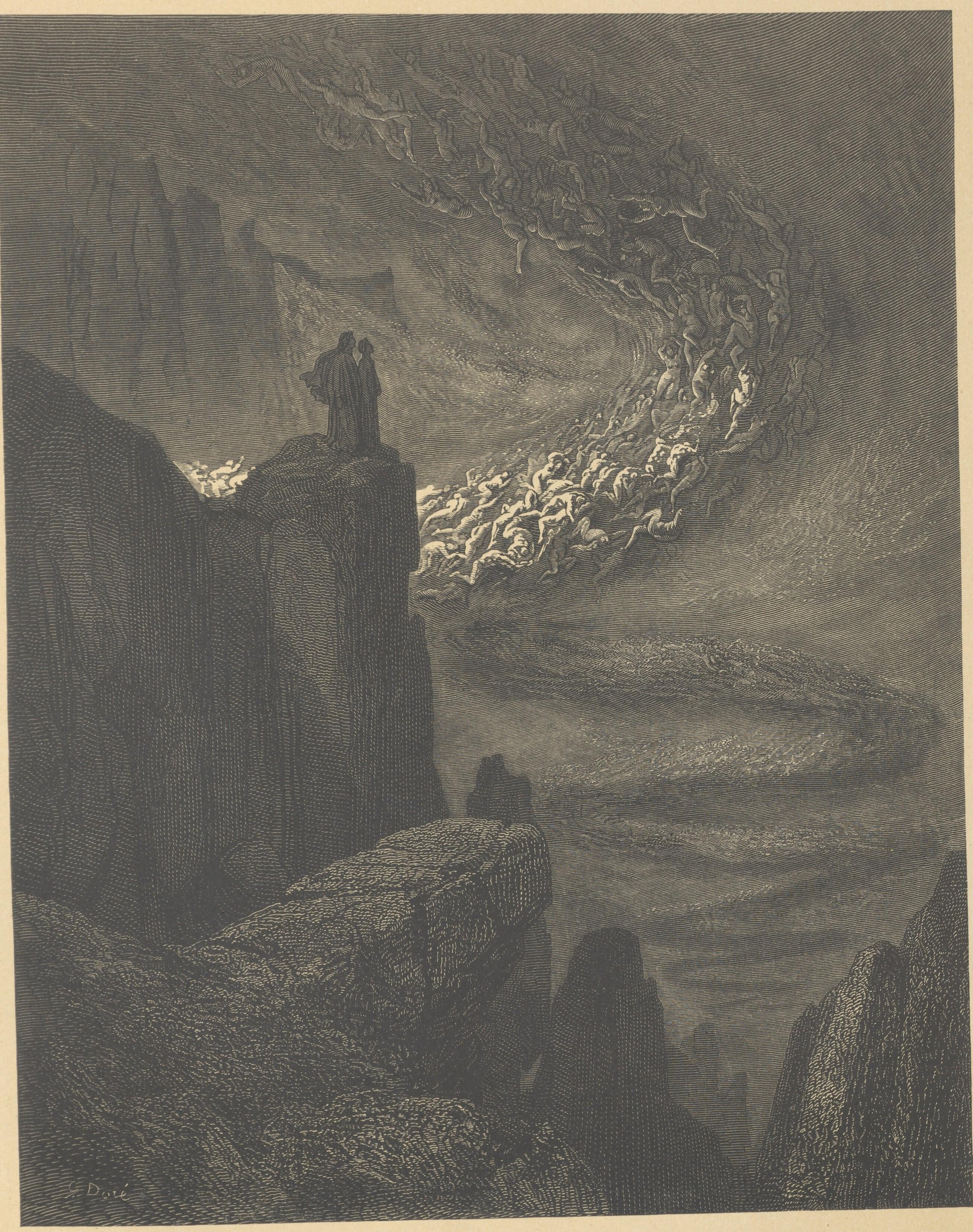
The Whirlwind of the Lustful
Gustave Doré · 1861
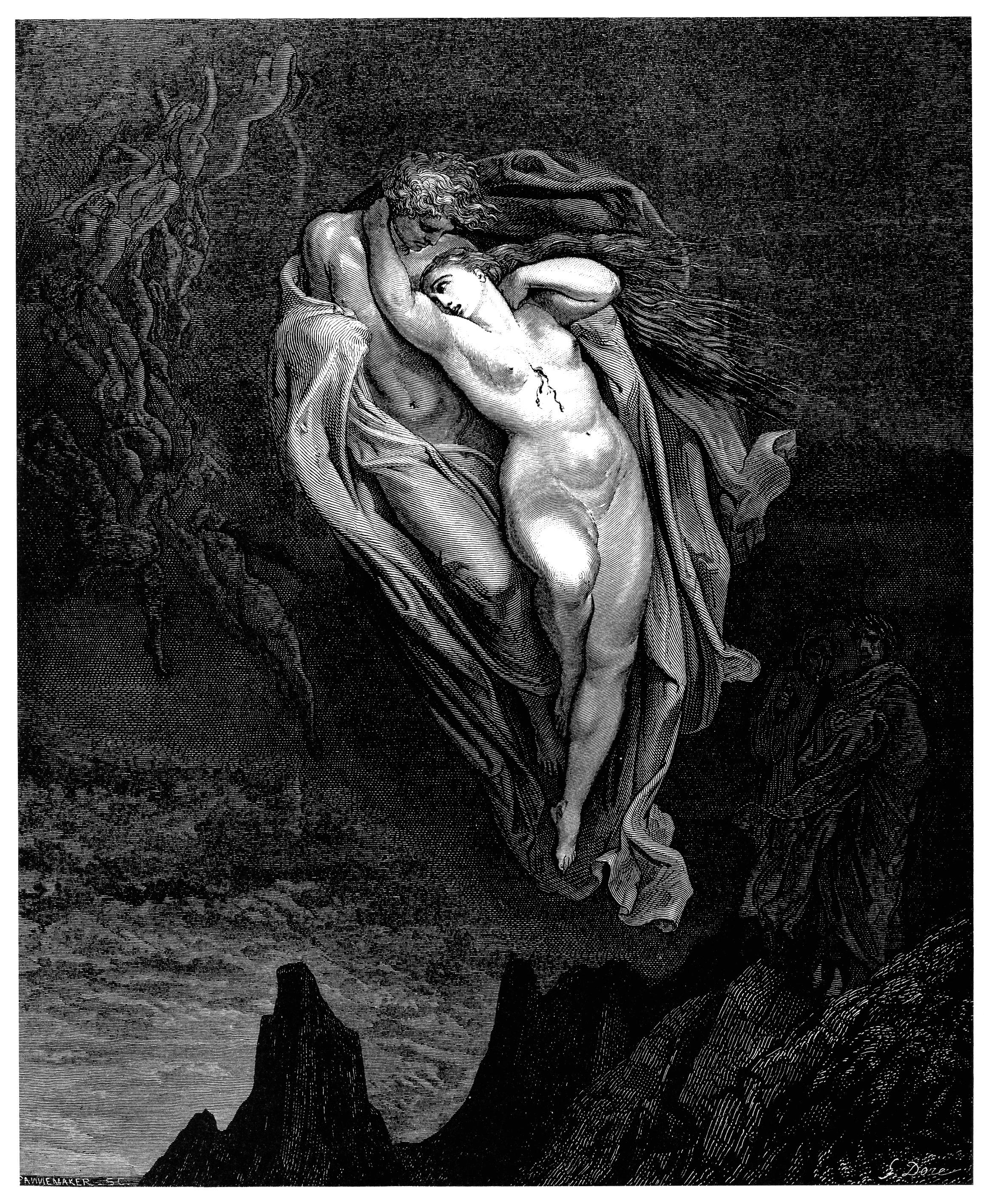
Paolo and Francesca
Gustave Doré · 1861
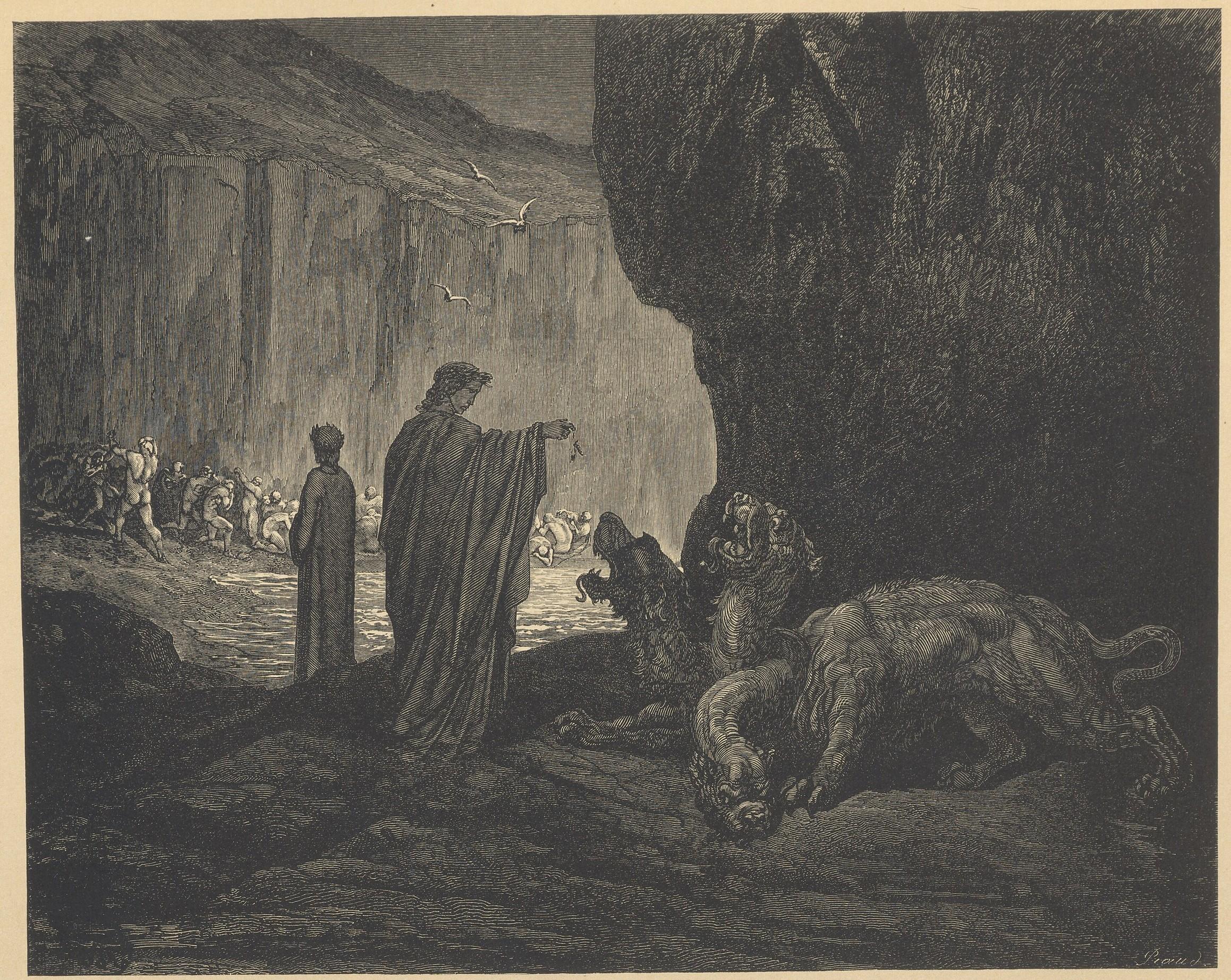
Cerberus
Gustave Doré · 1861
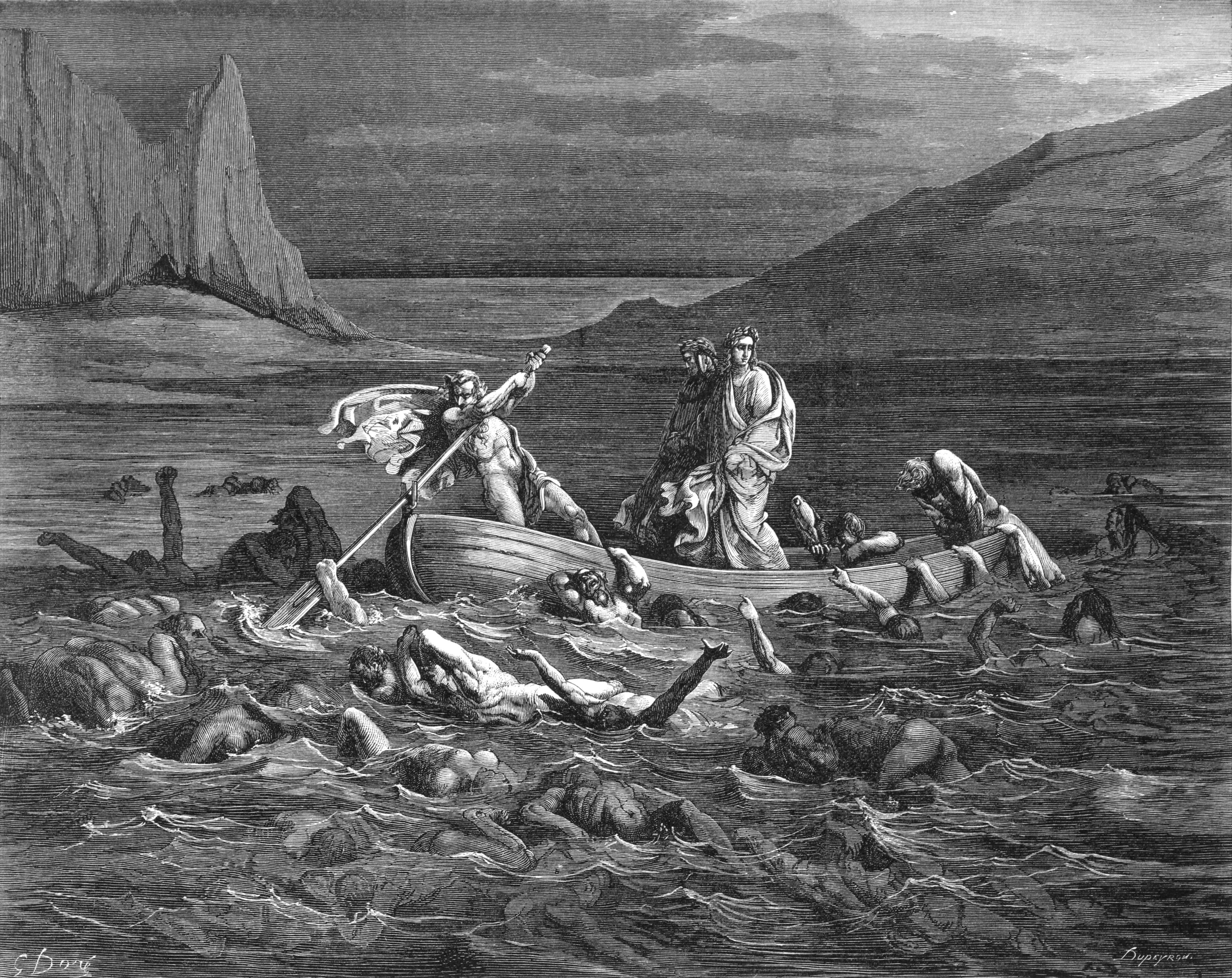
Crossing the Styx (Filippo Argenti)
Gustave Doré · 1861
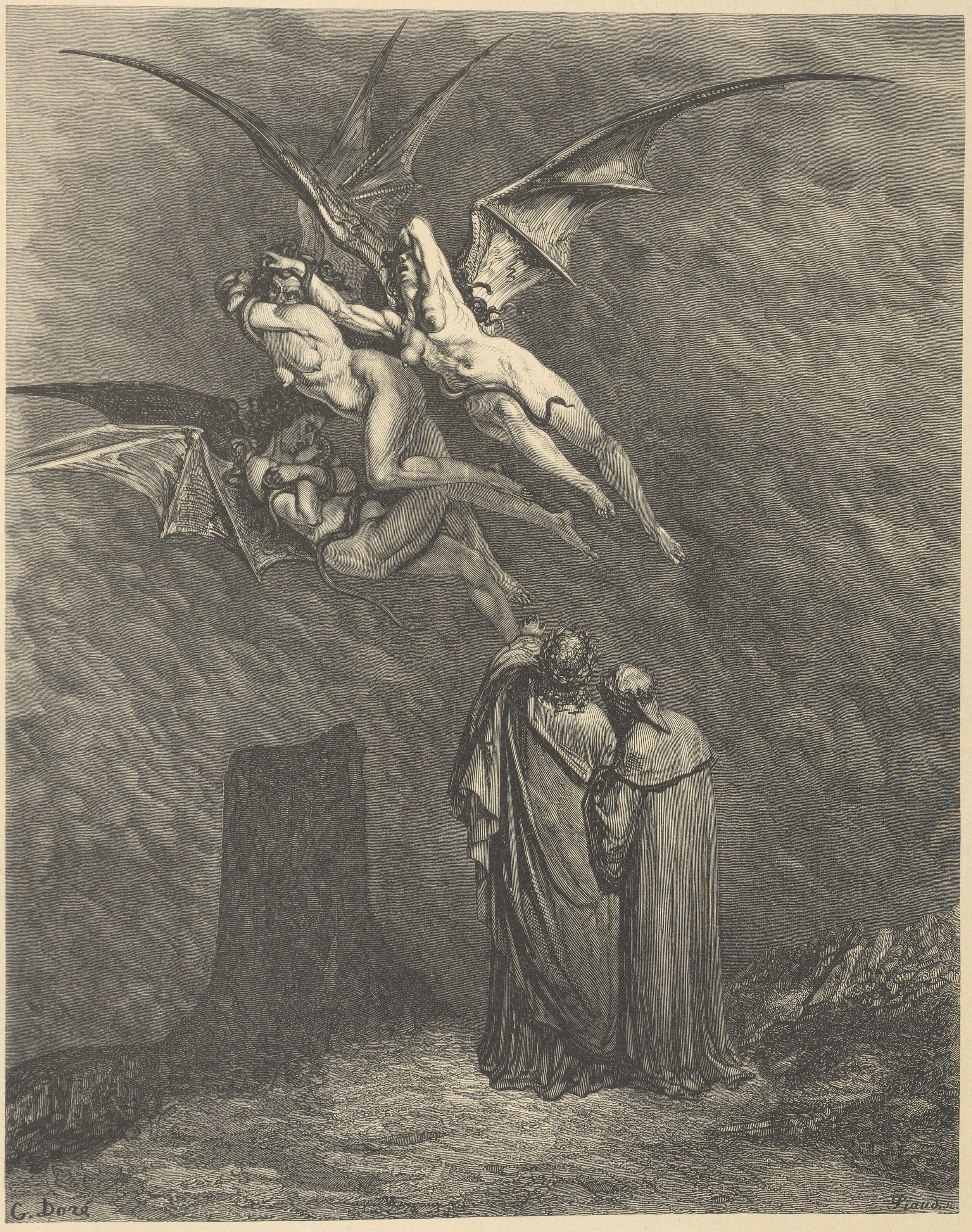
The Furies at the Gates of Dis
Gustave Doré · 1861
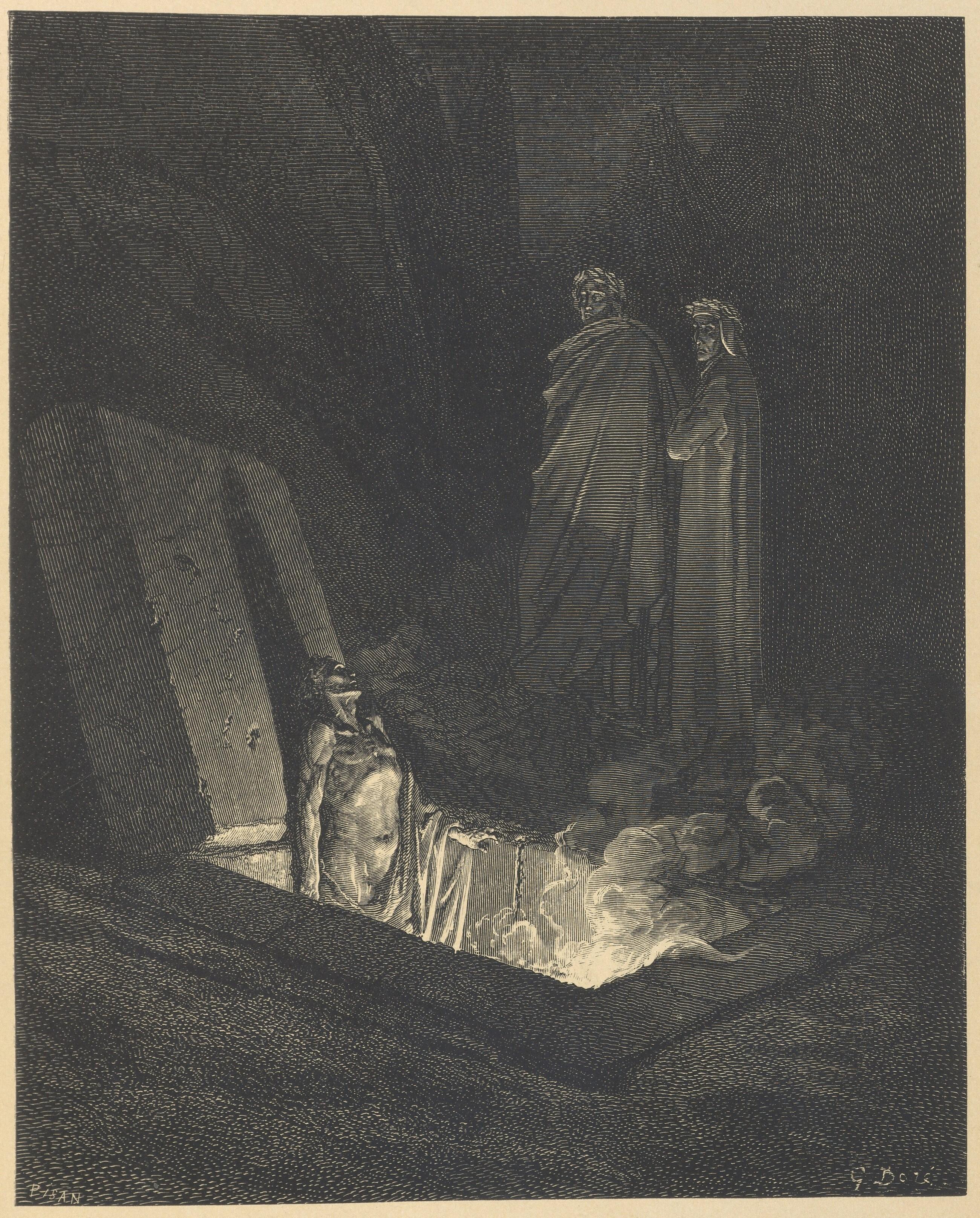
Farinata degli Uberti
Gustave Doré · 1861
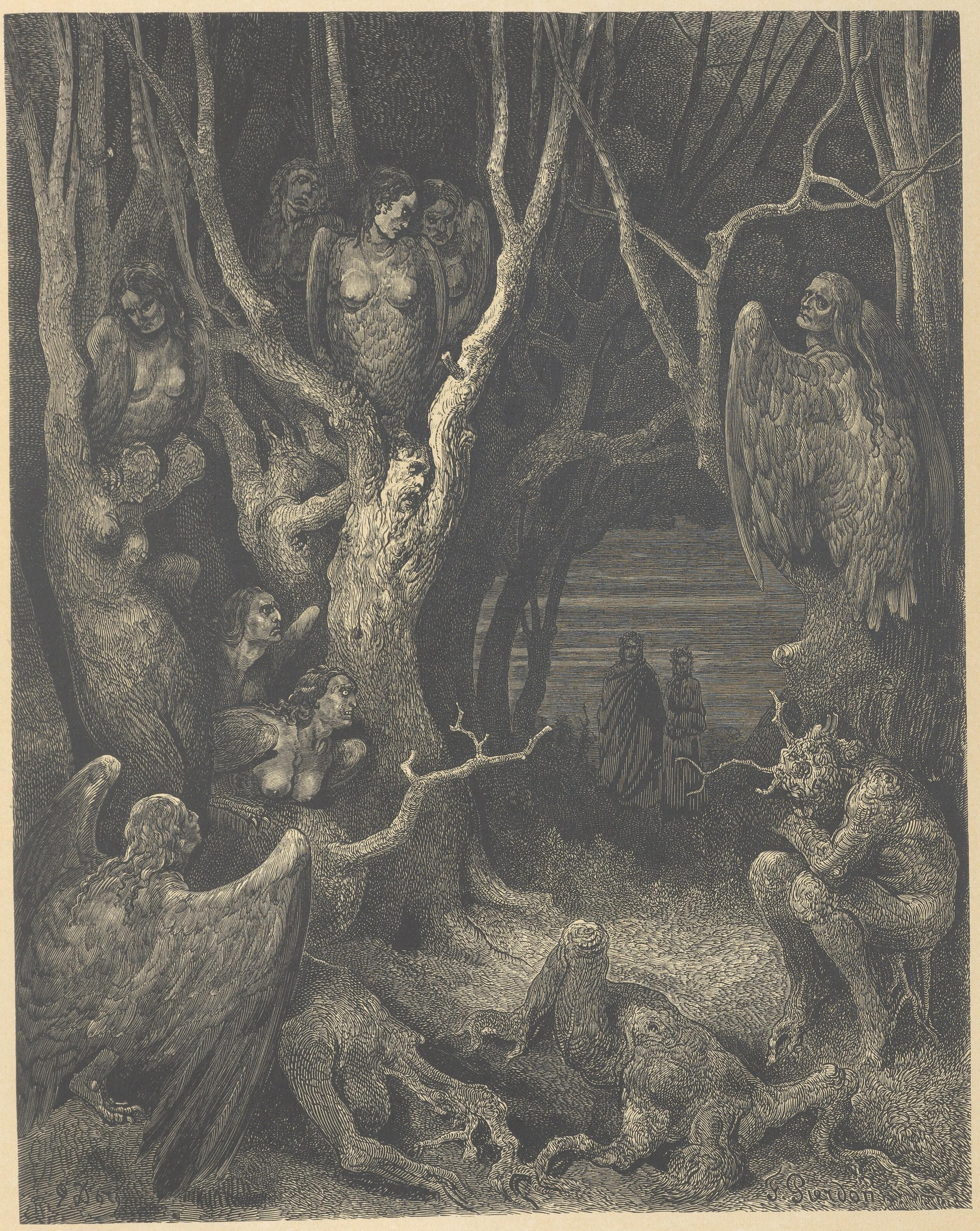
The Wood of the Suicides
Gustave Doré · 1861
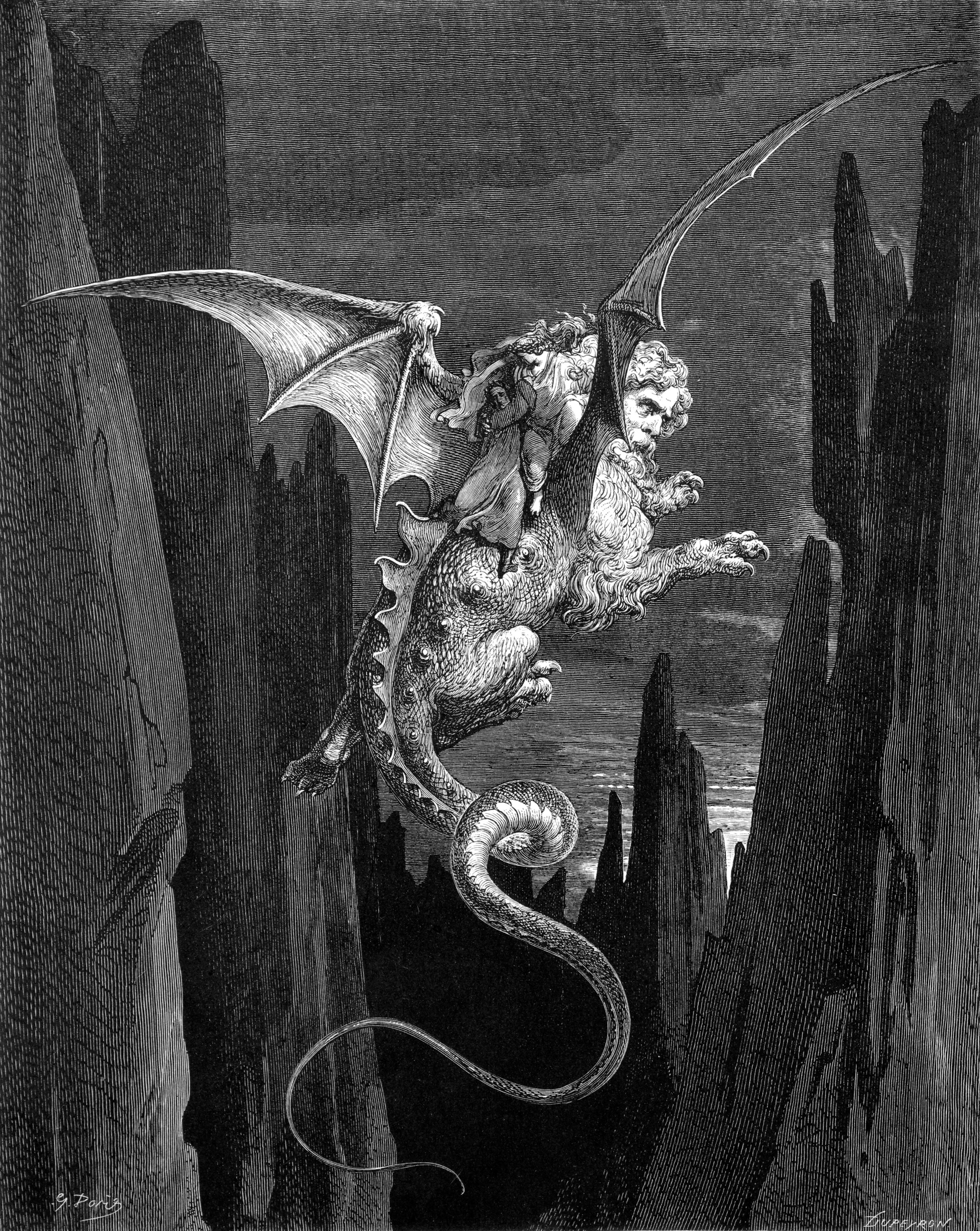
Geryon
Gustave Doré · 1861
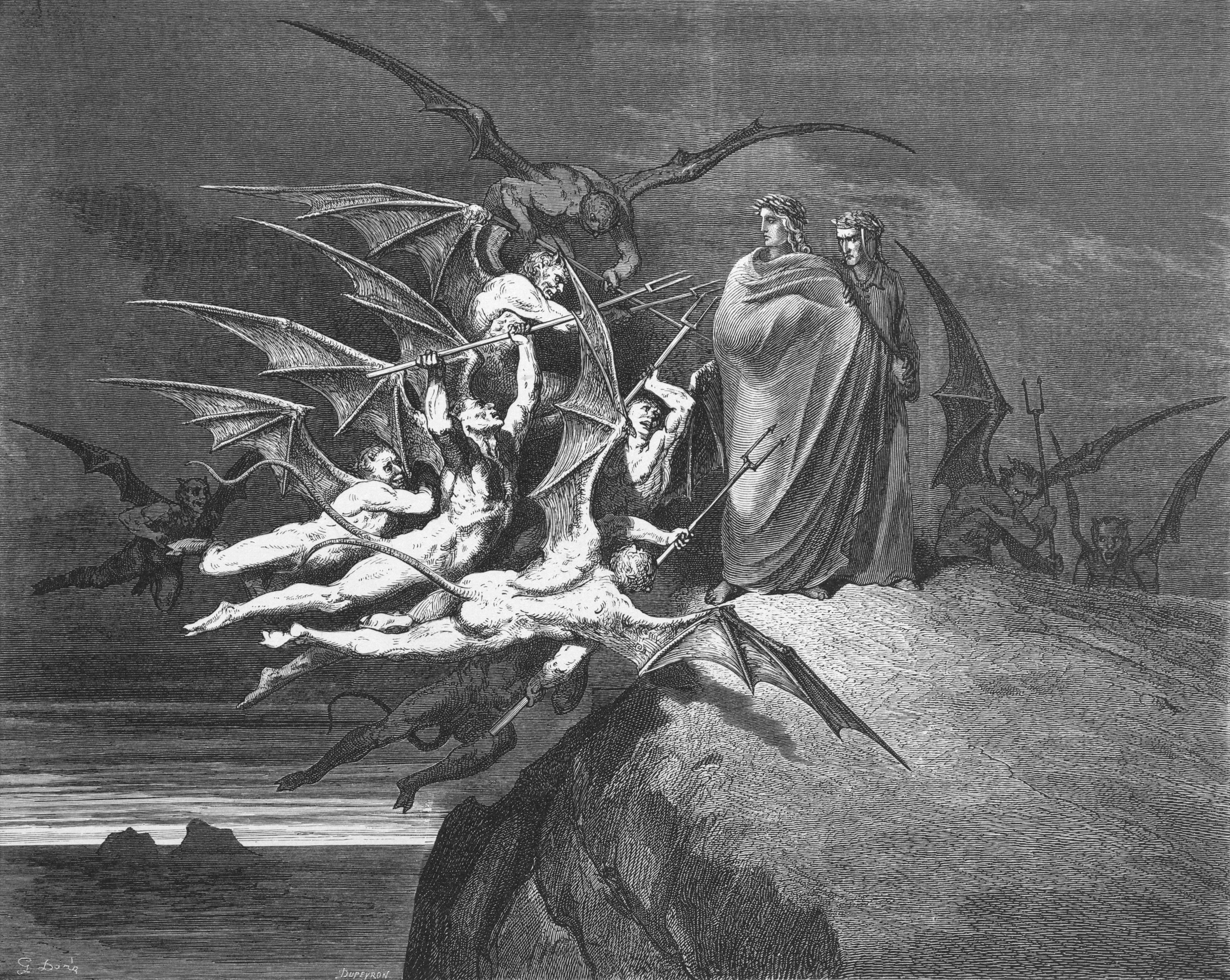
The Malebranche Demons
Gustave Doré · 1861
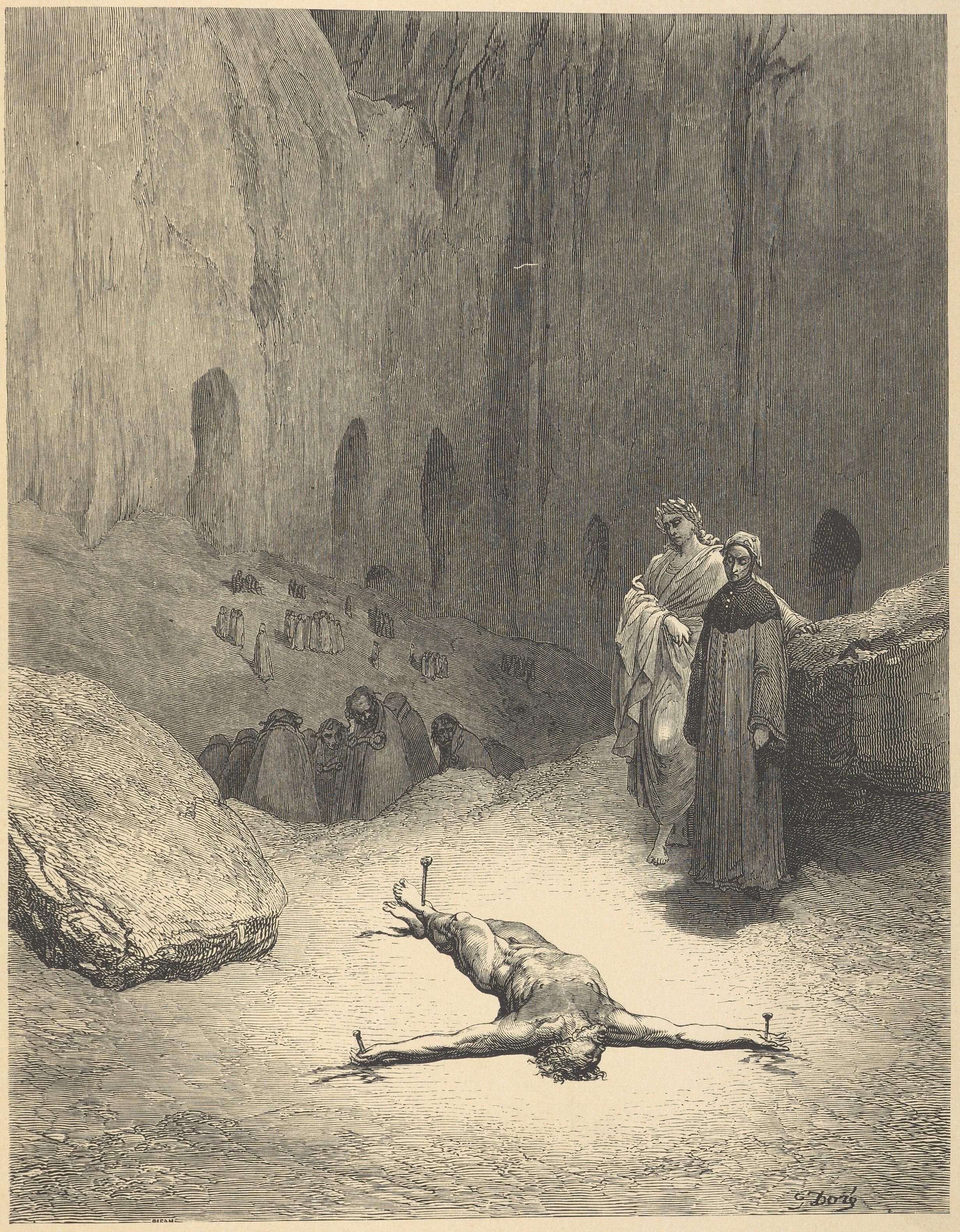
Caiaphas Crucified
Gustave Doré · 1861
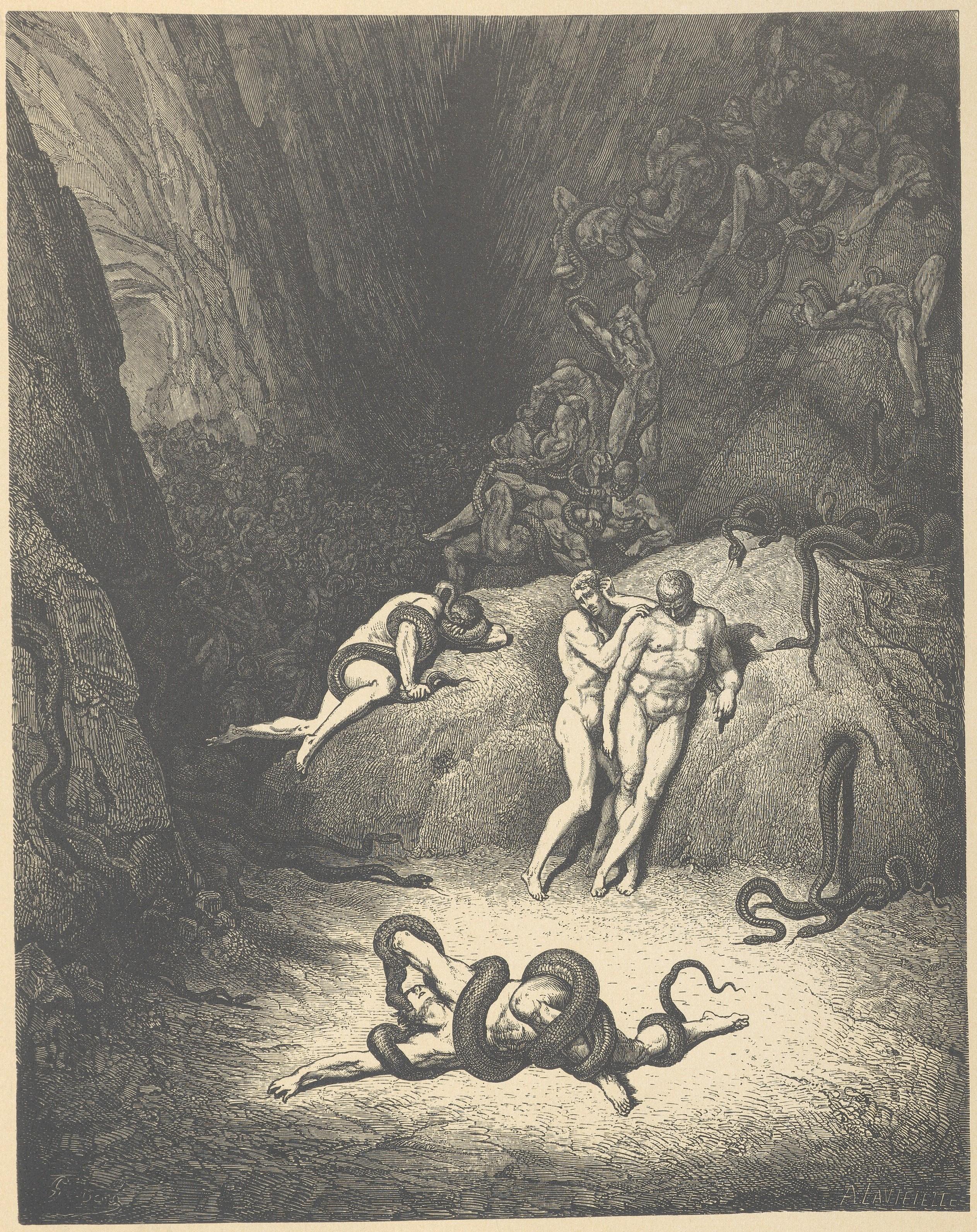
The Thieves and the Serpents
Gustave Doré · 1861
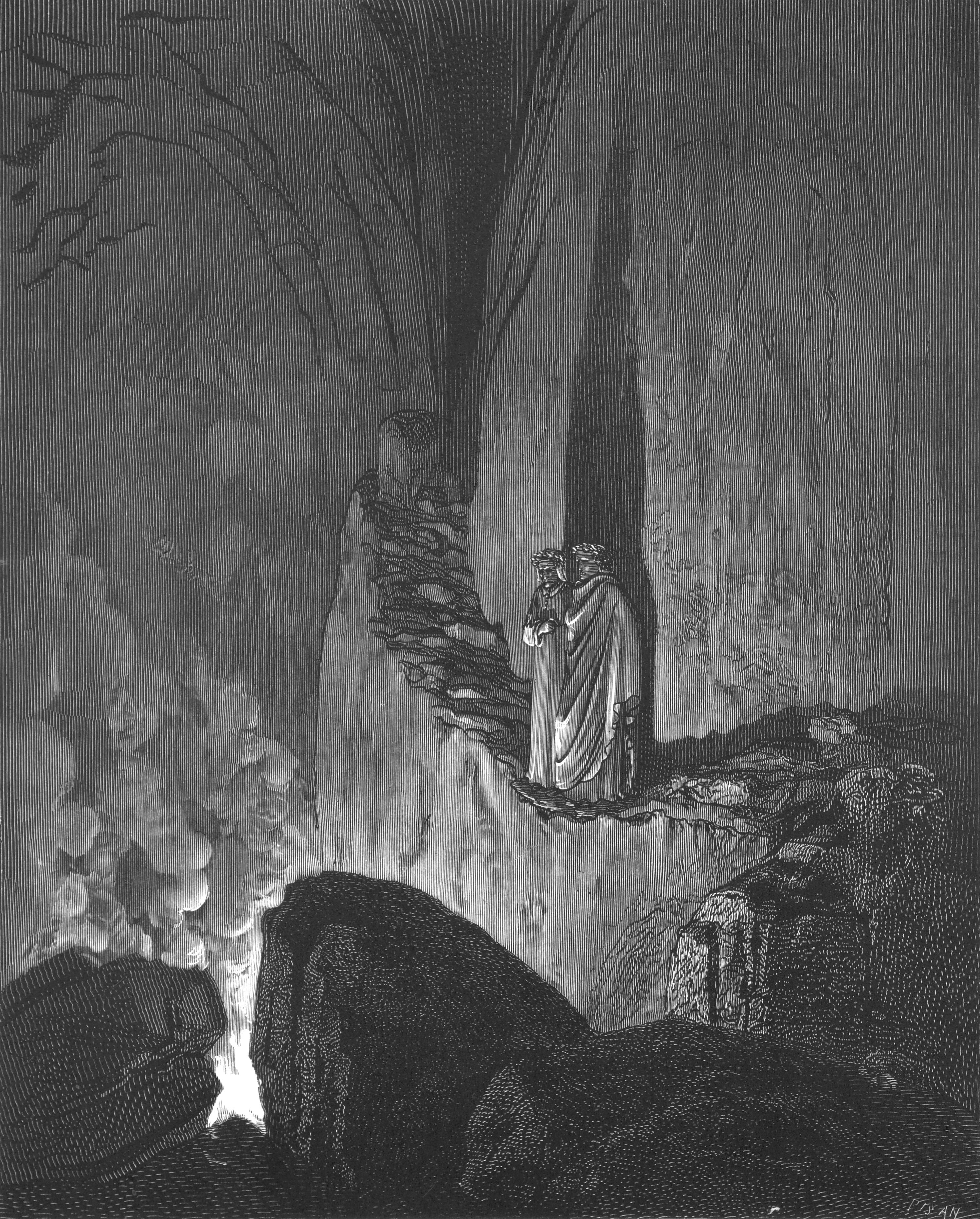
Ulysses and Diomedes
Gustave Doré · 1861
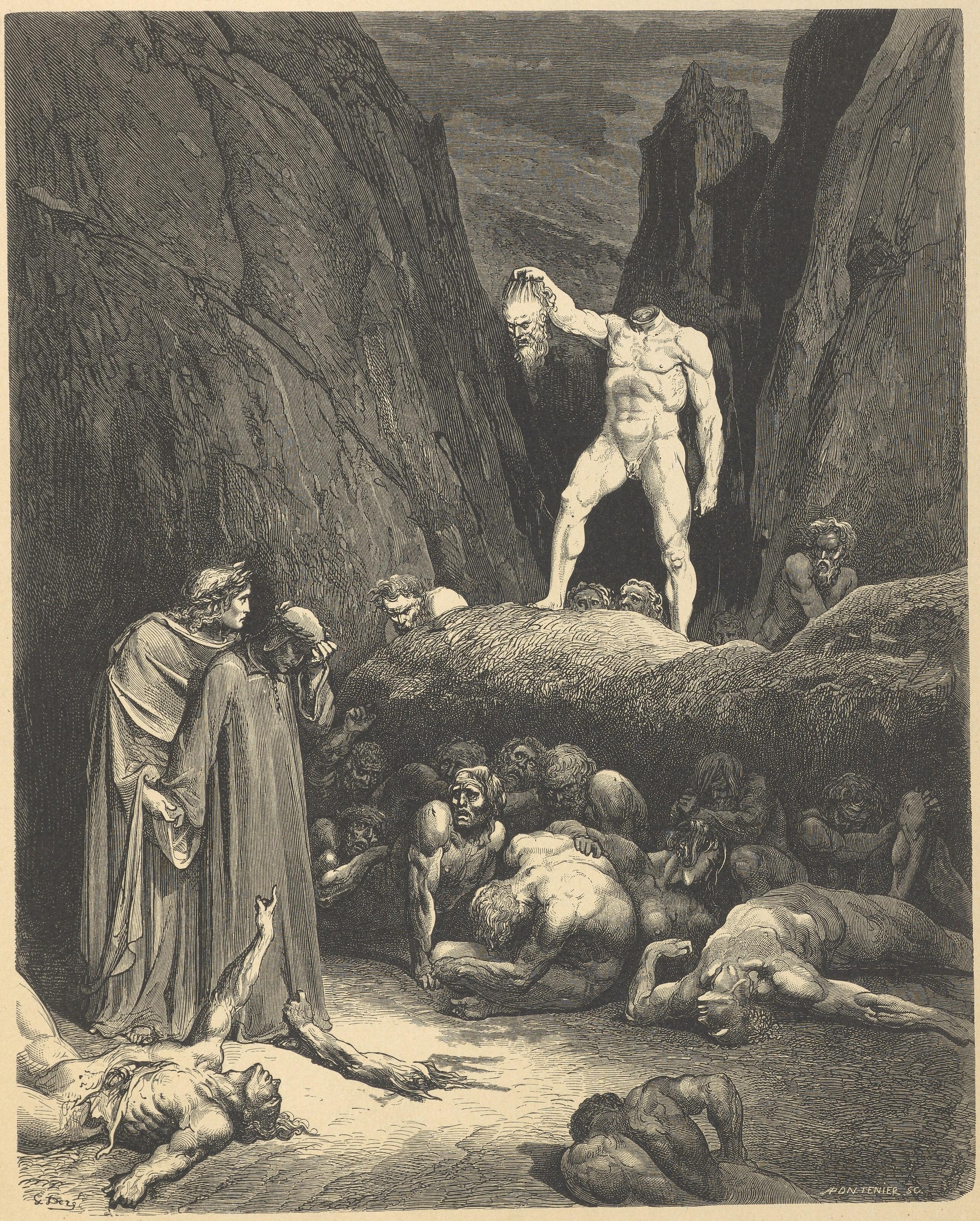
Bertran de Born Holding His Head
Gustave Doré · 1861
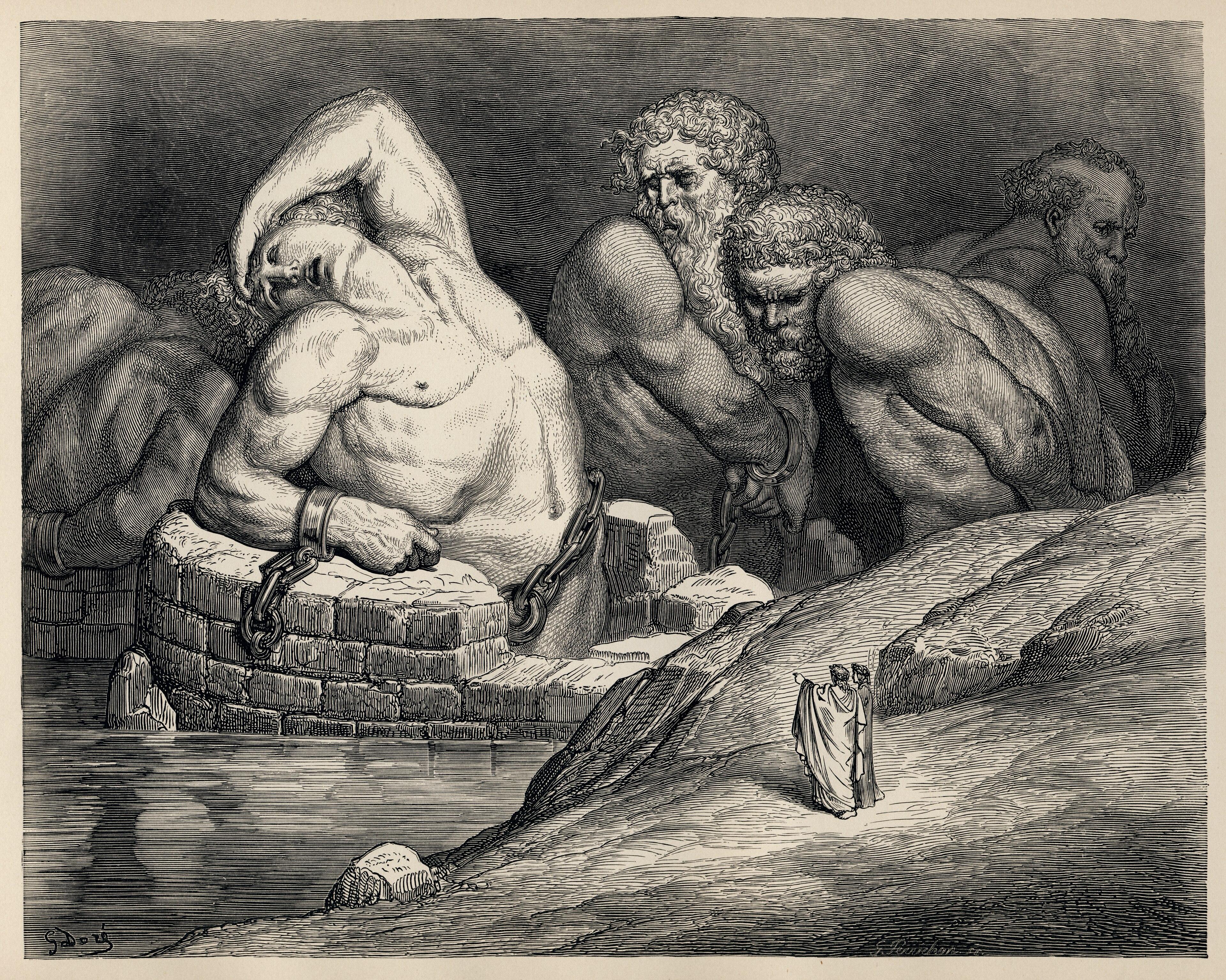
The Giants
Gustave Doré · 1861
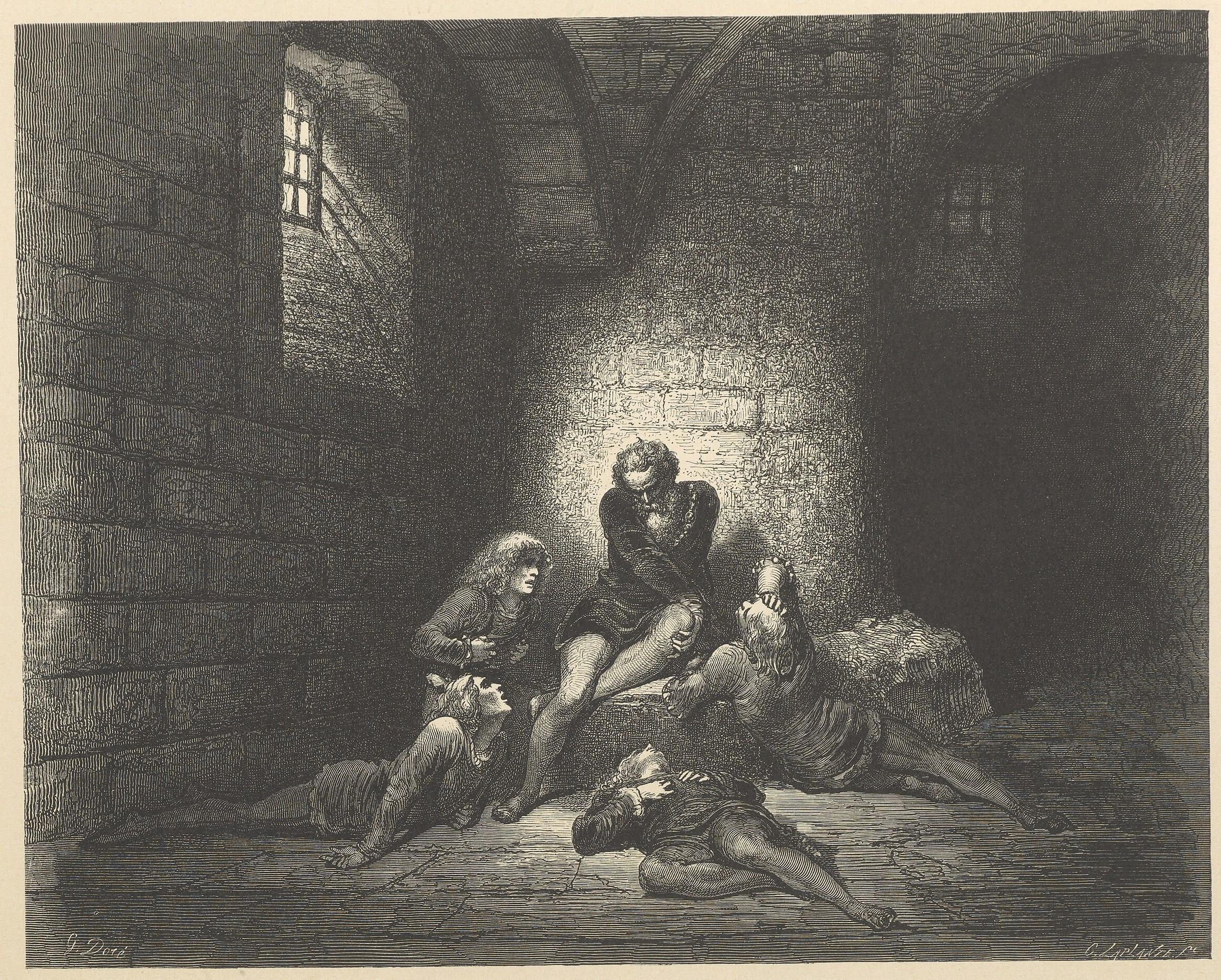
Count Ugolino and His Sons
Gustave Doré · 1861
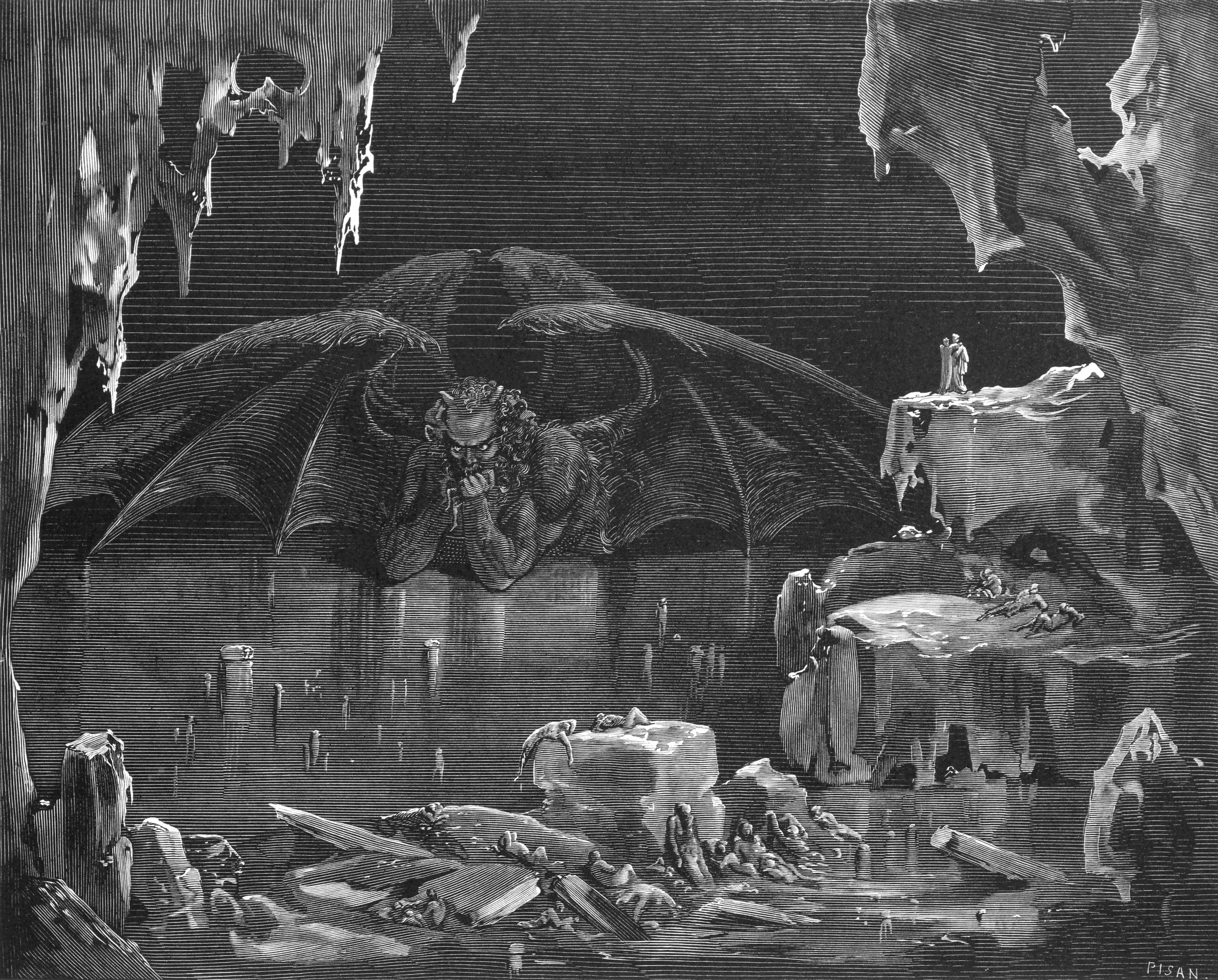
Lucifer, King of Hell
Gustave Doré · 1861
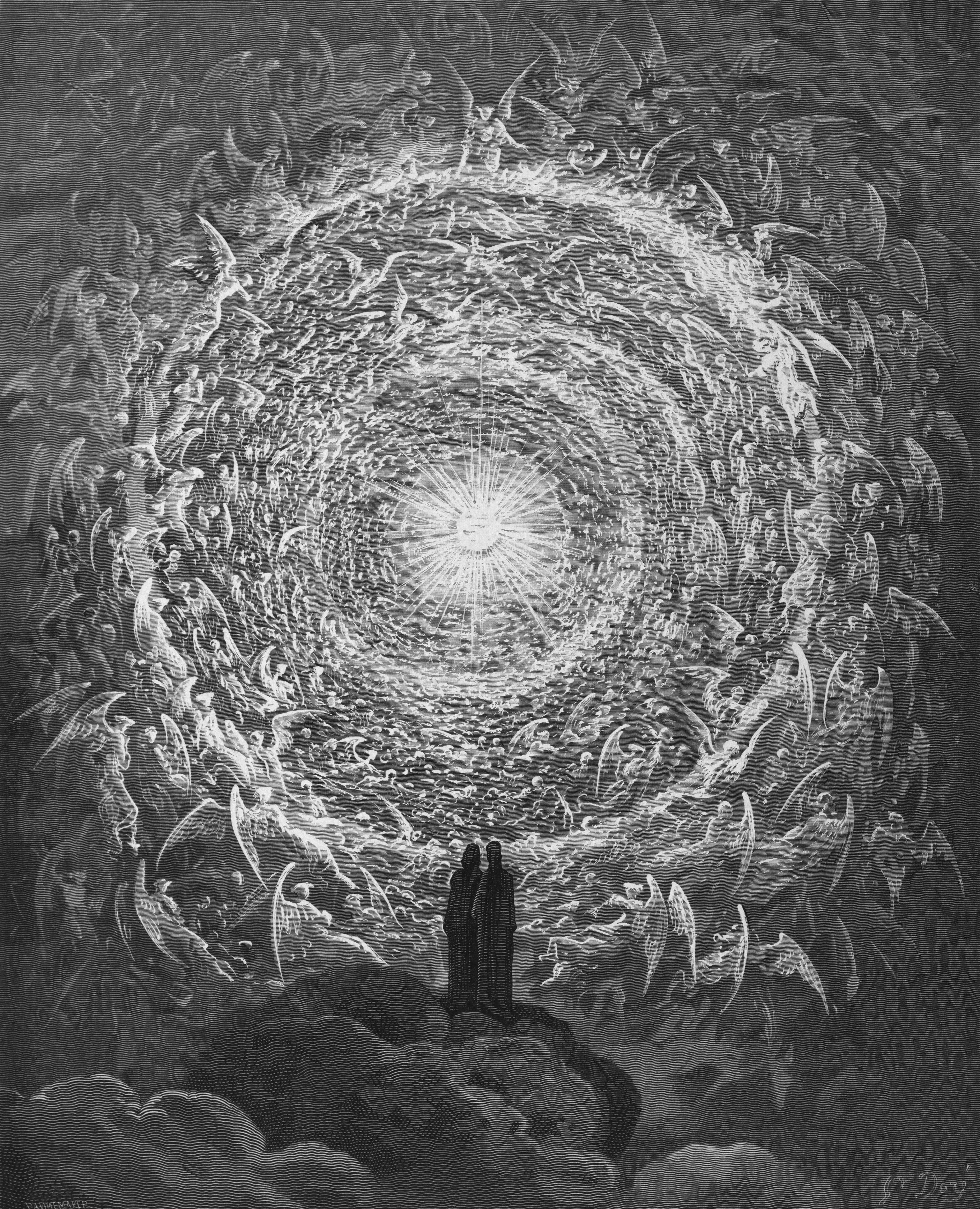
The Empyrean (Rosa Celeste)
Gustave Doré · 1868
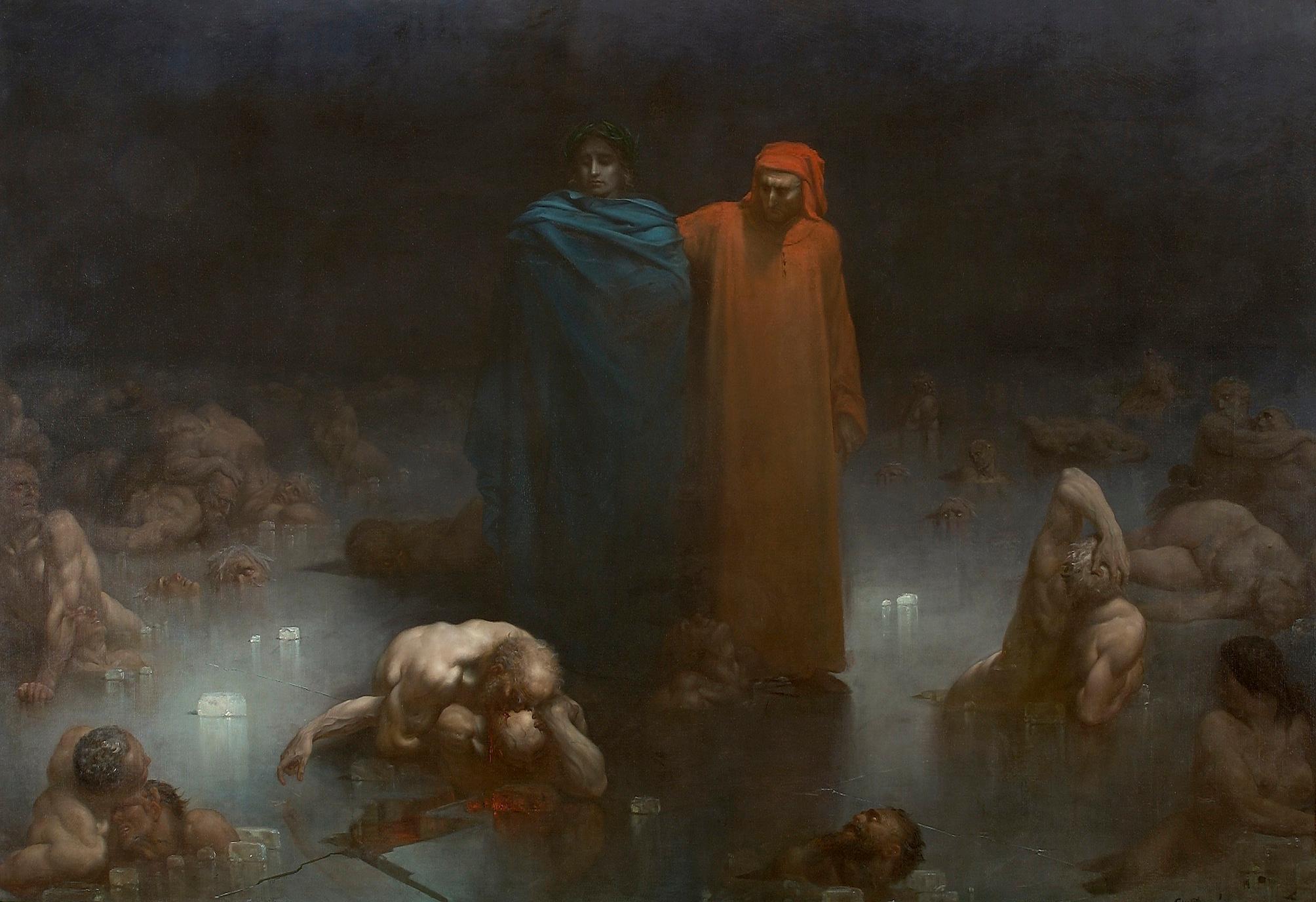
Dante and Virgil in the Ninth Circle of Hell
Gustave Doré · 1861
The complete set
All 75 plates
In the order of the book. Plates with a full close reading are marked ✦.
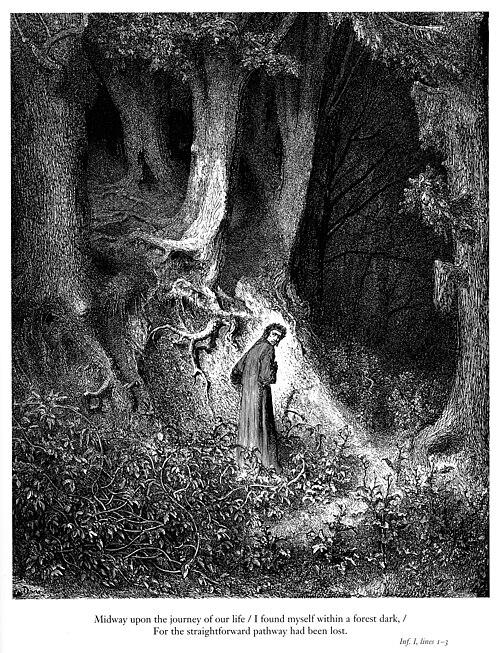
✦Canto I: Dante Lost in the Dark Wood
1861 · Dante's Inferno (1861)
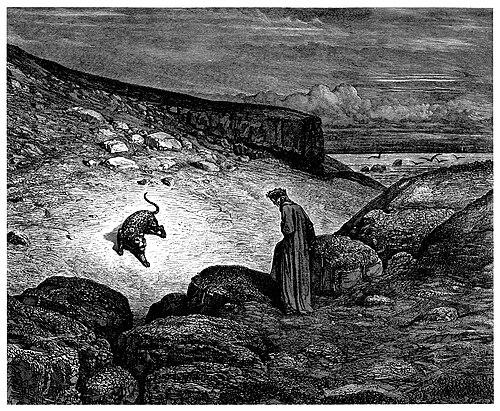
Canto I: The Panther
1861 · Dante's Inferno (1861)
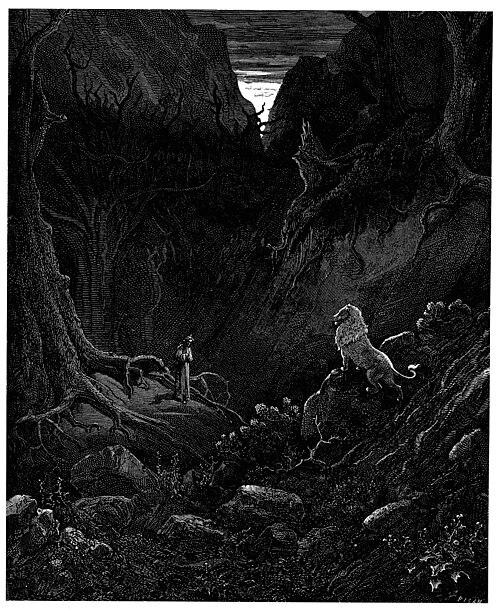
Canto I: The Lion
1861 · Dante's Inferno (1861)
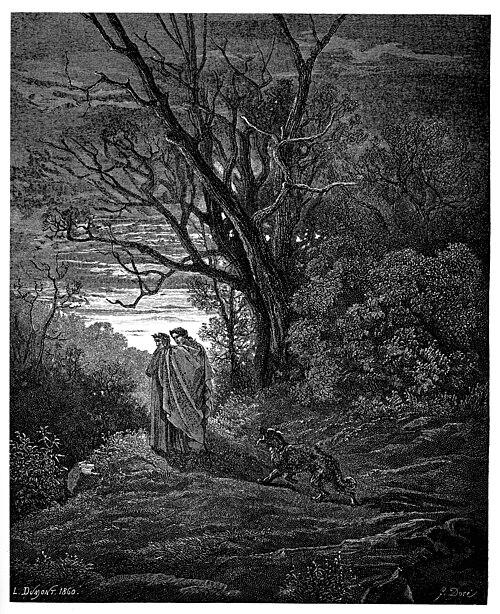
Canto I: Dante Meets Virgil
1861 · Dante's Inferno (1861)
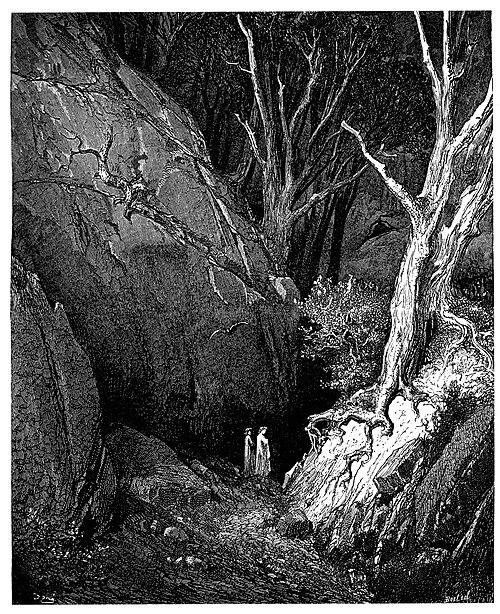
Canto I: Dante Follows Virgil
1861 · Dante's Inferno (1861)
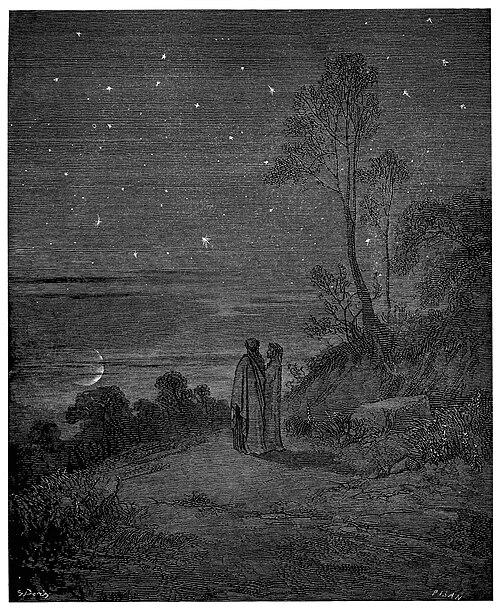
Canto II: The Day Departing
1861 · Dante's Inferno (1861)
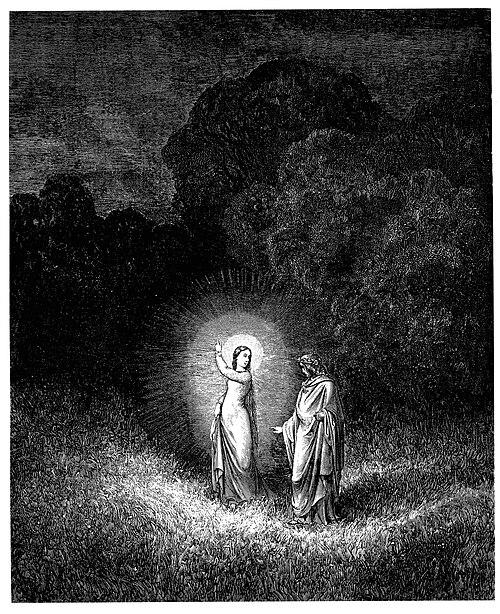
Canto II: Beatrice Sends Virgil
1861 · Dante's Inferno (1861)
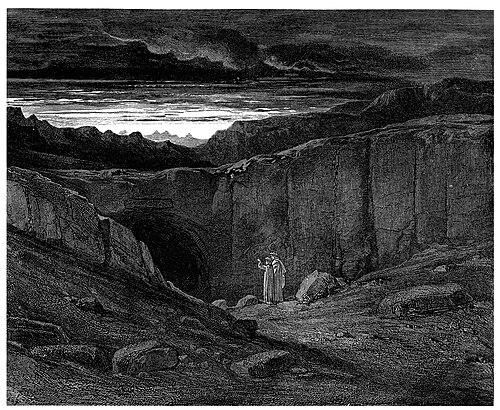
✦Canto III: The Gate of Hell
1861 · Dante's Inferno (1861)
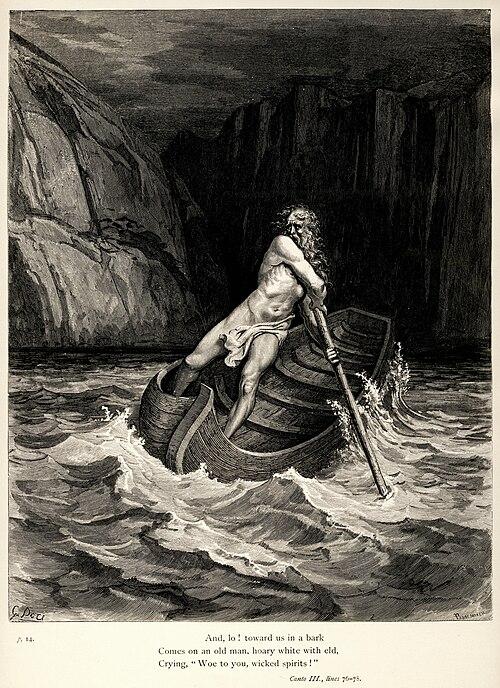
Canto III: Charon
1861 · Dante's Inferno (1861)
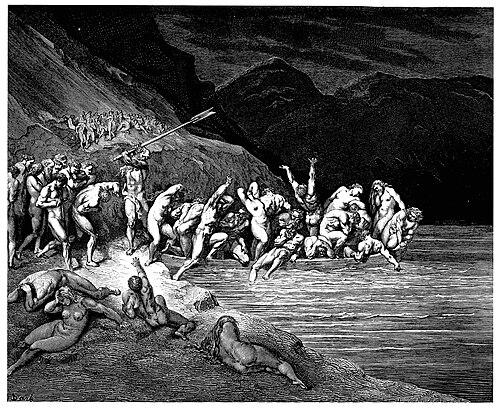
✦Canto III: Charon Herds the Sinners onto His Boat
1861 · Dante's Inferno (1861)
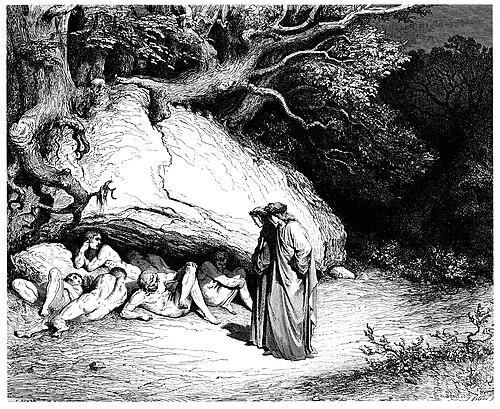
Canto IV: Limbo: The Unbaptised
1861 · Dante's Inferno (1861)
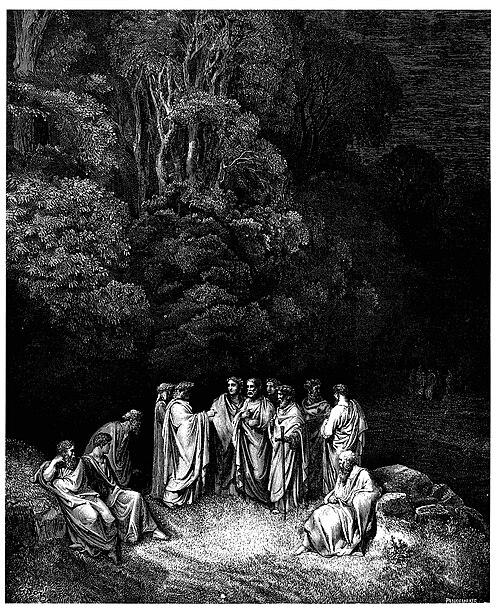
Canto IV: The Poets of Antiquity
1861 · Dante's Inferno (1861)
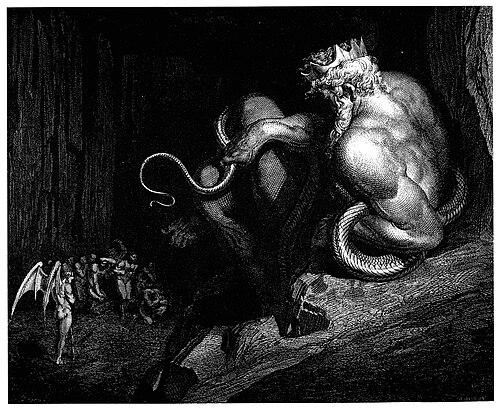
✦Canto V: Minos
1861 · Dante's Inferno (1861)
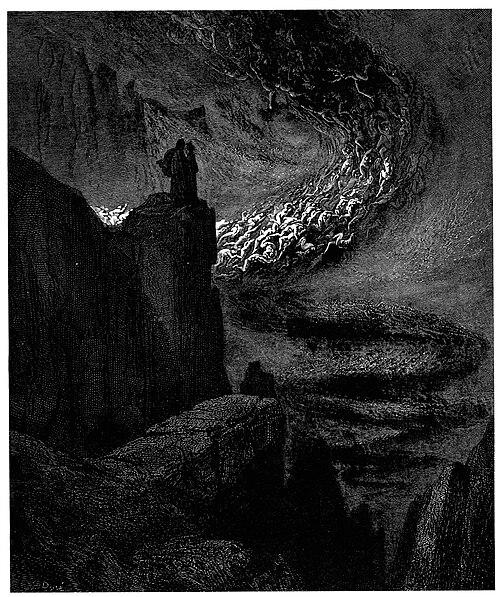
✦Canto V: The Infernal Hurricane
1861 · Dante's Inferno (1861)
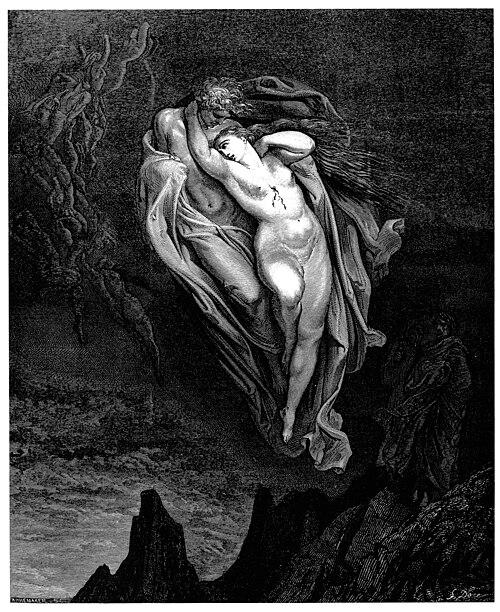
✦Canto V: Paolo and Francesca
1861 · Dante's Inferno (1861)
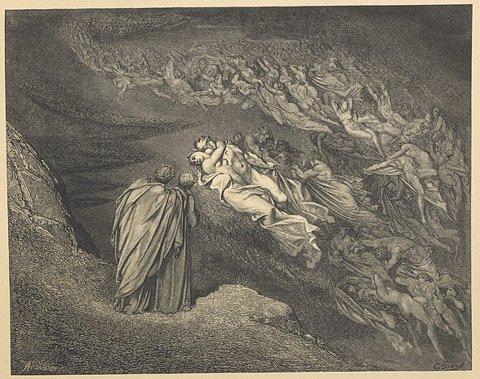
Canto V: Love Brought Us to One Death
1861 · Dante's Inferno (1861)
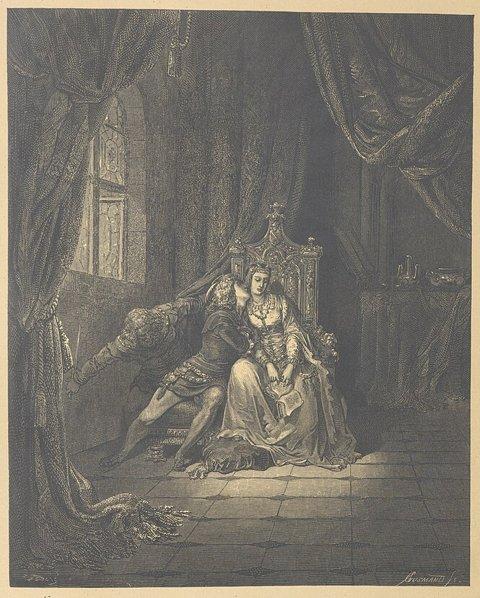
Canto V: Paolo and Francesca Reading
1861 · Dante's Inferno (1861)
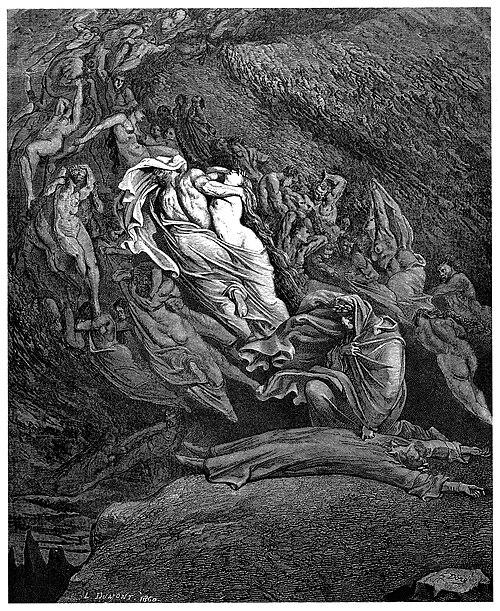
Canto V: Dante Swoons
1861 · Dante's Inferno (1861)
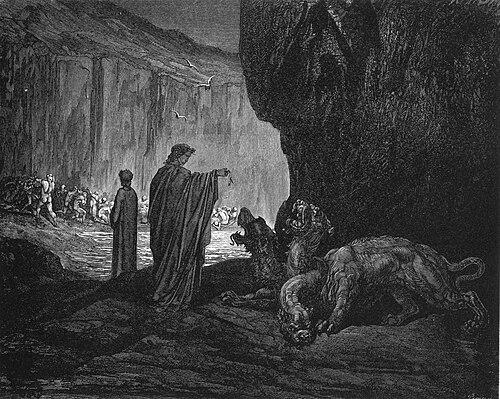
✦Canto VI: Cerberus
1861 · Dante's Inferno (1861)
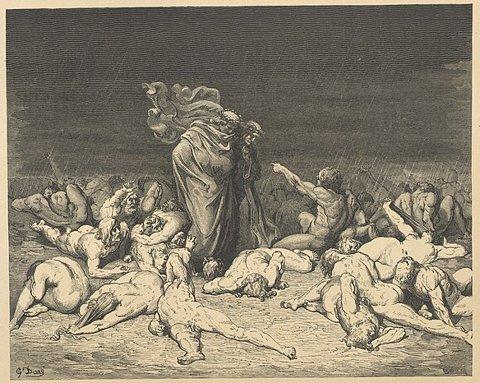
Canto VI: Ciacco
1861 · Dante's Inferno (1861)
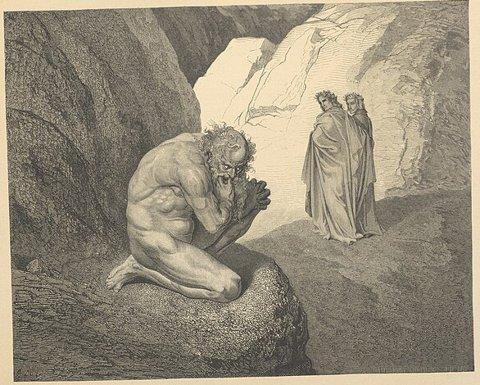
Canto VII: Plutus
1861 · Dante's Inferno (1861)
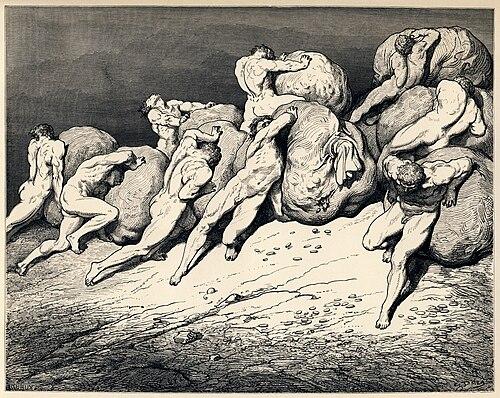
Canto VII: The Hoarders and Wasters
1861 · Dante's Inferno (1861)
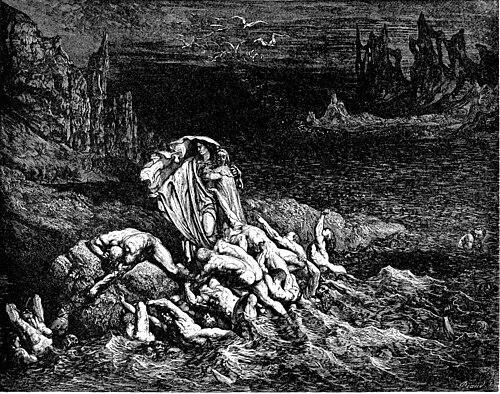
Canto VII: The Wrathful
1861 · Dante's Inferno (1861)
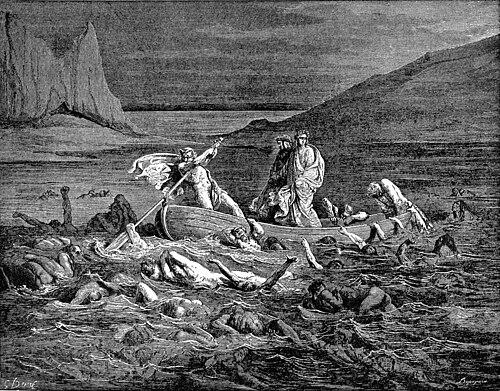
✦Canto VIII: Phlegyas Ferries Dante and Virgil across the Styx
1861 · Dante's Inferno (1861)
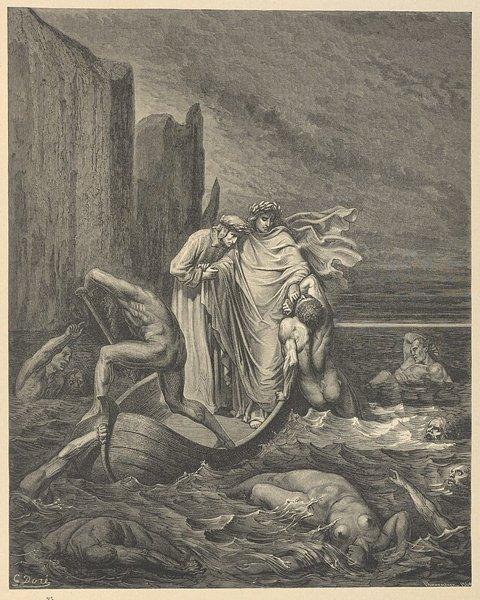
Canto VIII: Filippo Argenti
1861 · Dante's Inferno (1861)
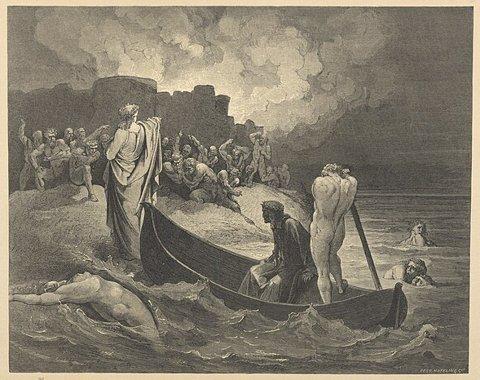
Canto VIII: Before the Gates of Dis
1861 · Dante's Inferno (1861)
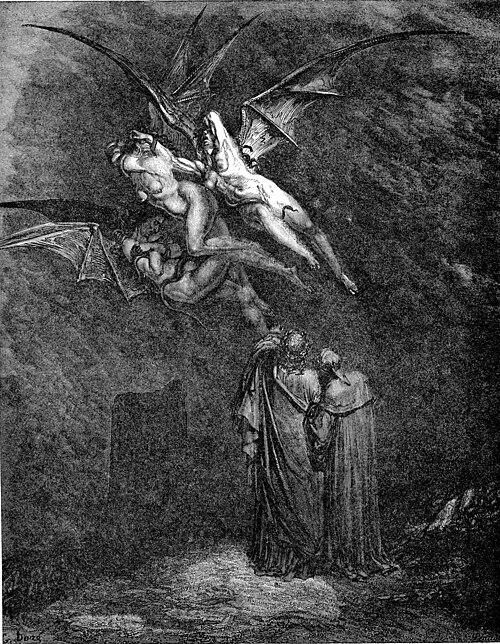
✦Canto IX: The Furies
1861 · Dante's Inferno (1861)
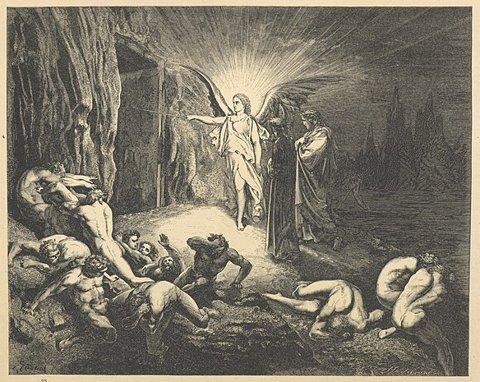
Canto IX: The Heavenly Messenger Opens the Gate of Dis
1861 · Dante's Inferno (1861)
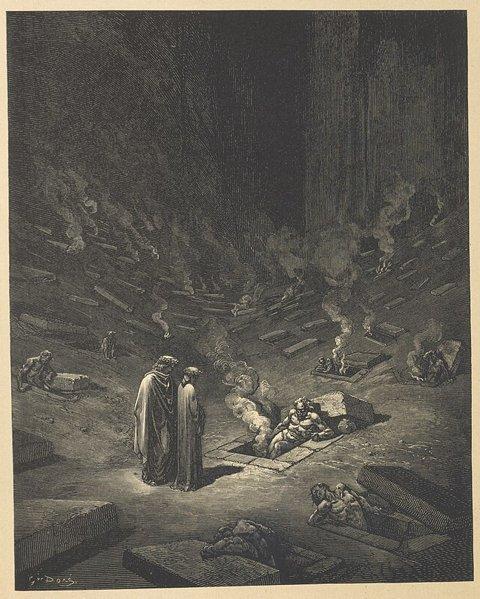
Canto IX: The Burning Tombs of the Heretics
1861 · Dante's Inferno (1861)
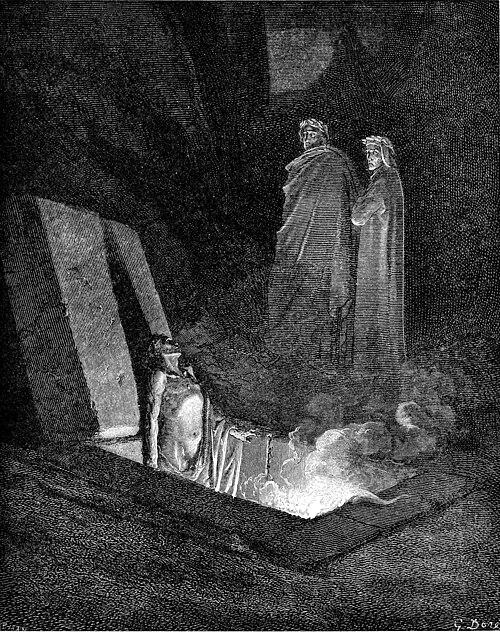
✦Canto X: Farinata degli Uberti
1861 · Dante's Inferno (1861)
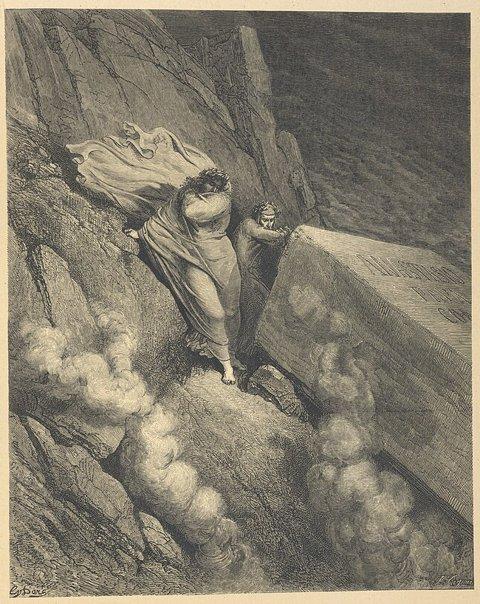
Canto XI: The Tomb of Pope Anastasius
1861 · Dante's Inferno (1861)
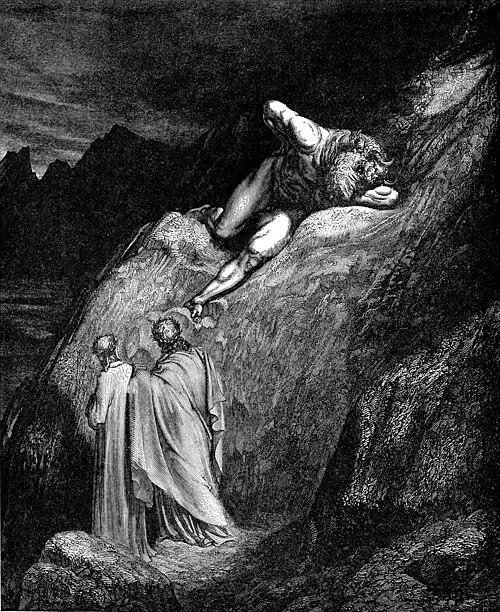
Canto XII: The Minotaur
1861 · Dante's Inferno (1861)
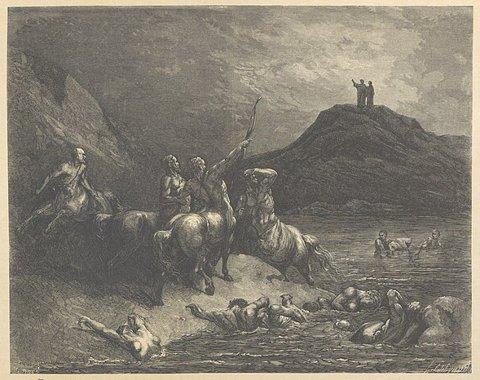
Canto XII: The Centaurs
1861 · Dante's Inferno (1861)
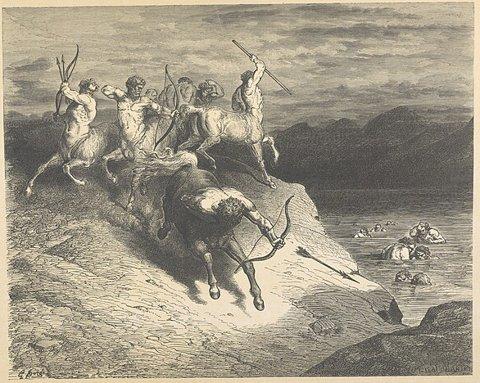
Canto XII: The Centaurs by the River of Blood
1861 · Dante's Inferno (1861)
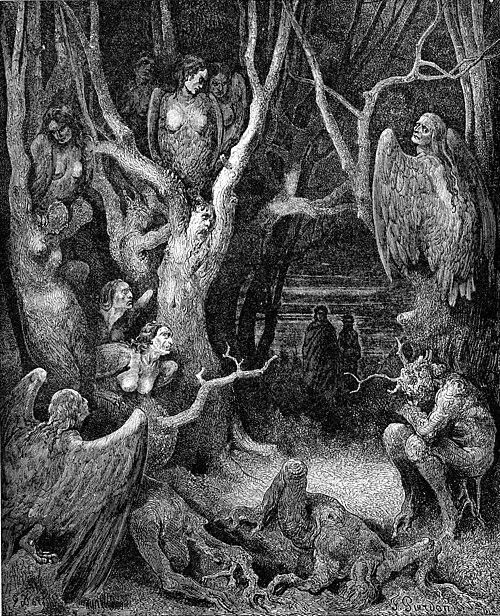
✦Canto XIII: The Harpies in the Wood of the Suicides
1861 · Dante's Inferno (1861)
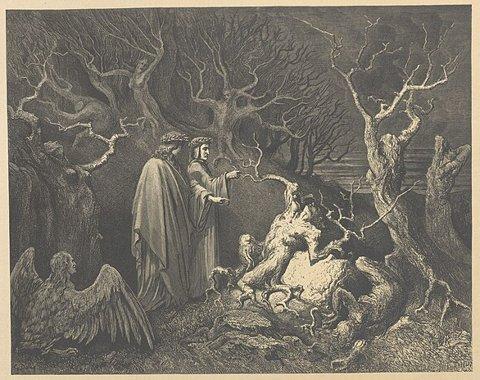
Canto XIII: Pier della Vigna
1861 · Dante's Inferno (1861)
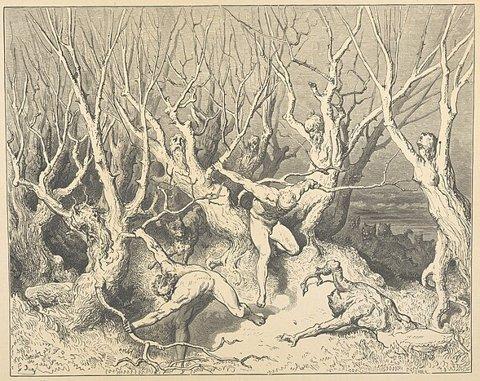
Canto XIII: The Squanderers Chased by Hounds
1861 · Dante's Inferno (1861)
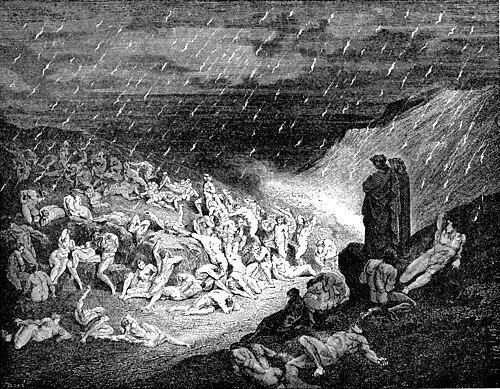
Canto XIV: The Rain of Fire
1861 · Dante's Inferno (1861)
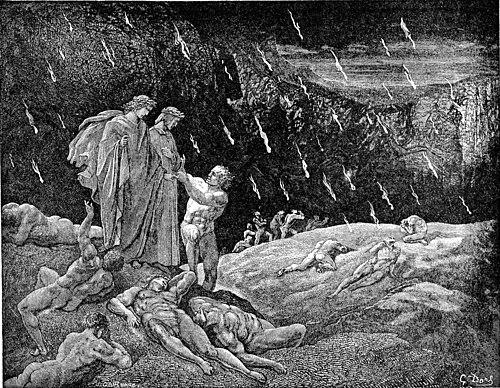
Canto XV: Brunetto Latini
1861 · Dante's Inferno (1861)
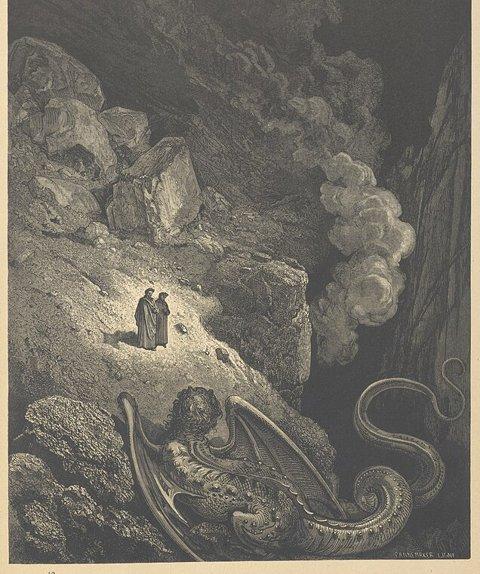
Canto XVII: Geryon Rises from the Abyss
1861 · Dante's Inferno (1861)
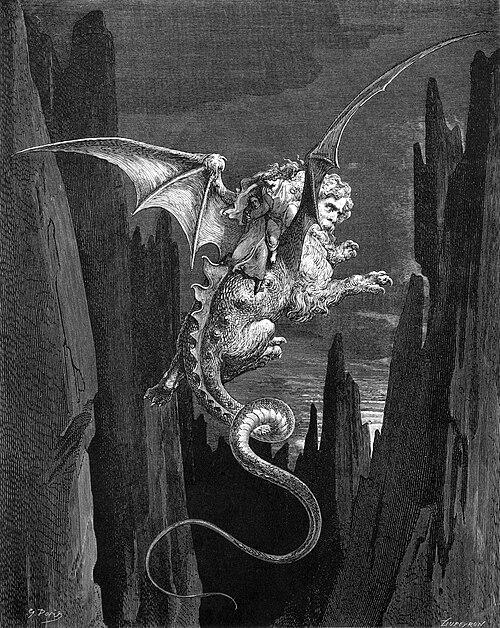
✦Canto XVII: The Descent on Geryon's Back
1861 · Dante's Inferno (1861)
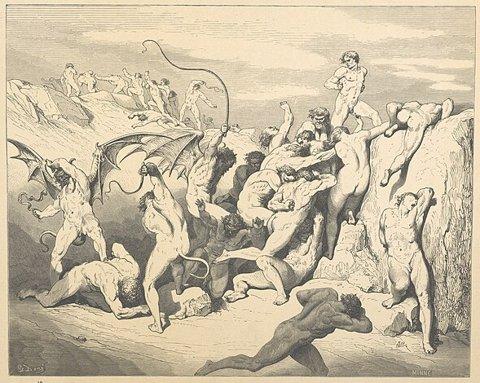
Canto XVIII: The Panders and Seducers Scourged by Demons
1861 · Dante's Inferno (1861)
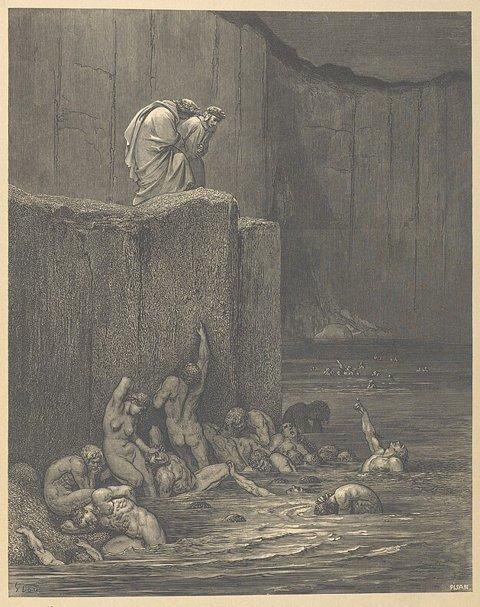
Canto XVIII: The Flatterers
1861 · Dante's Inferno (1861)
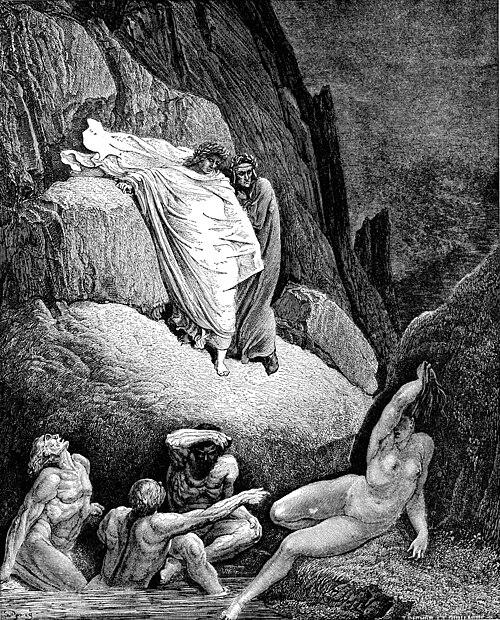
Canto XVIII: Thaïs
1861 · Dante's Inferno (1861)
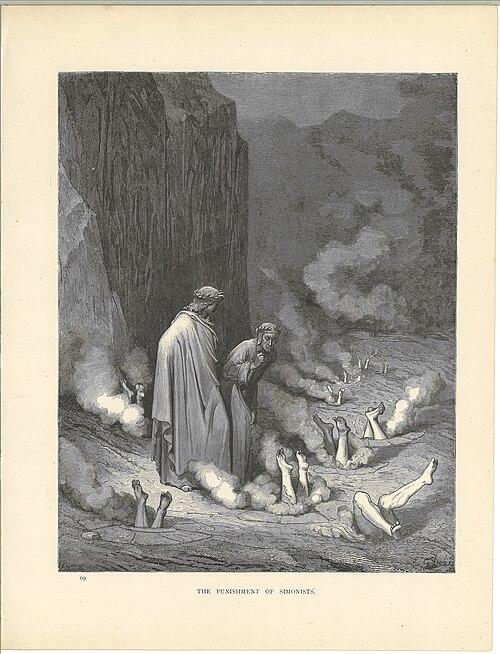
Canto XIX: Pope Nicholas III among the Simonists
1861 · Dante's Inferno (1861)
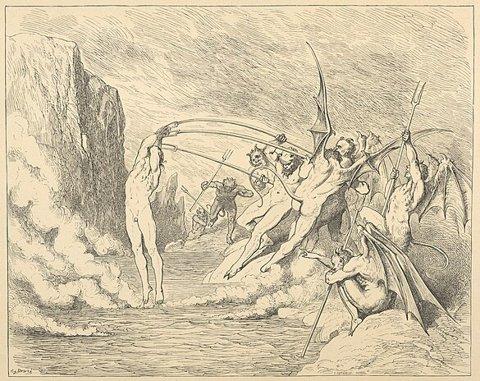
Canto XXI: The Barrators and the Malebranche
1861 · Dante's Inferno (1861)
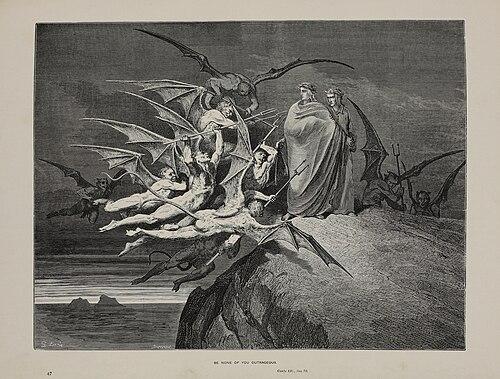
✦Canto XXI: The Demons Threaten Virgil
1861 · Dante's Inferno (1861)
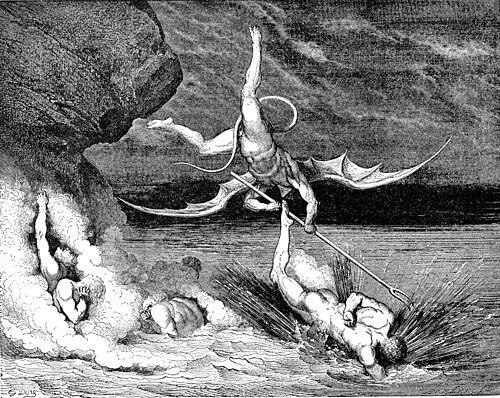
Canto XXII: Alichino Pursues Ciampolo
1861 · Dante's Inferno (1861)
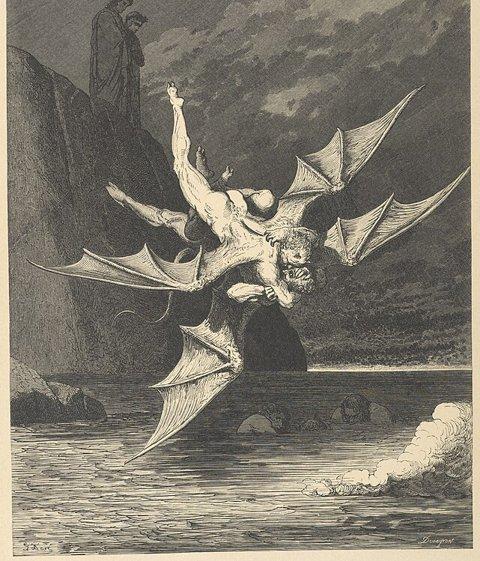
Canto XXII: Calcabrina and Alichino Fall into the Pitch
1861 · Dante's Inferno (1861)
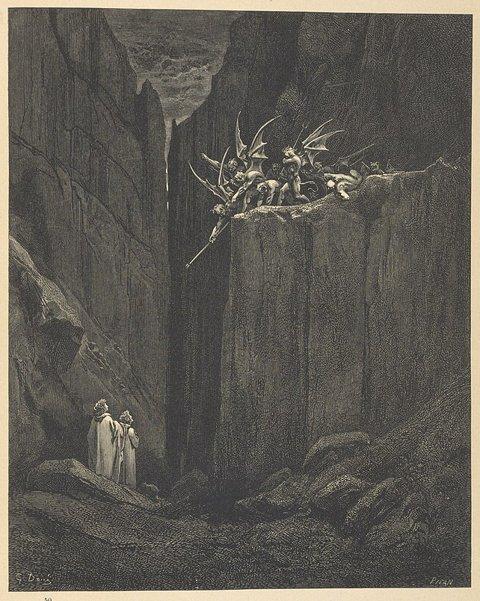
Canto XXIII: The Escape from the Malebranche
1861 · Dante's Inferno (1861)
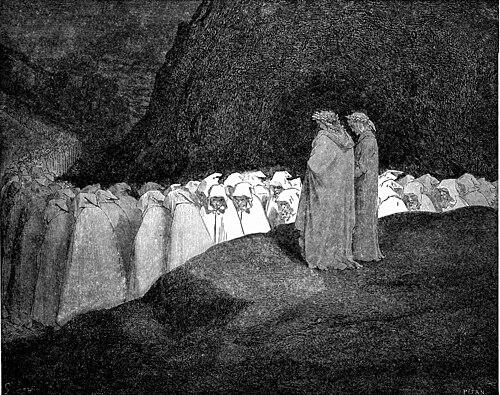
Canto XXIII: The Hypocrites
1861 · Dante's Inferno (1861)
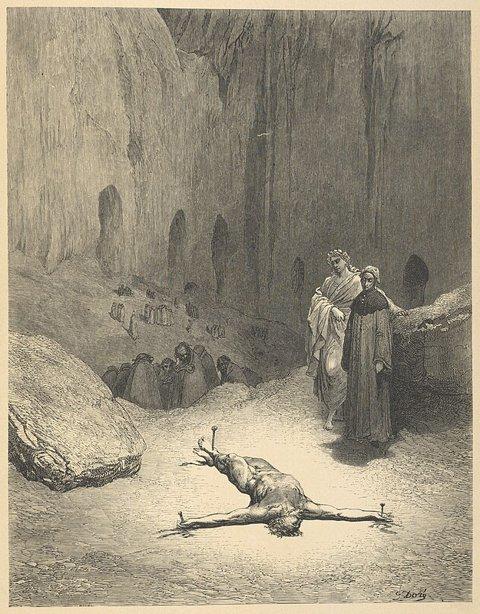
✦Canto XXIII: Caiaphas Crucified
1861 · Dante's Inferno (1861)
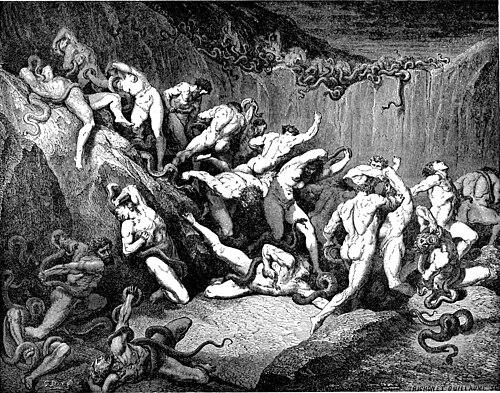
Canto XXIV: The Thieves and the Serpents
1861 · Dante's Inferno (1861)
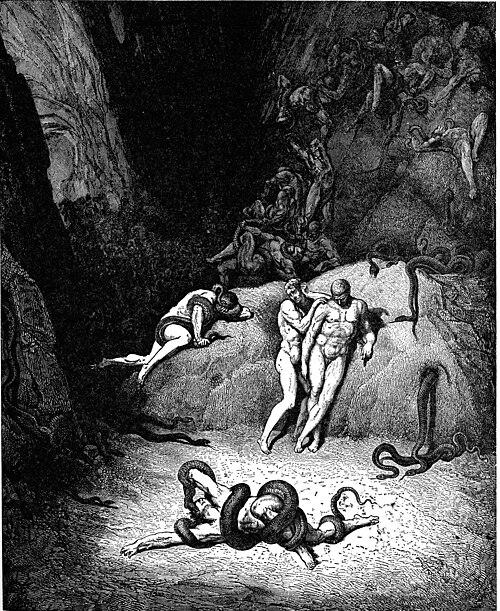
✦Canto XXV: Agnello Transformed
1861 · Dante's Inferno (1861)
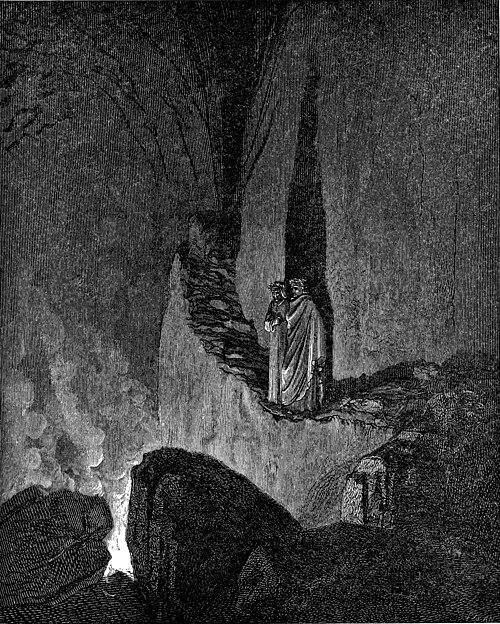
✦Canto XXVI: The Evil Counsellors in Their Flames
1861 · Dante's Inferno (1861)
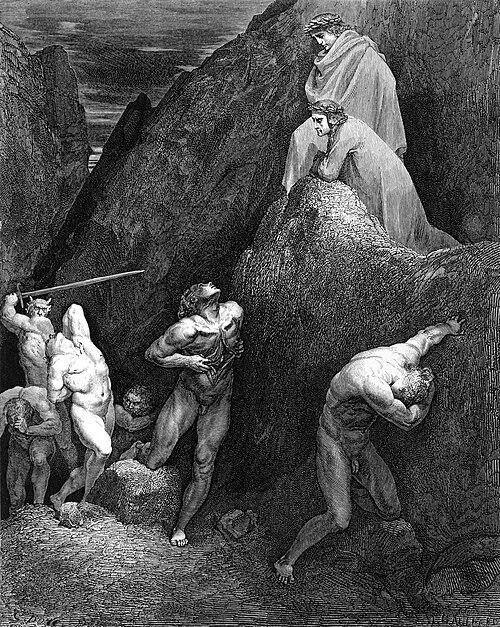
Canto XXVIII: Mahomet
1861 · Dante's Inferno (1861)
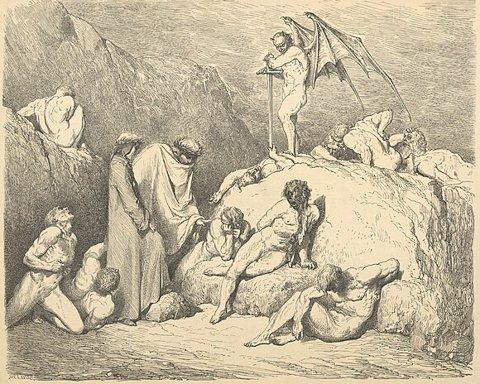
Canto XXVIII: Pier da Medicina
1861 · Dante's Inferno (1861)
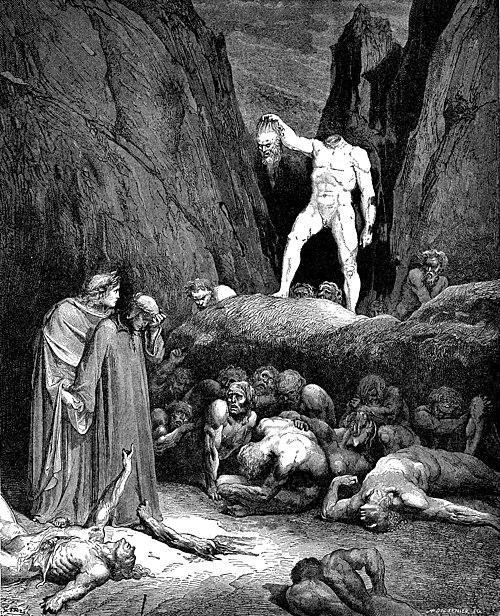
✦Canto XXVIII: Bertrand de Born
1861 · Dante's Inferno (1861)
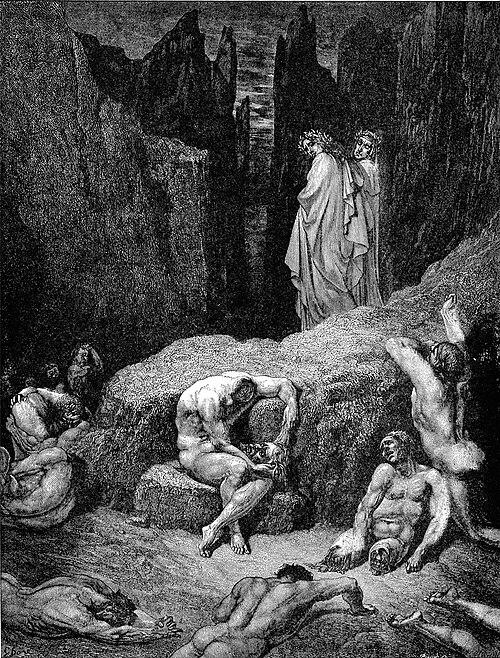
Canto XXIX: Virgil Reproves Dante's Curiosity
1861 · Dante's Inferno (1861)
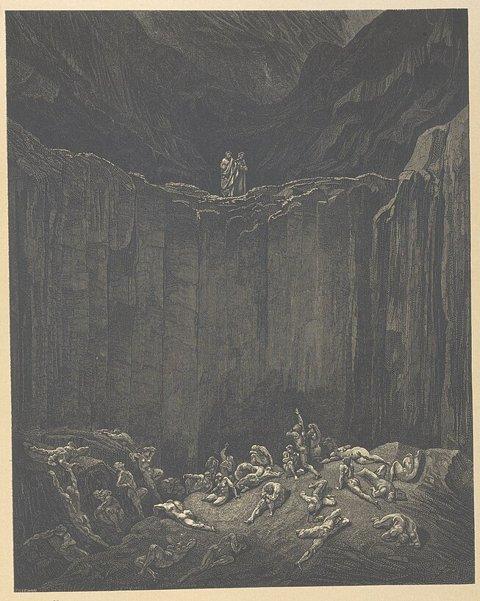
Canto XXIX: The Falsifiers
1861 · Dante's Inferno (1861)
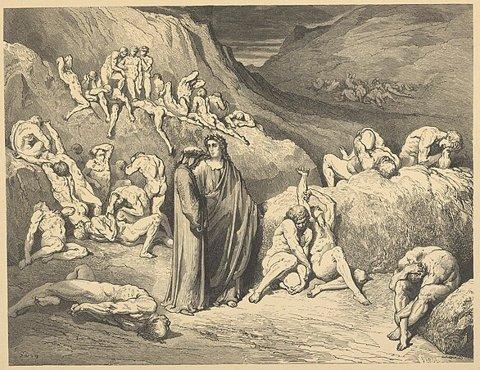
Canto XXIX: The Alchemists
1861 · Dante's Inferno (1861)
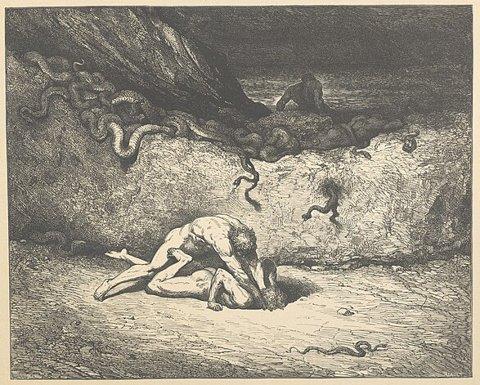
Canto XXX: Gianni Schicchi and Capocchio
1861 · Dante's Inferno (1861)
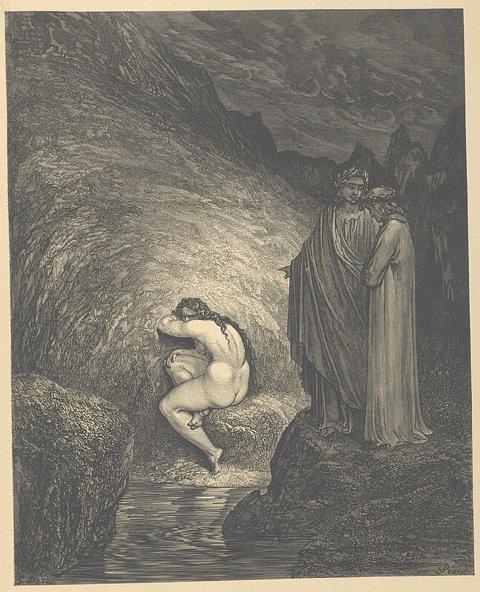
Canto XXX: Myrrha
1861 · Dante's Inferno (1861)
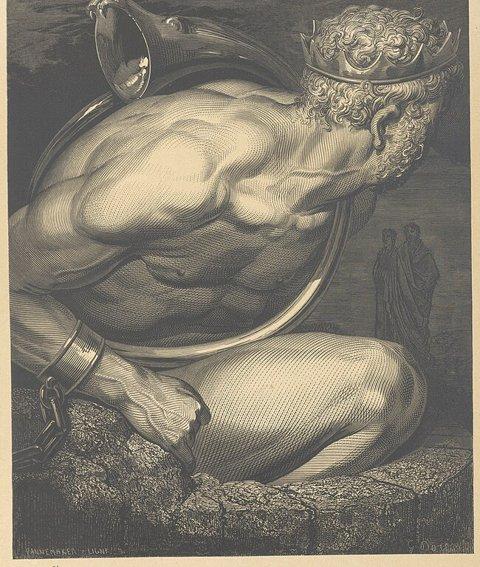
Canto XXXI: Nimrod
1861 · Dante's Inferno (1861)
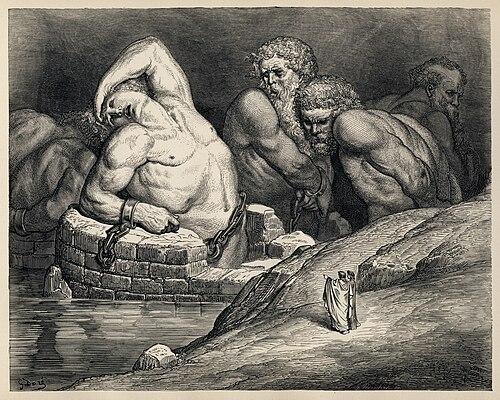
✦Canto XXXI: The Giants
1861 · Dante's Inferno (1861)
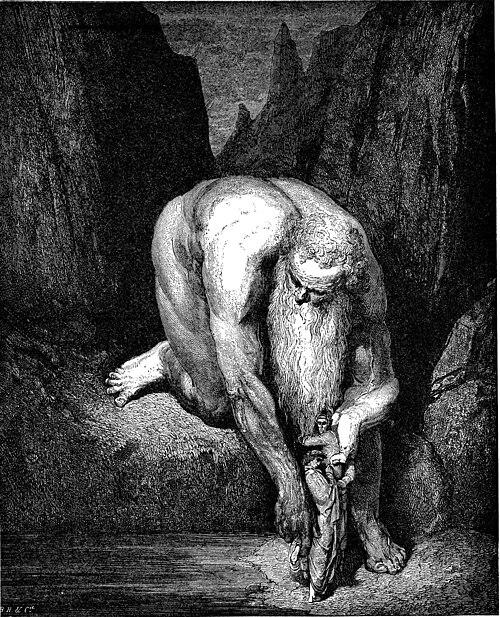
Canto XXXI: Antaeus Lowers Dante and Virgil
1861 · Dante's Inferno (1861)
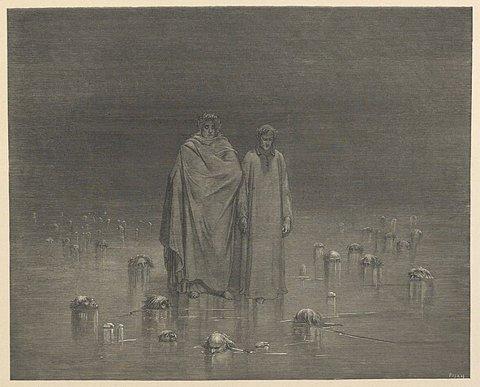
Canto XXXII: The Traitors in the Ice
1861 · Dante's Inferno (1861)
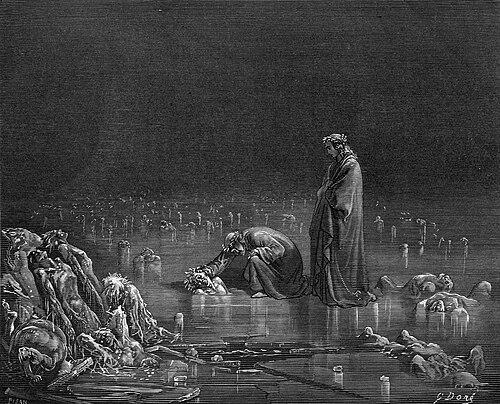
Canto XXXII: Bocca degli Abati
1861 · Dante's Inferno (1861)
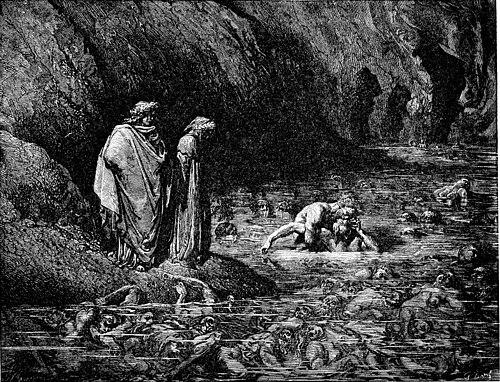
Canto XXXII: Ugolino Gnawing the Head of Ruggieri
1861 · Dante's Inferno (1861)
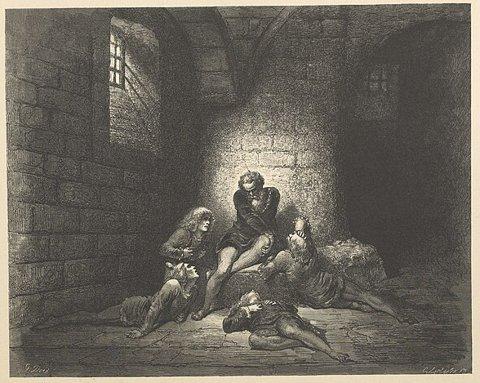
✦Canto XXXIII: Ugolino in the Tower
1861 · Dante's Inferno (1861)
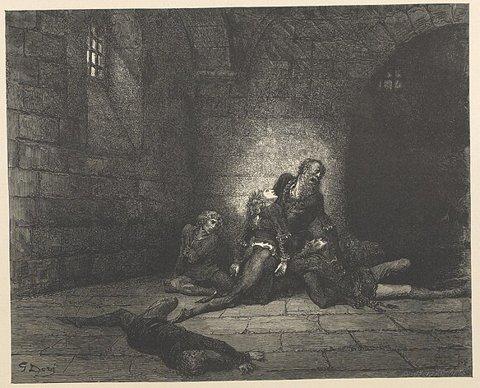
Canto XXXIII: Ugolino and His Dying Sons
1861 · Dante's Inferno (1861)
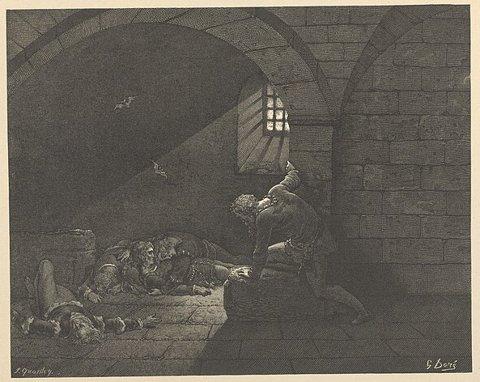
Canto XXXIII: Ugolino's Death
1861 · Dante's Inferno (1861)
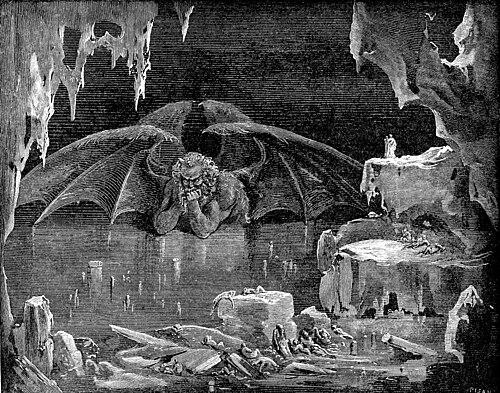
✦Canto XXXIV: Lucifer, King of Hell
1861 · Dante's Inferno (1861)
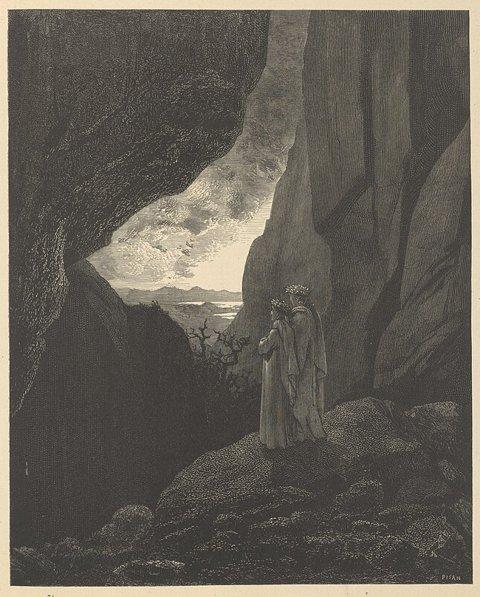
Canto XXXIV: The Ascent from Hell
1861 · Dante's Inferno (1861)
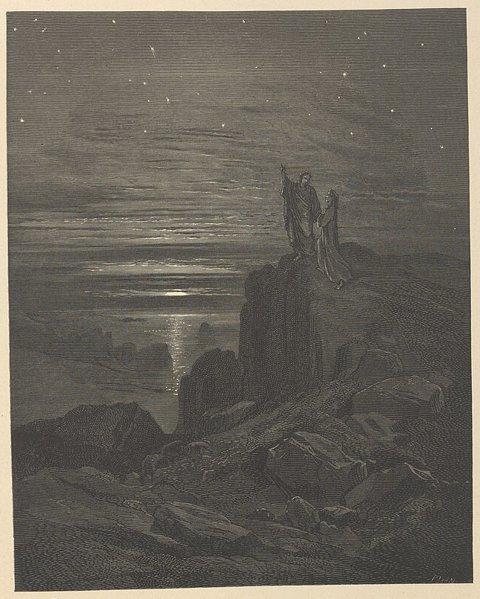
Canto XXXIV: Dante and Virgil Behold the Stars
1861 · Dante's Inferno (1861)
How the book came about
Doré had been planning a series of great illustrated books since his early twenties: Dante, Cervantes, the Bible, Milton, Ariosto, Shakespeare. The Inferno was the first, and the hardest to finance. A folio of 75 full-page wood engravings, each block a large and costly object, was a risk that publishers were unwilling to take on for a young caricaturist known mostly for comic albums and smaller book work. Doré therefore paid the production costs himself, and Louis Hachette's firm published the book in 1861.
It sold. The Inferno turned Doré from a prodigy into the most sought-after illustrator in Europe, and it set the format for everything that followed: one full page per scene, printed on its own leaf, with the text kept separate. The same year he was made a Knight of the Legion of Honor. Hachette then committed to the rest of the poem, and Le Purgatoire et le Paradis followed in 1868. In London, Cassell, Petter and Galpin brought the Hell plates out in 1866 as The Vision of Hell, using Henry Francis Cary's English translation, which is how most English-speaking readers first met them.
How the plates were made
Doré did not cut the blocks. He drew each design directly onto the smooth end-grain surface of a boxwood block, working in wash and pencil, and a professional wood engraver then cut it, translating his tones into lines, dots and white-cut hatching with a burin. The engravers' names often appear cut into the lower margin of the image beside Doré's. For the Divine Comedy the most important were Héliodore Pisan, who engraved many of the Hell plates (the Bibliothèque nationale de France records his block for Virgil and Dante in Canto II), and Stéphane Pannemaker, whose name is on the plate of Charon and on the frontispiece portrait of Dante. Museum records for the 1868 volume also credit Pisan, the Pannemaker workshop and Hildibrand, among others.
This division of labor explains the look of the plates. The engraver's job was to render Doré's washes as gradations of gray, so the pictures read almost like photographs of a stage set: deep blacks for the abyss, fine parallel lines for fog and smoke, flecks of white for flame. Because the blocks were later copied as electrotypes, the same images could be printed in very large runs without wearing out the original wood.
A walk through the Inferno plates
The cycle opens on the poem's first lines, Midway upon the journey of our life / I found myself within a forest dark (Longfellow's translation). In Dante Lost in the Dark Wood a tiny figure stands among enormous trunks, and the scale is the point: Doré makes the reader feel lost before the journey begins. A few plates later, The Gate of Hell shows Dante and Virgil before the inscription that ends All hope abandon, ye who enter in!
At the river Acheron, Charon drives the souls into his boat with his oar, and in Canto V the judge Minos sits coiled in his tail, assigning each sinner a circle. The same canto gives Doré two of his most copied images: The Whirlwind of the Lustful, a spiral of bodies blown like leaves, and Paolo and Francesca, the lovers held together in the storm.
The middle circles are a sequence of set pieces. Cerberus crouches over the gluttons in the rain. On the Styx, Filippo Argenti grips the side of Phlegyas's boat. The Furies shriek from the tower of Dis, and Farinata rises from his burning tomb as if Hell were beneath him. In The Wood of the Suicides the harpies perch in trees that are the souls themselves, and Geryon, the monster of fraud, carries the poets down into the eighth circle.
Malebolge, the ten ditches of fraud, gives Doré his crowds and his grotesques: the Malebranche demons with their hooks, Caiaphas staked across the path of the hypocrites, the thieves wrapped and transformed by serpents, Ulysses and Diomedes sharing one forked flame, and Bertran de Born holding up his own severed head like a lantern.
The last cantos turn colder. The Giants stand waist-deep in the pit like towers, Count Ugolino sits among his dying sons in the Tower of Hunger, and the cycle ends with Lucifer, The Emperor of the kingdom dolorous, frozen to the chest in the ice of Cocytus. Doré's Lucifer is not a horned devil but a huge, sullen fallen angel with bat wings, closer to Milton than to medieval painting; he rhymes with Doré's own Satan Cast Out of Heaven from Paradise Lost and belongs in any survey of fallen angels in art.
The Purgatorio and Paradiso plates of 1868
The second volume changes key. The 42 Purgatorio plates trade fire for mountain light, dawn skies and processions of penitents; the 18 Paradiso plates are almost abstract, built from concentric rings of angels drawn in white lines against the dark. The culmination is The Empyrean, the celestial rose of Canto XXXI, in which Dante and Beatrice stand before a whirlpool of light made of countless tiny figures. Some critics have judged these later blocks less vivid than the Hell plates, but the Empyrean is one of the most reproduced images Doré ever designed.
The painting: Dante and Virgil in the Ninth Circle
Doré also turned to Dante as a painter. Dante and Virgil in the Ninth Circle of Hell, a large canvas of 1861 now at the Monastère royal de Brou in Bourg-en-Bresse, shows the poets among the traitors frozen in the ice, with Ugolino gnawing at Archbishop Ruggieri. Set beside the engravings, it shows how much of the effect of the plates comes from black and white alone.
The plates' afterlife
The 1861 designs were reprinted throughout the nineteenth and twentieth centuries in French, English, Italian and German editions, usually from electrotypes, and they remain in print today in inexpensive facsimiles. They became the default visual vocabulary for Dante's Hell. The Italian silent film L'Inferno (1911), directed by Francesco Bertolini, Adolfo Padovan and Giuseppe De Liguoro, staged its tableaux so closely after Doré's engravings that it reads as the plates set in motion. Later painters of the subject, from Gustave Courtois in Dante and Virgil in Hell onward, worked in a world that already knew Doré's version.
Where to see the original editions
First editions of the 1861 L'Enfer and the 1868 Purgatoire et Paradis survive in many research libraries, including the Bibliothèque nationale de France and the Royal Academy of Arts library in London, and single impressions of the plates are in the Metropolitan Museum of Art, the Morgan Library and the Courtauld. Complete digitized copies can be read online through Gallica, the Internet Archive and Wikimedia Commons. For the other books, see Doré's Paradise Lost, the Doré Bible, The Raven and The Rime of the Ancient Mariner; for the man, see Gustave Doré; and for every plate in the complete catalogue, browse the full archive. The plates also sit at the heart of the dark academia canon.
Questions & answers
How many illustrations did Doré make for Dante's Inferno?
Doré designed 75 full-page wood engravings for the Inferno, published by Hachette in 1861; with the frontispiece portrait of Dante there are 76 illustrations. He added 60 more in 1868, 42 for the Purgatorio and 18 for the Paradiso, for a total of 135 Divine Comedy plates.
When were Doré's Inferno illustrations published?
The Inferno plates first appeared in 1861 in L'Enfer de Dante Alighieri, a large folio published in Paris by Hachette, which Doré financed himself. The Purgatorio and Paradiso followed from Hachette in 1868, and Cassell published the Hell plates in London in 1866 as The Vision of Hell, with Cary's English translation.
Who engraved Doré's Dante illustrations?
Doré drew each design on the woodblock; professional engravers cut them. Héliodore Pisan engraved many of the Inferno plates, and Stéphane Pannemaker cut others, including Charon and the frontispiece portrait. Their names are often cut into the lower margin of the print beside Doré's signature.
Are Gustave Doré's Inferno illustrations public domain?
Yes. Doré died in 1883 and the engravings were published in 1861 and 1868, so the original images are in the public domain worldwide. Modern photographs or scans of them may carry their own terms in some countries, but faithful scans of the prints, such as those on Wikimedia Commons, are generally free to use.
Where can I see Doré's Inferno in its original edition?
Copies of the 1861 Hachette folio are held by major libraries such as the Bibliothèque nationale de France and the Royal Academy library, and single prints are in the Met, the Morgan and the Courtauld. Full digitized copies are on Gallica, the Internet Archive and Wikimedia Commons; the 1866 Cassell edition is the usual English one.
Related guides
- The Dark Academia Aesthetic: A Guide Through Art
Candlelight, Greek tragedy, a skull on the bookshelf: the paintings and sculptures behind the internet's most literary aesthetic, and how to bring them home.
- Angels and Demons in Art: Statues, Paintings and Fallen Angels
From Bernini's marble angels in Rome to Cabanel's weeping Lucifer, how artists have given bodies to beings that have none.
- Fallen Angel Paintings: Lucifer and the Rebel Angels in Art
From medieval battles in heaven to Cabanel's weeping Lucifer and Stuck's glowing eyes: how artists turned the first rebel into a tragic hero.
- Death in Art: Famous Paintings of Death and Mourning
Skeletons, deathbeds, martyrs and islands of the dead: how artists have looked at the one subject no one escapes.