The Wood of the Suicides
Gustave Doré, 1861
The Wood of the Suicides is Gustave Doré's 1861 wood engraving for Inferno, Canto XIII: harpies with women's faces roost in a forest of pale trees that were once human souls, while Dante and Virgil stand small in the distance.
- Artist
- Gustave Doré
- Date
- 1861
- Medium
- Wood engraving
- Movement
- Romanticism
- Themes
- The Macabre, Death & Memento Mori, Literature & Poetry, Mythology, Dark Academia
Appears in
The Wood of the Suicides is Gustave Doré's wood engraving of the harpies in the forest of Canto XIII of Dante's Inferno, published in Paris in 1861. In the second ring of the seventh circle, the souls of suicides have become trees, and the harpies of ancient myth roost in their branches, tearing at them. Doré's plate is the image most people picture when they think of this canto, and one of the most unsettling of Doré's Inferno illustrations.
What you are looking at
The plate is upright and crowded. Pale, smooth trunks rise through the whole height of the picture and fork into bare branches. In them sit the harpies: birds with the heads and breasts of women, folded wings, feathered bellies and hooked talons gripping the bark. Three huddle in the top fork, one leans out on the left, one perches high on the right with her long hair falling over her wings, and another, seen from behind at lower left, spreads a great wing toward us.
Then the trees themselves start to show what they are. In the central trunk a bearded face pushes out of the bark, mouth open, and just above it a branch ends in a snapped stub. On the right a crouching human body is half turned into wood: twigs sprout from its head like antlers, its face is buried in its hands, and its legs run down into roots. Across the foreground, roots twist into shapes like knotted limbs and clawed hands.
Far back, framed by an arch of branches, Dante and Virgil stand small and dark against a pale band of light. The whole surface is cut in short, curling strokes that make the bark, feathers and roots feel equally alive. The block is signed "G. Doré" at lower left and "F. Pierdon" at lower right.
The passage: Canto XIII
Dante enters a wood "That was not marked by any path whatever" (XIII.3, Longfellow's translation), with dusky leaves and "branches ... gnarled and intertangled" (XIII.5). Then he names its tenants:
There do the hideous Harpies make their nests, Who chased the Trojans from the Strophades ... Broad wings have they, and necks and faces human, And feet with claws, and their great bellies fledged; They make laments upon the wondrous trees. (XIII.10–15)
The harpies come from Virgil's Aeneid, Book III, where they foul the Trojans' food on the Strophades islands. Dante hears wailing but sees no one, so Virgil tells him to break a twig. The tree bleeds and speaks: "Men once we were, and now are changed to trees" (XIII.37). It is Pier della Vigna, chancellor to Emperor Frederick II, who killed himself in 1249 after he was accused of treason and blinded. He explains that the harpies feed on the leaves and "Do pain create, and for the pain an outlet" (XIII.102): the wounds are the only way these souls can speak.
How Doré staged it
Dante's wood is a thicket of poisonous thorns, and its secret is that nothing in it looks human until a branch bleeds. Doré gives the secret away. His trees are tall and smooth, more like an old beech wood than a bramble, and he lets faces and bodies show through the bark, so that we see the transformation that Dante only hears. The stub above the bearded face may recall the twig Dante breaks a few lines later, though Doré gave that moment a separate plate of its own.
He also turns the harpies into the real subject. Dante gives them five lines; Doré gives them the plate, and he makes them disturbingly human, with women's faces that are tired, sly or blank rather than monstrous. The poets are pushed into the distance, so the viewer, not Dante, seems to be the one who has walked into the wood.
How it was made and published
Doré drew the composition on a boxwood block, and François Pierdon, whose signature is cut into the lower right corner, engraved it. The engraver had to invent a line for every texture: tight curls for feathers, longer flowing strokes for bark, a fine horizontal tint for the distant light. The plate appeared in the 1861 Hachette folio L'Enfer de Dante Alighieri, which Doré financed himself. The impression shown here is from the Berlin edition of 1870, digitized by the National Library of Poland. Doré made two further plates for this canto: Dante breaking the branch of Pier della Vigna, and the spendthrifts hunted through the trees by black dogs.
What it means
The punishment fits a precise idea. Those who threw away their bodies are denied a human form; they may speak only when they are wounded, and at the Last Judgment their bodies will hang from their own branches. Dante treats Pier della Vigna with pity, and the canto is one of the most humane in the Inferno.
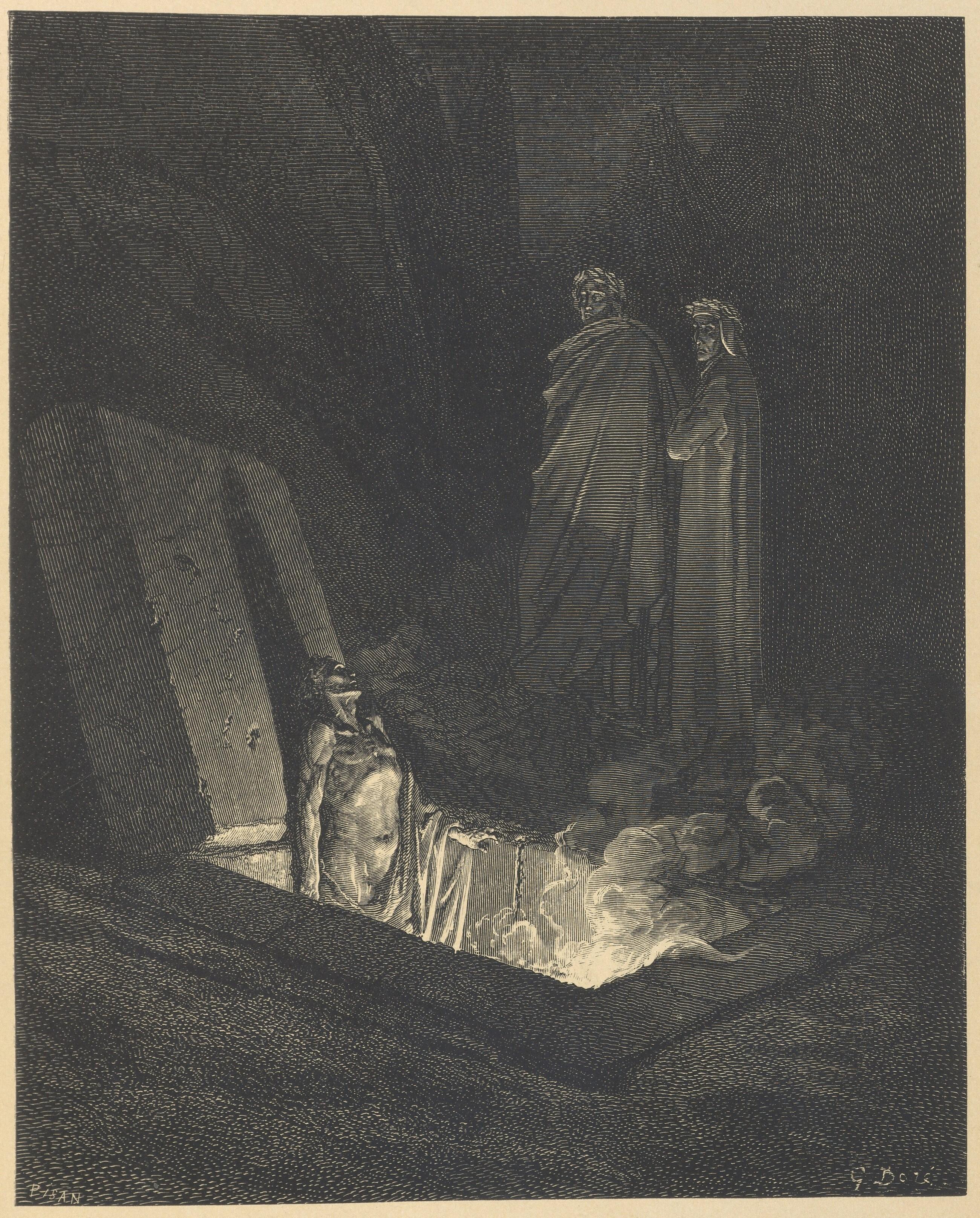
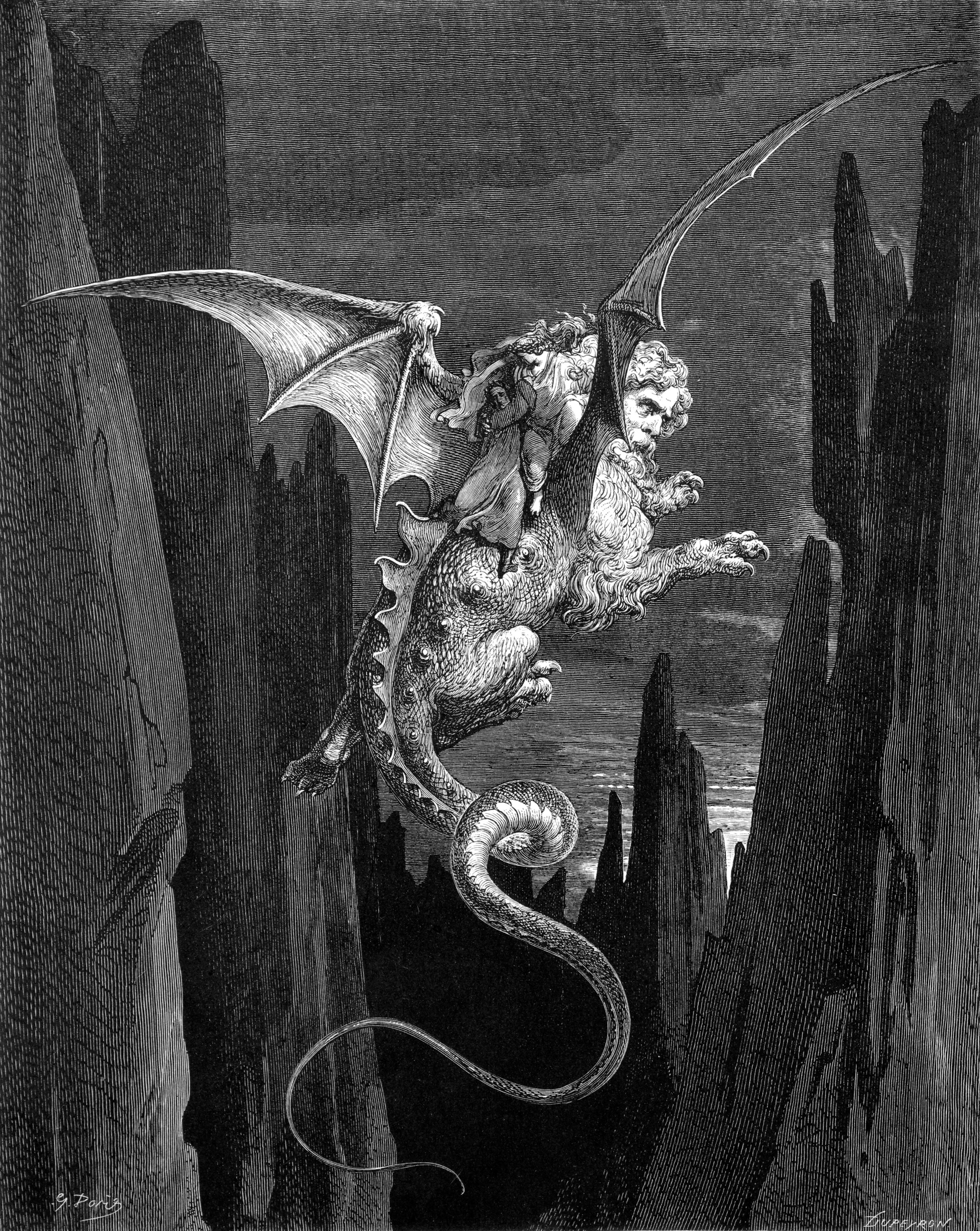
Doré's picture is less pitying and more eerie. Its horror lies in the blurred borders between woman and bird, man and tree, and it is the kind of image the Gothic imagination has fed on ever since. Read it beside the gentler sorrow of Paolo and Francesca, the burning tombs of Farinata one circle above, and the monster waiting at the edge of the next circle in Geryon. For more on Gustave Doré and the wider subject, see death in art.
Questions & answers
What does Doré's Wood of the Suicides show?
It shows the harpies of Inferno Canto XIII perched in a forest whose trees are the souls of suicides. Faces and bodies push out of the bark, and Dante and Virgil stand far back. It illustrates the lines "There do the hideous Harpies make their nests" and "They make laments upon the wondrous trees" (XIII.10–15, Longfellow).
When was The Wood of the Suicides made?
Doré drew it in the late 1850s for his illustrated Inferno, published by Hachette in Paris in 1861 as L'Enfer de Dante Alighieri. He financed that edition himself. The image shown here comes from the 1870 Berlin edition, which reprinted the same engravings.
Who engraved the harpies plate?
It is signed "F. Pierdon" at lower right, for the wood engraver François Pierdon. As with all the Inferno plates, Doré drew the design directly on the woodblock and a specialist engraver cut it, translating his tones into lines. Doré's own signature is at lower left.
Why are there harpies in Dante's wood of the suicides?
Dante borrowed them from Virgil's Aeneid, where harpies drive the Trojans from the Strophades islands. In the Inferno they feed on the leaves of the soul-trees, wounding them; the suicides can only speak through these wounds. They embody a torment that comes from outside but answers an act of self-destruction.
What is the meaning of the wood of the suicides?
Souls who rejected their bodies are denied human form and turned into thorny trees. At the Last Judgment their bodies will hang from their branches. Doré makes the idea visible by letting faces and limbs show through the bark, something Dante's text keeps hidden until a twig is broken and bleeds.
More by Gustave Doré
All works →
Lucifer, King of Hell
Gustave Doré · 1861
Minos, Judge of the Damned
Gustave Doré · 1861
Crossing the Styx (Filippo Argenti)
Gustave Doré · 1861
The Gate of Hell (Abandon All Hope)
Gustave Doré · 1861
Charon, Ferryman of the Dead
Gustave Doré · 1861
Count Ugolino and His Sons
Gustave Doré · 1861
Dante Lost in the Dark Wood
Gustave Doré · 1861
The Thieves and the Serpents
Gustave Doré · 1861
Also from 1861
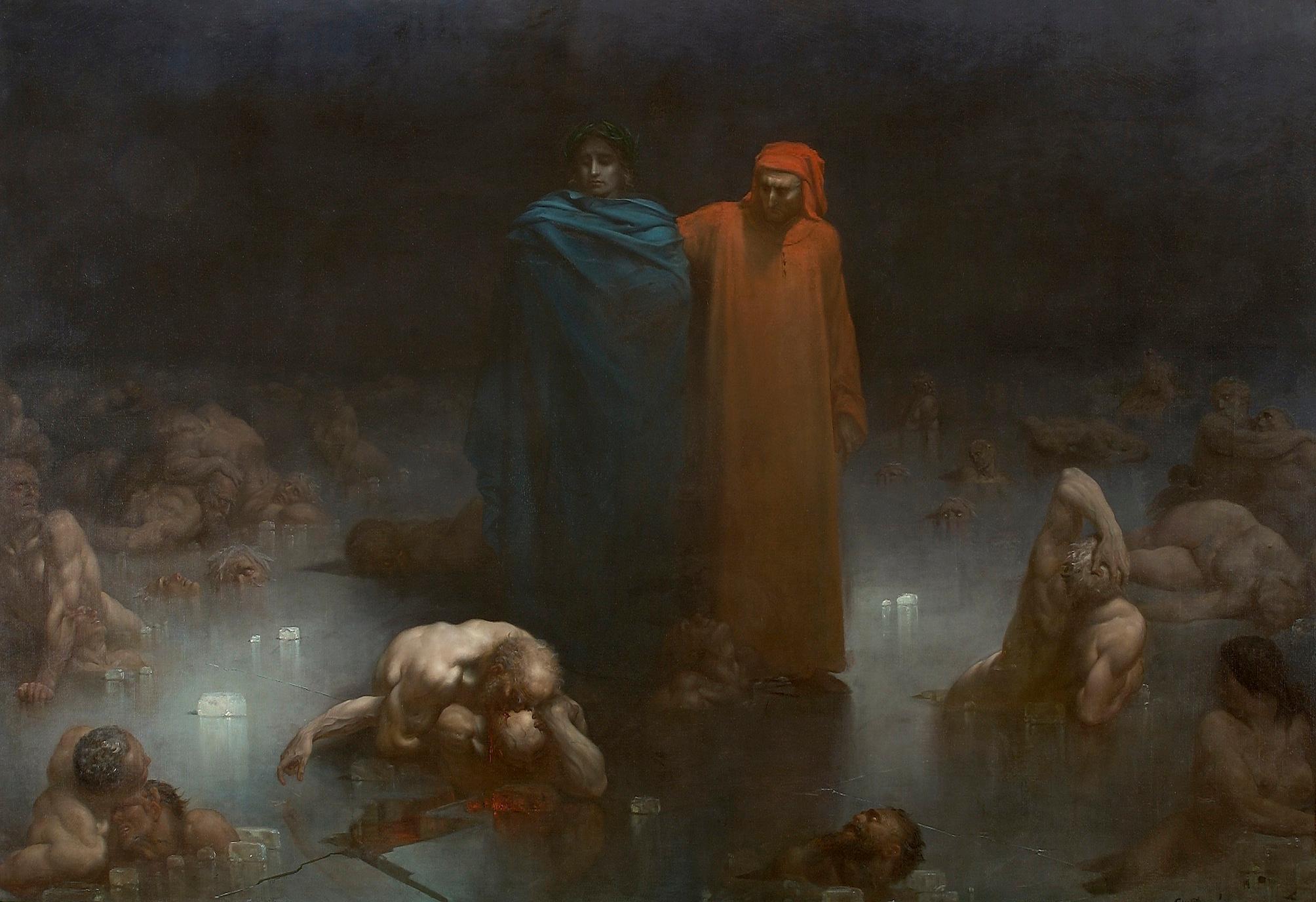
Dante and Virgil in the Ninth Circle of Hell
Gustave Doré · 1861
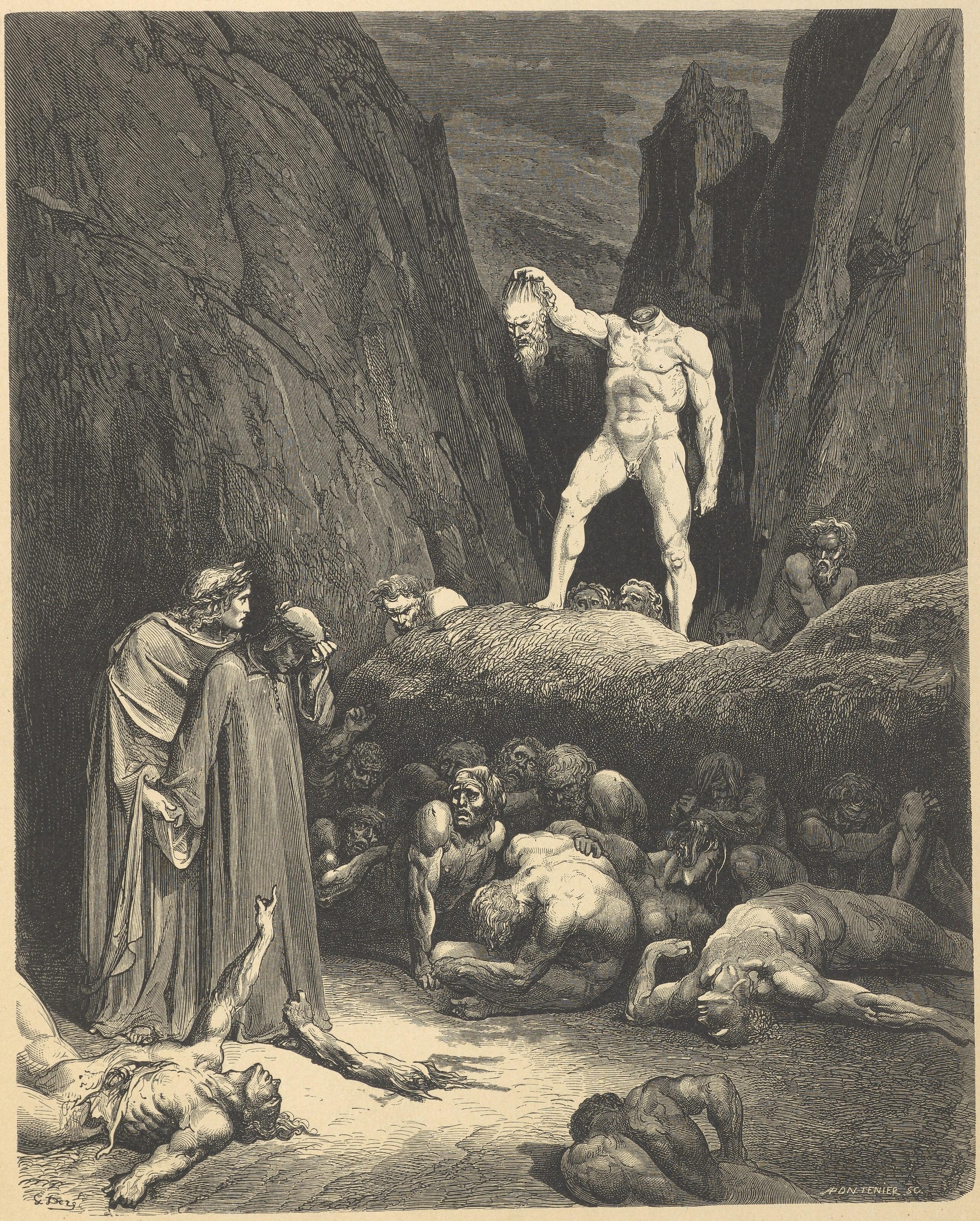
Bertran de Born Holding His Head
Gustave Doré · 1861
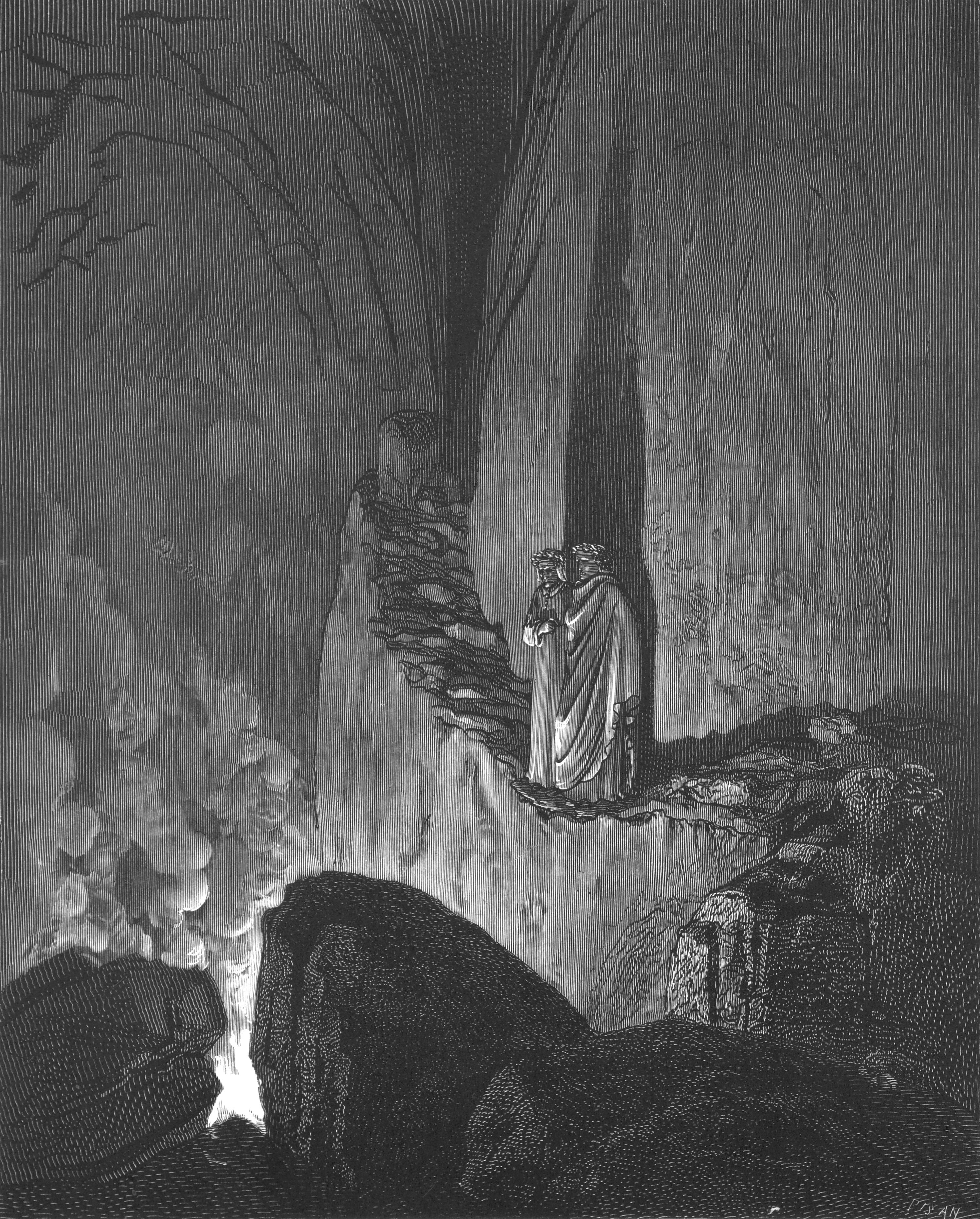
Ulysses and Diomedes
Gustave Doré · 1861
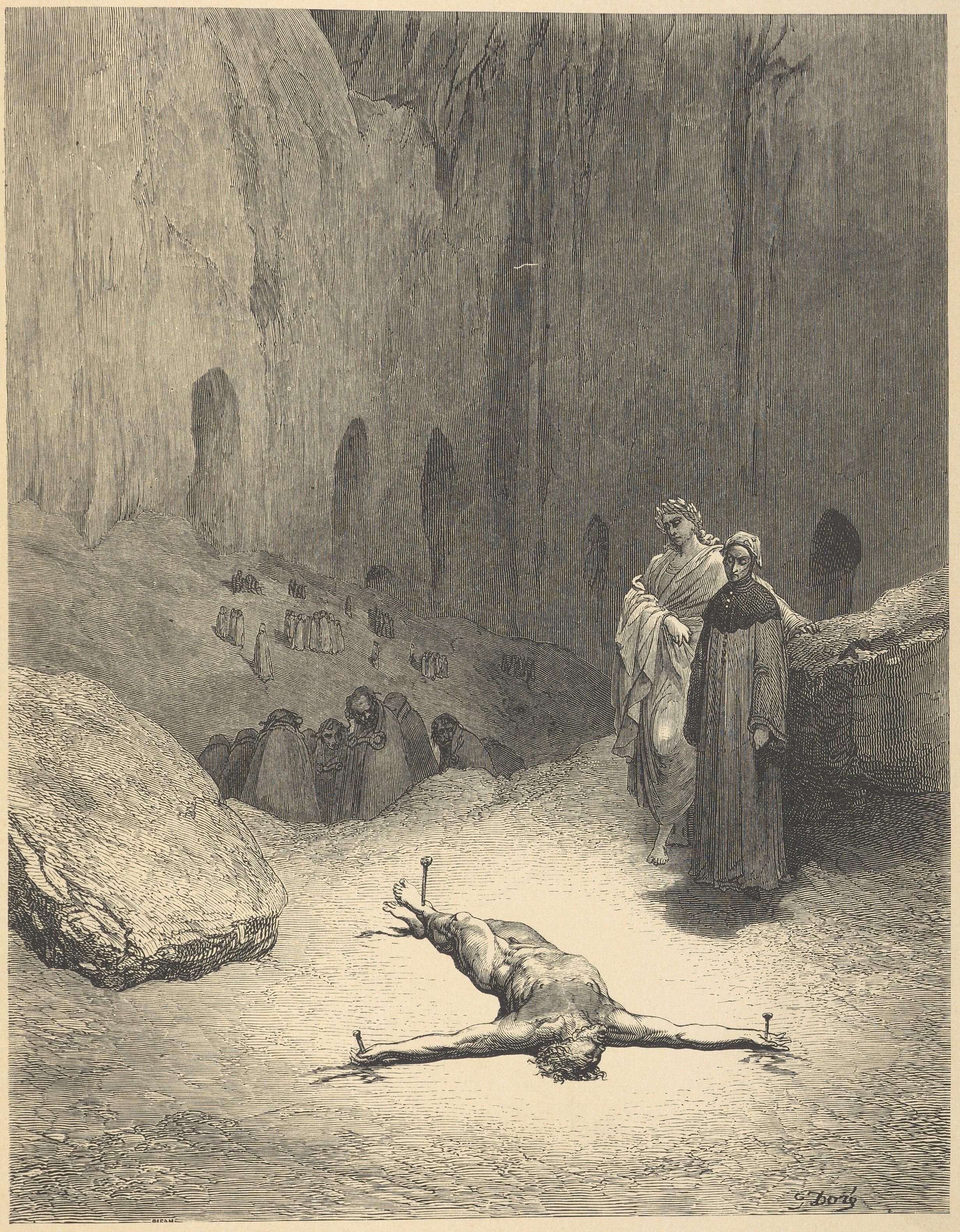
Caiaphas Crucified
Gustave Doré · 1861
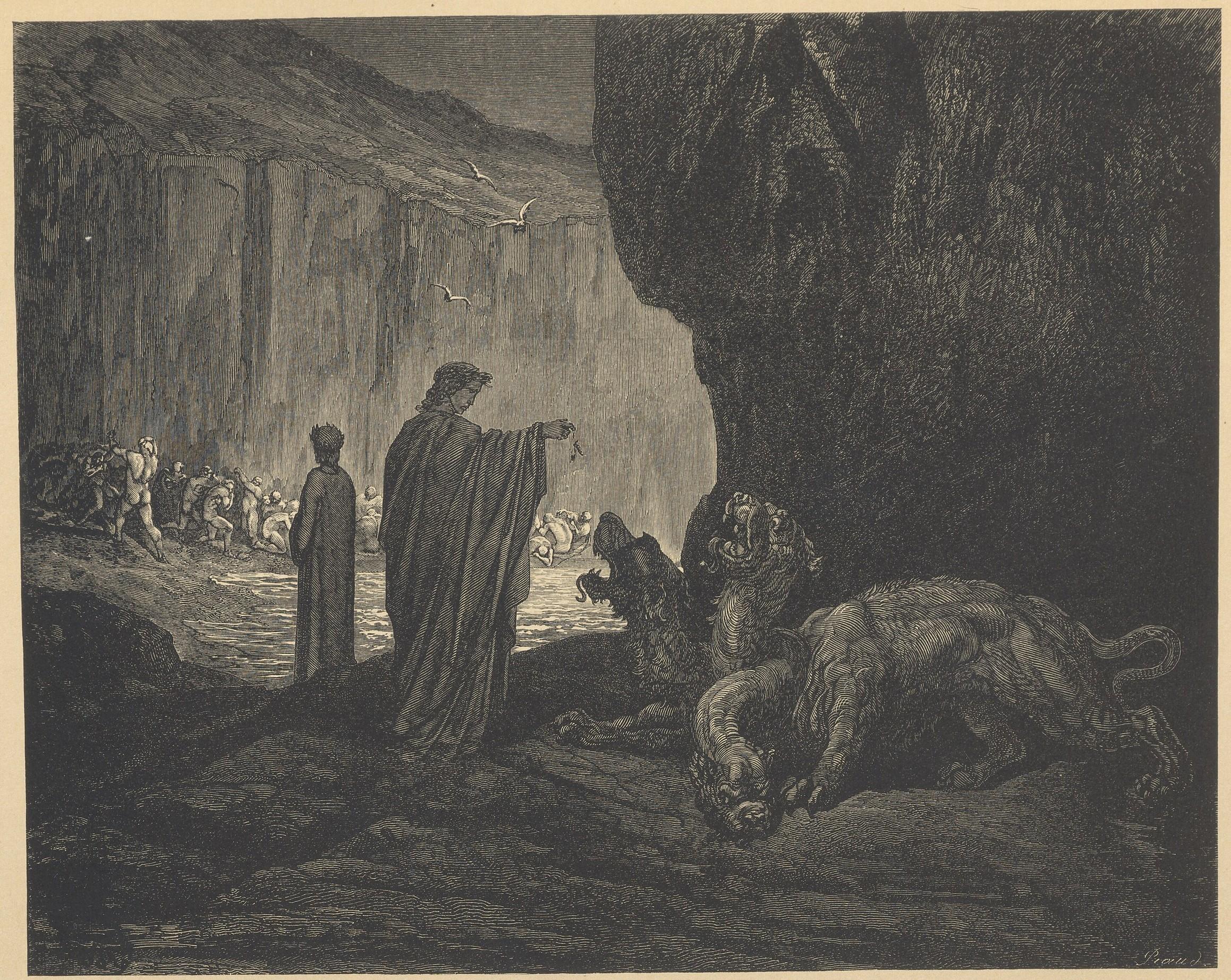
Cerberus
Gustave Doré · 1861
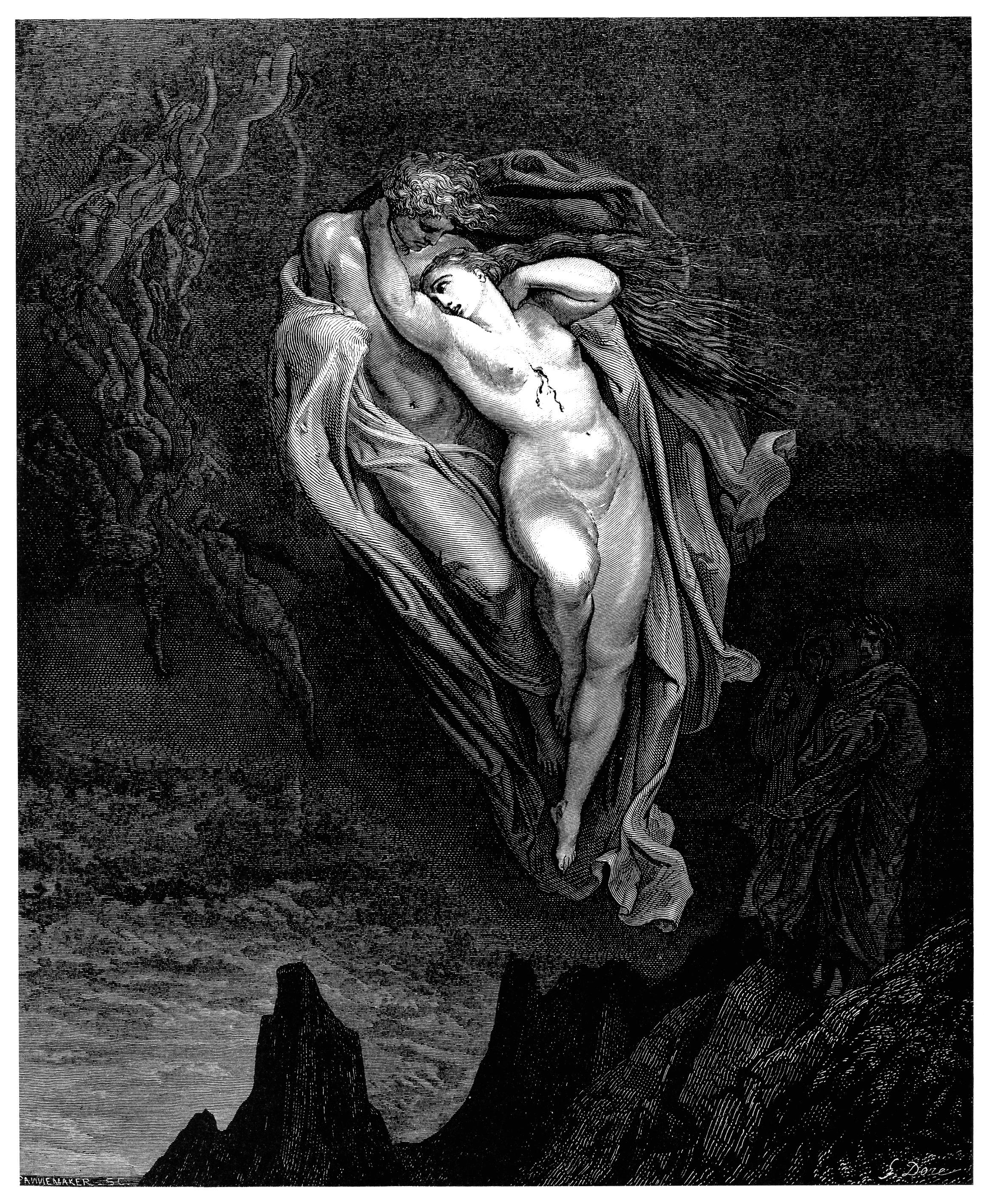
Paolo and Francesca
Gustave Doré · 1861
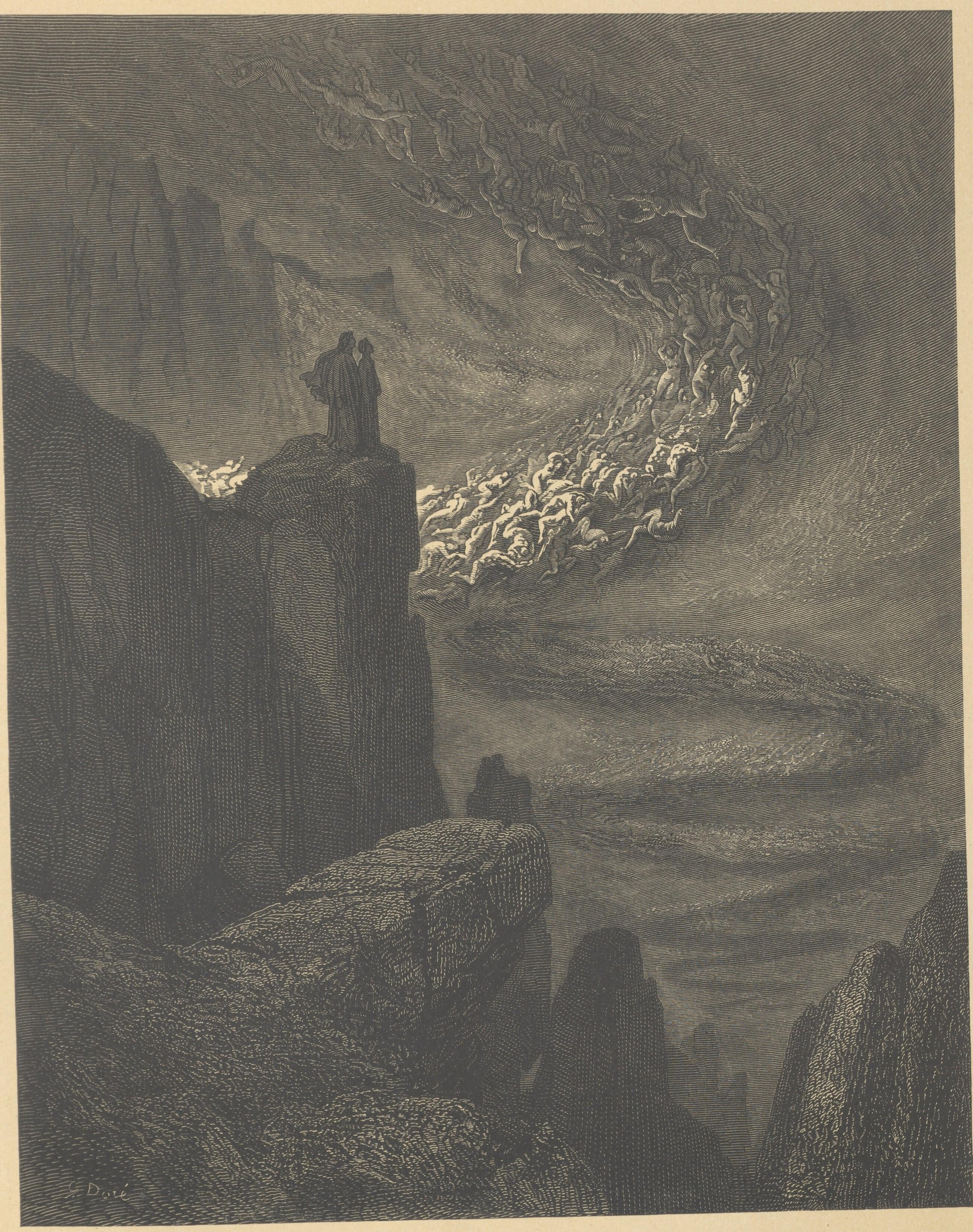
The Whirlwind of the Lustful
Gustave Doré · 1861
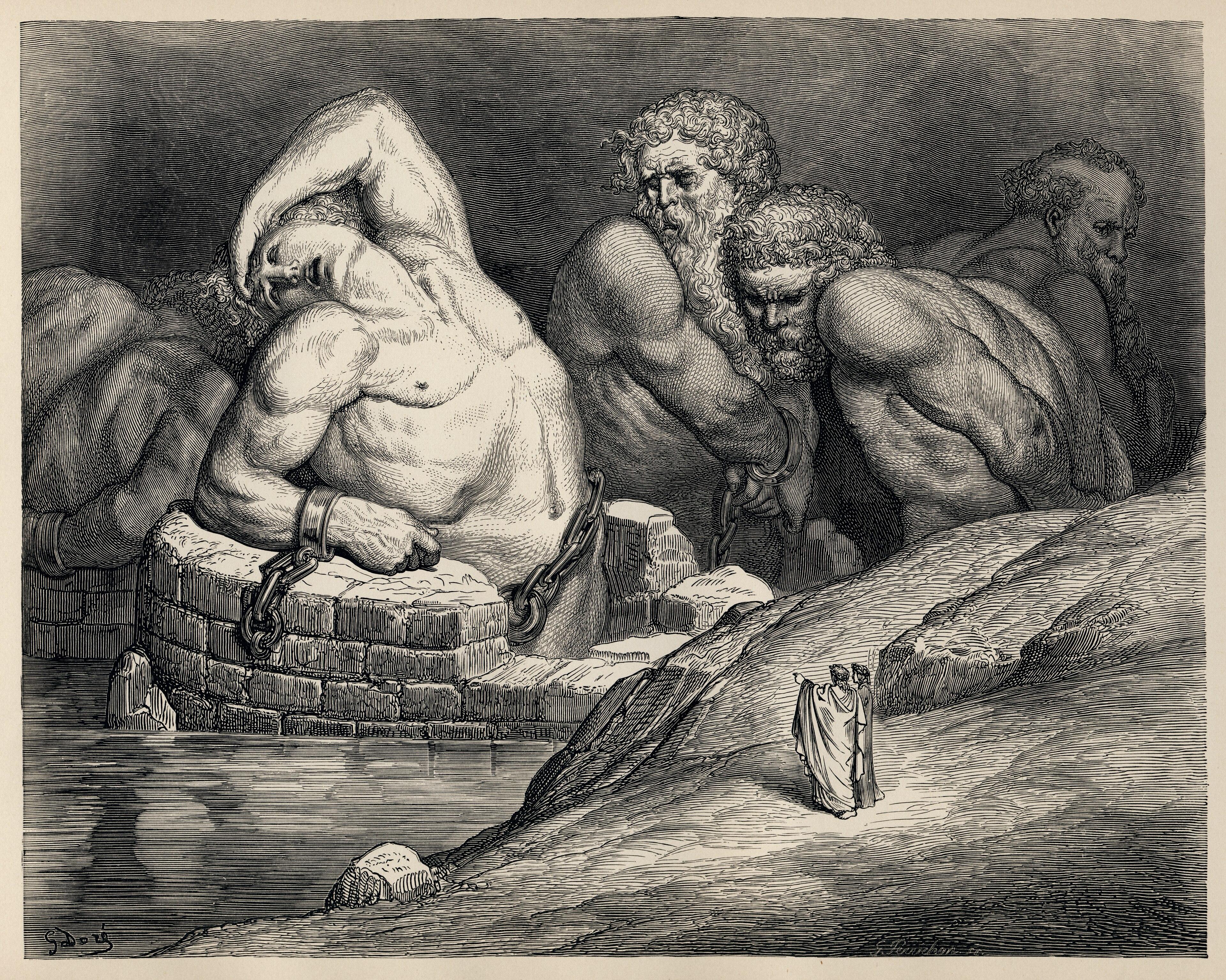
The Giants
Gustave Doré · 1861
Related works
Farinata degli Uberti
Gustave Doré · 1861
Geryon
Gustave Doré · 1861
Paolo and Francesca
Gustave Doré · 1861
The Furies at the Gates of Dis
Gustave Doré · 1861
Atropos (The Fates)
Francisco Goya · c. 1819–1823
Perched Upon a Bust of Pallas
Gustave Doré · 1884
Nevermore (The Raven's Shadow)
Gustave Doré · 1884
Two Old Men
Francisco Goya · c. 1819–1823