Count Ugolino and His Sons
Gustave Doré, 1861
Count Ugolino and His Sons is Gustave Doré's 1861 wood engraving for Dante's Inferno, Canto 33: the Pisan count sits in a sealed tower among his four starving children, refusing to let them see him weep.
- Artist
- Gustave Doré
- Date
- 1861
- Medium
- Wood engraving
- Movement
- Romanticism
- Themes
- Literature & Poetry, Death & Memento Mori, The Macabre, Dark Academia, Power & History
Appears in
What you are looking at
A stone cell, vaulted and bare. High on the left wall a barred window lets in a single shaft of light, which lands not on the floor but on the wall behind a seated man, so that his head and shoulders sit against a pale glow. That man is Count Ugolino della Gherardesca.
He is perched on a low stone ledge, his knees apart, his arms locked tight across his chest, his bearded head bowed. His eyes look down and inward. He does not look at any of the four young people around him.
They all look at him. At the left a long-haired boy kneels upright, one hand pressed flat to his stomach, mouth open as if about to speak. Below him another lies on the flagstones, propped on an elbow and gazing up. At the right a third has thrown both hands over his head and twisted his face toward his father.
In the middle of the floor the fourth lies on his back, an arm across his eyes. A heap of straw in the right corner is the only furniture. A second barred window, on the far wall, is almost lost in shadow.
The drama is built from looks that are not returned. Doré puts the light on the father's back wall and the faces of the children in half-shadow, so that every line of the composition runs to the one man who has gone silent.
The passage: Ugolino in the tower of hunger
In the ninth circle of Hell, in the ice reserved for traitors, Dante finds a sinner gnawing the skull of another. The eater is Ugolino, who betrayed Pisa; the eaten is Archbishop Ruggieri, who betrayed Ugolino. In Canto 33 Ugolino lifts his mouth from his "grim repast" and tells how Ruggieri shut him in a tower with his sons and grandsons (Dante calls all four his sons), and how one morning he heard the door below being fastened for good.
The plate follows the morning on which Ugolino understands. In Longfellow's translation: "As now a little glimmer made its way / Into the dolorous prison, and I saw / Upon four faces my own very aspect, / Both of my hands in agony I bit." The children, thinking he bites from hunger, offer him their own flesh.
His answer is the line Doré's plate turns on: "I calmed me then, not to make them more sad." That little glimmer is Doré's shaft of light, and Ugolino's self-mastery is the folded arms. Within days the sons die one by one; Ugolino, blind with hunger, gropes over their bodies, until "hunger did what sorrow could not do," a line readers have argued over for seven centuries.
How Doré staged it
Doré made three plates for Canto 33, and they move through the story like film stills: this one, with the family still together and the father turned to stone; a second in which a son falls dying at Ugolino's feet; a third in which the count, now alone and blind, crawls over the dead. In this first plate nothing has happened yet, and that is the horror. Dante never tells us what Ugolino's sons looked like; Doré gives each a distinct reaction (pleading, hunger, despair, collapse) so that the reader sees four ways of waiting to die.
He also dresses them as Renaissance youths in doublets and hose, with the count in a dark tunic and a heavy chain of office, a costume history Doré borrowed freely. The architecture is invented too: the real tower, the Torre della Muda in Pisa, was demolished long ago.
The subject was in the air. Ugolino had been painted by Joshua Reynolds and sculpted by Jean-Baptiste Carpeaux, who was working on his group in Rome in these same years; later Auguste Rodin, whose The Thinker began as Dante on the Gates of Hell, made his own Ugolino. Doré's version is the quietest of them, and the most claustrophobic.
How the engraving was made
Doré drew the design directly on the surface of a boxwood block; a professional wood engraver then cut away everything that was to print white. The signature at lower right of this plate reads "C. Laplante," for the engraver Charles Laplante, with "G. Doré" at lower left. Look at the wall: the masonry is cut in close horizontal lines that break and thicken to show each stone, while the lit patch behind Ugolino is opened up into fine stippled white. The children's hair is cut as tight curls of white line against dark.
The plate first appeared in L'Enfer de Dante Alighieri, published by Hachette in Paris in 1861, the large folio for which Doré himself bore the cost; it held 75 full-page plates. The success of that book carried the images across Europe. This scan comes from the 1870 Berlin edition published by W. Moeser, printed from the same designs and held by the National Library of Poland. It belongs with the rest of Doré's Inferno illustrations.
Meaning
Ugolino is the Inferno's most famous story of a father and his children, and it is told by a damned traitor in the middle of eating his enemy. Dante leaves us torn between pity and revulsion. Doré chooses pity. He shows the count at his most human, holding back his grief so as not to frighten his sons, and he keeps the cannibal of the frame story out of the picture. Seen next to his painting Dante and Virgil in the Ninth Circle of Hell, where a naked Ugolino bends over Ruggieri's bloody head on the ice, the engraving reads as the memory that explains the punishment.
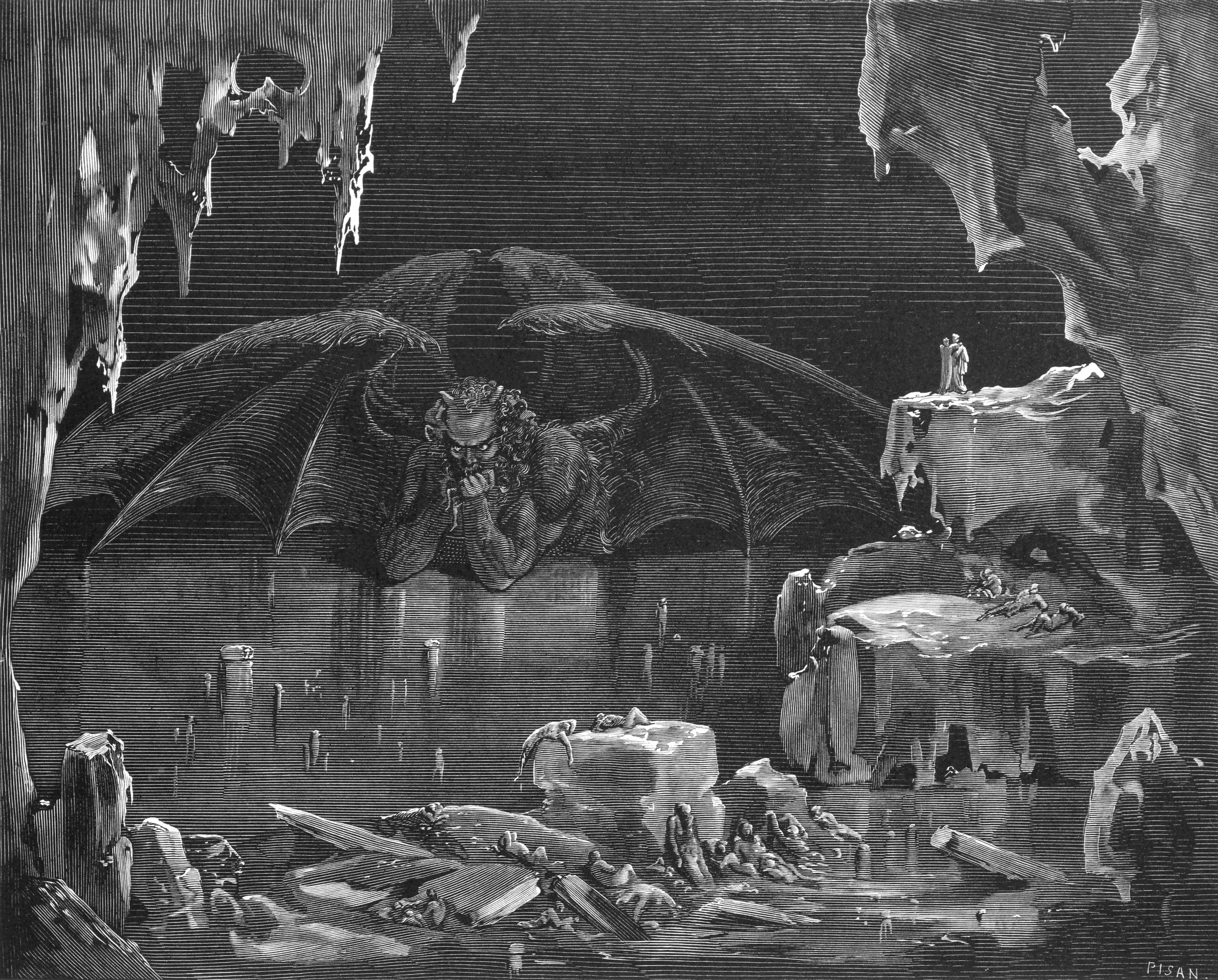
From here Dante goes deeper into the ice to Lucifer himself, past the giants he has already left behind. For more of Gustave Doré's darkest work, see Death in Art.
Questions & answers
What does Doré's Ugolino engraving show?
It shows Count Ugolino della Gherardesca imprisoned in a Pisan tower with four boys Dante calls his sons. Light from a barred window falls behind him as he sits with arms folded, refusing to grieve aloud, while the starving children look up at him. It illustrates Inferno 33: "I calmed me then, not to make them more sad" (Longfellow).
Which part of Dante's Inferno does the Ugolino plate illustrate?
Canto 33, lines 55 to 64 in Longfellow's translation, the morning when "a little glimmer made its way / Into the dolorous prison" and Ugolino bites his hands. His sons offer him their flesh, and he forces himself to be still. Doré made two further plates for the deaths that follow.
When was Count Ugolino and His Sons made?
Doré designed it for L'Enfer de Dante Alighieri, published by Hachette in Paris in 1861 with 75 full-page plates. The images were reissued for decades, including the 1870 Berlin edition used for this scan and Cassell's English editions with the Cary translation.
Who engraved Doré's Ugolino plate?
Doré drew the scene on a woodblock, and a professional engraver cut it. This plate is signed "C. Laplante" at lower right, for Charles Laplante, and "G. Doré" at lower left. The wall's horizontal hatching and the stippled light behind Ugolino are the engraver's translation of Doré's washes.
What does the Ugolino story mean?
Ugolino is a traitor punished in the ice, gnawing the archbishop who starved him, yet his story is the Inferno's most moving account of a father's love. Dante leaves the reader caught between pity and horror. Doré's plate chooses pity, showing the count's restraint rather than his crime.
More by Gustave Doré
All works →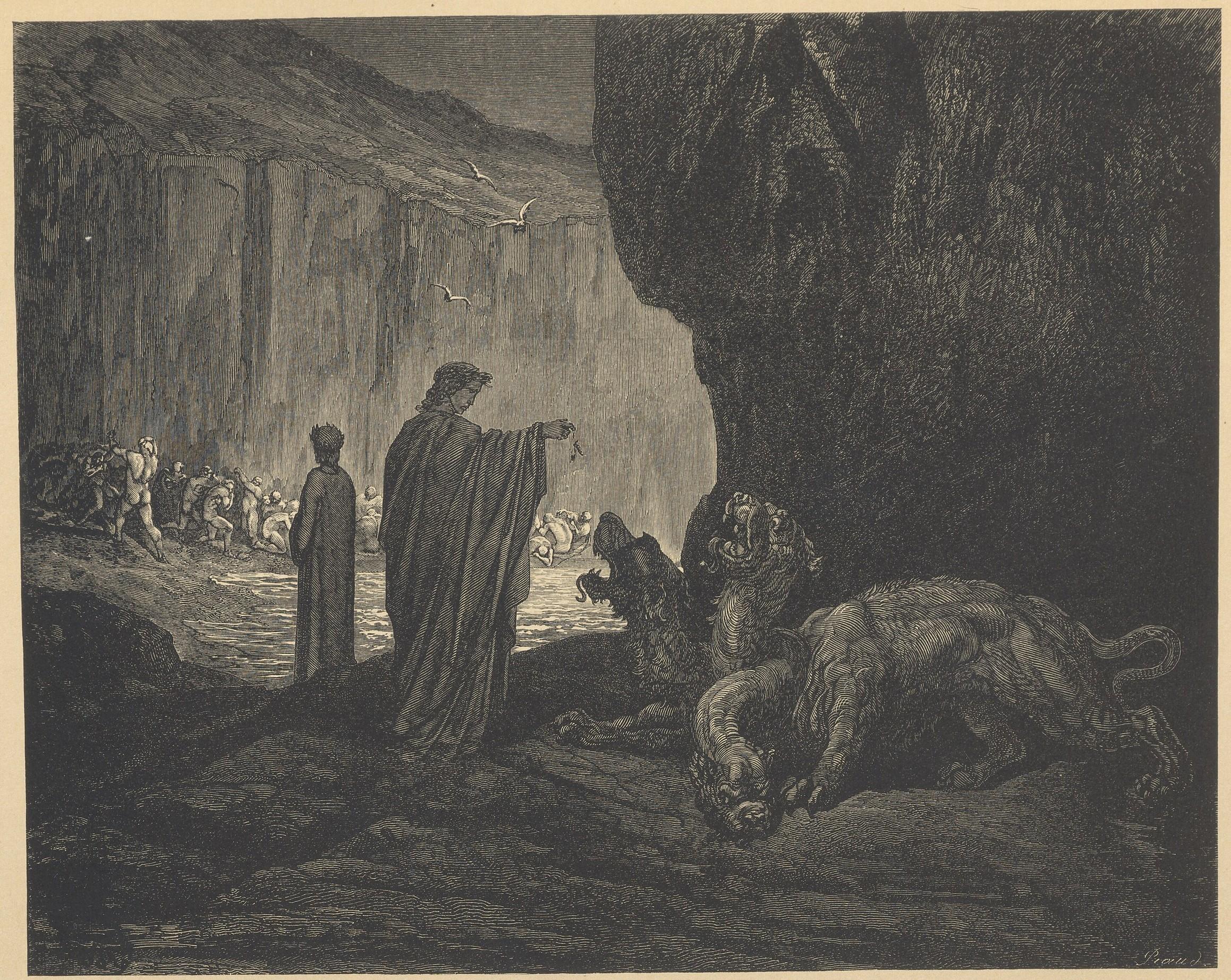
Cerberus
Gustave Doré · 1861
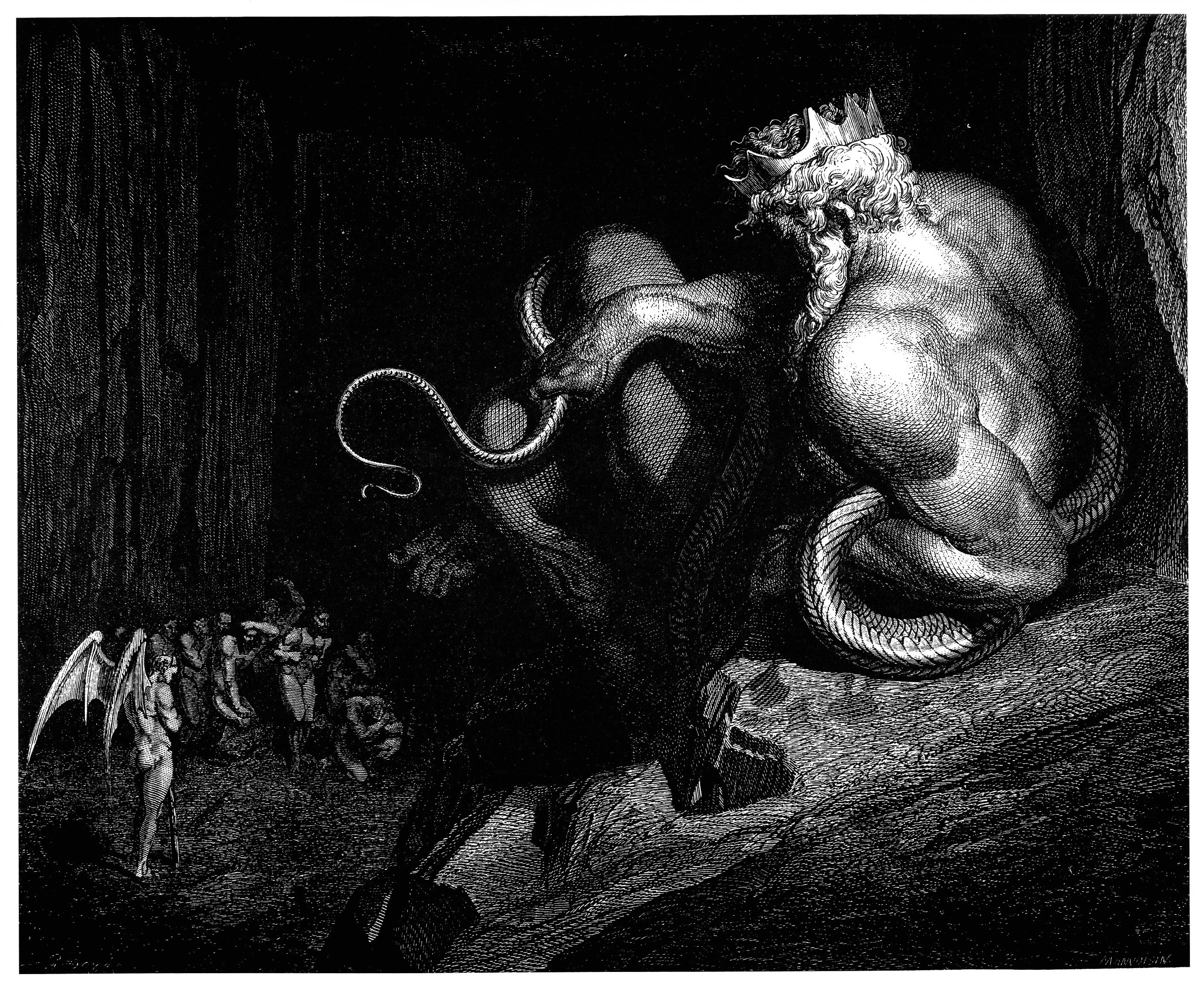
Minos, Judge of the Damned
Gustave Doré · 1861
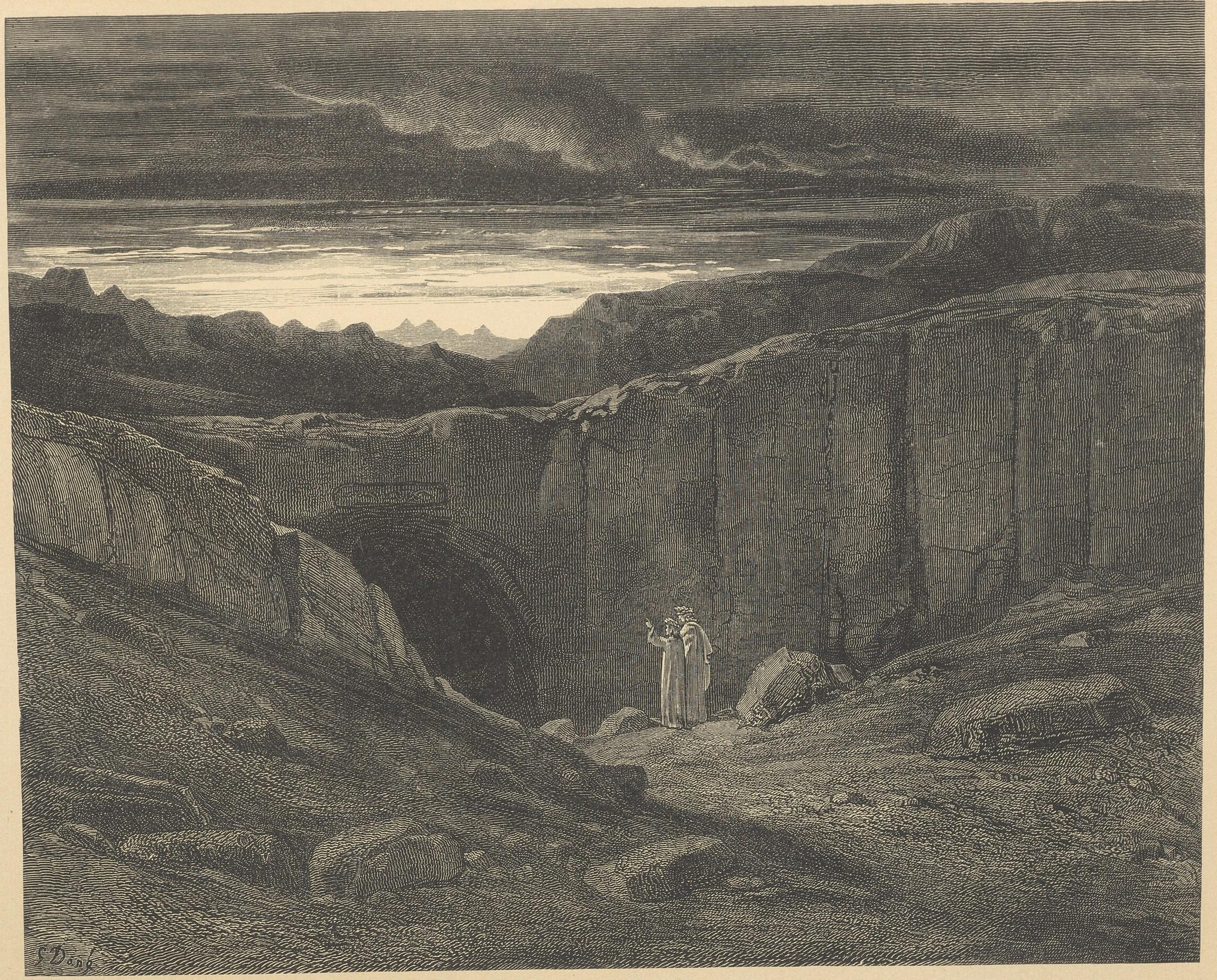
The Gate of Hell (Abandon All Hope)
Gustave Doré · 1861
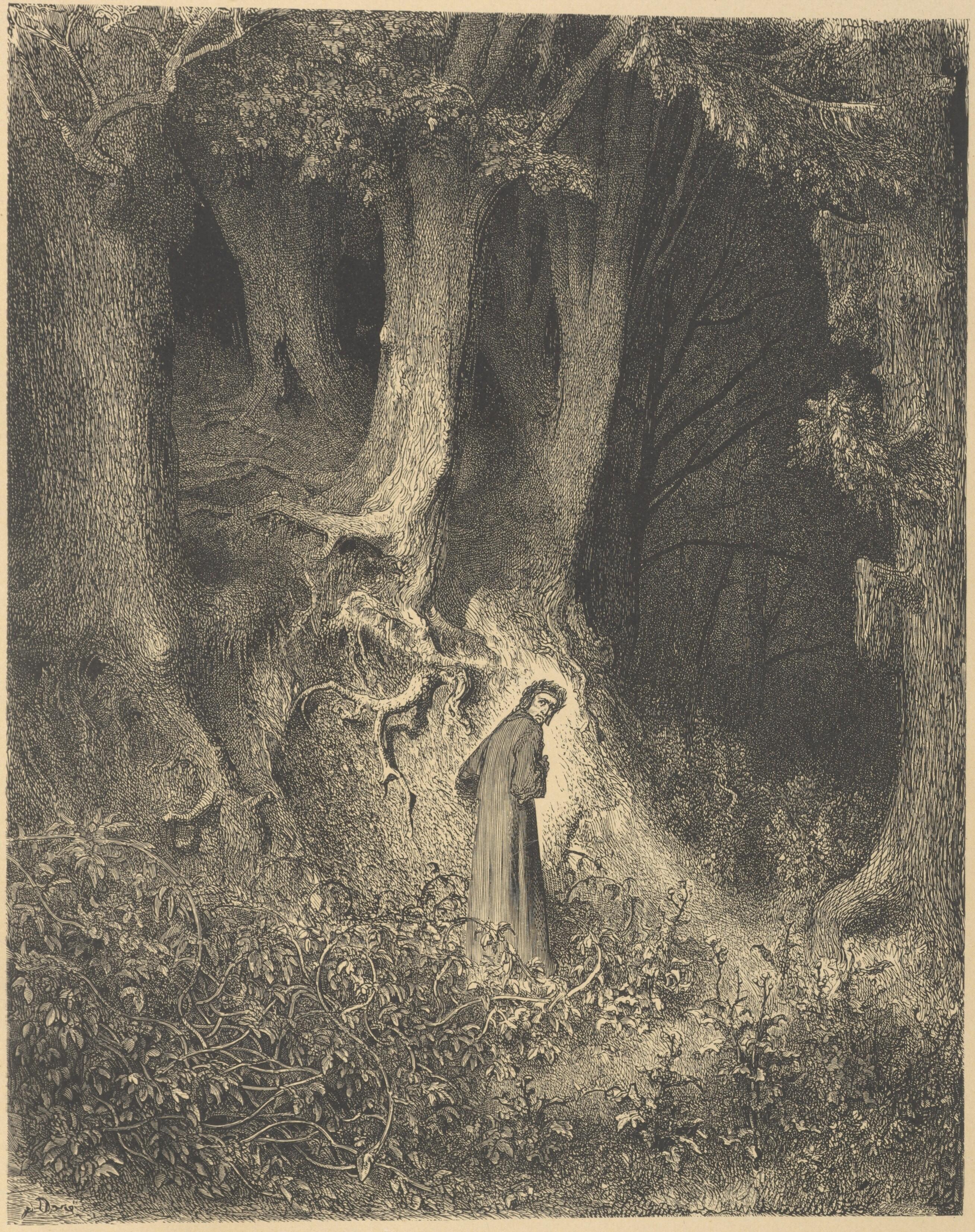
Dante Lost in the Dark Wood
Gustave Doré · 1861
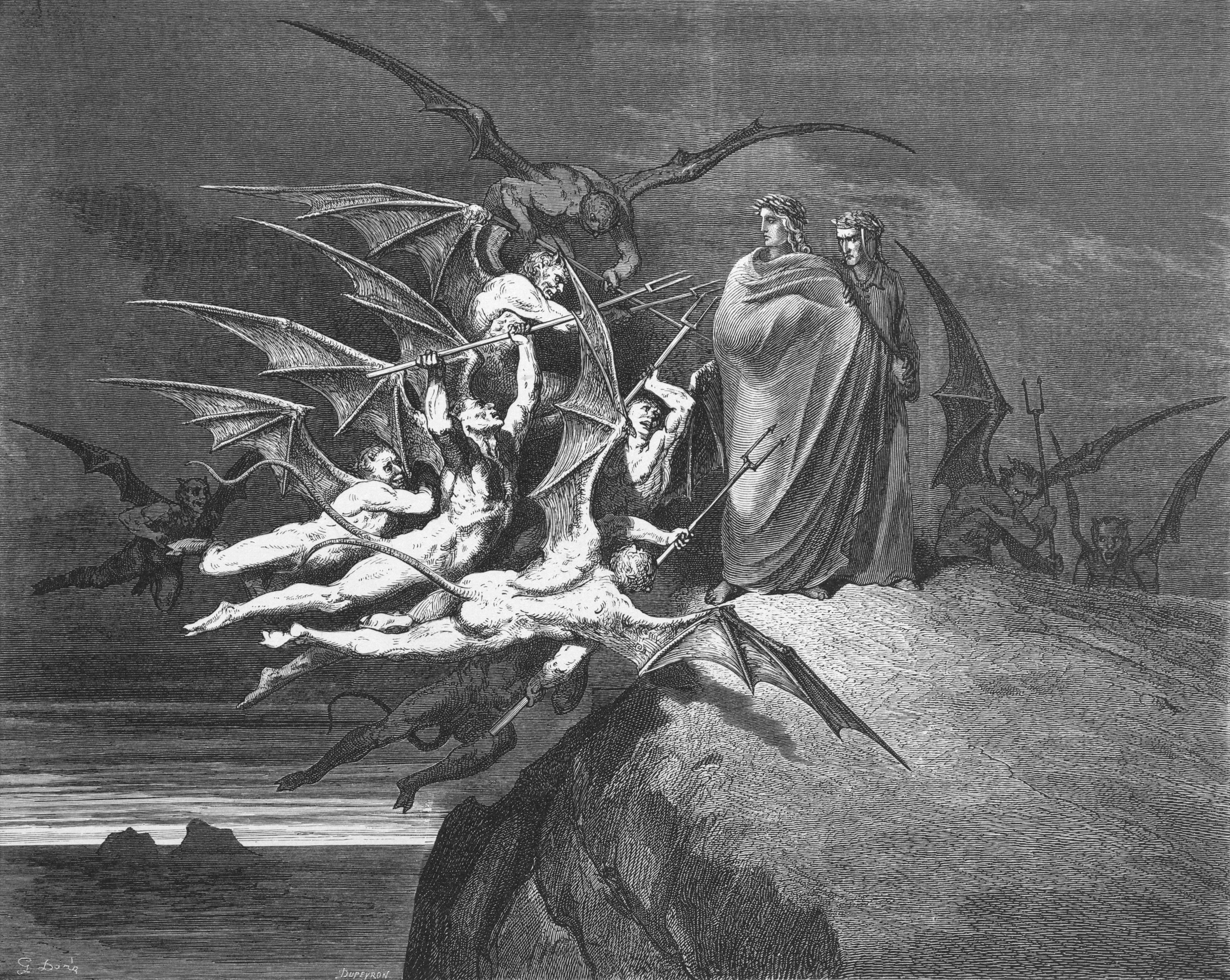
The Malebranche Demons
Gustave Doré · 1861
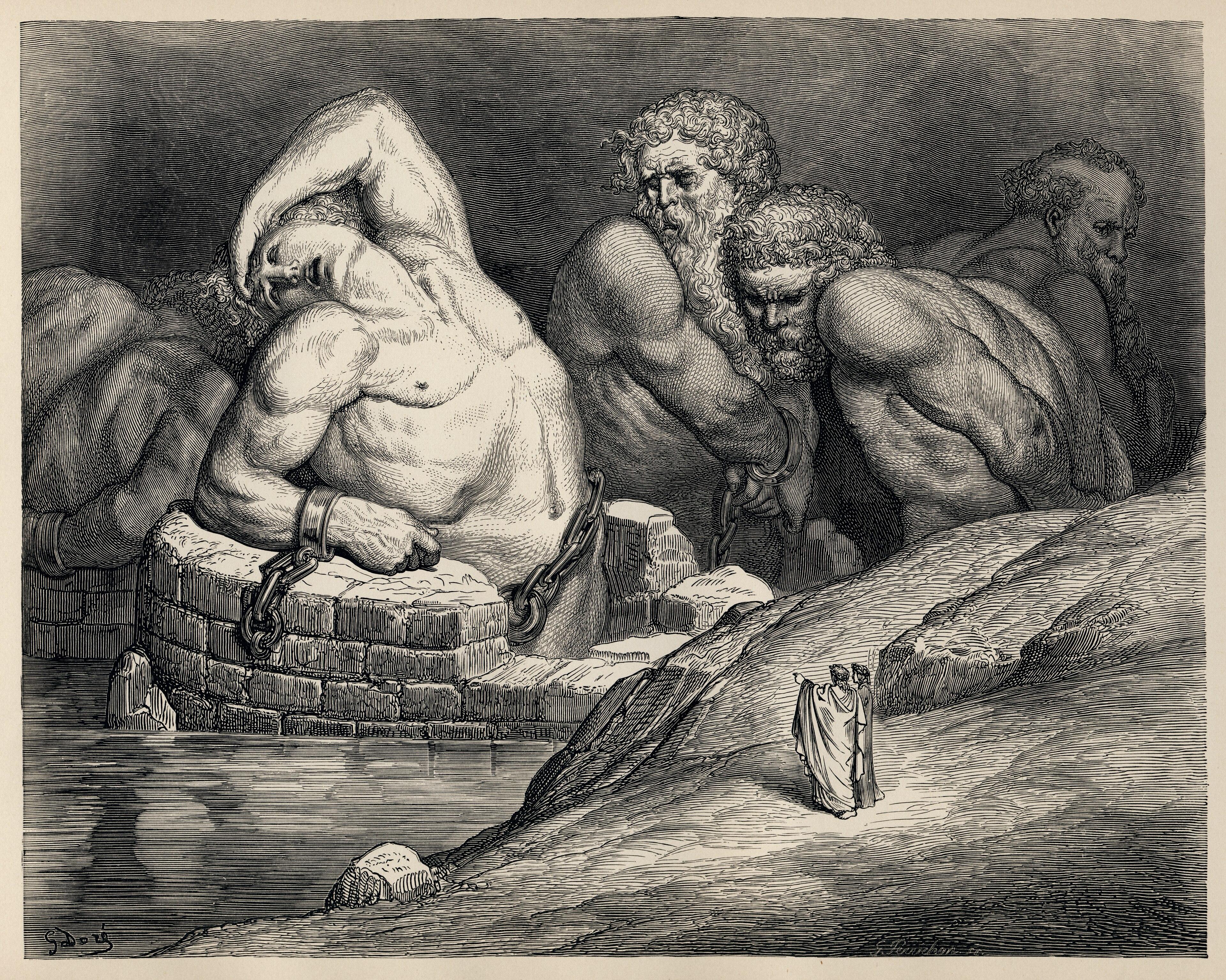
The Giants
Gustave Doré · 1861
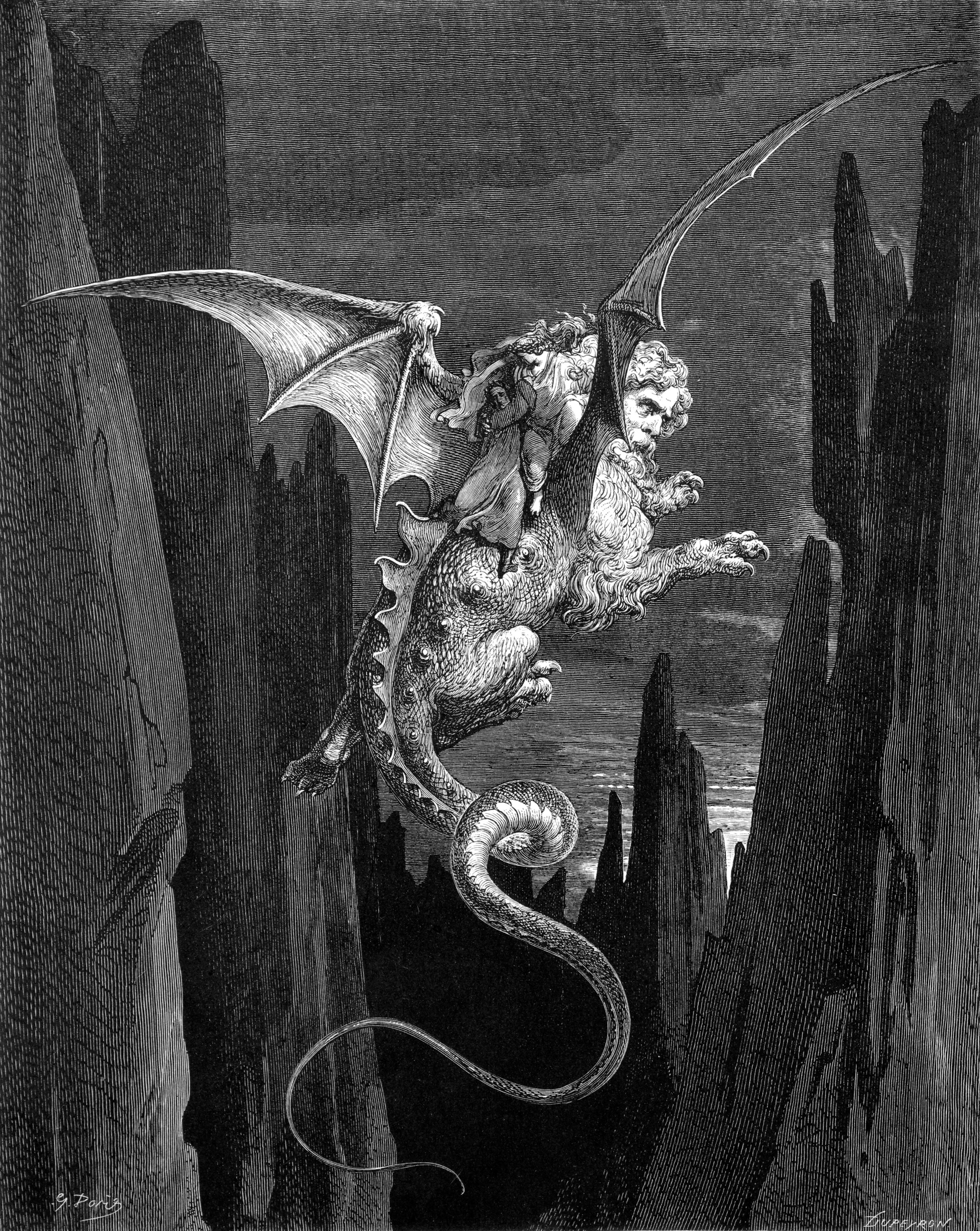
Geryon
Gustave Doré · 1861
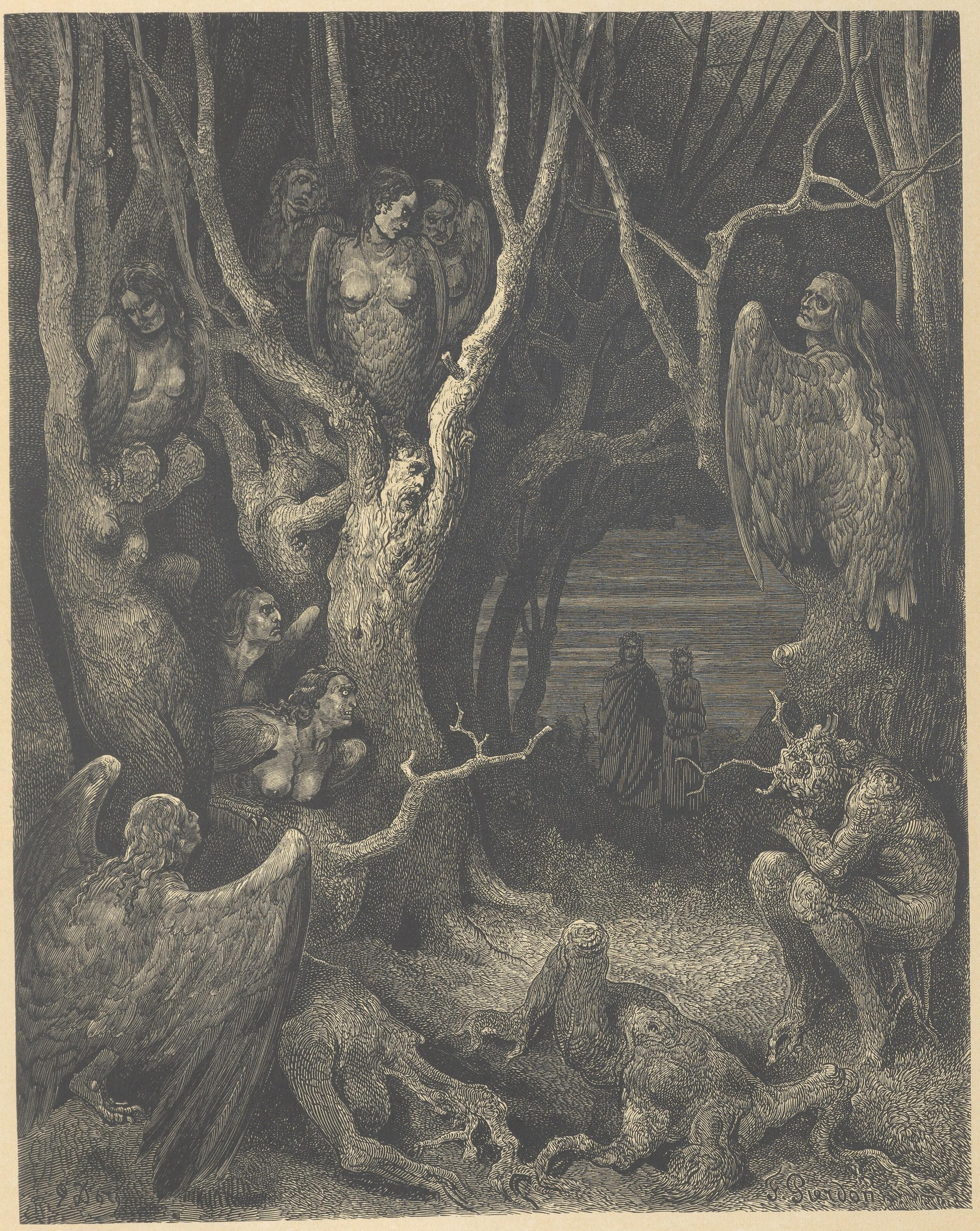
The Wood of the Suicides
Gustave Doré · 1861
Also from 1861
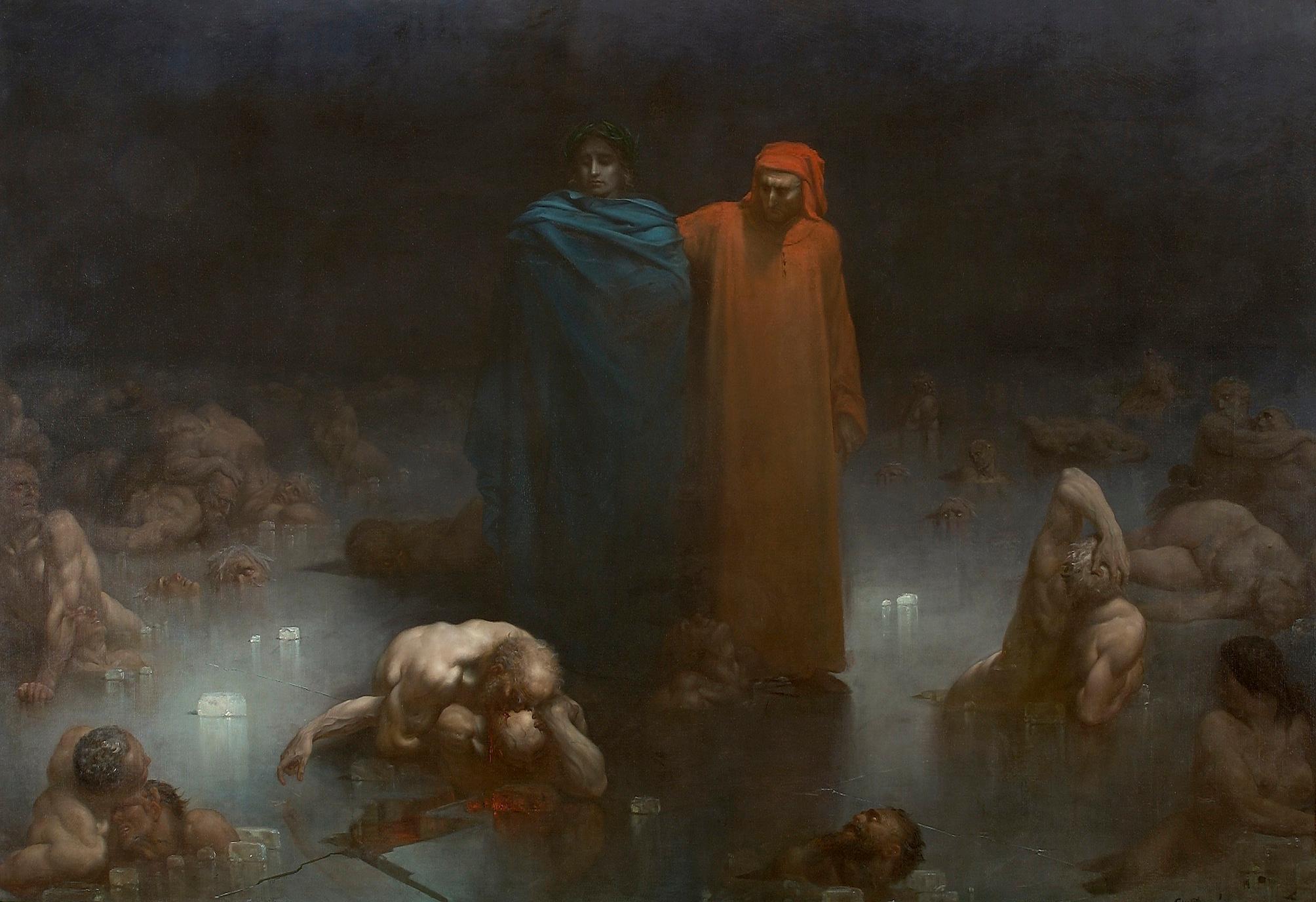
Dante and Virgil in the Ninth Circle of Hell
Gustave Doré · 1861
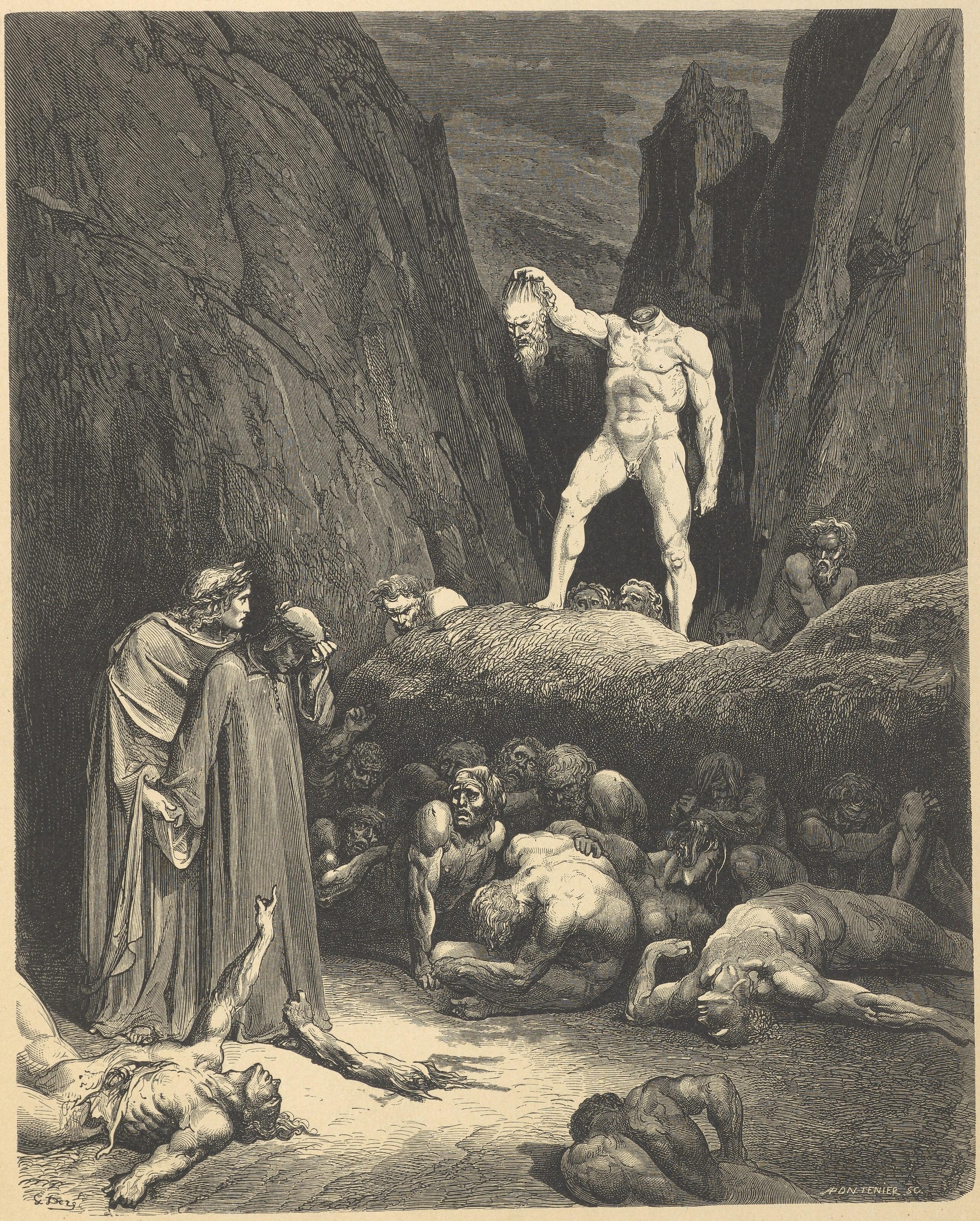
Bertran de Born Holding His Head
Gustave Doré · 1861
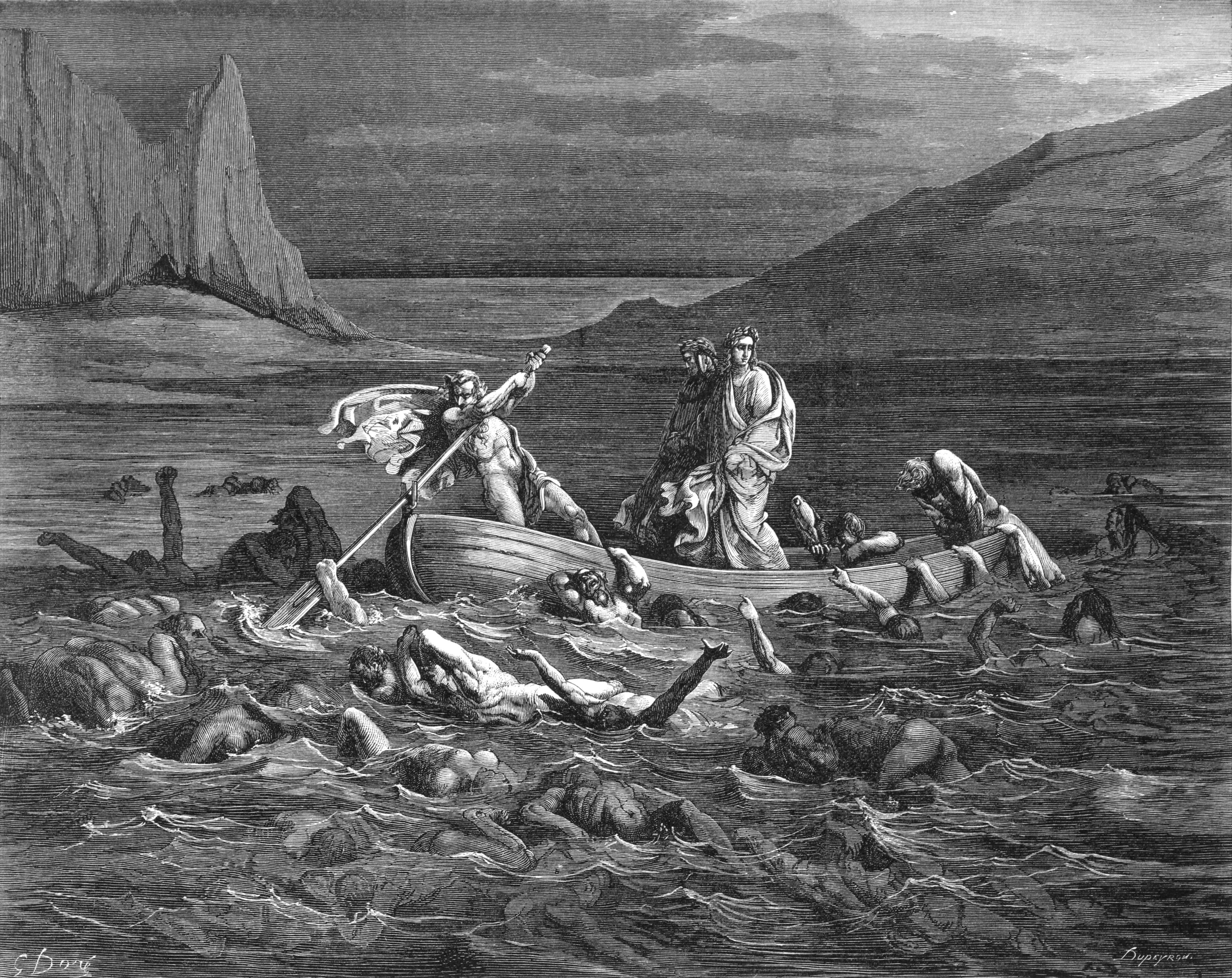
Crossing the Styx (Filippo Argenti)
Gustave Doré · 1861
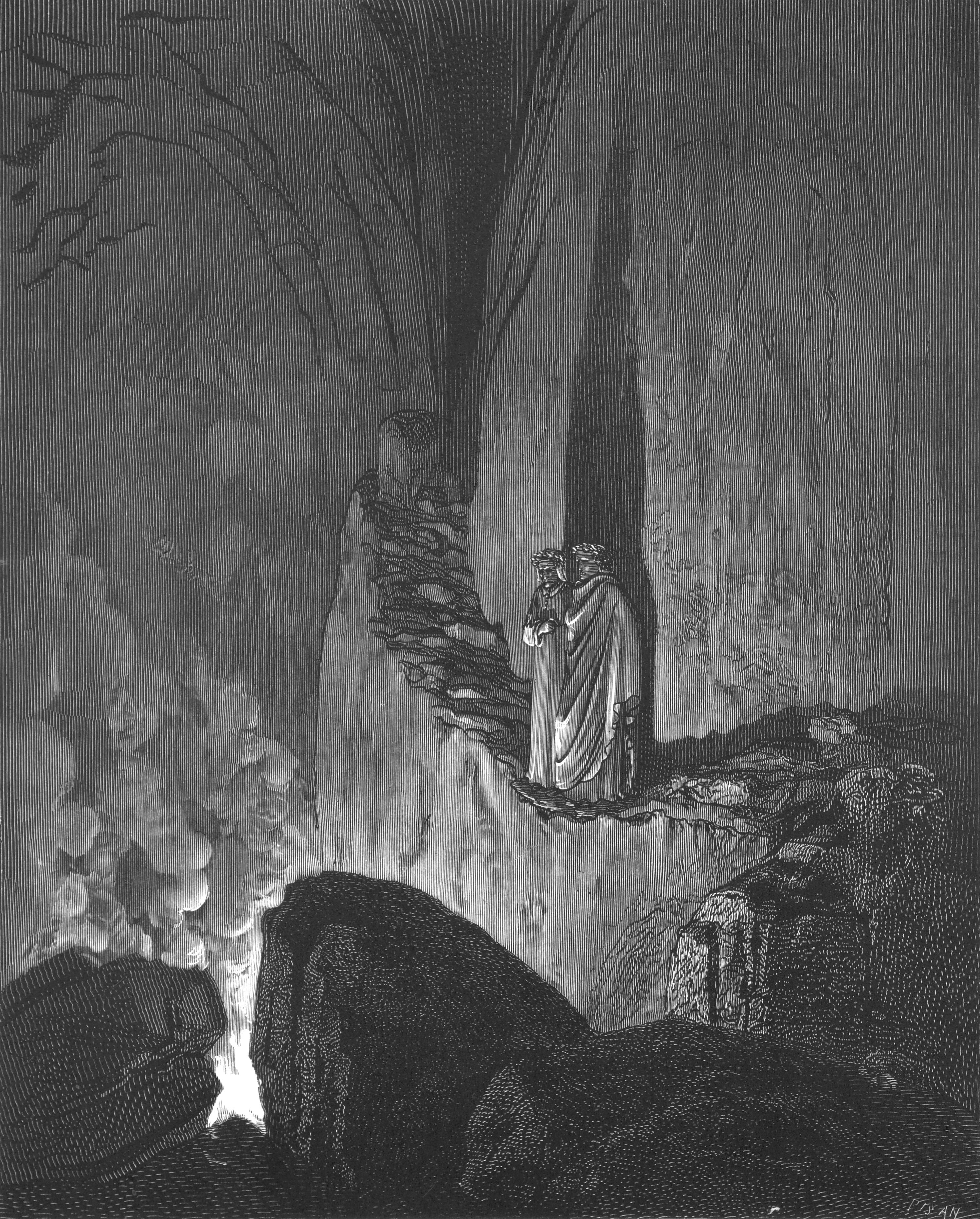
Ulysses and Diomedes
Gustave Doré · 1861
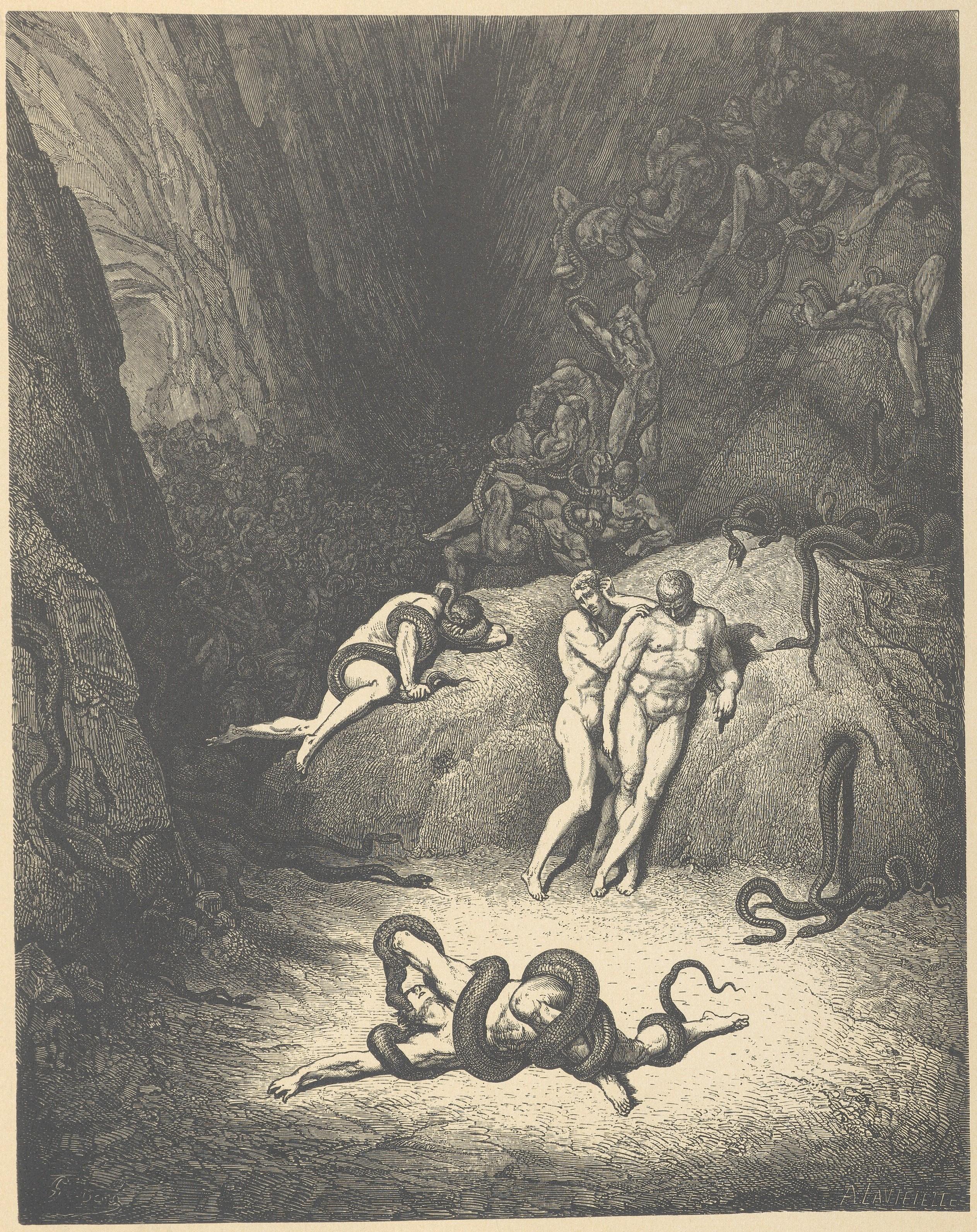
The Thieves and the Serpents
Gustave Doré · 1861
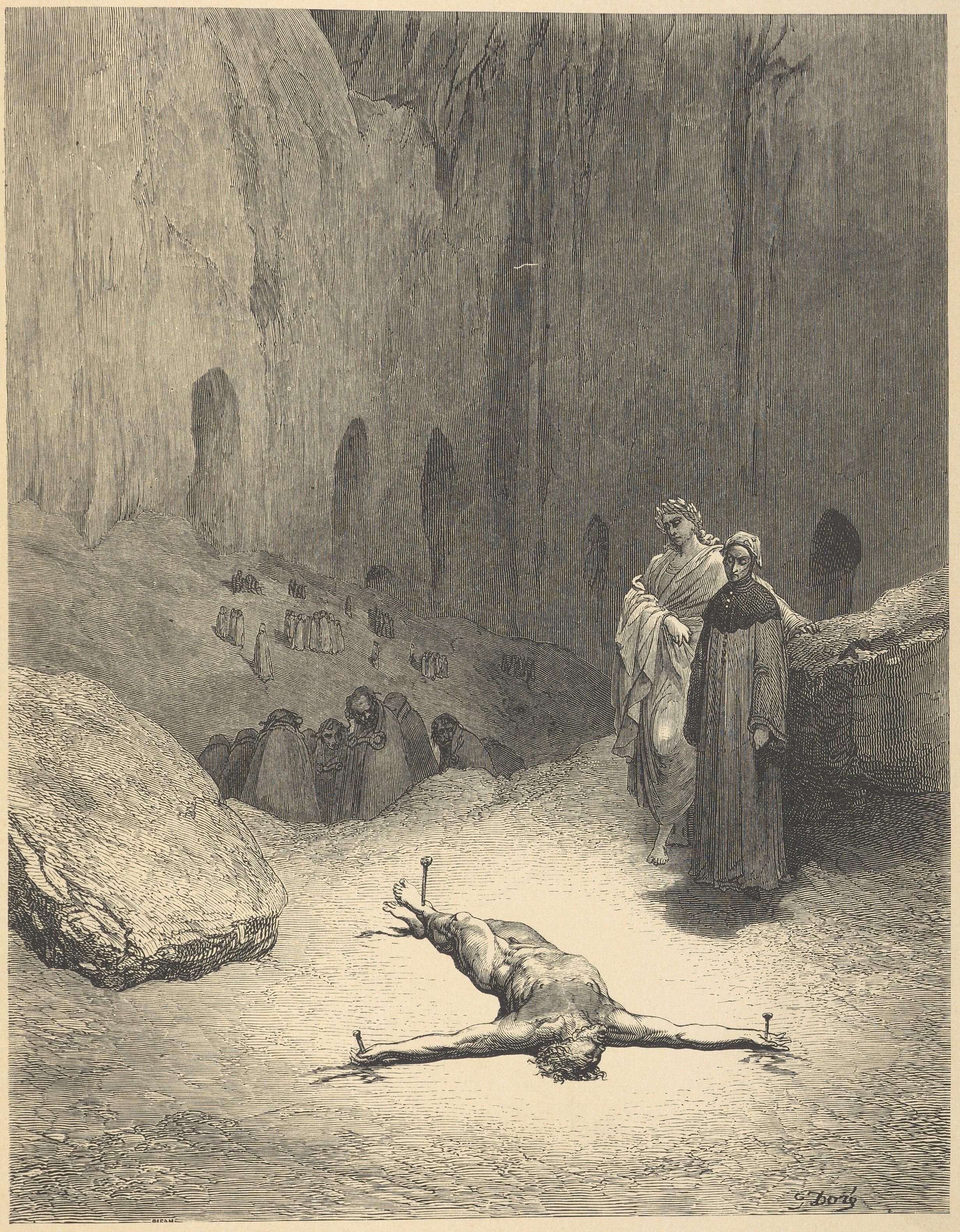
Caiaphas Crucified
Gustave Doré · 1861
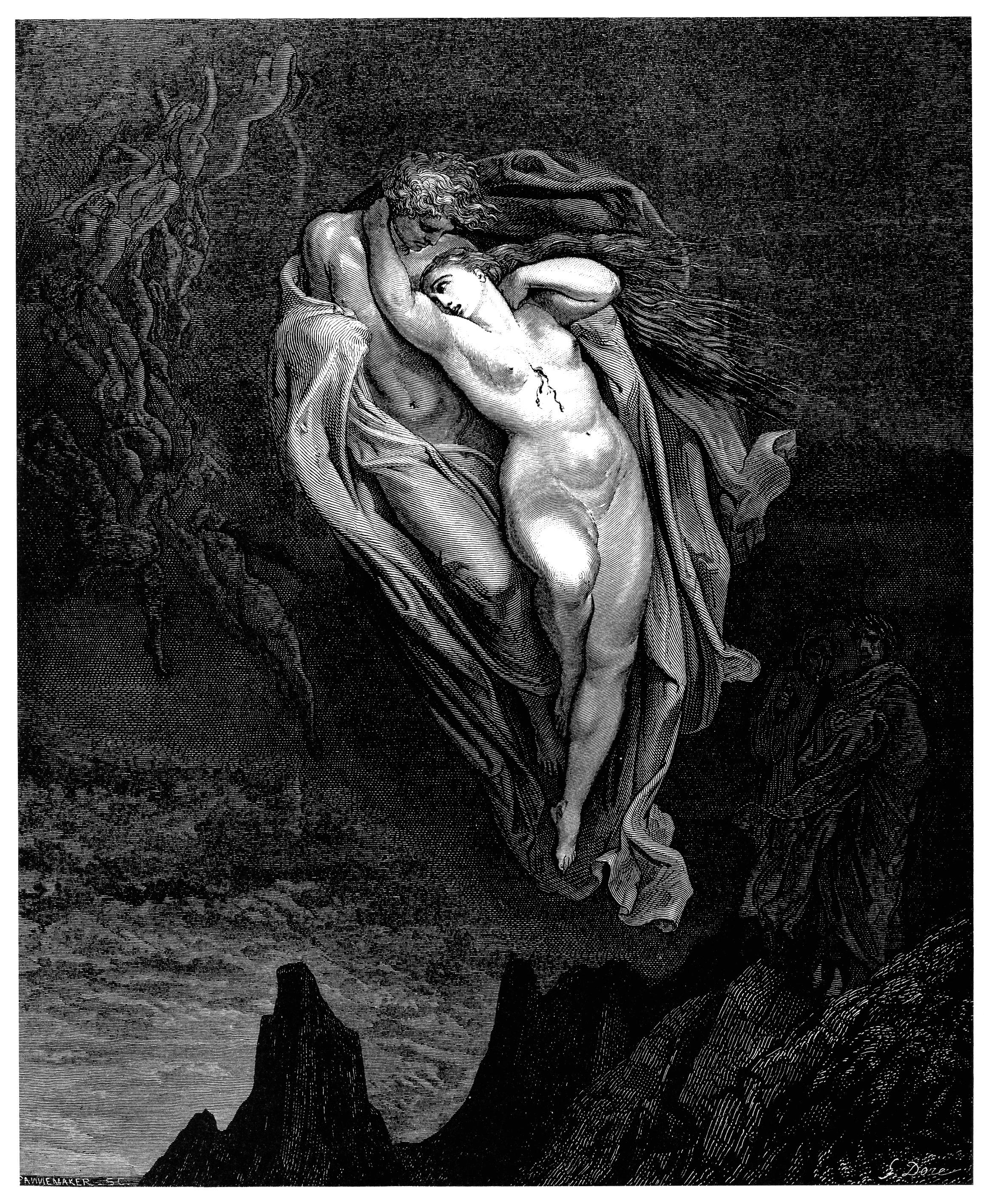
Paolo and Francesca
Gustave Doré · 1861
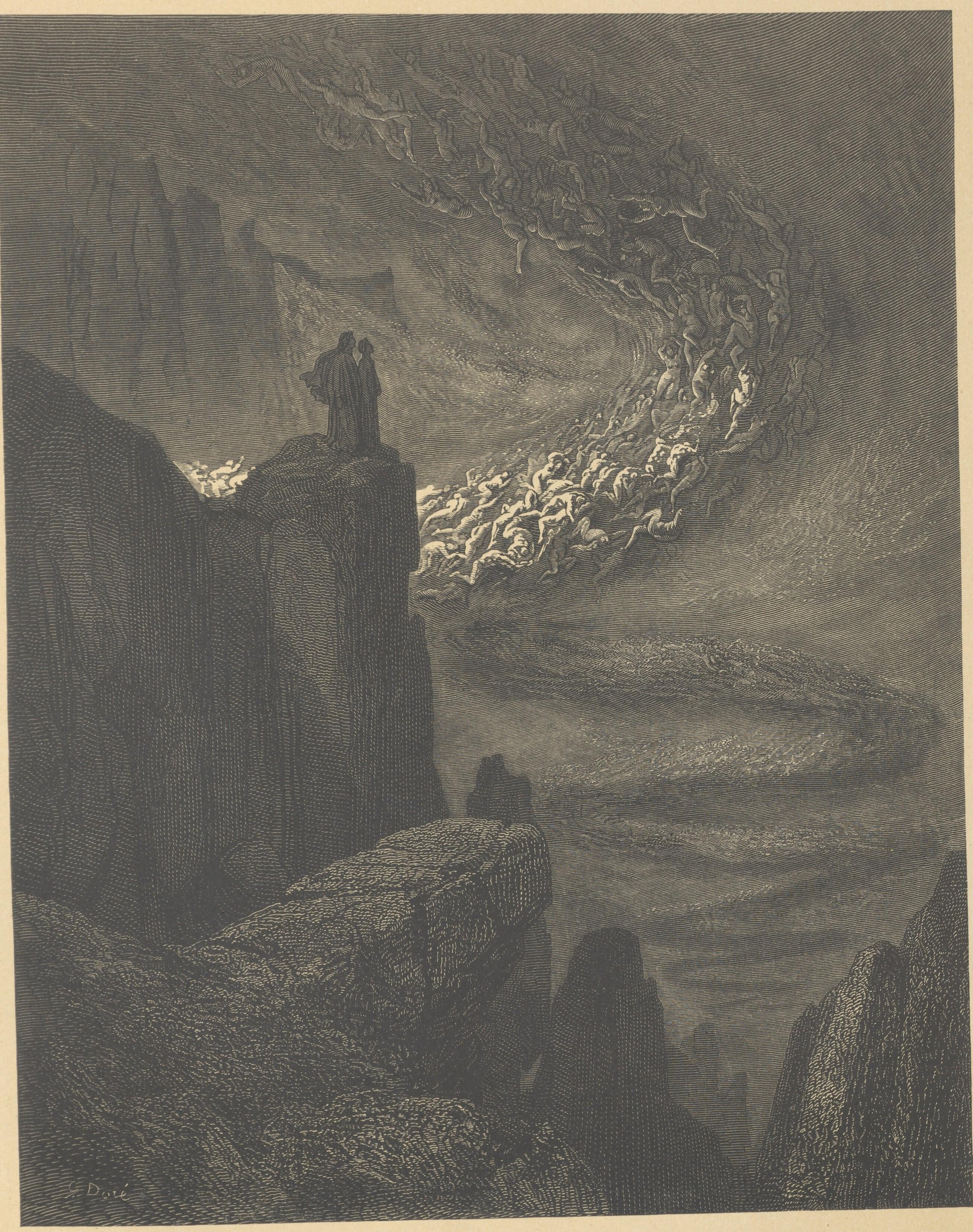
The Whirlwind of the Lustful
Gustave Doré · 1861
Related works
Dante and Virgil in the Ninth Circle of Hell
Gustave Doré · 1861
Lucifer, King of Hell
Gustave Doré · 1861
Caiaphas Crucified
Gustave Doré · 1861
The Vision of the Valley of Dry Bones
Gustave Doré · 1866
Two Old Men Eating Soup
Francisco Goya · c. 1819–1823
Satan, Sin and Death at the Gates of Hell
Gustave Doré · 1866
Bertran de Born Holding His Head
Gustave Doré · 1861
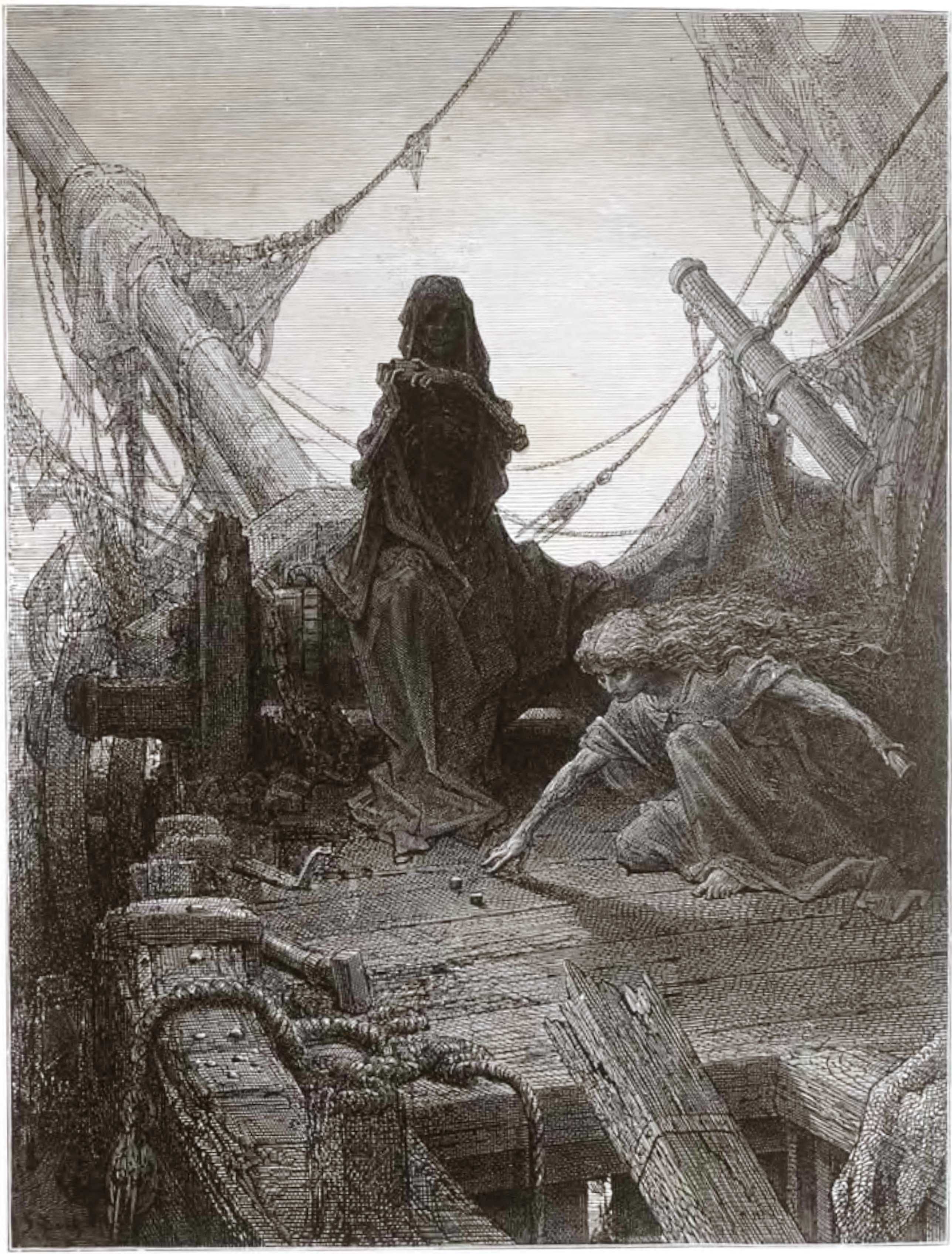
Death and Life-in-Death
Gustave Doré · 1876