Cerberus
Gustave Doré, 1861
Cerberus is Gustave Doré's 1861 wood engraving for Dante's Inferno, Canto VI. At the mouth of a cave in the third circle, Virgil drops a handful of earth into the jaws of the three-headed dog while Dante waits behind him.
- Artist
- Gustave Doré
- Date
- 1861
- Medium
- Wood engraving
- Movement
- Romanticism
- Themes
- Literature & Poetry, Mythology, The Macabre, Angels & Demons, Dark Academia
What you're looking at
The right half of the plate is a cave mouth of black rock, and crouched against it, filling the lower right corner, is Cerberus. Doré gives him three very different heads. The nearest is a shaggy black dog's head, thrown back with its jaws wide and tongue curled. Behind it a second head, maned like a lion, roars upward. The third hangs low to the ground, its muzzle pressed against the rock as if gnawing or sniffing.
The body is a heavy, muscular, lion-like mass, with clawed paws spread on the stone and a long, ropy tail curling away to the right.
In front of the beast stands Virgil, tall and calm in a long toga, a laurel wreath in his curly hair. He leans slightly forward and holds out his right arm, letting something small fall from his fingers straight into the open mouth of the nearest head. A little behind him, his back to us, stands Dante, also wreathed.
The left half of the plate opens onto the circle itself: a wide expanse of pale, wet ground and pools beneath tall, streaked cliffs. Huddled on it are crowds of naked figures, crouching, kneeling and lying in the muck. A few birds wheel high against the cliff face. The light falls from the left, so the wet ground and the souls glow while the beast and the cave stay in shadow.
The engraver has cut the cliffs in long vertical strokes that read as streaks of falling water, and the beast's fur in tight, curling hatching that catches just enough light to show its bulk.
The passage it illustrates
The plate illustrates Inferno VI, where Dante wakes from his faint in the third circle, the circle of the gluttons, punished in an endless cold rain of hail, filthy water and snow. In Longfellow's translation:
Cerberus, monster cruel and uncouth, With his three gullets like a dog is barking Over the people that are there submerged.
Dante gives him “red eyes,” an “unctuous beard and black,” a large belly and clawed hands, and says he “rends the spirits, flays, and quarters them.” When the beast sees the poets it opens its mouths and shows its tusks. Then (lines 25–27):
And my Conductor, with his spans extended, Took of the earth, and with his fists well filled, He threw it into those rapacious gullets.
The beast falls silent and gulps it down, like a hungry dog that quiets the moment it gets its food.
How Doré staged it
Dante's Cerberus is half man, half dog: he has a beard and “hands.” Doré turns him back into the classical monster, an enormous three-headed beast, and makes each head a different animal. The variety is his own invention and keeps the eye moving across the creature.
He also calms the scene. Dante's Virgil grabs fistfuls of mud and flings them; Doré's Virgil drops a small clod with almost ceremonial poise, like a priest giving communion or a keeper feeding an animal. The gesture recalls the source Dante was rewriting: in Virgil's own Aeneid, Book VI, the Sibyl quiets Cerberus by throwing him a drugged honey cake.
The gluttons, who are the subject of the canto, are pushed into the background. Doré leaves out the hail and rain themselves; the streaked cliffs and wet, glistening ground carry the sense of a sodden, freezing place.
How it was made and published
Doré drew the design directly on a boxwood block and a professional engraver cut it. Doré's signature is hard to make out in the dark lower left corner of this impression, but the engraver's is clear: “Piaud,” at the lower right edge, the signature of Antoine-Alphée Piaud, who also cut the Furies for the same book. The plate was published in 1861 in L'Enfer de Dante Alighieri (Hachette, Paris), the large folio that Doré paid for himself. It is the nineteenth plate in the sequence, and the scan shown here comes from a Berlin edition of 1870.
Meaning
Cerberus guarded the gates of the classical underworld, keeping the dead from leaving. Dante moves him inside Hell and makes him the embodiment of the sin he guards: a creature of pure appetite, endlessly barking and devouring, quieted only by being fed. Doré's Virgil feeding him dirt makes the point with dry irony. The glutton's guardian will swallow anything.
The plate is one of a series of encounters with pagan guardians in Doré's Inferno, from Charon and Minos to Geryon further down. Each time, the monster is huge and the poets are small, and each time reason, in the person of Virgil, finds a way past. For more of these figures from classical myth, see Greek Mythology in Art.
Questions & answers
What does Doré's Cerberus engraving show?
It shows the three-headed dog Cerberus crouched at a cave mouth in the third circle of Hell while Virgil drops earth into one of its open jaws, Dante waiting behind him. It illustrates Inferno VI, 25–27: “And my Conductor, with his spans extended, / Took of the earth, and with his fists well filled, / He threw it into those rapacious gullets” (Longfellow).
Why does Virgil throw earth to Cerberus?
Cerberus guards the gluttons and is himself a figure of greed. Virgil quiets him the way you would quiet a hungry dog, by giving him something to swallow. Dante is rewriting the Aeneid, Book VI, where the Sibyl throws Cerberus a drugged honey cake.
When was Doré's Cerberus published?
It was published in 1861 in L'Enfer de Dante Alighieri, the folio Inferno issued by Hachette in Paris and financed by Doré himself. It is the nineteenth plate in the sequence and was reprinted in later English, German and other editions.
Who engraved Doré's Cerberus?
Doré drew the design on the woodblock and a professional engraver cut it. The signature “Piaud” at lower right identifies Antoine-Alphée Piaud, who also engraved the Furies plate for the same 1861 edition.
What does Cerberus symbolize in Dante's Inferno?
In classical myth Cerberus guards the gates of the underworld. Dante places him over the third circle, where the gluttons lie in freezing rain, and makes him an image of their sin: endless appetite, barking and devouring, silenced only by being fed.
More by Gustave Doré
All works →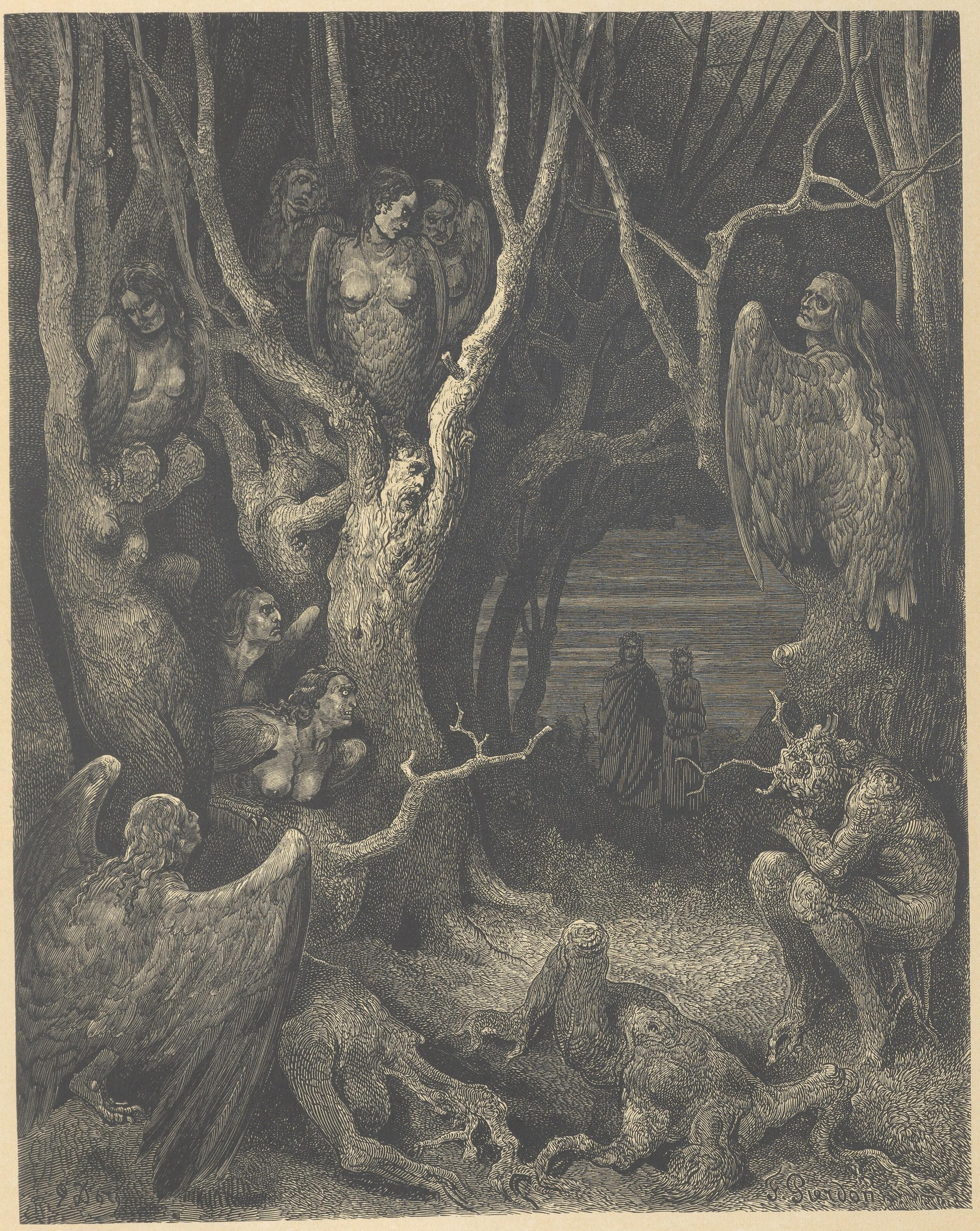
The Wood of the Suicides
Gustave Doré · 1861
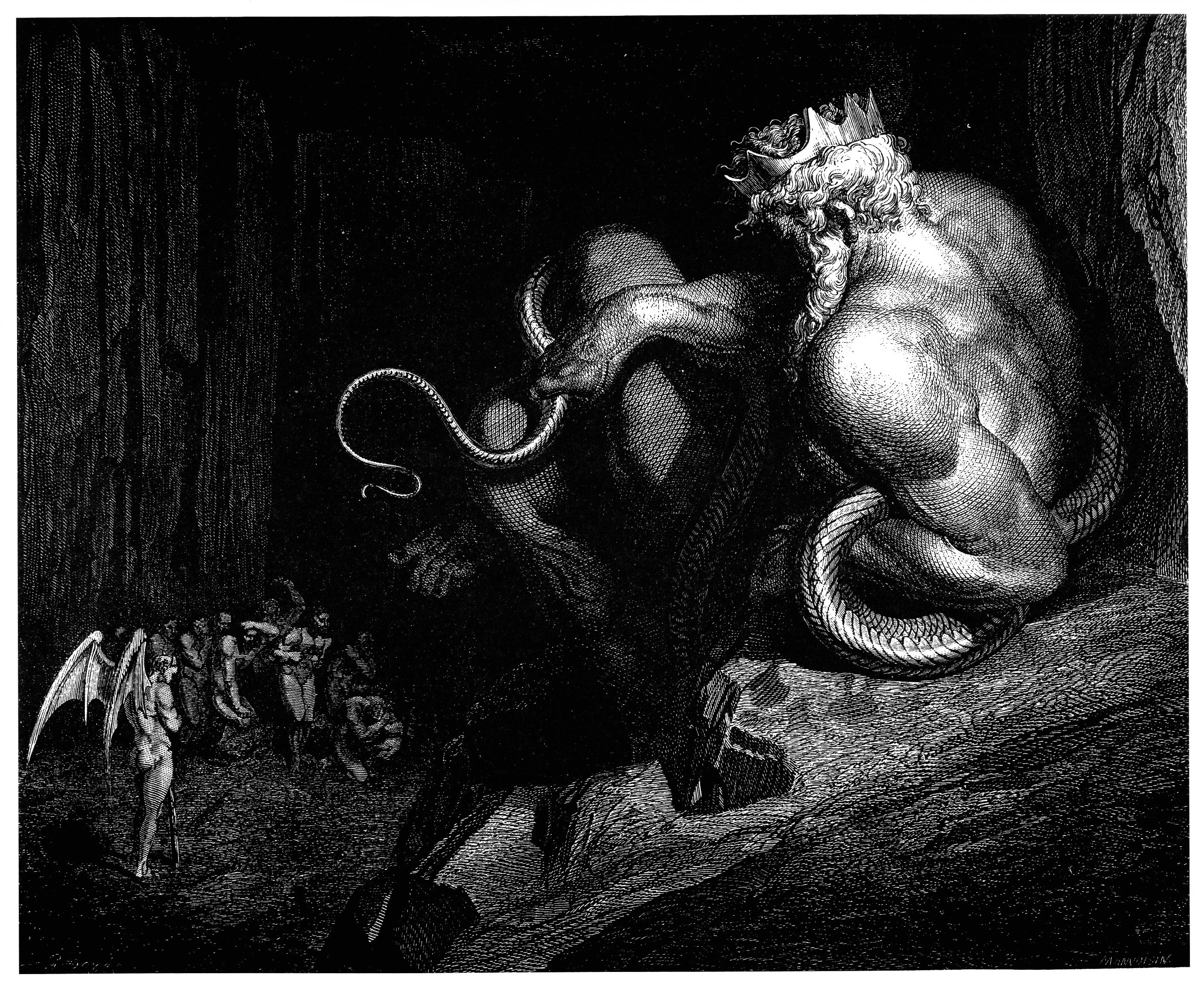
Minos, Judge of the Damned
Gustave Doré · 1861
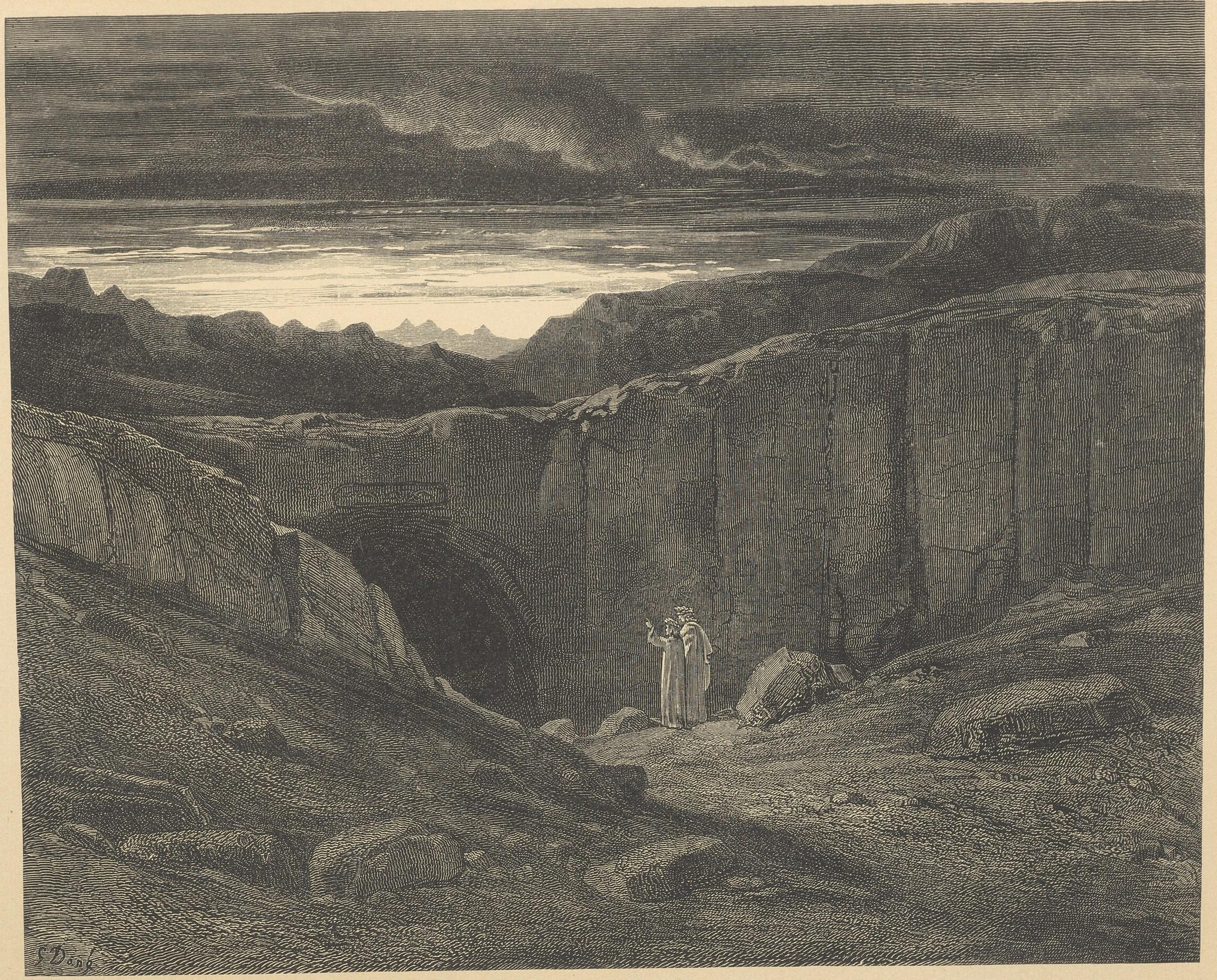
The Gate of Hell (Abandon All Hope)
Gustave Doré · 1861
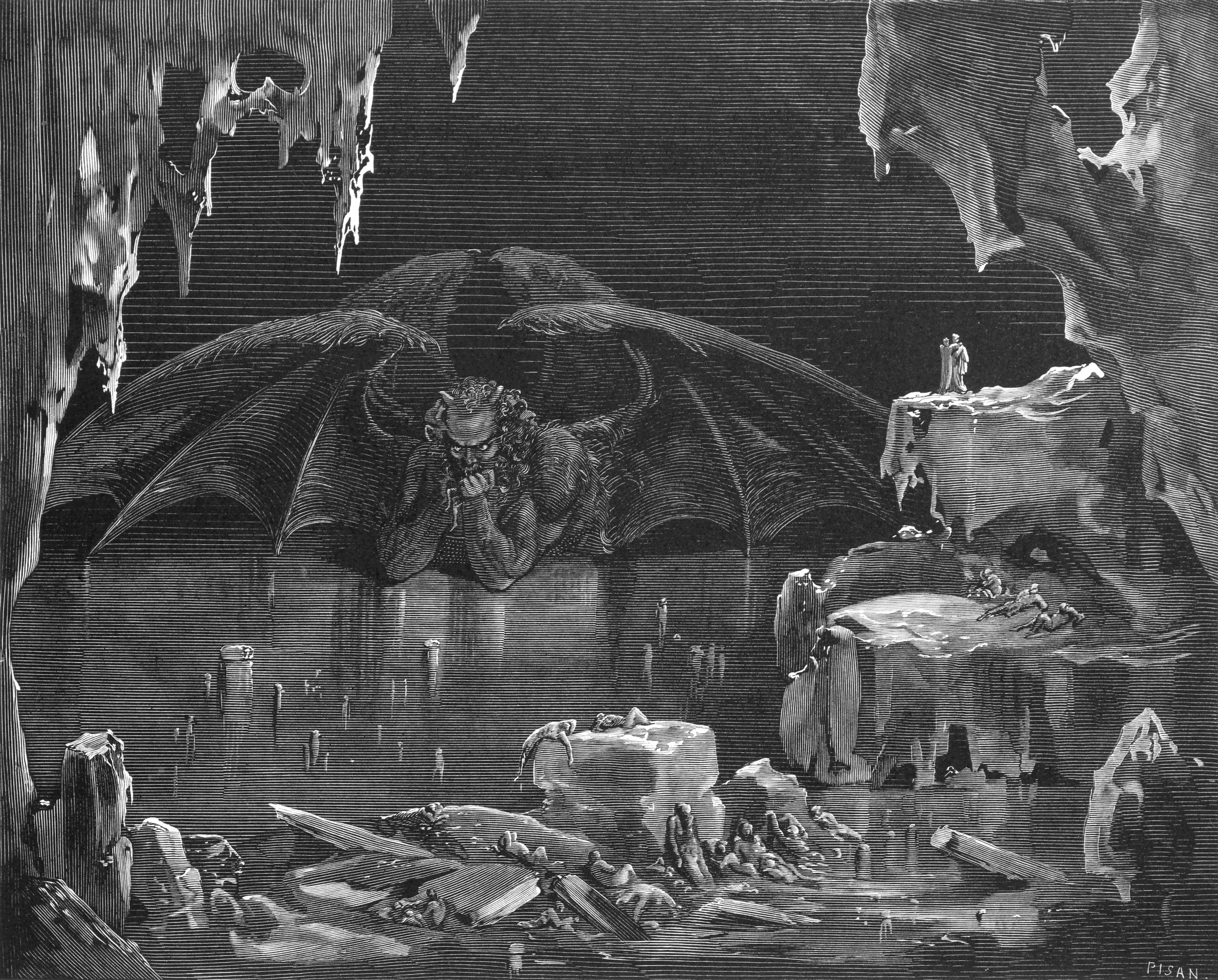
Lucifer, King of Hell
Gustave Doré · 1861
Caiaphas Crucified
Gustave Doré · 1861
Geryon
Gustave Doré · 1861
Farinata degli Uberti
Gustave Doré · 1861
Crossing the Styx (Filippo Argenti)
Gustave Doré · 1861
Also from 1861
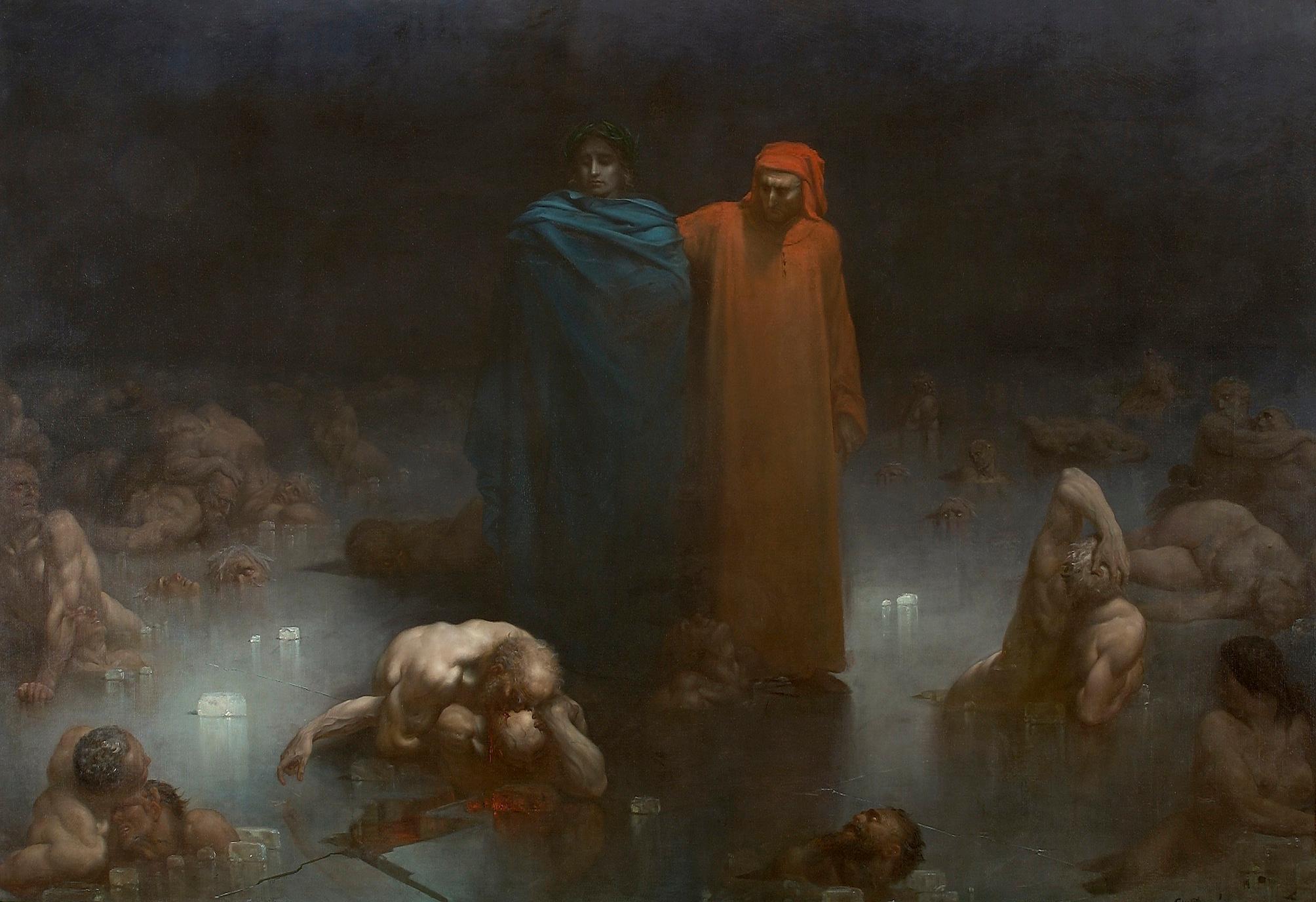
Dante and Virgil in the Ninth Circle of Hell
Gustave Doré · 1861
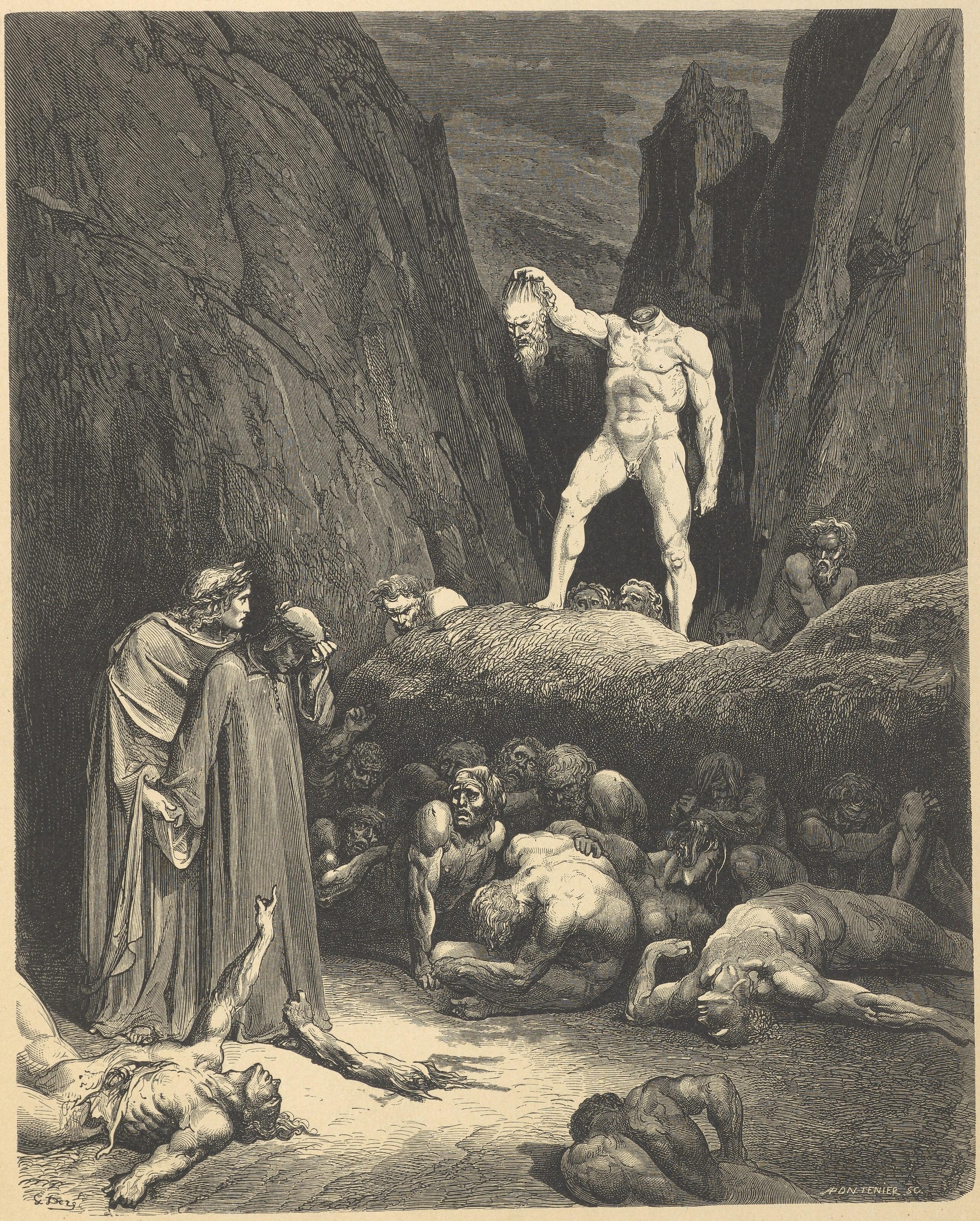
Bertran de Born Holding His Head
Gustave Doré · 1861
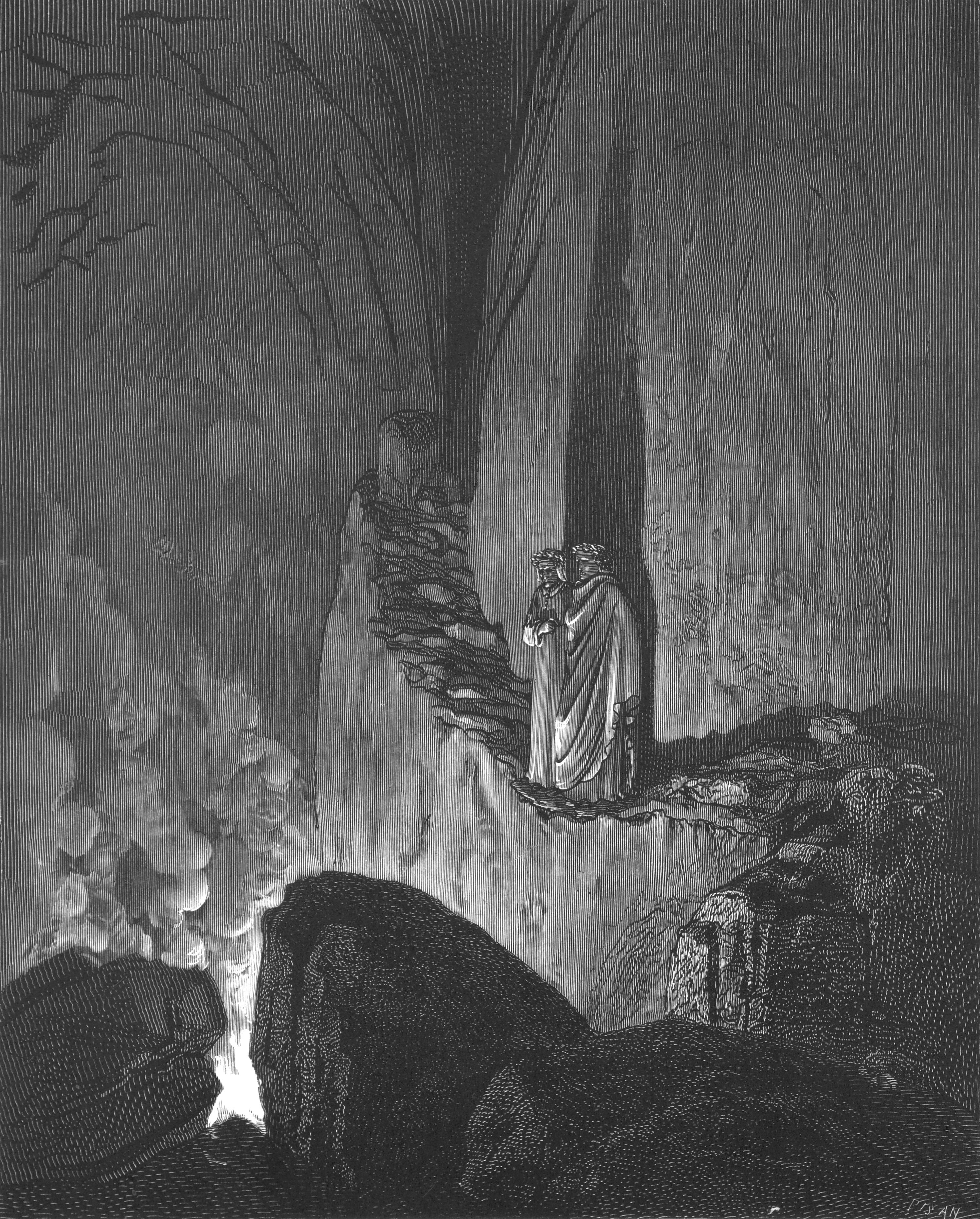
Ulysses and Diomedes
Gustave Doré · 1861
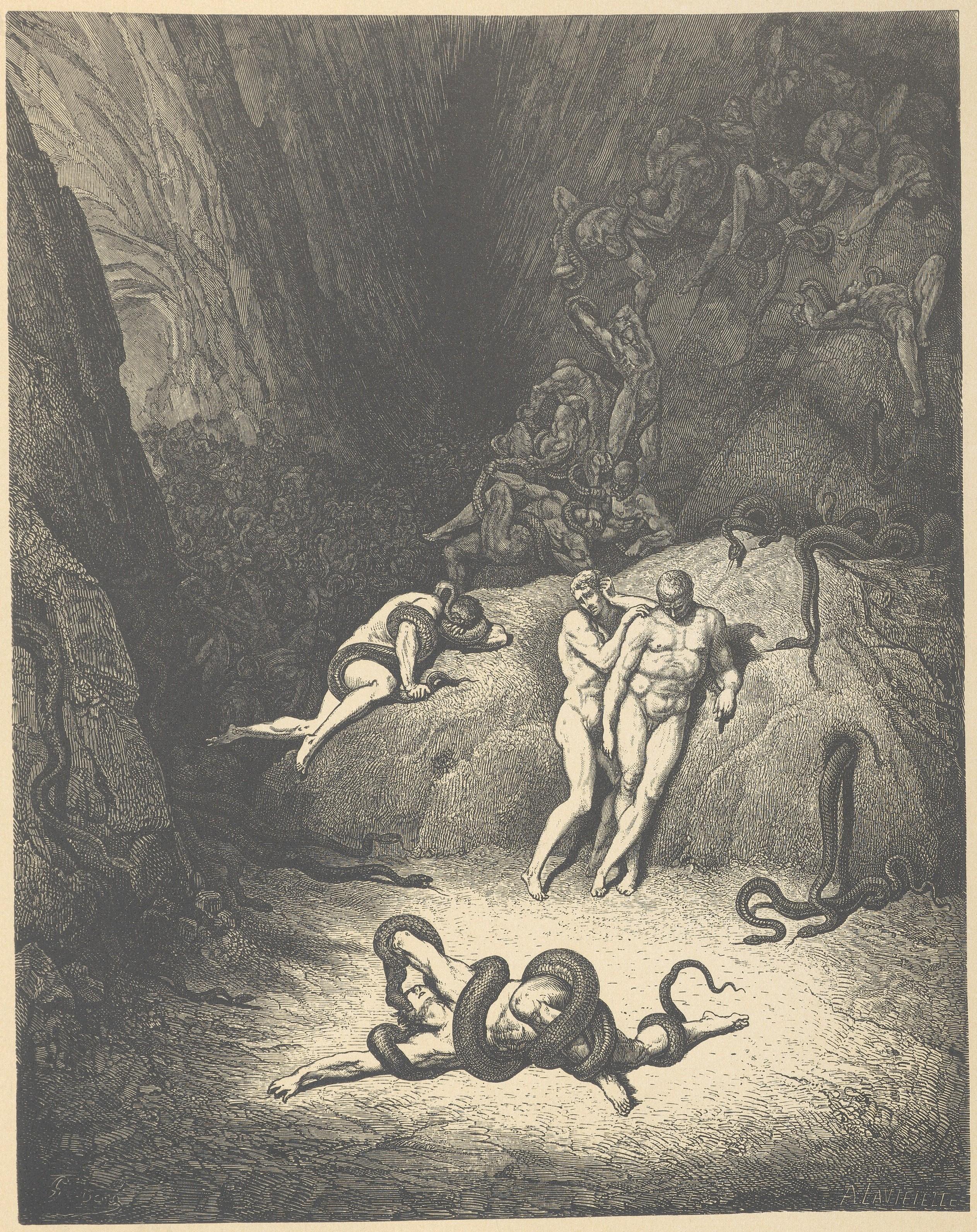
The Thieves and the Serpents
Gustave Doré · 1861
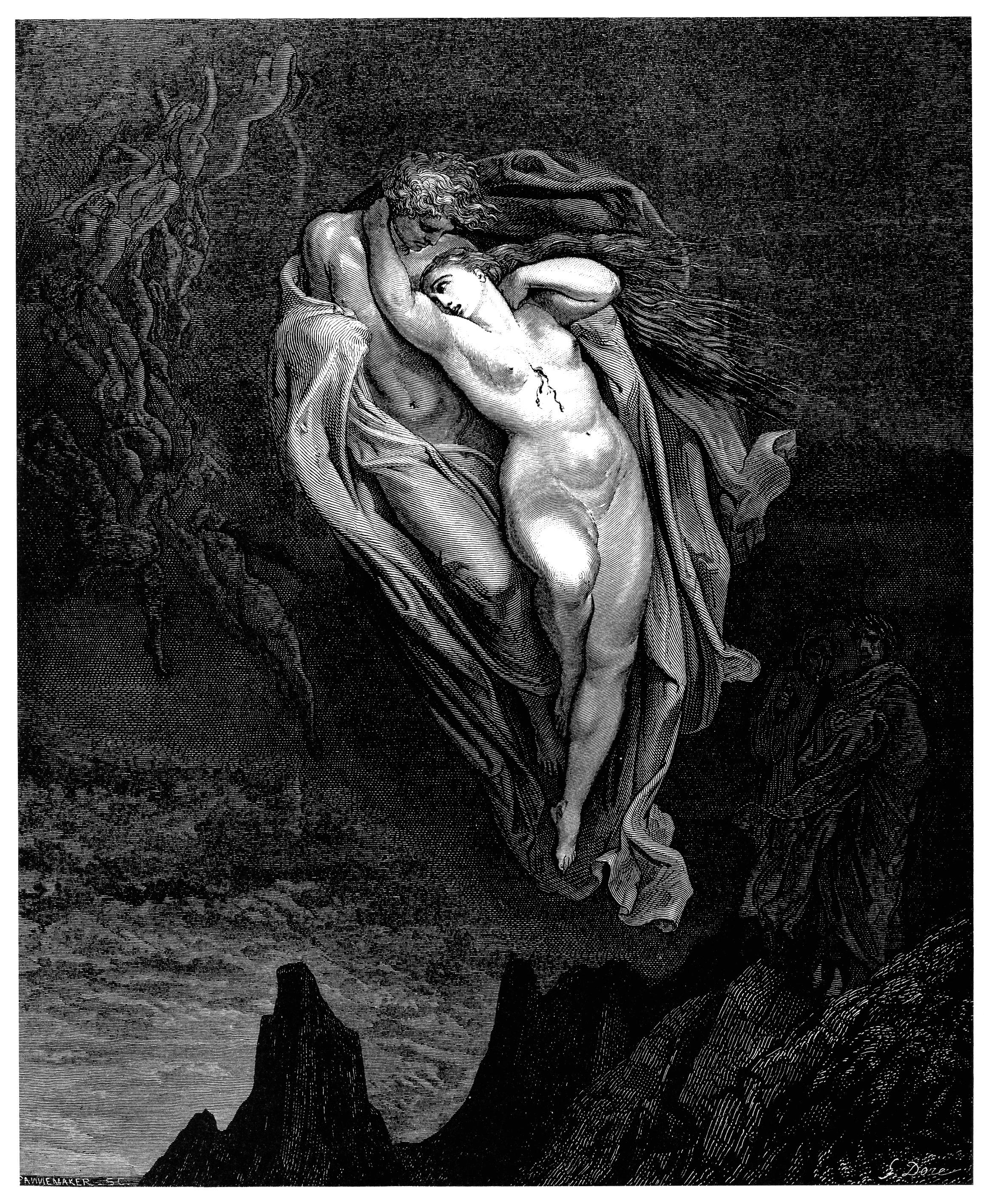
Paolo and Francesca
Gustave Doré · 1861
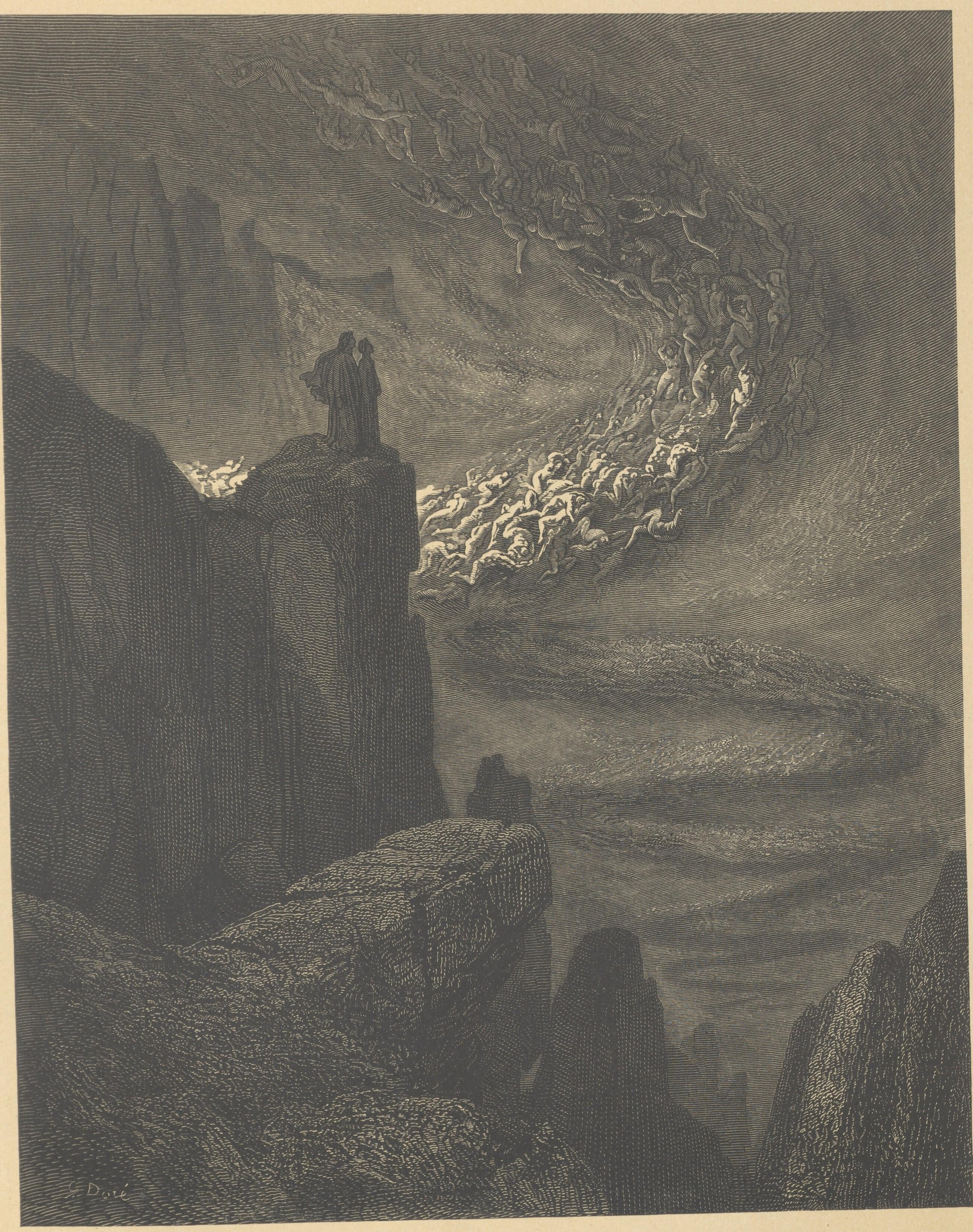
The Whirlwind of the Lustful
Gustave Doré · 1861
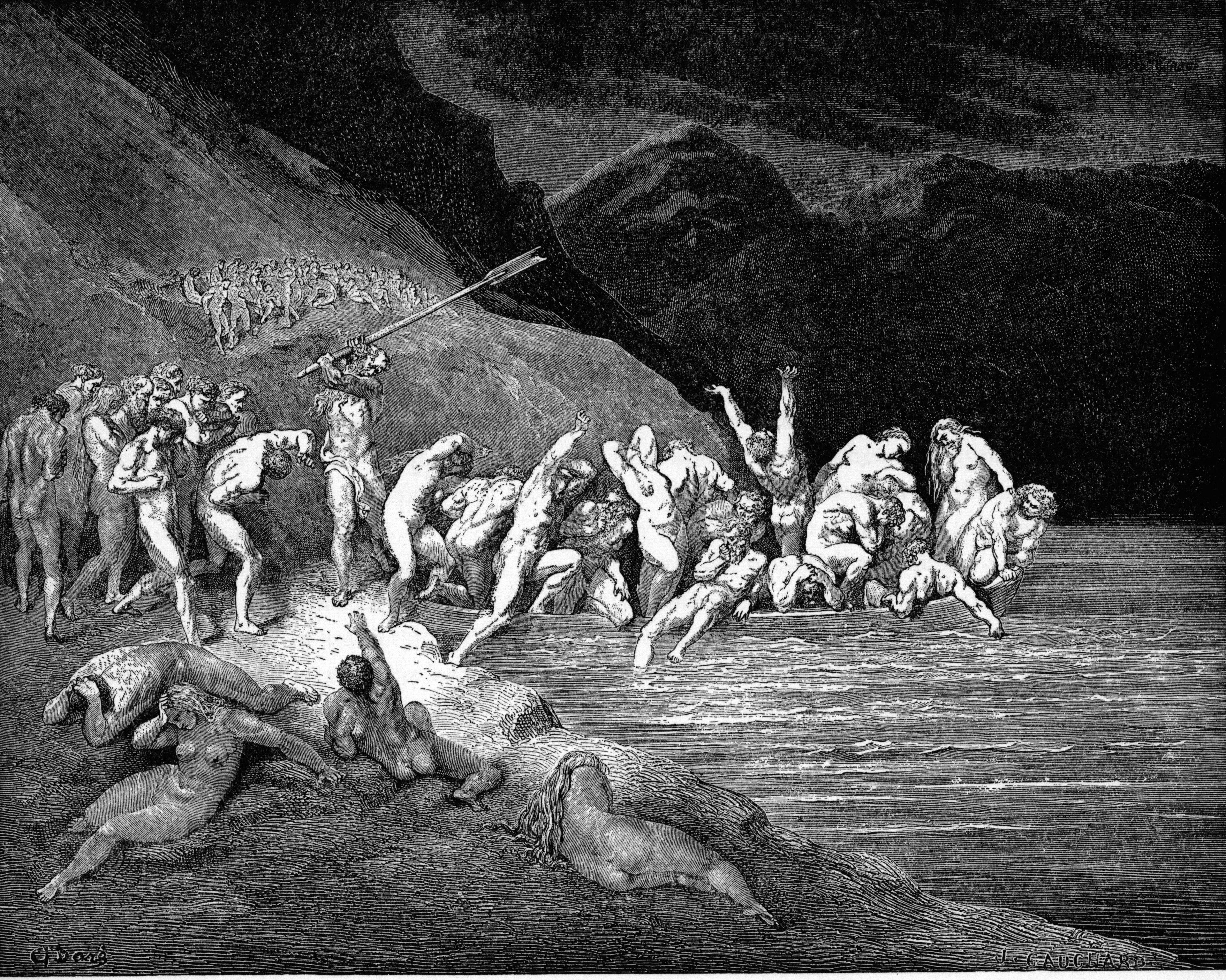
Charon, Ferryman of the Dead
Gustave Doré · 1861
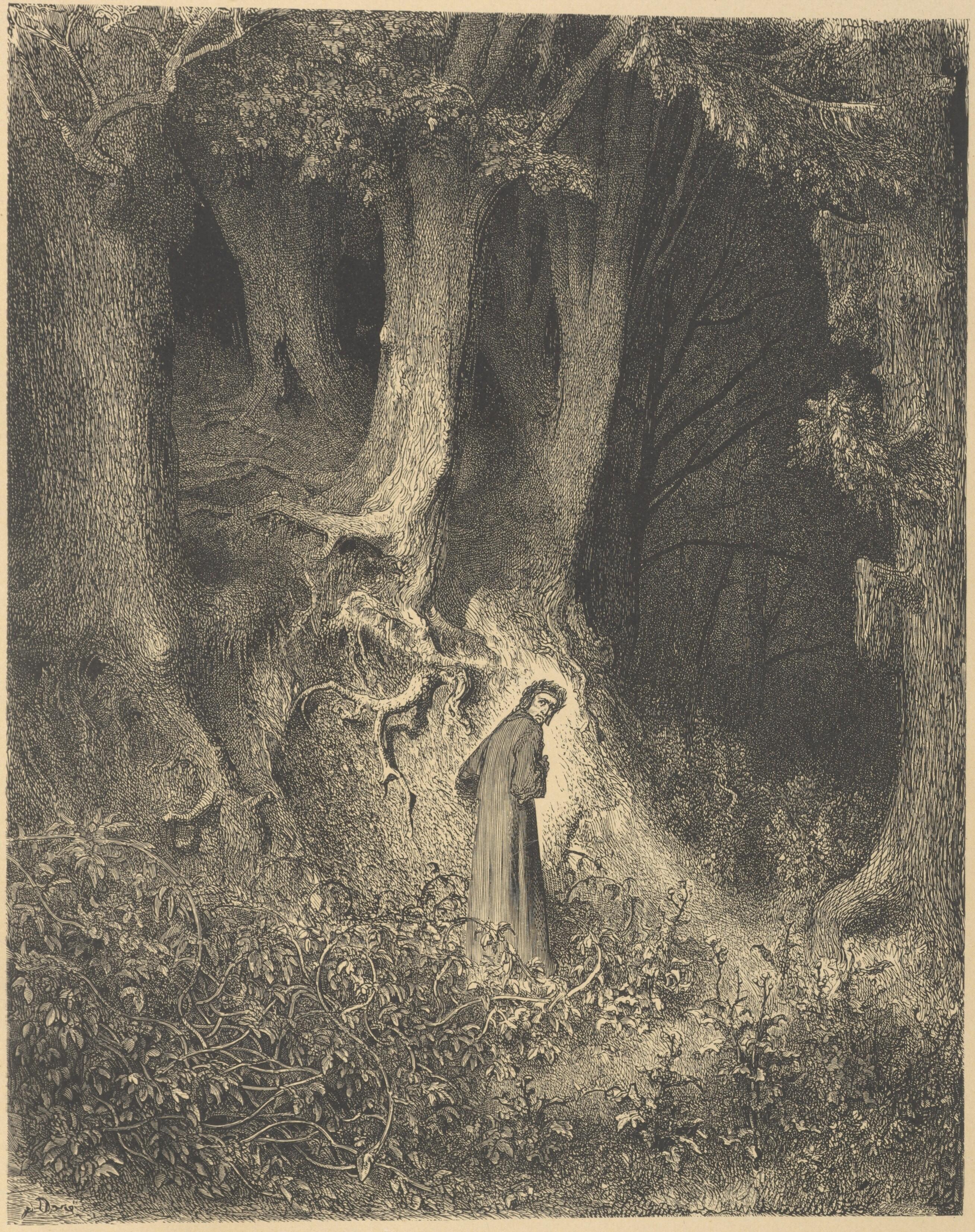
Dante Lost in the Dark Wood
Gustave Doré · 1861
Related works
Charon, Ferryman of the Dead
Gustave Doré · 1861
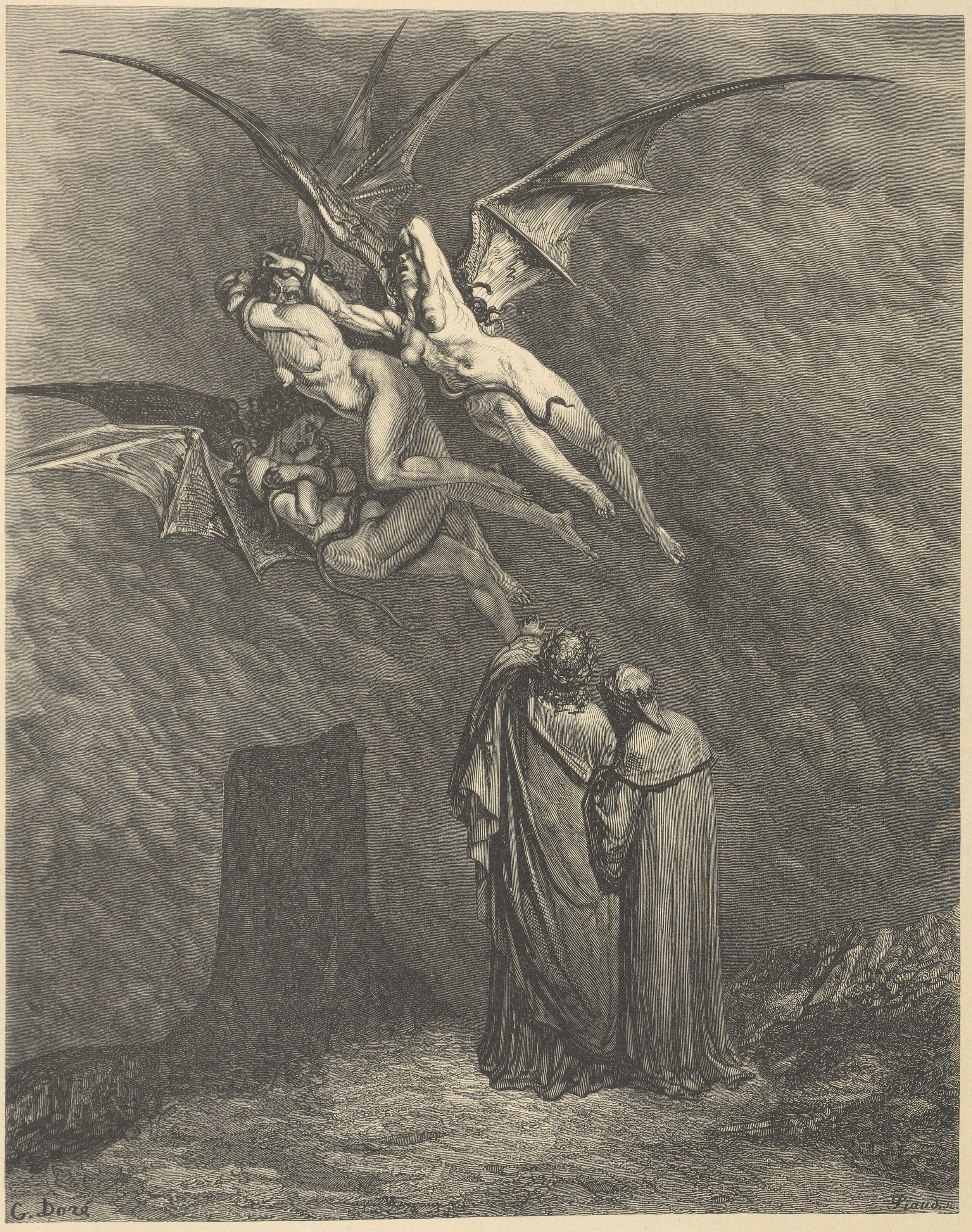
The Furies at the Gates of Dis
Gustave Doré · 1861
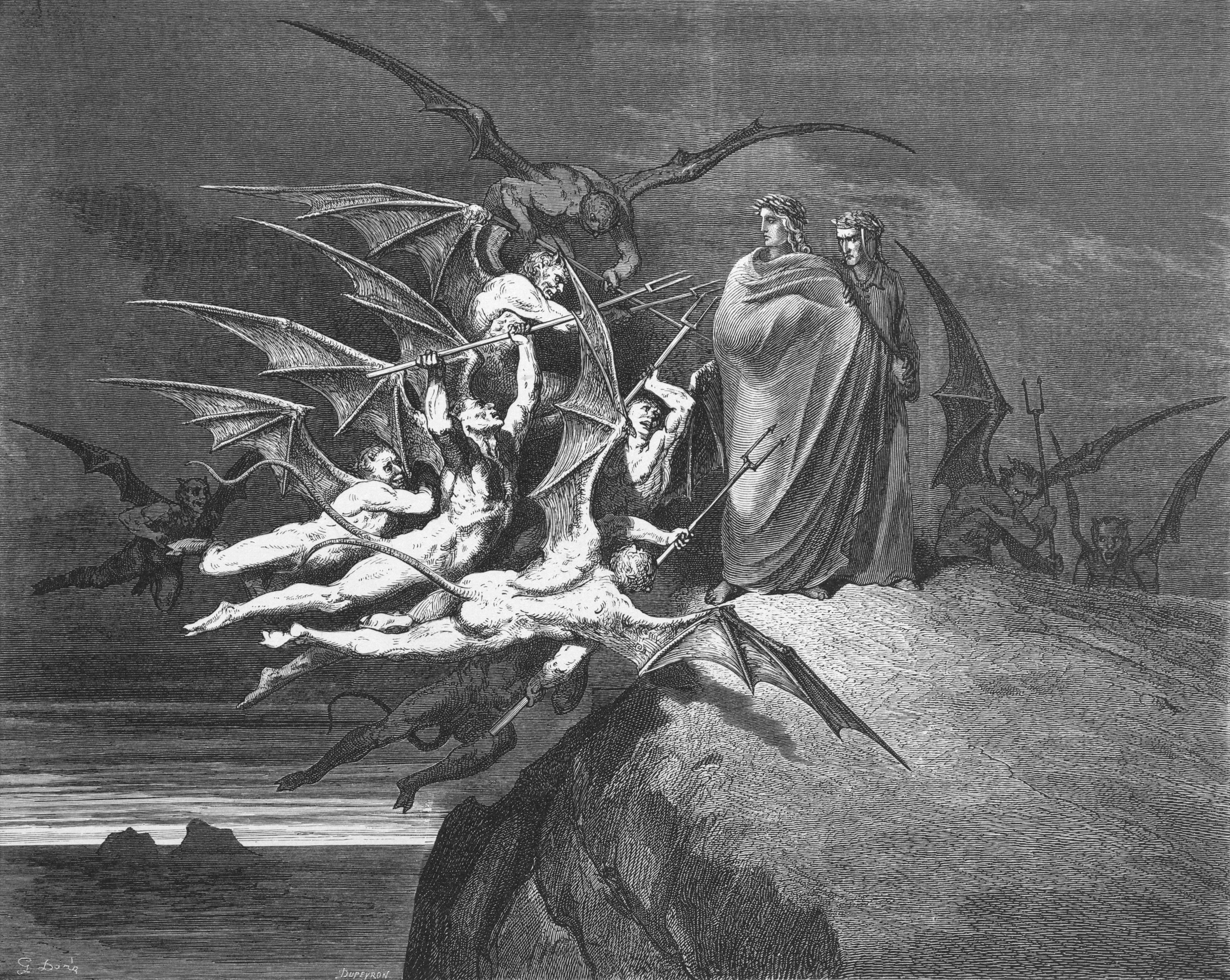
The Malebranche Demons
Gustave Doré · 1861
Ulysses and Diomedes
Gustave Doré · 1861
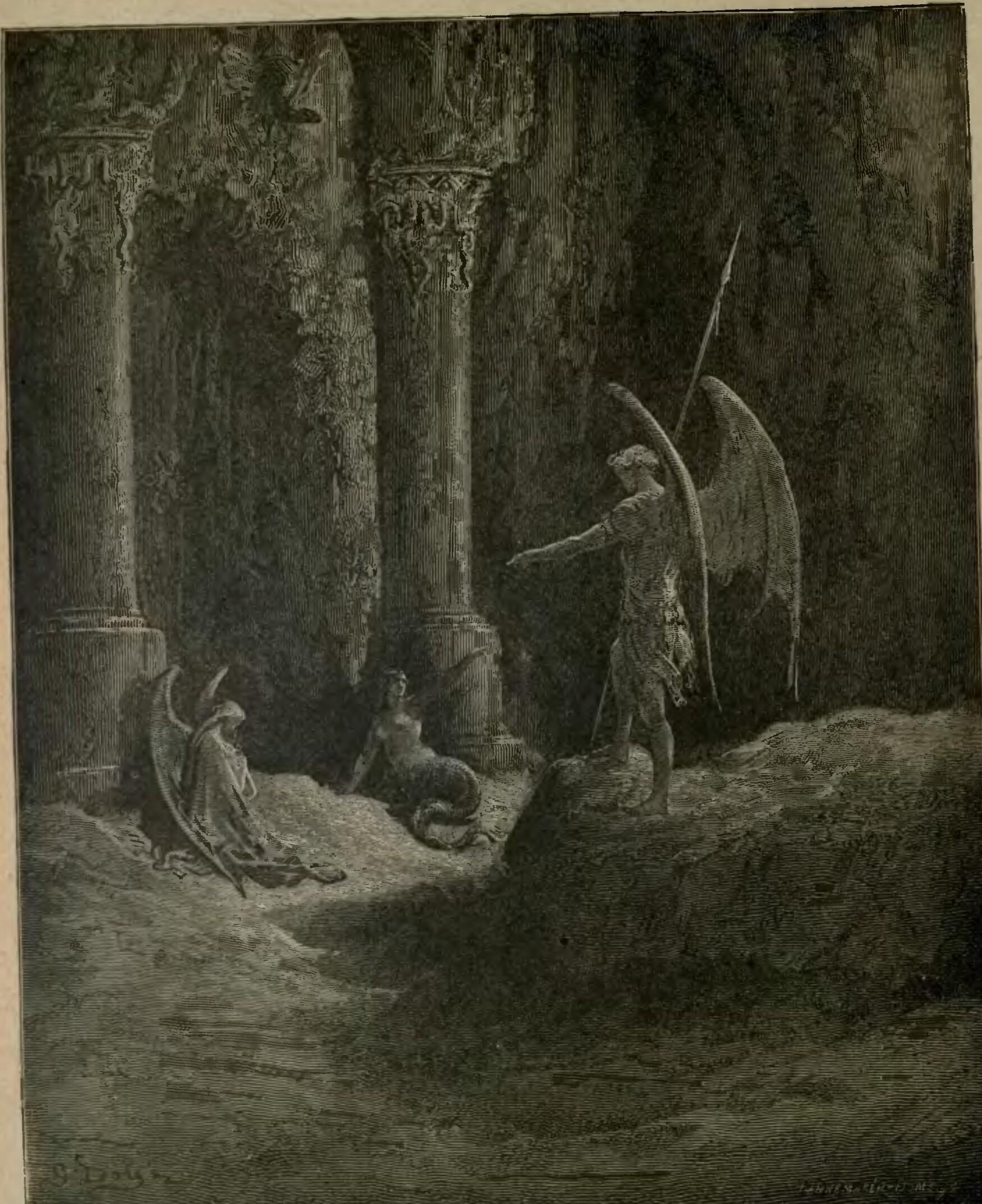
Satan, Sin and Death at the Gates of Hell
Gustave Doré · 1866
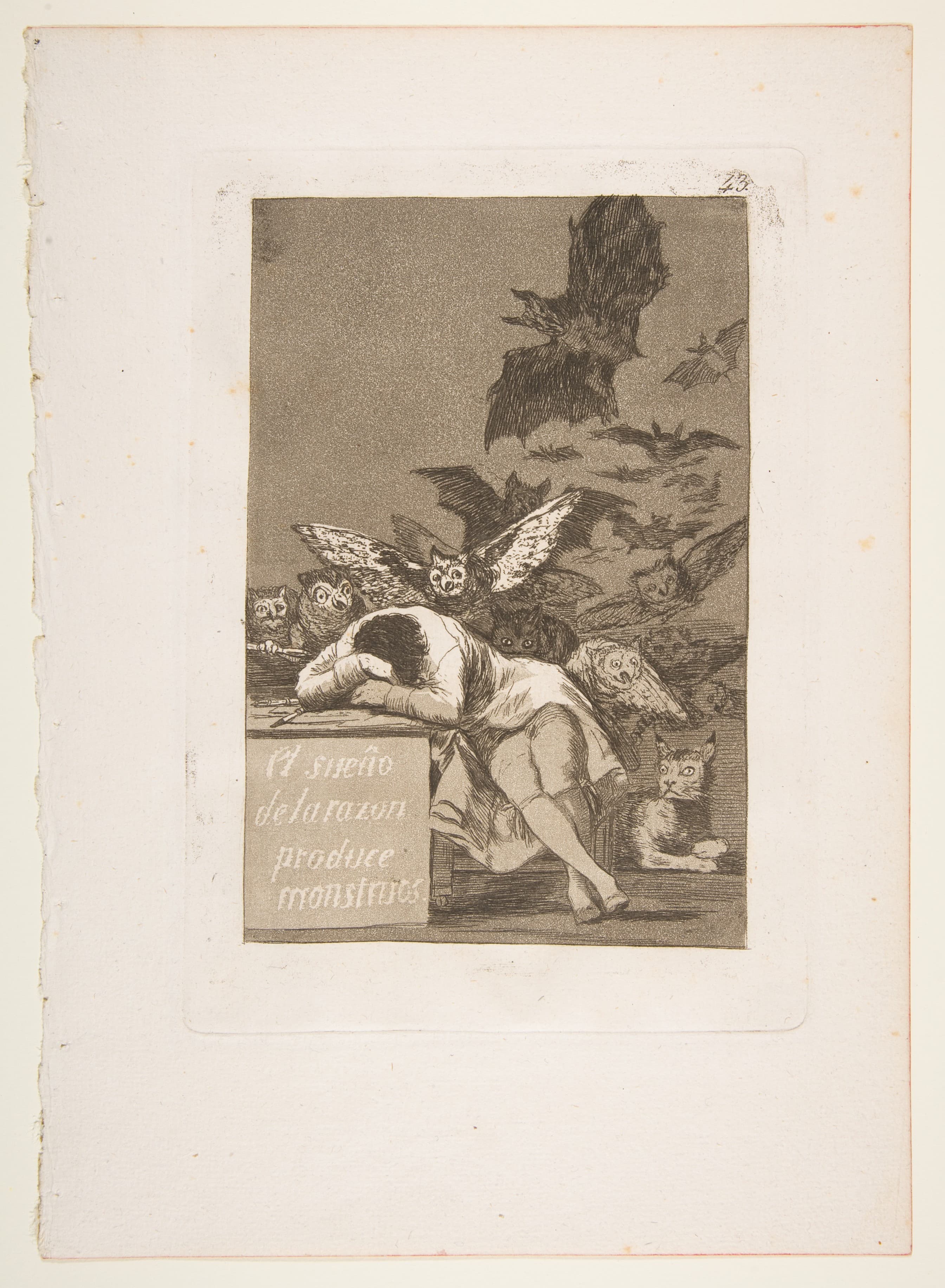
The Sleep of Reason Produces Monsters
Francisco Goya · 1797–99 (published 1799)
Satan’s Flight Through Chaos
Gustave Doré · 1866
Perched Upon a Bust of Pallas
Gustave Doré · 1884