The Empyrean (Rosa Celeste)
Gustave Doré, 1868
The Empyrean, or Rosa Celeste, is Gustave Doré's 1868 wood engraving for Dante's Paradiso, Canto 31: two small dark figures on a cloud look up into a vast spiral rose of angels turning around a point of light.
- Artist
- Gustave Doré
- Date
- 1868
- Medium
- Wood engraving
- Movement
- Romanticism
- Themes
- Angels & Demons, Religion & Saints, Literature & Poetry, Light Academia, Night & Dreams
What you are looking at
At the bottom of an upright plate, two figures in long robes stand side by side on a hump of cloud, seen from behind. They are almost solid black, the darkest things in the picture. Everything above them is light.
Rings of tiny winged figures rise and widen around a blazing point in the upper center, ring after ring, so that the whole sky becomes a funnel or a whirlpool opening upward. Rays shoot out from the center like the spokes of a wheel. Toward the edges the angels grow larger and more distinct: you can pick out wings, robes and lifted arms in the outer rings, while near the light they dissolve into a fine sparkle of white flecks.
The two figures are traditionally identified as Dante and Beatrice, the woman whose love leads him through Paradise. They are tiny, and they do not move. The picture is about looking.
The passage: Paradiso, Canto 31
At the end of his journey Dante has passed beyond the nine moving heavens into the Empyrean, the heaven of pure light outside space and time. There he sees the blessed arranged like the petals of an enormous flower. Canto 31 opens, in Longfellow's translation:
In fashion then as of a snow-white rose Displayed itself to me the saintly host, Whom Christ in his own blood had made his bride.
The angels fly in and out of the flower "Even as a swarm of bees, that sinks in flowers / One moment, and the next returns again." Their faces are "of living flame," their wings gold, the rest "so white / No snow unto that limit doth attain." At the center shines the light of God, "O Trinal Light, that in a single star / Sparkling upon their sight so satisfies them."
There is a quiet twist in the canto. Partway through it, Dante turns to speak to Beatrice and finds instead "an Old Man": Saint Bernard, who will guide him to the end. Beatrice has taken her own seat high in the rose. So the second figure in Doré's plate is Beatrice only if we read it as the moment before she leaves; it could as well be Bernard. Doré keeps the two silhouettes generic, and the scene works either way.
How Doré staged it
Dante's rose is a stadium of human souls, seated on tiers, with angels flying between them. Doré fuses the two into a single spiral of winged bodies, which is how most readers now picture it. He also tilts the rose to face us, so that we look up its throat toward the light, and he sets the viewers on a cloud rather than inside the flower. Instead of saints in their seats, we get motion: the rings seem to revolve.
The composition answers the Inferno in reverse. In Dante Lost in the Dark Wood the poet is a small pale figure swallowed by black trees; here the two travelers are the only dark shapes in a world of light. At the bottom of Hell Lucifer is frozen and still; at the top of Heaven everything turns.
How the engraving was made
Doré drew the design on a boxwood block, and the Pannemaker workshop cut it; "PANNEMAKER" is engraved at lower left and "G. Doré" at lower right. Almost the whole block is covered with fine wavy parallel lines, which give the clouds and the dark lower zone their soft, shimmering gray. The angels are made by cutting those lines away: each wing and face is a small white shape carved out of the tone. Near the center the cutting becomes so dense that only specks of black remain.
The plate first appeared in Hachette's folio Le Purgatoire et le Paradis in 1868, seven years after the Inferno, with 60 plates for the two canticles together. This scan is from the 1871 Berlin edition published by W. Moeser, held by the National Library of Poland. It belongs with the rest of Doré's Dante illustrations, which begin with the Inferno.
Meaning
For Dante, the rose is the end of desire: every soul in it wants what God wants, and that agreement is its happiness. The tiny pair at the bottom are still outside, still looking, which is where the reader is. Doré turns theology into a sensation, the vertigo of looking up into infinite light.
The image is one of the most reproduced of all Doré's plates and, with the circling host of angels in Western art behind it, has become shorthand for heaven itself. It is a fitting counterpart to the cold, still bottom of the Inferno and to the windblown bodies of the Whirlwind of the Lustful, another spiral of souls, there turning in torment rather than in joy. See more of Gustave Doré's work on his artist page.
Questions & answers
What does Doré's Rosa Celeste show?
It shows two small dark figures, traditionally Dante and Beatrice, standing on a cloud and looking up into the Empyrean, the highest heaven. Rings of angels spiral around a blazing point of light, the light of God, in a vast rose-shaped whirl that fills the whole plate.
Which part of the Divine Comedy does the Empyrean plate illustrate?
Paradiso, Canto 31, which opens in Longfellow's translation: "In fashion then as of a snow-white rose / Displayed itself to me the saintly host." Dante sees the blessed arranged like a rose, with angels flying in and out of it "Even as a swarm of bees."
Is the second figure Beatrice or Saint Bernard?
The plate is usually titled Dante and Beatrice. In Canto 31, however, Beatrice leaves Dante to take her seat in the rose, and Saint Bernard becomes his guide. Doré's two silhouettes are not individualized, so the companion can be read as either.
When was the Rosa Celeste published, and who engraved it?
It appeared in Hachette's Le Purgatoire et le Paradis, published in Paris in 1868 with 60 plates. Doré drew on the woodblock and the Pannemaker workshop cut it; "PANNEMAKER" is signed at lower left and "G. Doré" at lower right.
What does the celestial rose mean?
In Dante the rose is the community of all the saved, perfectly at one with God's will, with God's light at its center. Doré turns that idea into an experience of scale and motion: two tiny viewers at the edge of an endless, turning light, where the reader also stands.
More by Gustave Doré
All works →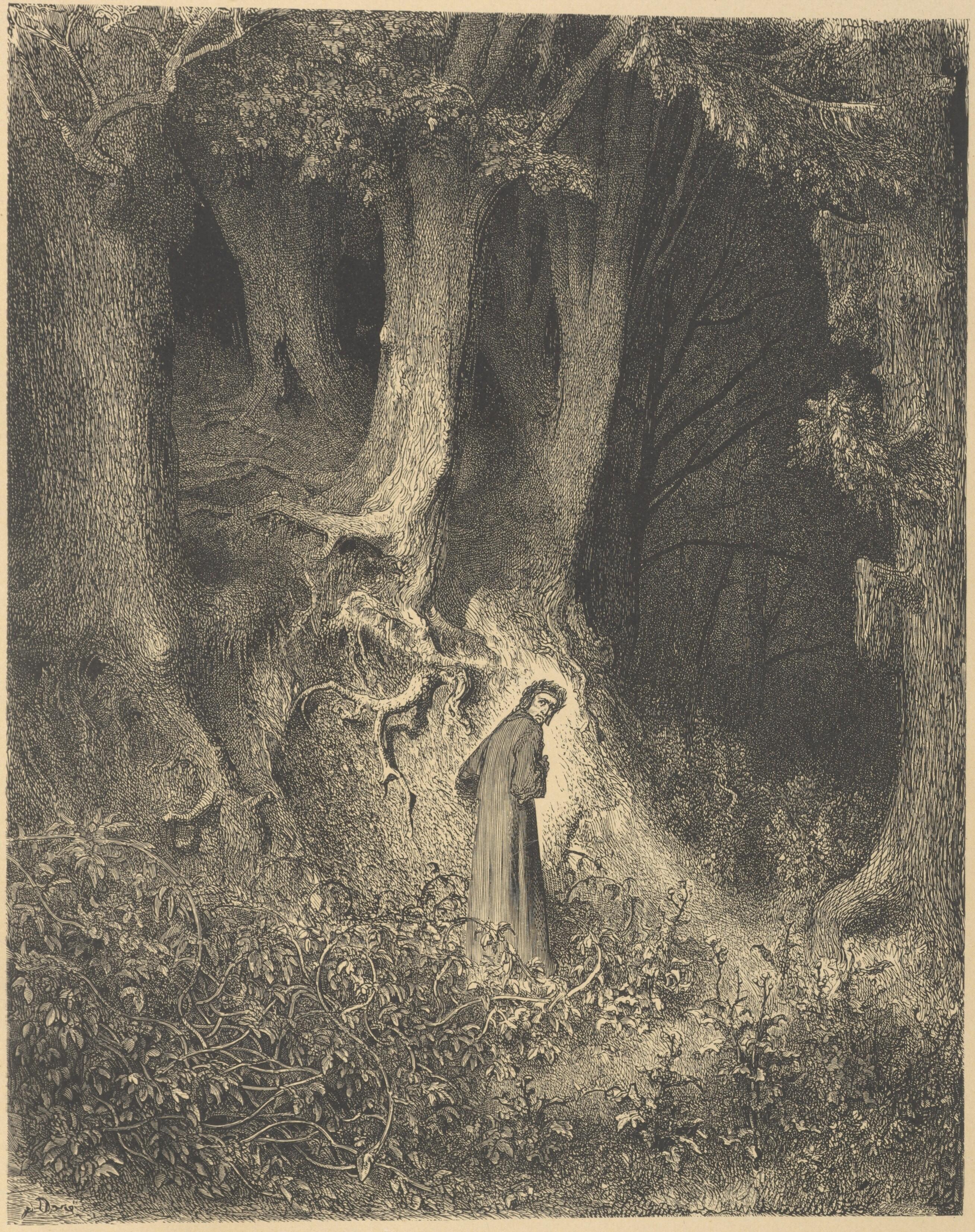
Dante Lost in the Dark Wood
Gustave Doré · 1861
The Gate of Hell (Abandon All Hope)
Gustave Doré · 1861
Farinata degli Uberti
Gustave Doré · 1861
Geryon
Gustave Doré · 1861
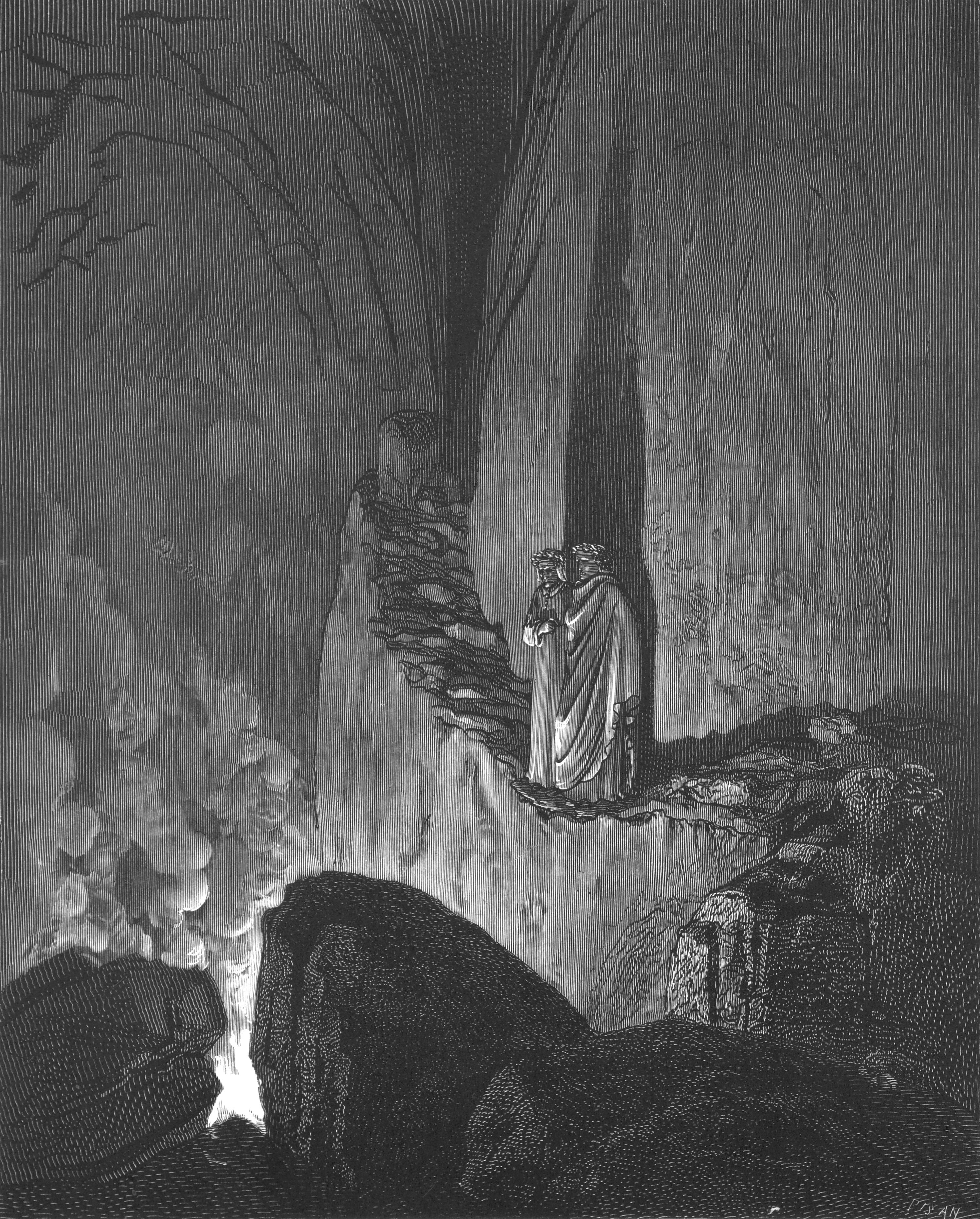
Ulysses and Diomedes
Gustave Doré · 1861
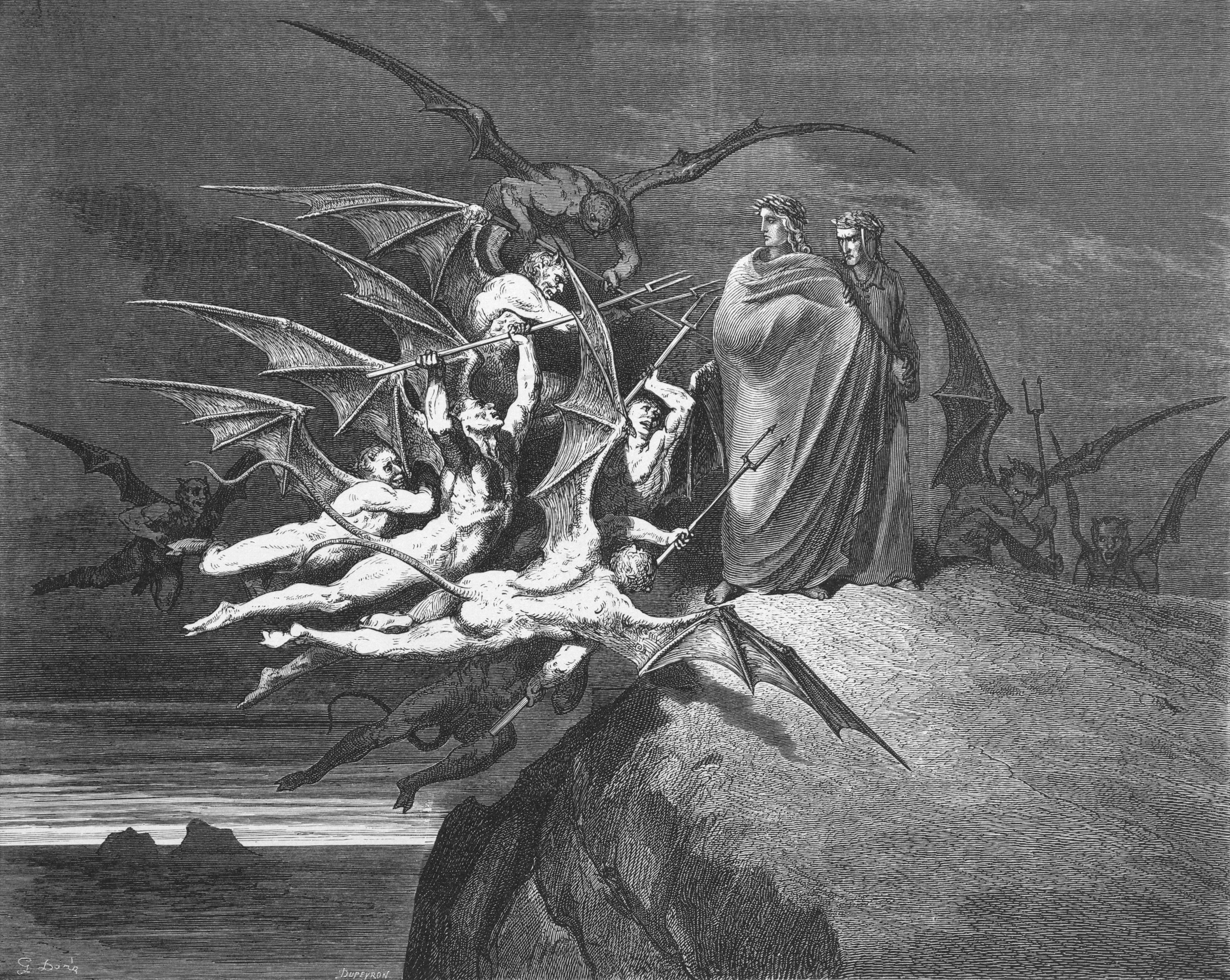
The Malebranche Demons
Gustave Doré · 1861
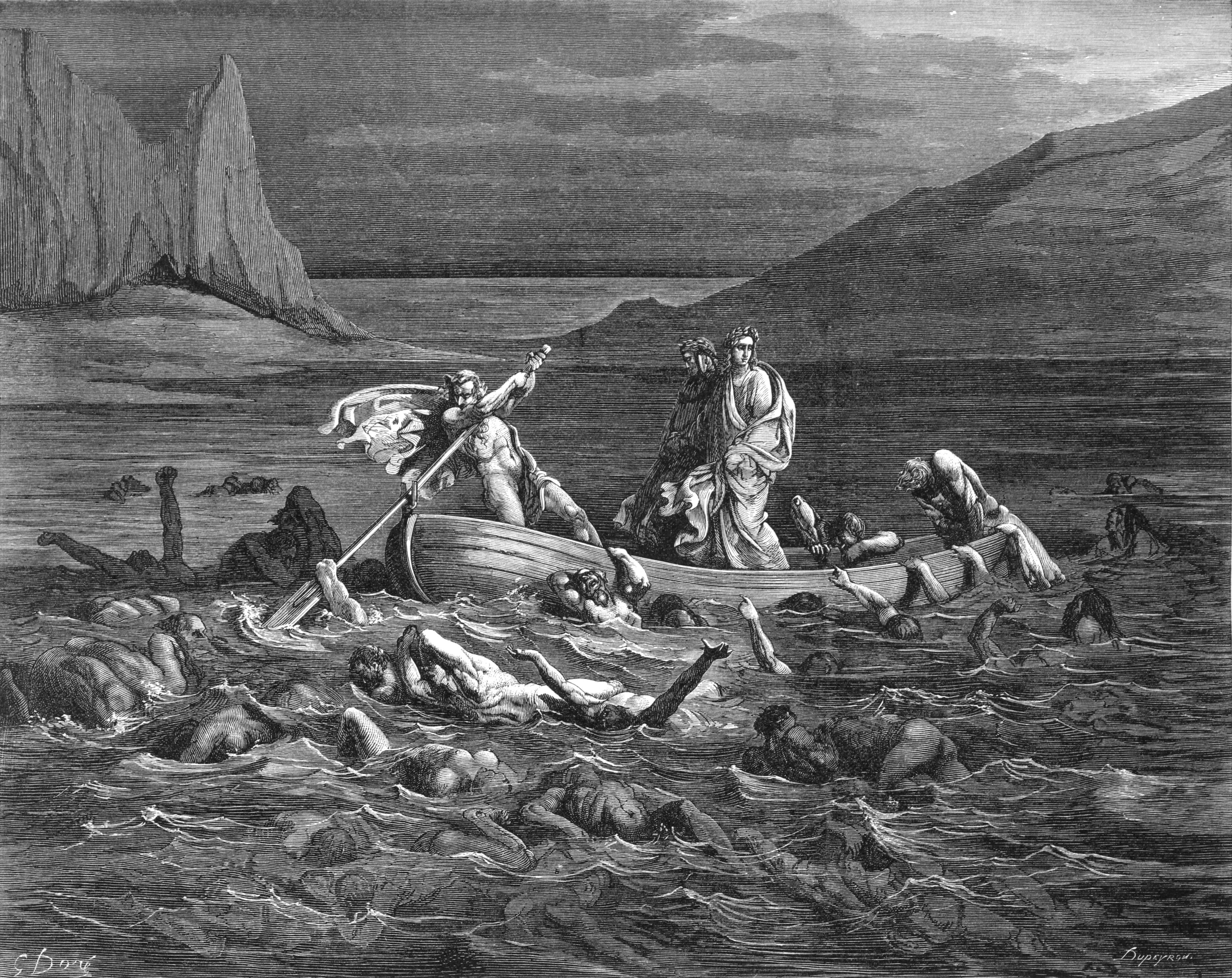
Crossing the Styx (Filippo Argenti)
Gustave Doré · 1861
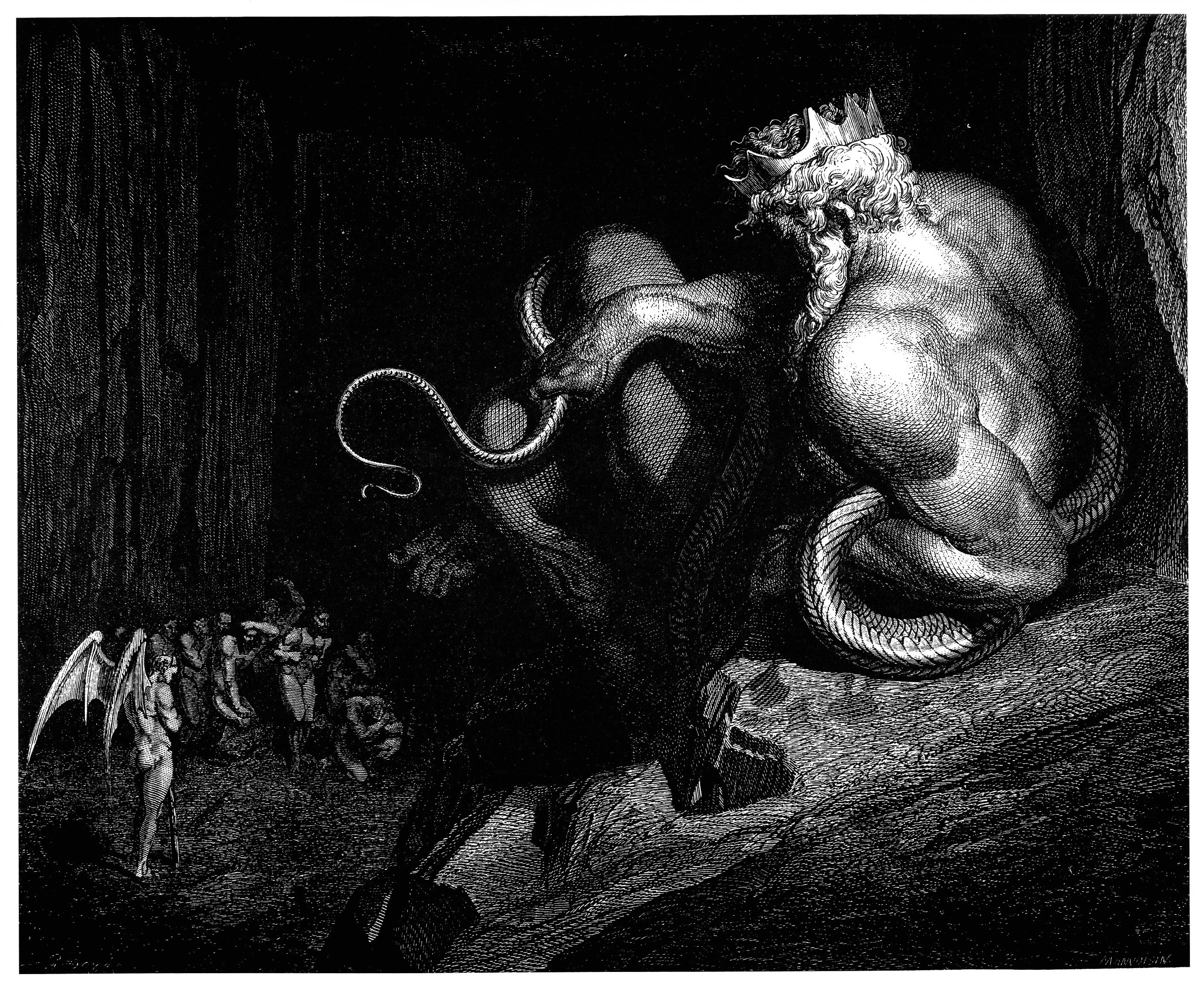
Minos, Judge of the Damned
Gustave Doré · 1861
Related works
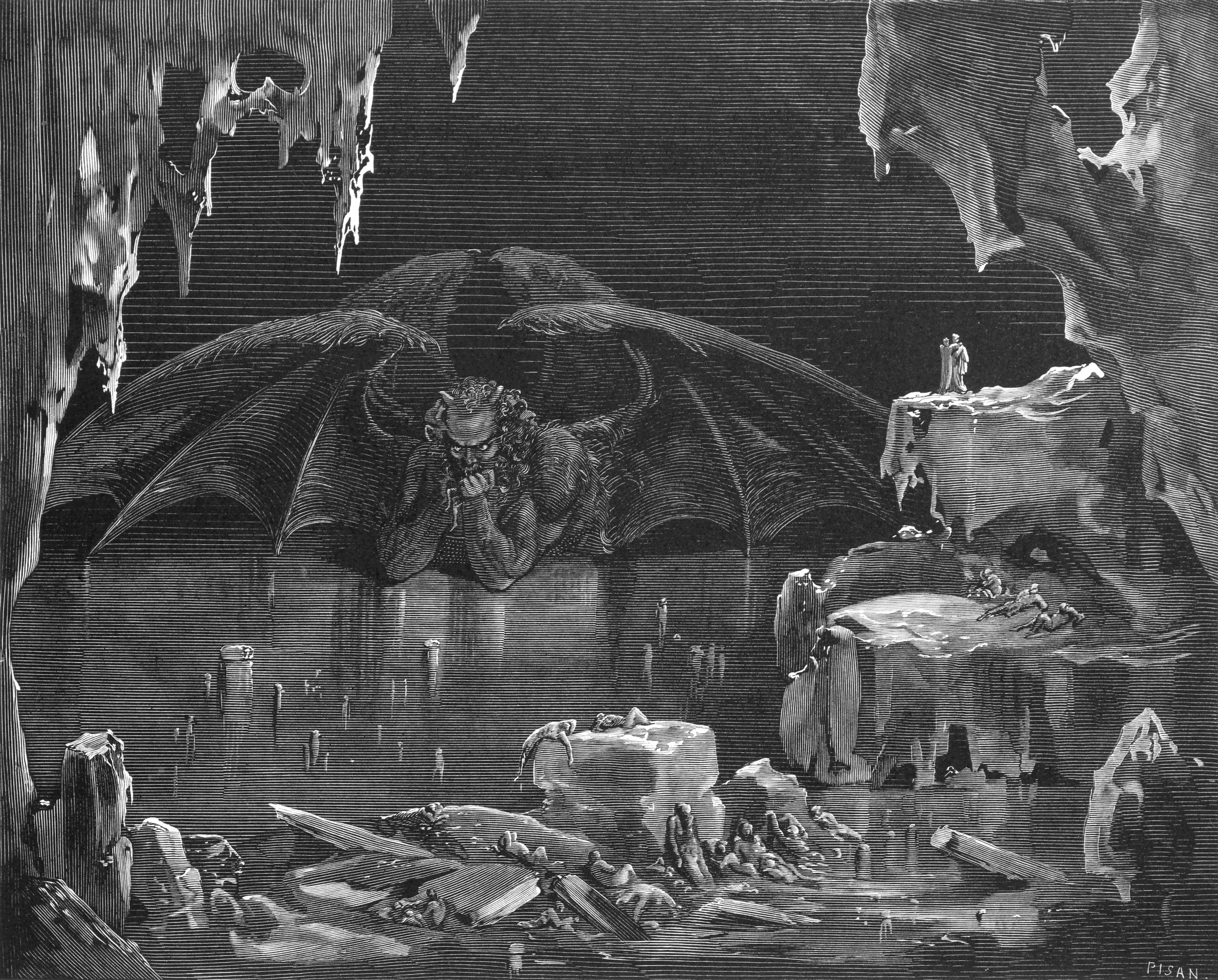
Lucifer, King of Hell
Gustave Doré · 1861
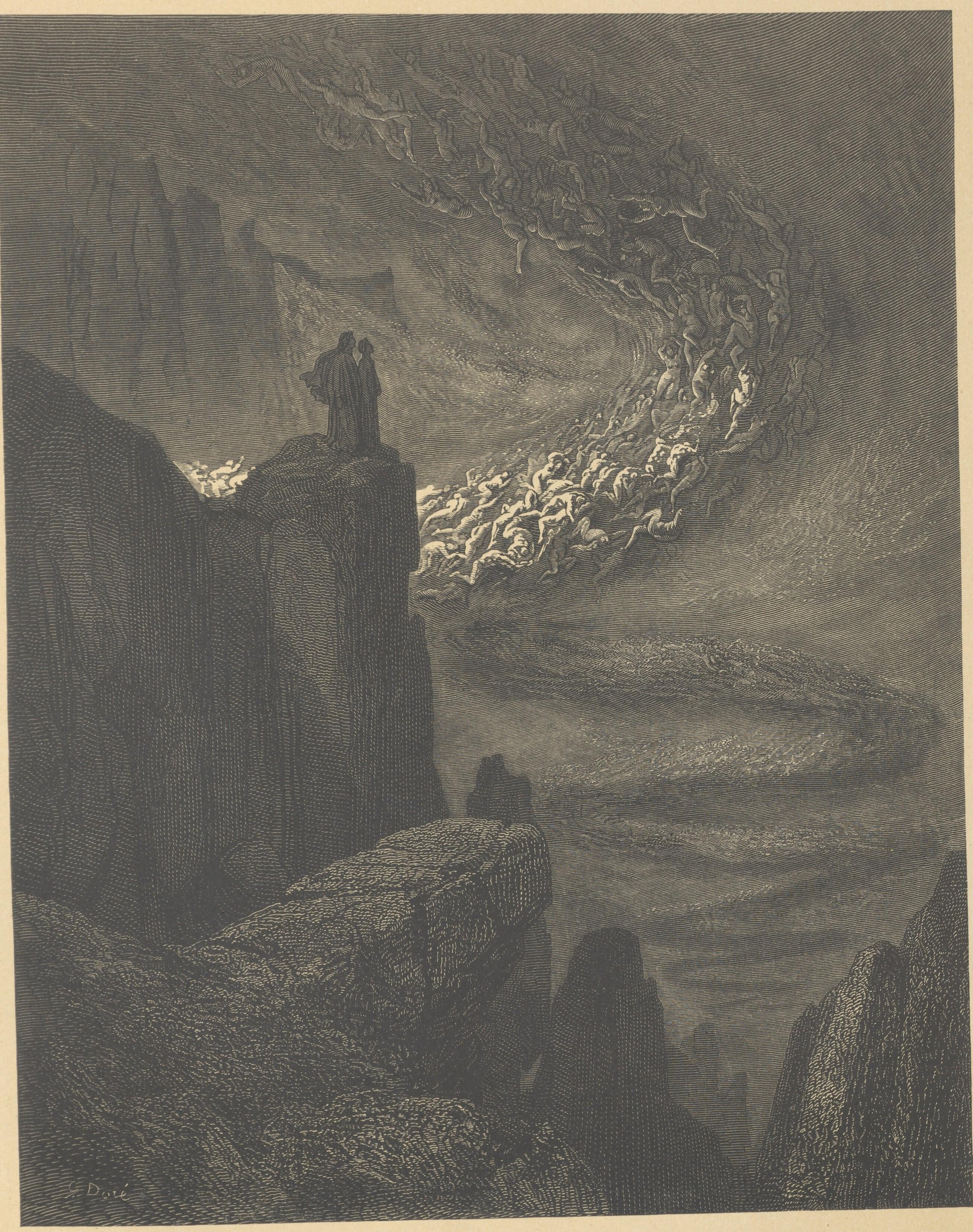
The Whirlwind of the Lustful
Gustave Doré · 1861
Paolo and Francesca
Gustave Doré · 1861
Death on the Pale Horse
Gustave Doré · 1866
Witches' Sabbath (The Great He-Goat)
Francisco Goya · c. 1819–1823
Fantastic Vision (Asmodea)
Francisco Goya · c. 1819–1823
The Vision of the Valley of Dry Bones
Gustave Doré · 1866
Adam and Eve Expelled from Paradise
Gustave Doré · 1866