Dante Lost in the Dark Wood
Gustave Doré, 1861
Dante Lost in the Dark Wood is the first plate in Gustave Doré's illustrated Inferno, published by Hachette in Paris in 1861. It shows Dante alone among giant trees at the opening of Canto I: “I found myself within a forest dark.”
- Artist
- Gustave Doré
- Date
- 1861
- Medium
- Wood engraving
- Movement
- Romanticism
- Themes
- Literature & Poetry, Nature & Landscape, Night & Dreams, Dark Academia, Death & Memento Mori
What you're looking at
A single man in a long robe stands in a forest so large that it dwarfs him. The trunks rise like columns out of the top of the picture, their bark rendered in thousands of short, flicked cuts, and their roots twist across the ground like limbs feeling for a grip. Dante is small, set just below the center, half turned away from us. He clutches the front of his robe with one hand and looks back over his shoulder, frowning, almost straight out at us, as if he has heard something behind him or is trying to work out which way he came.
Doré lights him like an actor on a stage. A pale glow falls on Dante and the trunk beside him, and nowhere else. Everything around that pool of light sinks into shadow: a tunnel of trees opening to the upper left, and a black hollow to the right where thin, leafless saplings stand against the dark. In the foreground a thicket of brambles and broad leaves fills the lower third of the plate, so that there is no visible path anywhere. That is the point of the picture.
Look at the roots to the left of Dante. One of them bends into a shape very like a clawed hand or the head of an animal, a hint of the beasts that will block his way in the next plates. Doré never states it, but the forest seems half alive.
The passage it illustrates
The plate illustrates the first three lines of the Divine Comedy. In Longfellow's translation:
Midway upon the journey of our life I found myself within a forest dark, For the straightforward pathway had been lost.
Dante sets his poem in the spring of 1300, when he was 35, half of the biblical span of seventy years. The dark wood (selva oscura) is the state of moral confusion in which he wakes. He cannot say how he entered it, “so full was I of slumber at the moment / In which I had abandoned the true way.” A few lines later he admits the memory is so bitter that “death is little more.”
The text gives almost no physical description: the wood is “savage, rough, and stern,” and that is all. Everything else in the plate, the cathedral scale of the trees, the light, the backward glance, is Doré's invention. He turns an allegory into a real place you could get lost in.
How Doré staged it
Doré chose to open the book with Dante entirely alone. The leopard, the lion and the she-wolf each get their own plates next, and Virgil appears only after them. By isolating the poet here, Doré makes the first image a portrait of a state of mind rather than an event.
The figure is recognizably Dante as Doré draws him throughout the series: long gown, close-fitting hood, a wreath of laurel, and the long nose and heavy jaw of the traditional Dante portrait. The scale is the key choice. In most earlier illustrated Dantes the poet fills the frame; Doré shrinks him to perhaps a fifth of the plate's height and gives the rest to the forest. The landscape becomes the subject, which is how Doré works across the whole Inferno series.
How it was made and published
Doré did not cut the block himself. He drew the design directly onto the whitened surface of a boxwood block, and a professional engraver cut it. In this plate the engraver signed at the lower right, “Gusmand sc.,” identified in the Bibliothèque nationale de France's copy as Adolphe Gusman; Doré's own “G. Doré” sits at the lower left among the leaves. Gusman translated Doré's washes into line: dense parallel strokes for the shadowed trunks, broken stipple for foliage, and clean white gouges where the light catches bark.
The plate appeared in L'Enfer de Dante Alighieri, a large folio published by Hachette in Paris in 1861. Doré, then 29, had to pay for the edition himself because no publisher would risk the cost; it sold well enough that Hachette issued Purgatorio and Paradiso in 1868. The same plates went into English editions, beginning with Cary's translation as The Vision of Hell (Cassell, London, 1866), and into German and other editions. The scan shown here comes from a Berlin edition of 1870, where the plate is numbered 1.
Meaning and afterlife
The dark wood is one of the most quoted images in Western literature, and Doré's version has become the default picture of it. His reading is a Romantic one. Where medieval commentators saw the wood as sin or worldly error, Doré shows something closer to the sublime: nature too vast and too dark for one man to master. The backward glance adds anxiety, the sense of having lost not only the path but the memory of it.
The plate also sets up the visual grammar of the whole book. The pale, vulnerable figure against an immense, engraved darkness returns in The Gate of Hell, in the crag above the whirlwind of the lustful, and all the way down to Lucifer in the ice. Readers who come to Gustave Doré through this first image already know how the journey will look: tiny humans, enormous darkness, and a single shaft of light.
For a painted descent into the same poem, compare Gustave Courtois's Dante and Virgil in Hell. The plate also belongs on any shelf of dark academia imagery, where it serves as shorthand for being lost in the middle of things.
Questions & answers
What does Doré's Dante Lost in the Dark Wood show?
It shows Dante alone in an immense forest at the opening of the Inferno, glancing back over his shoulder in a pool of light. It illustrates Canto I, lines 1–3: “Midway upon the journey of our life / I found myself within a forest dark, / For the straightforward pathway had been lost” (Longfellow's translation).
When was Doré's dark wood illustration made?
It was first published in 1861 as the opening plate of L'Enfer de Dante Alighieri, issued by Hachette in Paris. Doré financed the large folio edition himself. The plates were reused in later editions, including Cary's English translation, The Vision of Hell (London, 1866).
How was the dark wood engraving made?
Doré drew the design directly on a boxwood block and a professional wood engraver cut it. The block is signed “G. Doré” at lower left and “Gusmand sc.” at lower right, which the Bibliothèque nationale de France identifies as the engraver Adolphe Gusman.
What does the dark wood mean in Dante's Inferno?
In the poem the dark wood stands for moral confusion: at 35, midway through life, Dante realizes he has strayed from the right path without knowing how. Doré adds a Romantic reading, making the forest a vast natural force that dwarfs the lost man, with light falling only on him.
More by Gustave Doré
All works →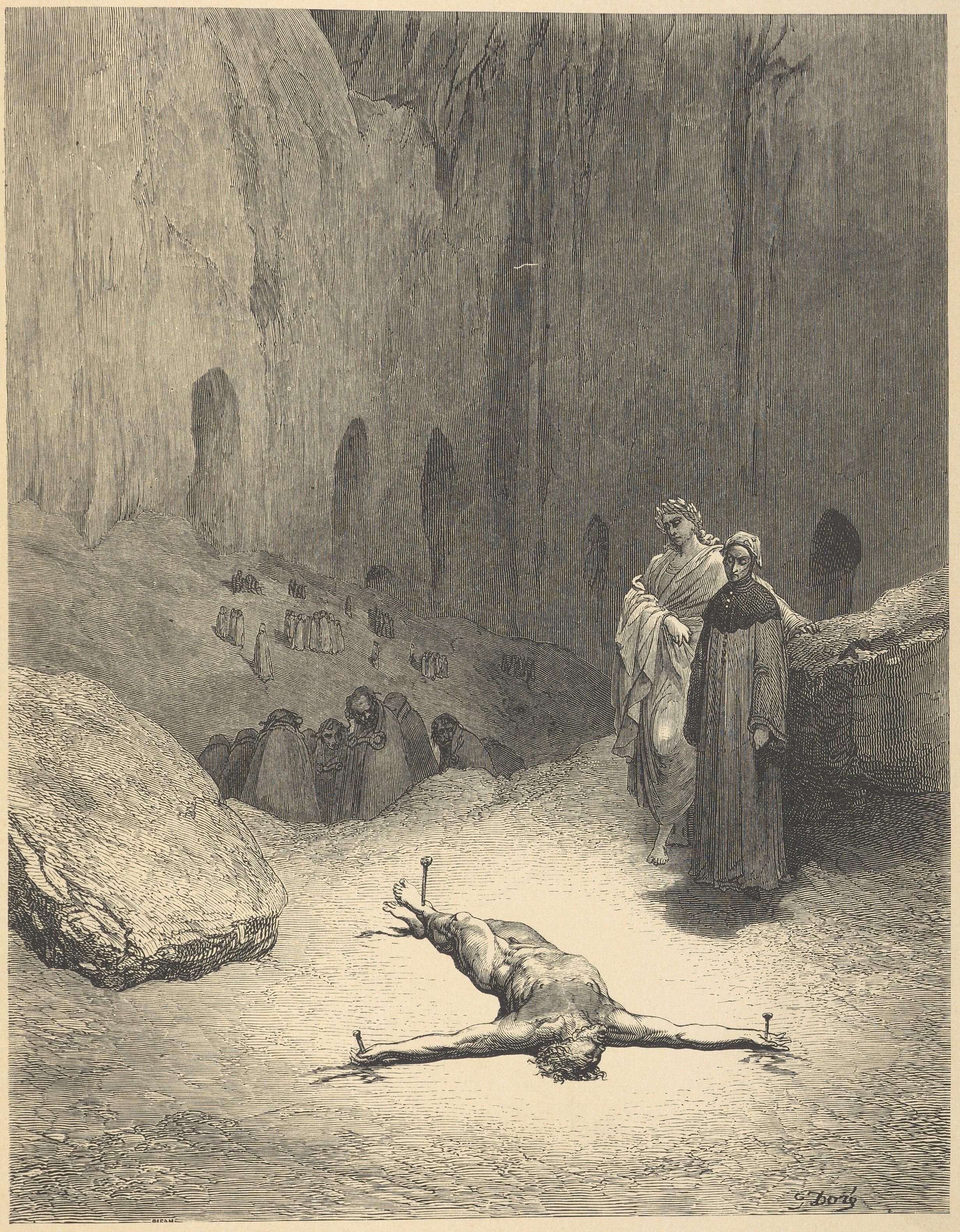
Caiaphas Crucified
Gustave Doré · 1861
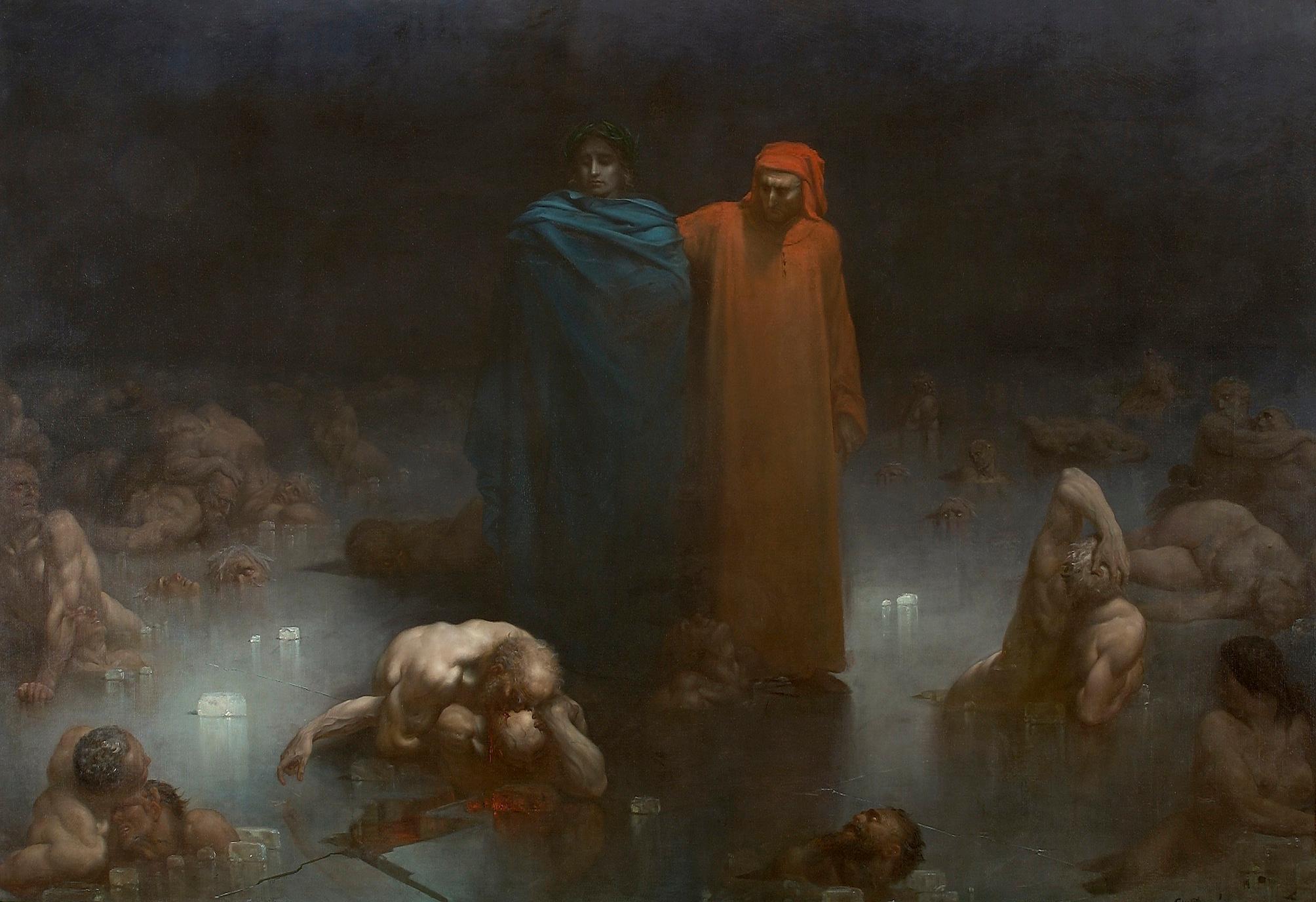
Dante and Virgil in the Ninth Circle of Hell
Gustave Doré · 1861
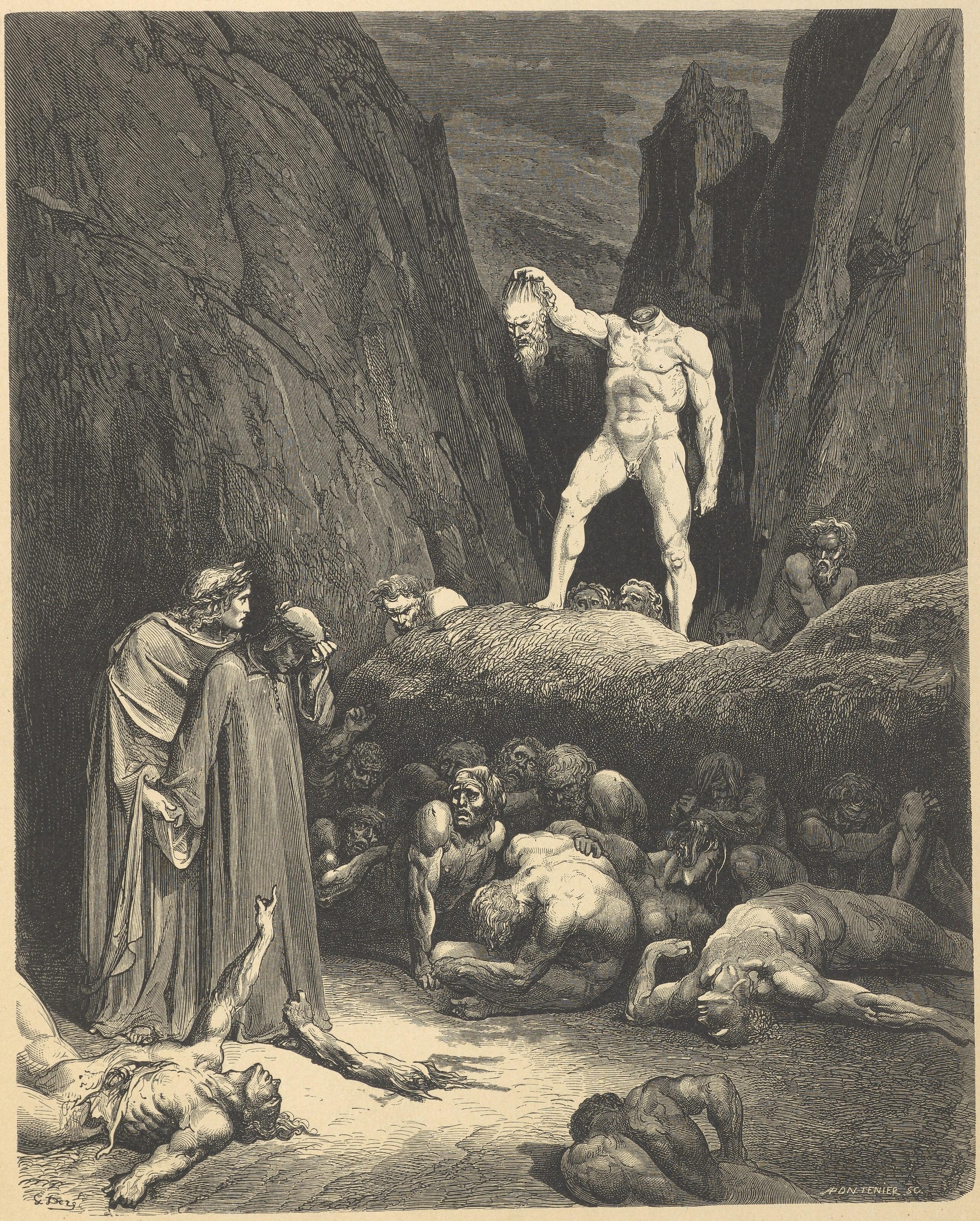
Bertran de Born Holding His Head
Gustave Doré · 1861
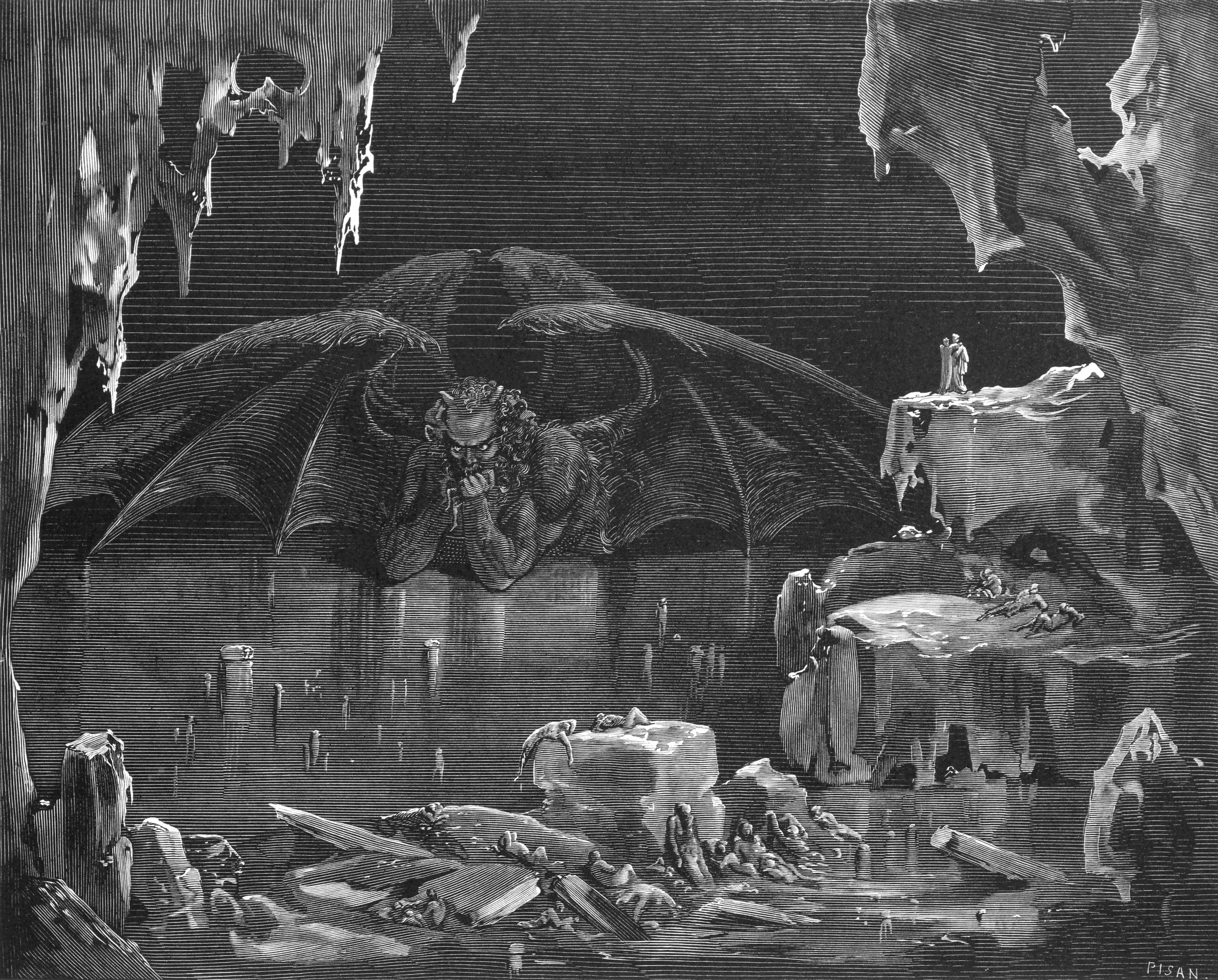
Lucifer, King of Hell
Gustave Doré · 1861
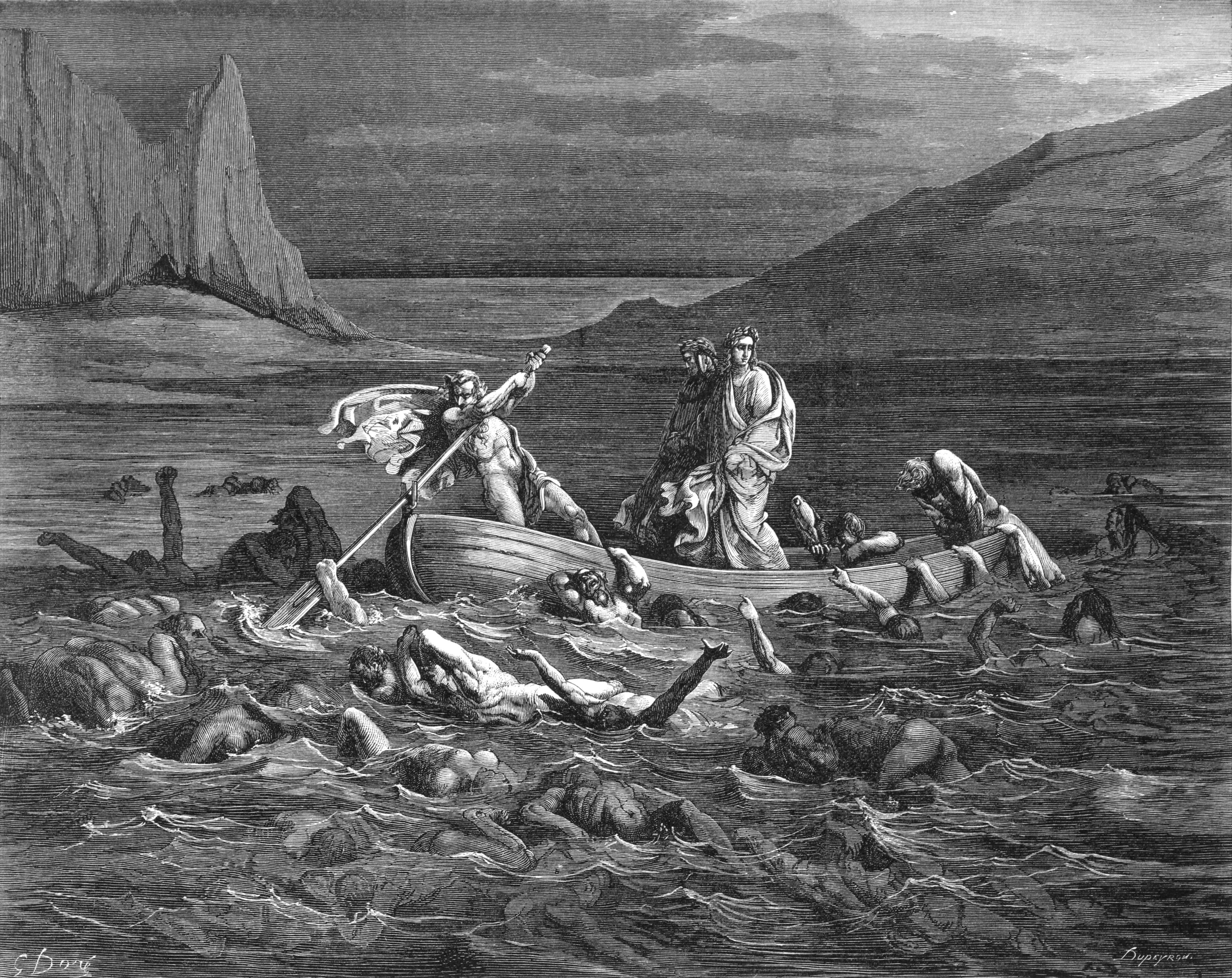
Crossing the Styx (Filippo Argenti)
Gustave Doré · 1861
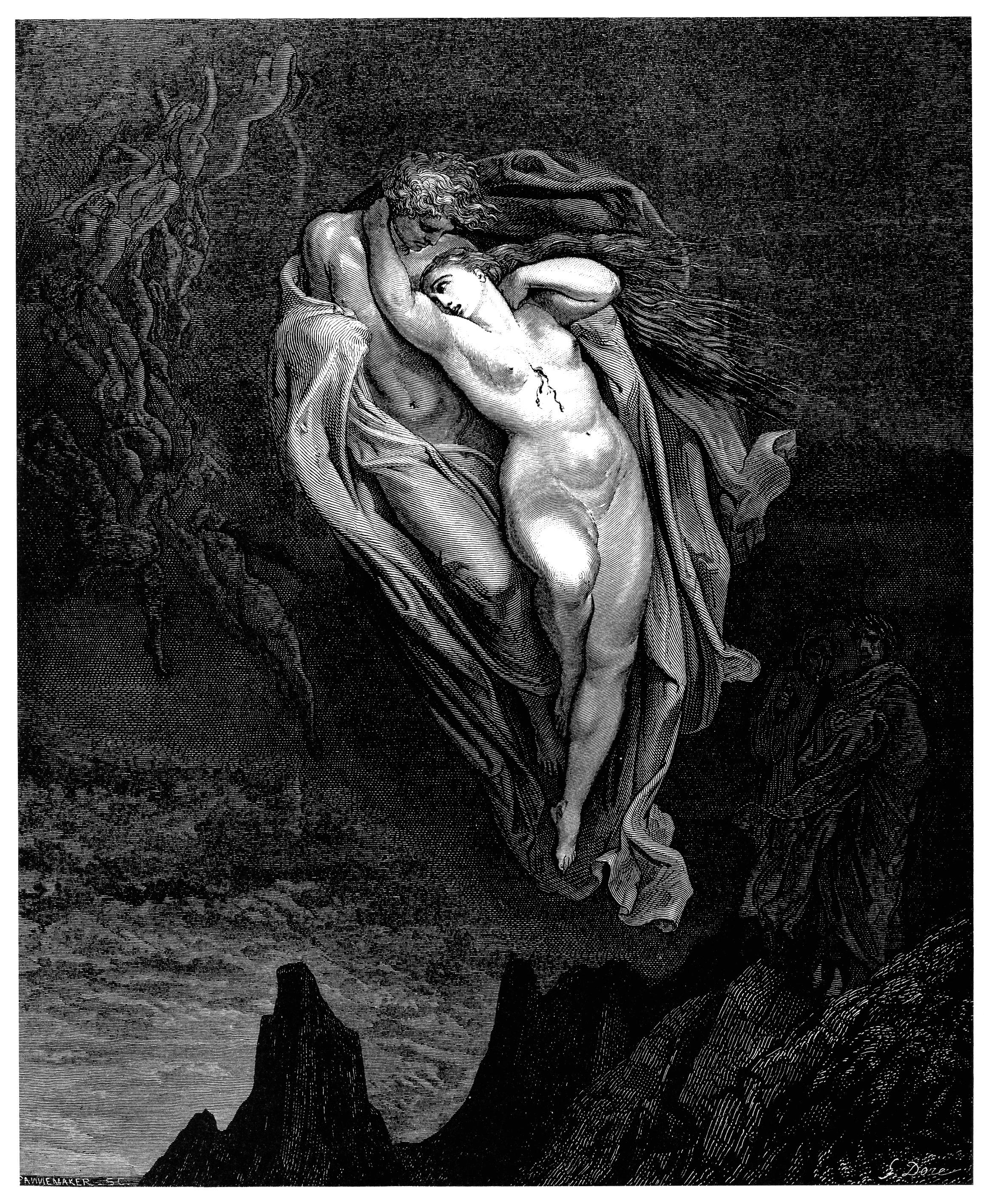
Paolo and Francesca
Gustave Doré · 1861
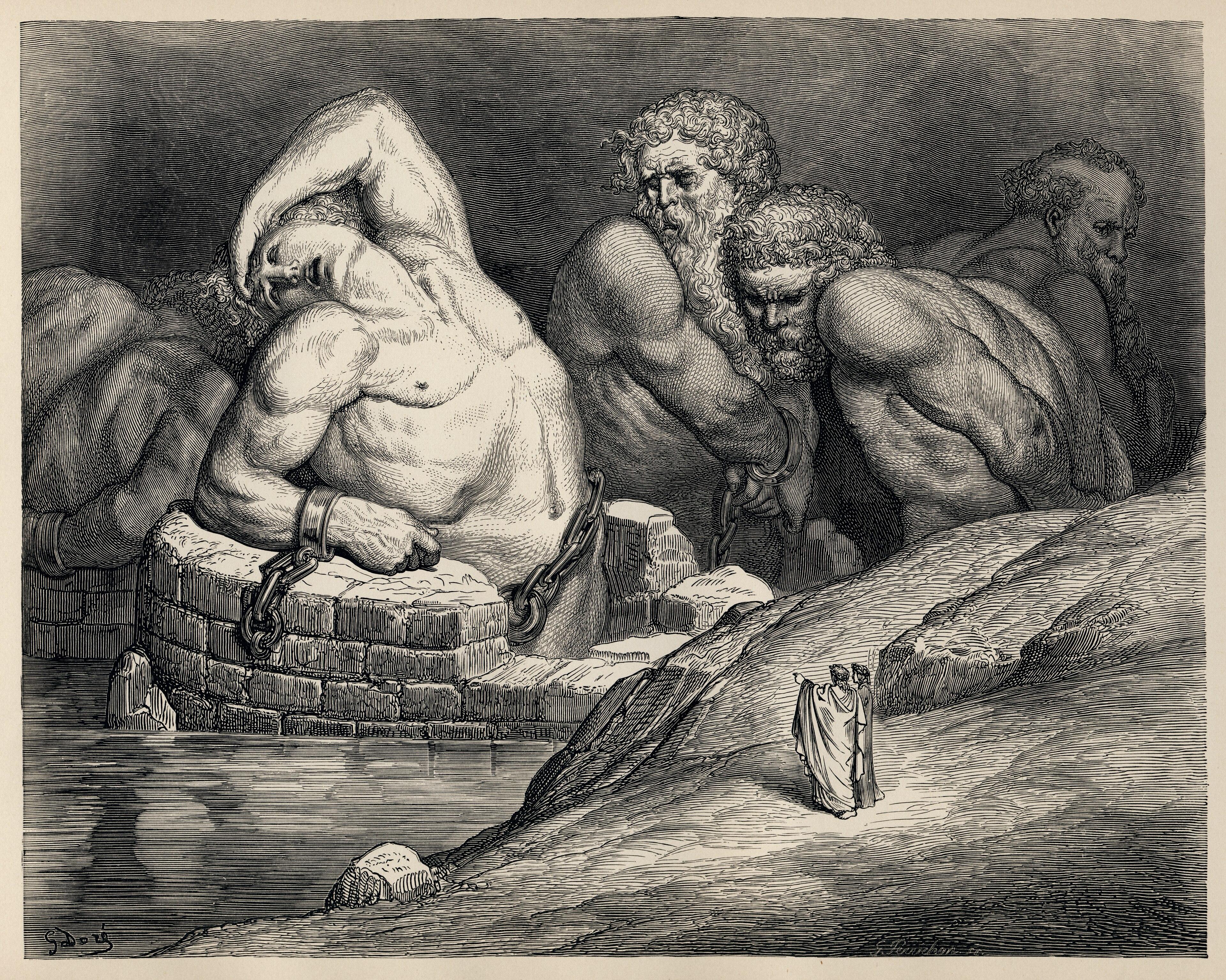
The Giants
Gustave Doré · 1861
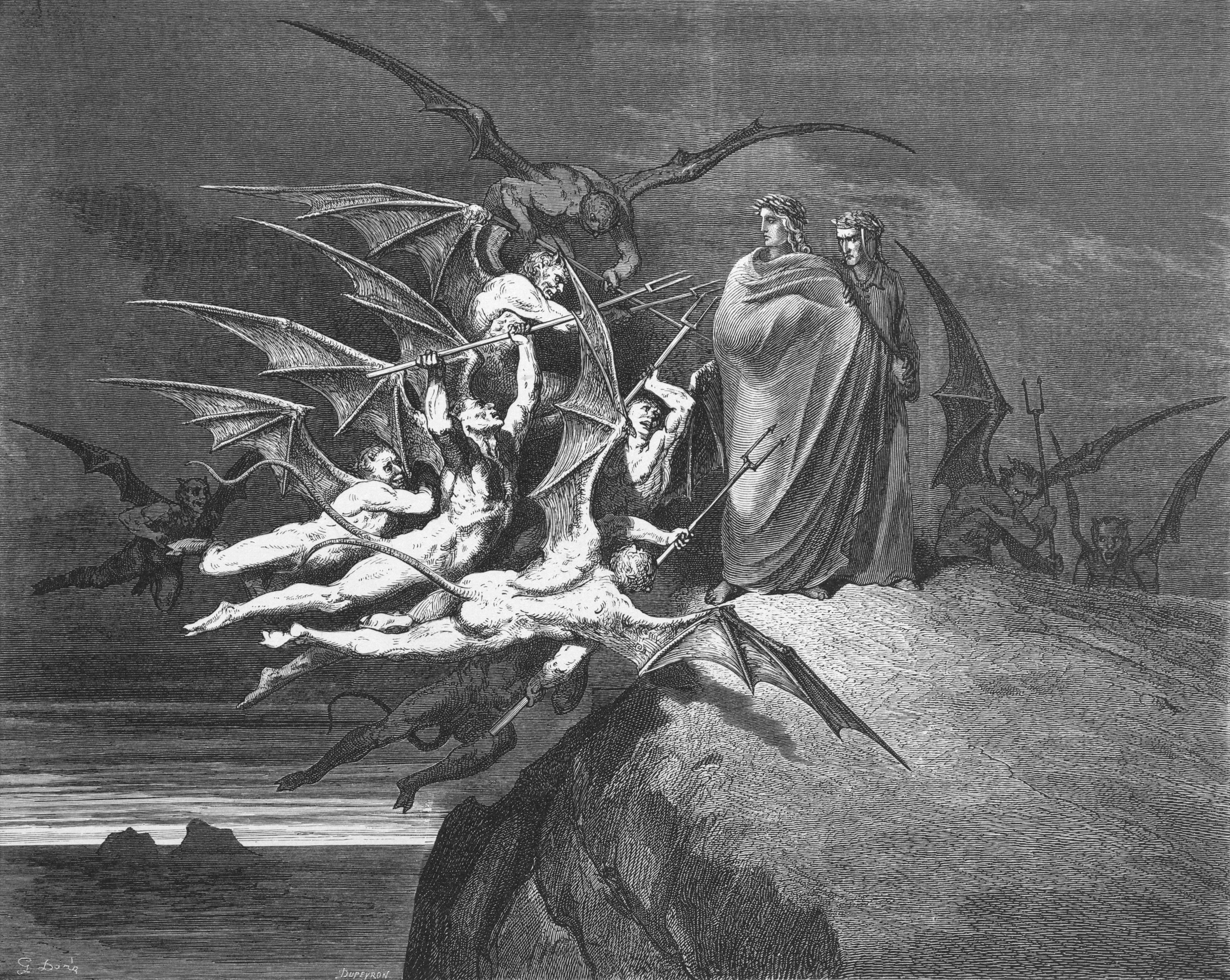
The Malebranche Demons
Gustave Doré · 1861
Also from 1861
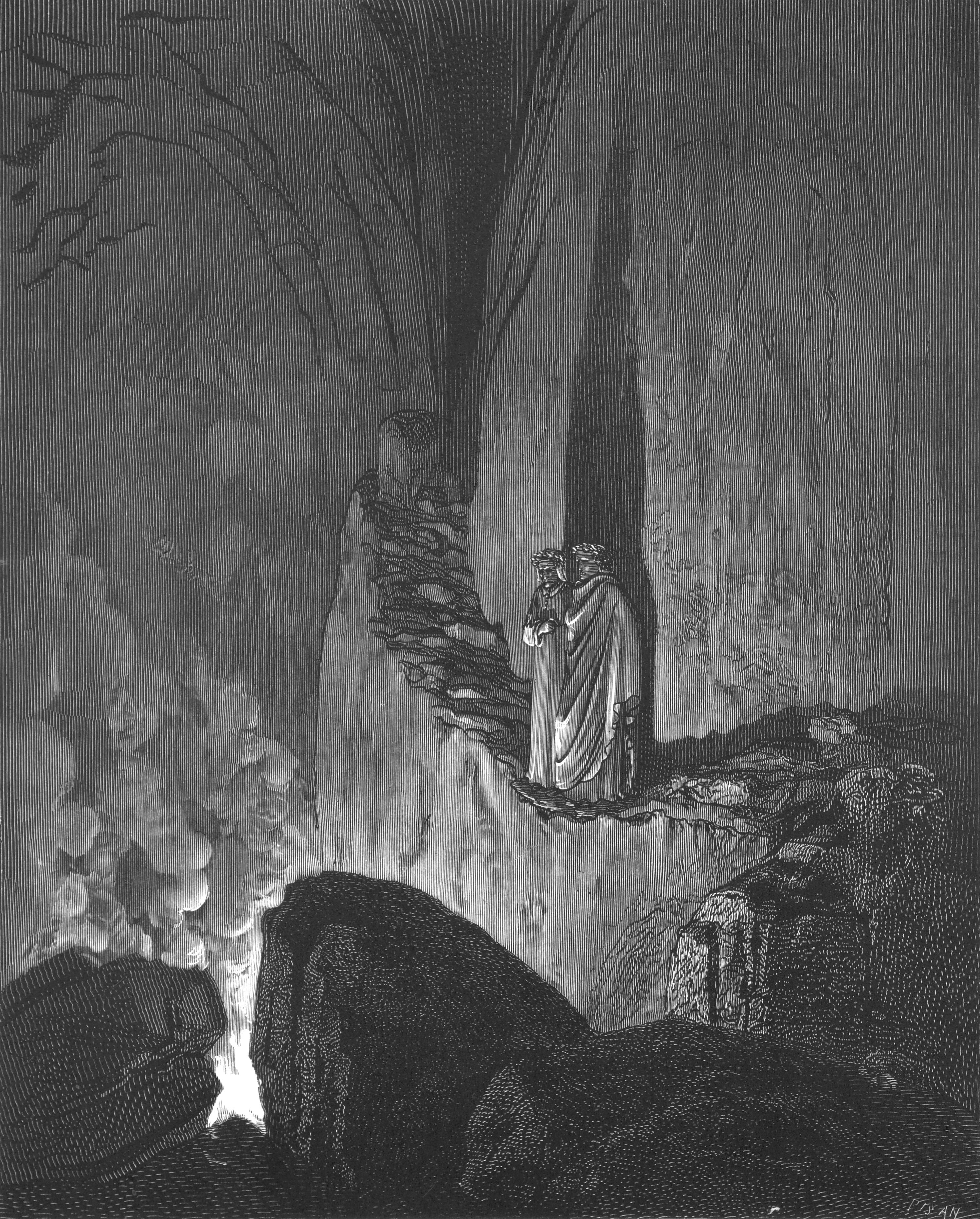
Ulysses and Diomedes
Gustave Doré · 1861
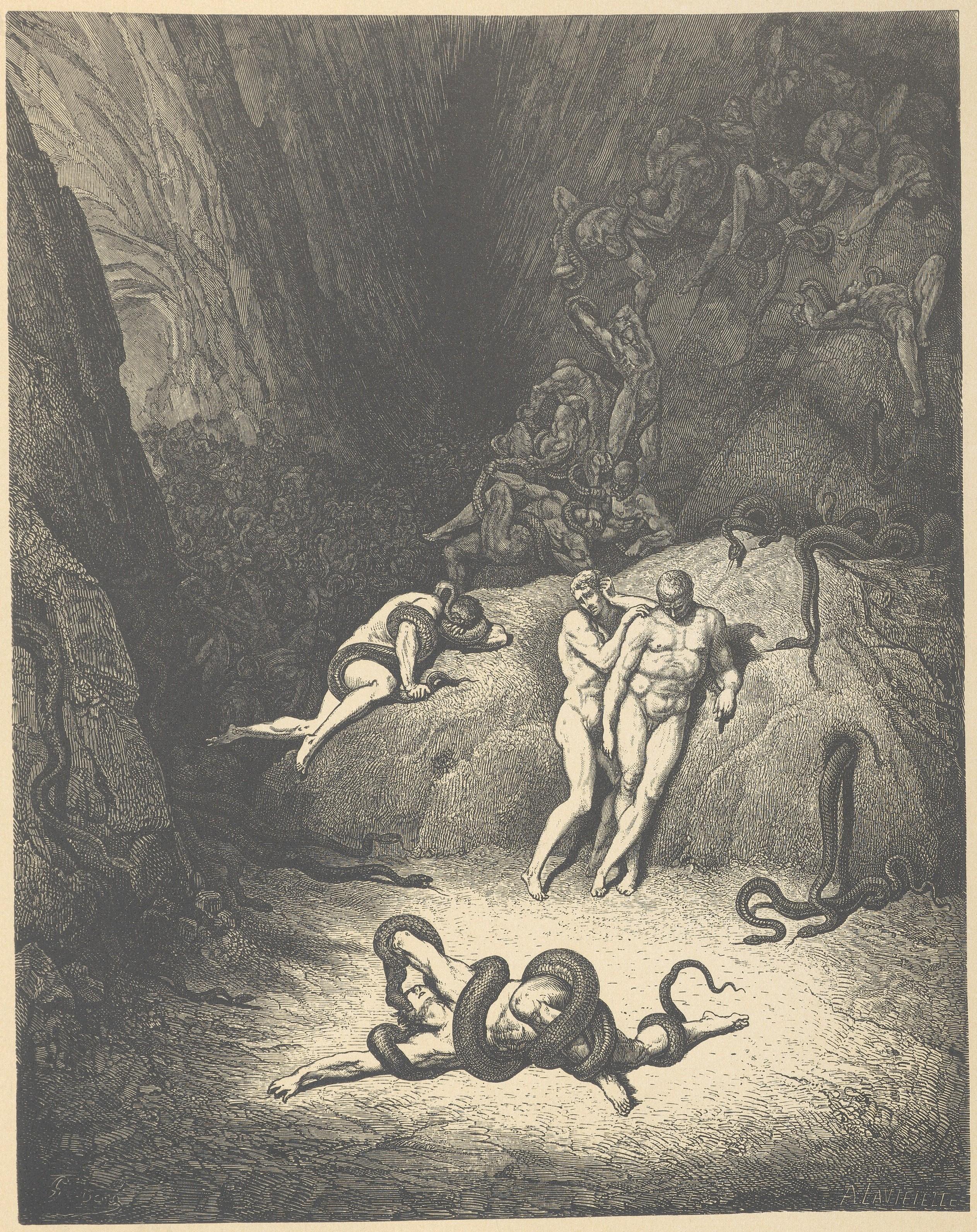
The Thieves and the Serpents
Gustave Doré · 1861
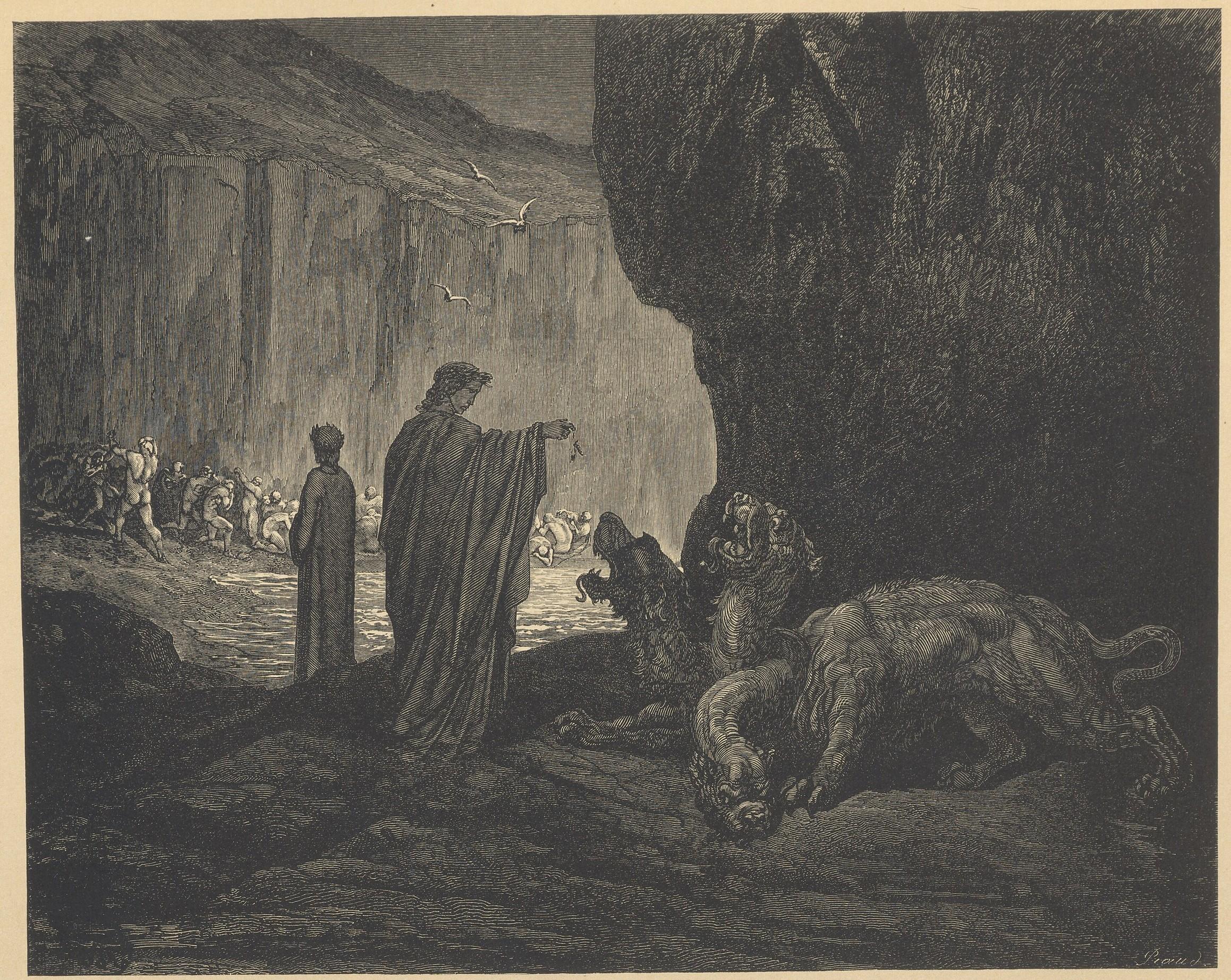
Cerberus
Gustave Doré · 1861
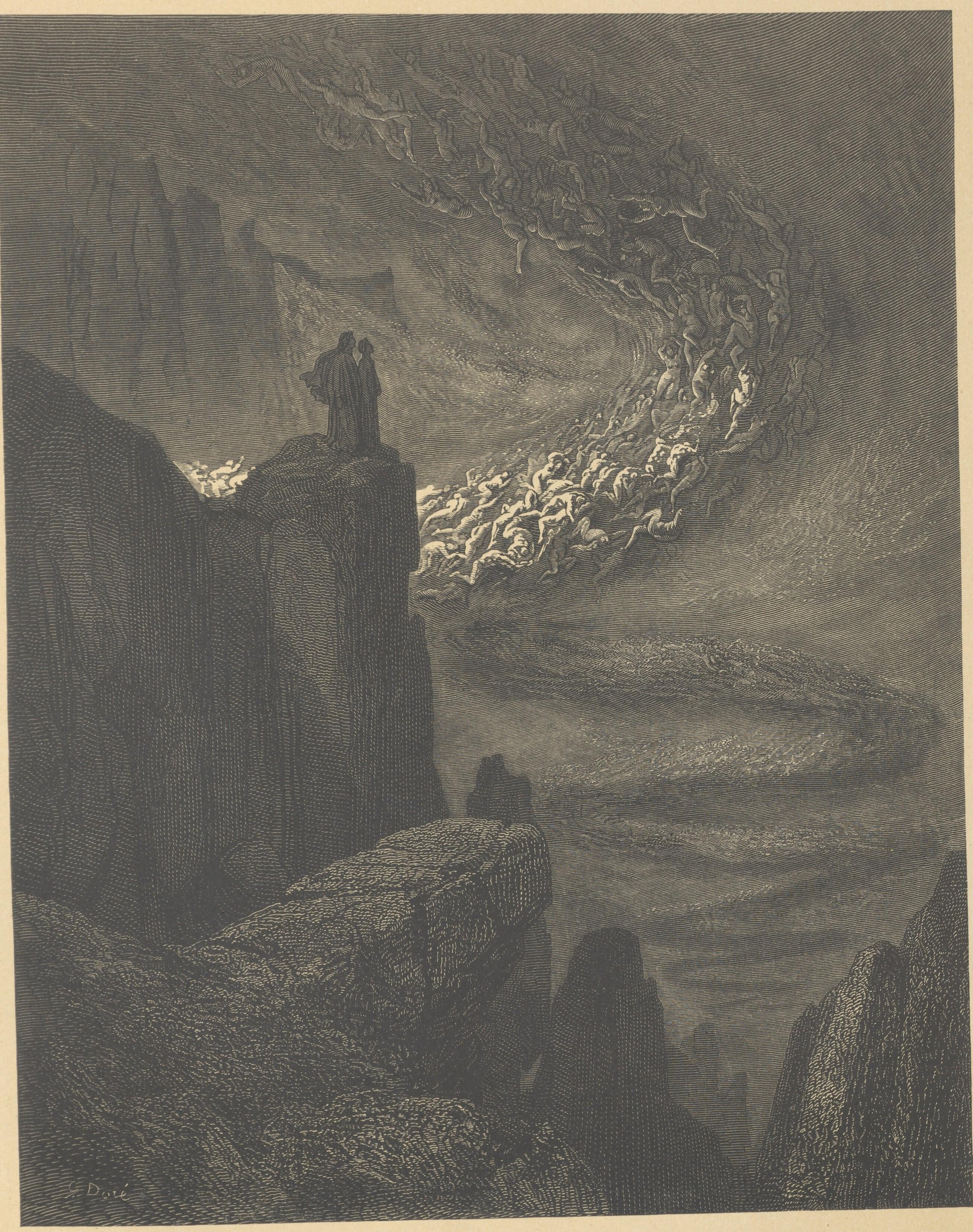
The Whirlwind of the Lustful
Gustave Doré · 1861
Minos, Judge of the Damned
Gustave Doré · 1861
Charon, Ferryman of the Dead
Gustave Doré · 1861
The Gate of Hell (Abandon All Hope)
Gustave Doré · 1861
Farinata degli Uberti
Gustave Doré · 1861
Related works
The Gate of Hell (Abandon All Hope)
Gustave Doré · 1861
Charon, Ferryman of the Dead
Gustave Doré · 1861
The Whirlwind of the Lustful
Gustave Doré · 1861
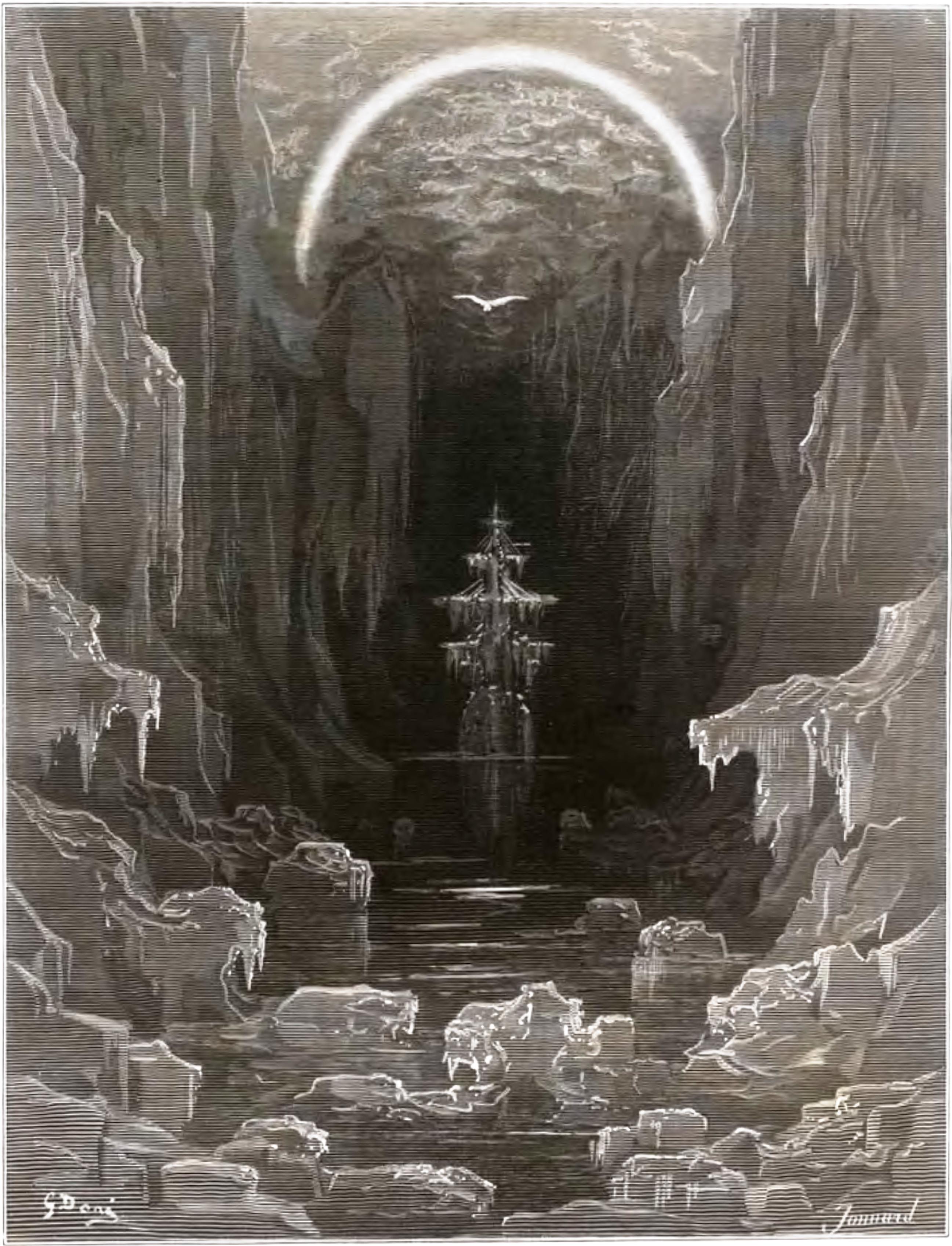
The Ship in the Ice
Gustave Doré · 1876
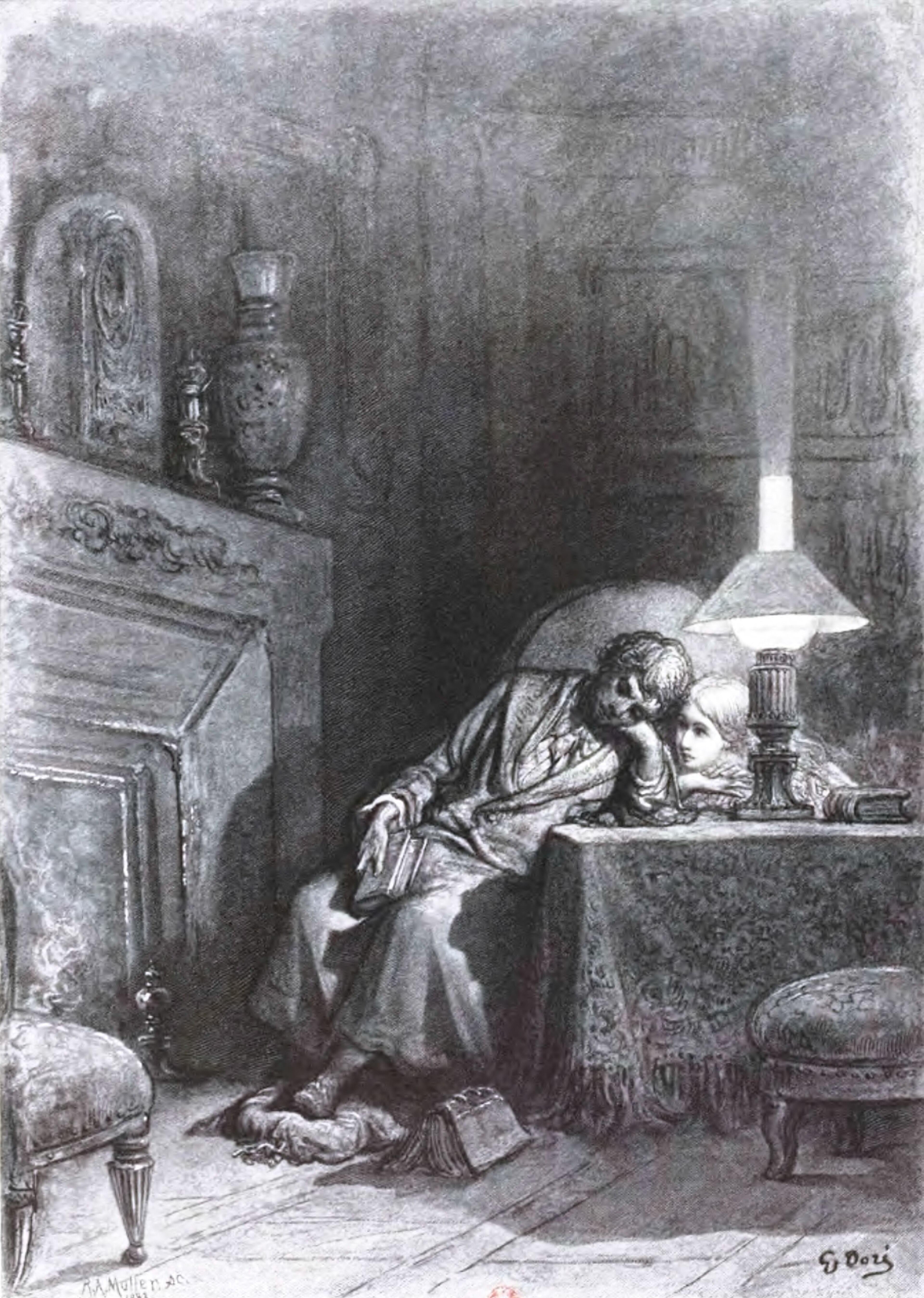
Once Upon a Midnight Dreary
Gustave Doré · 1884
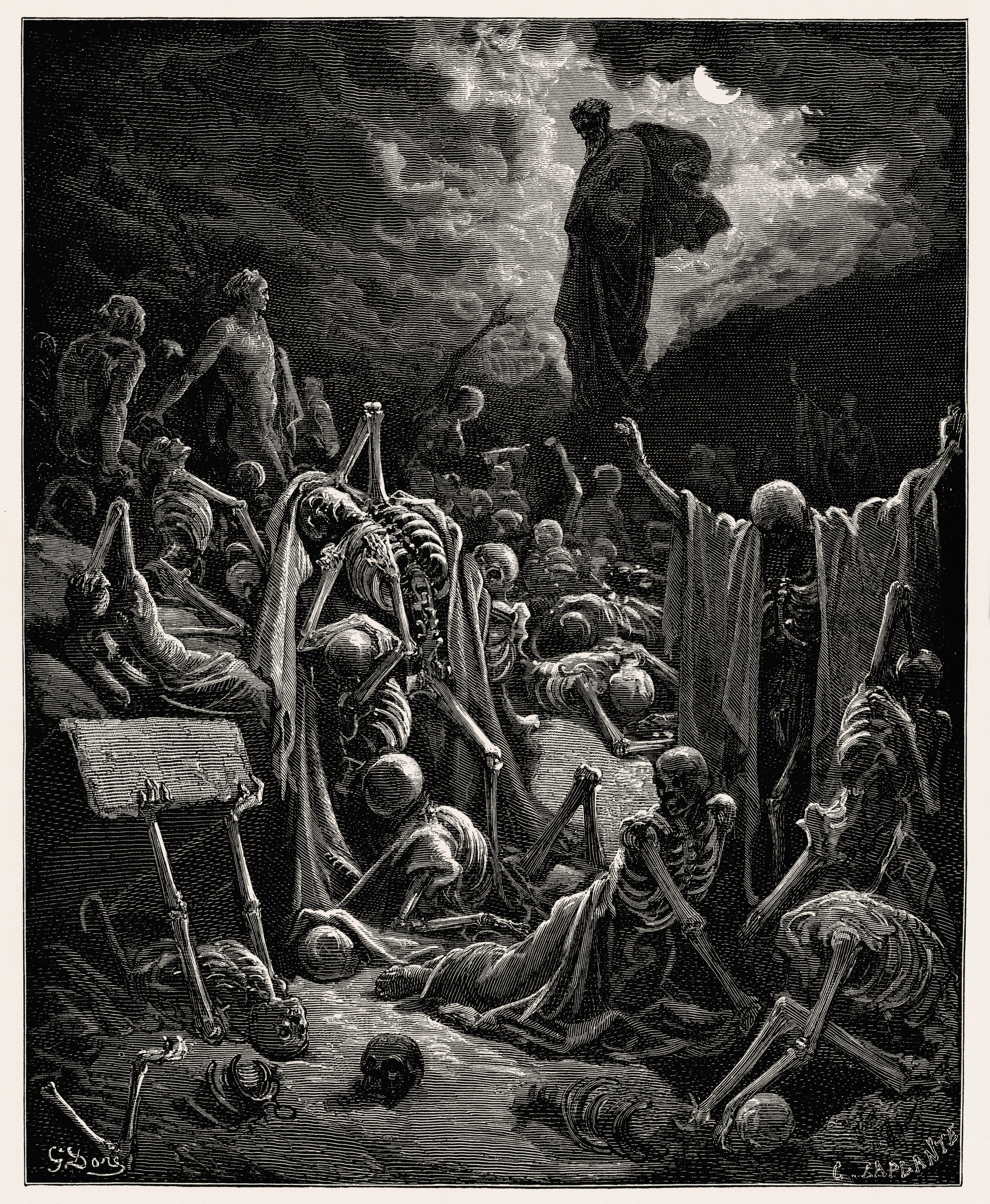
The Vision of the Valley of Dry Bones
Gustave Doré · 1866
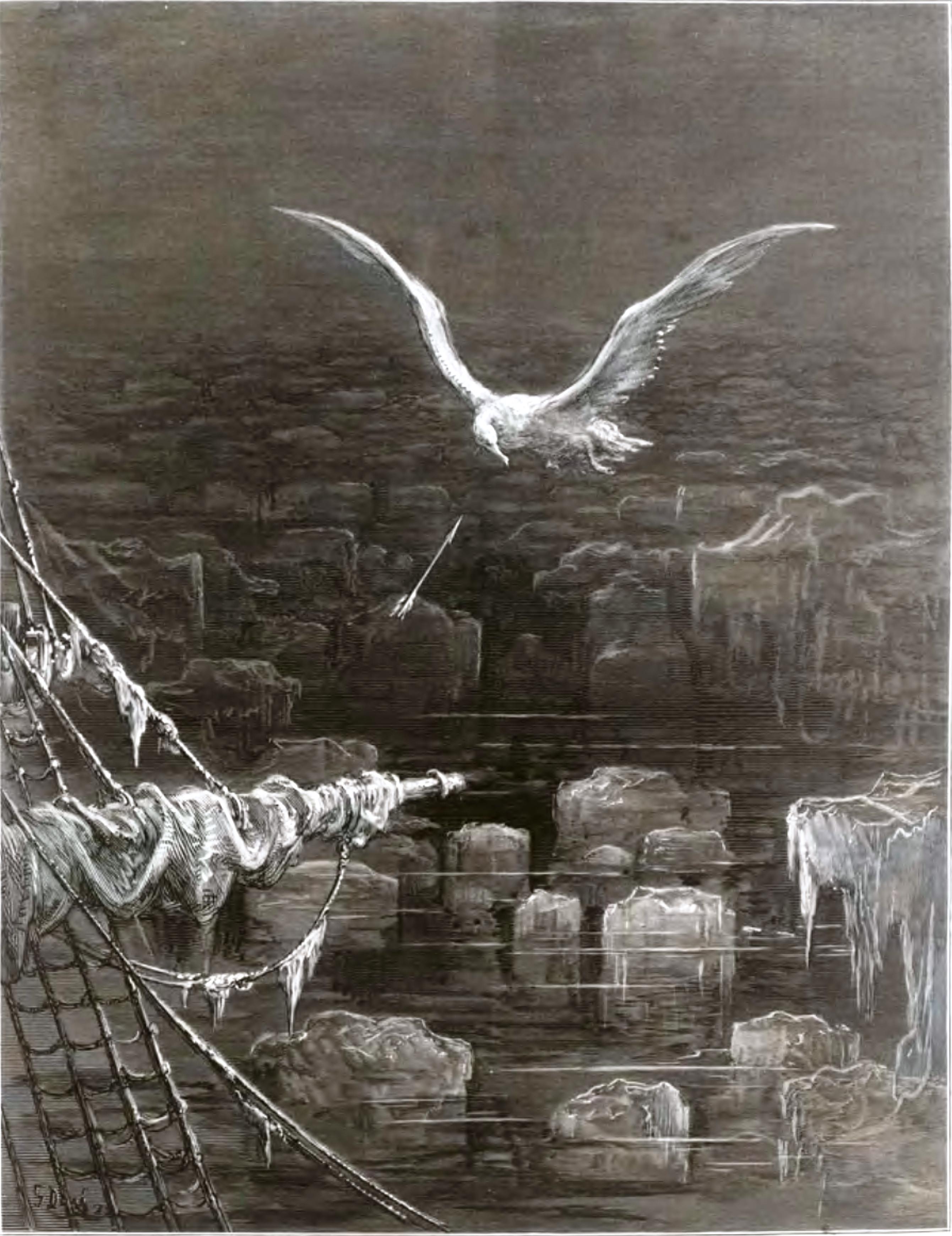
The Albatross
Gustave Doré · 1876
Nevermore (The Raven's Shadow)
Gustave Doré · 1884