Dante and Virgil in the Ninth Circle of Hell
Gustave Doré, 1861
Dante and Virgil in the Ninth Circle of Hell is a vast 1861 oil painting by Gustave Doré, shown at the Paris Salon that year. It depicts the poets among the traitors frozen in Cocytus and hangs in the Musée de Brou, Bourg-en-Bresse.
- Artist
- Gustave Doré
- Date
- 1861
- Medium
- Oil on canvas
- Dimensions
- 315 × 450 cm
- Collection
- Musée de Brou (Monastère royal de Brou), Bourg-en-Bresse, France
- Movement
- Romanticism
- Themes
- Literature & Poetry, The Macabre, The Nude, Death & Memento Mori, Dark Academia
What you are looking at
This is a painting, not one of Doré's engravings, and it is enormous: about 3.15 meters high and 4.5 meters wide. Two standing figures fill the center, life-size or larger. On the left, wrapped to the chin in a deep blue cloak and crowned with a laurel wreath, is Virgil, his eyes lowered, his face calm and pale. Beside him, in a long red robe and the red hood of Florentine dress, stands Dante, gaunt and hollow-cheeked, looking down. Behind them is nothing at all, a flat blue-black dark.
The drama is at their feet. They stand on a sheet of gray ice, and the ice is full of people. Naked bodies are frozen into it at every angle: heads sticking up out of the surface with their hair stiff, a man at the right gripping his skull in both hands as he twists away, a pair of figures locked together in the distance, more and more shapes dissolving into mist toward the horizon. Square blocks of ice stand up here and there and catch a cold light.
In the left foreground, lit more strongly than anything else, a naked old man crouches on all fours over another head and bites into it. A red smear of blood spreads across the ice beneath them. Low in the center, just in front of the poets, a bearded head frozen up to the chin stares up at them.
Which part of the Inferno it shows
The setting is Cocytus, the frozen lake at the bottom of Hell, where Dante places traitors. In Canto 32 he walks "'mong the heads" and sees "a thousand faces, made / Purple with cold" (Longfellow's translation). He even kicks one in the face by accident, or perhaps not, and seizes the man's hair to make him give his name.
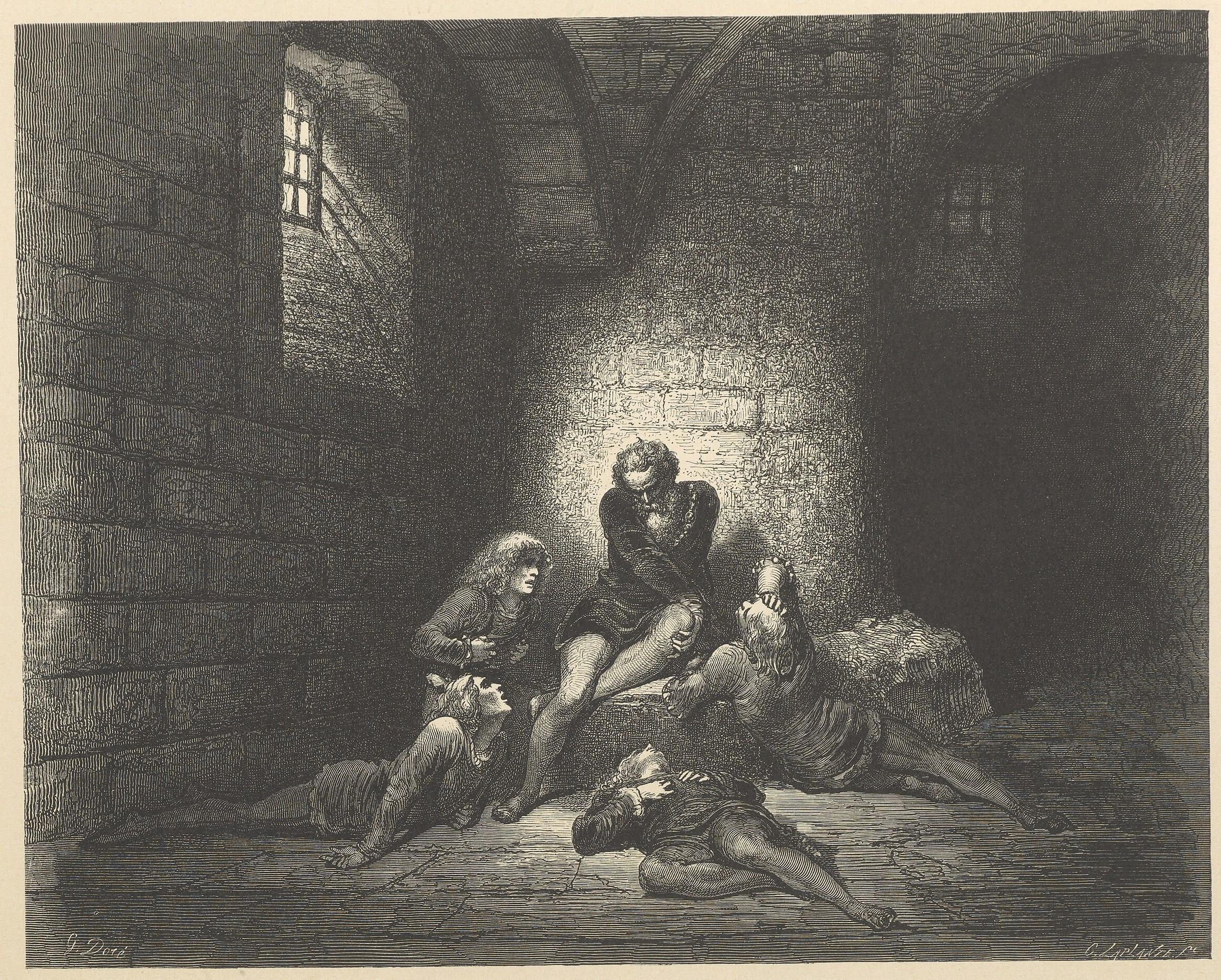
The biting figure is Count Ugolino, and his victim is Archbishop Ruggieri. Dante finds "two frozen in one hole, / So that one head a hood was to the other," and the upper one gnaws the lower: "And even as bread through hunger is devoured, / The uppermost on the other set his teeth, / There where the brain is to the nape united." In Canto 33 Ugolino will raise his head to tell how Ruggieri starved him and his children to death, the story Doré illustrated in Count Ugolino and His Sons.
How Doré painted it
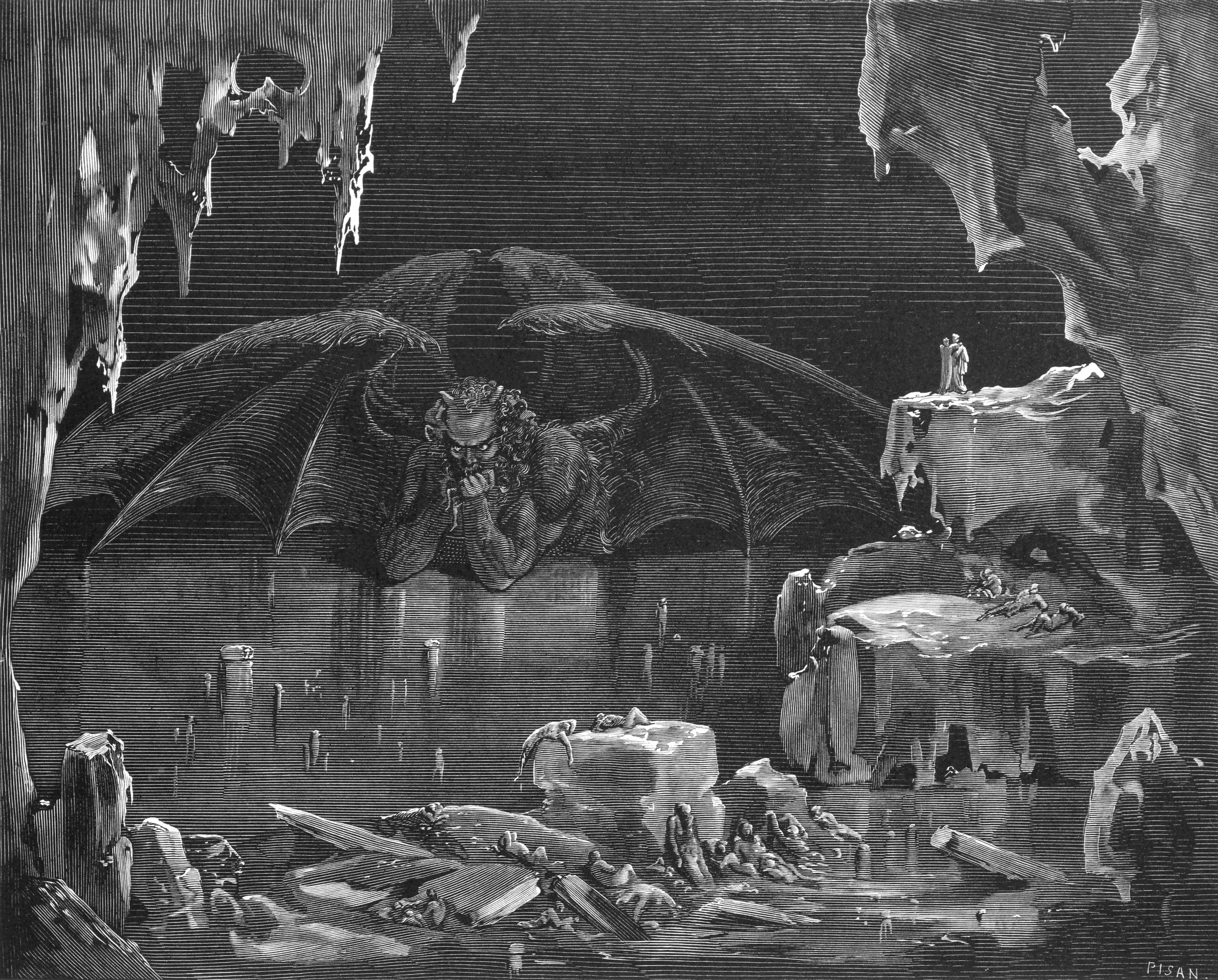
Doré made this canvas in 1861, the year Hachette published his illustrated L'Enfer, and showed it at the Paris Salon that year. It shares the book's world but not its method. In the engravings the poets are often tiny, dwarfed by rocks, ice and giants, as in Lucifer, King of Hell. Here Doré turns the scale around and builds the picture like a history painting, with heroic, sculptural figures in front of a dark ground.
The palette is almost colorless except for two notes: the blue of Virgil's cloak and the red of Dante's robe, the only warm color besides the blood. The damned are painted in pale, gray-pink flesh tones, modeled with strong side light so that the muscles of Ugolino's back stand out like carved marble. The ice blocks, glowing faintly, are a touch shared with his engraved Cocytus.
The contrast with the poets is deliberate. Dante and Virgil are clothed, upright and still; the sinners are naked, twisted and stuck. Doré gives the two travelers no dialogue and almost no gesture. They simply look, which is what the poem asks of its reader.
History and where to see it
French critics were divided when the painting appeared at the Salon. It met a warmer reception in London and then in the United States, the pattern of much of Doré's career as a painter. According to the museum, the canvas later hung in a staircase of an American university, and it was acquired by the Musée de Brou at a public sale in 1982 (inventory 982.234). It was lent to the 2014 Doré exhibition in Paris and Ottawa and to the Inferno exhibition at the Quirinal Palace in Rome in 2021–22, marking 700 years since Dante's death, and was fully restored during those loans.
It is on view at the Monastère royal de Brou in Bourg-en-Bresse, eastern France, the Gothic monastery that houses the town's museum of fine arts. For the engraved version of Doré's Hell, see Doré's Inferno illustrations.
Meaning
Dante's lowest circle is cold because treachery kills the warmth between people. Doré makes that literal: the light is cold, the color drains out, and the one act of contact between two sinners is a bite. Ugolino's crime and his punishment are the same: betrayal, and hunger.
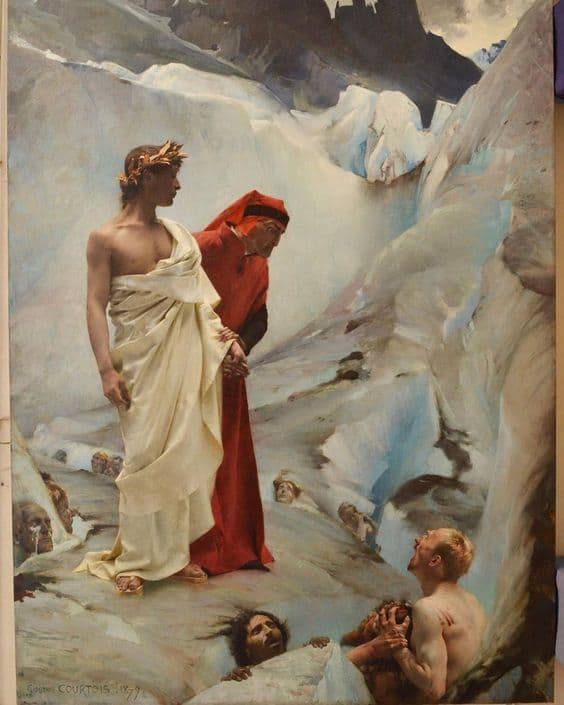
The painting also says something about Doré's ambitions. Famous at 29 as an illustrator, he wanted to be taken seriously as a painter, and he chose the largest format of all for his first Dante canvas. It makes an instructive pair with Gustave Courtois's Dante and Virgil in Hell, another painter's attempt to put Dante's damned on a monumental canvas. For more on the artist, see Gustave Doré; for the other stages of the journey, start with Dante Lost in the Dark Wood or The Giants.
Questions & answers
Where is Doré's Dante and Virgil in the Ninth Circle of Hell?
It is in the Musée de Brou, the museum housed in the Monastère royal de Brou at Bourg-en-Bresse in eastern France. The museum acquired it at a public sale in 1982 (inventory 982.234). It was restored during loans to exhibitions in Paris, Ottawa and Rome between 2014 and 2022.
What scene from Dante does the painting show?
It shows Dante and Virgil on Cocytus, the frozen lake of the ninth circle where traitors are locked in ice (Inferno 32–33). In the foreground Count Ugolino gnaws Archbishop Ruggieri's skull: "The uppermost on the other set his teeth, / There where the brain is to the nape united" (Longfellow).
When did Doré paint Dante and Virgil in the Ninth Circle?
Doré painted it in 1861 and showed it at the Paris Salon that year, the same year Hachette published his illustrated Inferno. French critics were divided, but the painting was better received in London and the United States.
How big is Doré's Dante and Virgil painting?
It is oil on canvas, about 315 × 450 cm, more than three meters high and four and a half wide. The poets are painted life-size or larger, which makes it very different from Doré's engravings, where Dante and Virgil are usually tiny figures in a vast landscape.
Who are the two figures in red and blue?
The figure in red with a hood is Dante; the laurel-crowned figure in a blue cloak is the Roman poet Virgil, his guide through Hell. Their clothed, upright stillness is set against the naked, twisted bodies of the damned frozen in the ice around them.
More by Gustave Doré
All works →
Paolo and Francesca
Gustave Doré · 1861
The Giants
Gustave Doré · 1861
Lucifer, King of Hell
Gustave Doré · 1861
Minos, Judge of the Damned
Gustave Doré · 1861
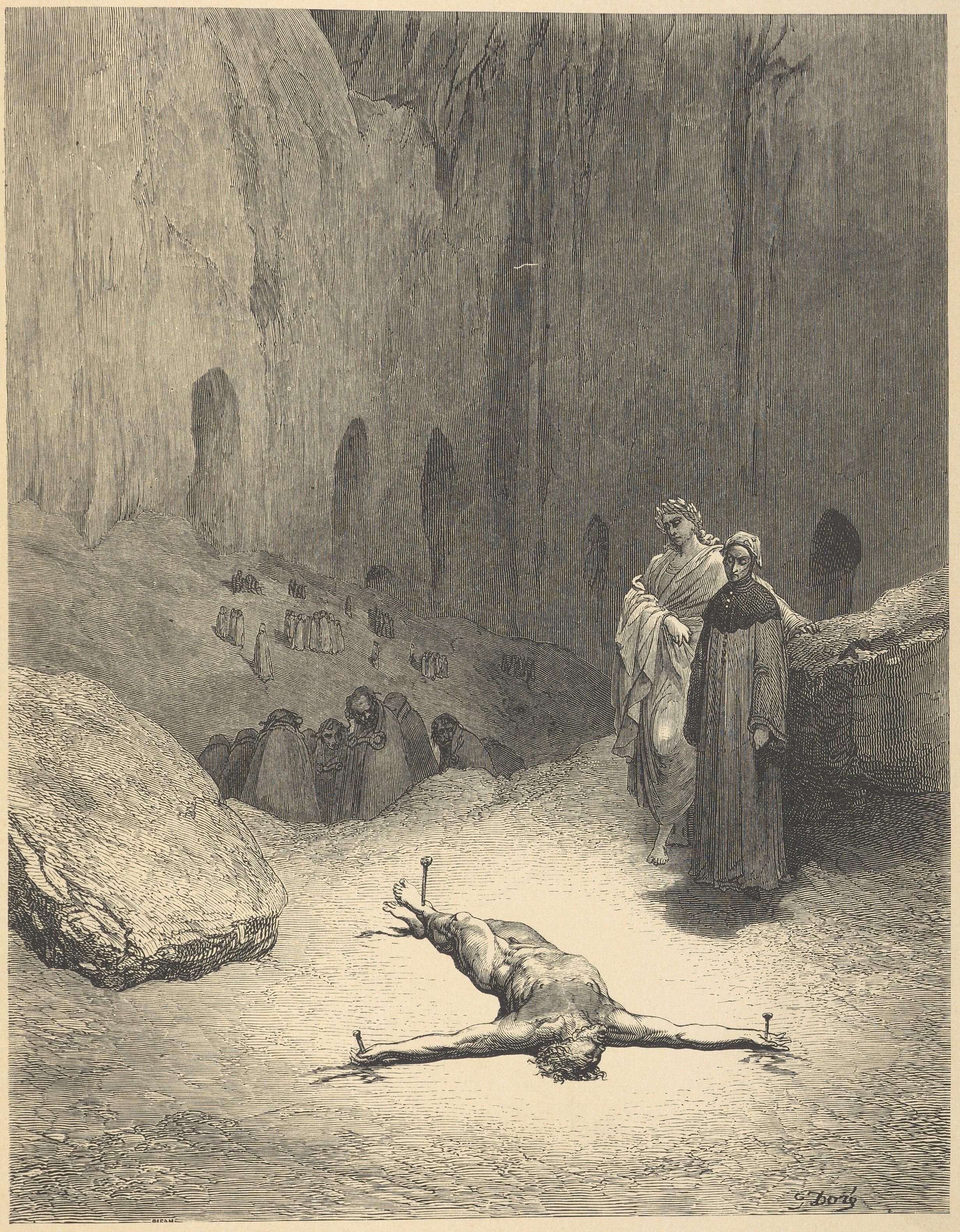
Caiaphas Crucified
Gustave Doré · 1861
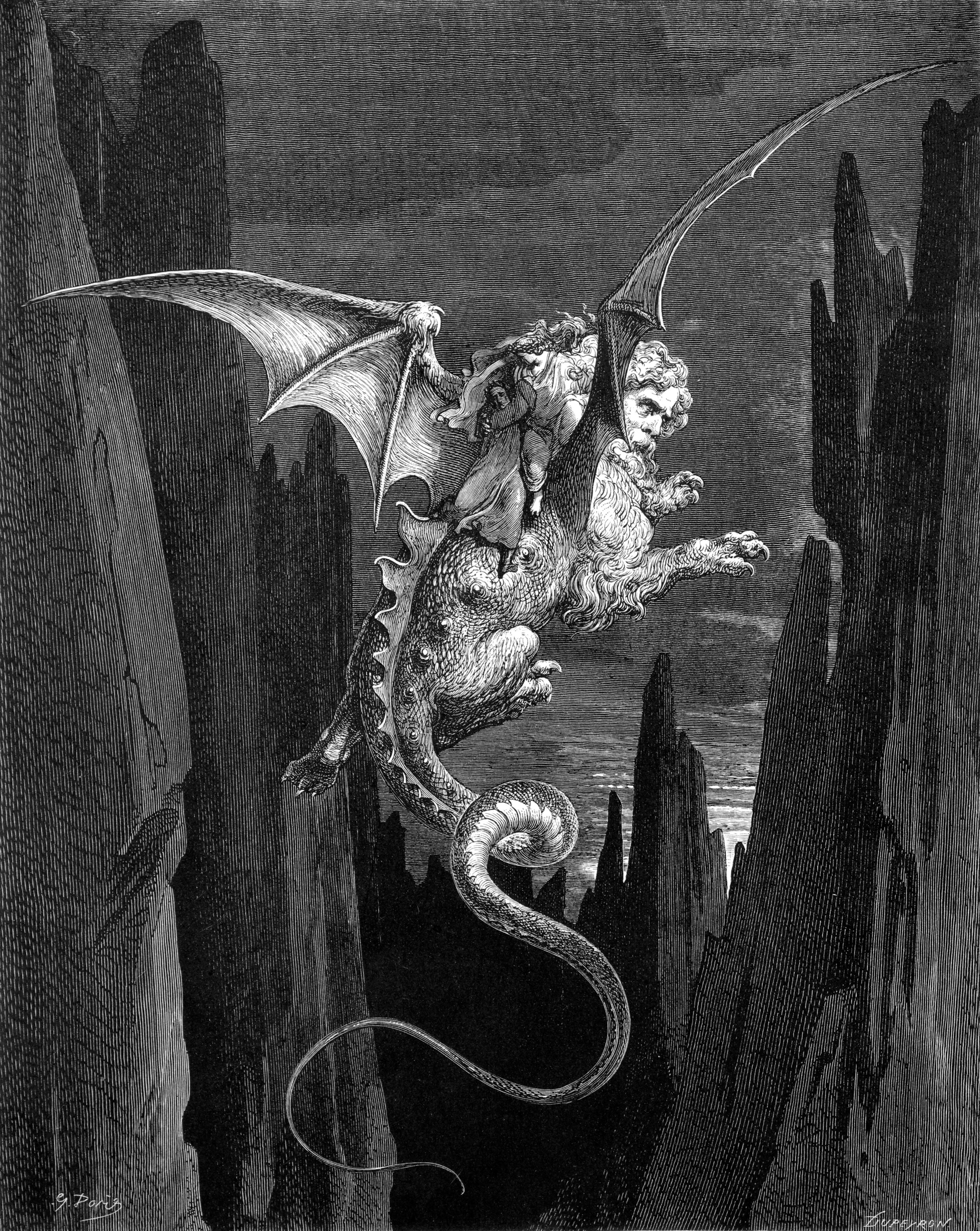
Geryon
Gustave Doré · 1861
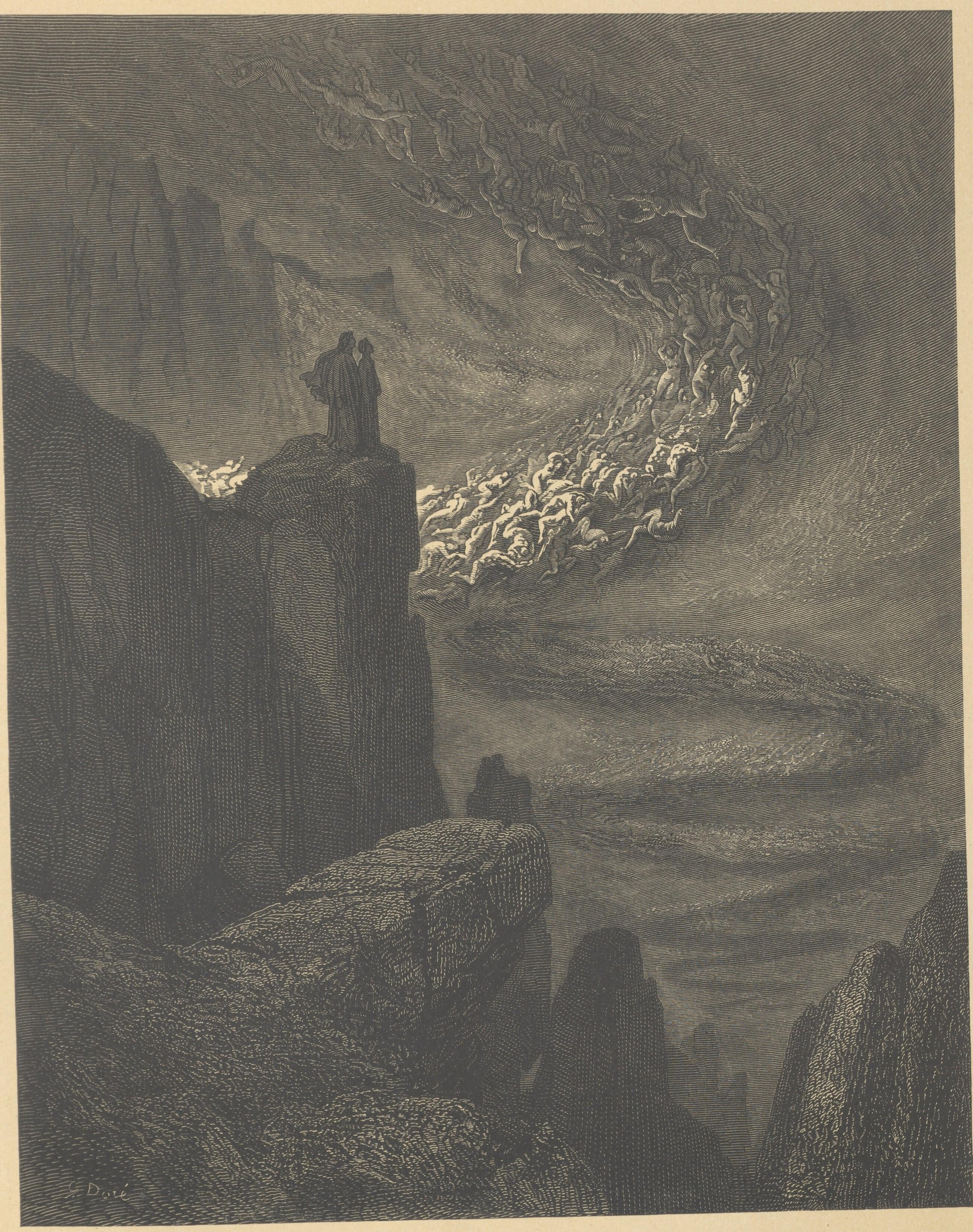
The Whirlwind of the Lustful
Gustave Doré · 1861
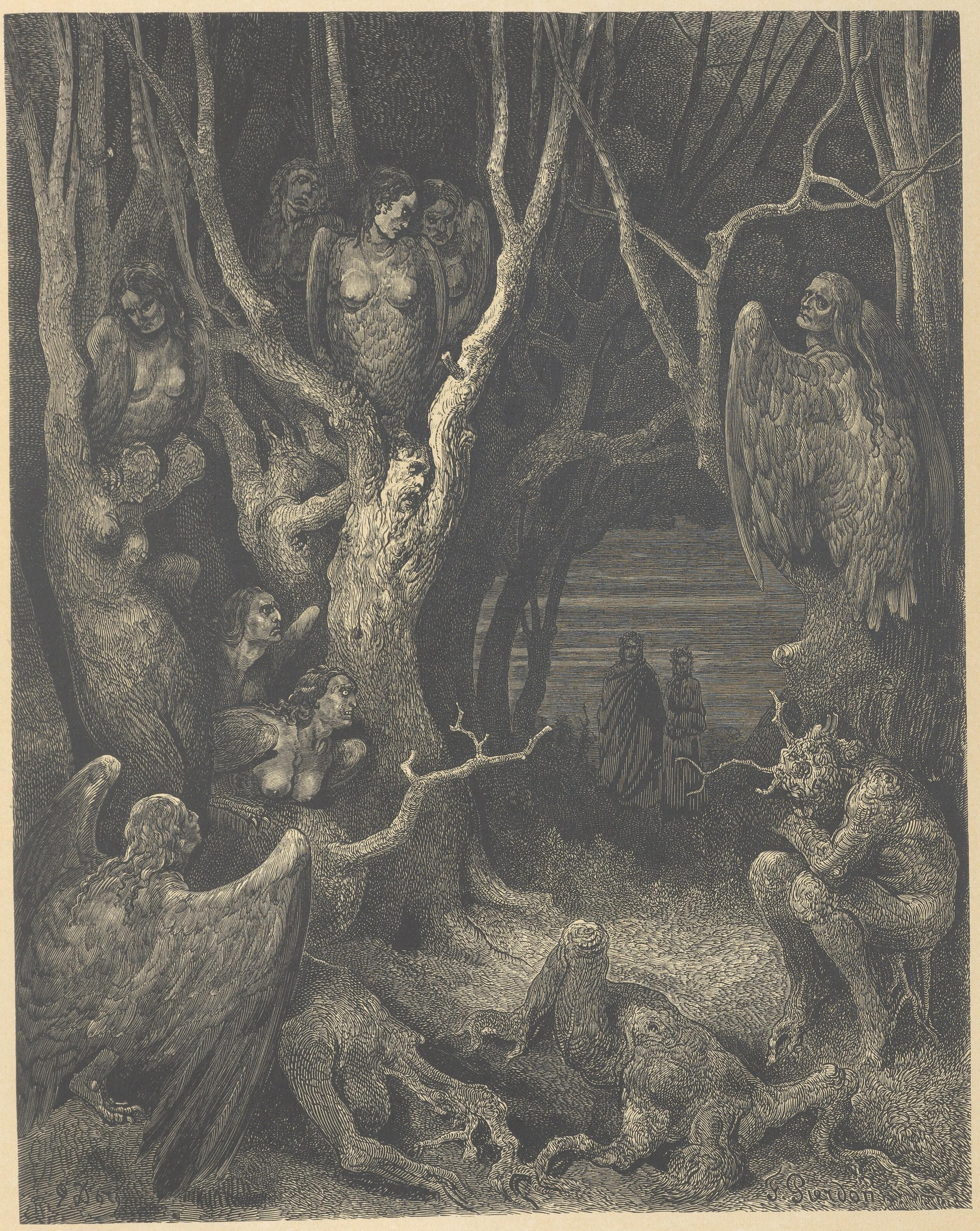
The Wood of the Suicides
Gustave Doré · 1861
Also from 1861
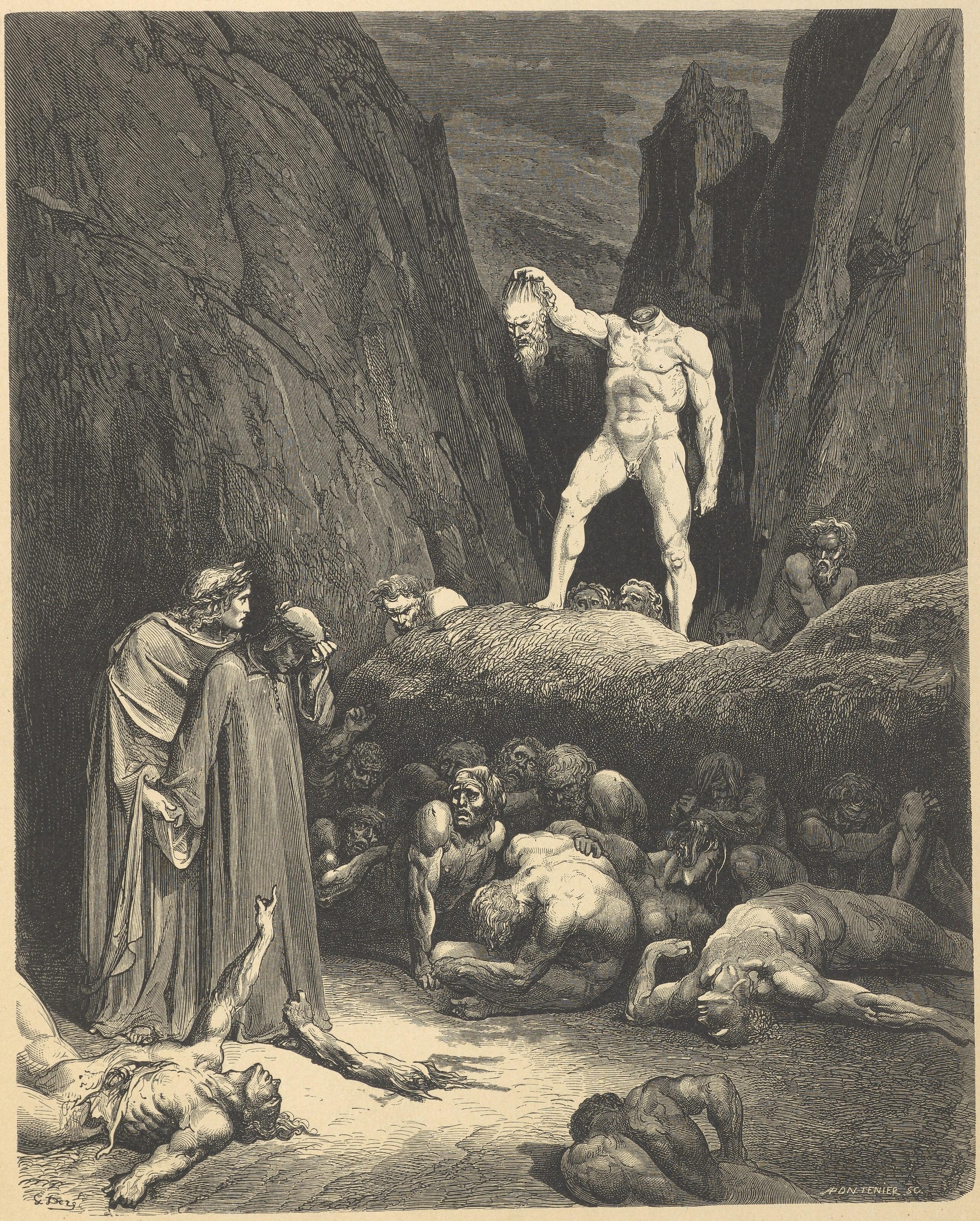
Bertran de Born Holding His Head
Gustave Doré · 1861
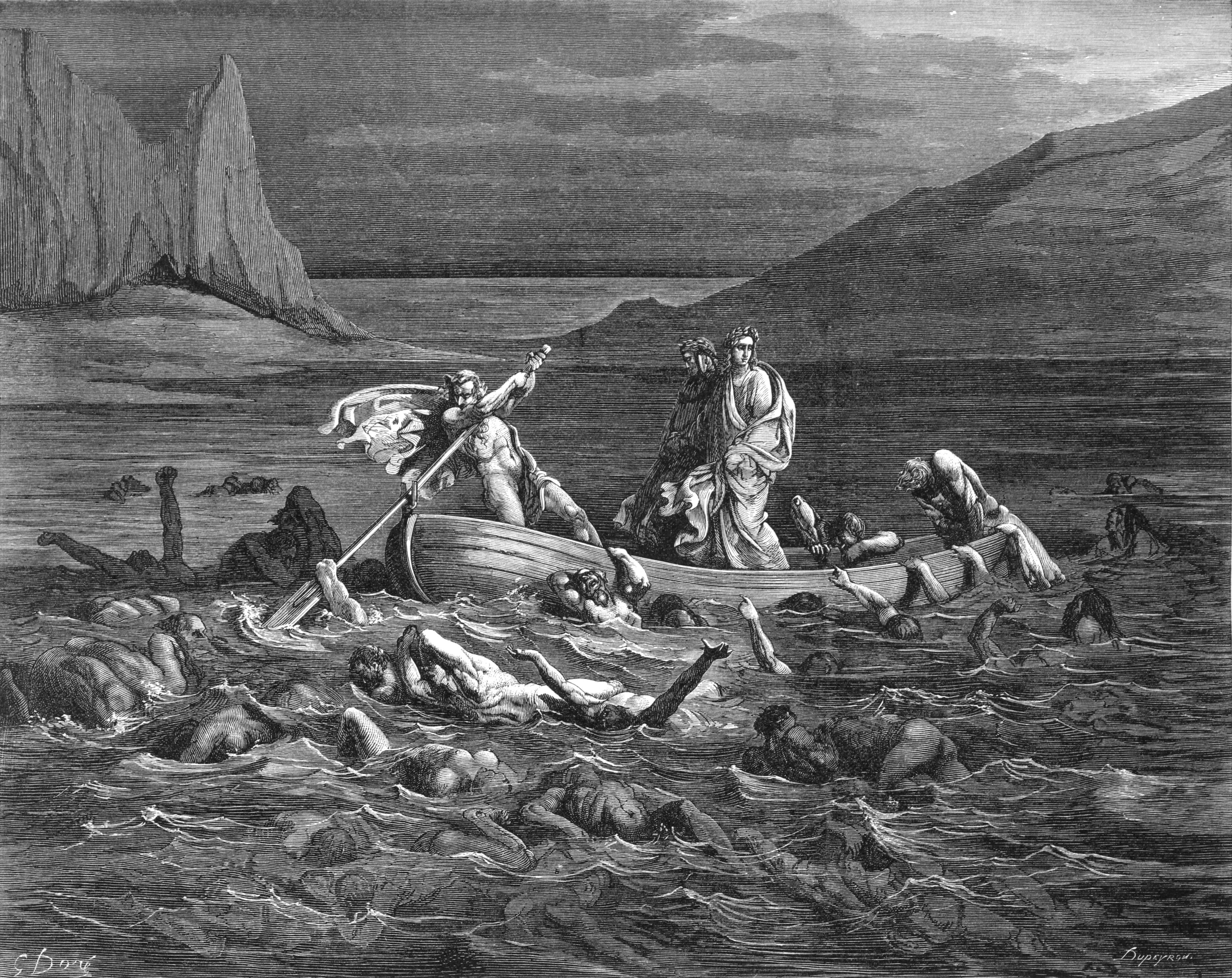
Crossing the Styx (Filippo Argenti)
Gustave Doré · 1861
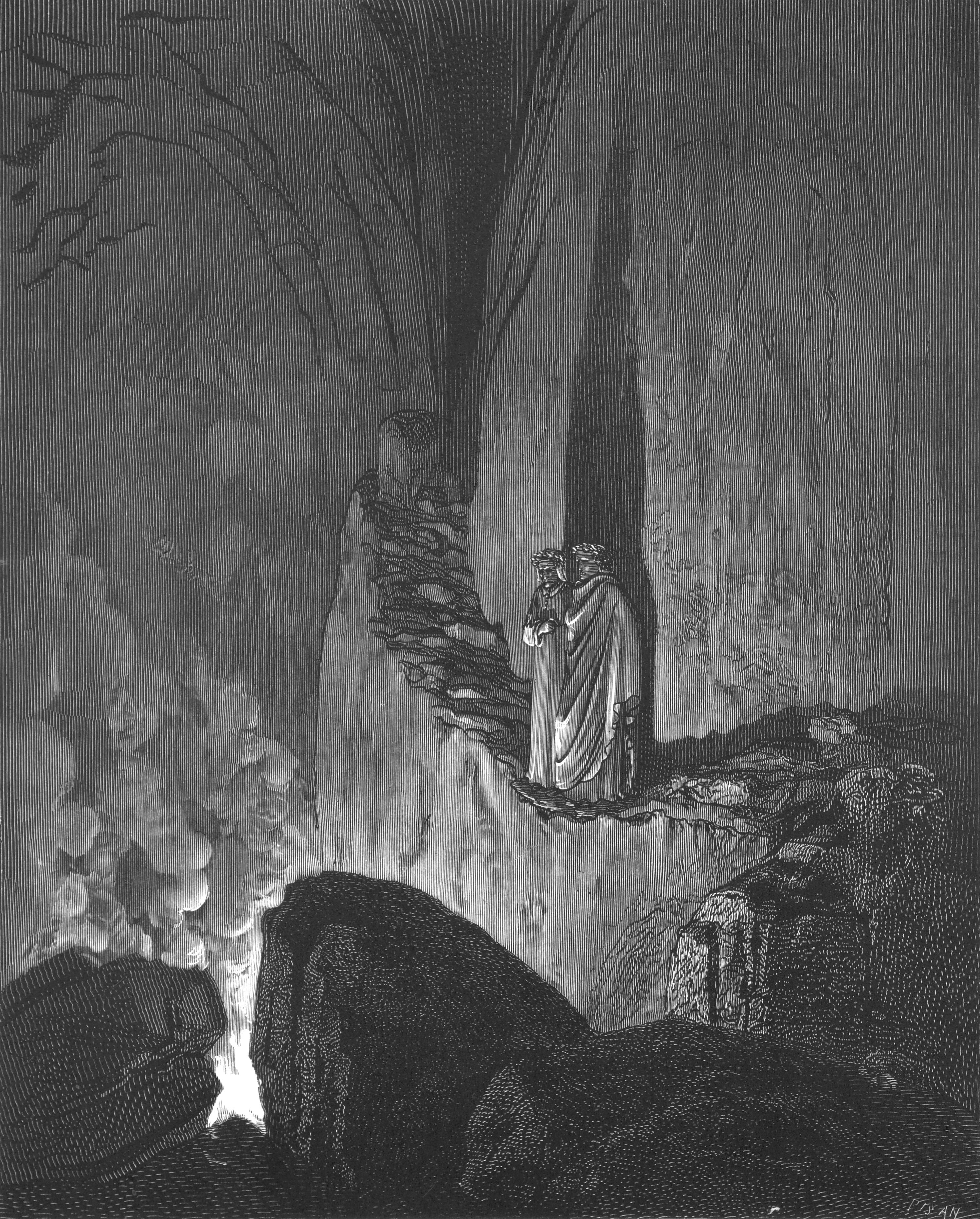
Ulysses and Diomedes
Gustave Doré · 1861
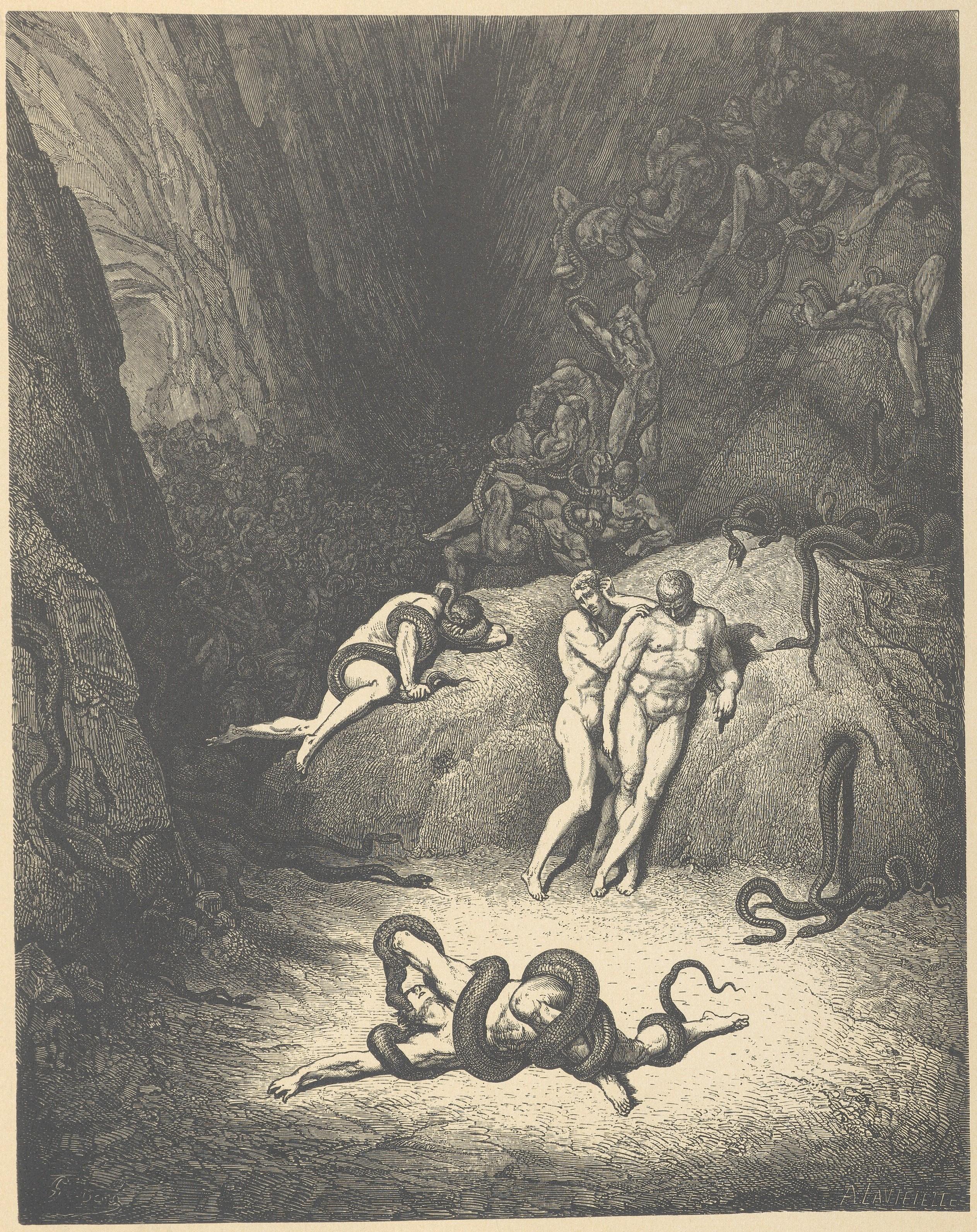
The Thieves and the Serpents
Gustave Doré · 1861
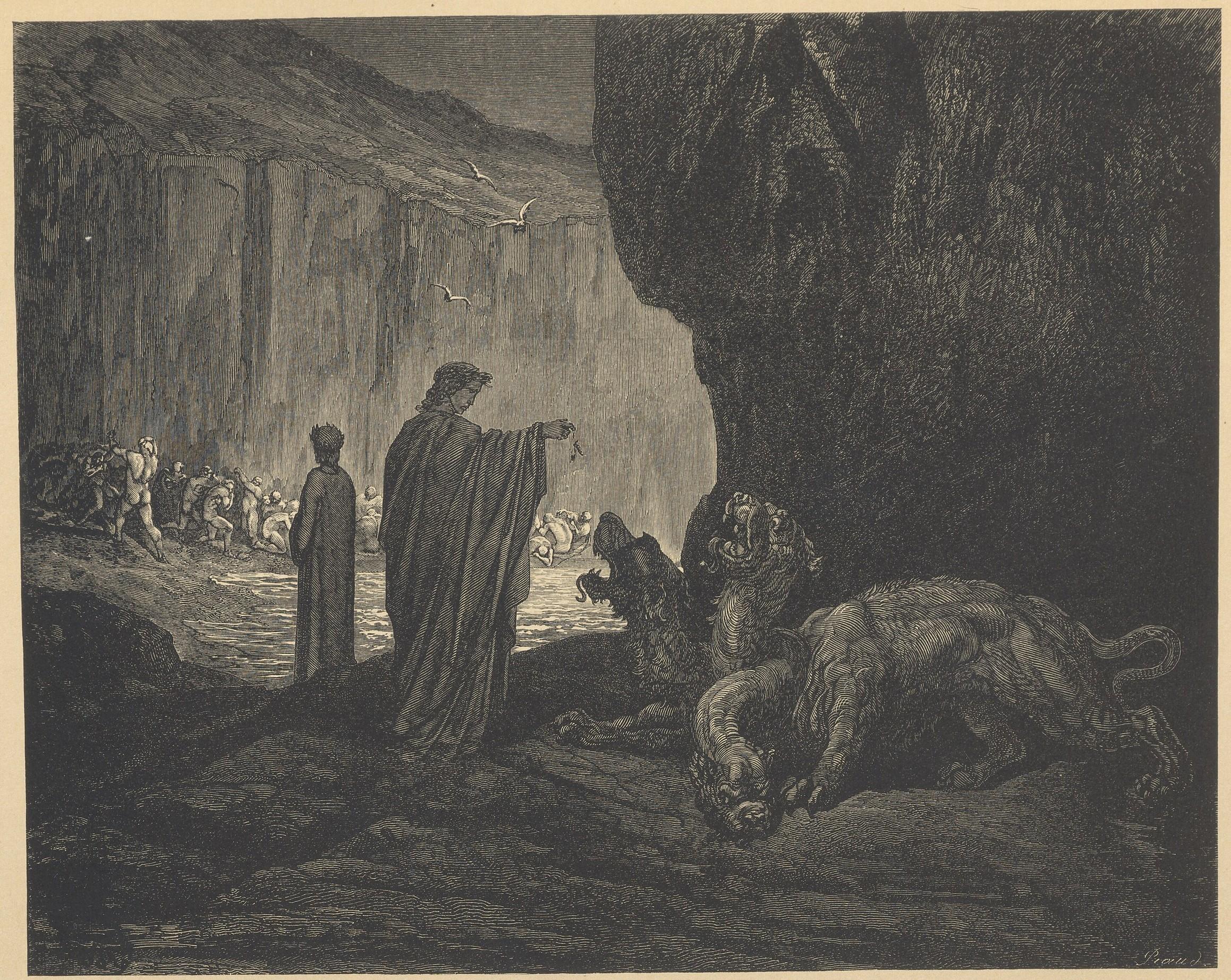
Cerberus
Gustave Doré · 1861
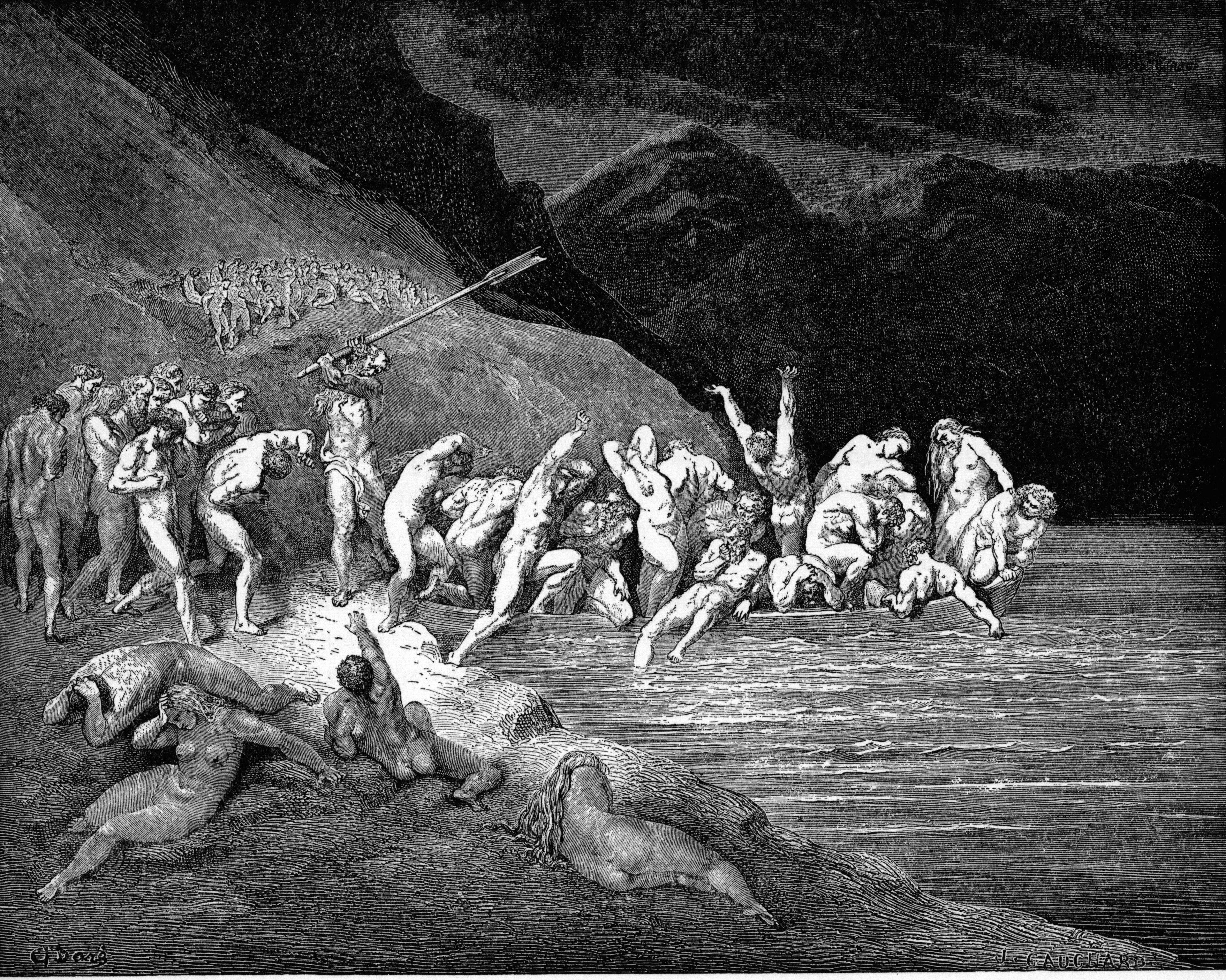
Charon, Ferryman of the Dead
Gustave Doré · 1861
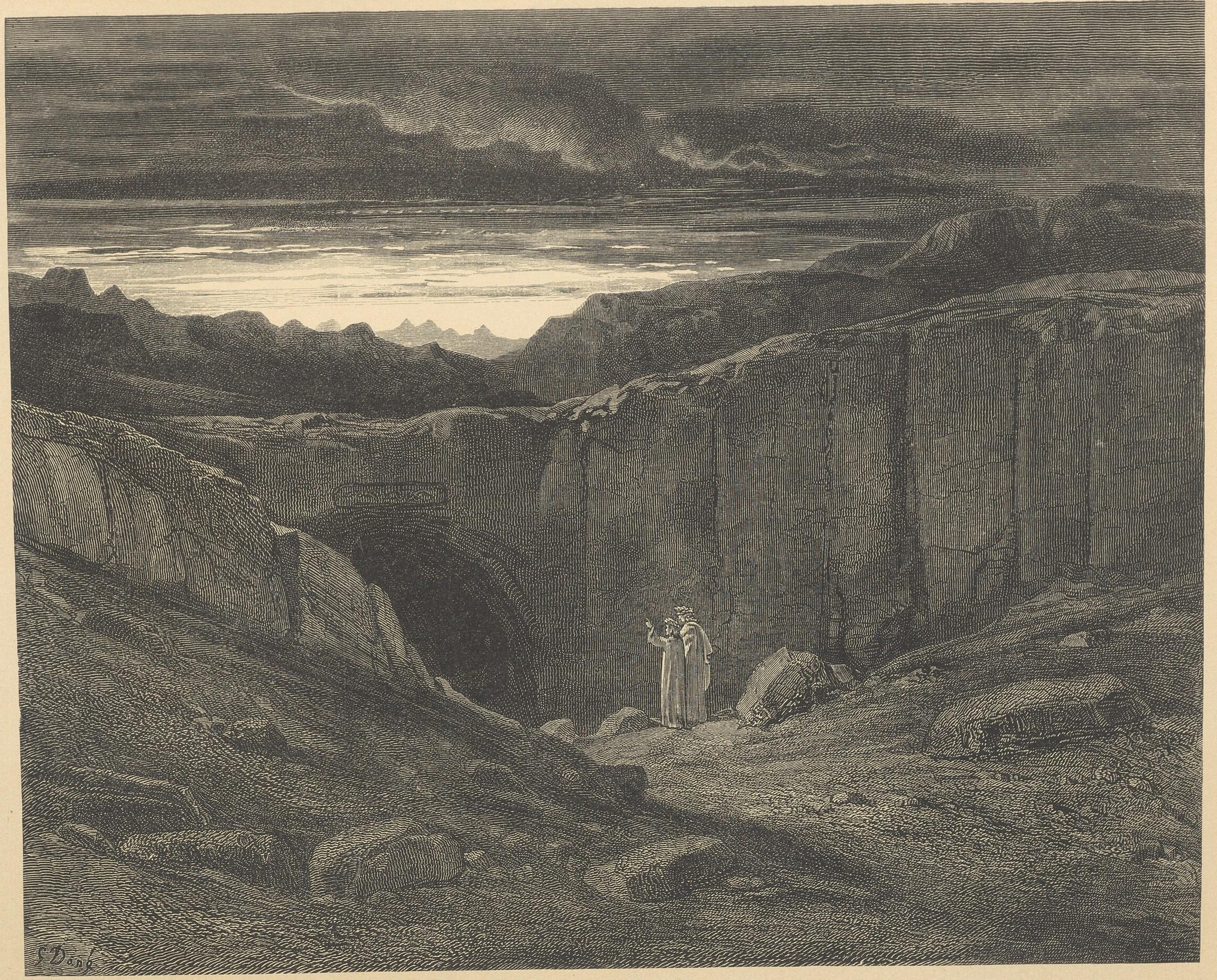
The Gate of Hell (Abandon All Hope)
Gustave Doré · 1861
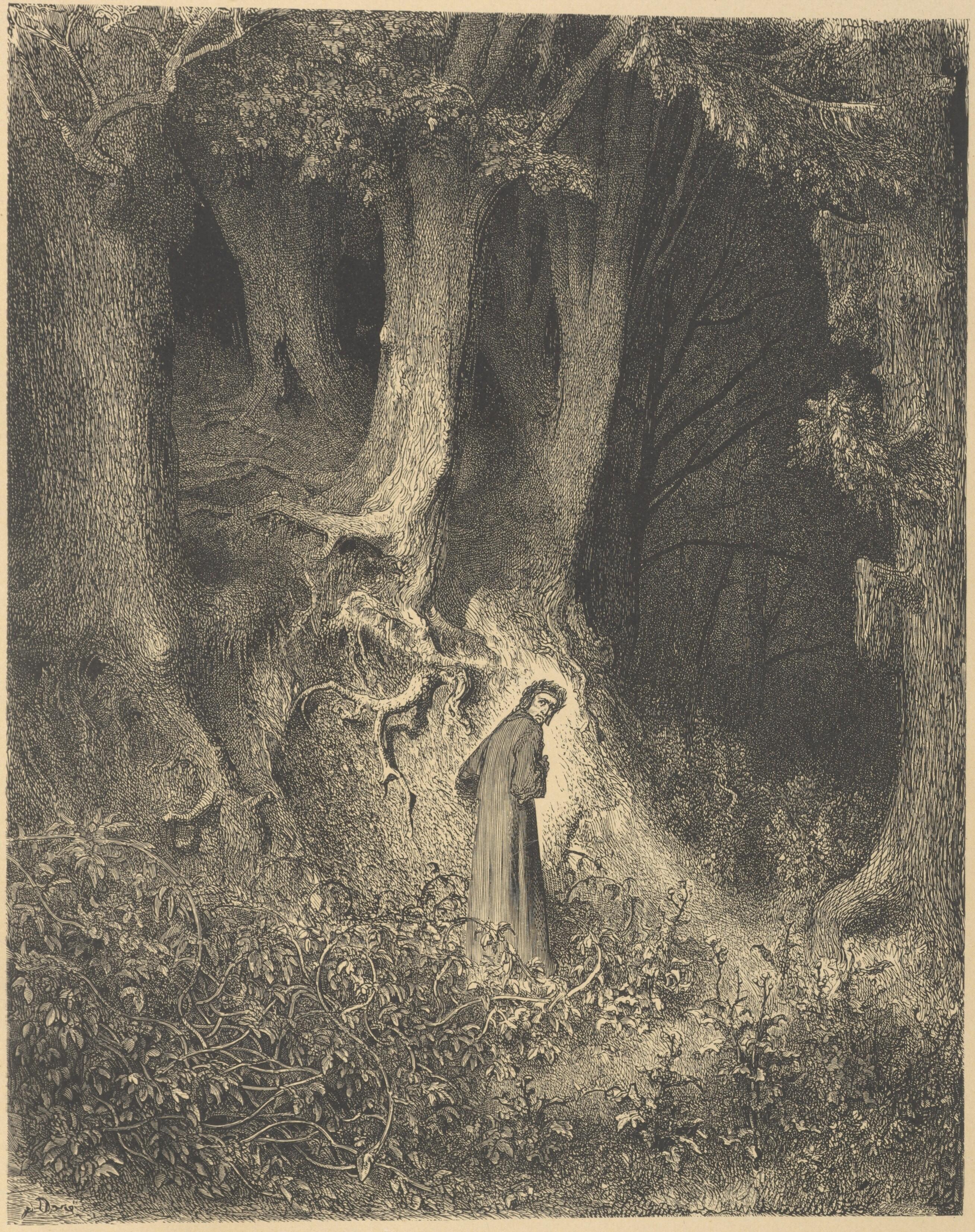
Dante Lost in the Dark Wood
Gustave Doré · 1861
Related works
Count Ugolino and His Sons
Gustave Doré · 1861
Dante Lost in the Dark Wood
Gustave Doré · 1861
Dante and Virgil in Hell
Gustave Courtois · 1879
Satan, Sin and Death at the Gates of Hell
Gustave Doré · 1866
The Vision of the Valley of Dry Bones
Gustave Doré · 1866
Two Old Men
Francisco Goya · c. 1819–1823
Nevermore (The Raven's Shadow)
Gustave Doré · 1884
The Gate of Hell (Abandon All Hope)
Gustave Doré · 1861