Theme
Angels and Demons in Art: Statues, Paintings and Fallen Angels
From Bernini's marble angels in Rome to Cabanel's weeping Lucifer, how artists have given bodies to beings that have none.
Angels and demons in art, from the angel statues of Baroque Rome to the fallen angels of nineteenth-century painting, are attempts to picture spirits that, in Christian theology, have no bodies at all. Artists had to invent everything: wings borrowed from the Greek goddess of victory, faces of idealized youths, and for demons, horns, bat wings and animal hindquarters drawn from pagan satyrs and medieval nightmares.
Many people arrive here looking for the "angels and demons statue" from Dan Brown's novel and its 2009 film. Those sculptures are real works by Gian Lorenzo Bernini, above all the Ecstasy of Saint Teresa in Rome. This collection gathers them alongside the great painted angels and devils, and the Romantic and Symbolist artists who made the fallen angel a hero.
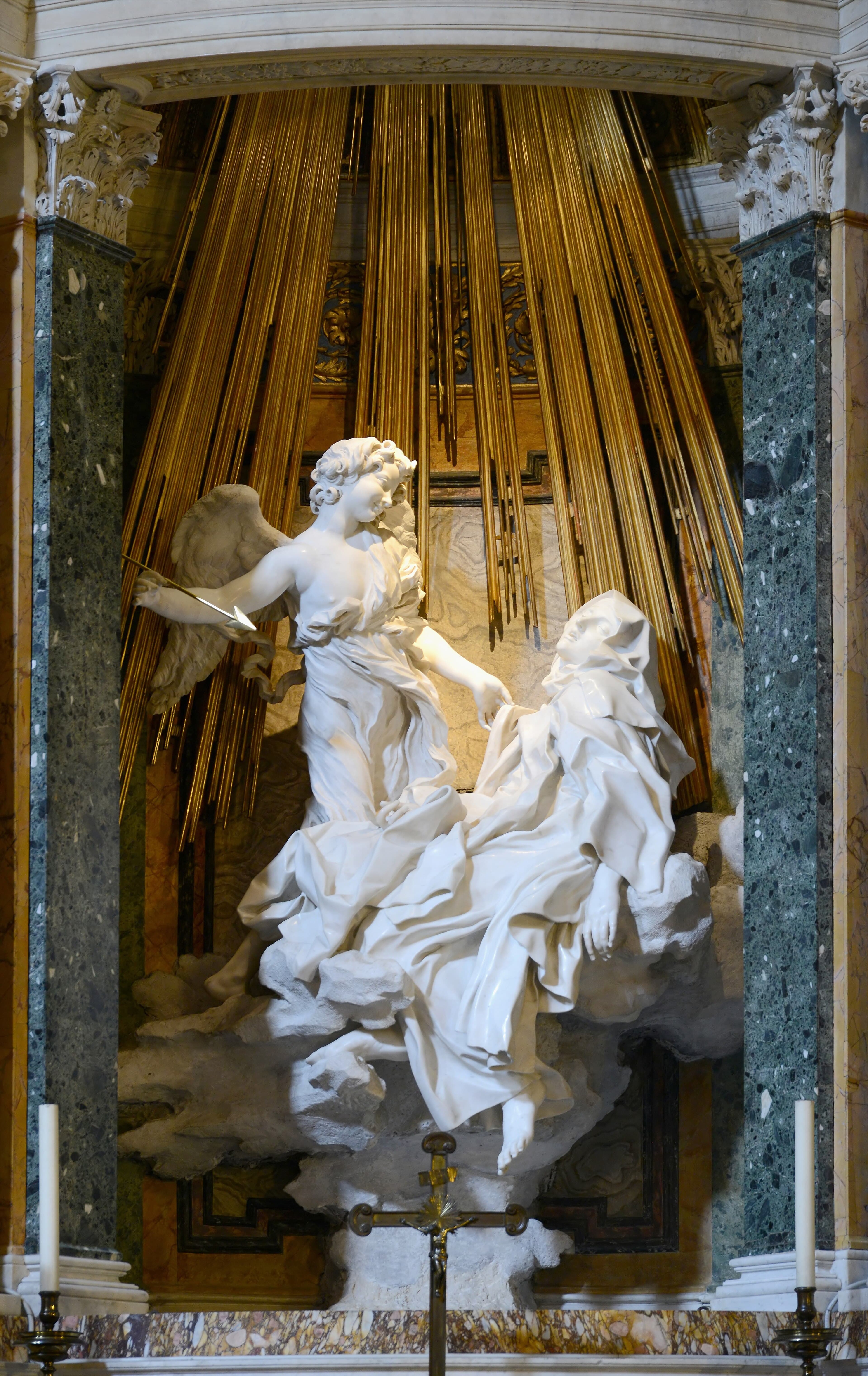
Ecstasy of Saint Teresa
Gian Lorenzo Bernini · 1647–1652
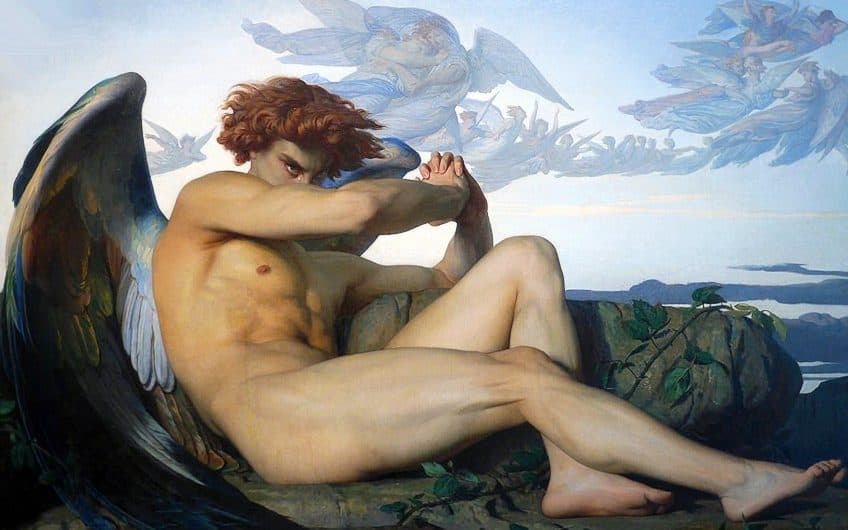
Fallen Angel
Alexandre Cabanel · 1847
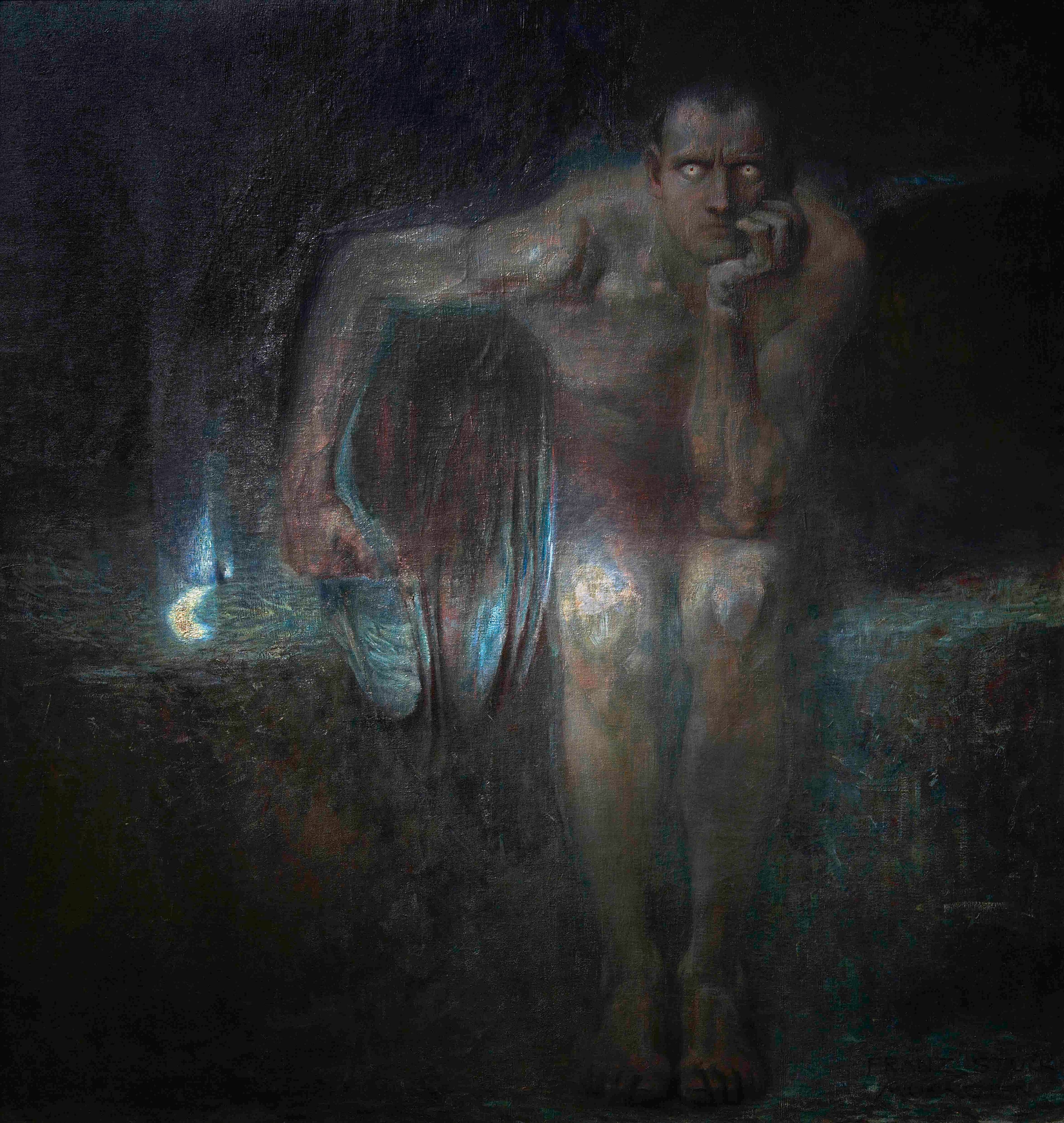
Lucifer
Franz von Stuck · 1890
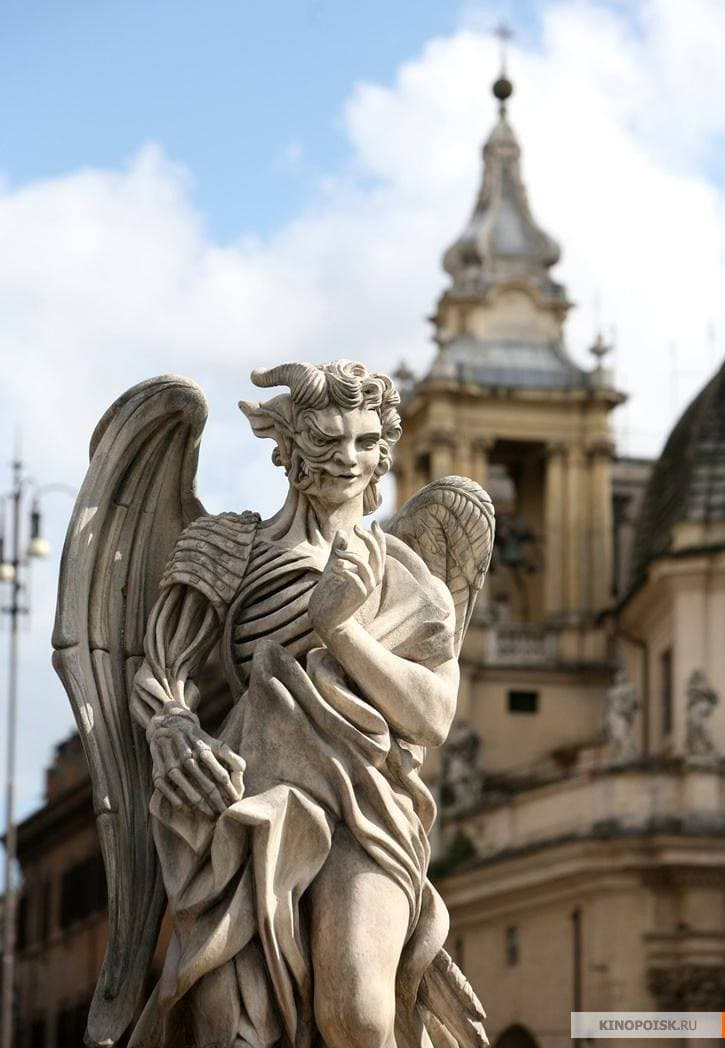
Angels and Demons – The Movie Prop
Artist Unknown & Gian Lorenzo Bernini · 2008
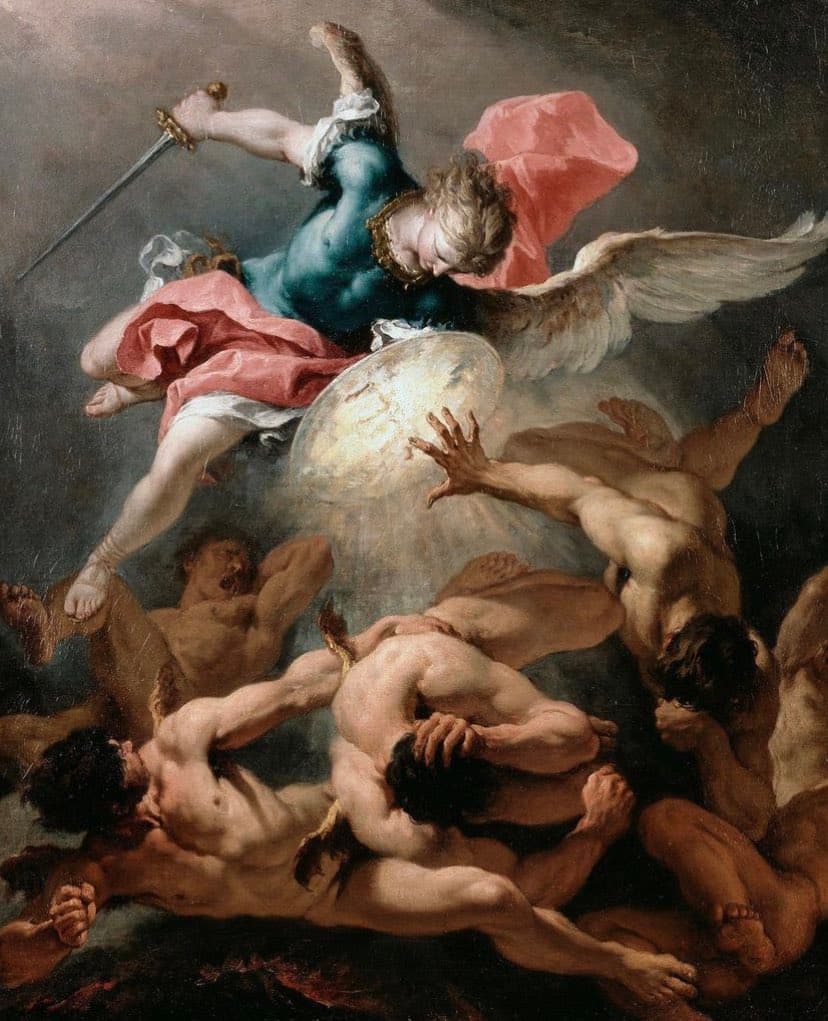
The Fall of the Rebel Angels
Sebastiano Ricci · c. 1720
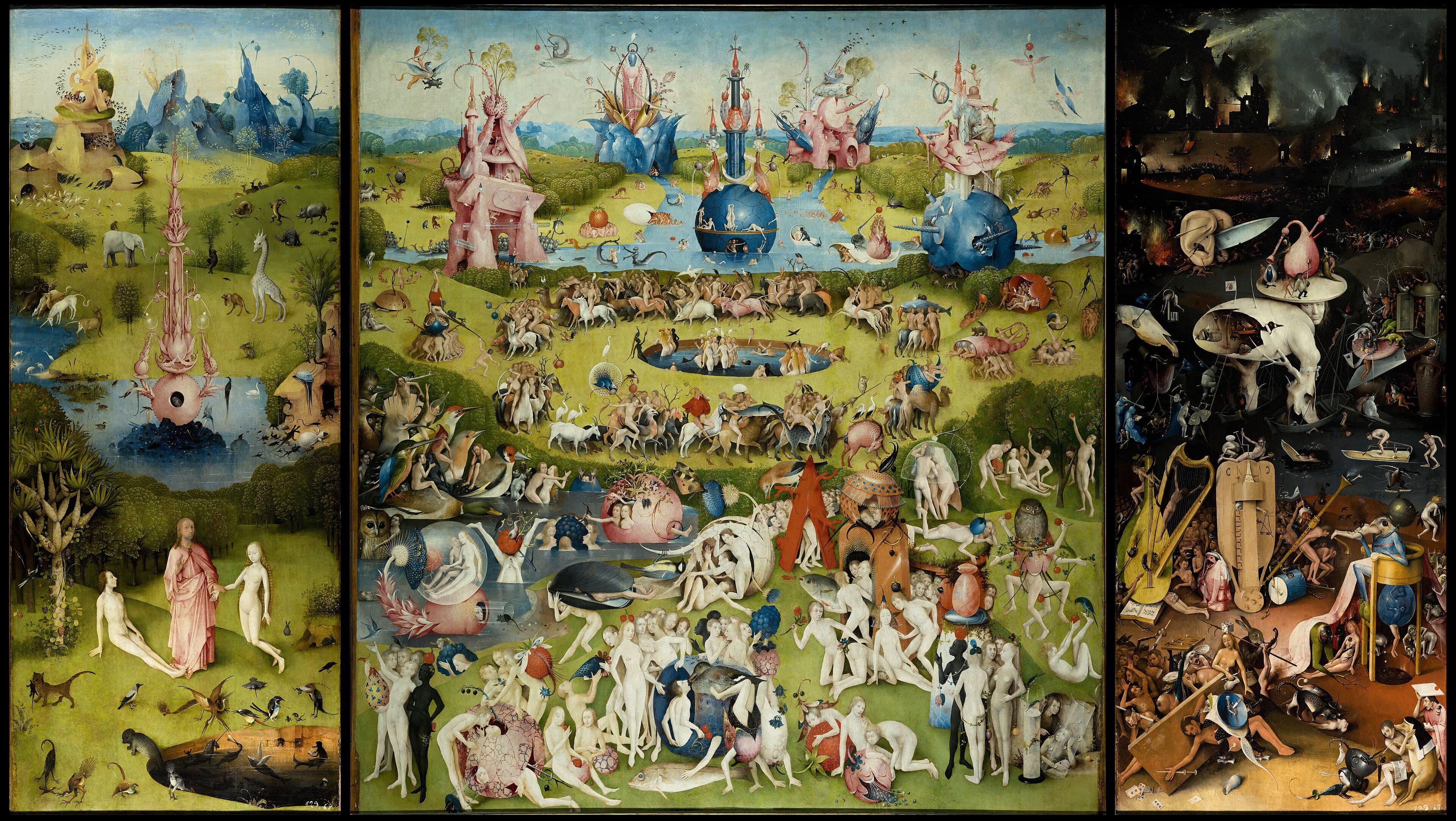
The Garden of Earthly Delights
Hieronymus Bosch · c. 1490–1510
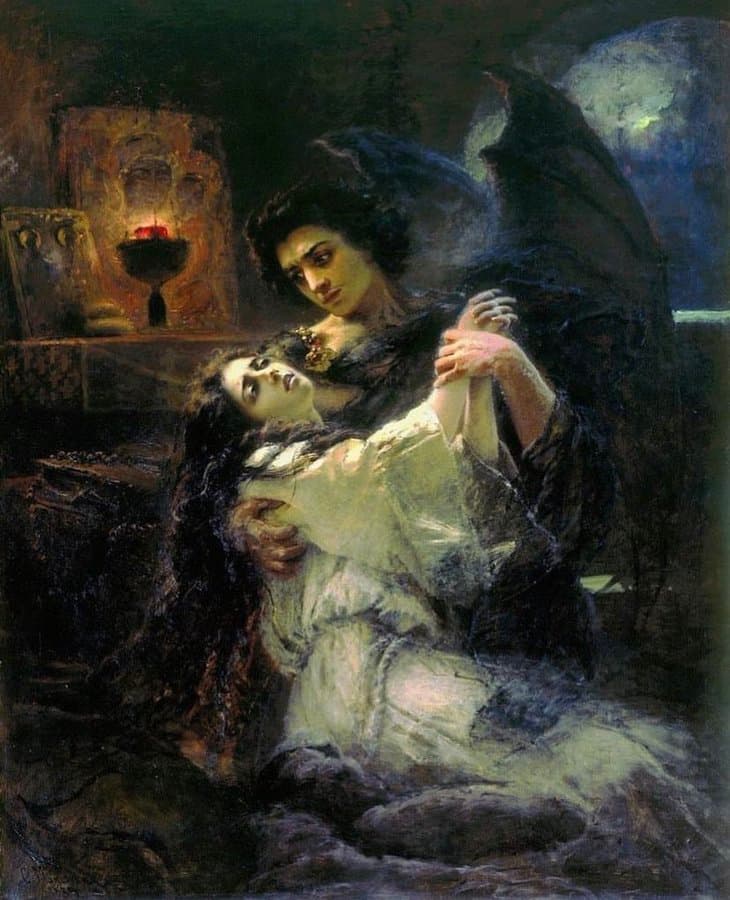
Tamara and Demon
Konstantin Makovsky · 1889
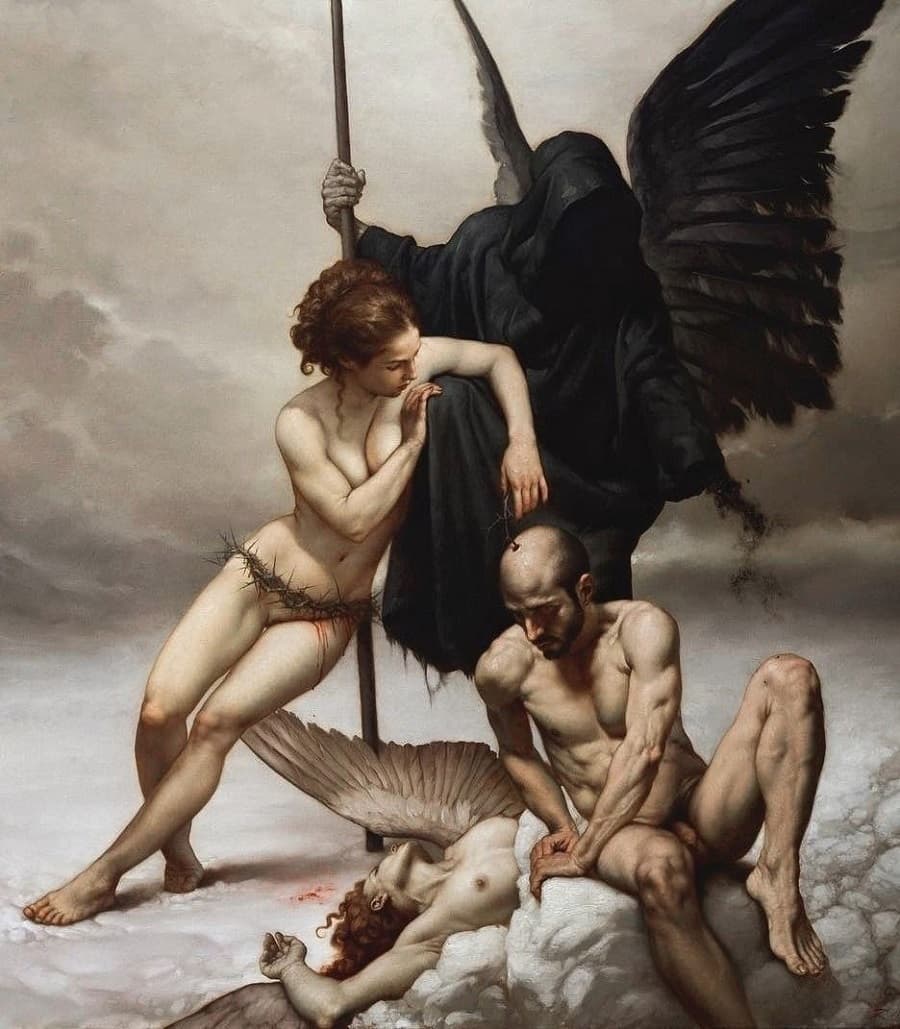
The Angel, the Death, and the Devil
Roberto Ferri · 2018
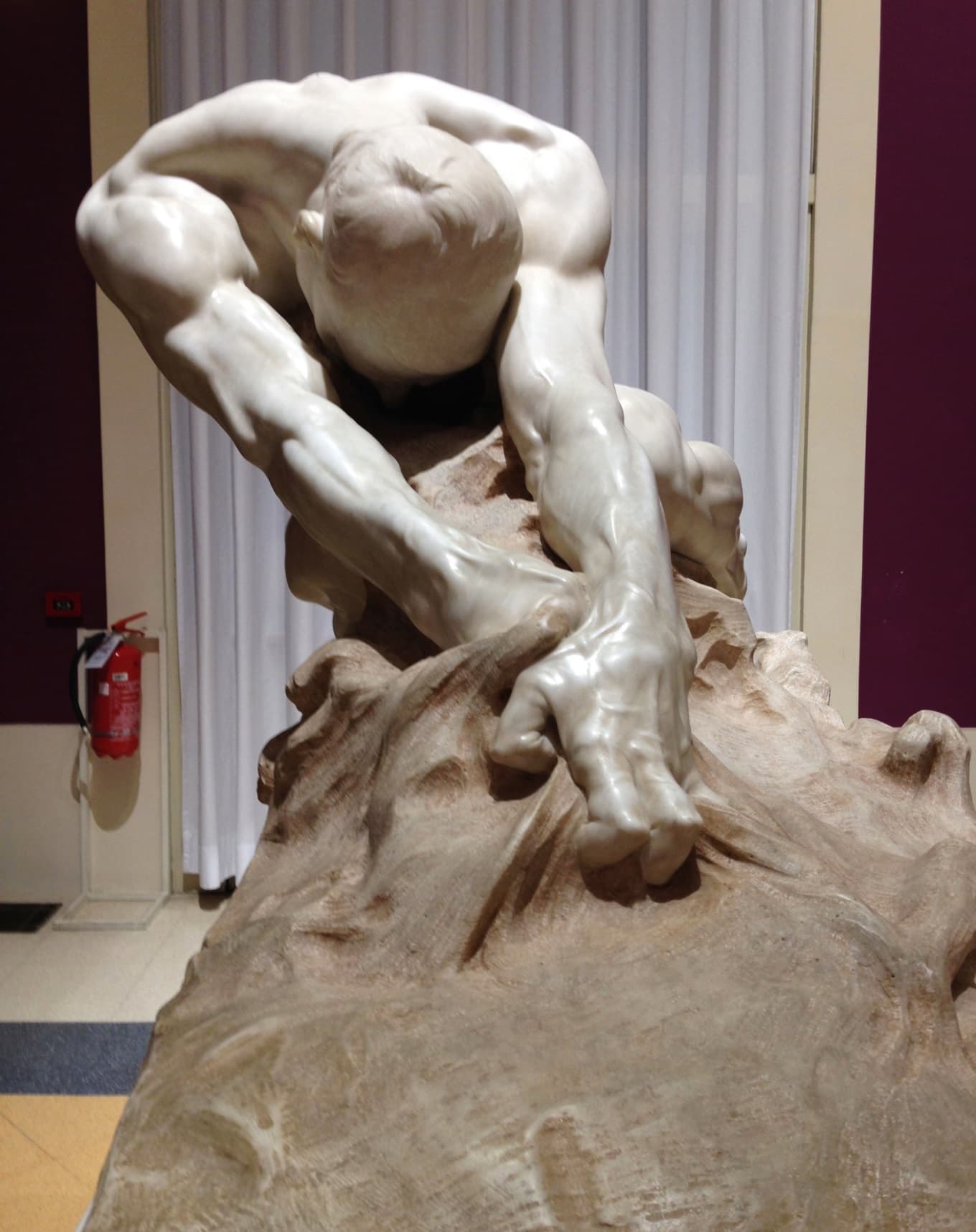
Humanity Against Evil
Gaetano Cellini · 1906–08
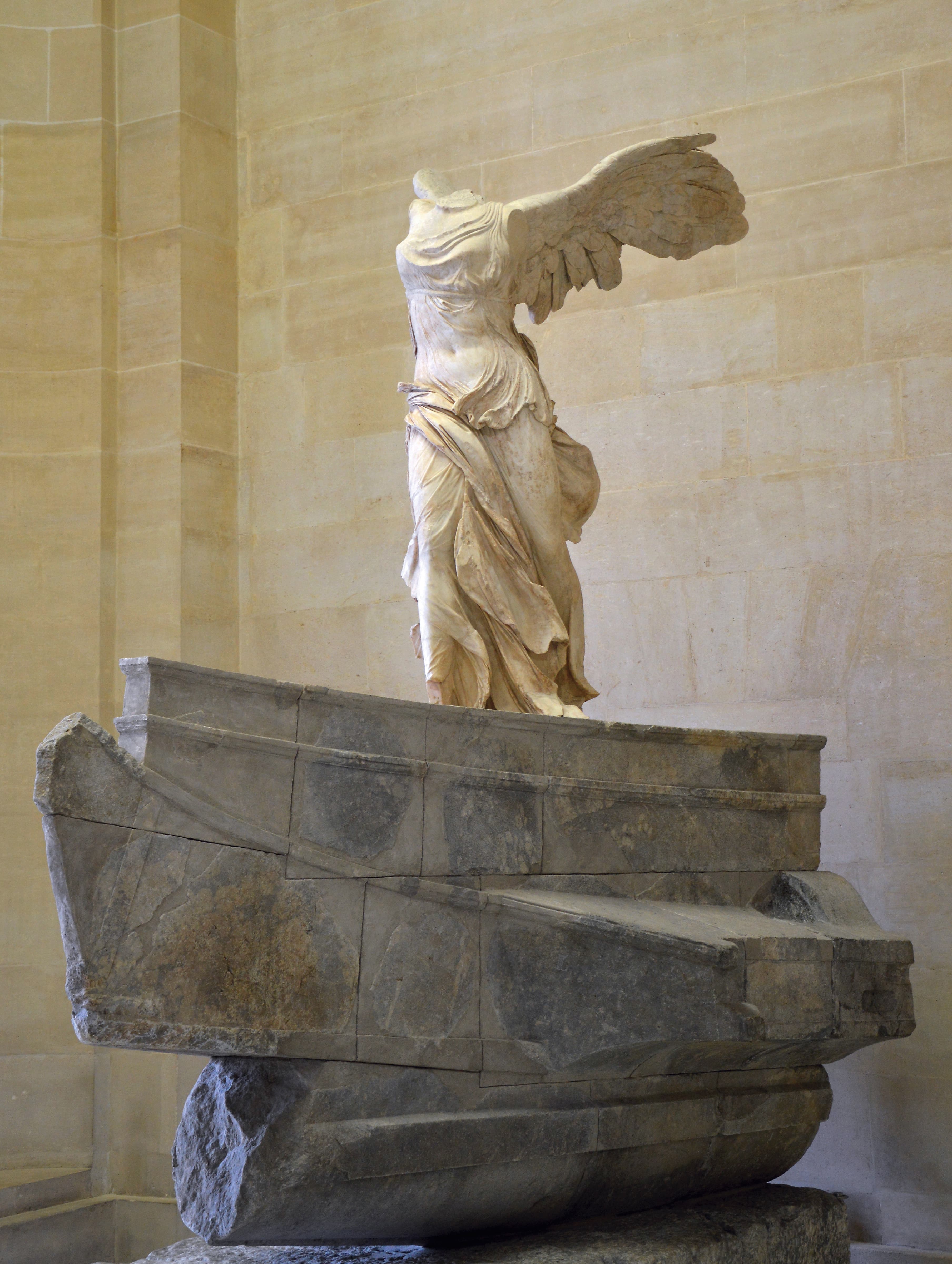
Winged Victory of Samothrace
Artist Unknown · c. 200–190 BC
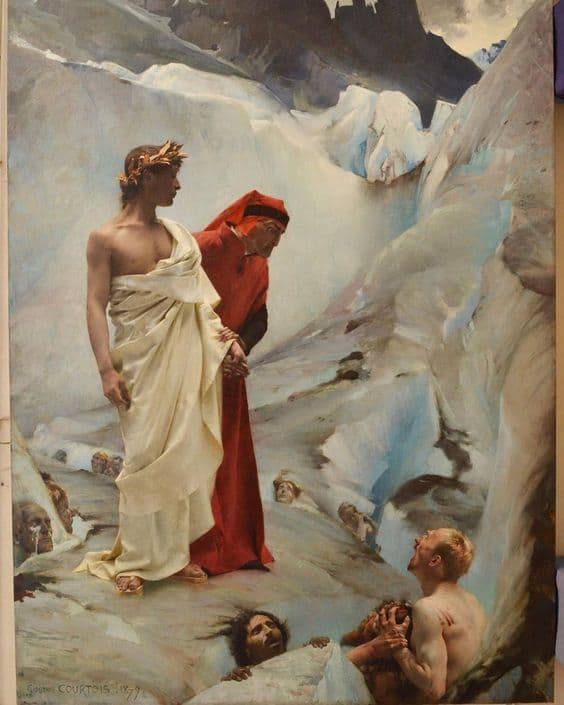
Dante and Virgil in Hell
Gustave Courtois · 1879
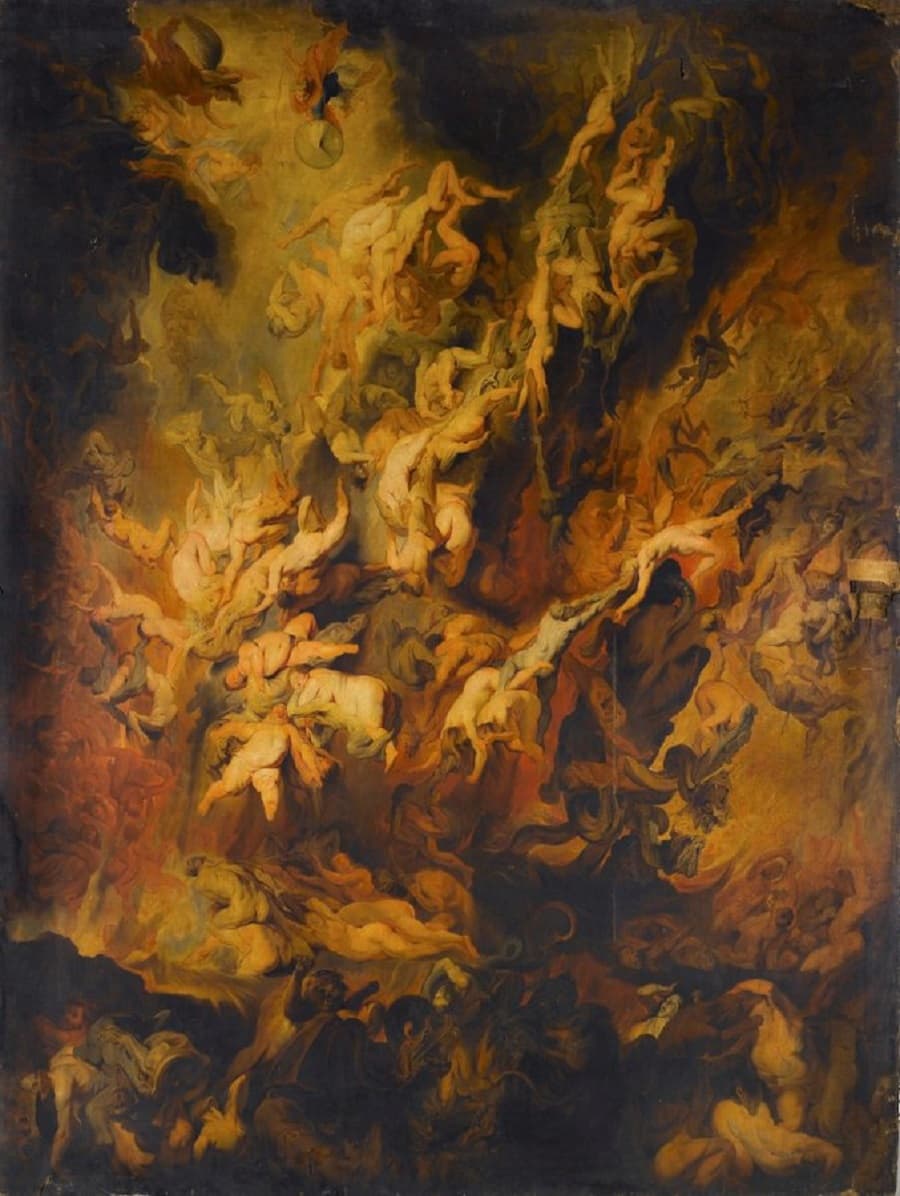
The Fall of the Damned
Guy Head · before 1799
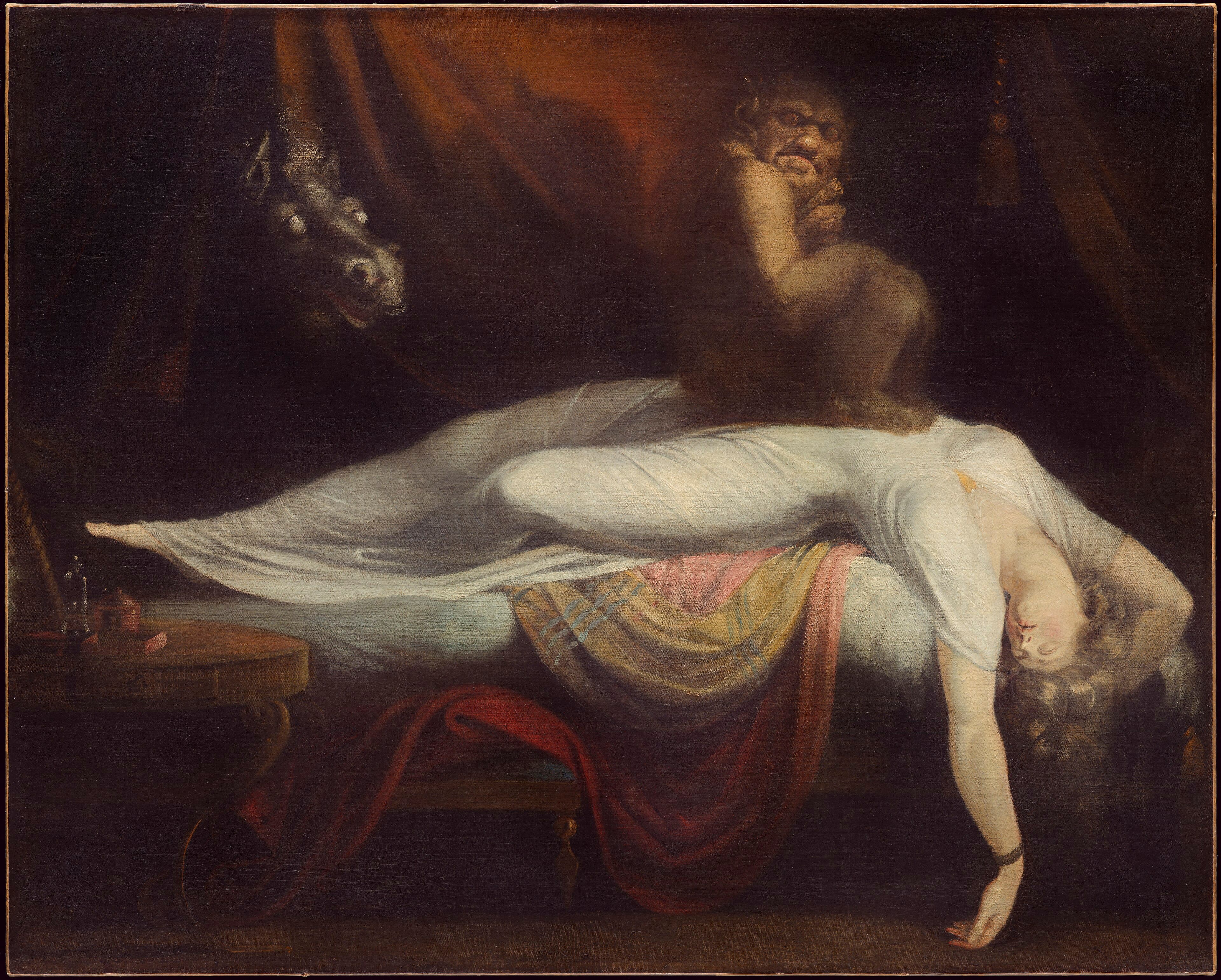
The Nightmare
Henry Fuseli · 1781
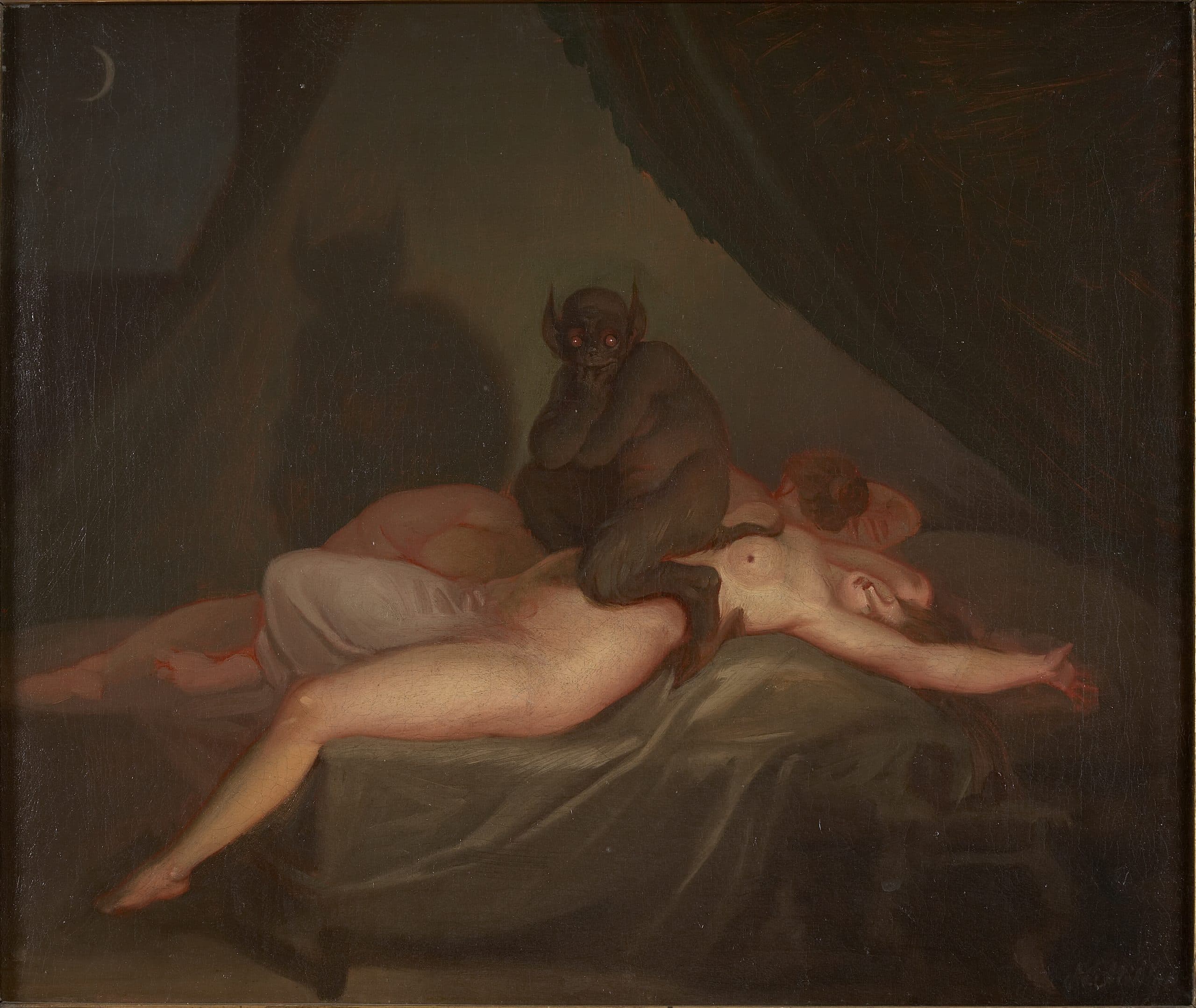
Nightmare
Nicolai Abraham Abildgaard · 1800
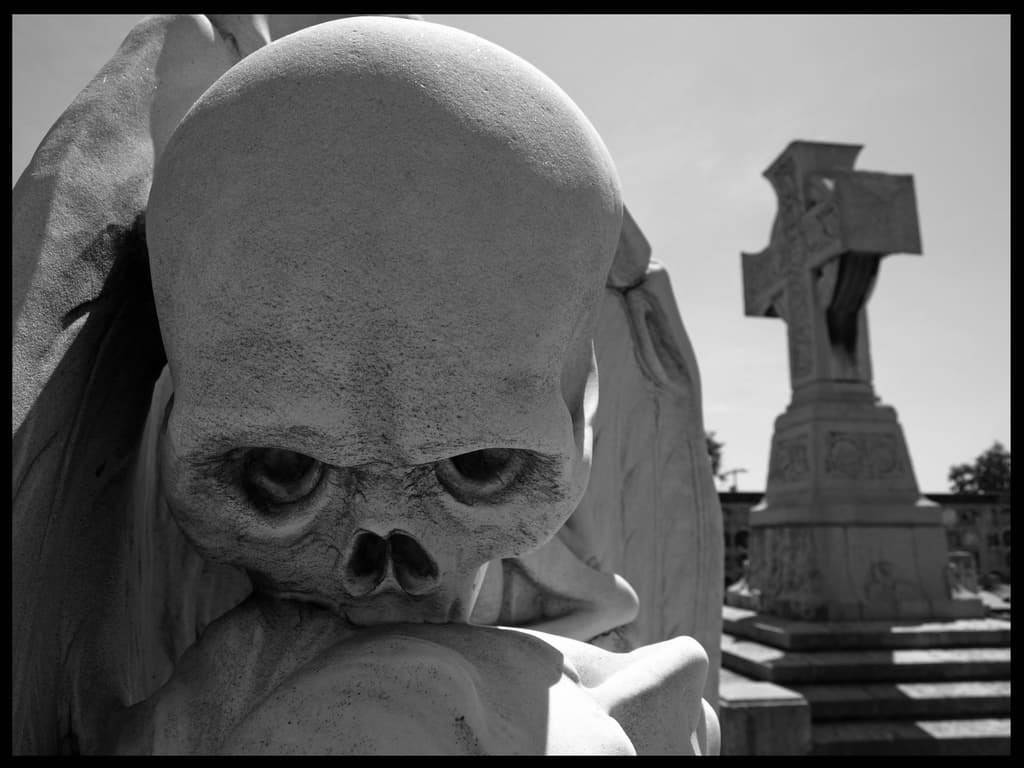
The Kiss of Death (El Petó de la Mort)
Jaume Barba & Joan Fontbernat · 1930
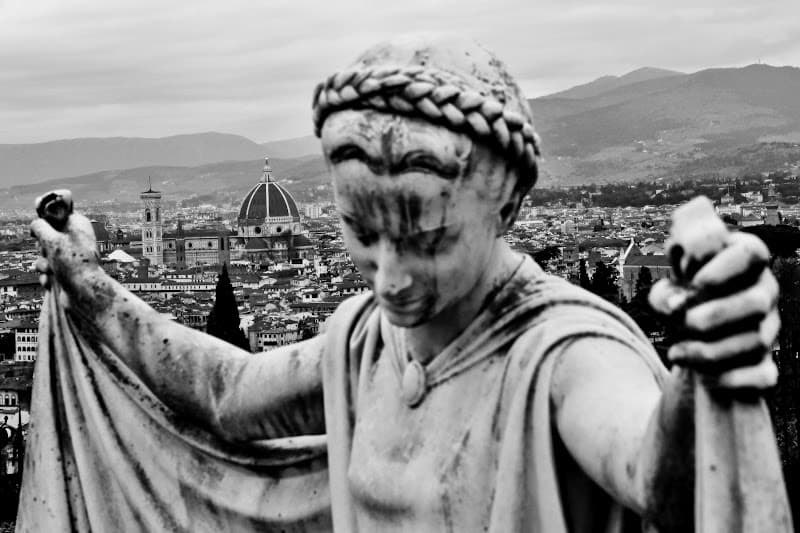
Tombstone of Silvia Marini nei De Rogati
Artist Unknown · After 1947
The Angels & Demons statues in Rome
In Angels & Demons (2000), Robert Langdon follows a trail of four "altars of science" across Rome, each marked by a Bernini sculpture tied to one of the classical elements. All four are real and can be visited:
- Earth: Habakkuk and the Angel (1650s) in the Chigi Chapel of Santa Maria del Popolo. An angel takes the prophet by a lock of hair to carry him to Daniel in the lions' den, pointing the way with his other hand.
- Air: the West Ponente relief in St. Peter's Square, an oval marble plaque with a puff-cheeked wind, set into the paving near the obelisk.
- Fire: the Ecstasy of Saint Teresa (1647–52) in the Cornaro Chapel of Santa Maria della Vittoria, where a smiling angel holds a golden arrow over the swooning saint.
- Water: the Fountain of the Four Rivers (1651) in Piazza Navona.
The Church did not allow the 2009 film to shoot inside these churches, so the production built replicas, and pieces like the Angels and Demons movie prop in this collection come from that world of reconstruction. The originals are better. In Teresa, look at how Bernini carved the angel's drapery into flickering, flame-like folds, and how a hidden window above the altar sends real daylight down gilded bronze rays.
The famous angel statues of Rome
Bernini's angels are everywhere in the city. On the Ponte Sant'Angelo, ten marble angels carry the instruments of Christ's Passion, the crown of thorns, the nails, the lance, across the Tiber toward the Castel Sant'Angelo. Bernini designed the series for Pope Clement IX between 1667 and 1671 and carved two of the angels himself; the pope thought them too fine for the weather, so they were moved to the church of Sant'Andrea delle Fratte and copies stand on the bridge. On top of the castle, a bronze Archangel Michael by Peter Anton von Verschaffelt (1753) sheathes his sword, recalling a legend that Michael appeared there in 590 to signal the end of a plague.
How angels got their wings
The earliest Christian images of angels, in the catacombs and on early sarcophagi, show them as young men without wings, close to the Bible's descriptions of messengers who could pass for human. Wings became standard from around the late fourth century, borrowed from classical figures of Victory such as the Winged Victory of Samothrace. The Bible's six-winged seraphim of Isaiah and the many-eyed wheels of Ezekiel gave medieval artists a stranger vocabulary for the higher ranks of angels.
By the Renaissance, painters had settled the type: a beautiful, androgynous youth in flowing robes, with bird's wings often colored like a kingfisher or a peacock. The Archangel Gabriel of the Annunciation and the Archangel Michael weighing souls or spearing the dragon became the two most painted angels in European art.
Demons: hell made visible
Demons arrived later and in a hurry. Early medieval art rarely shows the Devil at all; by the twelfth century, the carved Last Judgments over church doors at Autun and Conques were crowded with them. Their look was assembled from the pagan past: the horns, goat legs and tail of Pan and the satyrs, the bat wings of night creatures, mouths in the belly or the backside to signal a body turned upside down by sin.
Hieronymus Bosch took this tradition to its extreme in the right-hand hell panel of The Garden of Earthly Delights, where hybrid creatures torment sinners with musical instruments and a bird-headed monster devours the damned. Michelangelo's Last Judgment (1536–41) on the altar wall of the Sistine Chapel gave demons heroic, muscular bodies, closer to the rebel angels they once were. Later painters such as Sebastiano Ricci, in The Fall of the Rebel Angels, turned the battle in heaven into a Baroque cascade of tumbling bodies.
The fallen angel becomes a hero
The decisive change came with John Milton's Paradise Lost (1667), whose Satan is proud, eloquent and tragic. Romantic readers, from William Blake to Lord Byron, saw him as a rebel against tyranny, and nineteenth-century artists followed. Gustave Doré's illustrations for Paradise Lost (1866) gave the fallen angel his modern silhouette: vast wings, a lean classical body, a brooding gaze.
Two paintings define the type. Fallen Angel by Alexandre Cabanel (1847, Musée Fabre, Montpellier) shows Lucifer lying on a rock, arm across his face, eyes red with anger and a single tear at the corner. Cabanel was still a student at the French Academy in Rome when he painted it. Lucifer by Franz von Stuck (1890) strips away the narrative entirely: the devil crouches in darkness and stares straight out with eyes that seem to glow. It was bought by Ferdinand of Bulgaria and is now in the National Gallery in Sofia.
In Russia, Mikhail Lermontov's poem The Demon, about a fallen spirit in love with a Georgian princess, inspired many artists, including Konstantin Makovsky in Tamara and Demon. In Madrid's Retiro Park, Ricardo Bellver's bronze Fallen Angel, modeled in 1877 and installed on a fountain in 1885, is among the very few public monuments to Lucifer.
Angels and demons in modern art
The pairing has never gone out of style. Contemporary figurative painters such as Roberto Ferri, in The Angel, the Death, and the Devil, return to Baroque lighting and anatomy to stage the old struggle. Antony Gormley's Angel of the North (1998), a steel figure 20 meters tall with a wingspan of 54 meters beside a highway in Gateshead, shows the angel reduced to a body and two rigid wings.
How to tell them apart
In most Christian art, the signals are consistent. Angels have feathered bird wings, often white or iridescent, halos, idealized faces and flowing robes; they hold lilies, trumpets, swords, scales or the instruments of the Passion. Demons have leathery bat wings, horns, claws, tails, animal legs and often dark or reddish skin. Fallen angels sit between the two: in the nineteenth century they usually keep their beauty and their feathered wings, and show their fall only in posture, expression and darkness.
For more fallen angels see Fallen Angels in Art.
Questions & answers
What is the angels and demons statue?
In Dan Brown's Angels & Demons, the key statues are real works by Gian Lorenzo Bernini in Rome: Habakkuk and the Angel in Santa Maria del Popolo, the West Ponente relief in St. Peter's Square, the Ecstasy of Saint Teresa in Santa Maria della Vittoria and the Fountain of the Four Rivers in Piazza Navona.
Where is the angel statue from Angels and Demons?
The angel pointing the way in the story is Bernini's Habakkuk and the Angel, in the Chigi Chapel of Santa Maria del Popolo in Rome. The angel with the golden arrow is in the Ecstasy of Saint Teresa, in the Cornaro Chapel of Santa Maria della Vittoria. The film used replicas.
What is the most famous fallen angel painting?
Alexandre Cabanel's Fallen Angel (1847), in the Musée Fabre in Montpellier, is the best known, recognizable by the tear in Lucifer's eye. Franz von Stuck's Lucifer (1890), in the National Gallery in Sofia, is a close second.
Why do angels have wings in art?
The Bible describes most angels as messengers who could look human, and early Christian art showed them without wings. From about the late fourth century artists added wings borrowed from classical figures of Victory, a visual sign that angels move between heaven and earth.
How can you tell an angel from a demon in a painting?
Angels usually have feathered bird wings, halos and calm, idealized faces. Demons usually have bat wings, horns, claws, tails and animal legs. Fallen angels in nineteenth-century art often keep their feathered wings and beauty, showing their fall through darkness, posture and expression.