Crossing the Styx (Filippo Argenti)
Gustave Doré, 1861
Crossing the Styx is Gustave Doré's 1861 wood engraving for Dante's Inferno, Canto VIII. The demon boatman Phlegyas poles Dante and Virgil across the swamp of the wrathful while drowned souls, Filippo Argenti among them, claw at the boat.
- Artist
- Gustave Doré
- Date
- 1861
- Medium
- Wood engraving
- Movement
- Romanticism
- Themes
- Literature & Poetry, Water & Sea, Mythology, War & Violence, The Macabre
What you're looking at
A narrow boat cuts across a choppy, dark water from right to left. At its prow, one foot braced on the gunwale, the boatman Phlegyas drives a long oar down into the water like a pole. He is naked to the waist and muscular, his long hair swept back, and a pale cloak flaps out behind him like a flag. Behind him, standing upright in the middle of the boat and not touching anything, are the two poets: Virgil in front, in a light, classical robe with a laurel wreath, and Dante just behind him in his dark gown and hood.
The water around them is full of people. Heads, backs and arms break the surface in every direction. Hands grip the gunwale along the whole length of the boat. A bearded man floats on his back beside the hull, mouth open, one hand hooked over the side. At the stern a broad-shouldered figure has hauled half his body up and leans in toward the poets.
In the foreground the bodies grow larger and more tangled, wrestling and sinking, one man flinging up an arm toward the boat.
The setting is wide and cold. To the left rises a pale, needle-shaped crag; to the right a long, dark hillside slopes down to the water; and beyond, a flat horizon under a low, banded sky. The engraver has cut the whole surface of the water in long, wavering horizontal lines broken by flecks of white on the crests, so the swamp seems to move.
The passage it illustrates
The plate illustrates Inferno VIII, lines 25–30, as Dante and Virgil cross the Styx, the swamp of the fifth circle, where the wrathful are sunk in mud. Phlegyas has rushed up in his little boat, thinking he has caught a new soul, and Virgil has rebuked him. In Longfellow's translation:
My Guide descended down into the boat, And then he made me enter after him, And only when I entered seemed it laden.
Soon as the Guide and I were in the boat, The antique prow goes on its way, dividing More of the water than 'tis wont with others.
The boat rides low because Dante, unlike the dead, has weight. Then, “while we were running through the dead canal,” a figure covered in mud rises up in front of Dante. It is Filippo Argenti, a Florentine whom Dante knew and detested. Dante refuses him pity, and (line 40):
Then stretched he both his hands unto the boat; Whereat my wary Master thrust him back, Saying, “Away there with the other dogs!”
How Doré staged it
Doré draws the crossing itself, not the confrontation. The hands on the gunwale and the man heaving himself up at the stern anticipate the Argenti episode that follows, and it is tempting to look for Argenti among them, but Doré gave the confrontation its own separate plate, where Virgil thrusts the furious soul away from the boat. This plate is about the journey and the crowd.
He also makes Phlegyas a more heroic figure than the text suggests. In Dante, Phlegyas is a figure of impotent rage; Doré gives him a Michelangelesque body and a dramatic, flapping cloak, and the pose of a ferryman fighting the current. The calm of the two poets, standing still at the center while everything around them strains and grabs, is the contrast that makes the plate work.
The composition echoes Doré's earlier Charon plate in Canto III: another boatman, another crossing, another crowd of the damned. But where Charon's passengers are herded aboard, here the boat is for the living only, and the damned are left in the water.
How it was made and published
Doré drew the design directly on a boxwood block for a professional engraver to cut. It is signed “G. Doré” at lower left and, at lower right, “Dupeyron,” the engraver. The plate was published in 1861 in L'Enfer de Dante Alighieri (Hachette, Paris), the folio Doré paid for himself, as the twenty-fourth plate in the sequence. The scan shown here is from a Berlin edition of 1870 held by the National Library of Poland.
Meaning
In Greek myth, Phlegyas was a king of the Lapiths who burned Apollo's temple at Delphi in a fit of anger; Virgil places him among the punished in the Aeneid. Dante makes him the boatman of the wrathful, a fitting servant for a circle of rage. The Styx itself, the river of hate in classical myth, becomes a marsh where the angry fight each other forever and the sullen gurgle beneath the mud.
Doré's image turns that moral landscape into something physical: a crowd that wants to drag the living down with it. The poets pass through untouched. For the next stage of the journey, see the Furies at the gates of Dis, and for an earlier guardian of the same kind, Cerberus. Arnold Böcklin's Isle of the Dead offers a quieter crossing of the dead water, and Doré's complete Inferno series traces the whole descent.
Questions & answers
What does Doré's Crossing the Styx show?
It shows the boatman Phlegyas poling Dante and Virgil across the Styx, the swamp of the wrathful, while drowning souls clutch at the boat. It illustrates Inferno VIII, 29–30: “The antique prow goes on its way, dividing / More of the water than 'tis wont with others” (Longfellow).
Who is Filippo Argenti in Dante's Inferno?
Filippo Argenti was a Florentine noble of the Adimari family, notorious for his temper. In Canto VIII he rises from the mud and grabs at the boat; Virgil thrusts him back with “Away there with the other dogs!” Doré gave that confrontation its own separate plate.
Who is Phlegyas?
In Greek myth Phlegyas was a king of the Lapiths who set fire to Apollo's temple at Delphi in anger. Dante makes him the boatman of the fifth circle, ferrying travelers across the Styx, where the wrathful are punished.
When was this plate published and who engraved it?
It was published in 1861 in L'Enfer de Dante Alighieri, the folio Inferno issued by Hachette in Paris and paid for by Doré. Doré drew the design on the woodblock; the engraver Dupeyron cut it and signed at lower right.
Why does the boat sink lower when Dante steps in?
Because Dante is alive and has a body, while the dead weigh nothing. Dante notes that the boat “only when I entered seemed it laden” and cut deeper into the water than usual, a detail that reminds the reader he is a living visitor in Hell.
More by Gustave Doré
All works →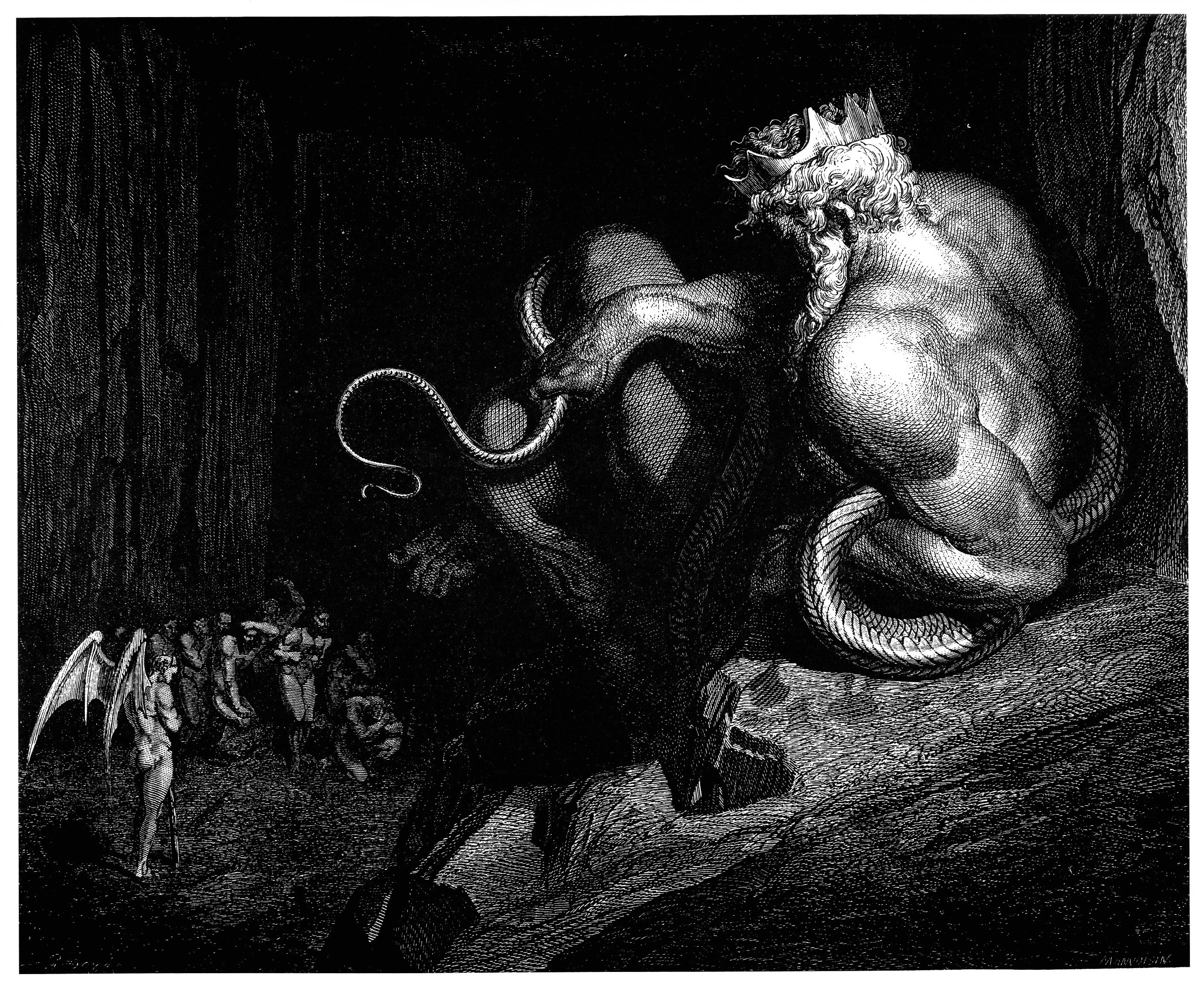
Minos, Judge of the Damned
Gustave Doré · 1861
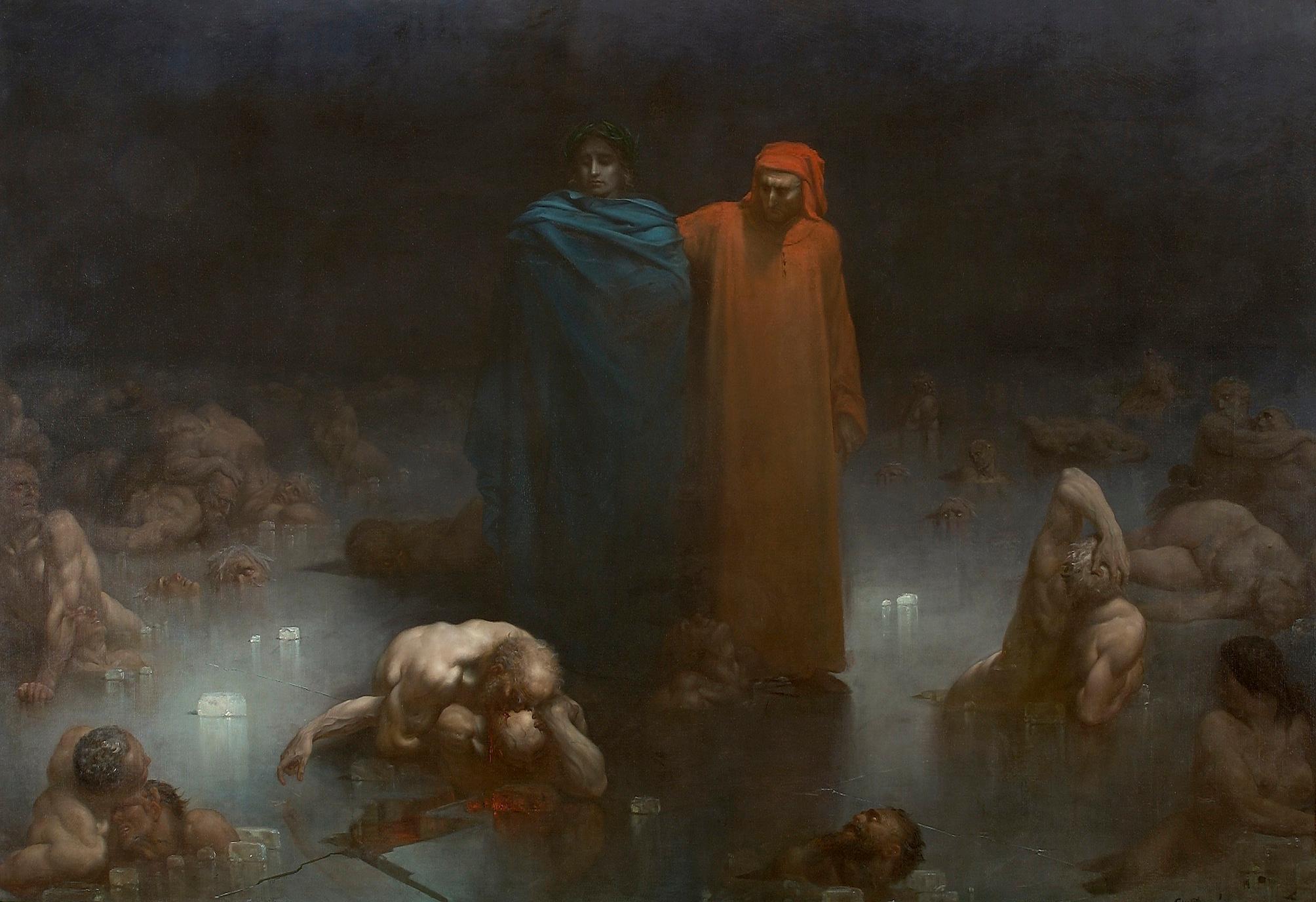
Dante and Virgil in the Ninth Circle of Hell
Gustave Doré · 1861
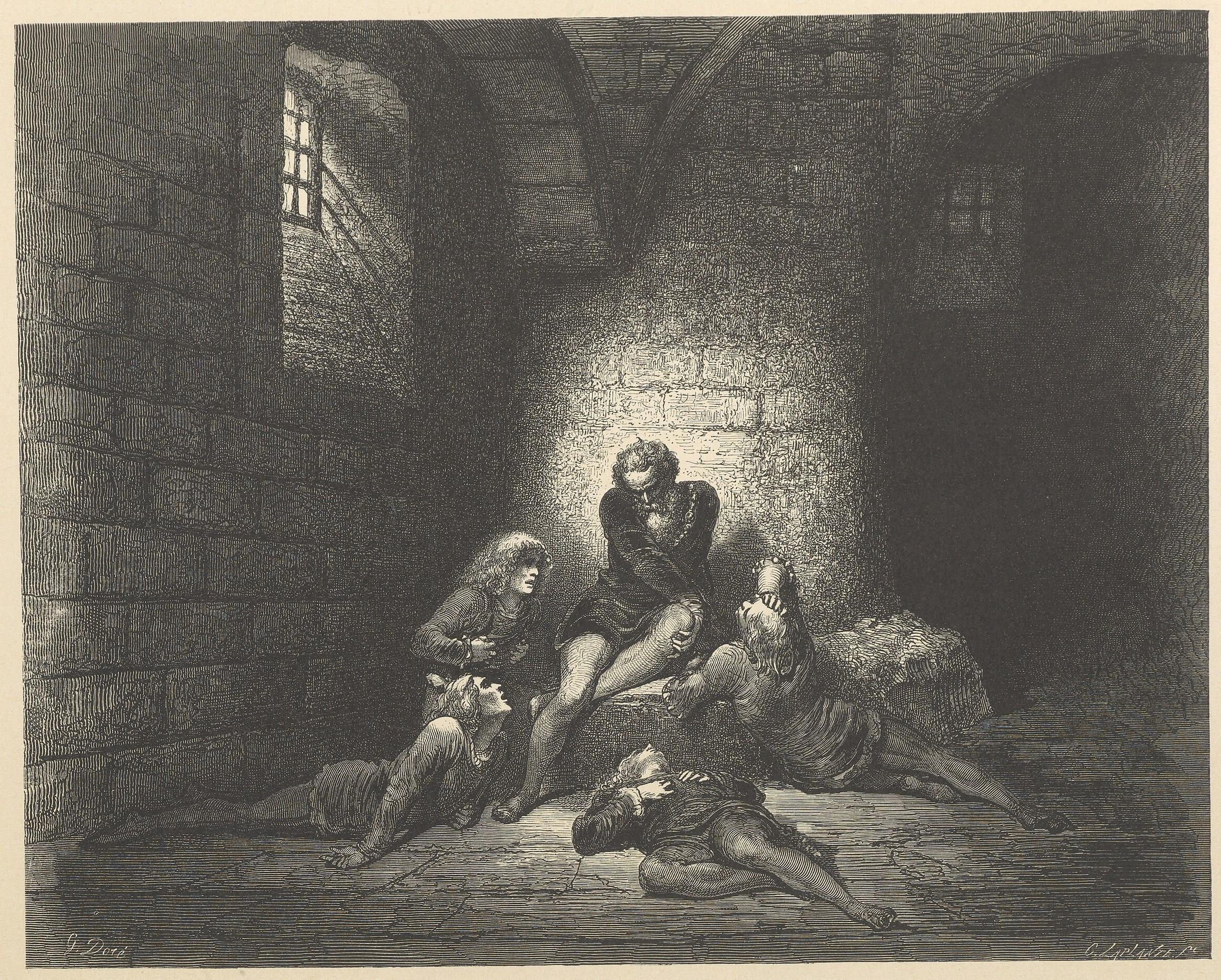
Count Ugolino and His Sons
Gustave Doré · 1861
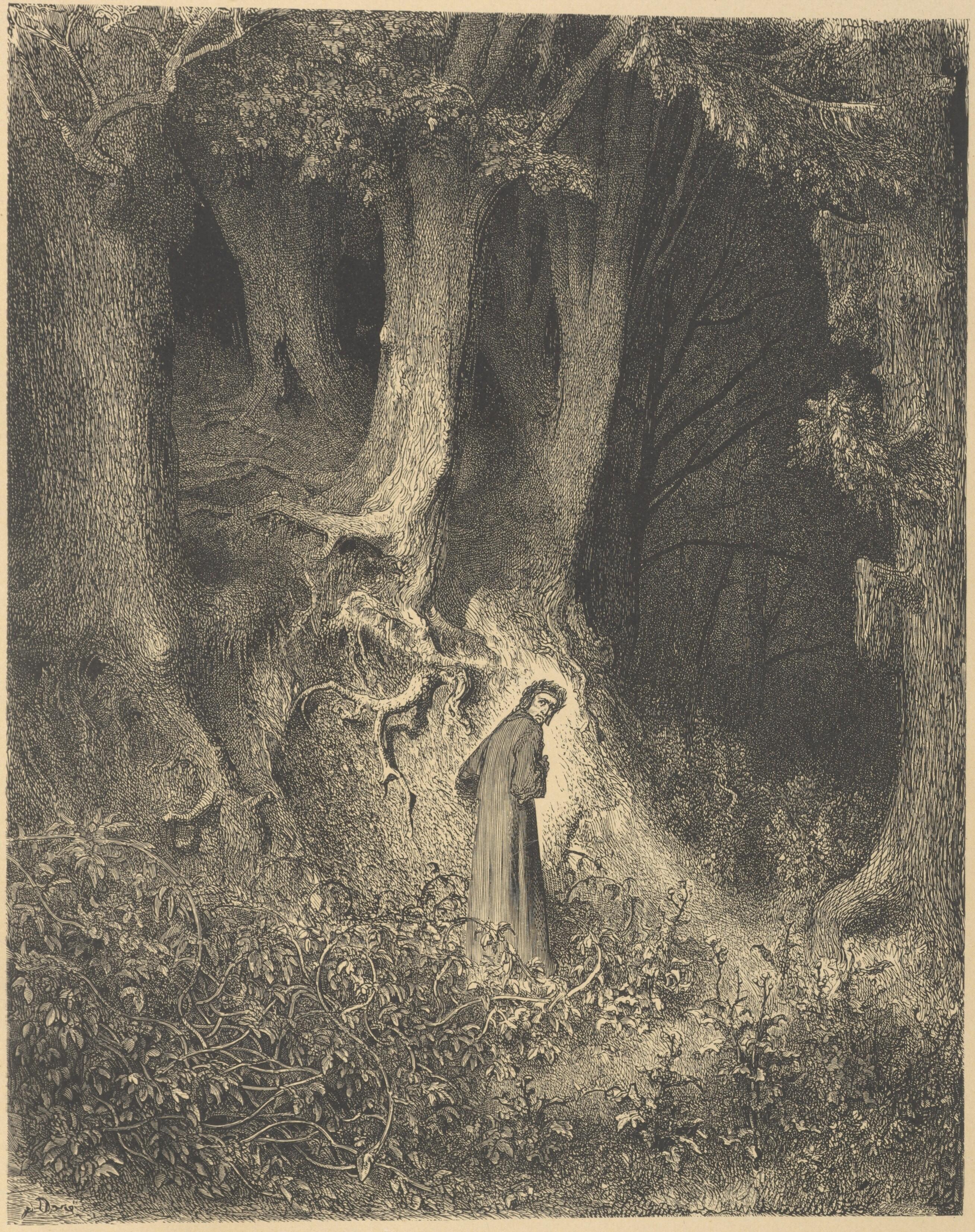
Dante Lost in the Dark Wood
Gustave Doré · 1861
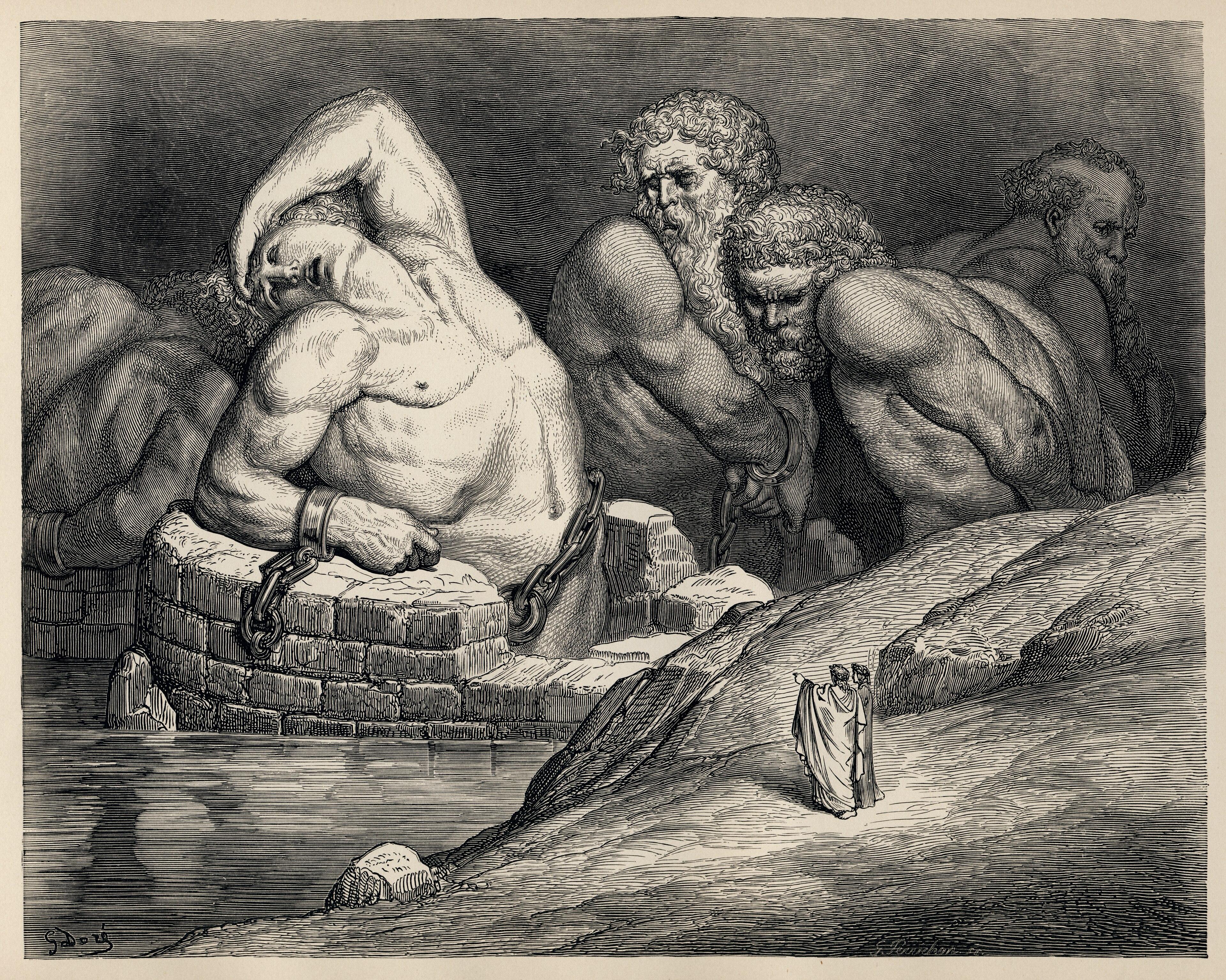
The Giants
Gustave Doré · 1861
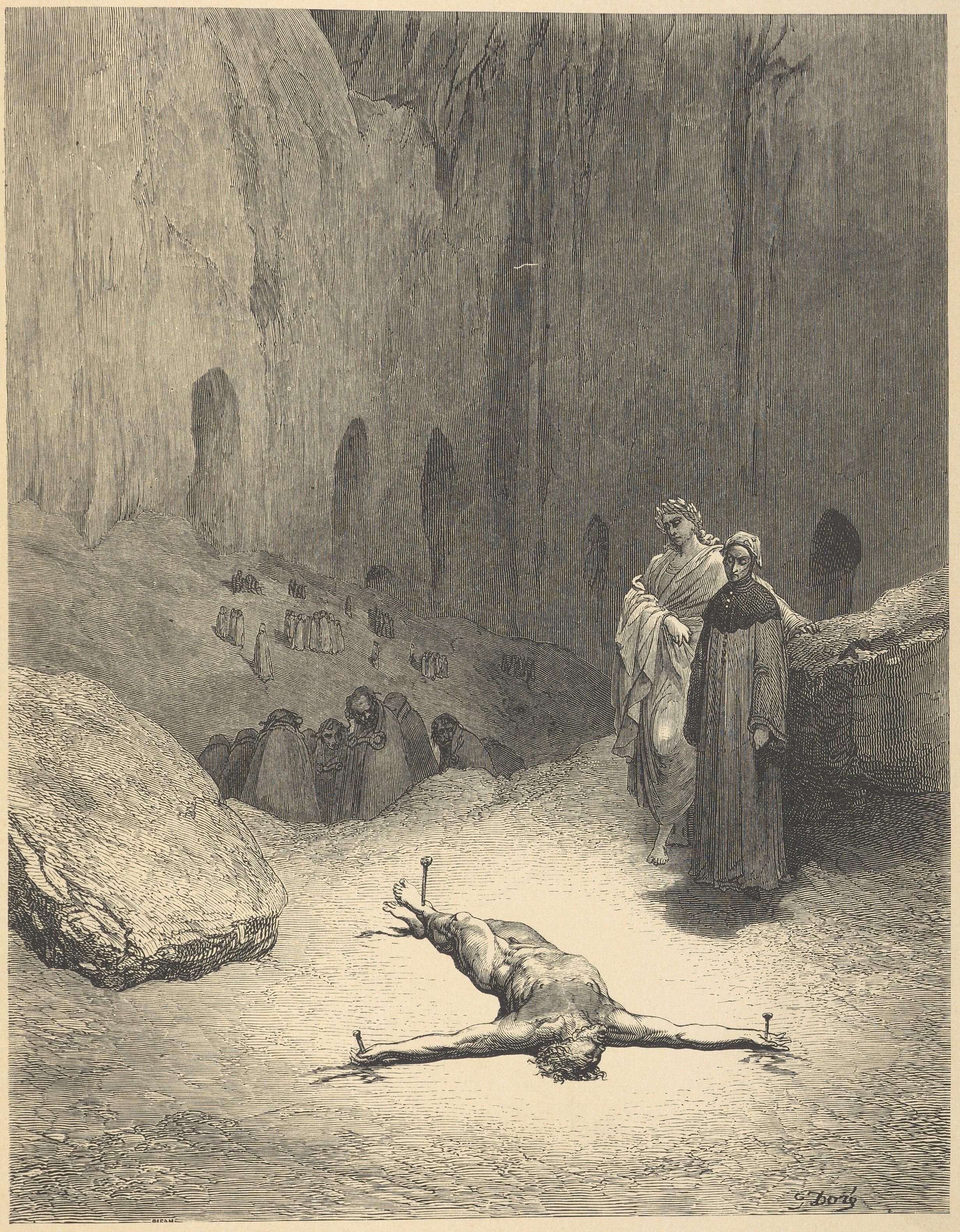
Caiaphas Crucified
Gustave Doré · 1861
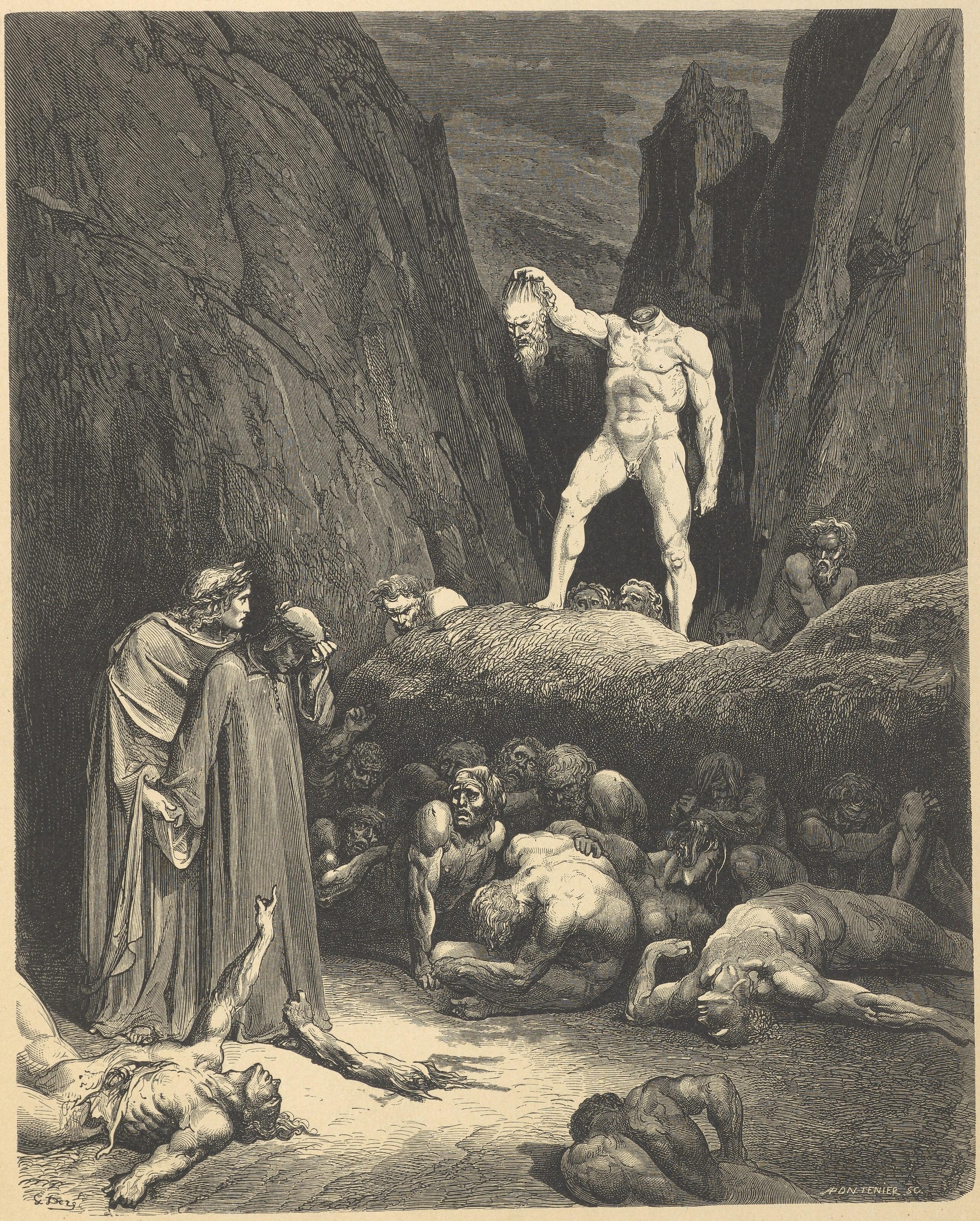
Bertran de Born Holding His Head
Gustave Doré · 1861
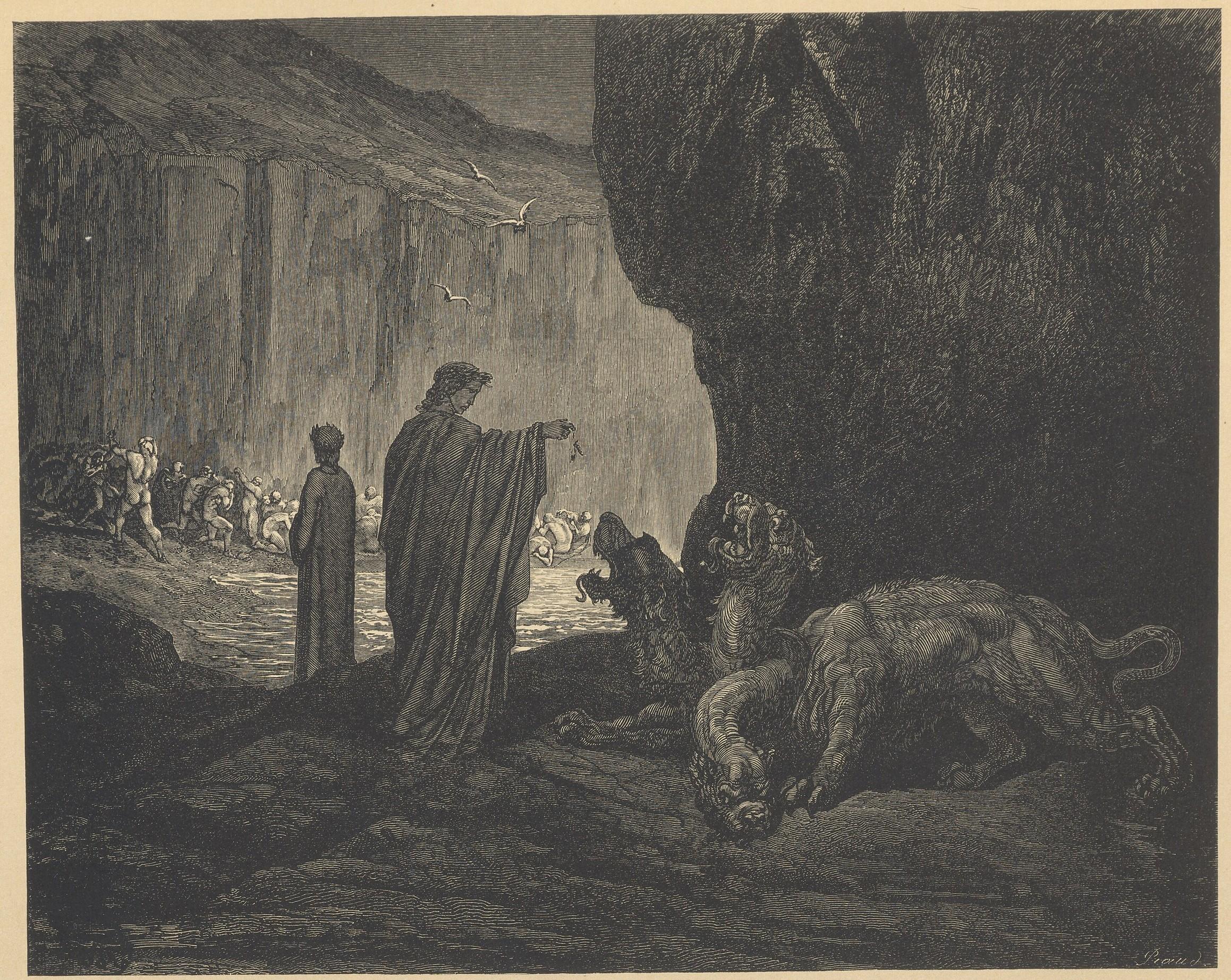
Cerberus
Gustave Doré · 1861
Also from 1861
Ulysses and Diomedes
Gustave Doré · 1861
The Thieves and the Serpents
Gustave Doré · 1861
Paolo and Francesca
Gustave Doré · 1861
The Whirlwind of the Lustful
Gustave Doré · 1861
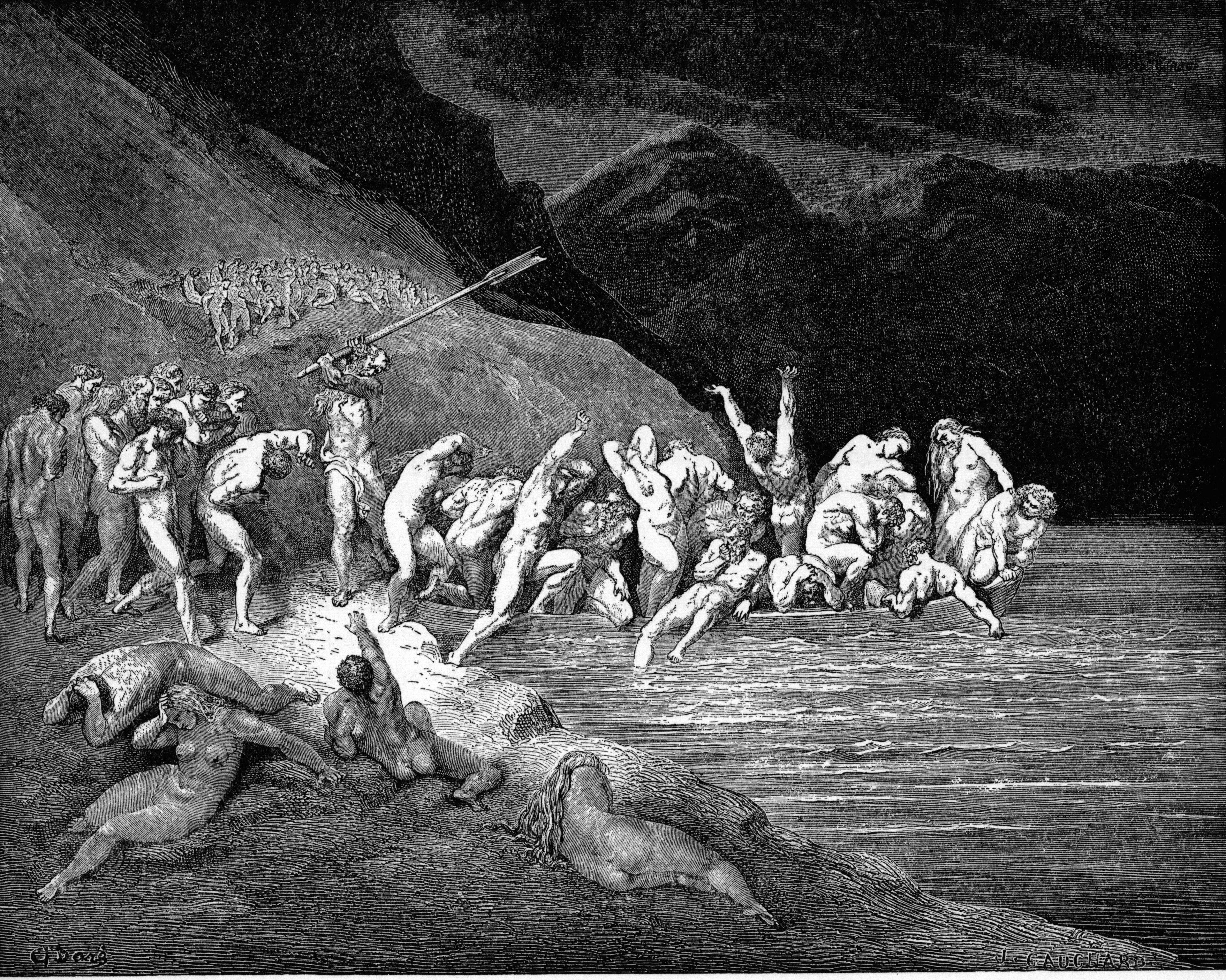
Charon, Ferryman of the Dead
Gustave Doré · 1861
The Gate of Hell (Abandon All Hope)
Gustave Doré · 1861
Farinata degli Uberti
Gustave Doré · 1861
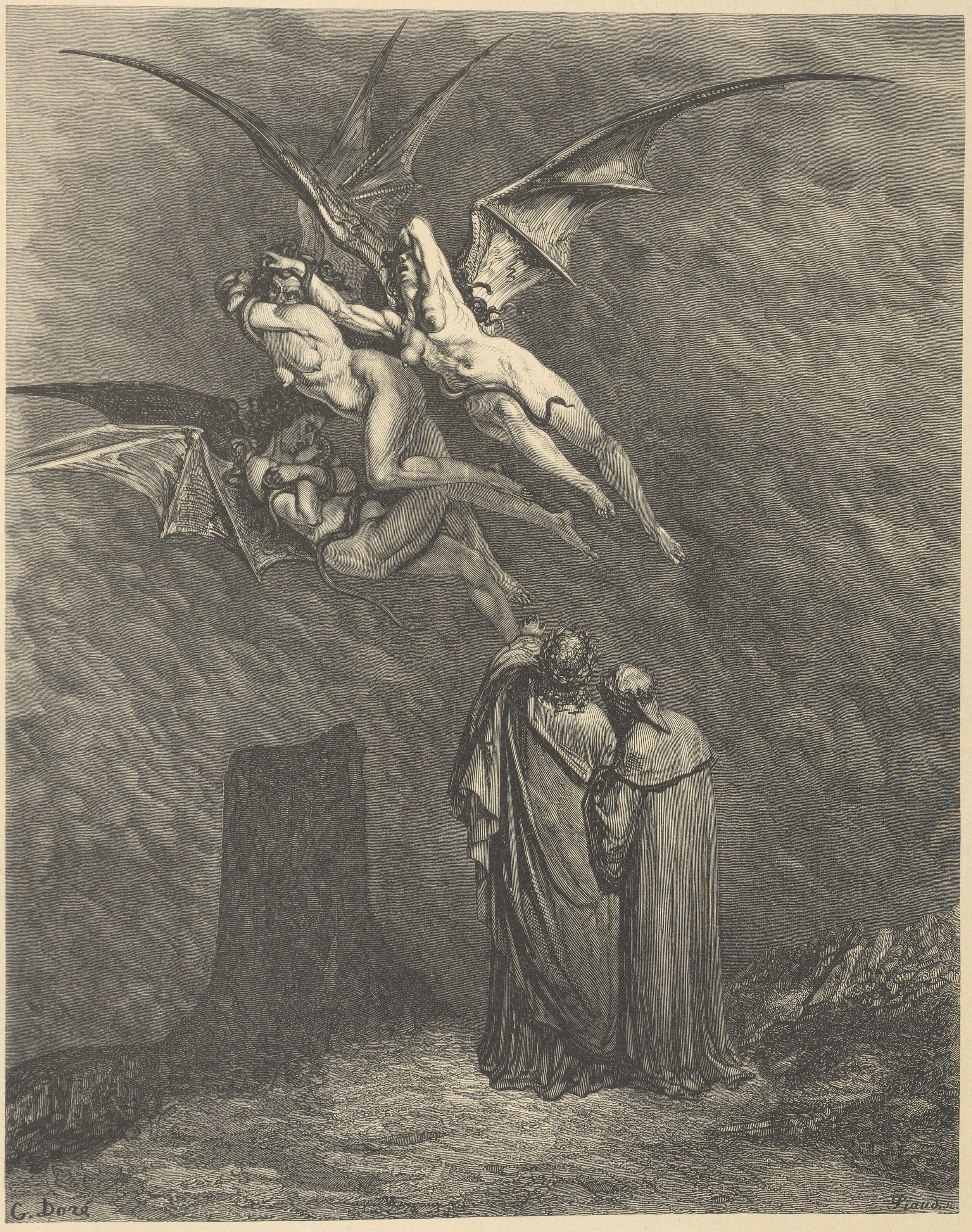
The Furies at the Gates of Dis
Gustave Doré · 1861
Related works
Charon, Ferryman of the Dead
Gustave Doré · 1861
The Furies at the Gates of Dis
Gustave Doré · 1861
Farinata degli Uberti
Gustave Doré · 1861
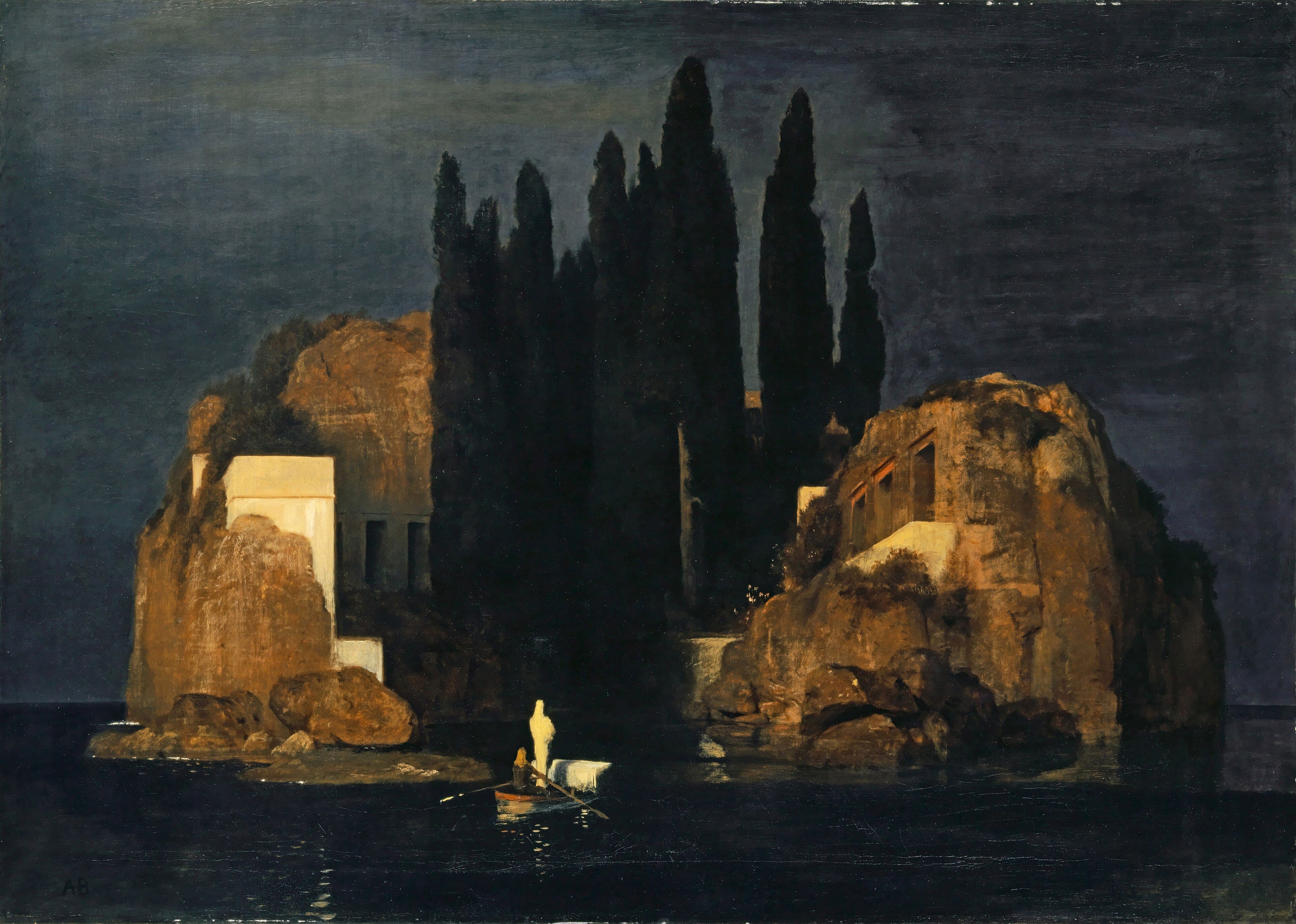
Isle of the Dead
Arnold Böcklin · 1880 (first version); five versions 1880–86
The Destruction of Leviathan
Gustave Doré · 1866
Undine Rising from the Waters
Chauncey Bradley Ives · 1880
Perched Upon a Bust of Pallas
Gustave Doré · 1884
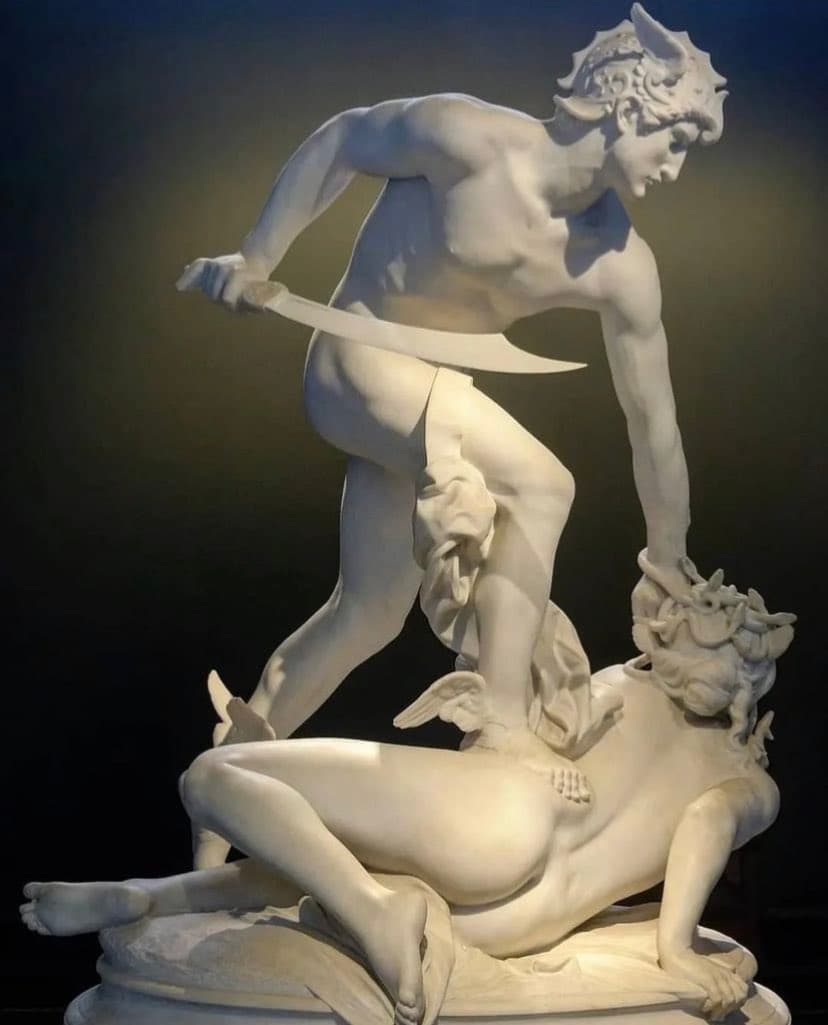
Perseus and the Gorgon
Laurent Marqueste · 1875–1903 (series); marbles 1890 and 1903